1. Introduction
Population ageing has increased the need for everyday environments that support health, autonomy, and well-being among older adults. Beyond formal healthcare settings, accessible outdoor environments can provide opportunities for walking, resting, social contact, and emotional regulation in daily life [
1,
2,
3]. Green and walkable surroundings have been associated with older adults’ well-being, social participation, and long-term health outcomes, particularly when they are close to residential areas and easy to use [
4,
5,
6,
7,
8]. For older users, environmental support is therefore not limited to physical activity; it also involves comfort, perceived safety, spatial legibility, opportunities for short stays, and contact with nature [
1,
5,
9]. In the Chinese legal context, people aged 60 years or older are formally defined as older persons, and this threshold was adopted in the present study [
10]. Recent reviews further indicate that accessible and inclusive public spaces can support autonomy, meaningful activities, social relationships, and quality of life in later life [
11,
12].
Forests and urban forests provide a specific form of health-supportive environment because they combine vegetation structure, shade, sensory richness, and a sense of distance from ordinary urban stressors. Reviews and field studies have reported that exposure to natural and forest environments can be associated with stress relief, physiological relaxation, and improved subjective well-being [
13,
14,
15]. Forest bathing and nature therapy studies further suggest that forest environments may support restorative responses through calm sensory conditions, vegetation continuity, and immersive natural experience [
16,
17,
18]. Psychological restoration refers to the recovery of attentional capacity and stress-related psychological states through environmental experience. In the present study, this concept is examined as perceived psychological restoration, namely, the subjective evaluation of an environment’s capacity to support such recovery. These effects are also consistent with restorative environment theories, which emphasize being away, fascination, extent, compatibility, and stress recovery as key pathways through which natural settings can support restoration [
19,
20,
21,
22,
23]. Recent studies have further examined perceived restorativeness, landscape preference, and prospect-refuge-related perceptual qualities in explaining restorative responses to natural and urban green environments [
24,
25].
Urban forest walkways can be understood as a particular type of forest recreation infrastructure within cities. Unlike ordinary urban parks or isolated green spaces, they are linear and sequential environments that connect forest patches, slopes, elevated boardwalks, viewing platforms, resting nodes, and urban interfaces along continuous walking routes [
26,
27]. Previous studies on greenways and urban trails have shown that route continuity, perceived safety, accessibility, environmental quality, and facility conditions influence recreational use and user experience [
28,
29,
30]. Recent research on age-friendly outdoor environments similarly identifies accessibility, walking comfort, safety, resting opportunities, supportive facilities, and social participation as important qualities of public green spaces for older adults [
11,
12,
31]. In urban forest walkways, these factors are experienced through changing landscape sequences, such as canopy immersion, semi-open views, forest-edge transitions, and resting or interaction nodes. This spatial sequence suggests that older adults’ restorative responses may differ across walkway landscape types, rather than being explained only by overall greenness or park availability.
The restorative relevance of these landscape sequences can be understood through the relationships among physical composition, perceived qualities, and evaluative responses. Visual and functional elements—including canopy cover, understory vegetation, walkway structures, open views, facilities, and human activity—provide the environmental basis for perceptions of naturalness, tranquillity, refuge, spaciousness, prospect, sociability, and cultural character. These perceived qualities may in turn shape both landscape preference and perceived psychological restoration. Landscape preference represents an overall positive appraisal of a setting, whereas perceived psychological restoration concerns its perceived capacity to support mental recovery; the two constructs are related but conceptually distinct [
20,
32,
33]. Landscape preference may therefore constitute a partial pathway through which selected perceived attributes are associated with restoration, while other attributes may also show direct relationships with restorative evaluation.
Despite growing evidence on green space, forests, and restorative environments, several gaps remain in relation to urban forest walkways and older adults. First, many studies have examined parks, neighbourhood green spaces, forests, or greenways, but urban forest walkways as linear forest recreation environments with elevated sections, viewing nodes, and sequential landscape experiences have received less specific attention [
23,
24,
30,
34,
35]. Second, research on older adults has emphasized access to green space, outdoor activity, and well-being, yet less is known about how older users perceive different landscape types within forest walkway systems [
3,
5,
9]. Third, existing studies often rely on overall greenness, general environmental quality, or subjective landscape classification, while fewer studies combine image-based landscape element extraction, photo-based evaluation, and statistical modelling to examine restorative differences among specific walkway landscape types [
32,
33,
36,
37,
38,
39]. Recent advances in deep-learning-based semantic segmentation and eye-level image analysis have expanded the capacity to quantify urban greenery and other visible environmental elements at fine spatial resolution [
40,
41,
42]. However, machine-derived landscape composition and human perceptual evaluation remain distinct levels of analysis, and their integration remains limited in research comparing older adults’ restorative evaluations across specific urban forest walkway types.
To address these gaps, this study examined how urban forest walkway landscape types and perceived landscape attributes were associated with older adults’ landscape preference and perceived psychological restoration in Fuzhou, China. Based on restorative environment theory and related empirical research, the study was guided by three broad expectations: (1) different walkway landscape types would show distinct profiles of perceived landscape attributes, landscape preference, and perceived psychological restoration; (2) higher perceived naturalness, tranquillity, refuge, and prospect would generally be associated with higher landscape preference and perceived psychological restoration; and (3) landscape preference might partially account for the relationships between selected perceived landscape attributes and perceived psychological restoration. The study had three objectives:
First, it used image semantic segmentation and landscape element quantification to classify typical landscape environment types in three representative urban forest walkways;
Second, it compared older adults’ perceived landscape attributes, landscape preference, and perceived psychological restoration across different landscape types;
Third, it analysed the relationships among perceived landscape attributes, landscape preference, and perceived psychological restoration, including the potential mediating role of landscape preference, and translated the findings into planning and design implications for age-friendly forest recreation.
This study makes three empirical contributions. It provides an image-based and perception-oriented framework for studying urban forest walkways as a specific form of forest recreation infrastructure. By combining semantic segmentation, landscape type classification, and older adults’ photo-based evaluations, the framework connects quantified visual composition with perceptual and restorative responses. It identifies how different walkway landscape types are associated with different perceived restorative evaluations among older adults. It also offers evidence-informed implications for age-friendly urban forest walkway planning, with attention to canopy immersion, semi-open viewing nodes, resting and interaction spaces, and forest-edge urban-interface sections.
2. Materials and Methods
2.1. Study Area
The study was conducted in Fuzhou, Fujian Province, southeastern China. Fuzhou is a typical subtropical mountain–water city, where urban development is closely interwoven with low mountains, hills, forest patches, and linear green corridors. In recent years, a series of urban forest walkways have been constructed in the city to improve public access to mountain landscapes and urban forests. These walkways provide continuous pedestrian routes, elevated boardwalk sections, viewing platforms, shaded forest paths, and resting nodes [
43,
44]. Compared with conventional urban parks or neighborhood green spaces, urban forest walkways have a more pronounced linear structure and a stronger sequence of changing visual experiences, which makes them suitable for examining the relationship between landscape environments and psychological restoration among older adults.
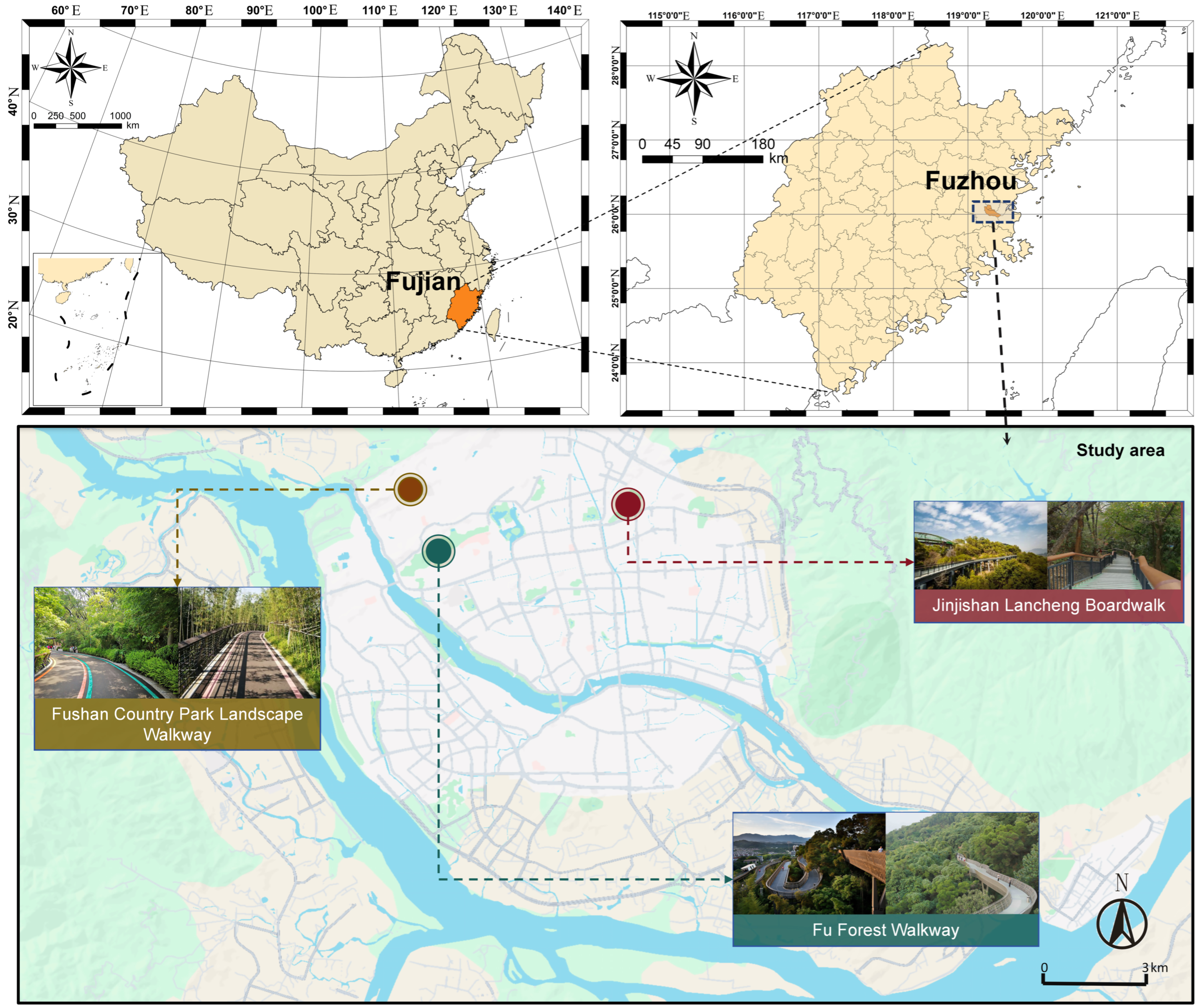
Three representative urban forest walkways in Fuzhou were selected as the study sites: Fu Forest Walkway (Jinniu Mountain), Jinjishan Lancheng Boardwalk, and Fushan Country Park Landscape Walkway (
Figure 1). These three sites represent the main spatial conditions of urban forest walkways in Fuzhou. Fu Forest Walkway is characterized by continuous elevated walking routes, dense canopy cover, and alternating views between forest interiors and urban surroundings. Jinjishan Lancheng Boardwalk is located in an urban mountain setting and contains forested path sections, viewing platforms, and transitional interfaces between mountain vegetation and the built environment. Fushan Country Park Landscape Walkway is situated in a country-park context and includes relatively natural forest sections, resting spaces, and recreational nodes.
The target population consisted of older walkway users aged 60 years or older. The age threshold of 60 years was adopted in accordance with the legal definition of older persons in the Chinese context [
10]. Participants were included when they met the following criteria: they were at least 60 years old, they had used or stayed in one of the selected walkways on the survey day, and they were able to understand the questionnaire items and complete the interview-based survey with the assistance of trained investigators. The three selected walkways provided a suitable empirical basis for comparing different landscape environment types within the same city while reducing the influence of broad inter-city differences in climate, culture, and urban development background.
2.2. Research Framework
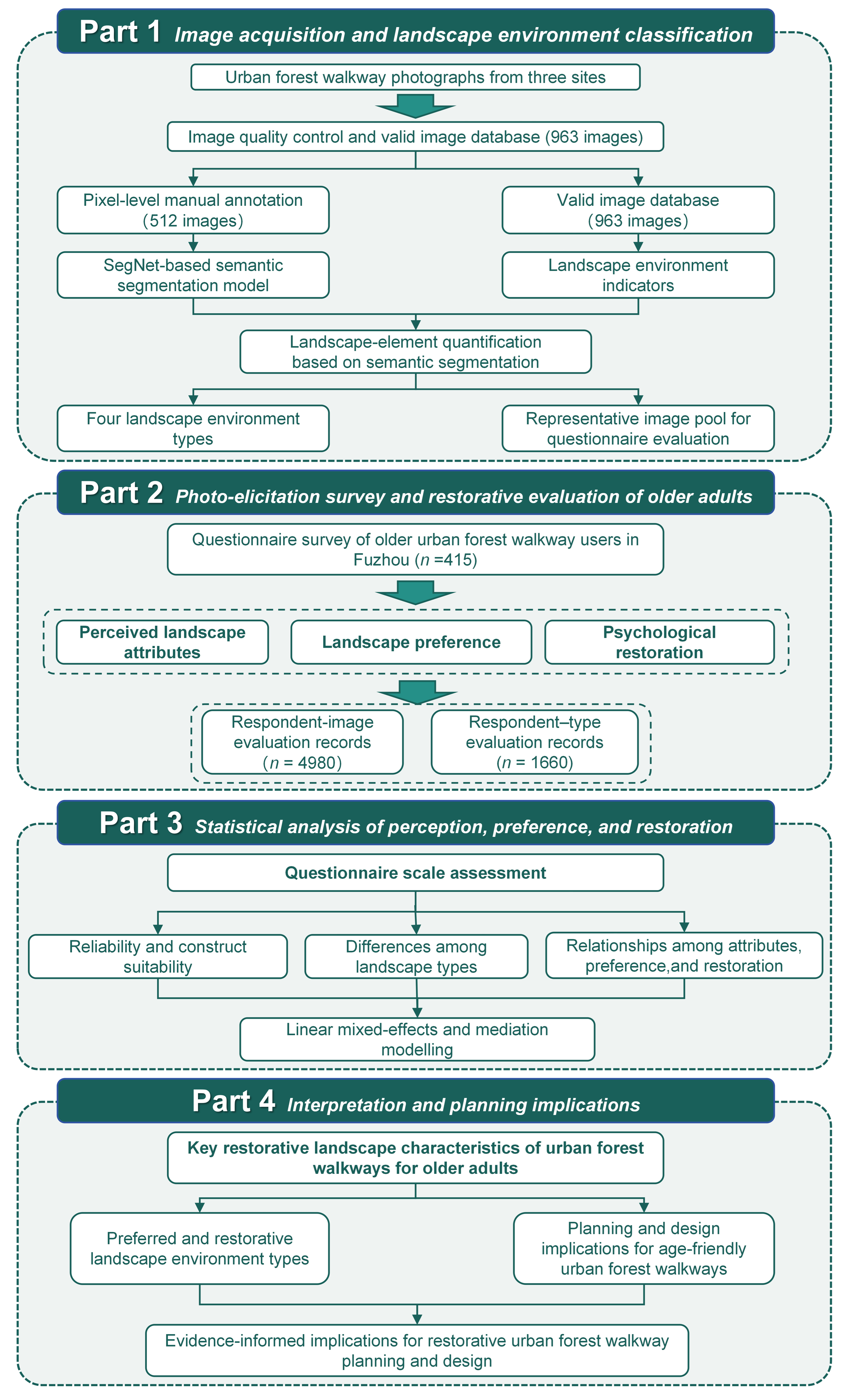
The study followed an integrated framework linking landscape image analysis, landscape type classification, photo-based questionnaire evaluation, and statistical modelling (
Figure 2). The framework was designed to examine how different types of urban forest walkway landscapes were associated with older adults’ perceived landscape attributes, landscape preference, and perceived psychological restoration.
The research procedure included four main stages. First, field photographs of the three selected urban forest walkways were collected and screened to establish an image database of walkway landscape environments. The photographs covered typical visual scenes along the walkways, including forest canopy sections, viewing platforms, transitional forest–urban interfaces, and resting or social interaction nodes. Second, a SegNet-based semantic segmentation model was used to identify major landscape elements in the images. The segmented elements included tree canopy and tall vegetation, shrubs and groundcover, walkway pavement, railings and boardwalk structures, sky and distant open views, resting and guidance facilities, and human activity elements. Based on the proportional composition of these elements and additional visual indicators, the walkway landscapes were classified into four landscape environment types: high-naturalness canopy-immersive type, semi-open viewing-platform type, forest-edge urban-interface type, and cultural resting and interaction-node type.
Third, a photo-elicitation questionnaire survey was conducted among older adults using a structured set of representative landscape photographs. The questionnaire recorded participants’ demographic characteristics, walkway use patterns, perceived landscape attributes, landscape preference, and perceived psychological restoration. The perceived landscape attributes included tranquillity, refuge, naturalness, perceived species richness, sociability, spaciousness, prospect, and cultural character. Psychological restoration was measured using items adapted from the perceived restorativeness scale, covering the main dimensions of being away, fascination, extent, and compatibility. The selection of these perceptual and restorative variables was informed by restorative environment theory and related landscape-preference research, while landscape preference was examined as a potential pathway linking selected perceived attributes with perceived psychological restoration.
Fourth, statistical analyses were conducted to examine differences among landscape types and the relationships among perceived landscape attributes, landscape preference, and perceived psychological restoration. Descriptive statistics were first used to summarize the characteristics of respondents and major variables. Reliability and construct-suitability assessments were then performed for the questionnaire scales. Differences among landscape types were examined using analysis of variance and multiple comparisons. Correlation analysis was used to test the associations among perceived landscape attributes, landscape preference, and perceived psychological restoration. Finally, linear mixed-effects models and mediation analysis were used to estimate the associations of perceived landscape attributes and landscape preference with perceived psychological restoration, including the potential indirect pathway through landscape preference, while accounting for the repeated evaluations made by the same respondents and the shared influence of image stimuli.
2.3. Image Acquisition and Landscape Classification
Field photographs were collected from Fu Forest Walkway, Jinjishan Lancheng Boardwalk, and Fushan Country Park Landscape Walkway using a standardized ground-level photographic protocol. To reflect the visual experience of older walkway users, photographs were taken from the pedestrian perspective at an approximate eye height of 1.5–1.6 m. Sampling points were distributed along the main walking routes, elevated boardwalk sections, viewing platforms, resting nodes, and transitional interfaces between forested areas and built surroundings. Photographs with severe blur, overexposure, underexposure, strong occlusion, repeated composition, or weak scene representativeness were removed during the screening process.
A total of 1188 original photographs were collected, including 486 from Fu Forest Walkway, 337 from Jinjishan Lancheng Boardwalk, and 365 from Fushan Country Park Landscape Walkway. After quality screening, 963 valid photographs were retained for image-based landscape analysis, including 402 from Fu Forest Walkway, 276 from Jinjishan Lancheng Boardwalk, and 285 from Fushan Country Park Landscape Walkway. These photographs formed the basic image database for semantic segmentation, landscape element quantification, landscape classification, and subsequent photo-based questionnaire evaluation.
Among the 963 valid photographs, 512 images were selected for pixel-level manual annotation. The annotated dataset was divided into a training set, validation set, and test set, containing 360, 76, and 76 images, respectively. A SegNet-based semantic segmentation model was used to identify the main landscape elements in the walkway images. The encoder part of the SegNet model was initialized using ImageNet-pretrained VGG16 weights, and the model was then fine-tuned using the manually annotated walkway-image dataset. The model was applied as a domain-specific tool for quantifying major landscape elements in urban forest walkway scenes. The segmentation categories included seven classes: tree canopy and tall vegetation, shrubs and groundcover, walkway pavement, railings and boardwalk structures, sky and distant open views, resting/guidance/cultural facilities, and human activity elements.
All annotated images were resized to a uniform resolution before model fine-tuning. Data augmentation, including horizontal flipping, slight rotation, brightness adjustment, and random cropping, was applied to improve model robustness under different viewing and lighting conditions. The SegNet model was fine-tuned under a supervised learning procedure, with manually labelled segmentation masks as reference data. Model performance was evaluated on the independent test set using pixel accuracy, mean pixel accuracy, mean intersection over union, frequency-weighted intersection over union, precision, recall, and F1-score.
Based on the semantic segmentation results, the proportional area of each landscape element in each image was calculated as follows:
where
denotes the proportional area of landscape element class
c in image
,
denotes the number of pixels classified as class
c in image
, and
denotes the total number of pixels in image
.
The mean intersection over union was used as the main indicator for evaluating the segmentation accuracy of the model:
where
denotes the total number of segmentation classes, and
,
, and
denote the true positive, false positive, and false negative pixels for class
c, respectively.
Nine landscape environment indicators were then extracted from the segmented images, including tree canopy proportion, shrub and groundcover proportion, walkway pavement proportion, railing and boardwalk structure proportion, sky and distant open-view proportion, resting and guidance facility proportion, human activity element proportion, visual openness, and composite artificial element proportion. These indicators described both the material composition and the visual structure of the walkway scenes.
Before clustering, all landscape environment indicators were standardized to remove the influence of different measurement scales. K-means clustering was then applied to classify the 963 valid photographs into landscape environment types by minimizing the within-cluster sum of squared distances:
where
denotes the number of clusters,
denotes the set of images assigned to cluster
,
denotes the standardized landscape indicator vector of image
, and
denotes the centroid vector of cluster
.
The four-cluster solution was used as the landscape classification scheme for the subsequent questionnaire survey. The interpretation and naming of the clusters were based on the centroid profiles of the landscape environment indicators, together with expert review of representative images within each cluster. The four landscape environment types were labelled as high-naturalness canopy-immersive type, semi-open viewing-platform type, forest-edge urban-interface type, and cultural resting and interaction-node type. These types were used to organize the representative photograph set and to support subsequent comparisons of older adults’ perceived landscape attributes, landscape preference, and psychological restoration across different walkway environments.
2.4. Questionnaire Design
A photo-elicitation questionnaire was designed to measure older adults’ perceived landscape attributes, landscape preference, and perceived psychological restoration in response to different urban forest walkway environments. The final questionnaire consisted of four sections: demographic characteristics, walkway use behaviour, photo-based landscape evaluation, and perceived psychological restoration.
The first section recorded respondents’ demographic and health-related characteristics, including gender, age, education level, living arrangement, self-rated health status, mobility condition, and chronic disease status. The second section recorded walkway use behaviour, including visit frequency, travel mode, travel time to the walkway, duration of stay, main activity type, and companionship during walkway use. These variables were recorded to characterize respondents’ walkway-use patterns. Age and self-rated health status were included as respondent-level covariates in the mixed-effects and mediation models.
The third section used a structured photo-elicitation procedure. A total of 32 representative photographs were selected from the classified image database, with eight photographs representing each of the four landscape environment types. To reduce response burden while maintaining balanced exposure to different landscape types, each respondent evaluated 12 photographs, including three photographs from each landscape type. The photographs were assigned using a balanced block design, and the presentation order was randomized for each respondent.
For each photograph, respondents evaluated eight perceived landscape attributes: tranquillity, refuge, naturalness, perceived species richness, sociability, spaciousness, prospect, and cultural character. Landscape preference was measured using one overall preference item for each photograph. Perceived psychological restoration was measured using a short-form perceived restorativeness scale, covering four dimensions: being away, fascination, extent, and compatibility. All perceptual and restorative items were measured using a 7-point Likert scale, where 1 indicated the lowest level of agreement or preference, and 7 indicated the highest level.
The score of each dimension was calculated as the arithmetic mean of its corresponding items:
where
denotes the score of respondent
for dimension
,
denotes the number of items included in dimension
, and
denotes the score given by respondent
to item
. Higher scores indicated stronger perceived landscape attributes, higher landscape preference, or greater perceived psychological restoration.
All questionnaires were administered through face-to-face interviews by trained investigators. The items were read aloud when necessary, and respondents were allowed to ask for clarification of item meanings. Questionnaires were excluded from the valid dataset when the respondent did not meet the age criterion, when more than 20% of the core rating items were missing, or when the response pattern showed clear invalidity, such as the same score being selected for all photo-based evaluation items. Before the interview, all respondents were informed of the purpose of the survey, the voluntary nature of participation, and the anonymous use of the data. Verbal informed consent was obtained from each respondent before the questionnaire began. The study was conducted in accordance with the Declaration of Helsinki and was approved in January 2024 by the Academic Ethics Committee of the College of Design and Innovation, Fujian Jiangxia University, China (approval code: FJX_CDI_20240109).
2.5. Sample Size Calculation
The required sample size was calculated using G*Power version 3.1.9.7. The test family was set as F tests, and the statistical test was set as multiple linear regression: fixed model,
R2 deviation from zero. The significance level was set at
, the statistical power was set at
, the effect size was set at Cohen’s
, and the number of predictors was set at 18. Under these parameters, the minimum required sample size was 402 [
45,
46,
47].
The final survey contacted 515 older walkway users, of whom 470 completed the questionnaire. After data screening, 415 valid questionnaires were retained for analysis. The valid sample exceeded the minimum sample size required by the G*Power calculation. Among the 415 valid respondents, 158 were surveyed at Fu Forest Walkway, 126 at Jinjishan Lancheng Boardwalk, and 131 at Fushan Country Park Landscape Walkway.
Because each respondent evaluated 12 photographs, the questionnaire generated 4980 respondent–image evaluation records. In addition, because the 12 photographs covered four landscape environment types, with three photographs for each type, the dataset also generated 1660 respondent–type evaluation records. The respondent-level sample was used for demographic and walkway use analyses, the respondent–type dataset was used for comparing perceived attributes, preference, and restoration among landscape types, and the respondent–image dataset was used for mixed-effects modelling and robustness analysis.
2.6. Statistical Analysis
The statistical analysis was conducted in six steps. First, descriptive statistics were used to summarize respondents’ demographic characteristics, walkway use behaviour, and the distribution of major variables. Continuous variables were reported using means and standard deviations, while categorical variables were reported using frequencies and percentages.
Second, the reliability and construct suitability of the questionnaire scales were examined. Cronbach’s alpha was calculated for the psychological restoration scale and the core photo-evaluation scale. The eight perceived landscape attributes were treated as heterogeneous single-item indicators rather than interchangeable items of a single latent scale; therefore, Cronbach’s alpha was not calculated for these attributes. The Kaiser–Meyer–Olkin statistic and Bartlett’s test of sphericity were used to assess the inter-correlation structure and construct suitability of the items.
Third, differences among the four landscape environment types were examined. For respondent–type aggregated data, repeated-measures analysis of variance was used to compare perceived landscape attributes, landscape preference, and psychological restoration across landscape types. When the sphericity assumption was not met, the Greenhouse–Geisser correction was applied. Bonferroni-adjusted pairwise comparisons were used to identify differences between specific landscape types.
Fourth, Pearson correlation analysis was used to examine the bivariate associations among perceived landscape attributes, landscape preference, and psychological restoration. This step provided an initial assessment of the relationships among the main variables before multivariable modelling.
Fifth, linear mixed-effects models were used to estimate the associations of perceived landscape attributes and landscape preference with perceived psychological restoration. This modelling strategy was adopted because each respondent evaluated multiple photographs, and each photograph was evaluated by multiple respondents. The model included respondent and image as random intercepts to account for repeated measurements and shared image-level effects. The fixed-effect terms included the eight perceived landscape attributes, landscape preference, landscape type, age, and self-rated health status. The core model was specified as follows:
where
denotes the perceived psychological restoration score given by the respondent
to image
belonging to landscape type
;
denotes the score of the
-th perceived landscape attribute;
denotes the landscape preference score;
denotes the landscape type dummy variables;
denotes the respondent-level covariates of age and self-rated health status;
denotes the random intercept for respondent
;
denotes the random intercept for image
; and
denotes the residual error term.
Sixth, mediation analysis was conducted to examine whether landscape preference constituted an indirect pathway in the associations between perceived landscape attributes and perceived psychological restoration. The mediation model was estimated using two regression equations:
where
represents the association between the
-th perceived landscape attribute on landscape preference,
represents the association between landscape preference and perceived psychological restoration after controlling for perceived landscape attributes, and
c′
m represents the direct association between the
-th perceived landscape attribute and perceived psychological restoration. The indirect effect of each perceived landscape attribute through landscape preference was calculated as:
The significance of the indirect effects was tested using 5000 bootstrap resamples. An indirect effect was considered statistically significant when its 95% bootstrap confidence interval did not include zero.
All statistical analyses were performed in Python 3.13.5 (Anaconda distribution) in PyCharm 2025.1.1.1. Image data processing and matrix operations were conducted using OpenCV 4.10.0.84, NumPy 2.1.3, and pandas 2.2.3. Clustering analysis and standardization were conducted using scikit-learn 1.6.1. Reliability analysis, analysis of variance, correlation analysis, mixed-effects modelling, and mediation analysis were conducted using SciPy 1.15.3, statsmodels 0.14.4. Statistical significance was set at p < 0.05.
3. Results
3.1. Image Segmentation and Landscape Classification
The SegNet-based semantic segmentation model provided a basis for extracting major landscape elements from the urban forest walkway images. The overall pixel accuracy was 88.7%, the mean pixel accuracy was 84.6%, the mean IoU was 79.4%, the frequency-weighted IoU was 83.2%, and the mean F1-score was 88.4% (
Table 1 and
Table 2). At the class level, tree canopy and tall vegetation, walkway pavement, and sky or distant open views showed relatively high segmentation performance, with IoU values of 86.3%, 84.6%, and 83.5%, respectively. Railings and boardwalk structures, shrubs and groundcover, and resting, guidance, or cultural facilities also showed acceptable performance. Human activity elements had the lowest IoU value, at 69.4%, indicating that small and variable scene elements were more difficult to segment than large and stable landscape components.
Based on the extracted landscape environment indicators, the 963 valid photographs were classified into four landscape environment types (
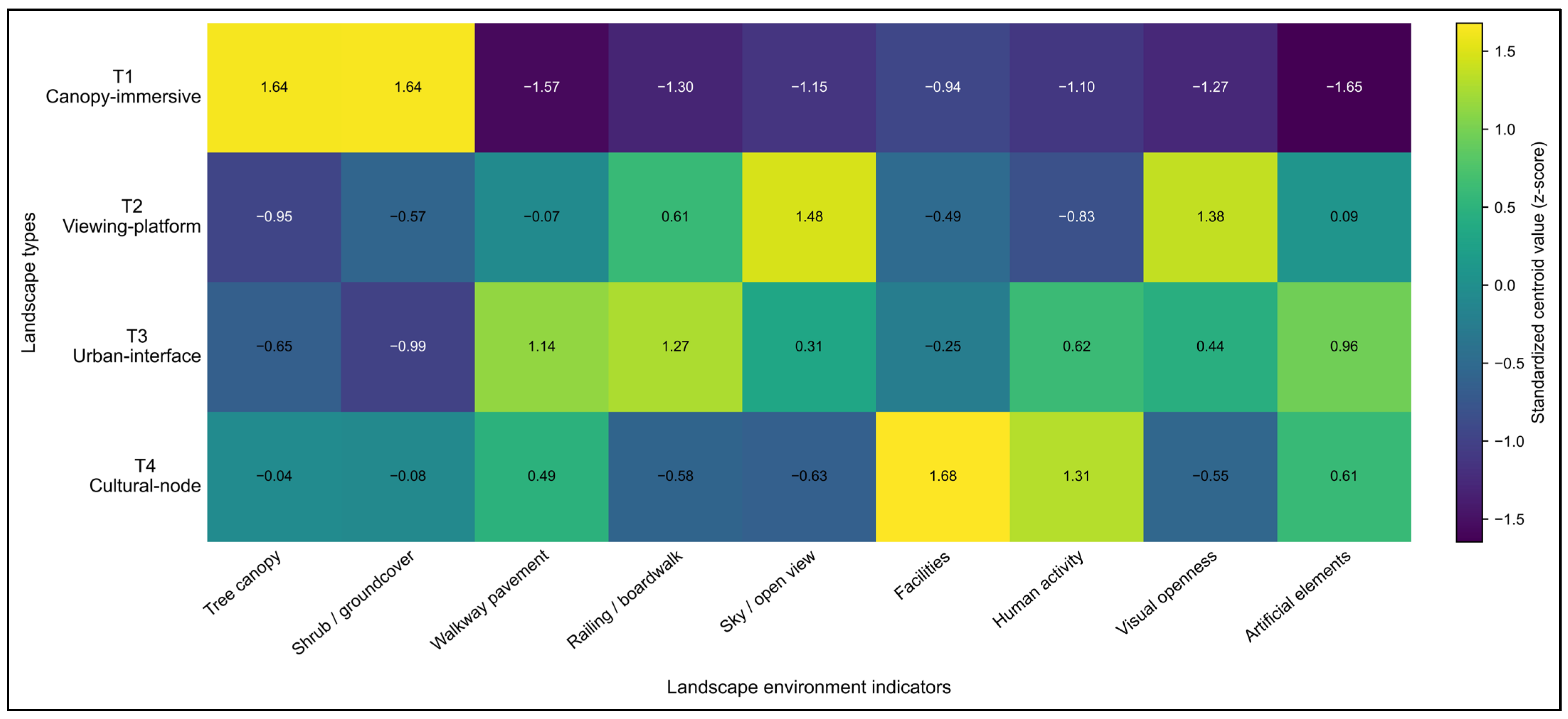
Table 3). T1, the high-naturalness canopy-immersive type, contained 312 images, accounting for 32.4% of the image database. This type was characterized by the highest tree canopy proportion and relatively low sky or open-view proportion, visual openness, artificial elements, facilities, and human activity. T2, the semi-open viewing-platform type, contained 204 images, accounting for 21.2%. It had the highest sky or open-view proportion and visual openness, indicating scenes with broader visual exposure and viewing-platform characteristics. T3, the forest-edge urban-interface type, contained 238 images, accounting for 24.7%. This type showed relatively high artificial element proportion and human activity, reflecting the transitional condition between forested walkway spaces and urban surroundings. T4, the cultural resting and interaction-node type, contained 209 images, accounting for 21.7%. It was distinguished by the highest proportions of facilities and human activity, corresponding to resting, guidance, cultural, and social interaction nodes along the walkways.
The standardized centroid profiles further clarified the differences among the four landscape environment types (
Figure 3). T1 was mainly separated by canopy dominance and low openness; T2 by visual openness and distant views; T3 by stronger urban-interface and artificial-element characteristics; and T4 by facility-related and human-activity features. These results indicate that the four-cluster solution captured distinct visual and functional conditions of the urban forest walkways and provided the classification basis for the subsequent photo-based questionnaire evaluation.
3.2. Respondent Characteristics and Walkway Use Patterns
A total of 415 valid questionnaires were retained for analysis. Among the respondents, 158 were surveyed at Fu Forest Walkway, 126 at Jinjishan Lancheng Boardwalk, and 131 at Fushan Country Park Landscape Walkway. The sample included 185 men and 230 women. Most respondents were between 60 and 74 years old, accounting for 83.9% of the total sample. In terms of educational background, junior middle school and senior high or technical school were the two largest groups.
The respondents generally represented regular older users of the selected walkways. Most respondents reported fair or good self-rated health, while 70.4% reported at least one chronic condition. Regarding walkway use patterns, 87.2% of respondents visited the walkways at least once per week. Walking exercise was the most frequently reported activity, followed by resting or viewing and social interaction. These characteristics provided an appropriate basis for examining older adults’ perceptual and restorative responses to different urban forest walkway environments.
3.3. Reliability and Construct Suitability of Questionnaire Scales
The reliability and construct suitability results are shown in
Table 4. The perceived psychological restoration scale showed acceptable internal consistency, with a Cronbach’s α of 0.852. The KMO value for the perceived psychological restoration items was 0.902, and Bartlett’s test was significant, indicating that the item structure was suitable for further construct assessment. The core photo-evaluation scale, which included perceived landscape attributes, landscape preference, and perceived psychological restoration items, also showed acceptable internal consistency and construct suitability, with a Cronbach’s α of 0.709 and a KMO value of 0.920.
The perceived landscape attributes had a KMO value of 0.757, and Bartlett’s test was significant. Cronbach’s α was not calculated for the perceived landscape attributes because these eight attributes were treated as heterogeneous single-item indicators rather than interchangeable items of a single latent scale.
3.4. Differences Among Landscape Types
Repeated-measures ANOVA showed significant differences among the four landscape environment types in all perceived landscape attributes, landscape preference, and perceived psychological restoration (
Table 5). The results indicate that older adults’ evaluations varied across different visual and functional conditions of the urban forest walkways.
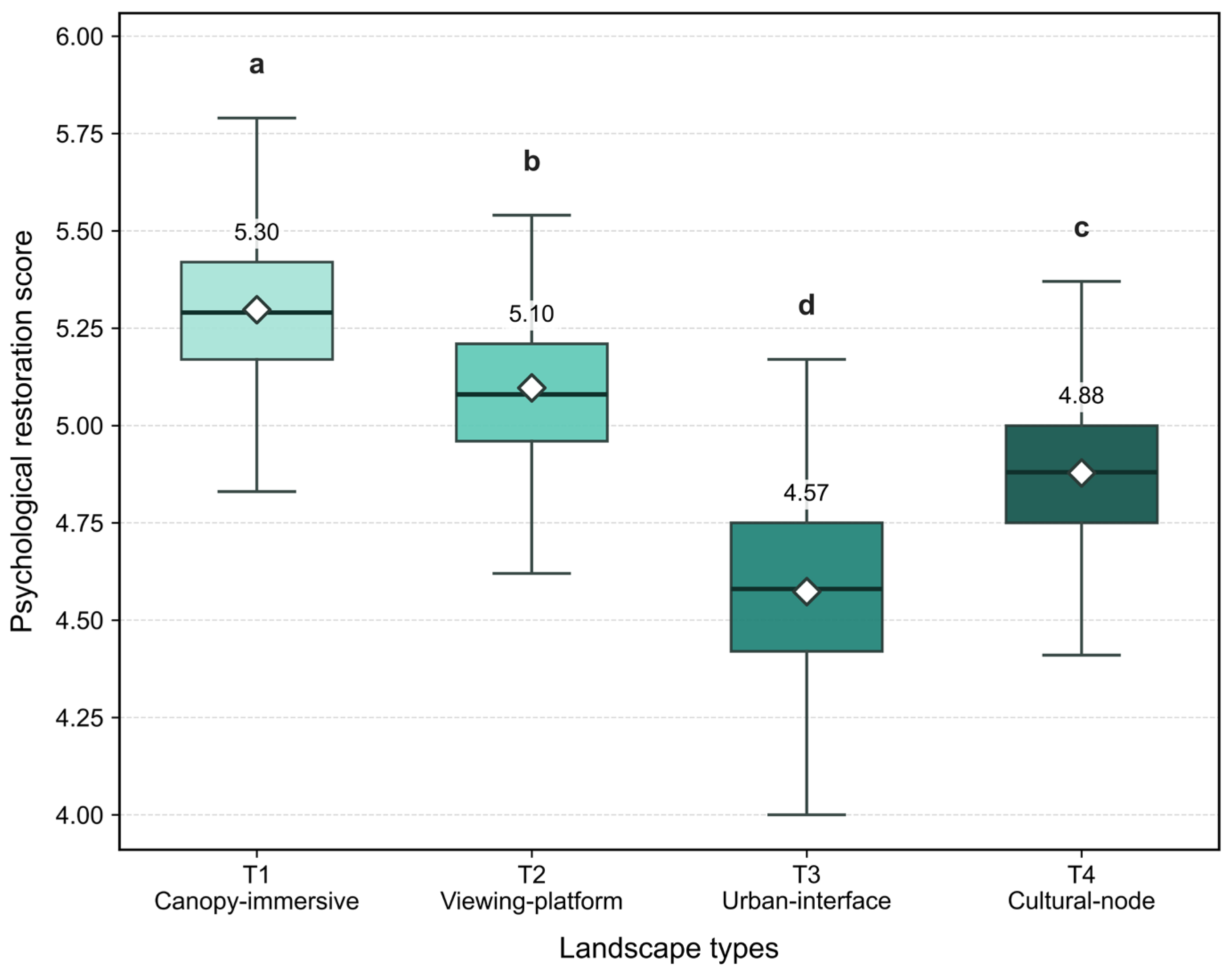
T1, the high-naturalness canopy-immersive type, received the highest scores for tranquillity, refuge, naturalness, perceived species richness, landscape preference, and perceived psychological restoration. Its mean perceived psychological restoration score was 5.30 ± 0.20. T2, the semi-open viewing-platform type, had the highest scores for spaciousness and prospect, and also showed a relatively high level of landscape preference and perceived psychological restoration. T4, the cultural resting and interaction-node type, received the highest scores for sociability and cultural character, reflecting its facility-related and interaction-oriented features. In contrast, T3, the forest-edge urban-interface type, showed lower scores for landscape preference and perceived psychological restoration than the other types, with a mean perceived psychological restoration score of 4.57 ± 0.24.
Figure 4 further illustrates the distribution of perceived psychological restoration scores across the four landscape types. The mean perceived psychological restoration score was highest for T1, followed by T2 and T4, and lowest for T3. These results suggest that canopy-immersive and semi-open viewing environments were generally associated with higher perceived restorative evaluations, while forest-edge urban-interface scenes were associated with lower perceived restorative evaluations in this sample.
3.5. Relationships Among Perceived Landscape Attributes, Landscape Preference, and Perceived Psychological Restoration
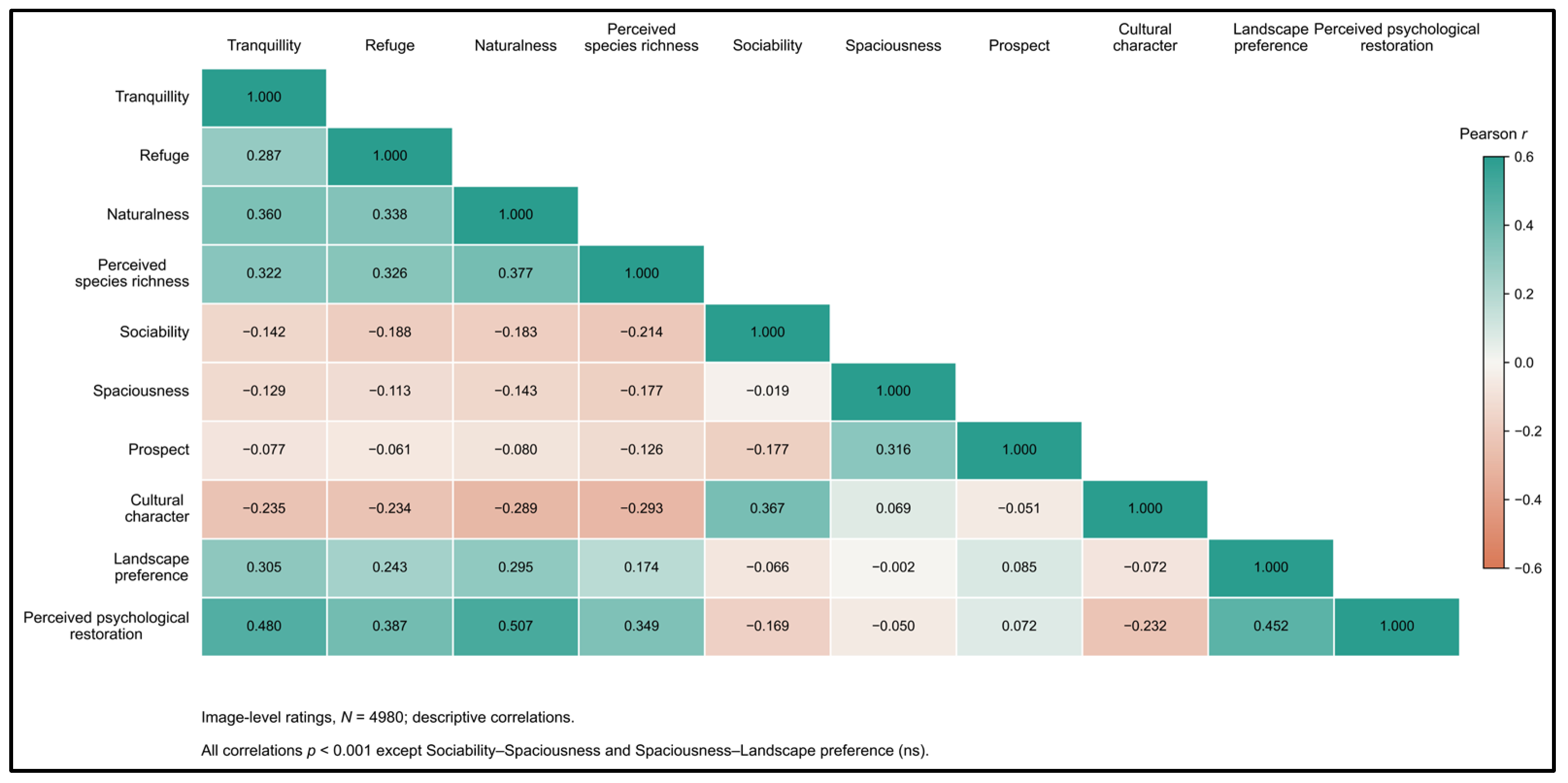
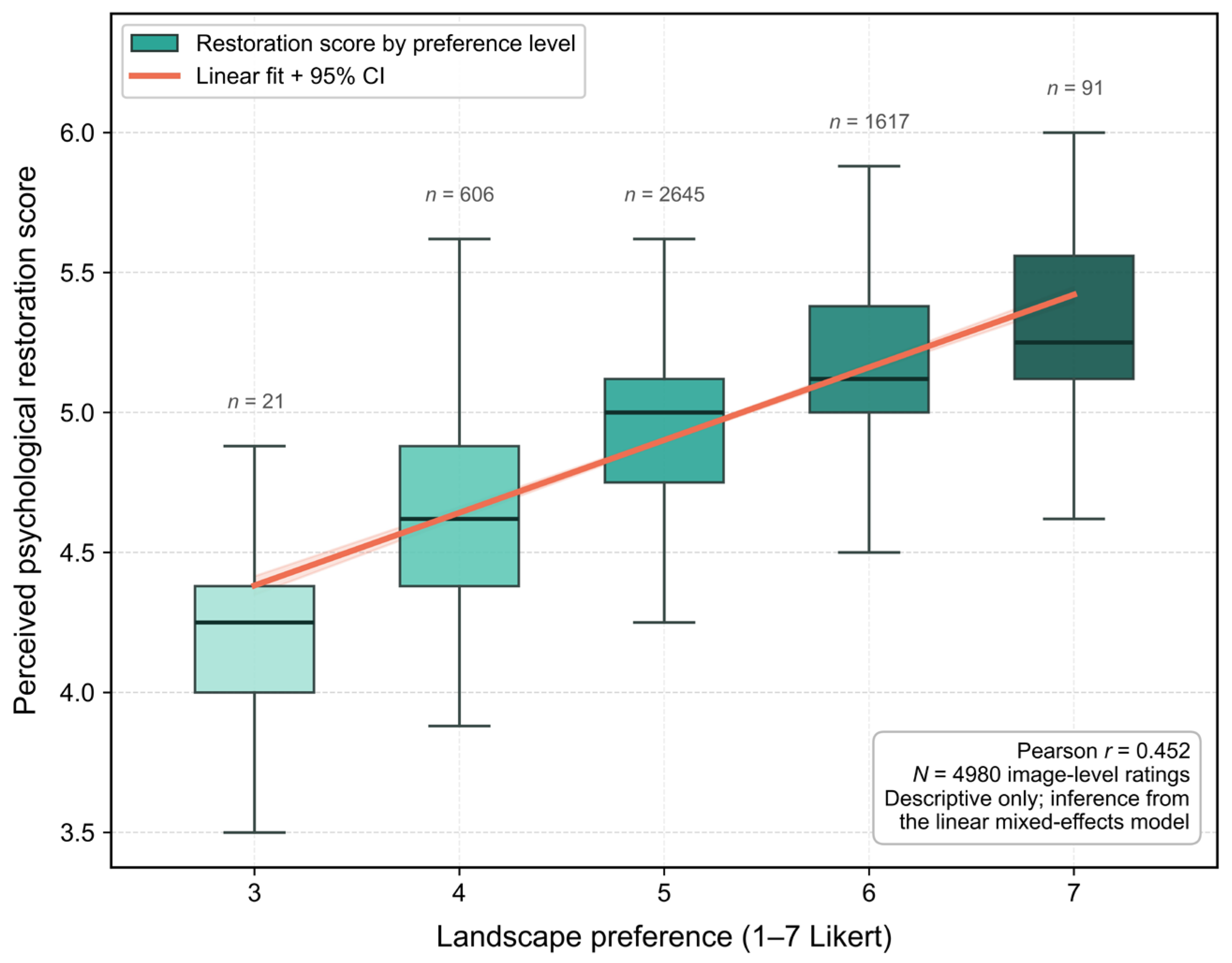
Figure 5 shows the distribution of perceived psychological restoration scores across observed landscape preference levels at the respondent–image level. Perceived psychological restoration scores generally increased with higher landscape preference scores. The Pearson correlation coefficient between landscape preference and perceived psychological restoration was 0.452, based on 4980 image-level ratings. This result indicates a moderate positive association between preference and perceived psychological restoration in the photo-based evaluations.
To further examine the bivariate relationships among the main perceptual variables,
Figure 6 presents an image-level Pearson correlation matrix including the eight perceived landscape attributes, landscape preference, and perceived psychological restoration. Perceived psychological restoration was positively correlated with naturalness, tranquillity, landscape preference, refuge, and perceived species richness, with the strongest correlations observed for naturalness and tranquillity. Landscape preference was positively correlated with tranquillity, naturalness, refuge, and perceived species richness, whereas its associations with spaciousness, sociability, prospect, and cultural character were weak. These descriptive correlations suggest that the perceived restorative evaluation of walkway images was more closely related to perceived naturalness, tranquillity, refuge, and preference than to social, cultural, or openness-related attributes alone.
Because these records included repeated evaluations from the same respondents and shared image stimuli, the correlations reported in
Figure 5 and
Figure 6 were treated as descriptive. Formal inference regarding the associations among perceived landscape attributes, landscape preference, and perceived psychological restoration was further examined using the linear mixed-effects and mediation models reported in
Section 3.6.
3.6. Mixed-Effects and Mediation Modelling Results
The linear mixed-effects model was used to examine the associations between perceived landscape attributes, landscape preference, and perceived psychological restoration while accounting for repeated respondent evaluations and shared image-level effects (
Table 6 and
Table 7). Landscape preference was positively associated with perceived psychological restoration after adjusting for perceived landscape attributes, landscape type, and respondent-level covariates (Estimate = 0.109,
p < 0.001). Among the perceived landscape attributes, tranquillity, refuge, naturalness, and prospect were positively associated with perceived psychological restoration. Tranquillity had an estimate of 0.068, naturalness had an estimate of 0.061, prospect had an estimate of 0.040, and refuge had an estimate of 0.029. Perceived species richness, sociability, spaciousness, and cultural character were not significantly associated with perceived psychological restoration in the adjusted model. Age, entered as a continuous respondent-level covariate, was not significantly associated with perceived psychological restoration (Estimate = 0.000,
p = 0.780). Good or very good self-rated health was also not significantly associated with the outcome (Estimate = 0.001,
p = 0.910).
The mediation results showed that several perceived landscape attributes were indirectly associated with perceived psychological restoration through landscape preference. Significant indirect effects were observed for tranquillity, refuge, naturalness, prospect, and cultural character. The largest indirect effect was found for tranquillity, followed by naturalness, refuge, and prospect. Cultural character also showed a smaller but significant indirect effect through landscape preference. In contrast, the indirect effects of perceived species richness, sociability, and spaciousness were not significant.
Taken together, the modelling results suggest that landscape preference was a relevant pathway linking selected perceived landscape attributes to perceived psychological restoration. Tranquillity, naturalness, refuge, and prospect showed relatively consistent associations with perceived psychological restoration, either directly in the mixed-effects model or indirectly through landscape preference. These findings help clarify how perceived landscape qualities and landscape preference jointly relate to restorative evaluations across different urban forest walkway environments.
5. Conclusions
This study examined how different urban forest walkway landscape environments were associated with older adults’ perceived landscape attributes, landscape preference, and perceived psychological restoration. By integrating SegNet-based semantic segmentation, landscape-element quantification, landscape type classification, photo-elicitation evaluation, and statistical modelling, the study connected visible landscape composition with older adults’ perceptual and restorative evaluations. Four landscape environment types were identified across three representative walkways in Fuzhou: the high-naturalness canopy-immersive type, semi-open viewing-platform type, forest-edge urban-interface type, and cultural resting and interaction-node type.
The four types differed in their perceived and restorative profiles. The canopy-immersive type received the highest perceived psychological restoration score and was characterized by higher tranquillity, refuge, naturalness, and perceived species richness. The semi-open viewing-platform type, characterized by greater spaciousness and prospect, also received relatively high perceived psychological restoration scores. The cultural resting and interaction-node type was distinguished by higher sociability and cultural character, whereas the forest-edge urban-interface type received lower landscape preference and perceived psychological restoration scores. The mixed-effects and mediation analyses further indicated that landscape preference was a relevant partial pathway linking selected perceived landscape attributes with perceived psychological restoration, while tranquillity, refuge, naturalness, and prospect also retained direct associations in the adjusted model.
Taken together, these findings provide empirical support for a type-based approach to the planning and design of age-friendly urban forest walkways. Rather than treating such walkways as uniform green corridors, planning can recognize the complementary roles of canopy-immersive sections, semi-open viewing nodes, resting and interaction spaces, and forest-edge interfaces. Maintaining canopy continuity, providing comfortable and legible viewing and resting nodes, integrating social facilities without weakening tranquillity, and buffering visually dominant urban interfaces may help support the perceived restorative quality and usability of urban forest walkways for older adults. These implications are grounded in photo-based perceptual evaluations and should be understood as evidence for environment-sensitive planning and design rather than as evidence of long-term or clinical health effects.