Graphene-Enriched Acrylic Paint to Preserve Wood Substrates from Trametes versicolor

 ,
,  ,
, 
Abstract
1. Introduction
2. Materials and Methods
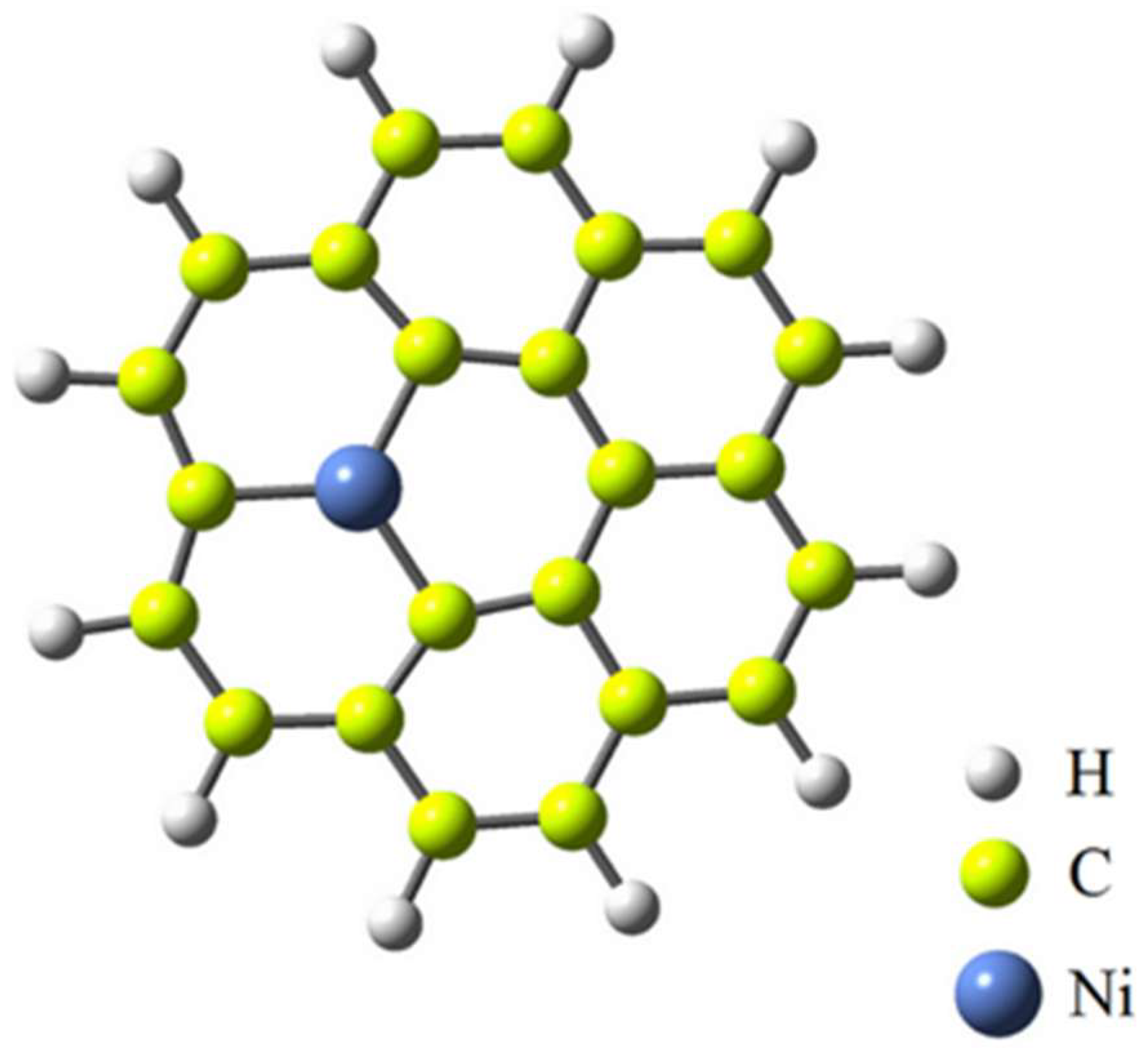
2.1. Production of Graphene Flakes
2.2. Specimen Preparation
2.3. Exposure to Wood-Decay Fungus Trametes Versicolor
2.4. Measurement of the Mechanical Property
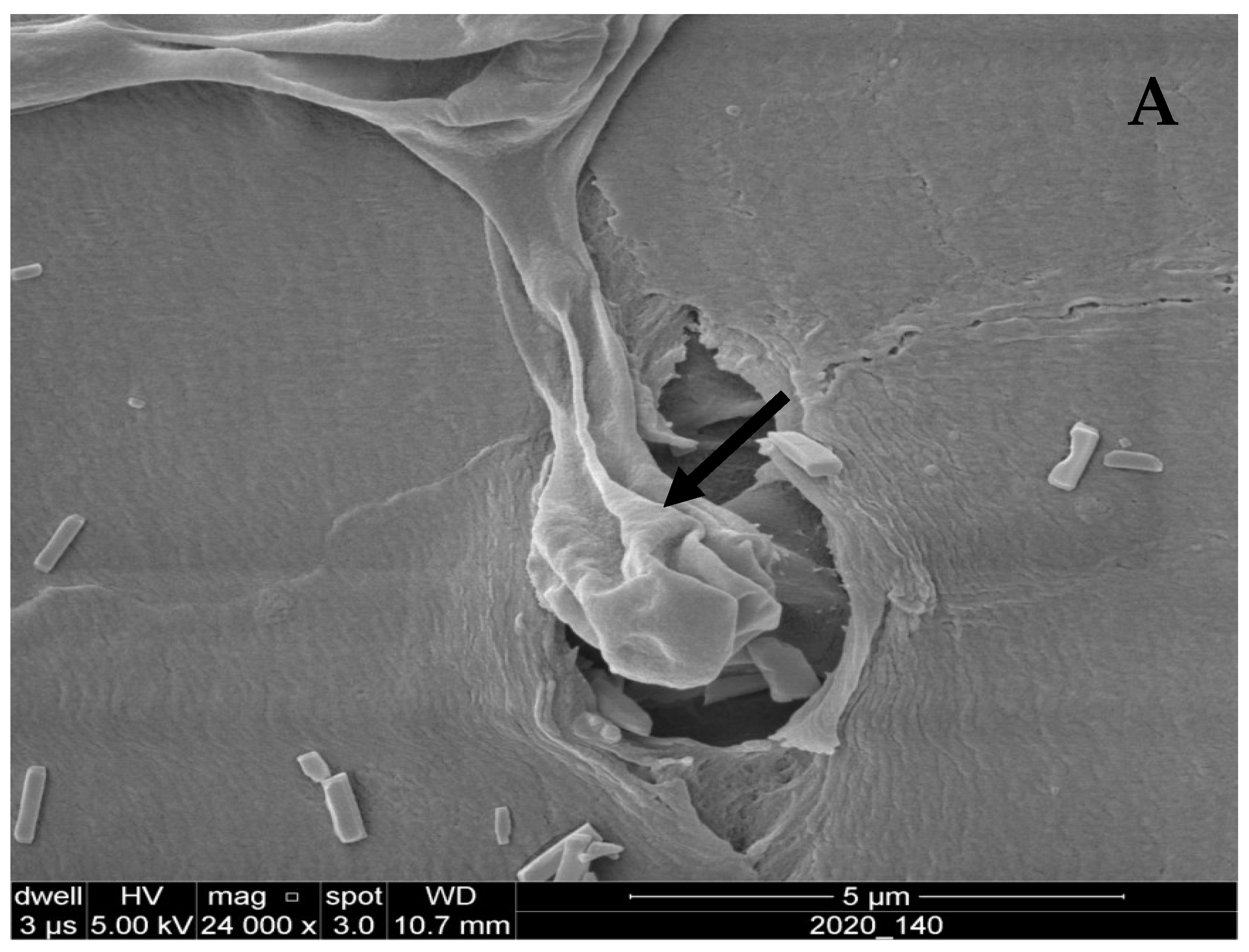
2.5. SEM Imaging
2.6. Statistical Analysis
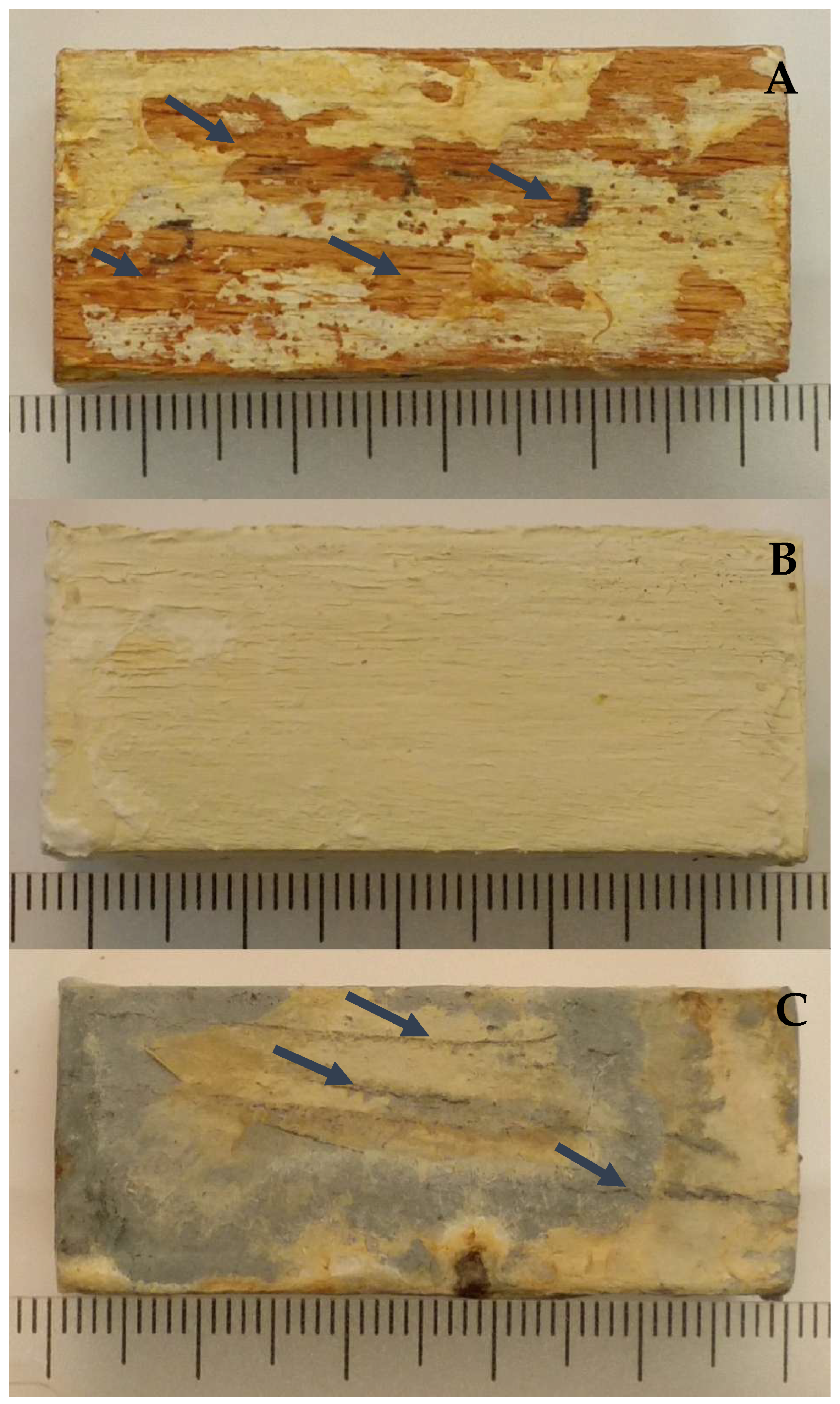
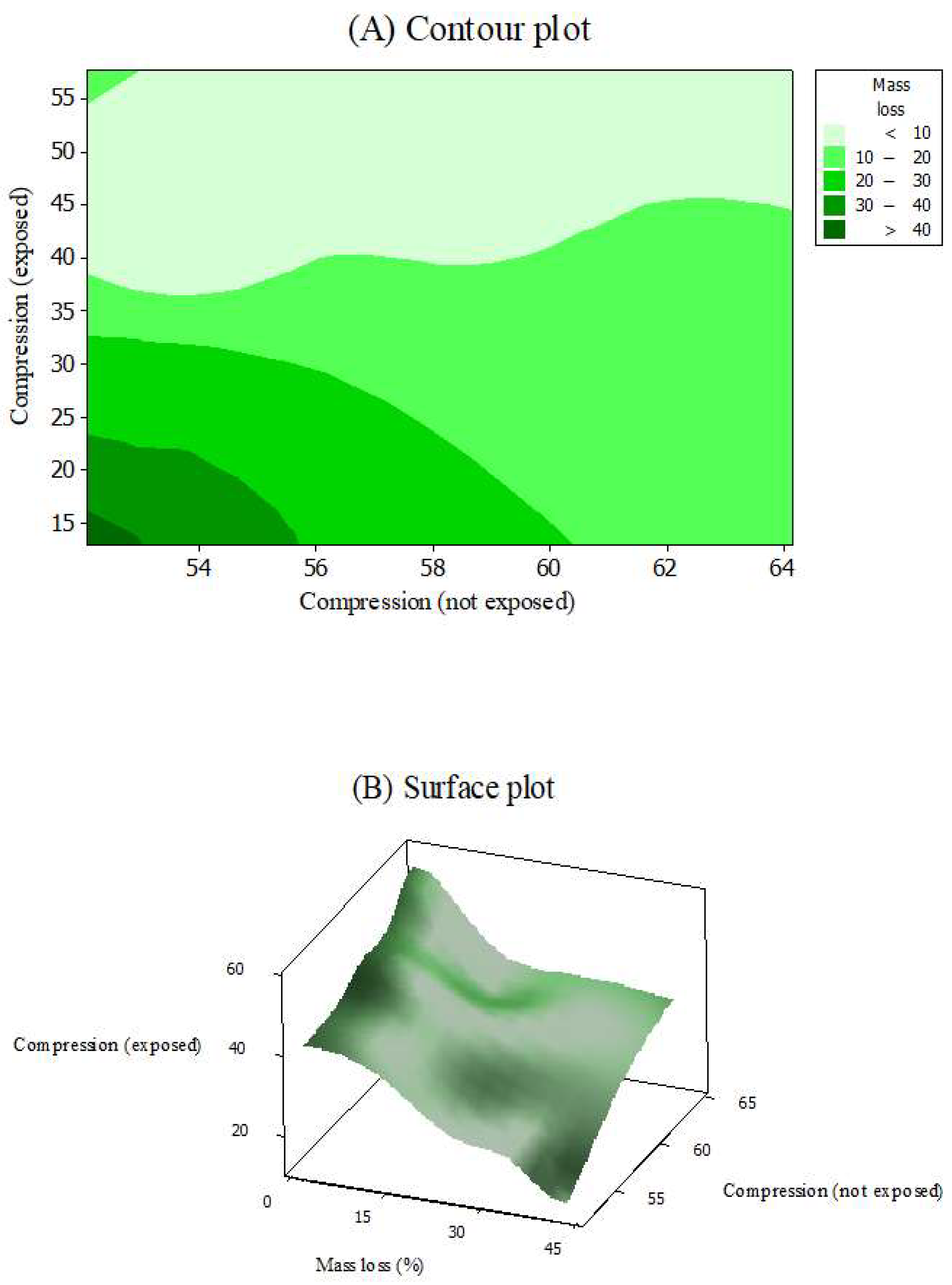
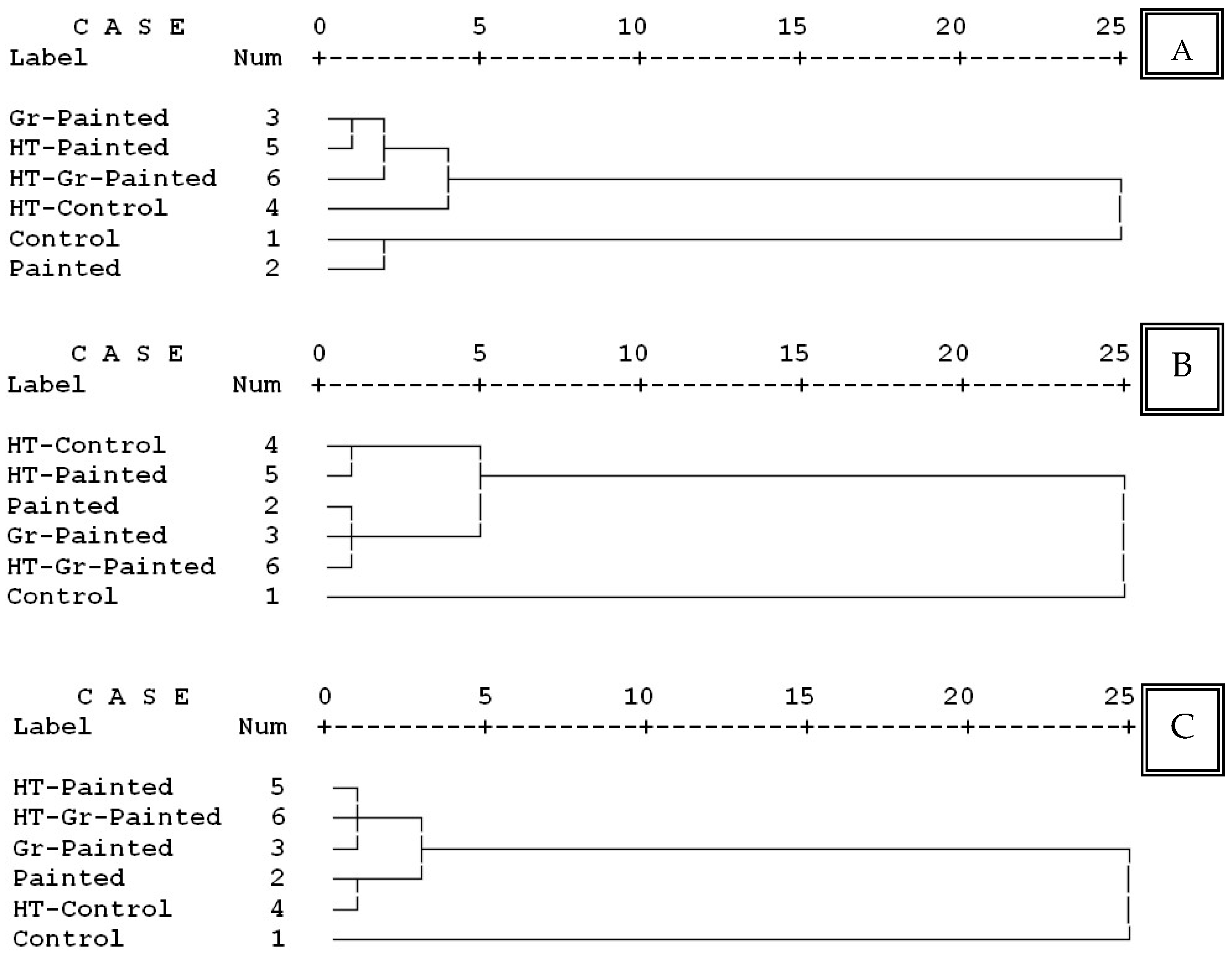
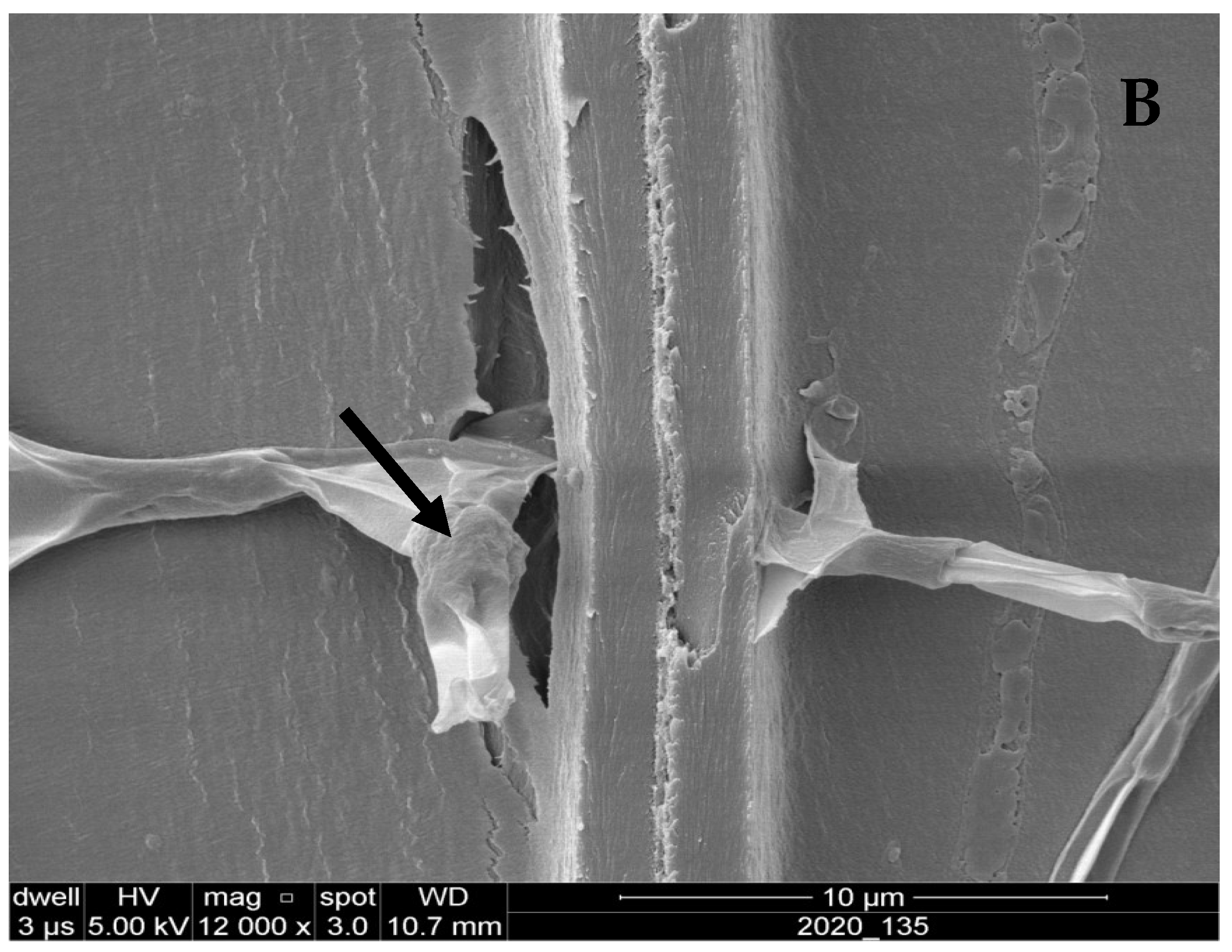
3. Results and Discussions
- An improved mechanical strength and stability of the coating, reported to promote more effective stress redistribution within graphene-containing polymer matrices [25];
4. Conclusions
Author Contributions
Funding
Data Availability Statement
Acknowledgments
Conflicts of Interest
References
- Milton, F.T. The Preservation of Wood: A Self-Study Manual for Wood Treaters; BU-6413-S; Minnesota Extension Service, University of Minnesota, College of Natural Resources: Minnesota, MN, USA, 1995; p. 103. [Google Scholar]
- Hao, Y.; Pan, Y.; Du, R.; Wang, Y.; Chen, Z.; Zhang, X.; Wang, X. The influence of a thermal treatment on the decay resistance of wood via FTIR analysis. Adv. Mater. Sci. Eng. 2018, 2018, 8461407. [Google Scholar] [CrossRef] [Scilit]
- Hill, C. Wood Modification Chemical, Thermal and Other Processes; John Wiley & Sons, Ltd.: Hoboken, NJ, USA, 2006; p. 239. ISBN 0-470-02172-1. [Google Scholar]
- Tjeerdsma, B.F.; Boonstra, M.; Pizzi, A.; Tekely, P.; Militz, H. Characterisation of thermally modified wood: Molecular reasons for wood performance improvement. Holz Als Roh-Werkst. 1998, 56, 149–153. [Google Scholar] [CrossRef] [Scilit]
- Schmidt, O.; Gaiser, O.; Dujesiefken, D. Molecular identification of decay fungi in the wood of urban trees. Eur. J. For. Res. 2012, 131, 885–891. [Google Scholar]
- Brischke, C.; Bollmus, S.; Emmerich, L. Comparative durability tests of preservative-treated and chemically modified wood—Assessment and classification on the basis of different decay tests. Eur. J. Wood Wood Prod. 2024, 82, 1083–1094. [Google Scholar] [CrossRef] [Scilit]
- Boonstra, M.J.; Pizzi, A.; Rigolet, S. Correlation of 13C NMR analysis with fungal decay tests of polymeric structural wood constituents. I. Basidiomycetes. J. Appl. Polym. Sci. 2006, 101, 2639–2649. [Google Scholar] [CrossRef] [Scilit]
- Boonstra, M.J.; van Acker, J.; Tjeerdsma, B.F.; Kegel, E.V. Strength properties of thermally modified softwoods and its relation to polymeric structural wood constituents. Ann. For. Sci. 2007, 64, 679–690. [Google Scholar] [CrossRef] [Scilit]
- Schwarze, W.M.R. Wood decay under the microscope. Fungal Rev. 2007, 21, 133–170. [Google Scholar] [CrossRef] [Scilit]
- Cetin, N.S.; Tingaut, P.; Ozmen, N.; Henry, N.; Harper, D.; Dadmun, M.; Sèbe, G. Acetylation of cellulose nanowhiskers with vinylacetate under moderate conditions. Macromol. Biosci. 2009, 9, 997–1003. [Google Scholar] [PubMed]
- Borrega, M.; Kärenlampi, P.P. Hygroscopicity of Heat-Treated Norway Spruce (Picea abies) wood. Eur. J. Wood Wood Prod. 2010, 68, 233–235. [Google Scholar] [CrossRef] [Scilit]
- Wegner, T.H.; Jones, P. Nanotechnology for the forest products industry. Wood Fiber Sci. 2005, 37, 549–551. [Google Scholar]
- Teng, T.; Arip, M.; Sudesh, K.; Nemoikina, A.; Jalaludin, Z.; Ng, E.P.; Lee, H. Conventional technology and nanotechnology in wood preservation: A review. BioResources 2018, 13, 9220–9252. [Google Scholar] [CrossRef] [Scilit]
- Moya, R.; Zuniga, A.; Berrocal, A.; Vega, J. Effect of silver nanoparticles synthesized with NPsAg-ethylene glycol on brown decay and white decay fungi of nine tropical woods. J. Nanosci. Nanotechnol. 2017, 17, 5233–5240. [Google Scholar] [CrossRef] [Scilit]
- Parvez, K.; Wu, Z.S.; Li, R.; Liu, X.; Graf, R.; Feng, X.; Muelle, K. Exfoliation of graphite into graphene in aqueous solutions of inorganic salts. J. Am. Chem. Soc. 2014, 136, 6083–6091. [Google Scholar] [CrossRef] [Scilit] [PubMed]
- Katamipour, A.; Farzam, M.; Danaee, I. Effects of sonication on anticorrosive and mechanical properties of electrodeposited Ni-Zn-TiO2 nanocomposite coatings. Surf. Coat. Technol. 2014, 254, 358–363. [Google Scholar] [CrossRef] [Scilit]
- Majidi, R.; Farhadi, A.; Danaee, I.; Bahrami Panah, N.; Zarei, D.; Nikmanesh, S. Investigation of synthesized planar Cu-MOF and spherical Ni-MOF nanofillers for improving the anti-corrosion performance of epoxy coatings. Prog. Org. Coat. 2023, 183, 107803. [Google Scholar] [CrossRef] [Scilit]
- Majidi, R.; Danaee, I.; Vrsalovic, L.; Zarei, D. Development of a smart anticorrosion epoxy coating containing a pH-sensitive GO/MOF nanocarrier loaded with 2-mercaptobenzothiazole corrosion inhibitor. Mater. Chem. Phys. 2023, 308, 128291. [Google Scholar] [CrossRef] [Scilit]
- Shirehjini, F.T.; Danaee, I.; Eskandari, H.; Zarei, D. Effect of nano clay on corrosion protection of zinc-rich epoxy coatings on steel 37. J. Mater. Sci. Technol. 2016, 53, 1152–1160. [Google Scholar] [CrossRef] [Scilit]
- Aghazadeh, M.; Golikand, A.N.; Ghaemi, M. Synthesis characterization electrochemical properties of ultrafine ß-Ni(OH)2 nanoparticles. Int. J. Hydrogen Energy 2011, 36, 8674–8679. [Google Scholar] [CrossRef] [Scilit]
- Sheykhifard, Z.; Majid Mohseni, S.; Tork, B.; Hajiali, M.R.; Jamilpanah, L.; Rahmati, B.; Haddadi, F.; Hamdi, M.; Morteza Mohseni, S.; Mohammadbeigi, M.; et al. Magnetic graphene/Ni-nano-crystal hybrid for small field magnetoresistive effects ynthesized via electrochemical exfoliation/depositiontechnique. J. Mater. Sci. Mater. Electron. 2018, 29, 4171–4178. [Google Scholar]
- Liu, S.; Zeng, T.H.; Hofmann, M.; Burcome, E.; Wei, J.; Jiang, R.; Kong, J.; Chen, Y. Antibacterial activity of graphite, graphite oxide, graphene oxide, and reduced graphene oxide: Membrane and oxidative stress. ACS Nano 2011, 5, 6971–6980. [Google Scholar] [CrossRef] [Scilit] [PubMed]
- Yaragalla, S.; Bhavitha, K.B.; Athanassiou, A. A Review on Graphene Based Materials and Their Antimicrobial Properties. Coatings 2021, 11, 1197. [Google Scholar] [CrossRef] [Scilit]
- Nine, M.J.; Cole, M.A.; Tran, D.N.H.; Losic, D. Graphene: A multipurpose material for protective coatings. J. Mater. Chem. A 2015, 3, 12580–12602. [Google Scholar] [CrossRef] [Scilit]
- Li, Z.; Gadipelli, S.; Li, H. Tuning the interlayers pacing of graphene laminate films for efficient pore utilization towards compactc apacitive energy storage. Nat. Energy 2020, 5, 160–168. [Google Scholar] [CrossRef] [Scilit]
- Patil, T.V.; Patel, D.K.; Dutta, S.D.; Ganguly, K.; Lim, K.T. Graphene Oxide-Based Stimuli-Responsive Platforms for Biomedical Applications. Molecules 2021, 26, 2797. [Google Scholar] [CrossRef] [Scilit] [PubMed]
- Wang, Y.; Gao, X.; Yang, K. Quantum Hall phase in graphene engineered byinterfacialcharge coupling. Nat. Nanotechnol. 2020, 17, 1272–1279. [Google Scholar]
- Yuningsih, I.; Rahayu, I.S.; Lumongga, D.; Darmawan, W. Wettability and adherence of acrylic paints on long and short rotation teaks. Wood Mater. Sci. Eng. 2019, 15, 229–236. [Google Scholar] [CrossRef] [Scilit]
- Abdel-Wahab, H. Acrylic Matt and Gloss Paints. J. Pharm. Pharmacol. Res. 2022, 15, 404. [Google Scholar] [CrossRef] [Scilit] [PubMed]
- Sharma, A.K.; Bhandari, R.; Aherwar, A.; Rimašauskienė, R. Matrix materials used in composites: A comprehensive study. Mater. Today Proc. 2020, 21, 1559–1562. [Google Scholar] [CrossRef] [Scilit]
- Xia, L.; Gui, T.; Wang, J.; Tian, H.; Wang, Y.; Ning, L.; Wu, L. Bio-Based Coatings: Progress, Challenges and Future Perspectives. Polymers 2025, 17, 3266. [Google Scholar] [CrossRef] [Scilit] [PubMed]
- Makhlouf, A.S.H. Conventional and advanced coatings for industrial applications: An overview. Nanocoat. Ultra-Thin Film Technol. Appl. 2011, 159–181. [Google Scholar] [CrossRef] [Scilit]
- Esmailpour, A.; Majidi, R.; Taghiyari, H.R.; Ganjkhani, M.; Mohseni Armaki, S.M.; Papadopoulos, A.N. Improving Fire Retardancy of Beech Wood by Graphene. Polymers 2020, 12, 303. [Google Scholar] [CrossRef] [Scilit] [PubMed]
- Akbari, M.; Tahmoures, M.; Azma, A.; Kiyanfar, R.; Tat Shahdost, F. Land capability assessment y combining LESA and GIS in a calcareous watershed, Iran. Arab. J. Geosci. 2022, 15, 404. [Google Scholar] [CrossRef] [Scilit]
- CEN/TS 15083-2; Durability of wood and wood-based products—Determination of the natural durability of solid wood against wood-destroying fungi, test methods—Part 2: Soft rotting micro-fungi. European Committee for Standardization: Brussels, Belgium, 2005.
- Kim, J.W.; Harper, D.P.; Taylor, A.M. Effect of wood species on water sorption and durability of wood-plastic composites. Wood Fiber Sci. 2008, 40, 519–531. [Google Scholar]
- Hatakeyama, T.; Nakamura, K.; Htakeyama, H. Studiesonheatcapacityofcelluloseandligninbydifferentialscanningcalorimetry. Polymer 1982, 23, 1801–1804. [Google Scholar]
- Phuong, L.X.; Shida, S.; Saito, Y. Effects of heat treatment on brittleness of Styrax tonkinensis wood. J. Wood Sci. 2007, 53, 181–186. [Google Scholar] [CrossRef] [Scilit]
- Weiland, J.; Guyonnet, R. Study of chemical modifications and fungi degradation of thermally modified wood using DRIFT spectroscopy. Holz Als Roh-Werkst. 2003, 61, 216–220. [Google Scholar] [CrossRef] [Scilit]
- Fahlén, J.; Salmén, L. Cross-sectional structure of the secondary wall of wood fibers as affected by processing. J. Mater. Sci. 2003, 38, 119–126. [Google Scholar] [CrossRef] [Scilit]
- Hakkou, M.; Pétrissans, M.; Zoulalian, A.; Gérardin, P. Investigation of wood wettability changes during heat treatment on the basis of chemical analysis. Polym. Degrad. Stab. 2005, 89, 1–5. [Google Scholar] [CrossRef] [Scilit]
- Kato, K.L.; Cameron, R.E. Structure-property relationships in thermally aged cellulose fibers and paper. J. Appl. Polym. Sci. 1999, 74, 1465–1477. [Google Scholar] [CrossRef] [Scilit]
- Matsuda, Y.; Isogai, A.; Onabe, F. Effects of thermal and hydrothermal treatments on the reswelling capabilities of pulps and paper sheets. J. Pulp Pap. Sci. 1994, 20, 323–327. [Google Scholar]
- Weise, U. Hornification: Mechanisms and terminology. Pap. Timber 1998, 80, 110–115. [Google Scholar]
- Nassaj, Z.; Ravari, F.; Danaee, I.; Ehsani, M. Thermal stability, degradation kinetic and electrical properties studies of decorated graphene oxide with CeO2 nanoparticles-reinforced epoxy. Fuller. Nanotub. Carbon Nanostruct. 2021, 29, 446–456. [Google Scholar] [CrossRef] [Scilit]





| Treatments | Mass Loss (%) | |||||
|---|---|---|---|---|---|---|
| Unheated | Heat-Treated at 185 °C | |||||
| Wood Species | Control (Unpainted) | Painted | Graphene-Painted | Unpainted | Painted | Graphene-Painted |
| Beech | 42.4 [3.20] 1 (A) 2 | 29.9 [2.01] (B) | 4.5 [0.51] (D) | 17.9 [0.93] (C) | 4.2 [0.41] (D) | 1.6 [0.49] (E) |
| Poplar | 27.9 [4.74] (A) | 4.7 [0.58] (BC) | 1.9 [0.34] (C) | 4.9 [0.64] (B) | 2.4 [0.49] (BC) | 2.6 [0.34] (BC) |
| Spruce | 13.3 [1.88] (A) | 3.2 [0.53] (B) | 1.8 [0.31] (C) | 4.3 [0.40] (B) | 1.5 [0.40] (C) | 1.7 [0.29] (C) |
| Treatments | Compression Strength Parallel to Grain (N·mm−2) | ||||||
|---|---|---|---|---|---|---|---|
| Unheated | Heat-Treated at 185 °C | ||||||
| Wood Species | Unpainted | Painted | Graphene-Painted | Unpainted | Painted | Graphene-Painted | |
| Beech | Unexposed | 52.1 [8.11] 1 (BC) 2 | 53.1 [6.10] (BC) | 53.6 [4.19] (BC) | 62.1 [3.55] (A) | 59.0 [5.77] (AB) | 64.1 [4.62] (A) |
| Exposed | 13.0 [2.69] (G) | 23.1 [2.35] (F) | 42.3 [2.89] (D) | 34.1 [3.51] (E) | 48.5 [4.83] (CD) | 57.9 [5.31] (AB) | |
| Poplar | Unexposed | 39.4 [6.00] (AB) | 40.7 [3.19] (AB) | 38.7 [6.49] (AB) | 44.0 [5.24] (A) | 41.9 [3.07] (A) | 44.9 [3.98] (A) |
| Exposed | 17.7 [3.47] (D) | 30.7 [5.09] (C) | 29.1 [2.79] (C) | 41.1 [5.15] (AB) | 41.2 [6.48] (AB) | 39.7 [3.93] (BC) | |
| Spruce | Unexposed | 34.8 [3.58] (CD) | 35.8 [2.10] (BCD) | 39.3 [3.82] (B) | 37.9 [1.95] (BC) | 39.3 [2.55] (B) | 45.6 [2.90] (A) |
| Exposed | 20.1 [1.86] (F) | 30.5 [3.59] (E) | 34.0 [2.16] (CDE) | 32.8 [1.89] (DE) | 37.0 [2.72] (BCD) | 36.4 [2.00] (BCD) | |
Disclaimer/Publisher’s Note: The statements, opinions and data contained in all publications are solely those of the individual author(s) and contributor(s) and not of MDPI and/or the editor(s). MDPI and/or the editor(s) disclaim responsibility for any injury to people or property resulting from any ideas, methods, instructions or products referred to in the content. |
© 2026 by the authors. Licensee MDPI, Basel, Switzerland. This article is an open access article distributed under the terms and conditions of the Creative Commons Attribution (CC BY) license.
Share and Cite
Taghiyari, H.R.; Nadali, E.; Pizzi, A.; Majidi, R.; Taheri, M.; Sowlat, M.H.; Schmidt, O.; Papadopoulos, A.N. Graphene-Enriched Acrylic Paint to Preserve Wood Substrates from Trametes versicolor. Forests 2026, 17, 871. https://doi.org/10.3390/f17080871
Taghiyari HR, Nadali E, Pizzi A, Majidi R, Taheri M, Sowlat MH, Schmidt O, Papadopoulos AN. Graphene-Enriched Acrylic Paint to Preserve Wood Substrates from Trametes versicolor. Forests. 2026; 17(8):871. https://doi.org/10.3390/f17080871
Chicago/Turabian StyleTaghiyari, Hamid R., Elham Nadali, Antonio Pizzi, Roya Majidi, Mohammad Taheri, Mohammad Hassan Sowlat, Olaf Schmidt, and Antonios N. Papadopoulos. 2026. "Graphene-Enriched Acrylic Paint to Preserve Wood Substrates from Trametes versicolor" Forests 17, no. 8: 871. https://doi.org/10.3390/f17080871
APA StyleTaghiyari, H. R., Nadali, E., Pizzi, A., Majidi, R., Taheri, M., Sowlat, M. H., Schmidt, O., & Papadopoulos, A. N. (2026). Graphene-Enriched Acrylic Paint to Preserve Wood Substrates from Trametes versicolor. Forests, 17(8), 871. https://doi.org/10.3390/f17080871