Article

Wood Properties of 7-Year-Old Brachypterum microphyllum Planted in Malaysia

by
Nordahlia Abdullah Siam
*,
Fadzureena Jamaludin
,
Ong Chee Beng
,
Asniza Mustapha
,
Ariff Fahmi Abu Bakar
,
Nur Syauqina Syasya Mohd Yusoff
and
Mohd Khairun Anwar Uyup
Forest Research Institute Malaysia (FRIM), Kepong 52109, Selangor Darul Ehsan, Malaysia
*
Author to whom correspondence should be addressed.
Forests 2026, 17(7), 771; https://doi.org/10.3390/f17070771
Submission received: 11 May 2026 / Revised: 19 June 2026 / Accepted: 22 June 2026 / Published: 30 June 2026
(This article belongs to the Section Wood Science and Forest Products)

Abstract

The utilisation potential of Brachypterum microphyllum, a fast-growing species introduced into plantation trials in Malaysia, remains relatively underexplored. Samples in this study were obtained from a Forest Research Institute Malaysia (FRIM) plantation trial in Selandar, Melaka, established using wild seedlings collected from Kampung Ulu Groh, Perak, where the species has been traditionally used by the Semai Orang Asli community. The plantation trial was initiated to assess its cultivation potential and to support sustainable raw material supply, thereby reducing reliance on natural forest resources. To date, research has mainly focused on the medicinal properties of the bark, while the wood characteristics and utilisation potential remain less studied. This study investigated the anatomical, chemical, physical, and mechanical properties of seven-year-old plantation-grown B. microphyllum. Microscopic analysis revealed diffuse-porous wood with very large solitary vessels, aliform to confluent parenchyma, medium-sized rays, and non-septate fibres. The absence of tyloses and silica may indicate favourable treatability and machinability, although this requires further confirmation through processing studies. Chemical analysis showed high holocellulose content (79.5%–81.9%), α-cellulose (~44%), moderate lignin content (22.6%–23.9%), and low extractives (0.9%–2.1%), indicating a high carbohydrate composition. Preliminary phytochemical screening identified flavonoids, tannins/polyphenols, and triterpenes/steroids, which may be relevant to further investigation of its reported traditional uses. The wood density ranged from 441.4 to 606.8 kg/m3 (mean: 524.1 kg/m3), classifying it as light to moderately heavy timber. Shrinkage values at 15% moisture content were 2.2% (tangential), 1.3% (radial), and 0.6% (longitudinal), with a T/R ratio of 1.6, indicating moderate dimensional stability. Mechanical properties were comparable to or higher than values reported for several plantation-grown species in the literature. Overall, the findings indicate that seven-year-old B. microphyllum has potential as a fast-growing plantation timber species with favourable physical and mechanical properties.

1. Introduction

Brachypterum was long treated as a member of the genus Derris by numerous authors [1,2,3,4,5,6,7,8,9]. However, a comparative analysis of genera within the tribe Millettieae by [10] reinstated Brachypterum as a genus distinct from Derris. Subsequent morphological and molecular phylogenetic studies strongly supported Brachypterum as a monophyletic group characterised by unique morphological traits, thereby confirming its generic status within Millettieae [11,12]. Ref. [13] recognised approximately 12 species of woody climbers and trees in Brachypterum, distributed from Southeast Asia to northeastern Australia. According to [14], Brachypterum microphyllum (syn. Derris microphyllum) occurs naturally in Sumatra, Peninsular Malaysia, Thailand, Burma (Myanmar), and possibly Indo-China. The species is also found in Java, where it is occasionally cultivated as a shade tree in cocoa, coffee, and tea plantations, particularly on poor soils. In addition to its use as green manure, the species is valued as an ornamental tree due to its abundant purple flowers [14].
In Malaysia, Brachypterum microphyllum Miq. (Fabaceae), locally known as batai by the Semai Orang Asli, is traditionally used by their community in Ulu Geroh, Perak, particularly for medicinal purposes involving plant parts such as bark. For B.microphyllum species, most research attention has focused on the medicinal potential of the bark, leaving other parts of the tree less studied. Beyond its ethnomedicinal use, information on the utilisation and properties of B. microphyllum timber remains limited. Ref. [14] reported that the wood is used mainly as a building material and as firewood. Despite its restricted utilisation, further research on the basic properties of this species is warranted, as B. microphyllum is a pioneer species characterised by rapid growth. In the context of reducing pressure on natural forests and identifying alternatives to commercial timbers, studies on fast-growing pioneer species are necessary to evaluate their potential for value-added products. Fundamental wood properties, including anatomical, physical, and mechanical characteristics, serve as key indicators for determining suitability for various end uses. However, evaluating the chemical and phytochemical composition is equally important, as these characteristics may reveal additional value-added applications of B. microphyllum. Phenolic compounds, including flavonoids and tannins, contribute to mechanical strength, pathogen defence, and environmental adaptation [15]. Likewise, extractive-rich tissues are typically associated with older and structurally robust plant parts and are known to contain diverse bioactive constituents such as triterpenes and steroids [16]. Anatomical properties encompass several critical features that systematically influence physical, mechanical, and technological properties and define potential applications in the wood-based industry. For example, vessel size is closely related to treatability, with larger vessels generally facilitating easier impregnation than smaller ones [17]. In addition, vessel frequency and diameter exhibit strong correlations with wood density and permeability, which subsequently affect drying behaviour, preservative treatability, and dimensional stability [18]. Studies on Parapiptadenia rigida and Peltophorum dubium demonstrate that species with higher vessel frequency typically display increased basic density, directly enhancing their mechanical strength and durability [18].
Fibre characteristics represent another significant anatomical parameter. Fibre morphology is a key indicator of suitability for pulp and paper production [19,20]. Fibre length, wall thickness, and lumen diameter significantly impact wood density, mechanical properties and processing behaviour [21]. Longer fibres with thicker walls generally contribute to higher tensile and flexural strength, while the fibre wall fraction (ratio of wall thickness to total fibre diameter) serves as a reliable predictor of wood stiffness [22]. Studies on Eucalyptus species have successfully developed predictive models that estimate mechanical properties based on these anatomical parameters, achieving high correlation coefficients that validate the fundamental connection between cellular structure and bulk material performance [22]. Wood rays, though often overlooked, play crucial roles in both biological function and material properties. These radial parenchyma structures facilitate lateral transport of nutrients and water, but they also influence surface characteristics and machining behaviour. Species with abundant and wide rays tend to produce rougher surfaces during planing operations due to differential cutting resistance between ray tissue and surrounding fibres [23]. Wood anatomy forms the structural foundation governing physical and mechanical behaviour. Variations in fibre morphology, vessel dimensions, and ray characteristics influence density, moisture movement, dimensional stability, and strength performance. Therefore, understanding anatomical features is essential for predicting the utilisation potential of plantation-grown timber species.
Physical properties, particularly density and shrinkage, are widely recognised as important indicators of wood quality. Wood density is correlated with shrinkage behaviour, drying performance, machining characteristics, and mechanical properties [24,25]. The influence of density on other wood properties is both extensive and well-documented. Mechanical strength properties, including modulus of elasticity (MOE), modulus of rupture (MOR), and compressive strength, demonstrate strong positive correlations with basic density. For instance, research on plantation-grown Acacia auriculiformis from India revealed that 13-year-old trees produced timber that was dense, very strong, moderately tough and compared favourably with teak in several properties, directly linking higher density to enhanced mechanical performance suitable for demanding applications like tool handles, oars, and ammunition boxes [26]. Similarly, studies on Paulownia wood from Central European plantations identified the strength-to-density ratio as a crucial parameter for determining optimal valorization pathways, highlighting how density serves as the denominator in key performance metrics that balance weight against structural capacity [27].
Shrinkage is another critical property, as it is associated with defects such as warping, cupping, checking, and splitting, which significantly affect wood performance and usability [28,29]. Research evaluating 14 alternative timber species explicitly noted that dimensional stability is correlated with wood density, making this relationship particularly important for furniture applications where stability is important [30]. The kiln drying behaviour of ten fast-growth plantation species in Costa Rica further demonstrated that density influences drying rates and susceptibility to defects like warping and checking, necessitating species-specific drying schedules that account for density variations [31]. This connection arises because denser woods typically have thicker cell walls relative to lumens, which affects how moisture moves through and is retained within the cellular structure [32].
One of the primary reasons for investigating mechanical properties lies in the growing reliance on plantation-grown timber to meet global demand amid declining natural forest resources. Plantation species, often selected for rapid growth and high yield, frequently exhibit different anatomical and physical characteristics compared to their slower-growing natural counterparts. For example, research on Khaya ivorensis (African Mahogany) plantations in Ghana has revealed industry concerns regarding the inferior mechanical performance of fast-grown trees, prompting detailed assessments of bending strength and MOE to validate their structural viability [33]. Similarly, studies on Eucalyptus nitens in Australia have demonstrated significant potential for structural applications, but only when supported by accurate grading systems based on non-destructive testing (NDT) of stiffness, a key mechanical indicator [34]. Without comprehensive mechanical characterisation, such fast-grown timbers risk being misapplied, leading to structural failures or inefficient resource use [35]. Furthermore, certification for structural applications requires reliable mechanical profiling; otherwise, market access and innovation in sustainable building materials may be constrained. As stated by [35], the fabrication of wooden trusses using species such as Gmelina arborea, Tectona grandis, and Cupressus lusitanica relies on validated mechanical properties to ensure sufficient load-bearing capacity and long-term durability.
In addition, the chemical composition of woody species significantly influences durability, biological resistance, mechanical performance, and potential pharmacological value. For example, Poplar (Populus × euramericana) plantations in China exhibit variations in cellulose, hemicellulose, and lignin contents that are associated with environmental factors and directly affect wood properties [36]. Similarly, comprehensive phytochemical screening of bark extracts from seven industrially important plantation tree species, i.e., Pinus sylvestris, Pinus nigra, Pinus brutia, Picea orientalis, Abies nordmanniana subsp. equi-trojani, Fagus orientalis, and Quercus robur revealed substantial concentrations of bioactive compounds using GC-MS and HPLC techniques [37]. These plantation-grown coniferous and deciduous species demonstrated considerable phenolic and flavonoid contents associated with antioxidant and antimicrobial activities. Collectively, these findings indicate that plantation-grown tree species may possess significant chemical and phytochemical variability that influences not only wood quality and durability but also their potential for value-added applications. As a fast-growing plantation species with potential for both timber production and pharmacological utilisation, B. microphyllum represents a promising candidate for integrated resource development. Therefore, characterising its chemical composition is important for evaluating both timber-related performance and potential bioactive properties.
In woody plants, extractives comprising phenolics, terpenoids, and other non-structural constituents are commonly deposited in heartwood and bark tissues, where they contribute to defence against fungi, insects, and environmental stress [38,39]. These compounds are frequently associated with antioxidant activity, enhanced natural durability, and improved resistance to biological degradation [40,41]. Furthermore, extractive composition may influence wood colour, decay resistance, permeability, and dimensional stability [42,43]. Understanding these structure–chemistry relationships is particularly relevant in species with traditional medicinal applications, where bark and mature tissues are often selectively utilised. To date, no comprehensive phytochemical investigation of B. microphyllum has been reported. However, related genera within the tribe Millettieae are known to produce diverse secondary metabolites, including flavonoids, isoflavonoids, rotenoids, and triterpenoids [44,45]. Species formerly classified under Derris are particularly recognised for rotenoid compounds with documented insecticidal and bioactive properties [46]. Given the close taxonomic relationship and the established occurrence of these compounds in related taxa, it is reasonable to hypothesise that B. microphyllum may possess comparable biosynthetic potential.
Despite its occurrence in plantation trials in Malaysia, comprehensive information on the wood properties of B. microphyllum remains limited, particularly in terms of integrated evaluations encompassing anatomical, chemical, physical, and mechanical properties. Most previous studies have focused on its medicinal and phytochemical properties, while its timber characteristics have received little attention. In addition, data on plantation-grown material, especially from early harvesting stages, are still scarce. The evaluation of seven-year-old trees is particularly important in plantation forestry, where early rotation age is increasingly considered for fast-growing species to improve resource efficiency and shorten production cycles. Therefore, a detailed understanding of its properties at this growth stage is essential to assess its potential as a sustainable alternative timber resource. In addition, the study investigated the longitudinal variation in wood properties along the stem by comparing samples obtained from the bottom and middle stem positions, with the aim of determining whether significant changes in wood characteristics occur with increasing tree height.

2. Materials and Methods

2.1. Preparation of Materials

Samples of B. microphyllum used in this study were obtained from the Forest Research Institute Malaysia research plot located at Selandar, Melaka. This plot forms part of an early planting trial established to explore the cultivation potential of the species and to support the development of sustainable raw material sources without relying on harvesting from natural forest populations. The planting materials originated from wild seedlings collected near Kampung Ulu Groh, Gopeng, Perak, where the species is traditionally used by the Semai Orang Asli community. After collection, local community members raised the seedlings before transferring them to the FRIM nursery, Kepong, Selangor, for hardening prior to field planting at Selandar, Melaka.
For this study, four trees were selected from the open sub-plots. Individuals in this area generally showed better growth performance. At the time of harvesting, the trees were seven years old. Selection was based on a relatively larger diameter at breast height (dbh) and better stem form compared with other individuals within the plots. The range of diameter breast height (dbh) and merchantable bole height of the trees was 18–20 cm, and 6–11 m, respectively.
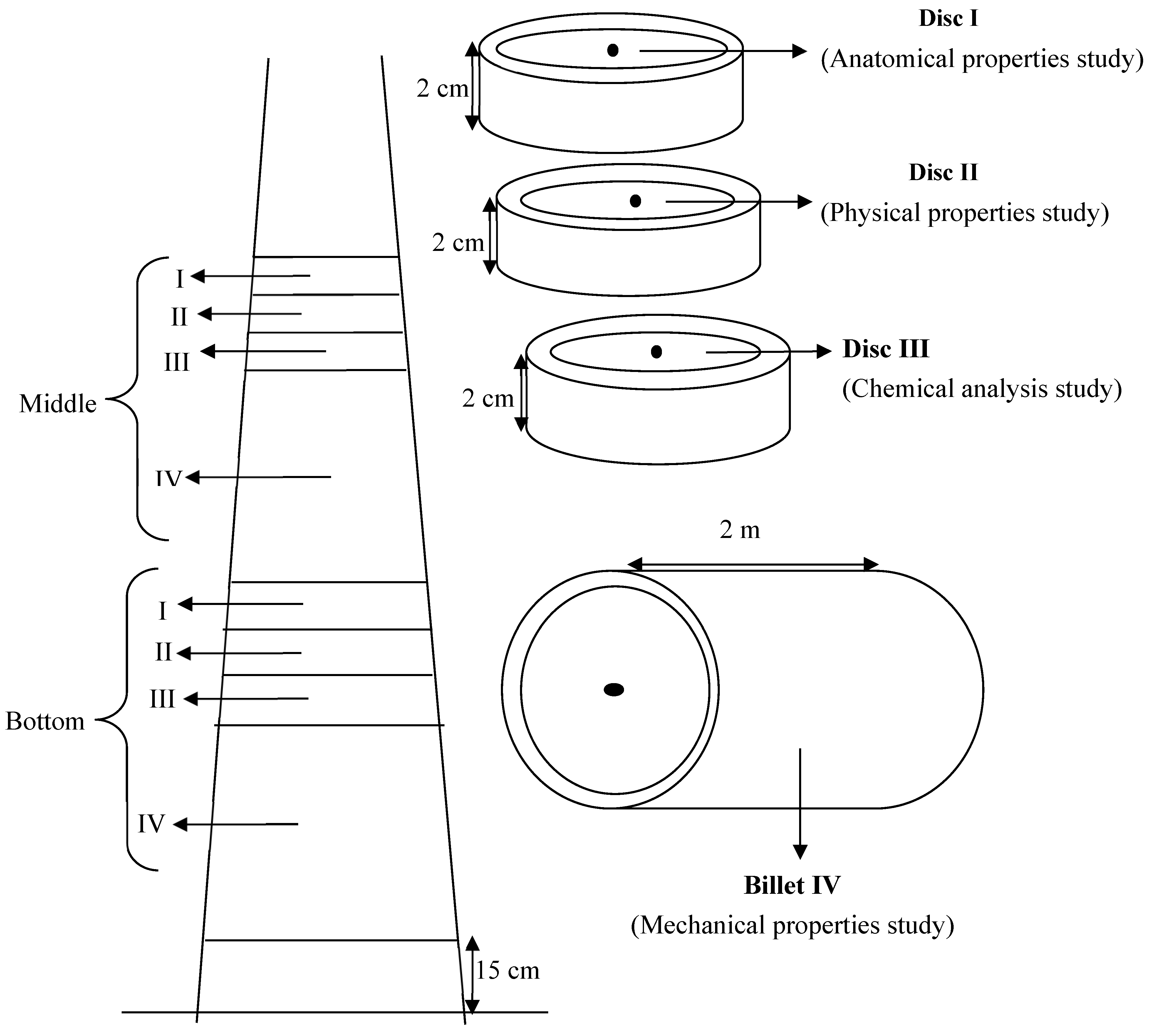
Four 7-year-old trees were felled at approximately 15 cm above ground level. Three discs, each about 2 cm in thickness, and billets of 2 m in length were obtained from each tree. The discs were used for anatomical, chemical composition analysis and physical property analyses, while the 2 m billets were prepared for mechanical property testing (Figure 1). For chemical composition analysis, wood samples were air-dried, oven-dried at 60 ± 2 °C to constant mass, ground, and sieved to obtain particles between 40 and 60 mesh size. All determinations were conducted in triplicate and expressed on an oven-dry basis.

2.2. Determination of Anatomical Properties

The study of anatomical characteristics was carried out following the procedure described by [47]. Small wood blocks measuring 10 mm × 10 mm × 10 mm were prepared from the wood discs. These samples were immersed and boiled in distilled water until fully saturated and able to sink. Thin sections were subsequently obtained from the transverse, tangential, and radial planes using a sledge microtome (Reichert, Vienna, Austria), with section thickness maintained at approximately 25 µm. Each type of section was placed in separate Petri dishes prior to staining. Staining was performed using a 1% safranin-O (Sigma, New Delhi, India) solution for 20 min. The sections were then rinsed with 50% ethanol and progressively dehydrated through a graded ethanol series of 70%, 80%, 90%, and 95% (Merck, Selangor, Malaysia). After dehydration, a drop of Canada balsam (Merck, Darmsladt, Germany) was applied, and the sections were mounted with a cover slip. The prepared slides were dried in an oven at 60 °C for several days.
Fibre dimensions were determined using the maceration method described by [48]. Wood samples were first split into matchstick-sized pieces and macerated in a 1:1 mixture of 30% hydrogen peroxide and glacial acetic acid (Merck, Selangor, Malaysia) at 45 °C for 2–3 h. The maceration process was continued until the lignin was completely dissolved, yielding individual whitish cellulose fibres. The fibres were then washed thoroughly with distilled water and stained with 1% Safranin O (Sigma, New Delhi, India) solution for 15 min to enhance contrast prior to microscopic examination. Subsequently, the stained fibres were mounted on glass slides, and fibre dimensions and other anatomical characteristics were measured using a light microscope (Olympus Corporation, Tokyo, Japan). Terminology and identification criteria followed the International Association of Wood Anatomists (IAWA) list of microscopic features for hardwood identification [48]. A total of 30 samples were used for each group (bottom and middle sections).

2.3. Chemical Composition Analysis

Extractive content was quantified according to TAPPI T204 cm-07 [49] by Soxhlet extraction of approximately 2 g of wood sample using ethanol-toluene (1:2, v/v) for at least 6 h. The solvent was evaporated and the residue dried to constant weight. The extractive content was expressed as a percentage of oven-dry mass. Holocellulose content was determined using the sodium chlorite delignification method described by [50]. Extractive-free wood sample (~2 g) was treated with acidified sodium chlorite at 70–80 °C until lignin removal was complete, then washed to neutral pH, dried at 60 °C, and weighed. Holocellulose content was expressed as a percentage of oven-dry sample weight. Alpha-cellulose content was determined from the holocellulose fraction following TAPPI T203 om-93, in which holocellulose was treated with 17.5% NaOH at room temperature to remove hemicelluloses. The insoluble residue was washed, neutralised, dried, and weighed. The α-cellulose content was calculated relative to the original oven-dry sample, while hemicellulose content was estimated as the difference between holocellulose and α-cellulose. Lignin content was determined as acid-insoluble lignin in accordance with TAPPI T222 om-02 by hydrolysing extractive-free samples (~1 g) with 72% H2SO4, followed by dilution and refluxing to remove carbohydrates. The insoluble residue was then filtered, washed and dried at 105 °C to constant weight. Lignin content was expressed as a percentage of oven-dry sample weight. A total of 30 samples were used for each group (bottom and middle sections).
For preliminary phytochemical screening, the bark samples were exhaustively extracted using methanol to obtain crude extracts. Extraction was performed by soaking the samples in methanol at a solvent-to-sample ratio of 10:1 (v/w) for 24 h at room temperature under continuous agitation. Preliminary phytochemical screening was performed to detect the presence of major classes of secondary metabolites commonly associated with plant biological and ecological functions, including alkaloids, saponins, flavonoids, tannins, triterpenes, and steroids. All analyses were conducted using standard qualitative phytochemical methods as described by [51,52]. Alkaloids were detected using Mayer’s reagent following acid extraction, where the formation of a white precipitate indicated a positive result [51]. Saponins were detected using the froth test, in which the persistence of stable foam indicated the presence of saponins [52]. Flavonoids were detected using the ammonia test, with yellow coloration indicating a positive reaction [52]. Tannins and polyphenols were identified using ferric chloride, producing blue-black or greenish-brown coloration depending on tannin type [51]. Triterpenes and steroids were detected using the Liebermann–Burchard reaction, a widely accepted qualitative test for terpenoid compounds [52]. The intensity of colour development or precipitate formation was recorded semi-quantitatively as weak (+), moderate (++), or strong (+++).

2.4. Determination of Physical Properties

Physical properties were tested using [53]. Samples of size 20 mm in radial × 20 mm in longitudinal × 40 mm in tangential directions were cut from the woods for the analyses of density and shrinkage. A total of 30 samples were used for each group (bottom and middle sections). Density was determined on the basis of oven-dry weight and green volume (Equation (1)). The shrinkage test was conducted in green to air-dry conditions (15% moisture content). The tangential, radial and longitudinal sections of each sample were marked and measured with a pair of digital vernier callipers (Mitotoyo) to the nearest 0.01 mm. Shrinkage was calculated using Equation (2). The tangential-to-radial shrinkage (T/R) ratio was determined to evaluate the dimensional stability of the wood (Equation (3)).
D e n s i t y kg / m 3 = W o V g
where
Wo = oven-dry weight, g
Vg = green volume, mm3
S a % = D i D a D i × 100
where Sa = shrinkage from green to air-dry conditions, Di = initial dimension (mm) and Da = air-dry dimension (mm).
T / R   r a t i o = Tangential   shrinkage Radial   shrinkage

2.5. Determination of Mechanical Properties

The timber was processed into samples and divided into two groups, according to the timber gathered from the bottom section or middle section of the tree trunk. All the samples were conditioned to moisture content between 12 and 14% prior to testing. A 100 KN Shimadzu testing machine (Kyoto, Japan) was used and the tests were conducted in accordance with [53] namely static bending test (central loading method), compression test (parallel to the longitudinal grain), shear test (parallel to the longitudinal grain), and hardness test (Janka indentation test). The size of the samples followed the 2 cm standard of the testing methods (Table 1). The modulus of rupture (MOR) and modulus of elasticity (MOE) were determined in the bending test. The moisture content of the samples at the time of test was also determined using an oven-dry method.

2.6. Statistical Analysis

Statistical analyses were performed using the Statistical Analysis System version 9.4 (SAS). Data normality and homogeneity of variances were examined using the Shapiro–Wilk and Levene’s tests, respectively. Analysis of variance (ANOVA) was conducted to determine significant differences between means.

3. Results and Discussion

3.1. Assessment of Normality and Homogeneity of Variance

Prior to statistical analysis, the assumptions of normality and homogeneity of variance were evaluated to ensure the validity of parametric tests. Normality was assessed using the Shapiro–Wilk test, while homogeneity of variance was evaluated using Levene’s test. A significance level of p > 0.05 was used as the criterion for assumption satisfaction. As shown in Table 2, all investigated properties met the assumptions of normality and homogeneity of variance, with all p-values exceeding 0.05. These results indicate that the data were normally distributed and exhibited homogeneous variances across groups.

3.2. Anatomical Properties

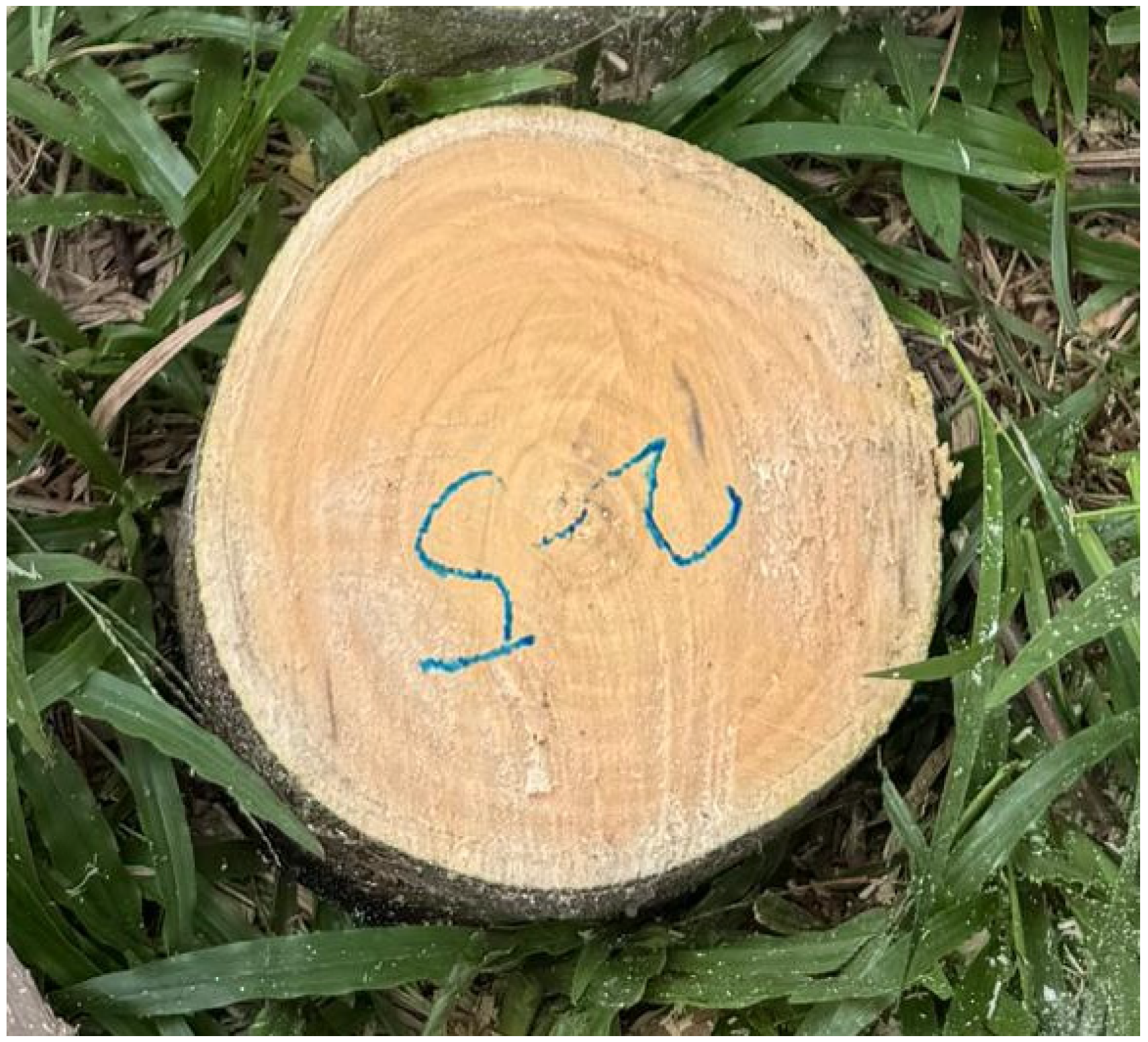
The wood of B. microphyllum shows no clear demarcation between sapwood and heartwood. The fresh wood is pale cream to light yellowish in colour, becoming light yellow-brown upon exposure. The surface exhibits a moderately coarse and even texture, corresponding to the presence of large vessels and medium-sized rays. The growth ring-like appearance observed on the transverse surface may be associated with layers of thick-walled fibres and reduced vessel size. No distinctive odour was observed. Figure 2 shows the transverse surface of the stem disc of B. microphyllum.
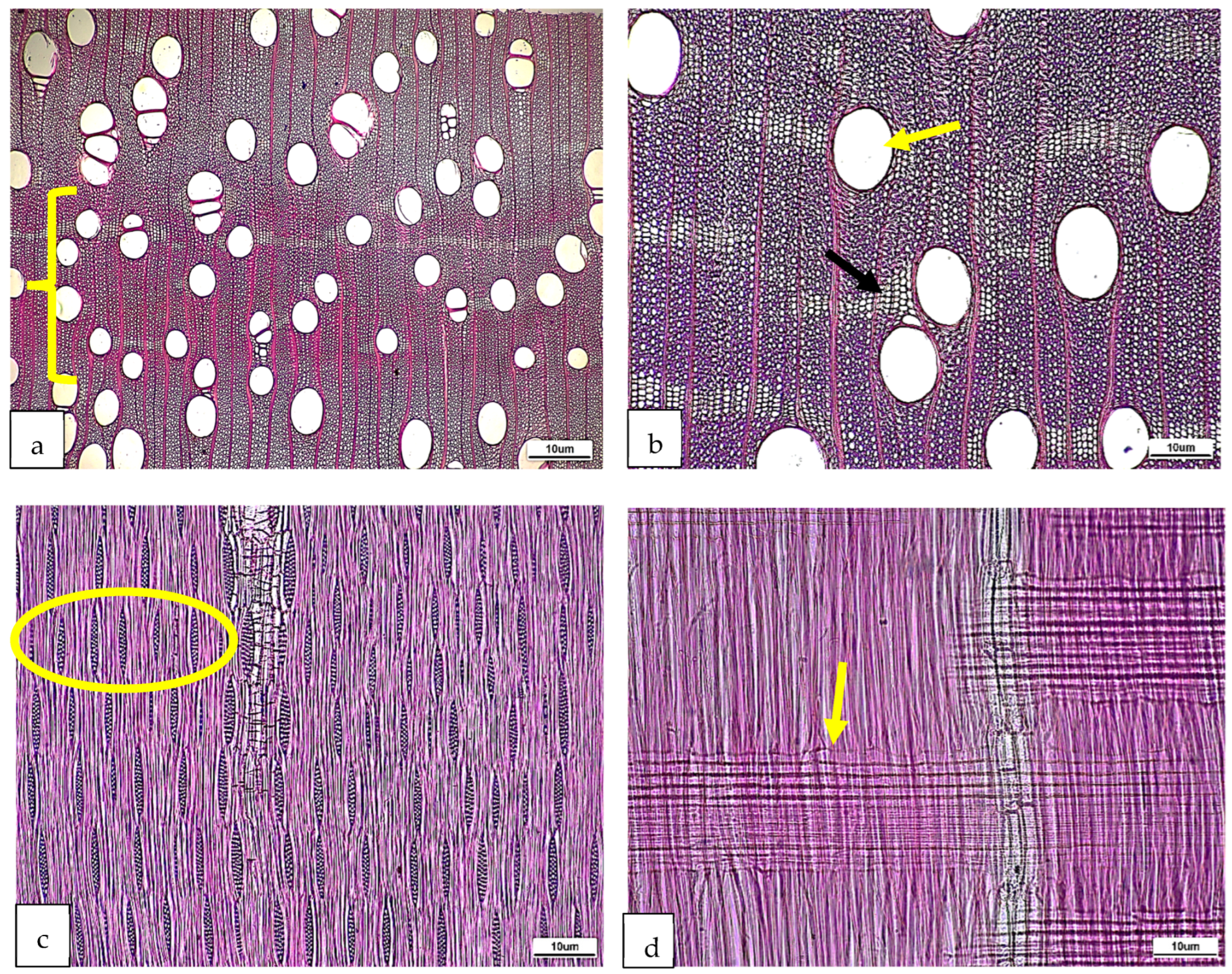
The anatomical features of 7-year-old plantation-grown B. microphyllum are shown in Figure 3. The anatomical features of B. microphyllum are described for their identification and are an important indication of the suitability of the timber in terms of its potential usage. The following description of timber is based on microscopic features of 7-years-old B. microphyllum. Transverse section (Figure 3a,b): Growth ring boundaries were indistinct in some samples but relatively distinct in others, where they were characterised by layers of thick-walled fibres and reduced vessel size (yellow left brace). Vessels show a tendency towards an oblique arrangement. Diffuse porous, vessels exclusively solitary (yellow arrow), with simple perforation, very large-sized, 296 to 310 µm, and very few in vessel numbers, 4 per mm2. Tyloses and deposit absent. Axial parenchyma is aliform and confluent (black arrow). Tangential section (Figure 3c): Rays of 3 to 4 seriate and height range from 173 to 193 µm. All rays are storied (yellow circle), with ripple marks present. Radial section (Figure 3d): All ray cells are procumbent (yellow arrow). Fibres non-septate. Crystal and silica grains absent.
Table 3 presents the mean anatomical properties of B. microphyllum compared with the corresponding mean values of selected 15-year-old plantation timbers, namely batai, kelempayan, rubberwood, and Eucalyptus. In Malaysia, these species have been recognised by the Malaysian Timber Industry Board (MTIB) as major fast-growing trees capable of producing quality timber for plantation forests. In addition, the result of anatomical properties at the bottom part of the B. microphyllum tree were significantly higher (p ≤ 0.05) compared to the middle portion, except for fibre wall thickness, and number of vessels, which showed no significant difference between the bottom and middle portions.
As timber plantations are primarily established to supply raw material for the pulp and paper industry, fibre parameters, particularly fibre length, are among the most important indicators of wood quality and end-use performance [58,59]. The fibre length of B. microphyllum exceeded 1000 µm, indicating potential suitability for pulp, paper, and composite panel production [60,61]. This value is comparable to those reported for Neolamarckia cadamba and Acacia mearnsii, species widely recognised for their suitability in high-quality pulp and paper manufacture [62,63]. Previous studies have demonstrated that fibre lengths within the range of 1000–1500 µm contribute to improved fibre bonding, tensile strength, and tear resistance in paper products [62,64,65]. Therefore, the relatively long fibres observed in B. microphyllum suggest that this species may possess comparable fibre reinforcement potential and could provide favourable performance in pulp-based products and engineered lignocellulosic composites.
Anatomical features such as vessels, rays, the presence of tyloses, and silica content play important roles in determining timber processing characteristics and end-use applications [66]. Their size, quantity, and structure are closely related to the physical properties of the timber and directly determine the value of timber use [67]. Anatomically, B. microphyllum is characterised by very large vessels according to the classification of [48]. Large vessels are typically associated with light-weight timber and coarse texture suitable for general utility applications [68]. In addition, larger vessels are generally associated with higher permeability [69]. This anatomical configuration facilitates efficient impregnation processes, which are crucial for chemical treatments and preservative applications. Although large vessels improve permeability and preservative uptake, they may also contribute to lower density and reduced mechanical performance compared with species possessing smaller vessels and thicker fibre walls [54]. The absence of tyloses and gum deposits in B. microphyllum is expected to enhance wood treatability, as these structures can occlude vessel lumina and restrict fluid movement through the wood. Previous studies have reported that tyloses significantly reduce wood permeability and may limit the penetration of preservatives and other treatment solutions [70].
In addition, the absence of tyloses and gum deposits suggests potential suitability for veneer and plywood manufacture, as gums may interfere with adhesive bonding [71]. Tyloses can negatively influence adhesive bonding performance by obstructing vessel lumens and limiting adhesive penetration into the wood structure. These protrusions, originating from adjacent parenchyma cells, create physical barriers that reduce effective adhesive distribution during pressing [72]. Whereas gum deposits and other extractives—such as phenolics, terpenes, waxes, and fatty acids—pose a chemical challenge to adhesion. These compounds, often concentrated in heartwood, can migrate to the veneer surface during drying and rotary peeling, leading to surface inactivation. This phenomenon yields a low-surface-energy, non-polar interface that impedes the wetting behaviour of polar thermosetting resins like urea-formaldehyde (UF), phenol-formaldehyde (PF), and melamine-urea-formaldehyde (MUF) [73].
Regarding silica content, its absence in B. microphyllum is expected to enhance machinability. Silica deposits in wood can cause excessive wear on cutting tools and saw blades, increasing production costs and reducing processing efficiency [74]. Studies on tropical hardwoods have consistently shown that species with low or absent silica content demonstrate superior machining properties, including cleaner cuts and reduced tool maintenance requirements [74,75]. The rays of B. microphyllum are medium-sized and homocellular, a feature that favours good nailing performance [67]. Homocellular rays, composed primarily of upright or square cells or procumbent cells rather than a mixture of cell types, may contribute to improved nailing performance by reducing stress concentration during fastening [17]. However, nailing behaviour is also influenced by density, fibre characteristics, and moisture content [76]. Research on various tropical hardwoods confirms that ray composition and structure influence mechanical properties, with studies noting heterogeneous rays in multiple Acacia species [77,78] and specific ray characteristics in other tropical species that affect their overall performance [79].
Another notable anatomical feature of B. microphyllum is the presence of storied rays accompanied by distinct ripple marks on the tangential surface. This characteristic represents an important diagnostic feature for hardwood identification and contributes to the taxonomic characterisation of the species [78]. According to [48], storied structures are valuable anatomical markers for distinguishing wood at the family, genus, and species levels, thereby supporting accurate timber identification. In addition, observations of the transverse section of the timber revealed a growth ring-like appearance in B. microphyllum, which may be associated with the presence of thick-walled fibre layers and reduced vessel size as shown in Figure 3a. Similar anatomical patterns have been reported in 16- and 20-year-old Acacia mangium by [80] and studied in tropical tree species by [81]. These anatomical characteristics may contribute to the development of distinct grain patterns and enhance the decorative value of the timber [82]. Similar to commercially valued timbers such as teak (Tectona grandis), where distinctive growth patterns contribute to attractive wood appearance [83], the presence of growth ring-like features in B. microphyllum indicates potential for decorative and high-value wood applications.

3.3. Chemical Composition

The chemical composition of B. microphyllum (Table 4) indicates that holocellulose is the dominant component, comprising 79.5% in the bottom portion and 81.9% in the middle portion of the stem, with an average of 80.7%. This level is comparatively higher than that reported for several fast-growing plantation species, such as kelempayan (72.1%) and batai (74.86%–76.21%), and substantially exceeds that of rubberwood (58.58%) [84,85,86]. A high holocellulose fraction reflects a greater proportion of structural carbohydrates, which is advantageous for fibre-based and lignocellulosic applications.
The α-cellulose content (44.2%–44.5%) falls within the typical range for hardwoods and is comparable to kelempayan and rubberwood, though slightly lower than batai [85]. Lignin content (22.6%–23.9%) is moderate, aligning with values reported for kelempayan but lower than batai and higher than rubberwood. Such levels are favourable for processing, as excessive lignin can hinder chemical pulping efficiency.
Total extractives were relatively low (0.9%–2.1%), comparable to Eucalyptus hybrids but lower than batai. From a processing perspective, reduced extractive content is beneficial, as it minimises interference with pulping and adhesive performance. Nevertheless, the qualitative composition of these extractives remains significant.
Phytochemical screening (Table 5) confirmed the presence of multiple classes of secondary metabolites, particularly flavonoids, tannins/polyphenols, and triterpenes or steroids, with alkaloids and saponins detected in smaller or inconsistent amounts. These compounds represent the functional constituents of the extractive fraction. The dominance of phenolic compounds is consistent with their known association with lignified tissues, where they contribute to structural integrity and defence mechanisms [15].
In addition, secondary metabolites such as tannins and triterpenes are widely linked to protective functions, including resistance to biological degradation and environmental stress [16]. Their distribution, particularly in the basal region, may contribute to variations in wood performance, although further studies are required to establish direct relationships between phytochemical composition and mechanical behaviour. Beyond their structural role, these bioactive constituents may enhance durability and provide added value for bio-based applications due to their antioxidant and other functional properties. Taken together, the chemical and phytochemical characteristics suggest that B. microphyllum has potential for utilisation in conventional wood products, fibre-based materials, and selected biorefinery applications under appropriate processing conditions.

3.4. Physical Properties

Results for density and shrinkage of B. microphyllum, in comparison with selected plantation timbers, are presented in Table 6. No significant differences were observed in shrinkage between the bottom and middle portions, whereas density was significantly higher (p ≤ 0.05) in the bottom portion compared to the middle. Based on density classification by [89], B. microphyllum is categorised as light to moderately heavy timber. The recorded density ranged from 441.4 to 606.8 kg/m3, with a mean value of 524.1 kg/m3. This value is higher than that reported for batai, kelempayan, and 15-year-old rubberwood, but comparable to several fast-growing Eucalyptus hybrid species. Similar density ranges have been reported in Eucalyptus species, which are often associated with rapid growth dynamics and variable wood structure [90,91]. In particular, Eucalyptus urophylla × Eucalyptus grandis has demonstrated suitable properties for glued laminated timber and other engineered wood applications [92], indicating that plantation-grown timbers within a comparable density range can support both structural and value-added engineered wood utilisation. Accordingly, the moderate density of B. microphyllum suggests potential suitability across a broad utilisation spectrum, ranging from engineered wood components under controlled processing conditions to light construction and general utility applications [68].
The shrinkage behaviour of B. microphyllum can be considered moderate based on tangential shrinkage from green to air-dry conditions [89]. At 15% moisture content, tangential and radial shrinkage were 2.2% and 1.3%, respectively, reflecting typical anisotropic shrinkage of wood structure [93]. Transverse dimensional behaviour may also be influenced by ray tissue [94]. Longitudinal shrinkage (0.6%) was higher than typical values reported for mature wood (0.1%–0.2%, rarely exceeding 0.4%) [95]. This behaviour may be associated with factors known to influence longitudinal shrinkage, including microfibril angle (MFA), fibre maturation characteristics, and the proportion of juvenile wood, although these parameters were not directly evaluated in the present study [96].
The tangential-to-radial (T/R) shrinkage ratio of 1.6 indicates moderate anisotropy and dimensional stability. Shrinkage anisotropy is a key factor governing internal stress development during drying, which subsequently contributes to defects such as cupping, bowing, and surface checking [97,98]. In general, moderate T/R values (approximately 1.3–1.8) are associated with acceptable performance for solid wood utilisation, although controlled drying is required to minimise distortion risk [60].
Table 6. Physical properties of B. microphyllum and other plantation species.
SpeciesStem
Position
Density
(kg/m3)
Shrinkage from Green to Air Dry %
TangentialRadialLongitudinalT/R
B. microphyllumBottom568.4 a2.2 a1.4 a0.6 a1.6 a
(65.9)(0.7)(0.4)(0.4)(0.2)
Middle464.5 b2.2 a1.3 a0.7 a1.7 a
(63.9)(0.7)(0.2)(0.5)(0.3)
Mean524.1
(82.7)
2.2
(0.7)
1.3
(0.2)
0.6
(0.3)
1.6
(0.1)
Bata I *
(Pareserianthes falcataria)
2933.02.40.8-
(78.0)(0.9)(0.9)(0.4)-
Kelempayan **
(Neolamarckia cadamba)
4932.41.50.5-
(35.0)(0.6)(0.8)(0.1)-
Rubberwood ***
(Hevea brasiliensis)
480----
Eucalyptus hybrid ****5594.82.50.31.0
Note: Values in parentheses are standard deviations; cell values differing by a letter in the superscript in each column are significantly different at p ≤ 0.05 * [54], ** [55], *** [56], **** [99].

3.5. Mechanical Properties

The mechanical properties of the timber are presented in Table 7. The results indicate that most mechanical properties of samples from the bottom portion of the trunk were significantly higher (p ≤ 0.05) than those from the middle portion, except for MOE. A similar trend has been reported in previous studies on Acacia mangium [100], Khaya ivorensis, and jelutong (Dyera costulata) [101]. The higher mechanical performance observed in the bottom portion can be attributed primarily to its higher wood density, as density is widely recognised as a key factor influencing timber strength [97]. This relationship has also been reported by [54,102,103], who found that higher mechanical properties at the lower stem are closely associated with increased density in that region. In the present study, the bottom portion also exhibited higher density values (Table 6), which likely contributed to the improved mechanical performance. In addition to density, fibre length may also play a role in determining mechanical properties. According to [66], fibre length can significantly influence wood strength characteristics. As shown in Table 3, fibre length was significantly greater in the bottom portion, which may further explain the superior mechanical properties observed in that region. Although density is widely recognised as a primary predictor of timber strength, mechanical performance is also influenced by anatomical and ultrastructural characteristics, including fibre morphology, cell wall development, microfibril angle, and the proportion of juvenile wood [60].
Table 7 shows a comparison of test results of other timber species from fast-growing tree plantations of other studies. The mechanical properties of B. microphyllum samples in this study showed higher strength values compared to those of the other species. In comparison with the age of the trees from which the test samples were produced, B. microphyllum (7-year-old) was very much younger than the timber species from the other studies, such as rubberwood (25-year-old), batai (15-year-old), and kelempayan (15-year-old). The bending MOR and shear strength of B. microphyllum were approximately 78% and 123%, respectively, higher than Eucalyptus nitens, while the bending MOE and compressive strength parallel to the grain were comparable. The mechanical properties of the middle section B. microphyllum were higher than those of the rubberwood. When compared to another species, i.e., batai in the study by [54], the younger B. microphyllum exhibited substantially higher mechanical properties. Overall, the results indicate that B. microphyllum, despite being only 7 years old, exhibits comparable or higher mechanical properties than several established plantation timber species, suggesting potential suitability for selected structural and semi-structural applications, subject to further evaluation of durability, connection performance, and engineering design requirements.
Table 7. Mechanical properties of B. microphyllum and other plantation species.
Moisture Content (%)Stem PositionBendingCompressive Strength (N/mm2)Shear Strength (N/mm2)Hardness (kN)
MOR (N/mm2)MOE (N/mm2)
B. microphyllum12–14Bottom94.80 a
(15.22)
9427 b (1649)44.89 a
(4.84)
12.31 a (2.07)3.91 a (1.03)
Middle76.88 b
(14.81)
9610 a
(1777)
40.13 b
(5.63)
10.86 b (1.46)3.20 b
(0.70)
Rubberwood * (Hevea brasiliensis) Clone PB 26012Bottom54.08 (19.08)6100 (1640)25.32
(5.06)
6.13 (0.79)3.25
(0.86)
Middle57.92 (11.86)6990 (930)26.62
(5.48)
6.07 (0.82)2.84
(0.49)
Batai ** (Paraserianthes falcataria)Air-dry-36.9 (14.1)5143 (1453)22.9
(4.8)
5.8 (1.3)-
Kelempayan ***
(Neolamarckia cadamba)
15.61-53.90 (9.47)6031 (1102)27.71
(4.90)
6.87 (1.70)1.80
(0.50)
Eucalyptus nitens ****8.2–10.5-53.0 (7.8)10,377 (1692)42.8
(4.9)
5.5 (2.2)-
Note: Values in parentheses are standard deviations; cell values differing by a letter in the superscript in each column are significantly different at p ≤ 0.05 * [56], ** [54], *** [104], **** [105].

4. Conclusions

This study presents an integrated evaluation of the anatomical, chemical, physical, and mechanical properties of plantation-grown B. microphyllum in Malaysia. The wood is diffuse-porous with very large vessels and medium rays. Chemical analysis showed high holocellulose (79.5%–81.9%) and α-cellulose (44.2%–44.5%), moderate lignin (22.6%–23.9%), and low extractives (0.9%–2.1%), indicating a high carbohydrate content. Phytochemical screening indicated the presence of flavonoids, tannins/polyphenols, and triterpenes/steroids, suggesting potential relevance for further investigation of its reported traditional uses. The timber exhibited light to moderately heavy density and moderate shrinkage with a T/R ratio of 1.6, indicating moderate dimensional stability. Compared with selected plantation species reported in the literature, B. microphyllum exhibited relatively higher density and favourable mechanical properties. Overall, B. microphyllum demonstrates potential as a fast-growing plantation timber species that can be harvested at a relatively young age (~7 years), while its chemical constituents warrant further investigation for potential bioactive applications. In addition, longitudinal variation along the stem showed that some wood properties differed significantly between the bottom and middle stem positions, while others were not significantly affected by tree height.

Author Contributions

Conceptualization, M.K.A.U., F.J. and A.F.A.B.; methodology, N.A.S., O.C.B., N.S.S.M.Y., F.J., A.F.A.B. and A.M.; software, N.A.S. and A.F.A.B.; validation, M.K.A.U., F.J. and A.F.A.B.; formal analysis, N.A.S., A.M., F.J. and O.C.B.; investigation, O.C.B., F.J. and M.K.A.U.; resources, A.F.A.B., F.J. and M.K.A.U.; data curation, N.A.S., N.S.S.M.Y., O.C.B., F.J., A.F.A.B. and A.M.; writing—N.A.S., N.S.S.M.Y., O.C.B., F.J., A.F.A.B. and A.M.; visualisation, N.A.S., N.S.S.M.Y., O.C.B., F.J., A.F.A.B. and A.M.; supervision, M.K.A.U. and F.J.; project administration, F.J. and A.F.A.B.; funding acquisition, F.J. and A.F.A.B. All authors have read and agreed to the published version of the manuscript.

Funding

This research was funded by the Federal Government of Malaysia under the Twelfth Malaysia Plan (12MP) Development Grant through the Ministry of Natural Resources and Environmental Sustainability (NRES), administered by the Forest Research Institute Malaysia (FRIM), Grant Number FRIM(S)600-3/12/11.

Data Availability Statement

The data supporting the findings of this study are not publicly available due to institutional and confidentiality restrictions.

Acknowledgments

The authors would like to thank the Forest Research Institute Malaysia (FRIM) for providing research facilities and technical support throughout this study. We also acknowledge all laboratory staff and research assistants who contributed to sample collection, preparation, and analysis.

Conflicts of Interest

The authors declare no conflicts of interest.

References

  1. Bentham, G. Synopsis of Dalbergieæ, a Tribe of Leguminosa. J. Proc. Linn. Soc. Lond. Bot. 1860, 4, 1–128. [Google Scholar] [CrossRef]
  2. Gagnepain, F. Léguminosae: Papilionées. In Flore Générale de l’Indo-Chine; Lecomte, H., Gagnepain, F., Eds.; Masson: Paris, France, 1916; p. 2. [Google Scholar]
  3. How, F.C. A review of the Chinese species of Derris. Acta Phytotaxon. Sin. 1954, 3, 207–236. [Google Scholar]
  4. Hutchinson, J. Genera of Flowering Plants (Angiospermae); The Clarendon Press: Oxford, UK, 1964; 495p. [Google Scholar]
  5. Thothathri, K. Leguminosae: Genus Derris. In Flora of India, Fascicle; Botanical Survey of India: Kolkata, India, 1982; Volume 8, pp. 1–33. [Google Scholar]
  6. Chen, P.Y. Derris Lour. In Flora Reipublicae Popularis Sinicae; Wei, Z., Ed.; Science Press: Beijing, China, 1994; Volume 40, pp. 191–212. [Google Scholar]
  7. Kumar, S.; Sane, P.V. Legumes of South Asia: A Check-List; Royal Botanic Gardens, Kew: Richmond, UK, 2003; pp. 1–455. [Google Scholar]
  8. Schrire, B.D. Tribe Millettieae. In Legumes of the World; Lewis, G., Schrire, B., Mackinder, B., Lock, M., Eds.; Royal Botanical Gardens, Kew: Richmond, UK, 2005; pp. 367–387. [Google Scholar]
  9. Chen, D.Z.; Pedley, L. Derris Loureiro. In Flora of China; Wu, Z.Y., Raven, P.H., Hong, D.Y., Eds.; Science Press: Beijing, China; Missouri Botanical Garden Press: St. Louis, MO, USA, 2010; Volume 10, pp. 166–170. [Google Scholar]
  10. Geesink, R. Scala Millettiearum. A survey of the genera of the tribe Millettieae (Legum.-Pap.) with methodological con-siderations. In Leiden Botanical Series 8; E. J. Brill & Leiden University Press: Leiden, The Netherlands, 1984; 131p. [Google Scholar] [CrossRef] [PubMed]
  11. Sirichamorn, Y.; Adema, F.A.C.B.; Van Welzen, P.C. The Genera Aganope, Derris, and Paraderris (Fabaceae, Millettieae) in Thailand. Syst. Bot. 2012, 37, 404–436. [Google Scholar] [CrossRef]
  12. Sirichamorn, Y.; Adema, F.A.; Roos, M.C.; van Welzen, P.C. Molecular and morphological phylogenetic reconstruction reveals a new generic delimitation of Asian Derris (Fabaceae): Reinstatement of Solori and synonymisation of Paraderris with Derris. Taxon 2014, 63, 522–538. [Google Scholar] [CrossRef]
  13. Sirichamorn, Y. Brachypterum. In Flora of Thailand; Chayamarit, K., Balslev, H., Eds.; Forest Herbarium, Royal Forest Department: Bangkok, Thailand, 2020; Volume 4, pp. 382–389. [Google Scholar]
  14. Thothathri, K.; Rugayah. Derris microphylla (Miquel) B.D. Jackson. In Plant Resources of South-East Asia No. 11: Auxiliary Plants; Faridah Hanum, I., van der Maesen, L.J.G., Eds.; PROSEA Foundation: Bogor, Indonesia, 1997; pp. 142–143. [Google Scholar]
  15. Taiz, L.; Zeiger, E.; Møller, I.M.; Murphy, A. Plant Physiology and Development, 6th ed.; Sinauer Associates: Sunderland, MA, USA, 2015. [Google Scholar]
  16. Rowell, R.M. Handbook of Wood Chemistry and Wood Composites, 2nd ed.; CRC Press: Boca Raton, FL, USA, 2012. [Google Scholar]
  17. Wang, Y.; Wang, Y.; Shen, L.; Wu, Z.; Li, H.; Hu, M.; Liu, Q.; Chen, C.; Hu, X.; Zhong, Y. Evaluation of Wood Anatomical Properties from 18 Tree Species in the Subtropical Region of China. Forests 2023, 14, 2344. [Google Scholar] [CrossRef]
  18. Eloy, E.; Mangini, T.d.S.; Nardini, C.; Caron, B.O.; Trevisan, R.; dos Santos, A.D. Correlation of Anatomy with Physical Properties of Wood Species from an Agroforestry System. Rev. Árvore 2024, 48, e4815. [Google Scholar] [CrossRef]
  19. Fazliana, A.H.; Soh, K.L.; Noorshamsiana, A.W.; Vijaya, S.; Astimar, A.Z.; Zainab, I. Pulp and paper from wood and oil palm biomass: Current development, issues, challenges and opportunities. Ind. Crops Prod. 2024, 222, 119938. [Google Scholar] [CrossRef]
  20. Takeuchi, R.; Wahyudi, I.; Aiso, H.; Ishiguri, F.; Istikowati, W.T.; Ohkubo, T.; Ohshima, J.; Iizuka, K.; Yokota, S. Wood properties related to pulp and paper quality in two Macaranga species naturally regenerated in secondary forests, Central Kalimantan, Indonesia. Tropics 2016, 25, 107–115. [Google Scholar] [CrossRef]
  21. Uetimane, E.J.; Ali, A.C. Relationship between mechanical properties and selected anatomical features of Ntholo (Pseu-dolachnostylis maprounaefolia). J. Trop. For. Sci. 2011, 23, 166–176. [Google Scholar]
  22. Marini, L.J.; Cavalheiro, R.S.; De Araujo, V.A.; Cortez-Barbosa, J.; de Campos, C.I.; Molina, J.C.; Silva, D.A.L.; Lahr, F.A.R.; Christoforo, A.L. Estimation of Mechanical Properties in Eucalyptus Woods towards Physical and Anatomical Parameters. Constr. Build. Mater. 2022, 352, 128824. [Google Scholar] [CrossRef]
  23. Wu, Z.; Guo, Z.; Yuan, C. Insight into the Influence of the Anatomical Properties of Wood on the Tribological Properties. J. Clean. Prod. 2022, 330, 129800. [Google Scholar] [CrossRef]
  24. Igartua, D.V.; Monteoliva, S.E.; Monterubbianesi, M.G.; Villegas, M.S. Basic density and fibre length at breast height of Eucalyptus globulus for parameter prediction of the whole tree. IAWA J. 2003, 24, 173–184. [Google Scholar]
  25. Miyoshi, Y.; Kojiro, K.; Furuta, Y. Effects of density and anatomical feature on mechanical properties of various wood species in lateral tension. J. Wood Sci. 2018, 64, 509–514. [Google Scholar] [CrossRef]
  26. Shukla, S.R.; Rao, R.V.; Sharma, S.K.; Kumar, P.; Sudheendra, R.; Shashikala, S. Physical and mechanical properties of plantation-grown Acacia auriculiformis of three different ages. Aust. For. 2007, 70, 86–92. [Google Scholar] [CrossRef]
  27. Tomczak, K.; Mania, P.; Jakubowski, M.; Tomczak, A. Radial Variability of Selected Physical and Mechanical Parameters of Juvenile Paulownia Wood from Extensive Cultivation in Central Europe—Case Study. Materials 2023, 16, 2615. [Google Scholar] [CrossRef] [PubMed]
  28. Leif, A.P.; Willian, H.; Jorge, C.; Mauro, V.D. Anatomical and Physical Study of the Wood of Apeiba tibourbou and Its Behavior During Air Drying. For. Sci. Technol. 2025, 21, 406–421. [Google Scholar] [CrossRef]
  29. Anwar, U.M.K.; Jinfeng, Z.; Xian, F.; Zhonghua, C.; Zhengtao, L.; Nordahlia, A.S. Effect of tree age on the properties of Himalayan Birch (Betula alnoides Buch.-H.ex D.Don) wood. Bioresource 2023, 18, 8007–8019. [Google Scholar] [CrossRef]
  30. Campos, A.C.M.; Hein, P.R.G.; Mori, F.A.; Lima, J.T.; Chaix, G. Variação dimensional e da densidade básica de 14 madeiras de espécies alternativas. In Proceedings of the XI Encontro Brasileiro em Madeira e Estruturas de Madeira (Ebramem); Universidade Federal de Lavras & CIRAD: Londrina, Brazil, 2008; pp. 4–5. [Google Scholar]
  31. Moya, R.; Urueña, E.; Salas, C.; Muñoz, F.; Espinoza, O. Kiln drying behavior of lumber from ten fast-growth plantation species in Costa Rica. Wood Mater. Sci. Eng. 2013, 8, 37–45. [Google Scholar] [CrossRef]
  32. Li, J.; Ma, E. The influence of relative humidity on the physicochemical environment of moisture in wood cell wall. Cellulose 2024, 31, 8445–8463. [Google Scholar] [CrossRef]
  33. Appiah-Kubi, E.; Kankam, C.K.; Frimpong-Mensah, K.; Opuni-Frimpong, E. The bending strength and modulus of elasticity properties of plantation-grown Khaya ivorensis (African Mahogany) from Ghana. J. Indian Acad. Wood Sci. 2016, 13, 48–54. [Google Scholar] [CrossRef]
  34. Balasso, M.; Hunt, M.; Jacobs, A.; O’Reilly-Wapstra, J. Development of Non-Destructive-Testing Based Selection and Grading Strategies for Plantation Eucalyptus nitens Sawn Boards. Forests 2021, 12, 343. [Google Scholar] [CrossRef]
  35. Corpataux, L.; Okuda, S.; Kua, H.W. Panel and plate properties of cross-laminated timber (CLT) with tropical fast-growing timber species in compliance with Eurocode 5. Constr. Build. Mater. 2020, 261, 119672. [Google Scholar] [CrossRef]
  36. Fan, J.; Ding, C.; Wang, S.; Ma, C.; Zhang, C.; Li, Y.; Wang, J.; Yang, M.; Su, X. Effects of site conditions on growth and wood properties of Populus × euramericana cv. ‘74/76’. J. For. Res. 2023, 34, 401–414. [Google Scholar] [CrossRef]
  37. Akca, M.; Gur, M.; Guder, A. Phytochemical composition and biological activities of bark extracts from seven industrially relevant tree species. Eur. J. Wood Prod. 2025, 83, 199. [Google Scholar] [CrossRef]
  38. Rowell, R.M. Handbook of Wood Chemistry and Wood Composites; CRC Press: Boca Raton, FL, USA, 2005. [Google Scholar]
  39. Fengel, D.; Wegener, G. (Eds.) Wood: Chemistry, Ultrastructure, Reactions; Walter de Gruyter: Berlin, Germany, 2011. [Google Scholar]
  40. Scalbert, A. Antimicrobial properties of tannins. Phytochemistry 1991, 30, 3875–3883. [Google Scholar] [CrossRef]
  41. Sjostrom, E. Wood Chemistry: Fundamentals and Applications; Gulf Professional Publishing: Waltham, MA, USA, 1993. [Google Scholar]
  42. Hill, C.A. Wood Modification: Chemical, Thermal and Other Processes; John Wiley & Sons: Hoboken, NJ, USA, 2007. [Google Scholar]
  43. Taylor, A.M.; Gartner, B.L.; Morrell, J.J. Heartwood formation and natural durability—A review. Wood Fiber Sci. 2002, 34, 587–611. [Google Scholar]
  44. Dewick, P.M. Medicinal Natural Products: A Biosynthetic Approach; John Wiley & Sons: Hoboken, NJ, USA, 2009. [Google Scholar]
  45. Veitch, N.C. Isoflavonoids of the leguminosae. Nat. Product. Rep. 2013, 30, 988–1027. [Google Scholar] [CrossRef]
  46. Zubairi, S.I.; Othman, Z.S.; Sarmidi, M.R.; Aziz, R.A. Environmental friendly bio-pesticide Rotenone extracted from Derris sp.: A review on the extraction method, toxicity and field effectiveness. J. Teknol. (Sci. Eng.) 2016, 78, 47–69. [Google Scholar] [CrossRef]
  47. Schweingruber, F.H.; Borner, A.; Schulze, E.D. Atlas of Woody Plant Stems: Evolution, Structure and Environmental Modifications; Springer: Berlin/Heidelberg, Germany; New York, NY, USA, 2006. [Google Scholar]
  48. Wheeler, E.A.; Baas, P.; Gasson, P.E. IAWA List of Microscopic Features for Hardwood Identification; IAWA: Leiden, The Netherlands, 1989; Volume 10, pp. 219–332. [Google Scholar]
  49. TAPPI T204 CM-07; Solvent Extractives of Wood and Pulp. TAPPI (Technical Association of the Pulp and Paper Industry): Atlanta, GA, USA, 2007.
  50. Wise, L.E.; Murphy, M.; D’Addieco, A.A. Chlorite holocellulose, its fractionation and bearing on summative wood analysis and on studies on the hemicelluloses. Pap. Trade J. 1946, 122, 35–43. [Google Scholar]
  51. Harborne, J.B. Phytochemical Methods: A Guide to Modern Techniques of Plant Analysis, 3rd ed.; Chapman & Hall: London, UK, 1998. [Google Scholar]
  52. Sofowora, A. Medicinal Plants and Traditional Medicine in Africa, 3rd ed.; Spectrum Books: Ibadan, Nigeria, 2008. [Google Scholar]
  53. International Organization for Standardization (ISO). Physical and Mechanical Properties of Wood—Test Methods for Small Clear Wood Specimens—Part 1: Determination of Moisture Content for Physical and Mechanical Tests; Part 2: Determination of Density for Physical and Mechanical Tests; Part 3: Determination of Ultimate Strength in Static Bending; ISO 13061-1:2014, ISO 13061-2:2014, ISO 13061-3:2014; International Organization for Standardization: Geneva, Switzerland, 2014. [Google Scholar]
  54. Hamdan, H.; Nordahlia, A.S.; Anwar, U.M.K.; Mohd Iskandar, M.; Mohamad Omar, M.K.; Tumirah, K. Anatomical, physical, and mechanical properties of four pioneer species in Malaysia. J. Wood Sci. 2020, 66, 59. [Google Scholar] [CrossRef]
  55. Nordahlia, A.S.; Lim, S.C.; Rohana, I.; Siti Hawa, B. Fibre morphology and density. In Kelempayan Wood: Properties and Uses; Roszaini, K., Zaihan, J., Mohd-Jamil, A.W., Ong, C.B., Mohamad Nasir, M.A., Wan Asma, I., Eds.; Forest Research Institute Malaysia: Kuala Lumpur, Malaysia, 2020; 116p, ISBN 978-967-2149-87-3. [Google Scholar]
  56. Marasigan, O.S.; Alipon, M.A. Assessment of wood properties of Hevea brasiliensis Clones grown in Zamboanga Sibugay Philippines for their potential applications. Environ. Nat. Resour. J. 2026, 24, 58–76. [Google Scholar]
  57. Nordahlia, A.S.; Zairul, A.R. Anatomical Characteristics of Eucalyptus Hibrid. In Eucalyptus Hibrid; FRIM Studies; Nor Hasnida, H., Sarifah, K.A., Norwati, M., Eds.; Forest Research Institute Malaysia: Kuala Lumpur, Malaysia, 2021; ISBN 978-967-2810-14-8. [Google Scholar]
  58. Nordahlia, A.S.; Ani, S.; Zaidon, A.; Mohd Hamami, S. Fibre morphology and physical properties of 10-year-old sentang (Azadirachta excelsa) planted from rooted cuttings and seedlings. J. Trop. For. Sci. 2011, 23, 222–227. [Google Scholar]
  59. Adi, R.P.; Marsoem, S.N.; Lukmandaru, G. Yield and physical pulp properties of three Eucalyptus Pellita F. Muell clones at two active alkali concentrations: A study in tropical agriculture practices. Holist. J. Trop. Agric. Sci. HJTAS 2025, 2, 112–126. [Google Scholar] [CrossRef]
  60. Bowyer, J.L.; Shmulsky, R.; Haygreen, J.G. Forest Products and Wood Science: An Introduction, 4th ed.; Iowa State University Press: Ames, IA, USA, 2003. [Google Scholar]
  61. Çiçekler, M.; Tutus, A.; Üzüm, V. The use of Eucalyptus grandis bark and root as raw material in pulp and paper production. Drewno. Pr. Nauk. Doniesienia. Komun. 2023, 66, 00002. [Google Scholar] [CrossRef]
  62. Anna, N.; Herawati, E.; Pebrianti, S. Anatomical structures and fiber quality of Jabon (Neolamarckia cadamba (Roxb.) Bosser) from agroforestry system. In IOP Conference Series: Earth and Environmental Science; IOP Publishing: Bristol, UK, 2025; Volume 1445, p. 012051. [Google Scholar] [CrossRef]
  63. Coldebella, R.; Giesbrecht, B.M.; Pedrazzi, C.; Machado, P.F.d.S.; Costa, H.W.D.; Vivian, M.A.; Denardi, L.; Gomes, C.M. Anatomical characterization of black wattle wood for the pulp and paper production. Ciênc. Rural. St. Maria 2023, 53, e20210865. [Google Scholar] [CrossRef]
  64. Danang, S.A.; Ika, W.; Lucky, R.; Sri, R.; Euis, H.; Wahyu, D.; Takashi, W. Central Kalimantan’s Fast Growing Species: Sitability for pulp and paper. Indones. J. For. Res. 2025, 2, 21–29. [Google Scholar]
  65. Arisandi, R.; Ihda, F.V.; Nirsatmanto, A.; Sunarti, S.; Lukmandaru, G. Characterization of Chemical Components in the Wood and Bark of Anthocephalus cadamba and Anthocephalus macrophyllus from Progeny Trial in Wonogiri, Indonesia. BIO Web Conf. 2025, 167, 06001. [Google Scholar] [CrossRef]
  66. Toong, W.; Ratnasingam, J.; Roslan, M.K.M.; Halis, R. The prediction of wood properties from anatomical characteristics: The case of common commercial Malaysian timbers. BioResources 2014, 9, 5184–5197. [Google Scholar] [CrossRef]
  67. Wang, Y.P.; Zhang, R.; Zhou, Z.Z. Radial variation of wood anatomical properties determines the demarcation of juvenile-mature wood in Schima superba. Forests 2021, 12, 512. [Google Scholar] [CrossRef]
  68. Phongkrathung, R.; Vajrodaya, S.; Kermanee, P. Wood anatomy and properties of three species in the genus Spondias lakonensis (Anacardiaceae) found in Thailand. Agric. Nat. Resour. 2016, 50, 14–19. [Google Scholar] [CrossRef][Green Version]
  69. Ridho, M.R.; Marsoem, S.N.; Listyanto, T.; Sulistyo, J. Variasi aksial dan radial dimensi serat, sifat fisika dan mekanika kayu jabon (Neolamarckia cadamba Miq.) di hutan rakyat Kabupaten Sleman, Yogyakarta (Axial and radial variation of fiber dimension, physical and mechanical properties of burflower wood (Neolamarckia cadamba Miq.) in the community forest of Sleman, Yogyakarta). J. Hutan Lestari 2024, 12, 136–149. [Google Scholar] [CrossRef]
  70. Jakubowski, M. Cultivation Potential and Uses of Paulownia Wood: A Review. Forests 2022, 13, 668. [Google Scholar] [CrossRef]
  71. Adeniyi, I.M.; Adebagbo, C.A.; Oladapo, F.M.; Ayetan, G. Utilisation of some selected wood species in relation to their anatomical features. Glob. J. Sci. Front. Res. Agric. Vet. 2013, 13, 2249–4626. [Google Scholar]
  72. Ayuni, N.A.; Takashi, T. Effects of Glue Spreading Rate and Veneer Density on Sugi (Cryptomeria japonica) Plywood Adhesive Penetration. Maderas. Cienc. Tecnol. 2023, 25, 1–10. [Google Scholar]
  73. Dwini, N.P.; Adi, S.; Raden, P.B.L.; Fazhar, A.; Sukma, S.K.; Eko, S.W.; Jajang, S.; Muhammad, A.R.L. Recent developments on ultra-low formaldehyde emitting system of tannin-based adhesive derived from tropical wood barks for wood-based products manufacturing: A review. Int. J. Adhes. Adhes. 2024, 132, 103727. [Google Scholar] [CrossRef]
  74. Marbun, S.D.; Wahyudi, I.; Suryana, J. Surface roughness and wettability of two lesser-used wood species from Borneo, Indonesia. J. Indian Acad. Wood Sci. 2020, 17, 131–137. [Google Scholar] [CrossRef]
  75. Siam, N.A.; Abdullah, N.A.; Uyup, M.K.A.; Amri, C.N.A.C.; Juhari, M.A.A.A.; Talip, N. Wood Anatomical Features of Anacardiaceae from Malaysia. Bioresources 2023, 17, 1090–1105. [Google Scholar] [CrossRef]
  76. Lim, S.C.; Nordahlia, A.S.; Latif, M.A.; Gan, K.S.; Rahim, S. Identification and Properties of Malaysian Timbers (Malaysian Forest Records No. 53); Forest Research Institute: Kuala Lumpur, Malaysia, 2016.
  77. Seun, M.O.; Monday, D.O.; Akinwumi, J.A.; Abiodun, E.A. Wood anatomical features of some Nigerian species of Acacia Mill and their suitability for paper making. Res. Plant Biol. 2021, 11, 1–7. [Google Scholar] [CrossRef]
  78. Savero, A.M.; Kim, J.-H.; Purusatama, B.D.; Prasetia, D.; Park, S.-H.; Kim, N.-H. A Comparative Study on the Anatomical Characteristics of Acacia mangium and Acacia hybrid Grown in Vietnam. Forests 2022, 13, 1700. [Google Scholar] [CrossRef]
  79. Haag, V.; Koch, G.; Richter, H.-G.; Evans, R.; Guzmán, J.A.S.; Schmitt, U. Wood anatomical and topochemical analyses to characterize juvenile and adult wood of lesser-known species from Central America (Mexico). IAWA J. 2019, 40, 785–803. [Google Scholar] [CrossRef]
  80. Lim, S.C.; Gan, K.S. Wood Anatomy and Quality in Properties of Acacia Mangium Planted in Peninsular Malaysia: ITTO Project on Improving Utilization and Value Adding of Plantation Timbers from Sustainable Sources in Malaysia, Project No. PD 306/04 (1); Lim, S.C., Gan, K.S., Tan, Y.E., Eds.; Forest Research Institute Malaysia: Kuala Lumpur, Malaysia, 2011.
  81. Abdul Azim, A.A.; Okada, N. Occurrence and Anatomical Features of Growth Rings in Tropical Rainforest Trees in Peninsular Malaysia: A Preliminary Study. Tropics 2014, 23, 15–31. [Google Scholar] [CrossRef]
  82. Ruffinatto, F.; Negro, F.; Crivellaro, A. The Macroscopic Structure of Wood. Forests 2023, 14, 644. [Google Scholar] [CrossRef]
  83. Cardoso, S.; Sousa, V.B.; Quilhó, T.; Pereira, H. Anatomical variation of teakwood from unmanaged mature plantations in East Ti-mor. J. Wood Sci. 2015, 61, 326–333. [Google Scholar] [CrossRef]
  84. Rushdan, I.; Sharmiza, A.; Latifah, J.; Mahmudin, S. Kelempayan Wood: Properties and Uses; FRIM Research Pamplet No. 144; Roszaini, K., Zaihan, J., Mohd-Jamil, A.W., Ong, C.B., Mohamad Nasir, M.A., Wan Asma, I., Eds.; Forest Research Institute Malaysia: Kuala Lumpur, Malaysia, 2020; 116p, ISBN 978-967-2149-87-3.
  85. Kurniawan, F.A.; Syaharanie, A.A.; Lukmandaru, G. Chemical components of boiling-treated sengon (Paraserianthes falcataria (L.) IC Nielsen) wood. Wood Res. J. 2024, 15, 55–62. [Google Scholar]
  86. Zaki, J.A.; Muhammed, S.; Shafie, A.; Daud, W.R.W. Chemical properties of juvenile latex timber clone rubberwood trees. Malays. J. Anal. Sci. 2012, 16, 228–234. [Google Scholar]
  87. Vieira, T.A.S.; Arriel, T.G.; Zanuncio, A.J.V.; Carvalho, A.G.; Branco-Vieira, M.; Carabineiro, S.A.C.; Trugilho, P.F. Deter-mination of the Chemical Composition of Eucalyptus spp. for Cellulosic Pulp Production. Forests 2021, 12, 1649. [Google Scholar] [CrossRef]
  88. Vieira, T.A.S.; Trugilho, P.F.; Carabineiro, S.A.C.; Zanuncio, A.J.V.; Carvalho, A.G.; Branco-Vieira, M. Impact of Chemical Composition on Eucalyptus Wood Clones for Sustainable Energy Production. Forests 2023, 14, 2240. [Google Scholar] [CrossRef]
  89. Wong, T.M. A Dictionary of Malaysian Timbers; Malayan Forest Records No. 30; Lim, S.C., Gan, K.S., Chung, R.C.K., Eds.; Forest Research Institute: Kuala Lumpur, Malaysia, 2019.
  90. Araujo, S.L.; Protázio, L.B.; Gimenez, G.G.; Barros Junior, U.O.; Castor Neto, T.C.; Silva, D.F.S.H.S.; Rezende, D.A.N.; Almeida, M.N.F.; Silva, J.G.M.; Vidaurre, G.B. Sampling strategies along the tree stem to determine the basic density of Eucalyptus wood. Cerne 2025, 31, e-103500. [Google Scholar] [CrossRef]
  91. Amer, M.; Kabouchi, B.; Rahouti, M.; Famiri, A. Experimental Study of Physical Properties and Impact Bending Strength of Clonal Eucalyptus Wood. Int. J. Thermophys. 2022, 43, 163. [Google Scholar] [CrossRef]
  92. Segundinho, P.G.A.; Lopes, N.F.; Gonçalves, F.G.; Oliveira, R.F.; Oliveira, R.G.E.; Oliveira, J.T.S.; Mastela, L.C.; Belumat, M.A.R.; Paes, J.B. Analysis of physical and mechanical properties of glued laminated timber elements produced from eucalyptus residues. J. Indian Acad. Wood Sci. 2024, 21, 371–378. [Google Scholar] [CrossRef]
  93. Arriaga, F.; Wang, X.; Íñiguez-González, G.; Llana, D.F.; Esteban, M.; Niemz, P. Mechanical Properties of Wood: A Review. Forests 2023, 14, 1202. [Google Scholar] [CrossRef]
  94. Elaieb, M.T.; Ayed, S.B.; Ouellani, S.; Khouja, M.L.; Touhami, I.; Candeliar, K. Collapse and physical properties of native and pre-steamed Eucalyptus camaldulensis and Eucalyptus saligna wood from Tunisia. J. Trop. For. Sci. 2019, 31, 162–174. [Google Scholar] [CrossRef]
  95. Shmulsky, R.; Jones, P.D. Forest Products and Wood Science: An Introduction, 7th ed.; Wiley-Blackwell: Hoboken, NJ, USA, 2019. [Google Scholar]
  96. Lachenbruch, B.; Moore, J.R.; Evans, R. Radial Variation in Wood Structure and Function in Woody Plants, and Hypotheses for Its Occurrence. In Size- and Age-Related Changes in Tree Structure and Function; Tree Physiology Series; Meinzer, F.C., Lachenbruch, B., Dawson, T.E., Eds.; Springer: Dordrecht, The Netherlands, 2011; Volume 4, pp. 121–164. [Google Scholar] [CrossRef]
  97. Dinwoodie, J.M. Timber: Its Nature and Behaviour; CRC Press: Boca Raton, FL, USA, 2000. [Google Scholar]
  98. Hon, D.N.S.; Shiraishi, N. Wood and Cellulosic Chemistry; Marcel Dekker, Inc.: New York, NY, USA; Basel, Switzerland, 2001. [Google Scholar]
  99. Zairul, A.R.; Mohd Jamil, A.W.; Gan, K.S. Physical Properties of Eucalyptus Hybrid Wood. In Eucalyptus Hybris Frim Studies; Nor Hasnida, H., Sarifah, K.A., Norwati, M., Eds.; Forest Research Institute Malaysia: Kuala Lumpur, Malaysia, 2021. [Google Scholar]
  100. Moya, R.; Muñoz, F. Physical and mechanical properties of eight fast-growing plantation species in Costa Rica. J. Trop. For. Sci. 2010, 22, 317–328. [Google Scholar]
  101. Mohd-Jamil, A.W.; Khairul, M. Variations of Mechanical Properties in Plantation Timbers of Jelutong (Dyera costulata) and Khaya (Khaya ivorensis) along the Radial and Vertical Positions. J. Trop. For. Sci. 2017, 29, 114–120. [Google Scholar]
  102. Van Duong, D.; Schimleck, L. Prediction of Static Bending Properties of Eucalyptus Clones Using Stress Wave Measure-ments on Standing Trees, Logs and Small Clear Specimens. Forests 2022, 13, 1728. [Google Scholar] [CrossRef]
  103. Rindarto, B.N.; Hidayati, F.; Sunarti, S.; Nirsatmanto, A. Physical and mechanical properties of the three breeding generations of Acacia mangium planted in Central Java, Indonesia. J. Indian Acad. Wood Sci. 2021, 18, 83–88. [Google Scholar] [CrossRef]
  104. Mohamad Omar, M.K.; Mohd Jamil, A.W.; Khairul, M. Mechanical properties. In Kelempayan Wood: Properties and Uses; Roszaini, K., Zaihan, J., Mohd-Jamil, A.W., Ong, C.B., Mohamad Nasir, M.A., Wan Asma, I., Eds.; Forest Research Institute Malaysia: Kuala Lumpur, Malaysia, 2020; 116p, ISBN 978-967-2149-87-3. [Google Scholar]
  105. Derikvand, M.; Kotlarewski, N.; Lee, M.; Jiao, H.; Nolan, G. Characterisation of physical and mechanical properties of unthinned and unpruned plantation-grown Eucalyptus nitens H. Deane & Maiden lumber. Forests 2019, 10, 194. [Google Scholar] [CrossRef]
Figure 1. Locations of sampling points within a selected tree.
Forests 17 00771 g001
Figure 2. Transverse surface of the stem disc of B. microphyllum.
Forests 17 00771 g002
Figure 3. Microscopic photographs of 7-year-old microphyllum: (a,b) transverse section; (c) tangential section; (d) radial section.
Forests 17 00771 g003
Table 1. Size of test samples in accordance with 2 cm standard of [53].
Number of Samples (for Each Bottom or Middle Section Group)Dimensions (cm) (Depth × Width × Length)
Static bending302 × 2 × 30
Compression302 × 2 × 6
Moisture content302 × 2 × 6
Shear60 *2 × 2 × 2
Hardness60 **2 × 2 × 6
* 30 samples each for plane of shear failure parallel to the radial and tangential directions, respectively. ** 30 samples each for the load applied on the radial and tangential surfaces, respectively.
Table 2. Results of normality (Shapiro–Wilk) and homogeneity of variances (Levene’s Test) for all studied properties.
VariableStem
Position
Shapiro–Wilk
(p-Value)
NormalityLevene’s Test
(p-Value)
Homogeneity of Variance
Anatomical Properties
Fibre lengthBottom
Middle
0.7794
0.1246
Normal
Normal
0.0872Homogeneous
Fibre diameterBottom
Middle
0.2284
0.0712
Normal
Normal
0.1002Homogeneous
Fibre lumen
diameter
Bottom
Middle
0.6615
0.2450
Normal
Normal
0.4045Homogeneous
Fibre wall
thickness
Bottom
Middle
0.1051
0.2009
Normal
Normal
0.2722Homogeneous
Vessel diameterBottom
Middle
0.1208
0.7053
Normal
Normal
0.0548Homogeneous
Number of
Vessels
Bottom
Middle
0.0801
0.1051
Normal
Normal
0.0602Homogeneous
Chemical
composition
Holocellulose Bottom
Middle
0.7013
0.4832
Normal
Normal
0.8713Homogeneous
α-Cellulose Bottom
Middle
0.5132
0.1107
Normal
Normal
0.7381Homogeneous
Lignin Bottom
Middle
0.4614
0.6441
Normal
Normal
0.1802Homogeneous
Extractive Bottom
Middle
0.3547
0.1072
Normal
Normal
0.4761Homogeneous
Physical
properties
DensityBottom
Middle
0.7136
0.1497
Normal
Normal
0.8382Homogeneous
Tangential
shrinkage from green to air dry
Bottom
Middle
0.4492
0.8620
Normal
Normal
0.9583Homogeneous
Radial shrinkage from green to air dryBottom
Middle
0.0811
0.0601
Normal
Normal
0.7018Homogeneous
Longitudinal shrinkage from green to air dryBottom
Middle
0.2031
0.3005
Normal
Normal
0.5524Homogeneous
Tangential to
radial ratio (T/R)
Bottom
Middle
0.6614
0.1441
Normal
Normal
0.3711Homogeneous
Mechanical
properties
Modulus of
rupture
Bottom
Middle
0.3846
0.0570
Normal
Normal
0.1231Homogeneous
Modulus of
elasticity
Bottom
Middle
0.9157
0.2678
Normal
Normal
0.3842Homogeneous
Compressive strengthBottom
Middle
0.0988
0.9257
Normal
Normal
0.2287Homogeneous
Shear strengthBottom
Middle
0.6277
0.7992
Normal
Normal
0.0524Homogeneous
HardnessBottom
Middle
0.5677
0.6234
Normal
Normal
0.4732Homogeneous
Note: p-value greater than 0.05 indicates that the data are normally distributed and exhibit homogeneous variances.
Table 3. Anatomical properties of B. microphyllum and other plantation species.
SpeciesStem
Position
Fibre
Length
(µm)
Fibre
Diameter
(µm)
Fibre Lumen
Diameter
(µm)
Fibre Wall
Thickness
(µm)
Vessel Diameter
(µm)
Number of Vessels/
mm2
B.
microphyllum
Bottom1150.0 a26.8 a21.8 a2.5 a310 a4.0 a
(69.0)(3.5)(2.6)(0.8)(35)(0.5)
Middle978.0 b23.0 b17.5 b2.6 a296 b4.0 a
(72.0)(2.6)(3.1)(0.6)(29)(0.4)
Mean101424.418.62.93034.0
(92.0)(2.8)(3.3)(0.7)(33)(0.5)
Batai *
(Pareserianthes falcataria)
118233273.02902.0
Kelempayan **
(Neolamarckia cadamba)
151237233.02504.0
Rubberwood ***
(Hevea brasiliensis)
127029.721.83.92605.0
Eucalyptus hybrid ****118722.412.64.9150–2507–11
Note: Values in parentheses are standard deviations; cell values differing by a letter in the superscript in each column are significantly different at p ≤ 0.05 * [54], ** [55], *** [56], **** [57].
Table 4. Chemical composition of B. microphyllum and other plantation species.
SpeciesStem PositionHolocellulose (%)α-Cellulose (%)Lignin
(%)
Extractives (%)
B. microphyllumBottom79.5 a
(4.64)
44.5 a
(1.13)
22.6 a
(0.35)
2.1 a
(0.46)
Middle81.9 b
(0.44)
44.2 a
(0.81)
23.9 a
(1.23)
0.9 b
(0.62)
Mean80.744.423.31.5
(3.03)(0.97)(0.79)(0.54)
Kelempayan *
(Neolamarckia cadamba)
72.141.223.0-
Batai **
(Paraserianthes falcataria; sengon)
74.86–76.2147.99–48.9126.58–30.815.23–6.01
Rubberwood ***
(Hevea brasiliensis)
58.5841.4116.59-
Eucalyptus hybrid **** -

57.0
-

-
25.9–29.4

29.15
2.3–3.0

-
Note: Values in parentheses are standard deviations; cell values differing by a letter in the superscript in each column are significantly different at p ≤ 0.05 * [84], ** [85], *** [86], **** [87,88].
Table 5. Preliminary phytochemical screening of B. microphyllum.
Phytochemical ClassResultIntensity
AlkaloidsPresent++
SaponinsPresent+
FlavonoidsPresent+++
Tannins/PolyphenolsPresent++/+++
Triterpenes/SteroidsPresent++
Note: (+) weak; (++) moderate; (+++) strong phytochemical presence. The intensity was estimated based on the degree of colour change and/or precipitate formation during qualitative phytochemical screening.
Disclaimer/Publisher’s Note: The statements, opinions and data contained in all publications are solely those of the individual author(s) and contributor(s) and not of MDPI and/or the editor(s). MDPI and/or the editor(s) disclaim responsibility for any injury to people or property resulting from any ideas, methods, instructions or products referred to in the content.