


Bamboo Milling Process Parameters’ Influence on Sound Level and Surface Performance via Response Surface Methodology


Abstract
1. Introduction
2. Materials and Methods
2.1. Workpiece and Cutting Tools
2.2. Experimental Equipment
2.3. Response Surface Methodology
3. Results and Discussion
3.1. Regression Models for Cutting Noise and Machining Quality
3.2. Analysis of Variance for Cutting Noise and Machining Quality
3.3. Effect of Milling Parameters on Cutting Noise and Machining Quality
3.4. Optimisation and Validation of Cutting Noise and Machining Quality
4. Conclusions
- (1)
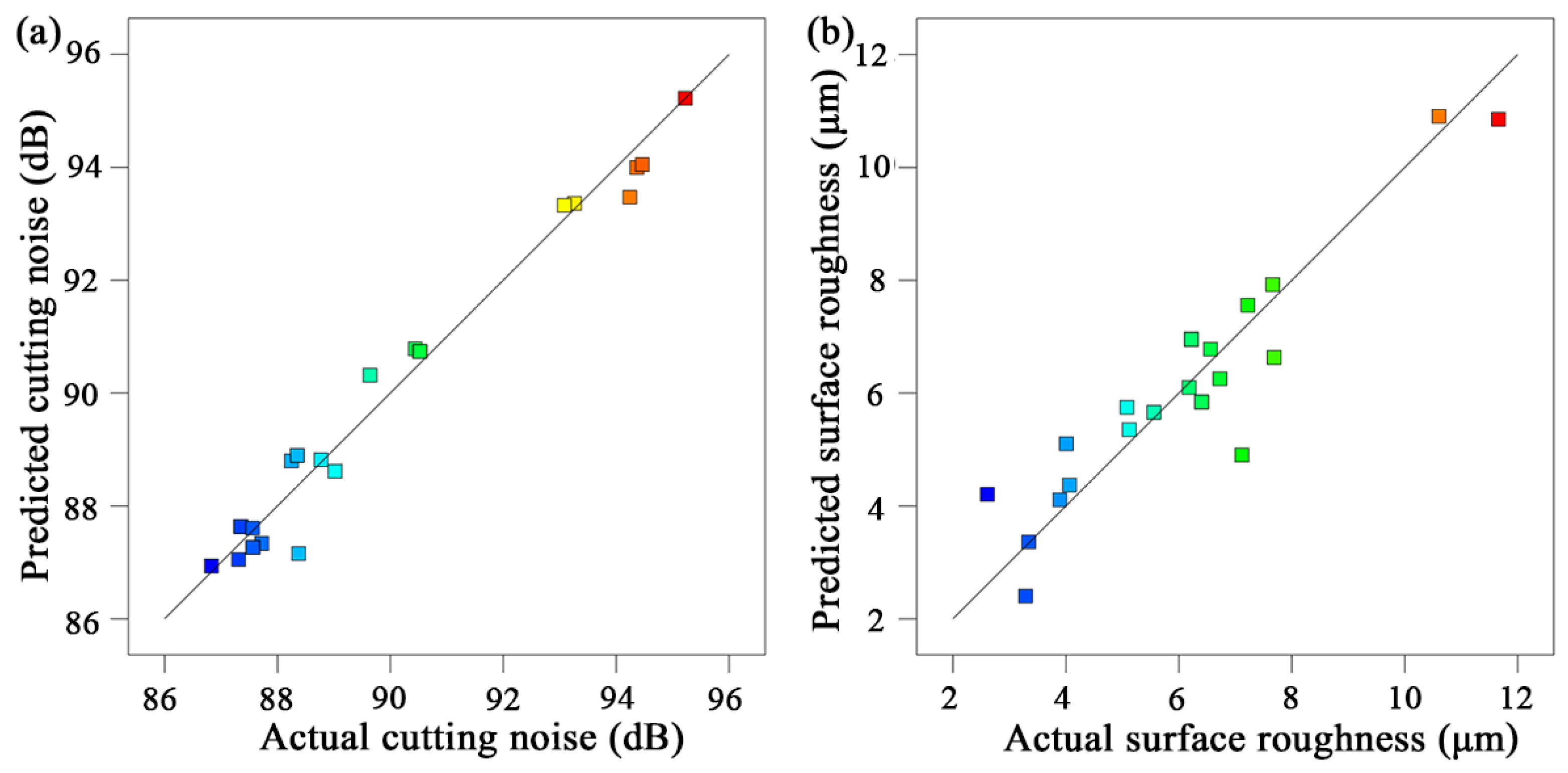
- A high-precision dual-response quadratic regression prediction model for cutting noise peak sound pressure level (SPL) and machined surface roughness (Sa) was established. The model exhibited excellent predictive performance, with a coefficient of determination R2 of 0.97 for SPL and 0.85 for Sa, which is suitable for machining performance prediction and parameter optimisation in bamboo machining.
- (2)
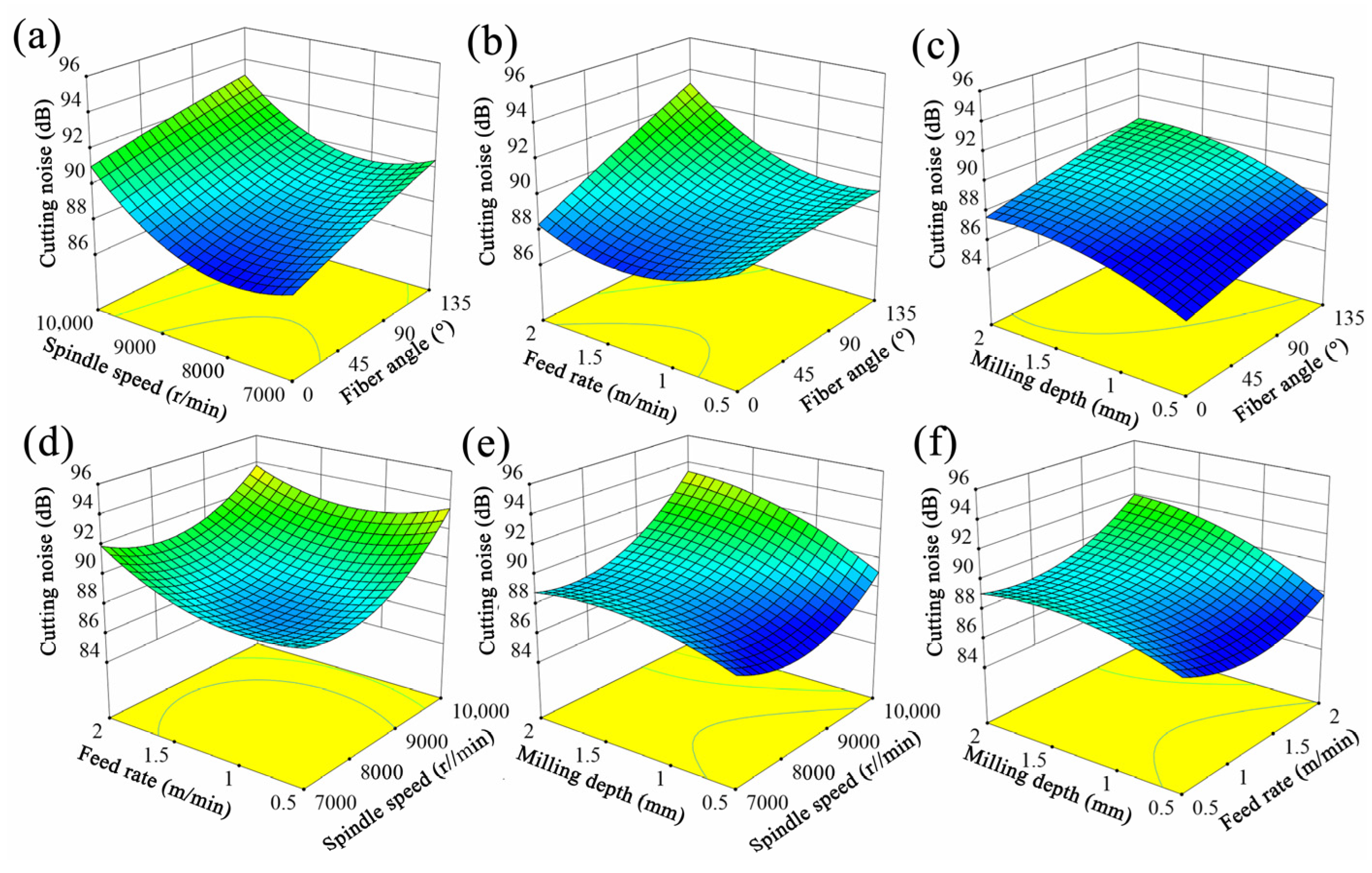
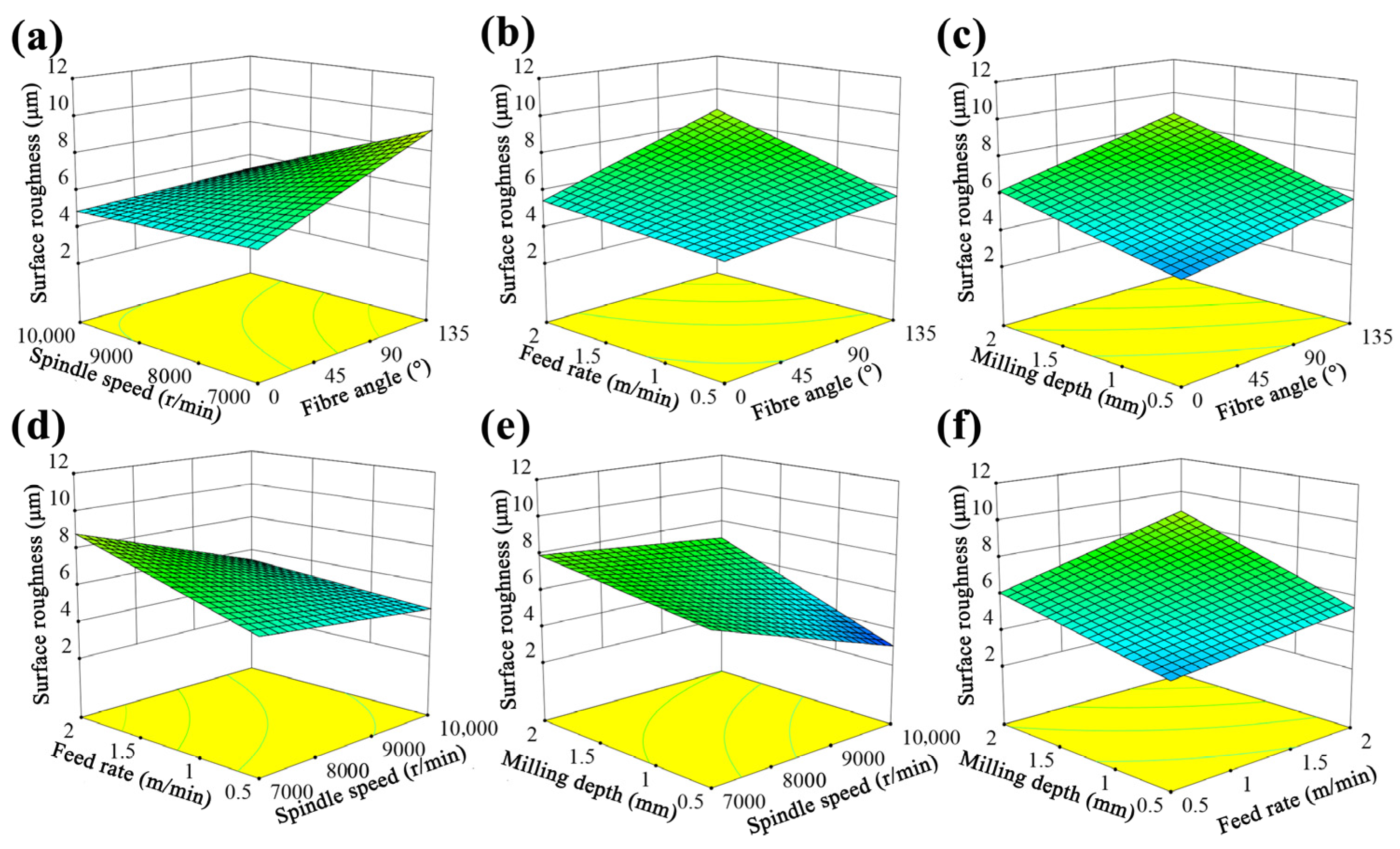
- Noise levels increase with fibre angle, feed rate, and milling depth, and show a non-linear relationship with spindle speed. Surface roughness worsens with increasing milling depth and fibre angle, and higher feed rates also exacerbate surface non-uniformity.
- (3)
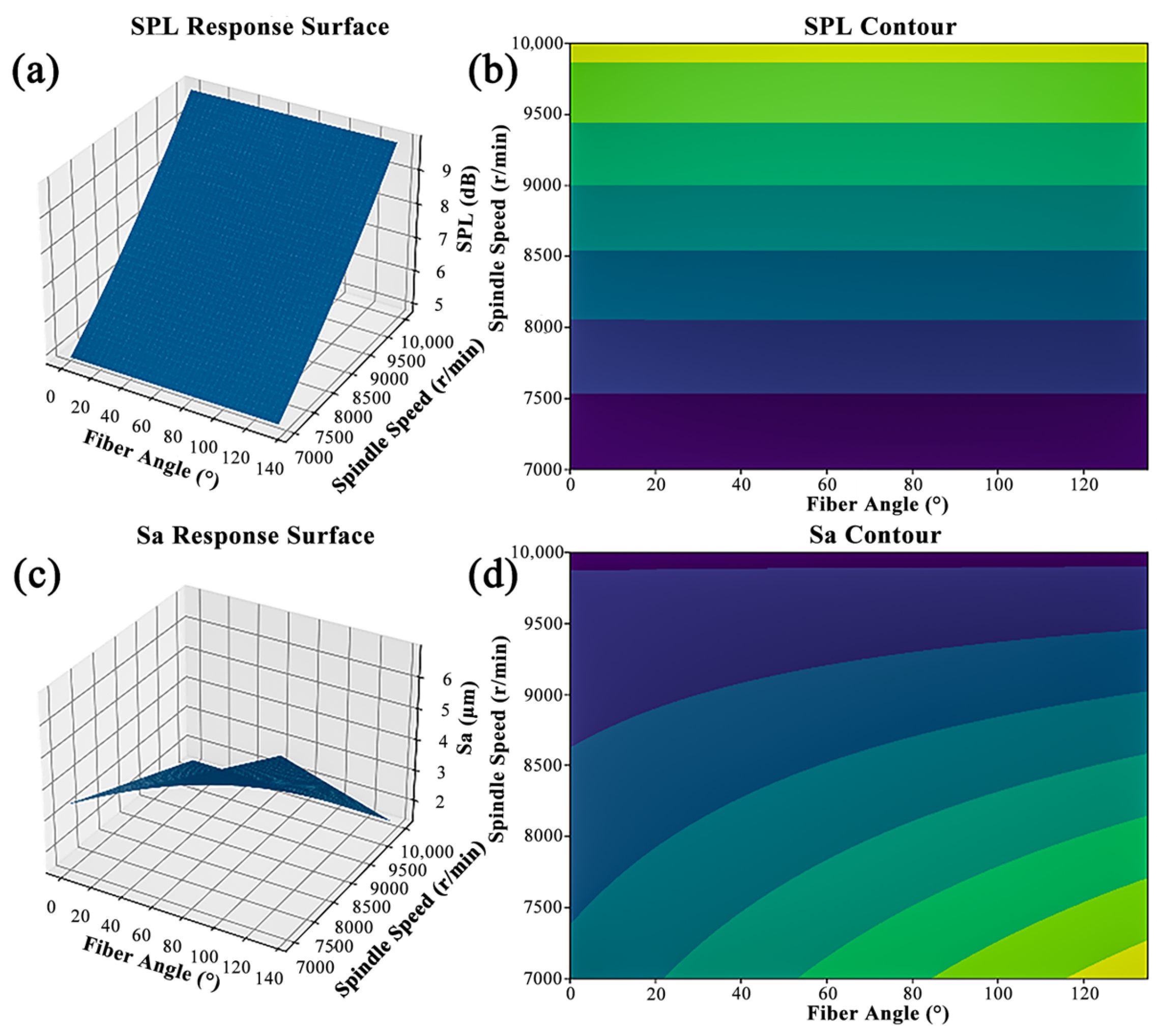
- Fibre orientation, spindle speed, feed rate, and milling depth all significantly affect cutting noise and surface quality. Among these, milling depth is the most influential factor affecting surface roughness, while the interaction between fibre orientation and spindle speed plays an important role in determining surface quality.
- (4)
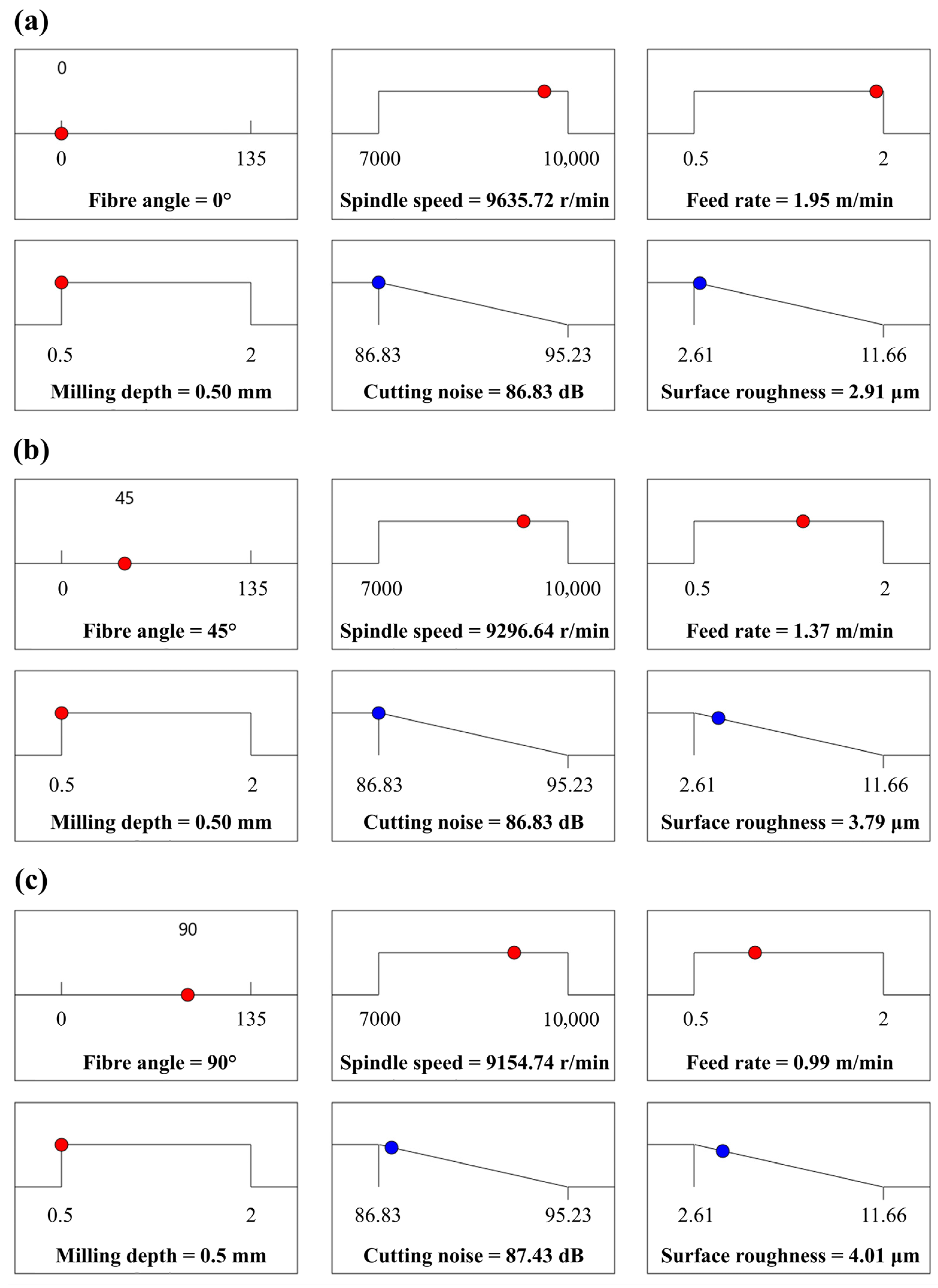
- The comprehensive optimal parameter combination that balances low-noise and high-quality machining was obtained through multi-objective optimisation: for 45° fibre orientation, the optimal parameters are spindle speed of 9297 r/min, feed rate of 1.4 m/min, and milling depth of 0.5 mm, with the measured SPL of 83.46 dB and Sa of 3.98 μm. For 0° fibre orientation, the optimal parameters are spindle speed of 9636 r/min, feed rate of 2.0 m/min, and milling depth of 0.5 mm, achieving the lowest SPL of 82.38 dB and Sa of 3.41 μm. For 90° perpendicular-to-fibre cutting, the optimised parameters are a spindle speed of 9155 r/min, a feed rate of 1.0 m/min, and a milling depth of 0.5 mm, which yielded the highest SPL of 92.11 dB and the highest Sa of 4.52 μm among the three typical fibre orientations.
- (5)
- Future research will focus on multi-knife cutter heads, helical cutters, tool wear, and coating adhesion. In particular, future studies will extend the current work to more industrially representative tool configurations, such as multi-edge and helical milling cutters, to improve the applicability of the findings under practical machining conditions. Comprehensive characterisation, including cutting force, temperature, and chip deformation, will be conducted, with tool material, structure, and advanced cutting methods taken into account. In addition, more advanced modelling approaches beyond quadratic response surface methodology (RSM), such as higher-order non-linear or data-driven methods, will be explored to better capture complex cutting mechanisms over a wider parameter space.
Author Contributions
Funding
Data Availability Statement
Acknowledgments
Conflicts of Interest
References
- Chen, F.; Cheng, A.; Xiang, J.; Wang, X.; Guan, L.; Lin, X.; Tu, D. Extraction of bamboo sap by high-efficiency hot pressing: A method for high value and sustainable use of the bamboo material. ACS Omega 2025, 10, 7362–7370. [Google Scholar] [CrossRef] [PubMed]
- Lei, W.; Wang, S.; Wang, X.; Yang, Y.; Qi, Y.; Zhang, Y.; Yu, W. Influence of longitudinal parts of bamboo on the properties of bamboo scrimber. Ind. Crops Prod. 2025, 232, 121322. [Google Scholar] [CrossRef]
- Khodabakhshi, N.; Chu, S.K.; Mouka, T.; Kum, K.H.; Dimitrakopoulos, E.G. Stiffness characterization of bolted multi-culm bamboo members. J. Build. Eng. 2025, 103, 19. [Google Scholar] [CrossRef]
- Li, W.; Xie, G.; Ma, H.; Li, Y.; Li, X.; Li, L. Resistance of bamboo scrimber modified with furfuryl alcohol against decay fungi and termites. Wood Mater. Sci. Eng. 2025, 8, 1081–1088. [Google Scholar] [CrossRef]
- Franco, J.; Urdaneta, F.; Cordoba, Y.; Meza, L.; Urdaneta, I.; Jameel, H.; Gonzalez, R.W. Assessing bleached bamboo fibers as a hardwood replacement via kraft co-cooking for paperboard applications. Ind. Crops Prod. 2025, 232, 121252. [Google Scholar] [CrossRef]
- Hong, M.; Buck, D.; Yuan, Z.; Xu, C.; Zhu, Z. Multi-Factor Analysis of Cutting Parameters for Bamboo Milling. Coatings 2025, 15, 1148. [Google Scholar] [CrossRef]
- Li, R.; Ekevad, M.; Guo, X.; Cao, P.; Wang, J.; Chen, Q.; Xue, H. Pressure, feed rate, and abrasive mass flow rate influence on surface roughness for recombinant bamboo abrasive water jet cutting. Bioresources 2015, 10, 1998–2008. [Google Scholar] [CrossRef]
- Liu, Y.; Wang, Y.; Wang, C.; Zhou, T.; Hu, J.; Wu, Z. Carbon footprint accounting and analysis of Chinese furniture enterprises’ panel cabinets. Sustainability 2025, 17, 9267. [Google Scholar] [CrossRef]
- Wang, J.; Wu, Z.; Yang, L.; Hu, W.; Song, C.; Zhu, Z.; Guo, X.; Cao, P. Investigation on distributed rescheduling with cutting tool maintenance based on NSGA-III in large-scale panel furniture intelligent manufacturing. J. Manuf. Process. 2024, 112, 214–224. [Google Scholar] [CrossRef]
- Pangestu, K.T.P.; Nandika, D.; Wahyudi, I.; Usuki, H.; Darmawan, W. Innovation of helical cutting tool edge for eco-friendly milling of wood-based materials. Wood Mater. Sci. Eng. 2022, 17, 607–616. [Google Scholar] [CrossRef]
- Dong, W.; Wu, Z.; Zhang, F.; Wang, J.; Li, R.; Guo, X. Investigation of the effects of fibre orientation on microstructural damage mechanisms during the milling of laminated bamboo lumber. Biomass Bioenerg. 2026, 205, 108554. [Google Scholar] [CrossRef]
- Li, R.; Guo, X.; Cao, P.; Wang, X. Optimization of laser cutting parameters for recombinant bamboo based on response surface methodology. Wood Res. 2016, 61, 275–285. [Google Scholar]
- Zhang, L.; Wang, C.; Zhu, D.; Li, W.; Wang, Y. Effects of cutting parameters and material selection on power consumption and surface quality in long narrow groove machining of Qiong bamboo. Wood Mater. Sci. Eng. 2025, 11, 1–11. [Google Scholar] [CrossRef]
- Liu, Y.; Zhou, J.; Fu, W.; Zhang, B.; Chang, F.; Jiang, P. Study on the effect of cutting parameters on bamboo surface quality using response surface methodology. Measurement 2021, 174, 109002. [Google Scholar] [CrossRef]
- Zhu, J.; Peng, H.; Lyu, J.; Zhang, T. Evaluation of orthotropic elasticity of gradient-structured bamboo by microtensile testing combined with digital image correlation technique. Ind. Crops Prod. 2023, 203, 117097. [Google Scholar] [CrossRef]
- Huang, B.; Chen, L.; Wang, X.; Ma, X.; Liu, H.; Zhang, X.; Sun, F.; Fei, B.; Fang, C. Eco-friendly, high-utilization, and easy-manufacturing bamboo units for engineered bamboo products: Processing and mechanical characterization. Compos. Part B Eng. 2023, 267, 111073. [Google Scholar] [CrossRef]
- Li, R.; Yang, F.; Wang, X. Modeling and predicting the machined surface roughness and milling power in Scot’s pine helical milling process. Machines 2022, 10, 331. [Google Scholar] [CrossRef]
- Wang, C.; Wen, L.; Ming, W.; An, Q.; Chen, M. Experimental study on effects of fiber cutting angle in milling of high-strength unidirectional carbon fiber–reinforced polymer laminates. Proc. Inst. Mech. Eng. Part B J. Eng. Manuf. 2018, 232, 1813–1824. [Google Scholar] [CrossRef]
- Aykac, E.; Sofuoglu, S.D. Investigation of the Effect of Machining Parameters on Surface Quality in Bamboo. Teh. Vjesn. 2021, 28, 684–688. [Google Scholar] [CrossRef]
- GB/T 3767-2016; Acoustics—Determination of Sound Power Levels and Sound Energy Levels of Noise Sources Using Sound Pressure—Engineering Methods for an Essentially Free Field over a Reflecting Plane. Standardization Administration of China: Beijing, China, 2016.
- HJ 706-2014; Technical Specification for Environmental Noise Monitoring. Ministry of Environmental Protection of the People’s Republic of China: Beijing, China, 2014.
- Wang, J.; Wu, Z.; Zhang, F.; Song, C.; Hu, W.; Zhu, Z.; Guo, X.; Cao, P. Research on the end-milling surface quality of Paulownia based on response surface model in terms of force and chip morphology. Forests 2024, 15, 325. [Google Scholar] [CrossRef]
- Merhar, M.; Hodžić, D.; Hasanagić, R.; Hurem, N.; Hodžić, A. Cutting Power Model Determination for Solid Wood Processing Using Response Surface Methodology. Forests 2026, 17, 195. [Google Scholar] [CrossRef]
- Li, R.; Xu, W.; Wang, C.; Zhang, S.; Song, W. Optimization for the liquefaction of moso bamboo in phenol using response surface methodology. Wood Fiber Sci. 2018, 50, 220–227. [Google Scholar] [CrossRef]
- Montgomery, D.C. Response Surface Methodology: Process and Product Optimization Using Designed Experiments, 5th ed.; John Wiley & Sons: Hoboken, NJ, USA, 2019. [Google Scholar]
- Wang, F.; Yin, J.; Ma, J.; Jia, Z.; Yang, F.; Niu, B. Effects of cutting edge radius and fiber cutting angle on the cutting-induced surface damage in machining of unidirectional CFRP composite laminates. Int. J. Adv. Manuf. Technol. 2017, 91, 3107–3120. [Google Scholar] [CrossRef]
- Voss, R.; Seeholzer, L.; Kuster, F.; Wegener, K. Influence of fibre orientation, tool geometry and process parameters on surface quality in milling of CFRP. CIRP J. Manuf. Sci. Technol. 2017, 18, 75–91. [Google Scholar] [CrossRef]
- Karanjkar, V.A.; Pathan, S.S. Modeling and Simulation of Noise and Vibration in Sawing Operations: Impact of Machining Parameters and Material Properties. J. Vib. Eng. Technol. 2026, 14, 125. [Google Scholar] [CrossRef]
- Kang, J.; Zhang, J.; Sun, D.; Song, W. Experimental investigation of cutting performance for circular saw blade body modification by resin layers toward green manufacturing. Int. J. Adv. Manuf. Technol. 2023, 128, 3105–3121. [Google Scholar] [CrossRef]
- Chen, C.; Hsu, S. Optimizing cutting parameters with industrial IoT system for automated continuous dry milling. Internet Things 2025, 31, 101569. [Google Scholar] [CrossRef]
- Rech, J.; Dumont, F.; Le Bot, A.; Arrazola, P.J. Reduction of noise during milling operations. CIRP J. Manuf. Sci. Technol. 2017, 18, 39–44. [Google Scholar] [CrossRef]
- Dong, W.; Tian, X.; Jiang, J.; Wang, J.; Guo, X.; Zhou, Z. Integrated modelling and multi-objective optimisation of cutting force, roughness and noise in bamboo end-grain milling. Biomass Bioenergy 2026, 210, 109034. [Google Scholar] [CrossRef]
- Zhang, L.; Zhang, X. Effect of cooling and lubrication conditions on the variable angle milling of unidirectional CFRP with PCD tools. J. Mater. Process. Technol. 2023, 319, 118073. [Google Scholar] [CrossRef]
- Wang, J.; Cao, P.; Guo, X.; Hong, X.; Jia, G.; Wang, B. Effect of process parameters on cutting forces and surface roughness during peripheral up milling of bamboo scrimber. Bioresources 2015, 10, 8414–8425. [Google Scholar] [CrossRef]
- Wang, Y.; Chao, S.; Bao, Y.; Wang, E.; Kang, R.; Dong, Z.; Sun, J. Experimental study of surface quality and damage in grinding CFRP circular honeycomb cell with diamond saw blade. J. Mater. Res. Technol. 2025, 38, 4150–4169. [Google Scholar] [CrossRef]
- Gul, O.; Korkmaz, M. Measurement and optimization of wood dust and noise levels in table saw operations using response surface methodology. Bioresources 2025, 20, 8848. [Google Scholar] [CrossRef]
- Darmawan, W.; Tanaka, C. Discrimination of coated carbide tools wear by the features extracted from parallel force and noise level. Ann. For. Sci. 2004, 61, 731–736. [Google Scholar] [CrossRef]
- Zhang, L.; Zhang, B.; Bao, H.; Huang, H. Optimization of cutting parameters for minimizing environmental impact: Considering energy efficiency, noise emission and economic dimension. Int. J. Precis. Eng. Manuf. 2018, 19, 613–624. [Google Scholar] [CrossRef]
- Natesh, C.P.; Siddeshkumar, N.G.; Srinivasa, G.; Shivaramakrishna, A.; Pruthvi, H.M.; Prasad, C.D.; Shashidhara, Y.M.; Amarendra, H.J.; Tiwari, A.; Aden, A.A. Multi-objective optimization of surface roughness and MRR in AISI 316L stainless steel processed by MQL end milling using taguchi, RSM, ANN, and RFR methods. Sci. Rep. 2025, 15, 36583. [Google Scholar] [CrossRef]
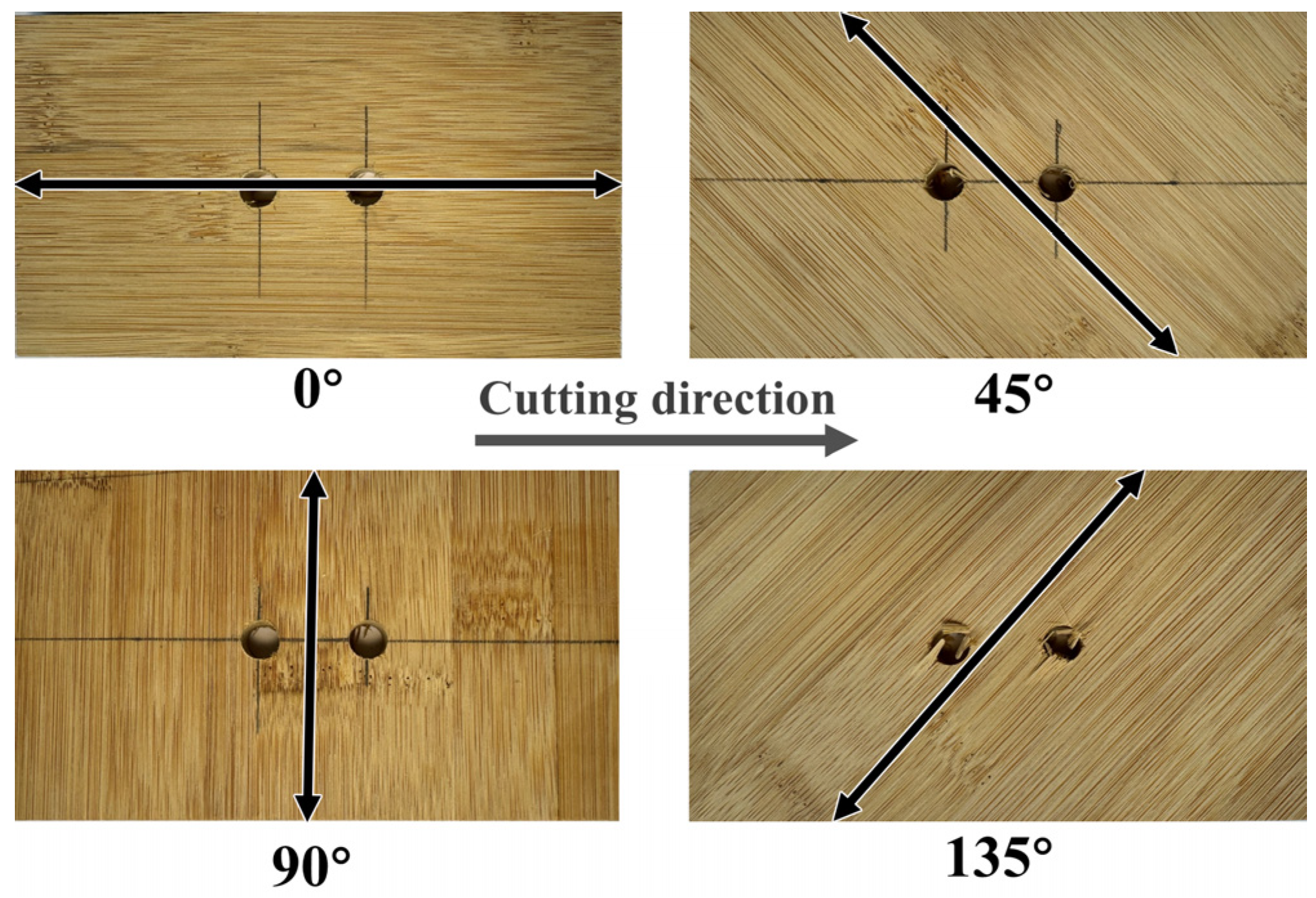
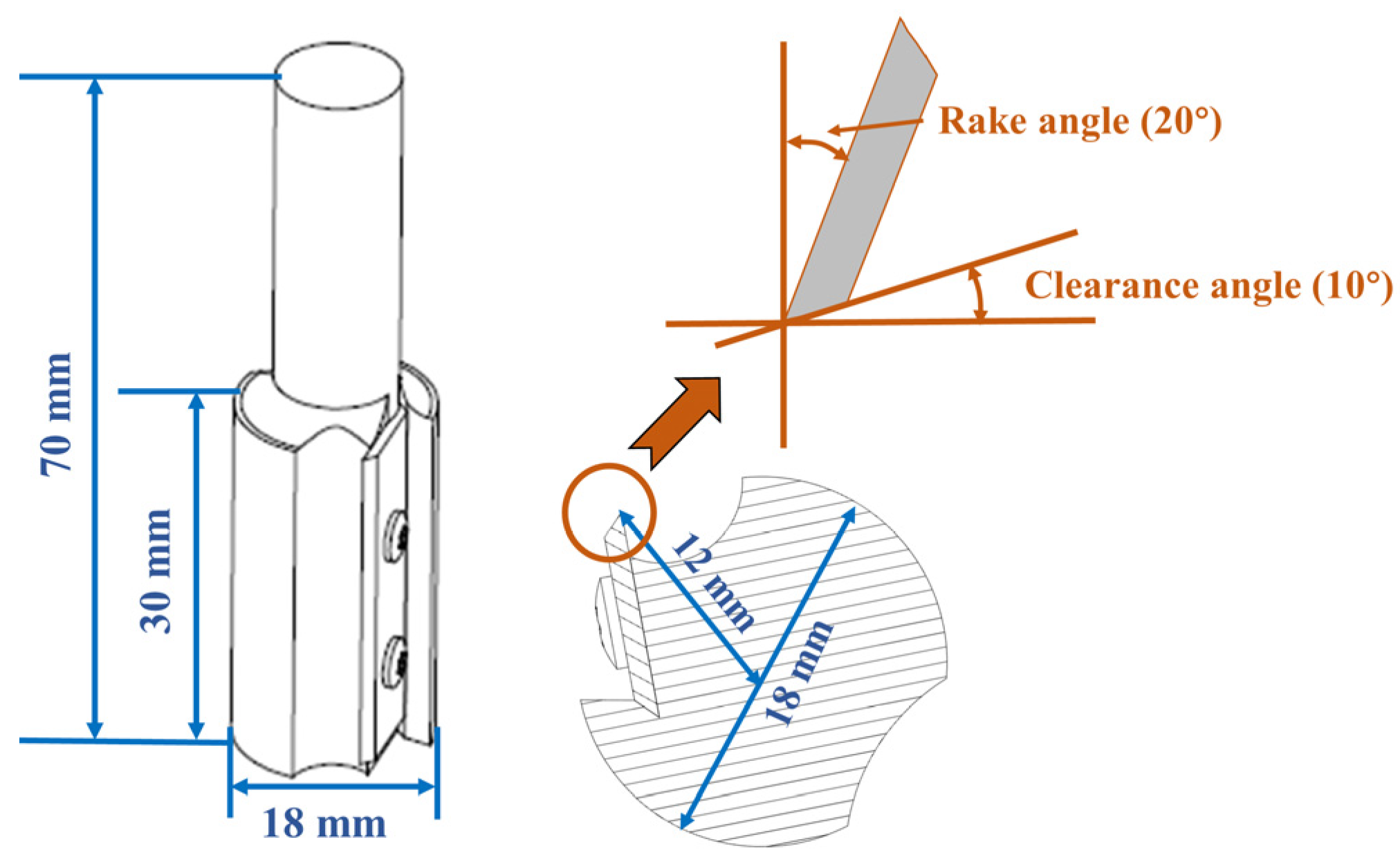
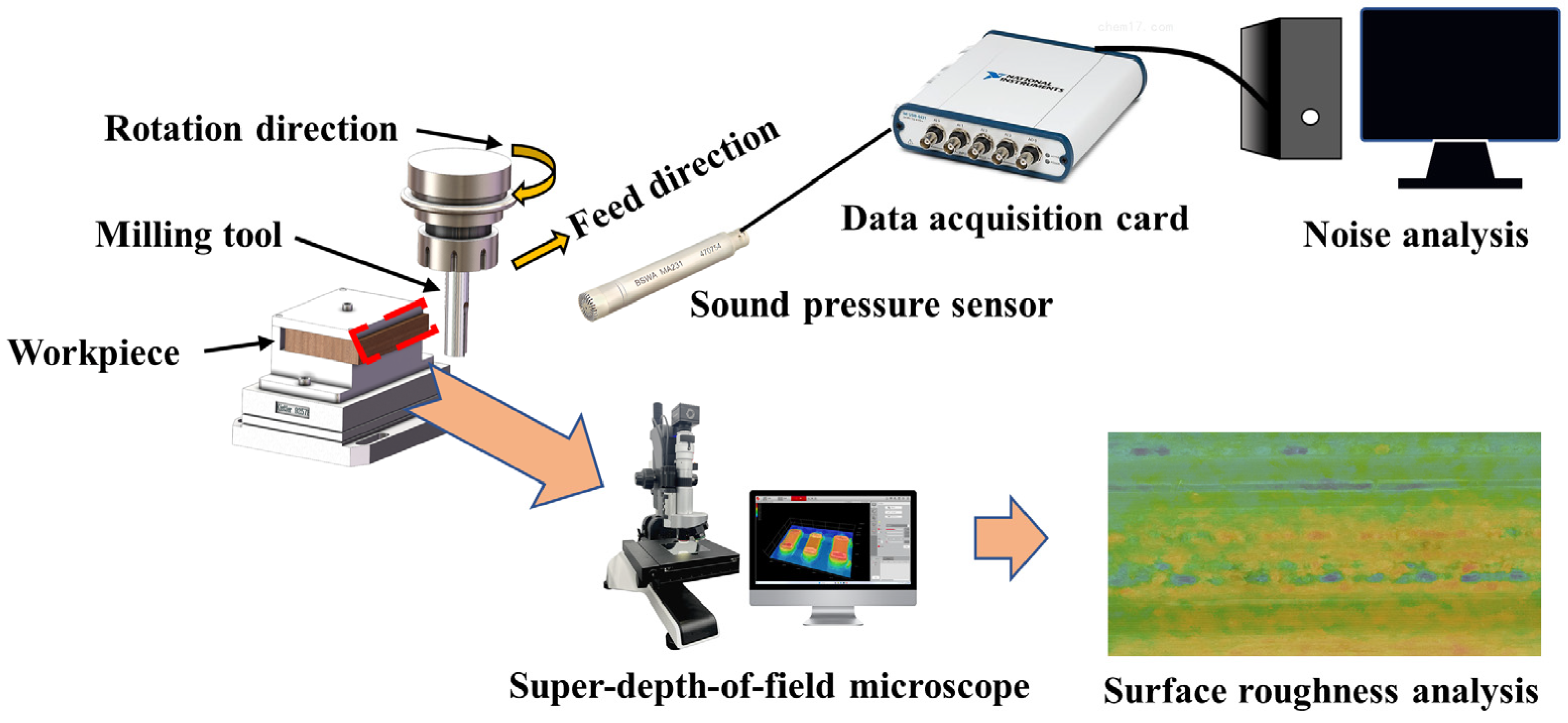

| Density (g/cm3) | Moisture Content (%) | Modulus of Rupture (MPa) | Modulus of Elasticity (GPa) | Internal Bonding Strength (MPa) |
|---|---|---|---|---|
| 0.54 | 7.22 | 140.44 | 11.25 | 3.69 |
| Milling Parameters | Description |
|---|---|
| Fibre angle θ (°) | 0, 45, 90, 135 |
| Spindle speed n (r/min) | 7000, 8000, 9000, 10,000 |
| Feed speed U (m/min) | 0.5, 1.0, 1.5, 2.0 |
| Milling depth ap (mm) | 0.5, 1.0, 1.5, 2.0 |
| No. | Factor 1 θ (°) | Factor 2 n (r/min) | Factor 3 U (m/min) | Factor 4 ap (mm) | Response 1 SPL (dB) | Response 2 Sa (μm) |
|---|---|---|---|---|---|---|
| 1 | 0 | 10,000 | 1 | 0.5 | 88.25 | 3.34 |
| 2 | 135 | 8000 | 0.5 | 0.5 | 87.72 | 4.01 |
| 3 | 90 | 9000 | 1.5 | 1.5 | 90.52 | 6.22 |
| 4 | 90 | 7000 | 2 | 2 | 93.26 | 11.66 |
| 5 | 0 | 8000 | 0.5 | 0.5 | 87.31 | 3.89 |
| 6 | 135 | 7000 | 2 | 1 | 94.37 | 10.61 |
| 7 | 90 | 9000 | 1 | 0.5 | 88.38 | 2.61 |
| 8 | 135 | 10,000 | 0.5 | 0.5 | 90.44 | 3.29 |
| 9 | 135 | 7000 | 0.5 | 2 | 89.02 | 7.22 |
| 10 | 0 | 7000 | 2 | 0.5 | 86.83 | 5.12 |
| 11 | 90 | 9000 | 1.5 | 1.5 | 90.52 | 6.22 |
| 12 | 90 | 10,000 | 2 | 1 | 94.24 | 7.12 |
| 13 | 135 | 10,000 | 1.5 | 2 | 95.23 | 7.66 |
| 14 | 90 | 9000 | 1.5 | 1.5 | 90.52 | 6.22 |
| 15 | 135 | 9000 | 2 | 0.5 | 89.64 | 5.08 |
| 16 | 90 | 7000 | 1 | 0.5 | 87.35 | 7.69 |
| 17 | 0 | 8000 | 1.5 | 1.5 | 87.56 | 5.56 |
| 18 | 90 | 8000 | 0.5 | 1.5 | 88.35 | 6.40 |
| 19 | 90 | 7000 | 1 | 0.5 | 87.35 | 7.69 |
| 20 | 0 | 8000 | 1.5 | 1.5 | 87.56 | 5.56 |
| 21 | 45 | 10,000 | 0.5 | 2 | 94.46 | 6.73 |
| 22 | 0 | 10,000 | 2 | 2 | 93.08 | 6.56 |
| 23 | 90 | 8000 | 0.5 | 1.5 | 88.35 | 6.40 |
| 24 | 0 | 9000 | 1 | 2 | 88.77 | 6.18 |
| 25 | 0 | 7000 | 0.5 | 2 | 87.56 | 4.06 |
| Source | Sum of Squares | df | Mean Square | F-Value | p-Value | Significance |
|---|---|---|---|---|---|---|
| Model | 168.32 | 14 | 12.02 | 24.97 | <0.0001 | Significant |
| A—fibre angle | 21.06 | 1 | 21.06 | 43.73 | <0.0001 | Significant |
| B—spindle speed | 31.80 | 1 | 31.80 | 66.04 | <0.0001 | Significant |
| C—feed rate | 7.31 | 1 | 7.31 | 15.18 | 0.0030 | Significant |
| D—milling depth | 28.58 | 1 | 28.58 | 59.35 | <0.0001 | Significant |
| AB | 0.6331 | 1 | 0.6331 | 1.31 | 0.2782 | Not significant |
| AC | 11.97 | 1 | 11.97 | 24.86 | 0.0005 | Significant |
| AD | 0.0874 | 1 | 0.0874 | 0.1816 | 0.6791 | Not significant |
| BC | 3.89 | 1 | 3.89 | 8.09 | 0.0174 | Significant |
| BD | 5.09 | 1 | 5.09 | 10.58 | 0.0087 | Significant |
| CD | 3.89 | 1 | 3.89 | 8.08 | 0.0175 | Significant |
| A2 | 0.0292 | 1 | 0.0292 | 0.0607 | 0.8104 | Not significant |
| B2 | 12.32 | 1 | 12.32 | 25.59 | 0.0005 | Significant |
| C2 | 8.20 | 1 | 8.20 | 17.02 | 0.0021 | Significant |
| D2 | 2.11 | 1 | 2.11 | 4.38 | 0.0627 | Not significant |
| Residual | 4.81 | 10 | 0.4815 | — | — | — |
| Lack of Fit | 4.81 | 5 | 0.9630 | — | — | — |
| Pure Error | 0.0000 | 5 | 0.0000 | — | — | — |
| Cor Total | 173.13 | 24 | — | — | — | — |
| Source | Sum of Squares | df | Mean Square | F-Value | p-Value | Significance |
|---|---|---|---|---|---|---|
| Model | 89.73 | 10 | 8.97 | 7.96 | 0.0003 | Significant |
| A—fibre angle | 16.49 | 1 | 16.49 | 14.64 | 0.0019 | Significant |
| B—spindle speed | 15.63 | 1 | 15.63 | 13.87 | 0.0023 | Significant |
| C—feed rate | 13.38 | 1 | 13.38 | 11.87 | 0.0039 | Significant |
| D—milling depth | 26.13 | 1 | 26.13 | 23.19 | 0.0003 | Significant |
| AB | 6.94 | 1 | 6.94 | 6.16 | 0.0264 | Significant |
| AC | 3.52 | 1 | 3.52 | 3.13 | 0.0988 | Not significant |
| AD | 0.7309 | 1 | 0.7309 | 0.6487 | 0.4340 | Not significant |
| BC | 3.14 | 1 | 3.14 | 2.79 | 0.1172 | Not significant |
| BD | 4.35 | 1 | 4.35 | 3.86 | 0.0697 | Not significant |
| CD | 1.59 | 1 | 1.59 | 1.41 | 0.2542 | Not significant |
| Residual | 15.77 | 14 | 1.13 | — | — | — |
| Lack of Fit | 15.77 | 9 | 1.75 | — | — | — |
| Pure Error | 0.0000 | 5 | 0.0000 | — | — | — |
| Cor Total | 105.51 | 24 | — | — | — | — |
| No. | Fibre Angle (°) | Spindle Speed (r/min) | Feed Rate (m/min) | Milling Depth (mm) | Actual SPL | Predicted SPL | Error of SPL | Actual Sa | Predicted Sa | Error of Sa |
|---|---|---|---|---|---|---|---|---|---|---|
| 1 | 0 | 9636 | 2.0 | 0.5 | 82.38 | 86.83 | 4.45% | 3.41 | 2.91 | −14.66% |
| 2 | 45 | 9297 | 1.4 | 0.5 | 83.46 | 86.83 | 3.37% | 3.98 | 3.79 | 4.77% |
| 3 | 90 | 9155 | 1.0 | 0.5 | 92.11 | 87.43 | −4.68% | 4.52 | 4.01 | −11.28% |
| Std. Dev. | CV% | R2 | Adj-R2 | Adeq Precision | |
|---|---|---|---|---|---|
| SPL | 0.69 | 0.77 | 0.97 | 0.93 | 15.42 |
| Sa | 1.06 | 17.34 | 0.85 | 0.74 | 12.08 |
Disclaimer/Publisher’s Note: The statements, opinions and data contained in all publications are solely those of the individual author(s) and contributor(s) and not of MDPI and/or the editor(s). MDPI and/or the editor(s) disclaim responsibility for any injury to people or property resulting from any ideas, methods, instructions or products referred to in the content. |
© 2026 by the authors. Licensee MDPI, Basel, Switzerland. This article is an open access article distributed under the terms and conditions of the Creative Commons Attribution (CC BY) license.
Share and Cite
Chen, H.; Buck, D.; Ding, J.; Guo, X.; Zhu, Z. Bamboo Milling Process Parameters’ Influence on Sound Level and Surface Performance via Response Surface Methodology. Forests 2026, 17, 521. https://doi.org/10.3390/f17050521
Chen H, Buck D, Ding J, Guo X, Zhu Z. Bamboo Milling Process Parameters’ Influence on Sound Level and Surface Performance via Response Surface Methodology. Forests. 2026; 17(5):521. https://doi.org/10.3390/f17050521
Chicago/Turabian StyleChen, Haiyang, Dietrich Buck, Jianwen Ding, Xiaolei Guo, and Zhaolong Zhu. 2026. "Bamboo Milling Process Parameters’ Influence on Sound Level and Surface Performance via Response Surface Methodology" Forests 17, no. 5: 521. https://doi.org/10.3390/f17050521
APA StyleChen, H., Buck, D., Ding, J., Guo, X., & Zhu, Z. (2026). Bamboo Milling Process Parameters’ Influence on Sound Level and Surface Performance via Response Surface Methodology. Forests, 17(5), 521. https://doi.org/10.3390/f17050521

