Article

From Ethnobotanical Resource to Functional Food: Research Trends, Value Networks, and Market Prospects of Brosimum alicastrum Swartz in Mexico

by
Javier E. Vera-López
1,2,
Alberto Santillán-Fernández
3,*,
Arely del R. Ireta-Paredes
4,
Iban Vázquez-González
5,*,
Alfredo E. Tadeo-Noble
3,
Guillermo García-García
6 and
Jaime Bautista-Ortega
1
1
Bioprospección y Sustentabilidad Agrícola en el Trópico, Colegio de Postgraduados Campus Campeche, Champotón 24450, Campeche, Mexico
2
Programa de Doctorado en Agricultura y Medioambiente Para el Desarrollo, Universidad de Santiago de Compostela, 27002 Lugo, Galicia, Spain
3
IxM-SECIHTI, Colegio de Postgraduados Campus Campeche, Champotón 24450, Campeche, Mexico
4
Comercio Internacional y Logística, Academia de Administración, Universidad Politécnica de Texcoco, Texcoco 56150, Estado de Mexico, Mexico
5
Research Group (GI-1899 ECOAGRASOC), Department of Applied Economics, Escola Politécnica Superior de Enxeñaría, Universidade de Santiago de Compostela, 27002 Lugo, Galicia, Spain
6
Ingenieria en Sistemas, Instituto Tecnológico Superior de Venustiano Carranza, Venustiano Carranza 73049, Puebla, Mexico
*
Authors to whom correspondence should be addressed.
Forests 2026, 17(4), 433; https://doi.org/10.3390/f17040433
Submission received: 16 February 2026 / Revised: 26 March 2026 / Accepted: 27 March 2026 / Published: 29 March 2026

Abstract

Brosimum alicastrum Swartz is a forest species with substantial potential for animal and human nutrition. However, its nutritional attributes and commercial applications are poorly disseminated and structurally underdeveloped. This study examines the relationship between scientific research and the commercialization of Brosimum alicastrum products in Mexico, integrating bibliometric analysis with a value network approach to identify market constraints and opportunities. Scientific publications indexed in Scopus from 1961 to 2024 were analyzed to characterize research trends, documented uses, and the geographic distribution of knowledge production. In parallel, companies commercializing Brosimum alicastrum-based products in Mexico were surveyed during 2024 using a value network approach (suppliers, customers, complementors, and competitors). A SWOT analysis was conducted to assess the structural strengths and vulnerabilities affecting market development. The results show that research in Mexico has primarily focused on the species’ properties as a functional food. At the same time, limited attention has been given to silviculture, commercialization strategies, and value-chain governance. Although Brosimum alicastrum products are currently positioned within premium market segments, business continuity is constrained by unstable supply systems that rely almost exclusively on seasonal wild collection from natural distribution areas. Both the value network and the SWOT analysis identified supply instability as the main factor limiting market expansion. Therefore, advancing research on the silviculture of Brosimum alicastrum is essential to support the establishment of managed production systems and commercial plantations capable of ensuring a stable, year-round supply of raw material. These developments would facilitate access to new market niches and enhance the biocultural and ethnobotanical value of Brosimum alicastrum as a functional and medicinal food resource within Mexico’s emerging bioeconomy.

1. Introduction

Brosimum alicastrum Swartz is a tree species of the family Moraceae, characteristic of evergreen and seasonally dry tropical forests of Mesoamerica. It produces globose fruits measuring 2–2.5 cm in diameter, with a fleshy pericarp that changes in color from green to orange-reddish at maturity, enclosing recalcitrant seeds of 1.5–2 cm in diameter covered by a papery testa [1,2]. This species, endemic to Mesoamerica and growing naturally in both evergreen and deciduous tropical forests [2], retains perennial foliage and exemplifies the transition of underutilized non-timber forest products (NTFPs)—traditionally associated with subsistence use—towards global value chains linked to superfoods and nutraceuticals. As such, Brosimum alicastrum represents a strategic resource for rural development and food security in tropical regions.
Brosimum alicastrum is naturally distributed across Mexico’s western, eastern, and southeastern regions [3]. In southeastern Mexico, the species has played a significant role in the diet of the Maya civilization; it is known as “Maya maize”, “Maya nut”, “Ramón tree”, or óox (a Maya term) [4]. In Western Mexico, the tree is commonly called capomo, and its fruit is used to make flours and coffee substitutes [5]. In contrast, in the eastern regions, the tree is known as ojite or ojoche and is primarily used as forage [6]. In contrast to traditional crops such as amaranth (Amaranthus spp.), which is already globally recognized for its functional and nutraceutical properties [7,8,9], Brosimum alicastrum constitutes an emerging non-timber forest product with comparable nutritional potential that remains largely underutilized in commercial terms.
Historically, the leaves and seeds of Brosimum alicastrum have been used to feed livestock [10]. More recently, the seed has been processed into gluten-free flour for baking, providing essential amino acids, particularly tryptophan [11]. Lactose-, gluten-, and caffeine-free beverages have also been formulated. They are characterized by their protein content (6.8 g), dietary fiber (2 g), and low fat content (0.2 g) per 281 mL serving, making them nutritionally suitable for specific dietary groups [12]. Additionally, roasting and grinding the seeds produces a gluten- and caffeine-free coffee substitute that is rich in amino acids, vitamins, and minerals [13]. A “tea” (herbal infusion) rich in amino acids, fiber, calcium, and folic acid is obtained from dehydrated and ground leaves [14].
In Mexico, within a context of food security, Brosimum alicastrum has emerged as an alternative local resource with significant nutritional potential for both animal and human consumption [15]. This has led to increased research on the species, primarily addressing its uses and functional properties. However, there is still an opportunity to generate new knowledge related to the commercialization of its products and the identification of market niches aligned with emerging consumption trends [16].
Research conducted on Brosimum alicastrum provides a foundation for proposing strategies to increase the dissemination of its nutritional properties and enhance the commercialization of its derived products. In this regard, bibliometric studies [17] and the value network approach [18] are complementary analytical tools. Bibliometric analyses applied to emerging production systems help identify the necessary research areas for market consolidation [19]. Meanwhile, the value network approach identifies new market niches for species with recently recognized commercial value [20].
Bibliometric studies are efficient tools for assessing scientific research related to a specific topic. These studies examine published scientific articles and apply quantitative and qualitative methods to generate indicators that reveal the development and evolution of a given research field. They also identify gaps and opportunities for future knowledge generation [17]. However, few bibliometric studies have been conducted on Brosimum alicastrum, largely due to its recent commercial valuation [16].
Unlike Porter’s [21] linear value chain model, this study adopts the Value Net framework proposed by Brandenburger and Nalebuff [18], which captures the non-linear nature of Brosimum alicastrum commercialization through co-opetition among suppliers, customers, competitors, and key complementors, including research institutions and public policy bodies. This multidimensional approach identifies value nodes that expand the overall market beyond mere competition for market share [18]. Given the recent commercial valuation of Brosimum alicastrum [22], this methodology is particularly well-suited to analyzing its emerging market dynamics.
Within this context, the present study integrates advances in scientific research on Brosimum alicastrum with the structure of its value network in Mexico, identifying key actors, systemic constraints, and positioning strategies to support its consolidation as a high-potential non-timber forest product within the national forest bioeconomy.

2. Materials and Methods

2.1. Data Sources and Data Preparation

This study examined the association between advances in Brosimum alicastrum research reported in scientific articles and the commercialization of products derived from the species in Mexico, where it constituted the primary raw material. Scientific articles were retrieved from the Scopus journal database, which provides one of the most comprehensive collections of indexed scientific literature from multiple databases [23]. The analysis focused on legally established Mexican companies that commercialized Brosimum alicastrum either in its natural form (leaf, plant, or seed) or in processed forms (flour, “tea”, coffee substitute, beer, and bakery products).
Scientific articles were collected between January and May of 2025, and all available publications up to December 2024 were considered. The bibliometric search was conducted using a single-term query “Brosimum alicastrum” applied to titles, abstracts, and keywords in the Scopus database, with no date restrictions, in order to capture the complete historical record of scientific production on the species. Inclusion criteria required that: Brosimum alicastrum constituted the primary subject of the scientific article, rather than being mentioned in a secondary or comparative role; and that the article was published in a peer-reviewed journal indexed in Scopus. Exclusion criteria eliminated the following: conference proceedings and book chapters; articles in which Brosimum alicastrum appeared solely as a comparative reference; and duplicate records. Content analysis was applied to reduce subjectivity in classification.
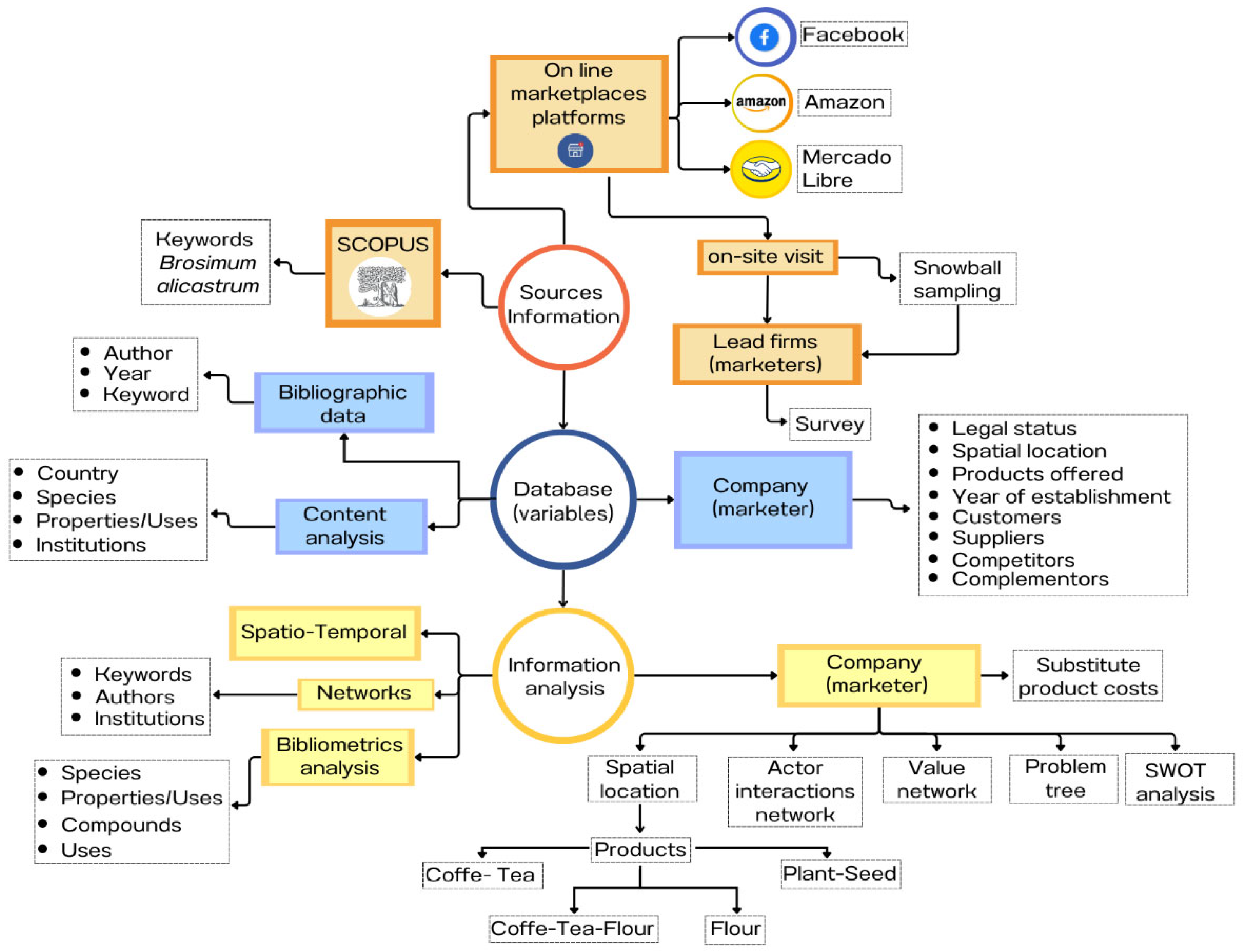
This analysis also allowed the extraction of key metadata from each article, including authors, year of publication, keywords, the first author’s institutional affiliation and country of origin, and the species’ physicochemical properties and uses. These data formed the basis for spatiotemporal analyses, the construction of networks of authors, keywords, and institutions, as well as the development of bibliometric indicators related to the physicochemical properties and uses of the species (Figure 1).
From January to December 2024, companies selling Brosimum alicastrum-based products in Mexico were identified through major online marketplaces (Amazon®, Seattle, WA, USA; Mercado Libre®, Montevideo, Uruguay; and Facebook®, Menlo Park, CA, USA). Each company was visited in person to verify its existence and confirm its legal status. Using the snowball sampling technique [24], additional firms with market presence but without active participation on these platforms were identified based on the initial set of companies.
Semi-structured interviews were conducted with the legal representatives of each company to identify the actors within their value networks—namely, suppliers, customers, competitors, and complementors—following the definitions proposed by Ireta-Paredes et al. [20]. Respondents were also asked to identify their role within the value network. Four functional categories were defined: producer–collector: companies that directly harvest raw material and sell it with minimal processing; processor: companies that purchase raw material from collectors and transform it into value-added products; retailer–distributor: companies that resell products without further processing; and integrated operator (harvester–processor–commercializer): companies that control multiple stages of the value network. The interviews also addressed the companies’ perceived strengths, opportunities, weaknesses, and threats related to their commercialization processes. This information was then used to construct the companies’ value networks and analyze the interactions among the involved actors (Figure 1).
Each interview lasted approximately 60 to 90 min and was conducted in person with the legal representative or primary decision-maker of each identified company. The interview guide was structured into four thematic blocks: general company profile (legal entity, year of incorporation, geographic scope, product portfolio); characterization of the supply system (raw material sources, purchase agreements, seasonal constraints); value network mapping (identification of suppliers, clients, competitors, and complementors); and SWOT perception (perceived strengths, weaknesses, opportunities, and threats related to their commercialization process).

2.2. Research on Brosimum alicastrum at the International Level

A temporal trend analysis of scientific production was conducted using the year of publication as the explanatory variable. An ordinary least squares (OLS) regression model was estimated to determine publication frequency trends over time [25]. The assignment of scientific production to countries was carried out based on the institutional affiliation of the first author, following standard practice in bibliometric studies [17]. This approach prioritizes the geographic origin of the lead researcher, not the geographic scope of the research content. Spatial representation was carried out using the geographic information system ArcGIS® v10.8 [26]. Furthermore, a temporal network of keywords was constructed using VOSviewer software v1.6.18 [27] to analyze how research themes focusing on the species have evolved.

2.3. Research on Brosimum alicastrum in Mexico

For the institutional analysis in Mexico, the spatial location of each institution was determined by its registered address, not by the geographic scope of the published study. The scientific output of institutions researching Brosimum alicastrum in Mexico was spatially associated with areas of the country’s greatest natural abundance of the species [3] using the ArcGIS® v10.8 geographic information system [26]. Co-authorship networks were constructed to identify leading researchers, and institutional collaboration networks were developed to determine the origins of scientific research on Brosimum alicastrum in Mexico. These analyses were performed using Gephi software v0.10.1 [28]. In parallel, bibliometric indicators related to the species’ physicochemical properties and uses were generated.

2.4. Value Network Analysis of Companies Commercializing Brosimum alicastrum Products in Mexico

The analysis of commercial activity used a value network approach structured in a cross-shaped configuration, with the focal firm—referred to as the lead firm—positioned at the center. Suppliers (actors and institutions providing inputs necessary for product production) were located below the lead firm, while customers (individuals and companies purchasing the products offered by the lead firm) were positioned above it. Competitors (actors competing with the lead firm for market share) were placed on the right side, and complementors (organizations and institutions that enhance customer valuation of the product) were placed on the left side [18].
Lead firms were defined as those companies that: clearly identified their suppliers through formal or legal agreements; maintained linkages with government institutions, universities, or technical advisors that contributed to product improvement (complementors); collected customer feedback through satisfaction surveys regarding product consumption; and identified both competing products and firms operating within the same market [20].
The legal status, year of establishment, and product portfolio of each identified company were documented, and the firms were spatially associated with the areas of the highest natural abundance of Brosimum alicastrum in Mexico [3]. Interactions among actors within value networks were analyzed using Gephi software v0.10.1 [28], allowing the identification of key actors upon which lead firms base the success of their operations. This analysis also characterized the value networks of the main companies that commercialize Brosimum alicastrum products in Mexico. Additionally, average product prices (expressed in euros, €) were compared with those of conventional substitute products in order to determine Brosimum alicastrum-based products’ market segment.
Given the absence of commercial plantations of Brosimum alicastrum [16], an estimation of operational costs associated with supply systems (i.e., wild collection) was conducted to assess how lead firms manage raw material procurement within their regions of influence. Monthly household revenue derived from seed collection (expressed in euros, €) was estimated based on the purchasing company. Monthly revenue was calculated by multiplying the unit price per kilogram by the average daily quantity of seed collected, assuming five working days per week and four weeks per month during the fruit collection season.

2.5. Market Outlook for Brosimum alicastrum in Mexico

To anticipate potential scenarios, emerging dynamics, and market trends associated with products derived from Brosimum alicastrum in Mexico, a qualitative–strategic prospective analysis was conducted, based on the application of a SWOT framework (Strengths, Weaknesses, Opportunities, and Threats) at both the species level and the value network level.
The SWOT matrix was constructed in three stages. In the first stage, raw SWOT data were extracted directly from semi-structured interviews conducted in person with the legal representatives or primary decision-makers of each identified company; informants were explicitly asked to identify the main strengths, weaknesses, opportunities, and threats associated with Brosimum alicastrum products in their commercialization process. In the second stage, these primary data were systematically coded and categorized using a thematic analysis approach, grouping conceptually related statements into higher-order dimensions. In the third stage, the preliminary SWOT findings were validated through two structured feedback sessions with company representatives. This procedure—combining primary interview data with key-actor validation—was additionally contrasted with the results of the bibliometric analysis, so that the SWOT reflected both market actor perceptions and the structural constraints identified in the scientific literature.
This prospective approach provides a methodological basis for an integrated understanding of the current and potential national market positioning of Brosimum alicastrum, as well as formulating strategies to strengthen its value network in the medium and long term.

3. Results and Discussion

3.1. Research on Brosimum alicastrum at the International Level

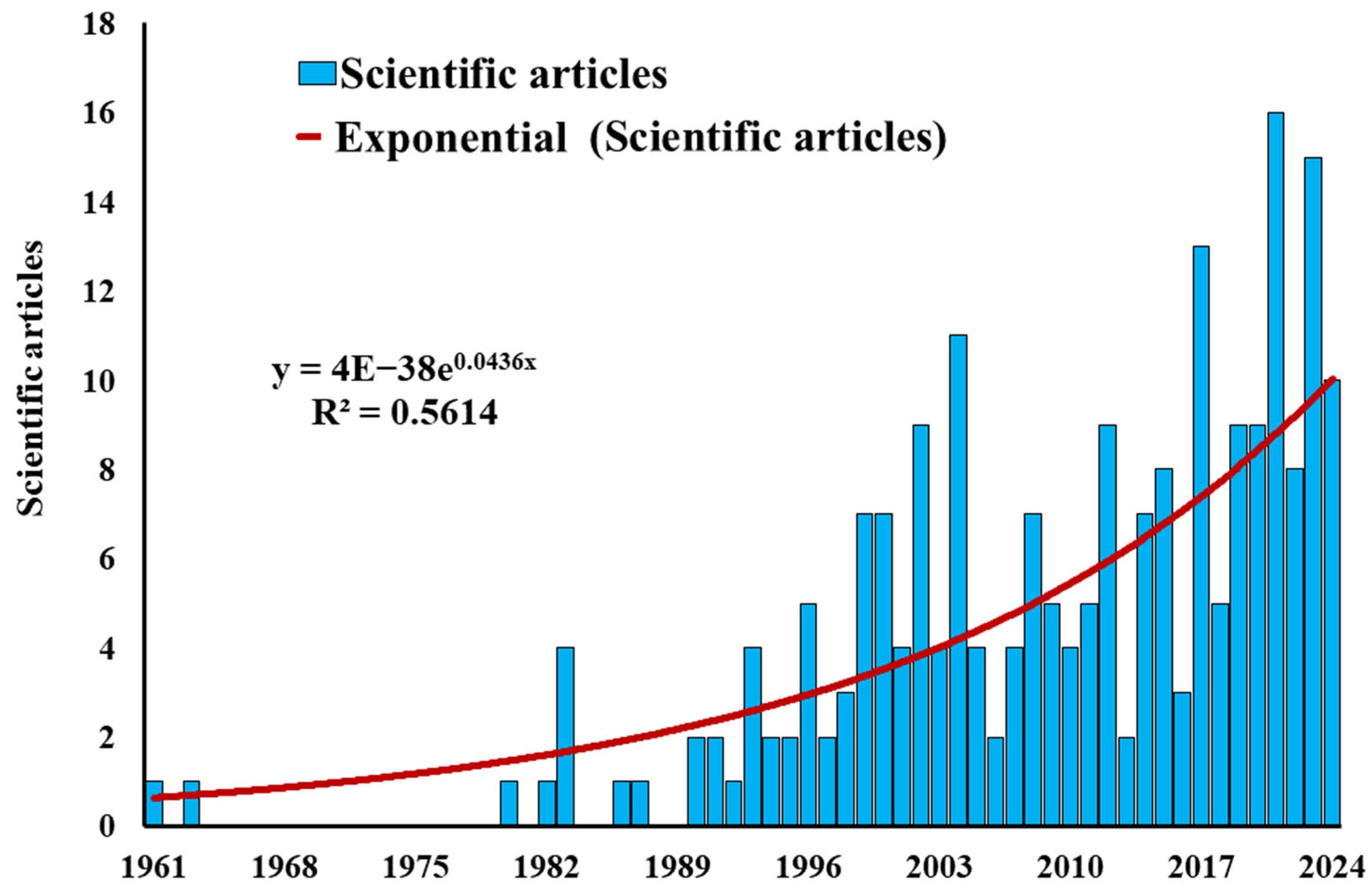
A total of 220 scientific articles in which the forest species Brosimum alicastrum was the primary object of study were compiled. These publications were written between 1961 and 2024, showing an exponential growth trend in scientific output (R2 = 0.5614); 81.81% of the publications (180 articles) were written after 2000 (Figure 2).
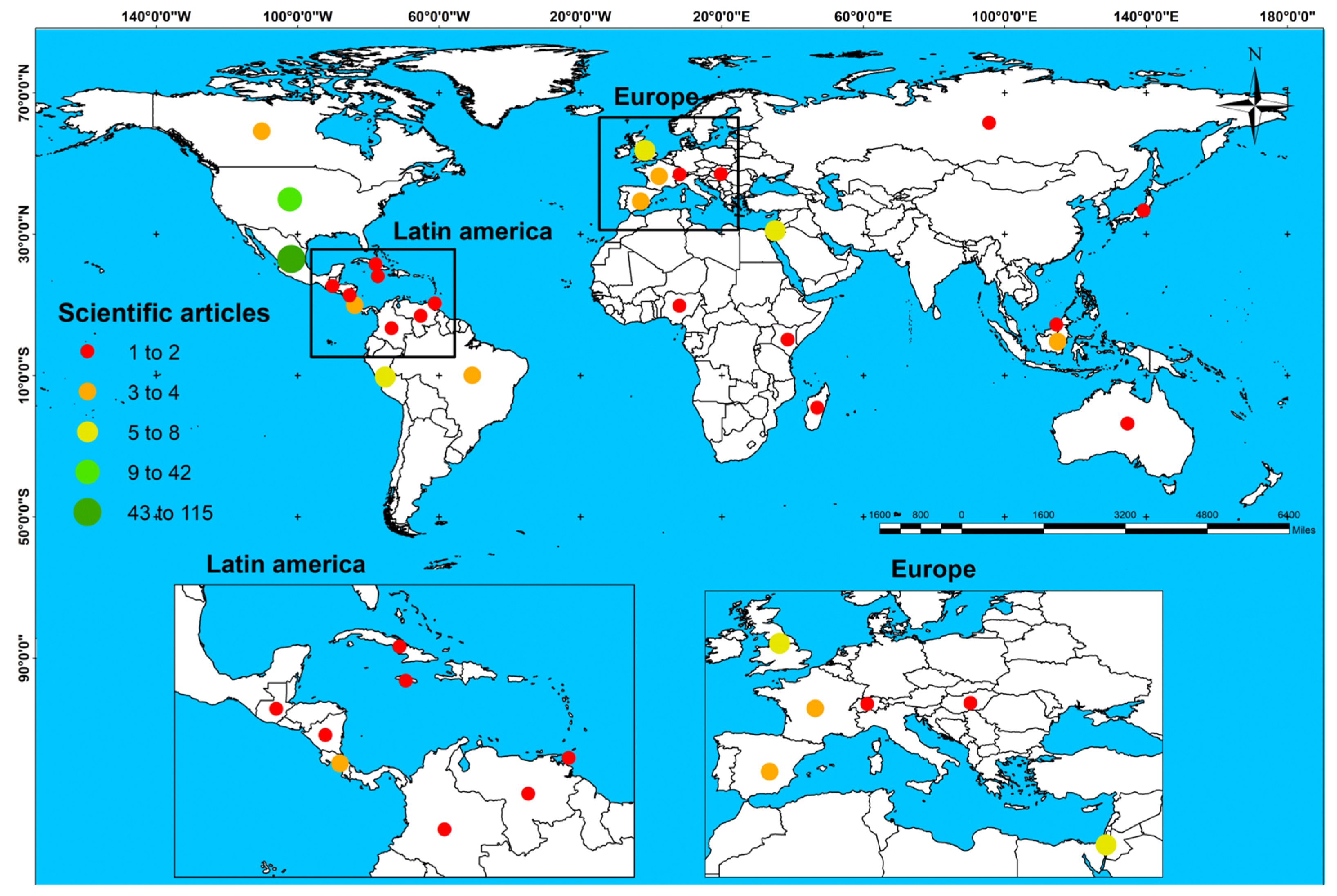
The countries contributing the most publications were located in the Americas, accounting for 183 articles (83.18% of the total) (Figure 3). Mexico was the leading contributor, with 115 publications (52.27%), which is consistent with the species being considered native to the country [1]. It is important to note, however, that publication counts by country were based on the first author’s affiliation and therefore do not account for the contributions of international co-authors; this standard bibliometric approach may overestimate the independent contribution of leading countries such as Mexico, while underestimating the contributions of European, North American, and other institutions that frequently appear as co-authors on articles led by Mexican researchers. A fractional counting method that includes all authors could provide greater insight into the equitable distribution of international research collaboration on Brosimum alicastrum, and is recommended for future studies.
Research on Brosimum alicastrum has been conducted predominantly in Latin American countries seeking alternatives to conventional commercial foods, where the fruits and leaves of the species have been identified as having distinctive properties for both animal and human nutrition [15]. This regional trend is consistent with other Latin American studies on non-timber forest products (NTFPs) as functional food alternatives [29]. At the same time, research funding from Europe, Asia, Oceania, and Africa—regions where the species is not considered native—has played a significant role, often supporting studies conducted in Latin America. As highlighted by Espinosa-Grande et al. [16], this pattern underscores the global value of local forest resources in promoting food sovereignty and environmental sustainability across Latin American countries [30].
However, it must be noted that, although the primary source of scientific articles analyzed in this study was Scopus—which offers broader coverage of English-language journals and international publications compared to regional Spanish-language journals—this may result in an underrepresentation of local scientific output, particularly from Central American and southern Mexican institutions that publish primarily in Spanish [31]; despite this, greater research development in these regions was documented; Scopus nevertheless remains the most comprehensive database for transnational bibliometric comparisons in this disciplinary field [23].
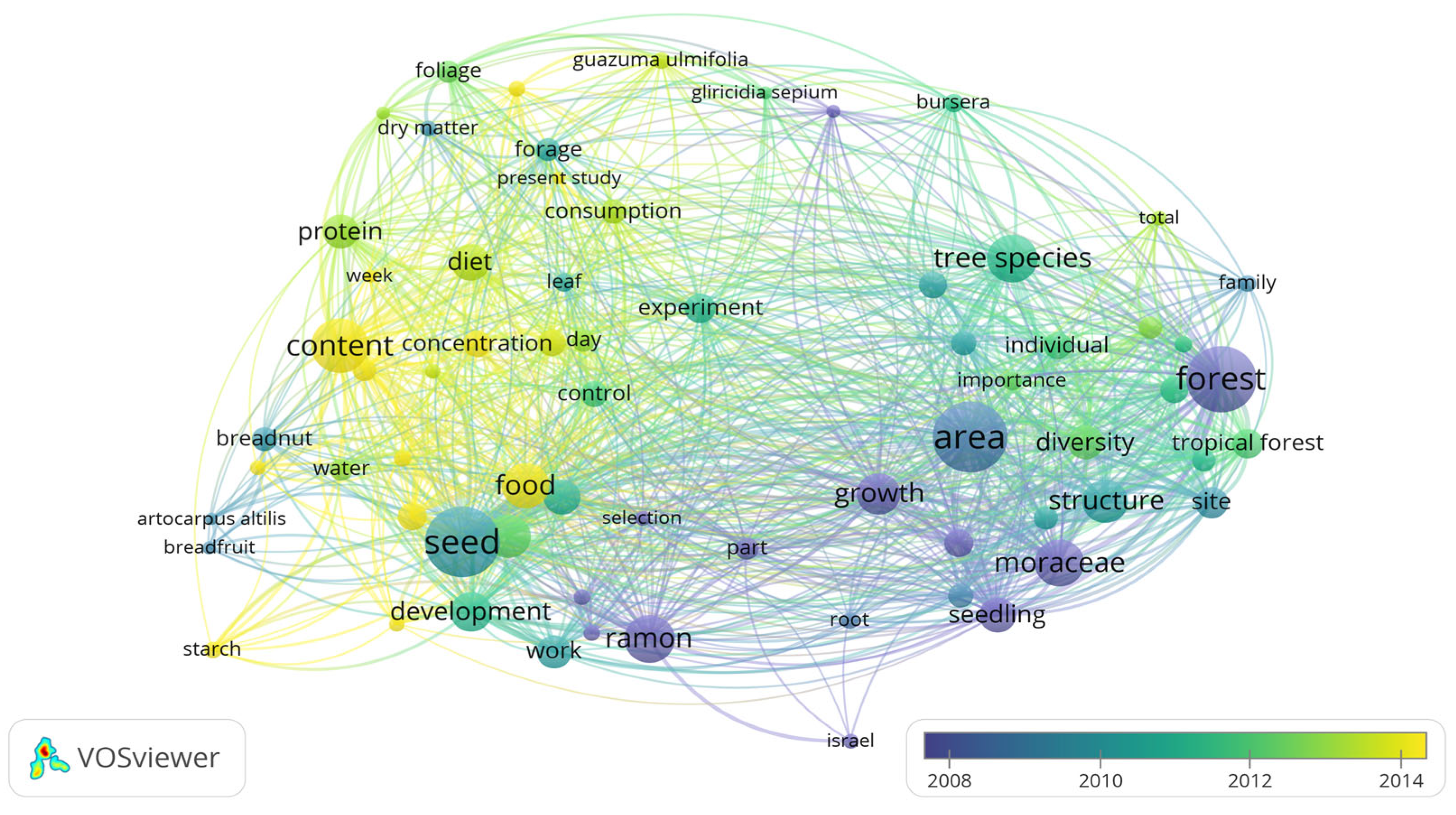
Until 2010, research on Brosimum alicastrum focused primarily on its ecology and forest description; between 2010 and 2015, studies assessed its potential as a forage species. From 2015 onwards, research expanded to include physicochemical properties, protein content, and applications in human nutrition (Figure 4). This misalignment, which mirrors patterns observed in other tropical NTFPs [29], highlights the urgent need for targeted research on the commercial development of products and by-products derived from this species [16].

3.2. Research on Brosimum alicastrum in Mexico

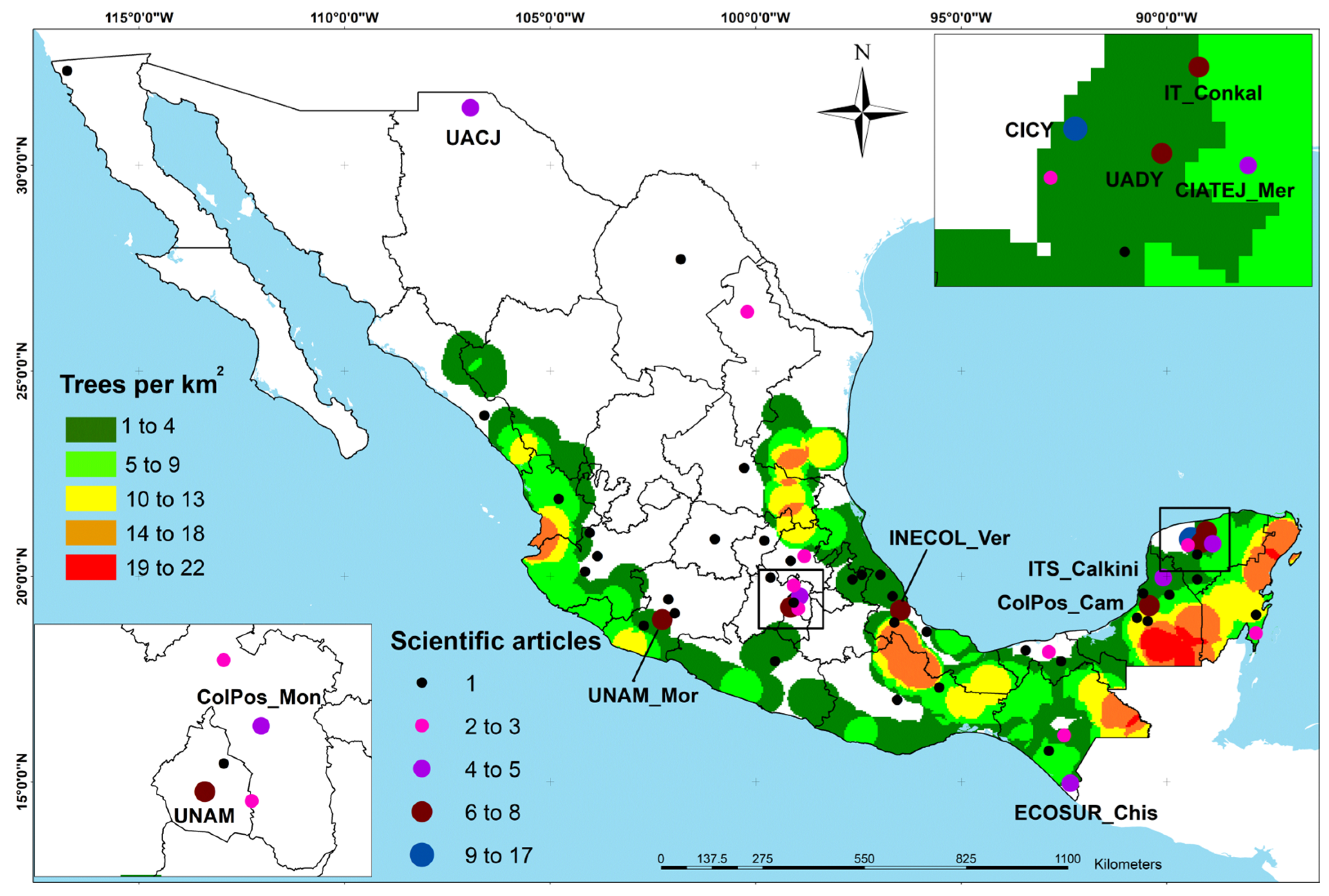
In Mexico, research on Brosimum alicastrum has been conducted primarily by institutions located in close spatial proximity to the species’ natural distribution areas (Figure 5). According to Santillán-Fernández et al. [31], this pattern is typical of study objects that are recognized mainly at the local level and have only recently acquired commercial value, thereby limiting the globalization of their uses.
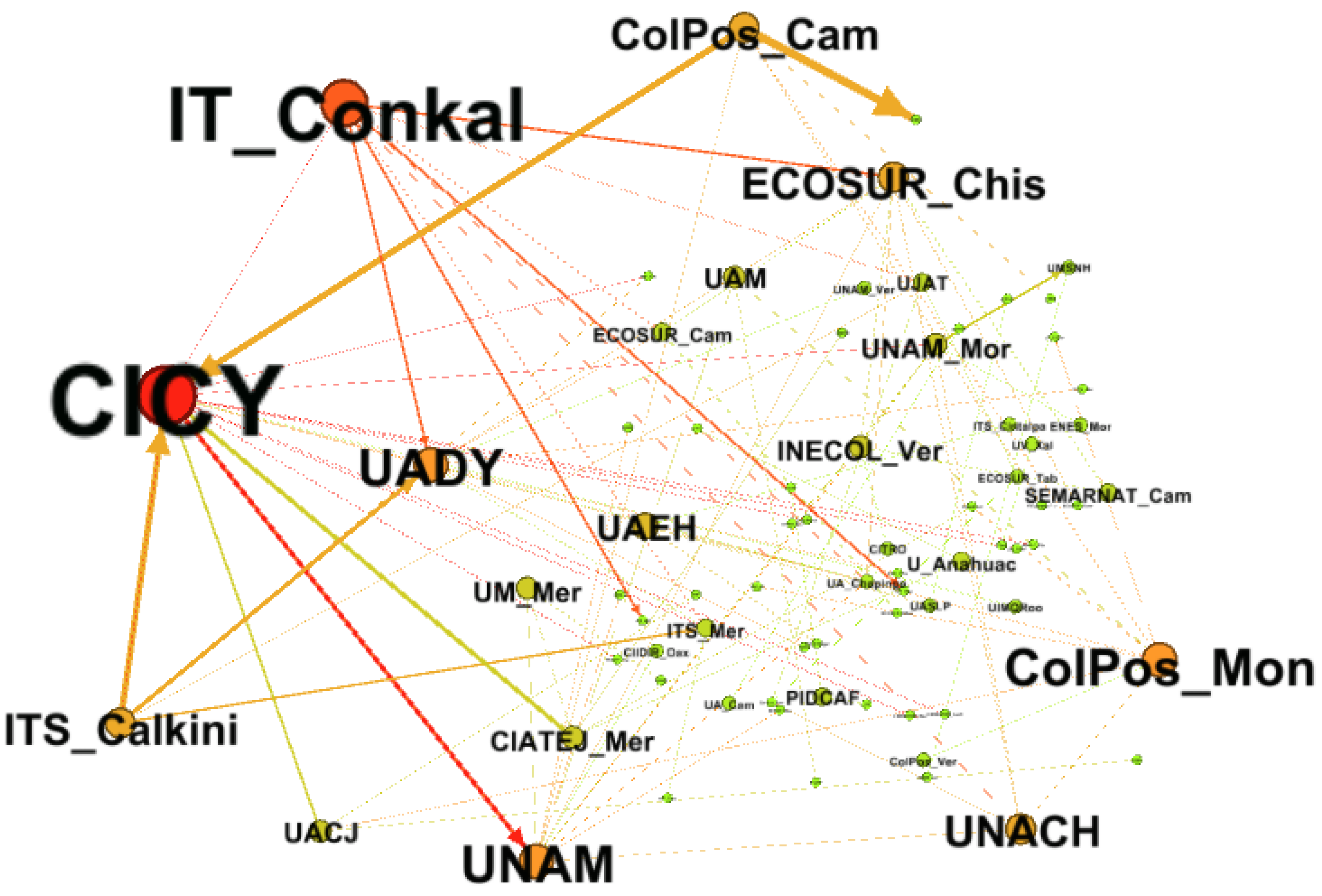
The highest abundance of Brosimum alicastrum is located in southern Mexico [3], where the Centro de Investigaciones Científicas de Yucatán (CICY) emerges as a central node, leading research on the species and accounting for 68% of collaborative linkages with the Universidad Autónoma de Yucatán (UADY), Instituto Tecnológico de Conkal (IT Conkal), Instituto Tecnológico Superior de Calkiní (ITS Calkiní), and the Colegio de Postgraduados Campus Campeche (ColPos Campeche) (Figure 6). These research and higher education institutions have focused their efforts on exploring the potential uses of Brosimum alicastrum for animal nutrition (UADY) and human consumption (CICY, IT Conkal, and ITS Calkiní). More recently, they have also focused on the silviculture of the species (ColPos Campeche) [16].
Other institutions that have contributed to knowledge generation on the physicochemical properties of the species and its application in the development of functional foods and beverages include the following: the Center for Research and Assistance in Technology and Design of the State of Jalisco, Southeast Branch (CIATEJ Mérida) and the Higher Technological Institute of Mérida (ITS Mérida) in the Yucatán Peninsula; the National Autonomous University of Mexico, Morelia Campus (UNAM Morelia) in Western Mexico; the National Autonomous University of Mexico, Colegio de Postgraduados Campus Montecillo (ColPos Montecillos) in Central Mexico; and the Autonomous University of Ciudad Juárez (UACJ) in Northern Mexico [12].
The absence of studies in Chiapas and Tabasco—regions where high tree densities are observed but where no formal research has been documented—represents a critical opportunity for decentralizing research efforts [32]. This spatial distribution highlights structural limitations in positioning Brosimum alicastrum within national markets, where economic viability as a conventional substitute remains a key determinant of market acceptance.
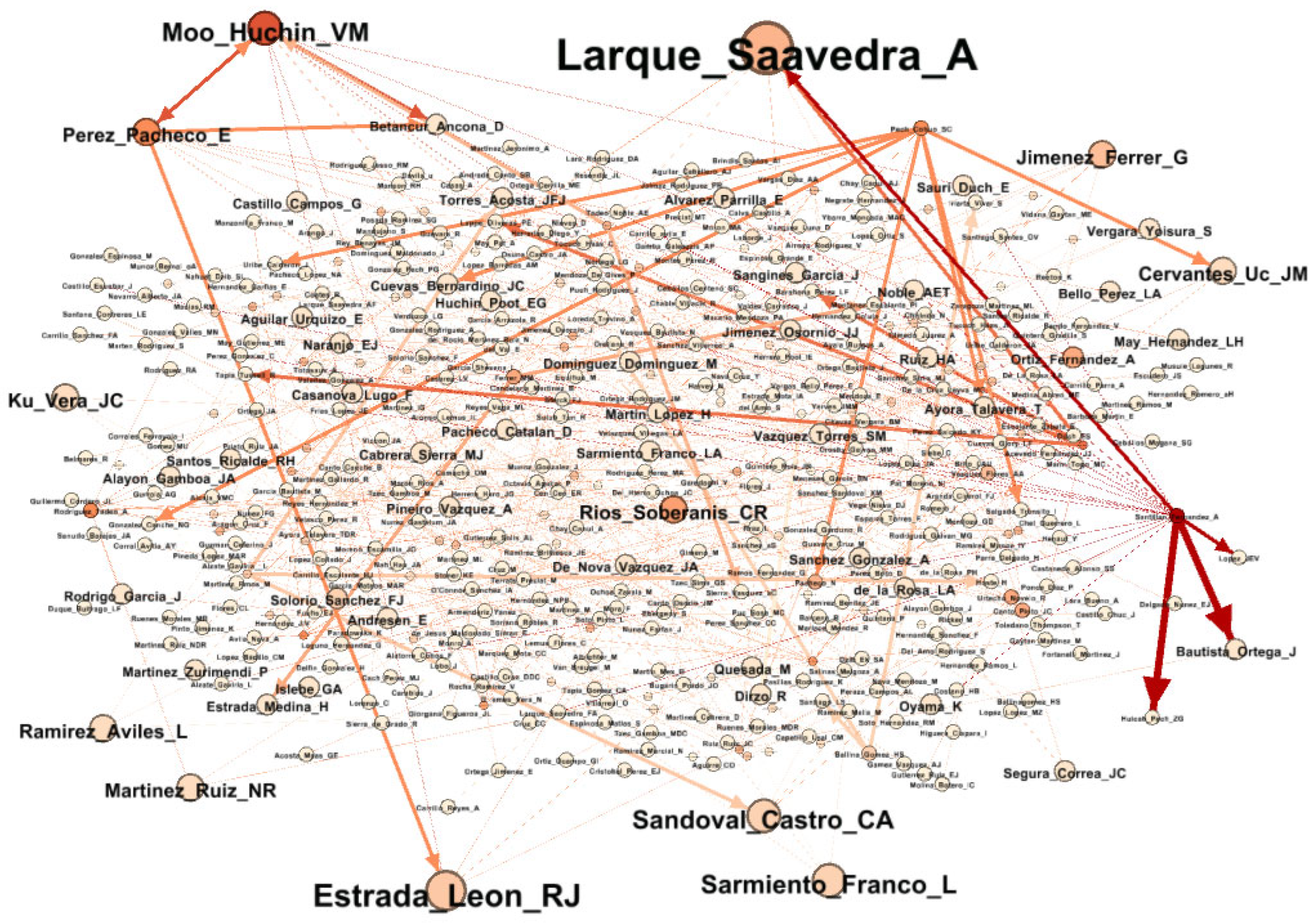
Across the 220 scientific articles analyzed, a total of 101 first authors and 354 co-authors were identified (Figure 7). The most prominent authors contributing to research on Brosimum alicastrum between 1961 and 2024 include Larqué Saavedra A (11 publications) from CICY, who acts as a central node in research on human nutrition and is widely regarded as a key driver of Brosimum alicastrum research in Mexico [16]. This is followed by Moo Huchin VM and Estrada León RJ (six publications each) from ITS Calkiní, who have extensively documented the physicochemical properties of the fruit, and by Sarmiento Franco L (five publications) and Sandoval Castro CA (five publications) from UADY, whose work has focused on the species’ potential for animal nutrition.
Notably, an emerging cluster centered on ColPos Campeche—including Bautista Ortega J, Tadeo Noble AE, Vera López JE, and Santillán Fernández A (peripheral nodes, Figure 7)—has initiated research on silviculture and commercialization, addressing critical themes that are largely absent from more established research clusters.
Advances in research on the physicochemical properties of Brosimum alicastrum have enabled the characterization of unique nutritional attributes with specific market applications (Table 1). Among these, the high tryptophan content of the seed has been identified as a potential active ingredient for the nutraceutical and medicinal industry [33], while the species’ naturally gluten-free composition positions it as a viable alternative for the growing segment of consumers with celiac disease or non-celiac gluten sensitivity [12].
Despite these advances, the historical concentration of research investment in nutritional and food-related applications has left significant knowledge gaps in non-food uses of Brosimum alicastrum, including biomaterials, biofuels, and timber, as documented in Table 2. This disciplinary imbalance, which predates and is independent of the species’ recent commercial recognition, constrains the diversification potential of the species within Mexico’s emerging forest bioeconomy and represents a strategic opportunity for future research programmes oriented towards broader productive applications.
Research on Brosimum alicastrum in Mexico reveals a structural disconnection between well-established scientific capacities in functional nutrition and the critical needs related to silviculture, commercialization, and governance that currently constrain market scaling. This gap—evident spatially (lack of research in Chiapas and Tabasco), institutionally (the emerging role of ColPos), and thematically (only 4.5% of publications addressing commercialization)—positions the species as a high-potential non-timber forest product with low market maturity, requiring strategic reorientation and coordinated action among actors (nodes) to achieve bioeconomic consolidation.
Unlike previous spatiotemporal analyses of Brosimum alicastrum research [16], the present study extends the bibliometric analysis through December 2024, incorporating three additional years of scientific production coinciding with the growing commercial recognition of the species, and introduces new analytical dimensions: co-authorship networks and institutional collaboration explicitly linked to the natural distribution of the species in Mexico. The bibliometric analysis does not constitute an end in itself, but rather the diagnostic foundation for the subsequent market study: by mapping research themes, geographic concentrations, and institutional actors, it identifies the knowledge gaps that define the structural constraints on market development—a methodological integration not present in the analysis of Espinosa-Grande et al. [16].

3.3. Commercializing Companies of Brosimum alicastrum in Mexico

A total of 27 companies that legally commercialize Brosimum alicastrum products in Mexico were documented (Table 3). The fruit and leaves were the most frequently used plant parts. Flour and coffee substitutes are produced from the seeds, while dehydrated leaves are used for tea (herbal infusion) production. Companies that sell seeds and seedlings as commodities without adding value were also identified. However, despite the existence of a substantial body of research supporting its use in animal nutrition [42], no companies were found to commercialize Brosimum alicastrum-based products for animal feed.
Of the companies analyzed, 59.26% (16 out of 27) commercialized Brosimum alicastrum-based products as a secondary activity. This means these products were included in their product portfolios, but did not represent their main commercial focus. In contrast, 40.74% of the companies (11) depended primarily on sales of products derived from the species. Although trends promoting functional foods positively influence consumer purchasing decisions, companies often market these products in response to market trends without fully understanding their nutraceutical properties [45]. Consequently, such products are often replaced in the short term by alternative offerings [46].
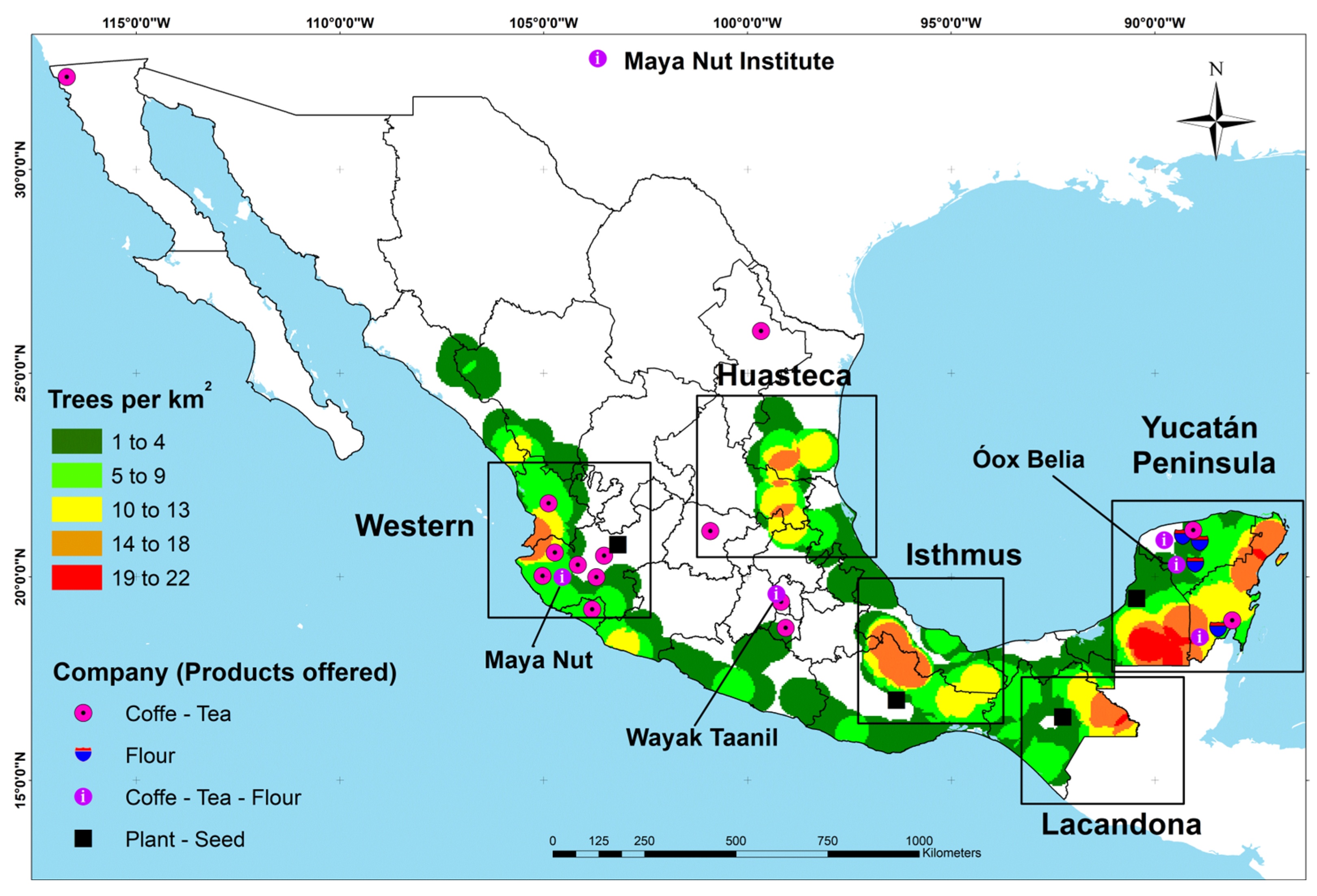
By associating the spatial distribution of companies with the areas of greatest natural abundance of Brosimum alicastrum [3], it was possible to identify two regions where the commercial development of products based on this species has been most pronounced: the Yucatán Peninsula and Western Mexico; these regions coincide with the natural distribution zones of the species (Figure 8). In the Yucatán Peninsula, ten companies (37.04%) were identified, primarily specializing in the commercialization of flour. In Western Mexico, nine companies (33.33%) were documented, mainly specializing in products used for beverage preparation, such as tea (herbal infusion) and coffee substitutes.
Regional differentiation in product typologies reflects deeply rooted patterns of cultural and historical use. In Western Mexico, where the species is locally known as capomo, the tradition of preparing a hot beverage from roasted seeds has roots in the communities of Jalisco and Nayarit [5]; this ethnobotanical legacy directly informs the current portfolio of the nine companies identified in this region (Figure 8), all of which specialize in coffee-substitute and herbal infusion products. In contrast, the ten companies on the Yucatán Peninsula predominantly commercialize flour-based products, consistent with the historical use of Brosimum alicastrum seeds in Maya food preparation [38]—a pattern of use that, as documented by Casanova-Lugo et al. [47], has simultaneously limited the adoption of the species for other human nutrition applications in the region.
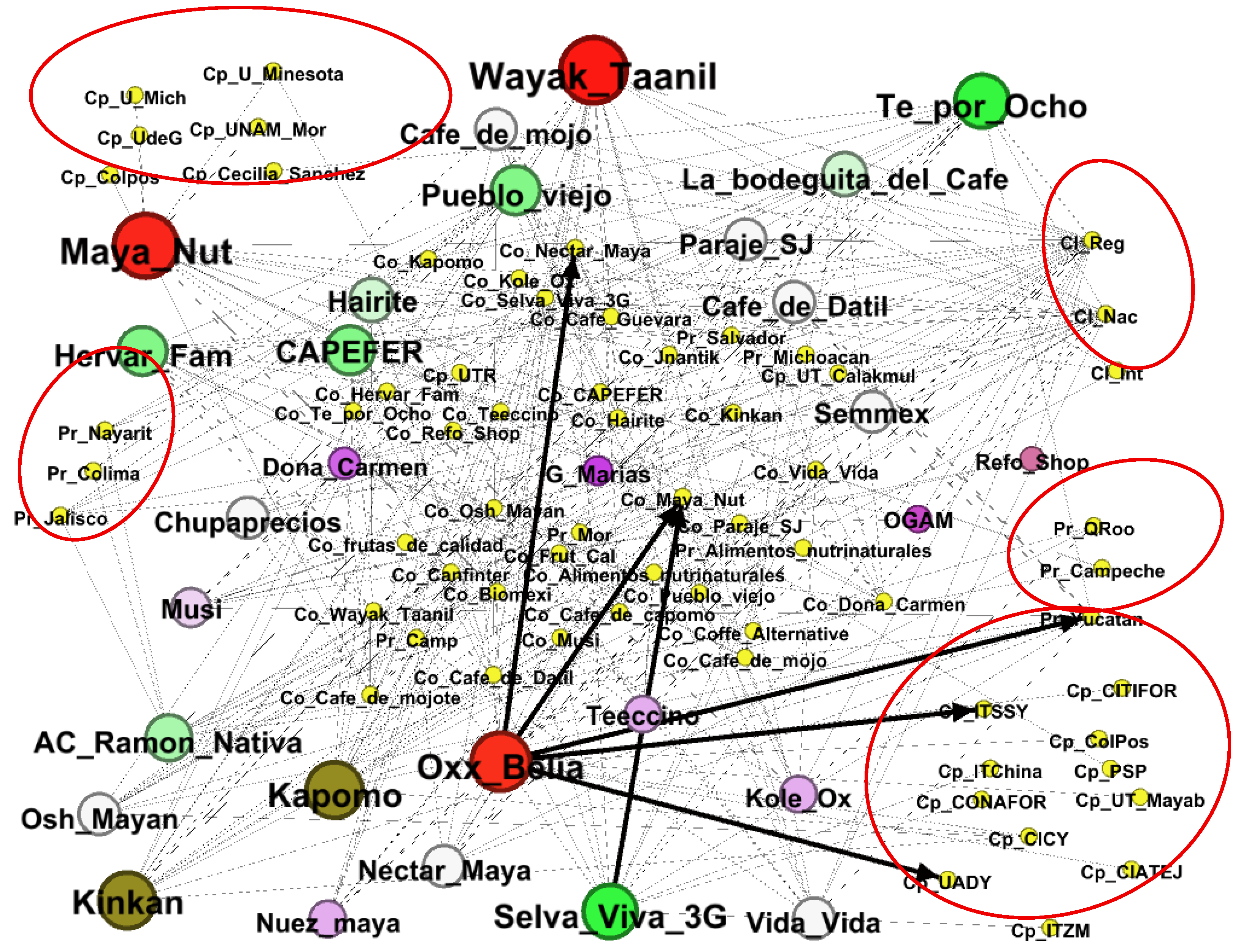
Value network centrality, measured by the number of linkages with suppliers, customers, competitors, and complementors, was used as the primary criterion to identify the leading companies (Figure 9). Of the 27 companies identified, three exhibited substantially greater network centrality than the rest: Maya Nut (Western Mexico), Wayak Taanil (Mexico City), and Óox Belia (Yucatán Peninsula) (Figure 8). These companies were therefore designated as leaders for the in-depth value network analysis, following the criteria proposed by Ireta-Paredes et al. [20]. Their greater centrality reflects not only commercial scale but also the breadth and formalization of their institutional relationships—with suppliers and with complementors—factors that position them as the structurally most influential actors in the national Brosimum alicastrum value network.
All three companies sold flour, tea (herbal infusion), and coffee substitutes. Maya Nut operates as a branch of the Maya Nut Institute, a non-profit organization based in the United States that has led research efforts on the species in Latin America. Wayak Taanil is a private corporation focused on revaluing Brosimum alicastrum-based products, while Óox Belia operates as an individual enterprise guided by cooperative principles. It has achieved local development outcomes through the commercialization of products derived from the species.
Figure 9 shows how companies identify their competitors (Co) and complementors (Cp). In contrast, actors within their supply systems (Pr) and customer segments (Cl) are referenced more generally. Ireta-Paredes et al. [20] reported that competitors tend to be clearly identified in value network analyses, because firms compete directly among themselves for market share. Conversely, customers and suppliers are often described in more generic terms due to firms’ risk aversion to disclosing the sources of their raw materials (Pr) and the commercial partners (Cl) with whom they frequently maintain confidentiality agreements.
According to Olea-Miranda et al. [48], operational success is directly associated with the ease of access to the raw materials required for production. All surveyed companies (100%; n = 27) acknowledged that the supply system is the most constrained component of their value networks because they depend entirely on the natural seasonality of the species in the absence of commercial plantations. Consequently, developing commercial plantations to improve supply management could significantly enhance the competitiveness of lead firms within the Brosimum alicastrum value network [16].
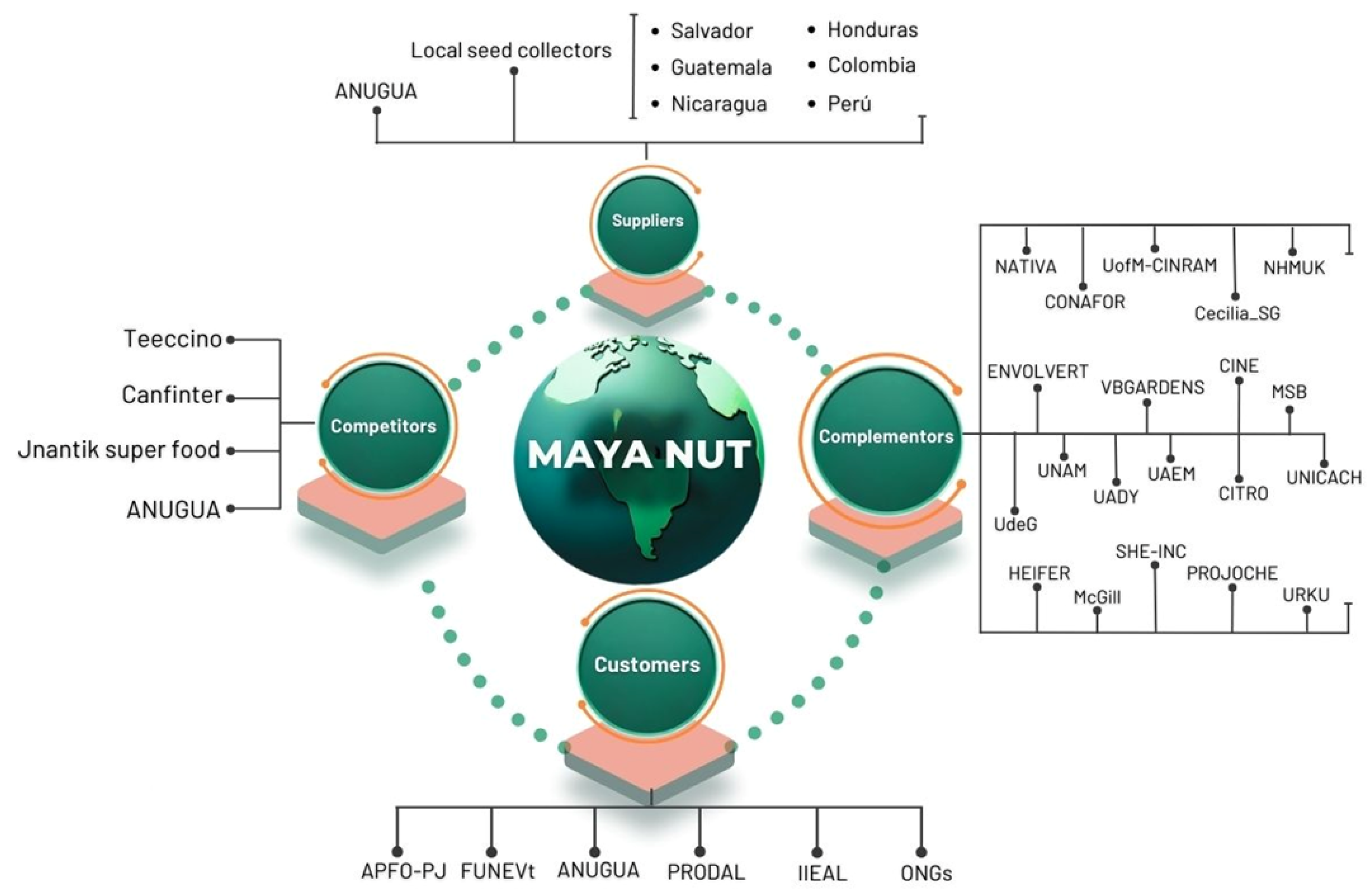
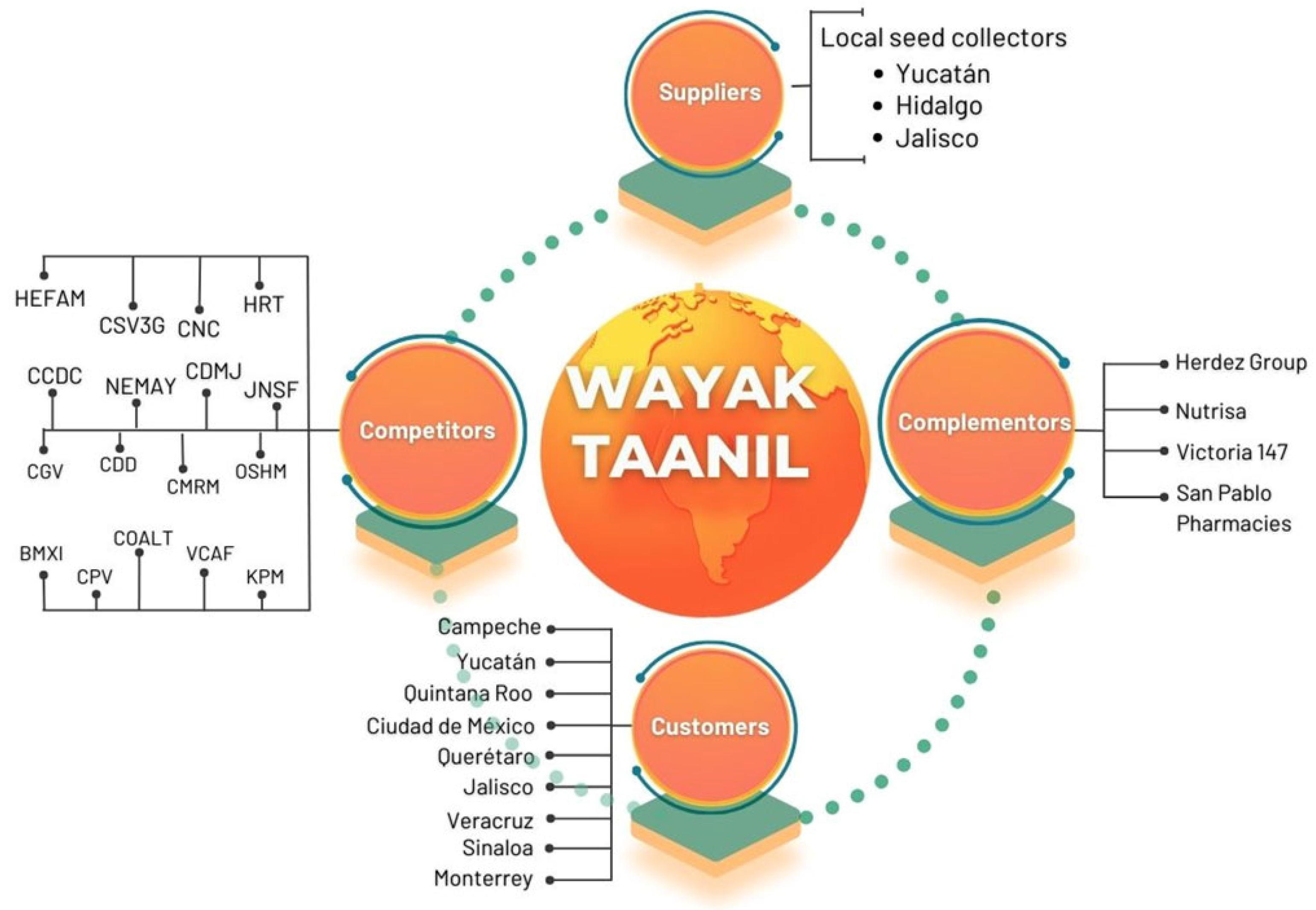
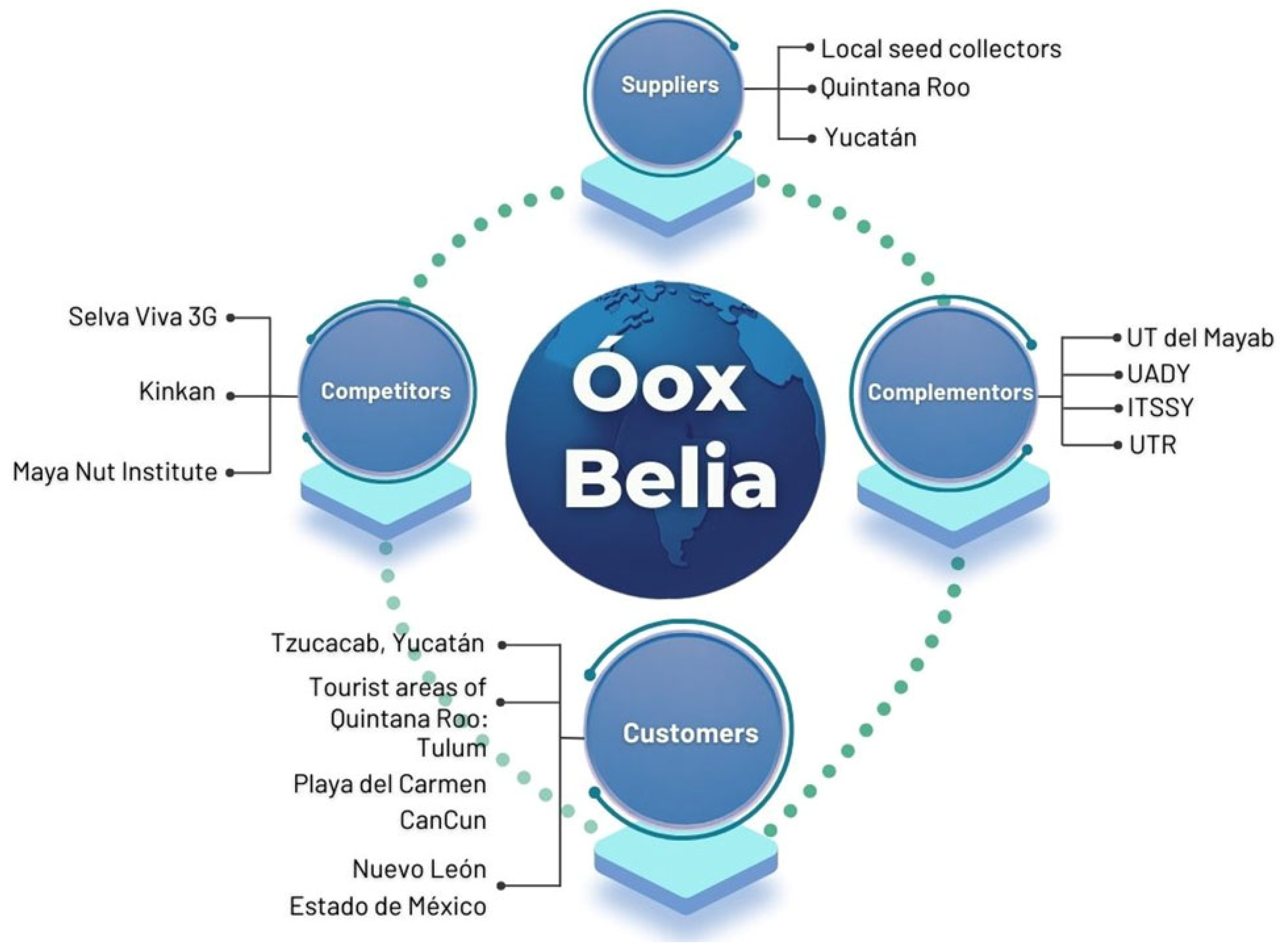
Perera-Hau et al. [19] documented that, in emerging production systems where commercial value has only recently been recognized, scientific research development is critical for consolidating products in the market. All 27 companies identified in this study recognized higher education and research institutions within their regions (and, in some cases, individual actors) as complementors (Cp) and acknowledged collaborating with them to generate new knowledge that enables them to remain competitive in the market. However, in 100% of the cases, companies agreed that research on the silviculture of Brosimum alicastrum, its commercialization, and the identification of market niches remains insufficiently developed. Among the 27 documented companies, three stood out due to the structure and robustness of their value networks (Table 4). These three companies were identified as lead firms: Maya Nut (Figure 10), Wayak Taanil (Figure 11), and Oxx Belia (Figure 12).
Maya Nut is a non-profit organization that began operations in the United States in 2001 to revalorize Brosimum alicastrum products in Latin America. In Mexico, it is led by Dr. Cecilia Sánchez Garduño, a pioneer in community-based governance and the only leader associated with formally certified processes aligned with sustainability and community standards. As stated in its mission, the organization seeks to promote the nutritional benefits of the seed to improve human health while encouraging the conservation and reforestation of degraded landscapes. Maya Nut works primarily with women’s groups in Western Mexico in seed collection activities, thereby fostering local economic and social development. These actions have contributed to positioning Brosimum alicastrum within premium markets in the United States, in contrast to Wayak Taanil and Óox Belia, which currently lack formal certification schemes. However, in recent years, Maya Nut’s transition towards more extractive operational models and a reduction in locally embedded activities illustrate the risk of value leakage when premium standards primarily benefit external markets without retaining territorial coordination and local value capture.
This operational shift by Maya Nut illustrates a broader phenomenon documented in non-timber forest product value chains: value leakage, whereby the positioning of products in international markets does not translate into proportional benefits for primary collectors and local communities [29]. In the case of Maya Nut, this transition manifests in a reduced emphasis on community training and territorial governance activities in Mexico, accompanied by a greater orientation toward export markets. From a governance perspective, this trajectory underscores the importance of binding contractual agreements and participatory oversight mechanisms to prevent the decoupling between commercial growth and community development outcomes.
Furthermore, the growing commercialization of Brosimum alicastrum products carries the risk of displacing traditional local users. Increased demand for the species’ products intensifies pressure on wild populations, thereby reducing the availability of these products for the communities that have historically depended on this species for food and medicinal use. This underscores the urgency of developing community-based resource governance protocols that guarantee priority access for traditional users as a prerequisite of any market expansion strategy, before commercial-scale plantations are able to stabilize supply.
Wayak Taanil operates as a variable-capital corporation, providing greater operational flexibility. The company focuses on nutraceutical products derived from Brosimum alicastrum and actively promotes sustainability. It collaborates with family groups on the Yucatán Peninsula, offering training on how to collect fruits, seeds, and leaves, although its primary points of sale are located in Mexico City. Finally, Oxx Belia is based in the state of Yucatán, has a strong social origin, and operates under cooperative principles for seed and leaf collection. This contributes to the well-being of its local community.
However, it must be considered that exclusive reliance on wild harvesting also raises ecological sustainability concerns that deserve explicit attention; in the absence of managed populations or commercial plantations, increased harvesting pressure may compromise natural regeneration rates and the long-term viability of wild populations, especially in regions already subject to agricultural expansion and deforestation; although Brosimum alicastrum has shown acceptable survival rates in ecological restoration plantations in other Mesoamerican contexts [49], the species’ slow-growth characteristics and ecological requirements suggest that commercial-scale cultivation will require medium- to long-term planning horizons. In the short term, therefore, business models based on this species will rely predominantly on wild adult individuals, making sustainable harvest management—including intensity limits, seasonal restrictions, and community monitoring protocols—a critical prerequisite for market expansion.
An analysis of the three lead firms’ value networks revealed notable differences in their collaborative strategies. Wayak Taanil has not established synergies with research institutions to add value to its products through complementors; this can be explained by the private nature of its legal structure (SA de CV). In contrast, Maya Nut bases the success of its operations on strong synergies with international institutions, while Oxx Belia has promoted the commercialization of its products through collaboration with institutions in southeastern Mexico, where most of the scientific research on the species has been concentrated [16].
An apparently counterintuitive finding is that the three leading companies, despite operating in the same product categories (flour, herbal infusion, and coffee substitute), do not systematically identify each other as direct competitors within their value networks. This pattern reflects the geographic segmentation of their operational areas (Western Mexico, Mexico City, and the Yucatán Peninsula) and the incipient state of market development, in which expanding the total market size is currently more relevant than competing for market share. This dynamic is consistent with Brandenburger and Nalebuff’s [18] co-opetition theory, in which actors may simultaneously occupy complementary and competitive roles depending on the market dimension under consideration. As the Brosimum alicastrum market matures and distribution channels—particularly e-commerce platforms—increase geographic overlap among companies, direct competitive dynamics among the leaders are likely to intensify.
All three companies agreed that their suppliers obtain fruits, seeds, and leaves exclusively through wild collection, which is constrained by the natural production cycles of the species. Consequently, they believe that their supply systems limit their commercial development and identify them as a critical bottleneck for increasing product availability in the market. Santillán-Fernández et al. [50] reported that collection systems in Campeche are inefficient due to limited family labor, long distances, and difficulties in accessing areas where the species grows naturally. Therefore, research on the silviculture of Brosimum alicastrum is considered essential to overcome these limitations and support sustainable commercial expansion [16].
In this regard, the primary benefit of commercial plantations would be the reliability and logistical efficiency of supply, rather than the elimination of natural production cycles. It is important to note that this phenological constraint would not be fully eliminated by commercial plantations, as tree species generally retain their natural reproductive cycles even under managed conditions. Nevertheless, plantations could improve supply predictability and aggregate volume through: the concentration of production in managed, accessible areas that reduce harvesting distances and labor costs; the implementation of staggered planting schedules across different microenvironments to partially extend the harvest season; and the possibility of building planned inventories through post-harvest processing and storage.
The seeds of Brosimum alicastrum provide an additional source of income for households in regions where the species grows naturally, derived from seasonal collection activities. In several areas, these households are also the first disseminators of the species’ nutritional properties and traditional consumption methods. The three lead firms identified in this study improve household livelihoods within their respective regions of influence by generating seasonal income opportunities through seed collection.
Table 5 presents an estimate of the revenues obtained from collecting an average of 15 Kilograms of seeds per day. The table shows variation in the price paid per kilogram of seed delivered to each of the three lead firms, which is presented as the accumulated monthly income. This revenue represents the supply cost incurred by companies for the procurement of raw materials required for their operations.
Revenues derived from seed collection depend on the geographic location of households and on the proximity of the purchasing companies. However, due to the natural distribution and phenology of the species, this revenue is seasonal and lasts, on average, six months per year (March–May and August–October). A comparative analysis of the payment rates offered by the three leading companies reveals notable disparities in value distribution within the supply chain (Table 5). Óox Belia offers the highest payment per kilogram (€1.16), which, in a region classified by CONEVAL [51] as having high marginalization and poverty, represents a significant contribution to household food security. Óox Belia has successfully established trust-based relationships with its suppliers, reducing the need for constant competition to secure its supply system through the implementation of a fair payment scheme per kilogram of seed collected and delivered.
Table 5. Monthly household revenue (in euros) derived from Brosimum alicastrum seed collection, by lead firm.
Lead FirmRegión of InfluenceSeed (kg) *Price
(€ kg−1) *
Daily Revenue (€)Days Per WeekWeekly Revenue (€)Weeks Per MonthsMonthly Revenue (€) **
Wayak TaanilYucatán Península150.7911.80559.004236.00
Maya NutWestern Mexico150.9714.58572.884291.53
Óox BeliaYucatán Península151.1617.35586.774347.06
* Data collected through fieldwork. 1 € = 21.61 Mexican pesos, August 2025, BANXICO [52]. ** Household income estimates correspond exclusively to domestic collectors operating within the natural distribution areas of Brosimum alicastrum in Mexico. No international raw material imports were documented among the surveyed companies; all three leading companies confirmed that their raw material is sourced entirely from domestic wild-harvesting suppliers.
In contrast, Wayak Taanil, despite its stated sustainability discourse, offers the lowest payment rate (€0.79/kg), raising questions about the coherence between its market narrative and its actual redistributive outcomes at the community level. These findings are consistent with other non-timber forest product value chains, where final market prices do not necessarily translate into equitable returns for primary collectors [30]. Therefore, strengthening the governance architecture of the value network—through formal collective agreements, transparent price-setting mechanisms, and community resource management protocols—is a critical priority for ensuring that market development generates inclusive, territorially embedded benefits.
A comparison of Brosimum alicastrum-based product prices with those of traditionally marketed substitutes revealed an exclusive market segment for products derived from the species, as their prices are generally higher (Table 6). According to Vignesh et al. [53], in the context of food consumption, when consumers replace a product with a higher-priced alternative that fulfills the same function, this behavior is typically associated with consumers who have high purchasing power and prioritize quality or actively seek functional foods.
However, many companies that sell Brosimum alicastrum-based products do not consider them to be their core offerings. It is common for them to have limited knowledge of their nutraceutical properties [54]. This situation represents a clear opportunity to better address market niches composed of consumers who prioritize product quality and functional food attributes.
The price comparison with functionally analogous conventional products—wheat flour, maize flour, and commercial herbal infusions—does not imply direct substitution in the contemporary market. In the particular case of maize (Zea mays L.), the historically documented relationship between the two species in the Mayan diet is one of complementarity and functional substitution during periods of scarcity: the archeological and ethnobotanical literature records the widespread use of ramón seed as a staple food when maize was inaccessible, with both species sharing a use profile in flours for tortillas and tamales [1]. Accordingly, the inclusion of maize as a comparative reference reflects a logic of historical functional analogy, not current market competition, rendering the comparison an argument for cultural positioning and food sovereignty within the Mesoamerican diet.
The price differential of Brosimum alicastrum products over their conventional substitutes reflects not only differences in production costs, but also the functional food positioning and ethnobotanical narrative that underpin consumer willingness to pay. While lower-cost conventional substitutes serve the mass market, Brosimum alicastrum products compete primarily on the basis of nutritional differentiation (gluten-free, tryptophan-rich), cultural identity, and alignment with bioeconomy trends—factors documented as key drivers of food purchasing in urban Mexican markets [53].

3.4. Market Outlook for Brosimum alicastrum in Mexico

The trajectory of Brosimum alicastrum Swartz (from subsistence resource to premium functional food) mirrors patterns documented in other emerging non-timber forest products in Latin America and other tropical regions, such as Euterpe oleracea Mart. in Brazil, Plukenetia volubilis L. in Peru, and Moringa oleifera Lam. in Africa [29]. These products exhibited analogous phases of initial localized ethnobotanical use, scientific validation of nutritional properties, and subsequent integration into market channels driven by the functional food trend. In all cases, supply chain instability—particularly dependence on wild harvesting during early commercialization phases—constituted a primary structural constraint [30].
Advances in research and the growing interest in Brosimum alicastrum-based products, evidenced in this study through the increase in publications and in the number of companies commercializing such products, suggest an expected increase in demand for the species to sustain product supply. The SWOT analysis conducted (Table 7) revealed that, according to the perceptions of the legal representatives of the 27 interviewed companies, the primary Strength (S) of the species lies in its attributes as a potential functional food with a strong ethnobotanical origin, combined with the Opportunity (O) to enter market niches aligned with the current demand for nutraceutical foods.
The main Weaknesses (W) identified relate to the fact that Brosimum alicastrum is an emerging species with recently recognized commercial value, for which many properties remain insufficiently studied. As a result, there is no established regulatory framework governing its market, production, or consumption. Most critically, there is a lack of a production-oriented technological package capable of ensuring a stable supply of raw materials for lead firms. In terms of Threats (T), respondents consistently identified the loss of natural abundance due to deforestation driven by agricultural expansion, as well as competition from substitute products with stronger market positioning and lower prices.
Krainovic et al. [55] highlighted the need to advance research on the silviculture of the species to ensure a reliable supply of raw material for Brosimum alicastrum-based products available on the market. This issue is particularly relevant since 100% of the companies’ legal representatives identified production instability—specifically in the availability of fruits, seeds, and leaves obtained through wild collection from natural distribution areas—as the main limiting factor (Weakness) constraining market expansion.
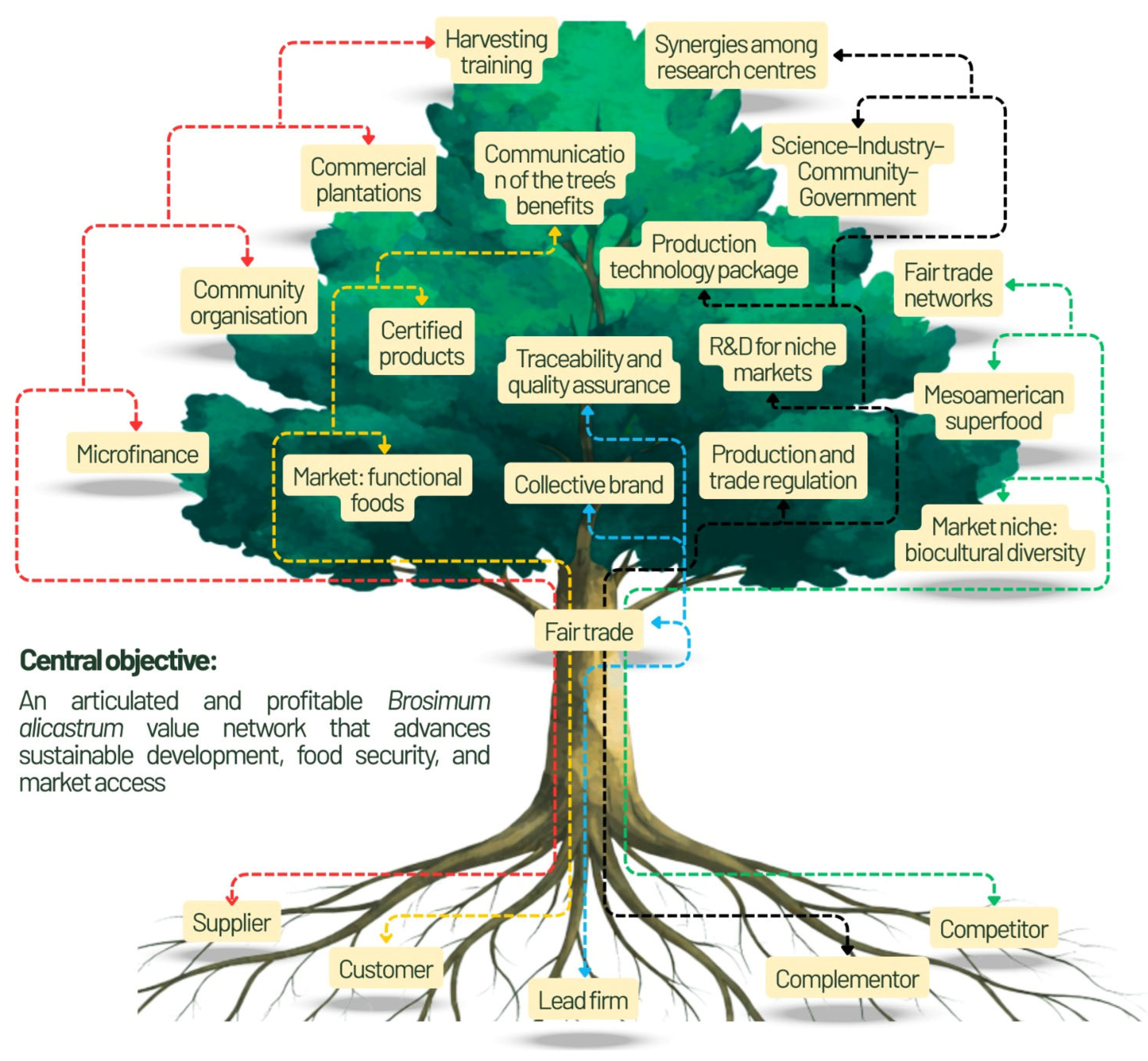
The value network analysis of Brosimum alicastrum revealed that the species is a lever for sustainable development and food security. There are clear market pathways for products such as flour, tea (herbal infusion), and a caffeine-free coffee substitute. However, the analysis also highlighted weak coordination among value network actors, hindering improvements in community incomes and limiting access to higher-value markets that could better reward the species’ biocultural attributes (Figure 13).
Silviculture repeatedly emerged as a constraint on Brosimum alicastrum product trade. Establishing commercial plantations could stabilize the supply by linking procurement to field production volumes, thereby increasing product availability in the market [39]. This will require research focused specifically on the silviculture and commercialization of Brosimum alicastrum [16].

4. Conclusions

Scientific research on Brosimum alicastrum in Mexico has generated robust evidence regarding its nutritional and functional properties; however, a critical gap persists in its transition toward viable productive systems due to a lack of development in silviculture and governance. This disconnect currently limits the scalability and sustainability of the species as an emerging non-timber forest product. Commercial patterns show regional specialization where products are positioned in high-value niches, competing through biocultural attributes and functional quality rather than cost efficiency.
Value network analysis identifies the supply system as the primary structural vulnerability. As illustrated in the value ecosystem, overcoming this weakness requires evolving Porter’s linear “strategic fit” into a systemic value network model. In this architecture, scientific validation and fair trade act as the sap and engines of coopetition, where institutional complementors provide the resource with a unique technical and ethical identity. To ensure the sector’s viability, it is imperative to establish managed production systems that stabilize supply through applied silvicultural research. From a public policy perspective, integrating Brosimum alicastrum into productive incentive schemes represents a strategic opportunity to articulate food sovereignty with inclusive and territorially grounded bioeconomy pathways.
The value network analysis and the SWOT converge in identifying supply instability as the binding constraint for market expansion. However, the development of commercial plantations as the primary solution must be carefully evaluated, given that the species’ slow-growth characteristics render commercial plantations unlikely to be commercially viable in the short term. This implies that, in the short term, Brosimum alicastrum value networks will remain largely anchored to wild populations of adult individuals, making sustainable harvest management—rather than plantation establishment—the most immediately actionable priority. Research on the species’ silviculture should be advanced in parallel to secure future supply options as market demand grows.
An important limitation of this study is the lack of availability of quantitative data on aggregate production volumes and market size, which constrains a comprehensive economic assessment of the value network. For future research, it is recommended to develop economic data collection instruments for non-timber forest products at early stages of commercialization, including market size estimation methodologies based on e-commerce data and tax records.
It is important to note that the sample of companies identified in this study was necessarily limited to legally incorporated entities with traceable commercial presence, either through online sales platforms or through formal identification via snowball sampling from these initial contacts. Companies commercializing Brosimum alicastrum products through informal channels—such as farmers’ markets, direct on-farm sales, or unregistered local stalls—could not be systematically identified within the scope of this study. Consequently, the findings may underestimate the total number of market participants and the actual volume of informal trade in the species’ products. Future studies should incorporate ethnographic and local market observation methods to capture these informal commercialization channels, which may be particularly important in rural communities within the natural distribution range of the species.

Author Contributions

Conceptualization, information analysis, and writing of the original draft, A.S.-F. and J.E.V.-L.; data review and monitoring of results, A.d.R.I.-P. and I.V.-G.; information analysis and writing of the final manuscript, A.S.-F. and A.E.T.-N.; writing, revising, and editing of the final manuscript, G.G.-G. and J.B.-O. All authors have read and agreed to the published version of the manuscript.

Funding

This research received no external funding.

Data Availability Statement

The data are available from the corresponding authors upon reasonable request.

Acknowledgments

The authors would like to thank again the Colegio de Postgraduados (Campus Campeche) for the institutional facilities provided to conduct this research. Special gratitude is also extended to the Fundación Pablo García of the State Government of Campeche, Mexico, for the economic support granted through its scholarship and research programs. This study is part of Project number 364. Sustainable productive reconversion for the development of rural producers in Campeche, assigned to the corresponding author (A.S.-F.) by the SECIHTI. This study is part of a Project by the Spanish Ministry of Science and Innovation, knowledge generation project 2021–2023 (PID2021-123129NB-C44). Thanks to the anonymous reviewers of the article for their comments, which helped to enrich the research.

Conflicts of Interest

The authors declare no conflicts of interest.

Abbreviations

APFO-PJ: Asociación de Productoras Flor de Ojoche—PROJOCHE; FUNEVt: Fundación Nativa y Envolvert; PRODAL: Productoras de América Latina; IIEAL: Instituciones de Investigación y Educación de América Latina; ANUGUA: Alimentos Nutrinaturales Guatemala; HEFAM: Hervar Fam; CSV3G: Cooperativa Selva Viva 3G; KPM: Kapomo; CNC: Café no Café; HRT: Hairite; CGV: Café Guevara; CDD: Café de Dátil; CMRM: Café de Mojo Real de Mina; COALT: Coffee Alternative; CPV: Café Pueblo Viejo; OSHM: Osh Mayan; CCDC: Café de Capomo Doña Carmen; NEMAY: Néctar Maya; JNSF: Jnantik Super Food; VCAF: Vcaf Café de Capomo; CDMJ: Café de Mojote; BMXI: Biomexi; UT del Mayab: Universidad Tecnológica del Mayab; UADY: Universidad Autónoma de Yucatán; ITSSY: Instituto Tecnológico Superior del Sur de Yucatán; U of M-CINRAM: Universidad de Minnesota; NHMUK: Museo de Historia Natural de Londres; UNAM: Universidad Nacional Autónoma de México; UAEM: Universidad Autónoma del Estado de Morelos; CITRO: Centro de Investigaciones Tropicales; UNICACH: Universidad de Ciencias de Artes de Chiapas; CINE: Centro de Investigación en Nutrición Ambiental; U de G: Universidad de Guadalajara; VBGARDENS: Vallarta Botanical Gardens; SHE-INC: Solar Household Energy; PROJOCHE: Asociación de Productoras Flor de Ojoche; MSB: Millennium Seed Bank; EURKU: Estudios Amazónicos URKU; HEIFER: Heifer Project International; CONAFOR: Comisión Nacional Forestal de México; REDD+: Reducción de Emisiones por Deforestación y Degradación forestal; SADER: Secretaría de Agricultura y Desarrollo Rural.

References

  1. Peters, C.M.; Pardo-Tejeda, E. Brosimum alicastrum (Moraceae): Uses and potential in Mexico. Econ. Bot. 1982, 36, 166–175. [Google Scholar] [CrossRef]
  2. Vega-López, A.; Valdez-Hernández, J.I.; Cetina-Alcalá, V.M. Zonas ecológicas de Brosimum alicastrum Sw. en la costa del Pacífico mexicano. Madera Y Bosques 2003, 9, 27–53. [Google Scholar] [CrossRef][Green Version]
  3. Santillán-Fernández, A.; López-Frías, J.E.; Tadeo-Noble, A.E.; Barba-Costeño, H.; Velasco-Casarez, L.; Vera-López, J.E. Zonas potenciales de Brosimum alicastrum Sw. y su variabilidad ante escenarios de cambio climático. Rev. Mex. De Cienc. For. 2025, 16, 48–71. [Google Scholar] [CrossRef]
  4. López-Barrera, G.; Ochoa-Zavala, M.; Quesada, M.; Harvey, N.; Núñez-Farfán, J.; González-Rodríguez, A.; Rocha-Ramírez, V.; Oyama, K. Genetic imprints of Brosimum alicastrum Sw. in Mexico. Am. J. Bot. 2021, 108, 1793–1807. [Google Scholar] [CrossRef] [PubMed]
  5. De Luna-Vega, A.; García-Sahagún, M.L.; Rodríguez-Guzmán, E.; Pimienta-Barrios, E.; Escalante-Martínez, R. Potencial alimenticio animal con harina frutos de parota (Enterolobium cyclocarpum Jacq.) y capomo (Brosimun alicastrum Sw.). Rev. Simulación Lab. 2017, 4, 13–21. [Google Scholar]
  6. López, V.G.C.; Aradillas, C.; Díaz-Barriga, F. Las plantas comestibles de una comunidad indígena de la Huasteca Potosina, San Luis Potosí. Entreciencias Diálogos Soc. Conoc. 2015, 3, 143–152. [Google Scholar]
  7. Di Fabio, A.; Parraga, G. Origin, Production and Utilization of Pseudocereals. In Pseudocereals: Chemistry and Technology; Haros, C.M., Schonlechner, R., Eds.; Wiley online library: Hoboken, NJ, USA, 2017. [Google Scholar] [CrossRef]
  8. Li, H.; Zhu, F.; Li, G. Beverages developed from pseudocereals (quinoa, buckwheat, and amaranth): Nutritional and functional properties. Compr. Rev. Food Sci. Food Saf. 2025, 24, e70081. [Google Scholar] [CrossRef] [PubMed]
  9. Aderibigbe, O.R.; Ezekiel, O.O.; Owolade, S.O.; Korese, J.K.; Sturm, B.; Hensel, O. Exploring the potentials of underutilized grain amaranth (Amaranthus spp.) along the value chain for food and nutrition security: A review. Crit. Rev. Food Sci. Nutr. 2022, 62, 656–669. [Google Scholar] [CrossRef]
  10. Larqué-Saavedra, A.; Tucuch-Haas, C.J.; Vergara-Yoisura, S.; Sulub-Tun, R.; Castillo-Chuc, J.; Centeno-Garcia, I.S. Cultura botánica infantil importante para establecer políticas públicas de reforestación. ASyD 2023, 19, 482–492. [Google Scholar] [CrossRef]
  11. Moo-Huchin, V.M.; Canto-Pinto, J.C.; Cuevas-Glory, L.F.; Sauri-Duch, E.; Pérez-Pacheco, E.; Betancur-Ancona, D. Effect of extraction solvent on the phenolic compounds content and antioxidant activity of ramon nut (Brosimum alicastrum). Chem. Pap. 2019, 73, 1647–1657. [Google Scholar] [CrossRef]
  12. Martínez-Ruiz, N.R.; Torres, L.E.J.; del Hierro-Ochoa, J.C.; Larqué, S.A. Bebida adicionada con Brosimum alicastrum Sw.: Una alternativa para requerimientos dietarios especiales. Rev. Salud Pública Nutr. 2019, 18, 1–10. [Google Scholar] [CrossRef]
  13. Trujillo-Nava, I.J.; Negrete-Hernández, J.; García-Arrazola, R.; Gimeno, M. Characterization of the Ramon tree seed (Brosimum alicastrum Swartz) as a potential food source. Agrociencia 2023, 57, 1–16. [Google Scholar] [CrossRef]
  14. Negrón-Diaz, A.C.; Aguilar-Piloto, G.; Moo-Huchin, V.M.; Delgadillo-Díaz, M.; Sauri-Duch, E. Extracción asistida por ultrasonidos (EAU) de compuestos fenólicos de diferentes tejidos de Brosimum alicastrum. Ecosist. Recur. Agropec. 2023, 10, e3659. [Google Scholar] [CrossRef]
  15. Ramírez-Sánchez, S.; Ibáñez-Vázquez, D.; Gutiérrez-Peña, M.; Ortega-Fuentes, M.S.; García-Ponce, L.L.; Larqué-Saavedra, A. El ramón (Brosimum alicastrum Swartz) una alternativa para la seguridad alimentaria en México. Agro Produc. 2017, 10, 80–83. [Google Scholar]
  16. Espinosa-Grande, E.; Santillán-Fernández, A.; Chávez-Vergara, B.; Vargas-Díaz, A.A.; Tadeo-Noble, A.E.; Bautista-Ortega, J. Space-time analysis of scientific research on Brosimum alicastrum Swartz. Rev. Fac. Nac. Agron. Medellín 2023, 76, 10247–10261. [Google Scholar] [CrossRef]
  17. Peng, S.B. Booming research on rice physiology and management in China: A bibliometric analysis based on three major agronomic journals. J. Integr. Agric. 2017, 16, 2726–2735. [Google Scholar] [CrossRef]
  18. Brandenburger, A.; Nalebuff, B. The rules of co-opetition. Harv. Bus. Rev. 2021, 99, 48–57. [Google Scholar]
  19. Perera-Hau, L.A.; Santillán-Fernández, A.; Aguilar-Gallegos, N.; Alamilla-Magaña, J.C.; Gonzáles-Estrada, T.A.; Caamal-Velázquez, J.H. Meta-análisis de la información científica sobre la especie Carludovica palmata Ruíz & Pavón. La Granja Rev. Cienc. Vida 2025, 42, 122–135. [Google Scholar] [CrossRef]
  20. Ireta-Paredes, A.R.; Pérez-Hernández, P.; Bautista-Ortega, J.; Rosas-Herrera, E. Análisis de la red de valor calabaza chihua (Cucurbita argyrosperma Huber) en Campeche, México. Agrociencia 2018, 52, 151–167. [Google Scholar]
  21. Porter, M.E. What is strategy? Harv. Bus. Rev. 1996, 74, 61–78. [Google Scholar]
  22. Donthu, N.; Kumar, S.; Mukherjee, D.; Pandey, N.; Lim, W.M. How to conduct a bibliometric analysis: An overview and guidelines. J. Bus. Res. 2021, 133, 285–296. [Google Scholar] [CrossRef]
  23. Scopus. Base de Datos Bibliográfica de Resúmenes y Citas de Artículos de Revistas Científicas. Available online: https://www.scopus.com (accessed on 25 May 2025).
  24. Handcock, M.S.; Gile, K.J. Comment: On the concept of snowball sampling. Sociol. Methodol. 2011, 41, 367–371. [Google Scholar] [CrossRef]
  25. Fiallos, G. La Correlación de Pearson y el proceso de regresión por el Método de Mínimos Cuadrados. Cienc. Lat. 2021, 5, 2491–2509. [Google Scholar] [CrossRef]
  26. ESRI, Environmental Systems Research Institute. ArcGIS Versión 10.3. Software de Procesamiento Digital de Imágenes Satelitales. Available online: http://www.esri.com/software/arcgis/arcgis-for-desktop (accessed on 13 June 2024).
  27. Wong, D. VOSviewer. Tech. Serv. Q. 2018, 35, 219–220. [Google Scholar] [CrossRef]
  28. Bastian, M.; Heymann, S.; Jacomy, M. Gephi: An open source software for exploring and manipulating networks. ICWSM 2009, 3, 361–362. [Google Scholar] [CrossRef]
  29. Guaraná Araujo, E.C.; Cardoso Silva, T.; da Cunha Neto, E.M.; Spiazzi Favarin, J.A.; da Silva Gomes, J.K.; das Teixeira Chagas, K.P.; Cosma Fiorelli, E.; Falqueto Sonsin, A.; Maia, E. Bioeconomy in the Amazon: Lessons and gaps from thirty years of non-timber forest products research. J. Environ. Manag. 2024, 370, 122420. [Google Scholar] [CrossRef] [PubMed]
  30. Boyapati, T.; Muthukumarappan, K. Non-timber forest products and the bioeconomy: Linking livelihood security and biodiversity conservation (2015–2025 trends). Front. Sustain. Food Syst. 2025, 9, 1714576. [Google Scholar] [CrossRef]
  31. Santillán-Fernández, A.; Salinas-Moreno, Y.; Valdez-Lazalde, J.R.; Pereira-Lorenzo, S. Spatial-Temporal Evolution of Scientific Production about Genetically Modified Maize. Agriculture 2021, 11, 246. [Google Scholar] [CrossRef]
  32. Rodríguez, D.; Laverde, M.; Pérez, E. Short commercialization circuits in local supply chains: Economic revival in the pandemic. SAJSSE 2021, 12, 1–10. [Google Scholar] [CrossRef]
  33. Moo-Huchin, V.M.; Góngora-Chi, G.J.; Sauri-Duch, E.; Canto-Pinto, J.C.; Betancur-Ancona, D.; Ramón-Canul, L.G. Tortilla de maíz adicionado con harina de Brosimum alicastrum: Propiedades fisicoquímicas y actividad antioxidante. Cienc. Ergo Sum 2021, 28, 1–12. [Google Scholar] [CrossRef]
  34. Suárez-Hernández, M.F.; Posada Ramírez, S.G.; Castillo Cruz, D.D.; Higuera Ciapara, I.; Pacheco López, N.A.; Herrera Pool, I.E.; Ruiz-Ruiz, J.C. Effect of Integrated Extraction Techniques on the Technofunctional and Bioactive Properties of Brosimum alicastrum Swartz Proteins. Foods 2024, 13, 2875. [Google Scholar] [CrossRef]
  35. Pech-Cohuo, S.C.; Hernández-Colula, J.; González-Canche, N.G.; Salgado-Transito, I.; Uribe-Calderon, J.; Cervantes-Uc, J.M.; Cuevas-Bernardino, J.C.; Ayora-Talavera, T.; Pacheco, N. Starch from Ramon seed (Brosimum alicastrum) obtained by two extraction methods. MRS Adv. 2021, 6, 875–880. [Google Scholar] [CrossRef]
  36. Canto-Pinto, J.C.; Pat-Moreno, N.I.; Moo-Huchin, V.M.; Pérez-Pacheco, E.; Chay-Canul, A.J.; Estrada-León, R.J.; Sauri-Duch, E.; Ríos-Soberanis, C.R. Comparison of proximate composition, phytochemical contents, antioxidant capacity and polyphenols in Brosimum alicastrum leaf, fruit and seed. J. Anim. Plant Sci. 2024, 34, 875–885. [Google Scholar] [CrossRef]
  37. Subiria-Cueto, R.; Larqué-Saavedra, A.; Reyes-Vega, M.L.; de la Rosa, L.A.; Santana-Contreras, L.E.; Gaytán-Martínez, M.; Vázquez-Flores, A.A.; Rodrigo-García, J.; Corral-Avitia, A.Y.; Núñez-Gastélum, J.A.; et al. Brosimum alicastrum Sw. (Ramón): An Alternative to Improve the Nutritional Properties and Functional Potential of the Wheat Flour Tortilla. Foods 2019, 8, 613. [Google Scholar] [CrossRef] [PubMed]
  38. Rojas-Schroeder, J.Á.; Sarmiento-Franco, L.; Sandoval-Castro, C.A.; Santos-Ricalde, R.H. Utilización del follaje de ramón (Brosimum alicastrum Swarth) en la alimentación animal. Trop. Subtrop. Agroecosyst. 2017, 20, 363–371. [Google Scholar]
  39. Espinosa-Grande, E.; Chávez-Vergara, B.M.; Vargas-Díaz, A.A.; Tadeo Noble, A.E.; Bautista-Ortega, J.; Cetina Alcalá, V.M.; Uicab Brito, L.A.; Santillán-Fernández, A. El efecto de los consorcios micorrícicos y el tipo de fertilización en la calidad de plántulas en un vivero del árbol Ramón (Brosimum alicastrum Swartz) en Campeche, México. Cienc. Tecnol. Agropecu. 2023, 24, e3082. [Google Scholar] [CrossRef]
  40. Domínguez-Zárate, P.A.; García Martínez, I.; Güemes-Vera, N.; Totosaus, A.; Pássaro Carvalho, C.P. Textura, color y aceptación sensorial de tortillas y pan producidos con harina de ramón (Brosimum alicastrum) para incrementar la fibra dietética total. Cienc. Tecnol. Agropecu. 2019, 20, 699–719. [Google Scholar] [CrossRef]
  41. Olguin-Maciel, E.; Larqué-Saavedra, A.; Pérez-Brito, D.; Barahona-Pérez, L.F.; Alzate-Gaviria, L.; Toledano-Thompson, T.; Lappe-Oliveras, P.E.; Huchin-Poot, E.G.; Tapia-Tussell, R. Brosimum alicastrum as a novel starch source for bioethanol production. Energies 2017, 10, 1574. [Google Scholar] [CrossRef]
  42. Durán-Mendoza, T.; Ramírez-Muñoz, I.Y.; Pérez-Sánchez, C.C.; Guzmán-Ceferino, J.; May-Gutiérrez, M.E.; Acosta-Maas, G.E.; De la Cruz-Leyva, M.C.; Hernández-Garfias, E. Sensory, physico-chemical and microbiological characterization of coffee substitute based on Brosimum alicastrum. J. Food Nutr. Res. 2023, 62, 183–190. [Google Scholar]
  43. Chan, J.A.H.; Keb, C.A.C.; Naal, E.J.A.; Canché, B.A.; Agraz-Hernández, C.M.; Balán, R.A.P.; Alcántara, E.J.G.; Gutiérrez, T.J.L. Conocimiento y uso medicinal del Árbol de Ramón (Brosimum alicastrum Sw.) En la comunidad de Becal, Calkiní, Campeche, México. South Fla. J. Dev. 2024, 5, 732–741. [Google Scholar] [CrossRef]
  44. Flórez, M.; Raz, L. Estructura poblacional y patrón espacial de Brosimum alicastrum en el bosque seco de la región Caribe de Colombia. Caldasia 2019, 41, 152–164. [Google Scholar] [CrossRef]
  45. Logan, A.C.; D’Adamo, C.R.; Pizzorno, J.E.; Prescott, S.L. “Food faddists and pseudoscientists!”: Reflections on the history of resistance to ultra-processed foods. Explore 2024, 20, 470–476. [Google Scholar] [CrossRef]
  46. Abdelmeguid, A.; Afy-Shararah, M.; Salonitis, K. Towards circular fashion: Management strategies promoting circular behaviour along the value chain. Sustain. Prod. Consum. 2024, 48, 143–156. [Google Scholar] [CrossRef]
  47. Casanova-Lugo, F.; Gutiérrez-López, A.; Jiménez-Hernández, H.; Quezada-Raya, G.; Enríquez-Nolasco, J.; Cetzal-Ix, W. Especies arbóreas forrajeras de la península de Yucatán: Una opción para diversificar los agroecosistemas. Ecosistemas Y Recur. Agropecu. 2025, 12, e4138. [Google Scholar] [CrossRef]
  48. Olea-Miranda, J.; Valenzuela-Valenzuela, A.; Navarrete-Hinojosa, M. Innovación para la integración a las redes de proveeduría de las empresas multinacionales. Contad. Adm. 2018, 63, 1–17. [Google Scholar] [CrossRef][Green Version]
  49. Román-Dañobeytia, F.J.; Levy-Tacher, S.I.; Aronson, J.; Rodrigues, R.R.; Castellanos-Albores, J. Testing the performance of fourteen native tropical tree species in two abandoned pastures of the Lacandon rainforest region of Chiapas, Mexico. Restor. Ecol. 2012, 20, 378–386. [Google Scholar] [CrossRef]
  50. Santillán-Fernández, A.; González-Pérez, C.; Bautista-Ortega, J.; Huicab-Pech, Z.G.; Escobar-Castillo, J.; Larqué-Saavedra, A. Brosimum alicastrum Swartz como alternativa para la reconversión productiva de áreas agrosilvopastoriles en Campeche. Rev. Mex. De Cienc. For. 2020, 11, 51–69. [Google Scholar] [CrossRef]
  51. CONEVAL. Consejo Nacional de Evaluación de la Política de Desarrollo Social. Pobreza a Nivel Municipio 2010-2020. Available online: https://www.coneval.org.mx/Medicion/Paginas/Pobreza-municipio-2010-2020.aspx (accessed on 13 August 2025).
  52. BANXICO. Banco Nacional de México. Portal de Mercado Cambiario. Available online: https://www.banxico.org.mx/tipcamb/main.do?page=tip&idioma=sp (accessed on 22 August 2025).
  53. Vignesh, A.; Amal, T.C.; Sarvalingam, A.; Vasanth, K. A review on the influence of nutraceuticals and functional foods on health. Food Chem. Adv. 2024, 5, 100749. [Google Scholar] [CrossRef]
  54. Fernández-Martínez, L.A.; Sauri-Duch, E.; Ríos-Soberanis, C.R.; Lizama-Uc, G.; Trejo-Valencia, R.; Moo-Huchin, V.M. Efecto de la formulación sobre la calidad del pan sin gluten con plátano verde y Brosimum alicastrum. Ecosistemas Y Recur. Agropecu. 2024, 11, e3986. [Google Scholar]
  55. Krainovic, P.M.; Brandão, D.O.; Resende, A.F.; Schons, S.Z.; Munhoz, L.; Metzger, J.P.; Nascimento, N.C.; Rodrigues, R.R.; Brancalion, P.H.S.; Guillemot, J.; et al. Current constraints to reconcile tropical forest restoration and bioeconomy. Sustain. Sci. 2025, 20, 219–229. [Google Scholar] [CrossRef]
Figure 1. Research workflow illustrating advances in the study and commercialization of Brosimum alicastrum in Mexico, including bibliometric and value network analyses. “Tea” (herbal infusion).
Forests 17 00433 g001
Figure 2. Temporal evolution of scientific production in which the forest species Brosimum alicastrum was the subject of study from 1961 to 2024.
Forests 17 00433 g002
Figure 3. Spatial distribution of scientific production in which the forest species Brosimum alicastrum was the subject of study from 1961 to 2024.
Forests 17 00433 g003
Figure 4. A keyword network of international scientific articles in which the forest species Brosimum alicastrum was the subject of study from 1961 to 2024.
Forests 17 00433 g004
Figure 5. Spatial location of institutions in Mexico that published scientific articles in which the forest species Brosimum alicastrum was the subject of study from 1961 to 2024.
Forests 17 00433 g005
Figure 6. Network of institutions in Mexico that published scientific articles in which the forest species Brosimum alicastrum was the subject of study from 1961 to 2024. Node size corresponds to institutional research productivity.
Forests 17 00433 g006
Figure 7. The author network in Mexico comprises researchers who published scientific articles on the forest species Brosimum alicastrum between 1961 and 2024. Node size corresponds to author productivity.
Forests 17 00433 g007
Figure 8. Natural range of Brosimum alicastrum and spatial distribution of commercial firms in Mexico. “Tea” (herbal infusion).
Forests 17 00433 g008
Figure 9. Actors involved in the value network of companies commercializing Brosimum alicastrum-based products in Mexico. Node labels follow a coding convention: prefix Co_ = Competitor; Cp_ = Complementor; Pr_ = Supplier; Cl_ = Customer. Node size is proportional to the number of network linkages. Company names are abbreviated for visualization purposes; full names are provided in Table 3 and in the Abbreviations Section.
Forests 17 00433 g009
Figure 10. Actors involved in the value network of Maya Nut are located in Western Mexico.
Forests 17 00433 g010
Figure 11. Actors involved in the value network of Wayak Taanil, located in Central Mexico.
Forests 17 00433 g011
Figure 12. Actors involved in the value network of Oxx Belia (Óox Belia), located in southeastern Mexico.
Forests 17 00433 g012
Figure 13. Value ecosystem of Brosimum alicastrum in México.
Forests 17 00433 g013
Table 1. Documented nutritional composition and bioactive compounds of the different parts of the Brosimum alicastrum tree.
Plant PartNutrients and Other ConstituentsReference
SeedProtein (11%)[34]
Starch (70%)[35]
Lipids (2%)[36]
Tryptophan (1%)[33]
Fiber (4%)[37]
Other *[15]
LeafCarbohydrates (37%)[36]
Dietary fiber (53%)[38]
Lipids (2%)[36]
Proteins (12%)[38]
Other *[15]
RootLignin[39]
* Vitamins B1, B2, folic acid, calcium, iron, zinc, and sodium.
Table 2. Documented uses of the different parts of the Brosimum alicastrum tree.
Plant PartProductUsesReference
SeedFlourCurrent[40]
BeverageCurrent[12]
BioethanolPotential[41]
ForageCurrent[42]
LeafTea (herbal infusion)Current[14]
ForageCurrent[15]
MedicinalPotential[43]
BarkTimberPotential[44]
RootBiopolymersPotential[39]
Table 3. General characteristics of companies commercializing Brosimum alicastrum-based products in Mexico.
Company NameLegal EntityYear EstablishedStateValue Network RoleProducts OfferedSocial Media Presence
Vida vidaSC2011YucatánRetailer–distributorFlourForests 17 00433 i001Forests 17 00433 i002
La Nuez MayaSC2014Quintana RooProducer–collector
Selva Viva 3G SC de RL de CV2011Quintana RooIntegrated operator
Reforesta ShopSA de CV2021CampecheRetailer–distributorPlant
Seed
Forests 17 00433 i003
Forests 17 00433 i004
AC Ramón Nativa AC2018JaliscoProducer–collector
Semillas semmexSA de CV2014ChiapasRetailer–distributor
OGAMSC2000OaxacaProducer–collector
Hervar Fam *SA de CV1990Nuevo LeónProcessorCoffee
“Tea”
Forests 17 00433 i005
Forests 17 00433 i006
Forests 17 00433 i007
Forests 17 00433 i008
Forests 17 00433 i009
Forests 17 00433 i010
Forests 17 00433 i011
Café Musi *PF2000YucatánRetailer–distributor
Grupo Las MaríasSPR de RL2010JaliscoProducer–collector
Kole OxSC2015Quintana RooIntegrated operator
TX8 (TePorOcho)SA de CV2023MorelosProcessor
CAPEFER *SA de CV1990JaliscoIntegrated operator
Doña CarmenPF2016JaliscoProcessor
HairitéPF2017NayaritProcessor
La bodeguita del café *SA de CV2017JaliscoProcessor
Café de DátilPF2018GuanajuatoProcessor
Café de mojoSA2018ColimaProcessor
Néctar mayaSPR de RL2010YucatánIntegrated operator
ChupapreciosSA de CV2014BCNProcessor
Pueblo viejoPF2019JaliscoProcessor
KinkanSA de CV2016YucatánProcessorCoffee
“Tea”
Flour
Forests 17 00433 i012
Forests 17 00433 i013
Forests 17 00433 i014
Forests 17 00433 i015
Teeccino *SA de CV1990CDMXProcessor
Maya Nut MéxicoOSFL2001JaliscoProcessor
KapomoSA de CV2023YucatánIntegrated operator
Wayak TaanilSA de CV2018CDMXProcessor
Óox Belia **PF2008YucatanIntegrated operator
SC: Cooperative Society; SA de CV: Variable Capital Corporation; OSFL: Non-Profit Organization; SC de RL de CV: Variable Capital Limited Liability Cooperative Society; SPR de RL: Limited Liability Rural Production Society; AC: Civil Association; SA: Corporation; PF: Individual entrepreneur (sole proprietor). * Companies with branch offices in Mexico City introduced Brosimum alicastrum-based products after 2010. ** Also known as Óox Belia.
Table 4. General characteristics of the three principal leading companies that commercialized Brosimum alicastrum products in Mexico.
AspectMaya NutWayak TaanilÓox Belia
LocationWestern MexicoMexico CityYucatán
Founding200120162008
OriginPersonal entrepreneurshipCompanyPersonal entrepreneurship
Legal organizationNGOSISI
OwnershipNGOPrivatePrivate
Registered trademarkMaya Super Foods®Wayak’ Táanil®OOXBELIA®
MarketExportDomesticDomestic
Raw material source *Wild harvestingWild harvestingWild harvesting
NGO: Non-Governmental Organization; SI: Sole Individual with business activity. * None of the three leading companies reported international imports of B. alicastrum raw material; total supply is obtained from domestic wild collectors, as confirmed in field interviews.
Table 6. Price positioning of Brosimum alicastrum-based products relative to functionally analogous conventional products in the Mexican market.
ProductBrosimum alicastrumConventional Product (Functionally Analogous)
Price (€) *Price (€)
Coffeé (1 kg)32–4114–23 (Coffea arabica L.)
Tea (herbal infusion) (100 g)13–165–7 (Camellia sinensis L.)
Fluor (1 kg)19–214–5 (Triticum aestivum L.)
1–2 (Zea mayz L.)
* Data collected through fieldwork. 1 € = 21.61 Mexican pesos, August 2025, BANXICO [52].
Table 7. SWOT analysis of the forest species Brosimum alicastrum as a raw material for food and beverage products commercialized in Mexico.
Identified ActionsAssumptions
Strengths (S)
Ecological and economic multifunctionalityCarbon sequestration, soil restoration, moisture retention, and adaptability to poor soils and drought conditions.
High nutritional value and nutraceutical potentialSeeds rich in proteins, fiber, minerals, and antioxidants; strong potential for functional food applications.
Cultural and historical relevanceIntegral part of Maya traditional knowledge (Popol Vuh); used in food, medicine, and ritual practices.
Agroindustrial potential and productive diversificationWide range of uses: food, forage, timber, biomaterials, and biofuels.
Academic partnerships and emerging actor networksLinkages with Colegio de Postgraduados (Colpos), UADY, UNAM, CIATEJ, IPN, and networks of NGOs and cooperatives.
Opportunities (O)
Global trend toward bioeconomy and functional foodsHigh demand for ethical, sustainable, and health-oriented products in premium national and international markets.
Public policies and financing mechanismsSynergies with programs such as Sembrando Vida, REDD+, SADER, CONAFOR, and carbon markets.
Technological innovation and digitalizationPotential for digital traceability systems, blockchain applications, and e-commerce platforms.
Certification schemes and collective brandingAlignment with geographical indications, green certifications, and collective trademarks.
Expanding international marketsGrowing demand in Europe, Asia, and countries such as the United States and Canada.
Weaknesses (W)
Fragmentation of the value networkLimited coordination among value chain segments and absence of formal clusters.
Limited infrastructure and technologyPredominance of non-standardized manual processes; lack of collection centers and processing facilities.
Weak market positioningLow consumer awareness, limited branding, and absence of certification schemes.
Insufficient investment in R&D&I and lack of systematized dataFragmented research efforts, limited technology transfer, and absence of consolidated datasets.
Lack of standardization and technical regulationsAbsence of official standards (NOMs) and technical guidelines for Ramón-derived products.
Threats (T)
Deforestation and land-use changeHabitat loss driven by livestock expansion, agriculture, and infrastructure development.
Climate changeAlterations in rainfall patterns and increased frequency of extreme events.
Competition with established productsDifficulty competing with subsidized crops and already-positioned superfoods.
Biopiracy and non-inclusive appropriationRisk of exploiting traditional knowledge without fair benefit-sharing with local communities.
Bureaucracy and insufficient regulatory frameworkInstitutional and regulatory barriers to formalization and market access.
Disclaimer/Publisher’s Note: The statements, opinions and data contained in all publications are solely those of the individual author(s) and contributor(s) and not of MDPI and/or the editor(s). MDPI and/or the editor(s) disclaim responsibility for any injury to people or property resulting from any ideas, methods, instructions or products referred to in the content.