Article

Functional Ectomycorrhizae Between Tuber umbilicatum and Quercus glauca: Implications for Seedling Performance and Rhizosphere Phosphorus Acquisition

1
College of Resources and Environment, Yunnan Agricultural University, Kunming 650201, China
2
Yunnan Key Laboratory for Fungal Diversity and Green Development & Yunnan International Joint Laboratory of Fungal Sustainable Utilization in South and Southeast Asia, Germplasm Bank of Wild Species, Kunming Institute of Botany, Chinese Academy of Sciences, Kunming 650201, China
3
School of Biological Sciences, University of Western Australia, Perth, WA 6009, Australia
*
Authors to whom correspondence should be addressed.
These authors contributed equally to this work.
Forests 2026, 17(4), 434; https://doi.org/10.3390/f17040434 (registering DOI)
Submission received: 31 January 2026 / Revised: 12 March 2026 / Accepted: 27 March 2026 / Published: 30 March 2026
(This article belongs to the Section Forest Soil)

Abstract

Tuber encompasses ectomycorrhizal fungi (EMF) of significant ecological and economic importance. This study reports the first controlled synthesis of ectomycorrhizae between the near-threatened species T. umbilicatum and Quercus glauca, confirmed through molecular analysis and detailed morphological characterization. Colonization dynamics, assessed over eight months, revealed substantial physiological benefits for the host. At six months post-inoculation, seedling height and above-ground biomass increased by 20.8% and 27.1%, respectively; these increments persisted to eight months, with above-ground biomass remaining 16.9% higher and below-ground biomass elevated by 25.4%. Concomitantly, the photosynthetic performance was markedly improved: a net photosynthetic rate (A) rose by 136.8% and stomatal conductance (gs) by 36.5% at six months. Available phosphorus (AP) in the mycorrhizosphere was concurrently enhanced, exhibiting a 10.9% increment at eight months. These results underscore the agronomic and conservation utility of T. umbilicatum inoculation for Q. glauca and provide a critically experimental foundation for the ex situ preservation and sustainable truffle cultivation of this threatened fungal taxon.

1. Introduction

Ectomycorrhizal (ECM) symbiosis is a widespread mutualistic association between specific soil fungi and the fine roots of diverse host plants [1]. In this relationship, the host plant supplies fixed carbon (C) to its fungal partner, which reciprocally enhances the plant’s access to soil water and mineral nutrients, thereby improving host growth and physiological performance [2,3,4]. This functional exchange underpins the ecological success of numerous forest tree families. The fungal symbionts, collectively termed ectomycorrhizal fungi (EMF), represent a phylogenetically diverse guild spanning the Basidiomycota, Ascomycota, and, more rarely, the Mucoromycota (formerly Zygomycota), comprising an estimated 20,000–25,000 species [5,6]. Beyond fundamental nutrient exchange, specific EMF taxa confer distinct benefits to their hosts. For instance, inoculation with Pisolithus species enhances phosphorus (P) uptake and growth in Eucalyptus dunnii Maiden [7]. Furthermore, colonization by Cenococcum geophilum Fr or Pisolithus sp. enhances photosynthetic efficiency and promotes biomass accumulation in pecan (Carya illinoinensis (Wangenh.) K.Koch) [8]. These findings illustrate the functional significance of individual EMF species in optimizing host plant fitness.
Members of the genus Tuber (Pezizomycetes, Ascomycota) are highly prized EMF that form obligatory symbioses primarily with members of the Pinaceae and Fagaceae [9]. Their life cycle presents a significant cultivation challenge: the formation of the valuable fruiting bodies (truffles) is strictly dependent on prior ECM establishment, a symbiotic phase that has proven difficult to achieve under controlled conditions for many species. Despite these challenges, the powerful economic and nutritional incentive to cultivate truffles drives sustained research. Tuber species are not only ecological keystones but also produce ascocarps with a unique aromatic profile and exceptional nutritional value. Their crude protein content surpasses that of most cultivated mushrooms, and they are enriched with micronutrients, exhibiting iron and zinc concentrations 8–10 times higher than common fruits [10,11]. Bioactive truffle metabolites further contribute to their value, demonstrating antiviral, antioxidant, and hepatoprotective properties. This combination of ecological obligacy and high market value makes it imperative to quantify the specific effects of Tuber colonization on host plant physiology and soil nutrient dynamics. A detailed understanding of this feedback is not merely academic; it is fundamental to developing viable cultivation protocols and informing sustainable resource management of these valuable fungi.
Empirical studies have established that symbiosis with Tuber species can significantly enhance host plant growth across a range of phylogenetic pairings. Improved seedling performance, measured as increased biomass, height, and stem diameter, has been documented for both coniferous and broadleaf hosts. For instance, inoculation with T. melanosporum Vitt. or T. indicum Cooke & Massee enhances growth in Pinus armandii Franch. [12], while T. formosanum H. T. Hu and T. pseudohimalayense G. Moreno, Manjón, J. Díez, García-Montero & Di Massimo promote the development of hosts such as Corylus yunnanensis (Franch.) A. Camus, Quercus spp., and P. armandii [13]. Similarly, T. indicum and T. lijiangense L. Fan & J. Z. Cao form functional ectomycorrhizae with Castanopsis rockii A. Camus, resulting in marked improvements in seedling height and stem diameter [6].
Furthermore, Tuber symbioses promote host development through a synergistic enhancement of nutrient acquisition and photosynthetic performance. Colonization frequently improves the host plant’s access to key nutrients, particularly P and nitrogen (N). This has been demonstrated in systems where inoculation with T. melanosporum, T. aestivum Vitt., and T. sinoaestivum J. P. Zhang, P. G. Liu & J. Chen elevated rhizosphere-available P in C. illinoinensis [14], and where T. melanosporum increased N and P uptake in Q. ilex L. and P. halepensis Mill. [15]. Improved nutrient status is often coupled with significant gains in photosynthetic efficiency. For example, T. melanosporum colonization resulted in a 69% higher net photosynthetic rate (A) in Q. mongolica Fisch. ex Ledeb. seedlings compared to non-mycorrhizal controls [16]. However, the effects on underlying mechanisms like stomatal conductance (gs) appear to be species-specific, as evidenced by variable responses in C. rockii colonized by different Tuber species [6]. Collectively, these studies confirm that Tuber mycorrhization generally enhances host growth by integrating improved nutrient uptake with optimized photosynthesis. Despite this progress, a comprehensive physiological and biochemical profile—encompassing growth, gas exchange, and rhizosphere nutrient dynamics—remains uncharacterized for many ecologically and economically important Tuber-host partnerships, including those involving understudied species.
The genus Tuber comprises approximately 200 formally described species with a Holarctic distribution, featuring major biodiversity hotspots in Asia, Europe, and North America [17,18,19]. Within China’s rich mycota, molecular phylogenies have identified at least 83 phylogenetic species distributed across nine monophyletic clades, over 90% of which are endemic [19,20]. Accelerating habitat degradation threatens this diversity, disrupting life-history cycles and causing range contractions and yield declines. The cultivation of truffle orchards using artificially synthesized mycorrhizal seedlings has emerged as a critical strategy for conserving these vulnerable fungi and mitigating wild harvest pressure [21]. Among these endemic species is T. umbilicatum (described by Chen et al. [22]), which is classified as Neart-Treatened (NT) on China’s Biodiversity Red List [23]. Current taxonomy places T. umbilicatum within a species complex that includes close relatives such as T. microspiculatum [24]. While lacking the premium commercial status of black or white truffles (e.g., Melanosporum or Puberulum groups), it holds significant scientific importance. Phylogenetically, it is a key representative of the Rufum group, serving as a critical morphological and molecular reference for describing new taxa within this clade [24]. Its restricted distribution and small population size in southwestern China (e.g., Yunnan Province) further make it a valuable model for studying the biogeography and conservation of endemic Tuber species. Despite its conservation status and taxonomic significance, the functional ecology of T. umbilicatum remains almost entirely uncharacterized. There is a complete lack of data on its symbiotic establishment, its physiological effects on host plants, and its influence on soil nutrient dynamics. Filling this knowledge gap is imperative, not only for the science-based conservation of this near-threatened species but also for understanding the functional diversity within the ecologically crucial Rufum clade.
Quercus glauca Thunb. (Fagaceae), a dominant canopy species in subtropical and tropical forests of China, serves as both a keystone ecological component and a widely utilized tree in afforestation initiatives. Its ecological role in structuring forests, supporting biodiversity, and delivering ecosystem services is increasingly critical as these ecosystems face degradation from climate extremes and anthropogenic pressure [25,26]. Enhancing the resilience of planting stock is therefore a management priority. While the capacity of Q. glauca to form ectomycorrhizae is established—including with the commercially significant T. aestivum [21,27]—its symbiotic relationship with the endemic, near-threatened T. umbilicatum is entirely unexplored. This knowledge gap presents a dual conservation opportunity. First, successful ex situ synthesis offers a viable strategy for preserving the threatened T. umbilicatum lineage. Second, integrating this native fungal symbiont into nursery production could enhance the establishment and stress resilience of Q. glauca seedlings used in restoration. The present study aimed to establish and characterize the ECM symbiosis between Q. glauca and T. umbilicatum under controlled conditions. Specifically, our objectives were to evaluate (1) the colonization dynamics and anatomical features of the synthesized mycorrhizae; (2) the effects of colonization on host plant growth, photosynthetic performance, and rhizosphere nutrient availability; (3) the correlations between colonization intensity and host physiological and edaphic parameters. By addressing these objectives, we provide the foundational data necessary for both the conservation of T. umbilicatum and its potential application in sustainable forest restoration efforts.

2. Materials and Methods

2.1. Experimental Design

In this study, T. umbilicatum (ascomata collected on 31 August 2021 from Huize County, Yunnan, China) was used to inoculate Q. glauca (seeds collected in July 2021 from the same locality). The objective was to evaluate the effects of this inoculation on seedling performance and mycorrhizosphere nutrient dynamics. We sampled nine independent experimental units (pots) per treatment (inoculated and non-inoculated) at each time point as biological replicates. Destructive sampling was conducted at 2, 4, 6, and 8 months after inoculation, resulting in a total of 72 experimental units. Genomic DNA was extracted from T. umbilicatum inoculum (ascocarps) and newly formed ECM root tips using a cetyltrimethylammonium bromide (CTAB) method modified by Allen et al. [28]. DNA Extraction Procedure (CTAB Method): Collect 200 mg tissue sample in 2 mL microtube, snap freeze in liquid N, and grind to fine powder; add preheated extraction buffer (65 °C water bath); incubate at 65 °C for 30 min and invert tubes during incubation; centrifuge at 13,500× g for 10 min; dispense 800 μL phenol:chloroform:isoamyl alcohol into new tube; transfer supernatant to phenol:chloroform:isoamyl alcohol tube; mix gently by inverting for 20 min; centrifuge at 13,500× g for 10 min; transfer supernatant to new tube containing 800 μL cold isopropanol, mix, incubate at RT for 10 min; centrifuge at 13,500× g for 10 min; remove supernatant, resuspend pellet in 250 μL TE; add 2.5 μL RNase, incubate at 37 °C for 30 min; add 25 μL NaAc and mix, add 600 μL pre-cooled ethanol, incubate at −20 °C for 20 min; centrifuge at 13,500× g for 10 min; remove supernatant, add 500 μL cold 70% ethanol, vortex to dislodge pellet; centrifuge at 13,500× g for 10 min, remove ethanol; dry pellet (Speedvac for 10–15 min or air dry at RT for ≥1 h); resuspend in 25 μL H2O or TE, dissolve for 30 min at RT or overnight at 4 °C. The quality and purity of the extracted DNA were assessed by measuring the A260/A280 and A260/A230 absorbance ratios using a Nano 300 spectrophotometer (Hangzhou Allsheng Instruments Company, Limited, Hangzhou, China). All samples exhibited A260/A280 ratios between 1.8 and 2.0, indicating good DNA purity without protein or phenolic contamination. The internal transcribed spacer (ITS) region of ribosomal DNA was amplified using the universal fungal primers ITS1F (5′-CTTGGTCATTTAGAGGAAGTAA-3′) and ITS4 (5′-TCCTCCGCTTATTGATATGC-3′). The PCR reaction mixture (25 µL total volume) contained 1 µL DNA template, 1 µL each of forward and reverse primers (10 µM), 2.5 µL 10 × PCR buffer (Mg2+ plus), 1 µL dNTPs (1 mM), 0.5 µL BSA (0.1%), 0.5 µL MgCl2, and 0.3 µL Taq DNA polymerase (2.5 U/µL; Takara Biotechnology, Dalian, China). The amplification protocol consisted of an initial denaturation at 94 °C for 5 min, followed by 32 cycles of 94 °C for 1 min, annealing at 52 °C for 1 min, and extension at 72 °C for 1 min, with a final extension at 72 °C for 8 min. Amplification was performed in a T100™ Thermal Cycler (Bio-Rad, Hercules, CA, USA). PCR products (5 µL) were electrophoresed on a 1% agarose gel in 1 × TAE buffer using a DYY-6C electrophoresis apparatus (Beijing Liuyi Instrument Factory, Beijing, China), visualized under a GI-1 gel imaging system, and subsequently sequenced by Tsingke Biotechnology Co., Ltd. (Kunming, China). The obtained sequences were confirmed as the target mycorrhizae through BLASTn analysis (https://blast.ncbi.nlm.nih.gov/Blast.cgi, accessed 1 September 2021) against the GenBank database.

2.2. Inoculation and Cultivation

Seeds of Q. glauca were surface-disinfected by immersion in 30% H2O2 for 30 min, followed by thorough rinsing with sterile deionized water and subsequent germination. Seedlings were grown for three months in a mixture of vermiculite and perlite (1:1, v/v) prior to inoculation. The fungal inoculum was prepared from homogenized T. umbilicatum ascomata in an ice-cold slurry. Spore concentration was standardized via hemocytometer counting using a QUJING® hemocytometer (manufactured by Shanghai QiuJing Biochemical Reagent and Instrument Company, Limited, Shanghai, China; chamber area: 1/400 mm2, depth: 0.10 mm) [29]. The growth substrate, composed of vermiculite, peat, and perlite mixed in a 3:2:1 ratio (v/v), was adjusted to pH 7.5 with CaCO3 and subsequently sterilized through two autoclave cycles (121 °C for 20 min each, with a 24 h interval between cycles). Seedlings were transplanted into conical square pots (14.5 cm × 7 cm × 9 cm) prefilled to one-third with the sterile substrate. A liquid spore inoculum of T. umbilicatum (1 × 10⁷ spores seedling−1) was uniformly sprayed over the entire root system to ensure intimate fungal–root contact. The pots were then topped up with the remaining substrate, gently firmed, and saturated with deionised water. All plants were randomly placed and maintained in a controlled greenhouse at a constant 20 ± 1 °C and irrigated as needed with tap water throughout the experiment.

2.3. Assessment of Colonization, Plant Traits, and Substrate Chemistry

ECM colonization assessment: At each harvest, root systems were carefully excavated and rinsed with deionized water to remove substrate. ECM colonization was quantified by visually identifying mycorrhizal and non-mycorrhizal root tips under a Leica S8 APO stereomicroscope (Leica Microsystems, Wetzlar, Germany). Representative mycorrhizal tips were morphotyped and sectioned for detailed anatomical characterization under a light microscope (Leica DM2500) following the methods of Agerer [30].
Plant growth and physiological measurements: Seedling height was measured with a ruler, and stem basal diameter was recorded with a digital caliper. Gas exchange parameters, including A and gs, were assessed on the third fully expanded and sun-exposed leaf from the shoot apex using a portable infrared gas analyzer (GFS-3000, Walz, Germany). Measurements were conducted under steady-state conditions with saturating irradiance (>1000 µmol m−2 s−1) and ambient CO2 concentration.
Biomass determination: Following physiological measurements, plants were destructively harvested. aboveground parts and roots were separated, heat-killed at 105 °C for 30 min to inactivate enzymes and then dried at 65 °C to constant mass. Dry biomass was determined to the nearest 0.1 mg using an analytical balance.
Rhizosphere nutrient analysis: Substrate closely adhering to the root system was collected as the rhizosphere fraction. Samples were air-dried and sieved (<2 mm) prior to analysis. Available phosphorus (AP) was extracted with 0.5 M NaHCO3 (pH 8.5). The extracted P was then colored using the molybdenum-antimony ascorbic acid method and quantified with a UV-Vis spectrophotometer (Model E001; Shanghai Jinghua Technology Instrument Company, Limited, Shanghai, China) at a wavelength of 720 nm. Available potassium (AK) was extracted with 1 M neutral ammonium acetate (NH4OAc) and quantified using an FP640 flame photometer (Model FP640; Shanghai Yidian Analytical Instrument Company, Limited, Shanghai, China). Available nitrogen (AN) was determined using the alkaline diffusion-absorption method: The substrate was hydrolyzed with 1 M NaOH in a diffusion dish to convert readily hydrolyzable N into NH3, which was then absorbed by H3BO3 after diffusion. The NH3 absorbed in the H3BO3 solution was titrated with standard acid to calculate the content of rapidly AN in the substrate [31].

2.4. Statistical Analyses

Phylogenetic analysis was performed using Maximum Likelihood (ML; RAxML v7.2.6) and Bayesian Inference (BI; MrBayes v3.2). Data were processed using Microsoft Excel. Analysis of variance (ANOVA) was performed with IBM SPSS Statistics (Version 26; IBM Corporation, Armonk, NY, USA), and figures were generated using Origin 2024b.

3. Results

3.1. ECM Synthesis and Colonization

ECM structures were not detected in any treatment at two months post-inoculation. Initial colonization was observed four months after inoculation, occurring exclusively on seedlings inoculated with T. umbilicatum. At this stage, colonization remained sparse, with a mean rate of 3.6% of root tips colonized, while control seedlings showed no mycorrhizal development. Following this initial establishment, colonization by T. umbilicatum increased progressively, reaching 21.0% at six months and 45.3% by the end of the eight-month experimental period.

3.2. Morphological and Molecular Identification of Synthesized Mycorrhizae

The ectomycorrhizae formed between T. umbilicatum and Q. glauca exhibited monopodial pinnate to monopodial pyramidal branching structure; with unramified ends appearing clavate to cylindric (Figure 1A,B). Mycorrhizal coloration progressed from light brown in juvenile tips to brown mature structure; terminal branches were brown to light brown with pale, growing apices. The symbiosis was classified as a contact exploration type. Extraradical hyphae were sparse, hyaline-white, wooly, and septate (Figure 1C). The mantle measured 23–58 μm (n = 30) and was composed of 3–10 layers of hyphal cells. These cells were spherical, ellipsoid, or irregularly in shape (3–15 × 2–13 μm). and arranged in a compact, epidermoid (puzzle-like) pattern, forming a pseudoparenchymatous structure. Transverse sections confirmed the development of a well-defined Hartig net, which penetrated the outermost cortical cell layer (Figure 1D–F). These anatomical features are consistent with the established ECM association in hardwood species.
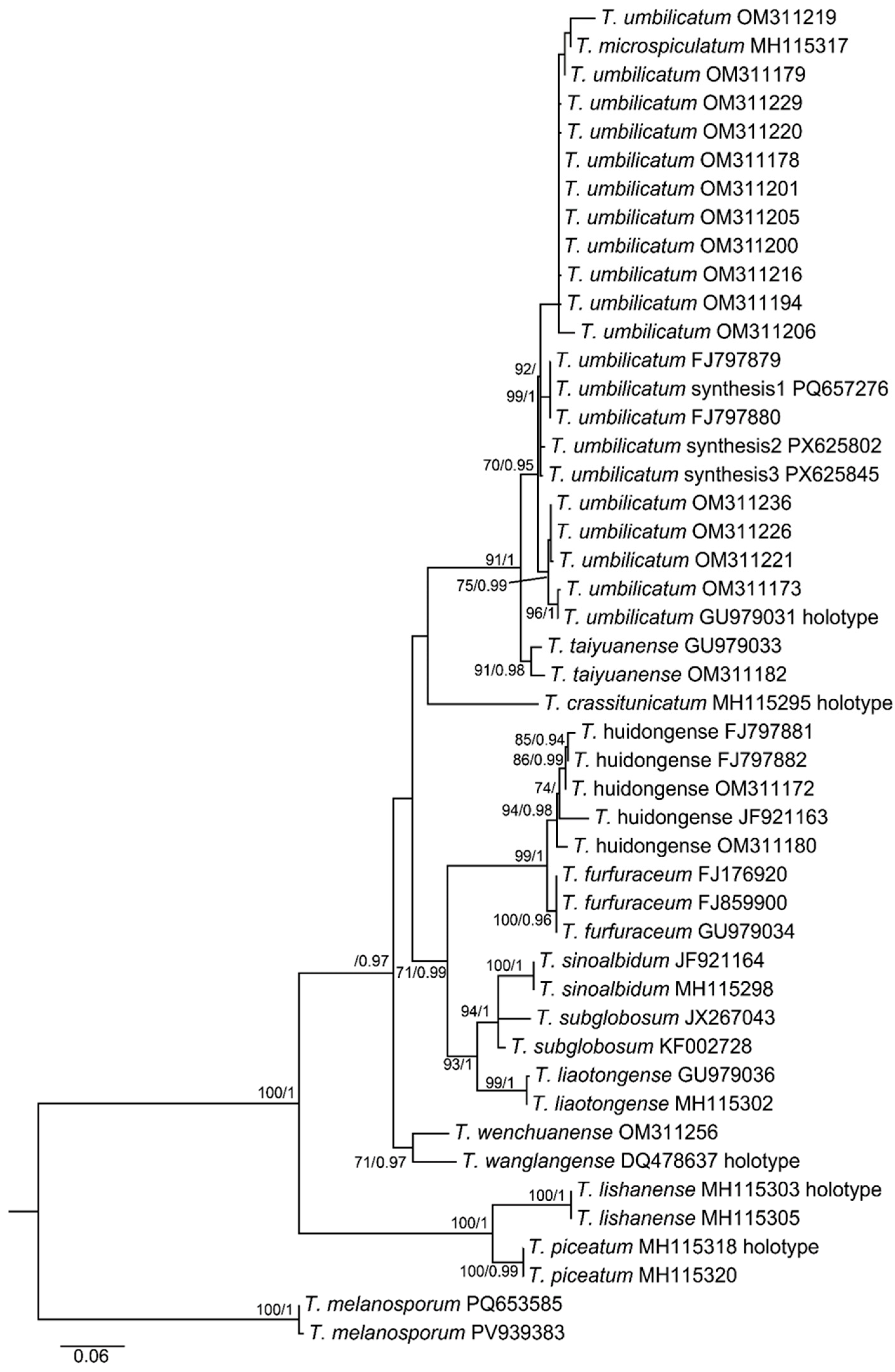
ITS sequencing of the ectomycorrhizae confirmed their identity as T. umbilicatum (GenBank accession nos. PQ657276, PX625802, and PX625845), which were designated as T. umbilicatum synthesis1, T. umbilicatum synthesis2, and T. umbilicatum synthesis3, respectively (Figure 2).

3.3. Effects of T. umbilicatum Colonization on Host Plant Growth

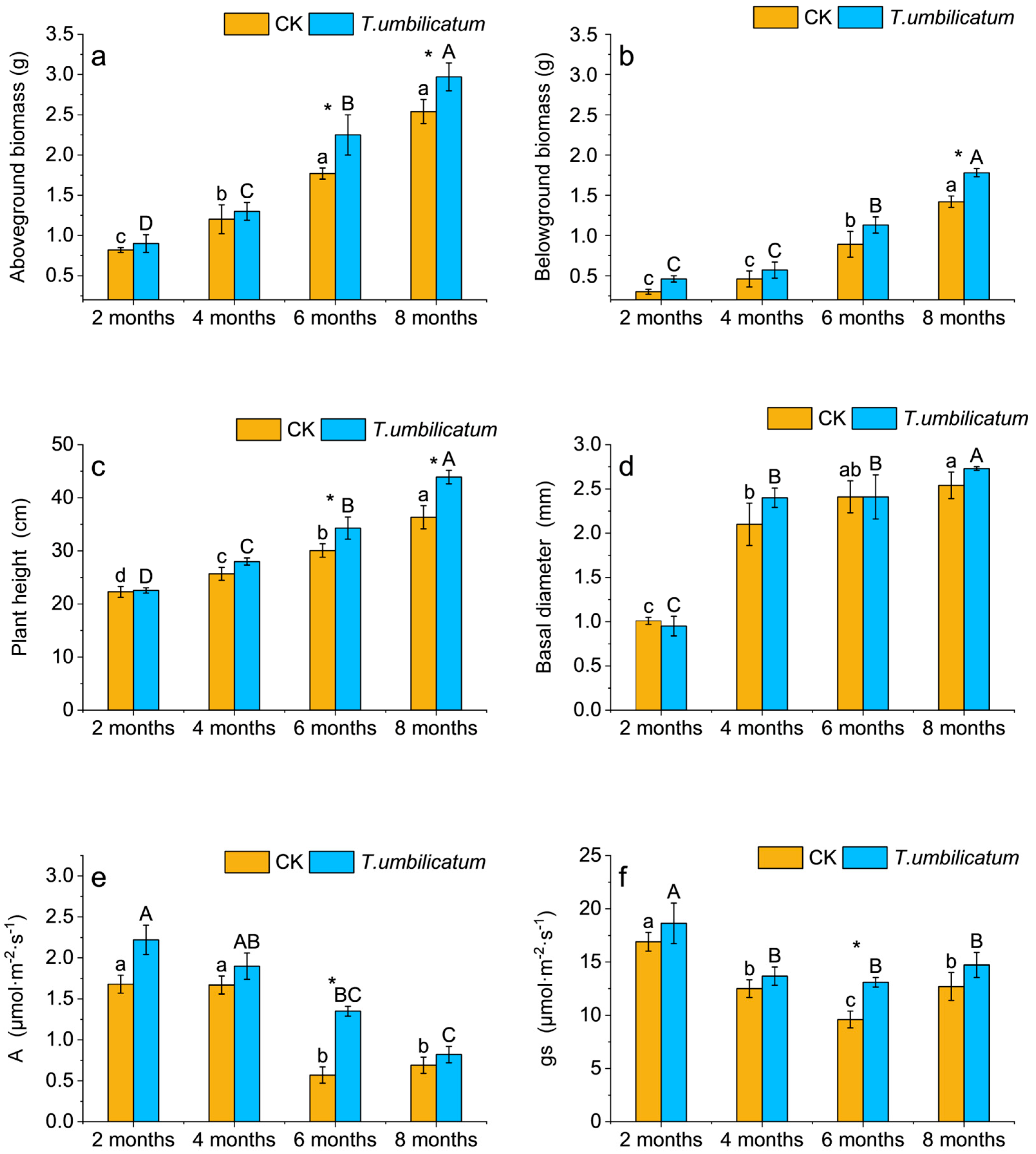
Inoculation with T. umbilicatum significantly promoted both aboveground and belowground biomass accumulation in Q. glauca (Figure 3a,b). At 2–4 months, inoculated seedlings had higher biomass than non-inoculated controls, but differences were not statistically significant (p > 0.05). By 6 months, biomass in all treatments increased markedly compared to the 4-month time point (p < 0.05). At this 6-month time point, inoculated plants exhibited a 27.1% greater aboveground biomass production compared to controls (p < 0.05). At 8 months, aboveground and belowground biomass increased significantly compared to the 6-month measurements (p < 0.05), with inoculated seedlings showing 16.9% and 25.4% greater aboveground and belowground biomass, respectively, compared to non-inoculated controls (p < 0.05).
Inoculation with T. umbilicatum affected the root-to-shoot ratio of Q. glauca seedlings. Except for the 6th month, when the root-to-shoot ratio of the inoculated and control groups was similar, the root-to-shoot ratio of the inoculated group was higher than that of the control group at 2, 4, and 8 months, with a significant difference observed at 2 months, where the inoculated group exhibited a 37.3% higher root-to-shoot ratio compared to the control group (p < 0.05) (Figure S1).
Seedling height was similarly promoted by T. umbilicatum colonization (Figure 3c). No significant differences were observed in the 2- and 4-month assessments. However, in 6 months, inoculated seedlings were 14.0% taller than controls (p < 0.05), a difference that increased to 20.8% by the final 8-month measurement (p < 0.05). In contrast to the effects on biomass and height, inoculation had no significant effect on basal stem diameter at any time point (Figure 3d).

3.4. Influence of T. umbilicatum on Host Photosynthetic Physiology

Inoculation with T. umbilicatum modulated key photosynthetic parameters in Q. glauca seedlings. The A of Q. glauca seedlings exhibited an overall decline over the experimental period. However, inoculated seedlings consistently maintained higher A than non-inoculated controls (Figure 3e). While differences between 2 and 4 months were not statistically significant, a pronounced divergence emerged at 6 months. At this time point, coinciding with increased ECM colonization, A in control seedlings declined significantly compared to the 4-month measurement (p < 0.05). By contrast, inoculated seedlings maintained stable A levels, reaching a rate 136.8% higher than that of controls (p < 0.05). By 8 months, A for both groups showed only slight, non-significant changes from the 6-month values, and the difference between treatments was no longer significant.
Stomatal conductance followed a similar pattern, with inoculated plants sustaining higher values (Figure 3f). Conductance declined significantly in both groups from 2 to 4 months (p < 0.05). Control plants reached their lowest point in 6 months, showing a further significant decline (p < 0.05). Inoculated seedlings, however, maintained stable gs at this critical 6-month stage, exhibiting 36.5% higher conductance than controls (p < 0.05). Both groups showed a modest, non-significant recovery by 8 months, with inoculated plants continuing to display elevated, though not statistically distinct, gs values.

3.5. Modulation of Mycorrhizosphere Nutrient Availability by T. umbilicatum

The influence of T. umbilicatum colonization on mycorrhizosphere nutrient availability was element-specific (Table 1). Substrate AN content remained stable throughout the eight-month experiment and was unaffected by inoculation, with no significant differences observed between treatments at any time point. In contrast, AP and AK were enhanced in the mycorrhizosphere of inoculated seedlings. While both nutrients showed higher concentrations in the inoculated treatment relative to the non-inoculated control over time, a statistically significant effect was confirmed only for AP at the final harvest. By month 8, the AP content in the substrate of colonized plants was 10.9% higher than in the control substrate (p < 0.05).

3.6. Correlations Between Mycorrhizal Colonization, Host Plant Physiology and Rhizosphere Nutrients

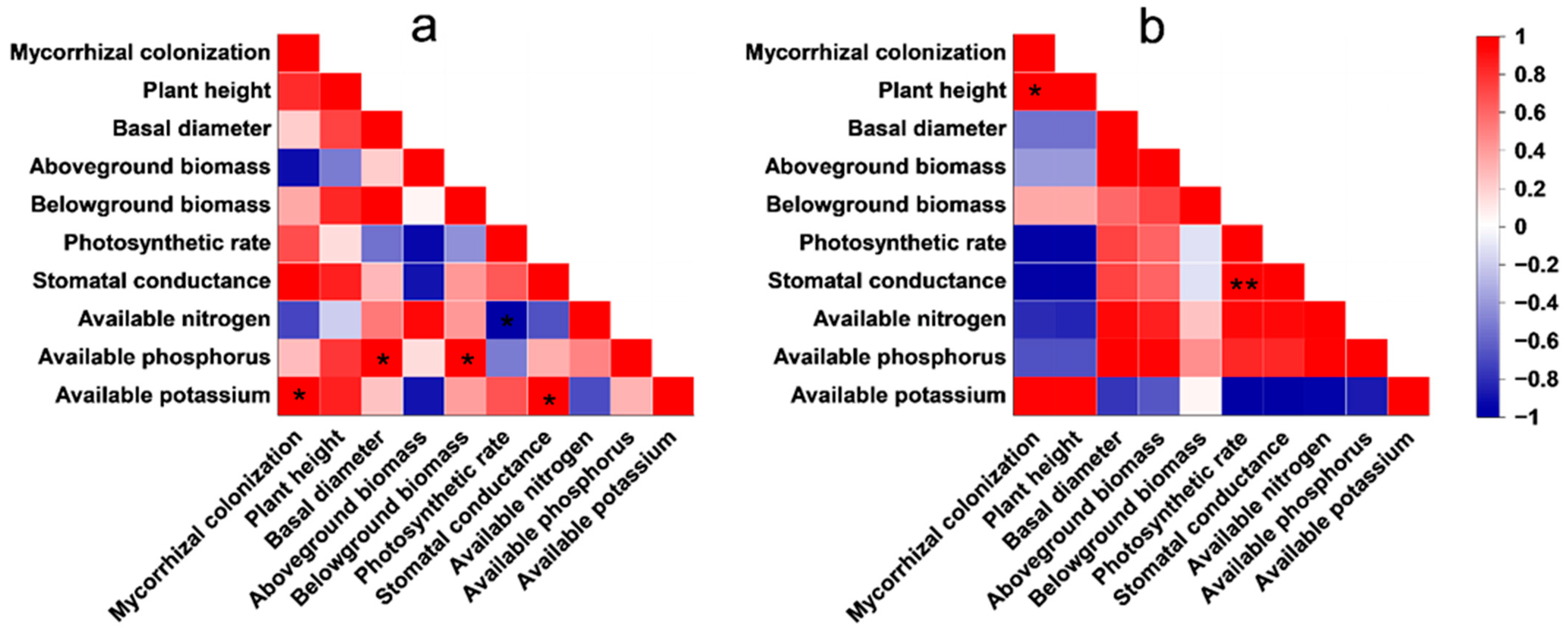
The relationship between mycorrhizal colonization rate and host plant traits shifted between the mid (4–6 months) and late (6–8 months) experimental phases (Figure 4). During the 4–6 month period (Figure 4a), the mycorrhizal colonization rate was positively correlated with plant height, basal diameter, belowground biomass, A, gs, AP, and AK, with a significant correlation observed for AP (r = 0.998, p < 0.05). However, it showed negative correlations with aboveground biomass and AN. By the 6–8 month period (Figure 4b), the mycorrhizal colonization rate maintained positive correlations with plant height, belowground biomass, and AK. Of these, the correlation with plant height was significantly positive (r = 0.999, p < 0.05). Negative correlations were observed with basal diameter, aboveground biomass, photosynthetic parameters (i.e., A and gs), as well as AN and AP.

4. Discussion

4.1. Synthesis and Colonization Dynamics of Tuber Ectomycorrhizae

The successful establishment of ectomycorrhizae is a critical prerequisite for Tuber cultivation, with colonization rates directly linked to the potential for subsequent ascoma production [21,32,33]. Our study demonstrates the feasibility of synthesizing ectomycorrhizae between Q. glauca and the near-threatened T. umbilicatum, achieving a colonization rate of 45.3% after eight months. The detection of initial colonization as early as four months post-inoculation further indicates this species’ capacity for relatively early symbiotic establishment under controlled conditions. This colonization level falls within the reported range for other Tuber–host systems, which exhibits considerable variability. For example, colonization by T. melanosporum and T. brumale on C. illinoinensis reached 37% and 34%–49%, respectively [34], while T. indicum achieved a remarkably high rate of 96.6% on P. armandii at six months [35]. Conversely, synthesis attempts can fail, as observed with T. maculatum on C. illinoinensis, a host successfully colonized by T. borchii and T. aestivum [36]. T. formosanum and T. pseudohimalayense showed 40%–50% colonization across six hosts [13]. This spectrum of outcomes underscores the high specificity inherent in Tuber–host compatibility. Our results on T. umbilicatum, combined with these comparative data, reinforce that successful mycorrhizal synthesis and final colonization rates are dictated by a complex interaction of factors. These include intrinsic phylogenetic compatibility between partners, inoculum quality and viability, and the specific environmental parameters maintained during cultivation [37]. The successful synthesis reported here establishes a foundational protocol for the ex situ conservation of T. umbilicatum and provides a basis for future optimization aimed at enhancing colonization efficiency.
Closely related Tuber species within the Rufum group can exhibit distinct ECM morphologies, reflecting divergent symbiotic development pathways. This is exemplified by a comparison of the mycorrhizae formed by T. umbilicatum (this study) and its congener T. huidongense Y. Wang on different Fagaceae hosts [38,39,40]. While both associations share fundamental symbiotic structures—including an epidermoid (puzzle-like) mantle, a well-developed Hartig net, and a contact exploration type—several key morphological distinctions are evident. First, branching architecture differs: T. huidongense with Castanea mollissima BI. produces simple or pinnate structures [39,40], whereas T. umbilicatum with Q. glauca forms more complex monopodial-pinnate to pyramidal branching. Second, the extraradical mycelium of T. huidongense consists of simple or branched, tortuous hyphae, while T. umbilicatum produces sparse, wooly hyphae. Finally, mantle thickness varies; the mantle formed by T. umbilicatum on Q. glauca (23–58 μm, 3–10 cell layers) is notably thicker than that reported for T. huidongense on C. mollissima (14–29 μm, 3–7 layers). These phenotypic differences between phylogenetically proximate fungi underscore that fine-scale morphological traits are influenced by both fungal genetics and host identity. Recognizing such intragroup variability is crucial. It provides diagnostic characters for accurate symbiotic identification and offers practical insights for selecting compatible host–fungus pairs to optimize mycorrhizal synthesis in truffle cultivation programs.

4.2. Host Growth Promotion and Physiological Optimization by T. umbilicatum

Growth promotion is a hallmark of successful ECM symbiosis. In this study, colonization by T. umbilicatum significantly enhanced the growth of Q. glauca seedlings, primarily through increased vertical extension and biomass accretion. Inoculated seedlings showed significant height increments of 14.0% and 20.8% over controls at six and eight months, respectively. Biomass allocation followed a distinct temporal pattern: aboveground dry mass was significantly elevated by 27.1% at six months and 16.9% at eight months, while a significant enhancement of belowground dry mass (25.4%) was observed only at the final harvest. In contrast, stem diameter (basal diameter) was not significantly affected, indicating that the primary growth stimulation was directed toward height and biomass rather than radial thickening. This growth promotion aligns with findings for other Tuber symbioses, such as those involving T. melanosporum, T. aestivum, and T. indicum with various hosts [14,41]. However, the magnitude and specific allocation of growth responses are known to vary with host–fungus combinations [13,15], underscoring the need to evaluate each novel pairing. The significant belowground investment observed late in our experiment suggests a potential shift in C allocation favoring root and mycorrhizal development, which may enhance seedling resilience.
The observed growth gains were likely facilitated by improved photosynthetic performance. Although the A declined over time in all seedlings—a common ontogenetic trend in greenhouse studies—T. umbilicatum-colonized plants maintained consistently higher rates, with a significant 136.8% advantage over controls at six months. gs showed greater stability in mycorrhizal seedlings, culminating in a significant 36.5% enhancement at the same critical period. This coordinated improvement in A and gs suggests that symbiosis optimized C assimilation, possibly through enhanced water and nutrient status mediated by the fungus. Similar physiological stabilization has been reported in other ECM systems [42,43], with proposed mechanisms ranging from improved foliar ion homeostasis to modified source-sink C dynamics [13,44,45]. In summary, T. umbilicatum enhances Q. glauca growth by integrating increased C fixation with strategic biomass allocation. These functional benefits validate its potential as a symbiotic partner for seedling production and support its use in conservation-oriented cultivation.

4.3. Modulation of Mycorrhizosphere Nutrients

The impact of T. umbilicatum colonization on rhizosphere nutrient availability was element-specific and temporally dynamic. Notably, we detected no significant alteration in soil AN throughout the experiment. This result contrasts with studies reporting N enrichment in other Tuber-host systems, such as T. indicum with Q. acutissima Carruth. [32], but aligns with work on T. melanosporum and T. indicum with Q. aliena Blume var. [41]. This inconsistency underscores that mycorrhizal effects on N cycling are highly dependent on the specific fungal-host pairing and their interactive physiology. In contrast, the availability of P and K was enhanced in the mycorrhizosphere. Both nutrients showed elevated concentrations by the sixth month, coinciding with the period of accelerated colonization and host physiological gains. Thereafter, their dynamics diverged: available P continued to accumulate, reaching a significant 10.9% increase over controls by the eighth month, while K plateaued after its initial rise. This pattern of multi-nutrient enhancement, particularly the sustained mobilization of P, is consistent with observations for other Tuber species [15,46]. These findings reinforce the principle that EMF differentially regulate the cycling of soil nutrients. The significant increase in P availability likely contributed to the observed improvements in host photosynthesis and growth. The species- and time-dependent nature of these modifications highlights that optimizing nutrient acquisition in managed systems requires tailored mycorrhization strategies matched to both the fungal symbiont and the target host [26,47].

4.4. Future Perspectives

Although this study demonstrates that inoculation with T. umbilicatum significantly affects soil nutrient content, such as changes in AP, caution is needed when interpreting the underlying mechanisms. It should be noted that the primary objective of this study was to verify the successful synthesis of mycorrhizae and to explore its growth-promoting effect on Q. glauca—a foundational step that paves the way for subsequent in-depth research. Due to this research focus, the current experimental setup cannot fully disentangle the direct effects of fungal P mobilization from the indirect effects mediated by rhizosphere microbial interactions.
Soil nutrient cycling is a complex process driven by the entire soil microbial community. Therefore, the observed nutrient changes in this study are likely not the result of a single fungal species. Previous studies have shown that EMF can recruit microbial groups with phosphate-solubilizing and organic matter-decomposing functions [48]. These microorganisms may have synergistic or competitive relationships with the target fungus (e.g., T. umbilicatum in this study), jointly shaping the observed nutrient dynamics. For instance, the presence of phosphate-solubilizing bacteria could enhance soil P availability, thereby indirectly promoting host plant growth. Consequently, it is reasonable to infer that some of the nutrient changes observed in this study may indeed be partially attributed to the contributions of other microbial communities, rather than being mediated solely by T. umbilicatum. In fact, the synergistic interaction between mycorrhizal fungi and other microorganisms has been confirmed in multiple studies. For example, using a compartmented cultivation system, Mei et al. demonstrated that P. massoniana Lamb. inoculated with Suillus grevillea (Klotzsch) Singer not only formed ectomycorrhizae but also altered the rhizosphere microbial community structure and recruited the phosphate-solubilizing bacterium Cedecea lapagei Grimont, which further enhanced host P acquisition [49]. Similarly, Yan et al. reported that EMF exert a greater influence on the composition of rhizosphere microbial communities than root traits themselves, underscoring the necessity of investigating plant–mycorrhizal–saprotrophic microbial interactions to better understand nutrient dynamics [47].
Based on these insights, and building on the successful mycorrhizal synthesis achieved in this study, future research should further investigate the relationships among root traits, EMF, and other microbial communities. This will help elucidate how the tripartite interactions among roots, EMF, and other microorganisms collectively regulate soil P availability. Clarifying these complex interaction networks will contribute to a deeper understanding of the ecological adaptation mechanisms of truffles and their central role in nutrient cycling within forest ecosystems. Beyond these mechanistic inquiries, future research should also expand toward applied perspectives. Conducting long-term field trials, extending the host range to economically valuable tree species (e.g., C. mollissima, P. armandii), and investigating the conditions triggering ascocarp formation represent important subsequent research directions for translating these foundational findings into practical applications for forest management and fungal conservation.
The results of this study indicate that inoculation with T. umbilicatum significantly promotes the growth and nutrient uptake of Q. glauca seedlings, a finding with important practical implications for forest cultivation and the edible mycorrhizal fungus industry. First, in terms of seedling cultivation, it is recommended to artificially inoculate T. umbilicatum in the container nursery production of Fagaceae species such as Q. glauca to cultivate high-quality mycorrhizal seedlings, thereby improving afforestation quality and efficiency. Second, in the restoration of karst degraded areas and afforestation on difficult sites, mycorrhizal seedlings should be prioritized to enhance tree environmental adaptability through the growth-promoting effects of mycorrhizal fungi, achieving synergistic advancement of ecological restoration and germplasm resource conservation. Furthermore, as a near-threatened yet economically valuable truffle species, T. umbilicatum cultivation should be promoted in economic forest plantations such as C. mollissima and P. armandii through bionic cultivation techniques, enabling dual benefits of aboveground fruit harvest and belowground truffle ascocarp collection. This forest-fungus symbiosis model fully embodies ecological-economic synergies: on one hand, truffle inoculation promotes host tree growth, enhancing forest ecosystem stability and C sequestration functions; on the other hand, truffle ascocarp harvesting provides considerable economic income for forest farmers, this approach not only increases forest farmers’ income but also reduces harvesting pressure on wild truffle resources through artificial propagation, contributing to the in situ conservation of this rare mycorrhizal fungus. Future forestry authorities should consider developing technical regulations for mycorrhizal seedling cultivation and incorporating truffle bionic cultivation into understory economy support policies to promote the sustainable utilization of truffle resources and the synergistic development of regional forestry economies.

5. Conclusions

This study successfully establishes, to our knowledge for the first time, a functional ECM symbiosis between the near-threatened fungus T. umbilicatum and Q. glauca. Through controlled synthesis, we confirmed successful colonization via morphological and molecular characterization, with colonization dynamics showing progressive root system coverage from four to eight months post-inoculation. The symbiosis conferred significant physiological benefits to the host, including enhanced biomass accumulation and improved A. It also altered the mycorrhizosphere environment, increasing the bioavailability of key nutrients such as P. These results demonstrate a high degree of physiological compatibility between T. umbilicatum and Q. glauca, expanding the known host range for the Rufum clade. Our findings provide a critical empirical foundation for two key applications: (1) the ex situ conservation of T. umbilicatum through mycorrhizal seedling production, and (2) the development of sustainable cultivation frameworks that leverage native fungal symbionts to enhance the resilience of oak seedlings in restoration forestry. This work underscores the importance of characterizing species-specific mycorrhizal partnerships to advance both fungal conservation and sustainable forest management.

Supplementary Materials

The following supporting information can be downloaded at: https://www.mdpi.com/article/10.3390/f17040434/s1, Figure S1: Root:shoot ratio.

Author Contributions

S.F., visualization, methodology, and original draft preparation; D.L., Data analysis and paper modification; J.Y., review and software; S.D., W.L. and R.L., data curation and visualization; Y.W. and X.H., resources, review and editing; F.Y., supervision, project administration and funding acquisition; S.W., methodology, conceptualization and supervision. All authors have read and agreed to the published version of the manuscript.

Funding

This work was supported by the Yunnan Revitalization Talent Support Program (XDYC-QNRC-2023-0415), the National Natural Science Foundation of China (No. 32060008), and the Yunnan Technology Innovation Program (202205AD160036).

Data Availability Statement

Data are contained within the article.

Acknowledgments

We are grateful to Gangqiang Dong for providing the research resources and platform support for this study.

Conflicts of Interest

The authors declare no conflicts of interest.

References

  1. Genre, A.; Lanfranco, L.; Perotto, S.; Bonfante, P. Unique and Common Traits in Mycorrhizal Symbioses. Nat. Rev. Microbiol. 2020, 18, 649–660. [Google Scholar] [CrossRef]
  2. Mahmood, S.; Fahad, Z.; Bolou-Bi, E.B.; King, K.; Köhler, S.J.; Bishop, K.; Ekblad, A.; Finlay, R.D. Ectomycorrhizal fungi integrate nitrogen mobilisation and mineral weathering in boreal forest soil. New Phytol. 2024, 242, 1545–1560. [Google Scholar] [CrossRef]
  3. Frank, H.E.R.; Garcia, K. Benefits provided by four ectomycorrhizal fungi to Pinus taeda under different external potassium availabilities. Mycorrhiza 2021, 31, 755–766. [Google Scholar] [CrossRef]
  4. Charya, L.S.; Garg, S. Advances in methods and practices of ectomycorrhizal research. In Advances in Biological Science Research: A Practical Approach; Elsevier: Amsterdam, The Netherlands, 2019; pp. 303–325. [Google Scholar] [CrossRef]
  5. Feng, B.; Yang, Z.L. Ectomycorrhizal symbiosis: Diversity of symbiotic fungi and molecular mechanisms of mycorrhiza formation. Sci. Sin. Vitae 2019, 49, 436–444. [Google Scholar] [CrossRef]
  6. Martin, F.; Köhler, A.; Murat, C.; Veneault-Fourrey, C.; Hibbett, D.S. Unearthing the roots of ectomycorrhizal symbioses. Nat. Rev. Microbiol. 2016, 14, 760–773. [Google Scholar] [CrossRef]
  7. Luciano, A.; Oliveira, V.L.; Filho, G.N.S. Utilisation of rocks and ectomycorrhizal fungi to promote growth of eucalypt. Braz. J. Microbiol. 2010, 41, 676–684. [Google Scholar] [CrossRef] [PubMed][Green Version]
  8. Zhang, S.J.; Chen, X.L.; Chen, Y.; Bai, X.Q.; Zhao, Y.Q.; Wang, W.; Zhu, C.C.; Lu, X.M. Effects of ectomycorrhizal fungi on seedling growth of Carya illinoinensis. Xiandai Nongye Keji 2022, 18, 22–25. [Google Scholar] [CrossRef]
  9. Smith, M.E.; Bonito, G.M. Systematics and ecology of edible ectomycorrhizal mushrooms. In Edible Ectomycorrhizal Mushrooms; Zambonelli, A., Bonito, G.M., Eds.; Springer: Berlin, Germany, 2012; pp. 17–39. [Google Scholar] [CrossRef]
  10. Hu, X.R.; Xiong, H.K.; Xue, W.T. Research progress on the composition and functional activity of truffles. Sci. Technol. Food Ind. 2017, 38, 341–345. [Google Scholar] [CrossRef]
  11. Guo, M.; Tang, L.W.; Yan, J.P.; Irbis, C. Research advances in main physiological activities and active substances production of truffles. Food Ind. Sci. Technol. 2012, 33, 403–407. [Google Scholar] [CrossRef]
  12. Zhang, X.P.; Li, X.L.; Ye, L.; Huang, Y.; Kang, Z.J.; Zhang, B.; Zhang, X.Y. Colonisation by Tuber melanosporum and Tuber indicum affects the growth of Pinus armandii and phoD alkaline phosphatase encoding bacterial community in the rhizosphere. Microbiol. Res. 2020, 239, 126520. [Google Scholar] [CrossRef] [PubMed]
  13. Huang, L.L.; Wang, Y.L.; Guerin-Laguette, A.; Wang, R.; Zhang, P.; Li, Y.M.; Yu, F.Q. Ectomycorrhizal synthesis between two Tuber species and six tree species: Are different host–fungus combinations having dissimilar impacts on host plant growth? Mycorrhiza 2022, 32, 341–351. [Google Scholar] [CrossRef]
  14. Zou, J. Effects of Different Truffle Infections on Plant Growth and Root Microecology of Carya illinoinensis. Ph.D. Dissertation, Sichuan Agricultural University, Yaan, China, 2019. [Google Scholar] [CrossRef]
  15. Dominguez, J.A.; Martin, A.; Anriquez, A.; Albanesi, A. The combined effects of Pseudomonas fluorescens and Tuber melanosporum on the quality of Pinus halepensis seedlings. Mycorrhiza 2012, 22, 429–436. [Google Scholar] [CrossRef] [PubMed]
  16. Wang, Y.L.; Wang, R.; Lu, B.; Guerin-Laguette, A.; He, X.H.; Yu, F.Q. Mycorrhization of Quercus mongolica seedlings by Tuber melanosporum alters root carbon exudation and rhizosphere bacterial communities. Plant Soil 2021, 467, 391–403. [Google Scholar] [CrossRef]
  17. Kinoshita, A.; Sasaki, H.; Nara, K. Phylogeny and diversity of Japanese truffles (Tuber spp.) inferred from sequences of four nuclear loci. Mycologia 2011, 103, 779–794. [Google Scholar] [CrossRef]
  18. Bonito, G.; Smith, M.E.; Nowak, M.; Healy, R.A.; Guevara, G.; Cázares, E.; Kinoshita, A.; Nouhra, E.R.; Domínguez, L.S.; Tedersoo, L.; et al. Historical biogeography and diversification of truffles in the Tuberaceae and their newly identified southern hemisphere sister lineage. PLoS ONE 2013, 8, e52765. [Google Scholar] [CrossRef]
  19. Fan, L. Research advances in species diversity and phylogeny of hypogeous fungi in China. J. Fung. Res. 2023, 21, 65–81. [Google Scholar] [CrossRef]
  20. Zhang, B.C. Revision of Chinese species of Elaphomyces (Ascomycotina, Elaphomycetales). Mycol. Res. 1991, 95, 973–985. [Google Scholar] [CrossRef]
  21. Wang, Y.Y.; Zhang, G.Q.; Qin, L.; Chen, Q.J.; Cao, Q.Q.; Xu, S.Y.; Lu, Y.C. Current status of artificial cultivation of truffles and research progress on preparation methods of seedlings with truffle mycorrhiza. Microbiol. China 2023, 50, 1245–1264. [Google Scholar] [CrossRef]
  22. Chen, J.; Liu, P.G.; Wang, Y. Tuber umbilicatum, a new species from China, with a key to the spinose-reticulate spored Tuber species. Mycotaxon 2005, 94, 1–6. [Google Scholar] [CrossRef]
  23. Li, Y.; Fan, L.; Wang, K.; Song, M.S.; Wang, X.C.; Zhuang, W.Y.; Yao, Y.J. Threatened status and protection of truffle (Tuberaceae) resources in China. Acta Edulis Fungi 2020, 27, 109–119. [Google Scholar] [CrossRef]
  24. Fan, L.; Li, T.; Xu, Y.Y.; Yan, X.Y. Species diversity, phylogeny, endemism and geography of the truffle genus Tuber in China based on morphological and molecular data. Persoonia 2022, 48, 175–202. [Google Scholar] [CrossRef]
  25. Lu, X.; Liu, X.; Wang, J.W.; Yang, S.; Xia, H.T.; Chen, Q.X. Influence of formulated composition of matrix on seedling quality and physical characteristics of Cyclobalanopsis glauca container seedlings. J. Zhejiang Agric. Sci. 2022, 63, 2888–2892. [Google Scholar] [CrossRef]
  26. Shi, S.; Qi, M.; Wang, S.; Bai, Y.; Wang, H.; Wang, J.; Jiang, C. Ecological strategies of main understory woody plants in the Cyclobalanopsis glauca secondary forest in west Hunan. J. Cent. South Univ. For. Technol. 2022, 42, 53–61. [Google Scholar] [CrossRef]
  27. Hu, H.D.; Su, K.M.; Chai, H.M. Study on the morphological changes of the ectomycorrhizae formed by Tuber aestivum on Cyclobalanopsis glauca seedlings. Plant Divers. 2010, 32, 489–494. [Google Scholar] [CrossRef]
  28. Allen, G.C.; Flores-Vergara, M.A.; Krasynanski, S.; Kumar, S.; Thompson, W.F. A modified protocol for rapid DNA isolation from plant tissues using cetyltrimethylammonium bromide. Nat. Protoc. 2006, 1, 2320–2325. [Google Scholar] [CrossRef]
  29. Shen, P.; Chen, X.D. Microbiology, 2nd ed.; Higher Education Press: Beijing, China, 2006; pp. 25–35. ISBN 978-7-04-019690-0. [Google Scholar]
  30. Agerer, R. (Ed.) Colour Atlas of Ectomycorrhizae; Einhorn Verlag: Schwäbisch Gmünd, Germany, 1997; Available online: https://api.semanticscholar.org/CorpusID:83096344 (accessed on 26 March 2026).
  31. Bao, S.D. Soil Agrochemical Analysis, 3rd ed.; China Agricultural Press: Beijing, China, 2000; pp. 56–103. ISBN 978-7-109-06644-1. [Google Scholar]
  32. Zhang, X.P.; Ye, L.; Kang, Z.J.; Zou, J.; Li, X.L. Mycorrhization of Quercus acutissima with Chinese black truffle significantly altered the host physiology and root-associated microbiomes. PeerJ 2019, 7, e6421. [Google Scholar] [CrossRef]
  33. Guerin-Laguette, A. Successes and challenges in the sustainable cultivation of edible mycorrhizal fungi-furthering the dream. Mycoscience 2021, 62, 10–28. [Google Scholar] [CrossRef]
  34. Marozzi, G.; Sánchez, S.; Benucci, G.M.N.; Bonito, G.; Baciarelli Falini, L.; Albertini, E.; Donnini, D. Mycorrhisation of pecan (Carya illinoinensis) with black truffles: Tuber melanosporum and Tuber brumale. Mycorrhiza 2017, 27, 303–309. [Google Scholar] [CrossRef]
  35. Li, S.C.; Liu, P.G.; Chen, J.; Guo, S.X. A preliminary study on the mating type genes of Tuber indicum in inoculated seedlings of Pinus armandii. Mycosystema 2017, 36, 879–891. [Google Scholar] [CrossRef]
  36. Benucci, G.M.N.; Bonito, G.; Baciarelli Falini, L.; Albertini, E.; Donnini, D. Mycorrhisation of pecan trees (Carya illinoinensis) with commercial truffle species: Tuber aestivum and Tuber borchii. Mycorrhiza 2012, 22, 383–392. [Google Scholar] [CrossRef]
  37. Brundrett, M.; Bougher, N.; Dell, B.; Grove, T.; Malajczuk, N. Working with Mycorrhizas in Forestry and Agriculture; ACIAR Monograph No. 32; Australian Centre for International Agricultural Research (ACIAR): Canberra, Australia, 1996; p. 374.
  38. Agerer, R. Exploration types of ectomycorrhizae. Mycorrhiza 2001, 11, 107–114. [Google Scholar] [CrossRef]
  39. Wan, S.P.; Yu, F.Q.; Tang, L.; Wang, R.; Wang, Y.; Liu, P.G.; Wang, X.H.; Zheng, Y. Ectomycorrhizae of Tuber huidongense and Tuber liyuanum with Castanea mollissima and Pinus armandii. Mycorrhiza 2016, 26, 249–256. [Google Scholar] [CrossRef] [PubMed]
  40. Huang, L.L. Mycorrhizal Synthesis of Tuber and Their Effects on the Mycorrhizosphere Ecophysiology of Host Plants. Ph.D. Dissertation, Yunnan Agricultural University, Kunming, China, 2023. [Google Scholar] [CrossRef]
  41. Kang, Z.J. Tuber Affect Quercus aliena Physiology and Root-Associated nirK- and nirS-Type Denitrifying Bacterial Communities in the Initial Stage of Inoculation. M.Sc. Dissertation, Sichuan Agricultural University, Yaan, China, 2020. [Google Scholar] [CrossRef]
  42. Li, M.; Wang, H.Y.; Zhao, X.Z.; Feng, W.Y.; Ding, G.J.; Quan, W.X. Effect of ectomycorrhizal fungi on the drought resistance of Pinus massoniana seedlings. J. Fungi 2023, 9, 471. [Google Scholar] [CrossRef] [PubMed]
  43. Liu, Y.; Li, X.; Kou, Y. Ectomycorrhizal Fungi: Participation in Nutrient Turnover and Community Assembly Pattern in Forest Ecosystems. Forests 2020, 11, 453. [Google Scholar] [CrossRef]
  44. Mundra, S.; Bahram, M.; Tedersoo, L.; Kauserud, H.; Halvorsen, R.; Eidesen, P.B. Temporal variation of Bistorta vivipara-associated ectomycorrhizal fungal communities in the High Arctic. Mol. Ecol. 2015, 24, 6289–6302. [Google Scholar] [CrossRef] [PubMed]
  45. Xie, L.L.; Lin, G.G.; Wang, Q.W.; Yin, C.Y. Tree species-specific differences in carbon allocation to ectomycorrhizal symbionts tightly relate to ectomycorrhizal fungal community composition. For. Ecol. Manag. 2024, 562, 121935. [Google Scholar] [CrossRef]
  46. Li, X.L.; Zhang, X.P.; Yang, M.; Yan, L.J.; Kang, Z.J.; Xiao, Y.J.; Tang, P.; Ye, L.; Zhang, B.; Zou, J.; et al. Tuber borchii shapes the ectomycorrhizosphere microbial communities of Corylus avellana. Mycobiology 2019, 47, 180–190. [Google Scholar] [CrossRef]
  47. Yan, X.L.; Zhou, L.Y.; Chen, Y.M.; Liu, R.Q.; Guo, L.Q.; Li, N.; Kang, A.; Zhai, K.Y.; Zhou, G.Y.; Zhou, X.H. Ectomycorrhizal fungi explain more variation in rhizosphere nutrient availability than root traits in temperate forests. Appl. Soil Ecol. 2025, 207, 105923. [Google Scholar] [CrossRef]
  48. Yuan, J.; Yan, Z.Y.; Wang, Y.H.; Fan, S.L.; Chen, J.X.; Ye, K.J.; Zheng, G.X.; Wan, S.P.; Zheng, Y.; Yu, F.Q.; et al. Oxalotrophic bacteria in the ectomycorrhizosphere play an essential role in phosphorus mobilization. Soil Biol. Biochem. 2026, 214, 110077. [Google Scholar] [CrossRef]
  49. Mei, Y.; Zhang, M.; Cao, G.; Zhu, J.; Zhang, A.; Bai, H.; Dai, C.; Jia, Y. Endofungal bacteria and ectomycorrhizal fungi synergistically promote the absorption of organic phosphorus in Pinus massoniana. Plant Cell Environ. 2024, 47, 600–610. [Google Scholar] [CrossRef]
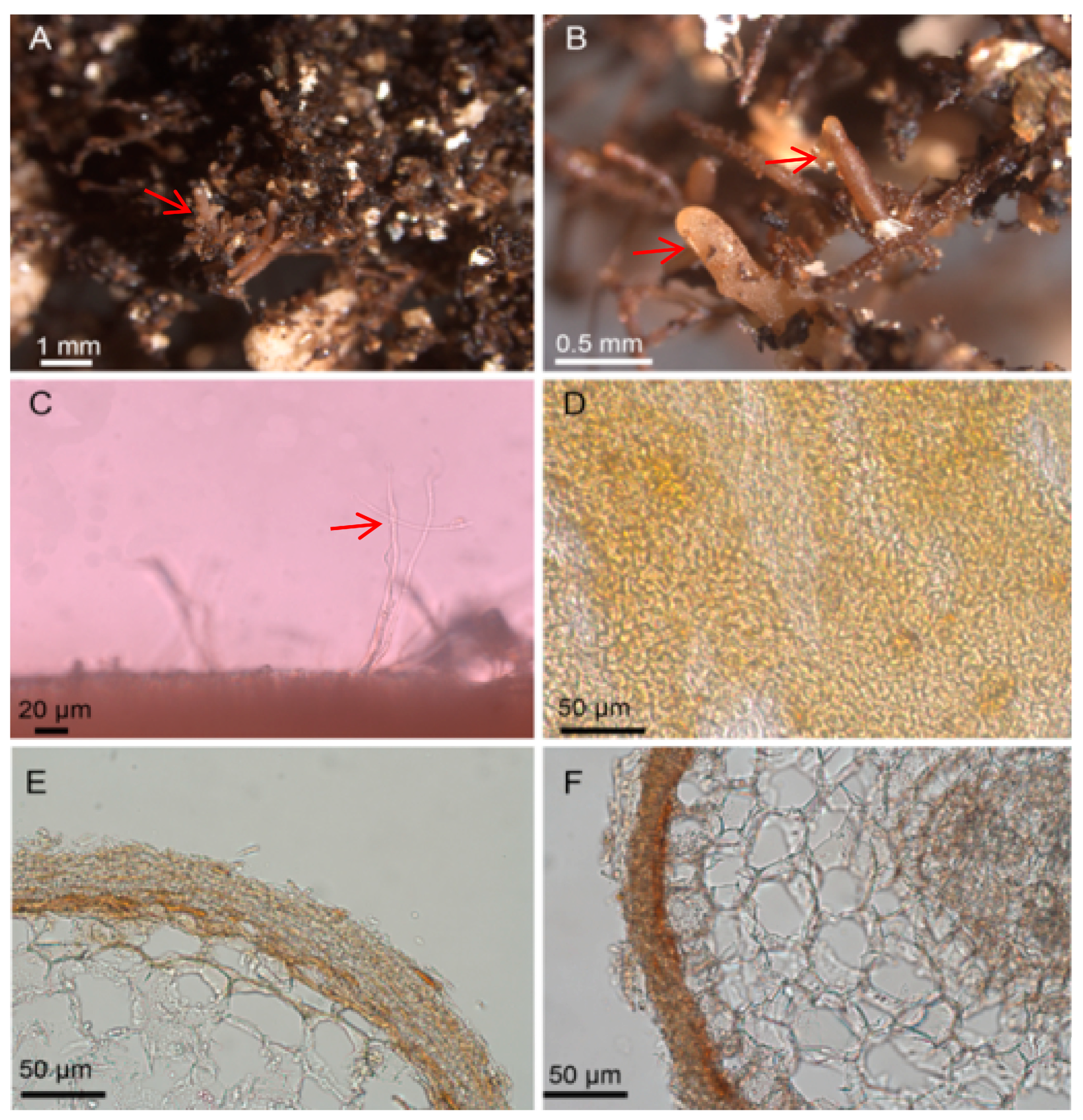
Figure 1. Morpho-anatomical features of synthesized T. umbilicatum ectomycorrhiza on Q. glauca. (A,B) ECM systems; (C), Emanating hyphae; (D), Outer mantle surface structure; (E,F), Cross section. Note the different scale bars: (A) = 1 mm; (B) = 0.5 mm; (C) = 20 µm; (DF) = 50 µm. Note: The arrows in (A,B) indicate the formed ectomycorrhizal roots; the arrow in (C) points to the extraradical hyphae.
Forests 17 00434 g001
Figure 2. ML tree inferred from the ITS sequences. Bootstrap values (≥70) and Posterior Probabilities (≥0.90) obtained from Bayesian Inference are indicated along nodes.
Forests 17 00434 g002
Figure 3. Effects of T. umbilicatum inoculation on the growth and physiological performance of Q. glauca seedlings. (a,b) Aboveground and underground biomass. (c,d) Height and ground diameter. (e,f) A and gs. Note: CK: Control treatment; T. umbilicatum: inoculation treatment. Different lowercase letters indicate significant differences (p < 0.05) among different sampling periods within the control treatment. Different uppercase letters indicate significant differences (p < 0.05) among different sampling periods within the T. umbilicatum inoculation treatment. * indicates a significant difference (p < 0.05) between the control and T. umbilicatum inoculation treatments at the same sampling period.
Forests 17 00434 g003
Figure 4. Pearson correlation analysis of various indicators in the inoculation treatment group. (a). Correlation analysis of the changes in various indicators between 4 and 6 months. (b). Correlation analysis of the changes in various indicators between 6 and 8 months. The color bar indicates the magnitude and direction of the correlation coefficient (r), ranging from −1 (dark blue, strong negative correlation) to +1 (dark red, strong positive correlation). Lighter colors represent correlations closer to 0, indicating no significant correlation. *, ** Indicates a significant difference at p = 0.05 and 0.01, respectively.
Forests 17 00434 g004
Table 1. Changes in soil AN, AP, and AK concentrations in the mycorrhizosphere substrate at different growth stages under inoculated and uninoculated conditions with T. umbilicatum.
Sampling PeriodTreatmentAN (mg/kg)AP (mg/kg)AK (mg/kg)
M2Control31.85 ± 0.88 a46.98 ± 1.51 b322.66 ± 2.60 c
T. umbilicatum32.84 ± 0.65 A47.53 ± 2.13 C323.20 ± 2.18 B
M4Control33.32 ± 0.33 a46.92 ± 1.66 b326.92 ± 1.58 b
T. umbilicatum32.87 ± 1.05 A48.42 ± 0.81 BC327.99 ± 2.44 B
M6Control32.39 ± 2.04 a48.47 ± 0.88 ab331.03 ± 2.29 a
T. umbilicatum32.76 ± 2.71 A50.77 ± 1.52 B339.54 ± 3.96 A
M8Control32.68 ± 2.00 a49.67 ± 0.28 a*332.52 ± 1.21 a
T. umbilicatum33.8 ± 0.71 A55.11 ± 1.50 A*341.97 ± 4.11 A
Note: T. umbilicatum: inoculation treatment; M2, M4, M6, M8: samples collected 2, 4, 6, and 8 months after inoculation, respectively. Different lowercase letters indicate significant differences (p < 0.05) among different sampling periods within the control treatment. Different uppercase letters indicate significant differences (p < 0.05) among different sampling periods within the T. umbilicatum inoculation treatment. * indicates a significant difference (p < 0.05) between the control and T. umbilicatum inoculation treatments at the same sampling period.
Disclaimer/Publisher’s Note: The statements, opinions and data contained in all publications are solely those of the individual author(s) and contributor(s) and not of MDPI and/or the editor(s). MDPI and/or the editor(s) disclaim responsibility for any injury to people or property resulting from any ideas, methods, instructions or products referred to in the content.