Article

Bioactive Compounds in Cornus mas L. and Juniperus communis L.

by
Anna Przybylska-Balcerek
* and
Kinga Stuper-Szablewska
Department of Chemistry, Poznań University of Life Sciences, 60-637 Poznan, Poland
*
Author to whom correspondence should be addressed.
Forests 2026, 17(2), 270; https://doi.org/10.3390/f17020270
Submission received: 2 January 2026 / Revised: 9 February 2026 / Accepted: 13 February 2026 / Published: 17 February 2026

Abstract

The growing interest in plant-derived bioactive compounds has intensified research on traditional but underexplored species as potential sources of health-promoting metabolites. This study aimed to compare the phytochemical profiles and antioxidant potential of fruits of Cornus mas L. (Cornelian cherry) and Juniperus communis L. (common juniper) collected from two natural locations in Poland. Lyophilized fruits were subjected to combined alkaline and acid hydrolysis followed by extraction, and the released phenolic compounds were identified and quantified using UPLC–PDA. Total phenolic content (TPC), total flavonoid content (TFC), total anthocyanin carotenoid content, chlorophylls, organic acids, and antioxidant activity (ABTS•+ assay) were determined spectrophotometrically. The fruits of C. mas exhibited significantly higher TPC (3584–3641 mg GAE/100 g d.m.), TFC (875–895 mg RUTE/100 g d.m.), TAC (247–266 mg CAE/100 g d.m.), and antioxidant activity (1544–1698 µmol Trolox/kg d.m.) compared with J. communis. Chlorogenic acid and quercetin were the dominant phenolic constituents in C. mas, whereas J. communis was characterized by higher proportions of protocatechuic acid, catechin, and kaempferol. J. communis fruits contained higher total organic acids, mainly citric acid, while C. mas fruits showed elevated levels of shikimic acid. Strong positive correlations were found between TPC, TFC, and ABTS activity (r > 0.90), indicating that flavonoids are key contributors to antioxidant capacity. Principal component analysis clearly discriminated samples according to species, with minor effects of sampling location. Overall, C. mas fruits demonstrated a superior antioxidant potential associated with a rich and diverse phenolic profile. In contrast, J. communis fruits were distinguished by a higher content of organic acids and a species-specific phenolic pattern. These findings highlight the nutritional and functional value of both species, supporting their potential application in functional foods and nutraceuticals.

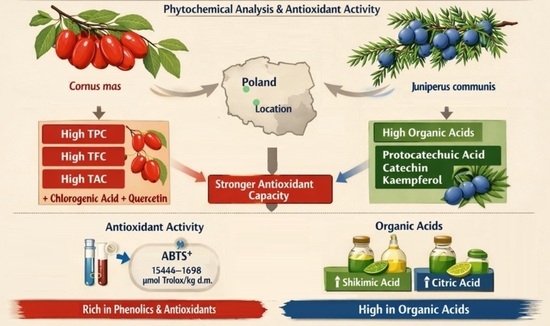
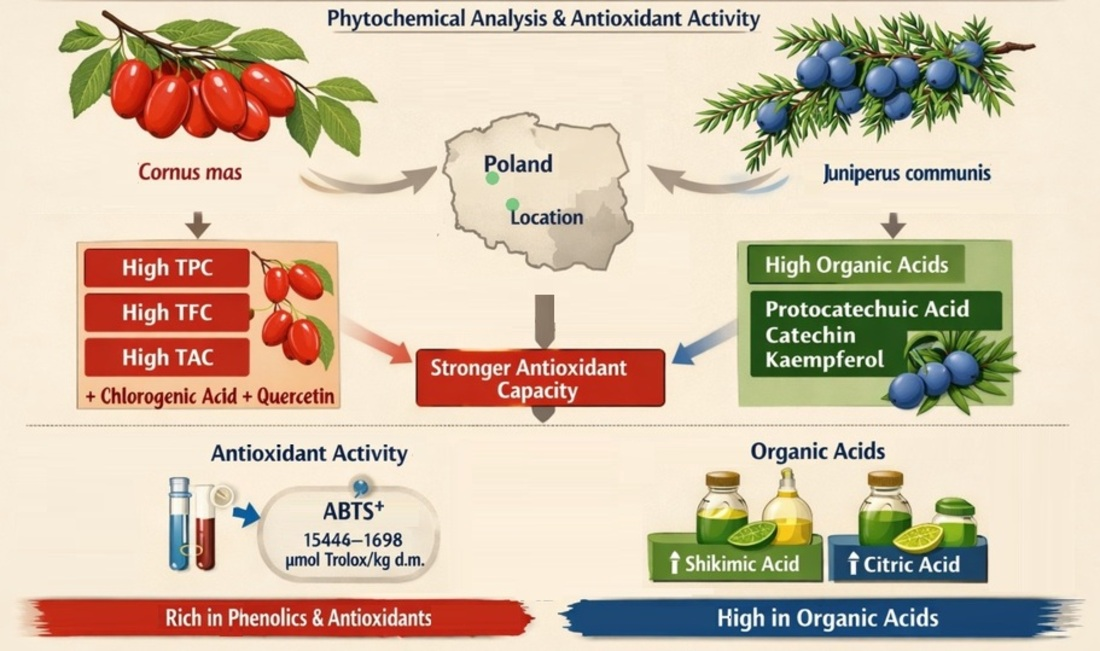
Graphical Abstract

1. Introduction

In recent years, there has been a marked increase in interest in plant-derived sources of bioactive compounds, particularly polyphenols, due to their well-documented antioxidant, anti-inflammatory, and potential health-promoting properties [1,2,3]. These compounds play an important role in the prevention of lifestyle-related diseases and are increasingly used in the food industry as natural functional ingredients and preservatives. In the context of sustainable forest resource management and the growing importance of non-wood forest products (NWFPs), particular attention has been directed toward wild-growing species traditionally used in human nutrition and folk medicine but still insufficiently characterized in terms of their phytochemical composition [4,5] and Common juniper (Juniperus communis L., J. communis) [6], which are important components of forest communities and agroforestry landscapes of Central Europe. These species perform essential ecological functions, contributing to the conservation of biodiversity, the stability of forest ecosystems, and the provision of valuable biological resources. The fruits of C. mas constitute a rich source of polyphenols, including flavonoids, anthocyanins, and phenolic acids, which account for their high antioxidant potential and possible anti-inflammatory and antidiabetic effects. In contrast, J. communis berries contain a broad spectrum of phenolic compounds, such as flavonols, proanthocyanidins, and phenolic acids, as well as essential oils, whose synergistic action is responsible for the plant’s antioxidant and antibacterial properties. From the perspective of forest management and bioeconomy, these species represent promising yet still underutilized sources of naturally derived functional raw materials [4,6,7].
Therefore, the novelty of the present study lies in a comprehensive, comparative characterization of the phytochemical profiles of C. mas and J. communis fruits collected from natural populations, using a sequential alkaline–acid hydrolysis approach coupled with UPLC–PDA (Ultra Performance Liquid Chromatography with Photodiode Array Detection) analysis. This strategy enabled the detailed identification and quantification of phenolic acids, flavonoids, anthocyanins, and organic acids, including compounds released from glycosidic and bound forms. Furthermore, multivariate statistical analyses were used to examine relationships between metabolite composition and antioxidant activity and to indicate possible species-specific differences in secondary metabolism. Interpretations involving the shikimate and phenylpropanoid pathways should be regarded as tentative biochemical inferences derived from metabolite patterns, not as confirmed mechanisms.
The objective of this study was not only to compare the content of selected bioactive compounds and antioxidant potential of the fruits of C. mas and J. communis, but also to provide new insights into the metabolic differentiation of these species and their potential application as functional food ingredients and nutraceutical raw materials.

2. Materials and Methods

The study was conducted on the fruits of selected forest plant species: J. communis and C. mas (Table 1). Fruits were harvested at full maturity. Each sample constituted a separate bush and weighed 0.2 kg (eight samples of ripe fruit were collected in total J. communis and C. mas). After harvest, the fruit was frozen and freeze-dried (−53 °C, 0.025 mbar).
It should be noted that the two collection sites do not capture the full genetic diversity of C. mas populations in Poland; therefore, the results should be interpreted as representative of the sampled populations rather than the entire species across the country.
After drying, the fruits underwent chemical analyses to identify selected bioactive compounds. The material was subjected to an innovative extraction method involving sequential alkaline and acid hydrolysis, followed by the extraction of bioactive compounds released from glycosidic bonds using diethyl ether. After evaporation, the dry extracts were dissolved in methanol and analyzed chromatographically (UPLC–PDA). Analyses were performed on eight independent biological samples, each analyzed in three technical replicates, resulting in a total of 24 measurements.
The content of bioactive compounds and antioxidant activity in the samples was determined following previously developed methodologies described in our earlier publications [8].

2.1. ABTS+ Radical-Scavenging Capacity

The spectrophotometric analysis of the ABTS+ radical-scavenging capacity was determined according to the method of Peng et al. [9]. ABTS+ was produced by reacting 2 mM ABTS+ (Sigma-Aldrich, St. Louis, MO, USA) in H2O with 2.45 mM K2S2O8 (Sigma-Aldrich), and it was stored for 12 h at room temperature in the dark. The ABTS+ solution was diluted to give an absorbance of 0.750 ± 0.025 at 734 nm in 0.1 M sodium phosphate buffer (pH 7.4). Then, 1 mL of the ABTS+ solution was added to 3 mL of the sample extracts at a concentration of 100 μg/mL. The absorbance was recorded for 0.5 h at 734 nm. The extent of decolorization was calculated as a percentage reduction in absorbance.

2.2. Extraction of Phenolic Compounds

Samples (0.20 g) were weighed and transferred to sealed 17 mL culture tubes, where sequential alkaline and acid hydrolysis was carried out. Alkaline hydrolysis was performed by adding 1 mL of distilled water and 4 mL of 2 M NaOH (Sigma-Aldrich), followed by heating at 95 °C for 30 min in a water bath. After cooling for about 20 min, the samples were neutralized with 2 mL of 6 M HCl (pH 2) (Sigma-Aldrich) and cooled in an ice bath. Flavonoids were extracted from the inorganic phase using diethyl ether (2 × 2 mL), and the combined ether extracts were transferred to 8 mL vials. Acid hydrolysis was then conducted by adding 3 mL of 6 M HCl to the aqueous phase and heating the sealed tubes at 95 °C for 30 min. After cooling in ice water, extraction with diethyl ether (2 × 2 mL) was repeated. The collected ether extracts were evaporated to dryness under nitrogen and reconstituted in 1 mL of methanol (Sigma-Aldrich) prior to analysis. Analyses were performed using an Acquity H-class UPLC system with a PDA detector (Waters, Milford, MA, USA). Separation was achieved on an Acquity UPLC BEH C18 column (100 × 2.1 mm, 1.7 µm). Gradient elution was applied using acetonitrile with 0.1% formic acid (A) and 1% aqueous formic acid (pH 2) (B) as the mobile phase. Flavonoids were quantified using an internal standard at 320 nm, while phenolic acids were determined with an external standard at 280 nm. Compound identification was based on retention times, standard addition, and repeat analysis. The detection limit was 1 µg/g [8].

2.3. Chromatographic Analysis

The analysis was conducted using an Acquity H-class UPLC system coupled with a Waters Acquity PDA detector (Milford, MA, USA). Chromatographic separation was achieved on an Acquity UPLC BEH C18 column (100 × 2.1 mm, 1.7 µm; Waters, Dublin, Ireland). Gradient elution was applied with a mobile phase consisting of acetonitrile containing 0.1% formic acid (A) and 1% aqueous formic acid (pH 2) (B). Phenolic compounds were quantified using an internal standard at wavelengths of 320 and 280 nm, and the results were expressed as mg/g of extract. Identification was based on retention time comparison with standards and confirmation by standard addition. The detection limit was 1 µg/g [10].

2.4. Total Phenolic Content, Total Phenolic Acids, and Total Flavonoids (TPC, TAC, TFC)

The total phenolic content, total phenolic acids, and total flavonoid content were measured with the Folin–Ciocalteu reagent [8]. TPC was determined using the Folin–Ciocalteu method. An aliquot of 40 µL of extract dissolved in Me/H2O (1:1, v/v) was mixed with 3 mL of distilled water and 200 µL of Folin–Ciocalteu reagent. After 6 min, 600 µL of sodium carbonate solution was added, and the samples were incubated for 2 h at 20 °C, then filtered through a 0.45 µm filter.
Bioactive compounds were analyzed using an Acquity UPLC system (Waters, Milford, MA, USA) equipped with a PDA detector and a BEH C18 column (100 × 2.1 mm, 1.7 µm). Detection wavelengths were set at 320 nm for phenolic acids, 765 nm for total phenolics, and 624 nm for flavonoids. The injection volume was 10 µL, and the flow rate was 0.4 mL/min. Isocratic elution was performed using a mobile phase consisting of A: 0.1% formic acid in acetonitrile and B: 0.1% aqueous formic acid.
Total polyphenol content was calculated as the sum of peak areas. TAC were expressed as mg gallic acid equivalents per gram of extract (mg GAE/g) using a caffeic acid calibration curve (10–1000 mg/L, r2 = 0.9982), while TFC were expressed as mg rutin equivalents per gram of extract (mg RUTE/g) using a rutin calibration curve (10–1000 mg/L, r2 = 0.9871). All analyses were performed in triplicate. Commercial standards were obtained from Sigma (St. Louis, MO, USA).

2.5. Total Chlorophyll Content

The plant material was finely ground in a mortar with 3 mL of ethanol (Sigma-Aldrich), a small amount of sand, and calcium carbonate (CaCO3) (Sigma-Aldrich). The resulting mixture was transferred to labeled centrifuge tubes. The mortar and pestle were rinsed with an additional 2 mL of ethanol, which was combined with the same tubes. The tubes containing the chlorophyll extract were sealed and stored in the dark until centrifugation. Samples were centrifuged at 9000 rpm for 10 min at room temperature, after which the supernatant was quantitatively transferred to new tubes. For spectrophotometric analysis, 1.9 mL of ethanol and 0.5 mL of the extract were mixed in cuvettes. Chlorophyll content was determined using a UV/VIS Excellence 6850 spectrophotometer at wavelengths of 645, 649, 654, and 665 nm. The instrument was blanked with 2 mL of ethanol at each wavelength. All measurements were performed in triplicate. The formula below was used to calculate the content of chlorophyll a and b:
Chlorophyll (a + b) = [(25.1 × A654) × (V: (1000 × W))] × 4 [mg g−1 fresh weight]
where, A645–665—absorbance measured at a wavelength of 649–665 nm; V—total volume of the extract (mL); W—weight of the sample (g) [11].

2.6. Total Carotenoid Content

Determination of the total carotenoid content was carried out [12]. A 0.25 g portion of the ground sample was placed in a centrifuge tube and extracted with 5 mL of methanol (Sigma-Aldrich). The mixture was homogenized using a Polytron homogenizer (Kinematica Polytron PT 3100, Bohemia, NY, USA) at 5000 rpm for 2 min, capped, and centrifuged at 300× g for 10 min. The methanolic extract was transferred to a separate vial, mixed with 5 mL of hexane/acetone (1:1, v/v) (Sigma-Aldrich), re-homogenized, and centrifuged again. The organic phase was collected and combined with the methanol extract.
Saponification was carried out by adding 10 mL of 30% potassium hydroxide in methanol, followed by heating at 60 °C for 1 h in a water bath. After the addition of water, two immiscible layers formed. The upper carotenoid-containing layer was collected, evaporated to dryness under nitrogen, and stored at −20 °C until analysis. Prior to spectrophotometric measurement, samples were reconstituted in a 1:1 (v/v) methanol/MTBE mixture and filtered through a 0.4 µm nylon syringe filter. Total carotenoids were quantified using a UV–Vis spectrophotometer (UV5100 Spectro Lab, Warsaw, Poland) at 653 nm. Quantification was based on a β-carotene calibration curve, and results were expressed in mg/kg.

2.7. Total Anthocyanin Content

The total anthocyanin content was measured with the spectrophotometric method described by Giusti and Wrolstad [13]. Measurement results were expressed as cyanidin-3-glucoside (C3G). A 2 g portion of the sample was homogenized for 3 min at 20,000 rpm with 100 mL of a methanol/1.5 M hydrochloric acid mixture (85:15, v/v). The homogenate was centrifuged at 4000 rpm for 20 min, and the clarified supernatant was collected for analysis. Sample dilution factors were taken into account. When necessary, samples were diluted with appropriate buffers to obtain absorbance values within the range of 0.3–0.8. Depending on the sample, dilution factors ranged from 12.5 to 20. All measurements were performed in triplicate using a UV–VIS Excellence 6850 spectrophotometer (Jenway, Stone, Staffordshire, UK).

2.8. Statistical Analysis

A statistical analysis was performed using the STATISTICA software package (Statistica 13.3 PL 2018, version II). Significant differences between groups were evaluated using one-way analysis of variance (ANOVA) at a significance level of p < 0.05. When significant effects were detected, post hoc comparisons were performed using Tukey’s HSD test. The relationships between the analyzed chemical parameters were assessed using Pearson’s correlation coefficients. The discriminating power of individual factors was evaluated using stepwise discriminant analysis, which allowed for the identification of variables contributing most to group differentiation. The model’s reliability was assessed using cross-validation to ensure robustness and prevent overfitting.

3. Results and Discussion

3.1. Phenolic Compound Profile

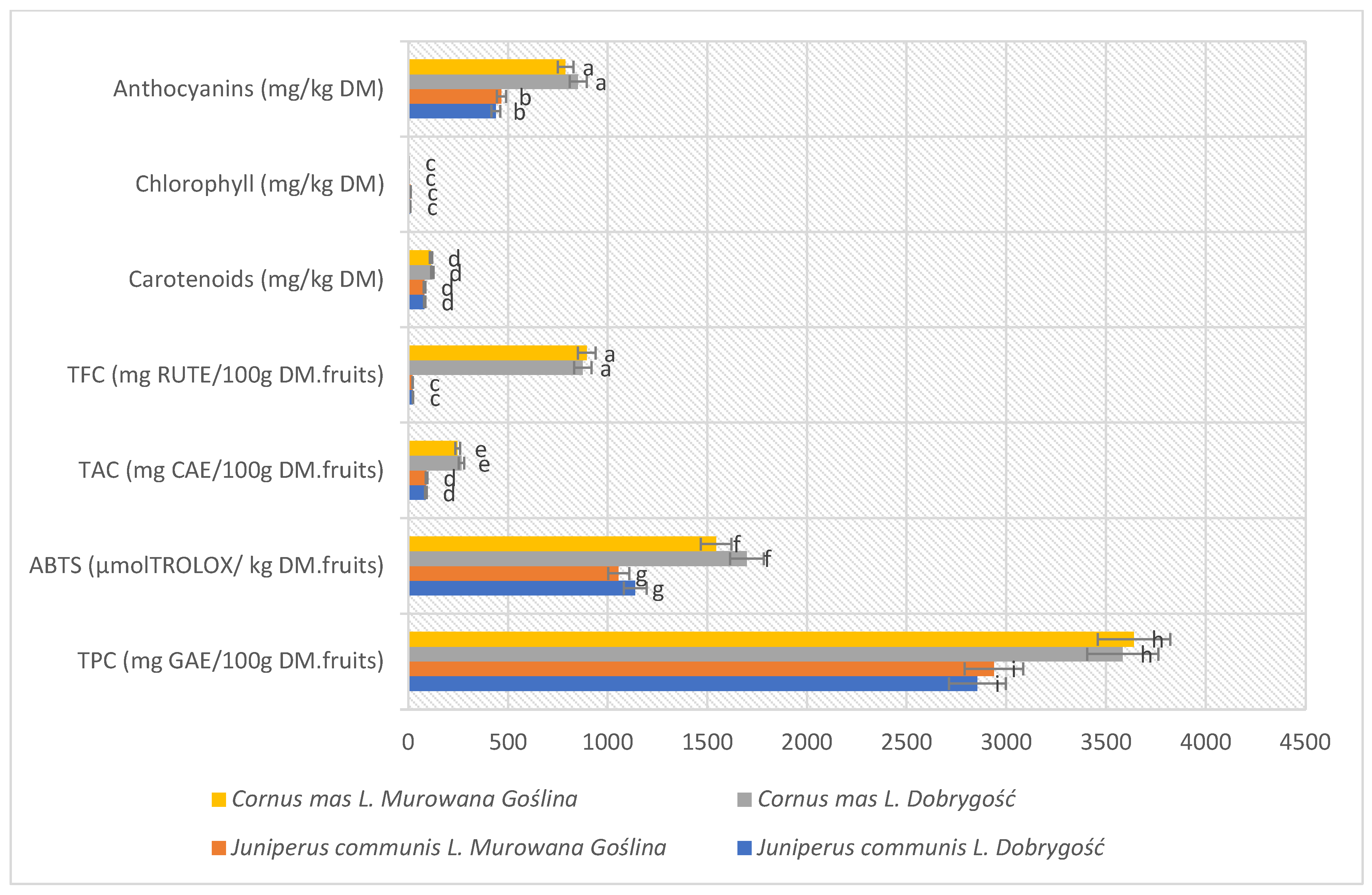
The table presents a comparison of the bioactive compound composition and antioxidant activity of J. communis and C. mas fruits collected from two locations (Dobrygość and LZD Murowana Goślina). The total polyphenol content (TPC), antioxidant activity (ABTS), total anthocyanin content, total flavonoid content (TFC), carotenoids, chlorophyll, and overall anthocyanins were evaluated (Figure 1).
C. mas fruits were characterized by a markedly higher polyphenol content (3584–3641 mg GAE/100 g dry matter; DM) compared to juniper fruits (2855–2938 mg GAE/100 g DM). This trend was reflected in the results of antioxidant activity measured by the ABTS method, which was significantly higher in C. mas samples (1544–1698 µmol Trolox/kg DM) than in juniper samples (1055–1138 µmol Trolox/kg DM). These findings indicate a strong correlation between polyphenol content and free radical scavenging capacity, particularly in the case of C. mas fruits.
These results are consistent with literature reports indicating that C. mas fruits are among the plant materials with exceptionally high antioxidant potential, primarily due to their high polyphenol content, including anthocyanins and flavonoids. As reported by Klymenko et al. (2021) [14], the strong correlation between TPC and ABTS activity confirms the key role of phenolic compounds in neutralizing free radicals, which is also evident in the present study. Juniper fruits, despite lower overall polyphenol content, contain specific bioactive compounds, such as terpenes and lignans, which may also contribute to antioxidant activity, albeit to a lesser extent than polyphenols. Differences between collection sites may result from varying environmental conditions, such as sunlight exposure, soil type, or environmental stress, which, as reported in previous studies, significantly influence the biosynthesis of phenolic compounds in fruits.

3.2. Anthocyanins and Flavonoids (TFC)

Clear interspecies differences were observed in the content of anthocyanins and flavonoids. Fruits of C. mas contained approximately threefold higher levels of anthocyanins (247–266 mg/kg DW) compared with fruits of J. communis (87.5–90.77 mg/kg DW). Even more pronounced differences were noted for total flavonoid content (TFC), which was exceptionally high in C. mas fruits (875–895 mg RUTE/100 g DW) and more than forty times lower in J. communis fruits (20.3–22.47 mg RUTE/100 g DW). These substantial differences indicate that anthocyanins and flavonoids are the primary contributors to the high antioxidant activity of C. mas fruits. The obtained results are consistent with previous reports identifying Cornelian cherry as one of the richest natural sources of anthocyanins and flavonoids among temperate-zone fruits [14,15]. Anthocyanins, responsible for the intense red coloration of C. mas fruits, exhibit strong antioxidant properties, which explains the high radical-scavenging activity observed in assays based on free radicals [15]. The highest total anthocyanin content was detected in C. mas samples (788.44–851.2 mg/kg DW), which correlated with their intense pigmentation and elevated antioxidant potential. In contrast, J. communis fruits contained significantly lower amounts of anthocyanins (438.5–466.25 mg/kg DW), likely due to a different pigment composition. In juniper berries, chlorophylls and other pigments characteristic of partially green cone berries may play a more prominent role [16]. The relatively low levels of anthocyanins and flavonoids in J. communis fruits suggest that their antioxidant potential is mainly associated with other classes of bioactive compounds, such as essential oils, monoterpenes, and phenolic compounds with different chemical structures [6]. This highlights pronounced metabolic differences between the studied species and indicates that the qualitative composition and relative proportions of phenolic compounds, rather than their total content alone, are crucial determinants of the biological and health-promoting properties of the fruits [16,17].

3.3. Carotenoids and Chlorophyll

The carotenoid content was higher in C. mas fruits (113–120 mg/kg DM) compared to juniper fruits (80.11–81.32 mg/kg DM), which further enhances the antioxidant potential of these fruits. In contrast, chlorophyll was present in significant amounts in juniper fruits (9.57–10.4 mg/kg DM), whereas its content in C. mas fruits was low (0.88–0.91 mg/kg DM). These differences are attributed to varying degrees of fruit maturity and morphology, as well as the presence of green tissues in juniper fruits.
The results are consistent with previous observations indicating that C. mas fruits are an important source of carotenoids, which act as potent lipophilic antioxidants and compounds that help protect cells against oxidative stress [18,19,20]. Carotenoids, together with polyphenols, may synergistically enhance the overall antioxidant activity of C. mas fruits, particularly in biological systems containing a lipid phase. The relatively high chlorophyll content in juniper fruits is a characteristic feature of this plant material. It results from their specific structure and the presence of immature green photosynthetic tissues, as confirmed by studies on the physiology and development of juniper cones [21].

3.4. Phenolic Acids

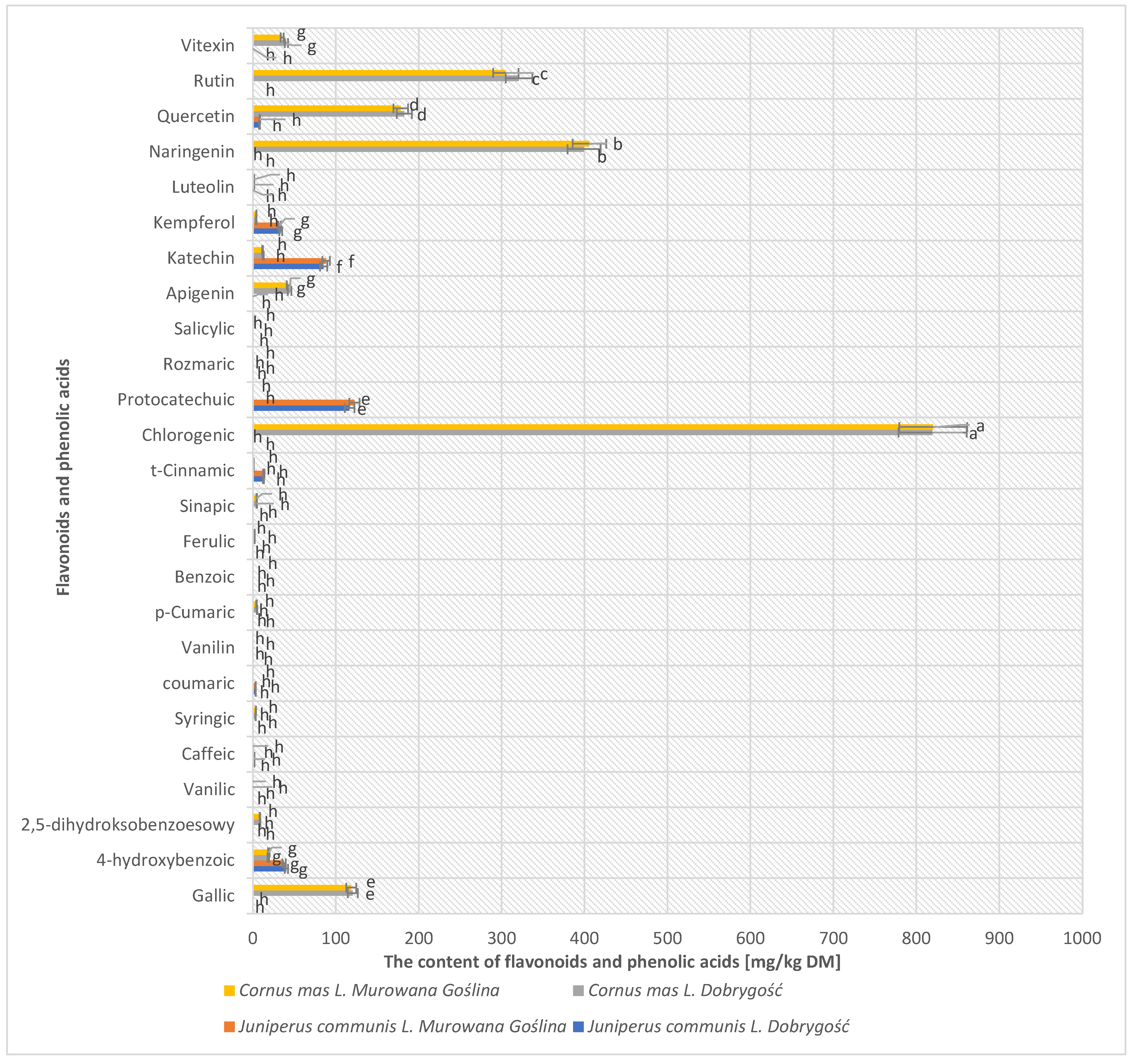
Phenolic acids were the dominant group of phenolic compounds in C. mas fruits. Among them, chlorogenic acid was the predominant compound, reaching very high concentrations of 819.55 mg/kg DM and 820.33 mg/kg DM in the samples from Dobrygość and LZD Murowana Goślina, respectively. In juniper (J. communis) fruits, chlorogenic acid was present at much lower levels (12.55–13.08 mg/kg DM) (Figure 2).
Significant amounts of gallic acid were also detected in C. mas fruits (118.5–120.3 mg/kg DM), while it was not detected in J. communis samples. Additionally, C. mas contained p-coumaric, ferulic, synapinic, and trans-cinnamic acids, indicating a more diverse phenolic acid profile compared to juniper.
In J. communis fruits, the dominant phenolic acids were 4-hydroxy-2,5-dihydroxybenzoic acid (37.55–40.22 mg/kg DM) and protocatechuic acid (116.5–122.44 mg/kg DM), which were absent in C. mas. The caffeic acid content in J. communis was low (1.6–1.73 mg/kg DM), whereas in C. mas it was present only at trace levels.
These results indicate that C. mas fruits are characterized by a very high content of phenolic acids, particularly chlorogenic acid, which was the dominant component of this group. Concentrations exceeding 800 mg/kg are consistent with previously published data [22,23]. The substantial gallic acid content aligns with earlier reports on the phenolic composition of Cornus species [24]. Gallic acid exhibits potent antioxidant and antimicrobial properties, further enhancing the health-promoting value of C. mas fruits. Its absence in juniper may reflect significant metabolic differences between the studied species and divergent biosynthetic pathways for phenolic compounds.
The presence of p-coumaric, ferulic, synapinic, and trans-cinnamic acids in C. mas indicates a more complex and diverse phenolic profile compared to juniper [25]. In juniper, protocatechuic acid and 4-hydroxy-2,5-dihydroxybenzoic acid were the dominant compounds, consistent with the literature [26]. While protocatechuic acid is known for its antioxidant and anti-inflammatory properties, its total content in juniper was considerably lower than the cumulative phenolic acid content in Cornelian cherry. The low caffeic acid content in juniper and its trace levels in C. mas agree with previous observations, indicating that this compound is not a major phenolic acid in these species [26].

3.5. Flavonoids

The flavonoid profile showed apparent interspecies differences. C. mas fruits were characterized by a very high quercetin content (399.25–405.74 mg/kg DM), along with substantial amounts of rutin (178.22–182.41 mg/kg DM) and vitexin (35.27–40.25 mg/kg DM). Additionally, apigenin, luteolin, catechin, and kaempferol were detected in moderate concentrations.
In contrast, juniper fruits exhibited a limited flavonoid profile. The dominant compounds were catechin (85.22–88.27 mg/kg DM) and kaempferol (32.21–33.58 mg/kg DM), with no detectable quercetin, rutin, or vitexin. Naringenin and luteolin were also absent in juniper samples.
These results clearly indicate significant interspecies differences in the profile and content of flavonoids between C. mas and juniper fruits. C. mas demonstrated a much richer and more diverse flavonoid composition, with quercetin as the dominant compound. The very high quercetin concentrations exceeding 400 mg/kg confirm the strong antioxidant potential of this raw material [6]. The notable presence of rutin in C. mas aligns with literature reports for Cornus species, which highlight the accumulation of flavonol glycosides in fruits and other plant organs [4,23]. Rutin supports vascular health and helps neutralize reactive oxygen species, thereby further enhancing the health-promoting value of C. mas fruits. The presence of vitexin, a C-glycosyl flavone, may indicate the activity of species-specific flavonoid biosynthetic pathways.
In contrast, juniper fruits had a much simpler flavonoid profile, dominated by catechin and kaempferol. This is consistent with literature describing juniper, primarily used as a spice and herbal material, as containing mainly flavanols and selected flavonols, and not being a significant source of quercetin or rutin [27]. The absence of naringenin and luteolin in juniper confirms the limited biosynthesis of flavones in this species.
In conclusion, C. mas fruits stand out with a more prosperous and more diverse flavonoid profile compared to juniper, highlighting their greater potential as a source of bioactive phenolic compounds. These results are relevant to the use of C. mas in the production of functional foods and health-promoting preparations.
The obtained results clearly indicate that C. mas fruits are a rich source of phenolic acids and flavonoids with high antioxidant potential, particularly chlorogenic acid and quercetin. In contrast, J. communis fruits exhibit a different phenolic profile, dominated by protocatechuic acid and catechin, highlighting the species-specific character of phenolic metabolism in both raw materials.
Analysis of organic acids revealed distinct quantitative and qualitative differences between the fruits of J. communis and C. mas. The total content of the analyzed organic acids was higher in juniper fruits (173.23–187.75 mg/kg DM) compared to C. mas (116.81–129.02 mg/kg DM), indicating a more acidic chemical nature of the juniper raw material.

3.6. Dominant Organic Acids

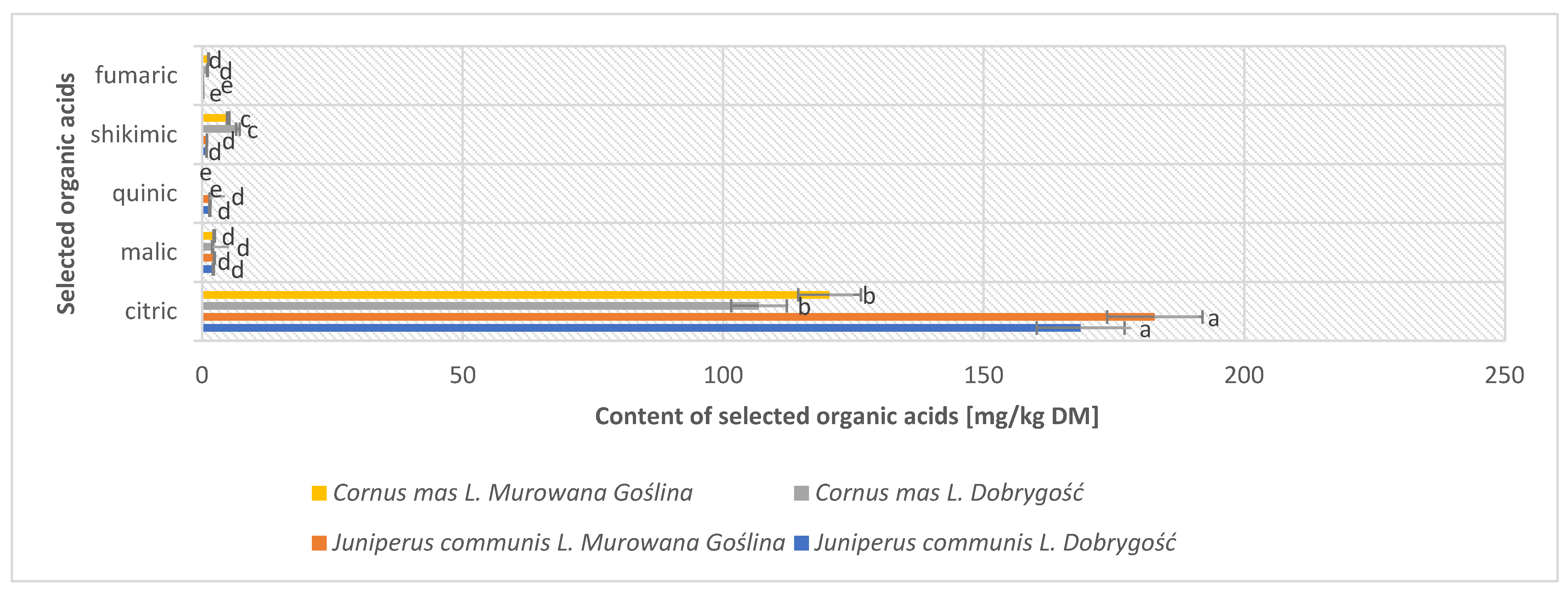
In all analyzed samples, citric acid was the dominant component of the organic acid profile. Its content was markedly higher in juniper fruits (168.55–182.77 mg/kg DM) than in C. mas (106.88–120.44 mg/kg DM), accounting for the vast majority of the total quantified organic acids in both species. The second most abundant acid was malic acid, with concentrations similar across all samples (2.03–2.35 mg/kg DM), suggesting a minimal influence of species and collection site on its accumulation (Figure 3). Given the overwhelming predominance of citric acid, the analytical sensitivity for detecting minor acids may be limited, which should be considered as a potential limitation of the study.
Significant qualitative differences were observed in the presence of quinic and shikimic acids. Quinic acid was detected exclusively in juniper fruits (1.47–1.55 mg/kg DM) and was absent in C. mas samples, indicating species-specific metabolic pathways. In contrast, shikimic acid levels were substantially higher in C. mas fruits (5.01–6.88 mg/kg DM) compared to juniper (0.85–0.92 mg/kg DM), suggesting a more active shikimate pathway metabolism in Cornelian cherry.
Fumaric acid content was low in all samples but slightly higher in C. mas (1.02–1.24 mg/kg DM) than in juniper (0.16–0.22 mg/kg DM).
These results demonstrate that C. mas and J. communis fruits exhibit distinct organic acid profiles. Juniper fruits showed a higher total content of organic acids compared to C. mas (173.23–187.75 mg/kg DM vs. 116.81–129.02 mg/kg DM), resulting in a more acidic chemical profile. In both species, citric acid was the predominant organic acid and contributed most substantially to the total quantified acid content.
Significant qualitative differences were observed for quinic and shikimic acids. The presence of quinic acid exclusively in juniper suggests species-specific metabolic pathway activity. In contrast, the higher levels of shikimic acid in C. mas indicate a more active shikimate pathway in this species [28]. Shikimic acid serves as a precursor in the biosynthesis of aromatic amino acids and numerous secondary metabolites, including phenolics and flavonoids, which may partly explain the higher phenolic content in C. mas [28]. The low fumaric acid content in all samples, though slightly higher in Cornelian cherry, does not significantly affect the overall acidity profile but may reflect differences in organic acid metabolism between species.
In summary, C. mas fruits exhibit greater health-promoting potential due to their high content of phenolic compounds and flavonoids. In contrast, juniper fruits are richer in organic acids, particularly citric acid, which determines their distinctly acidic chemical character.
The higher total content of organic acids in J. communis fruits may have technological significance, influencing their intense, acidic taste as well as their potential as a preservative in food products. Conversely, the elevated levels of shikimic acid in C. mas fruits may be necessary from the perspective of phenolic compound biosynthesis, which correlates with the richer polyphenol profile observed in this raw material.

3.7. Multivariate Statistical Analysis

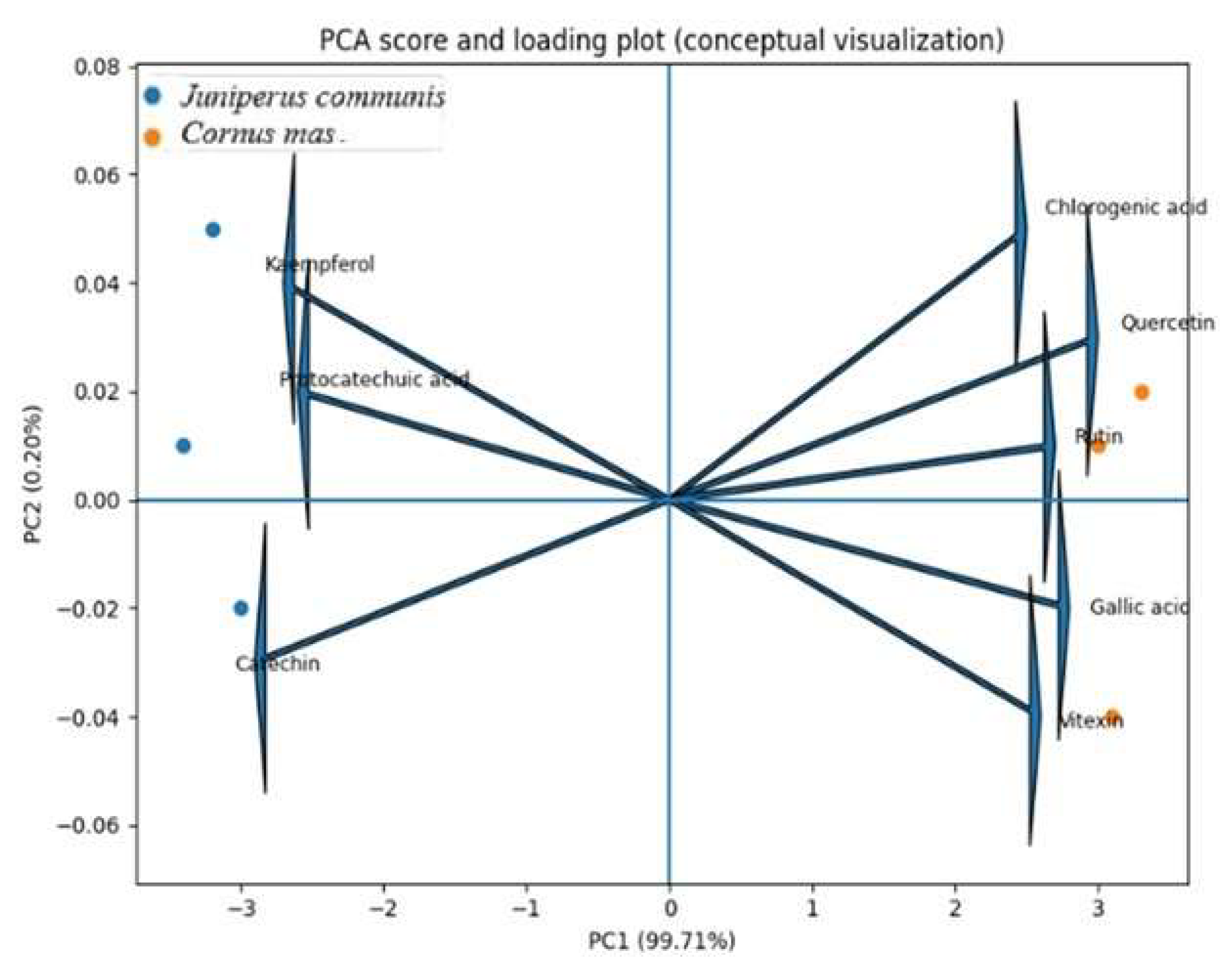
Principal component analysis (PCA) was performed to evaluate differences in phenolic profiles between J. communis and C. mas. The first two principal components explained 99.91% of the total variance (PC1: 99.71%, PC2: 0.20%) (Figure 4). Such an extremely high proportion of explained variance suggests low dataset dimensionality and high collinearity among the measured phenolic compounds, indicating that most of the variability in the phenolic profiles is captured by a single dominant component.
PCA score plots revealed a clear separation of samples according to plant species along PC1, reflecting pronounced species-specific phenolic fingerprints. C. mas samples were associated with higher contents of chlorogenic acid, gallic acid, quercetin, rutin, and vitexin, whereas J. communis samples exhibited elevated levels of protocatechuic acid, catechin, and kaempferol. Differences related to sampling location were minor and did not affect the overall clustering pattern, suggesting that species identity was the primary factor influencing phenolic composition.
To assess the relationships between total polyphenol content (TPC), flavonoid content (TFC), and antioxidant activity (ABTS), Pearson correlation coefficients were calculated (p < 0.05). Results indicated that both total polyphenols and flavonoids play a central role in determining the antioxidant capacity of the studied fruits, with flavonoids being a major contributing fraction of the polyphenolic content (Table 2).
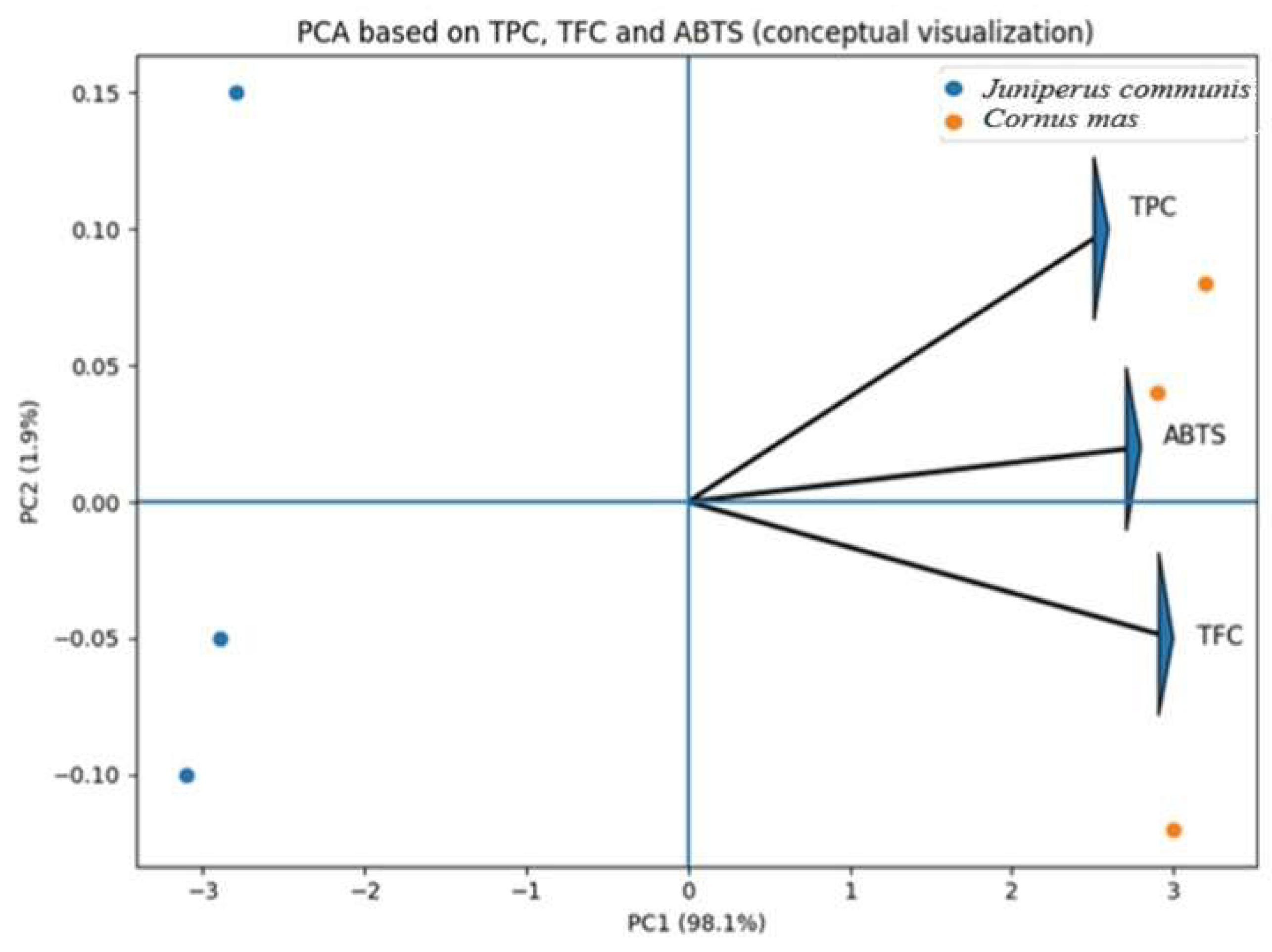
PCA based on TPC, TFC, and ABTS parameters revealed a clear species-specific separation. The first principal component (PC1) accounted for 98.1% of the total variance, whereas the second (PC2) explained only 1.9%, indicating minimal biological relevance (Figure 5). C. mas scores were positioned on the positive side of PC1, while J. communis occupied the negative side. Vector orientations highlighted the predominant influence of flavonoids on antioxidant activity.
PCA based on TPC, TFC, and ABTS parameters clearly distinguished the two species (Figure 6). PC1, explaining 98.1% of the total variance, was strongly driven by flavonoid content and antioxidant activity, with C. mas positioned positively and J. communis negatively along this axis. PC2 accounted for only 1.9% of the variance, indicating negligible biological relevance and minimal influence of the collection site. Together with bar chart analysis, these results highlight flavonoid content as the primary determinant of antioxidant activity, with species identity prevailing over environmental factors.
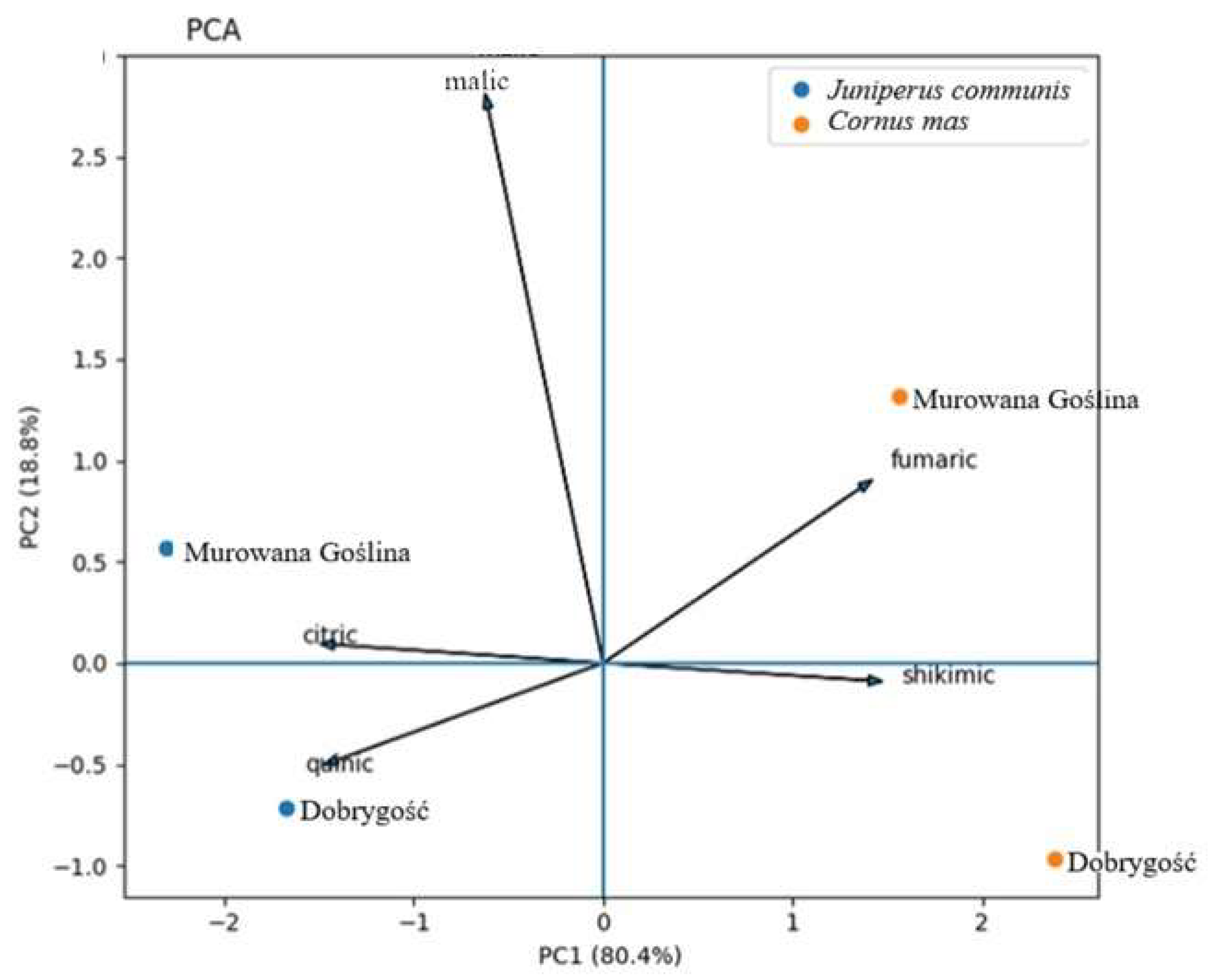
Similarly, PCA of organic acid profiles revealed a distinct separation along PC1 (80.4%), with J. communis associated with high citric and quinic acid levels, and C. mas enriched in shikimic and fumaric acids. PC2 (18.8%) captured intraspecific variability, particularly in malic acid, reflecting a moderate effect of collection location (Figure 6).
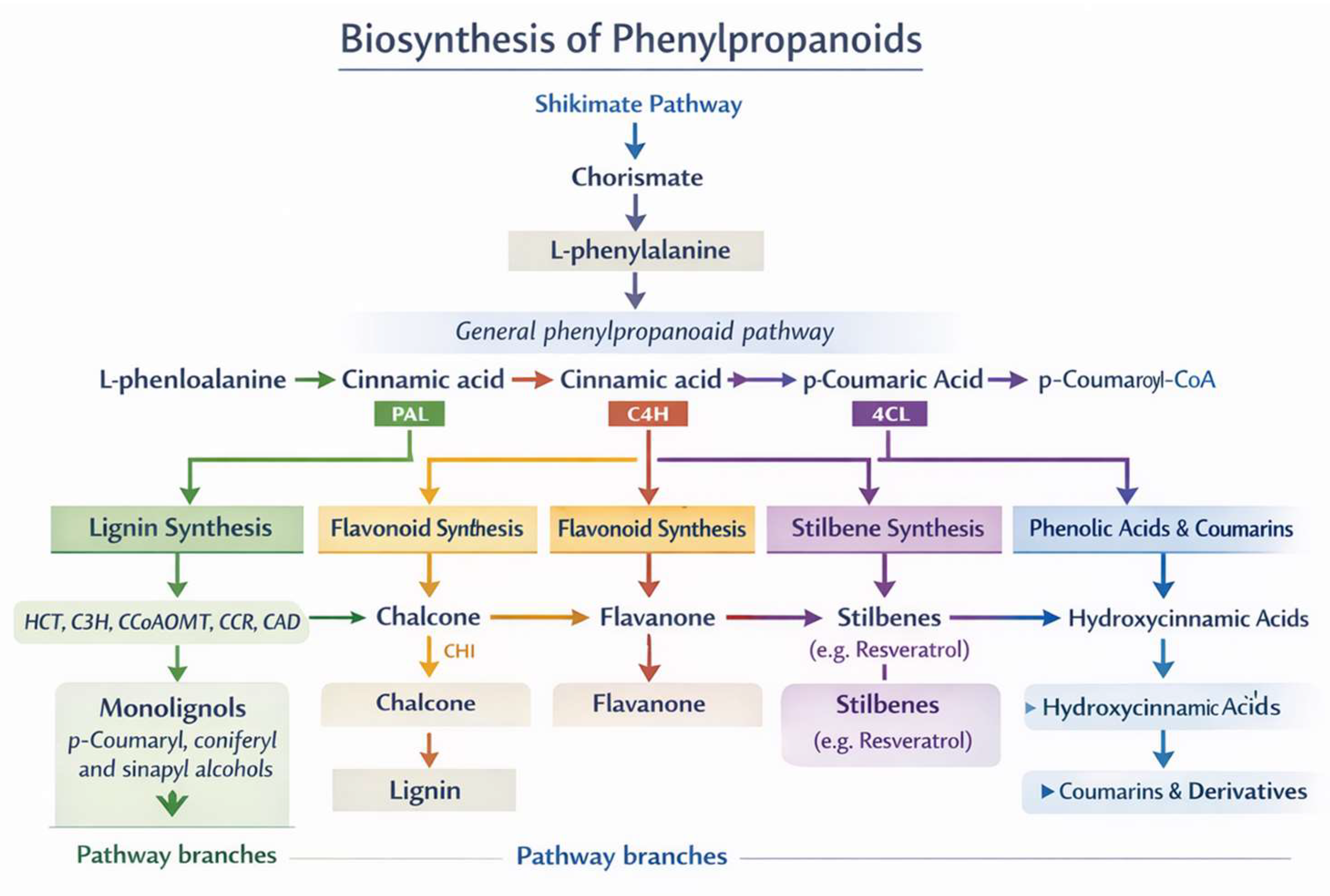
Shikimic acid is a central intermediate in the biosynthesis of aromatic amino acids (phenylalanine, tyrosine, and tryptophan), which serve as precursors of phenolic compounds, including flavonoids, phenolic acids, and anthocyanins [3]. C. mas fruits contained high levels of shikimic acid, which correlated with PC1, alongside relatively high levels of flavonoids (TFC) and anthocyanins. These observations point to a biochemical pattern consistent with shikimate- and phenylpropanoid-related metabolites, but do not provide direct evidence of increased pathway activity or enzymatic regulation (Figure 7).
In contrast, J. communis fruits were characterized by higher levels of citric and quinic acids, indicating a greater engagement of primary metabolism (the citric acid cycle) and an alternative utilization of carbohydrates relative to secondary metabolite biosynthesis. Quinic acid, as a precursor of chlorogenic acid, may also reflect limited but specific shikimate pathway activity directed toward the synthesis of selected phenolic acids rather than intensive flavonoid production. Such metabolic differentiation may reflect J. communis’s adaptation to stress conditions, in which protective and structural compounds play a more prominent role than pigments or strong antioxidants.
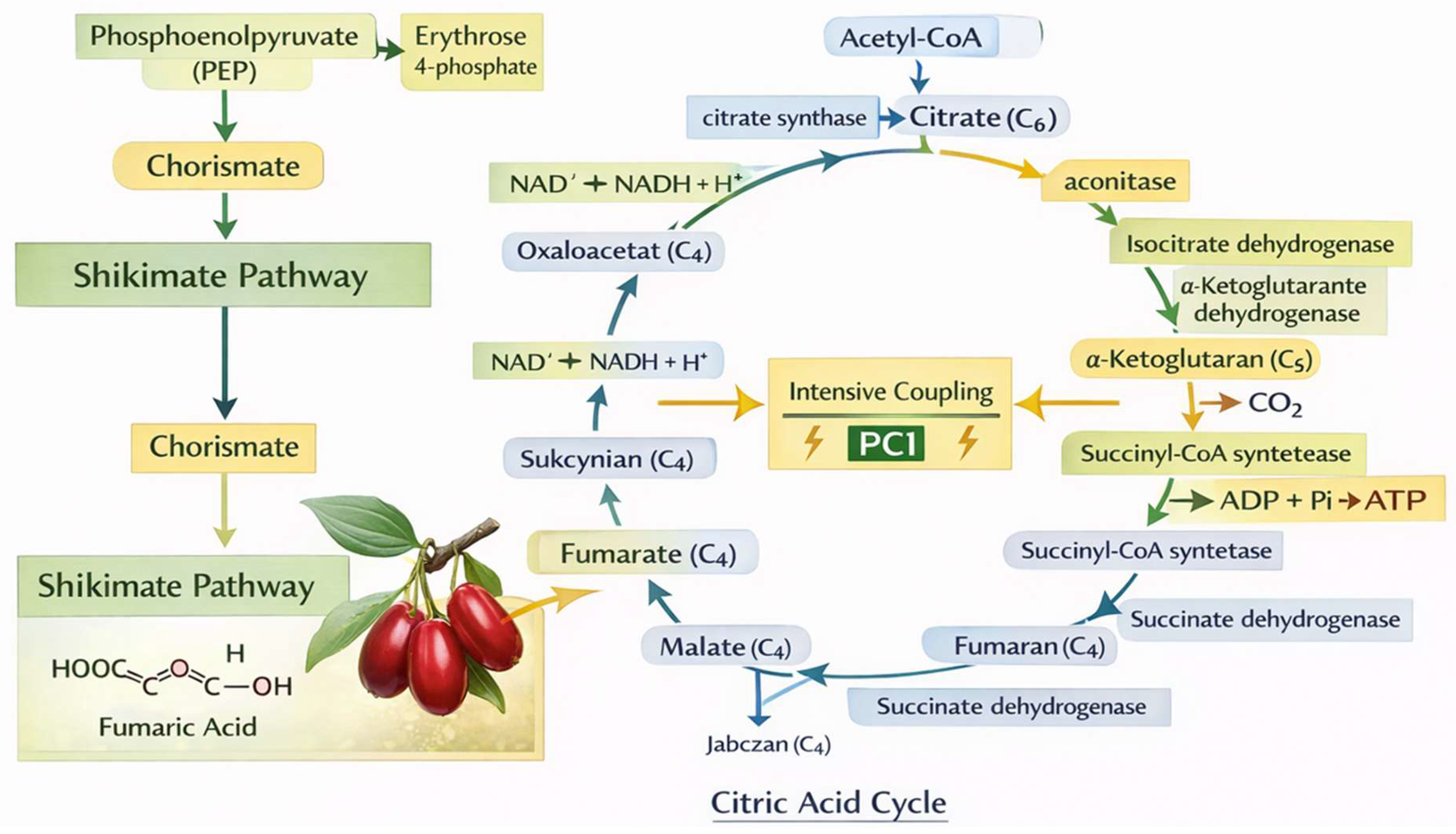
The elevated fumaric acid content in C. mas fruits, strongly associated with positive PC1 values, may indicate an intensive coupling of the shikimate pathway with the citric acid cycle (Figure 8). Fumaric acid is a key intermediate in cellular respiration, and its accumulation may reflect increased energy demands associated with the biosynthesis of secondary metabolites.
The contribution of malic acid to the second principal component (PC2) suggests that its content is more influenced by environmental and physiological factors, such as fruit ripeness or habitat conditions, rather than species identity. Malic acid functions as a metabolic buffer and a regulator of acid–base balance in plant cells.
The shikimate pathway is involved in the biosynthesis of aromatic amino acids and is biochemically linked to the tricarboxylic acid (TCA) cycle through shared metabolites and energy balance. Phosphoenolpyruvate, a precursor of the shikimate pathway, can be derived from TCA intermediates such as oxaloacetate, providing a potential route to coordinate aromatic amino acid production with the cell’s metabolic state. In addition, α-ketoglutarate can supply amino groups via transamination reactions, contributing to the formation of phenylalanine and tyrosine. These connections reflect established biochemical interactions between central carbon metabolism and aromatic amino acid-derived metabolites, without implying direct experimental confirmation of pathway regulation in this study.

4. Conclusions

The study demonstrated significant species-dependent differences in the phytochemical composition and antioxidant potential of C. mas and J. communis fruits. C. mas fruits were characterized by a substantially higher content of phenolic compounds, flavonoids, and anthocyanins, which translated into stronger antioxidant activity as confirmed by the ABTS assay. The dominance of chlorogenic acid and quercetin, along with high levels of rutin and vitexin, indicates intensive activity of the shikimate and phenylpropanoid pathways in the secondary metabolism of this species.
In contrast, J. communis fruits contained lower levels of polyphenols and flavonoids but higher concentrations of organic acids, particularly citric acid, resulting in a more acidic chemical profile with potential technological relevance. Their phenolic profile, dominated by protocatechuic acid, catechin, and kaempferol, indicates a distinctive pattern of secondary metabolites rather than a proven shift in metabolic pathways. Statistical analyses confirmed that flavonoid content correlates strongly with antioxidant activity and that species affiliation appears to have a greater influence on chemical composition than the collection site. Overall, the results highlight the high nutritional and functional value of C. mas fruits and indicate the potential of Juniperus communis as a raw material with a distinct phytochemical profile.

Author Contributions

Conceptualization, A.P.-B.; Methodology, A.P.-B., K.S.-S.; Software, A.P.-B.; Validation, A.P.-B.; Formal Analysis, A.P.-B.; Investigation, A.P.-B.; Resources, A.P.-B.; Data Curation, A.P.-B.; Writing—Original Draft Preparation, A.P.-B.; Writing—Review and Editing, K.S.-S.; Visualization, A.P.-B.; Supervision, A.P.-B.; Project Administration, A.P.-B. All authors have read and agreed to the published version of the manuscript.

Funding

This work was supported by Poznań University of Life Sciences (Poland) as the research program “First grant”, no. 4/2022.

Data Availability Statement

The data are not publicly available due to privacy or confidentiality restrictions; however, they may be made available upon reasonable request from the corresponding author.

Conflicts of Interest

The authors declare no conflicts of interest.

References

  1. Pereira, A.G.; Echave, J.; Jorge, A.O.S.; Nogueira-Marques, R.; Yuksek, E.N.; Barciela, P.; Perez-Vazquez, A.; Chamorro, F.; Oliveira, M.B.P.P.; Carpena, M.; et al. Therapeutic and Preventive Potential of Plant-Derived Antioxidant Nutraceuticals. Foods 2025, 14, 1749. [Google Scholar] [CrossRef]
  2. El-Saadony, M.T.; Saad, A.M.; Mohammed, D.M.; Alkafaas, S.S.; El-Mageed, T.A.A.; Fahmy, M.A.; Ahmed, A.E.; Algopishi, U.B.; Abu-Elsaoud, A.M.; Mosa, W.F.A.; et al. Plant bioactive compounds: Extraction, biological activities, immunological, nutritional aspects, food application, and human health benefits—A comprehensive review. Front. Nutr. 2025, 12, 1659743. [Google Scholar] [CrossRef]
  3. Przybylska-Balcerek, A.; Stuper-Szablewska, K. Selected Metabolites of Biofunctional Importance from Edible Fruits of Forest Shrubs. Molecules 2024, 30, 73. [Google Scholar] [CrossRef]
  4. Moldovan, B.; David, L. Bioactive Flavonoids from Cornus mas L. Fruits. Mini Rev. Org. Chem. 2017, 14, 489–495. [Google Scholar] [CrossRef]
  5. De Biaggi, M.; Donno, D.; Mellano, M.G.; Riondato, I.; Rakotoniaina, E.N.; Beccaro, G.L. Cornus mas (L.) Fruit as a Potential Source of Natural Health-Promoting Compounds: Physico-Chemical Characterisation of Bioactive Components. Plant Foods Hum. Nutr. 2018, 73, 89–94. [Google Scholar] [CrossRef] [PubMed]
  6. Gonçalves, A.; Flores-Félix, J.; Coutinho, P.; Alves, G.; Silva, L. Zimbro (Juniperus communis L.) as a Promising Source of Bioactive Compounds and Biomedical Activities: A Review on Recent Trends. Int. J. Mol. Sci. 2022, 23, 3197. [Google Scholar] [CrossRef] [PubMed]
  7. Przybylska-Balcerek, A.; Szablewski, T.; Szwajkowska-Michałek, L.; Świerk, D.; Cegielska-Radziejewska, R.; Krejpcio, Z.; Suchowilska, E.; Tomczyk, Ł.; Stuper-Szablewska, K. Sambucus Nigra Extracts–Natural Antioxidants and Antimicrobial Compounds. Molecules 2021, 26, 2910. [Google Scholar] [CrossRef]
  8. Peng, W.; Zeng, Q.; Li, D.; Ding, T.; Tan, J.; Ding, X. Multiple on-line HPLC coupled with biochemical detection methods to evaluate bioactive compounds in Danshen injection. Biomed. Chromatogr. 2016, 30, 1854–1860. [Google Scholar] [CrossRef]
  9. Stuper-Szablewska, K.; Szablewski, T.; Przybylska-Balcerek, A.; Szwajkowska-Michałek, L.; Krzyżaniak, M.; Świerk, D.; Cegielska-Radziejewska, R.; Krejpcio, Z. Antimicrobial Activities Evaluation and Phytochemical Screening of Some Selected Plant Materials Used in Traditional Medicine. Molecules 2022, 28, 244. [Google Scholar] [CrossRef]
  10. Johan, F.; Jafri, M.Z.; Lim, H.S.; Maznah, W.O.W. Laboratory measurement: Chlorophyll-a concentration measurement with acetone method using spectrophotometer. In Proceedings of the 2014 IEEE International Conference on Industrial Engineering and Engineering Management, Selangor, Malaysia, 9–12 December 2014; IEEE: New York, NY, USA, 2014; pp. 744–748. [Google Scholar] [CrossRef]
  11. Nowak, R.; Szczepanek, M.; Błaszczyk, K.; Kobus-Cisowska, J.; Przybylska-Balcerek, A.; Stuper-Szablewska, K.; Pobereżny, J.; Hassanpouraghdam, M.B.; Rasouli, F. Impact of the Farming System and Amino-Acid Biostimulants on the Content of Carotenoids, Fatty Acids, and Polyphenols in Alternative and Common Barley Genotypes. Agronomy 2023, 13, 1852. [Google Scholar] [CrossRef]
  12. Giusti, M.M.; Wrolstad, R.E. Characterization and Measurement of Anthocyanins by UV-Visible Spectroscopy. Curr. Protoc. Food Anal. Chem. 2001, 1, F1.2.1–F1.2.13. [Google Scholar] [CrossRef]
  13. Klymenko, S.; Kucharska, A.Z.; Sokół-Łętowska, A.; Piórecki, N.; Przybylska, D.; Grygorieva, O. Iridoids, Flavonoids, and Antioxidant Capacity of Cornus mas, C. officinalis, and C. mas × C. officinalis Fruits. Biomolecules 2021, 11, 776. [Google Scholar] [CrossRef]
  14. Medvedec, B.; Šangut, I.J.; Macanović, A.; Karalija, E.; Šamec, D. Biflavonoid Profiling of Juniperus Species: The Influence of Plant Part and Growing Location. Appl. Sci. 2025, 15, 7082. [Google Scholar] [CrossRef]
  15. Katarzyna, N.-C.; Dariusz, L.; Natalia, G.-W. Secondary Metabolites Synthesized by Selected Tree and Shrub Species: Use in Medicine, vol. 1. Lublin, 2022. Available online: https://bc.wydawnictwo-tygiel.pl/public/assets/853/Wykorzystanie%20ro%C5%9Blin%20w%20kosmetologii,%20medycynie%20i%20farmacji.%20Tom%201.pdf (accessed on 1 February 2026).
  16. Nawrot, K.; Polak-Szczybyło, E.; Stępień, A.E. Characteristics of the health-promoting properties of Cornus mas. Eur. J. Clin. Exp. Med. 2026, 20, 217–223. [Google Scholar] [CrossRef]
  17. Yaman, M.; Tunç, Y.; Yılmaz, K.U.; Yıldız, E.; Güneş, A.; Keçe, Y.M.; Yılmaz, E.; Khadivi, A.; Mishra, D.S.; İnAnç, M. Biochemical composition, nutrient content, and antioxidant capacity of leaves in Cornelian cherry (Cornus mas L.). Int. J. Food Prop. 2026, 29, 2602283. [Google Scholar] [CrossRef]
  18. Tobolková, B.; Panghyová, L.; Baxa, S.; Vargová, V.; Jančová, M.; Polovka, M.; Needles, J.C.L.; Origin, G. Juniperus communis L. Needles: Effects of Processing, Geographical Origin, Soil Characteristics and Age on Antioxidant Status and Colour. J. Soil. Sci. Plant Nutr. 2024, 24, 7373–7384. [Google Scholar] [CrossRef]
  19. Hrytsyna, M.; Salamon, I.; Peleno, R.; Vargova, V. Identification and Analysis of the Content of Biologically Active Substances of Juniper Cone Berries and Their Antioxidant Activity. Horticulturae 2024, 10, 1237. [Google Scholar] [CrossRef]
  20. Seeram, N.P.; Schutzki, R.; Chandra, A.; Nair, M.G. Characterization, Quantification, and Bioactivities of Anthocyanins in Cornus Species. J. Agric. Food Chem. 2002, 50, 2519–2523. [Google Scholar] [CrossRef] [PubMed]
  21. Szczepaniak, O.M.; Kobus-Cisowska, J.; Kusek, W.; Przeor, M. Functional properties of Cornelian cherry (Cornus mas L.): A comprehensive review. Eur. Food Res. Technol. 2019, 245, 2071–2087. [Google Scholar] [CrossRef]
  22. Necip, A. Cornus mas L. Seeds as a Potent Natural Antioxidant Source: Insights from Phenolic Profiling and Antioxidant Capacity Assays. J. Oleo Sci. 2025, 74, ess25145. [Google Scholar] [CrossRef]
  23. Gülçin, İ.; Beydemir, Ş.; Şat, G.; Küfrevioğlu, Ö.İ. Evaluation of antioxidant activity of Cornelian cherry (Cornus mas L.). Acta Aliment. 2005, 34, 193–202. [Google Scholar] [CrossRef]
  24. Czerwińska, M.E.; Melzig, M.F. Cornus mas and Cornus Officinalis—Analogies and Differences of Two Medicinal Plants Traditionally Used. Front. Pharmacol. 2018, 9, 894. [Google Scholar] [CrossRef]
  25. Mërtiri, I.; Păcularu-Burada, B.; Stănciuc, N. Phytochemical Characterization and Antibacterial Activity of Albanian Juniperus communis and Juniperus oxycedrus Berries and Needle Leaves Extracts. Antioxidants 2024, 13, 345. [Google Scholar] [CrossRef]
  26. Miceli, N.; Trovato, A.; Dugo, P.; Cacciola, F.; Donato, P.; Marino, A.; Bellinghieri, V.; La Barbera, T.M.; Güvenç, A.; Taviano, M.F. Comparative Analysis of Flavonoid Profile, Antioxidant and Antimicrobial Activity of the Berries of Juniperus communis L. var. communis and Juniperus communis L. var. saxatilis Pall. from Turkey. J. Agric. Food Chem. 2009, 57, 6570–6577. [Google Scholar] [CrossRef] [PubMed]
  27. Falasca, A.; Melck, D.; Paris, D.; Saviano, G.; Motta, A.; Iorizzi, M. Seasonal changes in the metabolic fingerprint of Juniperus communis L. berry extracts by 1H NMR-based metabolomics. Metabolomics 2014, 10, 165–174. [Google Scholar] [CrossRef]
  28. Drkenda, P.; Spahić, A.; Begić-Akagić, A.; Gaši, F.; Vranac, A.; Hudina, M.; Blanke, M. Pomological Characteristics of Some Autochthonous Genotypes of Cornelian Cherry (Cornus mas L.) in Bosnia and Herzegovina. Erwerbs-Obstbau 2014, 56, 59–66. [Google Scholar] [CrossRef]
Figure 1. Content of selected phenolic compounds in the fruits of C. mas and J. communis, TPC (Total Phenolic Content), TFC (Total Flavonoid Content), TAC (Total Antioxidant Content). Different letters indicate statistically significant differences between samples (ANOVA, Tukey’s test, p < 0.05). a–i: Bars marked with the same letter do not differ significantly (p > 0.05). Bars marked with different letters differ significantly (p < 0.05).
Forests 17 00270 g001
Figure 2. The content of flavonoids and phenolic acids [mg/kg DM] in the fruits of C. mas and J. communis. Different letters indicate statistically significant differences between samples (ANOVA, Tukey’s test, p < 0.05). a–h: Bars marked with the same letter do not differ significantly (p > 0.05). Bars marked with different letters differ significantly (p < 0.05).
Forests 17 00270 g002
Figure 3. Content of selected organic acids [mg/kg DM] in the fruits of C. mas and J. communis. Different letters indicate statistically significant differences between samples (ANOVA, Tukey’s test, p < 0.05). a–e: Bars marked with the same letter do not differ significantly (p > 0.05). Bars marked with different letters differ significantly (p < 0.05).
Forests 17 00270 g003
Figure 4. Principal component analysis (PCA) differentiates phenolic compound profiles between J. communis and C. mas.
Forests 17 00270 g004
Figure 5. PCA based on TPC, TFC, and ABTS parameters differentiating J. communis and C. mas.
Forests 17 00270 g005
Figure 6. Principal component analysis (PCA) differentiates organic acid profiles between J. communis and C. mas.
Forests 17 00270 g006
Figure 7. Scheme of phenylpropanoid compound biosynthesis.
Forests 17 00270 g007
Figure 8. Coupling of the shikimate pathway with the citric acid cycle.
Forests 17 00270 g008
Table 1. Plant material-fruits.
Plant MaterialLocations in PolandNumber SamplesDate of Harvest
J. communisForests 17 00270 i001LZD Dobrygość (51°15′12″ N, 18°09′53″ E)2October 2023
LZD Murowana Goślina (52°57′58″ N, 17°00′89″ E)2October 2023
C. masForests 17 00270 i002LZD Dobrygość (51°15′12″ N, 18°09′53″ E)2September 2023
LZD Murowana Goślina (52°57′58″ N, 17°00′89″ E)2September 2023
Table 2. Strong positive relationships are shown between the examined parameters.
RelationshipDirectionInterpretation
TPC ↔ ABTSVery strong positive (r ≈ 0.90–0.95)Polyphenols are primarily responsible for radical scavenging activity.
TFC ↔ ABTSVery strong positive (r ≈ 0.95)Flavonoids represent a key fraction contributing to antioxidant activity.
TPC ↔ TFCStrong positive (r > 0.85)Flavonoids constitute a significant portion of the total polyphenol pool.
Disclaimer/Publisher’s Note: The statements, opinions and data contained in all publications are solely those of the individual author(s) and contributor(s) and not of MDPI and/or the editor(s). MDPI and/or the editor(s) disclaim responsibility for any injury to people or property resulting from any ideas, methods, instructions or products referred to in the content.