1. Introduction
The growing demand for renewable materials has made wood essential in construction, furniture manufacturing, and paper production [
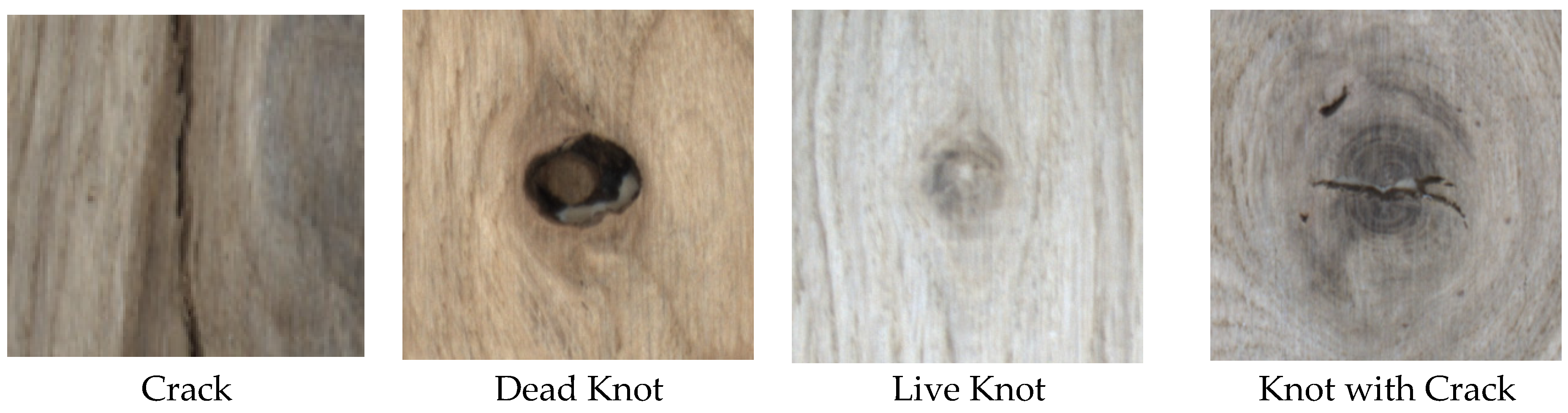
1]. However, wood’s natural biological characteristics and storage conditions often lead to defects such as knots and cracks, reducing the effective utilization rate to 50%–70% [
2,
3,
4]. Currently, many wood processing companies still depend on manual grading, which is labor-intensive and susceptible to subjective errors. This reliance creates significant bottlenecks, failing to meet the high-throughput and precision requirements of modern industrial workflows [
5].
Wood defect detection has progressed from manual inspections to the application of various non-destructive testing (NDT) techniques [
6]. These include ultrasonic testing, near-infrared analysis, laser scanning, acoustic emission monitoring, X-ray computed tomography (CT), and resistance drilling [
7,
8,
9,
10,
11]. More recently, automated optical scanning systems have been developed. Although NDT methods provide a solid foundation for quality assessment, their effectiveness in industrial settings is often limited due to low detection efficiency and the need for specialized expertise. Optical scanning systems, which use texture and color analysis to identify defects, present a more automated alternative. However, existing methods still face challenges, such as insufficient feature robustness and limited adaptability, particularly given the high morphological diversity of wood defects and the strict real-time requirements of high-speed production lines.
To address these challenges, deep learning has supplanted traditional handcrafted feature-based methods in optical scanning defect detection. By learning multi-level representations end-to-end, deep learning models offer superior robustness against complex textures, irregular defects, and environmental noise [
12,
13,
14]. Specifically, CNNs [
15] leverage hierarchical extraction to fuse local and global information, enabling high-precision, real-time detection of intricate surface defects. Currently, most detection algorithms are broadly categorized into two types: one-stage and two-stage. The two-stage approach includes representative methods such as R-CNN [
16], Fast R-CNN [
17], and Faster R-CNN [
18]. However, they consume higher computational resources due to their complex computations and high learning costs. A major turning point came in 2016 when Redmon et al. introduced the You Only Look Once (YOLO) framework, an end-to-end detector that replaced the traditional sliding-window paradigm with a one-stage regression pipeline. By processing the entire image in a single forward pass, YOLO significantly reduced computational overhead while ensuring high detection precision, changing the face of object detection [
19]. Since then, the YOLO family has been continually developed from YOLOv1 to YOLOv12 [
20,
21,
22,
23,
24,
25,
26,
27], with each version optimizing the trade-off between precision, inference efficiency, and model complexity. Building on these advancements, Zhang et al. [
28] developed WLSD-YOLO by integrating a GVC neck into YOLOv8 to reduce the number of parameters. This model achieved a Mean Average Precision of 76.5%, surpassing the original YOLOv8 by 2.9% while increasing throughput by 3.8 FPS. Cui et al. [
29] enhanced the YOLOv3 framework by adding a spatial pyramid pooling (SPP) module to the feature pyramid network (FPN). Evaluated on an augmented set of data, their approach achieved a detection accuracy of 93.23%. Sun et al. [
30] proposed AMAF-YOLO, which is a lightweight detector based on YOLOv12, and incorporates a simplified global context network to lower the complexity. Therefore, axis-aligned bounding boxes (AABB) are a basic selection in many YOLO-based models. But these boxes are unable to adapt to the irregular contours of the wood defects; they often contain unnecessary background regions or overlap with neighbouring targets.
Axis-aligned bounding boxes often enclose excessive background areas, which can be problematic. Additionally, closely spaced or overlapping defects may result in significant overlap or coincidence of these bounding boxes. This overlap hinders the non-maximum suppression algorithm’s ability to effectively distinguish between individual objects, leading to frequent missed or false detections. To address this challenge, one-stage detection algorithms that utilise oriented bounding boxes (OBB), such as the YOLO-OBB series, have been integrated into industrial scanning workflows. Chaurasia et al. [
31] introduced YOLO-CSL, a lightweight rotated detector that employs cyclic smoothing labels (CSL) for robust orientation classification, achieving a mAP of 57.86 on the DOTA v1.5 dataset. In the context of wood defect detection, wood knots and cracks exhibit various orientations, extremely high aspect ratios, and a dense spatial distribution. To address the research gap in modelling orientations for wood defects, this study introduces OBB into surface defect detection. This approach provides a unified representation of the defect’s principal-axis orientation and spatial structure.
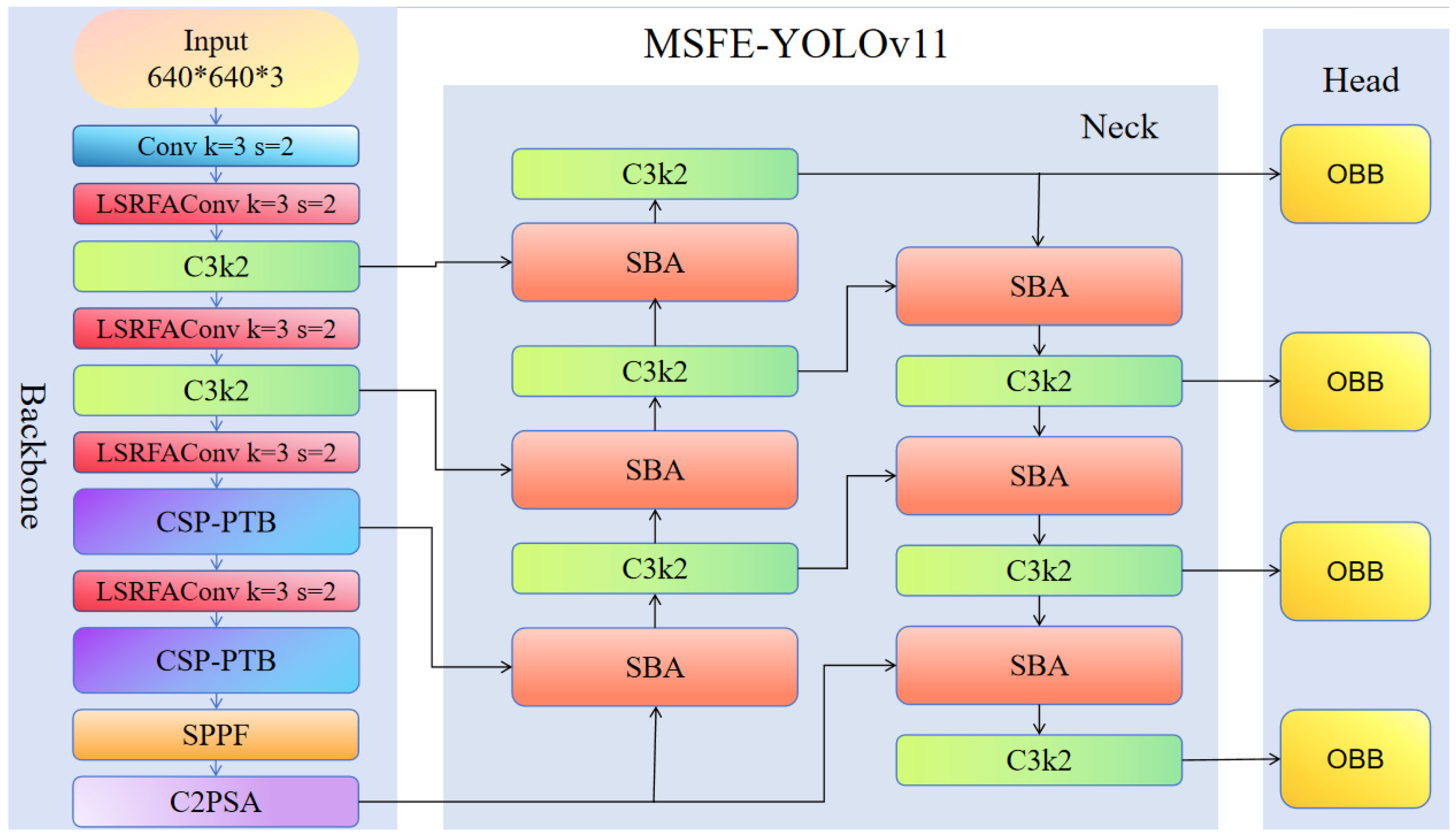
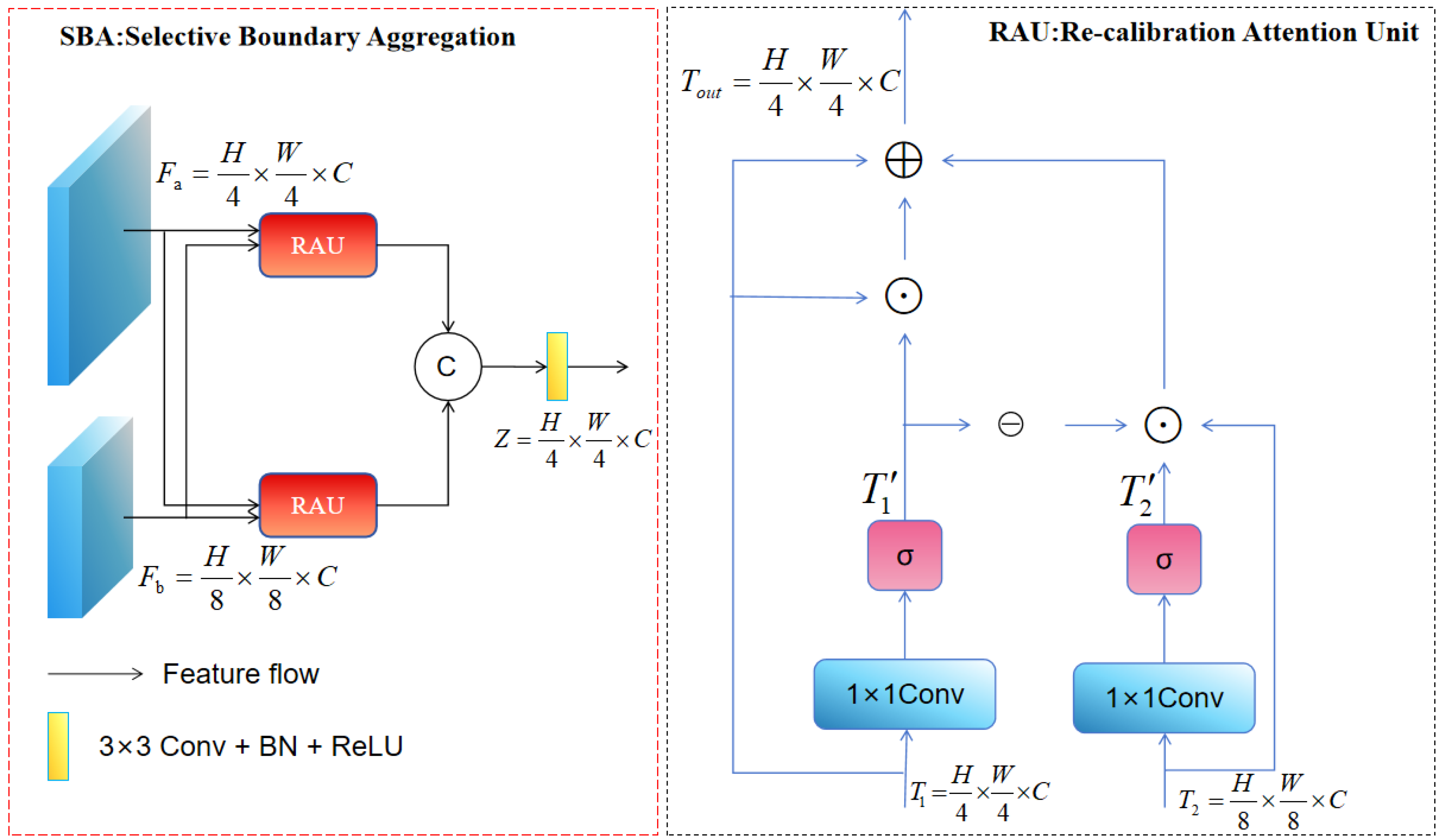
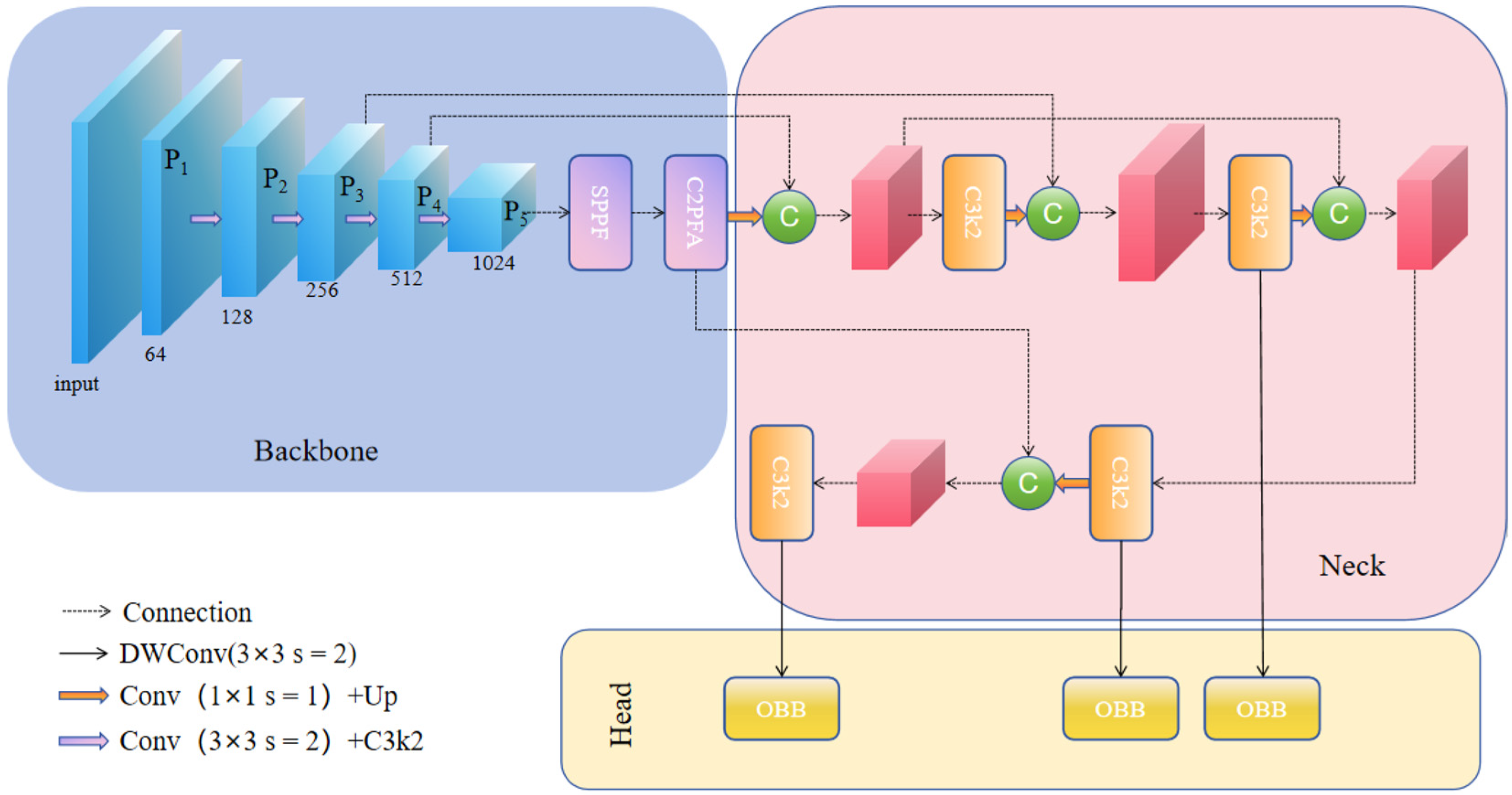
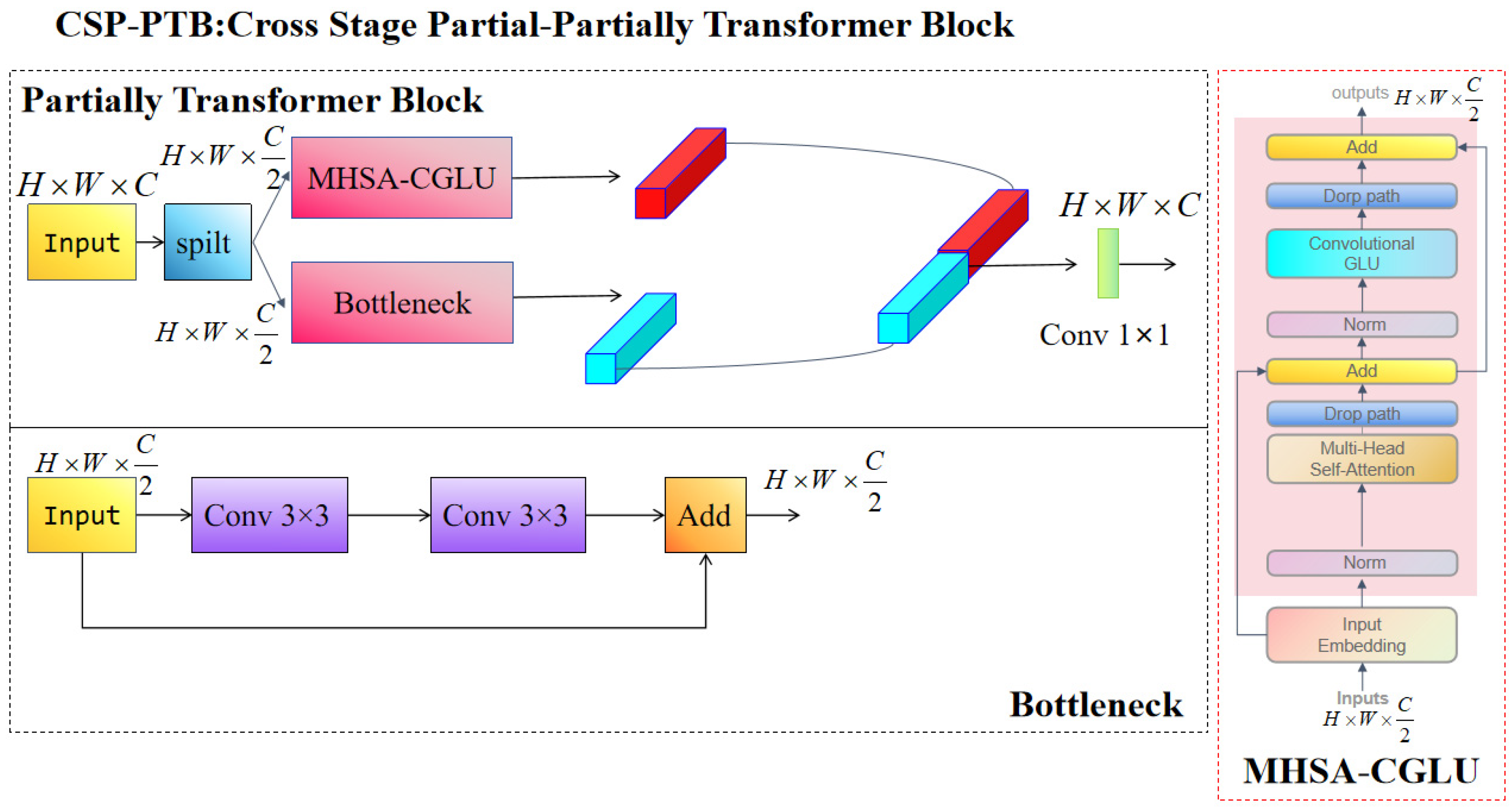
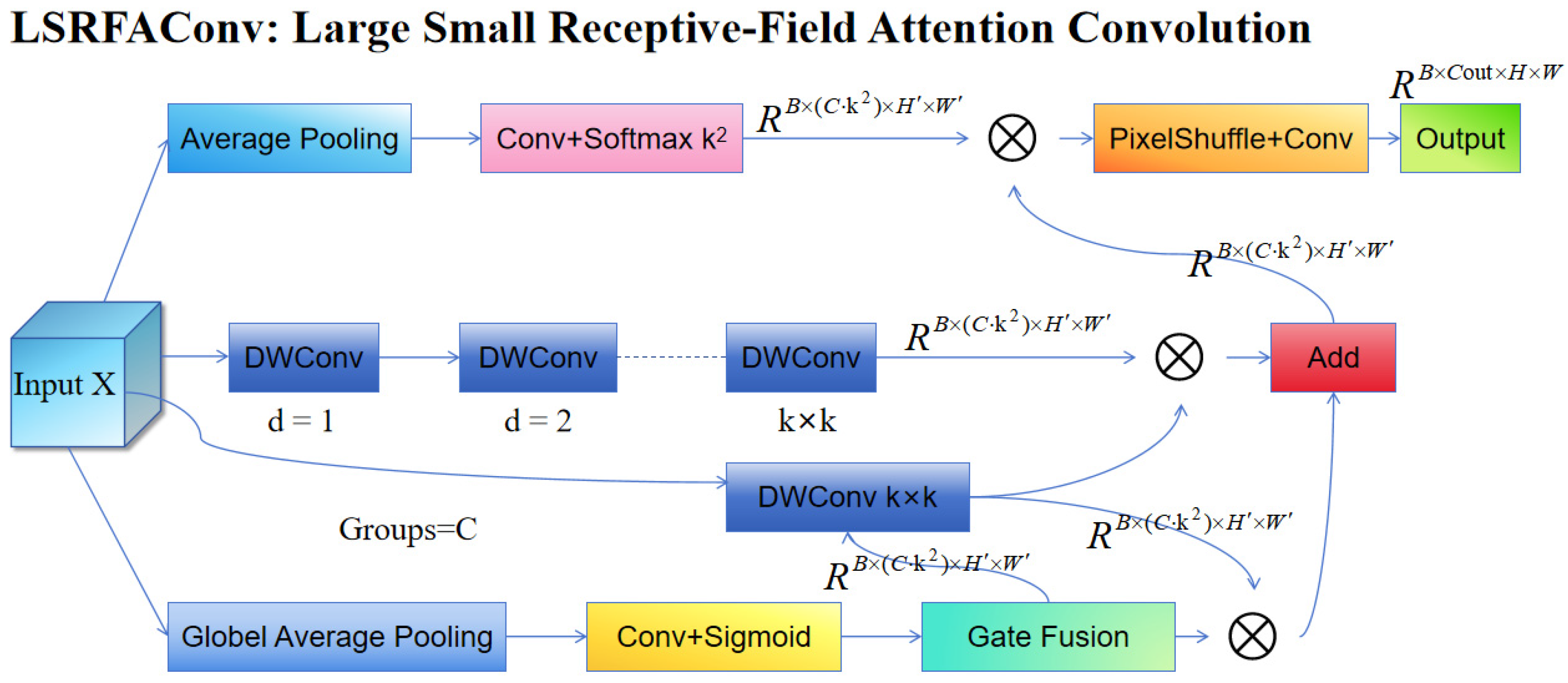
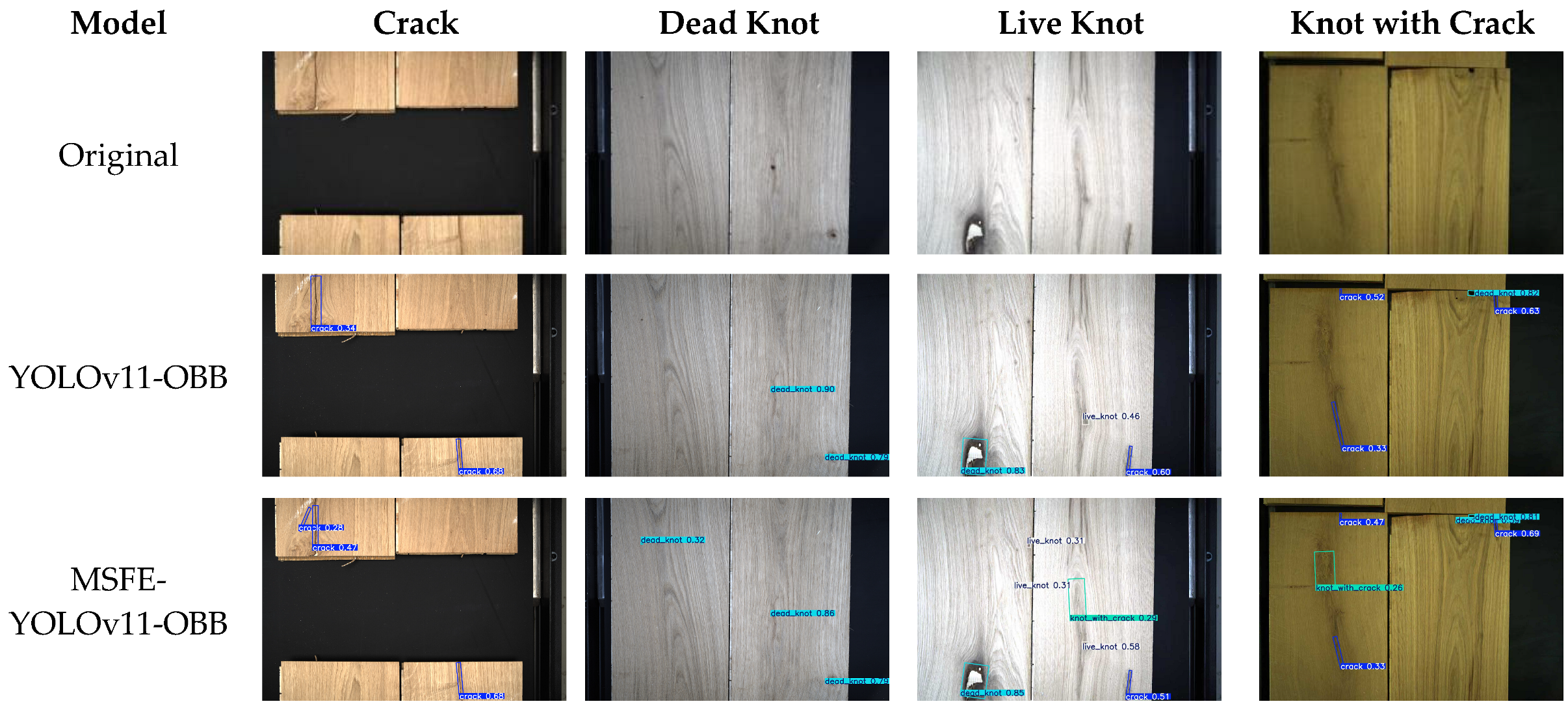
To address the above limitations, this paper proposes MSFE-YOLOv11-OBB, a wood defect-oriented bounding box detection model based on multiscale feature optimisation. The proposed architecture combines three enhanced modules to enhance feature representation, improve localisation accuracy, and increase robustness to complex wood textures. First, Recalibrated FPN is proposed to replace the basic FPN in YOLOv11-OBB by selectively fusing boundary cues and semantic information to better capture fine-grained contours and achieve better spatial localization. Second, CSP-PTB module, a combination of CNNs and transformer-based global modeling, replaces the deeper C3k2 layers in the backbone. This hybrid design combines local and global feature patterns, thereby enhancing the overall representational capacity. Third, the proposed large-small receptive-field attention convolution (LSRFAConv) is adapted to elongated defects such as cracks, enabling efficient dual-path feature fusion that retains detailed structural information. Collectively, these three modules work synergistically through hybrid feature extraction, adaptive multiscale learning, and fine-detail perception to significantly boost the precision of wood defect detection.
5. Conclusions
This paper introduces MSFE-YOLOv11-OBB, a model for the detection of wood defects in industrial environments, which pays attention to the multiscale feature extraction and the improved detection of elongated cracks. The important findings are summarized as follows:
- (1)
Recalibration FPN: This module allows the adaptive aggregation of boundary and semantic information to generate finer-grained object contours and better recalibrate object positions. It greatly improves the multiscale feature fusion, and the mAP@50 is higher than the YOLOv11-OBB baseline.
- (2)
CSP-PTB: The dual-branch hybrid structure uses the efficient feature extraction ability of CNNs and the good global context modeling ability of transformers to enhance the overall detection accuracy.
- (3)
LSRFAConv: On the basis of RFAConv, this four-branch module solves the problems of crack detection. The small-kernel aggregation branch helps to preserve fine-grained crack edges and short-range texture patterns, while the large-kernel perception branch helps to improve modeling of long-range crack connectivity and contextual consistency. A channel-gating unit adaptively fuses and balances the contributions from both branches to achieve better detection performance without significant increase in model parameters.
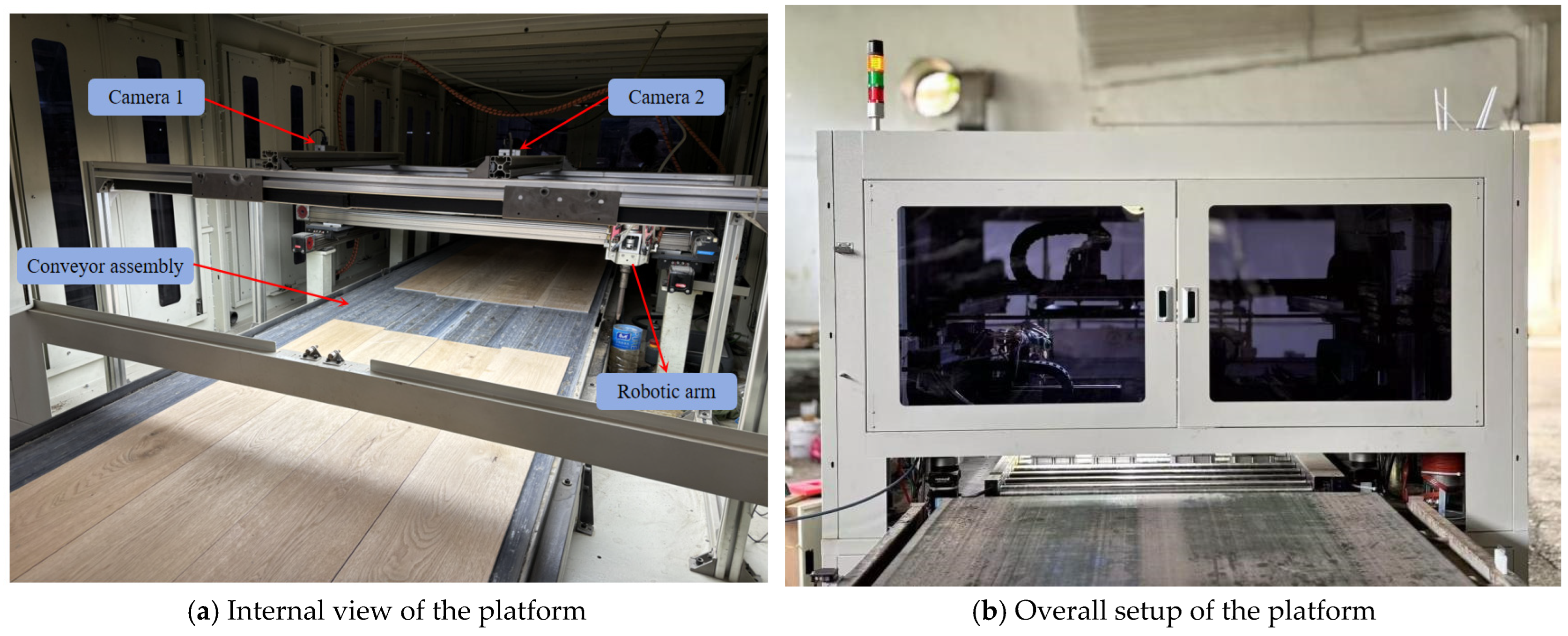
Experiments performed on a self-constructed dataset of wood defects show that MSFE-YOLOv11-OBB achieves a 4.7% improvement in mAP@50 compared to the baseline with real-time performance appropriate for industrial applications. The results demonstrate the effectiveness of the proposed approach in achieving a balance between high detection precision and practical deployment requirements. This advancement enables automated, intelligent monitoring of oriented wood defect detection in industrial settings. Notably, the model has been successfully implemented on an industrial production line, where it is seamlessly integrated with conveyor systems, robotic manipulators, and adhesive spraying units. This configuration enables real-time defect identification and automated glue-based repair of wooden boards, demonstrating the model’s practical applicability across comprehensive industrial workflows.