Article

Butterfly Community Responses to Urbanization and Climate Change: Thermal Adaptation and Wing Morphology Effects in a Conserved Forest, South Korea

1
Alpha Insect Diversity Lab, Nowon, Seoul 01746, Republic of Korea
2
Research Institute for East Asian Environment and Biology, Gangdong, Seoul 05236, Republic of Korea
3
Department of Biology, Kyung Hee University, Dongdaemun, Seoul 02447, Republic of Korea
4
Division of Forest Ecology, National Institute of Forest Science, Dongdaemun, Seoul 02445, Republic of Korea
5
Korea Institute of Ornithology, Kyung Hee University, Dongdaemun, Seoul 02447, Republic of Korea
*
Author to whom correspondence should be addressed.
Forests 2025, 16(9), 1386; https://doi.org/10.3390/f16091386
Submission received: 20 July 2025 / Revised: 21 August 2025 / Accepted: 25 August 2025 / Published: 28 August 2025

Abstract

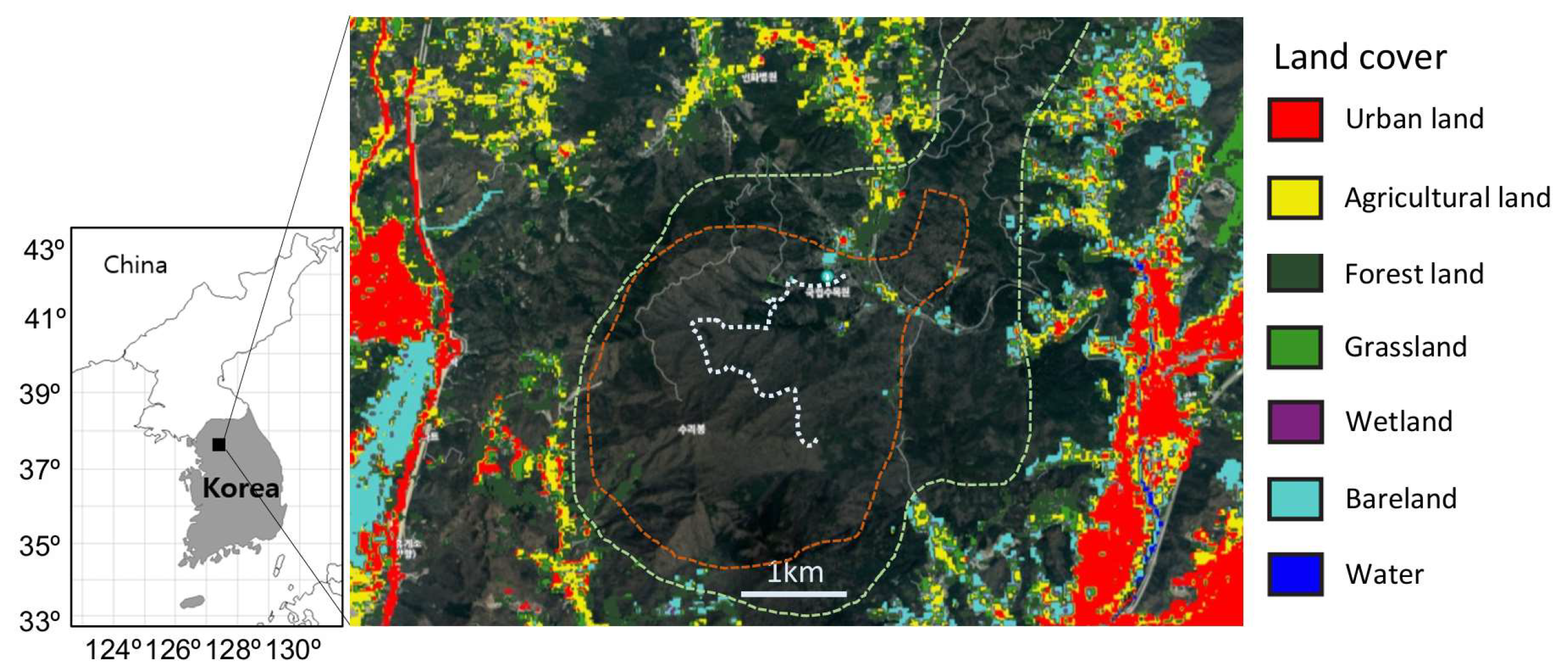
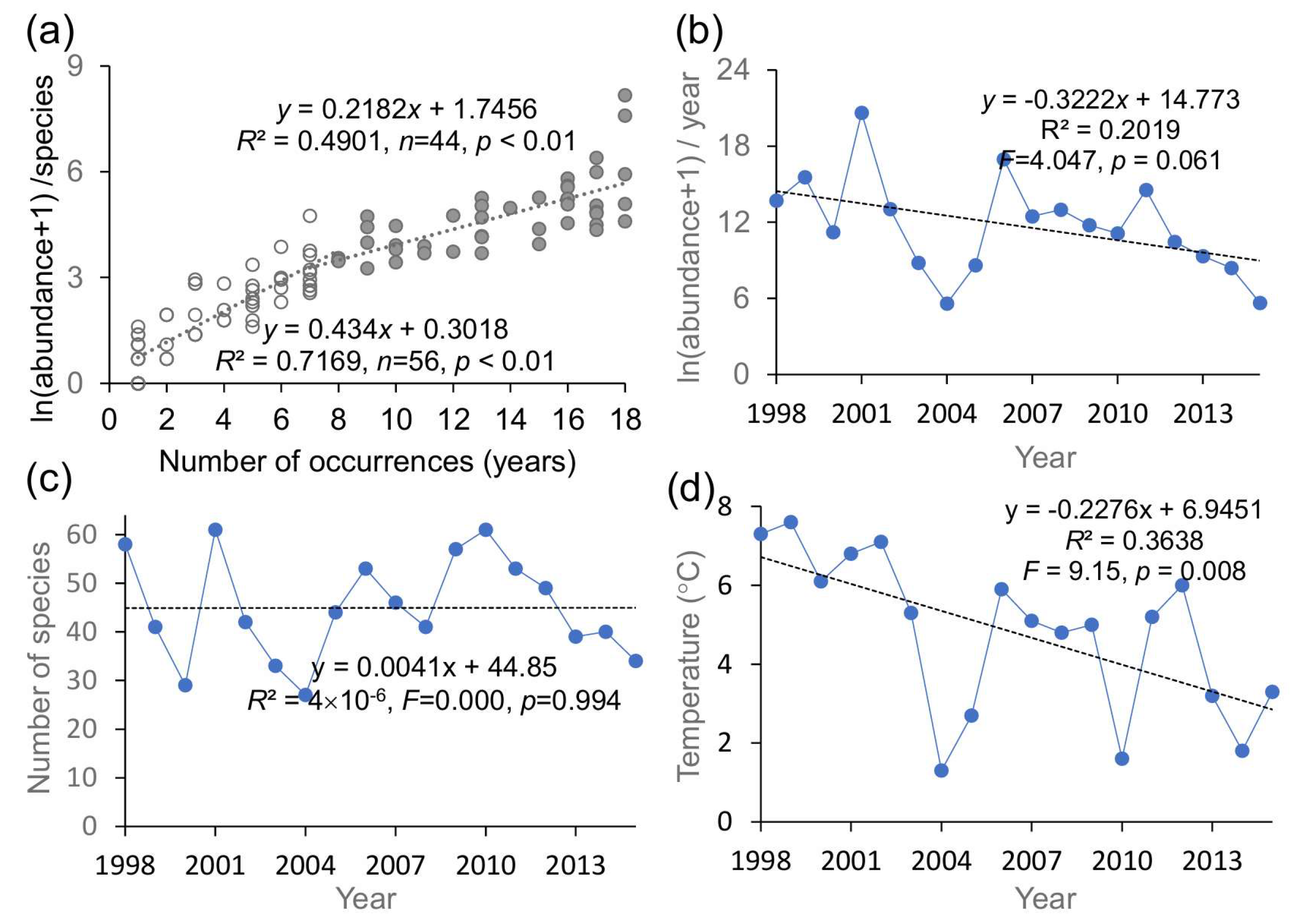
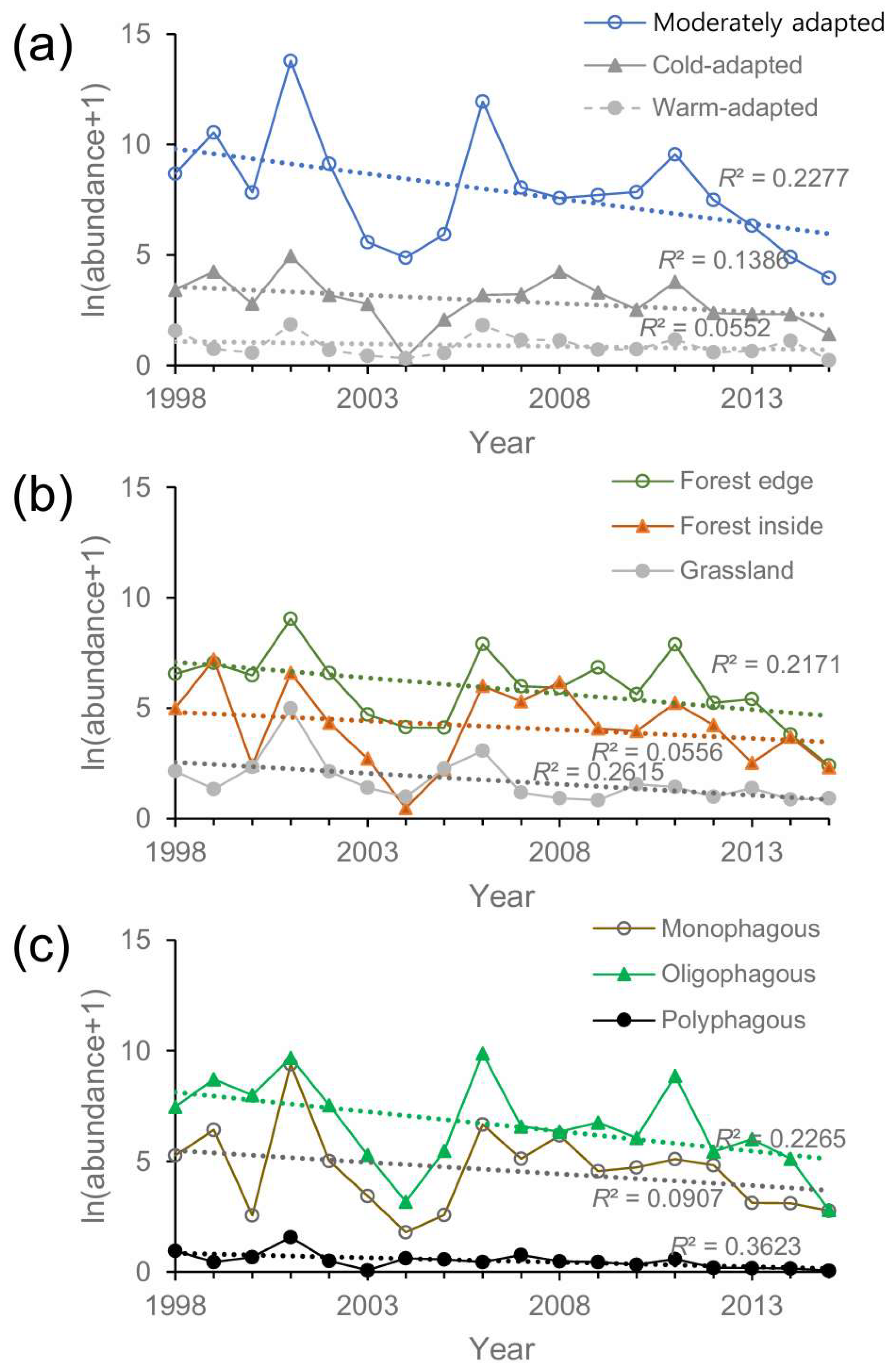
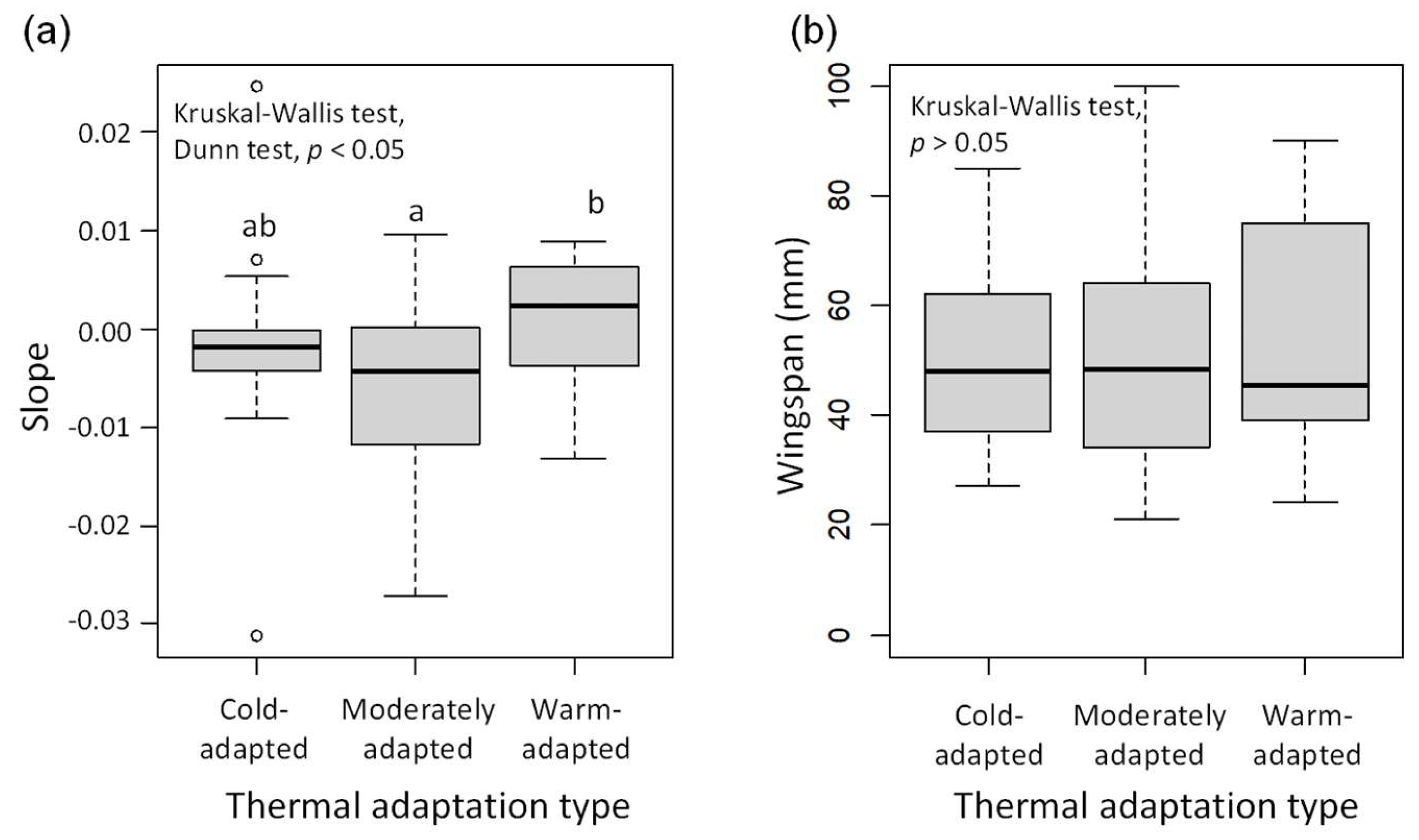
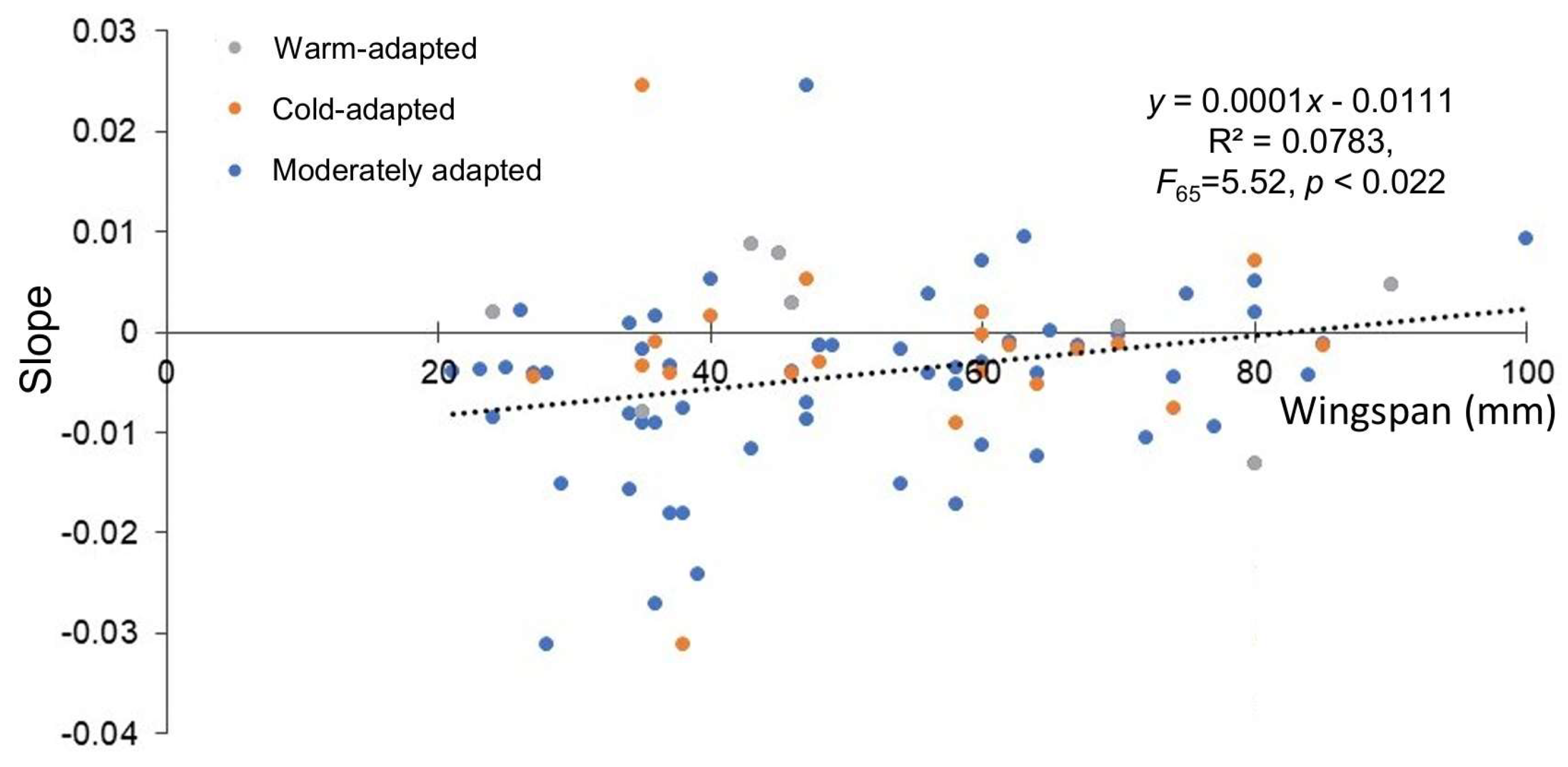
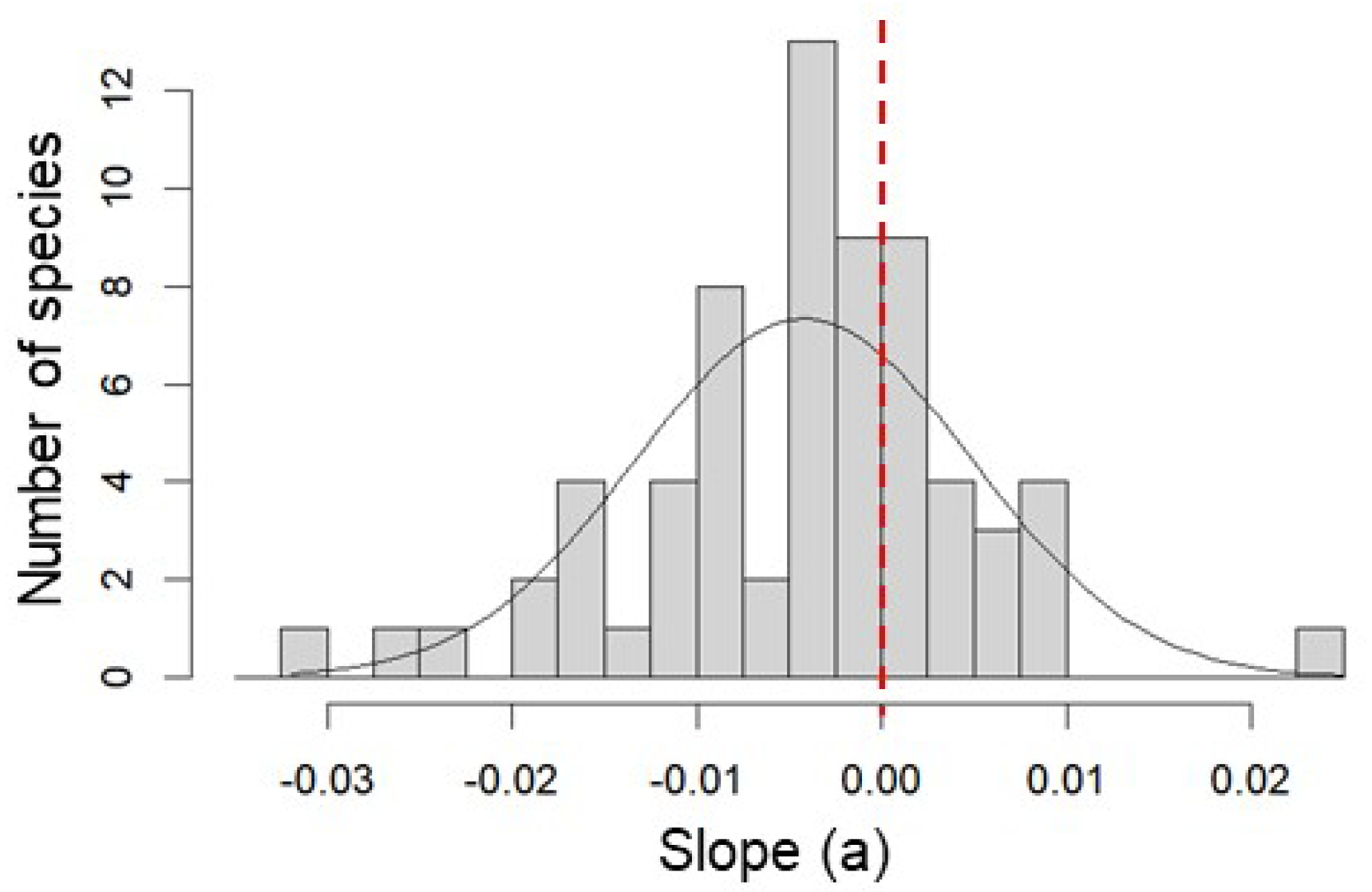
Habitat and climate changes driven by human activities are altering the distribution of organisms globally. In South Korea, recent temperature increases have exceeded twice the global average, and habitats have markedly changed and shrunk due to urban development driven by population growth and economic expansion. Despite its high biodiversity and over 500 years of preservation, Gwangneung Forest in South Korea has experienced habitat alterations due to the urbanization of surrounding rural areas since the 1990s. In this study, we aimed to evaluate how butterfly communities respond to urbanization and climate change using long-term monitoring data (1998–2015) from the conserved Gwangneung Forest. We considered the thermal adaptation types (cold-, warm-, and moderately adapted species), habitat types (forest edge, forest inside, and grassland), diet breadth (monophagous, oligophagous, and polyphagous), and wingspan of butterflies. Linear regression analysis of the abundance trends for each species revealed that cold-adapted species experienced population declines, while warm-adapted species showed increases. Changes in butterfly abundance were associated with both thermal adaptation type and wingspan, with larger, more mobile species showing greater resistance to habitat loss in surrounding areas. To preserve butterfly diversity in Gwangneung Forest and across South Korea, it is crucial to conserve open green habitats—such as gardens, small arable lands, and grasslands—within urban areas, especially considering the impacts of climate change and habitat loss, which disproportionately affect smaller species with limited mobility.
Keywords: Gwangneung Forest; abundance change; wingspan; thermal adaptation type; habitat loss; surrounding area; monitoring data Gwangneung Forest; abundance change; wingspan; thermal adaptation type; habitat loss; surrounding area; monitoring data