Article

Assessment of the Crown Condition of Oak (Quercus) in Poland—Analysis of Defoliation Trends and Regeneration in the Years 2015–2024

1
Department of Forest Resource Management, Forest Research Institute in Poland, Sękocin Las, 05-090 Raszyn, Poland
2
Department of Silviculture and Forest Tree Genetics, Forest Research Institute in Poland, Sękocin Las, 05-090 Raszyn, Poland
*
Author to whom correspondence should be addressed.
Forests 2025, 16(12), 1807; https://doi.org/10.3390/f16121807
Submission received: 30 October 2025 / Revised: 26 November 2025 / Accepted: 28 November 2025 / Published: 2 December 2025
(This article belongs to the Special Issue Drought Tolerance in ​Trees: Growth and Physiology)

Abstract

Long-term monitoring of tree crown condition is essential for assessing forest resilience under increasing climatic variability. This study presents a comprehensive evaluation of oak (Quercus spp.) defoliation trends in Poland from 2015 to 2024, based on national forest health monitoring data. Mean defoliation remained relatively stable until 2018, followed by a significant increase in 2019 (+5.1 percentage points; p < 0.001), coinciding with a major drought event across Central Europe. In subsequent years, defoliation gradually decreased and stabilised, indicating partial canopy recovery. Segmented regression and spline models revealed a consistent breakpoint in 2019 across all age classes, with the most severe crown damage recorded in stands older than 100 years. Younger stands showed lower defoliation levels and higher regenerative capacity. A nonlinear relationship between defoliation and growing-season precipitation was also identified, showing that when rainfall fell below 40 mm, canopy loss exceeded 30%. The results confirm that oak defoliation reflects both short-term climatic stress and long-term structural changes. Integrating monitoring data with climatic analyses and statistical modelling improves the detection of stress-related drivers and the assessment of recovery processes. The combined use of these approaches supports adaptive forest management strategies, including the promotion of mixed-species and multi-aged stands, improvement of soil nutrient conditions, and targeted monitoring of drought-sensitive age classes, thereby enhancing the resilience of oak ecosystems to climate change.

1. Introduction

Although pine, spruce and beech are the dominant forest-forming species in Central Europe, oak-dominated forests represent one of the most ecologically valuable components of the region’s forest landscapes. Due to their high biodiversity, structural complexity and long-term ecological stability, oak-rich stands play a crucial role in maintaining ecosystem functioning and providing a wide range of ecosystem services. The essential functions of oak-rich stands include climate regulation, carbon storage, soil stabilisation, and water retention [1]. These forests also represent ecologically valuable habitats protected under European law [2]. The most important habitat types with oak participation include temperate deciduous and mixed oak forests sensu in the EU Habitats Directive, such as Quercetea robori-petraeae (habitat type 9190—old sessile oak woods), Stellario-Carpinetum and Tilio-Carpinetum (habitat type 9160/9170—oak–hornbeam forests), and Quercetalia pubescenti-petraeae (habitat type 91I0—thermophilous oak forests) [2].
Unfortunately, rapidly progressing climate change poses a serious threat to the stability of oak stands and the functions they provide. Across Europe, increasing temperatures, altered precipitation patterns, and more frequent and prolonged droughts have been reported [3]. These processes weaken tree vitality and increase susceptibility to secondary stressors such as insect outbreaks, pathogens, and windthrow events [4,5]. Consequently, large-scale forest dieback and shifts in species resistance and distribution are being observed [6]. In Europe, particularly in Poland, one of the main factors contributing to the high sensitivity of forest ecosystems to environmental stress is the legacy of historical silvicultural practices, including the establishment of conifer monocultures (Picea abies (L.) H. Karst., Pinus sylvestris L.) from seed sources outside their ecological optimum [7]. In recent years, extreme climatic events have exposed the limitations of such monocultural systems, resulting in widespread dieback of Norway spruce and Scots pine [8].
Conversely, throughout Central Europe, broadleaved species—particularly oaks (Quercus spp.)—are gaining increasing ecological significance as key components of forest ecosystems resilient to climate change, especially drought [9]. However, despite their broad ecological amplitude, species within the genus Quercus show variable sensitivity to water stress, depending on local site conditions and soil moisture availability [10,11]. Extreme drought events are recognised as one of the primary factors leading to crown defoliation and oak mortality across Central Europe [12]. With the increasing frequency and intensity of drought episodes, greater attention is being given to environmental and biological factors that may mitigate water stress in oaks and enhance their natural adaptive potential. Site properties—particularly soil structure and phosphorus availability—play a crucial role in this process, determining both soil water retention and root system performance [11]. Additionally, symbiosis with ectomycorrhizal fungi enhances water and nutrient uptake, alleviating the effects of moisture deficit [13]. At the physiological level, the main adaptive mechanisms to drought involve the regulation of stomatal conductance and transpiration, enabling the maintenance of photosynthetic activity under water deficit [14]. From a silvicultural perspective, preserving genetic diversity and fostering intraspecific variability in oak populations are among the most effective strategies to minimise the risk of tree mortality [15].
Despite these defence and adaptive mechanisms, prolonged or cumulative water stress leads to crown deterioration and reduced biomass production. Under such conditions, defoliation becomes one of the most sensitive and universal indicators of environmental stress. The loss of assimilative leaf area is widely used as a measure of tree vitality and overall forest condition [16]. It reflects both short-term physiological responses to stress and long-term trends in tree health under changing climatic conditions. Studies by Eickenscheidt et al. [17] have shown that the intensity of oak defoliation is strongly related to water availability during the growing season, particularly in spring and summer, when evapotranspiration increases and soil moisture deficits deepen. Reduced precipitation during this period disrupts photosynthesis, limits carbohydrate storage, and increases tree susceptibility to biotic stressors [18]. Although many studies have focused on the physiological mechanisms of drought tolerance [9], the relationship between long-term precipitation trends and defoliation dynamics at the stand level remains insufficiently understood. In Poland, where oaks reach their ecological optimum in lowland mixed forests, the relationship between precipitation and defoliation may serve as an easily recognizable indicator of ecosystem stability under ongoing climate change. Understanding how visible crown defoliation correlates with variations in precipitation during the growing season provides valuable insights into the resilience and adaptive potential of oak stands to hydrological stress.
Given these knowledge gaps, the main aim of this study was to quantify and interpret the relationship between crown defoliation and growing-season precipitation (April–August) in Poland during 2015–2023. Specifically, we sought to identify the precipitation thresholds associated with increased defoliation, determine the temporal dynamics of crown damage across years, and evaluate whether drought intensity is reflected consistently in long-term defoliation patterns. These findings are intended to support forest health monitoring and inform adaptive management strategies under changing climate conditions. The analysis was based on data from forest stands dominated by oak species (Quercus spp.), which in Poland comprise two main taxa: pedunculate oak (Quercus robur L.) and sessile oak (Quercus petraea (Matt.) Liebl.), which differ in their ecological requirements [19]. In this context, Q. robur typically occurs on heavier clay soils, whereas Q. petraea prefers sandy–loamy substrates. Compared to Q. petraea, Q. robur has slightly greater light and water requirements but shows better tolerance to wide temperature amplitudes [19].

2. Materials and Methods

2.1. Field Observations

Data on oak forest stands were obtained from the national forest health monitoring database of Poland, covering the period 2015–2024, as part of the international ICP Forests Programme [20]. Field measurements were conducted annually on permanent sample plots (NR_WISL) located within an 8 × 8 km grid network across forested areas. On each plot, 20 trees aged at least 21 years were assessed, all representing dominant or co-dominant canopy positions (see Supplementary Materials Table S1). The 8 × 8 km grid ensures a uniform distribution of points at the national scale, but it does not eliminate spatial gaps or local clustering caused by habitat mosaicism and management history. Consequently, sensitivity to sub-kilometre phenomena (such as soil patches with differing water-holding capacity, local terrain depressions, or advective air wedges) is limited, and the findings should be interpreted as regional averages rather than as measures of the full variability within individual forest districts or compartments.
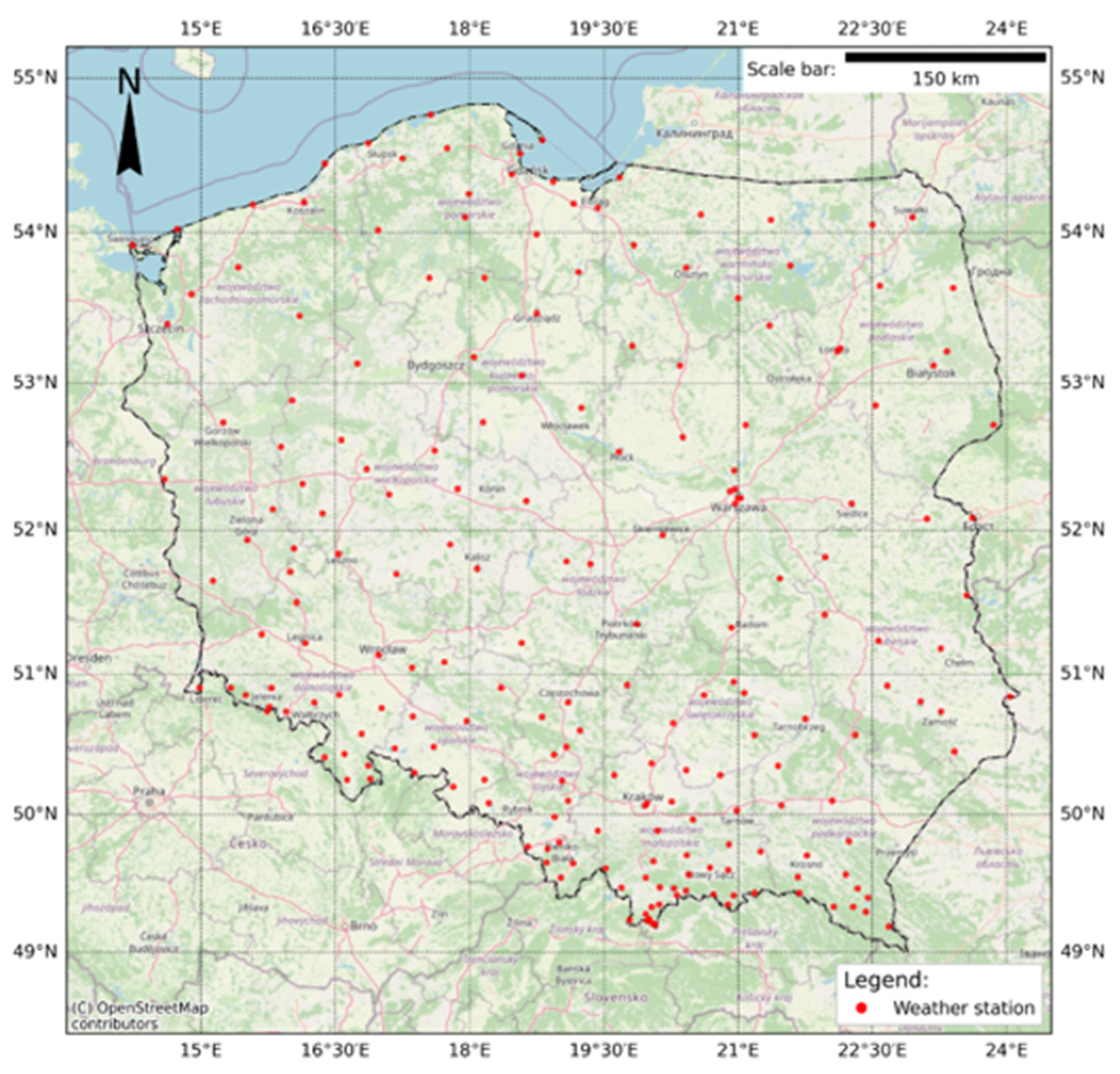
As of 2024, oak was recorded on 580 monitoring plots, of which 129 were classified as stands where oak was the dominant species (constituting at least 60% of the stand composition). Pure oak monocultures were identified on 39 plots [21]. For this study, analyses were restricted to plots where oak was the dominant tree species (Figure 1). Harmonised plot-level descriptors of stand structure (e.g., tree density, species admixture, management history, or site index) were not consistently available across the national monitoring network. To partially control for ontogenetic differences, we stratified all analyses by 20-year age classes and included elevation as an abiotic covariate. Consequently, our estimates should be interpreted as age-specific, country-level responses rather than effects conditional on detailed stand structure.
Due to differences in data availability between variables, individual analyses cover slightly different time periods: raw monitoring data (2015–2023), aggregated defoliation statistics (2015–2024), and the precipitation–defoliation model (2017–2023). Each analysis is internally consistent within its respective dataset, and these differences do not influence the interpretation of temporal trends.

2.2. Climatic Analyses

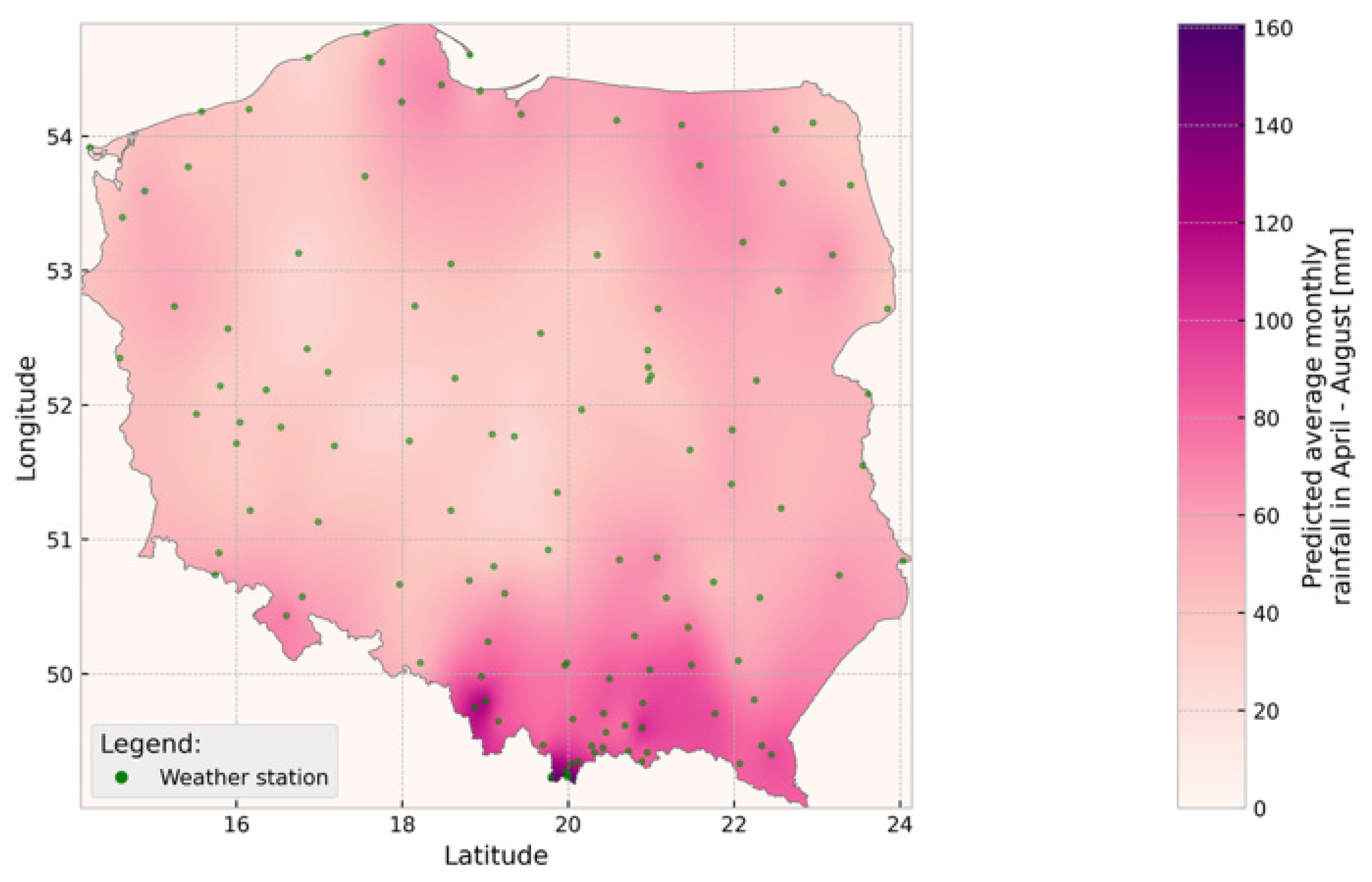
To determine the climatic growth conditions at the studied plots, meteorological data were used, including total precipitation during the growing season (April–August) for the years 2014–2023. The input data were obtained from the public domain of the Polish Institute of Meteorology and Water Management (IMGW [22] https://danepubliczne.imgw.pl/en accessed on 10 July 2025). In total, data from 207 meteorological stations were used in this study (Figure 2).
Meteorological data were processed and visualised using custom Python scripts with the libraries Pandas [23], NumPy [24], GeoPandas (v0.8.1) [25], PyKrige (v1.7.2) [26], Rasterio [27], and Matplotlib (v3.6.2) [28]. Because of discrepancies between the locations of meteorological stations and forest monitoring plots, geostatistical tools were used to transfer meteorological data to monitoring sites through spatial interpolation. This was conducted using ordinary kriging, implemented with the PyKrige library [26]. Ten spatial models were generated as part of the geostatistical analyses, and an example of a resulting spatial model is shown in Figure 3.

2.3. The Statistical Analysis

The statistical analysis was based on long-term (2015–2024) observations of oak crown condition. The basic unit of observation was a permanent monitoring plot (NR_WISL) in a given year. The dependent variable was the mean defoliation (%) per plot, while the explanatory variables were the mean stand age (AVG WIEK_D) and altitude above sea level (Wys.npm). Incomplete or inconsistent records were removed.
To account for developmental differences, all plots were grouped into 20-year age classes, and annual mean defoliation was calculated for each class. The objectives of the analysis were to: (i) identify the year of trend disruption (defoliation peak), (ii) estimate the rate of change before and after the breakpoint, (iii) determine the year when mean defoliation exceeded 40%, and (iv) visualise the temporal trends with confidence intervals.
For each age class, a two-segment linear model (piecewise OLS) was fitted to quantify the rate and direction of change in defoliation over time.
yt = α + β1(τ − t)+ + β2(t − τ)+ + εt
where:
  • yt—mean defoliation in year t,
  • α—intercept term,
  • β1, β2—slope coefficients before and after the breakpoint,
  • τ—breakpoint,
  • (x)+ = max (x, 0),
  • εt—random error term.
In parallel, trend curves were fitted using the cubic regression spline method (df = 7). Uncertainty (95%) and the year in which the 40% threshold was exceeded was estimated using stratified bootstrap resampling (200–600 replications) with random sampling of monitoring plots. The stability of the results was verified using a linear mixed-effects model, the Theil–Sen estimator [29], and residual analysis. All approaches consistently confirmed a distinct defoliation peak in 2019, followed by partial recovery in subsequent years, particularly pronounced in the oldest age classes. Because the dataset consists of annual plot-level means across a relatively short time interval (10 years), we did not apply formal time-series diagnostics such as Durbin–Watson or ACF/PACF tests. At this temporal scale, serial dependence is expected to be weak, as the ICP Forests protocol aggregates observations annually and does not store within-year repeated measurements. Therefore, we treated the annual values as approximately independent for the purpose of model fitting.
Analyses were performed in the Python 3.11 environment using the following libraries: pandas [23], numpy [24], statsmodels [30], and scikit-learn [31].

3. Results

The mean defoliation of oaks (Quercus spp.) varied across years during the period 2015–2024 (Table 1). In 2015, average defoliation was 25.1%. No statistically significant changes in defoliation were observed until 2018. In 2019, a sharp and highly significant increase was recorded (p < 0.0001), with mean defoliation rising to 31.6% (+5.1 percentage points, p < 0.001). In the following years (2020–2022), defoliation gradually decreased by approximately 2.1 to 2.3 percentage points per year. The declines were statistically significant in 2021 (p < 0.05) and 2022 (p < 0.05). During 2023–2024, the defoliation index stabilised at a level comparable to that in 2015. The results indicate a distinct defoliation peak in 2019, followed by partial recovery and stabilisation in subsequent years. Mean defoliation declined from 31.6% in 2019 to 25.0%–25.2% in 2023–2024, confirming a reduction of approximately 6–7 percentage points and documenting a clear, quantifiable recovery of crown condition. This pattern suggests that the stress factors affecting oaks in 2019 were transient, and that compensatory and regenerative processes occurred once the stress subsided.
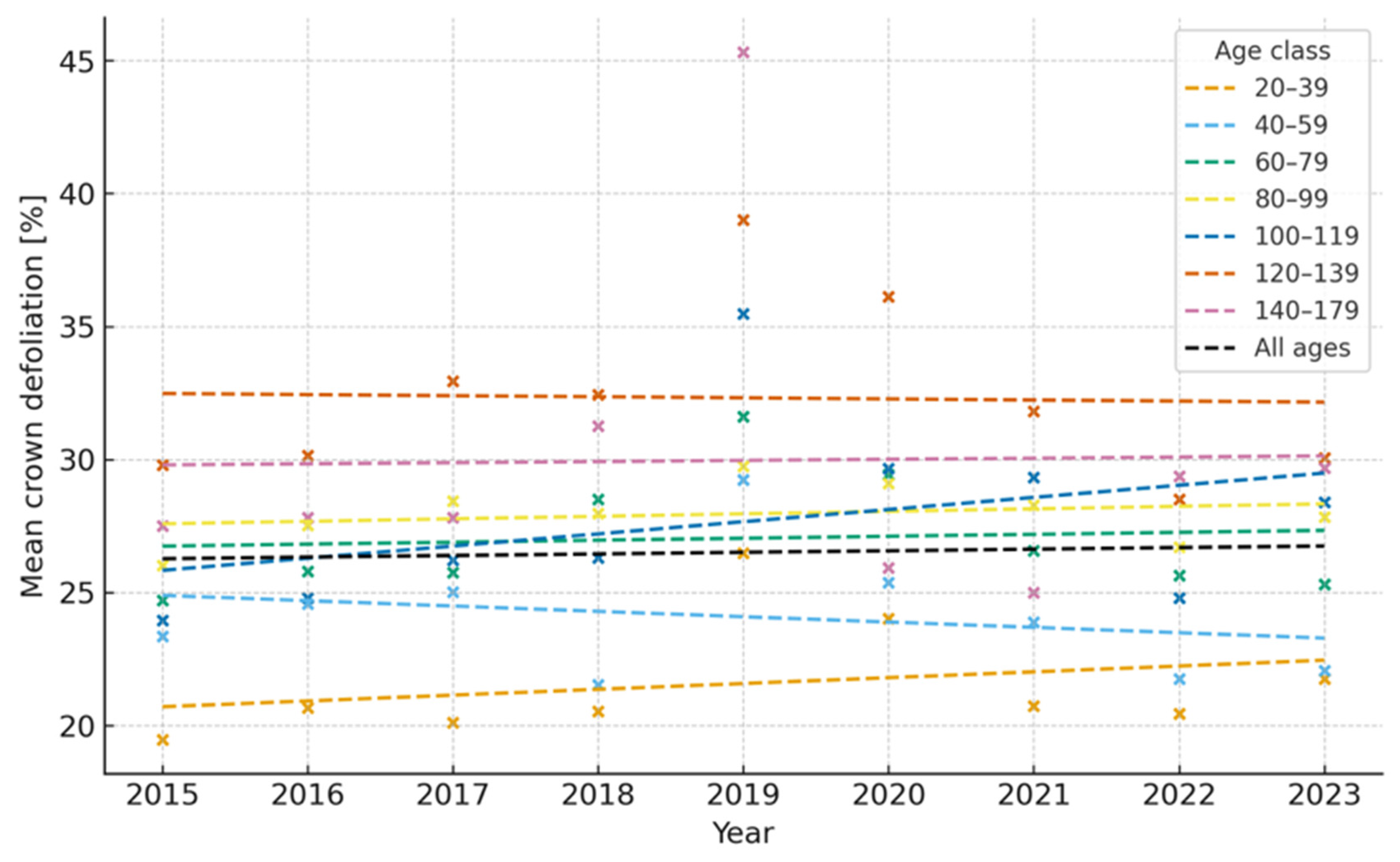
The analysis of defoliation trend dynamics across age classes, based on linear regression, revealed clear differences among the examined age groups (Figure 4). In the youngest stands (20–39 years), defoliation showed a slight but consistent increase of 0.18 percentage points per year. In contrast, stands aged 40–59 years exhibited a decrease in defoliation at a rate of 0.21 percentage points per year. A similar decreasing trend (0.13 percentage points per year) was observed in stands aged 80–99 years. Conversely, stands aged 100–119 years showed the strongest increase in defoliation (0.37 percentage points per year), indicating a marked deterioration of crown condition and highlighting the particular vulnerability of this age group to damage.
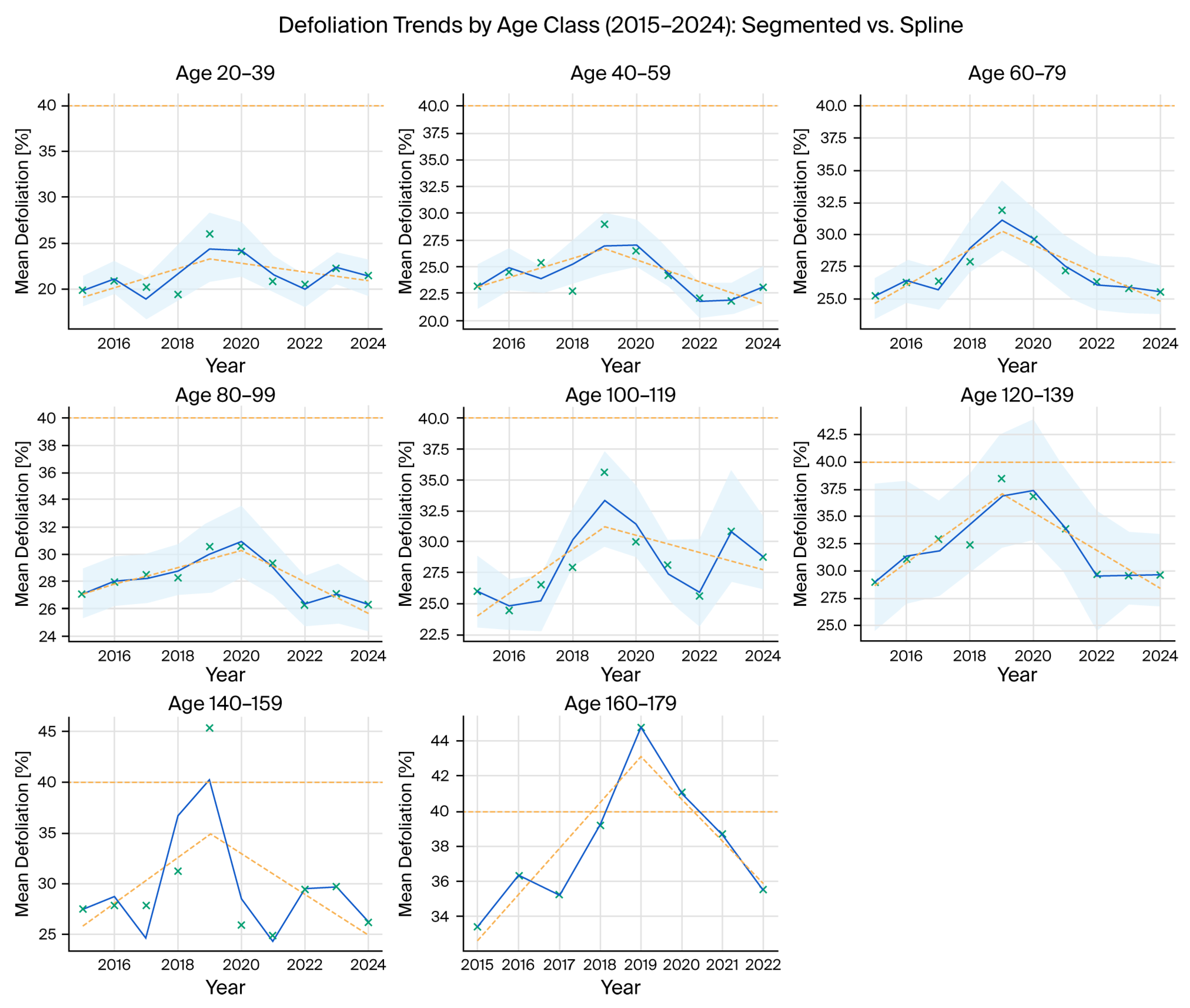
To further refine the findings, a segmented linear regression analysis (OLS) was conducted, revealing a distinct nonlinear pattern with a common breakpoint in 2019 across the entire monitoring period (Figure 5). This year marked a sharp peak in crown defoliation, followed by partial stand recovery. The data confirmed that the oldest stands (≥140 years) showed the strongest increase in defoliation before 2019 (up to +2.6 percentage points per year) and were the only age classes to reach or exceed the 40% defoliation threshold at the peak. After 2019, all age classes showed negative slopes (ranging from −0.47 to −2.40 p.p./year), indicating partial regeneration. These results are consistent with the nationwide increase in oak defoliation in 2019, confirming a rapid onset of maximum stress followed by gradual alleviation, corresponding to the decline in environmental stress intensity.
To estimate the impact of the main factor determining the level of oak defoliation, the correlation between total precipitation during the growing season and crown defoliation was calculated. The overall correlation between mean oak defoliation and total precipitation for the growing season (April–August) was marginally significant (r = −0.07). However, the temporal structure of the data revealed a clearly non-uniform pattern across years (Table 2). Annual correlations showed a strong negative relationship between precipitation and defoliation in 2019 (r = −0.45), while in most other years, the correlations were negligible. Consistent with this, a year fixed-effects model retained a significant positive coefficient for 2019 (p = 0.036), suggesting that the loss of assimilative foliage during that year exceeded the level expected based on precipitation alone.
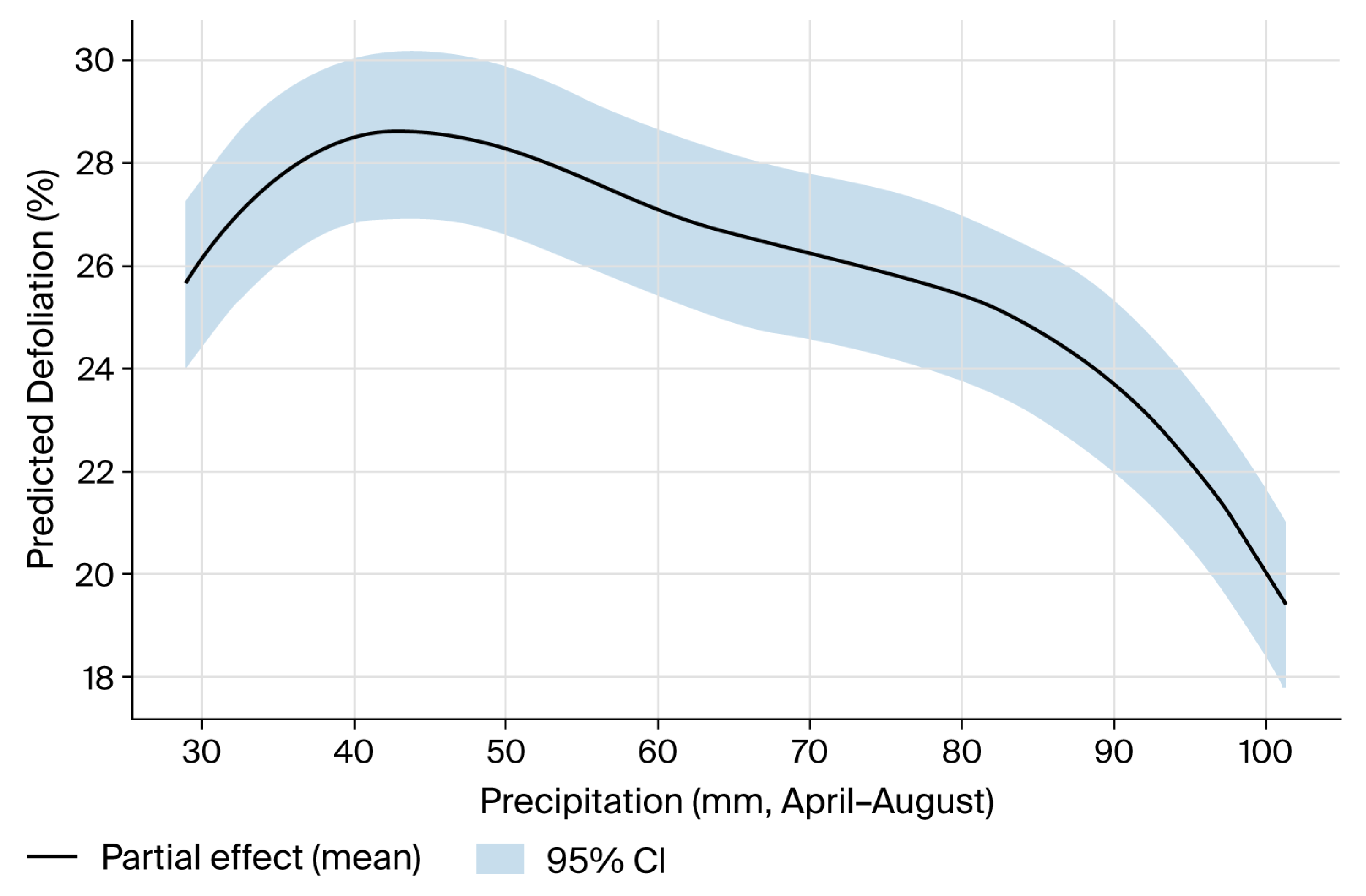
The spline curve analysis revealed a clear nonlinear relationship between mean defoliation of oaks and total precipitation during the growing season (April–August) for 2017–2023 (Figure 6). The model revealed a nonlinear relationship between defoliation and growing-season precipitation. Predicted defoliation initially increased from approximately 30 to 40 mm, reaching a local maximum of around 28–29%. Beyond this point, defoliation gradually declined with increasing precipitation, stabilising at approximately 25%–26% between 60 and 80 mm. A more pronounced decrease was observed only at the upper end of the precipitation range (>90 mm). Under very low precipitation conditions (<40 mm), predicted defoliation exceeded 28%–30%, confirming that years with limited water availability were consistently associated with higher crown damage. This finding supports the hypothesis that drought stress is the primary driver of increased crown defoliation.

4. Discussion

This study, conducted as part of the national forest monitoring programme, provides a comprehensive assessment of long-term (2015–2024) changes in the crown condition of oaks (Quercus spp.) in Poland. The results show clear, age-dependent differences in defoliation dynamics among the analysed trees. The maximum crown defoliation observed in 2019 was a distinct signal of large-scale environmental stress. The subsequent gradual recovery across all age classes indicates that defoliation reflects both short-term environmental disturbances and long-term stand responses [17]. The nonlinear trajectory of crown damage confirms that defoliation results from the cumulative effects of multiple stressors, rather than being a symptom of continuous decline in stand vitality. The marked increase in defoliation in 2019 coincided with an exceptionally warm and dry growing season recorded across Central Europe [32]. A similar pattern was reported by other European forest monitoring networks, confirming the regional nature of this phenomenon. Comparable drought-related crown damage in oaks has also been reported from Central European monitoring networks. Studies from Germany, Czechia and Slovakia indicate similar peaks in defoliation during years of extreme water deficit, followed by partial recovery in subsequent seasons [33]. These regional patterns are consistent with our findings and highlight the widespread sensitivity of Central European oak forests to episodes of severe drought. This broader regional consistency reinforces the interpretation that the 2019 peak represented an acute climatic disturbance rather than the onset of a sustained decline. However, the subsequent decrease in defoliation in later years indicates that this was a temporary disturbance rather than a persistent degradation trend. This finding suggests that defoliation should be interpreted not only as a marker of climatic stress, but also as a dynamic indicator of crown vitality, integrating both weather-related fluctuations and the internal regenerative mechanisms of oak trees [34].
Although climatic factors determine the timing of defoliation, the opposite process—tree recovery—is primarily governed by physiological traits. Oaks possess a high capacity for crown reconstruction following stress episodes [13,18]. The marked decline in crown damage observed after 2019 indicates the activation of physiological recovery mechanisms, such as stomatal regulation, mobilisation of non-structural carbohydrates, and root system plasticity [14]. An important factor influencing the rate of oak stand recovery after drought stress is nutrient availability, particularly phosphorus. Adequate phosphorus levels enhance osmotic regulation and antioxidant activity, thereby improving drought resistance [11,35]. In contrast, nutrient-poor sites limit the regenerative capacity of oaks [36]. As many lowland oak stands in Poland develop on acidic, phosphorus-deficient soils [37], edaphic factors may exacerbate the effects of drought stress. The nonlinear response curve further highlights that the strongest reductions in defoliation occur within the lowest precipitation range. When rainfall increases from severe deficit levels, canopy condition improves rapidly, whereas above approximately 60–70 mm, the effect of additional precipitation becomes marginal. This pattern emphasises that oak crown condition is most sensitive to drought extremes rather than moderate variability in water supply.
The segmented regression analysis in this study showed that defoliation increased systematically across all age classes up to 2019, with the most severe crown damage in older stands (>100 years). After 2019, the year of maximum defoliation, crown condition gradually improved, indicating a recovery phase. However, the rate of regeneration differed by age class. The fastest decrease in defoliation occurred in stands aged 40–79 years, reflecting their greater physiological plasticity and ability to redistribute carbohydrates towards the formation of new assimilative tissues. In contrast, the oldest stands (>120 years) recovered more slowly, likely due to hydraulic limitations, reduced cambial activity, and lower metabolic turnover of carbohydrates [38]. These findings highlight the functional age dependence of resilience mechanisms. Younger stands can compensate for stress more effectively through rapid mobilisation of metabolic reserves, whereas older trees, despite having substantial carbohydrate storage, respond more slowly to environ-mental disturbances. Older oak stands exhibit greater sensitivity to drought due to several age-related physiological and structural limitations. With increasing age, hydraulic conductivity declines as xylem vessels become more vulnerable to embolism, reducing the efficiency of water transport during periods of low soil moisture [39]. Mature trees also show diminished cambial activity and lower rates of non-structural carbohydrate turnover, slowing their ability to rebuild damaged tissues after stress [40]. Furthermore, older trees often possess disproportionately large crowns relative to their active sapwood area, which increases transpirational demand and exacerbates hydraulic imbalance under drought [11]. Reduced root system plasticity and limited capacity to explore deeper soil layers additionally constrain water uptake in late-successional individuals [36]. These combined hydraulic and metabolic constraints explain why the >100-year age classes in our study experienced the highest defoliation during the 2019 drought and why their subsequent recovery proceeded more slowly compared with younger stands.
In addition to age-related differences, variability in drought sensitivity also arises from species-specific ecological traits within the Quercus genus. Although our analyses treated oak species jointly as Quercus spp., pedunculate oak (Q. robur) and sessile oak (Q. petraea) differ considerably in their site preferences and physiological responses to hydrological stress. Q. robur typically occupies heavier, periodically waterlogged clay soils, making it more vulnerable to drought-induced declines when soil moisture drops below saturation. In contrast, Q. petraea prefers well-drained sandy–loamy substrates and generally exhibits higher physiological drought tolerance, supported by deeper rooting and tighter stomatal control [41]. These species-specific traits have important implications for interpreting crown condition patterns: stands dominated by Q. robur may experience stronger defoliation during severe drought events, whereas Q. petraea often maintains greater canopy stability under comparable hydrological stress. The nationwide patterns observed in this study therefore likely reflect the combined responses of both taxa, which should be explicitly considered in future analyses linking defoliation trajectories with species composition and site conditions.
In addition to climatic stress, biotic agents may also contribute to short-term or localised canopy loss in oak stands such as defoliators such as Tortrix viridana, Operophtera brumata, and other Lepidoptera species [42], Because ICP Forests monitoring does not include systematic assessments of pest abundance or pathogen occurrence at the plot level, our models cannot explicitly separate biotic from abiotic stress effects. This limitation implies that part of the interannual variation attributed to climatic factors may, in some cases, reflect unobserved biotic disturbances. However, the nationwide and synchronous increase in defoliation observed in 2019, together with meteorological evidence of extreme drought, suggests that climate-related stress was the dominant driver at the national scale.
The integration of long-term crown defoliation data with advanced statistical modelling, as applied in this study, enabled a clear distinction between abrupt and gradual components of crown condition dynamics, thereby increasing the diagnostic value of monitoring results [17]. From a forest management perspective, these findings highlight the need to strengthen both the resistance and regenerative capacity of oak stands by maintaining species and age diversity, improving soil nutrient availability, and safeguarding genetic diversity [38]. Systematic crown condition monitoring, supported by statistical analysis, can also function as an early warning system that facilitates the assessment of stand vulnerability and the effectiveness of adaptive management measures.
However, the monitoring network used (fixed plots in an 8 × 8 km grid) provides national-scale representativeness but does not fully capture local microhabitat heterogeneity, such as variation in soil properties, water balance, topoclimate, or biotic pressure. Uneven plot density, influenced by factors such as terrain accessibility and forest structure, may lead to underestimation of fine-scale variability; therefore, the generalisations presented here reflect regional or national patterns rather than the full gradient of site-level conditions. Future research should integrate ICP data with higher-resolution spatial sources, including soil maps, satellite-derived products, and dense meteorological networks, to enable explicit modelling of spatial effects and improve the interpretation of local variability.

5. Conclusions

This study provides a comprehensive assessment of long-term crown defoliation dynamics in Polish oak stands and identified 2019 as a distinct breakpoint associated with extreme drought. Defoliation increased across all age classes until 2019, followed by a measurable recovery that varied with tree age, with the slowest regeneration observed in stands older than 120 years. The nonlinear relationship between precipitation and crown condition highlights the high sensitivity of oaks to severe water deficits, particularly in the lower precipitation range.
From a scientific perspective, the findings demonstrate the value of combining long-term monitoring data with statistical modelling to detect both abrupt and gradual components of forest stress responses. The study confirms that defoliation integrates climatic, physiological and edaphic influences, and thus remains a robust indicator of forest ecosystem condition.
For forestry practice, several key messages emerge:
(1)
older oak stands require prioritised monitoring due to their reduced hydraulic safety margins and slower post-drought recovery;
(2)
maintaining adequate soil nutrient availability, particularly phosphorus, can enhance resilience under drought;
(3)
integrating defoliation monitoring with climatic indicators can support early warning systems for forest health.
Overall, the results support adaptive forest management strategies that promote species and age diversity, improve site conditions, and strengthen the long-term resilience of oak ecosystems under ongoing climate change.

Supplementary Materials

The following supporting information can be downloaded at: https://www.mdpi.com/article/10.3390/f16121807/s1, Table S1: Annual mean crown defoliation (%) and mean precipitation (mm, April–August) recorded on all permanent sample plots (2015–2022), with corresponding stand age (years) and elevation (m a.s.l.).

Author Contributions

Conceptualization, P.P. and G.Z.; methodology, G.Z., P.B.; software, P.M.; validation, P.M. and P.B.; formal analysis, P.P. and W.G.; investigation, G.Z.; resources, G.Z. and P.P.; data curation, P.M.; writing—original draft preparation, P.P., G.Z. writing—review and editing, P.P.; visualization, P.M., W.G., P.B.; supervision, P.P.; project administration, G.Z.; funding acquisition, G.Z. All authors have read and agreed to the published version of the manuscript.

Funding

This research was funded by the Forest Research Institute (grant number 90.02.51 and The State Forests National Forest Holding grant number 500-503).

Data Availability Statement

The data are publicly available in annual reports held in the library of the Forest Research Institute in Poland.

Conflicts of Interest

The authors declare no conflicts of interest.

References

  1. McDowell, N.G.; Allen, C.D.; Anderson-Teixeira, K.; Aukema, B.H.; Bond-Lamberty, B.; Chini, L.; Clark, J.S.; Dietze, M.; Grossiord, C.; Hanbury-Brown, A.; et al. Pervasive shifts in forest dynamics in a changing world. Science 2020, 368, eaaz9463. [Google Scholar] [CrossRef]
  2. Council of the European Communities. Council Directive 92/43/EEC of 21 May 1992 on the Conservation of Natural Habitats and of Wild Fauna and Flora. Off. J. Eur. Communities 1992, L 206, 7–50. [Google Scholar]
  3. Cook, B.I.; Mankin, J.S.; Marvel, K.; Williams, A.P.; Smerdon, J.E.; Anchukaitis, K.J. Twenty-First Century Drought Projections in the CMIP6 Forcing Scenarios. Earth’s Future 2020, 8, e2019EF001461. [Google Scholar] [CrossRef]
  4. Seidl, R.; Thom, D.; Kautz, M.; Martin-Benito, D.; Peltoniemi, M.; Vacchiano, G.; Wild, J.; Ascoli, D.; Petr, M.; Honkaniemi, J.; et al. Forest disturbances under climate change. Nat. Clim. Change 2017, 7, 395–402. [Google Scholar] [CrossRef]
  5. Hlásny, T.; Seidl, R.; Barka, I.; Dobor, L.; Merganičová, K.; Kulla, L.; Trombik, J.; Štěpánek, P.; Bartoš, M.; Turčáni, M. Climate change increases the drought risk in Central European forests: What are the options for adaptation? For. Ecol. Manag. 2021, 494, 118990. [Google Scholar] [CrossRef]
  6. Dyderski, M.K.; Paź-Dyderska, S.; Jagodziński, A.M.; Puchałka, R. Shifts in native tree species distributions in Europe under climate change. J. Environ. Manag. 2025, 373, 123504. [Google Scholar] [CrossRef]
  7. Przybylski, P.; Związek, T.; Kowalczyk, J.; Słowiński, M. Research perspectives on historical legacy of the Scots pine (Pinus sylvestris L.): Genes as the silent actor in the transformation of the Central European forests in the last 200 years. Elem. Sci. Anthr. 2025, 13, 1. [Google Scholar] [CrossRef]
  8. Krawczyk, W.; Wężyk, P. Using Satellite Imagery and Aerial Orthophotos for the Multi-Decade Monitoring of Subalpine Norway Spruce Stands Changes in Gorce National Park, Poland. Remote Sens. 2023, 15, 951. [Google Scholar] [CrossRef]
  9. Niemczyk, M.; Thomas, B.R.; Jastrzębowski, S. Strategies for difficult times: Physiological and morphological responses to drought stress in seedlings of Central European tree species. Trees 2023, 37, 1657–1669. [Google Scholar] [CrossRef]
  10. Arend, M.; Kuster, T.; Günthardt-Goerg, M.S.; Dobbertin, M. Provenance-specific growth responses to drought in Quercus robur and Q. petraea. For. Ecol. Manag. 2011, 261, 1221–1232. [Google Scholar] [CrossRef]
  11. Schmied, G.; Hilmers, T.; Mellert, K.-H.; Uhl, E.; Buness, V.; Ambs, D.; Steckel, M.; Biber, P.; Šeho, M.; Hoffmann, Y.-D.; et al. Nutrient regime modulates drought response patterns of three temperate tree species. Sci. Total Environ. 2023, 868, 161601. [Google Scholar] [CrossRef]
  12. Somorowska, U. Amplified signals of soil moisture and evaporative stresses across Poland in the twenty-first century. Sci. Total Environ. 2022, 812, 151465. [Google Scholar] [CrossRef]
  13. Gehring, C.A.; Swaty, R.L.; Deckert, R.J. Mycorrhizas, drought, and host-plant mortality. In Mycorrhizal Mediation of Soil; Johnson, N.C., Gehring, C., Jansa, J., Eds.; Elsevier: Amsterdam, The Netherlands, 2017; pp. 279–298. [Google Scholar] [CrossRef]
  14. Grossiord, C.; Buckley, T.N.; Cernusak, L.A.; Novick, K.A.; Poulter, B.; Siegwolf, R.T.W.; Sperry, J.S.; McDowell, N.G. Plant responses to rising vapor pressure deficit. New Phytol. 2020, 226, 1550–1566. [Google Scholar] [CrossRef]
  15. Nicolescu, V.-N.; Vor, T.; Brus, R.; Đodan, M.; Perić, S.; Podrázský, V.; Andrašev, S.; Tsavkov, E.; Ayan, S.; Yücedağ, C.; et al. Management of sessile oak (Quercus petraea (Matt.) Liebl.), a major forest species in Europe. J. For. Res. 2025, 36, 78. [Google Scholar] [CrossRef]
  16. Przybylski, P.; Mohytych, V.; Rutkowski, P.; Tereba, A.; Tyburski, Ł.; Fyalkowska, K. Relationships between some biodiversity indicators and crown damage of Pinus sylvestris L. in natural old-growth pine forests. Sustainability 2021, 13, 1239. [Google Scholar] [CrossRef]
  17. Eickenscheidt, N.; Augustin, N.H.; Wellbrock, N. Spatio-temporal modelling of forest monitoring data: Modelling German tree defoliation data collected between 1989 and 2015 for trend estimation and survey grid examination using GAMMs. iForest 2019, 12, 338–348. [Google Scholar] [CrossRef]
  18. Hartmann, H.; Adams, H.D.; Anderegg, W.R.L.; Jansen, S.; Zeppel, M.J.B. Research frontiers in drought-induced tree mortality: Crossing scales and disciplines. New Phytol. 2015, 205, 965–969. [Google Scholar] [CrossRef]
  19. Bugała, W. (Ed.) Dęby: Quercus robur L.; Quercus petraea (Matt.) Liebl.; Nasze Drzewa Leśne; Bogucki Wydawnictwo Naukowe: Poznań, Poland, 2006; Volume 11, pp. 1–972. [Google Scholar]
  20. Schwärzel, K.; Seidling, W.; Hansen, K.; Strich, S.; Lorenz, M. Part I: Objectives, strategy and implementation of ICP Forests. Version 2022-2. In Manual on Methods and Criteria for Harmonized Sampling, Assessment, Monitoring and Analysis of the Effects of Air Pollution on Forests; UNECE ICP Forests Programme Coordinating Centre, Ed.; Thünen Institute of Forest Ecosystems: Eberswalde, Germany, 2022; 12p + Annexes; Available online: http://www.icp-forests.net/page/icp-forests-manual (accessed on 2 October 2025).
  21. Chief Inspectorate of Environmental Protection (GIOŚ). Reports on the Health Condition of Forests in Poland. Available online: https://monlas.gios.gov.pl/wyniki/raporty-o-stanie-zdrowotnym-lasow (accessed on 29 October 2025).
  22. Institute of Meteorology and Water Management (IMGW-PIB). Public Data Portal. Available online: https://danepubliczne.imgw.pl/en (accessed on 29 October 2025).
  23. McKinney, W. Data structures for statistical computing in Python. In Proceedings of the 9th Python in Science Conference (SciPy 2010), Austin, TX, USA, 28 June–3 July 2010; pp. 51–56. [Google Scholar] [CrossRef]
  24. Harris, C.R.; Millman, K.J.; van der Walt, S.J.; Gommers, R.; Virtanen, P.; Cournapeau, D.; Wieser, E.; Taylor, J.; Berg, S.; Smith, N.J.; et al. Array programming with NumPy. Nature 2020, 585, 357–362. [Google Scholar] [CrossRef]
  25. Jordahl, K.; Van den Bossche, J.; Fleischmann, M.; Wasserman, J.; McBride, J.; Gerard, J.; Tratner, J.; Perry, M.; Badaracco, A.; Farmer, C.; et al. Geopandas/Geopandas: v0.8.1. Zenodo. 2020. Available online: https://zenodo.org/records/3946761 (accessed on 15 July 2020).
  26. Murphy, B.; Yurchak, R.; Müller, S.; Ziebarth, M.; Basak, S.; Peveler, M.; van Lombeek, K.; Chang, W.; Matchette-Downes, H.; Mejía Raigosa, D.; et al. GeoStat-Framework/PyKrige: v1.7.2. Zenodo. 2024. Available online: https://zenodo.org/records/17372225 (accessed on 15 July 2025).
  27. Gillies, S. Rasterio: Geospatial Raster I/O for Python Programmers. Available online: https://github.com/mapbox/rasterio (accessed on 10 July 2025).
  28. Hunter, J.D. Matplotlib: A 2D graphics environment. Comput. Sci. Eng. 2007, 9, 90–95. [Google Scholar] [CrossRef]
  29. Sen, P.K. Estimates of the regression coefficient based on Kendall’s tau. J. Am. Stat. Assoc. 1968, 63, 1379–1389. [Google Scholar] [CrossRef]
  30. Seabold, S.; Perktold, J. Statsmodels: Econometric and statistical modeling with Python. In Proceedings of the 9th Python in Science Conference (SciPy 2010), Austin, TX, USA, 28 June–3 July 2010; pp. 92–96. [Google Scholar] [CrossRef]
  31. Pedregosa, F.; Varoquaux, G.; Gramfort, A.; Michel, V.; Thirion, B.; Grisel, O.; Blondel, M.; Prettenhofer, P.; Weiss, R.; Dubourg, V.; et al. Scikit-learn: Machine learning in Python. J. Mach. Learn. Res. 2011, 12, 2825–2830. [Google Scholar]
  32. Buras, A.; Rammig, A.; Zang, C.S. Quantifying impacts of the 2018 drought on European ecosystems in comparison to 2003. Biogeosciences 2020, 17, 3725–3740. [Google Scholar] [CrossRef]
  33. Macháčová, M.; Nakládal, O.; Samek, M.; Baťa, D.; Zumr, V.; Pešková, V. Oak Decline Caused by Biotic and Abiotic Factors in Central Europe: A Case Study from the Czech Republic. Forests 2022, 13, 1223. [Google Scholar] [CrossRef]
  34. Beloiu, M.; Stahlmann, R.; Beierkuhnlein, C. Drought impacts in forest canopy and deciduous tree saplings in Central European forests. For. Ecol. Manag. 2022, 509, 120075. [Google Scholar] [CrossRef]
  35. Mölder, A.; Sennhenn-Reulen, H.; Fischer, C.; Rumpf, H.; Schönfelder, E.; Stockmann, J.; Nagel, R.-V. Success factors for high-quality oak forest (Quercus robur, Q. petraea) regeneration. For. Ecosyst. 2019, 6, 49. [Google Scholar] [CrossRef]
  36. Brunner, I.; Herzog, C.; Dawes, M.A.; Arend, M.; Sperisen, C. How tree roots respond to drought. Front. Plant Sci. 2015, 6, 547. [Google Scholar] [CrossRef]
  37. Gessler, A.; Bottero, A.; Marshall, J.; Arend, M. The way back: Recovery of trees from drought and its implication for acclimation. New Phytol. 2020, 228, 1704–1709. [Google Scholar] [CrossRef]
  38. Aitken, S.N.; Bemmels, J.B. Time to get moving: Assisted gene flow of forest trees. Evol. Appl. 2016, 9, 271–290. [Google Scholar] [CrossRef]
  39. Choat, B.; Jansen, S.; Brodribb, T. Global convergence in the vulnerability of forests to drought. Nature 2012, 491, 752–755. [Google Scholar] [CrossRef]
  40. Hartmann, H.; Moura, C.F.; Anderegg, W.R.L.; Ruehr, N.K.; Salmon, Y.; Allen, C.D.; Arndt, S.K.; Breshears, D.D.; Davi, H.; Galbraith, D.; et al. Research frontiers for improving our understanding of drought-induced tree and forest mortality. New Phytol. 2018, 218, 15–28. [Google Scholar] [CrossRef]
  41. Mucha, J.; Zadworny, M.; Bułaj, B. Root anatomical adaptations of contrasting ectomycorrhizal exploration types in Pinus sylvestris and Quercus petraea across soil horizons. Plant Soil 2025, 511, 119–134. [Google Scholar] [CrossRef]
  42. Sukovata, L.; Jakoniuk, H.; Jaworski, T. A novel method for assessing the threat to oak stands from geometrid defoliators. For. Ecol. Manag. 2022, 520, 120380. [Google Scholar] [CrossRef]
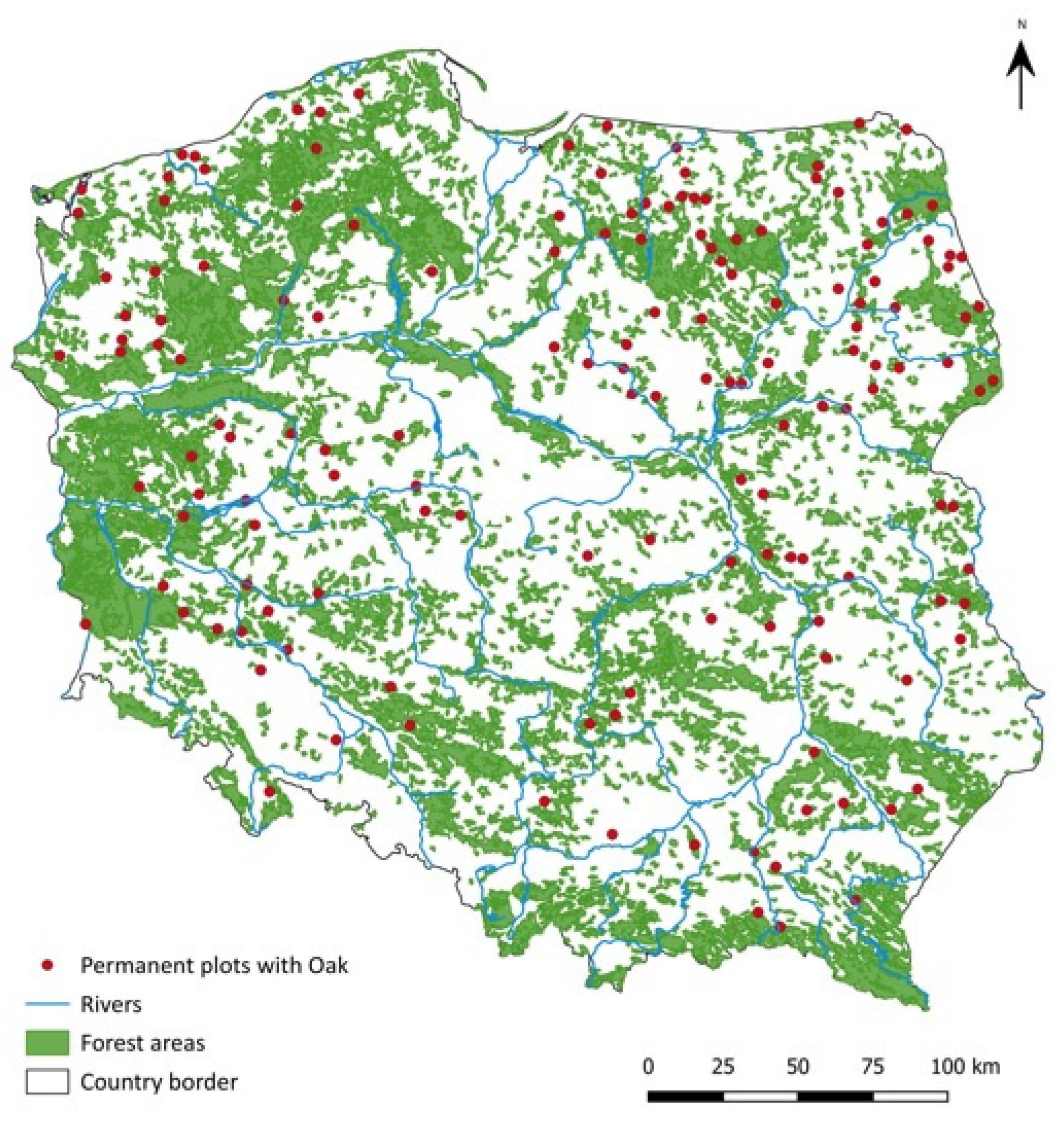
Figure 1. Spatial distribution of permanent observation plots dominated by oak (Quercus spp.) as of 2024 in Poland.
Forests 16 01807 g001
Figure 2. Location of measurement and observation stations in Poland (synoptic and climatological) of the Polish Institute of Meteorology and Water Management (IMGW) providing precipitation and air temperature data for the period 2015–2023.
Forests 16 01807 g002
Figure 3. Example of a spatial model illustrating the result of the interpolation of mean monthly precipitation in Poland for the period April–August, based on meteorological observations from 2019.
Forests 16 01807 g003
Figure 4. Mean defoliation of oak trees (Quercus sp.) from 2015 to 2024 across eight age classes. Dashed lines represent fitted linear trends for individual age classes, while the black dashed line shows the overall trend across all data.
Forests 16 01807 g004
Figure 5. Mean defoliation of oak from 2015 to 2024, shown separately for eight 20-year age classes. Dashed orange lines represent fitted piecewise linear regression models, while solid blue lines depict smoothing spline fits. Shaded areas denote 95% confidence intervals.
Forests 16 01807 g005
Figure 6. Effect of growing-season precipitation (April–August) on predicted defoliation of oak stands (2017–2023). The solid black line represents the mean partial effect estimated using a spline model controlling for Age and Elevation, while the shaded blue area shows the 95% bootstrap confidence interval.
Forests 16 01807 g006
Table 1. Mean defoliation of oak (Quercus spp.) in Poland, 2015–2024.
YearMean Defoliation (%)Change vs. Previous Year (pp)Statistical Significance
201525.1
201626.0+0.84n.s.
201726.6+0.65n.s.
201826.5−0.05n.s.
201931.6+5.10***
202029.5−2.1n.s.
202127.3−2.2**
202225.0−2.3**
202325.2+0.2n.s.
202425.0−0.2n.s.
n.s.—not significant; pp—percentage points; ***—p < 0.001; **—p < 0.05.
Table 2. Annual correlations between crown defoliation and total precipitation during the growing season (April–August) in 2017–2023.
YearNumber of Plots (N)Mean Defoliation (%)Mean Precipitation (mm)Pearson Correlation
(r, Defoliation–Precipitation)
201710228.578.9−0.10
201810129.067.3−0.25
201910033.547.0−0.45
20209927.080.5−0.15
202110125.074.8−0.08
202210024.070.1−0.05
202310126.072.4−0.12
Disclaimer/Publisher’s Note: The statements, opinions and data contained in all publications are solely those of the individual author(s) and contributor(s) and not of MDPI and/or the editor(s). MDPI and/or the editor(s) disclaim responsibility for any injury to people or property resulting from any ideas, methods, instructions or products referred to in the content.