Article

A Dynamic Voronoi-Based and LLM-Enhanced NMPC Framework for Multi-Robot Cooperative Wildfire Monitoring and Data Collection


School of Mechanical and Electrical Engineering, Northeast Forestry University, Harbin 150040, China
*
Author to whom correspondence should be addressed.
Forests 2025, 16(12), 1794; https://doi.org/10.3390/f16121794
Submission received: 21 October 2025 / Revised: 19 November 2025 / Accepted: 24 November 2025 / Published: 28 November 2025
(This article belongs to the Special Issue Advanced Technologies for Forest Fire Detection and Monitoring)

Abstract

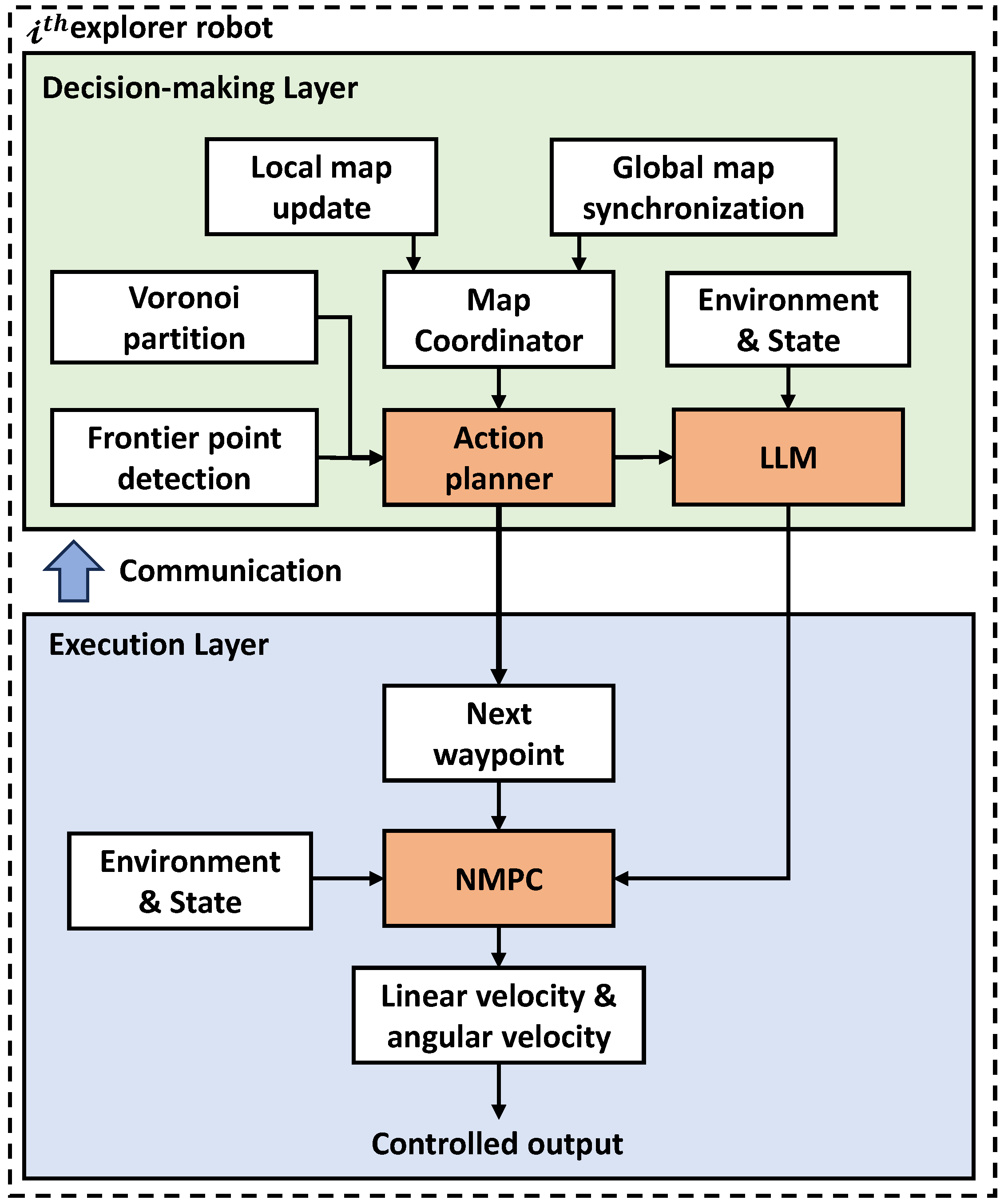
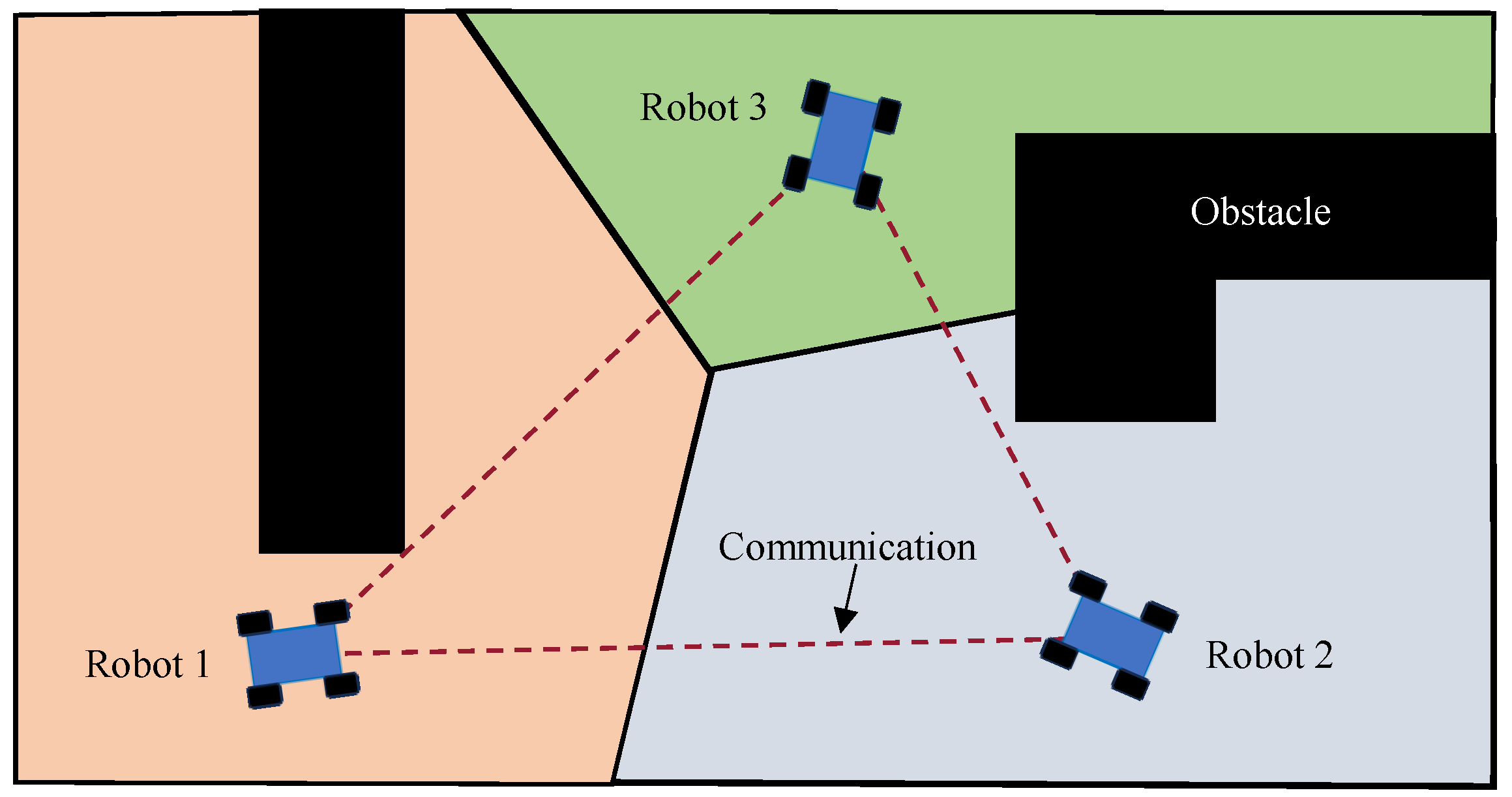
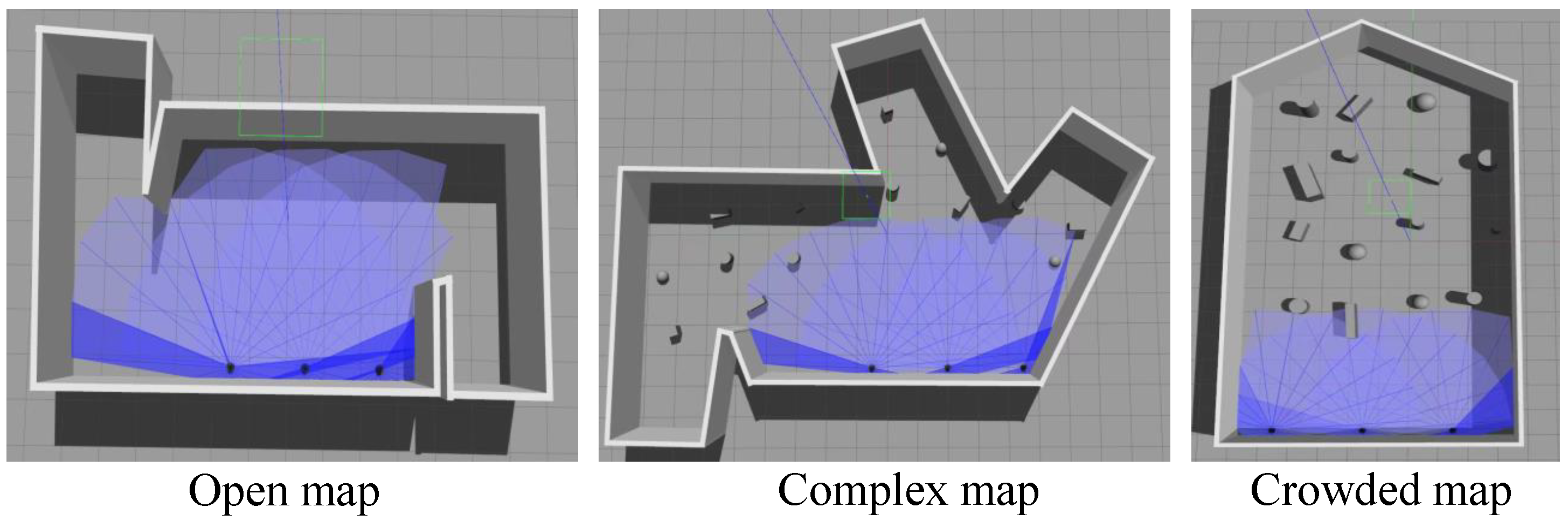
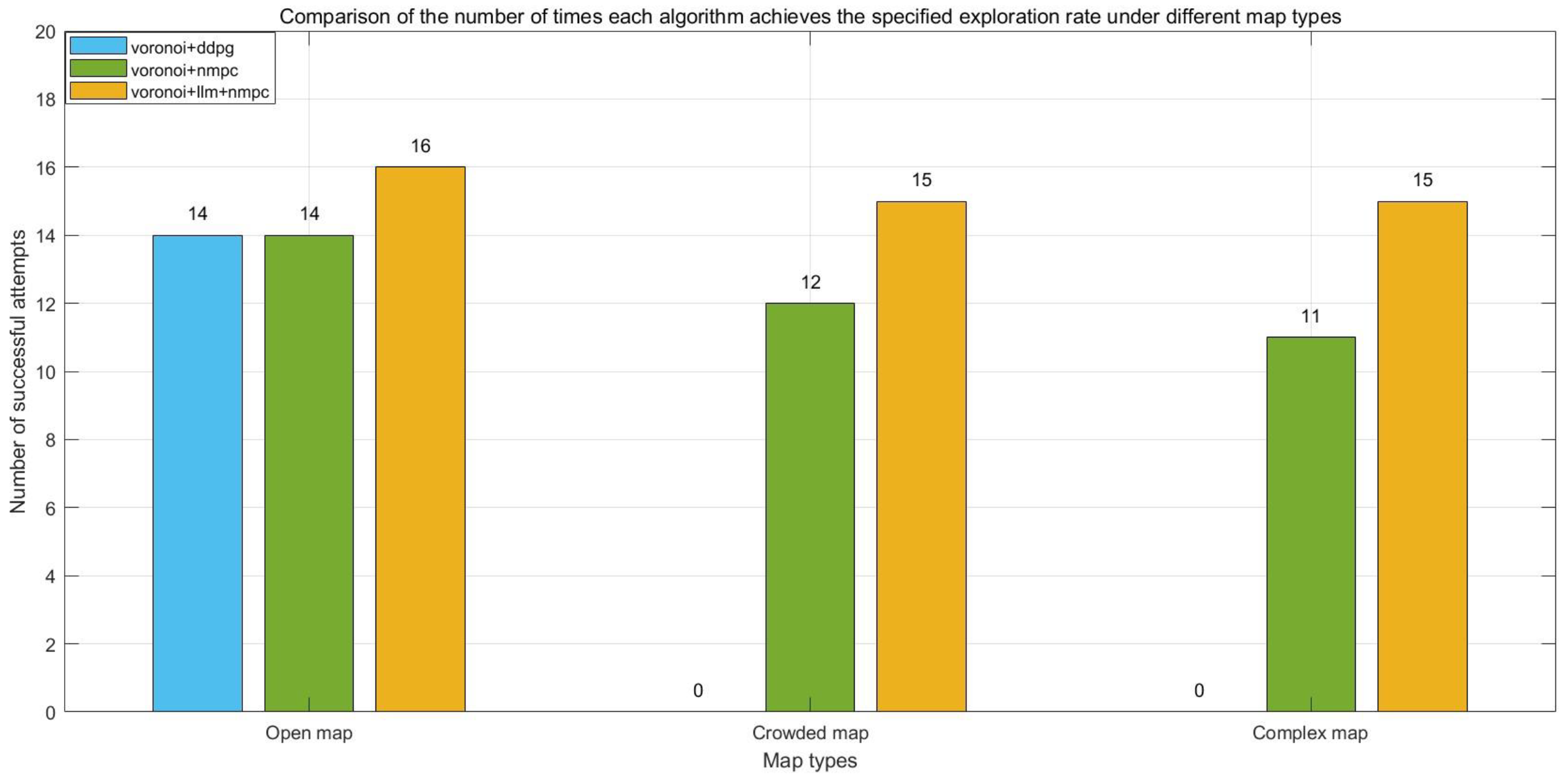
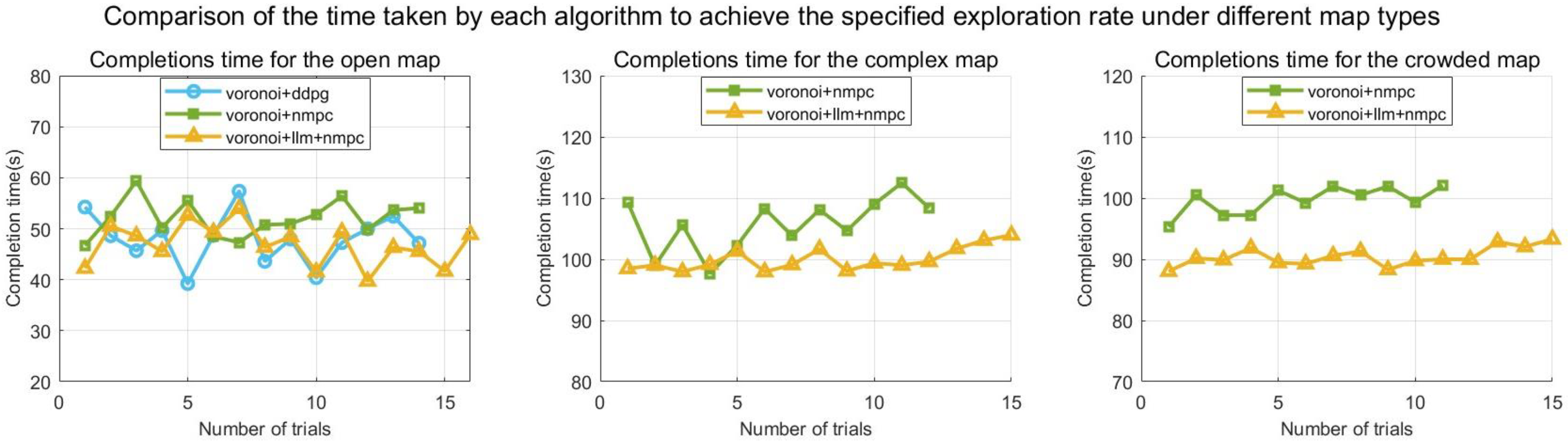
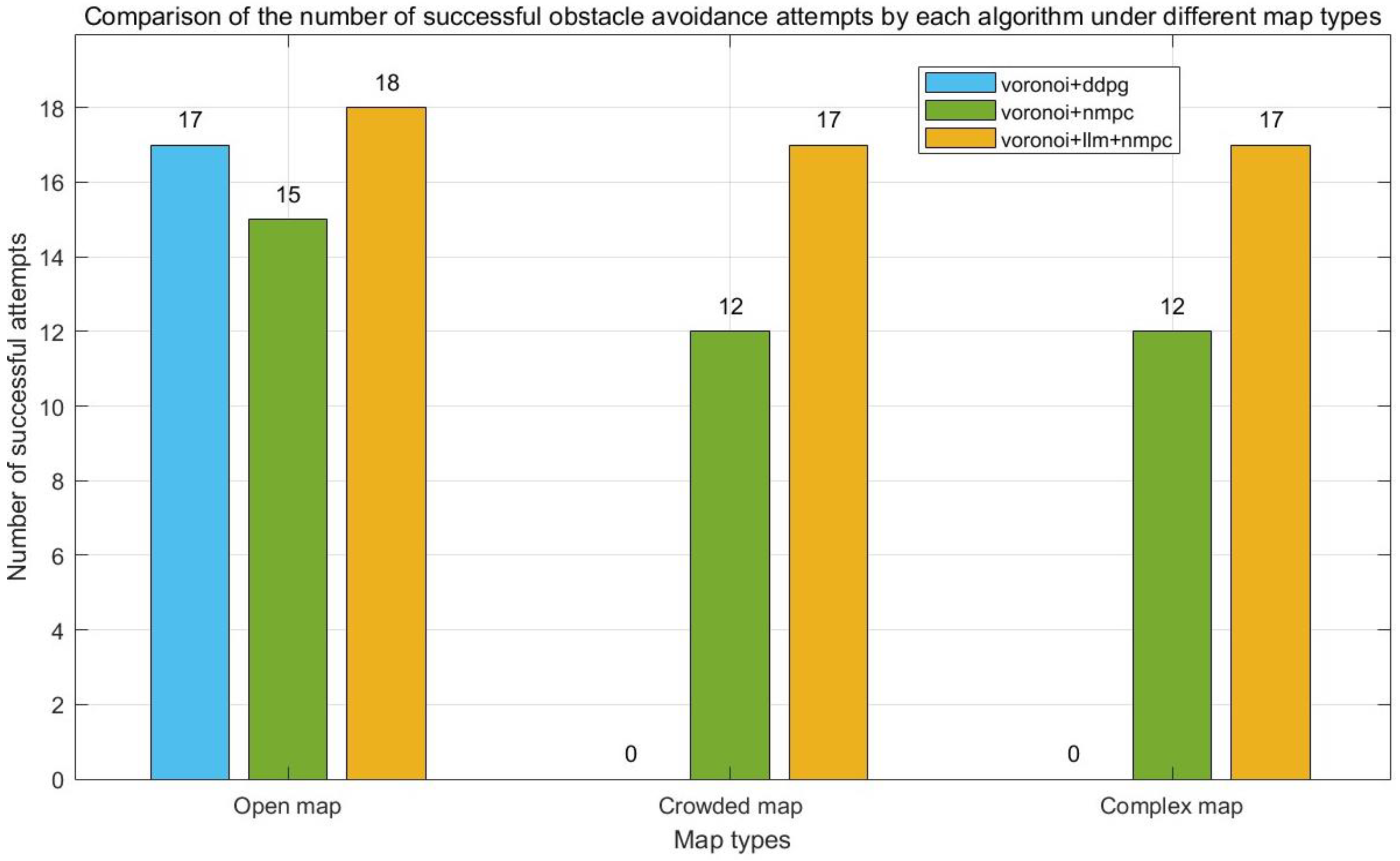
This article presents a cooperative framework for multi-robot wildfire monitoring that integrates dynamic Voronoi partitioning with large language model (LLM)-enhanced nonlinear model predictive control (NMPC) to address challenges in dynamic unknown environments. Conventional methods, particularly fixed-weight NMPC, lack adaptability in scenarios with suddenly changing obstacles, such as spreading fire fronts. Our approach employs a hierarchical architecture. At the task allocation level, an enhanced dynamic Voronoi algorithm ensures robust and collision-free area partitioning. At the motion control level, we innovatively leverage the semantic reasoning capability of LLMs to dynamically adjust the cost function weights of the NMPC in real time based on environmental features, overcoming the parameter rigidity of traditional controllers. Extensive simulations in benchmark environments demonstrate the framework’s superior performance over deep deterministic policy gradient (DDPG) and fixed-weight NMPC baselines, showing significant improvements in exploration efficiency and obstacle avoidance success rate. This work provides a viable solution that bridges high-level semantic cognition with low-level optimal control for robust autonomous surveillance.
Keywords: multi-robot systems; collaborative exploration; nonlinear model predictive control (NMPC); dynamic Voronoi partitioning; large language model (LLM); wildfire monitoring; unknown environments multi-robot systems; collaborative exploration; nonlinear model predictive control (NMPC); dynamic Voronoi partitioning; large language model (LLM); wildfire monitoring; unknown environments