Article

Evaluation of Particle Size of Wood Dust from Tropical Wood Species by Laser Diffraction and Sieve Analysis


1
Faculty of Wood Sciences and Technology, Department of Fire Protection, Technical University in Zvolen, T.G. Masaryka 24, 96001 Zvolen, Slovakia
2
Faculty of Wood Sciences and Technology, Department of Woodworking, Technical University in Zvolen, T.G. Masaryka 24, 96001 Zvolen, Slovakia
*
Author to whom correspondence should be addressed.
Forests 2025, 16(12), 1790; https://doi.org/10.3390/f16121790
Submission received: 24 October 2025 / Revised: 25 November 2025 / Accepted: 26 November 2025 / Published: 28 November 2025
(This article belongs to the Section Wood Science and Forest Products)

Abstract

This study investigates particle size distribution and fine dust generation from sanding six tropical wood species (Red Meranti, Iroko, Zebrano, Bubinga, Ipe, and Wenge) using sieve analysis and laser diffraction. The wood species produced different dust particles, primarily influenced by wood density. Bubinga, Zebrano, and Wenge generated the highest proportion of particles in the 125–250 μm range, while Ipe and Iroko produced more dust in the 63–125 μm fraction. Low-density Red Meranti formed the greatest share of coarse particles (10.54% over 549.5 μm), whereas high-density Ipe generated the largest proportion of respirable dust, including PM10 (8.80%), PM2.5 (2.93%), and PM1 (0.88%). Statistical analysis confirmed a significant effect of density on both coarse and fine dust fractions, with finer particles increasing consistently as density increased. Laser diffraction showed ultrafine particles down to approximately 0.7 μm in all species except Red Meranti. Microscopy confirmed elongated fibrous fragments, particularly in Wenge and Red Meranti. Overall, denser tropical hardwoods exhibited greater potential to produce hazardous fine dust during sanding, posing health risks and explosion hazards. These findings emphasize the need for effective dust extraction and high-efficiency respiratory protection and contribute to improved understanding of dust formation mechanisms in tropical wood processing.

1. Introduction

Wood dust is an integral part of woodworking technological processes [1]. The finest dust particles are formed during sanding. Sanding is one of the most common operations in production, which is carried out in order to achieve the smoothness of the surface and prepare it for finishing, coating, or other processing [2,3]. From this point of view, the researchers’ attention is therefore focused on the analysis of dust particles after sanding. From the point of view of health, the most risky particles are smaller than 100 μm, which can cause a wide range of health problems with long-term exposure [4,5,6,7] or they may cause an explosion with subsequent fire [8,9,10,11,12]. For these reasons, the explosiveness of wood dust is investigated, and fire prevention in the woodworking sector is adopted in accordance with technical standards [13,14]. Dust levels in the working environment are also monitored in accordance with EU standards (OEL) [15]. The toxicity of wood dust is primarily influenced by the type of wood [16]. For example, oak and beech dust is classified as a group A1 carcinogen, while dust from other types of wood is classified as an A2 carcinogen [17,18]. Long-term exposure to beech and oak wood, as well as birch, walnut, and tropical wood dust, poses a risk of developing nasal adenocarcinoma [19,20,21,22]. Considering [23], tropical woods can contain chemicals that can irritate the eyes, cause redness, or blistering. According to the Regulation of the Government of the Slovak Republic No. 471/2011 Coll. [24], the permissible mean exposure value (NPELc) for the total inhalable concentration of solid aerosol from tropical wood in workplaces is limited to 1 mg·m−3. This value is five times lower than for oak and beech, which are classified as Category 1 carcinogens under the same regulation, and it is eight times lower than that for other wood types. Also, particles smaller than 10 μm are considered respirable and can reach the deep lung regions. Despite these risks, the particle size distribution of tropical wood dust during sanding has not been systematically investigated. Attention was paid especially to European wood species. However, tropical wood species themselves are an increasingly used material in industry.
Considering [25], the percentage distribution of particles for tropical wood dusts (Cumaru, Padauk, Ebony, and Marblewood), showing that the majority of particles are concentrated in the 100 µm and 200 µm size ranges, while the finest (<63 µm) and coarsest (500 µm) fractions are least represented. Similar results are also reported in a study of Padauk wood dust [26,27] and Marblewood dust [28]. For comparison with European wood species [8], it was found that beech, ash, hornbeam, and alder wood dust particles were smaller than 1.5 μm. There may also be differences between coniferous and deciduous wood species. According to [29], when sanding spruce and pine wood, larger dust particles are formed than with beech, hornbeam, oak, or ash wood. From the measurements in [30], it turned out that the beech particles after sanding had a size of 75.3 μm, while the pine particles after sanding had a size of 197.0 μm.
Drawing from [29,31], it was found that there is a relationship between the size of dust particles and the density of wood. With increasing density, the diameter of dust particles decreases [32]. According to [33,34], density is the explanation for the lower resistance of spruce wood to woodworking processes. Previous studies [31,35] have shown that the density of wood is also related to the concentration of dust. Similar conclusions are also presented in other studies [36,37]. Wood dust particles in particular have an average size of between 10 μm and 30 μm, while particles smaller than 5 μm can also be produced during the sanding process [38]. On the contrary, from [39], it was found that the median of the investigated dust particles was 63.9 μm. From the point of view of dimensions, such particles are airborne dust that can penetrate the respiratory system up to the alveoli and cause damage to the lungs [40,41]. Especially during sanding, PM1 or PM2.5 particles can be generated. In light of [42], such small particles can also be formed when sawing thermally modified types of wood. Prolonged exposure to PM2.5 particulate matter allows it to enter the bloodstream, initiating an immune response that can result in oxidative damage and inflammation [43,44]. For the above reasons, research is therefore focused on the study of dust in the work environment [45]. Therefore, it is essential to deal with the research on dust from tropical wood species. However, there is a lack of research evaluating dust from sanding tropical wood species in terms of morphology and dimensions. At the same time, there is a lack of papers evaluating the relationship between density and dust particles; an area of research that could provide insights into the effect on different dust particle fractions in more detail.
This study provides a comparative analysis of wood dust generated during the machine sanding of six tropical species (Red Meranti, Iroko, Zebrano, Bubinga, Ipe, and Wenge). The research combines sieve analysis and laser diffraction analysis, offering a characterization of both coarse and fine dust fractions. The work analyzes the measured particle size distributions in specific fractions against the density of the source wood species, thereby providing a fundamental understanding of how density influences the generation and size of hazardous sanding dust—an essential factor for improving occupational safety.

2. Materials and Methods

2.1. Preparation of Wood Dust Samples

For the purposes of this experiment, tropical wood species were used: Red meranti (Shorea acuminata), Iroko (Milicia excelsa), Zebrano (Microberlinia brazzavillensis), Bubinga (Guibourtia arnoldiana), Ipe (Tabebuia), and Wenge (Millettia laurentii). The reason for choosing these types of wood is their ever-increasing use in European countries. For this reason, it is necessary to know what health risks dust particles from sanding tropical wood species can bring. From an experimental point of view, these types of wood were selected to ensure a greater range of densities. Table 1 shows the density values of tropical wood species that affect the sanding process, as well as the particle size of the sanding.
Before the sanding process began, the samples cut from heartwood parts of the selected wood species were adjusted to a moisture content of 8% ± 2% after acclimatization. A Parkside PBS 900 C3 belt sander (Parkside, Lidl Stiftung & Co., Neckarsulm, Germany) with a power input of 900 W and a controllable speed of 240–400 m·min−1. The average speed of 320 m·min−1 was used for the preparation of wood dust samples from sanding. The sanding direction of the samples was parallel to the fibers. The sanded surface was semi-radial/semi-tangential (depending on the slope of the annual rings in the slab). The dimensions of the sanding belts used were 75 mm × 533 mm. The grit size of the sanding belts was P80, while the abrasive was garnet, which was bonded to F-paper as a substrate by a binder (glue). The P80 sanding belt was used because it is the most commonly used in industrial surface preparation. Since abrasive belt wear affects the size of wood dust particles, a new abrasive belt was used for each wood species (after every 150 g). The collection of approximately 300 g of dust (for each wood species) was carried out using a plastic dust collector, which is part of the belt sander. The dust collector captured dust particles swept away by the air stream. Nevertheless, limitations regarding dust collector volume and collection efficiency exist. The weight of the wood dust was measured after pouring it into a plastic bag with a zipper. To minimize potential bias in the particle size distribution of the cleaned wood dust, a sufficiently large amount of dust was gathered during each sanding. After removing the sanded amount of dust with a laboratory spatula, the dust collector and belt sander were cleaned with an air blow gun powered by a compressor. This procedure prevented the contamination of the new sample with dust particles from the previous sample. The collected wood dust was poured into resealable bags with a zipper so that dust particles did not escape during storage or transport, and the moisture content of the wood dust would remain unchanged.

2.2. Determination of Wood Dust Moisture, Sieve, and Laser Diffraction Analysis

In the first step, the moisture content of the collected wood dust was determined. Briefly, 10 g of dust from each type of wood was weighed into a dried and weighed container with a weighing accuracy of 0.1 g. Before drying, the drying oven was set to a temperature of 103 ± 2 °C, after which the samples were placed inside. A digital drying oven Memmert UF75 (Memmert GmbH & Co. KG, Schwabach, Germany) was used for drying. The first weighing of the samples was carried out after two hours of drying, then the weighing was repeated at 30 min intervals until a constant weight was reached. The samples were considered dried if the difference between two consecutive weighings did not exceed 0.01 g (0.1% of the weight of the weighing). After the final weighing of all samples, the moisture content of the wood dust was calculated.
Subsequently, the sanded dust was analyzed by granulometric analysis. Using this analysis, the percentage of chip sizes in individual size ranges was determined based on the sieves used (bottom, 32, 40, 45, 63, 75, 90, 106, 125, 150, 180, 250, 500 µm). The bottom represents all sizes below <0.032 mm. Each sieve has a precisely defined mesh size. The percentage of individual fractions of dust particles was determined on the basis of gravimetric weighing of the mass captured on calibrated sieves. Sieves with mesh sizes that correspond to the specifics of the technological process were selected for examination. The sieving was carried out on the Retsch AS 200 Basic analytical sieving machine (Retsch GmbH, Haan, Germany). The instrument was set to an oscillation frequency of 75, and each sample weighing 50 ± 1.0 g was sieved for 15 min according to the methodological procedure IM-AS 200. This procedure was repeated 5 times for each sample in order to achieve a more accurate determination of the proportion of individual wood dust particles. The resulting data represent the calculated percentage by mass of the total weighted mass that was captured on the relevant sieve. Since the size of the fraction is defined by falling through a sieve with a given mesh size, the results obtained only indicate the size range in which the particle was located. The sieving was primarily focused on fractions of 2 mm, 1 mm, and smaller. When sieving dry sawdust, 3 to 4 Teflon balls were inserted into sieves with gaps of 0.125 mm, 0.080 mm, 0.063 mm, and 0.032 mm. Their task was to prevent the coagulation of dust particles and the subsequent formation of clusters of various sizes into a sphere shape.
For laser diffraction analysis of dust particle size, the laser diffraction analyzer Mastersizer 2000 (Malvern Panalytical, Worcestershire, UK) was used. This device is used to measure the granulometric parameters of bulk materials. It consists of a dispersing unit, which homogenizes the sample mixture with the carrier medium using ultrasound and a propeller, and transports it in the right concentration to the measuring cell. The instrument operates on the principle of light scattering when particles pass through a coherent laser beam. It uses a blue diode laser (λ = 430 nm) and a red helium-neon laser (λ = 660 nm), thus covering the particle size range from 20 nm to 2 mm. The measurements were performed on a wet basis, i.e., in the form of a dispersion of particles in a carrier medium. Distilled water was used as the medium (RF = 1.33). Before measurement, the container of the dispersion unit was filled with distilled water. The pump speed was set to 2000 rpm and the ultrasound intensity to 2.5, which ensured the effective dispersion of the agglomerated particles. The measurement was performed only after removing air bubbles. Wood dust samples were added in small doses to the entrainment medium until an optimal concentration of 15% (in the range of 10%–20%). Dispersion was supported by mechanical stirring and ultrasound. A drop of detergent was added to reduce the surface tension of the water, which improved the mixing of the dust particles. The refractive index RI = 1.52 was chosen.
After reaching the desired concentration, the measurement was started. The instrument recorded more than 2000 images of the scattering pattern at an interval of 1 ms, which were then averaged to increase the accuracy of the measurement. Malvern software Mastersizer 2000 6.01 (Malvern Panalytical, Worcestershire, UK) automatically evaluated the particle size distribution according to the principles of light scattering and allowed for repeated data analysis as needed.

2.3. Microscopic Analysis

A Keyence VHX-7000 (Keyence Corporation, Osaka, Japan) digital microscope was used for the measurement of particle size and microscopic analysis. Approximately 1 g of dust was evenly spread across the paper over a glass slide. A separate paper was chosen for each type of wood so that individual analyses would not be contaminated with dust particles from another type of wood. The microscope scanned a 10 mm × 10 mm area at 200× magnification. The microscope was calibrated before each experiment using a standardized Keyence calibration scale (Keyence Corporation, Osaka, Japan).

2.4. Statistical Evaluation of Wood Dust

The results of sieve and laser diffraction analysis were processed in the form of graphs using Microsoft Excel (Microsoft, Redmond, Washington, DC, USA) and STATISTICA 14 (TIBCO Software Inc., Palo Alto, CA, USA). The results were statistically evaluated by analysis of variance (ANOVA) and Duncan’s post hoc test using STATISTICA 14 software (TIBCO Software Inc., Palo Alto, CA, USA). The chosen significance level was α = 5%.

3. Results

3.1. Moisture Content of Wood Dust from Tropical Wood Species

Table 2 shows the moisture content values of tropical wood species. The results show that the highest moisture was measured for Red Meranti. On the contrary, the lowest moisture was measured for Bubinga and Ipe. A previous study [56] shows that with increasing wood moisture content, the agglomeration of dust particles can occur. Wood dust, around 10% to 15%, showed significant agglomeration as per data from the previous study. The research also showed that the lower the moisture content of the wood, the smaller the size of the dust particles. The authors measured the largest increases in a range from 0% to 10%. The increase was greatest for those dust particles that had the largest size. However, the results in Table 2 show that in most of the wood species studied, the moisture content is lower than 5%.
Analysis of variance (ANOVA) was performed to assess differences between moisture content values of individual wood species. The overall p-value is 0.000 at the significance level α = 5%. This indicates that there is a statistically significant difference in the mean moisture content value among the types of wood (F-value = 6.03; Degrees of Freedom = 5; Effect size ηp2 = 0.209). The subsequent Duncan’s post hoc test showed that Red Meranti had a statistically significantly higher moisture content compared to dust from other wood species.

3.2. Sieve Analysis of Wood Dust from Tropical Wood Species

The results of the sieve analysis of the wood dust from sanding tropical wood species are presented in Table 3. The resulting weight and percentage composition of spruce wood dust are the arithmetic means of three sieve analyses. The data in Table 3 represent the mass (in grams) of dust particles collected on each analyzer sieve, including their corresponding relative amount (in percentage). The respective weight of dust particles on each sieve represents an interval of dimensions. Table 3 shows the differences between the several types of wood. Bubinga had the largest mass of dust particles in the range from 125 μm to 250 μm, almost half of the weighed sample. Zebrano and Wenge also had the largest dust masses, ranging from 125 μm to 250 μm. For Ipe and Iroko, the largest dust particle masses were measured in the range of 63 μm to 125 μm. In the case of Red Meranti, the largest mass was measured on a sieve with a grid size of 250 μm, i.e., particle sizes ranging from 250 μm to 500 μm. If we focus on the largest dust particles (i.e., those with a size greater than 500 μm) in Table 3, the largest mass was measured in Red Meranti. Compared to the findings from [57], however, the Red Meranti dust particles in this experiment were larger, with up to 35% of the particles ranging from 250 μm to 500 μm. On the other hand, the lowest weight was measured in Ipe. The dust particles with the smallest dimensions were located at the bottom of the analyzer and were not captured by any sieve. These dust particles were less than 32 μm in size. The greatest mass of such particles was measured in Ipe (i.e., the highest respirable fraction was created during the sanding of Ipe). From Table 3, it can be observed that in most tropical wood species, dust particles with a size of less than 100 μm made up almost a third of the sample analyzed. These dust particles can potentially enter the worker’s airways and cause acute or chronic inflammation, tumors, or other problems in the upper and lower respiratory tract [58].
Particles below 100 µm also pose an explosion risk because they become airborne [59,60]. As defined by [26,61], with decreasing dust particle size, the risk of explosion increases (i.e., minimum initiation energy, MIE, decreases). Especially in the case of dried sawn timber, the moisture content of dust particles is low, which increases the risk of explosion [11]. According to [26], a lower ignition temperature is required, especially for particles smaller than 75 μm. Within the scope of [62], particles with a smaller diameter have a larger specific surface area (m2·g−1), which affects their explosion parameters. Regarding [63], it follows that, at the same concentration of dust particles, the explosion pressure increases with the decreasing diameter of these particles. According to the authors, this is due to the larger specific surface area and thus the larger contact zone with oxygen. This can lead to a faster release of heat and the formation of deflagration with subsequent detonation.
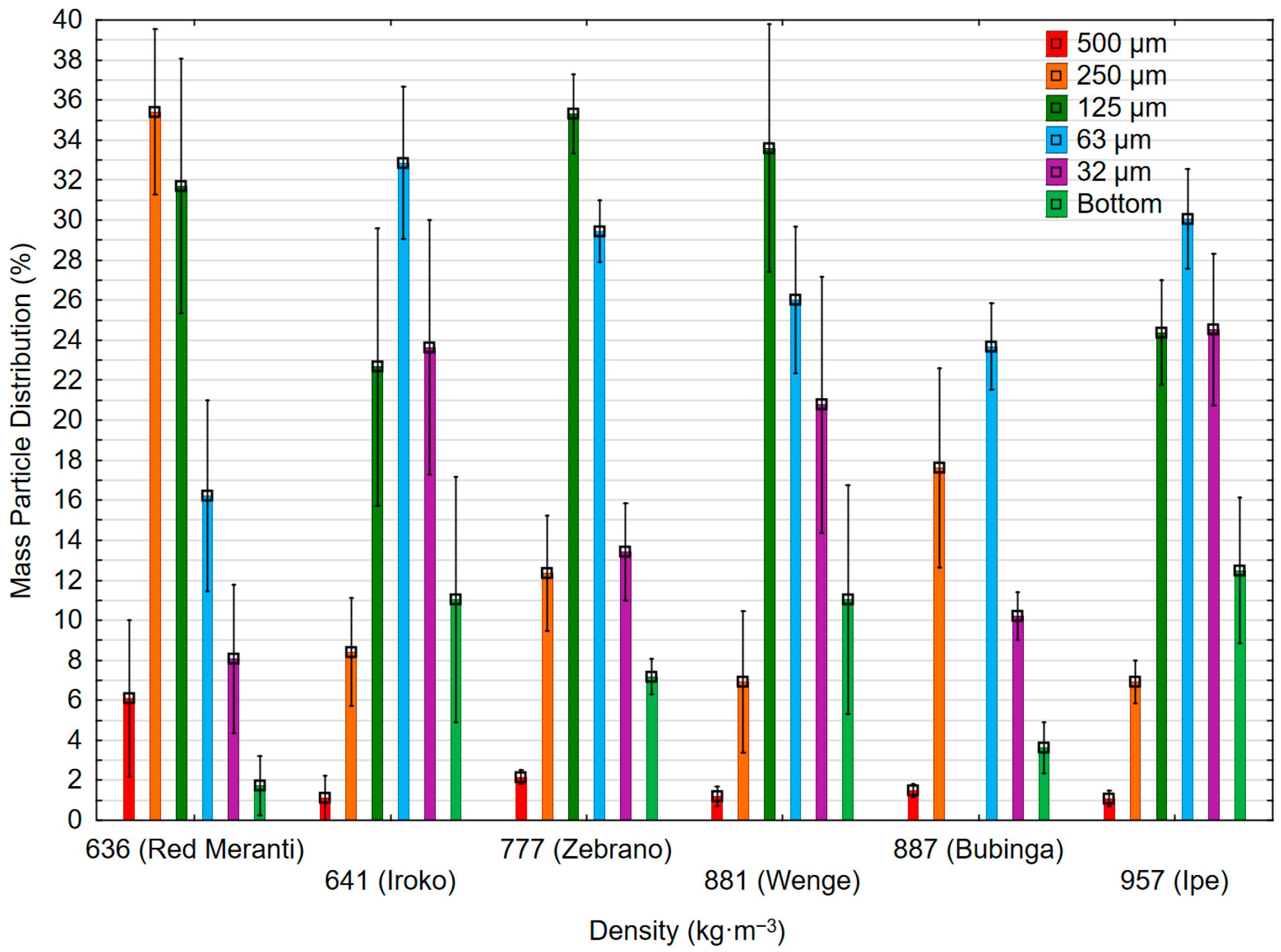
From Table 3, it can be observed that although the individual types of wood were sanded under the same conditions, the size of the dust particles differs. From [35,64], it follows that the density and hardness of the material have a more significant impact on the particle size than the sanding conditions. Considering [64], softer, lower-density woods produce larger and thicker particles, and vice versa. According to [65], this is due to the greater penetration of abrasive grains into the wood and the associated sanding of more material (forming coarser and larger dust particles). Hence, the denser materials produce a higher amount of finer dust particles (<10 μm) [64]. In [64], it is the increasing density that causes the proportion of finer dust particles to increase. From Figure 1, it is possible to observe changes in the percentage of dust particles on individual sieves from six density values. The input dataset was subjected to statistical evaluation by performing an analysis of variance (ANOVA). The preparatory tests performed (Shapiro–Wilk test, Leven test, and testing for the independence of the values of the measured quantity) showed that the assumptions were met, and ANOVA, as a robust technique, can be applied. The analysis of variances showed that density has a significant effect (p = 0.000 at the significance level α = 5%; F-value = 29.1; Degrees of Freedom = 5; Effect size ηp2 = 0.967) on the change in the percentage of particles on individual sieves (Figure 1).
With a 500 μm sieve, a decrease in dust particles can be observed with increasing density. Duncan’s post hoc test showed that this change is statistically significant. There was also a significant decrease in dust particles captured on a sieve with a size of 250 μm. The largest proportion of such particles was in Red Meranti, whose measured density was the lowest. This can be a similar principle to spruce wood dust particles, which are less resistant to woodworking processes and are larger compared to denser wood types [33,34]. On the other hand, the lowest fraction, located at the bottom of the analyzer, tended to increase with increasing density, according to Figure 1. Since these are particles smaller than 32 μm, this is evidence that the proportion of airborne inhalable particles also increases at higher densities. Evidence that the aerodynamic diameter of dust particles decreases with increasing density is also evident from [35]. Therefore, the proportion of airborne dust and its concentration will depend on the material to be sanded [65].

3.3. Laser Diffraction Analysis of Wood Dust from Tropical Wood Species

Sieve analysis itself is an effective method for measuring wood dust. However, the disadvantage of this method is that some particles (especially elongated narrow ones) can fall through the mesh of a sieve with a size smaller than the current particle length [66]. This leads to a distortion of the actual size of the particle (especially the length). Therefore, according to [8], the sieving of wood dust, which is not uniform in shape and often has long and thin particles, can be inaccurate. Another disadvantage is the clogging of the mesh of the sieve with fine particles [8]. This is due to a certain cohesion of these particles [67] or the electrostatic forces present between the particles [68]. According to [67], particles remaining stuck in the sieve meshes are the cause of material loss in the sieving process. According to [68], the larger number of particles is captured by machine vision. On the contrary, based on [8], the laser diffraction analysis method may overestimate the particle size measurement results of wood dust due to the non-spherical particle shape. Long and thin particles can be recognized as spheres with a diameter equal to the length of the particles [69,70]. Therefore, according to [8], it is advisable to use several methods for analysis. Per the findings of [71], sieve analysis provides only general information about the distribution of dust particles.
Based on the preceding factors, laser diffraction analysis was therefore applied in the study. The aim of the laser diffraction analysis was to identify the size ranges of dust particles. This method, therefore, provided more detailed data than sieve analysis. However, laser diffraction assumes spherical particles, whereas wood dust particles are typically irregular, often elongated, or plate-like due to the cellular structure. Such shapes can affect scattering behavior and lead to differences between the laser diffraction and the geometric size measured by sieving. Fibrous particles may orient when passing through sieve apertures, resulting in smaller reported sizes. The observed discrepancies between methods and species may therefore be partly attributed to differences in particle morphology.
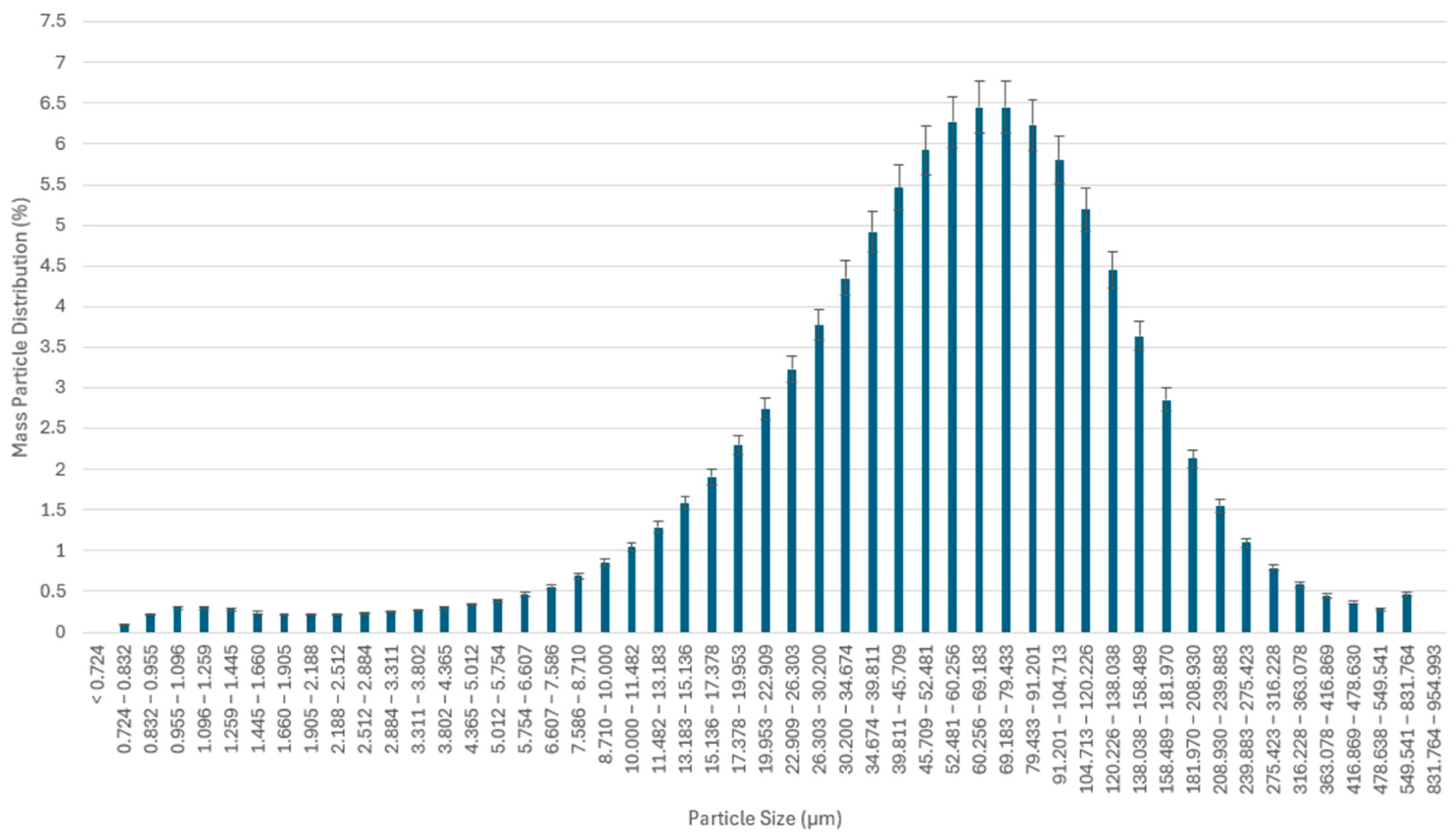
Figure 2 shows the percentages of individual sizes of dust particles from a representative Zebrano sample. The smallest particles that were formed during the production of the sample range from 0.7 μm to 0.8 μm, with a percentage representation of 0.09%. Laser diffraction analysis thus proved the presence of particles that can be classified as PM2.5. These pose a serious risk to workers’ health. A majority of the particles, with a volume of 6.45%, were measured in the range of 60.3–69.2 μm. The same amount was measured in the range from 69.2 to 79.4 μm. Those of a particle size exceeding 549.5 μm reached a percentage of 0.46%. This is lower than the 2% found in sieve analysis. Figure 2 shows a gradual increase in the percentage of individual particle sizes, up to 6.45%. This value indicates a particle size range from 60.3 μm to 79.4 μm.
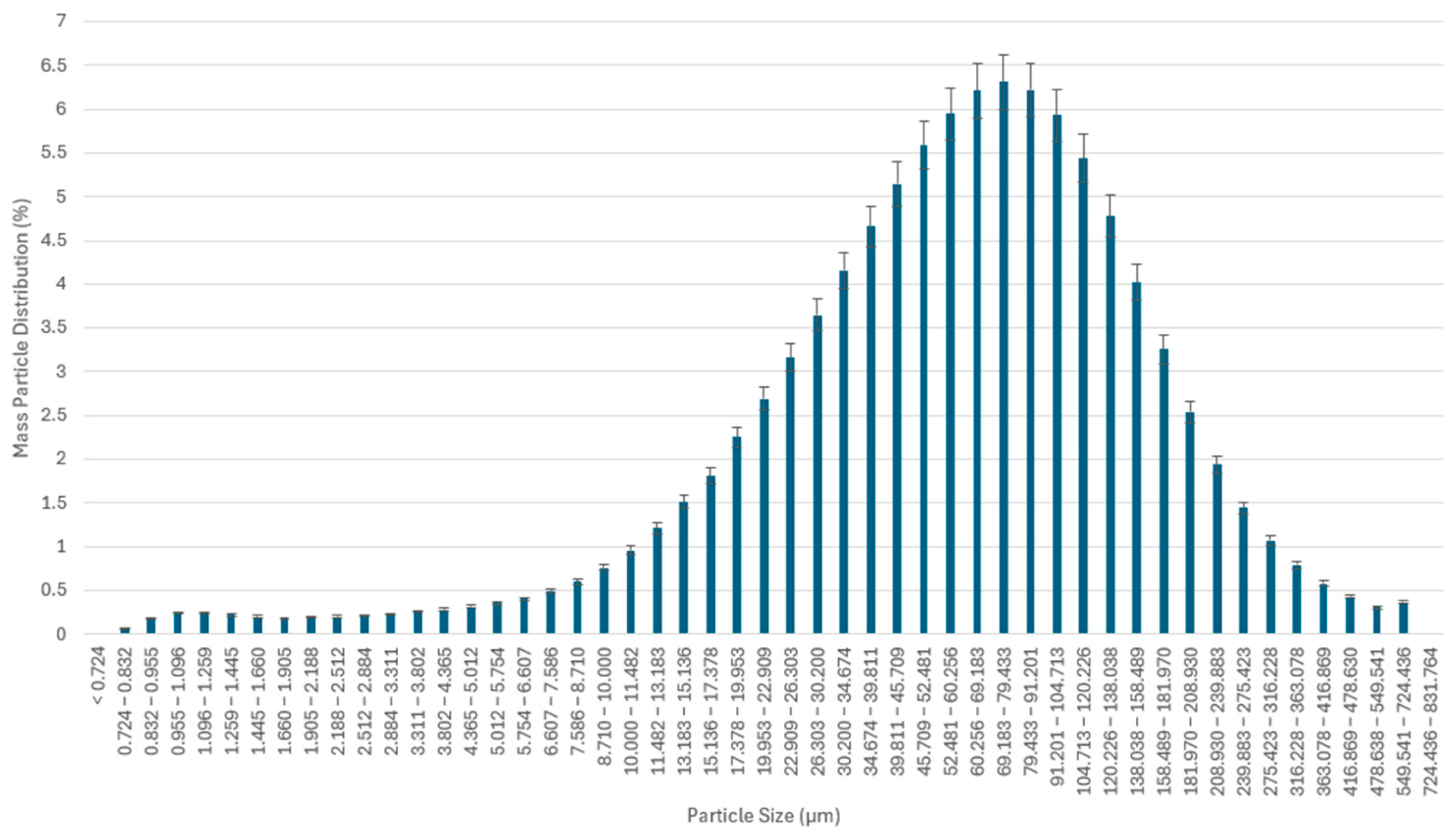
Figure 3 shows the individual sizes of dust particles of a representative Iroko sample, expressed as a percentage of mass particle distribution. The smallest particles that were formed during the production of the sample are in the range of 0.7–0.8 μm with a percentage representation of 0.07%. The particle size range from 69.2 μm to 79.4 μm contained the largest volume fraction of particles, accounting for 6.31% of the total sample volume. Only 0.36% of the volume was made up of particles larger than 549.5 μm. Figure 3 shows a gradual increase in the percentage of individual particle sizes, up to 6.31%. This value indicates a particle size range from 69.2 μm to 79.4 μm.
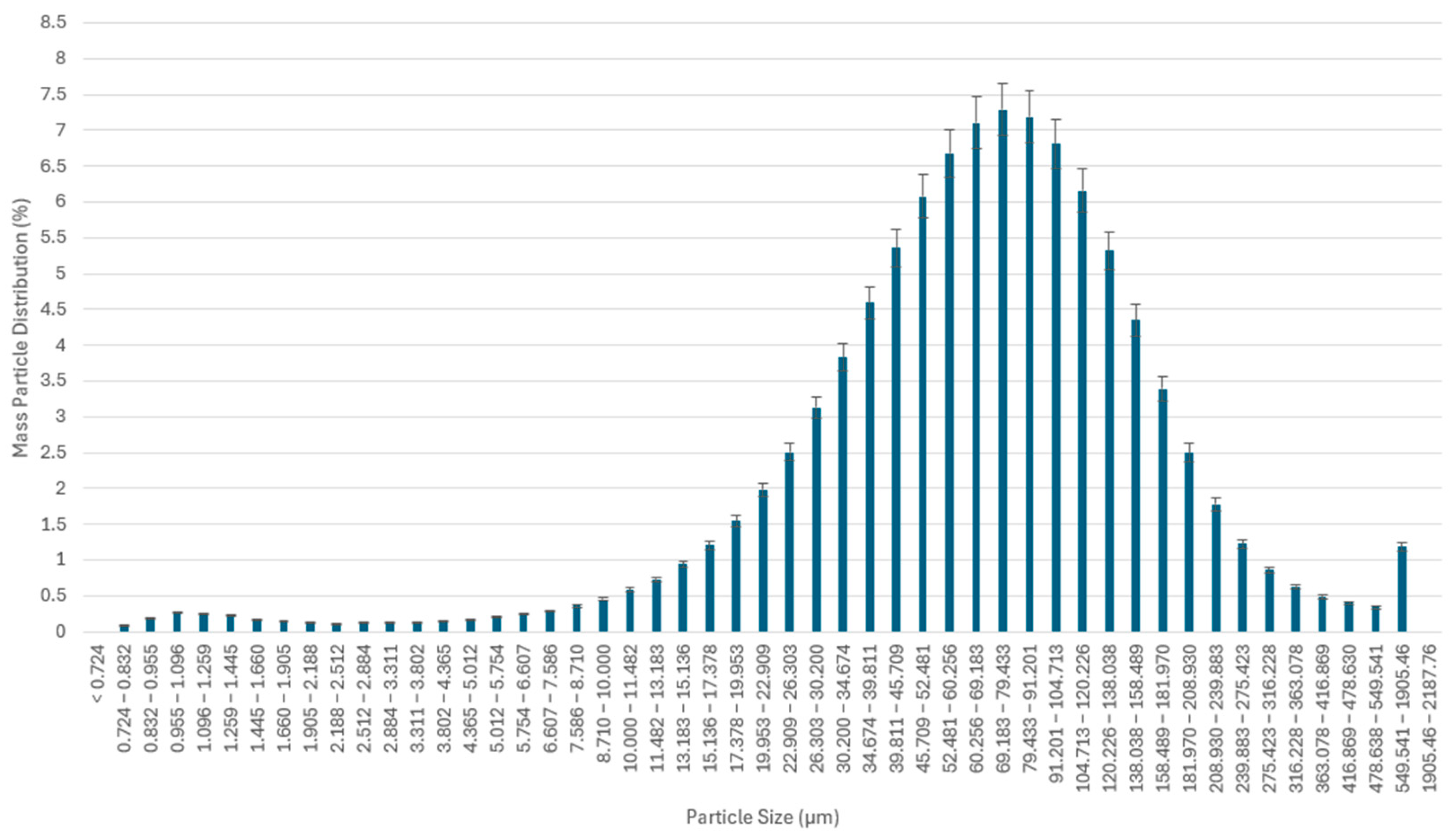
Figure 4 shows the measurement results of individual dust particle sizes of a representative Bubinga sample, expressed as a percentage of volume. The value of 0.08% by volume represents the particle size range of 0.7–0.8 μm. Smaller particles than this range were not measured in the sample. Most of the wood dust, with a share of 7.29% of the total volume of the sample, was measured in the range from 69.2 μm to 79.4 μm, similar to the measurement of the Zebrano and Iroko samples. The proportion of particles larger than 549.5 μm exceeded 1% compared to the Zebrano and Iroko samples. Specifically, the amount of particles larger than 549.5 μm was 1.19%. In Figure 4, a gradual increase in the percentage of individual particle sizes can be observed, up to 7.29%. This value indicates particle sizes in the range of 69.2–79.4 μm. From this point onwards, the percentage decreases steadily until a particle size of 2187.8 μm.
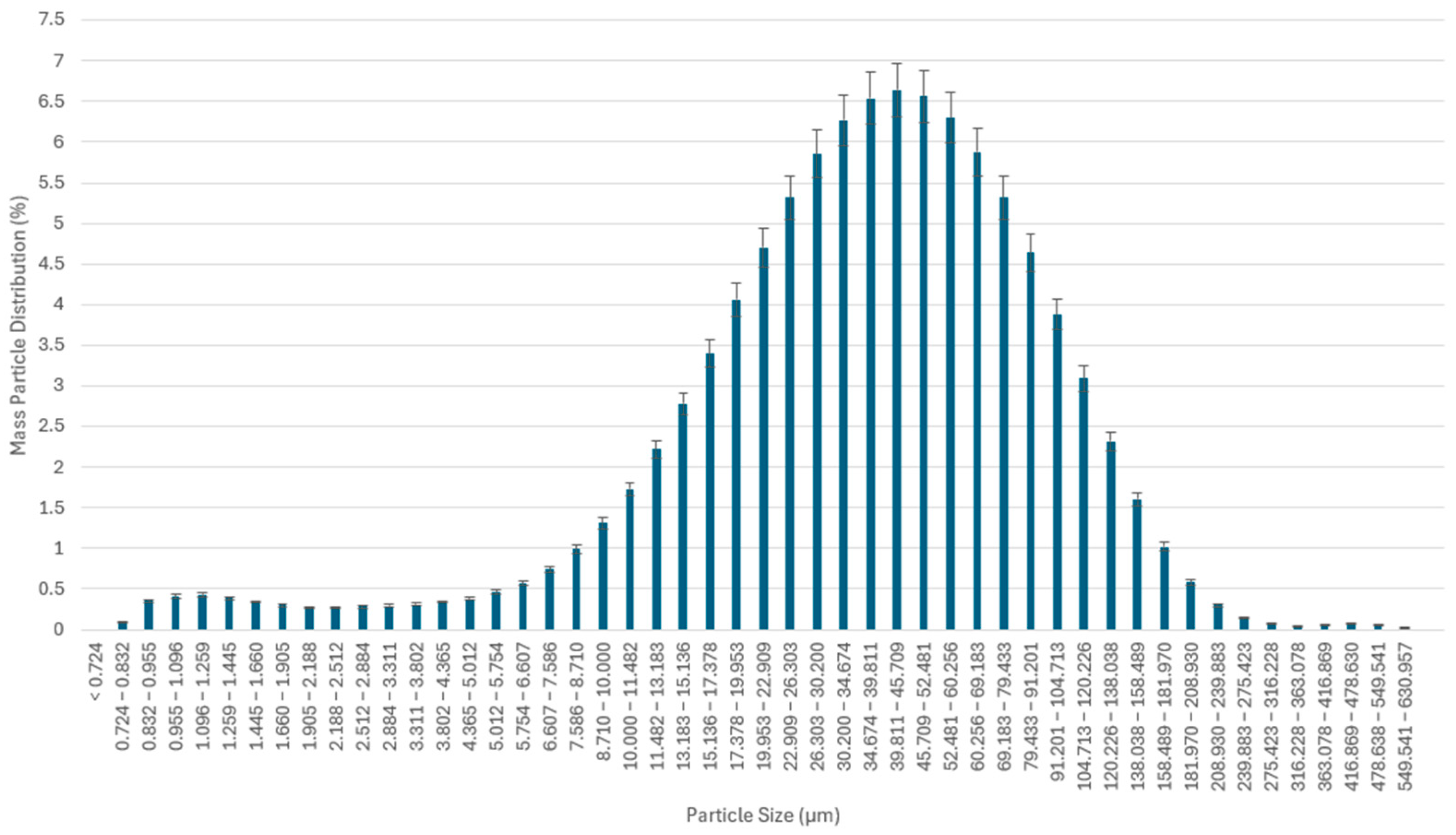
Figure 5 shows the percentages of individual sizes of dust particles from a representative Ipe sample. The smallest particles measured from this sample were in the range from 0.7 μm to 0.8 μm, with a similar percentage as in the previously measured Zebrano, Iroko, and Bubinga samples; the exact value of particle sizes in this range was 0.10%. We measured the majority of particles in the range of 39.8–45.7 μm, with a share of 6.64% of the total volume of the measured sample. Particles with a size of more than 549.5 μm accounted for a low value, namely 0.02%. Figure 5 shows a gradual increase in the percentage of individual particle sizes up to 6.64%. This value indicates a particle size range from 39.8 μm to 45.7 μm.
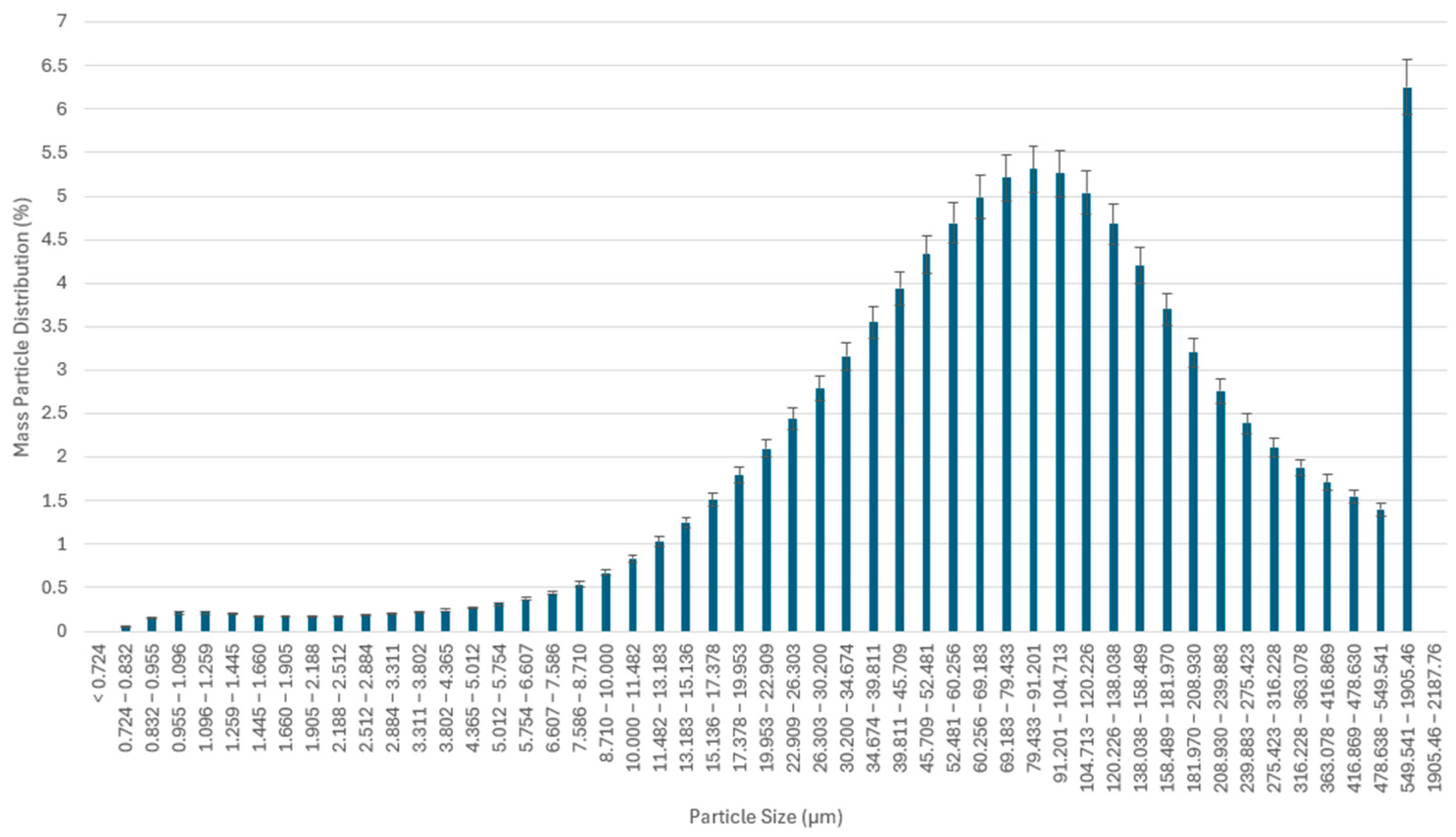
Figure 6 shows the individual sizes of dust particles from the representative Wenge sample and expressed in % volume. The smallest particles that were formed during the production of the sample range from 0.7 μm to 0.8 μm with a percentage representation of 0.06%. There were no dust particles below 0.7 μm. Particle sizes that exceeded the value of 549.5 μm had the largest representation, with a value of 6.25% of the volume of the measured sample. A majority of dust particles were measured in the range of 79.4–91.2 μm with a percentage representation of 5.31% of the volume. In the particle size range from 79.4 μm to 91.2 μm, an increase of up to 5.31% can be observed. Compared to the previous tropical wood species, the proportion of longer dust particles increased. Particles from 549.5 μm to 1905.5 μm constituted up to 6.25%. Particles longer than 1905.5 μm constituted 0.05% of the volume of the sample analyzed.
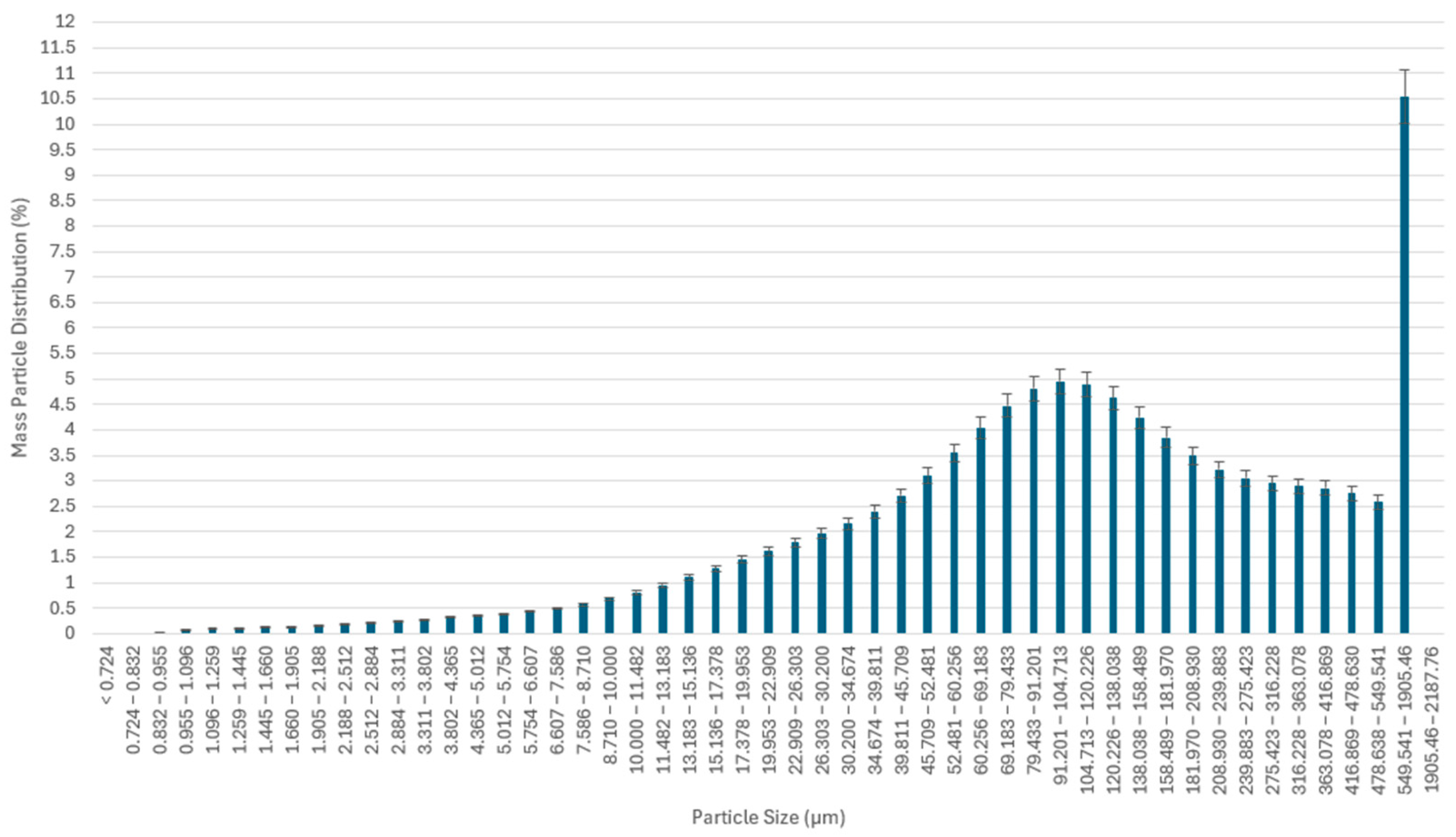
Figure 7 shows the percentages of individual sizes of dust particles from a representative Red Meranti sample. Compared to the previous five types of wood, Red Meranti does not produce any particles in the range of 0.7–0.8 μm under the given processing conditions. The smallest particles measured for this type of wood were in the range from 0.8 μm to 1.0 μm, with only 0.03% of the volume. As with Wenge, Red Meranti had the majority of particles measured at a value greater than 549.5 μm to 1905.5 μm. The proportion of these particles was 10.54% of the sample volume. Particles larger than 1905.5 made up a total of 0.05% by volume of the sanded dust sample. A majority of dust particles were measured in the range from 91.2 μm to 104.7 μm, with a percentage representation of 4.95% of the volume.
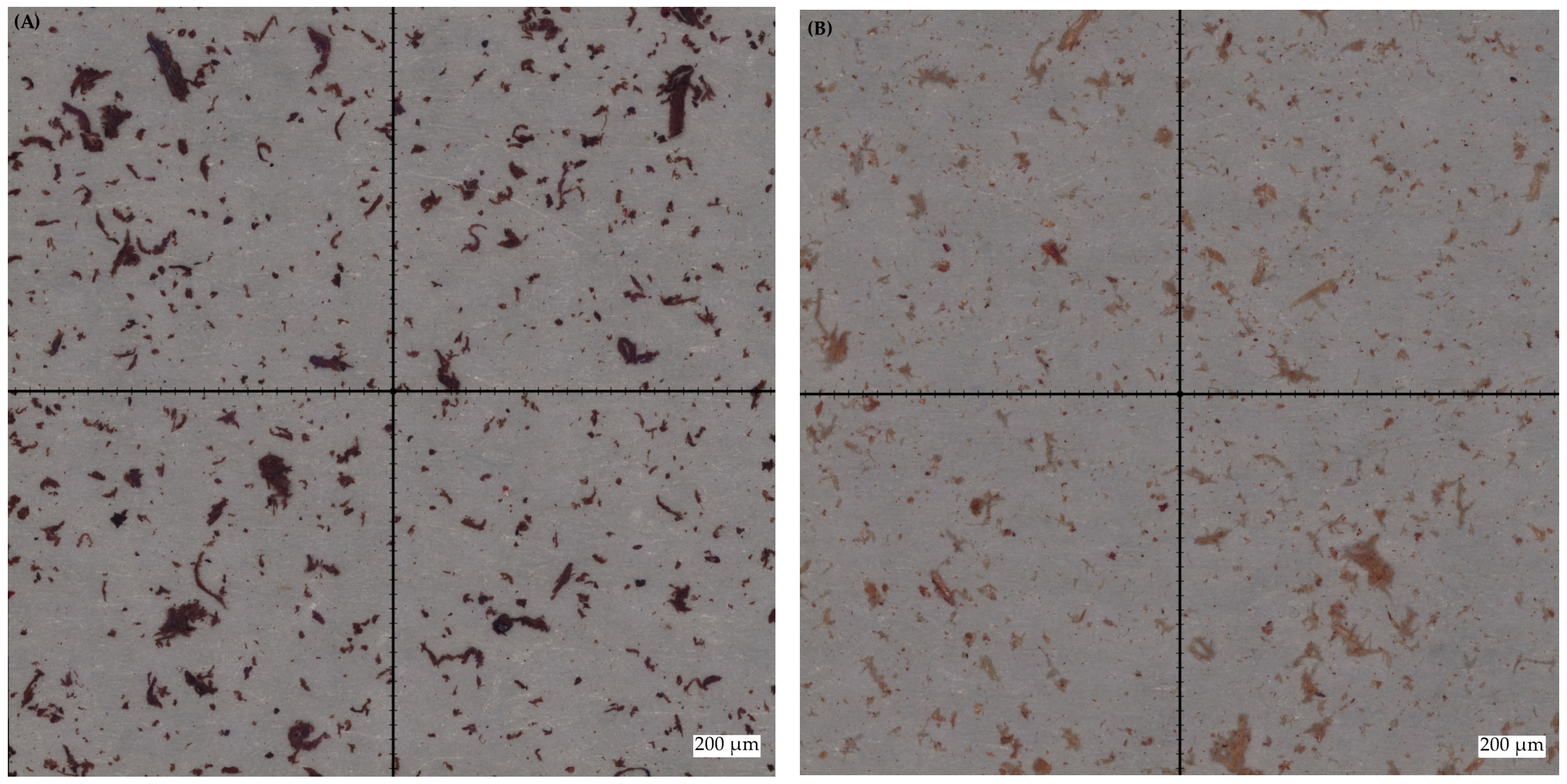
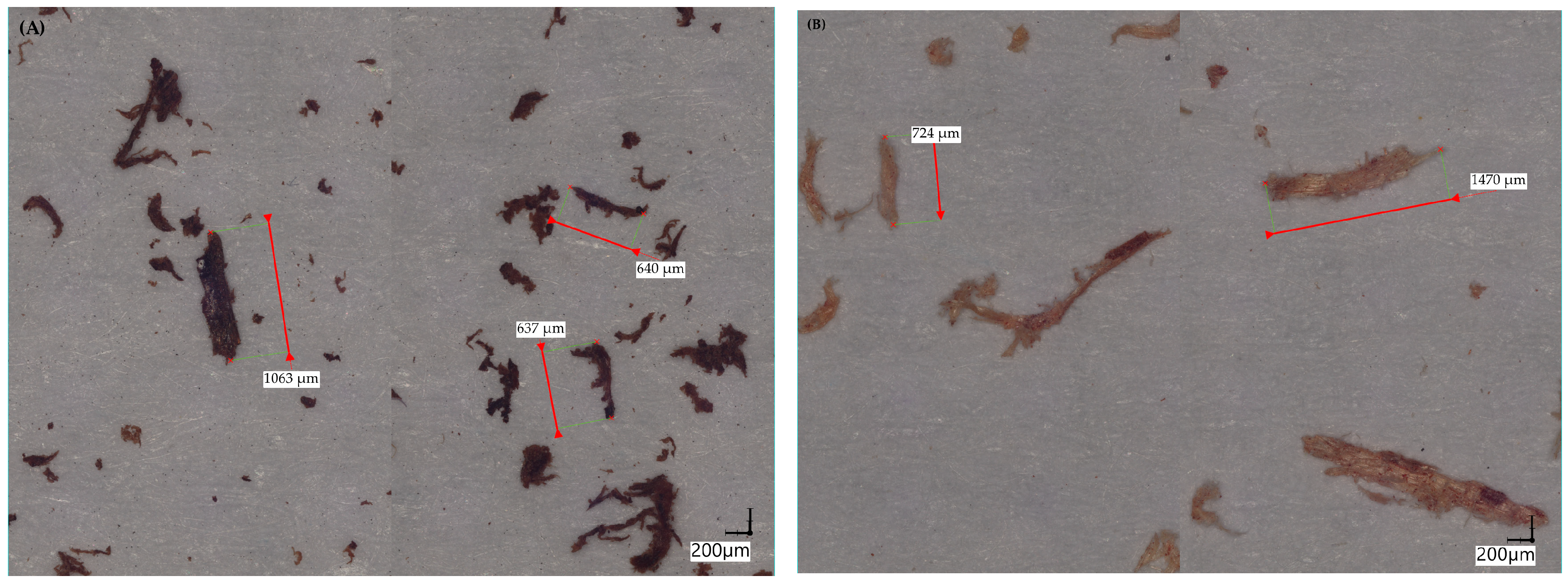
In Figure 6 and Figure 7, a significant increase in dust particles with a size of more than 549.541 μm can be seen. The cause of these values could be an agglomeration of dust particles or an inaccuracy of the device during laser diffraction analysis. Therefore, a sample of dust from Wenge and Meranti wood was taken and analyzed with a digital microscope. The sizes of individual particles were then digitally measured with this device. Isolated particles after sanding are visible in Figure 8. In the case of Wenge (Figure 8A) and Meranti (Figure 8B), the results of the microscopic analysis were identical to the results of the laser diffraction analysis in Figure 6 and Figure 7. In order to avoid isolated results, a sample of dust from both types of wood was placed under a microscope, and several of its particles were assessed. A comparison of the dust particles’ size against a 200 μm digital scale is illustrated in Figure 9A,B. Microscopic analysis again showed that both types of wood contained elongated, fibrous dust particles. Their size was more than 549.5 μm, which confirms the results of the laser diffraction analysis. Nevertheless, agglomeration of dust particles is partially visible in Figure 9A,B, but this was caused by the deposition of particles on the paper and the glass slide. Some of the microscopically analyzed particles were larger than 1 mm and were not agglomerated particles, but larger fragments after sanding. Their presence in the total dust sample is probably due to the lower mechanical properties of the wood. Wood fibers of softer and less dense wood species can break due to their brittleness (lower mechanical properties). This could be the reason for the breaking off of larger pieces of wood mass, formed into dust particles.
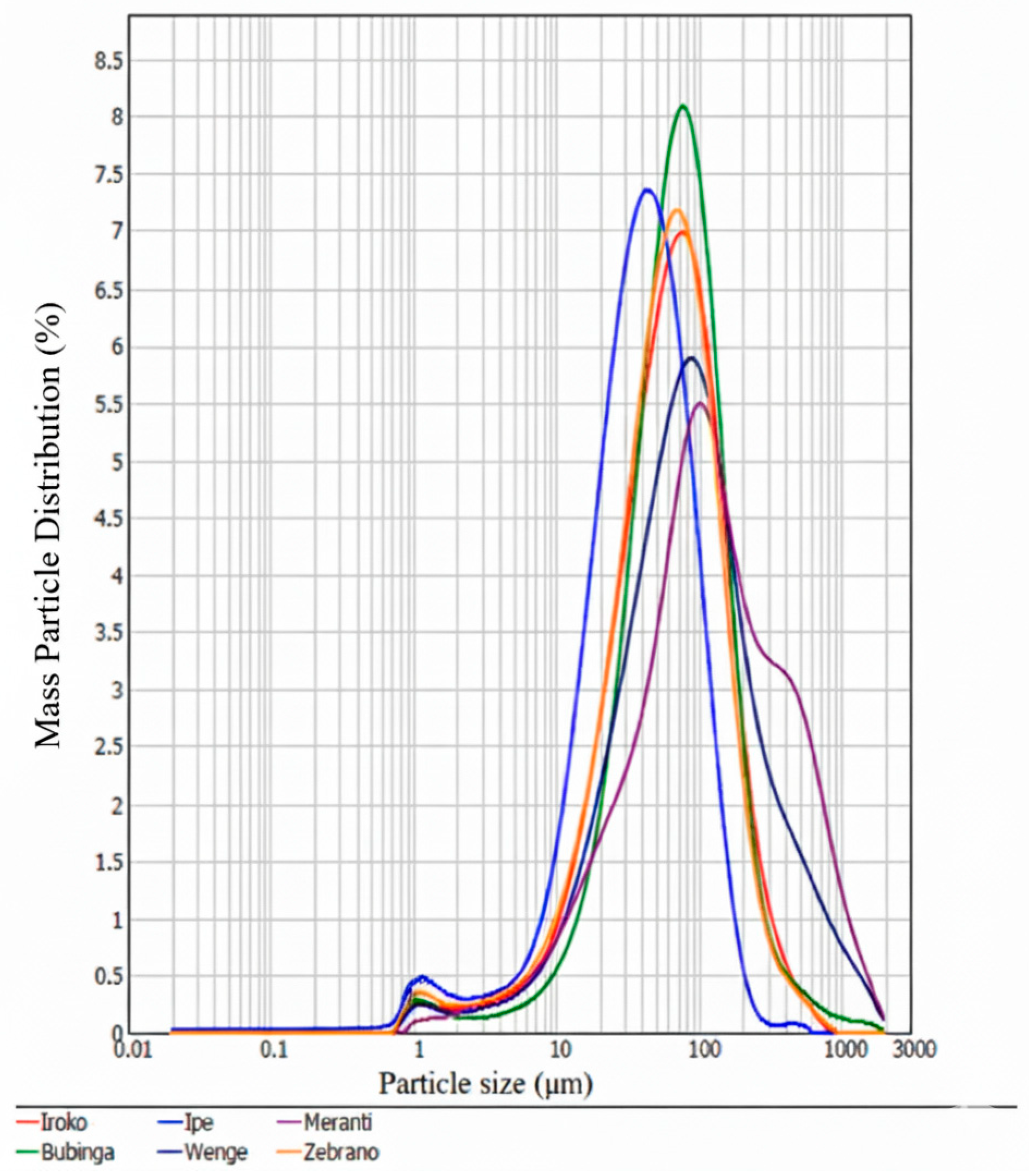
When compared with each other in Figure 10, different tropical types of wood form different-sized particles under the same sanding conditions. While the largest percentages of volume in relation to the size of dust particles do not differ significantly from each other, the differences are in the case of the largest and smallest dust particles. When evaluating dust particles with a size above 549.541 μm, the largest percentage was measured in Red Meranti (10.54%). On the other hand, the lowest was measured in Ipe (0.02%). The explanation may be the changing density, which has been shown to be statistically significant in sieve analysis. Softer, lower-density woods tend to produce longer, more fibrous dust particles due to the lower strength of the wood. In total, 6.25% of particles above 549.541 μm were measured for Wenge, 1.19% for Bubinga, 0.36% for Iroko, and 0.46% for Zebrano.

3.4. Fine Dust Particle Analysis

Despite the theory on the influence of wood density, it can be seen from Duncan’s post hoc tests that the increase or decrease in the size of dust particles may not be statistically significant in all cases. However, it can be seen in Figure 1 that the particles on the 63 μm and 32 μm sieves and at the bottom of the analyzer tended to rise with increasing density. Conversely, the particles on the 500 μm and 250 μm sieves tended to decrease with increasing density. According to [72], as the density of wood increases, so does the proportion of smaller dust particles. This can also be observed in Figure 10. It is these fine dust particles that are the most important from the point of view of research, as they pose a serious health risk. They are also a potential source of explosion and subsequent fire.
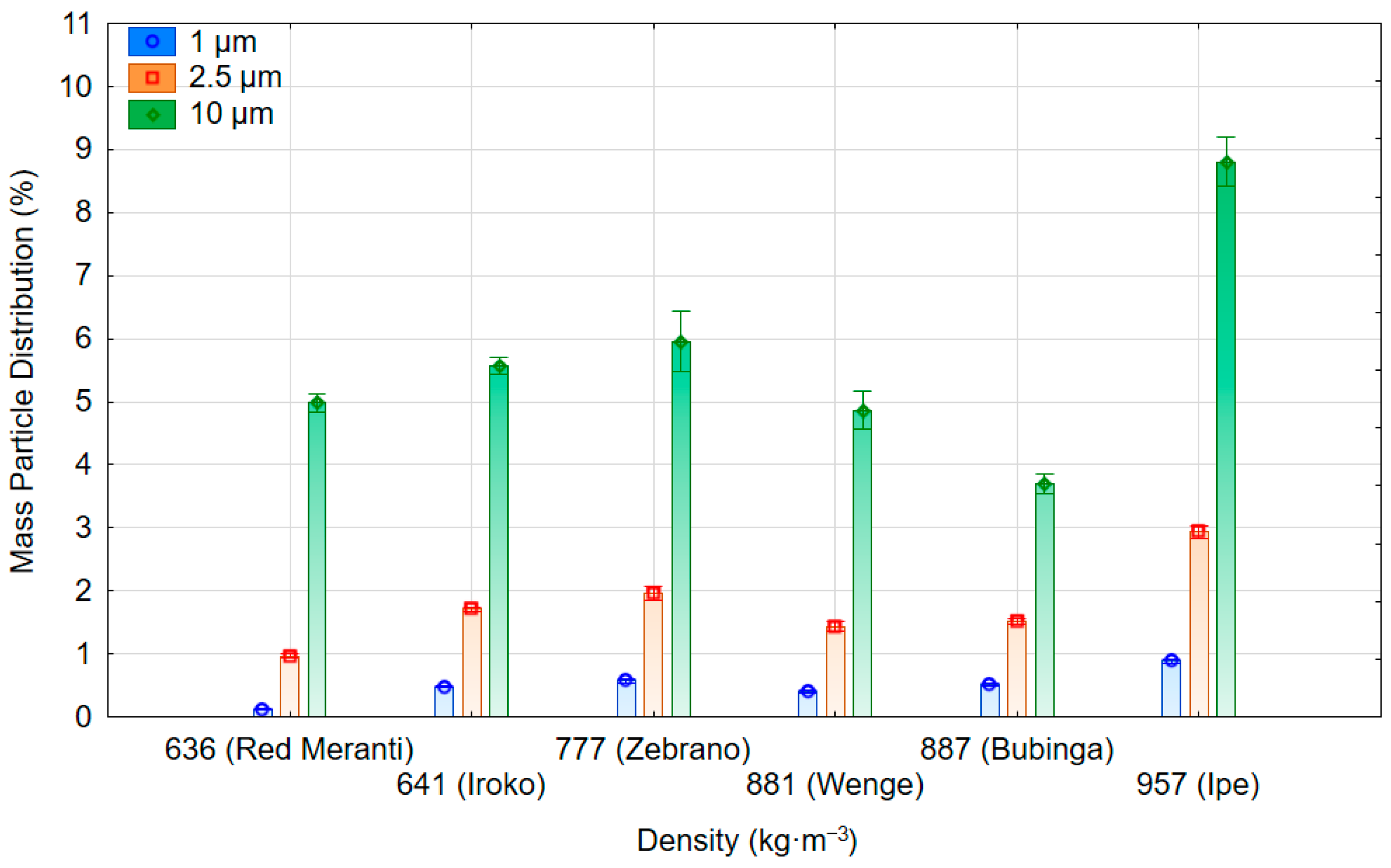
As part of the research on fine dust particles, the results from laser diffraction analysis were statistically evaluated separately. In the first step, the particle sizes were divided into three categories: <1 μm, <2.5 μm, and <10 μm. Subsequently, an analysis of variance (ANOVA) was performed again, which showed that the change in density has a statistically significant effect (p = 0.000 at the significance level α = 5%; F-value = 96.9; Degrees of Freedom = 5; Effect size ηp2 = 0.980) on the percentage of fine dust particles (Figure 11) in each group.
Figure 11 illustrates the mass particle distribution for three distinct aerodynamic equivalent diameter particle sizes: 1 μm, 2.5 μm, and 10 μm. The wood species are presented on the x-axis, grouped by their density. Figure 11 showed that the largest average proportion of particles below 10 μm was measured in Ipe. This value did not exceed 8.80% of the total volume of the sample analyzed. At the same time, the highest average proportion of particles below 2.5 μm was measured in Ipe; this value was below 2.93%. These values are very similar to those in [71]; most dust particles smaller than 1 μm were generated during Ipe sanding, namely 0.88% of the total sample volume. This can be evidenced by the fact that Ipe, as a type of wood with the highest density, made up a larger proportion of the smaller particles. This also follows Figure 5. The sieve analysis in Figure 1 also showed that the bottom of the analyzer (particles smaller than 32 μm) had the most particles from Ipe. Measurements from laser diffraction analysis and sieve analysis would thus confirm the findings from [35,64]. On the other hand, the volume of dust particles less than 1 μm from Red Meranti was only 0.12%. A decrease in the percentage of fine dust particles is also visible in Figure 7. Considering the issue of the inhalable fraction in the overall context, it can be inferred from Figure 11 that it increases with increasing density and vice versa. However, further research is needed to determine the behavior of Wenge and Bubinga wood dust, which do not follow this trend, mostly in the case of particles below 10 μm. Since Wenge and Bubinga are not statistically significantly different from Zebrano in the context of wood dust moisture content, this sudden drop cannot be explained by moisture content changes alone. In terms of the EU OEL (Occupational Exposure Limits) criteria, inhalable dust, i.e., dust below 100 μm, should not exceed 5 mg·m−3 for softwoods, 3 mg·m−3 for hardwoods, and 1 mg·m−3 for tropical woods [15]. Since fine dust particles are present when sanding tropical woods, as shown in Figure 11, these EU regulations must be considered. The smallest proportion of dust particles with a size of up to 1 μm and up to 2.5 μm was found in Red Meranti. Subsequently, the proportion of fine dust particles gradually increases. A majority of fine dust particles were measured from Ipe, which is consistent with the theory from other studies. The evidence of the effect of density can also be observed in the results from research on thermally modified wood species. From [71], it was found that with increasing the temperature of thermal modification (and thus decreasing density), the percentage of Meranti dust particles also decreased below 2.5 μm (as well as in particles smaller than both 4 μm and 10 μm). According to [72,73], the reason for this is precisely the reduction in the density of thermally treated wood species. It was the influence of density as a cooperating factor in heat treatment that caused the fraction of the smallest dust particles to decrease. The same effect of density is seen in Figure 10. From a previous study [74], it follows that it is the strength properties of wood that are involved in the formation of chips, while sanding involves the work of several cutting wedges—sanding grains. Decreasing density also causes a decrease in strength properties, which also affects the formation of chips.
The data measured above show that when sanding tropical types of wood, it is necessary to pay attention to increasing safety in the workplace. Due to the high content of PM1, PM2.5, and PM10 (especially for high-density wood species), it is necessary to provide dust extraction (local exhaust ventilation, mobile local exhaust ventilation, and downdraft table). For this work, it is recommended to use personal protective equipment—especially respiratory protection equipment, like masks. For fine dust particles, particulate disposable respirators, full face reusable respirators, or half mask reusable respirators can be used with FFP3 filters. From the presented experiment, these airborne dust particles occur even at low grit abrasive sizes. Other studies have shown that the occurrence of dust particles will increase with the use of higher grit grains of the abrasive. This was found in the case of beech and spruce wood [75].

4. Conclusions

This study comprehensively evaluated the particle size distribution and fine dust generation of six tropical wood species during sanding, using sieve analysis and laser diffraction analysis. The results demonstrated that despite identical sanding conditions, the dust morphology differed between species, primarily as a function of wood density. Bubinga, Zebrano, and Wenge predominantly produced particles in the range of 125–250 μm, while Ipe and Iroko produced the largest proportion of dust in the range of 63–125 μm. Red Meranti, with its low density, showed the highest proportion of particles with a size of 250–500 μm. Red Meranti exhibited the highest moisture content and produced the largest proportion of coarse and elongated particles (10.54% over 549.5 μm), whereas Ipe, characterized by the highest density, generated the greatest share of fine and respirable particles, including PM10 (8.80%), PM2.5 (2.93%), and PM1 (0.88%). The results confirmed that density has a statistically significant effect on dust particle distribution for both coarse fractions and fine, inhalable dust. With increasing density, the proportion of smaller particles consistently rose, and sieve analysis revealed that the volume of particles < 32 μm (the smallest fraction) increased accordingly. Laser diffraction analysis verified the presence of ultrafine particles down to approximately 0.7 μm in all species, except for Red Meranti. Microscopic imaging further confirmed the formation of elongated fibrous particles in Wenge and Red Meranti, validating the high proportion of coarse fragments detected by laser diffraction. The findings clearly show that tropical hardwood, particularly denser species, generate considerable quantities of hazardous fine particles during sanding. A comparison of all tropical wood species showed a trend that the proportion of fine and respirable particles (<10 μm) increases with increasing density, while the proportion of larger, fibrous particles increases with decreasing density. This dust poses significant risks to worker health, contributing to potential respiratory diseases and meeting the known criteria for explosion hazards. Given these results, enhanced workplace safety measures are essential when sanding tropical species. Effective dust extraction systems and the use of high-efficiency respiratory protective equipment (e.g., FFP3 filters) are strongly recommended. Overall, the study shows that wood density is a dominant factor influencing dust particle size distribution, and that sanding tropical hardwoods produces substantial amounts of potentially dangerous fine particulate matter. These insights contribute to a deeper understanding of dust formation mechanisms and provide a basis for improving occupational safety in wood processing environments. Future research will focus on measuring the concentration of dust particles in real time during sanding. Research will also focus on the effect of moisture content on the morphology of dust particles.

Author Contributions

E.M. set the main objectives of the research, performed conceptualisation, performed experiment design, supervision, and ensured the project administration and funding acquisition. L.A. ensured the translation, editing of the original draft into the template, and assisted with sieve and laser diffraction analysis. R.K. provided an overview of the latest literature and assisted with data evaluation. All authors have read and agreed to the published version of the manuscript.

Funding

This work was supported by the Slovak Research and Development Agency under the Contract no. APVV-22-0030.

Institutional Review Board Statement

Not applicable.

Informed Consent Statement

Not applicable.

Data Availability Statement

The original contributions presented in this study are included in the article. Further inquiries can be directed to the corresponding author.

Conflicts of Interest

The authors declare no conflicts of interest.

References

  1. Warguła, Ł.; Wilczyński, D.; Wieczorek, B.; Palander, T.; Gierz, L.; Nati, C.; Sydor, M. Characterizing Sawdust Fractional Composition from Oak Parquet Woodworking for Briquette and Pellet Production. Adv. Sci. Technol. Res. J. 2023, 17, 236–247. [Google Scholar] [CrossRef]
  2. Majka, J.; Sydor, M.; Warguła, Ł.; Wieczorek, B. Anti-Slip Properties of Thermally Modified Hardwoods. Eur. J. Wood Wood Prod. 2024, 83, 14. [Google Scholar] [CrossRef]
  3. Warguła, Ł.; Wieczorek, B.; Krystofiak, T.; Sydor, M. Impact of Surface Finishing Technology on Slip Resistance of Oak Lacquer Wood Floorboards with Distinct Gloss Levels. Wood Mater. Sci. Eng. 2024, 19, 1163–1172. [Google Scholar] [CrossRef]
  4. Baatjies, R.; Chamba, P.; Jeebhay, M.F. Wood Dust and Asthma. Curr. Opin. Allergy Clin. Immunol. 2023, 23, 76–84. [Google Scholar] [CrossRef] [PubMed]
  5. Shamssain, M.H. Pulmonary Function and Symptoms in Workers Exposed to Wood Dust. Thorax 1992, 47, 84–87. [Google Scholar] [CrossRef]
  6. Rekhadevi, P.V.; Mahboob, M.; Rahman, M.F.; Grover, P. Genetic Damage in Wood Dust-Exposed Workers. Mutagenesis 2009, 24, 59–65. [Google Scholar] [CrossRef]
  7. Pérez-Escuredo, J.; Martínez, J.G.; Vivanco, B.; Marcos, C.Á.; Suárez, C.; Llorente, J.L.; Hermsen, M.A. Wood Dust-Related Mutational Profile of TP53 in Intestinal-Type Sinonasal Adenocarcinoma. Hum. Pathol. 2012, 43, 1894–1901. [Google Scholar] [CrossRef]
  8. Pędzik, M.; Rogoziński, T.; Majka, J.; Stuper-Szablewska, K.; Antov, P.; Kristak, L.; Kminiak, R.; Kučerka, M. Fine Dust Creation during Hardwood Machine Sanding. Appl. Sci. 2021, 11, 6602. [Google Scholar] [CrossRef]
  9. Marková, I.; Hroncová, E.; Tomaškin, J.; Tureková, I. Thermal Analysis of Granulometry Selected Wood Dust Particles. BioResources 2018, 13, 8041–8060. [Google Scholar] [CrossRef]
  10. Callé, S.; Klaba, L.; Thomas, D.; Perrin, L.; Dufaud, O. Influence of the Size Distribution and Concentration on Wood Dust Explosion: Experiments and Reaction Modelling. Powder Technol. 2005, 157, 144–148. [Google Scholar] [CrossRef]
  11. Santamaría-Herrera, A.; Hoyuelos, F.J.; Casado-Marcos, C. Characterization of the Explosiveness of Wood Dust. Process Saf. Environ. Prot. 2023, 169, 252–259. [Google Scholar] [CrossRef]
  12. Welling, I.; Lehtimäki, M.; Rautio, S.; Lähde, T.; Enbom, S.; Hynynen, P.; Hämeri, K. Wood Dust Particle and Mass Concentrations and Filtration Efficiency in Sanding of Wood Materials. J. Occup. Environ. Hyg. 2008, 6, 90–98. [Google Scholar] [CrossRef] [PubMed]
  13. EN 14034-2+A1; Determination of Explosion Characteristics of Dust Clouds. Part 2: Determination of the Maximum Rate of Explosion Pressure Rise (dp/dt)max of Dust Clouds. European Committee for Standardization: Brussels, Belgium, 2010.
  14. NFPA 664; Standard for the Prevention of Fires and Explosions in Wood Processing and Woodworking Facilities. The National Fire Protection Association: Quincy, MA, USA, 2020.
  15. Scientific Committee on Occupational Exposure Limits (SCOEL). Recommendation from the Scientific Committee on Occupational Exposure Limits for Wood Dust; Scientific Committee on Occupational Exposure Limits (SCOEL): Brussels, Belgium, 2002. [Google Scholar]
  16. Jacobsen, G.; Schaumburg, I.; Sigsgaard, T.; Schlunssen, V. Non-Malignant Respiratory Diseases and Occupational Exposure to Wood Dust. Part I. Fresh Wood and Mixed Wood Industry. Ann. Agric. Environ. Med. 2010, 17, 15–28. [Google Scholar] [PubMed]
  17. Scheeper, B. Wood-Dust Exposure during Wood-Working Processes. Ann. Occup. Hyg. 1995, 39, 141–154. [Google Scholar] [CrossRef]
  18. Ojima, J. Generation Rate and Particle Size Distribution of Wood Dust by Handheld Sanding Operation. J. Occup. Health 2016, 58, 640–643. [Google Scholar] [CrossRef]
  19. Nylander, L.A.; Dement, J.M. Carcinogenic Effects of Wood Dust: Review and Discussion. Am. J. Ind. Med. 1993, 24, 619–647. [Google Scholar] [CrossRef]
  20. Klein, R.G.; Schmezer, P.; Amelung, F.; Schroeder, H.G.; Woeste, W.; Wolf, J. Carcinogenicity Assays of Wood Dust and Wood Additives in Rats Exposed by Long-Term Inhalation. Int. Arch. Occup. Environ. Health 2001, 74, 109–118. [Google Scholar] [CrossRef]
  21. Demers, P.A.; Teschke, K.; Kennedy, S.M. What to Do about Softwood? A Review of Respiratory Effects and Recommendations Regarding Exposure Limits. Am. J. Ind. Med. 1997, 31, 385–398. [Google Scholar] [CrossRef]
  22. Andersen, H.C.; Andersen, I.; Solgaard, J. Nasal Cancers, Symptoms and Upper Airway Function in Woodworkers. Br. J. Ind. Med. 1977, 34, 201–207. [Google Scholar] [CrossRef]
  23. Imbus, H.R.; Stave, G.M. Wood Dust. In Physical and Biological Hazards of the Workplace; Stave, G.M., Wald, P.H., Eds.; Wiley: Hoboken, NJ, USA, 2016; pp. 563–567. ISBN 978-1-118-92860-8. [Google Scholar]
  24. Government of the Slovak Republic. Regulation No. 471/2011 Collection of Laws of the Slovak Republic. On the Protection of Employees from Risks Related to Chemical Exposure at Work; Zbierka zákonov SR; The Ministry of Justice of the Slovak Republic: Bratislava, Slovakia, 2011.
  25. Vandličková, M.; Marková, I.; Makovická Osvaldová, L.; Gašpercová, S.; Svetlík, J.; Vraniak, J. Tropical Wood Dusts—Granulometry, Morfology and Ignition Temperature. Appl. Sci. 2020, 10, 7608. [Google Scholar] [CrossRef]
  26. Vandličková, M.; Marková, I.; Makovická-Osvaldová, L.; Gašpercová, S.; Svetlík, J. Evaluation of African Padauk (Pterocarpus soyauxii) Explosion Dust. BioResources 2019, 15, 401–414. [Google Scholar] [CrossRef]
  27. Vandličková, M.; Marková, I. Ignition of Wood Dust of African Padauk (Pterocarpus soyauxii). In Wood & Fire Safety; Makovicka Osvaldova, L., Markert, F., Zelinka, S.L., Eds.; Springer International Publishing: Cham, Switzerland, 2020; pp. 58–65. [Google Scholar]
  28. Vandličkova, M.; Markova, I.; Holla, K.; Gašpercová, S. Evaluation of Marblewood Dust’s (Marmaroxylon racemosum) Effect on Ignition Risk. Appl. Sci. 2021, 11, 6874. [Google Scholar] [CrossRef]
  29. Pędzik, M.; Stuper-Szablewska, K.; Sydor, M.; Rogoziński, T. Influence of Grit Size and Wood Species on the Granularity of Dust Particles during Sanding. Appl. Sci. 2020, 10, 8165. [Google Scholar] [CrossRef]
  30. Rogoziński, T. Pilot-Scale Study on the Influence of Wood Dust Type on Pressure Drop during Filtration in a Pulse-Jet Baghouse. Process Saf. Environ. Prot. 2018, 119, 58–64. [Google Scholar] [CrossRef]
  31. Thorpe, A.; Brown, R.C. Factors Influencing the Production of Dust During the Hand Sanding of Wood. Am. Ind. Hyg. Assoc. J. 1995, 56, 236–242. [Google Scholar] [CrossRef]
  32. Očkajová, A.; Kučerka, M.; Banski, A.; Rogozinski, T. Factors Affecting the Granularity of Wood Dust Particles. Chip Chipless Woodwork. Process. 2016, 10, 137–144. [Google Scholar]
  33. Hlaskova, L.; Rogozinski, T.; Dolny, S.; Kopecky, Z.; Jedinak, M. Content of Respirable and Inhalable Fractions in Dust Created While Sawing Beech Wood and Its Modifications. Drew. Pr. Nauk. Doniesienia Komun. 2015, 58, 135–146. [Google Scholar] [CrossRef]
  34. Beljo-Lučić, R.; Čavlović, A.; Antonović, A.; Vujasinović, E.; Šimičić, I. Properties of Chipped Wood Generated during Mechanical Wood Processing. Drv. Ind. 2005, 56, 11–19. [Google Scholar]
  35. Ratnasingam, J.; Scholz, F.; Natthondan, V.; Graham, M. Dust-Generation Characteristics of Hardwoods during Sanding Processes. Eur. J. Wood Wood Prod. 2011, 69, 127–131. [Google Scholar] [CrossRef]
  36. Očkajová, A.; Beljakova, A.; Siklienka, M. Morphology of Dust Particles from the Sanding Process of the Chosen Tree Species. Wood Res. 2010, 55, 89–98. [Google Scholar]
  37. Očkajová, A.; Kučerka, M.; Krišťák, L.; Igaz, R. Granulometric Analysis of Sanding Dust from Selected Wood Species. BioResources 2018, 13, 7481–7495. [Google Scholar] [CrossRef]
  38. Proto, A.R.; Zimbalatti, G.; Negri, M. The Measurement and Distribution of Wood Dust. J. Agric. Eng. 2010, 41, 25. [Google Scholar] [CrossRef]
  39. He, Z.; Yang, H.-T.; Chen, Z.-J.; Ma, H.-H.; Zhang, X.-L.; Wang, L.-Q.; Shen, Z.-W. Explosion Characteristics of Layered Wood Dust with High Pressure Oxygen. Energy Sci. Eng. 2025, 13, 4944–4954. [Google Scholar] [CrossRef]
  40. Riva, D.R.; Magalhães, C.B.; Lopes, A.A.; Lanças, T.; Mauad, T.; Malm, O.; Valença, S.S.; Saldiva, P.H.; Faffe, D.S.; Zin, W.A. Low Dose of Fine Particulate Matter (PM2.5) Can Induce Acute Oxidative Stress, Inflammation and Pulmonary Impairment in Healthy Mice. Inhal. Toxicol. 2011, 23, 257–267. [Google Scholar] [CrossRef]
  41. Wang, Y.-L.; Gao, W.; Li, Y.; Wang, Y.-F. Concentration-Dependent Effects of PM2.5 Mass on Expressions of Adhesion Molecules and Inflammatory Cytokines in Nasal Mucosa of Rats with Allergic Rhinitis. Eur. Arch. Otorhinolaryngol. 2017, 274, 3221–3229. [Google Scholar] [CrossRef] [PubMed]
  42. Aro, M.D.; Geerts, S.M.; French, S.; Cai, M. Particle Size Analysis of Airborne Wood Dust Produced from Sawing Thermally Modified Wood. Eur. J. Wood Wood Prod. 2019, 77, 211–218. [Google Scholar] [CrossRef]
  43. Zhang, X.; Kang, J.; Chen, H.; Yao, M.; Wang, J. PM2.5 Meets Blood: In Vivo Damages and Immune Defense. Aerosol Air Qual. Res. 2018, 18, 456–470. [Google Scholar] [CrossRef]
  44. Thangavel, P.; Park, D.; Lee, Y.-C. Recent Insights into Particulate Matter (PM2.5)-Mediated Toxicity in Humans: An Overview. Int. J. Environ. Res. Public Health 2022, 19, 7511. [Google Scholar] [CrossRef]
  45. Salthammer, T.; Gu, J.; Gunschera, J.; Schieweck, A. Release of Chemical Compounds and Particulate Matter. In Springer Handbook of Wood Science and Technology; Springer International Publishing: Cham, Switzerland, 2023. [Google Scholar] [CrossRef]
  46. Iždinský, J.; Reinprecht, L.; Sedliacik, J.; Kúdela, J.; Kučerová, V. Bonding of Selected Hardwoods with PVAc Adhesive. Appl. Sci. 2020, 11, 67. [Google Scholar] [CrossRef]
  47. Wagenführ, R. Holzatlas; Fachbuchverlag: Soest, Germany, 1996; ISBN 978-3-446-00900-4. [Google Scholar]
  48. The Wood Database. Available online: https://www.wood-database.com/ (accessed on 13 October 2025).
  49. Ntintakis, I.; Onoufriou, A. Check of Surface Roughness Average of Wenge & Maple Milling Surfaces. Innov. Woodwork. Ind. Eng. Des. 2021, 10, 7–13. [Google Scholar]
  50. Rocha, L.; Pereira, S.; Guimarães, K.; Valporto, M.; Viegas, V. Madeiras tropicais quanto à densidade e cor para uso em pavimentação. Blucher Des. Proc. 2014, 1, 2171–2181. [Google Scholar]
  51. Jankowska, A.; Kozakiewicz, P. Comparison of Thermal Properties of Selected Wood Species from Africa. Ann. Wars. Univ. Life Sci. SGGW For. Wood Technol. 2013, 82, 335–338. [Google Scholar]
  52. Gisel, R.; Sandra, B. Wood Densities of Tropical Tree Species; U.S. Department of Agriculture, Forest Service, Southern Forest Experiment Station: Asheville, NC, USA, 1992.
  53. Gaff, M.; Kubovský, I.; Sikora, A.; Kačíková, D.; Li, H.; Kubovský, M.; Kačík, F. Impact of Thermal Modification on Color and Chemical Changes of African Padauk, Merbau, Mahogany, and Iroko Wood Species. Rev. Adv. Mater. Sci. 2023, 62, 20220277. [Google Scholar] [CrossRef]
  54. Gaff, M.; Čekovská, H.; Bouček, J.; Kačíková, D.; Kubovský, I.; Tribulová, T.; Zhang, L.; Marino, S.; Kačík, F. Flammability Characteristics of Thermally Modified Meranti Wood Treated with Natural and Synthetic Fire Retardants. Polymers 2021, 13, 2160. [Google Scholar] [CrossRef]
  55. ISO 13061-2:2014; Physical and Mechanical Properties of Wood—Test Methods for Small Clear Wood Specimens. Part 2: Determination of Density for Physical and Mechanical Tests. International Organization for Standardization: Geneva, Switzerland, 2014.
  56. Chang, S.-C.; Cheng, Y.-C.; Zhang, X.-H.; Shu, C.-M. Effects of Moisture Content on Explosion Characteristics of Incense Dust in Incense Factory. J. Therm. Anal. Calorim. 2022, 147, 2885–2892. [Google Scholar] [CrossRef]
  57. Očkajová, A.; Kučerka, M.; Banski, A. The Influence of Heat Treatment on Granularity of Sand Wood Dust. Chip Chipless Woodwork. Process. 2018, 11, 123–130. [Google Scholar]
  58. Saejiw, N.; Chaiear, N.; Sadhra, S. Exposure to Wood Dust and Its Particle Size Distribution in a Rubberwood Sawmill in Thailand. J. Occup. Environ. Hyg. 2009, 6, 483–490. [Google Scholar] [CrossRef]
  59. Sisler, J.D.; Mandler, W.K.; Shaffer, J.; Lee, T.; McKinney, W.G.; Battelli, L.A.; Orandle, M.S.; Thomas, T.A.; Castranova, V.C.; Qi, C.; et al. Toxicological Assessment of Dust from Sanding Micronized Copper-Treated Lumber in Vivo. J. Hazard. Mater. 2019, 373, 630–639. [Google Scholar] [CrossRef]
  60. Dado, M.; Lamperová, A.; Kotek, L.; Hnilica, R. An Evaluation of On-Tool System for Sanding Dust Collection: Pilot Study. Manag. Syst. Prod. Eng. 2020, 28, 184–188. [Google Scholar] [CrossRef]
  61. Kuracina, R.; Szabová, Z.; Balog, K. Study of Selected Fire Characteristics of Beech Wood Depending on Particle Size. In Wood & Fire Safety; Makovicka Osvaldova, L., Markert, F., Zelinka, S.L., Eds.; Springer International Publishing: Cham, Switzerland, 2020; pp. 16–21. [Google Scholar]
  62. Pang, Z.; Zhu, N.; Cui, Y.; Li, W.; Xu, C. Experimental Investigation on Explosion Flame Propagation of Wood Dust in a Semi-Closed Tube. J. Loss Prev. Process Ind. 2020, 63, 104028. [Google Scholar] [CrossRef]
  63. Guo, L.; Xiao, Q.; Zhu, N.; Wang, Y.; Xu, C. Comparative Studies on the Explosion Severity of Different Wood Dusts from Fiberboard Production. BioResources 2019, 14, 3182–3199. [Google Scholar] [CrossRef]
  64. Ratnasingam, J.; Liat, L.C.; Ab Latib, H. A Comparison of the Abrasive Sanding Dust Emission Characteristics of Oil Palm Wood and Rubberwood. BioResources 2019, 14, 1708–1717. [Google Scholar] [CrossRef]
  65. Ratnasingam, J.; Scholz, F. Dust Emission Characteristics in the Bamboo and Rattan Furniture Manufacturing Industries. Eur. J. Wood Wood Prod. 2015, 73, 561–562. [Google Scholar] [CrossRef]
  66. Igathinathane, C.; Pordesimo, L.O.; Columbus, E.P.; Batchelor, W.D.; Sokhansanj, S. Sieveless Particle Size Distribution Analysis of Particulate Materials through Computer Vision. Comput. Electron. Agric. 2009, 66, 147–158. [Google Scholar] [CrossRef]
  67. Ding, T.; Zhao, J.; Zhu, N.; Wang, C. A Comparative Study of Morphological Characteristics of Medium-Density Fiberboard Dust by Sieve and Image Analyses. J. Wood Sci. 2020, 66, 55. [Google Scholar] [CrossRef]
  68. Igathinathane, C.; Melin, S.; Sokhansanj, S.; Bi, X.; Lim, C.J.; Pordesimo, L.O.; Columbus, E.P. Machine Vision Based Particle Size and Size Distribution Determination of Airborne Dust Particles of Wood and Bark Pellets. Powder Technol. 2009, 196, 202–212. [Google Scholar] [CrossRef]
  69. McGlinchey, D. Characterisation of Bulk Solids; John Wiley & Sons: Hoboken, NJ, USA, 2009; ISBN 978-1-4051-4363-9. [Google Scholar]
  70. Rogoziński, T.; Chuchala, D.; Pędzik, M.; Orlowski, K.A.; Dzurenda, L.; Muzinski, T. Influence of Drying Mode and Feed per Tooth Rate on the Fine Dust Creation in Pine and Beech Sawing on a Mini Sash Gang Saw. Eur. J. Wood Wood Prod. 2021, 79, 91–99. [Google Scholar] [CrossRef]
  71. Sydor, M.; Majka, J.; Hanincová, L.; Kučerka, M.; Kminiak, R.; Kristak, L.; Pędzik, M.; Očkajová, A.; Rogoziński, T. Fine Dust after Sanding Untreated and Thermally Modified Spruce, Oak, and Meranti Wood. Eur. J. Wood Wood Prod. 2023, 81, 1455–1464. [Google Scholar] [CrossRef]
  72. Kučerka, M.; Očkajová, A. Thermowood and Granularity of Abrasive Wood Dust. Acta Fac. Xylologiae Zvolen 2018, 60, 43–51. [Google Scholar] [CrossRef]
  73. Očkajová, A.; Barcík, Š.; Kučerka, M.; Koleda, P.; Korčok, M.; Vyhnáliková, Z. Wood Dust Granular Analysis in the Sanding Process of Thermally Modified Wood versus Its Density. BioResources 2019, 14, 8559–8572. [Google Scholar] [CrossRef]
  74. Siklienka, M.; Kminiak, R. Basics of Woodworking; Technical University in Zvolen: Zvolen, Slovakia, 2013; ISBN 978-80-228-2491-0. [Google Scholar]
  75. Dado, M.; Mikušová, L.; Hnilica, R. Laboratory Investigations Applied to Wood Dust Emmited by Electrical Hand-Held Belt Sander. Manag. Syst. Prod. Eng. 2018, 26, 133–136. [Google Scholar] [CrossRef]
Figure 1. Change in the mass particle distribution on each sieve (tropical wood species were sorted according to changing density). Squares denote arithmetic mean; vertical bars denote ±95% confidence interval.
Forests 16 01790 g001
Figure 2. Mass particle distribution of individual particle sizes in total volume of laser-analyzed Zebrano abrasive dust sample (vertical bars denote standard deviation).
Forests 16 01790 g002
Figure 3. Mass particle distribution of individual particle sizes in total volume of laser-analyzed Iroko abrasive dust sample (vertical bars denote standard deviation).
Forests 16 01790 g003
Figure 4. Mass particle distribution of individual particle sizes in total volume of laser-analyzed Bubinga abrasive dust sample (vertical bars denote standard deviation).
Forests 16 01790 g004
Figure 5. Mass particle distribution of individual particle sizes in total volume of laser-analyzed Ipe abrasive dust sample (vertical bars denote standard deviation).
Forests 16 01790 g005
Figure 6. Mass particle distribution of individual particle sizes in total volume of laser-analyzed Wenge abrasive dust sample (vertical bars denote standard deviation).
Forests 16 01790 g006
Figure 7. Mass particle distribution of individual particle sizes in total volume of laser-analyzed Red Meranti abrasive dust sample (vertical bars denote standard deviation).
Forests 16 01790 g007
Figure 8. (A) Microscopic analysis of the dimensions of Wenge dust particles; (B) microscopic analysis of the dimensions of Meranti dust particles. 200× zoom lens.
Forests 16 01790 g008
Figure 9. (A) Overall comparison of Wenge dust particles with a grid size of 200 μm; (B) overall comparison of Meranti dust particles with a grid size of 200 μm. 200× zoom lens.
Forests 16 01790 g009
Figure 10. Mutual comparison of the size of dust particles and their distribution between the studied tropical wood species.
Forests 16 01790 g010
Figure 11. Mutual comparison of fine dust particles and their distribution at changing density of tropical wood species. Squares denote arithmetic mean; vertical bars denote ±95% confidence interval.
Forests 16 01790 g011
Table 1. Density of tropical wood species according to the literature [46,47,48,49,50,51,52,53,54]. The density of tropical woods was determined in accordance with the standard ISO 13061-2 [55].
Type of Wood Density (kg·m−3)
Red meranti (Shorea acuminata)636 *560–810------710
Iroko (Milicia excelsa)641 *480–670560----713-
Zebrano (Microberlinia brazzavillensis)777 *650–730670---700--
Bubinga (Guibourtia arnoldiana)887 *560–810720--848---
Ipe (Tabebuia)957 *960–1100910-960----
Wenge (Millettia laurentii)881 *750–790740880-----
* The data on tropical wood densities from [46] have been used in this study due to similar samples.
Table 2. Moisture content of tropical wood species (standard deviations are given in parentheses; means that share a letter are not statistically significantly different from each other).
Type of WoodMoisture Content (%)
Red Meranti4.7 a
(±0.7%)
Iroko3.7 b
(±1.2%)
Zebrano3.2 bc
(±1.1%)
Bubinga2.9 c
(±0.9%)
Ipe3.1 c
(±0.8%)
Wenge3.9 c
(±0.7%)
Table 3. Results of sieve analysis of dust particles of tropical wood species after sanding (values in brackets represent standard deviation). m—mass; total weight of dust analyzed was 50 g.
SieveBubingaZebranoIpeRed MerantiIrokoWenge
m (g)m (%)m (g)m (%)m (g)m (%)m (g)m (%)m (g)m (%)m (g)m (%)
5000.74
(±0.07)
1.49
(±0.14)
1.07
(±0.07)
2.15
(±0.14)
0.54
(±0.08)
1.09
(±0.16)
3.04
(±0.79)
6.08
(±1.58)
0.55
(±0.23)
1.10
(±0.45)
0.60
(±0.10)
1.19
(±0.20)
2508.81
(±1.01)
17.61
(±2.01)
6.17
(±0.58)
12.34
(±1.16)
3.45
(±0.22)
6.91
(±0.43)
17.70
(±0.83)
35.41
(±1.67)
4.20
(±0.54)
8.41
(±1.08)
3.46
(±0.71)
6.93
(±1.43)
12521.61
(±0.32)
43.20
(±0.65)
17.67
(±0.39)
35.31
(±0.80)
12.19
(±0.53)
24.37
(±1.05)
15.85
(±1.28)
31.70
(±2.56)
11.33
(±1.40)
22.66
(±2.80)
16.80
(±1.25)
33.60
(±2.49)
6311.85
(±0.43)
23.68
(±0.86)
14.73
(±0.32)
29.44
(±0.62)
15.03
(±0.50)
30.06
(±1.00)
8.11
(±0.96)
16.21
(±1.92)
16.43
(±0.77)
32.85
(±1.53)
13.00
(±0.74)
26.00
(±1.47)
325.11
(±0.24)
10.22
(±0.48)
6.72
(±0.49)
13.43
(±0.98)
12.26
(±0.76)
24.52
(±1.52)
4.04
(±0.74)
8.07
(±1.49)
11.82
(±1.28)
23.64
(±2.56)
10.39
(±1.29)
20.77
(±2.58)
Bottom1.82
(±0.26)
3.63
(±0.51)
3.58
(±0.18)
7.17
(±0.36)
6.24
(±0.73)
12.47
(±1.47)
0.87
(±0.30)
1.73
(±0.60)
5.51
(±1.23)
11.03
(±2.47)
5.52
(±1.15)
11.04
(±2.30)
Total49.93
(±0.06)
99.88
(±0.10)
49.95
(±0.05)
99.88
(±0.10)
49.71
(±0.27)
99.42
(±0.54)
49.60
(±0.16)
99.21
(±0.31)
49.84
(±0.20)
99.69
(±0.39)
49.77
(±0.22)
99.53
(±0.45)
Disclaimer/Publisher’s Note: The statements, opinions and data contained in all publications are solely those of the individual author(s) and contributor(s) and not of MDPI and/or the editor(s). MDPI and/or the editor(s) disclaim responsibility for any injury to people or property resulting from any ideas, methods, instructions or products referred to in the content.