Article

Simulation of Episodic Winter Warming on Dehardening of Boreal Forest Seedlings in Northern Forest Nurseries

by
Mohammed S. Lamhamedi
*,
Marie-Claude Lambert
and
Mario Renaud
Direction de la Recherche Forestière, Ministère des Ressources Naturelles et des Forêts 2700, Rue Einstein, Québec, QC G1P 3W8, Canada
*
Author to whom correspondence should be addressed.
Forests 2022, 13(12), 1975; https://doi.org/10.3390/f13121975
Submission received: 26 October 2022 / Revised: 13 November 2022 / Accepted: 16 November 2022 / Published: 23 November 2022
(This article belongs to the Special Issue Production in Forest Nurseries and Field Performance of Seedlings)

Abstract

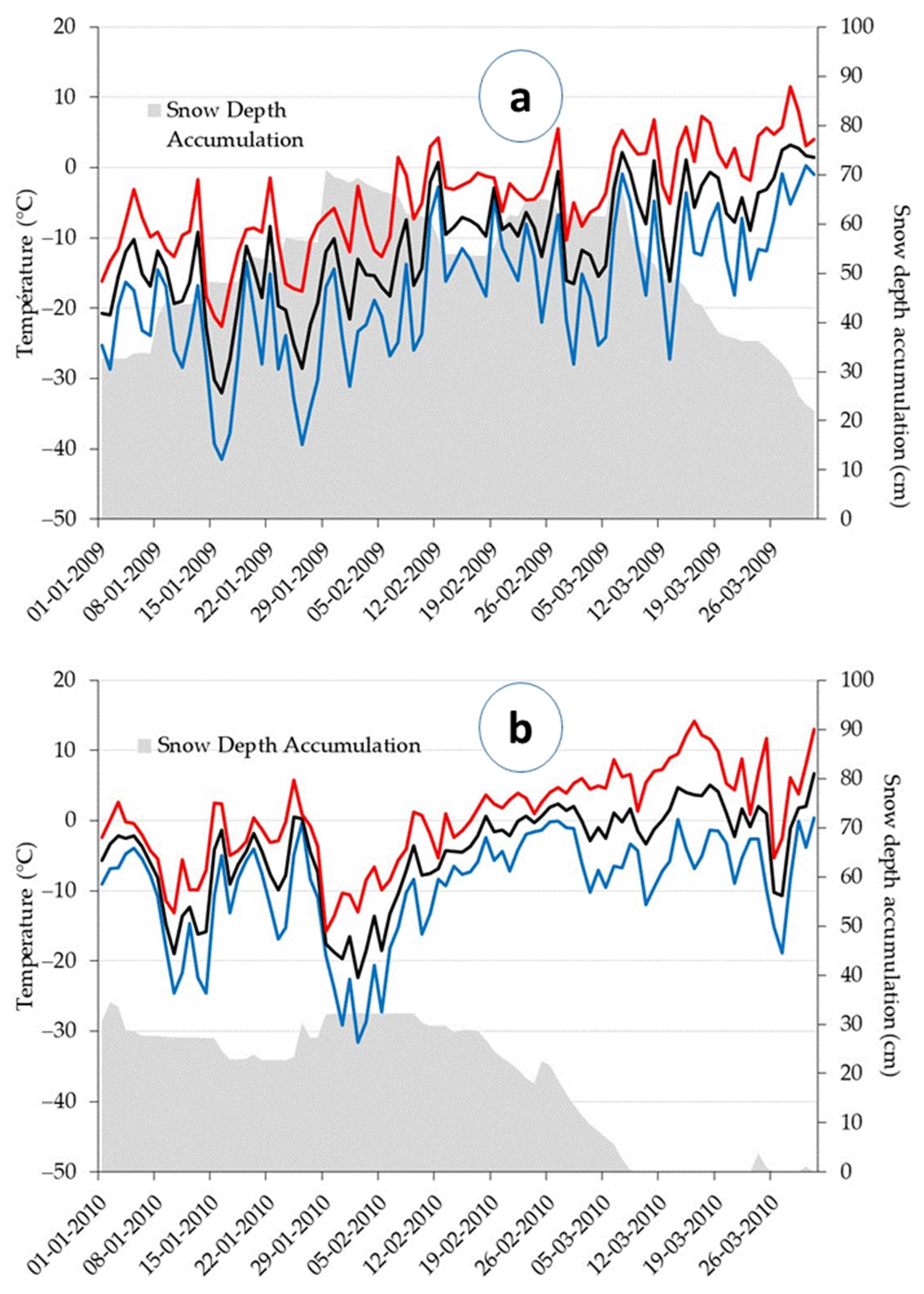
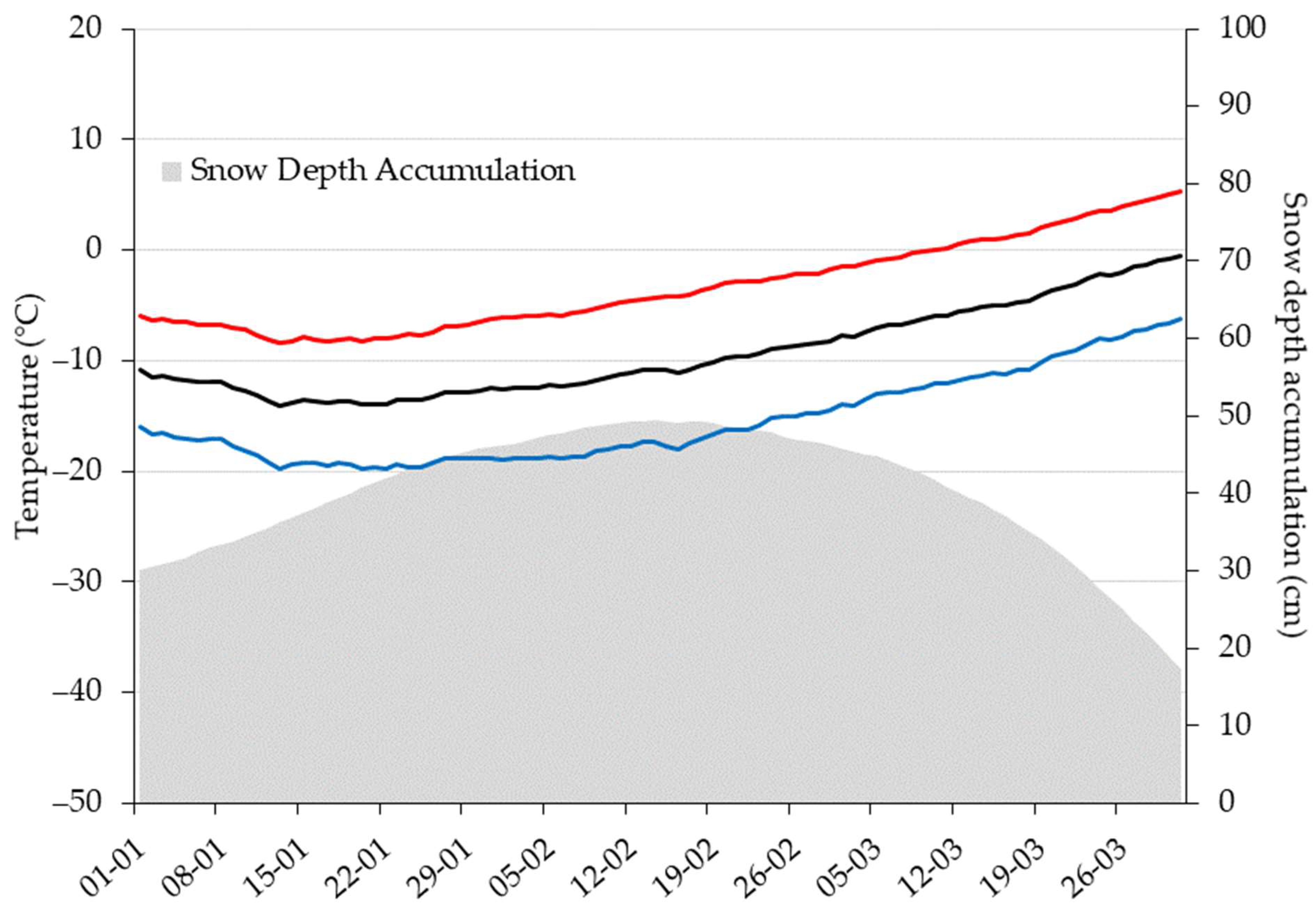
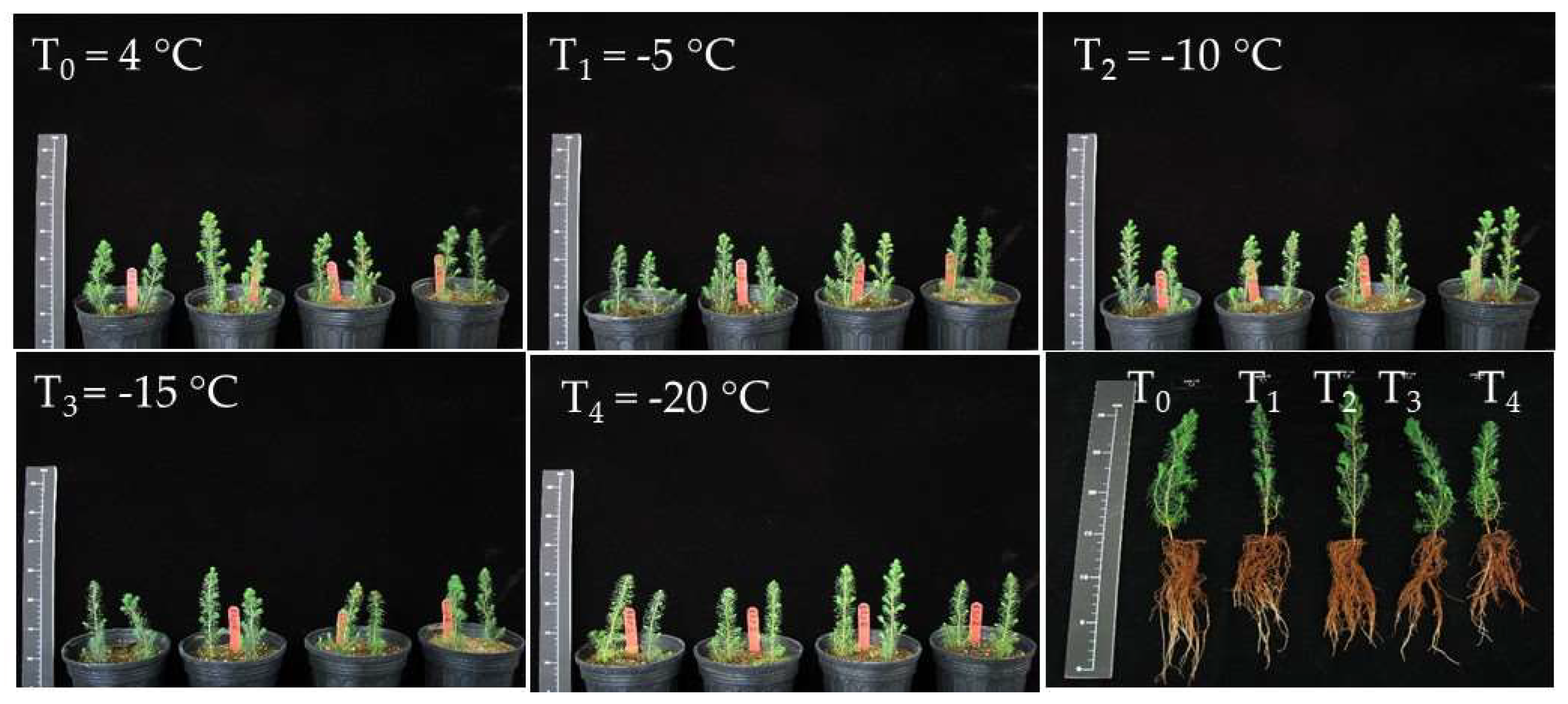
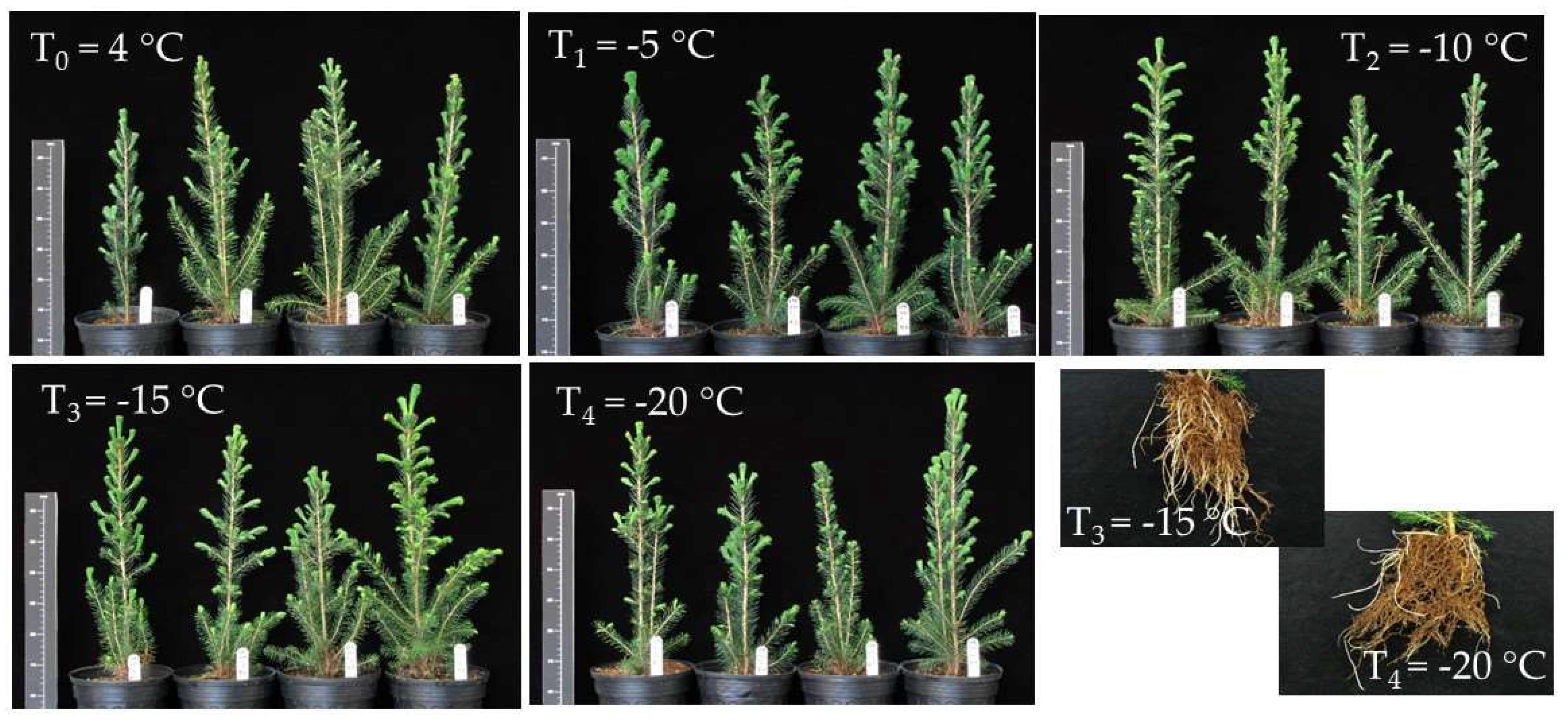
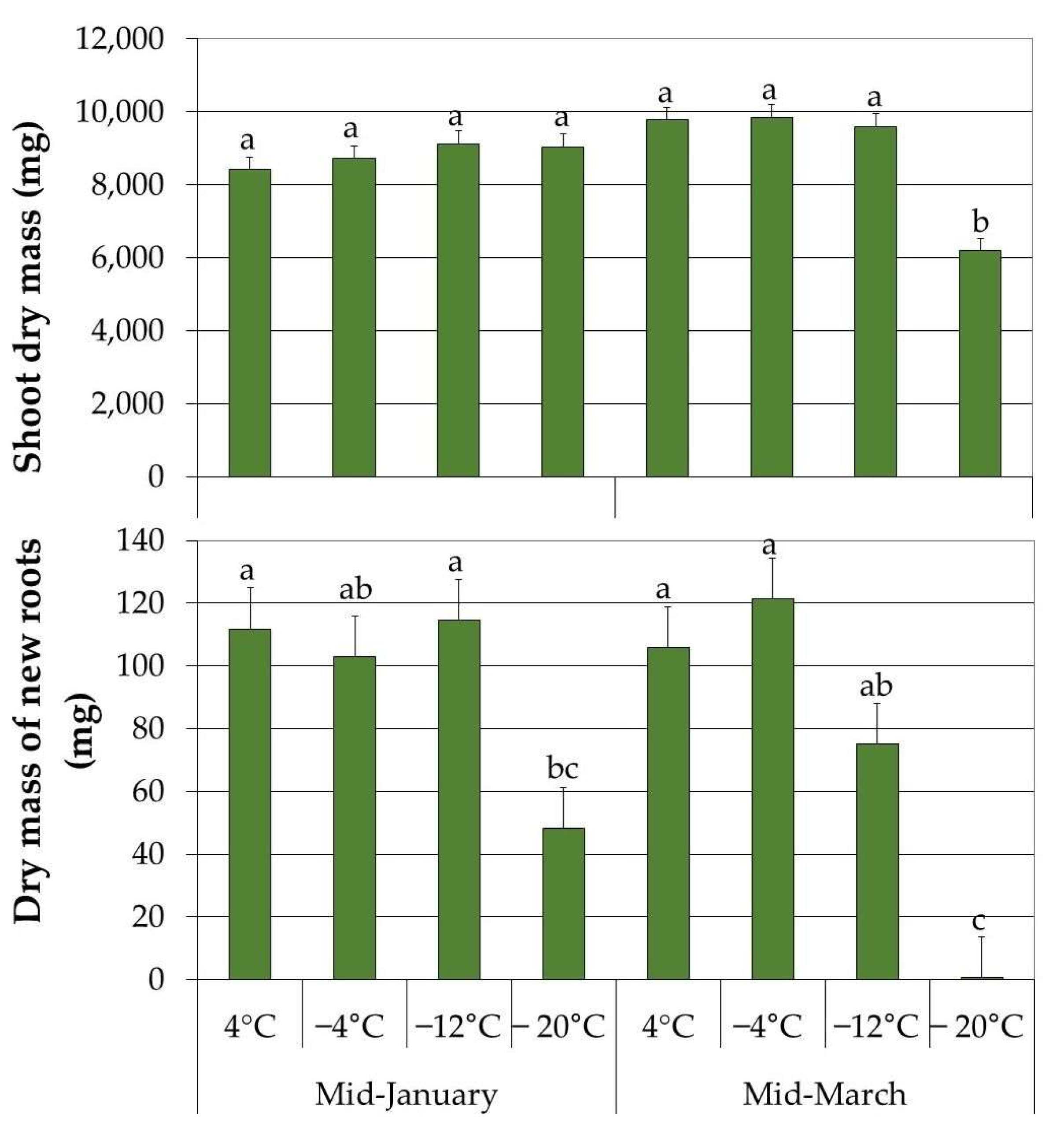
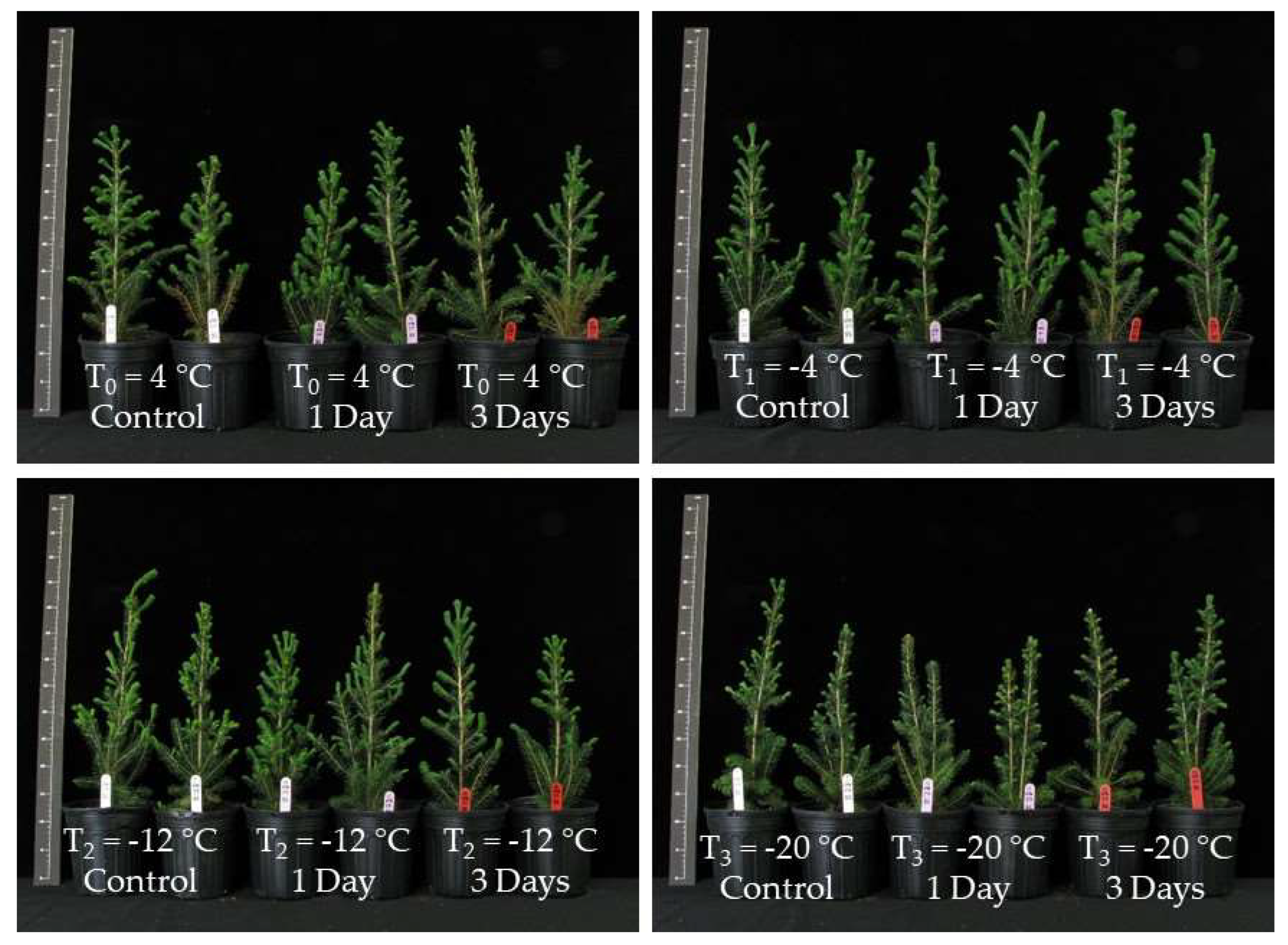
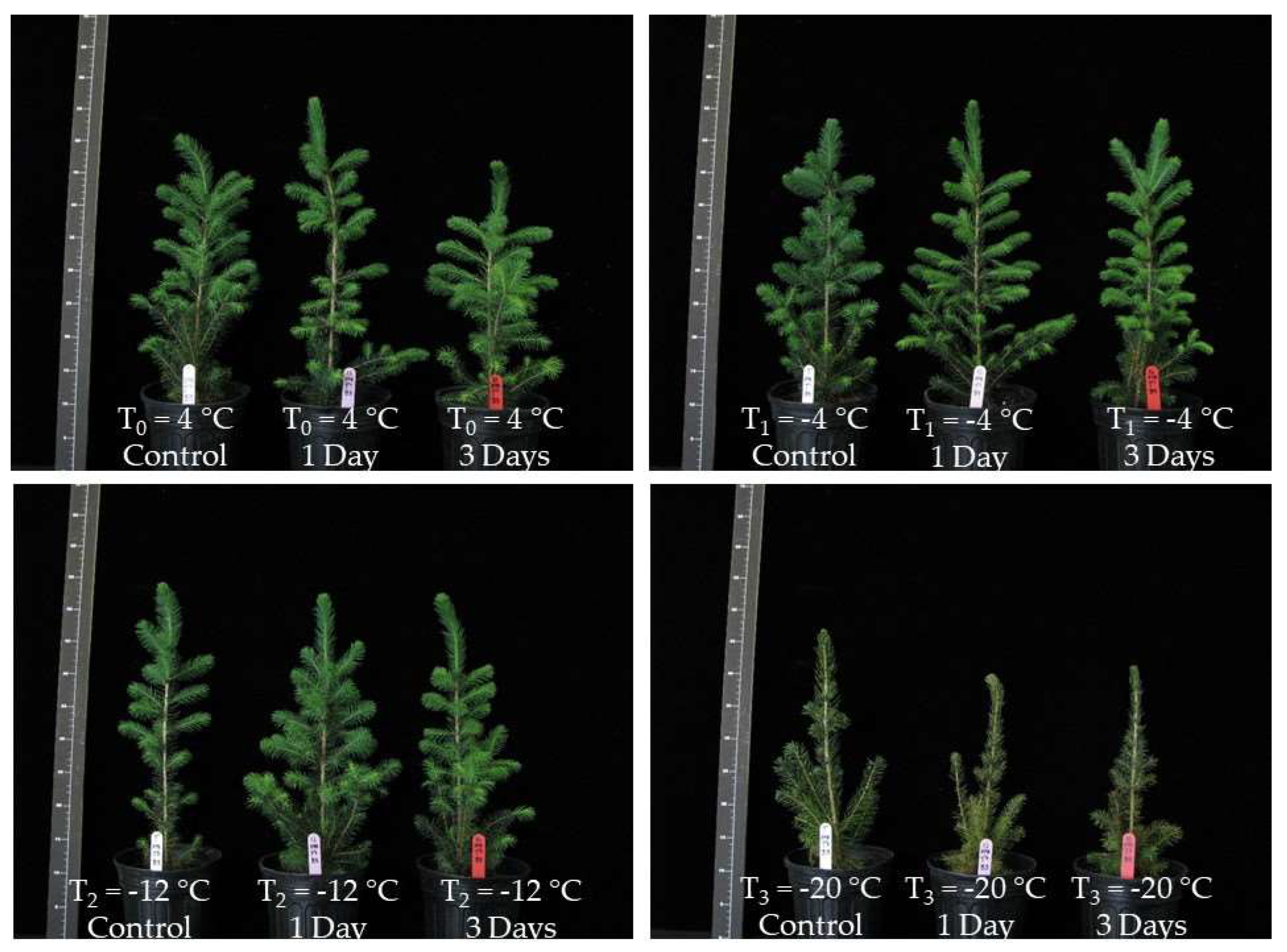
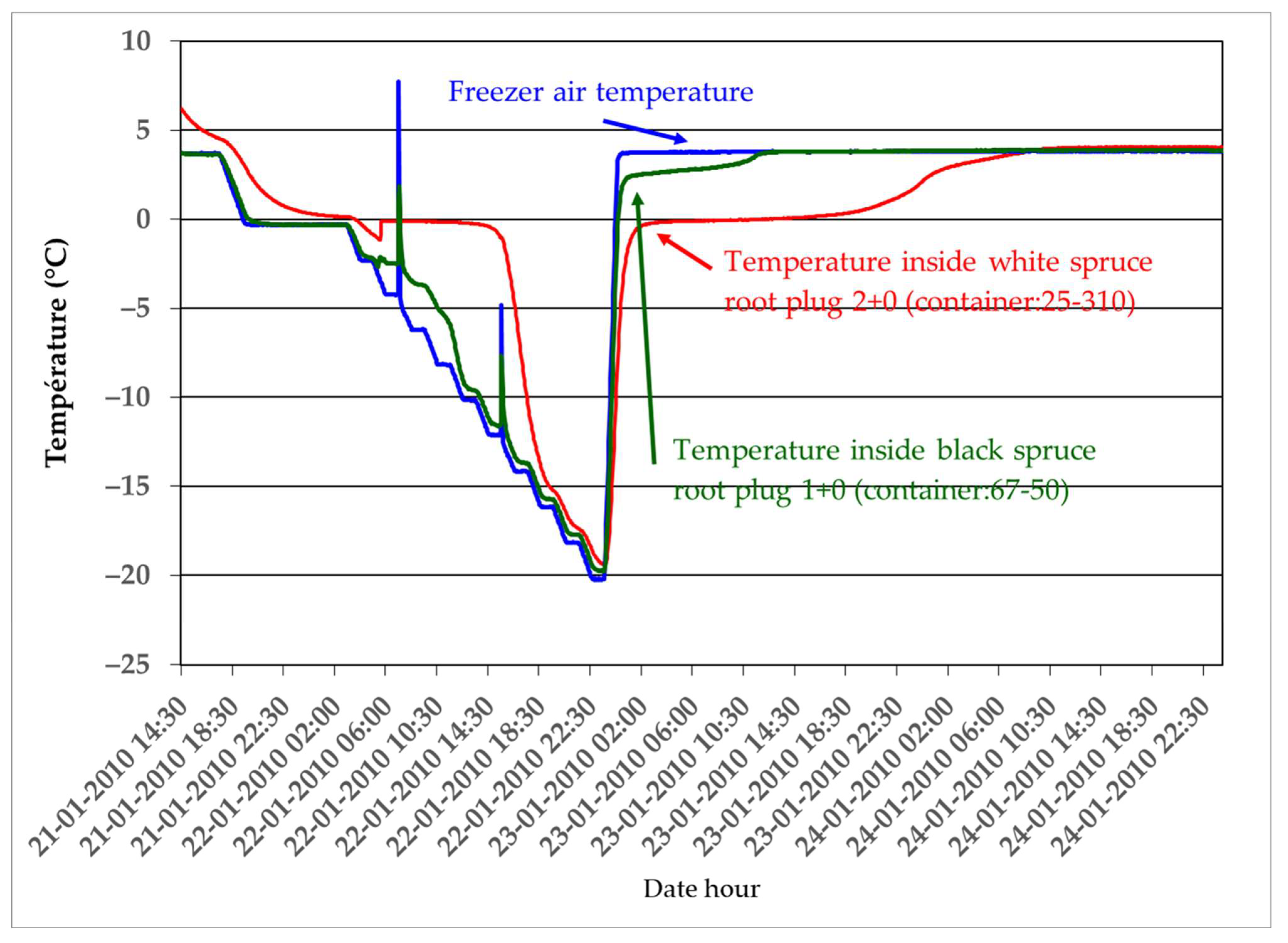
In recent decades, forest nurseries in eastern Canada have been faced with periods of mild winter weather, delayed snowfall, and low seedling protective snow cover combined with winter rains instead of snowfall. These extreme conditions have resulted in the loss of millions of seedlings, in particular those that overwinter outdoors, probably due to their winter dehardening. The main objective of this study is to simulate different periods of warm weather at the beginning and end of winter and evaluate their effects on the dehardening and growth of Picea mariana and Picea glauca seedlings in response to different freezing temperatures. Three warming treatments were simulated (control, 1 day, and 3 days of warming at 10 °C) followed by three freezing temperatures (−4, −12, and −20 °C). In winter, regardless of the warming treatment, the seedlings of the two species tolerated the different freezing temperatures without any apparent damage. However, at the end of winter and in the absence of snow cover, the seedlings did not show frost tolerance at −20 °C. On the other hand, the seedlings showed normal growth after undergoing frosts at −4 °C and −12 °C, similar to that observed for control seedlings. Different cultural practices and protection strategies are proposed to improve frost tolerance and reduce the winter loss of seedlings.
Keywords: Picea mariana; Picea glauca; forest nursery; winter warming; winter freezing; cold hardiness; growth; mineral nutrition Picea mariana; Picea glauca; forest nursery; winter warming; winter freezing; cold hardiness; growth; mineral nutrition