
Article

Exploring Virtual Environments to Assess the Quality of Public Spaces

1
COSYS-GRETTIA, University Gustave Eiffel, F-77447 Marne-la-Vallée, France
2
Department of Civil, Chemical, Environmental, and Materials Engineering (DICAM), University of Bologna, 40126 Bologna, Italy
*
Author to whom correspondence should be addressed.
Algorithms 2024, 17(3), 124; https://doi.org/10.3390/a17030124
Submission received: 31 January 2024 / Revised: 13 March 2024 / Accepted: 15 March 2024 / Published: 16 March 2024
(This article belongs to the Special Issue Algorithms for Virtual and Augmented Environments)

Abstract

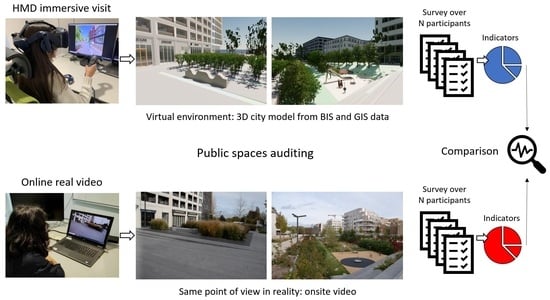
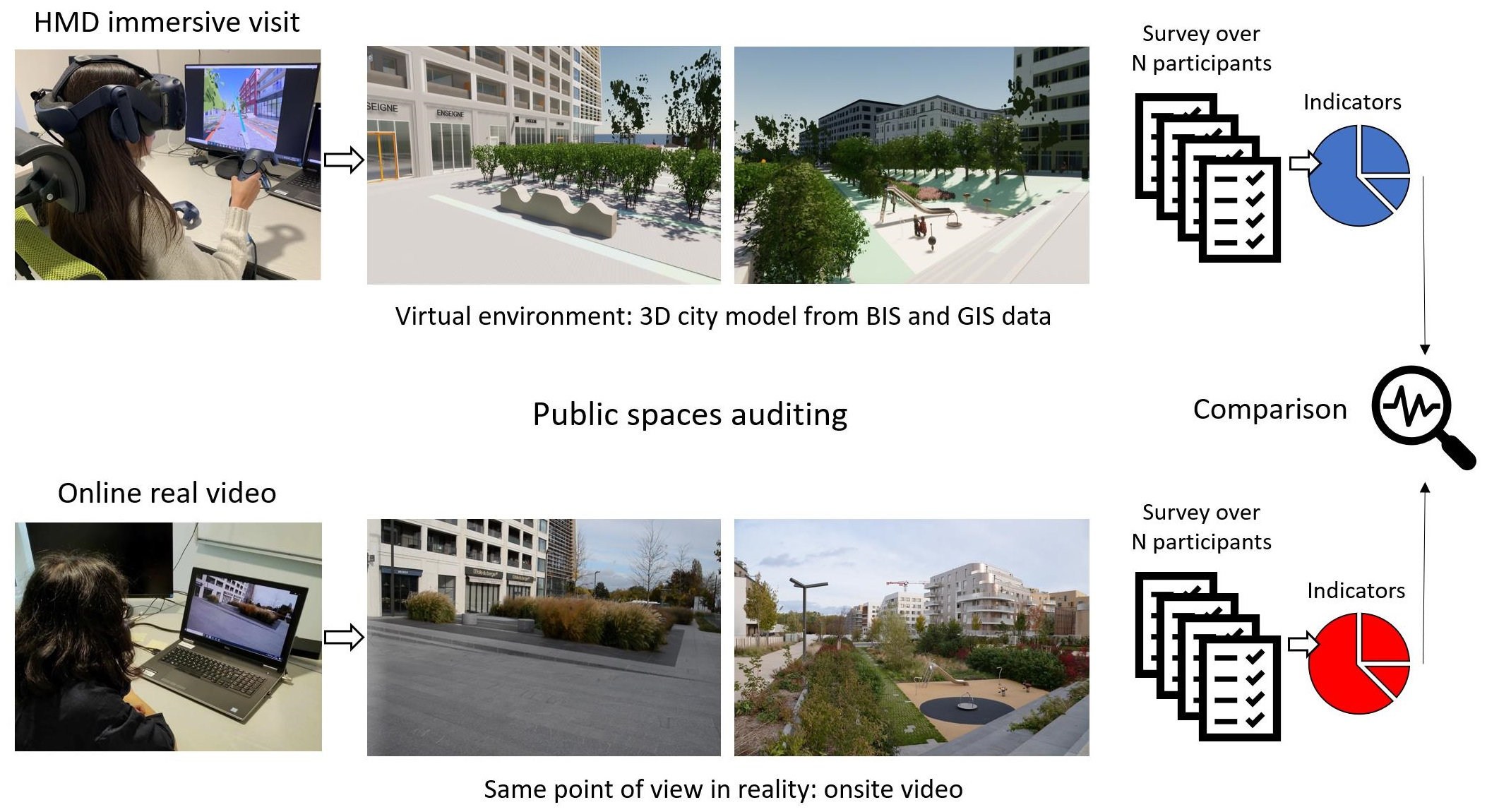
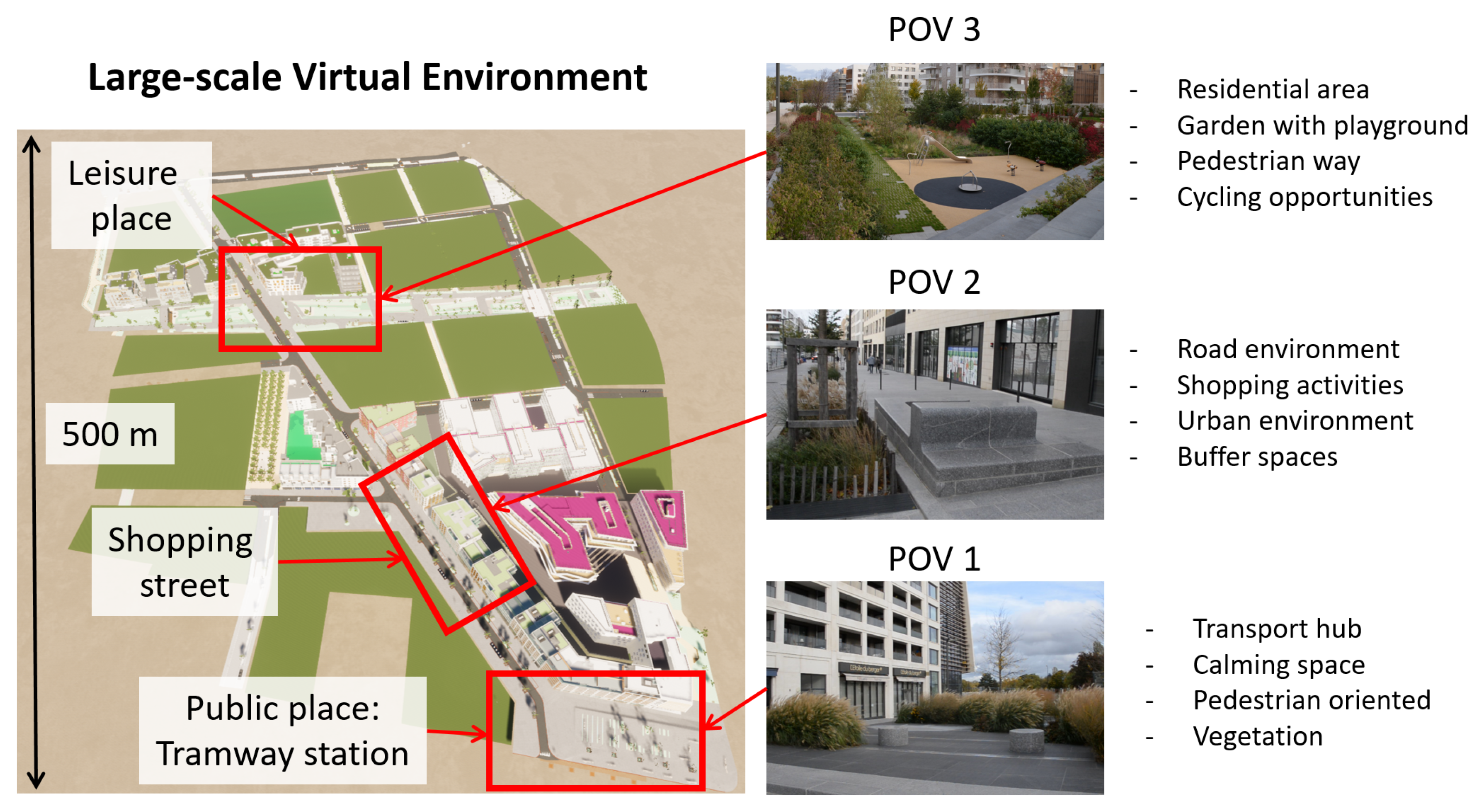
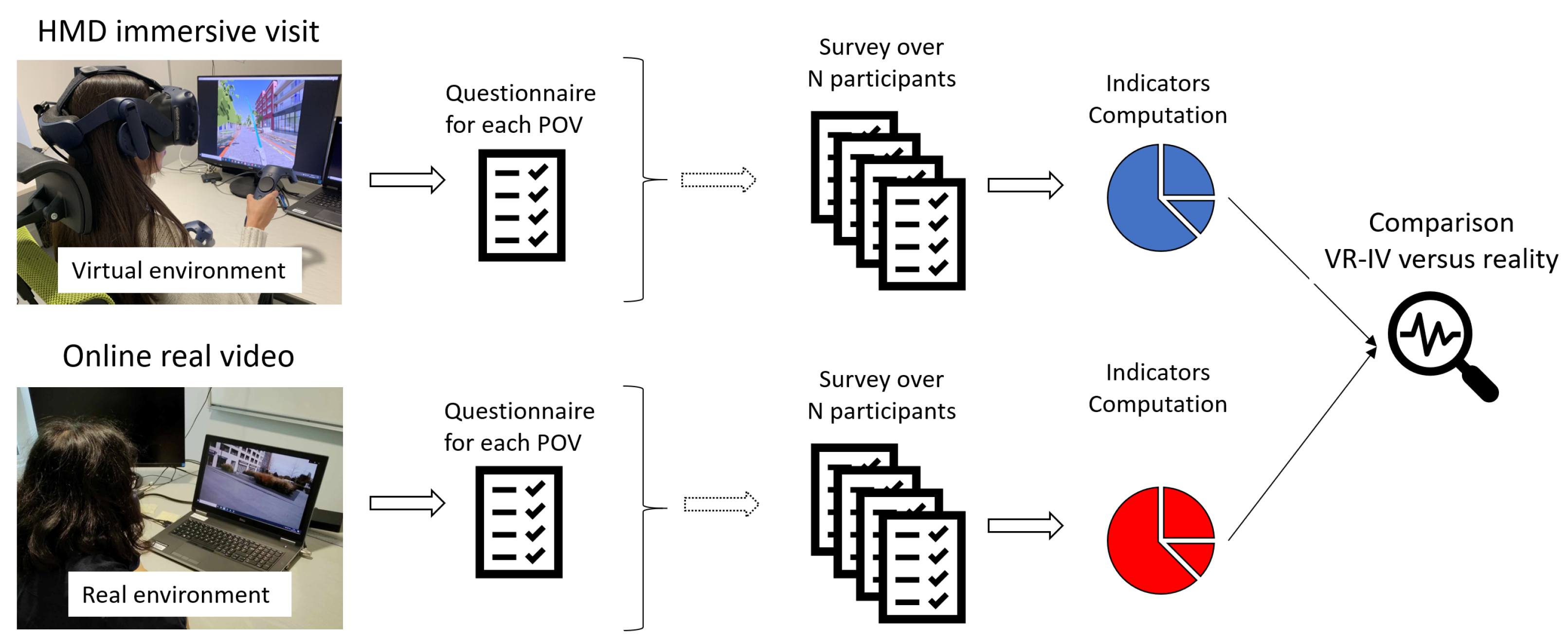
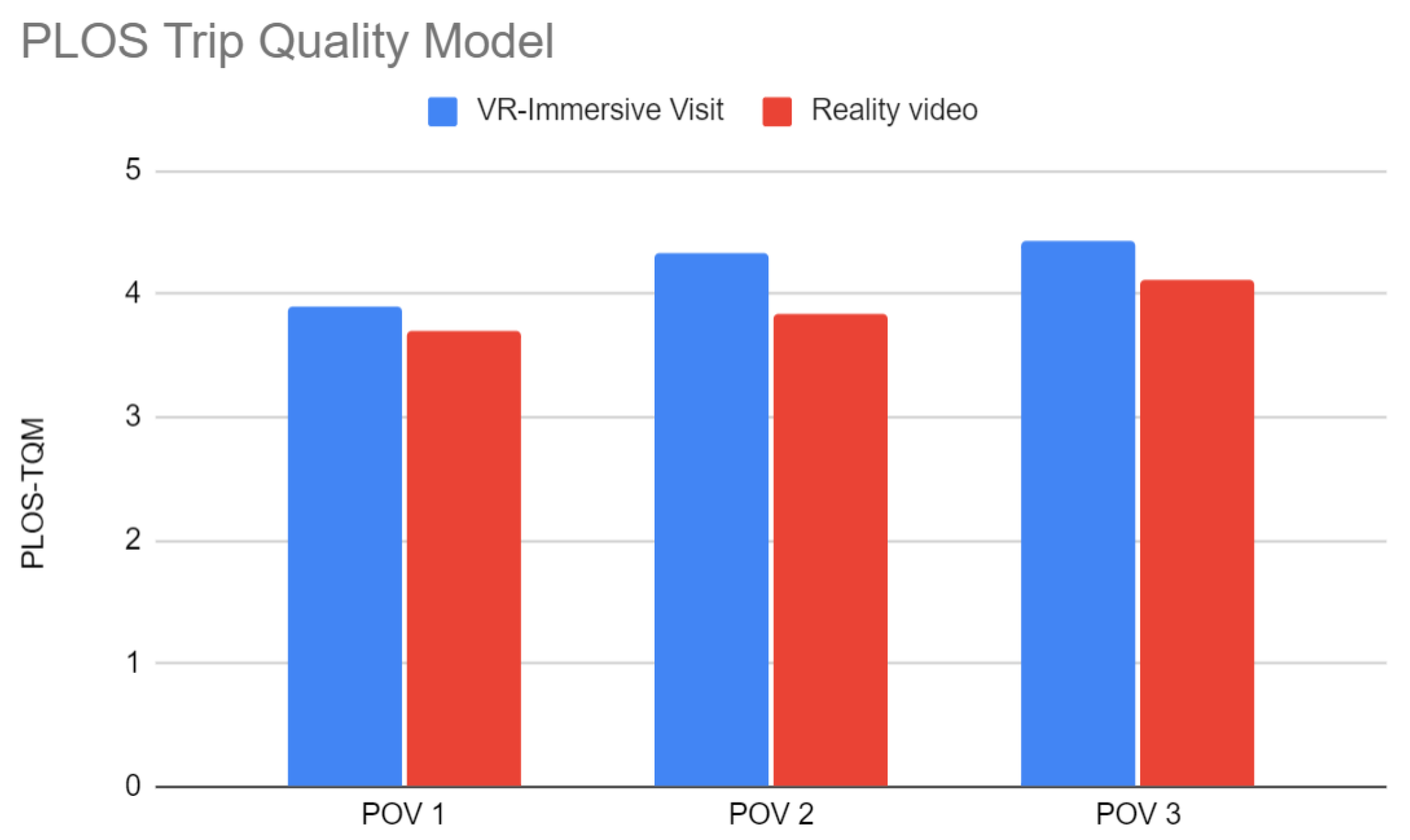
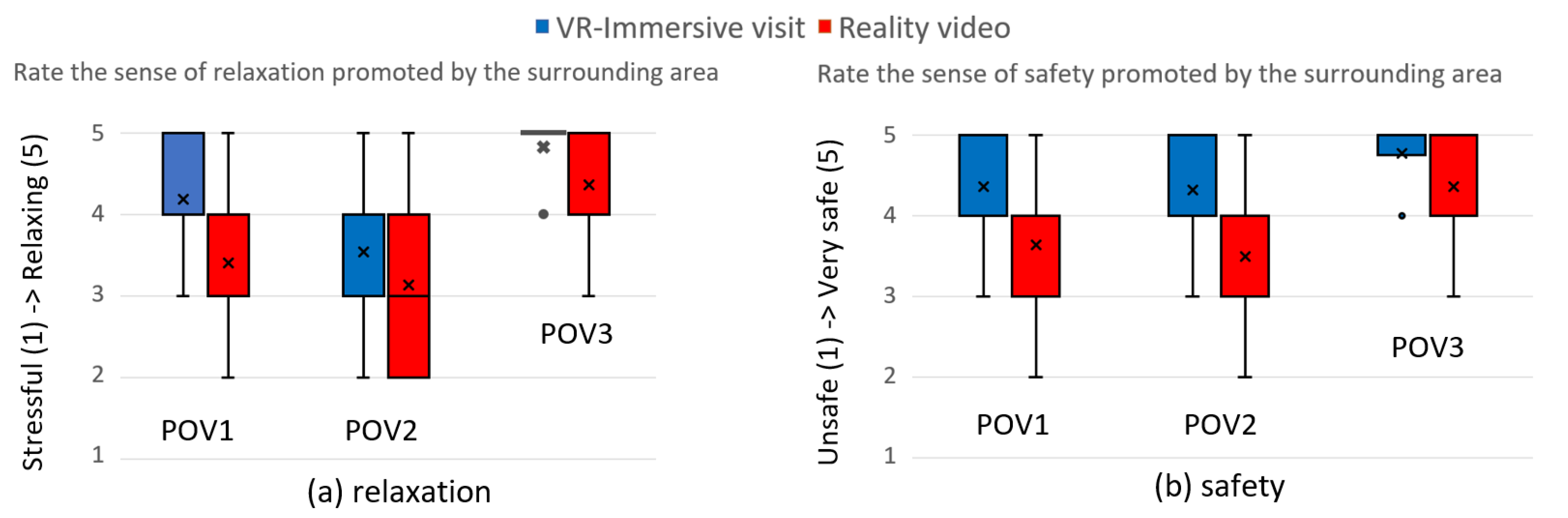
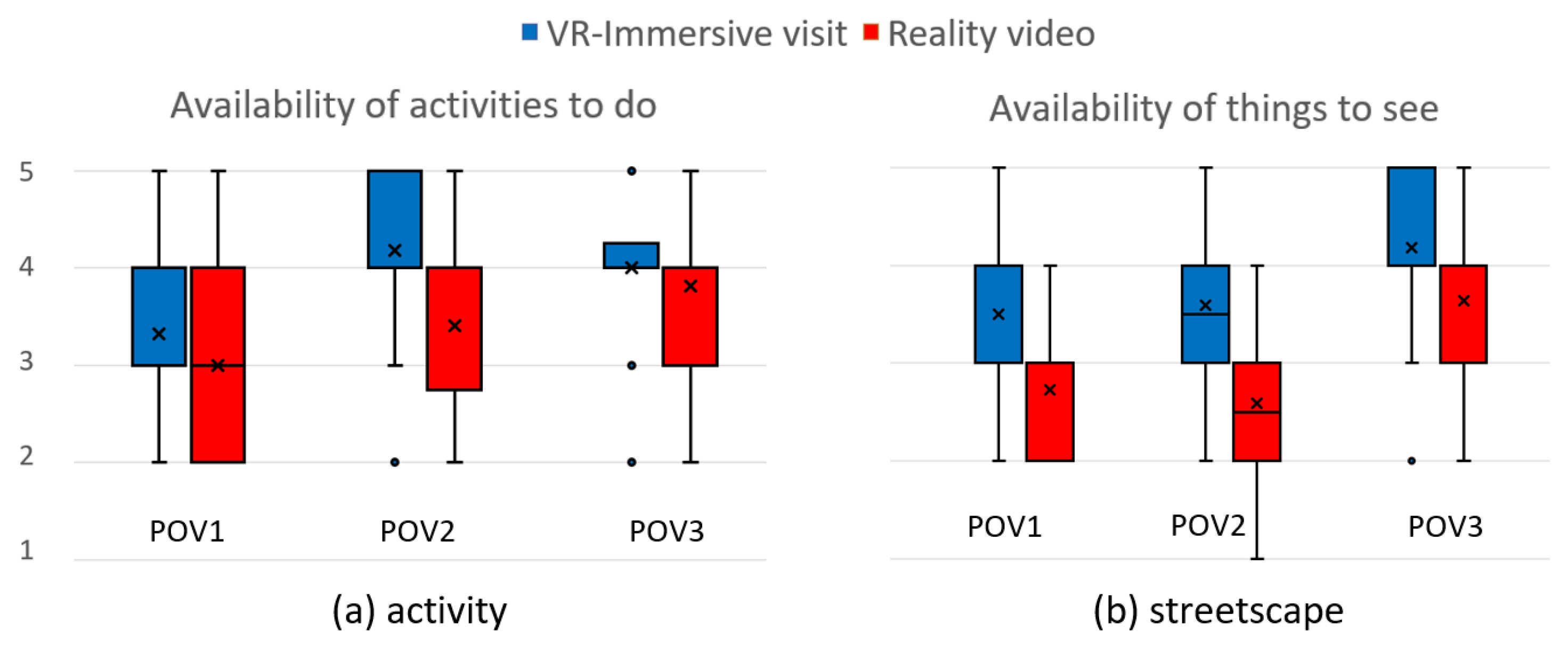
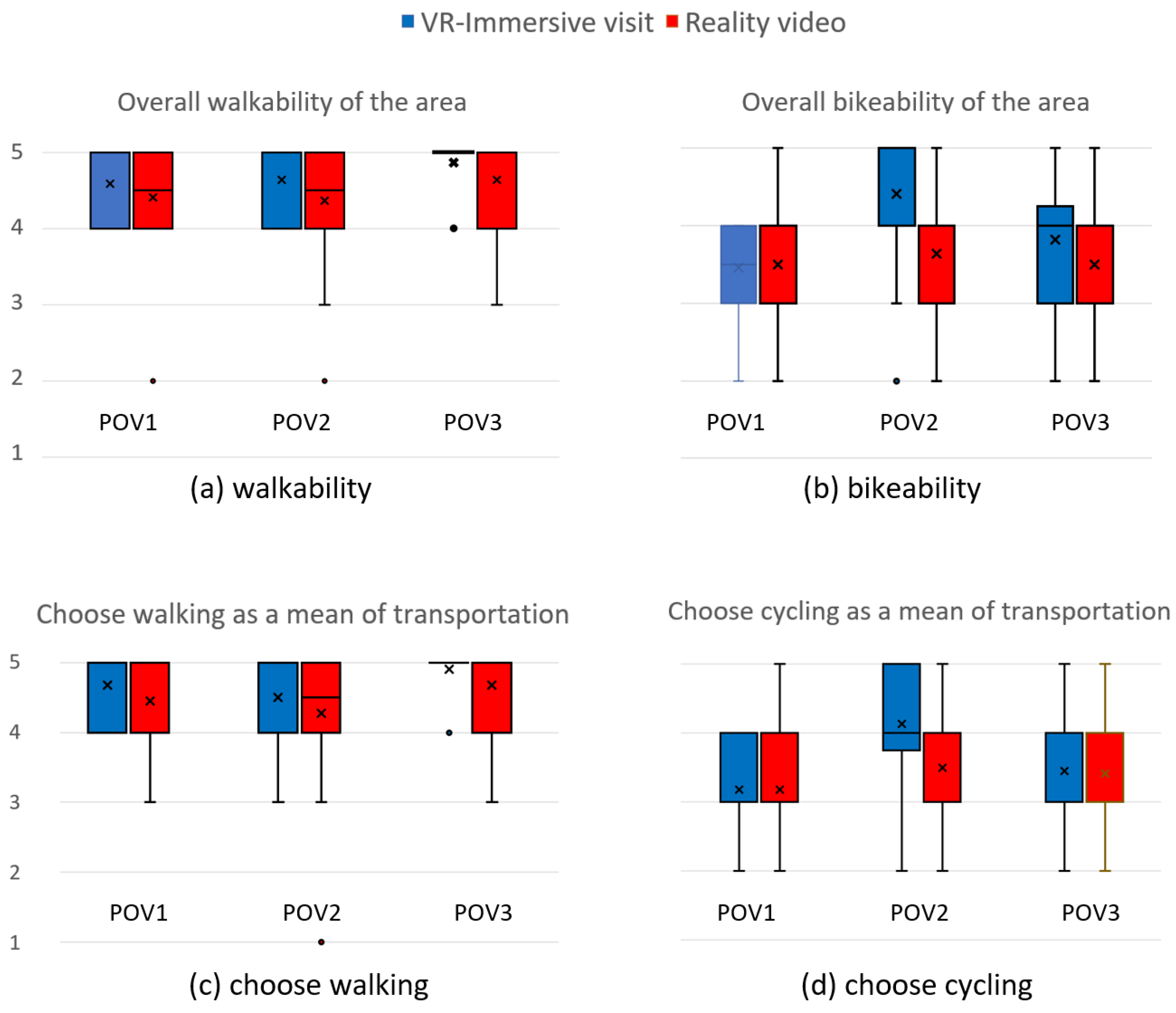
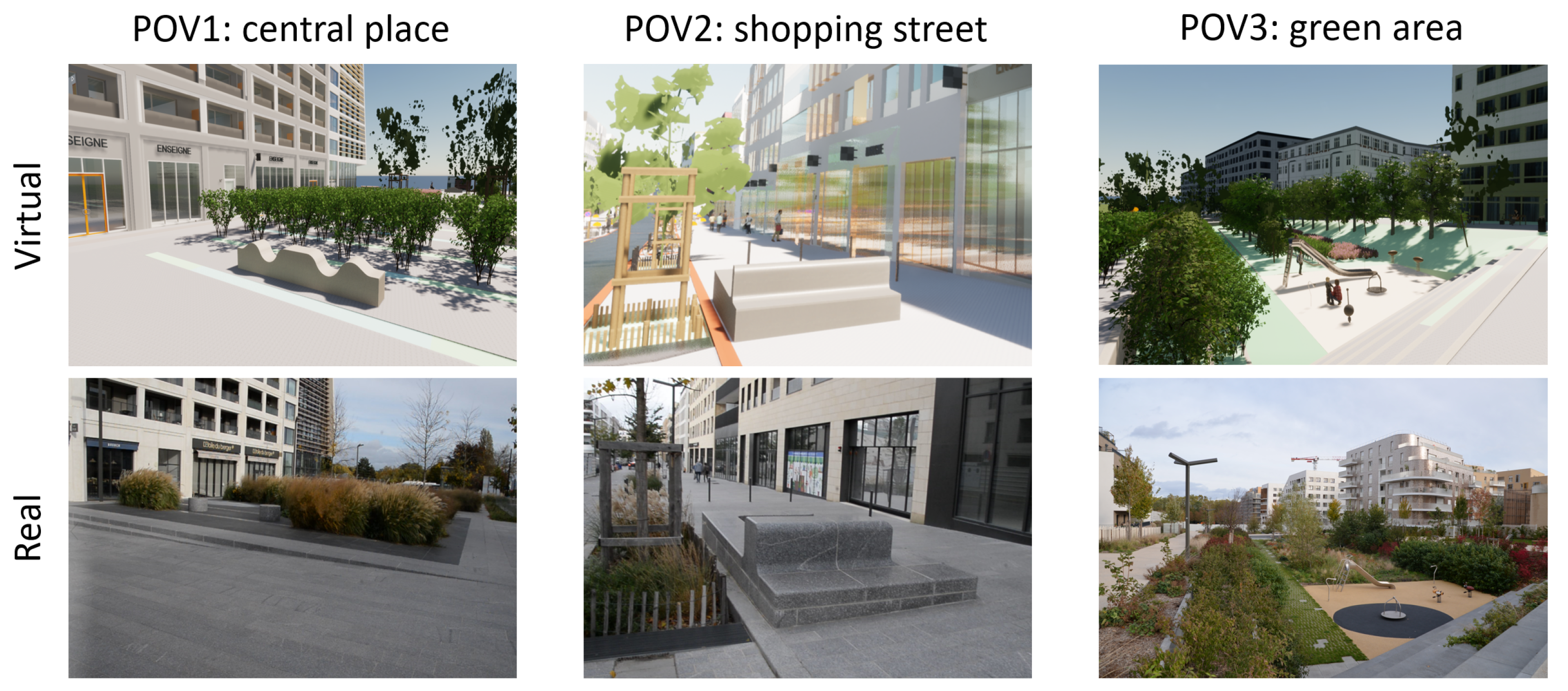
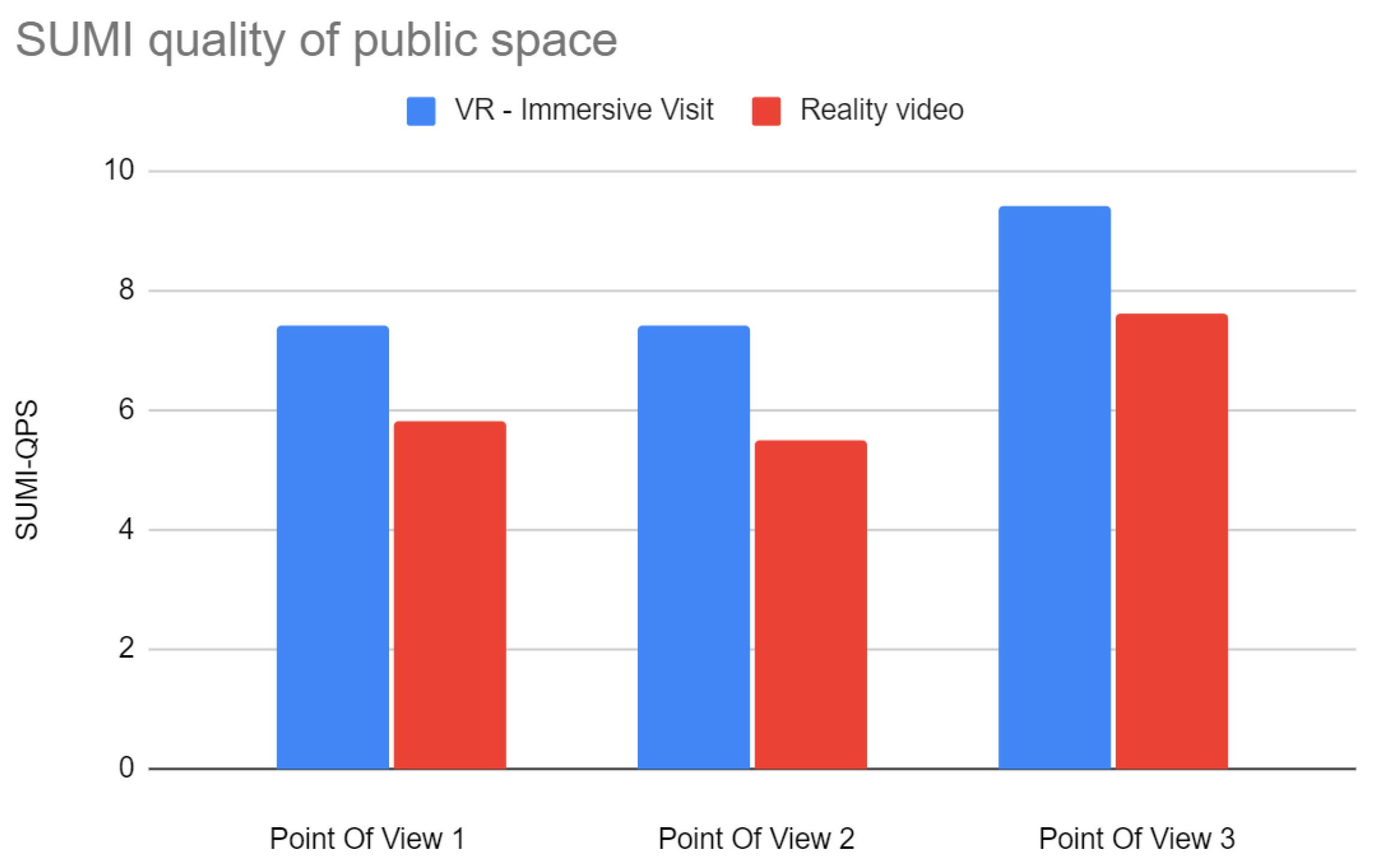
Human impression plays a crucial role in effectively designing infrastructures that support active mobility such as walking and cycling. By involving users early in the design process, valuable insights can be gathered before physical environments are constructed. This proactive approach enhances the attractiveness and safety of designed spaces for users. This study conducts an experiment comparing real street observations with immersive virtual reality (VR) visits to evaluate user perceptions and assess the quality of public spaces. For this experiment, a high-resolution 3D city model of a large-scale neighborhood was created, utilizing Building Information Modeling (BIM) and Geographic Information System (GIS) data. The model incorporated dynamic elements representing various urban environments: a public area with a tramway station, a commercial street with a road, and a residential playground with green spaces. Participants were presented with identical views of existing urban scenes, both in reality and through reconstructed 3D scenes using a Head-Mounted Display (HMD). They were asked questions related to the quality of the streetscape, its walkability, and cyclability. From the questionnaire, algorithms for assessing public spaces were computed, namely Sustainable Mobility Indicators (SUMI) and Pedestrian Level of Service (PLOS). The study quantifies the relevance of these indicators in a VR setup and correlates them with critical factors influencing the experience of using and spending time on a street. This research contributes to understanding the suitability of these algorithms in a VR environment for predicting the quality of future spaces before occupancy.
Keywords: pedestrian mobility; urban design; virtual reality; immersive visit; public space auditing; bicycle infrastructure pedestrian mobility; urban design; virtual reality; immersive visit; public space auditing; bicycle infrastructure
Graphical Abstract