Determination of Fracture Mechanism and Mode II Fracture Toughness of Red Sandstone Subjected to Compressive-Shear Loading



Abstract
1. Introduction
2. Shear Box Test
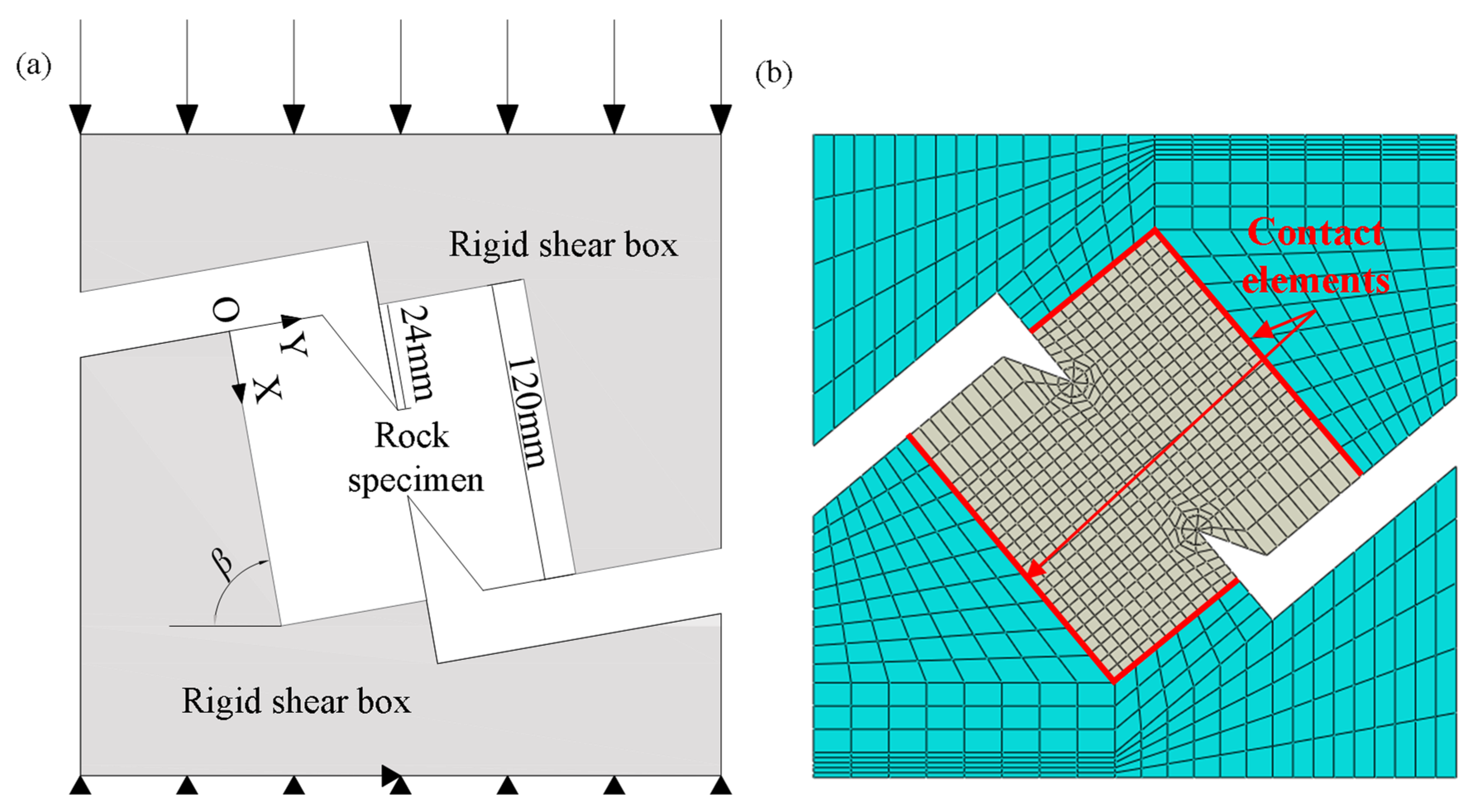
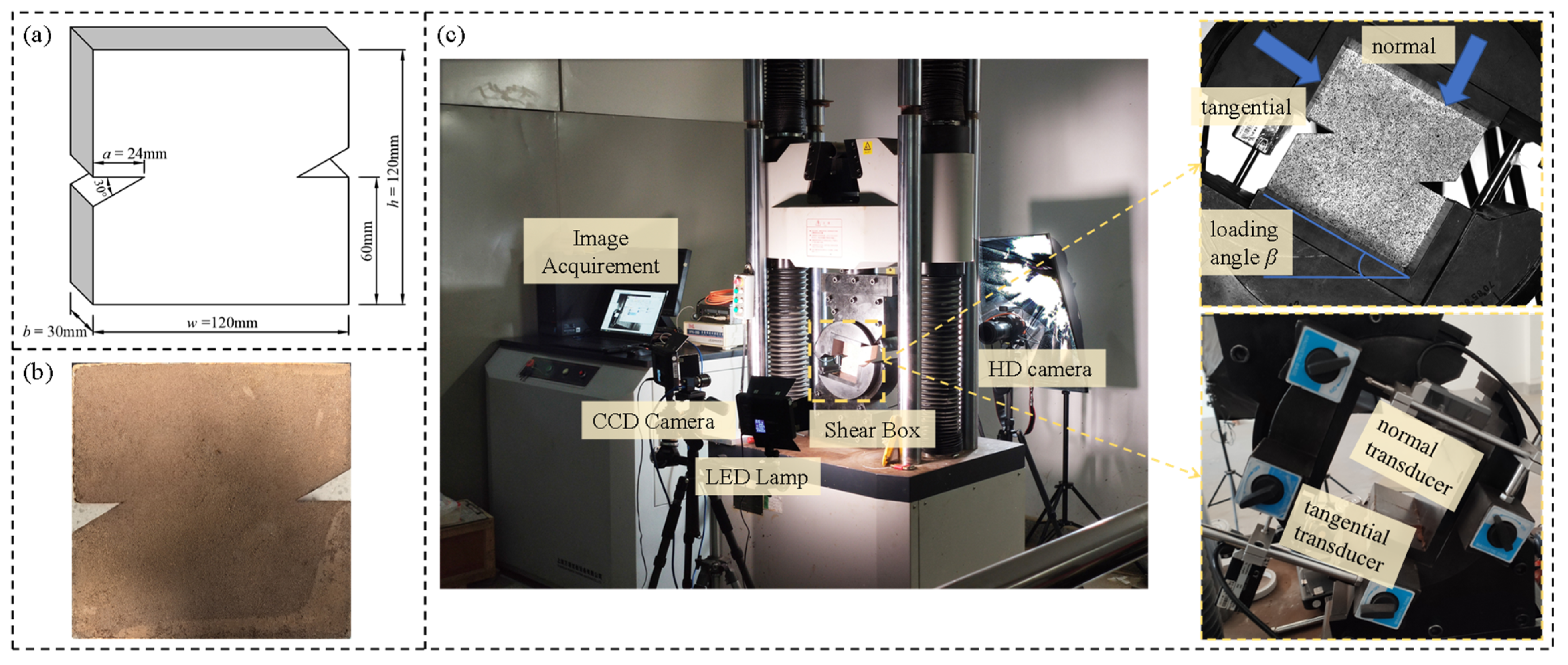
2.1. Specimen and Experimental Equipment
2.2. Load-Displacement Curve
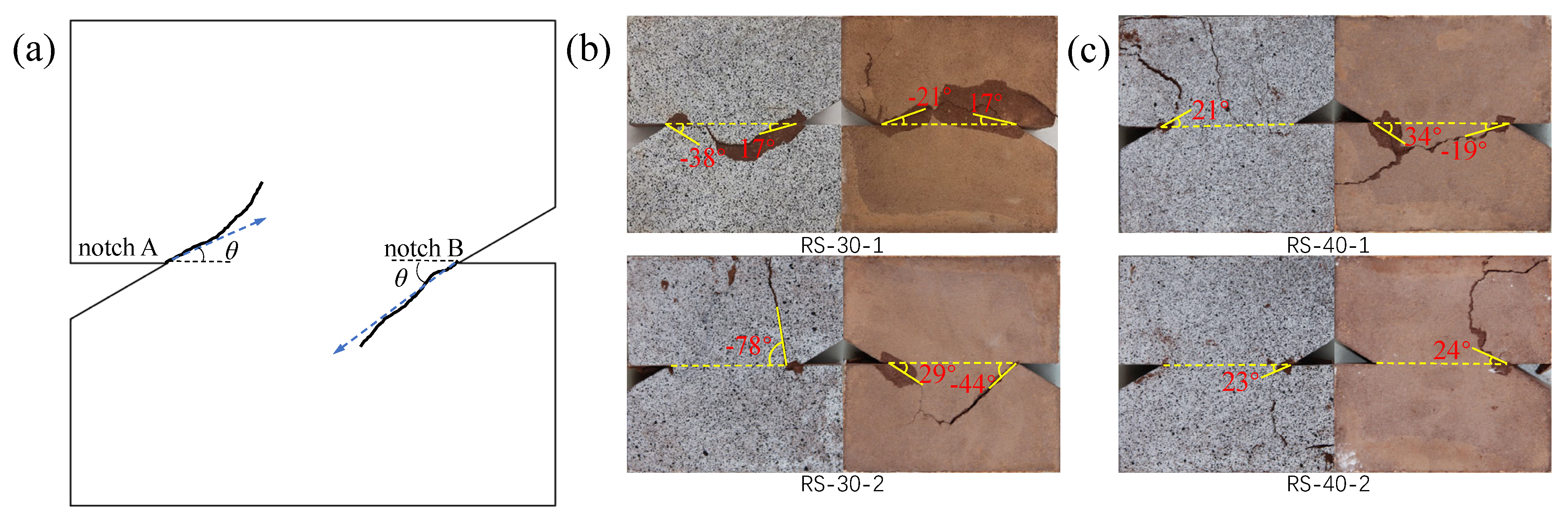
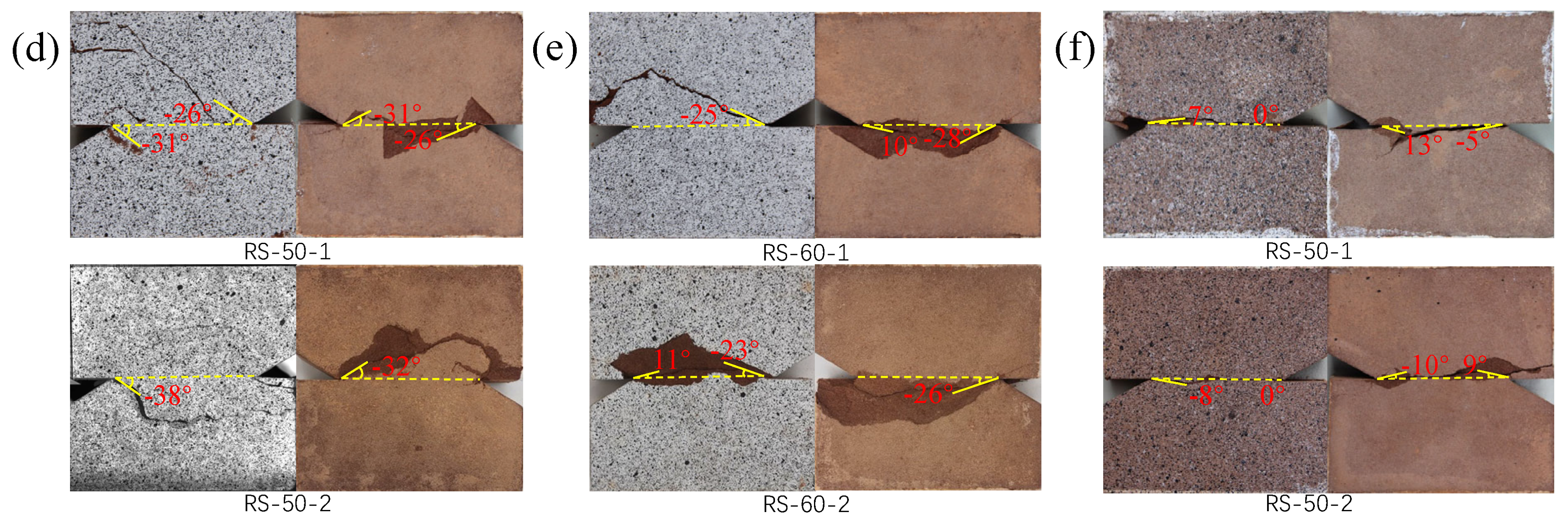
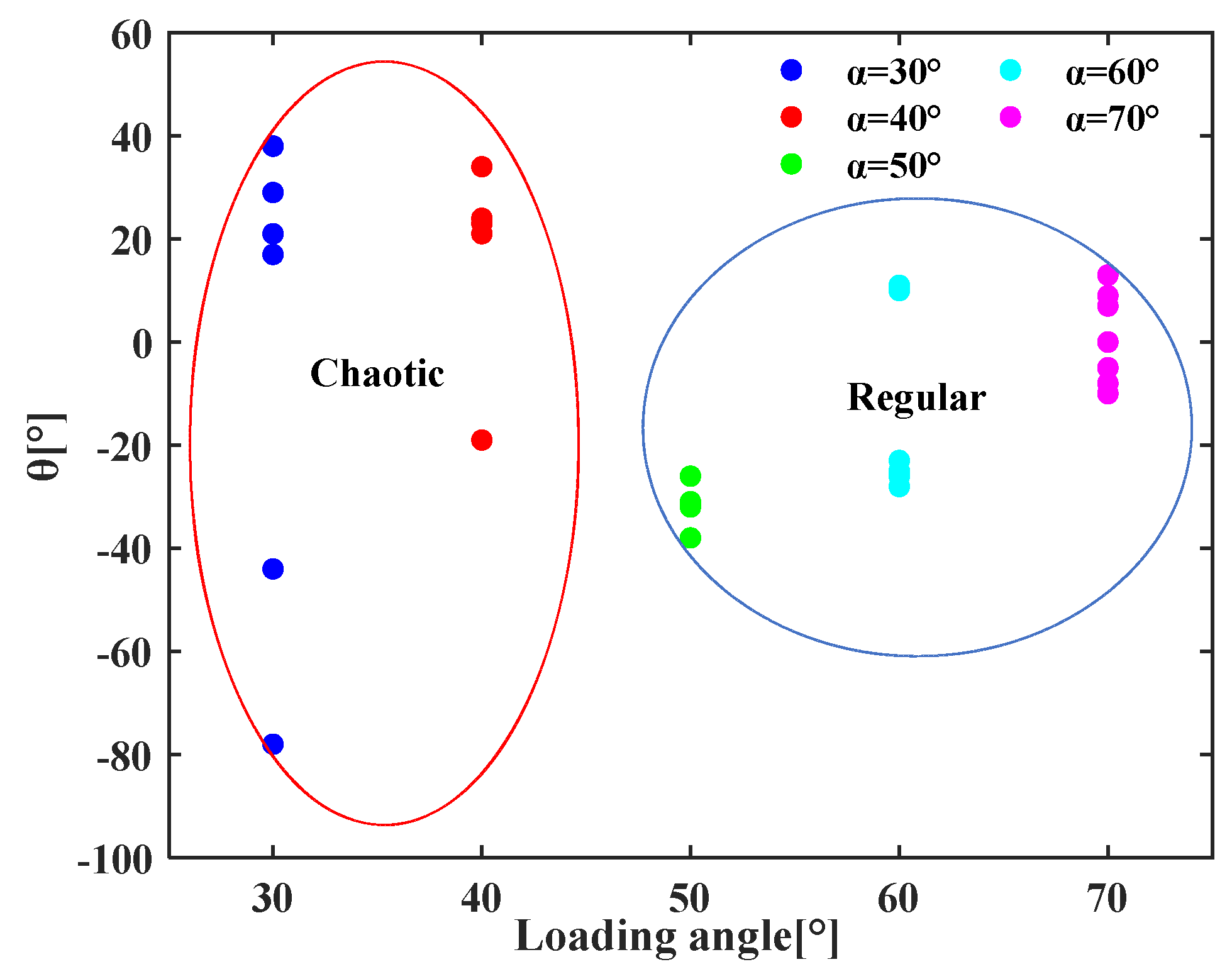
2.3. Fracture Characteristics
3. Analysis of Fracture Mechanism by DIC Technique
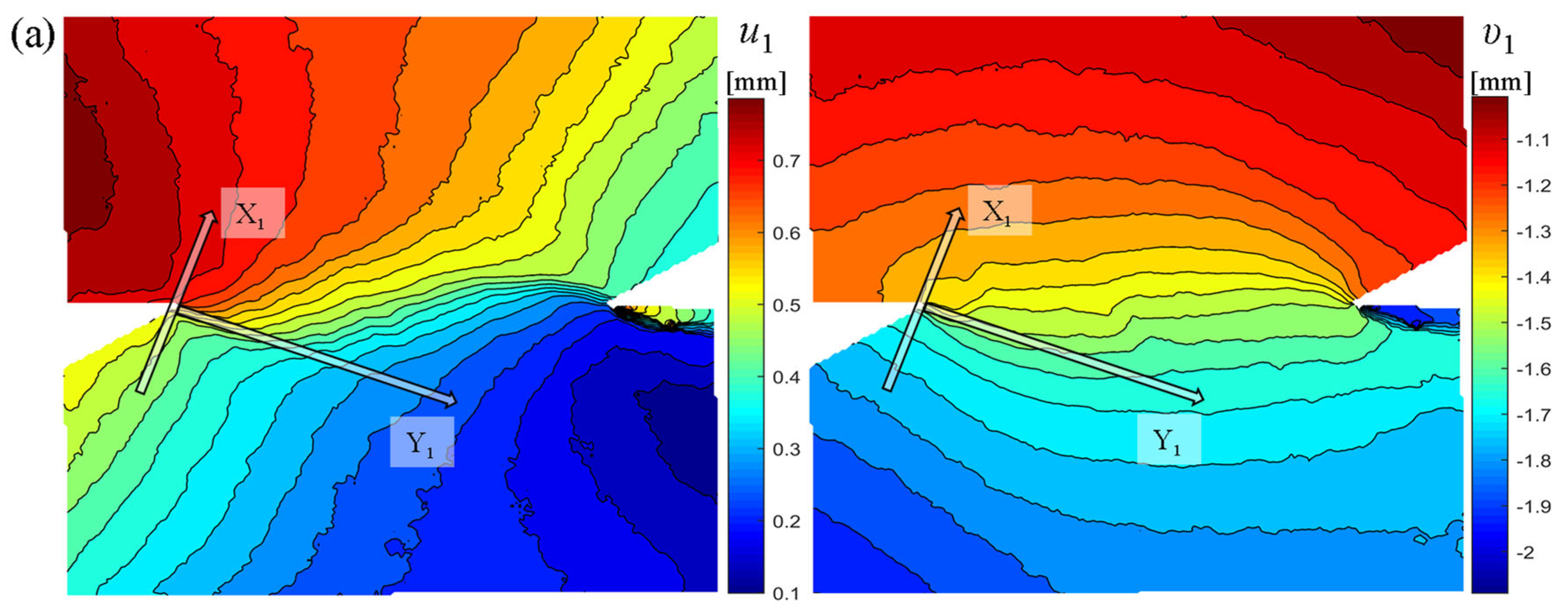
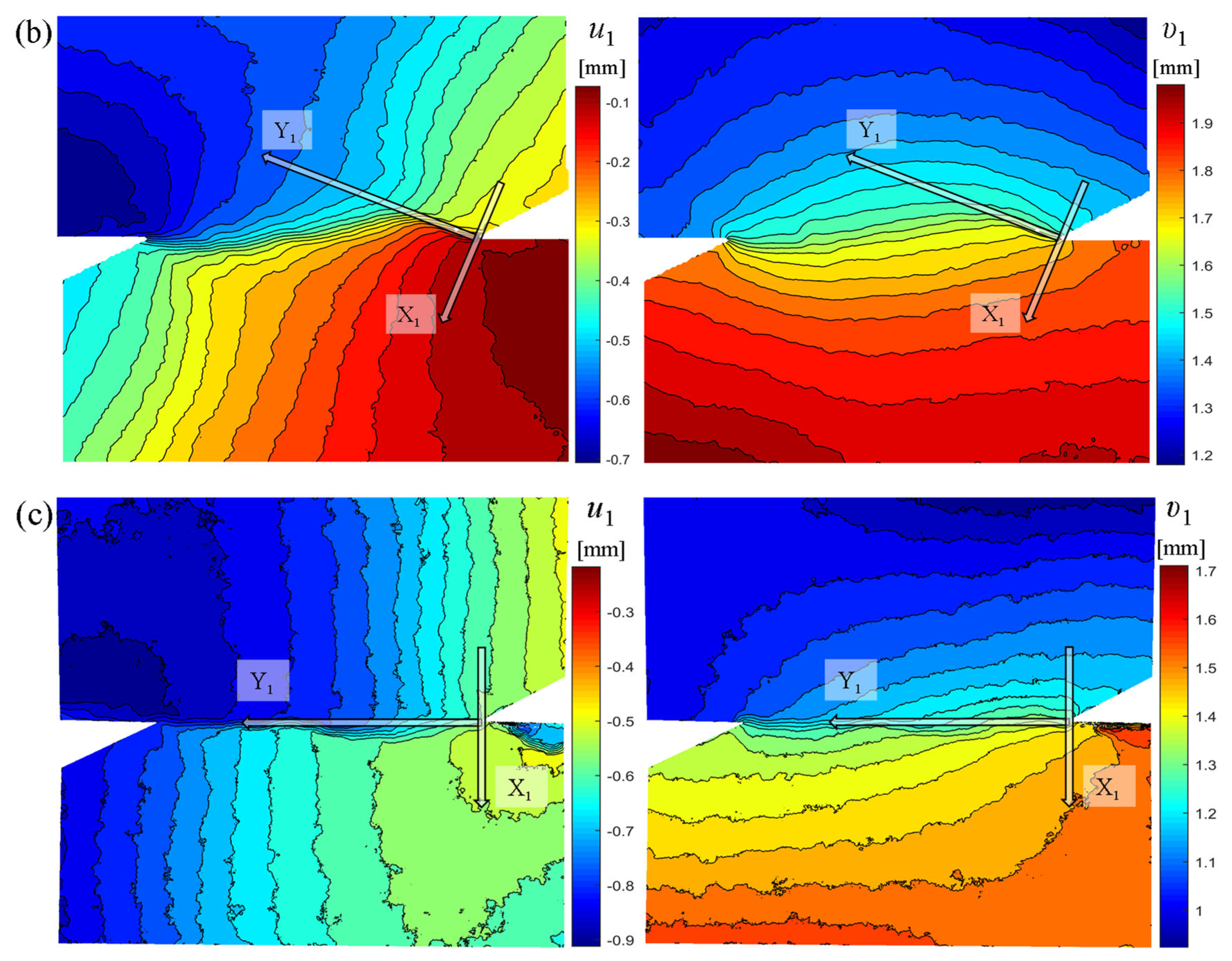
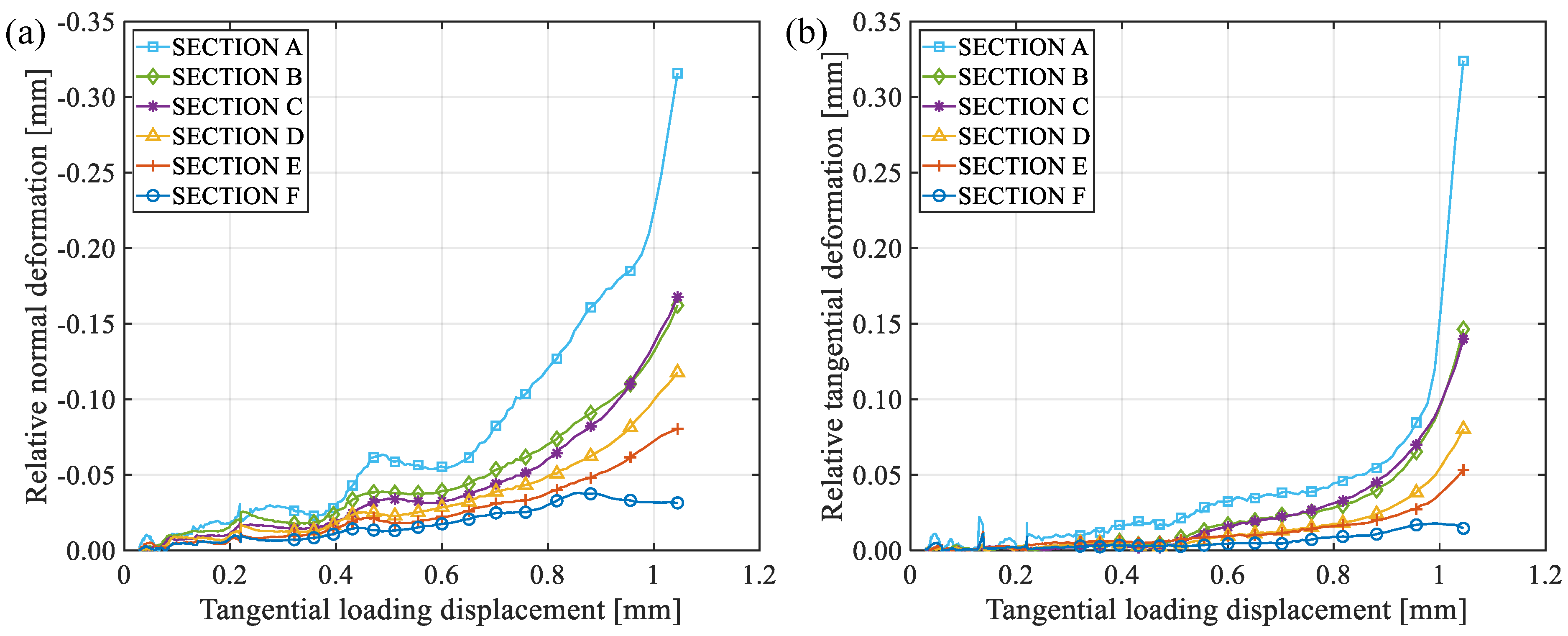
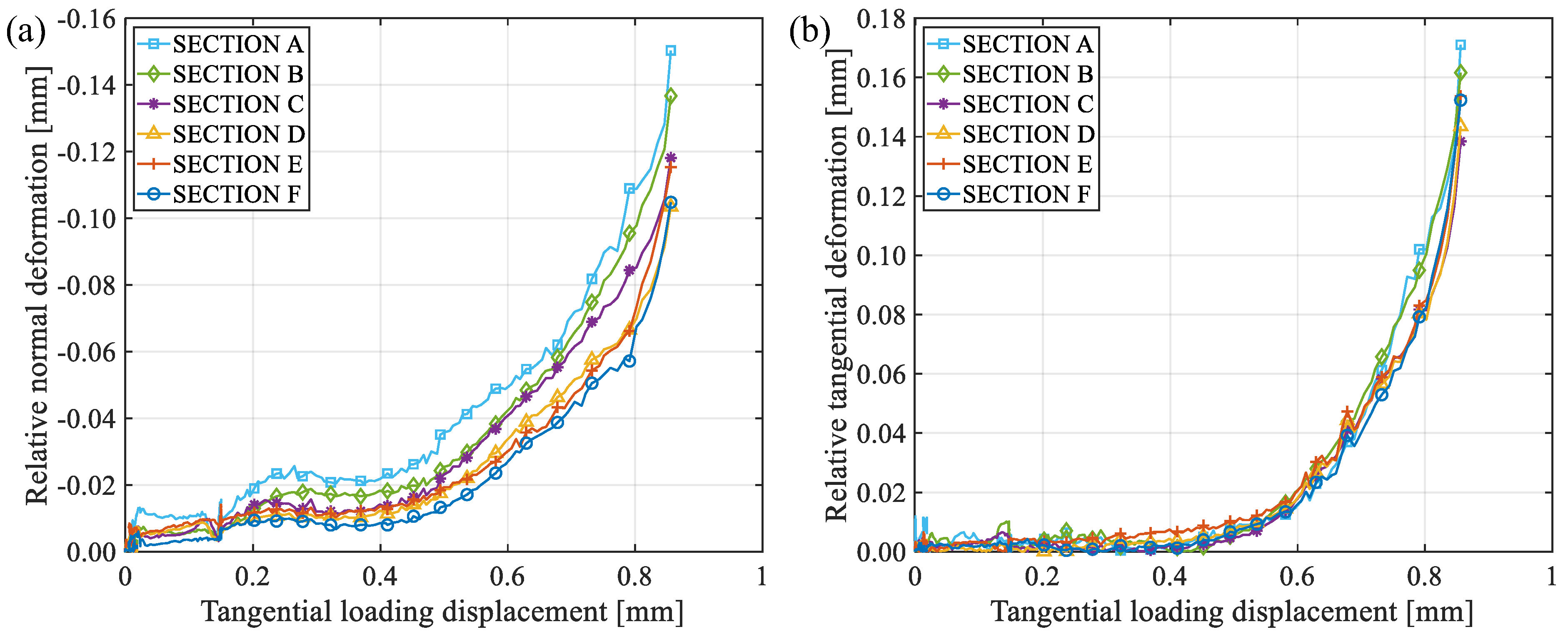
3.1. Deformation Characteristics
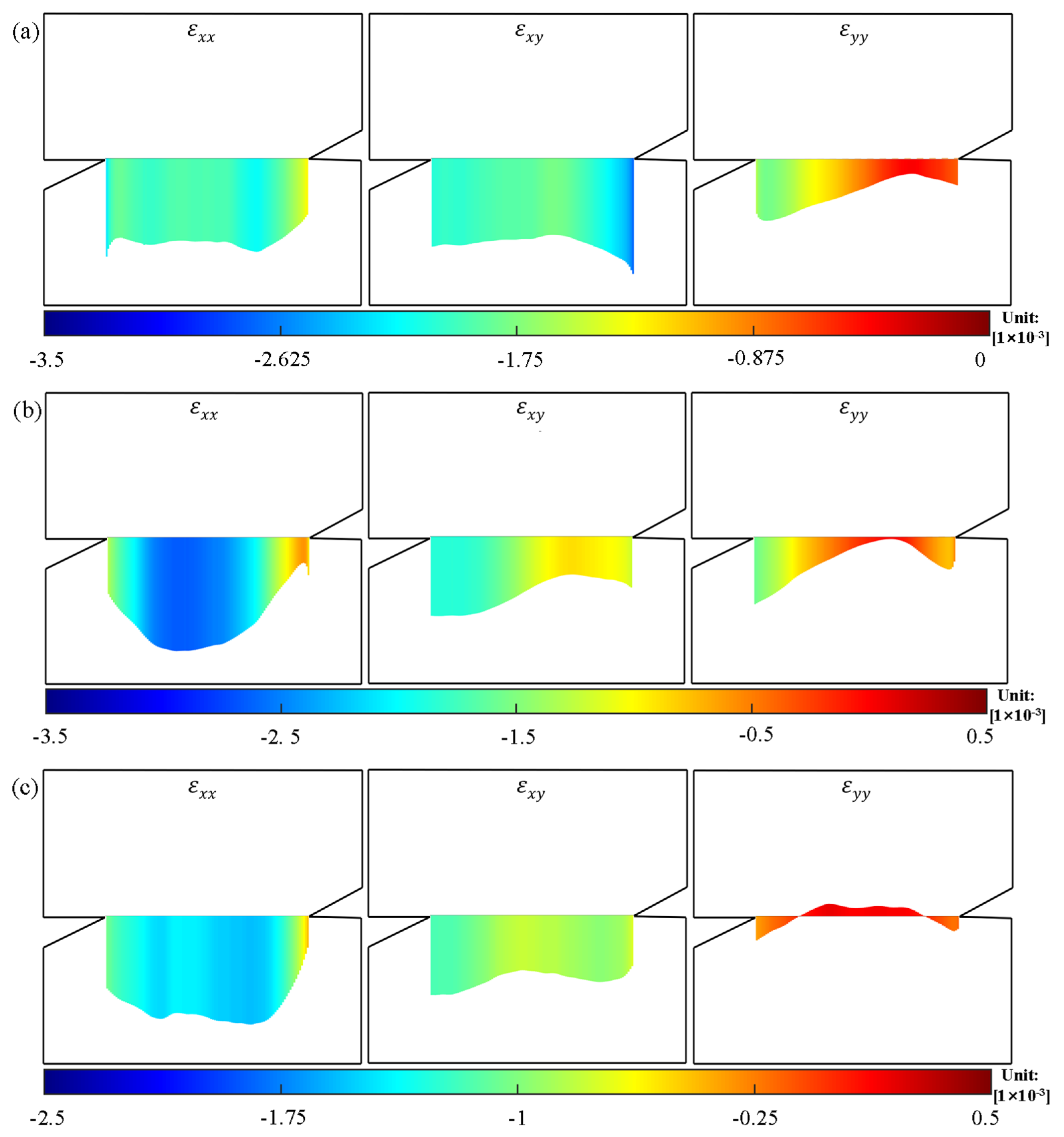
3.2. Strain Characteristics
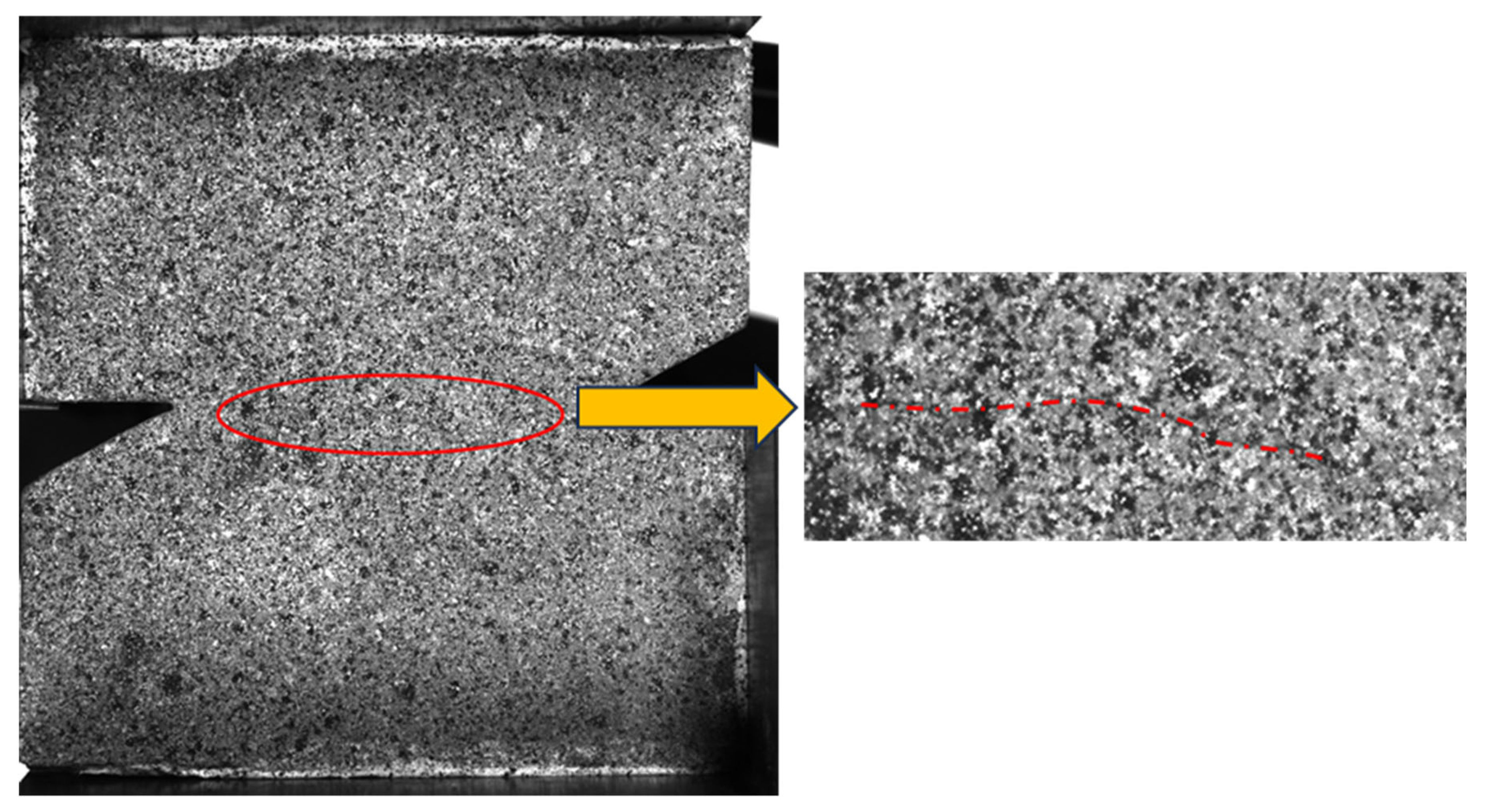
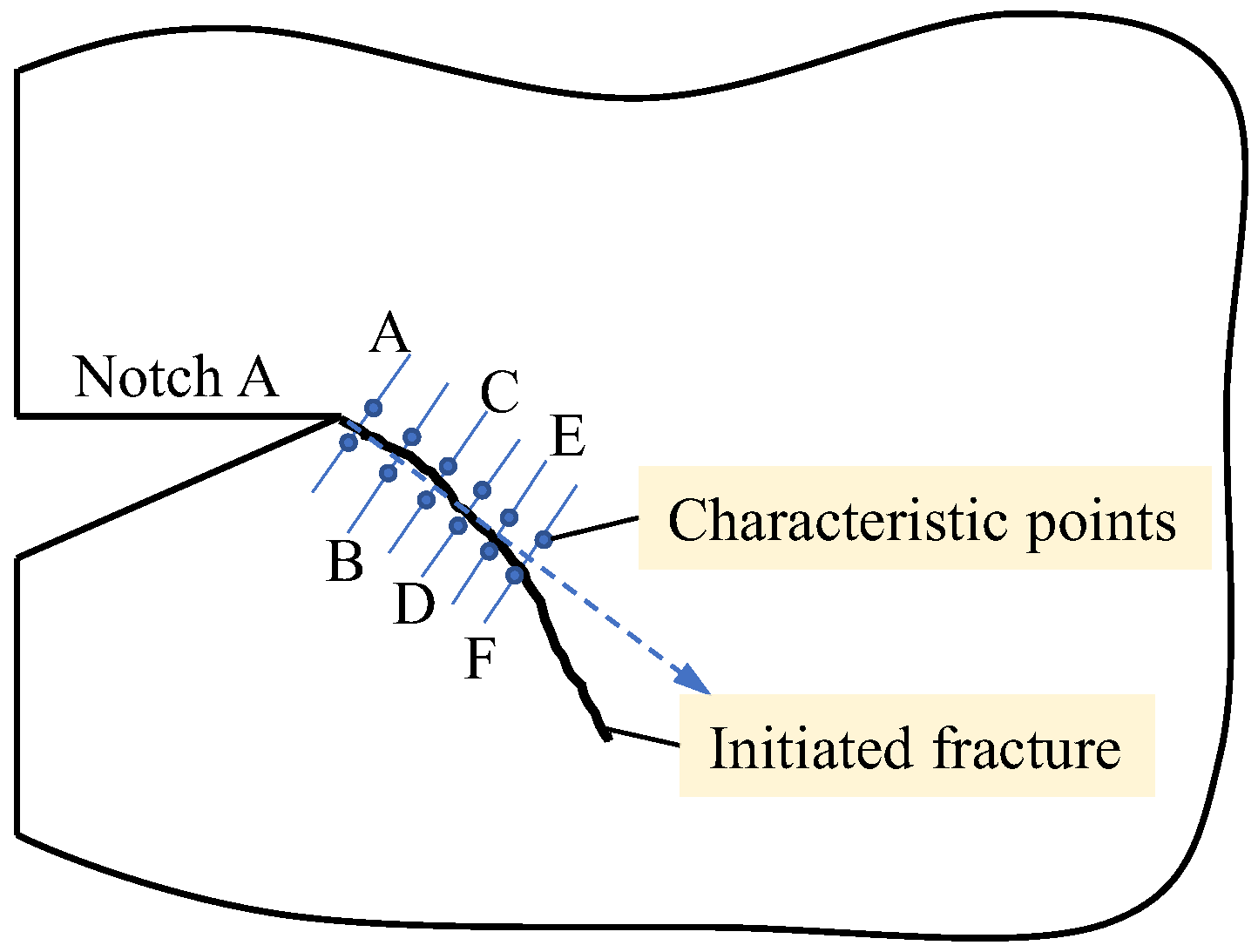
3.3. Fracture Mechanism of Crack Tip
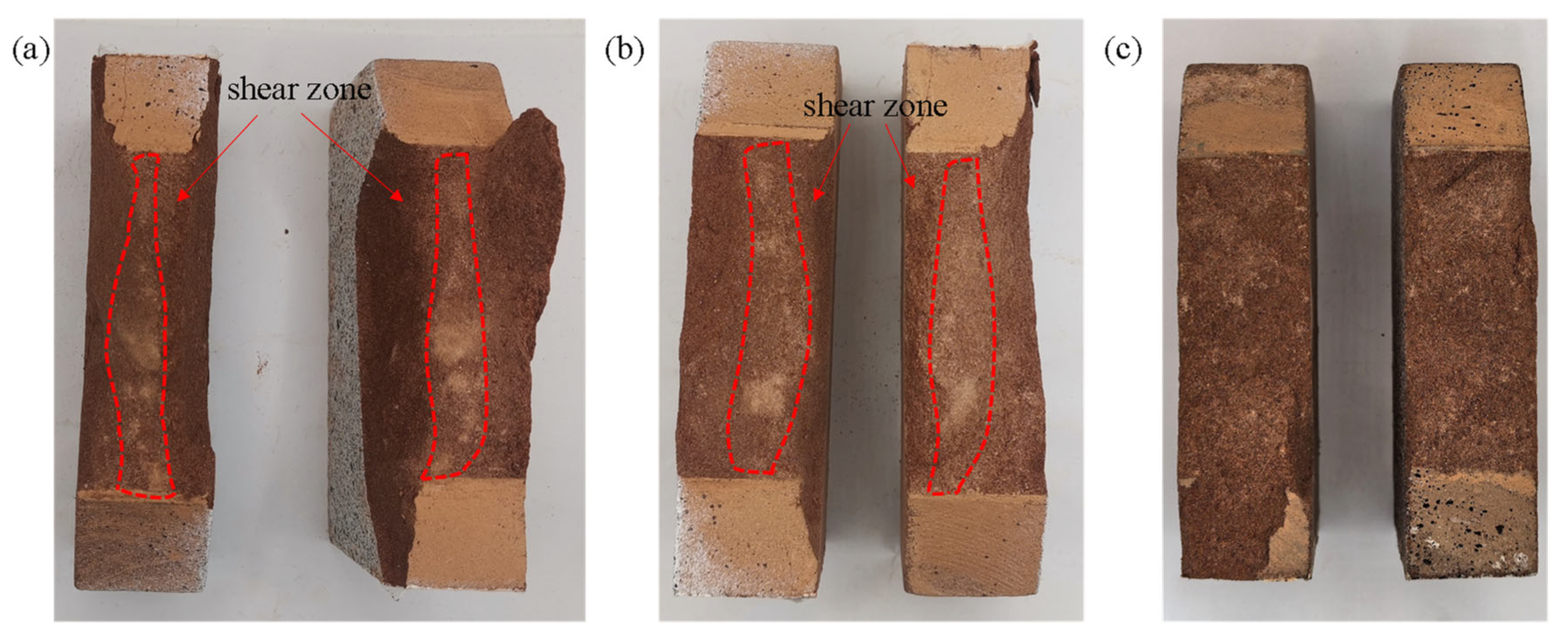
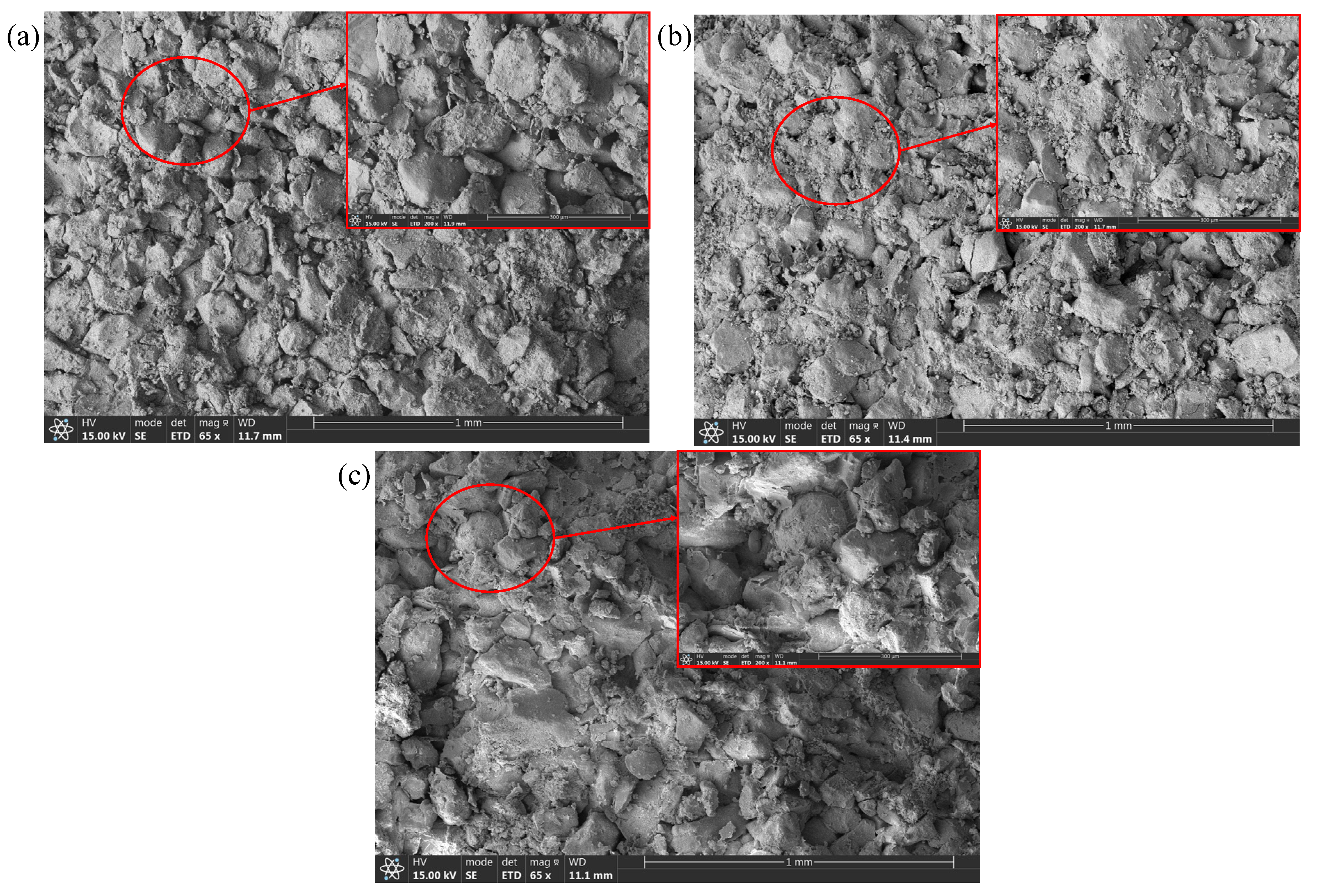
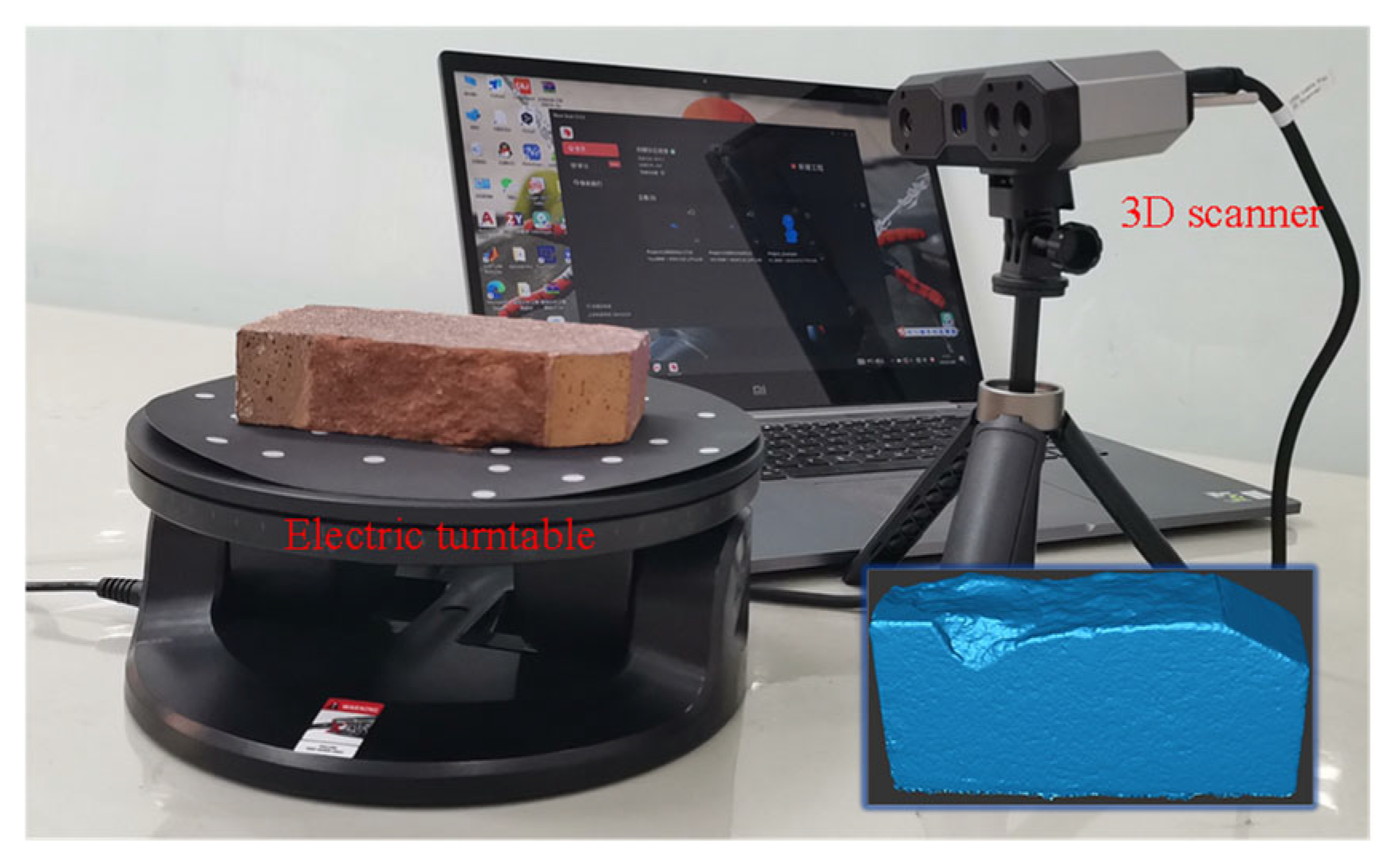
3.4. Characteristics of Fracture Surface
4. Theoretical Analyses of Mode II Fracture Toughness
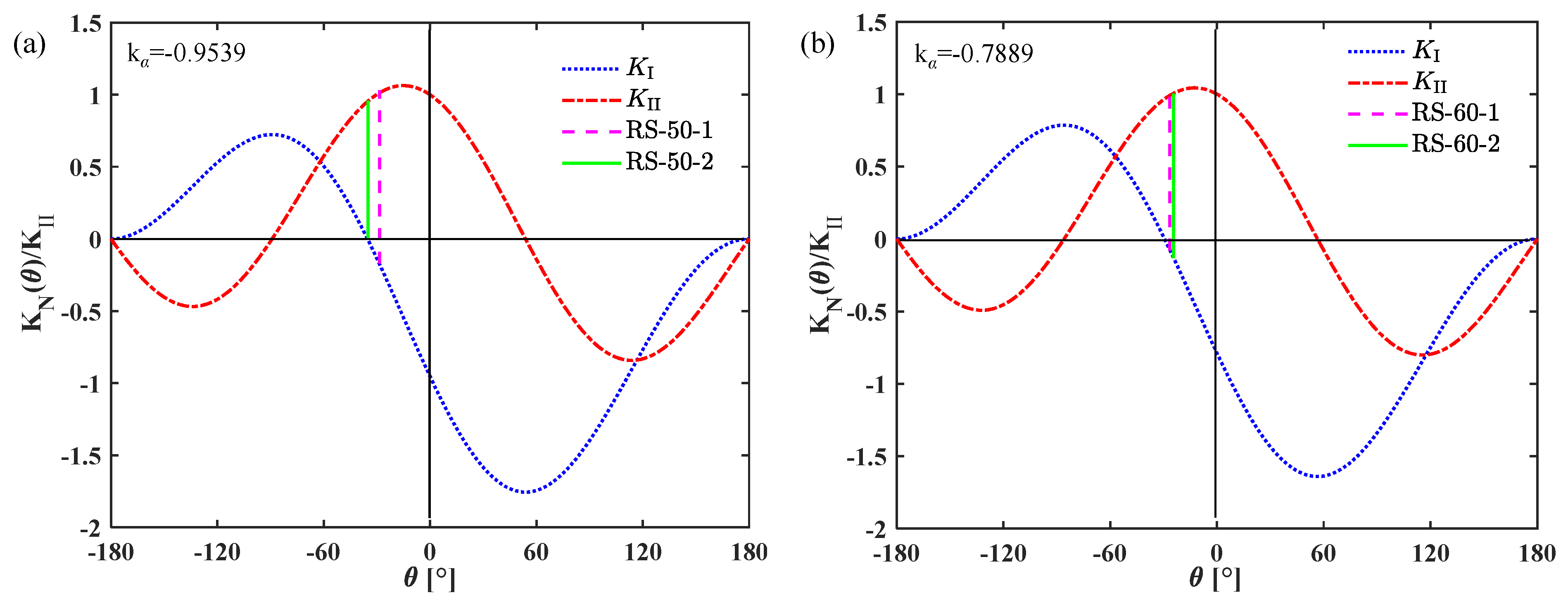
4.1. Stress Intensity Factor Analysis
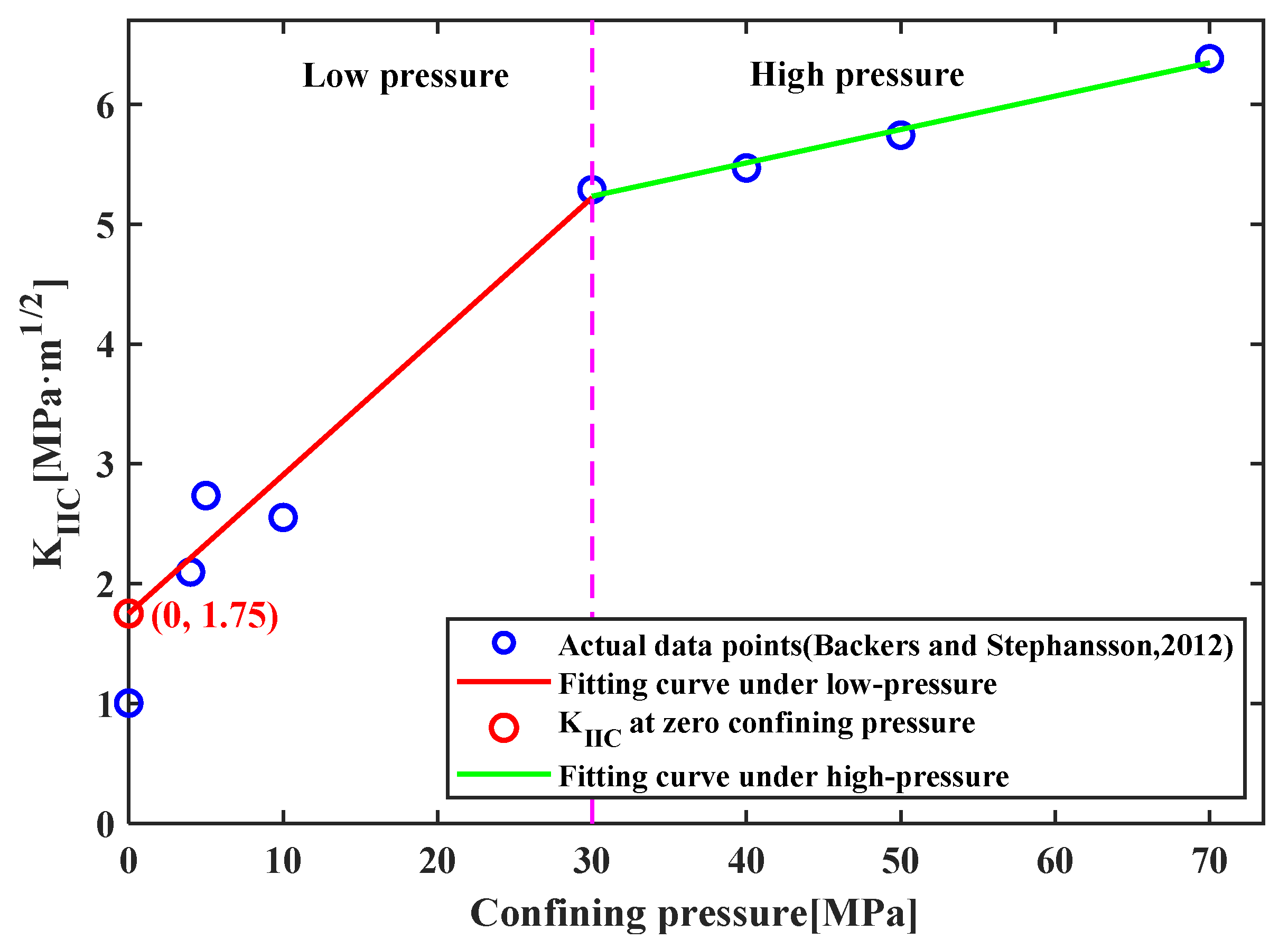
4.2. Determination of Mode II Fracture Toughness
5. Discussion
5.1. Comparison with the Punch-Through Shear Test
5.2. Limitations
- (1)
- The heterogeneity of rock introduces two primary effects on the test results. Firstly, it contributes to the scatter observed in the measured mode II fracture toughness. Secondly, rock heterogeneity promotes local stress concentration, which weakens the overall strength of the rock and thereby reduces its mode II fracture toughness.
- (2)
- The plane stress assumption may underestimate the fracture toughness. According to Akbardoost and Bidadi [31], mode II fracture toughness increases with specimen thickness when the thickness-to-size ratio is below 0.56. In this study, the ratio is 0.25, implying that the plane stress assumption may lead to an underestimation of the actual fracture toughness.
- (3)
- The Mohr–Coulomb criterion relies on a linear strength envelope, which cannot adequately represent nonlinear material response under high confining pressure or strain-softening behavior. Since the crack tip is actually in a state of high confining pressure, the applicability of the Mohr–Coulomb criterion in such conditions therefore requires further verification.
6. Conclusions
- (1)
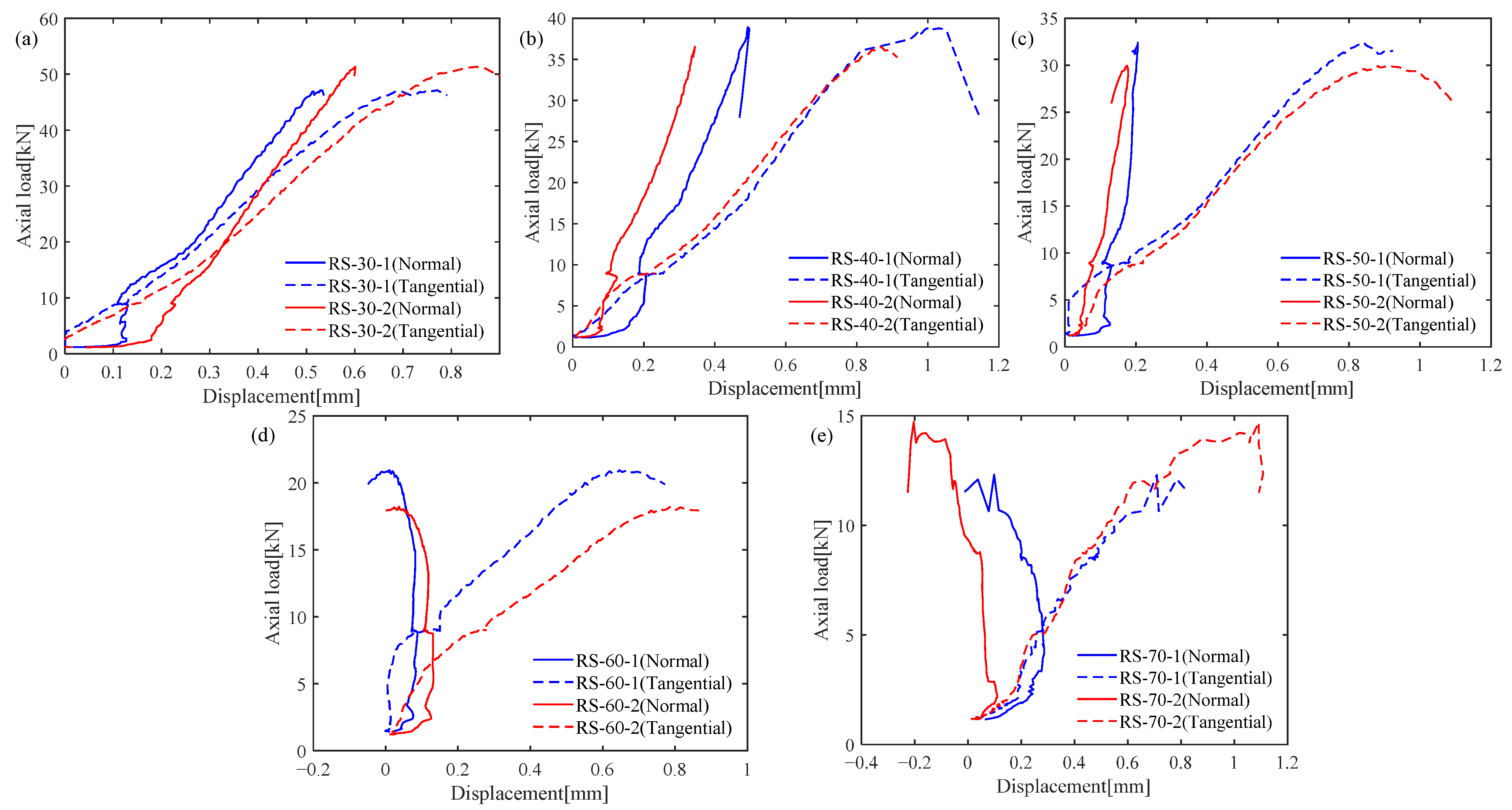
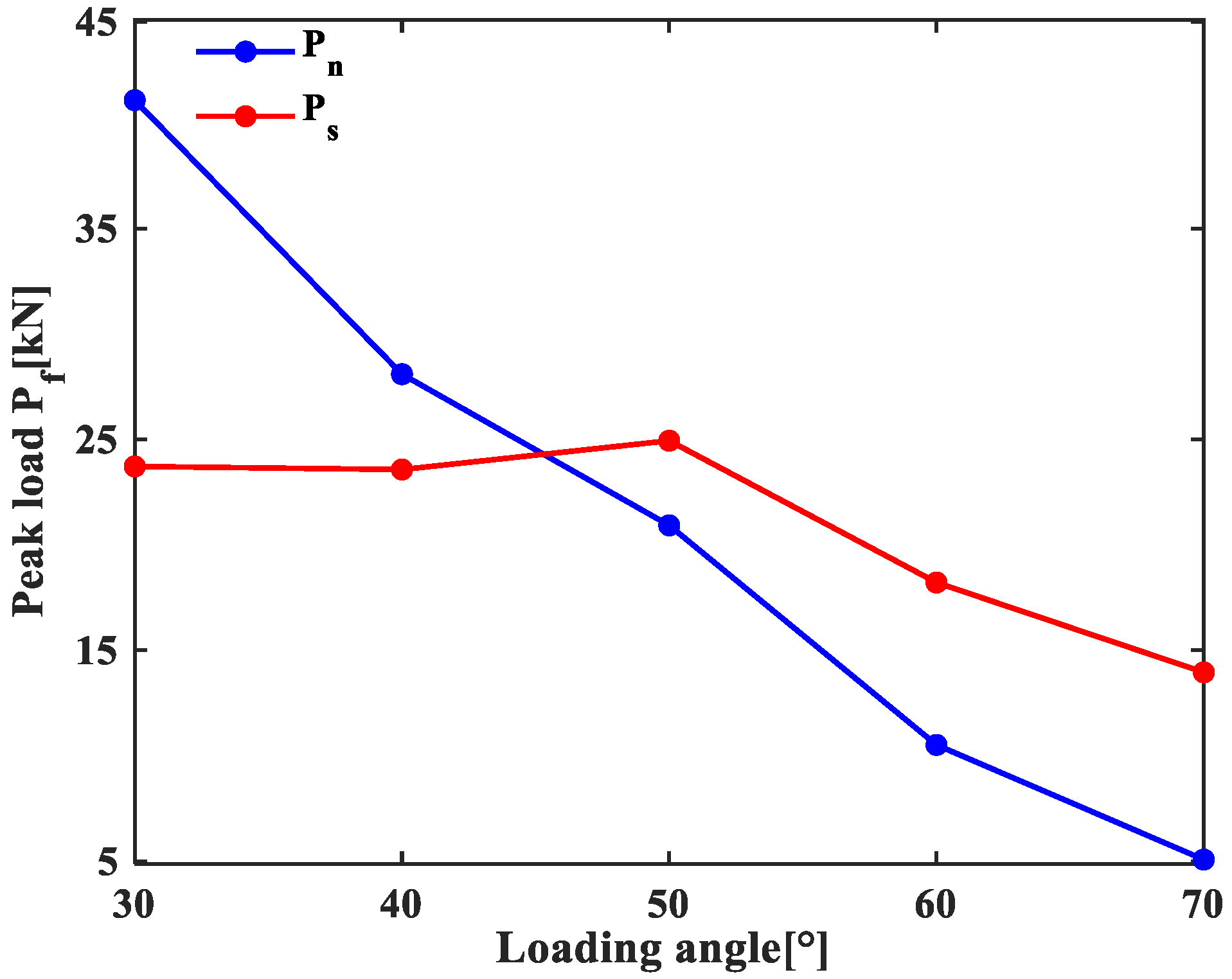
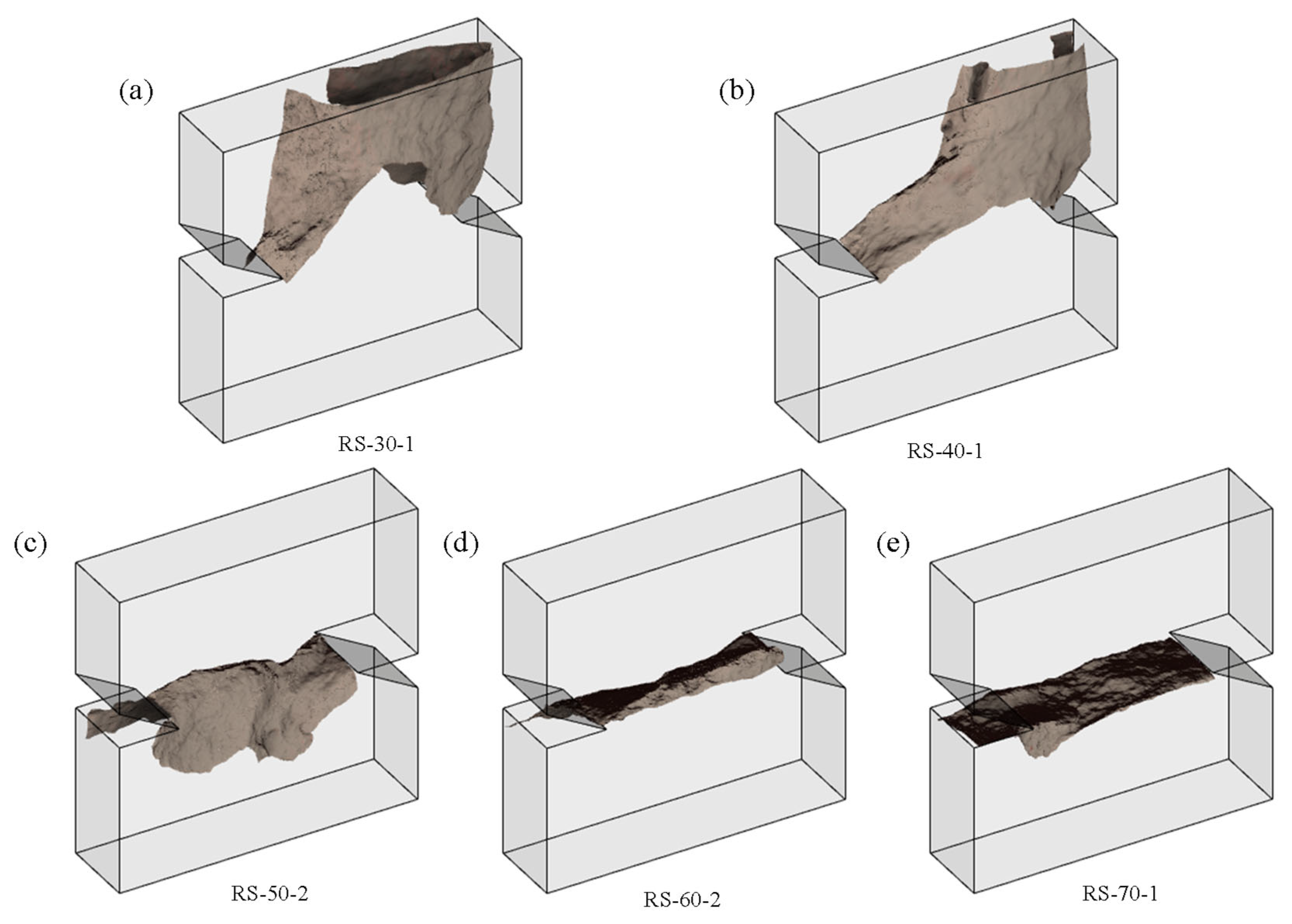
- The peak load decreased with increasing loading angle. Fracture patterns transitioned from irregular and chaotic at low angles (30–40°) to regular shear fractures initiating from the notch tip with angles between −24.5° and −35° at intermediate angles (50–60°) and finally to tensile-dominated fracture along the original crack plane at 70°.
- (2)
- DIC analysis elucidated the underlying deformation mechanisms at 50° and 60°, and combined compressive and shear deformation indicated a compressive-shear fracture mode, while the tensile strain field at 70° confirmed a tensile fracture mechanism.
- (3)
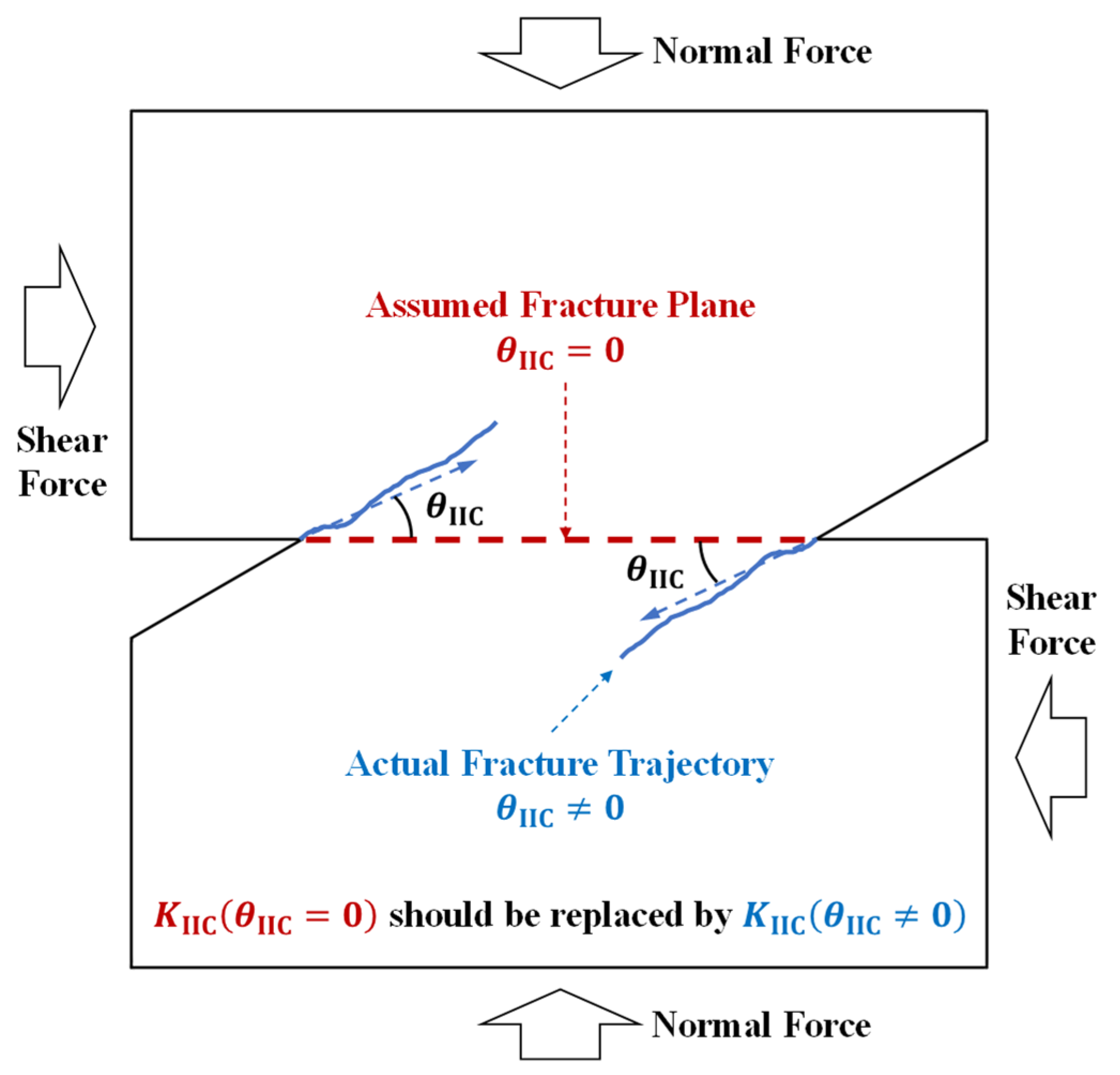
- A theoretical framework based on the Mohr–Coulomb criterion was developed to calculate pure mode II fracture toughness for compressive-shear fractures. Applying this method yielded values of 1.60 and 1.98 at 50° and 60°, respectively. The traditional method, neglecting the initiation angle and mode I dimensionless shape factor, introduced significant errors (59–92%), with the initiation angle being the most critical parameter.
Author Contributions
Funding
Data Availability Statement
Conflicts of Interest
Nomenclature
| Mode I and mode II fracture toughness | |
| Density, elastic modulus, and Poisson’s ratio of rock | |
| Density, elastic modulus, and Poisson’s ratio of steel | |
| Notch depth, side length, and thickness of specimen | |
| Loading angle of specimen | |
| Initial notch length ratio | |
| Normal force, tangential force, and peak load | |
| Angle of potential fracture plane | |
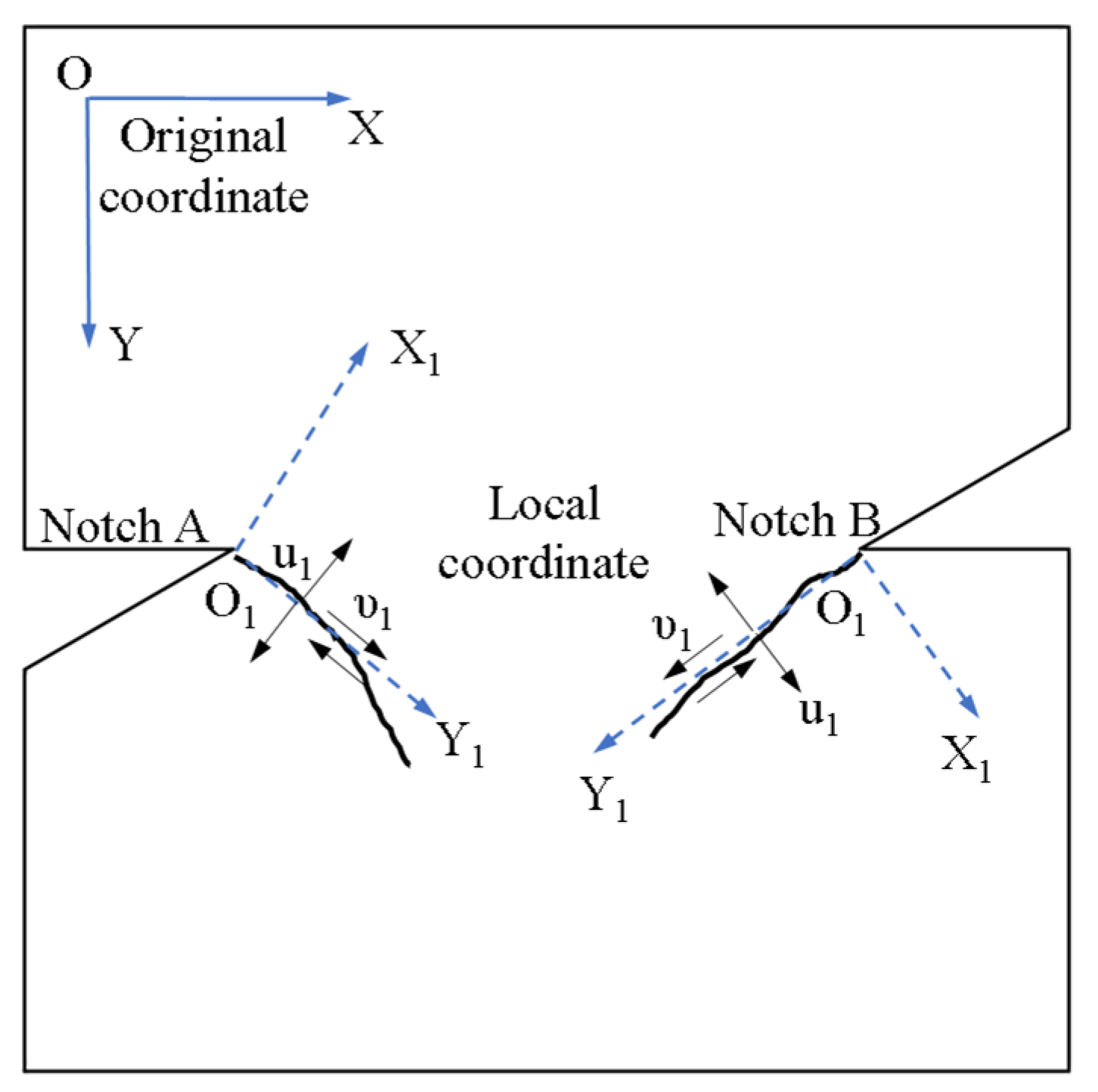
| Normal displacement perpendicular and tangential displacement parallel to fracture | |
| Strain components in cartesian coordinate system | |
| Mode I and mode II stress intensity factor on the original crack plane | |
| Mode I and mode II dimensionless shape factor | |
| Stress components in polar coordinate system around crack tip | |
| Mode I and mode II stress intensity factors on θ plane | |
| Loading ratio, | |
| Stress components in cartesian coordinate system | |
| Normal stress on θ plane | |
| Shear strength when the compressive stress is zero | |
| Friction coefficient | |
| Fracture angle under uniaxial compression | |
| Fracture toughness considering the effect of normal compressive stress | |
| Initiation angle of compressive-shear fracture | |
| Equivalent shear load | |
| Modified equivalent shear load |
References
- Whittaker, B.N.; Singh, R.N.; Sun, G. Rock Fracture Mechanics: Principles, Design, and Applications. In Developments in Geotechnical Engineering; Elsevier: Amsterdam, The Netherlands; New York, NY, USA, 1992. [Google Scholar]
- Sun, H.; Belhaj, H.; Tao, G.; Vega, S.; Liu, L. Rock Properties Evaluation for Carbonate Reservoir Characterization with Multi-Scale Digital Rock Images. J. Pet. Sci. Eng. 2019, 175, 654–664. [Google Scholar] [CrossRef] [Scilit]
- Sun, S.; Sun, H.; Wang, Y.; Wei, J.; Liu, J.; Kanungo, D.P. Effect of the Combination Characteristics of Rock Structural Plane on the Stability of a Rock-Mass Slope. Bull. Eng. Geol. Environ. 2014, 73, 987–995. [Google Scholar] [CrossRef] [Scilit]
- Chen, M.; Lu, W.B.; Yan, P.; Hu, Y.G. Blasting Excavation Induced Damage of Surrounding Rock Masses in Deep-Buried Tunnels. KSCE J. Civ. Eng. 2016, 20, 933–942. [Google Scholar] [CrossRef] [Scilit]
- Anderson, T.L. Fracture Mechanics Fundamentals and Applications, 4th ed; CRC Press: Boca Raton, FL, USA, 2005. [Google Scholar]
- Ayatollahi, M.R.; Sistaninia, M. Mode II Fracture Study of Rocks Using Brazilian Disk Specimens. Int. J. Rock Mech. Min. Sci. 2011, 48, 819–826. [Google Scholar] [CrossRef] [Scilit]
- Hua, W.; Zhang, W.; Dong, S.; Li, J.; Huang, J.; Luo, P.; Zhu, Z. Fracture Mechanical Properties of Double-Edge Cracked Flattened Brazilian Disc Samples Under Compressive Loads. Materials 2025, 18, 850. [Google Scholar] [CrossRef] [Scilit]
- Ayatollahi, M.R.; Aliha, M.R.M. Cracked Brazilian Disc Specimen Subjected to Mode II Deformation. Eng. Fract. Mech. 2005, 72, 493–503. [Google Scholar] [CrossRef] [Scilit]
- Ji, W.-W.; Pan, P.-Z.; Lin, Q.; Feng, X.-T.; Du, M.-P. Do Disk-Type Specimens Generate a Mode II Fracture without Confinement? Int. J. Rock Mech. Min. Sci. 2016, 87, 48–54. [Google Scholar] [CrossRef] [Scilit]
- Lin, Q.; Ji, W.-W.; Pan, P.-Z.; Wang, S.; Lu, Y. Comments on the Mode II Fracture from Disk-Type Specimens for Rock-Type Materials. Eng. Fract. Mech. 2019, 211, 303–320. [Google Scholar] [CrossRef] [Scilit]
- Bažant, Z.P.; Pfeiffer, P.A. Shear Fracture Tests of Concrete. Mater. Struct. 1986, 19, 111–121. [Google Scholar] [CrossRef] [Scilit]
- Cao, P.; Zhou, T.; Zhu, J. A Novel Testing Method for Examining Mode II Fracture of Rock and Its Application. Eng. Fract. Mech. 2024, 295, 109831. [Google Scholar] [CrossRef] [Scilit]
- Watkins, J.; Liu, K.L.W. A Finite Element Study of the Short Beam Test Specimen under Mode II Loading. Int. J. Cem. Compos. Lightweight Concr. 1985, 7, 39–47. [Google Scholar] [CrossRef] [Scilit]
- Xu, Y.; Yao, W.; Zhao, G.; Xia, K. Evaluation of the Short Core in Compression (SCC) Method for Measuring Mode II Fracture Toughness of Rocks. Eng. Fract. Mech. 2020, 224, 106747. [Google Scholar] [CrossRef] [Scilit]
- Backers, T.; Stephansson, O. ISRM Suggested Method for the Determination of Mode II Fracture Toughness. Rock Mech. Rock Eng. 2012, 45, 1011–1022. [Google Scholar] [CrossRef] [Scilit]
- Chen, F.; Cao, P.; Rao, Q.H.; Ma, C.D.; Sun, Z.Q. A Mode II Fracture Analysis of Double Edge Cracked Brazilian Disk Using the Weight Function Method. Int. J. Rock Mech. Min. Sci. 2005, 42, 461–465. [Google Scholar] [CrossRef] [Scilit]
- Rao, Q.; Sun, Z.; Stephansson, O.; Li, C.; Stillborg, B. Shear Fracture (Mode II) of Brittle Rock. Int. J. Rock Mech. Min. Sci. 2003, 40, 355–375. [Google Scholar] [CrossRef] [Scilit]
- Sun, D.; Rao, Q.; Wang, S.; Shen, Q.; Yi, W. Shear Fracture (Mode II) Toughness Measurement of Anisotropic Rock. Theor. Appl. Fract. Mech. 2021, 115, 103043. [Google Scholar] [CrossRef] [Scilit]
- Cao, R.; Yao, R.; Hu, T.; Wang, C.; Li, K.; Meng, J. Failure and Mechanical Behavior of Transversely Isotropic Rock under Compression-Shear Tests: Laboratory Testing and Numerical Simulation. Eng. Fract. Mech. 2021, 241, 107389. [Google Scholar] [CrossRef] [Scilit]
- Ying, P.; Ying, Y.; Zhou, R.; Zhu, Z.; He, L.; Yu, K.; Zhou, L.; Li, X. The Effect of Normal Compressive Stresses on the Fracture Behavior of Mode II Crack under Compression and Shear Loads. Theor. Appl. Fract. Mech. 2024, 130, 104347. [Google Scholar] [CrossRef] [Scilit]
- Liu, H.-Z.; Liang, W.-X.; Xie, H.-Q.; Zhuo, L.; Xiao, M.-L.; He, J.-D. Influence of Partial Separation between Rock Specimen and Loading Device on Determination of Mode II Fracture Toughness by Shear-Box Test. Int. J. Fract. 2025, 249, 56. [Google Scholar] [CrossRef] [Scilit]
- Chen, L.; Guo, W.; Jiang, Y.; Tan, Y.; Zhang, Y.; Lu, D.; Han, F. Experimental Study on Influence of Lithology on Directional Propagation Law of Type-I Cracks. J. Cent. South Univ. 2023, 30, 3322–3334. [Google Scholar] [CrossRef] [Scilit]
- Fan, Z.; Xie, H.; Ren, L.; Zhang, R.; He, R.; Li, C.; Zhang, Z.; Wang, J.; Xie, J. Anisotropy in Shear-Sliding Fracture Behavior of Layered Shale under Different Normal Stress Conditions. J. Cent. South Univ. 2022, 29, 3678–3694. [Google Scholar] [CrossRef] [Scilit]
- Liu, H.-Z.; Lin, J.-S.; He, J.-D.; Xie, H.-Q. Dominant Mode of Planar Fractures and the Role of Material Properties. Eng. Fract. Mech. 2018, 195, 57–79. [Google Scholar] [CrossRef] [Scilit]
- Wu, Q.; Xie, C.; Xie, Y.; Zhao, Y.; Li, X.; Liu, J.; Weng, L. Extending Application of Asymmetric Semi-Circular Bend Specimen to Investigate Mixed Mode I/II Fracture Behavior of Granite. J. Cent. South Univ. 2022, 29, 1289–1304. [Google Scholar] [CrossRef] [Scilit]
- Lin, Q.; Yuan, H.; Biolzi, L.; Labuz, J.F. Opening and Mixed Mode Fracture Processes in a Quasi-Brittle Material via Digital Imaging. Eng. Fract. Mech. 2014, 131, 176–193. [Google Scholar] [CrossRef] [Scilit]
- Ebrahimi, S.; Behjat, B.; Kouhi, M. The Effect of Loading Rate on Mixed Mode I/II Fracture Behavior of Adhesively Bonded Joints: Experimental and Numerical Approach. Theor. Appl. Fract. Mech. 2024, 131, 104420. [Google Scholar] [CrossRef] [Scilit]
- Bahrami, B.; Nejati, M.; Ayatollahi, M.R.; Driesner, T. Theory and experiment on true mode II fracturing of rocks. Eng. Fract. Mech. 2020, 240, 107314. [Google Scholar] [CrossRef] [Scilit]
- Vizini, V.O.S.; Futai, M.M. Mode II fracture toughness determination of rock and concrete via modified direct shear test. Eng. Fract. Mech. 2021, 257, 108007. [Google Scholar] [CrossRef] [Scilit]
- Huang, J.; Hua, W.; Li, D.; Chen, X.; You, X.; Dong, S.; Li, J. Effect of Confining Pressure on the Compression-Shear Fracture Properties of Sandstone. Theor. Appl. Fract. Mech. 2023, 124, 103763. [Google Scholar] [CrossRef] [Scilit]
- Akbardoost, J.; Bidadi, J. Experimental investigation on the effect of the specimen thickness on the mode II fracture resistance of rocks. J. Eng. Geol. 2020, 14, 203–222. [Google Scholar]








| Specimen Number | Loading Angle [°] | Length of Edges Without Notch [mm] | Length of Edges with Notch [mm] | Thickness [mm] | Depth of Notch A [mm] | Depth of Notch B [mm] | Mass [g] | Density [g/cm3] |
|---|---|---|---|---|---|---|---|---|
| RS-30-1 | 30 | 119.99 | 120.07 | 30.34 | 24.12 | 24.10 | 924.7 | 2.166 |
| RS-30-2 | 30 | 119.64 | 119.83 | 30.11 | 23.95 | 24.11 | 926.2 | 2.197 |
| RS-40-1 | 40 | 120.02 | 120.03 | 30.27 | 23.97 | 23.98 | 917.9 | 2.155 |
| RS-40-2 | 40 | 119.98 | 119.92 | 30.23 | 24.22 | 23.92 | 915.1 | 2.154 |
| RS-50-1 | 50 | 120.04 | 119.97 | 30.29 | 24.03 | 24.07 | 922.6 | 2.165 |
| RS-50-2 | 50 | 119.86 | 119.79 | 30.11 | 23.85 | 24.00 | 884.1 | 2.093 |
| RS-60-1 | 60 | 119.90 | 119.89 | 30.13 | 24.17 | 24.26 | 895.4 | 2.117 |
| RS-60-2 | 60 | 119.82 | 119.74 | 30.20 | 24.20 | 24.09 | 912.5 | 2.157 |
| RS-70-1 | 70 | 119.60 | 119.80 | 30.32 | 23.92 | 23.63 | 905.4 | 2.133 |
| RS-70-2 | 70 | 120.12 | 120.33 | 30.39 | 24.26 | 24.15 | 925.5 | 2.157 |
| Minimum | 119.6 | 119.74 | 30.11 | 23.85 | 23.63 | 884.1 | 2.093 | |
| Maximum | 120.12 | 120.33 | 30.39 | 24.26 | 24.26 | 926.2 | 2.197 | |
| Mean | 119.90 | 119.94 | 30.24 | 24.07 | 24.03 | 912.94 | 2.15 | |
| Standard deviation | 0.162 | 0.166 | 0.095 | 0.136 | 0.161 | 13.382 | 0.027 | |
| Specimen Number | Overall Fracture Pattern | Notch Position | Order of Fracture | Initiation Angles in the Front [°] | Initiation Angles in the Back [°] | Consistent? | Average |
|---|---|---|---|---|---|---|---|
| RS-30-1 | chaotic | Notch A | 2nd | −38 | −21 | Almost | −29.5 |
| Notch B | 1st | 17 | 17 | Very | 17 | ||
| RS-30-2 | chaotic | Notch A | 2nd | \ | 29 | Not | |
| Notch B | 1st | −78 | −44 | Not | |||
| RS-40-1 | chaotic | Notch A | 1st | 21 | 34 | Almost | 27.5 |
| Notch B | 2nd | \ | −19 | Not | |||
| RS-40-2 | chaotic | Notch A | 2nd | \ | \ | Not | |
| Notch B | 1st | 23 | 24 | Very | 23.5 | ||
| RS-50-1 | regular | Notch A | 2nd | −31 | −31 | Very | −31 |
| Notch B | 1st | −26 | −26 | Very | −26 | ||
| RS-50-2 | regular | Notch A | 1st | −38 | −32 | Very | −35 |
| Notch B | 2nd | \ | \ | Not | |||
| RS-60-1 | regular | Notch A | 2nd | \ | 10 | Not | |
| Notch B | 1st | −25 | −28 | Very | −26.5 | ||
| RS-60-2 | regular | Notch A | 2nd | 11 | \ | Not | |
| Notch B | 1st | −23 | −26 | Very | −24.5 | ||
| RS-70-1 | regular | Notch A | 2nd | 7 | 13 | Very | 10 |
| Notch B | 1st | 0 | −5 | Very | −2.5 | ||
| RS-70-2 | regular | Notch A | 2nd | −8 | −10 | Very | −9 |
| Notch B | 1st | 0 | 9 | Very | 4.5 |
| Loading Angle [°] | Friction Coefficient of Contact Behavior | KI | KII | KI/KII | Error Due to the Influence of Friction Coefficient | |
|---|---|---|---|---|---|---|
| KI | KII | |||||
| 30 | 0.3 | −0.2264 | 0.1387 | −1.6323 | \ | \ |
| 40 | 0.3 | −0.2163 | 0.1803 | −1.1997 | \ | \ |
| 50 | 0.3 | −0.2126 | 0.2229 | −0.9539 | \ | \ |
| 60 | 0.3 | −0.2177 | 0.2760 | −0.7889 | \ | \ |
| 70 | 0.3 | −0.2209 | 0.3492 | −0.6326 | \ | \ |
| 30 | 0.1 | −0.2432 | 0.1496 | −1.6258 | 1.07% | 0.66% |
| 40 | 0.1 | −0.2012 | 0.1684 | −1.1942 | 1.03% | 0.57% |
| 50 | 0.1 | −0.1668 | 0.1757 | −0.9496 | 1.01% | 0.56% |
| 60 | 0.1 | −0.1393 | 0.1774 | −0.7852 | 0.90% | 0.44% |
| 70 | 0.1 | −0.1081 | 0.1716 | −0.6297 | 0.85% | 0.41% |
| 30 | 0.5 | −0.2481 | 0.1514 | −1.6385 | −0.92% | −0.56% |
| 40 | 0.5 | −0.2051 | 0.1703 | −1.2046 | −0.91% | −0.50% |
| 50 | 0.5 | −0.1700 | 0.1775 | −0.9577 | −0.88% | −0.48% |
| 60 | 0.5 | −0.1416 | 0.1788 | −0.7920 | −0.76% | −0.37% |
| 70 | 0.5 | −0.1098 | 0.1729 | −0.6349 | −0.72% | −0.34% |
| Specimen Number | Actual Cracking Angle [°] | KIIC Calculated by the Proposed Method | KIIC Calculated by Equation (10) | KIIC Calculated by Equation (14) | |||||
|---|---|---|---|---|---|---|---|---|---|
| Each | Average | Each | Average | Relative Error | Each | Average | Relative Error | ||
| RS-50-1 | −26 | 1.84 | 1.98 | 0.17 | 0.16 | 92% | \ | \ | \ |
| RS-50-2 | −35 | 2.12 | 0.15 | \ | |||||
| RS-60-1 | −26.5 | 1.75 | 1.60 | 0.69 | 0.65 | 59% | 0.24 | 0.23 | 86% |
| RS-60-2 | −24.5 | 1.45 | 0.60 | 0.21 | |||||
Disclaimer/Publisher’s Note: The statements, opinions and data contained in all publications are solely those of the individual author(s) and contributor(s) and not of MDPI and/or the editor(s). MDPI and/or the editor(s) disclaim responsibility for any injury to people or property resulting from any ideas, methods, instructions or products referred to in the content. |
© 2026 by the authors. Licensee MDPI, Basel, Switzerland. This article is an open access article distributed under the terms and conditions of the Creative Commons Attribution (CC BY) license.
Share and Cite
Lei, C.-H.; Liu, H.-Z.; Xie, H.-Q.; Xiao, M.-L.; Feng, G.; Zheng, Z.-Q. Determination of Fracture Mechanism and Mode II Fracture Toughness of Red Sandstone Subjected to Compressive-Shear Loading. Materials 2026, 19, 1236. https://doi.org/10.3390/ma19061236
Lei C-H, Liu H-Z, Xie H-Q, Xiao M-L, Feng G, Zheng Z-Q. Determination of Fracture Mechanism and Mode II Fracture Toughness of Red Sandstone Subjected to Compressive-Shear Loading. Materials. 2026; 19(6):1236. https://doi.org/10.3390/ma19061236
Chicago/Turabian StyleLei, Chang-Hong, Huai-Zhong Liu, Hong-Qiang Xie, Ming-Li Xiao, Gan Feng, and Zhao-Qiang Zheng. 2026. "Determination of Fracture Mechanism and Mode II Fracture Toughness of Red Sandstone Subjected to Compressive-Shear Loading" Materials 19, no. 6: 1236. https://doi.org/10.3390/ma19061236
APA StyleLei, C.-H., Liu, H.-Z., Xie, H.-Q., Xiao, M.-L., Feng, G., & Zheng, Z.-Q. (2026). Determination of Fracture Mechanism and Mode II Fracture Toughness of Red Sandstone Subjected to Compressive-Shear Loading. Materials, 19(6), 1236. https://doi.org/10.3390/ma19061236