Fatigue Life Prediction of 25CrMo4 Alloy Steel Based on Interpretable Methods

Abstract
1. Introduction
2. Data Source and Preprocessing
2.1. Data Source
2.2. Data Analysis and Preprocessing
3. Predictive Models and Interpretable Analysis Methods
3.1. Predictive Models and Optimization Algorithms
3.1.1. Paris Law
3.1.2. K-Nearest Neighbor Regression
3.1.3. Random Forest Regression
3.1.4. Adaptive Boosting Regression
3.1.5. Gradient Boosting Regression
3.1.6. Extreme Gradient Boosting Regression
3.1.7. Gaussian Process Regression
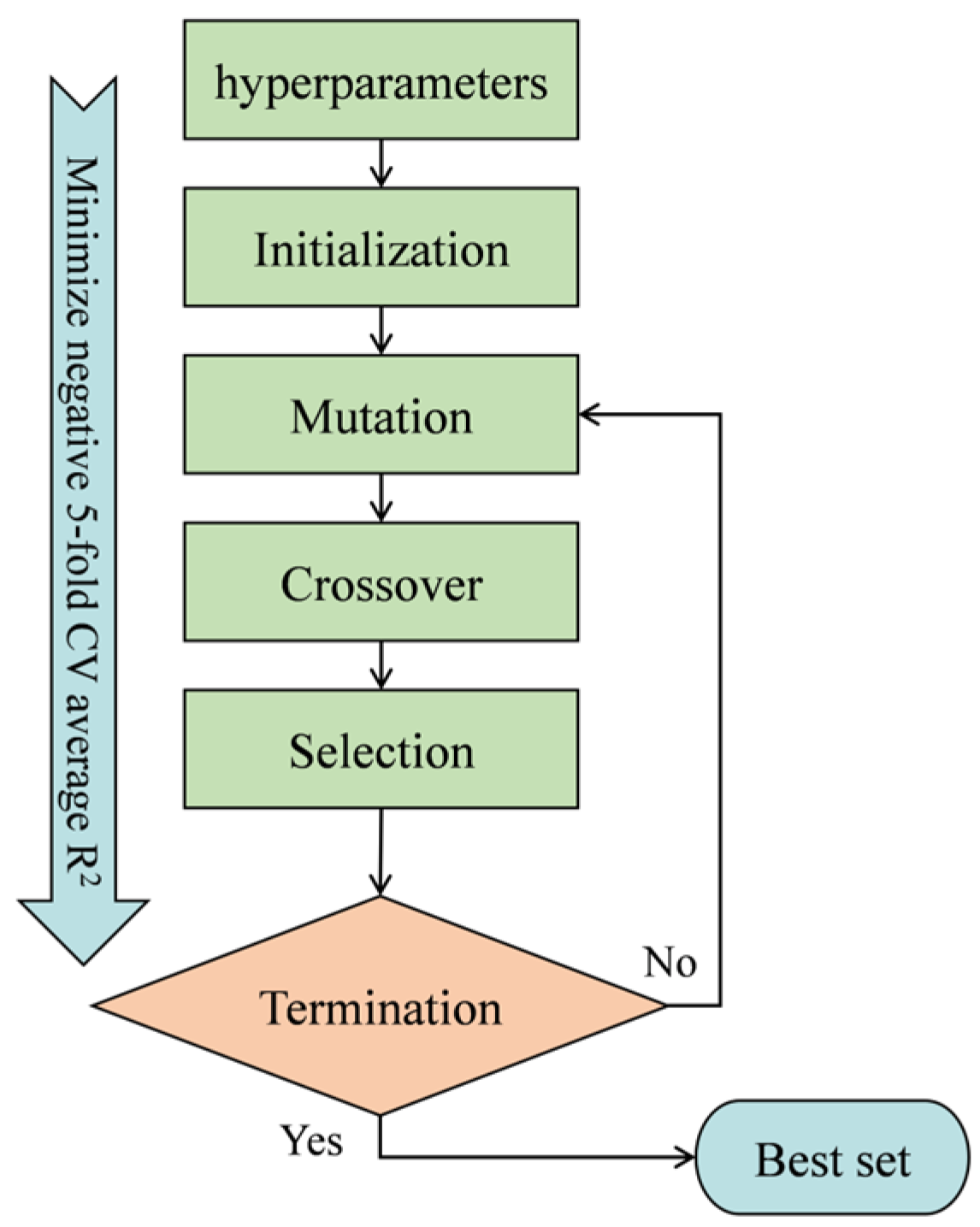
3.1.8. Differential Evolution Algorithm
3.2. Model Performance Evaluation Metrics
3.3. Interpretable Analysis Methods
4. Results and Discussion
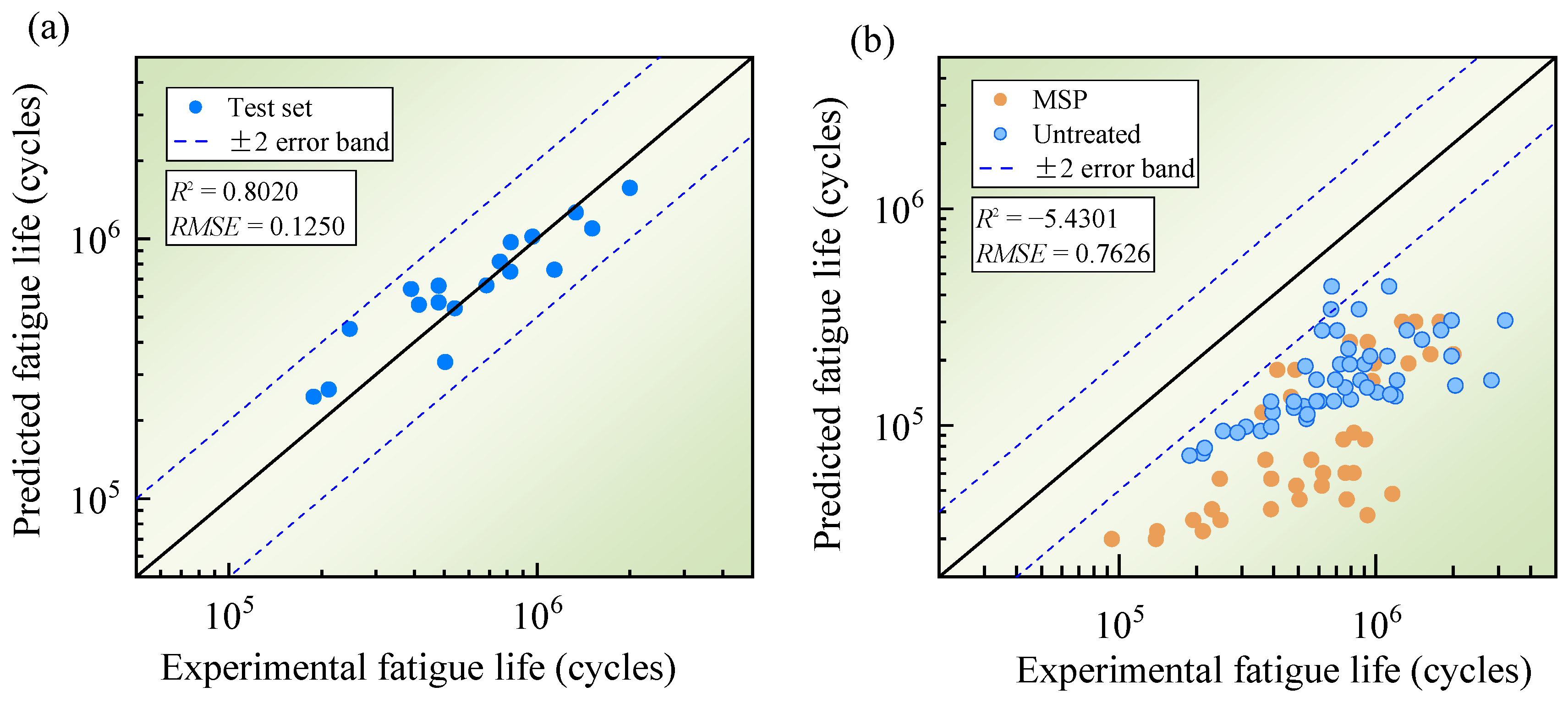
4.1. Model Prediction Results
4.2. Results of Interpretability Analysis
4.2.1. Feature Importance
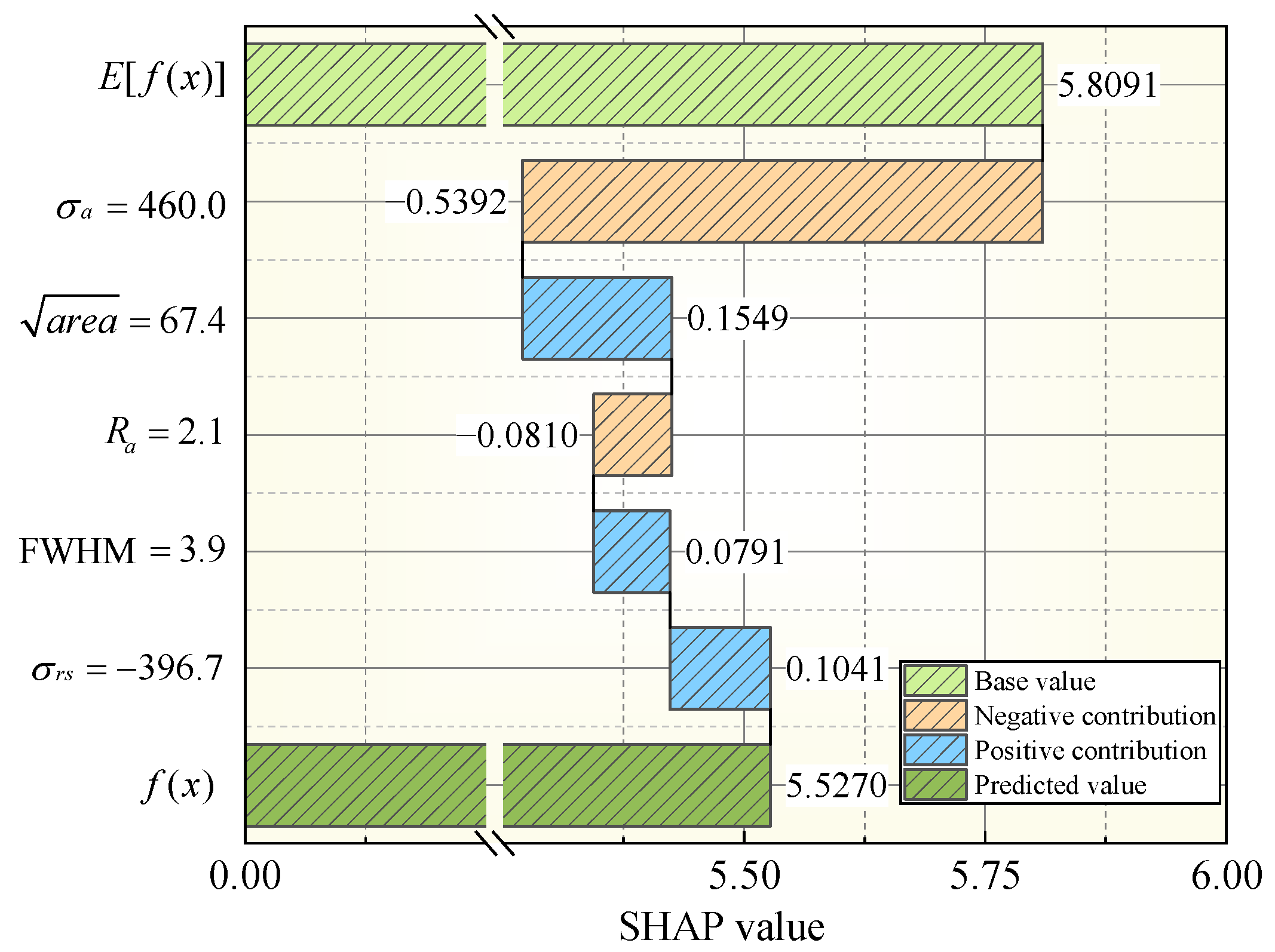
4.2.2. Interpretation of the Prediction for a Single Sample
4.2.3. Feature Marginal Effects Based on PDP
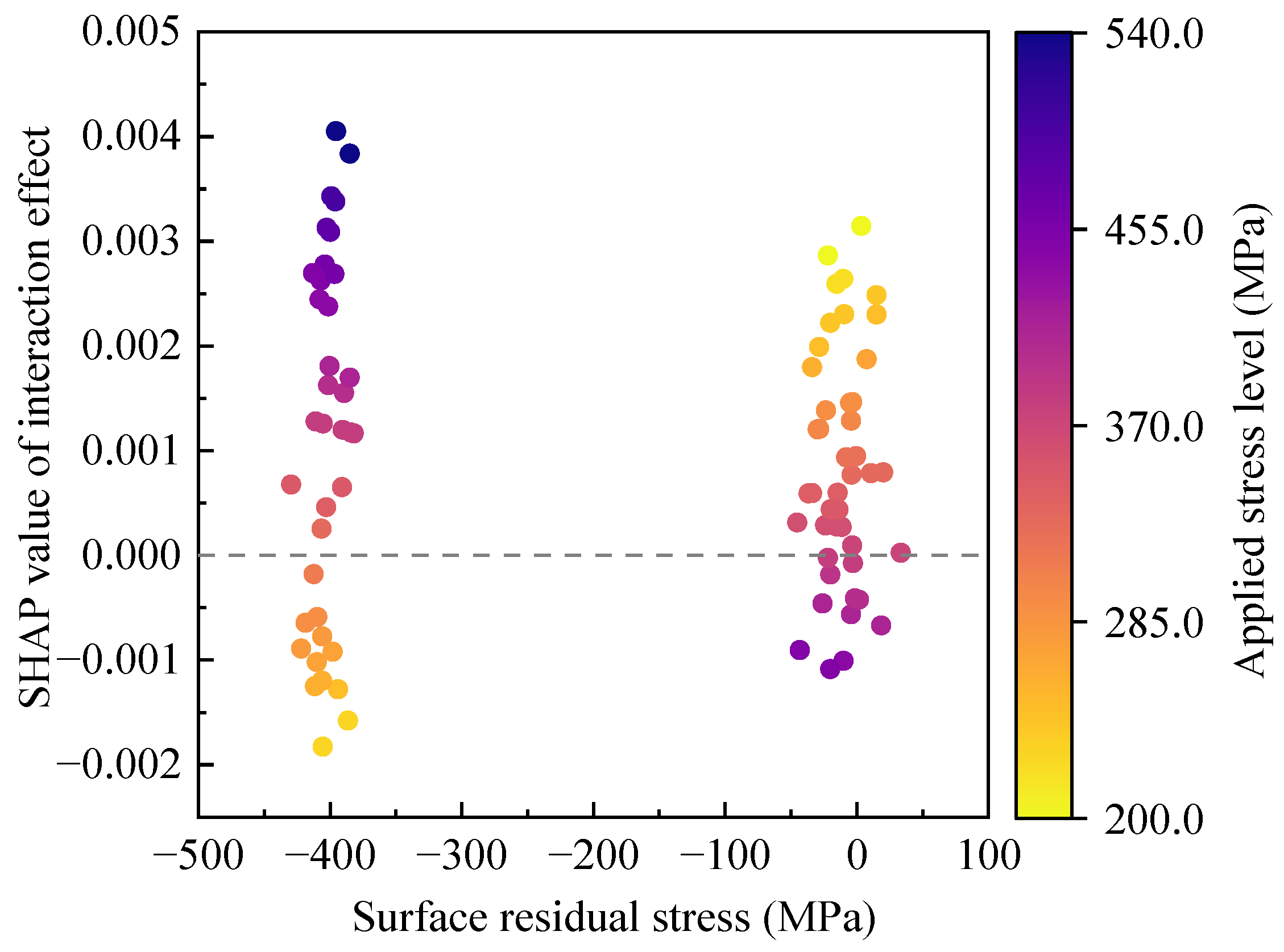
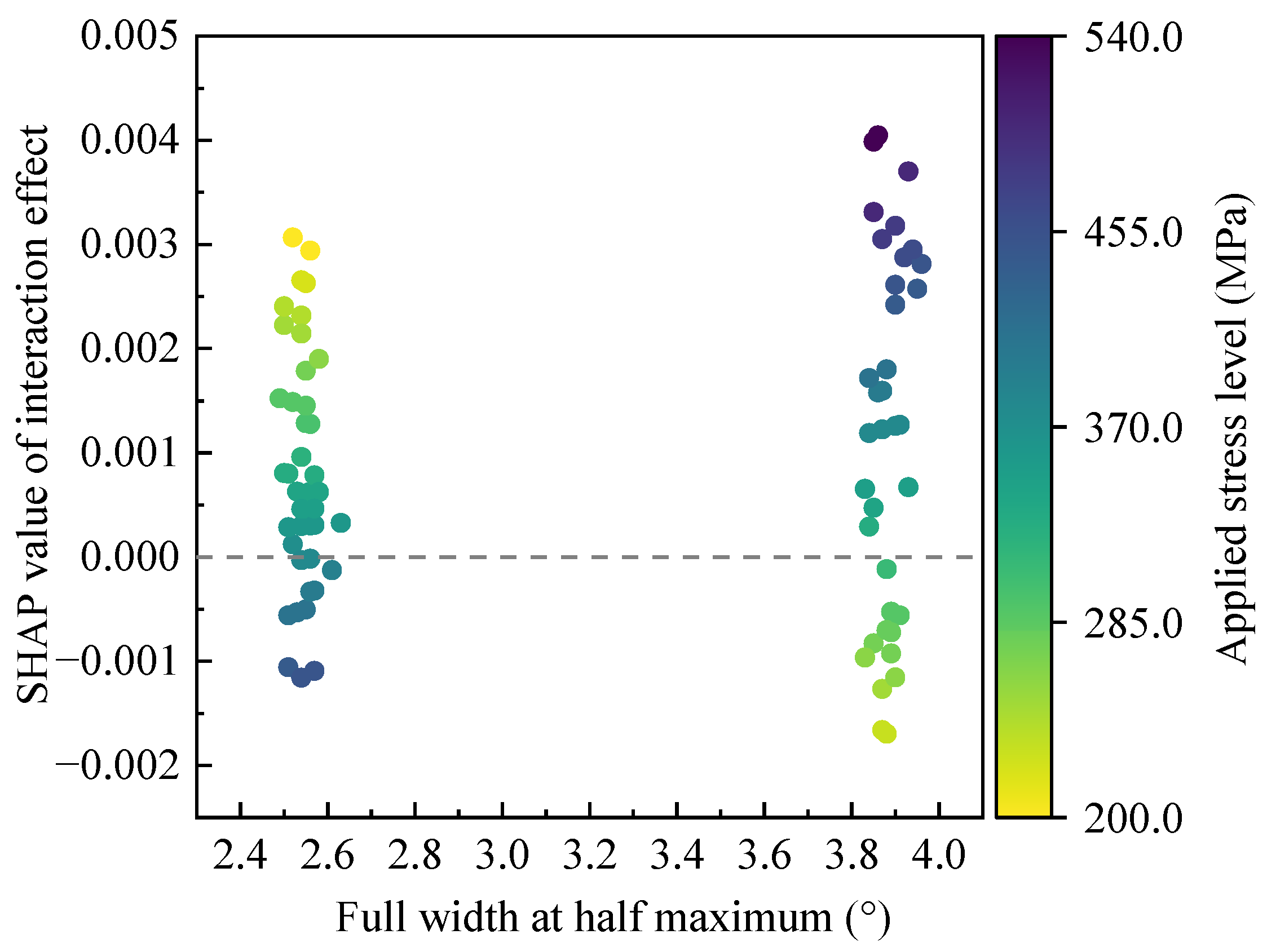
4.2.4. Interaction Effects Among Features
5. Conclusions
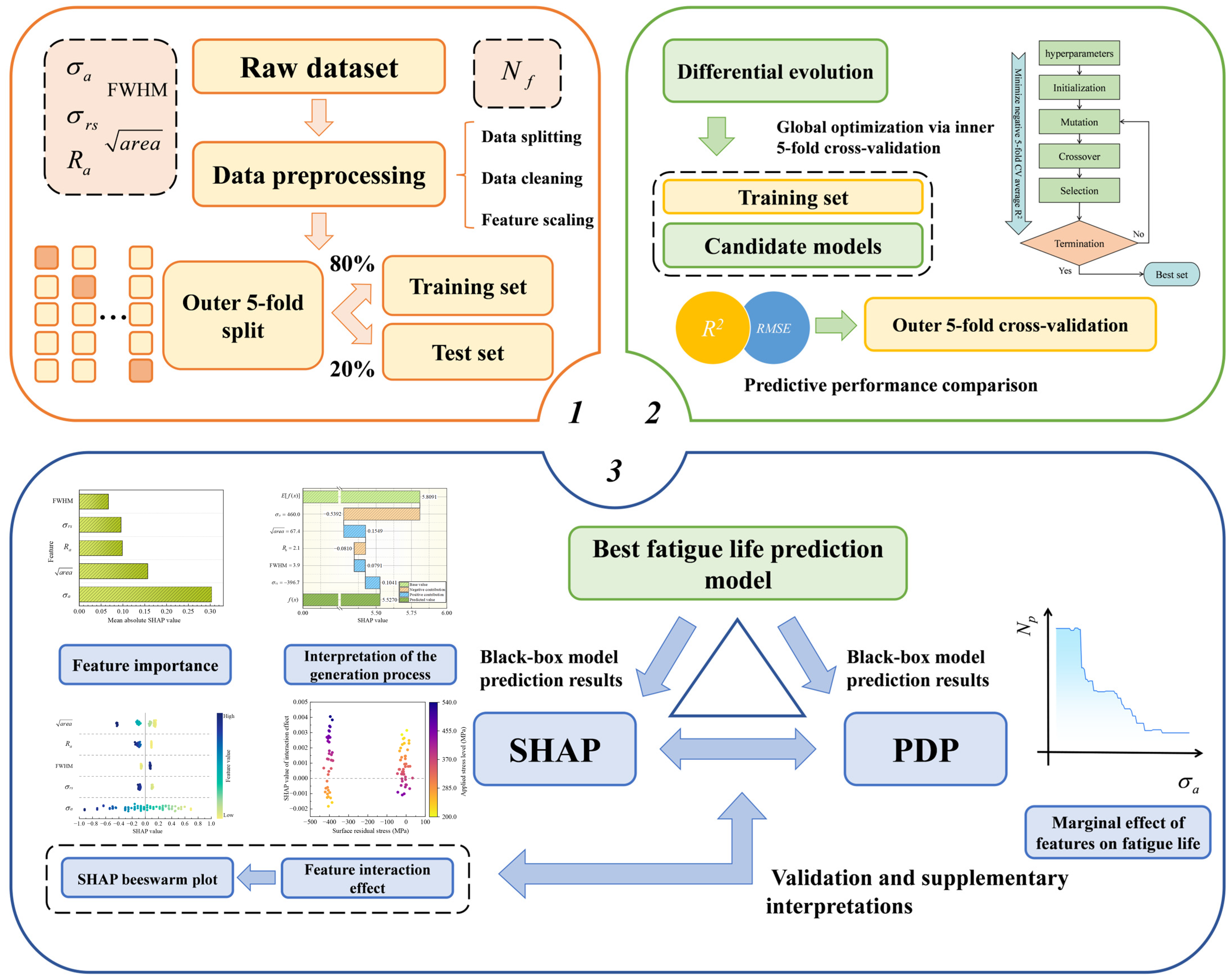
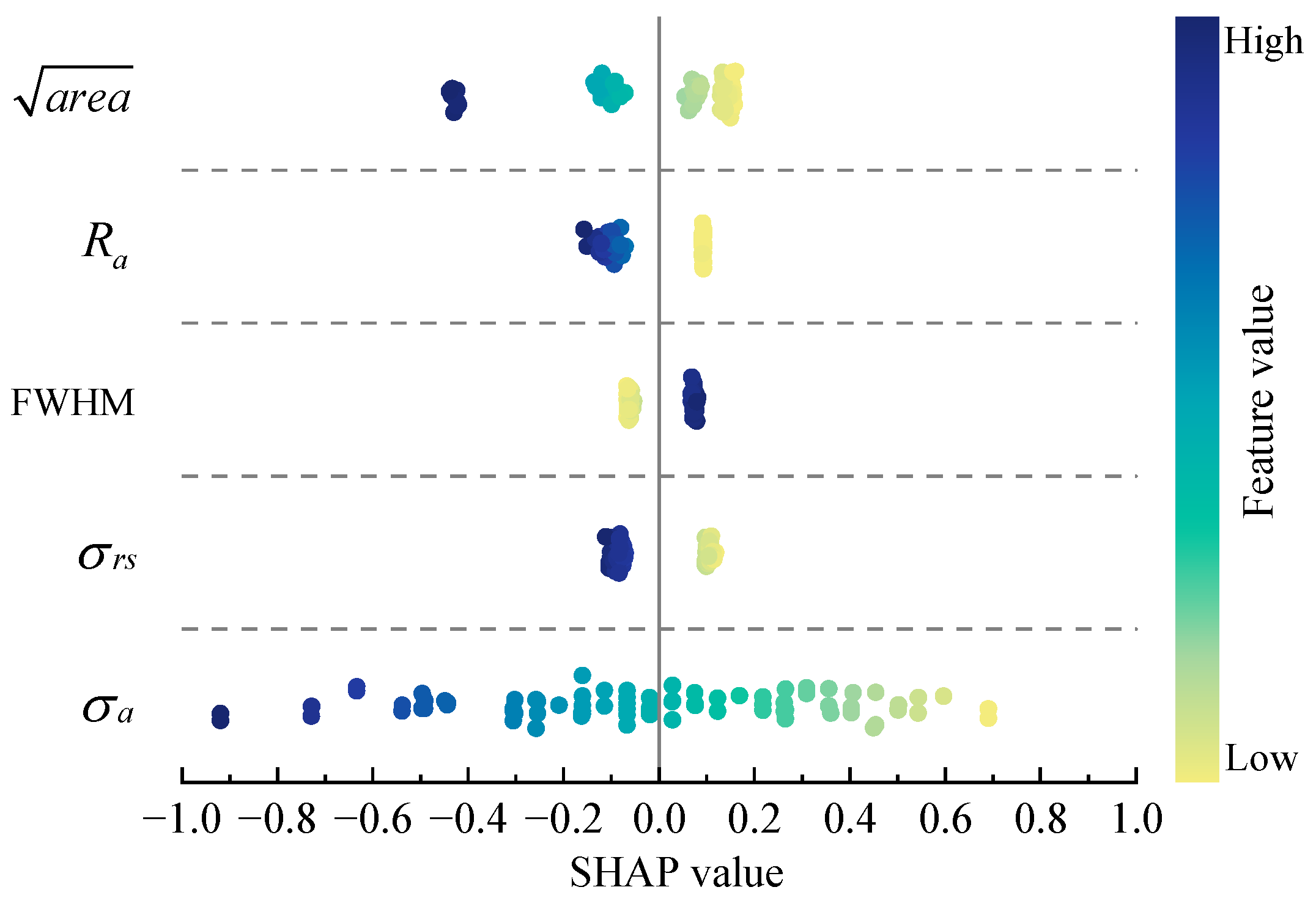
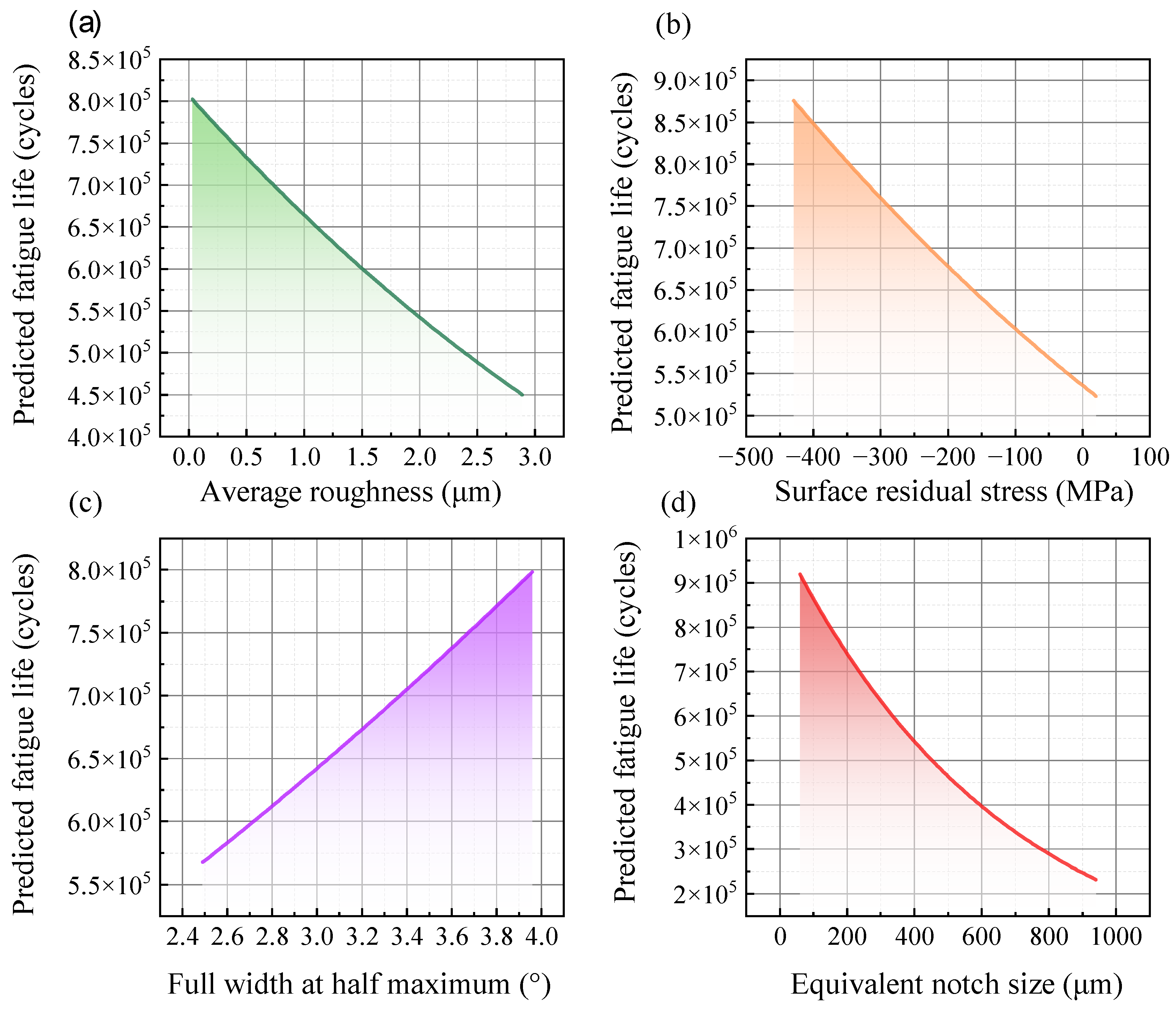
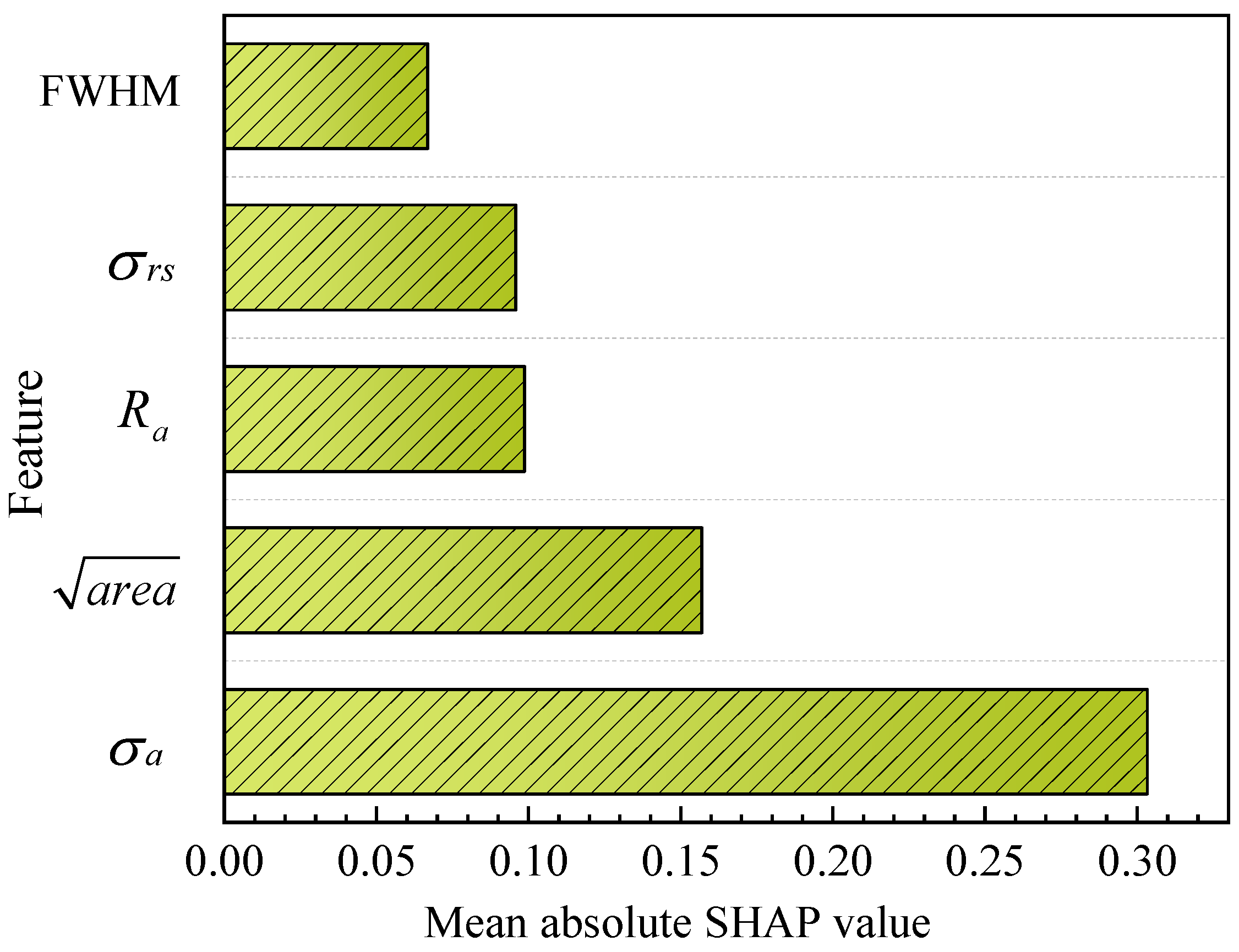
- Feature importance ranking based on mean absolute SHAP values shows that applied stress level is the most influential feature in the fatigue life predictions, followed by equivalent notch size, average roughness, surface residual stress, and FWHM. Among these, applied stress level, equivalent notch size, and average roughness exhibit a negative association with predicted fatigue life, whereas FWHM shows a positive association. The effect of surface residual stress is more complex.
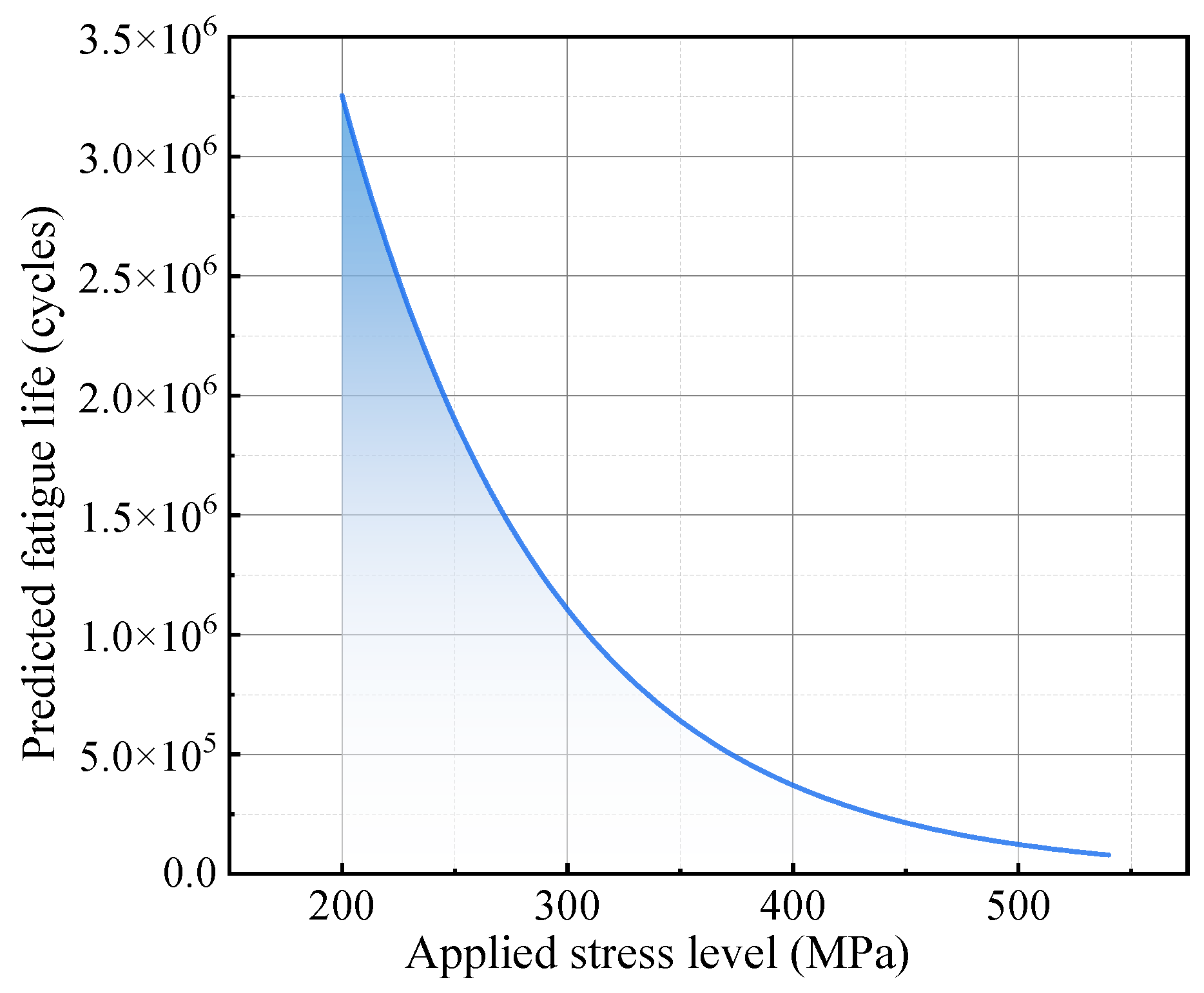
- Marginal effect analysis confirms that the variation in predicted fatigue life with applied stress level follows the typical S-N curve shape. The trends for all features are consistent with the SHAP beeswarm plot, thus enhancing the reliability of the interpretation.
- Surface residual stress and FWHM exhibit distinct interactive characteristics with varying levels of applied stress under different surface treatment conditions. For MSP specimens within regions of high compressive residual stress, the interaction values transition from positive to negative as the applied stress level decreases. This shift may be linked to the relaxation of residual stress under long-term cyclic loading. In the case of MSP specimens with high FWHM values, the interaction values decrease gradually as applied stress declines. This observation suggests that in 25CrMo4 alloy steel, the work-hardened layer appears to contribute only minimally under low stress amplitudes.
Author Contributions
Funding
Data Availability Statement
Conflicts of Interest
References
- Liao, D.; Gao, J.-W.; Zhu, S.-P.; Correia, J.; De Jesus, A.; Calçada, R. Fatigue Behaviour of EA4T Notched Specimens: Experiments and Predictions Using the Theory of Critical Distance. Eng. Fract. Mech. 2023, 286, 109269. [Google Scholar] [CrossRef]
- Zhang, Y.; Huang, G.; He, J.; Wang, M. Hot Deformation Behavior and Microstructure Evolution Mechanisms of EA4T Axle Steel for High-Speed Train Application. J. Iron Steel Res. Int. 2025, 32, 2847–2863. [Google Scholar] [CrossRef]
- Gao, J.-W.; Dai, X.; Zhu, S.-P.; Zhao, J.-W.; Correia, J.A.F.O.; Wang, Q. Failure Causes and Hardening Techniques of Railway Axles—A Review from the Perspective of Structural Integrity. Eng. Fail. Anal. 2022, 141, 106656. [Google Scholar] [CrossRef]
- Luo, Y.; Yuan, P.; Li, G.; Yang, B.; Ao, N.; Li, Z.; Wu, Y.; Zhang, G.; Wu, S. Corrosion Fatigue Behavior and Life Prediction of Railway Axle EA4T Alloy Steel with Artificial Indentation. Eng. Fract. Mech. 2024, 296, 109835. [Google Scholar] [CrossRef]
- Zhao, H.; Han, R.-P.; Gao, J.-W.; Zhu, S.-P.; Han, J. Fatigue Performance Evaluation of High-Strength Railway Axles Subjected to Different Surface Defects. Alex. Eng. J. 2025, 127, 66–74. [Google Scholar] [CrossRef]
- Qin, T.; Ao, N.; Ren, X.; Zhao, X.; Wu, S. Determination of Optimal Ultrasonic Surface Rolling Parameters to Enhance the Fatigue Strength of Railway Axle EA4T Steel. Eng. Fract. Mech. 2022, 275, 108831. [Google Scholar] [CrossRef]
- Makino, T.; Kozuka, C.; Hata, T.; Kato, T.; Yamamoto, M.; Minoshima, K. Fatigue Properties of Non-Press-Fitted Part of Full-Scale Induction-Hardened Axles of Medium-Carbon Steel for High-Speed Railway Vehicles. Int. J. Fatigue 2025, 190, 108664. [Google Scholar] [CrossRef]
- Pertoll, T.; Buzzi, C.; Leitner, M.; Simunek, D.; Boronkai, L. Residual Life Assessment of Deep Rolled Railway Axles Considering the Effect of Process Parameters. Procedia Struct. Integr. 2024, 57, 250–261. [Google Scholar] [CrossRef]
- Unal, O.; Maleki, E.; Karademir, I.; Husem, F.; Efe, Y.; Das, T. Effects of Conventional Shot Peening, Severe Shot Peening, Re-Shot Peening and Precised Grinding Operations on Fatigue Performance of AISI 1050 Railway Axle Steel. Int. J. Fatigue 2022, 155, 106613. [Google Scholar] [CrossRef]
- Li, X.; Zhang, J.; Yang, B.; Zhang, J.; Wu, M.; Lu, L. Effect of Micro-Shot Peening, Conventional Shot Peening and Their Combination on Fatigue Property of EA4T Axle Steel. J. Mater. Process. Technol. 2020, 275, 116320. [Google Scholar] [CrossRef]
- Ling, C.; Jia, Y.; Fu, R.; Zheng, L.; Zhong, Z.; Hong, Y. Fatigue Life Prediction for LPBF-Fabricated Ti-6Al-4V up to Very-High-Cycle Regime Based on Continuum Damage Mechanics Incorporating Effect of Defects. Int. J. Fatigue 2024, 181, 108131. [Google Scholar] [CrossRef]
- Ding, M.C.; Zhang, Y.L.; Lu, H.T. Fatigue Life Prediction of TC17 Titanium Alloy Based on Micro Scratch. Int. J. Fatigue 2020, 139, 105793. [Google Scholar] [CrossRef]
- Xu, T.; Lu, L.; Zeng, D.; Zou, L. Fretting Fatigue Crack Growth Simulation and Residual Life Assessment of Railway Press-Fitted Axle. Eng. Fract. Mech. 2023, 286, 109290. [Google Scholar] [CrossRef]
- Wang, H.; Li, B.; Gong, J.; Xuan, F.-Z. Machine Learning-Based Fatigue Life Prediction of Metal Materials: Perspectives of Physics-Informed and Data-Driven Hybrid Methods. Eng. Fract. Mech. 2023, 284, 109242. [Google Scholar] [CrossRef]
- Hamada, A.; Elyamny, S.; Abd-Elaziem, W.; Elkatatny, S.; Darwish, M.A.; Sebaey, T.A.; Järvenpää, A.; Vineesh, K.P.; Elsheikh, A.H. Advancing Fatigue Life Prediction with Machine Learning: A Review. Mater. Today Commun. 2025, 43, 111525. [Google Scholar] [CrossRef]
- Zhan, Z.; Li, H. Machine Learning Based Fatigue Life Prediction with Effects of Additive Manufacturing Process Parameters for Printed SS 316L. Int. J. Fatigue 2021, 142, 105941. [Google Scholar] [CrossRef]
- Bao, H.; Wu, S.; Wu, Z.; Kang, G.; Peng, X.; Withers, P.J. A Machine-Learning Fatigue Life Prediction Approach of Additively Manufactured Metals. Eng. Fract. Mech. 2021, 242, 107508. [Google Scholar] [CrossRef]
- Horňas, J.; Běhal, J.; Homola, P.; Doubrava, R.; Holzleitner, M.; Senck, S. A Machine Learning Based Approach with an Augmented Dataset for Fatigue Life Prediction of Additively Manufactured Ti-6Al-4V Samples. Eng. Fract. Mech. 2023, 293, 109709. [Google Scholar] [CrossRef]
- Gan, L.; Wu, H.; Zhong, Z. Fatigue Life Prediction Considering Mean Stress Effect Based on Random Forests and Kernel Extreme Learning Machine. Int. J. Fatigue 2022, 158, 106761. [Google Scholar] [CrossRef]
- Lundberg, S.M.; Lee, S.-I. A Unified Approach to Interpreting Model Predictions. In Proceedings of the 31st Conference on Neural Information Processing Systems (NIPS 2017), Long Beach, CA, USA, 4–9 December 2017; Volume 30. [Google Scholar]
- Horňas, J.; Materna, A.; Glinz, J.; Yosifov, M.; Senck, S. Multivariate Interpolation and Machine Learning Models for Extreme Defects-Based Fatigue Life Prediction of Ti6Al4V Specimens Fabricated by SLM. Eng. Fract. Mech. 2025, 314, 110756. [Google Scholar] [CrossRef]
- Jafari, A.; Mollaali, M.; Ma, L.; Shahmansouri, A.A.; Zhou, Y.; Dugnani, R. Brittle Fracture Strength Prediction via XML with Reliability Considerations. Eng. Fract. Mech. 2025, 328, 111555. [Google Scholar] [CrossRef]
- Zhang, S.; Lei, H.; Zhou, Z.; Wang, G.; Qiu, B. Fatigue Life Analysis of High-Strength Bolts Based on Machine Learning Method and SHapley Additive exPlanations (SHAP) Approach. Structures 2023, 51, 275–287. [Google Scholar] [CrossRef]
- Yu, A.; Zhou, Q.; Pan, Y.; Wan, F.; Kuang, F.; Lu, X. Hybrid Clustering-Enhanced Interpretable Machine Learning for Fatigue Life Prediction across Various Cyclic Stages in Laser Powder Bed Fused Ti-6Al-4V Alloy. Int. J. Fatigue 2025, 198, 108995. [Google Scholar] [CrossRef]
- Huang, T.; Wan, C.; Liu, T.; Zhang, Y.; Lu, X.; Ding, Y.; Zhao, H.; Miao, C.; Xue, S. Data-Driven Fatigue Life Prediction of Corroded Steel Wires: A Transfer Learning on Stacking Interpretable Model and Feature Sensitivity Analysis. Int. J. Fatigue 2026, 207, 109498. [Google Scholar] [CrossRef]
- Wong, T.-T. Performance Evaluation of Classification Algorithms by K-Fold and Leave-One-out Cross Validation. Pattern Recognit. 2015, 48, 2839–2846. [Google Scholar] [CrossRef]
- Li, H.; Zhang, J.; Hu, L.; Su, K. Notch Fatigue Life Prediction of Micro-Shot Peened 25CrMo4 Alloy Steel: A Comparison between Fracture Mechanics and Machine Learning Methods. Eng. Fract. Mech. 2023, 277, 108992. [Google Scholar] [CrossRef]
- Xu, L.; Wang, Y.; Mo, L.; Tang, Y.; Wang, F.; Li, C. The Research Progress and Prospect of Data Mining Methods on Corrosion Prediction of Oil and Gas Pipelines. Eng. Fail. Anal. 2023, 144, 106951. [Google Scholar] [CrossRef]
- Ma, H.; Li, B.; Xue, H. Shot Peening-Induced Surface Integrity Governing Fatigue Performance of Al Alloy in High to Very High Cycle Regime: Synergistic Effects of Residual Stress, Roughness and Microstructure. J. Mater. Res. Technol. 2025, 39, 4866–4881. [Google Scholar] [CrossRef]
- Tanaka, K. Fatigue Crack Propagation from a Crack Inclined to the Cyclic Tensile Axis. Eng. Fract. Mech. 1974, 6, 493–507. [Google Scholar] [CrossRef]
- Sotiropoulou, K.F.; Vavatsikos, A.P.; Botsaris, P.N. A Hybrid AHP-PROMETHEE II Onshore Wind Farms Multicriteria Suitability Analysis Using kNN and SVM Regression Models in Northeastern Greece. Renew. Energy 2024, 221, 119795. [Google Scholar] [CrossRef]
- Guo, J.; Zan, X.; Wang, L.; Lei, L.; Ou, C.; Bai, S. A Random Forest Regression with Bayesian Optimization-Based Method for Fatigue Strength Prediction of Ferrous Alloys. Eng. Fract. Mech. 2023, 293, 109714. [Google Scholar] [CrossRef]
- Feng, D.-C.; Liu, Z.-T.; Wang, X.-D.; Chen, Y.; Chang, J.-Q.; Wei, D.-F.; Jiang, Z.-M. Machine Learning-Based Compressive Strength Prediction for Concrete: An Adaptive Boosting Approach. Constr. Build. Mater. 2020, 230, 117000. [Google Scholar] [CrossRef]
- Guo, Y.; Rui, S.-S.; Xu, W.; Sun, C. Machine Learning Method for Fatigue Strength Prediction of Nickel-Based Superalloy with Various Influencing Factors. Materials 2022, 16, 46. [Google Scholar] [CrossRef]
- Zhao, Y.; Lai, M.; Wu, Y.; Li, G.; Jiang, H.; Cui, J. Fatigue Life Prediction of Aluminum-Steel Magnetic Pulse Crimped Joints Based on Point Cloud Measurement and Gradient Boosting Regression Trees. Int. J. Fatigue 2025, 198, 109020. [Google Scholar] [CrossRef]
- Wang, Q.; Yao, G.; Kong, G.; Wei, L.; Yu, X.; Jianchuan, Z.; Ran, C.; Luo, L. A Data-Driven Model for Predicting Fatigue Performance of High-Strength Steel Wires Based on Optimized XGBOOST. Eng. Fail. Anal. 2024, 164, 108710. [Google Scholar] [CrossRef]
- Chen, T.; Guestrin, C. XGBoost: A Scalable Tree Boosting System. In Proceedings of the 22nd ACM SIGKDD International Conference on Knowledge Discovery and Data Mining; ACM: San Francisco, CA, USA, 2016; pp. 785–794. [Google Scholar]
- Gao, J.; Wang, C.; Xu, Z.; Wang, J.; Yan, S.; Wang, Z. Gaussian Process Regression Based Remaining Fatigue Life Prediction for Metallic Materials under Two-Step Loading. Int. J. Fatigue 2022, 158, 106730. [Google Scholar] [CrossRef]
- Tang, C.-Z.; Li, H.-W.; Li, K.-S.; Lei, X.-L.; Cheng, L.-Y.; Ju, L.; Li, W.; Zeng, F.; Zhang, X.-C. Data-Driven Fatigue Life Prediction of Small-Deep Holes in a Nickel-Based Superalloy after a Cold Expansion Process. Int. J. Fatigue 2024, 181, 108159. [Google Scholar] [CrossRef]
- Storn, R.; Price, K. Differential Evolution—A Simple and Efficient Heuristic for Global Optimization over Continuous Spaces. J. Glob. Optim. 1997, 11, 341–359. [Google Scholar] [CrossRef]
- Cai, Z.; Yang, X.; Zhou, M.; Zhan, Z.-H.; Gao, S. Toward Explicit Control between Exploration and Exploitation in Evolutionary Algorithms: A Case Study of Differential Evolution. Inf. Sci. 2023, 649, 119656. [Google Scholar] [CrossRef]
- Mangalathu, S.; Hwang, S.-H.; Jeon, J.-S. Failure Mode and Effects Analysis of RC Members Based on Machine-Learning-Based SHapley Additive exPlanations (SHAP) Approach. Eng. Struct. 2020, 219, 110927. [Google Scholar] [CrossRef]
- Palar, P.S.; Zuhal, L.R.; Shimoyama, K. Enhancing the Explainability of Regression-Based Polynomial Chaos Expansion by Shapley Additive Explanations. Reliab. Eng. Syst. Saf. 2023, 232, 109045. [Google Scholar] [CrossRef]
- Alomari, Y.; Andó, M. SHAP-Based Insights for Aerospace PHM: Temporal Feature Importance, Dependencies, Robustness, and Interaction Analysis. Results Eng. 2024, 21, 101834. [Google Scholar] [CrossRef]
- Friedman, J.H. Greedy Function Approximation: A Gradient Boosting Machine. Ann. Stat. 2001, 29, 1189–1232. [Google Scholar] [CrossRef]
- Xin, X.; Hooker, G.; Huang, F. Pitfalls in Machine Learning Interpretability: Manipulating Partial Dependence Plots to Hide Discrimination. Insur. Math. Econ. 2025, 125, 103135. [Google Scholar] [CrossRef]
- Luo, Y.; Qin, T.; Jia, X.; Hu, Y.; Li, C.; Mu, G.; Wu, S. Fatigue Life Enhancement of Foreign Object Impacted Railway Axle EA4T Steel with Surface Shot Peening. Eng. Fail. Anal. 2022, 142, 106782. [Google Scholar] [CrossRef]
- Pešička, J.; Kužel, R.; Dronhofer, A.; Eggeler, G. The Evolution of Dislocation Density during Heat Treatment and Creep of Tempered Martensite Ferritic Steels. Acta Mater. 2003, 51, 4847–4862. [Google Scholar] [CrossRef]
- Zhang, J.W.; Lu, L.T.; Shiozawa, K.; Shen, X.L.; Yi, H.F.; Zhang, W.H. Analysis on Fatigue Property of Microshot Peened Railway Axle Steel. Mater. Sci. Eng. A 2011, 528, 1615–1622. [Google Scholar] [CrossRef]
- Benedetti, M.; Fontanari, V.; Bandini, M.; Savio, E. High- and Very High-Cycle Plain Fatigue Resistance of Shot Peened High-Strength Aluminum Alloys: The Role of Surface Morphology. Int. J. Fatigue 2015, 70, 451–462. [Google Scholar] [CrossRef]






| Algorithm | Average R2 | Standard Deviations | Average RMSE | Standard Deviations |
|---|---|---|---|---|
| KNN | 0.5244 | 0.2447 | 0.1838 | 0.0090 |
| RFR | 0.5173 | 0.1973 | 0.2002 | 0.0227 |
| ABR | 0.5623 | 0.2086 | 0.1900 | 0.0304 |
| GBR | 0.5274 | 0.1964 | 0.1980 | 0.0217 |
| XGBoost | 0.5083 | 0.1331 | 0.2057 | 0.0203 |
| GPR | 0.6630 | 0.1243 | 0.1705 | 0.0375 |
| Algorithm | Parameter | Value |
|---|---|---|
| Gaussian Process Regression (GPR) | length_scale | 36.19 |
| constant_value | 36.19 | |
| noise_level | 0.033 |
| Feature Combination | Average R2 | Standard Deviations | Average RMSE | Standard Deviations |
|---|---|---|---|---|
| All features | 0.6630 | 0.1243 | 0.1705 | 0.0375 |
| Excluding and FWHM | 0.6848 | 0.0913 | 0.1652 | 0.0276 |
| Excluding and | 0.6896 | 0.0926 | 0.1640 | 0.0289 |
| Excluding FWHM and | 0.6777 | 0.1014 | 0.1665 | 0.0271 |
Disclaimer/Publisher’s Note: The statements, opinions and data contained in all publications are solely those of the individual author(s) and contributor(s) and not of MDPI and/or the editor(s). MDPI and/or the editor(s) disclaim responsibility for any injury to people or property resulting from any ideas, methods, instructions or products referred to in the content. |
© 2026 by the authors. Licensee MDPI, Basel, Switzerland. This article is an open access article distributed under the terms and conditions of the Creative Commons Attribution (CC BY) license.
Share and Cite
Li, Z.-C.; Chen, X.-M. Fatigue Life Prediction of 25CrMo4 Alloy Steel Based on Interpretable Methods. Materials 2026, 19, 2544. https://doi.org/10.3390/ma19122544
Li Z-C, Chen X-M. Fatigue Life Prediction of 25CrMo4 Alloy Steel Based on Interpretable Methods. Materials. 2026; 19(12):2544. https://doi.org/10.3390/ma19122544
Chicago/Turabian StyleLi, Ze-Cheng, and Xiao-Min Chen. 2026. "Fatigue Life Prediction of 25CrMo4 Alloy Steel Based on Interpretable Methods" Materials 19, no. 12: 2544. https://doi.org/10.3390/ma19122544
APA StyleLi, Z.-C., & Chen, X.-M. (2026). Fatigue Life Prediction of 25CrMo4 Alloy Steel Based on Interpretable Methods. Materials, 19(12), 2544. https://doi.org/10.3390/ma19122544