Effect of Prior Austenite Grain Size on the Hydrogen Diffusion Behavior in 30MnB5 Steel



Abstract
1. Introduction
2. Materials and Methods
2.1. Materials
2.2. Microstructural Characterization
2.3. Hydrogen Permeation Test
2.4. Slow Strain Rate Tensile Test
3. Results and Discussions
3.1. Microstructural Changes in 30MnB5 Steel as a Function of Heat Treatment Time
3.2. Hydrogen Embrittlement Susceptibility of 30MnB5 Steel with Microstructural Changes
4. Conclusions
- (1)
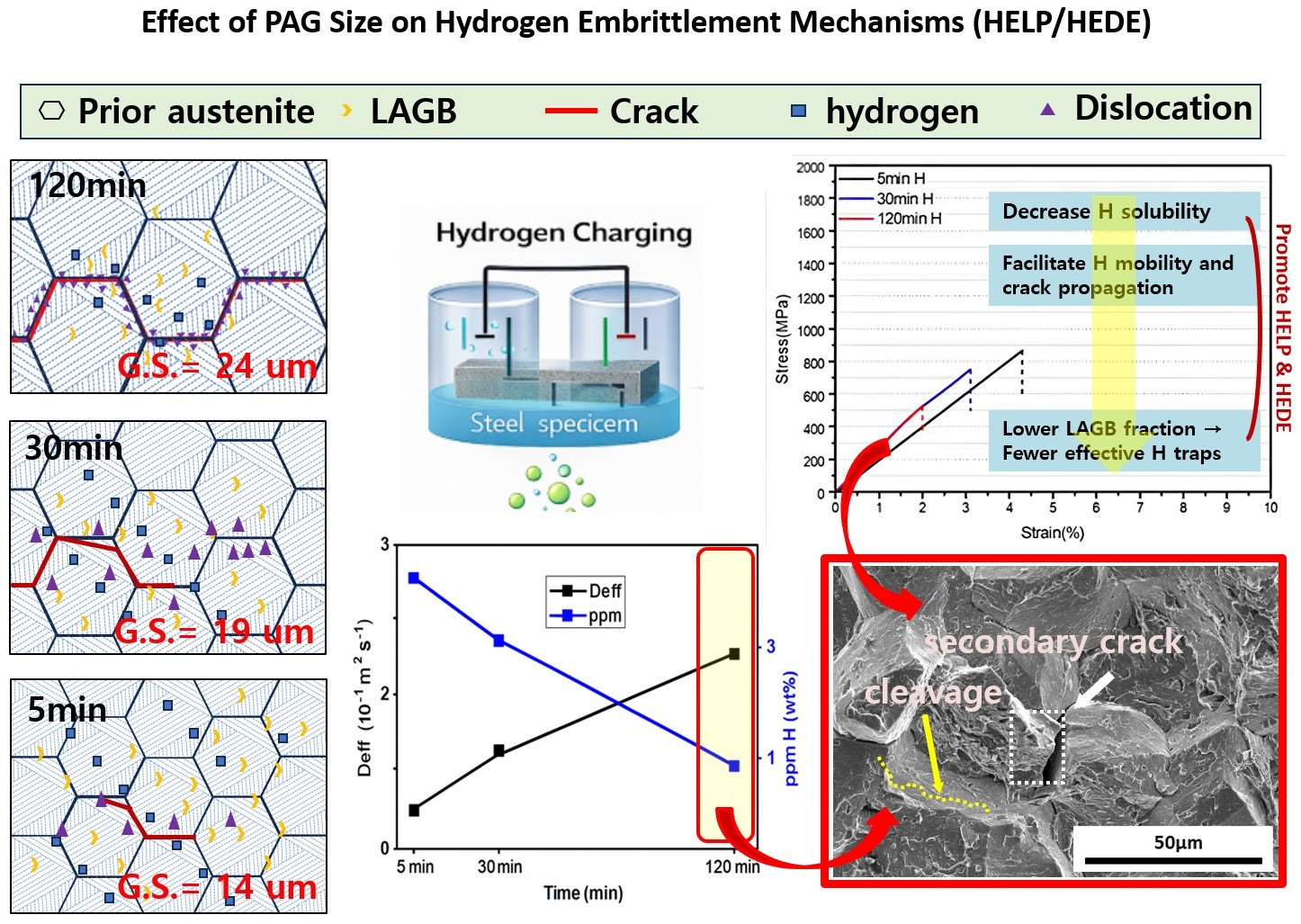
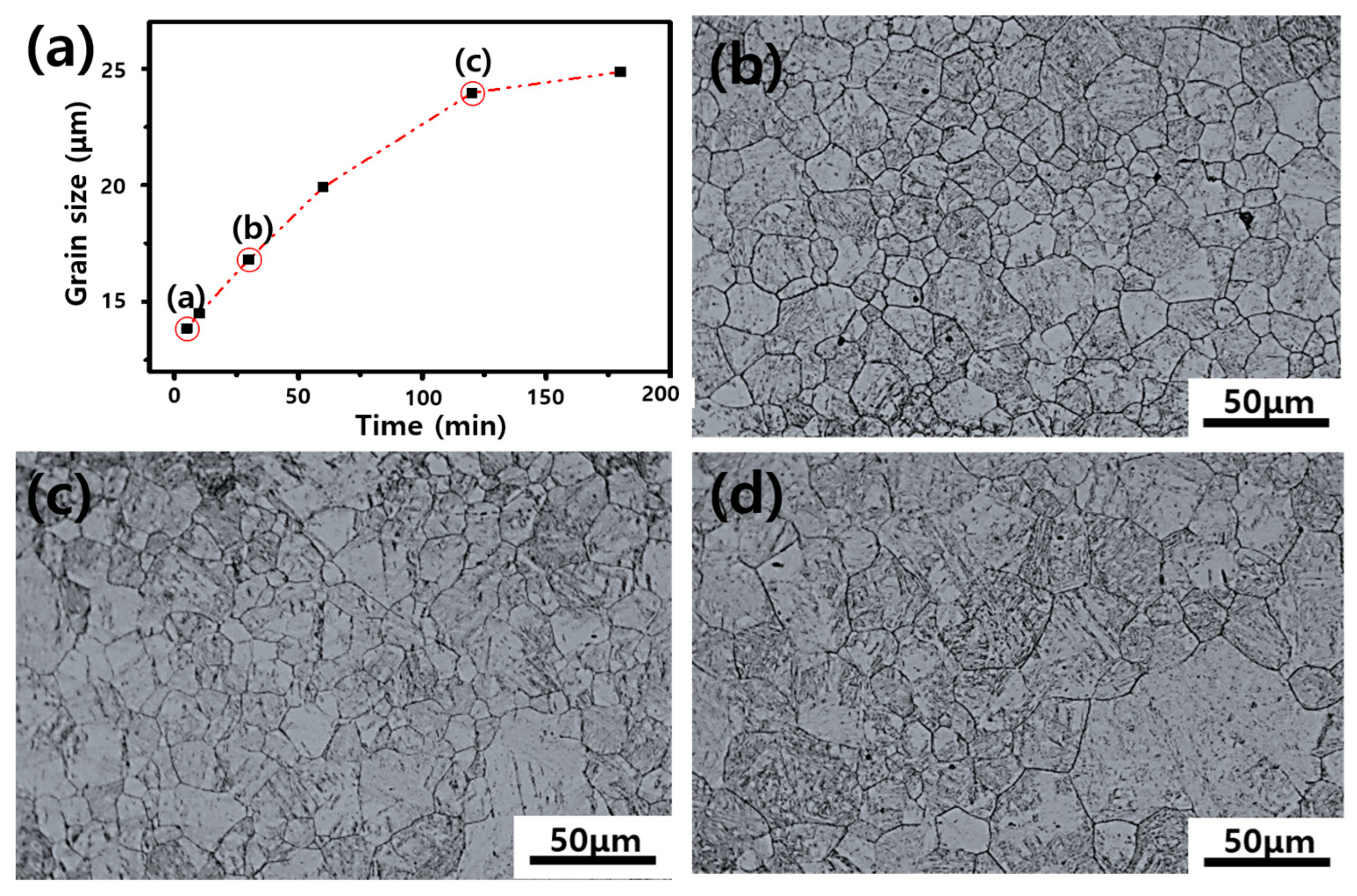
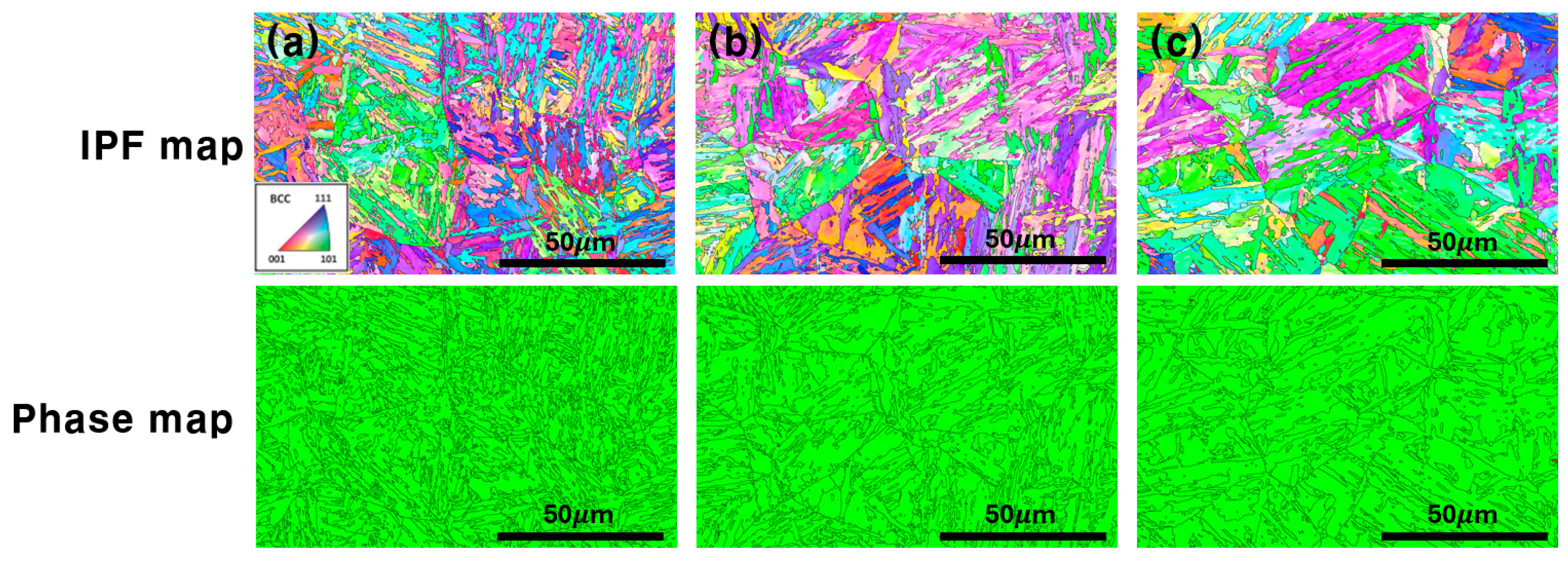
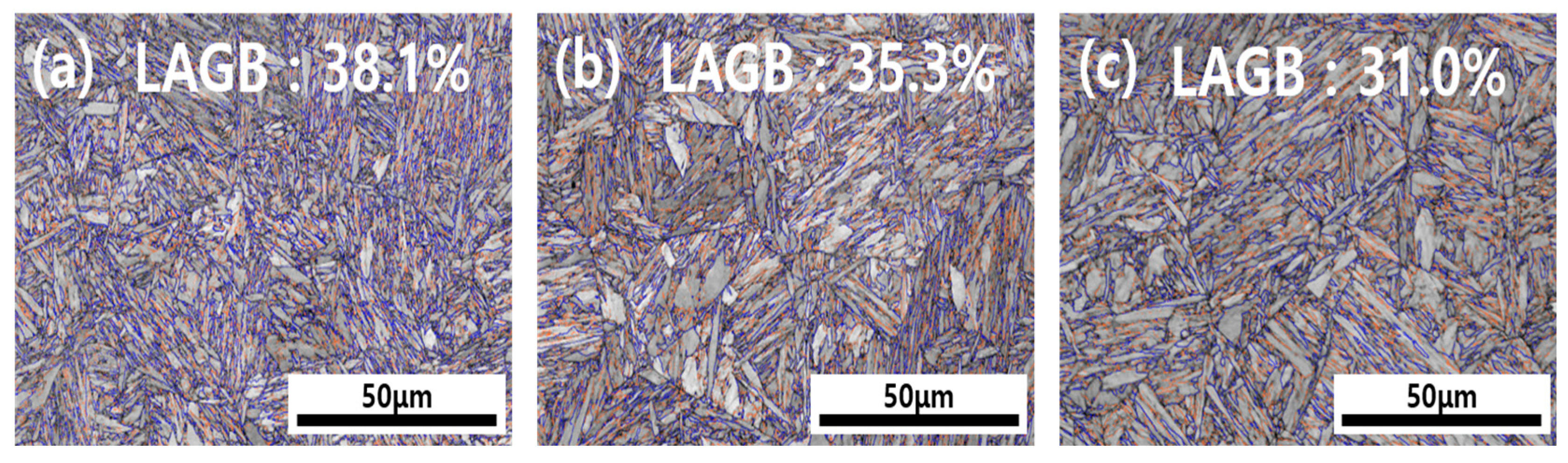
- As the heat treatment holding time increased, the sizes of prior austenite grains, packets, blocks, and laths in 30MnB5 steel increased. Small prior austenite grain boundaries corresponded to a high fraction of LAGBs, which restricted crack propagation paths and improved crack propagation resistance.
- (2)
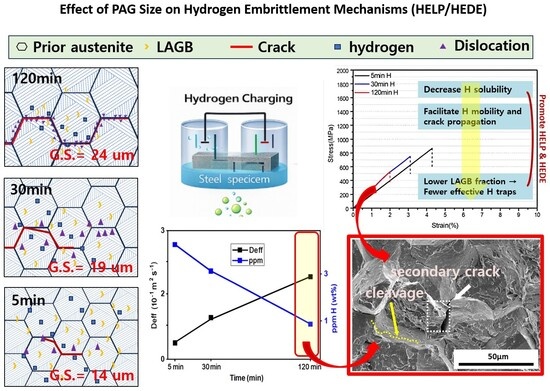
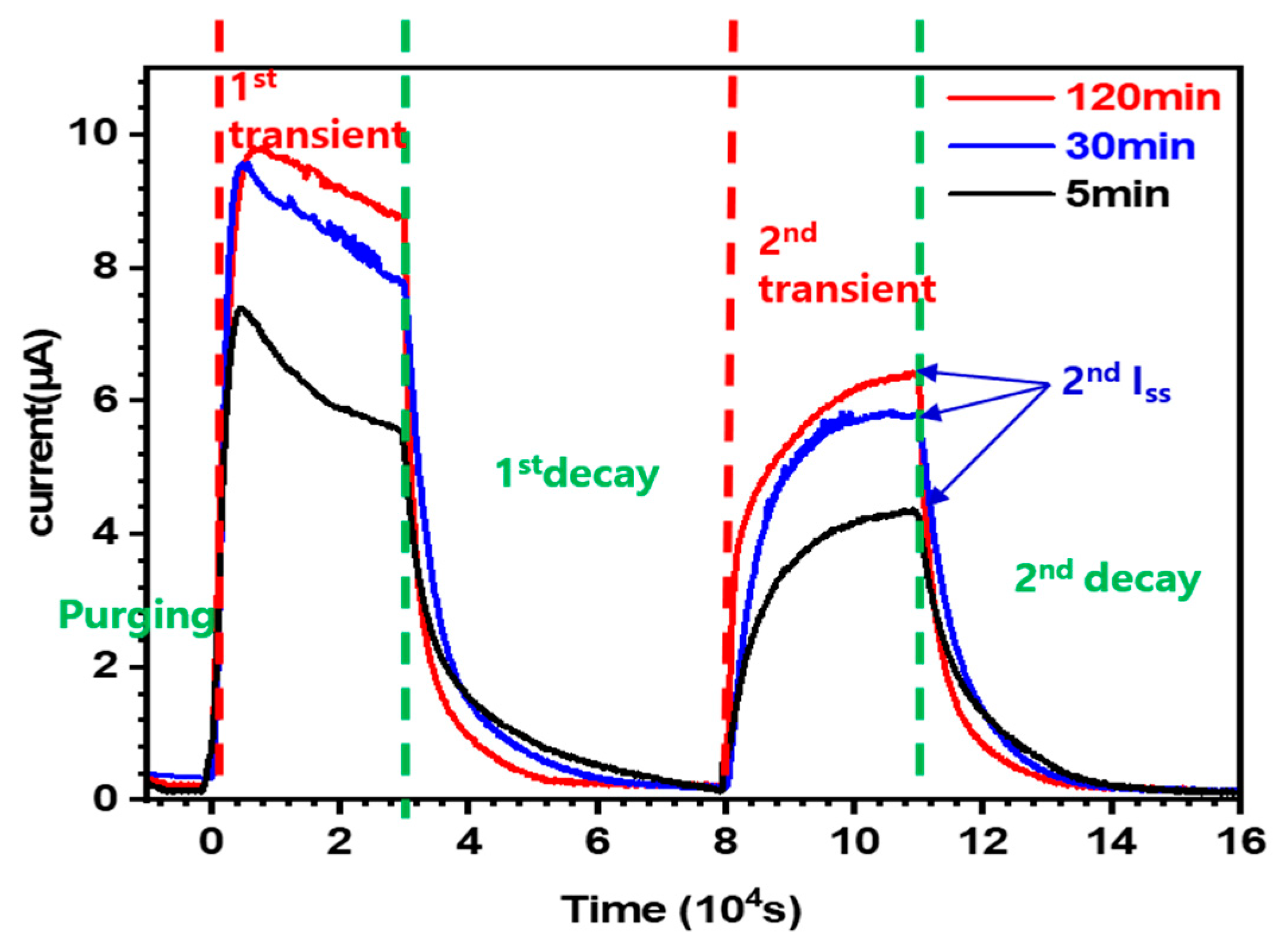
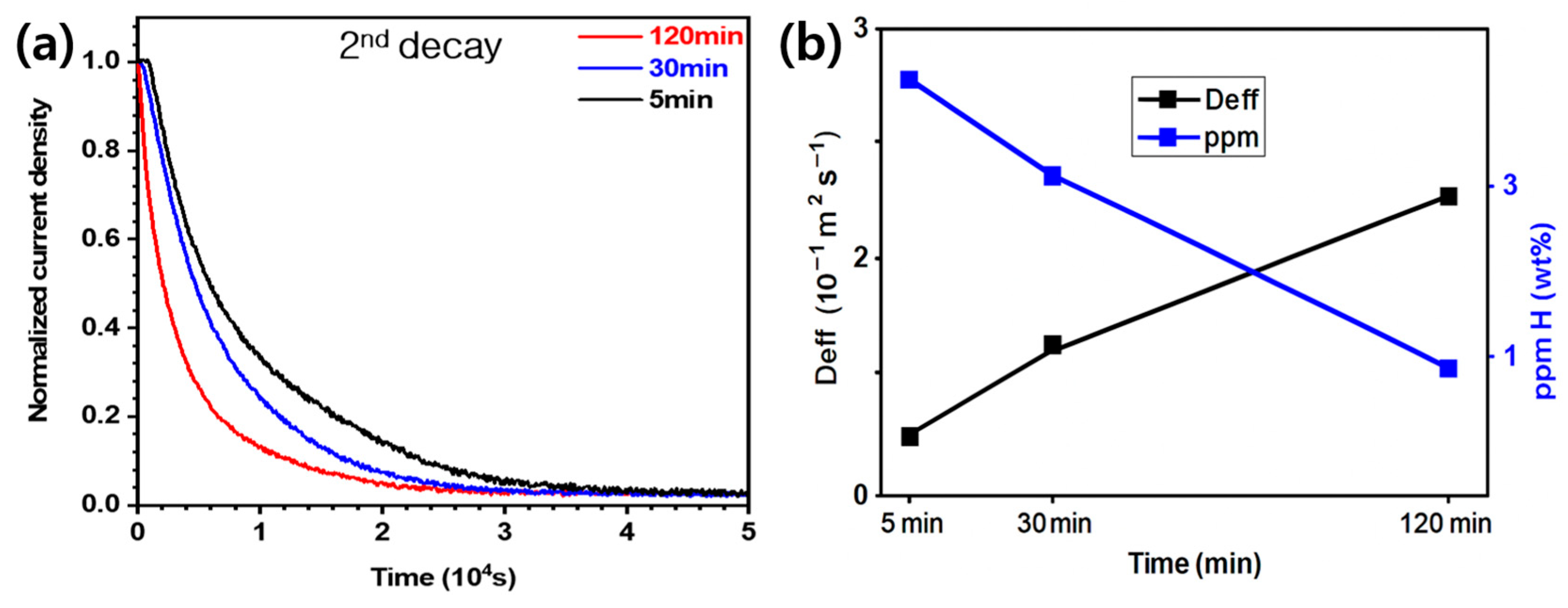
- The 5 min specimen contained numerous trap sites that enabled rapid initial permeation while promoting long-term hydrogen dispersion and suppressing the HELP mechanism. Conversely, the 120 min specimen had fewer traps, increasing the likelihood of local hydrogen accumulation.
- (3)
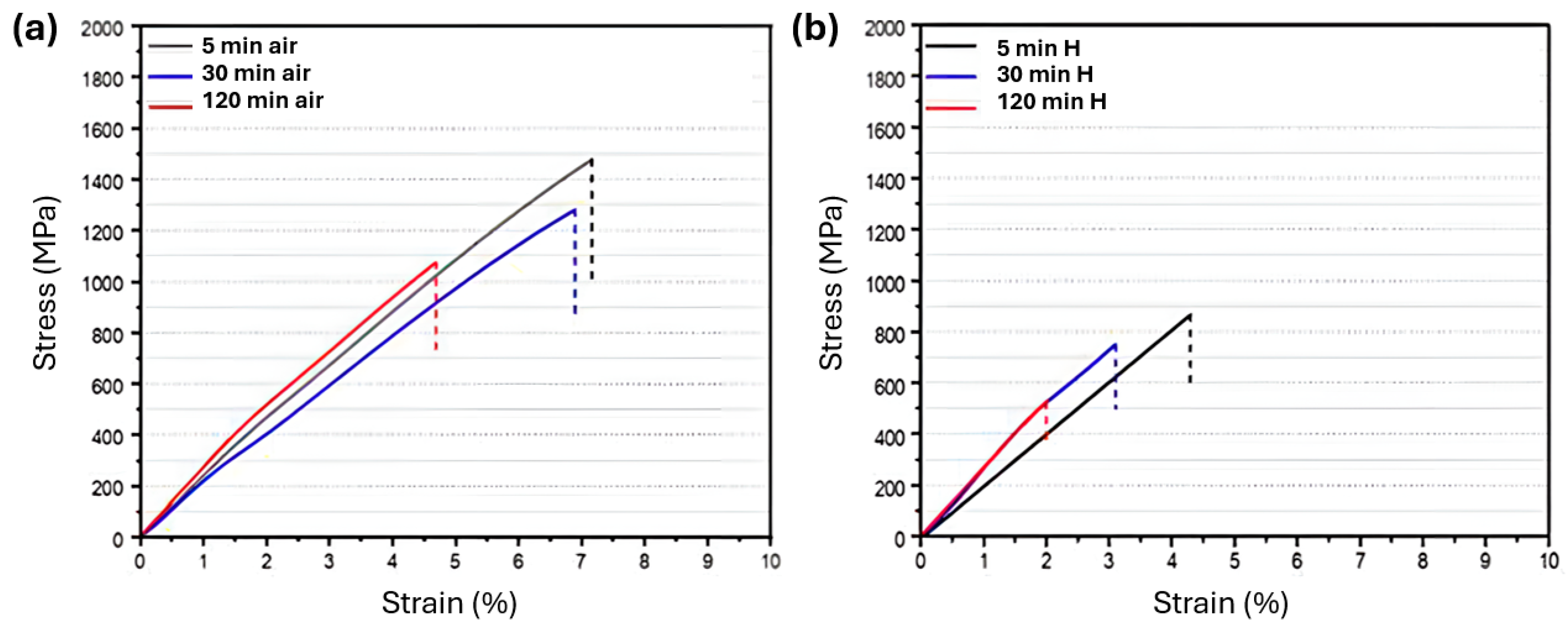
- The 5 min specimen showed excellent strength and elongation when uncharged, whereas under hydrogen charging, the 120 min specimen exhibited a pronounced drop in its strength and elongation, leading to high embrittlement indices.
- (4)
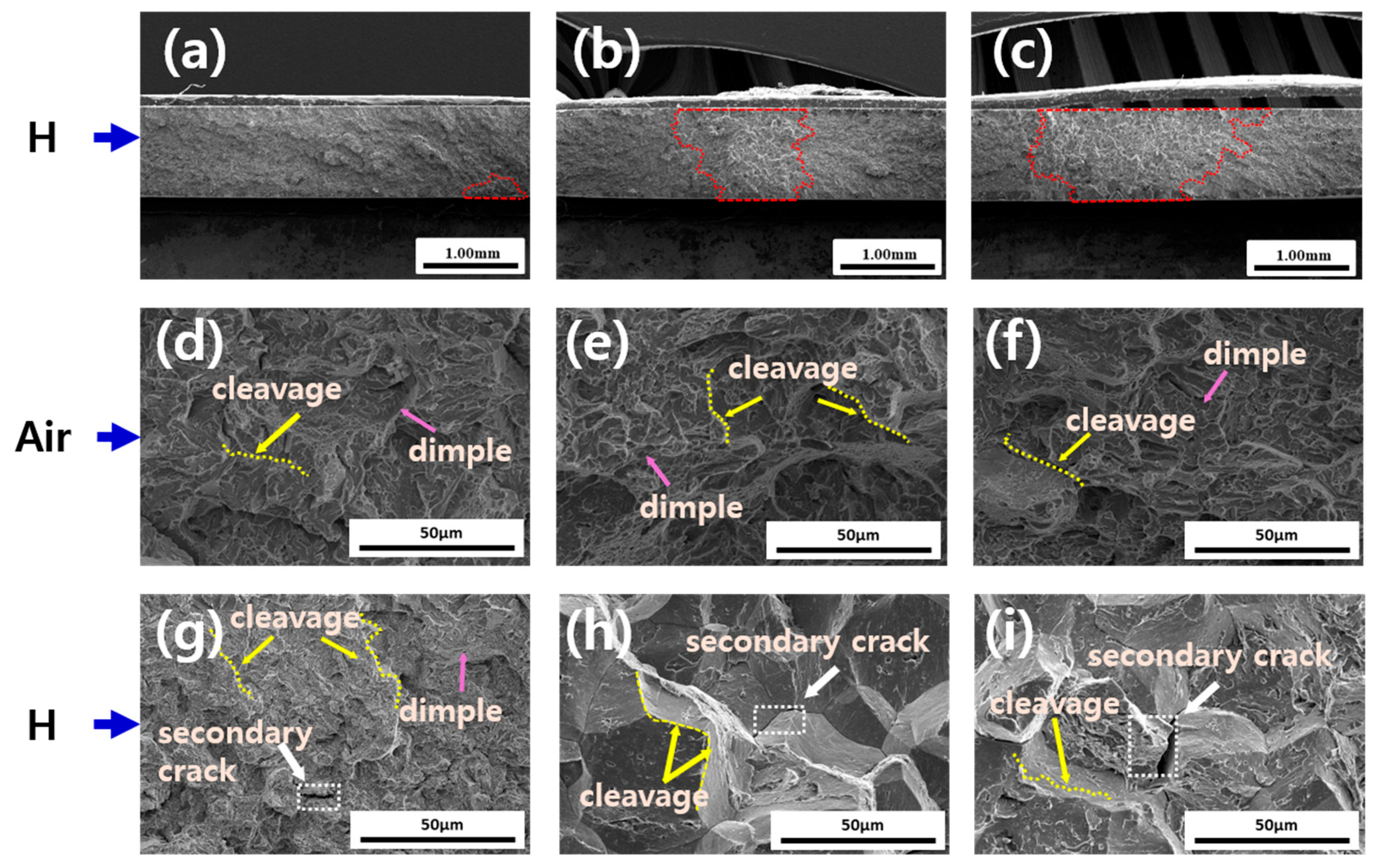
- Under a hydrogen atmosphere, the coarse-grained specimens exhibited an increased cleavage fracture fraction and secondary cracking, indicating enhanced brittleness, whereas the fine-grained specimens showed relatively superior resistance to hydrogen embrittlement.
- (5)
- Optimizing heat treatment and tailoring grain boundaries can effectively reduce hydrogen embrittlement while retaining martensitic strength and elongation.
- (6)
- Future research will focus on analyzing the corrosion susceptibility of 30MnB5 steel to better understand the underlying mechanisms under different heat treatment conditions.
Author Contributions
Funding
Data Availability Statement
Conflicts of Interest
References
- Kuziak, R.; Kawalla, R.; Waengler, S. Advanced high strength steels for automotive industry. Arch. Civil Mech. Eng. 2008, 8, 103–117. [Google Scholar] [CrossRef] [Scilit]
- Perka, A.K.; John, M.; Kuruveri, U.B.; Menezes, P.L. Advanced High-Strength Steels for Automotive Applications: Arc and Laser Welding Process, Properties, and Challenges. Metals 2022, 12, 1051. [Google Scholar] [CrossRef] [Scilit]
- Zhang, W.; Xu, J. Advanced lightweight materials for Automobiles: A review. Mater. Des. 2022, 221, 110994. [Google Scholar] [CrossRef] [Scilit]
- Li, J.; Tong, C.; Zhang, R.; Shi, Z.; Lin, J. A data-informed review of scientific and technological developments and future trends in hot stamping. Int. J. Lightweight Mater. Manuf. 2024, 7, 327–343. [Google Scholar] [CrossRef] [Scilit]
- Wróbel, I.; Skowronek, A.; Grajcar, A. A Review on Hot Stamping of Advanced High-Strength Steels: Technological-Metallurgical Aspects and Numerical Simulation. Symmetry 2022, 14, 969. [Google Scholar] [CrossRef] [Scilit]
- Chen, Y.S.; Huang, C.; Liu, P.Y.; Yen, H.W.; Niu, R.; Burr, P.; Moore, K.L.; Martínez-Pañeda, E.; Atrens, A.; Cairney, J.M. Hydrogen trapping and embrittlement in metals—A review. Int. J. Hydrogen Energy 2025, 136, 789–821. [Google Scholar] [CrossRef] [Scilit]
- Islam, A.; Li, Q.; Storimans, E.; Ton, K.; Alam, T.; Farhat, Z.N. Effect of microstructure on hydrogen permeation and trapping in natural gas pipeline steels. npj Mater. Degrad. 2025, 9, 70. [Google Scholar] [CrossRef] [Scilit]
- Norouzi, E.; Miresmaeili, R.; Shahverdi, H.R.; Askari-Paykani, M.; Vergani, L.M. Effect of hydrogen on the microstructure and mechanical properties of FeCCrNiBXSi advanced high strength steels. Corros. Sci. 2024, 230, 111897. [Google Scholar] [CrossRef] [Scilit]
- Campari, A.; Ustolin, F.; Alvaro, A.; Paltrinieri, N. A review on hydrogen embrittlement and risk-based inspection of hydrogen technologies. Int. J. Hydrogen Energy 2023, 48, 35316–35346. [Google Scholar] [CrossRef] [Scilit]
- Rejeesh, R.; Jang, Y.J.; Park, Y.D. Hydrogen Embrittlement in Resistance Spot and Laser Welds for Advanced High-Strength Steels: Mechanism, Susceptibility, and Evaluation. J. Weld. Join. 2025, 42, 280–299. [Google Scholar] [CrossRef] [Scilit]
- Nagao, A.; Smith, C.D.; Dadfarnia, M.; Sofronis, P.; Robertson, I.M. The role of hydrogen embrittlement fracture of lath martensitic steel. Acta Mater. 2012, 60, 5182–5189. [Google Scholar] [CrossRef] [Scilit]
- Du, Z.; Shi, R.; Peng, X.; Gao, K.; Pang, X. Review on the design of high-strength and hydrogen-embrittlement-resistant steels. Int. J. Miner. Metall. Mater. 2024, 31, 1572–1589. [Google Scholar] [CrossRef] [Scilit]
- Park, C.; Kang, N.; Liu, S. Effect of grain size on the resistance to hydrogen embrittlement of API 2W Grade 60 steels using in situ slow-strain-rate testing. Corros. Sci. 2017, 128, 33–41. [Google Scholar] [CrossRef] [Scilit]
- Cho, L.; Bradley, P.E.; Lauria, D.S.; Connolly, M.J.; Seo, E.J.; Findley, K.O.; Speer, J.G.; Golem, L.; Slifka, A.J. Effects of hydrogen pressure and prior austenite grain size on the hydrogen embrittlement characteristics of a press-hardened martensitic steel. Int. J. Hydrogen Energy 2021, 46, 24425–24439. [Google Scholar] [CrossRef] [Scilit]
- Das, T.; Chakrabarty, R.; Song, J.; Yue, S. Understanding microstructural influences on hydrogen diffusion characteristics in martensitic steels using finite element analysis (FEA). Int. J. Hydrogen Energy 2022, 47, 1343–1357. [Google Scholar] [CrossRef] [Scilit]
- Latypova, R.; Seppälä, O.; Nyo, T.T.; Kauppi, T.; Mehtonen, S.; Hänninen, H.; Kömi, J.; Pallaspuro, S. Influence of prior austenite grain structure on hydrogen-induced fracture in as-quenched martensitic steels. Eng. Fract. Mech. 2023, 281, 109090. [Google Scholar] [CrossRef] [Scilit]
- Mao, L.Y.; Luo, Z.A.; Huang, C.; Wang, Y.Q.; Duan, R.H.; Zhang, X.M. Effects of grain boundary character distribution on hydrogen-induced cracks initiation and propagation at different stain rates in a nickel-saving and high-nitrogen austenitic stainless steel. Mater. Sci. Eng. A 2023, 862, 144509. [Google Scholar] [CrossRef] [Scilit]
- Takasawa, K.; Ikeda, R.; Ishikawa, N.; Ishigaki, R. Effect of grain size and dislocation density on the susceptibility to high-pressure hydrogen environment embrittlement of high-strength low-alloy steels. Int. J. Hydrogen Energy 2012, 37, 2669–2675. [Google Scholar] [CrossRef] [Scilit]
- Ito, K.; Tanaka, Y.; Tsutsui, K.; Sawada, H. Analysis of grain-boundary segregation of hydrogen in bcc-Fe polycrystals via a nano-polycrystalline grain boundary model. Comput. Mater. Sci. 2023, 225, 112196. [Google Scholar] [CrossRef] [Scilit]
- Li, Q.; Ghadiani, H.; Jalilvand, V.; Alam, T.; Farhat, Z.; Islam, M.A. Hydrogen Impact: A Review on Diffusibility, Embrittlement Mechanisms, and Characterization. Materials 2024, 17, 965. [Google Scholar] [CrossRef] [Scilit]
- Wang, W.; Fu, H.; Zhang, H.; Yan, Y.; Li, J. Effect of Grain Orientation on Hydrogen Embrittlement Behavior of Interstitial-Free Steel. Metals 2022, 12, 981. [Google Scholar] [CrossRef] [Scilit]
- ISO 17081; Method of Measurement of Hydrogen Permeation and Determination of Hydrogen Uptake and Transport in Metals by an Electrochemical Technique. International Organization for Standardization: Geneva, Switzerland, 2014.
- ASTM G129-00; Standard Practice for Slow Strain Rate Testing to Evaluate the Susceptibility of Metallic Materials to Environmentally Assisted Cracking. ASTM International: West Conshohocken, PA, USA, 2013.
- Yanachkov, B.; Mourdjeva, Y.; Valuiska, K.; Dyakova, V.; Kolev, K.; Kaleicheva, J.; Lazarova, R.; Katzarov, I. Effect of Hydrogen Content on the Microstructure, Mechanical Properties, and Fracture Mechanism of Low-Carbon Lath Martensite Steel. Metals 2024, 14, 1340. [Google Scholar] [CrossRef] [Scilit]
- Martin, M.L.; Dadfarnia, M.; Nagao, A.; Wang, S.; Sofronis, P. Enumeration of the hydrogen-enhanced localized plasticity mechanism for hydrogen embrittlement in structural materials. Acta Mater. 2019, 165, 734–750. [Google Scholar] [CrossRef] [Scilit]
- Liu, W.; Cheng, Y.; Sui, H.; Fu, J.; Duan, H. Microstructure-based intergranular fatigue crack nucleation model: Dislocation transmission versus grain boundary cracking. J. Mech. Phys. Solids 2023, 173, 105233. [Google Scholar] [CrossRef] [Scilit]
- Pichler, S.; Artenis, B.; Mori, G.; Safyari, M.; Moshtaghi, M. Inhibition of grain growth by pearlite improves hydrogen embrittlement susceptibility of the ultra-low carbon ferritic steel: The influence of H-assisted crack initiation and propagation mechanisms. J. Mater. Sci. 2023, 58, 13460–13475. [Google Scholar] [CrossRef] [Scilit]
- Lan, X.; Okada, K.; Gutierrez-Urrutia, I.; Shibata, A. Effects of prior austenite grain size on hydrogen embrittlement behavior in high-strength martensitic steel. Mater. Sci. Eng. A 2026, 950, 149539. [Google Scholar] [CrossRef] [Scilit]





| Material | C | Mn | Si | Al | Cr | N | Ni | B | Ti | Fe |
|---|---|---|---|---|---|---|---|---|---|---|
| 30MnB5 | 0.29 | 1.39 | 0.21 | 0.03 | 0.21 | 0.005 | 0.038 | 0.004 | 0.036 | Bal. |
| Holding Time (Min) | PAG Size (µm, Mean ± SD) |
|---|---|
| 5 | 14.0 ± 1.3 |
| 10 | 15.0 ± 1.1 |
| 30 | 19.0 ± 1.3 |
| 60 | 20.0 ± 1.5 |
| 120 | 24.0 ± 1.7 |
| 180 | 25.0 ± 0.6 |
| Time (min) | dMP (μm) | dMB (μm) | dML (μm) | ρ (1015 m−2) |
|---|---|---|---|---|
| 5 | 8.3 | 4.6 | 1.8 | 0.44 |
| 30 | 11.5 | 6.4 | 2.6 | 0.39 |
| 120 | 13.4 | 7.5 | 3 | 0.32 |
| Time (min) | TS (MPa) | EL (%) | TS (MPa) | EL (%) |
|---|---|---|---|---|
| Without Hydrogen | With Hydrogen | |||
| 5 | 1483 | 7.2 | 885 | 4.3 |
| 30 | 1295 | 6.8 | 748 | 3.2 |
| 120 | 1085 | 4.8 | 552 | 2.2 |
Disclaimer/Publisher’s Note: The statements, opinions and data contained in all publications are solely those of the individual author(s) and contributor(s) and not of MDPI and/or the editor(s). MDPI and/or the editor(s) disclaim responsibility for any injury to people or property resulting from any ideas, methods, instructions or products referred to in the content. |
© 2026 by the authors. Licensee MDPI, Basel, Switzerland. This article is an open access article distributed under the terms and conditions of the Creative Commons Attribution (CC BY) license.
Share and Cite
Nam, H.; Seo, M.; Park, C. Effect of Prior Austenite Grain Size on the Hydrogen Diffusion Behavior in 30MnB5 Steel. Materials 2026, 19, 940. https://doi.org/10.3390/ma19050940
Nam H, Seo M, Park C. Effect of Prior Austenite Grain Size on the Hydrogen Diffusion Behavior in 30MnB5 Steel. Materials. 2026; 19(5):940. https://doi.org/10.3390/ma19050940
Chicago/Turabian StyleNam, Hyunbin, Minseok Seo, and Cheolho Park. 2026. "Effect of Prior Austenite Grain Size on the Hydrogen Diffusion Behavior in 30MnB5 Steel" Materials 19, no. 5: 940. https://doi.org/10.3390/ma19050940
APA StyleNam, H., Seo, M., & Park, C. (2026). Effect of Prior Austenite Grain Size on the Hydrogen Diffusion Behavior in 30MnB5 Steel. Materials, 19(5), 940. https://doi.org/10.3390/ma19050940