Stress–Strain and Dimension Evolution of Wind Turbine Bearing Ring with Non-Standard Section During Hot Bulging Process
Abstract
1. Introduction
2. Modeling the Hot Bulging Process of Bearing Ring
2.1. Theoretical Methods of Modeling
2.2. Material Properties
2.3. Boundary Settings of Joint Simulation Model
2.4. Mesh Convergence Analysis
3. Experiment and Characterization
4. Results and Discussion
4.1. Von Mises Stress Variance of the Bearing Rings During Hot Bulging Process
4.2. Strain Variance of the Bearing Ring During Hot Bulging Process
4.3. Deformation Velocity Analysis During Hot Bulging Process
4.4. Dimension Evolution of the Bearing Ring During Hot Bulging Process
4.4.1. Roundness Error Analysis
4.4.2. Thickness Error Analysis
5. Conclusions
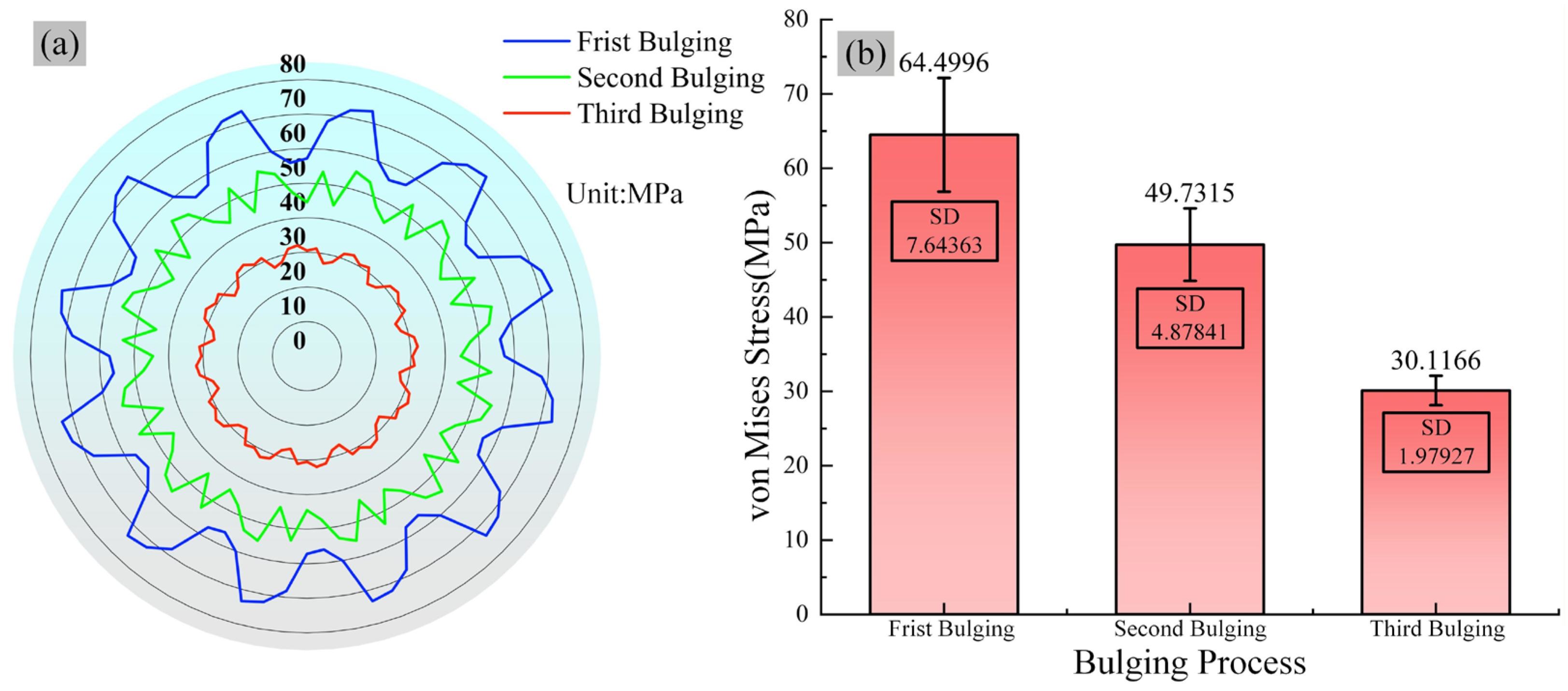
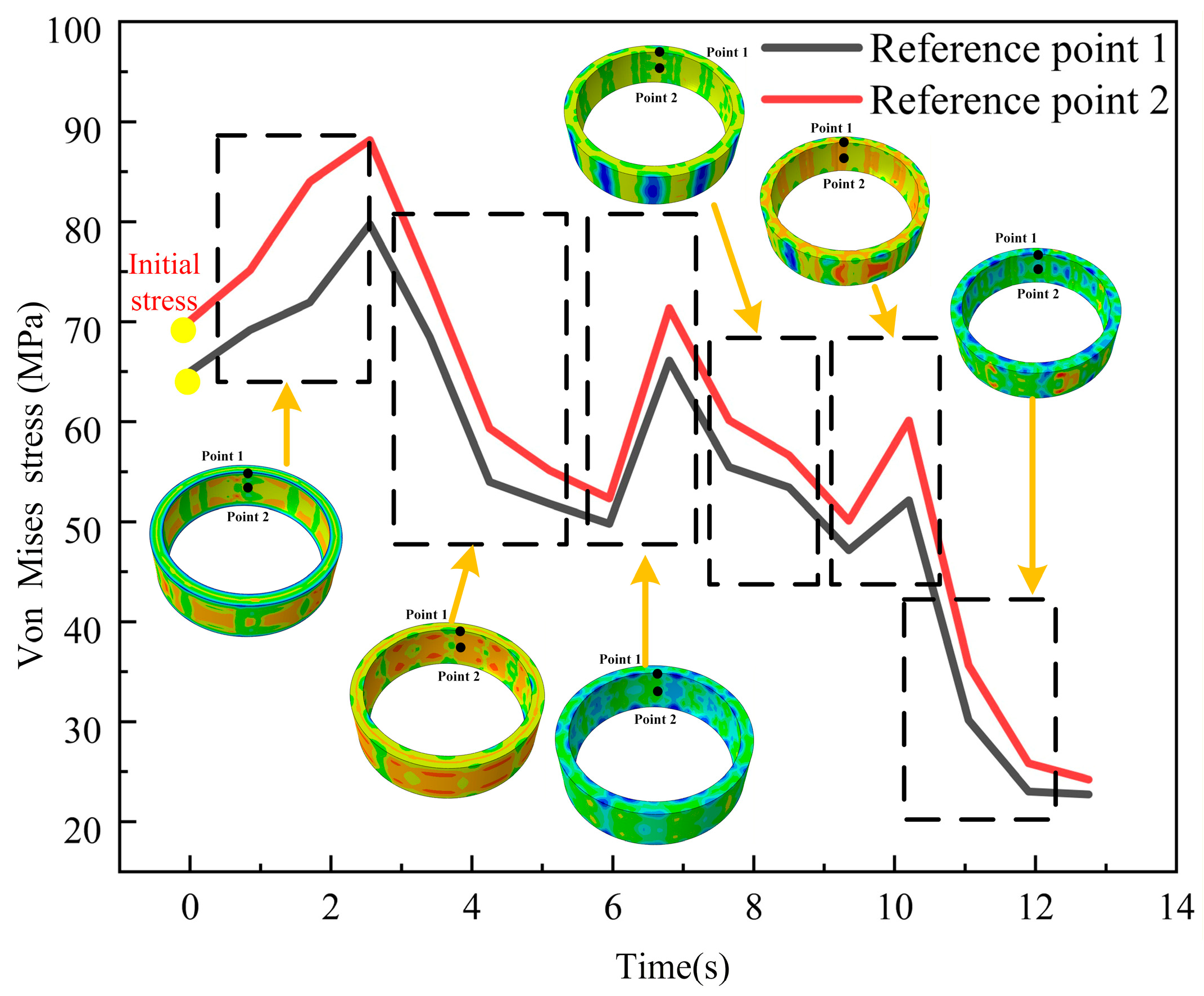
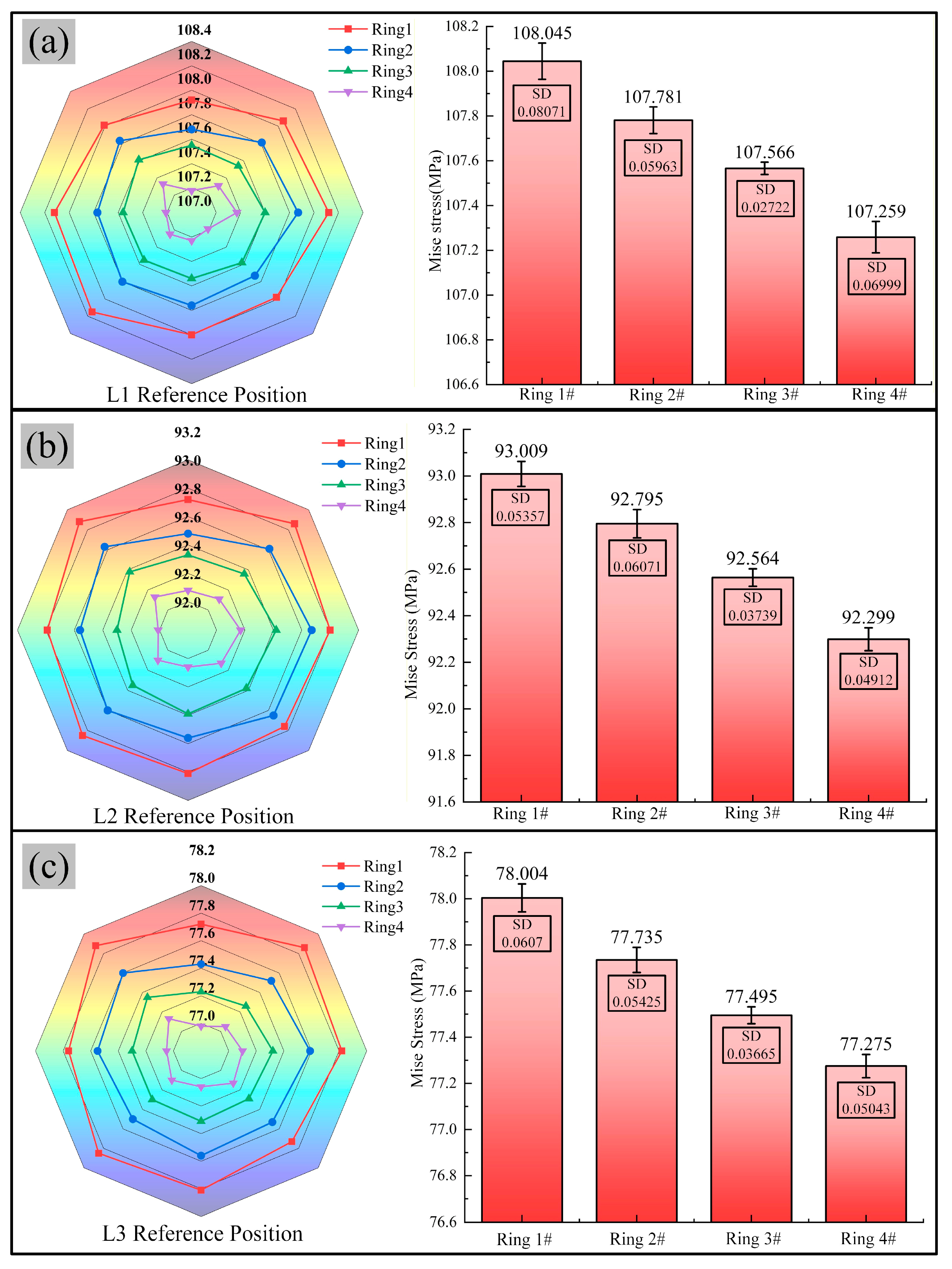
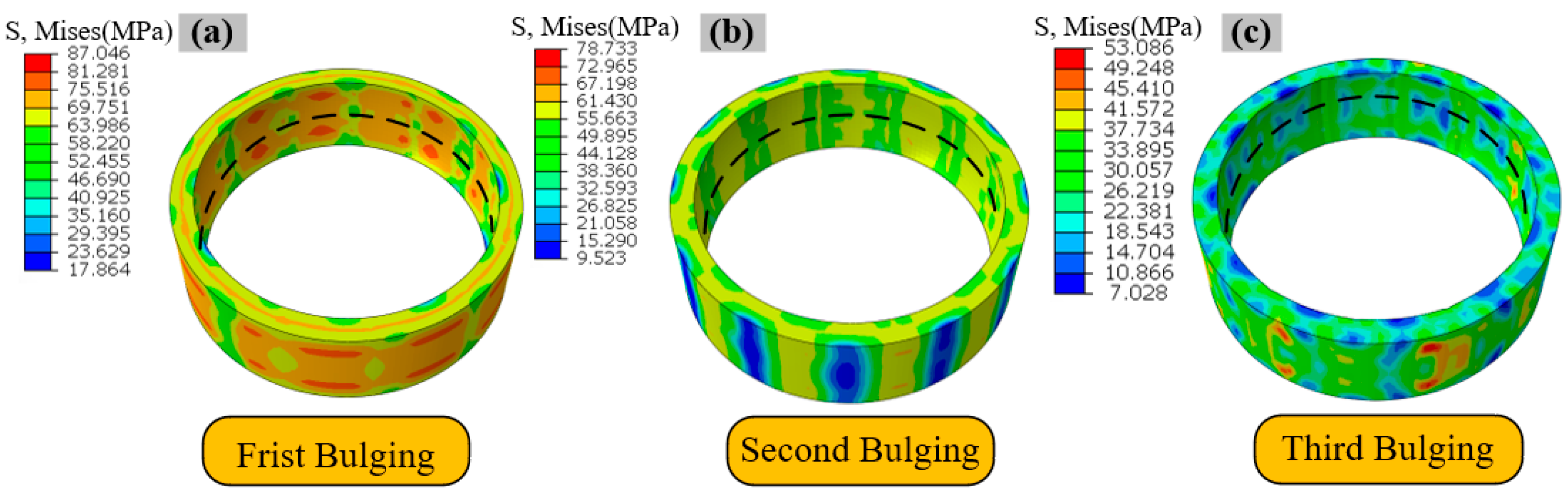
- The contact state between the part and the die is periodically altered through the application of the stepwise rotation hot bulging process, enabling stress redistribution and gradual release to homogenize residual stresses. The initial “petal-shaped” high stress of 84 MPa on the rolled ring was significantly relieved by 46%. The maximum equivalent stress of the ring component is decreased by 39% compared to the initial value.
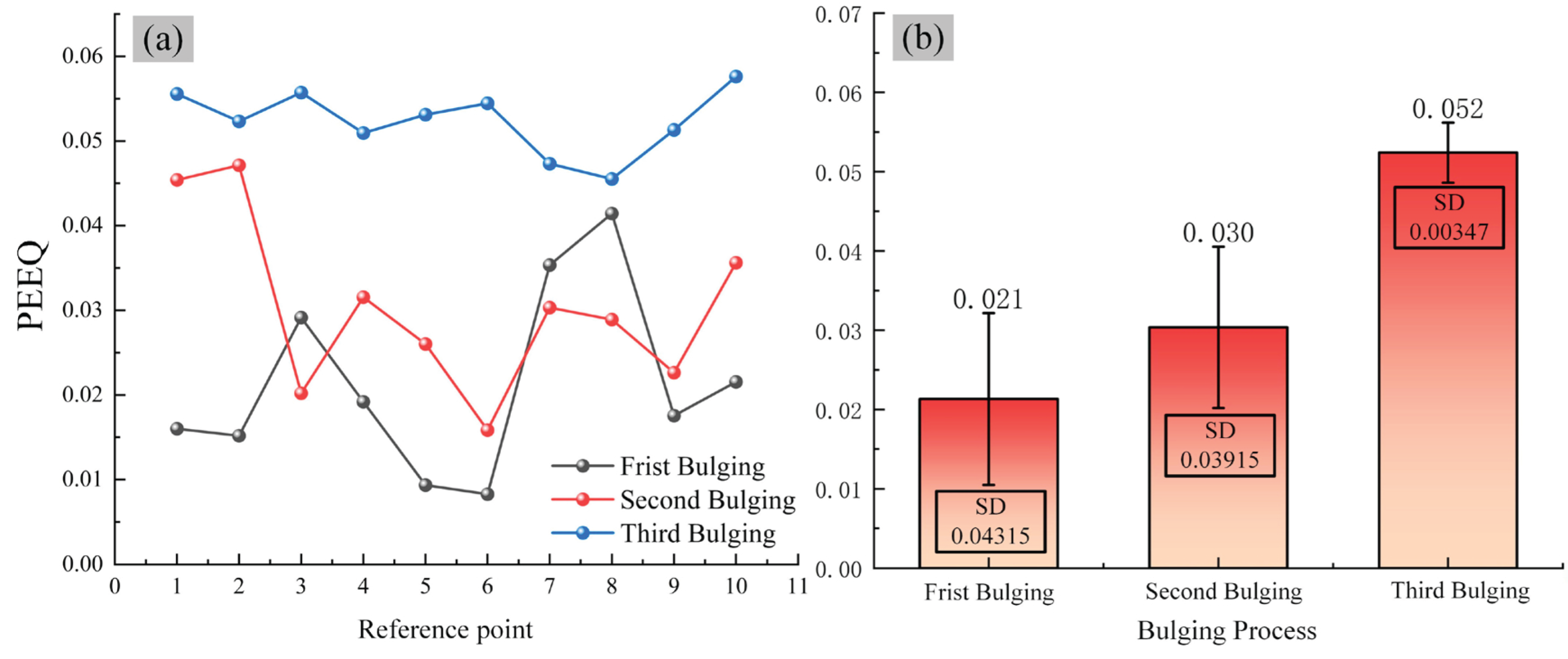
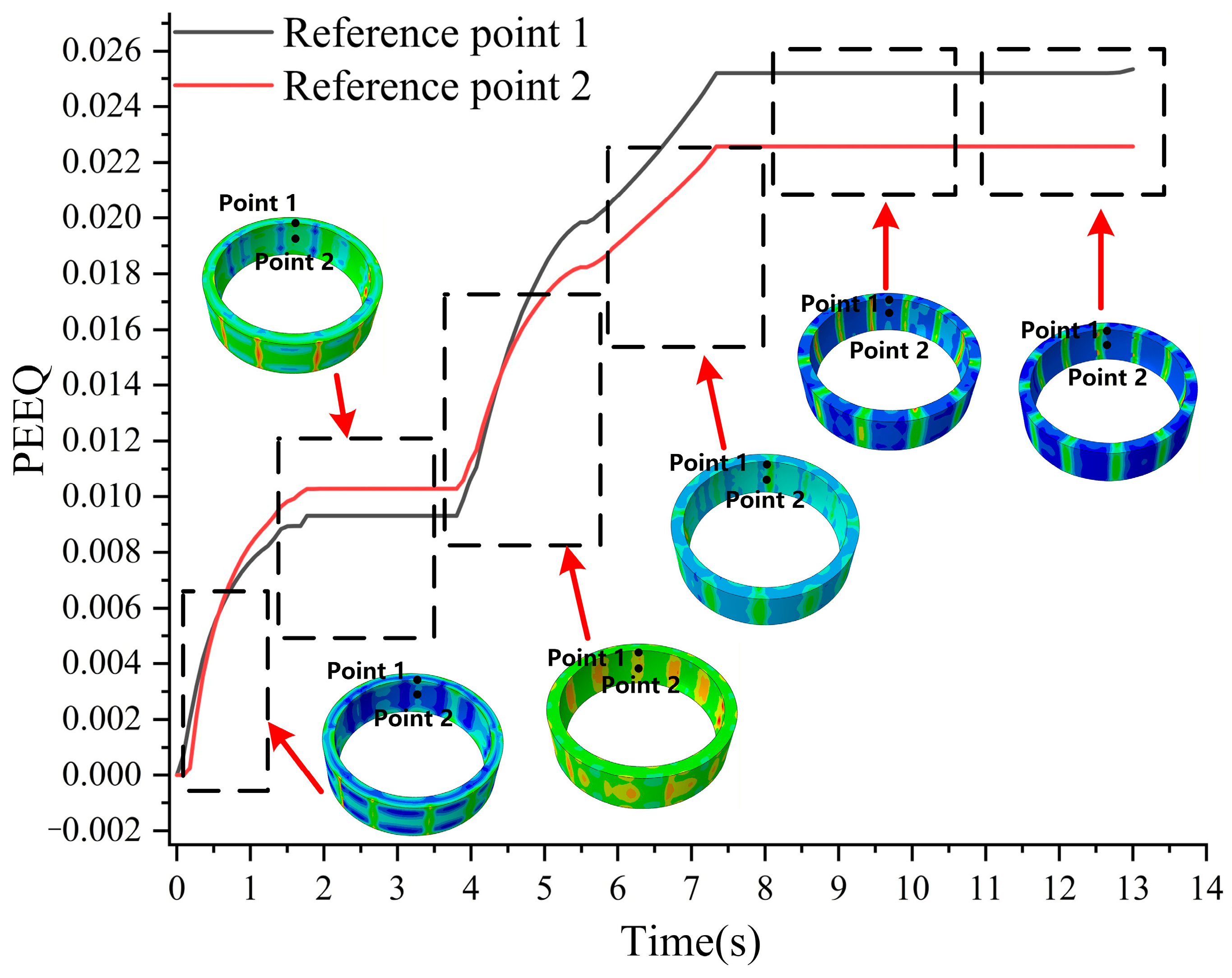
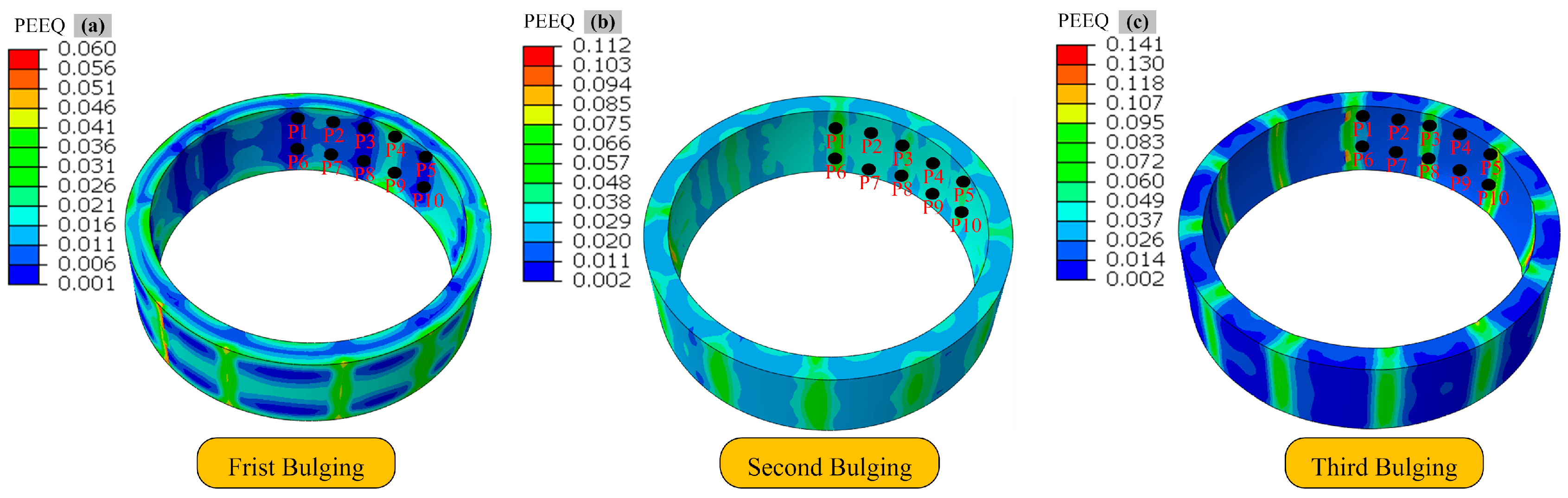
- The bulging process induces significant accumulated deformation of the bearing ring. The stress concentration is substantially attenuated through a step-by-step loading strategy combined with workpiece rotation. The average equivalent strain of the bearing ring component gradually accumulated from 0.02131 to 0.05239, while its standard deviation decreased significantly by 92.0%.
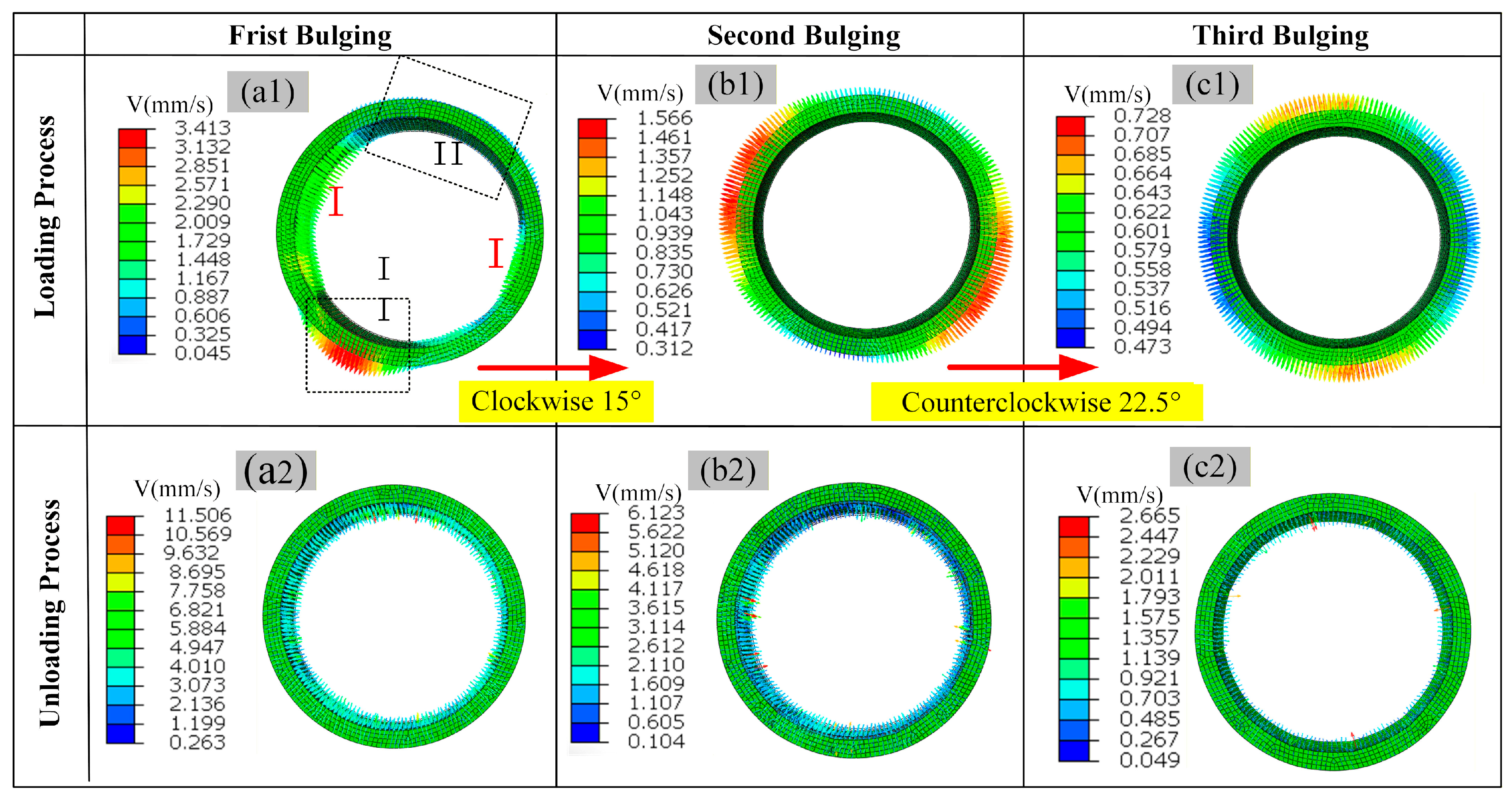
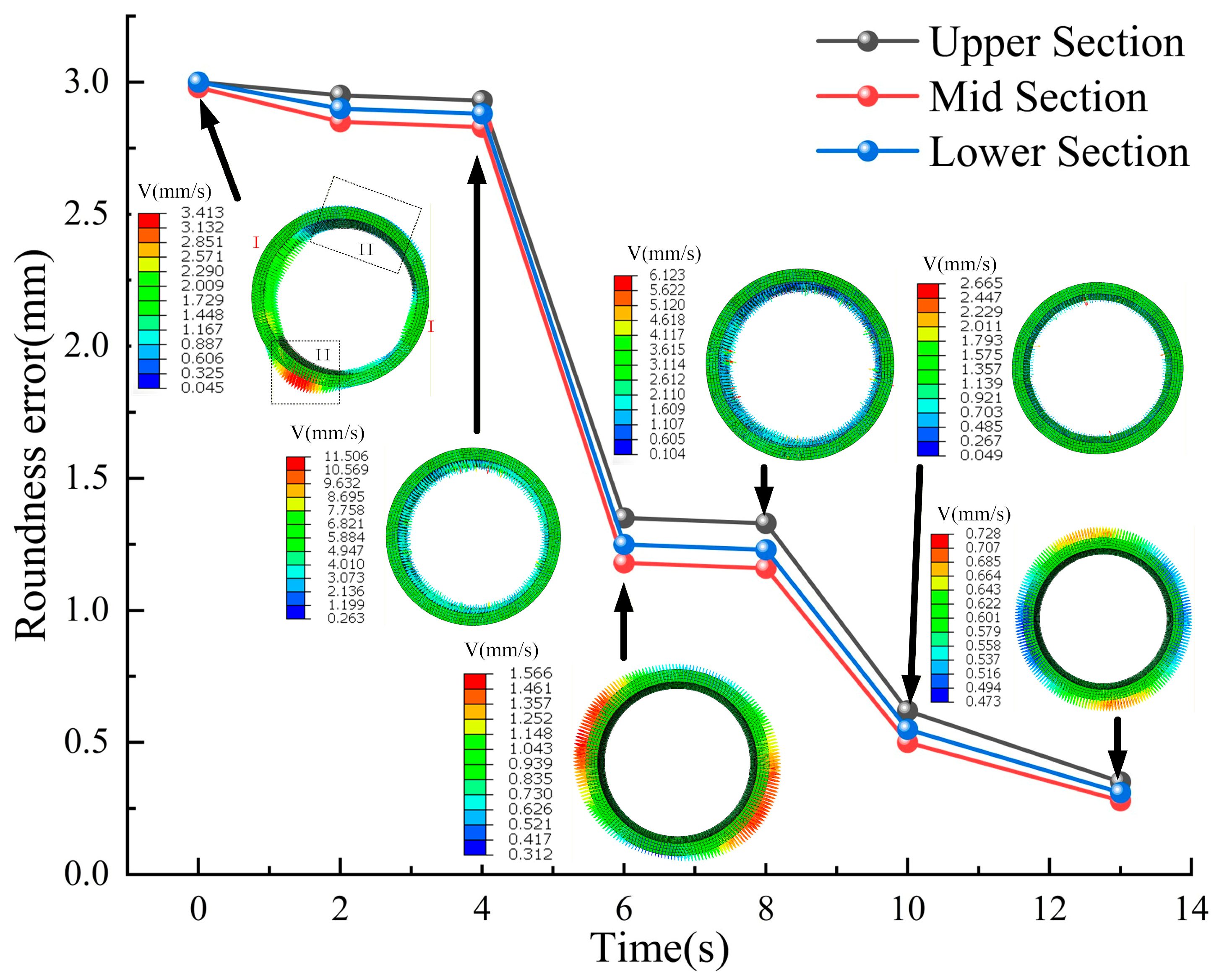
- During the initial bulging stage, flow exhibits significant asymmetry due to geometric non-circularity. At the short edge, the outward flow velocity reaches 3.4 mm/s, while at the long edge, the inward flow velocity is 0.6 mm/s. Following the stepwise rotational bulging process, the circumferential flow velocity converged to 0.4–0.7 mm/s, while the unloading process velocity decreased from 4 mm/s to 0.9 mm/s.
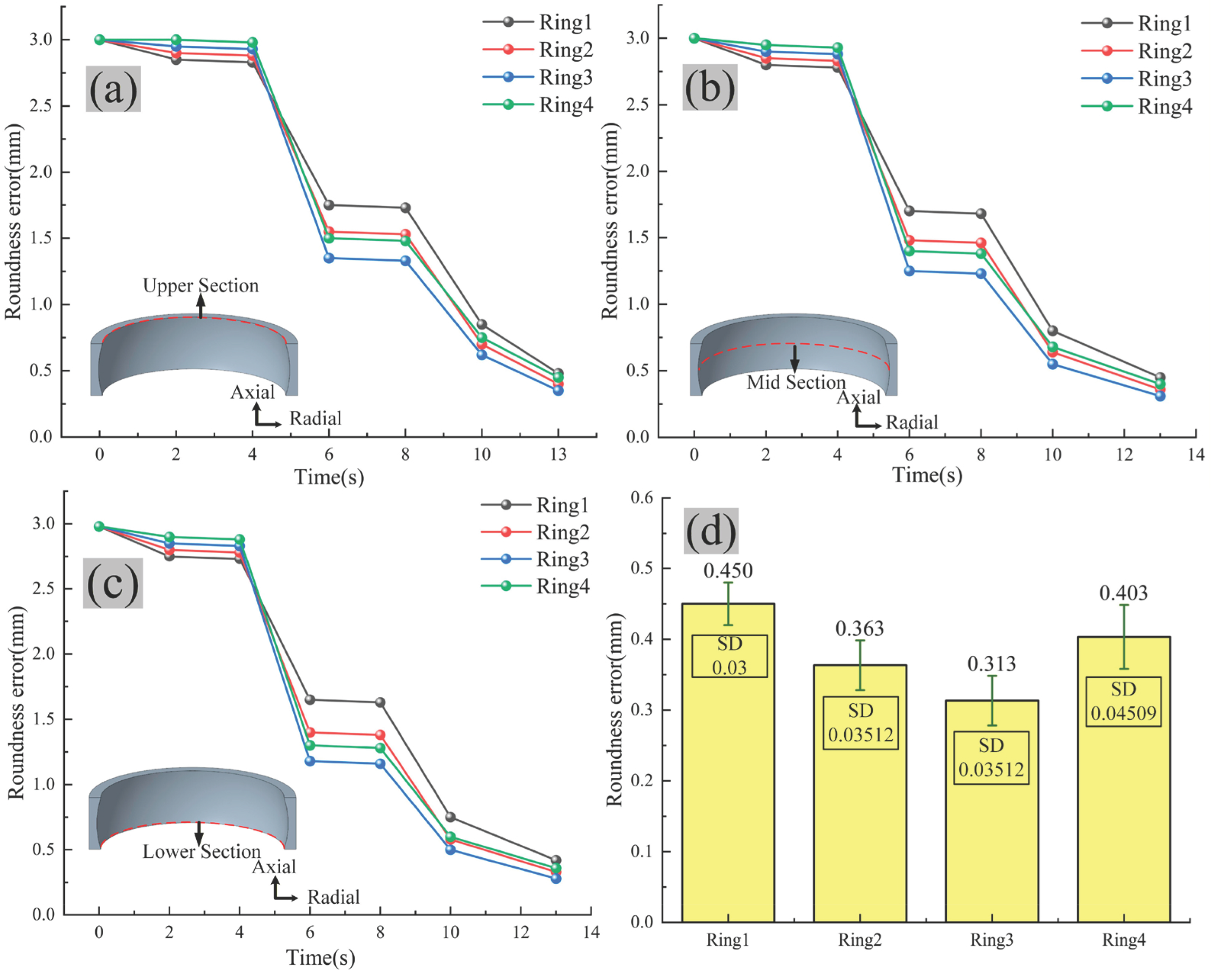
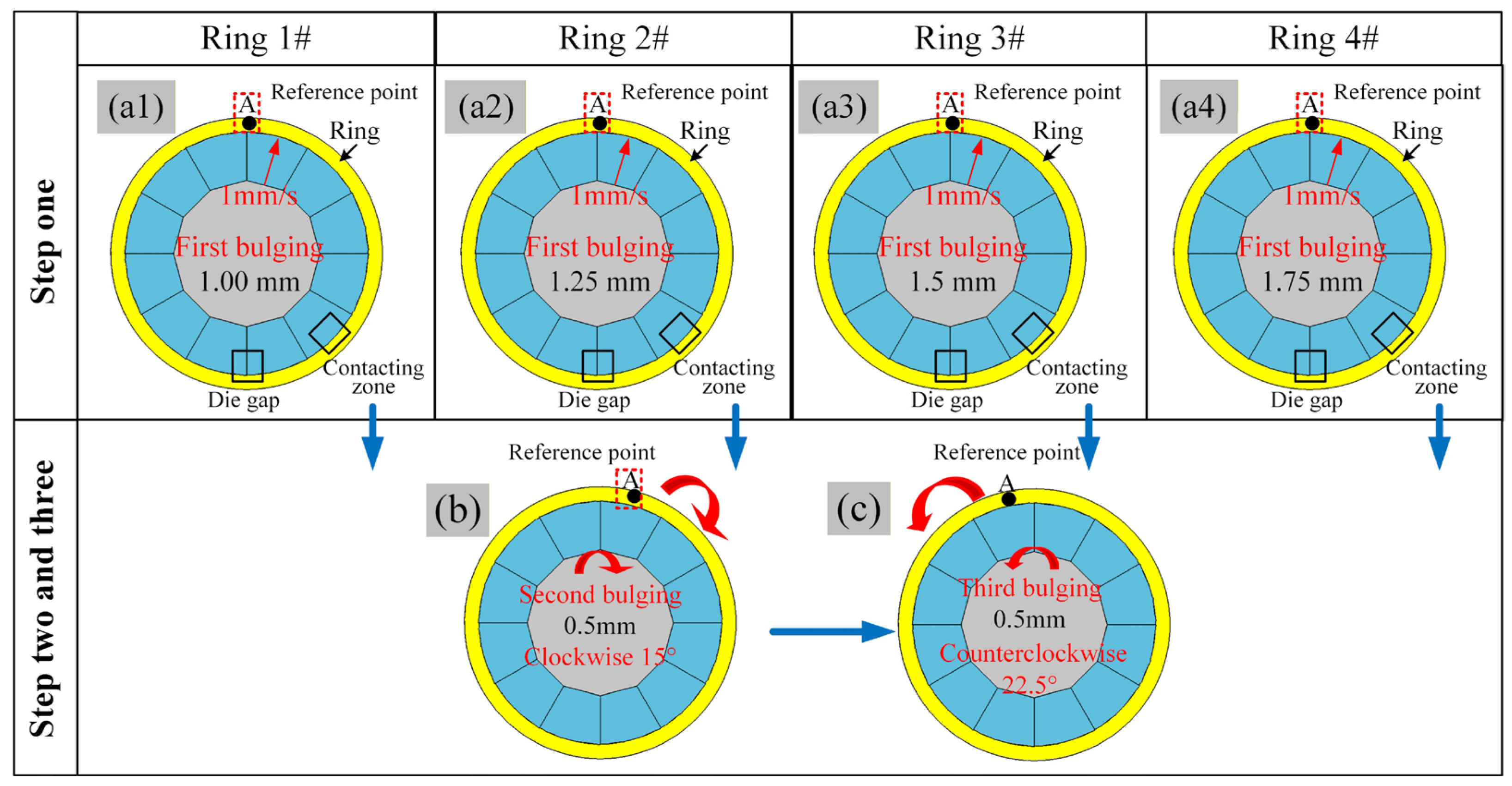
- The process demonstrated optimal efficiency and stability when the initial expansion amount is 1.50 mm, as the secondary and third-step amounts are both 0.50 mm, and the bulging speed is 1.00 mm/s. The roundness error of ring #3 converged steadily from an initial value of approximately 2.9 mm to a range of 0.28–0.35 mm (mean 0.313 mm) after three processing steps. The standard deviation of strain across various sections of ring #3 was reduced by 92.0%, resulting in a significant improvement in wall-thickness uniformity.
Limitations and Future Work
- This paper focuses on the hot deformation behavior of GCr15SiMn bearing steel at elevated temperatures; room temperature mechanical properties were not characterized. Future work may supplement these basic mechanical properties (e.g., tensile tests, hardness) according to engineering requirements.
- The limitations of this paper are as follows: microstructural evolution mechanisms such as dynamic recrystallization, phase transformation, and grain growth were not incorporated into the current FE model, which may affect the accuracy of flow stress and residual stress prediction under high-temperature conditions. This simplification was necessary due to the high computational cost of full-process simulation and the lack of systematically calibrated kinetic parameters for GCr15SiMn. Nevertheless, since all simulation cases share the same constitutive framework, the core conclusions regarding the relative advantages of the stepwise rotation strategy remain robust. Future work will address these limitations through targeted experiments and cross-scale modeling.
Author Contributions
Funding
Data Availability Statement
Conflicts of Interest
References
- Peng, H.; Zhang, H.; Shangguan, L.; Fan, Y. Review of Tribological Failure Analysis and Lubrication Technology Research of Wind Power Bearings. Polymers 2022, 14, 3041. [Google Scholar] [CrossRef] [PubMed]
- Gao, X.; Zhang, Z. A simplified spherical roller bearing model and its application in the wind turbine main bearing system finite element modeling. Tribol. Int. 2024, 196, 109678. [Google Scholar] [CrossRef]
- Micallef, D.; Rezaeiha, A. Floating offshore wind turbine aerodynamics: Trends and future challenges. Renew. Sustain. Energy Rev. 2021, 152, 111696. [Google Scholar] [CrossRef]
- Hart, E.; Clarke, B.; Nicholas, G.; Kazemi Amiri, A.; Stirling, J.; Carroll, J.; Dwyer-Joyce, R.; McDonald, A.; Long, H. A review of wind turbine main bearings: Design, operation, modelling, damage mechanisms and fault detection. Wind. Energy Sci. 2020, 5, 105–124. [Google Scholar] [CrossRef]
- Crabtree, C.J.; Zappalá, D.; Hogg, S.I. Wind energy: UK experiences and offshore operational challenges. Proc. Inst. Mech. Eng. Part A J. Power Energy 2015, 229, 727–746. [Google Scholar] [CrossRef]
- Barter, G.E.; Robertson, A.; Musial, W. A systems engineering vision for floating offshore wind cost optimization. Renew. Energy Focus 2020, 34, 1–16. [Google Scholar] [CrossRef]
- Anil Dhanola, H.C.G. Tribological challenges and advancements in wind turbine bearings A review. Eng. Fail. Anal. 2020, 118, 104885. [Google Scholar] [CrossRef]
- Lam, A.C.L.; Shi, Z.; Lin, J.; Huang, X. Influences of residual stresses and initial distortion on springback prediction of 7B04-T651 aluminium plates in creep-age forming. Int. J. Mech. Sci. 2015, 103, 115–126. [Google Scholar] [CrossRef]
- Gao, H.; Zhang, Y.; Wu, Q.; Song, J. An analytical model for predicting the machining deformation of a plate blank considers biaxial initial residual stresses. Int. J. Adv. Manuf. Technol. 2017, 93, 1473–1486. [Google Scholar] [CrossRef]
- Wang, B.; Yi, Y.; Huang, S.; He, H. Reduction of Residual Quenching Stresses in 2A14 Aluminum Alloy Tapered Cylinder Forgings via a Novel Cold Bulging Process. Metals 2021, 11, 717. [Google Scholar] [CrossRef]
- Mei, Y.; Xiao, S.X. Analysis of Bulging Application in the Wind Power Bearing Ring Production. Adv. Mater. Res. 2012, 591–593, 2161–2164. [Google Scholar]
- Lan, J.; Wei, H.; Hua, L. Cold bulging process for aluminium alloy ring with irregular section. Procedia Manuf. 2020, 50, 510–513. [Google Scholar] [CrossRef]
- Zhu, Z.; Zhang, L.; Gu, S. FEM analysis of vacuum hot bulge forming of Hastelloy C-276 thin-walled cylindrical workpiece. J. Cent. South. Univ. 2014, 21, 3019–3023. [Google Scholar] [CrossRef]
- Yang, L.; Zhao, Q. Forming limit diagrams for tubes with non-uniform thickness in hydro-bulging. Int. J. Adv. Manuf. Technol. 2019, 103, 901–911. [Google Scholar] [CrossRef]
- Cai, G.; Lang, L.; Liu, K.; Alexandrov, S.; Zhang, D.; Yang, X.; Guo, C. Research on the effect of flow stress calculation on aluminum alloy sheet deformation behavior based on warm bulging test. Met. Mater. Int. 2015, 21, 365–373. [Google Scholar] [CrossRef]
- Cui, X.; Wang, X.; Yuan, S. The Bulging Behavior of Thick-Walled 6063 Aluminum Alloy Tubes Under Double-Sided Pressures. JOM 2015, 67, 909–915. [Google Scholar] [CrossRef]
- Yang, Y.; Zhang, Z.; Chen, X.; Wang, X.; Zhang, Y. Reduction in Quenching Residual Stress of 2219 Aluminum Alloy Ring by Cold Bulging Process. Chongqing Technol. Innov. Appl. Dev. Proj. 2023, 52, 3355–3362. [Google Scholar]
- Li, G.; Deng, H.; Mao, Y.; Zhang, X.; Cui, J. Study on AA5182 aluminum sheet formability using combined quasi-static-dynamic tensile processes. J. Mater. Process Tech. 2018, 225, 373–386. [Google Scholar] [CrossRef]
- Kim, J.W.; Lee, J.H.; Kim, H.G.; Kim, H.S.; Lee, D.G. Reduction of residual stresses in thick-walled composite cylinders by smart cure cycle with cooling and reheating. Compos. Struct. 2006, 75, 261–266. [Google Scholar] [CrossRef]
- Ghorbanpour, A.; Loghman, A.; Khademizadeh, H.; Moradi, M. The Bauschinger and Hardening Effect on Residual Stresses in Thick-Walled Cylinders of SUS 304. Trans. Can. Soc. Mech. Eng. 2003, 26, 361–372. [Google Scholar] [CrossRef]
- Skvortsov, V.F.; Arlyapov, A.Y.; Boznak, A.O.; Kim, A.B. Residual stresses in compression and tension mandrelling thick-walled cylinders. In Proceedings of the 2014 International Conference on Mechanical Engineering, Automation and Control Systems (MEACS), Tomsk, Russia, 16–18 October 2014. [Google Scholar]
- He, T.; Liu, Z.; Li, L.; Xiong, Y.; Du, S.; Zhang, Y. Effect of supersonic fine particle bombardment on microstructure evolution and tribological properties of GCr15SiMn bearing steel. J. Mater. Res. Technol. 2024, 28, 1111–1120. [Google Scholar] [CrossRef]
- Akay, A.A.; Göktepe, S.; Gürses, E. Formulation of a Bilinear Traction-Separation Interface Law in Boundary Elements with Homogenization. Procedia Struct. Integr. 2024, 61, 138–147. [Google Scholar] [CrossRef]
- Hill, R. The Mathematical Theory of Plasticity; Oxford engineering science series; Clarendon Press: Oxford, UK, 2023. [Google Scholar]
- Ansari, M.A.; Samanta, A.; Behnagh, R.A.; Ding, H. An efficient coupled Eulerian-Lagrangian finite element model for friction stir processing. Int. J. Adv. Manuf. Technol. 2019, 101, 1495–1508. [Google Scholar] [CrossRef]
- Zhang, Y.; Li, X.; Zhao, M.; Qu, F.; Zhang, Y.; Peng, W.; Zhao, D.; Di, H.; Zhang, D. Novel analytical heat source model for cold rolling based on an energy method and unified yield criterion. Int. J. Adv. Manuf. Technol. 2022, 122, 3725–3738. [Google Scholar] [CrossRef]
- Wang, M.; Yang, H.; Sun, Z.; Guo, L.; Ou, X. Dynamic explicit FE modeling of hot ring rolling process. Trans. Nonferr. Metal. Soc. 2006, 16, 1274–1280. [Google Scholar] [CrossRef]
- Ge, S.; Wu, Y.; Qin, Z.; Hao, T. Deformation behavior of profiled ring rolling and process optimization for uniformity. Int. J. Adv. Manuf. Technol. 2025, 137, 871–889. [Google Scholar] [CrossRef]
- Deng, J.; Di, L.; Yuan, T.; Qian, D.; Wang, F.; Zhang, Y.; Lan, J. A novel constrained ring rolling process of deep-groove rings by coordinate controlling the roller motion. Int. J. Mater. Form. 2025, 18, 20. [Google Scholar] [CrossRef]
- Chen, Z.; Zhou, Z. A novel process for the production of tapered roller bearing rings via cold rolling forming. J. Braz. Soc. Mech. Sci. 2025, 47, 21. [Google Scholar] [CrossRef]
- Ge, S.; Wu, Y.; Long, Z.; Zhao, Z. Position/force control method for profiled ring rolling process of large aluminum alloy ring. Cirp J. Manuf. Sci. Tec. 2024, 51, 342–356. [Google Scholar] [CrossRef]
- Yan, B.; Meng, B.; Ma, Y.; Wu, X.; He, Y.; Wan, M. Structural precision control with manufacturability-performance balancing for metallic thin-walled ring. Adv. Eng. Inform. 2025, 65, 103307. [Google Scholar] [CrossRef]
- Ge, S.; Wu, Y.; Zhang, T.; Hao, T. Using upper bound method analyze the metal flow of Y-shaped ring rolling and forming progress optimization. Int. J. Precis. Eng. Man. 2025, 26, 1855–1876. [Google Scholar] [CrossRef]
- Zhu, X.; Dong, E.; Qiao, X.; Liu, D. Evaluation Methods and Coupled Optimization at Macro- and Micro-Scales for Profiled Ring Rolling of Inconel718 Alloy. Materials 2024, 17, 4538. [Google Scholar] [CrossRef] [PubMed]
- Lv, N.; Liu, D.; Yang, Y.; Wang, H.; Nan, J.; Wang, Y. Multi-response optimization of the bulging-processed parameters for enhanced residual stress state of TC4-rolled rings. Int. J. Adv. Manuf. Technol. 2022, 122, 3075–3093. [Google Scholar] [CrossRef]
- Zhu, W.; Zhao, F.; Yin, S.; Liu, Y.; Yang, R. Effect of Tensile Deformation on Residual Stress of GH4169 Alloy. Materials 2021, 14, 1773. [Google Scholar] [CrossRef]
- Trieu, Q.; Luyen, T.; Nguyen, D.; Bui, N. A Study on Yield Criteria Influence on Anisotropic Behavior and Fracture Prediction in Deep Drawing SECC Steel Cylindrical Cups. Materials 2024, 17, 2872. [Google Scholar] [CrossRef]
- Liu, M.; Zhang, T.; Wang, C.; Liu, Y.; Qian, J.; Di, H.; Yin, Q.; Zhang, C. Effect of segregation on hot deformation behavior of GCr15 bearing steel in continuous casting. J. Mater. Res. Technol. 2025, 34, 48–57. [Google Scholar] [CrossRef]
- Samara, F.; Goanta, V.; Istrate, B.; Alkisswani, L.; Munteanu, C.; Cosau, R. Influence of the Plastic Deformation Process on the Residual Stresses and Hardness of an Al-5Mg Alloy. Materials 2024, 17, 3593. [Google Scholar] [CrossRef]
- Wang, A.; Ling, C.; Zhao, X.; Wang, H.; Wang, T.; Tao, G.; Fu, Y.; Cheng, T. Research on the Analysis of Residual Stress in Heat Treatment of Bellows Using ABAQUS. Materials 2024, 17, 3263. [Google Scholar] [CrossRef] [PubMed]












| Elements | C | Cr | Si | Mn | Cu | S | P | Ni | Mo |
|---|---|---|---|---|---|---|---|---|---|
| 0.95~1.05 | 1.30~1.65 | 0.40~0.65 | 0.90~1.25 | ≤0.25 | ≤0.020 | ≤0.027 | ≤0.003 | ≤0.001 |
| Parameters | Rolling | Bulging |
|---|---|---|
| Values | ||
| Heat transmission coefficient (Ns−1mm−1 °C−1) | 10 | |
| Heat radiation coefficient (Ns−1mm−1 °C−4) | 0.7 | |
| Heat convection coefficient (Ns−1mm−1 °C−1) | 0.02 | |
| Friction coefficient between roll and ring blank μ | 0.3 | - |
| Temperature of ring blank T (°C) | 1100 | - |
| Temperature of rolls (°C) | 50 | - |
| Temperature of environment (°C) | 25 | - |
| Rotation of driven roll ω (rad/s) V1 | 17.5 | - |
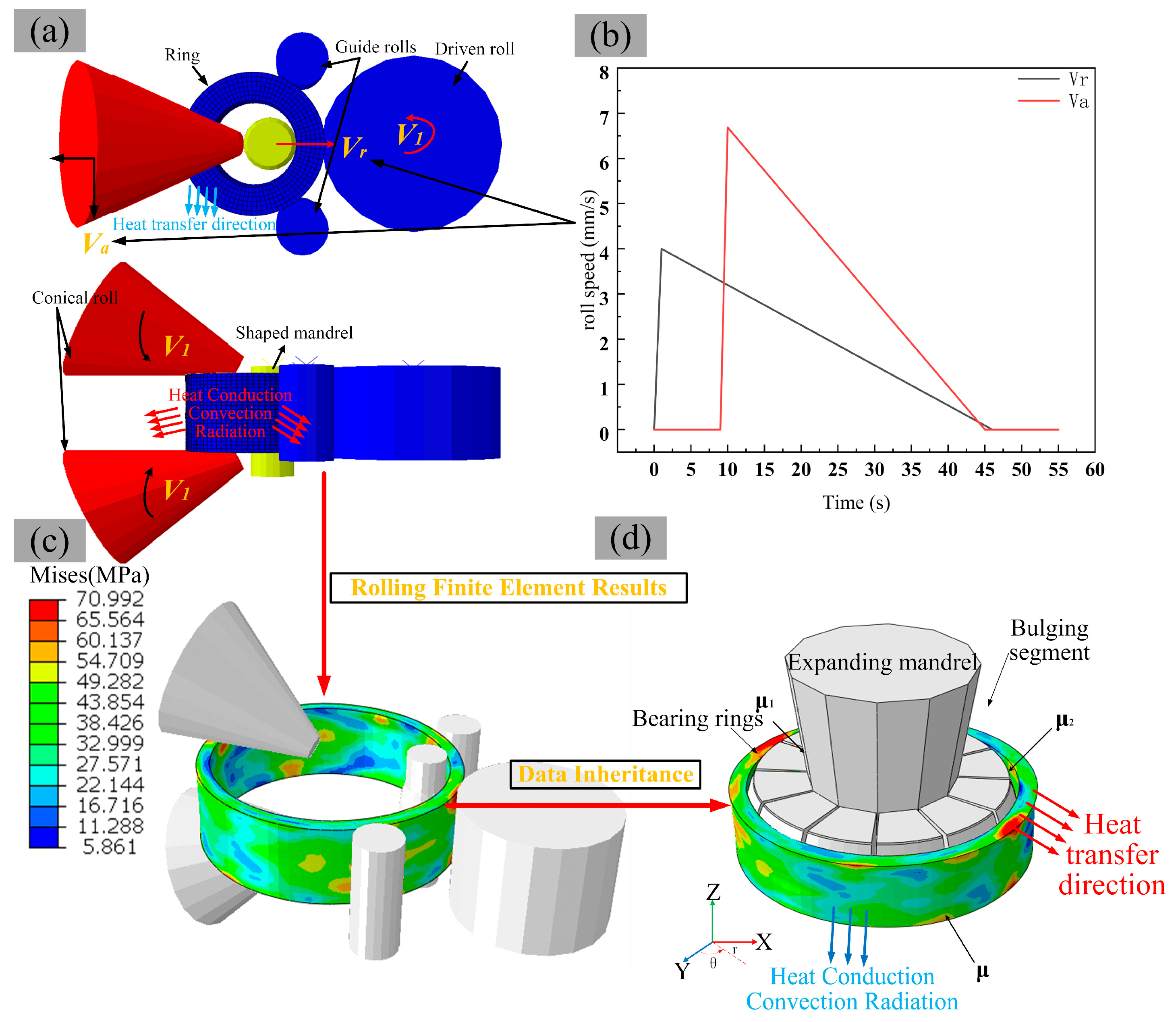
| Feed rate of idle roll Vr and axial feed velocity Va (mm/s) | Figure 5b | - |
| Friction between the bulging slider and mandrel μ1 | - | 0.15 |
| Friction between the bulging slider and ring μ2 | - | 0.5 |
| Return speed of outer slider block (mm/s) | - | 0~20 |
| Supporting roll rotational speed (r/min) | - | 0~60 |
| Mandrel return speed (mm/s) | - | 0~30 |
| Mandrel height (mm) | - | 1400 |
| Major edge length of mandrel (mm) | - | 259 |
| Minor edge length of mandrel (mm) | - | 183 |
| Global Mesh Densities | Wall Thickness | Roundness (mm) | Average Stress (MPa) | Strain Uniformity |
|---|---|---|---|---|
| 25 | 107.56 | 0.313 | 30.1166 | 0.00347 |
| 15 | 107.95 | 0.308 | 30.2789 | 0.00354 |
| 5 | 107.35 | 0.317 | 29.9845 | 0.00342 |
Disclaimer/Publisher’s Note: The statements, opinions and data contained in all publications are solely those of the individual author(s) and contributor(s) and not of MDPI and/or the editor(s). MDPI and/or the editor(s) disclaim responsibility for any injury to people or property resulting from any ideas, methods, instructions or products referred to in the content. |
© 2026 by the authors. Licensee MDPI, Basel, Switzerland. This article is an open access article distributed under the terms and conditions of the Creative Commons Attribution (CC BY) license.
Share and Cite
Gu, R.; Fu, Y.; Shang, Z.; Zhang, Z.; Lan, S.; Wang, T.; Wang, Q.; Chen, L. Stress–Strain and Dimension Evolution of Wind Turbine Bearing Ring with Non-Standard Section During Hot Bulging Process. Materials 2026, 19, 938. https://doi.org/10.3390/ma19050938
Gu R, Fu Y, Shang Z, Zhang Z, Lan S, Wang T, Wang Q, Chen L. Stress–Strain and Dimension Evolution of Wind Turbine Bearing Ring with Non-Standard Section During Hot Bulging Process. Materials. 2026; 19(5):938. https://doi.org/10.3390/ma19050938
Chicago/Turabian StyleGu, Ruijie, Yutong Fu, Ziyang Shang, Zhuangya Zhang, Shan Lan, Tongxun Wang, Qiang Wang, and Liaoyuan Chen. 2026. "Stress–Strain and Dimension Evolution of Wind Turbine Bearing Ring with Non-Standard Section During Hot Bulging Process" Materials 19, no. 5: 938. https://doi.org/10.3390/ma19050938
APA StyleGu, R., Fu, Y., Shang, Z., Zhang, Z., Lan, S., Wang, T., Wang, Q., & Chen, L. (2026). Stress–Strain and Dimension Evolution of Wind Turbine Bearing Ring with Non-Standard Section During Hot Bulging Process. Materials, 19(5), 938. https://doi.org/10.3390/ma19050938