Edge Zone Effect in Measurements of Asphalt Mixture Thermal Properties Using Transient Method


Abstract
1. Introduction and Problem Statement
- The quantitative determination of the edge zone effect for the selected real, heterogeneous asphalt mixture;
- The practical determination of the width of the edge zone for the asphalt mixture prepared as a slab-shaped specimen used in road materials laboratories;
- Identifying the scientific and practical methodological consequences, as well as the risks and limitations associated with the application of the Modified Transient Plane Source (MTPS) method to the slab-shaped specimen in the absence of dedicated standards.
2. Research Method and Theoretical Model
- —the radial coordinate (distance from the center of the sensor),
- —the depth coordinate measured perpendicular to the specimen surface,
- —time,
- —temperature ,
- —thermal diffusivity ,
- λ—thermal conductivity ,
- ρ—density ,
- —specific heat capacity ,
- —volumetric heat capacity .
- At the specimen surface, in the area of contact with the MTPS sensor, a known short-time heat pulse is applied. It is described by the heat flux:
- The specimen is assumed to behave as a semi-infinite medium in the direction normal to its surface:
- Radial condition reflects the assumption that the lateral boundaries of the specimen are sufficiently far away so and do not influence the local temperature response in the measurement area:
3. Tested Material and Measurement Procedure
3.1. Tested Material
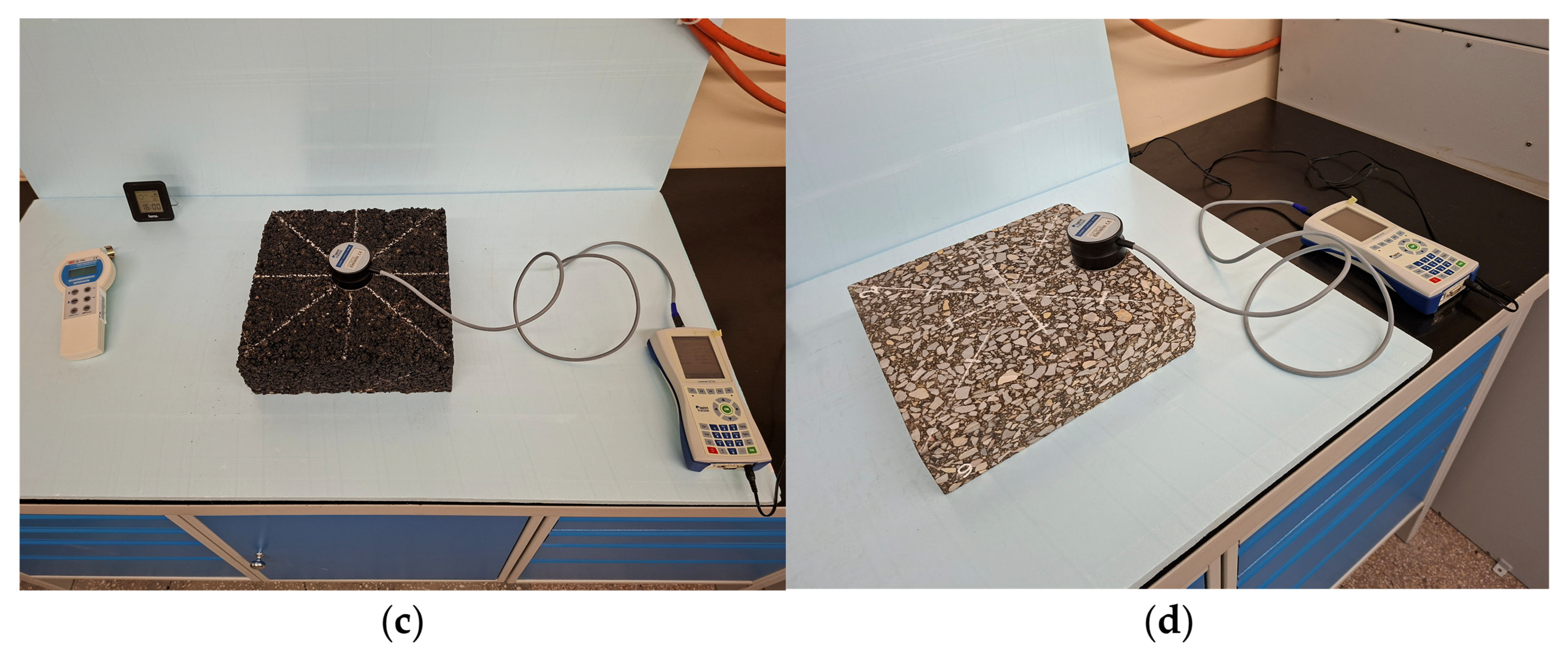
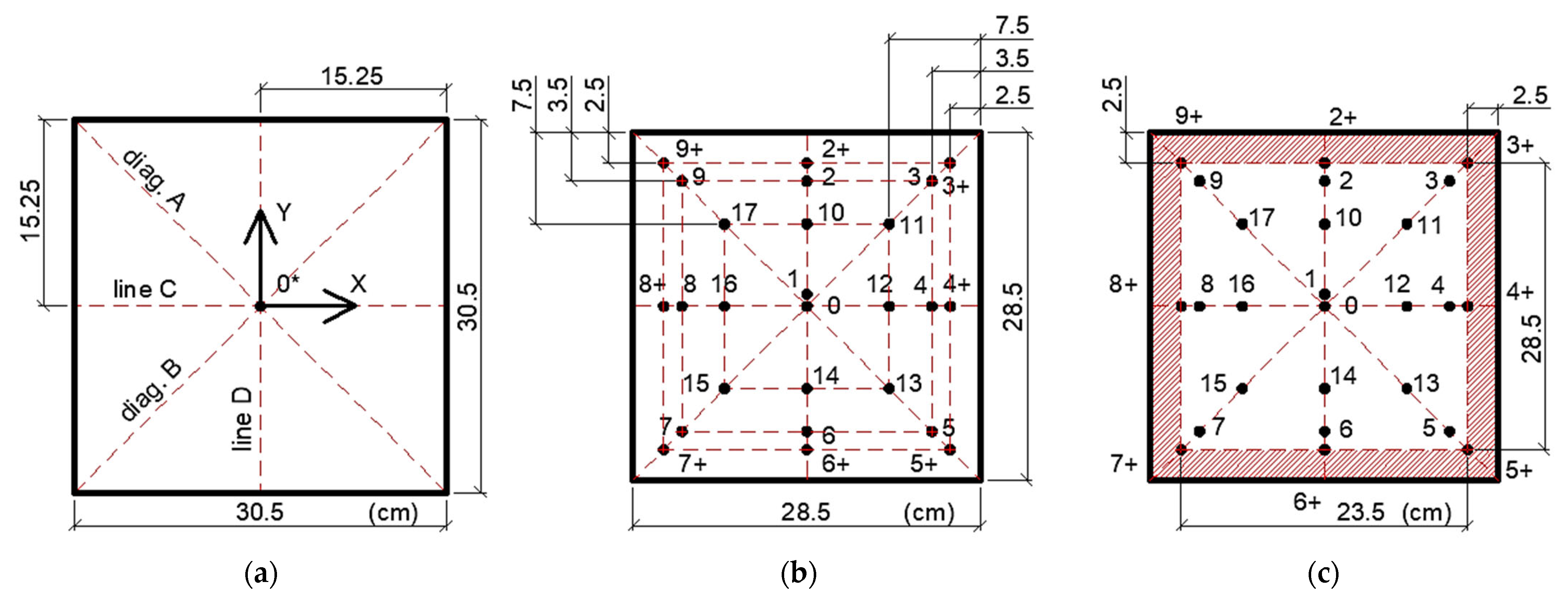
3.2. Measurement Procedure and Experimental Program
4. Results and Discussion
4.1. Influence of Specimen Surface Condition
4.2. Main Test Results
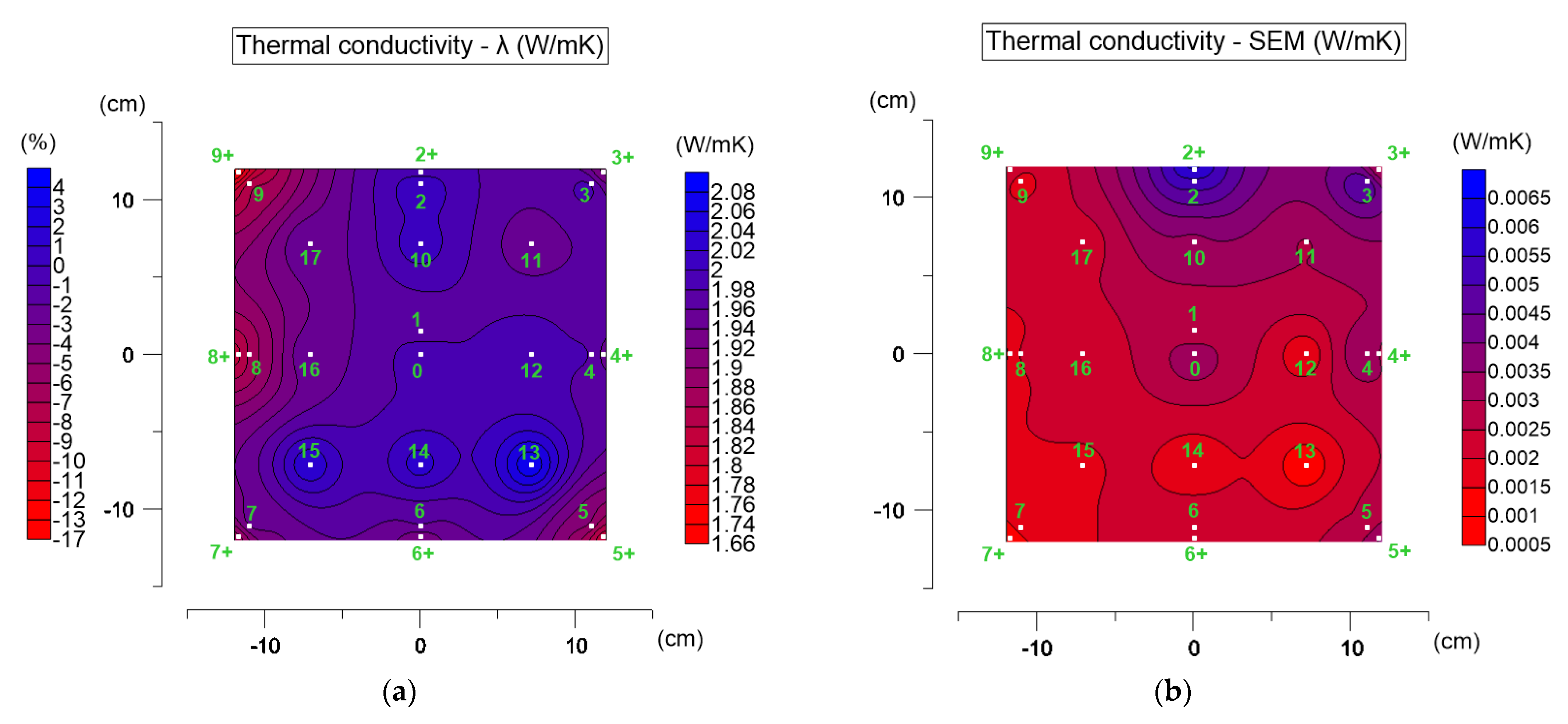
4.3. Discussion of Thermal Conductivity Results
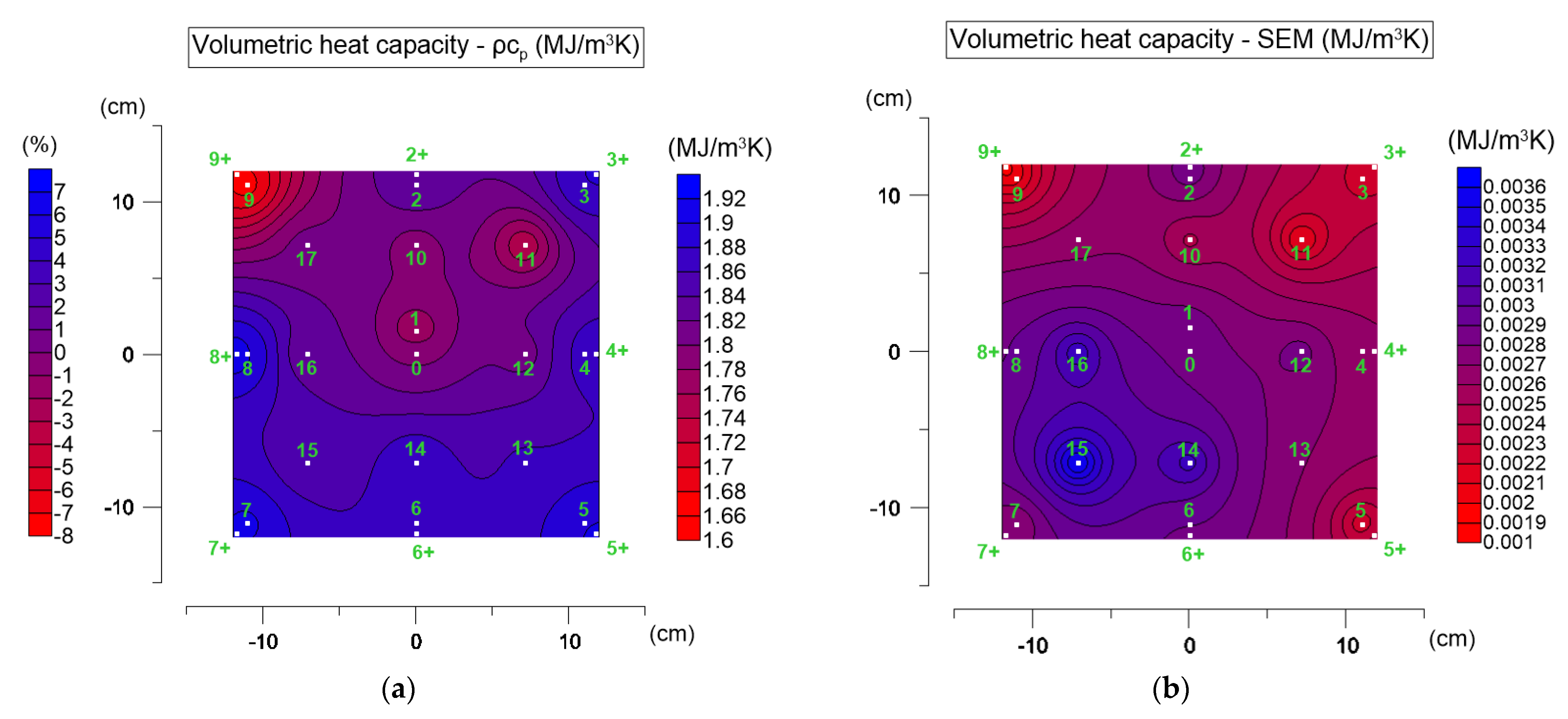
4.4. Discussion of Volumetric Heat Capacity Results
4.5. Discussion of Thermal Diffusivity Results
4.6. Discussion Summary and Implications
5. Conclusions
- The MTPS method makes it possible to effectively and repeatably determine the thermal parameters of slab-shaped asphalt mixture specimens, allowing the evaluation of their variability at different points on the specimen surface.
- The surface condition of the specimen has a significant influence on the measurement results. The surface used for testing should be as flat as possible and carefully cleaned to reduce measurement errors.
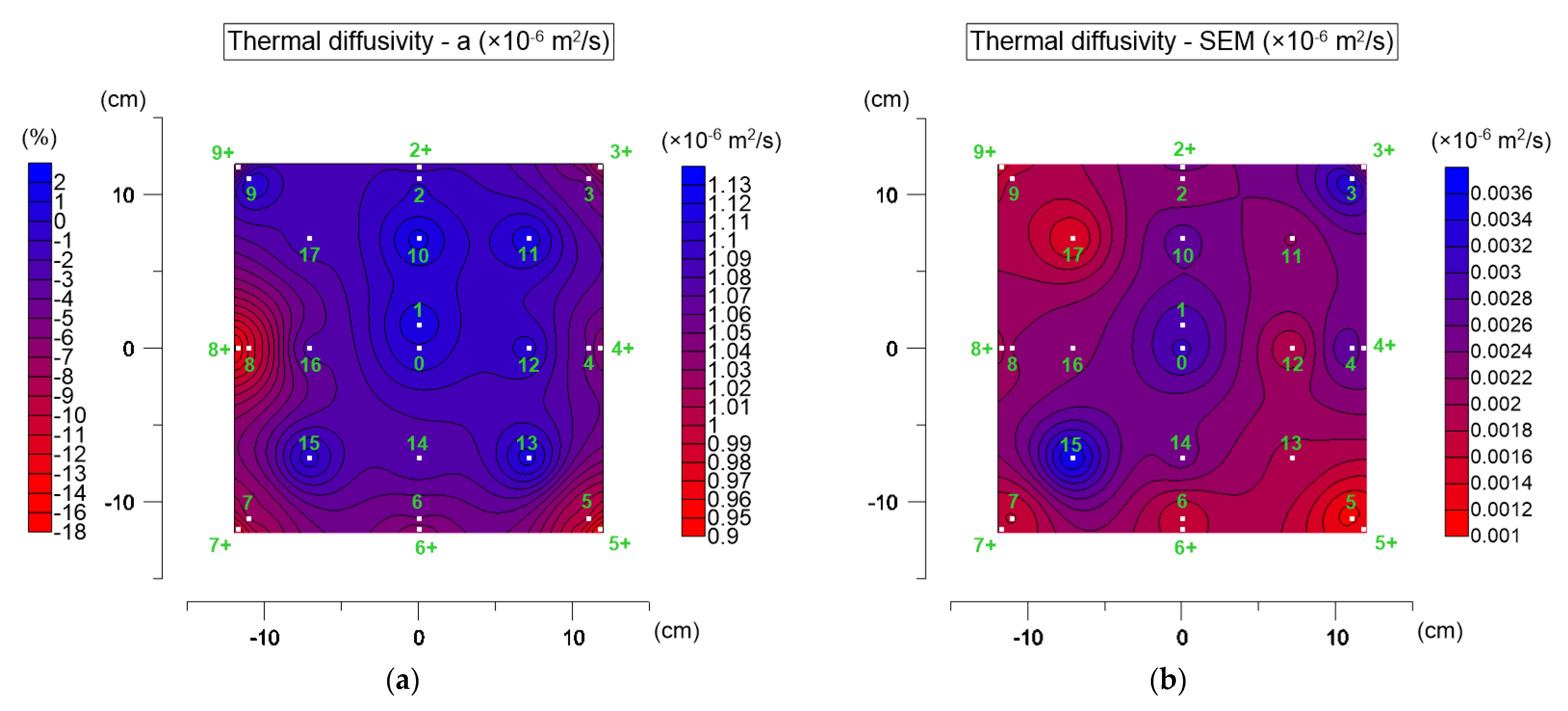
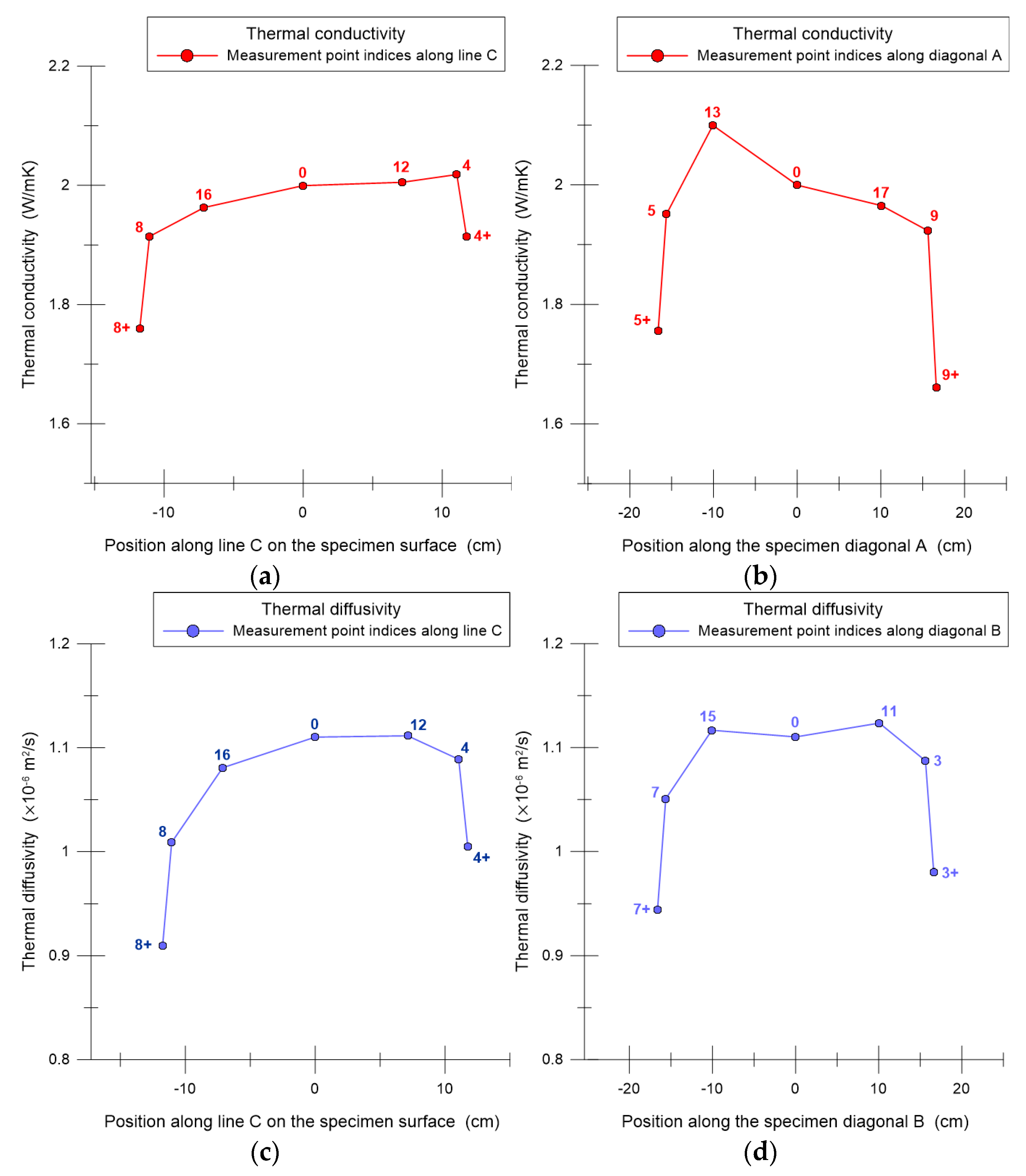
- For the tested asphalt mixture, a clear spatial variability of thermal parameters is observed on the specimen surface. For thermal conductivity, values ranged from 1.66 to 2.10 W·m−1·K−1. The variation in the central part of the specimen may result from material heterogeneity, while a distinct edge zone effect appears near the specimen boundary. This effect is related to additional heat transfer by convection along the side surfaces of the specimen, which leads to a systematic underestimation of locally determined thermal conductivity and thermal diffusivity.
- In the edge zone, clear deviations in thermal parameters were recorded: thermal conductivity values were up to about 17% lower, and thermal diffusivity was up to about 18% lower compared with the central part of the specimen. For volumetric heat capacity, an opposite trend was observed—in most edge-zone locations, values were higher than in the center.
- For the tested specimen, the edge zone can be defined as the region extending up to approximately 4 cm inward from the boundary of the asphalt mixture slab.
- The ANOVA analysis confirmed a statistically significant influence of the edge zone effect on the determined thermal parameters (α = 0.05).
- The results indicate that, due to the strong influence of the edge zone effect, the thermal parameters of asphalt mixtures should not be determined from measurements taken within the edge zone of the slab-shaped specimen.
- The studies made it possible to identify a number of scientific and practical risks and limitations related to the application of the MTPS method in the testing of asphalt mixture slab-shaped specimen. The identified limitations require further research and analysis.
- The results obtained refer to a single selected asphalt mixture and should be considered as a case study. Therefore, they cannot be generalized to other types of asphalt mixtures. These findings provide a starting point for the discussion of the investigated issue and highlight the need for further research, including other mixture types and specimen geometries.
Author Contributions
Funding
Institutional Review Board Statement
Informed Consent Statement
Data Availability Statement
Conflicts of Interest
References
- Islam, M.R.; Tarefder, R.A. Determining Thermal Properties of Asphalt Concrete Using Field Data and Laboratory Testing. Constr. Build. Mater. 2014, 67, 297–306. [Google Scholar] [CrossRef] [Scilit]
- Asadi, I.; Shafigh, P.; Abu Hassan, Z.F.B.; Mahyuddin, N.B. Thermal Conductivity of Concrete—A Review. J. Build. Eng. 2018, 20, 81–93. [Google Scholar] [CrossRef] [Scilit]
- Demirtürk, D.; Öztürk, H.; Güler, M. Current methods for determining the thermal properties of asphalt concrete: A comprehensive review. In Proceedings of the 4th International Civil Engineering & Architecture Conference, Trabzon, Turkey, 17–19 May 2025; Volume 1, pp. 2451–2460. [Google Scholar] [CrossRef] [Scilit]
- ISO 8301:1991; Thermal Insulation—Determination of Steady-State Thermal Resistance and Related Properties—Heat Flow Meter Apparatus. International Organization for Standardization: Geneve, Switzerland, 1991.
- Górszczyk, J.; Malicki, K. Comparative Laboratory Tests of Thermal Conductivity of Road Materials Using Two Measurement Methods. Materials 2025, 18, 1970. [Google Scholar] [CrossRef] [Scilit] [PubMed]
- ISO 22007-2:2022; Plastics—Determination of Thermal Conductivity and Thermal Diffusivity—Part 2: Transient Plane Heat Source (Hot Disc) Method. International Organization for Standardization: Geneve, Switzerland, 2022.
- ASTM D5334-22; Standard Test Method for Determination of Thermal Conductivity of Soil and Rock by Thermal Needle Probe Procedure. ASTM International: West Conshohocken, PA, USA, 2022.
- Mourda, K.; Zou, Y.; Nguyen, V.T.; Coussot, P. Enhancing the Accuracy of Thermal Conductivity Measurements with Insulating Construction Materials: Addressing Edge Effects and Methodological Improvements. J. Build. Eng. 2025, 109, 112996. [Google Scholar] [CrossRef] [Scilit]
- Fwa, T.F.; Low, B.H.; Tan, S.A. Laboratory Determination of Thermal Properties of Asphalt Mixtures by Transient Heat Conduction Method. Transp. Res. Rec. 1995, 1492, 118–128. [Google Scholar]
- Chadbourn, B.A.; Luoma, J.A.; Newcomb, D.E.; Voller, V.R. Consideration of Hot Mix Asphalt Thermal Properties during Compaction. ASTM Spec. Tech. Publ. 1996, 1299, 127–141. [Google Scholar] [CrossRef] [Scilit]
- Khadrawi, A.F.; Al-Shyyab, A.; Abo-Qudais, S.A. Transient Thermal Behavior of Hot–Mix Asphalt Pavement. Appl. Mech. Mater. 2012, 110–116, 400–407. [Google Scholar] [CrossRef] [Scilit]
- Mrawira, D.M.; Luca, J. Effect of Aggregate Type, Gradation, and Compaction Level on Thermal Properties of Hot-Mix Asphalts. Can. J. Civ. Eng. 2006, 33, 1410–1417. [Google Scholar] [CrossRef] [Scilit]
- Luo, Y.; Yussof, M.M.; Zhang, L. Study of Thermal Conductivity of Constituent Materials for Electrically Heated Bridge Decks. Constr. Build. Mater. 2024, 453, 139122. [Google Scholar] [CrossRef] [Scilit]
- Abbas, F.A.; Alhamdo, M.H. Enhancing the Thermal Conductivity of Hot-Mix Asphalt. Results Eng. 2023, 17, 100827. [Google Scholar] [CrossRef] [Scilit]
- Chen, J.; Zhang, M.; Wang, H.; Li, L. Evaluation of Thermal Conductivity of Asphalt Concrete with Heterogeneous Microstructure. Appl. Therm. Eng. 2015, 84, 368–374. [Google Scholar] [CrossRef] [Scilit]
- Byzyka, J.; Rahman, M.; Chamberlain, D.A. A Laboratory Investigation on Thermal Properties of Virgin and Aged Asphalt Mixture. Constr. Build. Mater. 2021, 305, 124757. [Google Scholar] [CrossRef] [Scilit]
- Kim, S.-K.; Lee, K.-H. Evaluation of Heat Transfer Properties of Asphalt Mixtures. KSCE J. Civ. Eng. 2025, 29, 100138. [Google Scholar] [CrossRef] [Scilit]
- Pan, P.; Wu, S.; Hu, X.; Wang, P.; Liu, Q. Effect of Freezing-Thawing and Ageing on Thermal Characteristics and Mechanical Properties of Conductive Asphalt Concrete. Constr. Build. Mater. 2017, 140, 239–247. [Google Scholar] [CrossRef] [Scilit]
- Kong, L.; Xu, L.; Du, Y.; Jin, J.; Loprencipe, G.; Moretti, L. Use of Hybrid Mineral Filler with High Emissivity in Asphalt Mixture for Cooling Road Pavements. Materials 2022, 16, 175. [Google Scholar] [CrossRef] [Scilit] [PubMed]
- Górszczyk, J.; Grzybowska, W. The Use of FEM for Thermal Analyses of the Asphalt Pavement. Roads Bridg–Drogi Mosty 2011, 10, 5–30. [Google Scholar]
- Mu, Y.; Fu, Z.; Liu, J.; Li, C.; Dong, W.; Dai, J.; Mu, Y.; Fu, Z.; Liu, J.; Li, C.; et al. Evaluation of High-Temperature Performance of Asphalt Mixtures Based on Climatic Conditions. Coatings 2020, 10, 535. [Google Scholar] [CrossRef] [Scilit]
- AlHamdo, Y.M.H.; Albayati, A.H.K.; Al-Kheetan, M.J.; AlHamdo, Y.M.H.; Albayati, A.H.K.; Al-Kheetan, M.J. High-Temperature Properties of Hot Mix Asphalt Modified with Different Nanomaterials. Nanomaterials 2025, 15, 1845. [Google Scholar] [CrossRef] [Scilit]
- Wang, Y.; Polaczyk, P.; He, J.; Lu, H.; Xiao, R.; Huang, B. Dispersion, Compatibility, and Rheological Properties of Graphene-Modified Asphalt Binders. Constr. Build. Mater. 2022, 350, 128886. [Google Scholar] [CrossRef] [Scilit]
- Ren, Y.-X.; Hao, P.-W.; Ren, Y.-X.; Hao, P.-W. Low-Temperature Performance of Asphalt Mixtures Modified by Microencapsulated Phase Change Materials with Various Graphene Contents. Coatings 2022, 12, 287. [Google Scholar] [CrossRef] [Scilit]
- Pszczola, M.; Szydlowski, C. Influence of Bitumen Type and Asphalt Mixture Composition on Low-Temperature Strength Properties According to Various Test Methods. Materials 2018, 11, 2118. [Google Scholar] [CrossRef] [Scilit] [PubMed]
- Li, L.; Guo, Z.; Ran, L.; Zhang, J.; Li, L.; Guo, Z.; Ran, L.; Zhang, J. Study on Low-Temperature Cracking Performance of Asphalt under Heat and Light Together Conditions. Materials 2020, 13, 1541. [Google Scholar] [CrossRef] [Scilit] [PubMed]
- Malinarič, S.; Bokes, P.; Bulatovič, G. A New Numerically Improved Transient Technique for Measuring Thermal Properties of Anisotropic Materials. Thermo 2024, 4, 394–406. [Google Scholar] [CrossRef] [Scilit]
- Zheng, Q.; Kaur, S.; Dames, C.; Prasher, R.S. Analysis and Improvement of the Hot Disk Transient Plane Source Method for Low Thermal Conductivity Materials. Int. J. Heat Mass Transf. 2020, 151, 119331. [Google Scholar] [CrossRef] [Scilit]
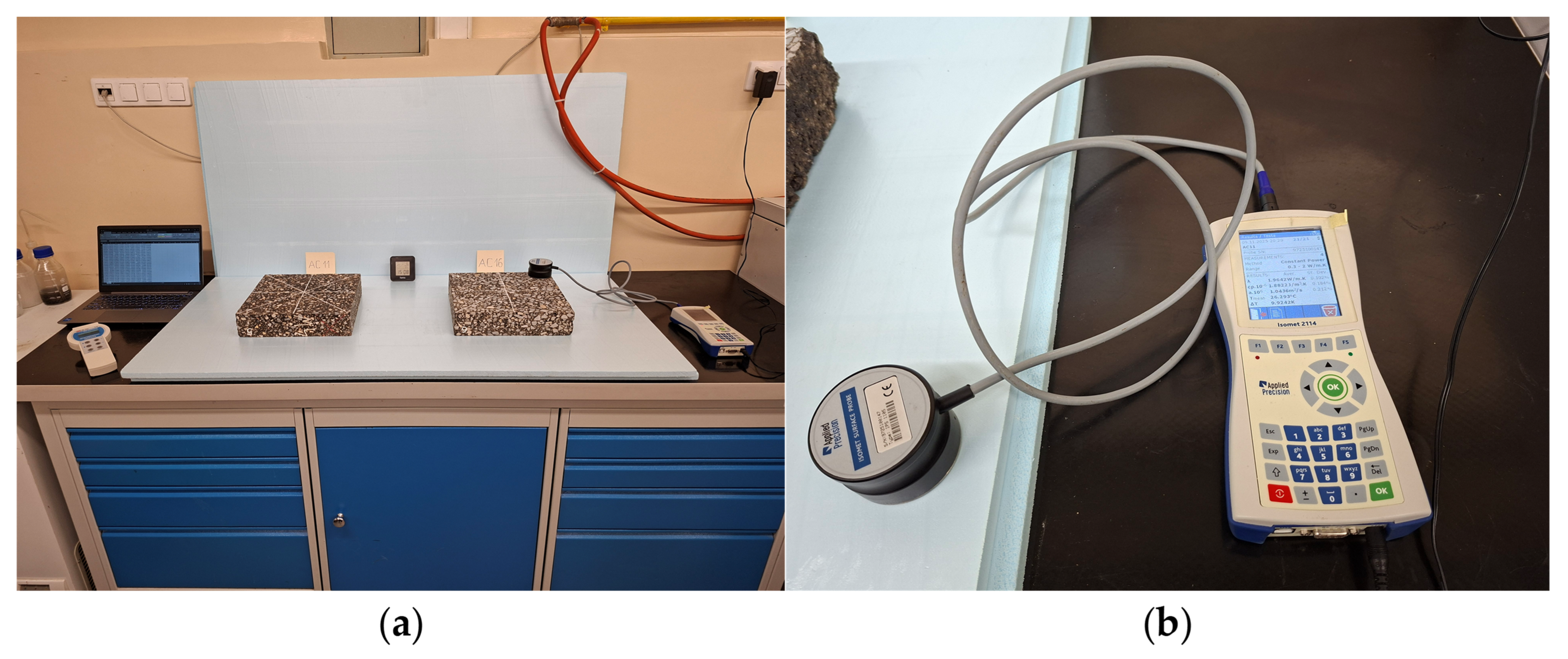
- Isomet 2114; Applied Precision Ltd.: Bratislava, Slovakia, 2024; Available online: https://www.appliedp.com/product/isomet/ (accessed on 30 November 2024).
- Gustafsson, S.E. Transient Plane Source Techniques for Thermal Conductivity and Thermal Diffusivity Measurements of Solid Materials. Rev. Sci. Instrum. 1991, 62, 797–804. [Google Scholar] [CrossRef] [Scilit]
- Asphalt Pavements on National Roads; Technical Requirements WT-2 p. I. Asphalt Mixtures; GDDKiA: Warszawa, Poland, 2014.
- EN 12697-6; Bituminous Mixtures–Test Methods for Hot Mix Asphalt–Part 6: Determination of Bulk Density of Bituminous Specimens. European Committee for Standardization: Brussels, Belgium, 2012.
- EN 12697-5; Bituminous Mixtures–Test Methods for Hot Mix Asphalt–Part 5: Determination of the Maximum Density. European Committee for Standardization: Brussels, Belgium, 2012.
- EN 12697-8; Bituminous Mixtures–Test Methods–Part 8: Determination of Void Characteristics of Bituminous Specimens. European Committee for Standardization: Brussels, Belgium, 2012.
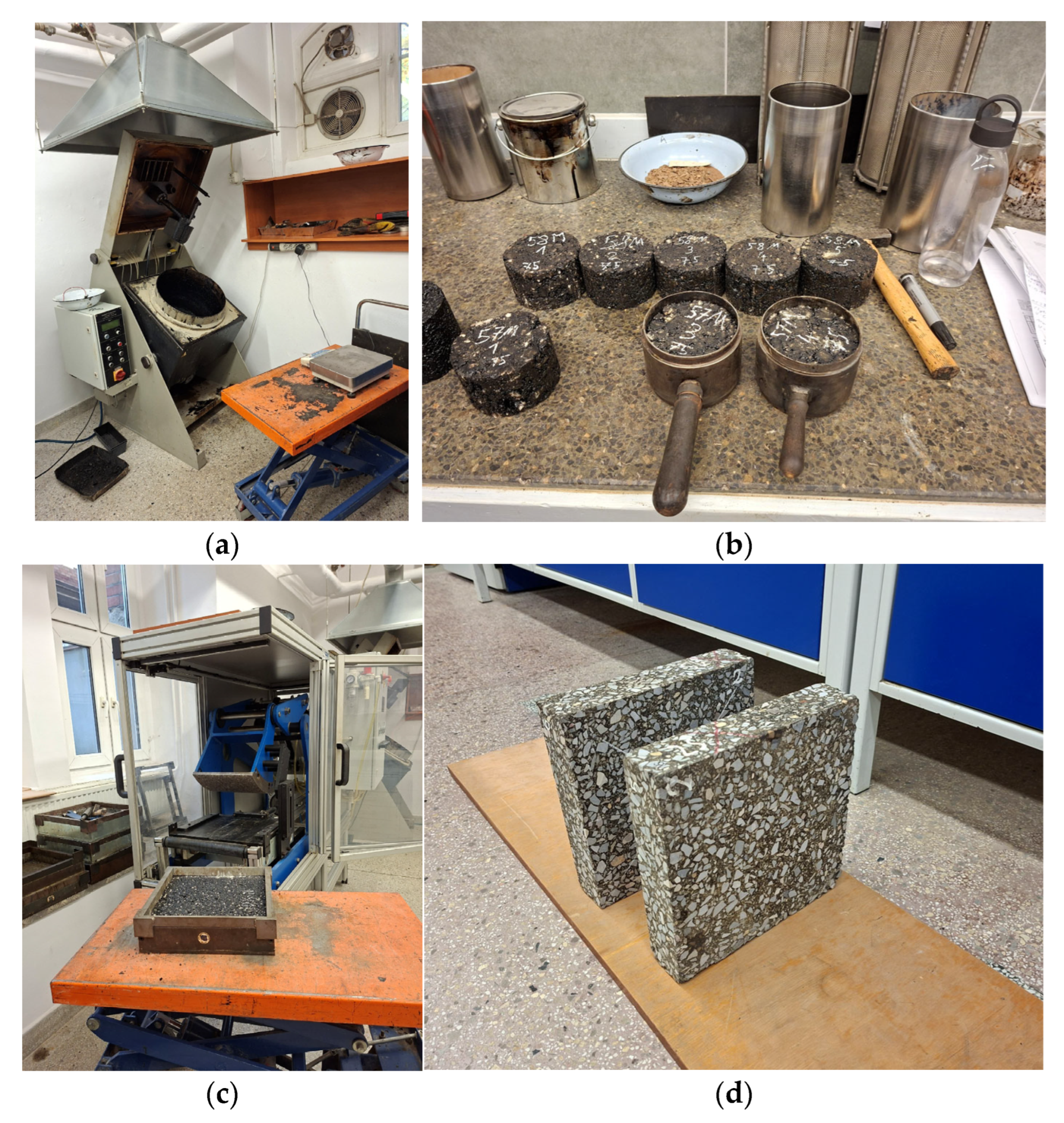
- EN 12697-33; Bituminous Mixtures–Test Methods–Part 33: Specimen Prepared by Roller Compactor. European Committee for Standardization: Brussels, Belgium, 2019.
- Hossain, M.; Rahman, M.; Chamberlain, D.; Kasim, T. Influence of Conductive Fillers on the Mechanical and Thermal Performance of Stone Mastic Asphalt (SMA) Mixtures. Case Stud. Constr. Mater. 2025, 22, e04865. [Google Scholar] [CrossRef] [Scilit]
- Chu, L.; He, L.; Fwa, T.F. Determination of Thermal Conductivity of Asphalt Paving Mixtures Using Finite Element Method. Constr. Build. Mater. 2020, 243, 118250. [Google Scholar] [CrossRef] [Scilit]
- Omidvar, H.; Bou-Zeid, E.; Chiaramonte, M. Physical Determinants and Reduced Models of the Rapid Cooling of Urban Surfaces During Rainfall. J. Adv. Model. Earth Syst. 2019, 11, 1364–1380. [Google Scholar] [CrossRef] [Scilit]
- EN IEC 60751; Industrial Platinum Resistance Thermometers and Platinum Temperature Sensors. European Committee for Electrotechnical Standardization: Brussels, Belgium, 2022.
- RTD Accuracy Class—PT100 According to IEC60751. Available online: https://www.jumo.group/nl/en/about-us/blog/pt100-accuracy-class (accessed on 21 January 2026).
- Górszczyk, J.; Malicki, K. Comparison of Temperature Distributions in Road Pavement Obtained in Field Tests and Using Transient Thermal Analysis. MATEC Web Conf. 2019, 262, 05007. [Google Scholar] [CrossRef] [Scilit]
- Pasetto, M.; Pasquini, E.; Giacomello, G.; Baliello, A. Innovative Pavement Surfaces as Urban Heat Islands Mitigation Strategy: Chromatic, Thermal and Mechanical Characterisation of Clear/Coloured Mixtures. Road Mater. Pavement Des. 2019, 20, S533–S555. [Google Scholar] [CrossRef] [Scilit]





| Asphalt Mixture Designation | Asphalt Mixture Type | Location in Road Pavement Structure | Maximum Aggregate Size [mm] |
|---|---|---|---|
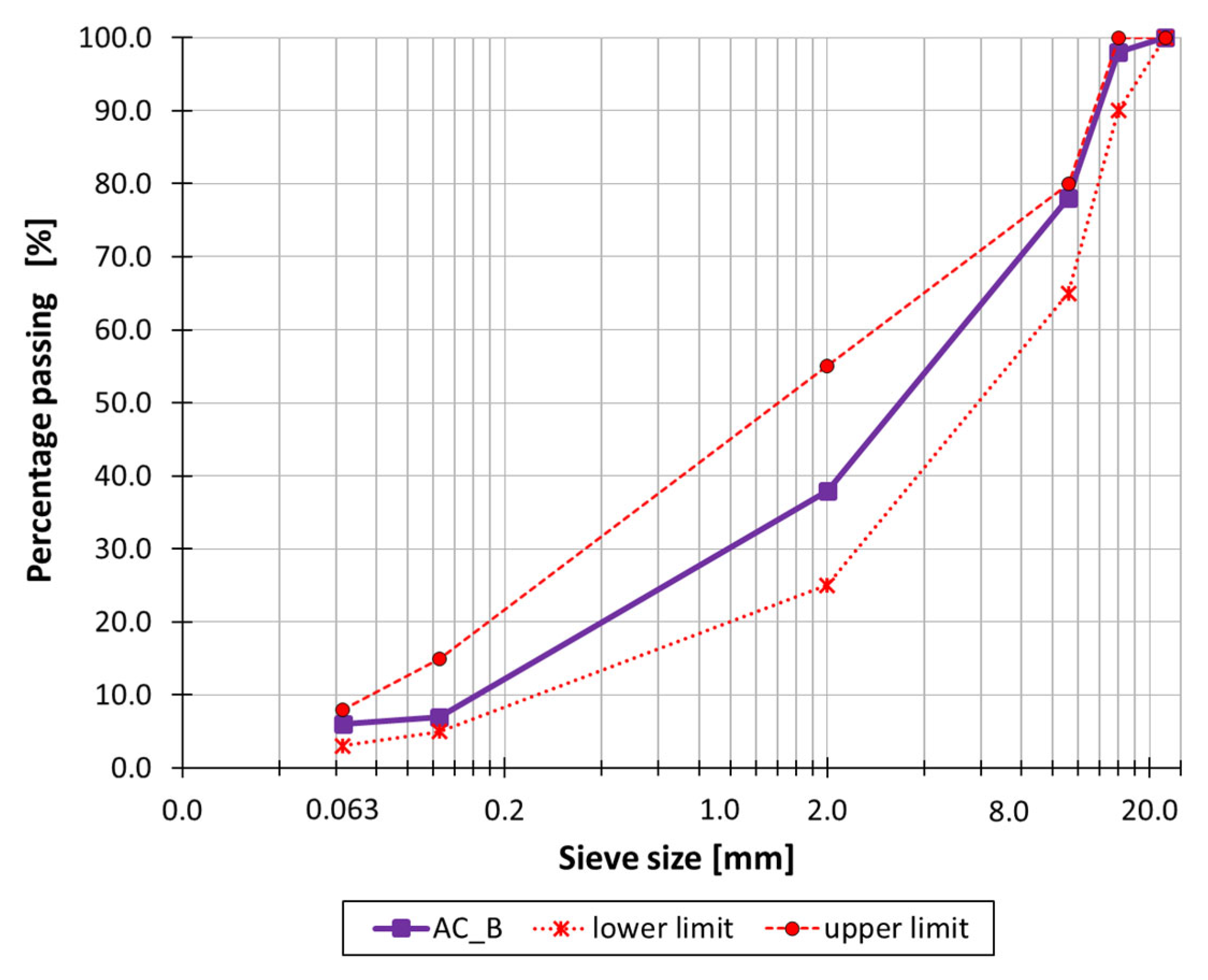
| AC_B | asphalt concrete | binding course | 16 |
| Parameter | Results | Requirements [31] | Standard |
|---|---|---|---|
| Bulk density (mg∙m−3) | 2.397 | — | EN 12697-6 [32] |
| Density (mg∙m−3) | 2.498 | — | EN 12697-5 [33] |
| Voids filled with bitumen VFB (%) | 73.9 | 60–80 | EN 12697-8 [34] |
| Voids of mineral aggregate VMA (%) | 15.5 | min. 14 | EN 12697-8 [34] |
| Void ratio VV (%) | 4.0 | 3.0–6.0 | EN 12697-8 [34] |
| Measuring Point Number | Test Temperature | Thermal Conductivity | Volumetric Heat Capacity | Thermal Diffusivity |
|---|---|---|---|---|
| Tmean (°C) | λ (W∙m−1∙K−1) | cv (MJ∙m−3∙K−1) | a (×10−6 m2∙s−1) | |
| Mean | Mean ± SEM | Mean ± SEM | Mean ± SEM | |
| 0 | 27.4 | 2.001 ± 0.004 | 1.801 ± 0.003 | 1.110 ± 0.003 |
| 1 | 26.6 | 1.966 ± 0.002 | 1.743 ± 0.003 | 1.128 ± 0.003 |
| 2 | 27.6 | 2.059 ± 0.004 | 1.835 ± 0.003 | 1.122 ± 0.002 |
| 3 | 26.9 | 2.041 ± 0.007 | 1.877 ± 0.002 | 1.087 ± 0.004 |
| 4 | 27.2 | 2.018 ± 0.004 | 1.853 ± 0.003 | 1.089 ± 0.003 |
| 5 | 27.2 | 1.951 ± 0.002 | 1.894 ± 0.001 | 1.030 ± 0.001 |
| 6 | 27.1 | 2.018 ± 0.002 | 1.872 ± 0.003 | 1.078 ± 0.001 |
| 7 | 27.1 | 2.006 ± 0.002 | 1.909 ± 0.002 | 1.051 ± 0.001 |
| 8 | 26.3 | 1.914 ± 0.003 | 1.897 ± 0.003 | 1.009 ± 0.002 |
| 9 | 26.6 | 1.923 ± 0.002 | 1.657 ± 0.002 | 1.161 ± 0.002 |
| 10 | 26.6 | 2.023 ± 0.003 | 1.785 ± 0.002 | 1.133 ± 0.003 |
| 11 | 26.7 | 1.940 ± 0.003 | 1.726 ± 0.001 | 1.124 ± 0.002 |
| 12 | 26.7 | 2.005 ± 0.001 | 1.804 ± 0.003 | 1.111 ± 0.002 |
| 13 | 26.7 | 2.100 ± 0.001 | 1.863 ± 0.003 | 1.127 ± 0.002 |
| 14 | 26.8 | 2.046 ± 0.001 | 1.887 ± 0.004 | 1.084 ± 0.003 |
| 15 | 26.7 | 2.055 ± 0.002 | 1.841 ± 0.005 | 1.117 ± 0.004 |
| 16 | 26.7 | 1.963 ± 0.002 | 1.816 ± 0.004 | 1.081 ± 0.002 |
| 17 | 26.8 | 1.965 ± 0.002 | 1.809 ± 0.003 | 1.086 ± 0.001 |
| 2+ | 27.3 | 1.956 ± 0.008 | 1.842 ± 0.003 | 1.062 ± 0.003 |
| 3+ | 27.1 | 1.856 ± 0.001 | 1.893 ± 0.002 | 0.980 ± 0.001 |
| 4+ | 27.1 | 1.914 ± 0.002 | 1.904 ± 0.003 | 1.005 ± 0.002 |
| 5+ | 27.3 | 1.755 ± 0.004 | 1.913 ± 0.003 | 0.917 ± 0.002 |
| 6+ | 27.2 | 1.858 ± 0.002 | 1.859 ± 0.002 | 1.000 ± 0.002 |
| 7+ | 27.2 | 1.796 ± 0.001 | 1.903 ± 0.003 | 0.944 ± 0.002 |
| 8+ | 27.1 | 1.760 ± 0.001 | 1.934 ± 0.003 | 0.910 ± 0.001 |
| 9+ | 27.2 | 1.661± 0.002 | 1.670 ± 0.001 | 0.995 ± 0.001 |
| 0* | 27.1 | 1.727 ± 0.003 | 1.530 ± 0.003 | 1.129 ± 0.001 |
| Parameter | Range of Results Obtained in this Study for Different Measurement Points | Selected Approximate Values Reported by Other Researchers and Remarks | Type of Specimens Used by Other Researchers | Ref. |
|---|---|---|---|---|
| Thermal conductivity [W·m−1·K−1] | 1.661–2.100 | 1.7–2.1 for different asphalt mixtures and testing conditions | Cylindrical specimens compacted using a gyratory compactor | [12] |
| 1.1–2.0 for different asphalt mixtures and testing conditions | Cylindrical Marshall specimens | [16] | ||
| Specific heat capacity [kJ·kg−1·K−1] | 0.691–0.807 | 0.7–1.4 for different asphalt mixtures and testing conditions | Cylindrical Marshall specimens | [16] |
| Thermal diffusivity [×10−6 m2·s−1] | 0.910–1.161 | 1.24–1.27 for asphalt mixtures with conductive fillers | Cylindrical Marshall specimens | [36] |
| 0.4–1.1 for different asphalt mixtures and testing conditions | Cylindrical Marshall specimens | [16] |
| Domain | Aspect | Main Findings | Limitations and Risks |
|---|---|---|---|
| Scientific | Spatial variability | Significant local variability of thermal parameters within a single specimen was identified | Results may vary depending on the measurement point location |
| Scientific | Edge zone effect | Thermal conductivity at specimen edges was up to approximately 17% lower than in the central region (thermal diffusivity up to 18%) | Risk of systematic underestimation/overestimation if measurement location is not controlled |
| Scientific | Measurement method | The MTPS method reveals material heterogeneity | Sensitivity to local variations in material composition |
| Practical | Measurement procedures for various surface conditions | Standardization of surface preparation is required | Limited repeatability without control of surface condition |
| Practical | Practical applicability to large slab specimen testing | The method is suitable for scientific research | Standardization of measurement procedures is required for routine quality control of slab-shaped specimens |
Disclaimer/Publisher’s Note: The statements, opinions and data contained in all publications are solely those of the individual author(s) and contributor(s) and not of MDPI and/or the editor(s). MDPI and/or the editor(s) disclaim responsibility for any injury to people or property resulting from any ideas, methods, instructions or products referred to in the content. |
© 2026 by the authors. Licensee MDPI, Basel, Switzerland. This article is an open access article distributed under the terms and conditions of the Creative Commons Attribution (CC BY) license.
Share and Cite
Górszczyk, J.; Malicki, K. Edge Zone Effect in Measurements of Asphalt Mixture Thermal Properties Using Transient Method. Materials 2026, 19, 894. https://doi.org/10.3390/ma19050894
Górszczyk J, Malicki K. Edge Zone Effect in Measurements of Asphalt Mixture Thermal Properties Using Transient Method. Materials. 2026; 19(5):894. https://doi.org/10.3390/ma19050894
Chicago/Turabian StyleGórszczyk, Jarosław, and Konrad Malicki. 2026. "Edge Zone Effect in Measurements of Asphalt Mixture Thermal Properties Using Transient Method" Materials 19, no. 5: 894. https://doi.org/10.3390/ma19050894
APA StyleGórszczyk, J., & Malicki, K. (2026). Edge Zone Effect in Measurements of Asphalt Mixture Thermal Properties Using Transient Method. Materials, 19(5), 894. https://doi.org/10.3390/ma19050894