Characterization of Carbonation Curing Influence on Nonlinear Ultrasonic Response and Mechanical Performance of Mortar


Abstract
1. Introduction
2. Research Gap
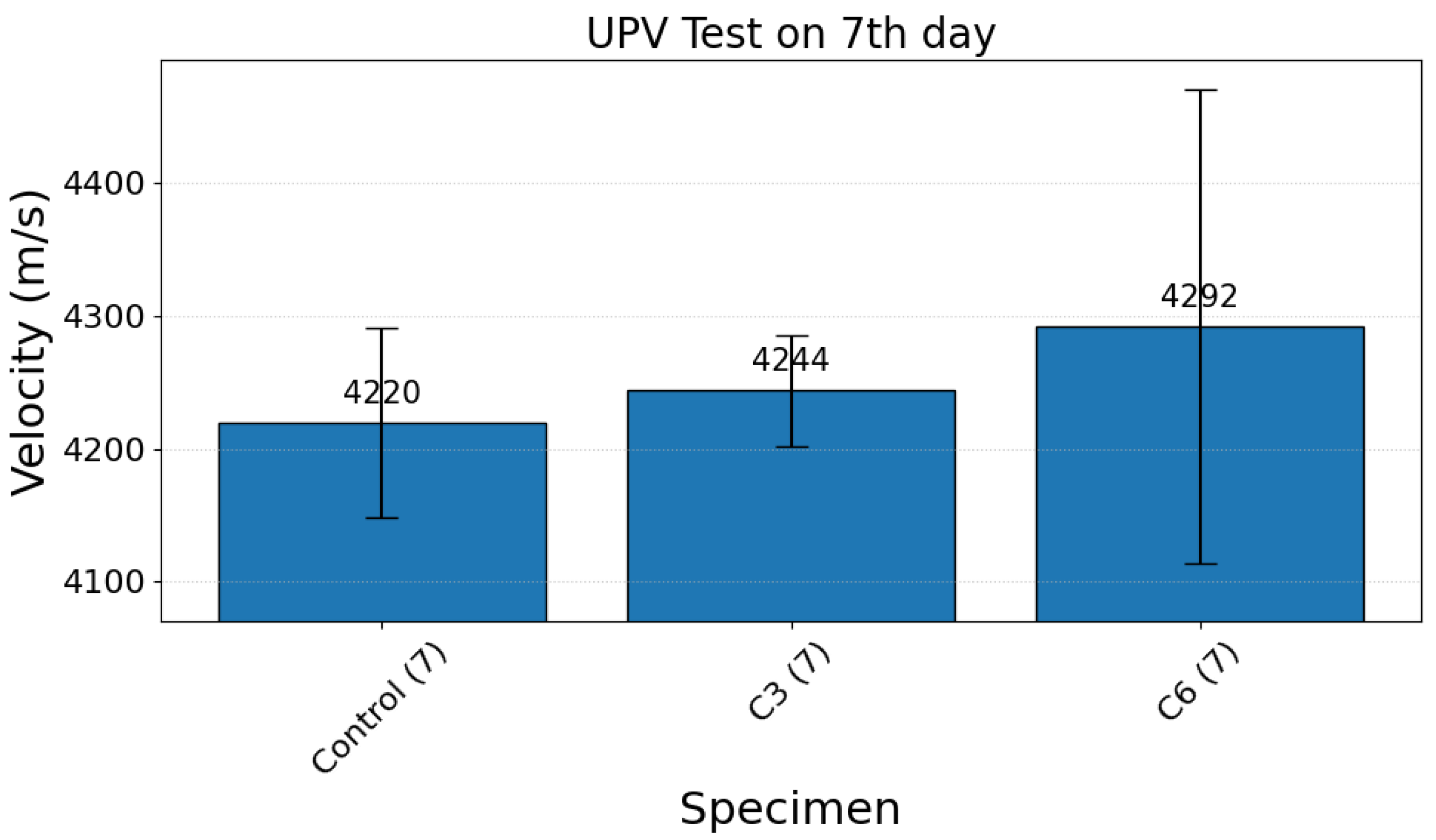
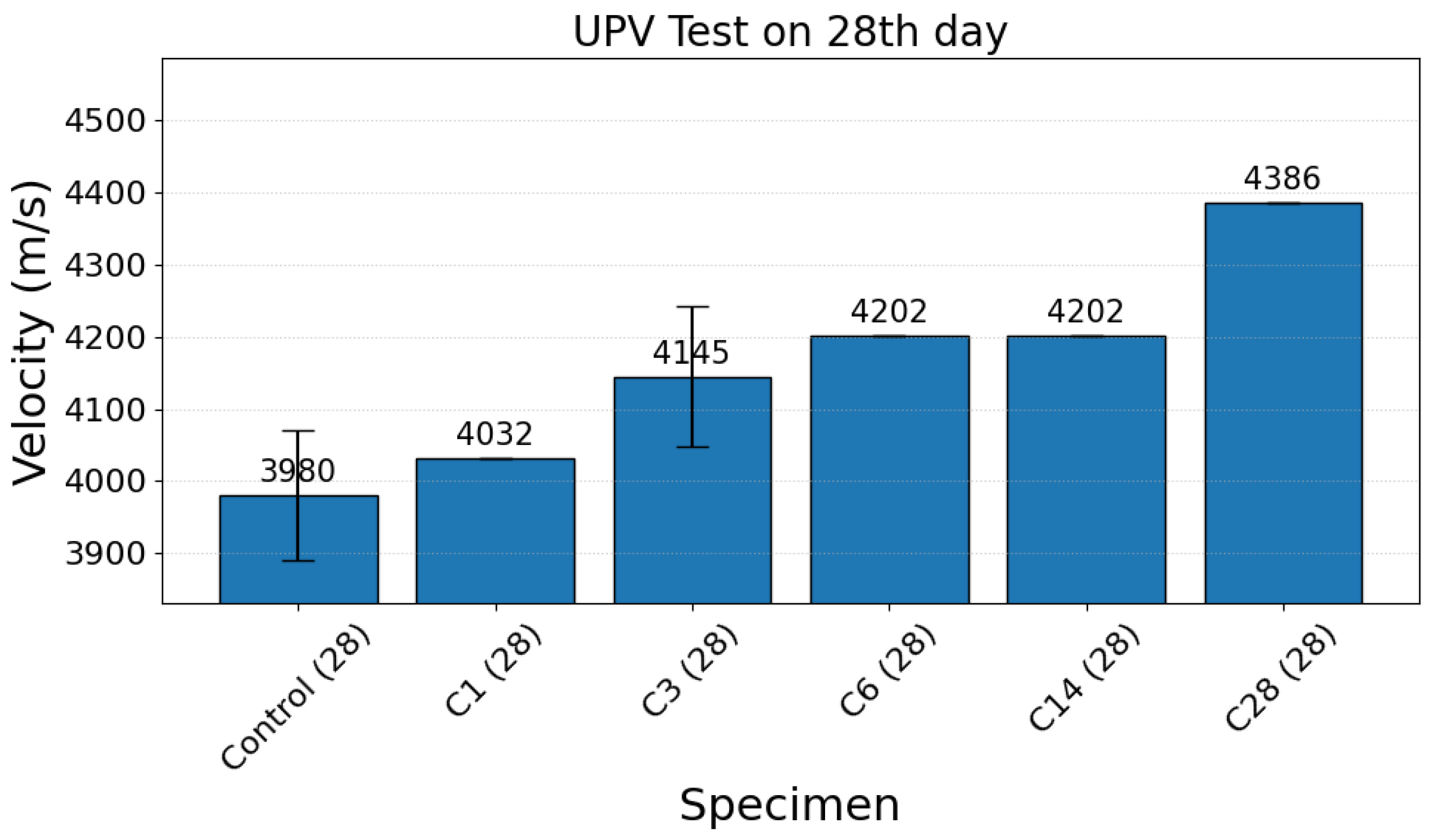
- It demonstrates the limitations of UPV in capturing carbonation-induced transformations, showing non-monotonic trends inconsistent with densification, thus validating the need for nonlinear approaches.
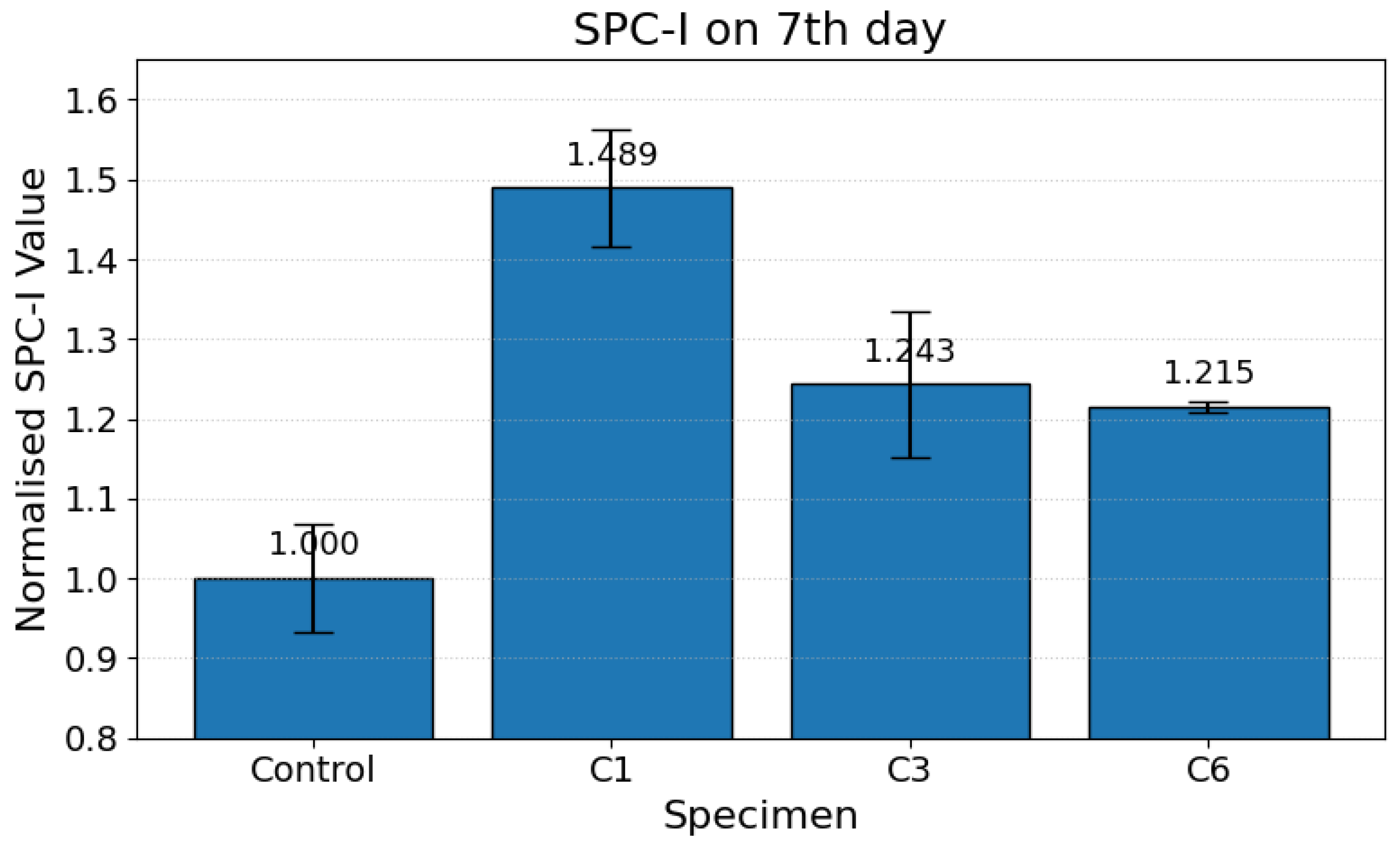
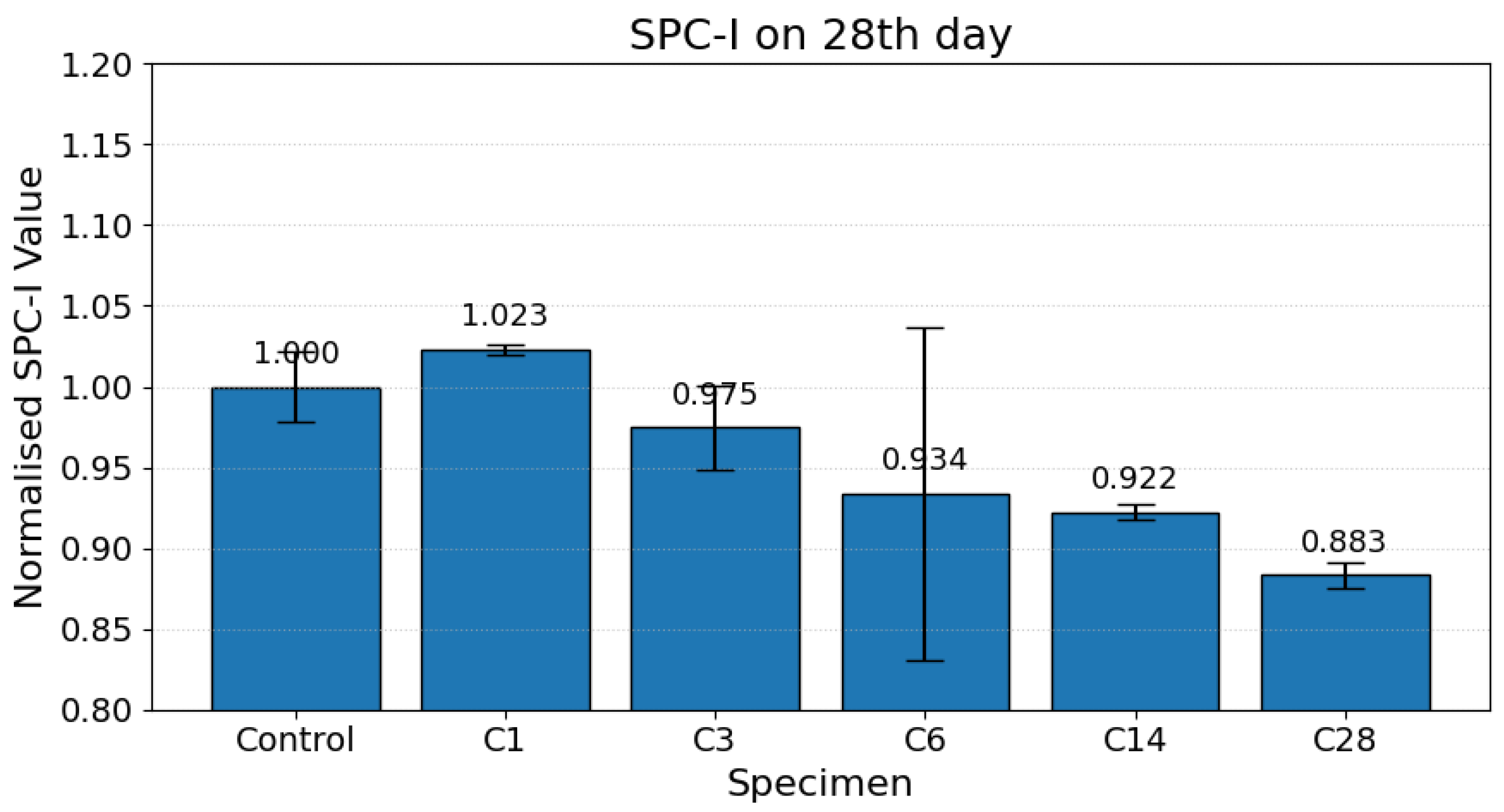
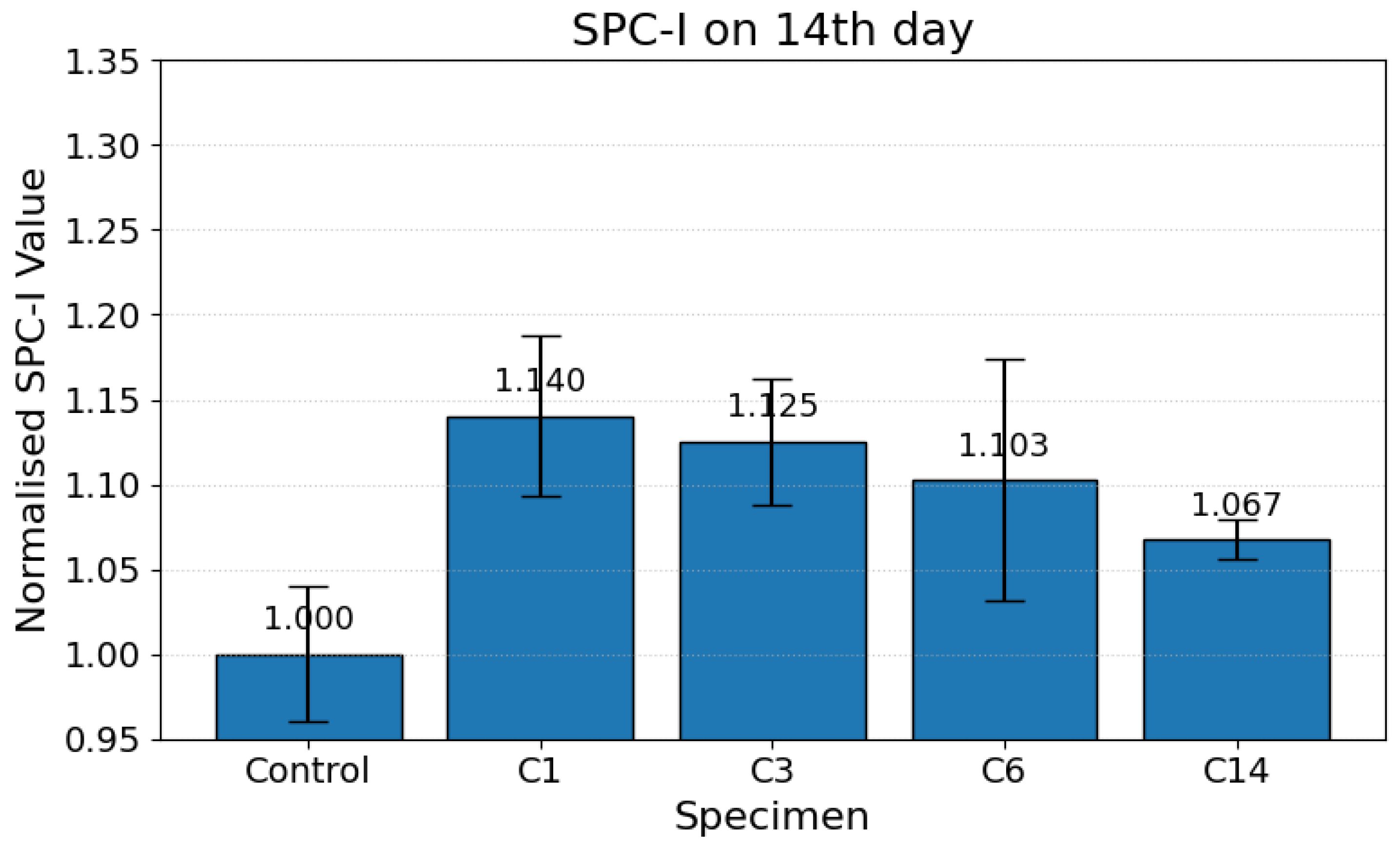
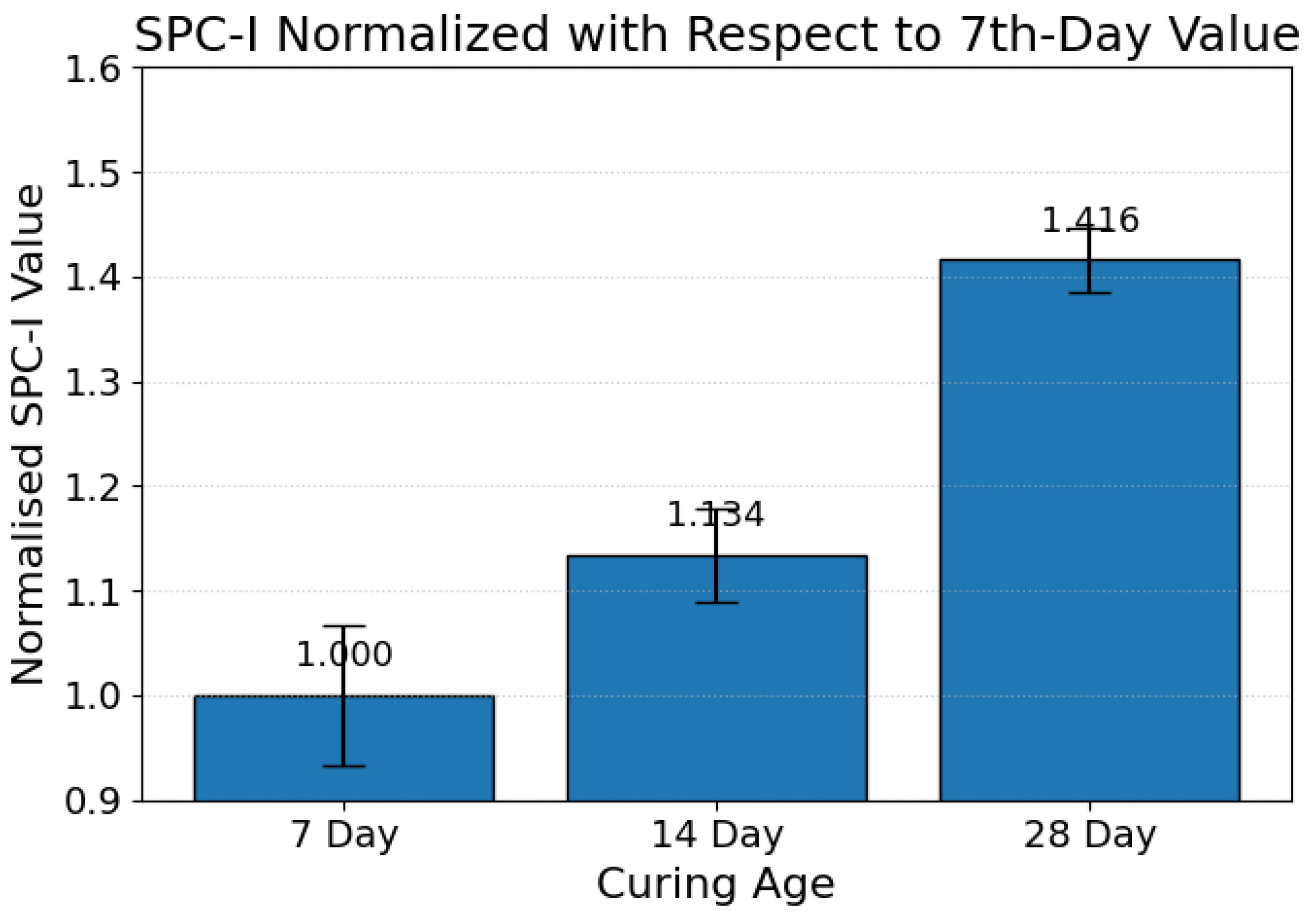
- It establishes the SPC-I as a sensitive nonlinear indicator of carbonation-induced microstructural evolution, capturing competing effects of microcracking, pore refinement, and carbonate precipitation.
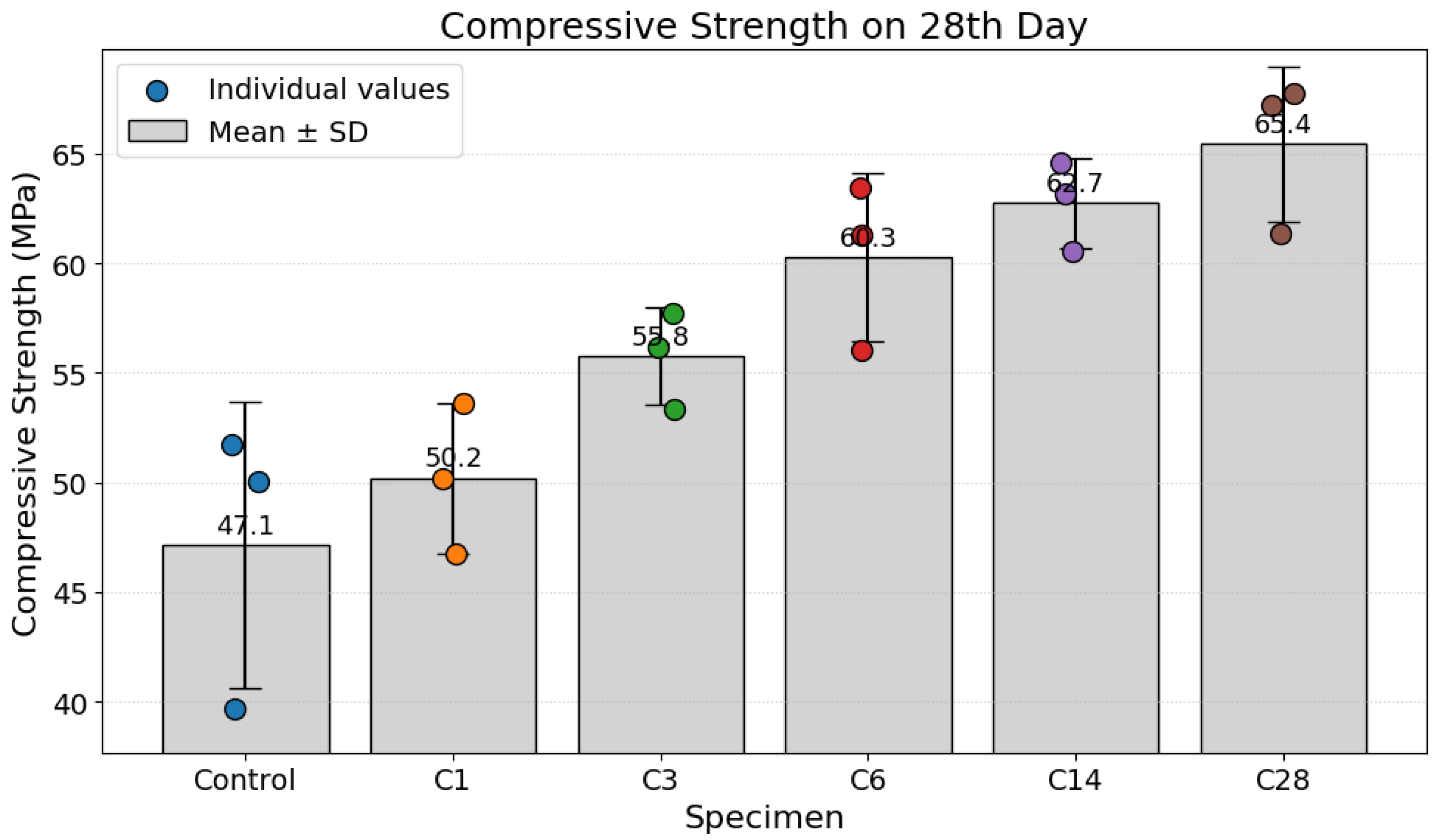
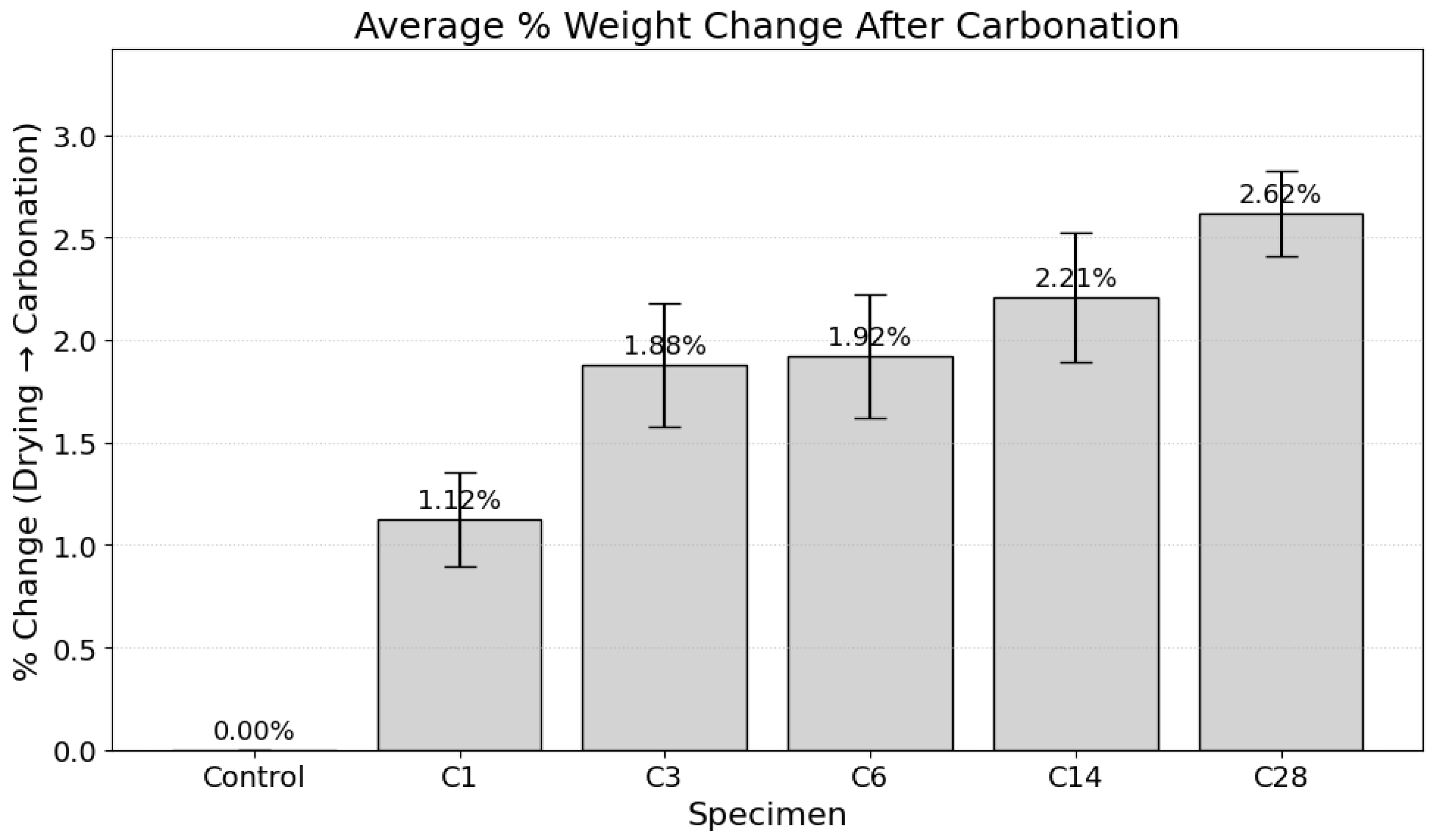
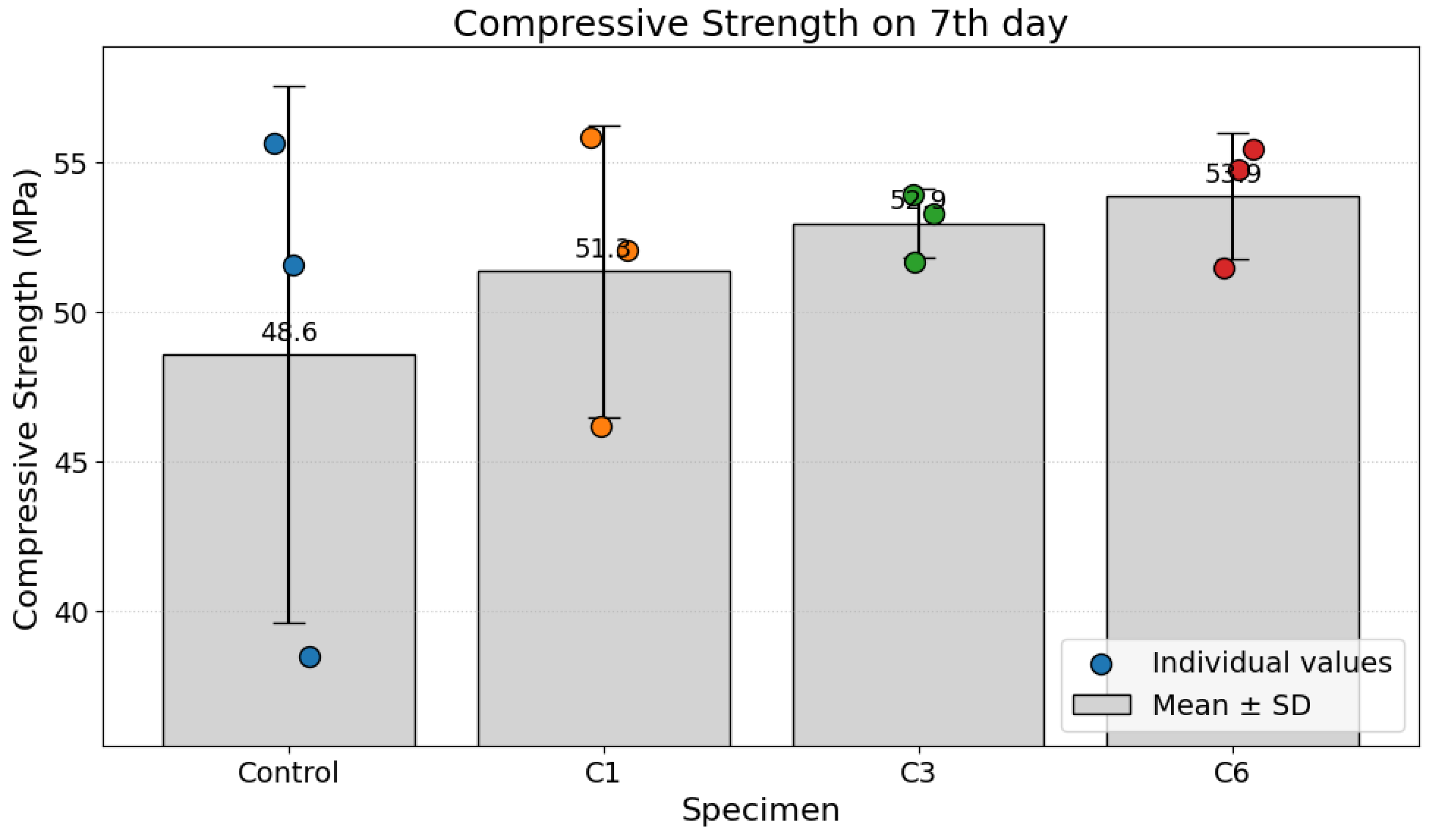
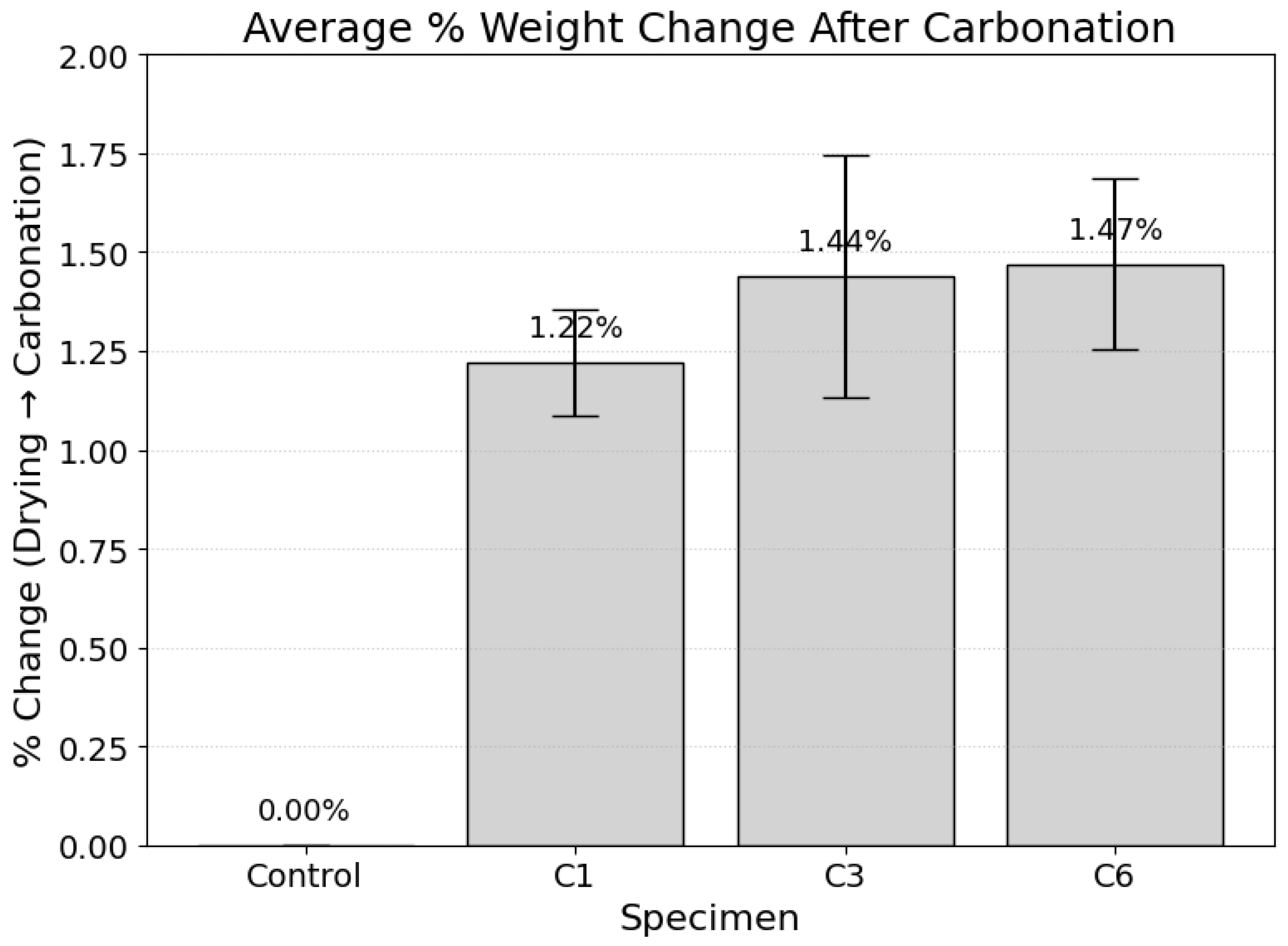
- It integrates the SPC-I with gravimetric CO2 uptake and compressive strength to provide a multiparametric view of carbonation curing mechanisms.
- It reveals distinct temporal regimes in carbonation curing: an initial nonlinear regime with the elevated SPC-I, followed by a densification regime with reduced nonlinearity, offering a mechanistic phenomenological model.
- It highlights the practical feasibility of the SPC-I as a computationally straightforward, FFT-based diagnostic tool that can be implemented for the real-time, in situ monitoring of carbonation curing in sustainable concrete.
3. Materials and Methods
3.1. Materials
3.2. Mix Proportion and Specimen Preparation
3.3. Carbonation Protocol
3.4. Linear Ultrasonic Testing
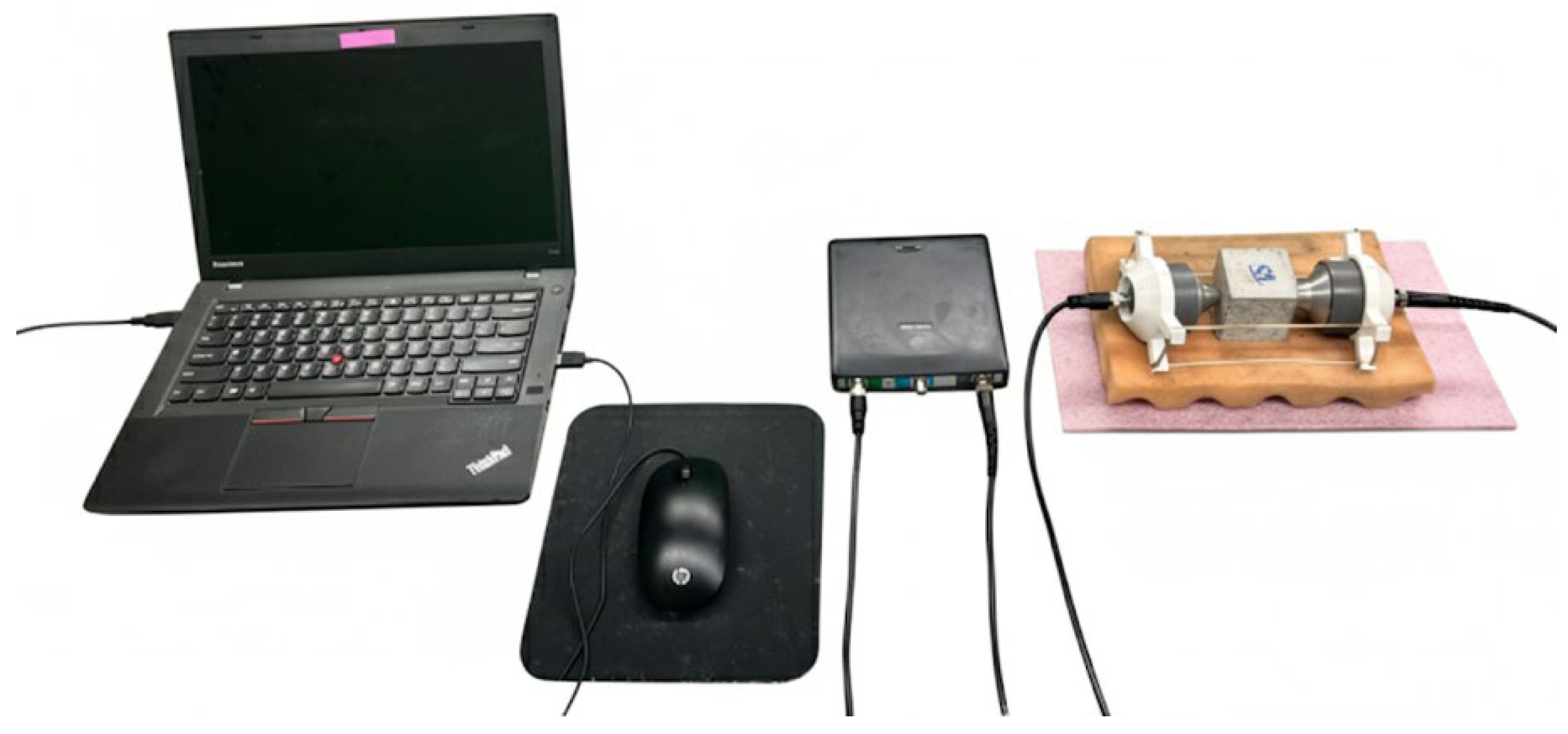
3.5. Nonlinear Ultrasonic Testing
3.6. Gravimetric Analysis Due to Carbonation
3.7. Compressive Strength Test
4. Results
4.1. Linear Ultrasonic Response
4.2. Nonlinear Ultrasonic Response
4.3. Compressive Strength Test
4.4. Gravimetric Quantification After Carbonation
5. Discussion
6. Conclusions
Author Contributions
Funding
Data Availability Statement
Conflicts of Interest
References
- Andrew, R.M. Global CO2 emissions from cement production. Earth Syst. Sci. Data 2018, 10, 195–217. [Google Scholar] [CrossRef] [Scilit]
- Scrivener, K.L.; John, V.M.; Gartner, E.M. Eco-efficient cements: Potential economically viable solutions for a low-CO2 cement-based materials industry. Cem. Concr. Res. 2018, 114, 2–26. [Google Scholar] [CrossRef] [Scilit]
- Monkman, S.; Shao, Y. Assessing the carbonation behavior of cementitious materials. J. Mater. Civ. Eng. 2006, 18, 768–776. [Google Scholar] [CrossRef] [Scilit]
- Zhan, B.J.; Xuan, D.X.; Poon, C.S.; Shi, C.J. Mechanism for rapid hardening of cement pastes under coupled CO2–water curing regime. Cem. Concr. Compos. 2019, 97, 78–88. [Google Scholar] [CrossRef] [Scilit]
- Zhang, L.; Zha, X.; Ning, J.; Li, W. Research status on the application technology of early-age carbon dioxide curing. Buildings 2023, 13, 957. [Google Scholar] [CrossRef] [Scilit]
- Morandeau, A.; Thiéry, M.; Dangla, P. Investigation of the carbonation mechanism of CH and C–S–H in terms of kinetics, microstructure changes and moisture properties. Cem. Concr. Res. 2014, 56, 153–170. [Google Scholar] [CrossRef] [Scilit]
- Bertos, M.F.; Simons, S.J.R.; Hills, C.D.; Carey, P.J. A review of accelerated carbonation technology in the treatment of cement-based materials and sequestration of CO2. J. Hazard. Mater. 2004, 112, 193–205. [Google Scholar] [CrossRef] [Scilit]
- Bustamante, M.; Letelier, V.; Wenzel, B.; Torres, C.; Loyola, E.; Ortega, J.M. Effect of accelerated carbonation on fine cement paste aggregates. Dev. Built Environ. 2024, 20, 100545. [Google Scholar] [CrossRef] [Scilit]
- Villarreal, A.; Cano-Barria, P.F.J.; León-Martínez, F.M.; Medina, L.; Castellanos, F. Ultrasonic monitoring of carbonation in Portland cements: Nonlinear and linear analysis. arXiv 2025, arXiv:2501.11147. [Google Scholar]
- Dias, R.L.; Beltrame, N.A.M.; Gonzalez, J.R.; Medeiros-Junior, R.A. Effect of duration and pressure of carbonation curing on the chloride profile in concrete. Rev. IBRACON Estrut. Mater. 2023, 16, e16603. [Google Scholar] [CrossRef] [Scilit]
- Xu, Y.; Liang, X.; Wan, C.; Yang, H.; Feng, X. Carbonation and related behaviors of hardened cement pastes under different hydration degrees. Cem. Concr. Compos. 2023, 140, 105079. [Google Scholar] [CrossRef] [Scilit]
- ASTM C597-16; Standard Test Method for Pulse Velocity Through Concrete. ASTM International: West Conshohocken, PA, USA, 2016.
- Roobankumar, R.; SenthilPandian, M. Investigating the correlation between ultrasonic pulse velocity and compressive strength in polyurethane foam concrete. Sci. Rep. 2025, 15, 23995. [Google Scholar] [CrossRef] [Scilit]
- ACI 228.2R-13; Nondestructive Test Methods for Evaluation of Concrete in Structures. ACI: Farmington Hills, MI, USA, 2013.
- Kim, J.Y.; Jacobs, L.J.; Qu, J. Nonlinear ultrasonic wave techniques for damage detection. J. Nondestruct. Eval. 2006, 25, 29–43. [Google Scholar]
- Zhang, J.; Zheng, D. Application of windowing techniques in ultrasonic signal processing for concrete evaluation. NDT E Int. 2002, 35, 395–401. [Google Scholar]
- Bouchaala, F.; Payan, C.; Garnier, V.; Balayssac, J.-P. Carbonation assessment in concrete by nonlinear ultrasound. Cem. Concr. Res. 2011, 41, 557–559. [Google Scholar] [CrossRef] [Scilit]
- Alnuaimi, H.N.; Sasmal, S.; Amjad, U.; Nikvar-Hassani, A.; Zhang, L.; Kundu, T. Monitoring concrete curing by linear and nonlinear ultrasonic methods. ACI Mater. J. 2021, 118, 275–286. [Google Scholar] [CrossRef] [Scilit]
- Alnuaimi, H.; Amjad, U.; Russo, P.; Lopresto, V.; Kundu, T. Monitoring damage in composite plates from crack initiation to macro-crack propagation combining linear and nonlinear ultrasonic techniques. Struct. Health Monit. 2021, 20, 139–150. [Google Scholar] [CrossRef] [Scilit]
- Basu, S.; Thirumalaiselvi, A.; Sasmal, S.; Kundu, T. Nonlinear ultrasonics-based technique for monitoring damage progression in reinforced concrete structures. Ultrasonics 2021, 115, 106472. [Google Scholar] [CrossRef] [Scilit]
- Mašek, J.; Miarka, P. Mesoscale FEM model of concrete: Statistical assessment of inherent stress concentrations in dependence on phase heterogeneity. Finite Elem. Anal. Des. 2025, 252, 104442. [Google Scholar] [CrossRef] [Scilit]
- Tang, Y.; Liu, G.; Schollbach, K.; Chen, Y.; Chen, W.; Brouwers, H.J.H. Re-cementation effects by carbonation and the pozzolanic reaction on LWAs produced by hydrated cement paste powder. J. Clean. Prod. 2022, 377, 134529. [Google Scholar] [CrossRef] [Scilit]
- Sun, X.; Yi, S.; Li, X.; Cui, Y.; Zhang, M.; Jiang, T.; Wang, L.; Kong, Q. A novel ultrasonic-velocity-based concrete carbonation monitoring method based on stepwise stretching technique. Struct. Health Monit. 2024, 25, 117–130. [Google Scholar] [CrossRef] [Scilit]
- Eiras, J.N.; Kundu, T.; Popovics, J.S.; Monzó, J.; Borrachero, M.V.; Payá, J. Effect of carbonation on the linear and nonlinear dynamic properties of cement-based materials. Opt. Eng. 2016, 55, 011004. [Google Scholar] [CrossRef] [Scilit]
- Curis, S. Real-Time In Situ Monitoring of Cement Carbonation with Acoustic System. Master’s Thesis, Montanuniversität Leoben, Leoben, Austria, 2021. [Google Scholar]
- ASTM C150/C150M-23; Standard Specification for Portland Cement. ASTM International: West Conshohocken, PA, USA, 2023.
- ASTM C33/C33M-23; Standard Specification for Concrete Aggregates. ASTM International: West Conshohocken, PA, USA, 2023.
- ASTM C305-20; Standard Practice for Mechanical Mixing of Hydraulic Cement Pastes and Mortars of Plastic Consistency. ASTM International: West Conshohocken, PA, USA, 2020.
- He, P. Simulation of ultrasound pulse propagation in lossy media obeying a frequency power law. IEEE Trans. Ultrason. Ferroelectr. Freq. Control 2004, 51, 1099–1109. [Google Scholar]
- Krautkrämer, J.; Krautkrämer, H. Ultrasonic Testing of Materials, 4th ed.; Springer: Berlin, Germany, 2013. [Google Scholar]
- Zeng, H.; Ellersick, L.F.; Baah, T.T.; Xian, X.; Kim, H. Carbonation curing for recycling and property enhancement of copper slag-based blended mortar. J. CO2 Util. 2025, 97, 103130. [Google Scholar] [CrossRef] [Scilit]
- Zuo, W.; Zhao, X.; Luo, J.; He, Z.; Zhao, J. Investigating the impact of carbonation curing concentrations on the mechanical properties and microstructure of recycled concrete. J. Build. Eng. 2024, 96, 110465. [Google Scholar] [CrossRef] [Scilit]
- Lamaa, G.; Duarte, A.P.C.; Silva, R.V.; de Brito, J. Carbonation of alkali-activated materials: A review. Materials 2023, 16, 3086. [Google Scholar] [CrossRef] [Scilit]
- Lo, Y.; Lee, H.M. Curing effects on carbonation of concrete using a phenolphthalein indicator and Fourier-transform infrared spectroscopy. Build. Environ. 2002, 37, 507–514. [Google Scholar] [CrossRef] [Scilit]
- Li, B.; Tian, Y.; Zhang, G.; Liu, Y.; Feng, H.; Jin, N.; Jin, X.; Wu, H.; Shao, Y.; Yan, D.; et al. Comparison of detection methods for carbonation depth of concrete. Sci. Rep. 2023, 13, 19980. [Google Scholar] [CrossRef] [Scilit]
- Forsdyke, J.C.; Lees, J.M. Carbonation depth measurement of concretes exposed to different curing and preconditioning conditions using image-processing tools. In Proceedings of the 2nd fib Symposium on Concrete and Concrete Structures, Rome, Italy, 18–19 November 2021; Sapienza University: Rome, Italy, 2021. [Google Scholar]
- ASTM C109/C109M-21; Standard Test Method for Compressive Strength of Hydraulic Cement Mortars. ASTM International: West Conshohocken, PA, USA, 2021.
- Marikunte, S.S.; Phelps, R.J. Correlation of compressive strength with ultrasonic pulse velocity for high performance concrete. In Proceedings of the Concrete Bridge Conference, St. Louis, MO, SUA, 4–7 May 2008; The Pennsylvania State University: State College, PA, USA, 2008. [Google Scholar]
- Ortega, J.M.; Miró, M.; Ibáñez-Gosálvez, J.; Tenza-Abril, A.J. Non-destructive evaluation of the effects of exposure environment in mortars using non-linear ultrasonic measurements. Dev. Built Environ. 2023, 14, 100142. [Google Scholar] [CrossRef] [Scilit]
- EN 12504-4; Testing Concrete in Structures—Part 4: Determination of Ultrasonic Pulse Velocity. CEN: Brussels, Belgium, 2004.
- Kim, G.; Kim, J.-Y.; Kurtis, K.E.; Jacobs, L.J. Drying shrinkage in concrete assessed by nonlinear ultrasound. Cem. Concr. Res. 2017, 92, 16–20. [Google Scholar] [CrossRef] [Scilit]
- Guan, X.; Liu, S.; Feng, C.; Qiu, M. The hardening behavior of γ-C2S binder using accelerated carbonation. Constr. Build. Mater. 2016, 114, 204–207. [Google Scholar] [CrossRef] [Scilit]
- Mu, Y.; Liu, Z.; Wang, F.; Huang, X. Carbonation characteristics of γ-dicalcium silicate for low-carbon building material. Constr. Build. Mater. 2018, 177, 322–331. [Google Scholar] [CrossRef] [Scilit]
- Jiang, J.; Zhang, D.; Gong, F.; Zhi, D. Prediction of ultrasonic pulse velocity for cement, mortar, and concrete through a multiscale homogenization approach. Materials 2022, 15, 3241. [Google Scholar] [CrossRef] [Scilit] [PubMed] [PubMed Central]
- Hu, B.; Kundu, T. Probabilistic damage analysis of rebar corrosion in recycled aggregate concrete using sideband intensity-based nonlinear ultrasonic technique. Struct. Health Monit. 2025. [Google Scholar] [CrossRef] [Scilit]
- Han, S.H.; Jun, Y.; Shin, T.Y.; Kim, J.H. CO2 Curing Efficiency for Cement Paste and Mortars Produced by a Low Water-to-Cement Ratio. Materials 2020, 13, 3883. [Google Scholar] [CrossRef] [Scilit] [PubMed] [PubMed Central]
- El-Hassan, H.; Shao, Y. Carbon storage through concrete block carbonation curing. J. Clean Energy Technol. 2014, 2, 287–291. [Google Scholar] [CrossRef] [Scilit]
- Gilroy, B.; Black, L.; Thompson, D.; Hogan, R.; Holmes, N. Effects of accelerated carbonation curing on CO2 sequestration and compressive strength of concrete masonry units. In Proceedings of the Civil Engineering Research in Ireland (CERI) 2020: 27th Conference Proceedings, Cork, Ireland, 27–28 August 2020. [Google Scholar]
- International Atomic Energy Agency. Guidebook on Non-Destructive Testing of Concrete Structures (IAEA–TCS–17); IAEA: Vienna, Austria, 2002. [Google Scholar]
- Kim, W.; Jeong, K.; Lee, T. Statistical reliability analysis of ultrasonic velocity method for predicting residual strength of high-strength concrete under high-temperature conditions. Materials 2024, 17, 1406. [Google Scholar] [CrossRef] [Scilit]
- Widodo, S.; Ma’arif, F.; Mahardika, H. Correlation of ultrasonic pulse velocity with porosity and compressive strength of mortar with limestone for building quality assessment. UKaRsT 2022, 6, 190–202. [Google Scholar] [CrossRef] [Scilit]
- Muhiddin, A.B.; Tjaronge, M.W.; Caronge, M.A.; Khalid, N.H.A. Reliability assessment of carbon fiber mortar: Combined pulse velocity, point load, and compressive strength tests. Results Eng. 2024, 21, 101735. [Google Scholar] [CrossRef] [Scilit]






| w/c | Water | Cement | Sand | Sand #20 | Sand #30 | Sand #60 |
|---|---|---|---|---|---|---|
| 0.4 | 309.7 | 744.6 | 1849.6 | 1294.8 | 277.4 | 277.4 |
| Sample ID | Carbonation Curing Age (In Days) |
|---|---|
| Control | 0 |
| C1 | 1 |
| C3 | 3 |
| C6 | 6 |
| C14 | 14 |
| C28 | 28 |
Disclaimer/Publisher’s Note: The statements, opinions and data contained in all publications are solely those of the individual author(s) and contributor(s) and not of MDPI and/or the editor(s). MDPI and/or the editor(s) disclaim responsibility for any injury to people or property resulting from any ideas, methods, instructions or products referred to in the content. |
© 2026 by the authors. Licensee MDPI, Basel, Switzerland. This article is an open access article distributed under the terms and conditions of the Creative Commons Attribution (CC BY) license.
Share and Cite
Singh, S.; Zeng, H.; Amjad, U.; Kim, H.-J.; Kundu, T. Characterization of Carbonation Curing Influence on Nonlinear Ultrasonic Response and Mechanical Performance of Mortar. Materials 2026, 19, 874. https://doi.org/10.3390/ma19050874
Singh S, Zeng H, Amjad U, Kim H-J, Kundu T. Characterization of Carbonation Curing Influence on Nonlinear Ultrasonic Response and Mechanical Performance of Mortar. Materials. 2026; 19(5):874. https://doi.org/10.3390/ma19050874
Chicago/Turabian StyleSingh, Shruti, Hang Zeng, Umar Amjad, Hee-Jeong Kim, and Tribikram Kundu. 2026. "Characterization of Carbonation Curing Influence on Nonlinear Ultrasonic Response and Mechanical Performance of Mortar" Materials 19, no. 5: 874. https://doi.org/10.3390/ma19050874
APA StyleSingh, S., Zeng, H., Amjad, U., Kim, H.-J., & Kundu, T. (2026). Characterization of Carbonation Curing Influence on Nonlinear Ultrasonic Response and Mechanical Performance of Mortar. Materials, 19(5), 874. https://doi.org/10.3390/ma19050874