Influence of Cutting-Edge Micro-Geometry on Material Separation and Minimum Cutting Thickness in the Turning of 304 Stainless Steel

Abstract
1. Introduction
2. Minimum Cutting Thickness
2.1. Definition of Minimum Cutting Thickness
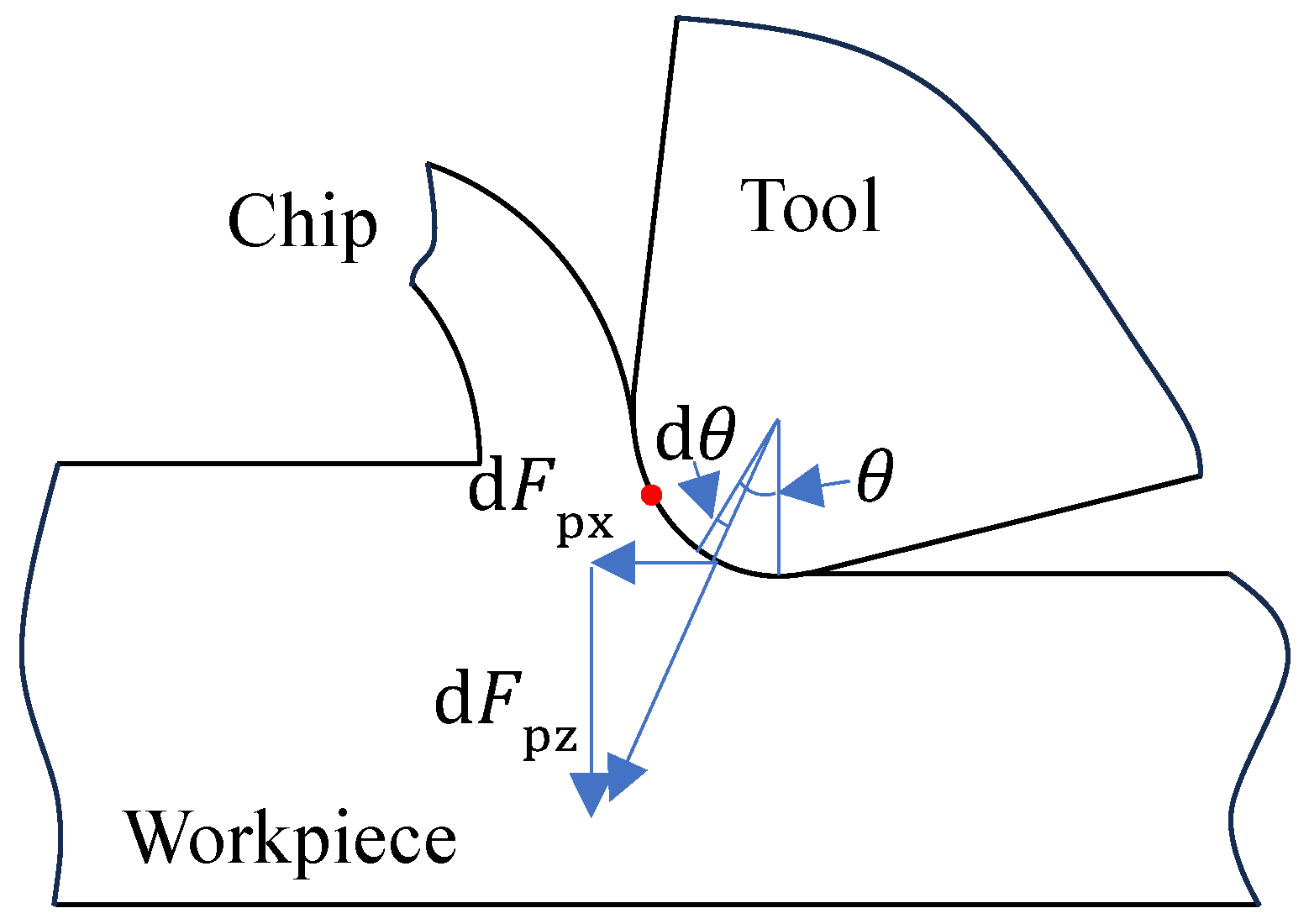
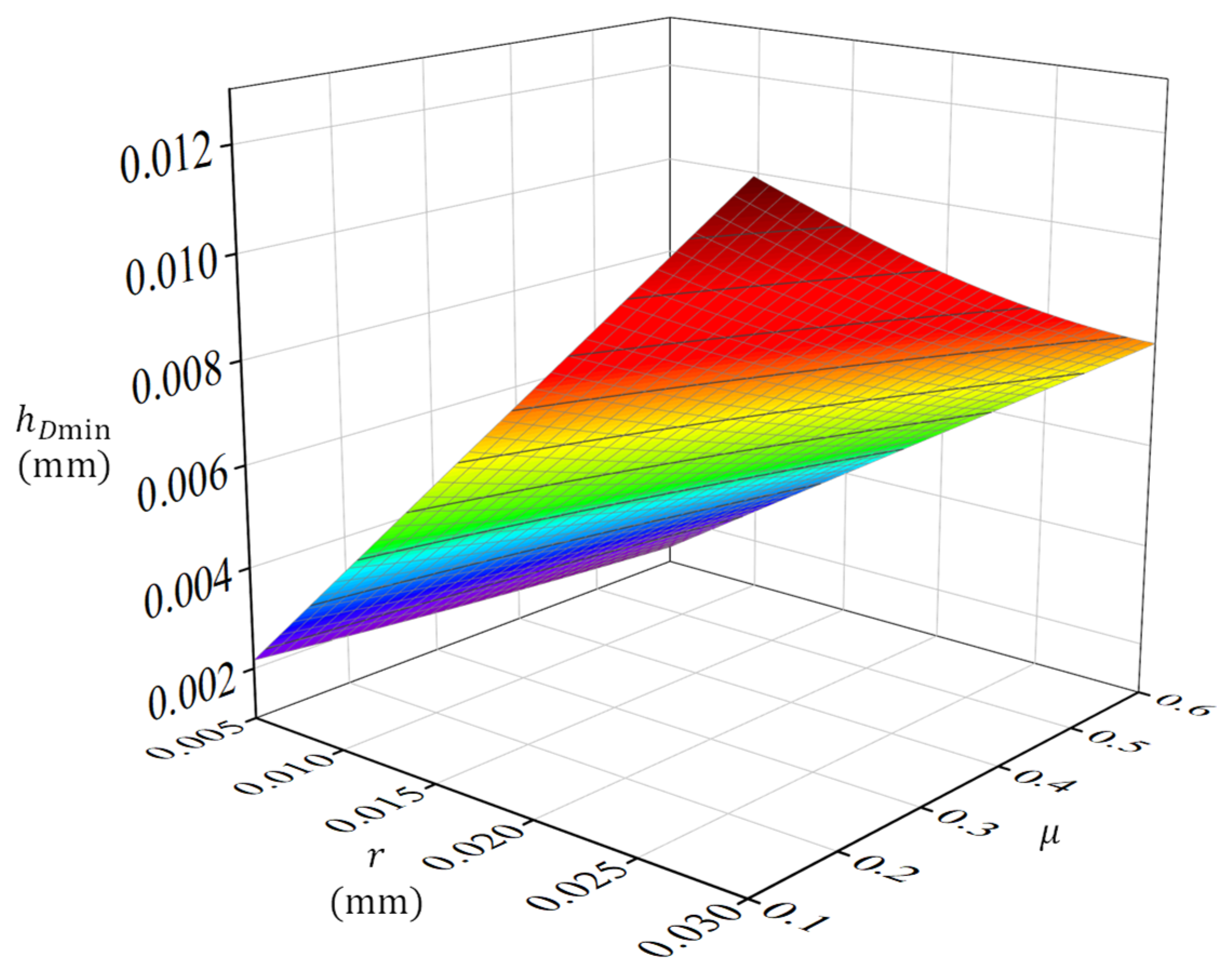
2.2. Analytical Model Solution
3. Numerical Simulation Modeling
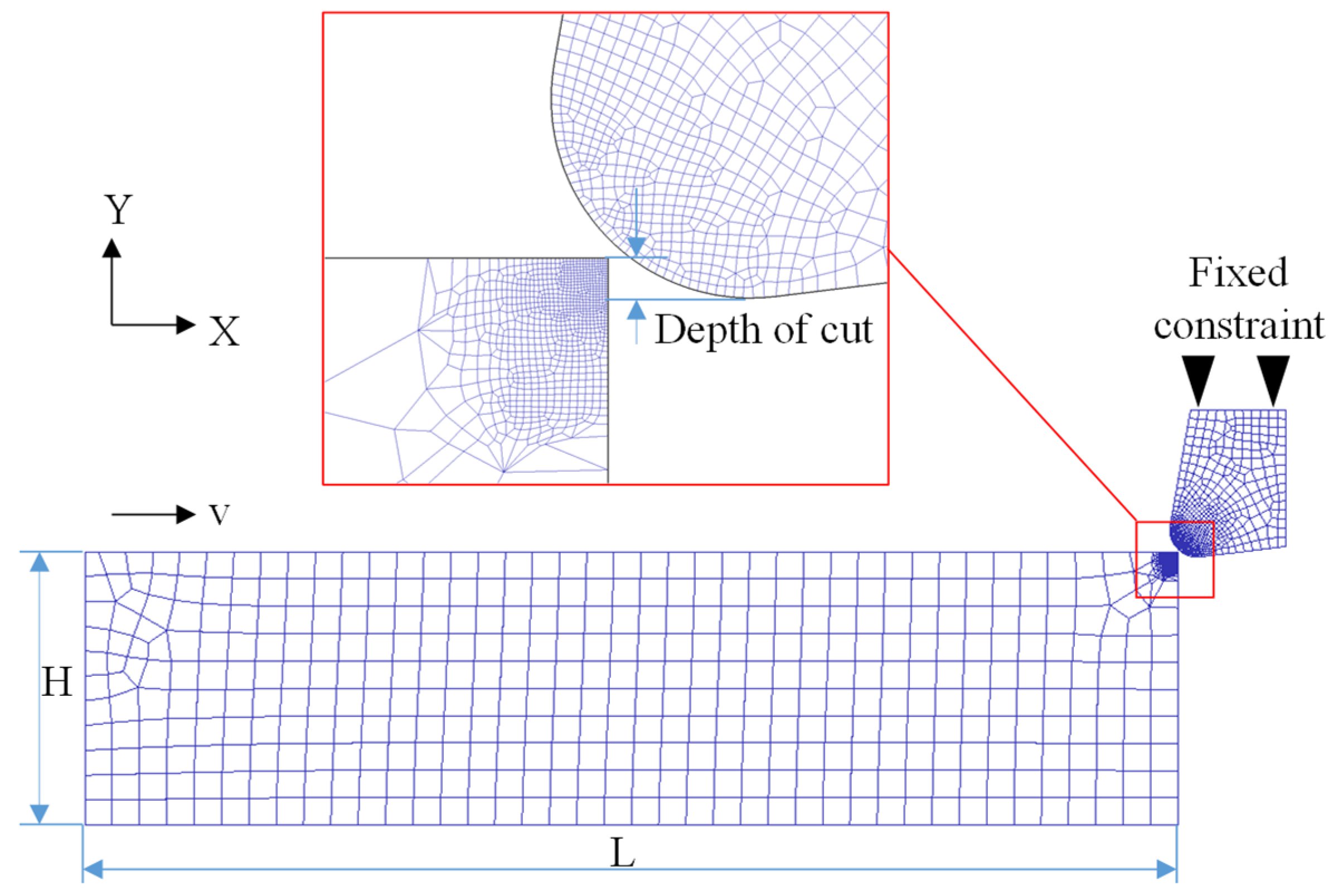
3.1. Finite Element Model Setup
Workpiece and Tool Materials
3.2. Finite Element Model Validation
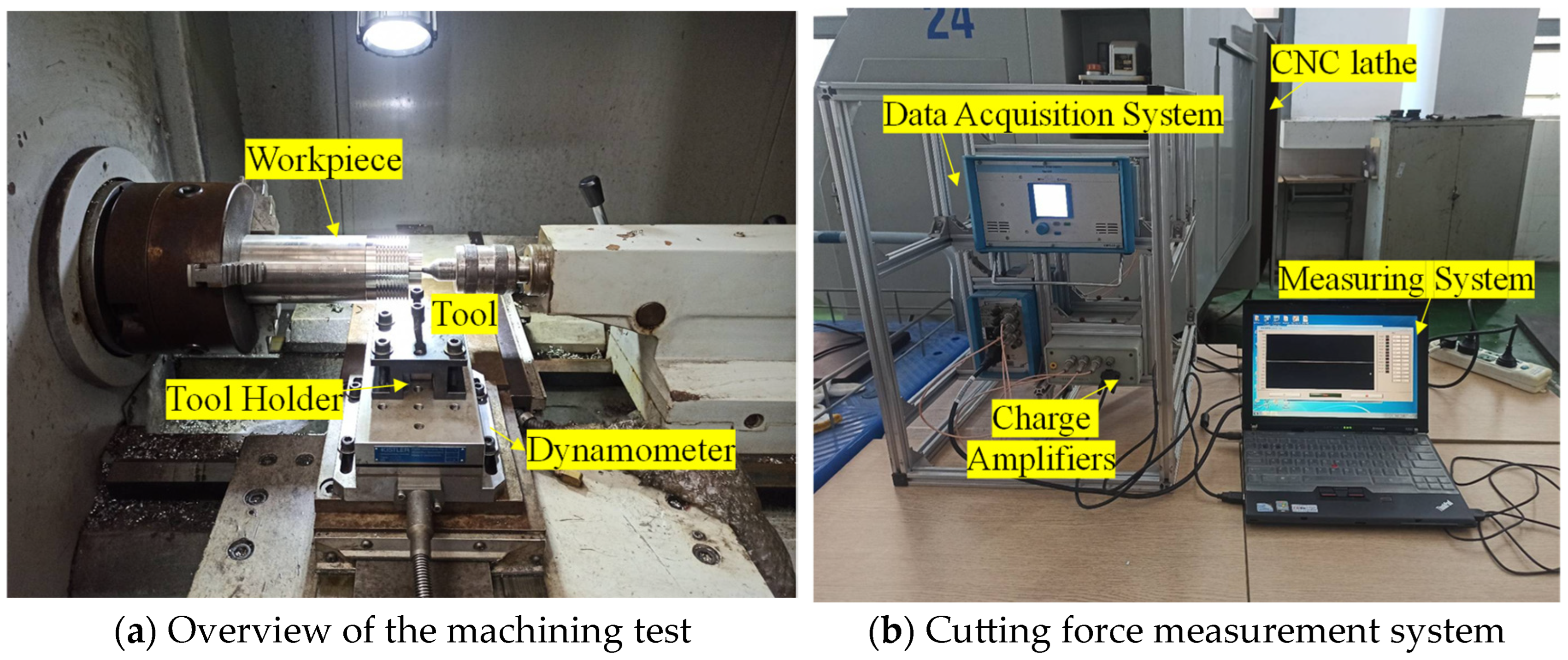
3.2.1. Experimental Setup
3.2.2. Experimental Design
3.2.3. Simulation-Experiment Comparison and Validation
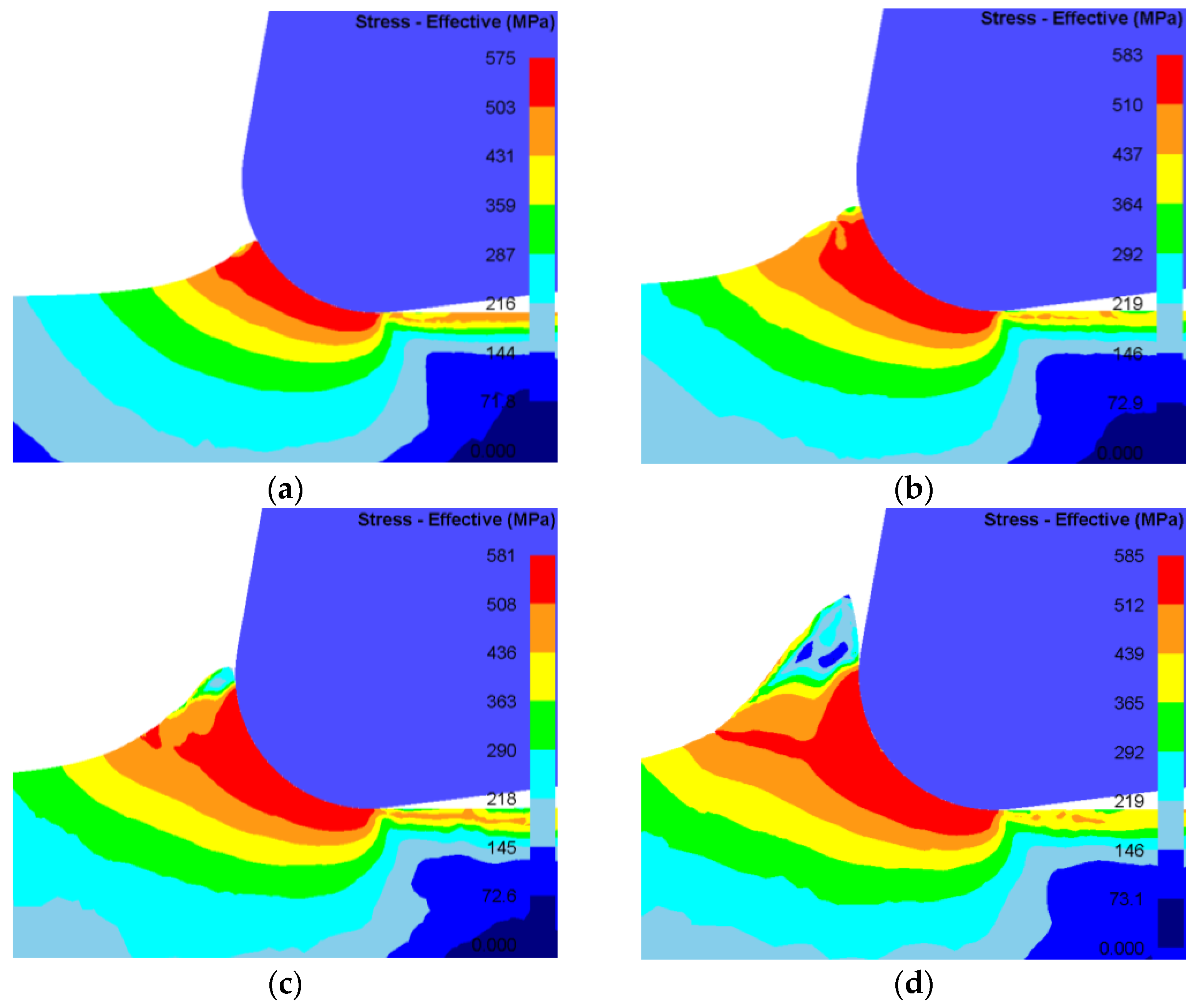
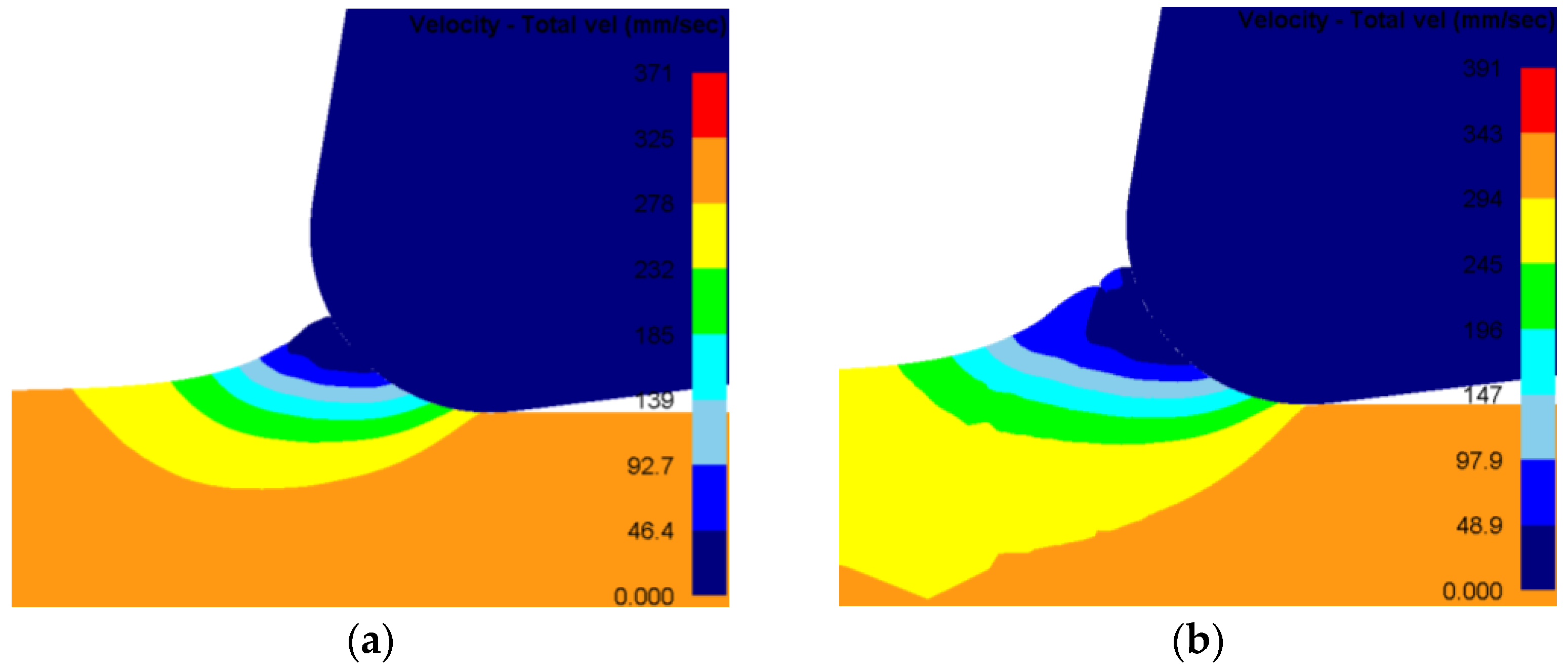
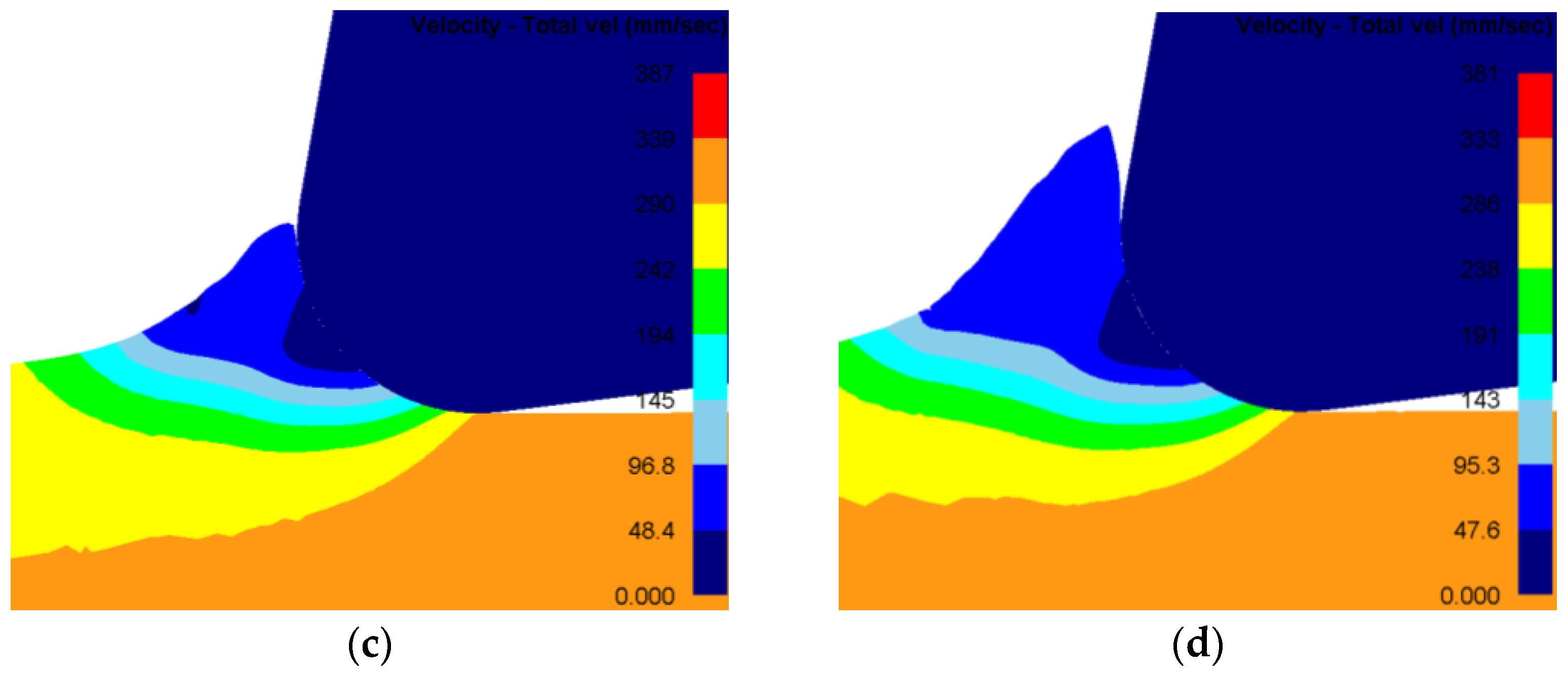
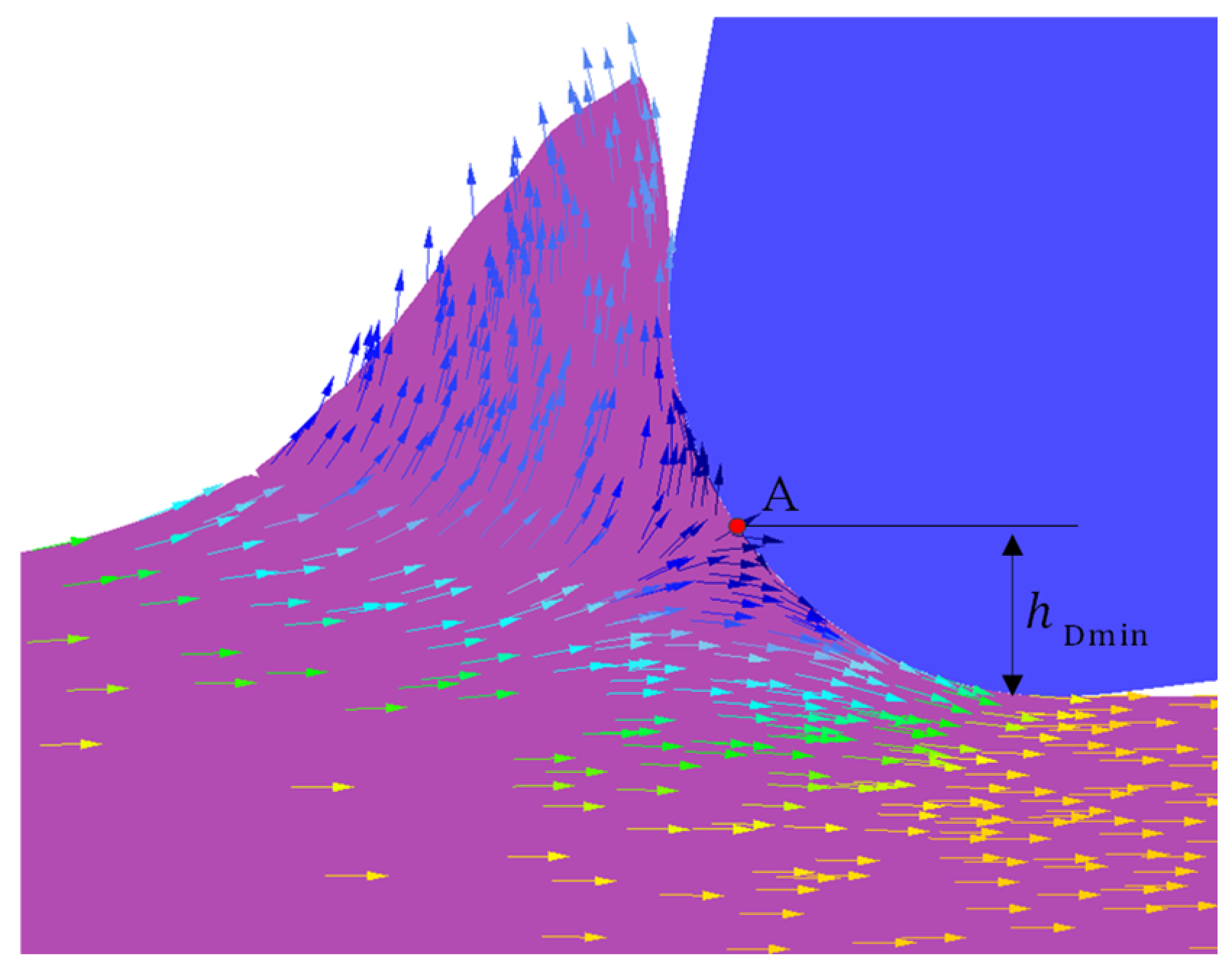
3.3. Effect of Depth of Cut on Material Separation
3.4. Effect of Cutting-Edge Micro-Geometry on Material Separation
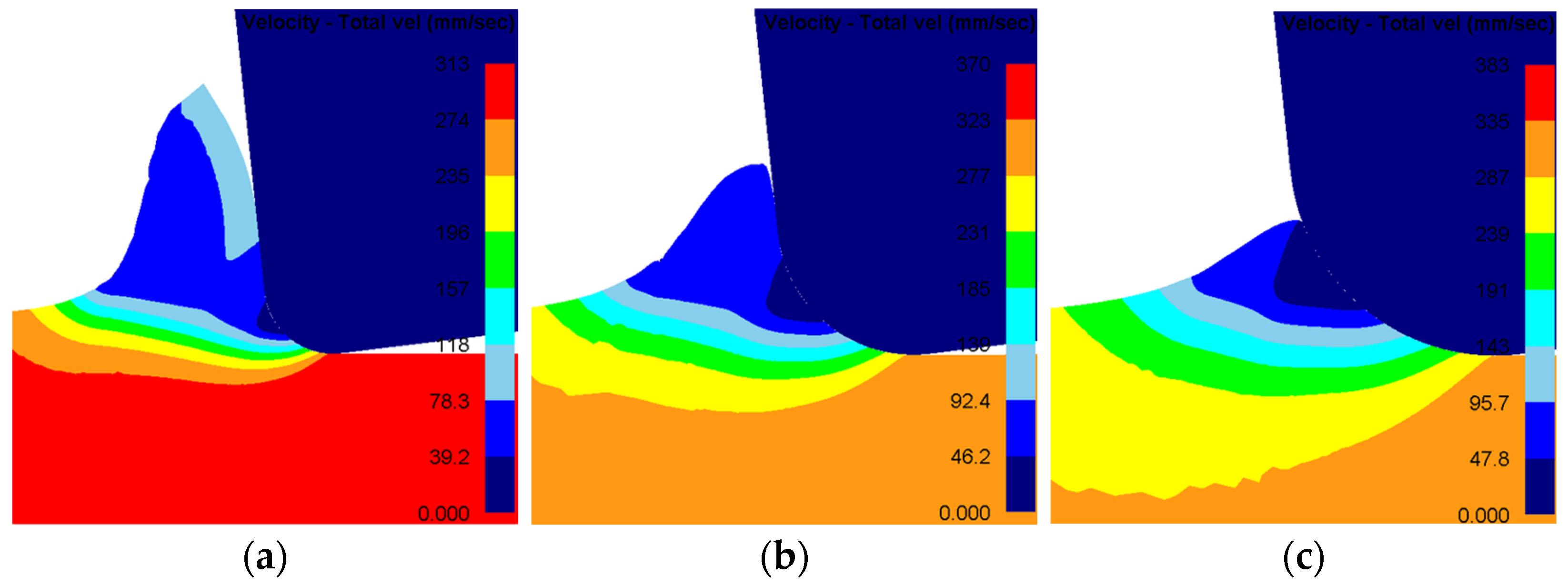
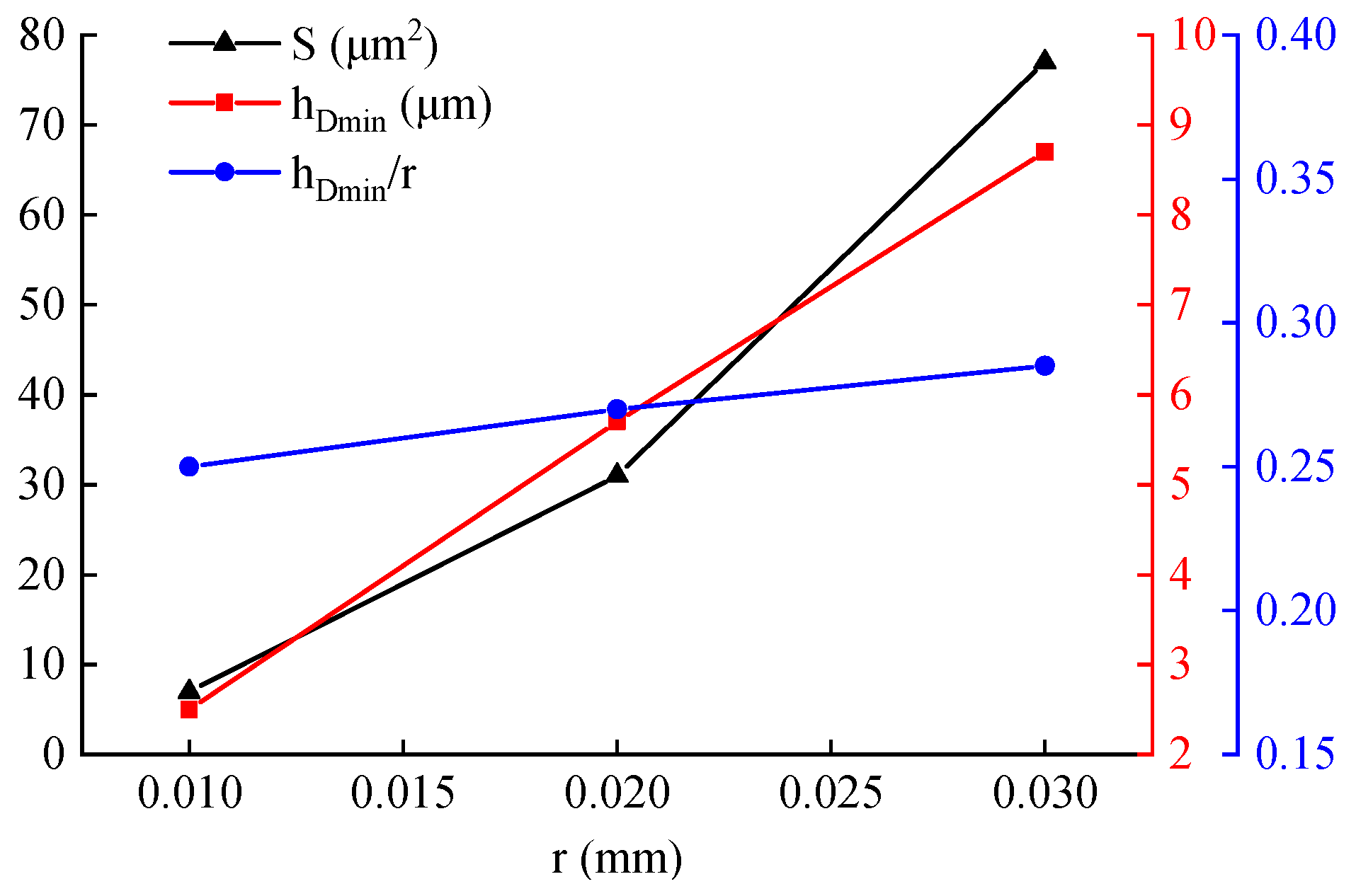
3.4.1. Influence of Tool Nose Radius on Material Separation
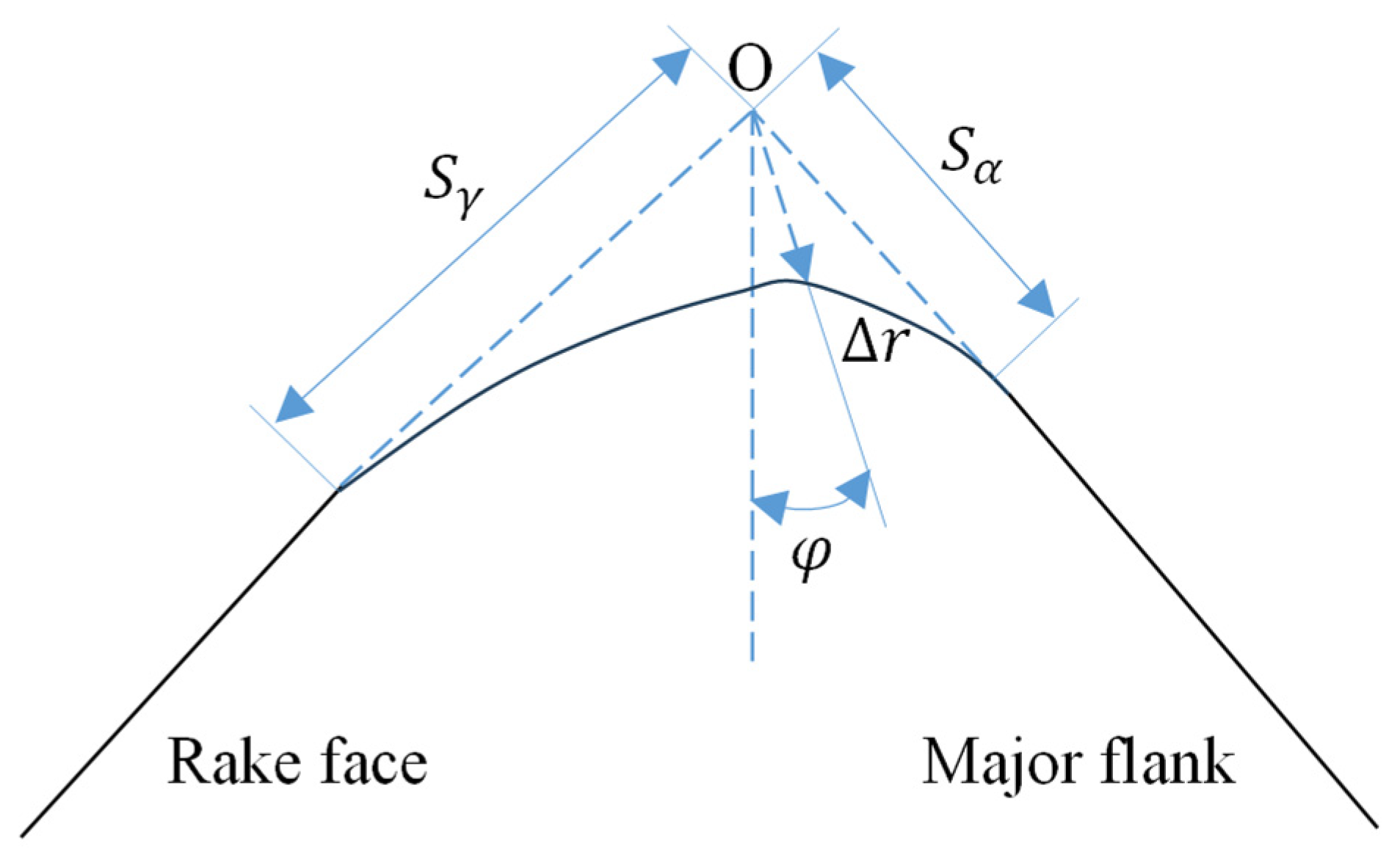
3.4.2. Edge Morphology Characterization Method
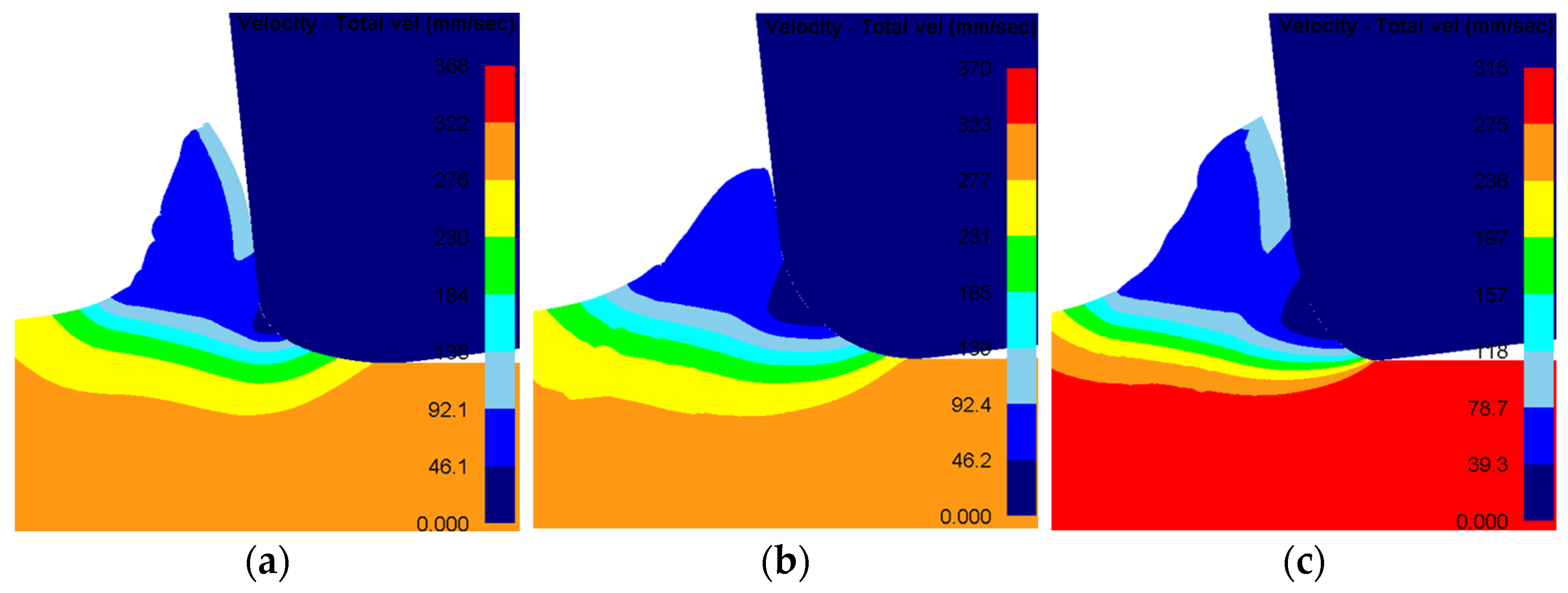
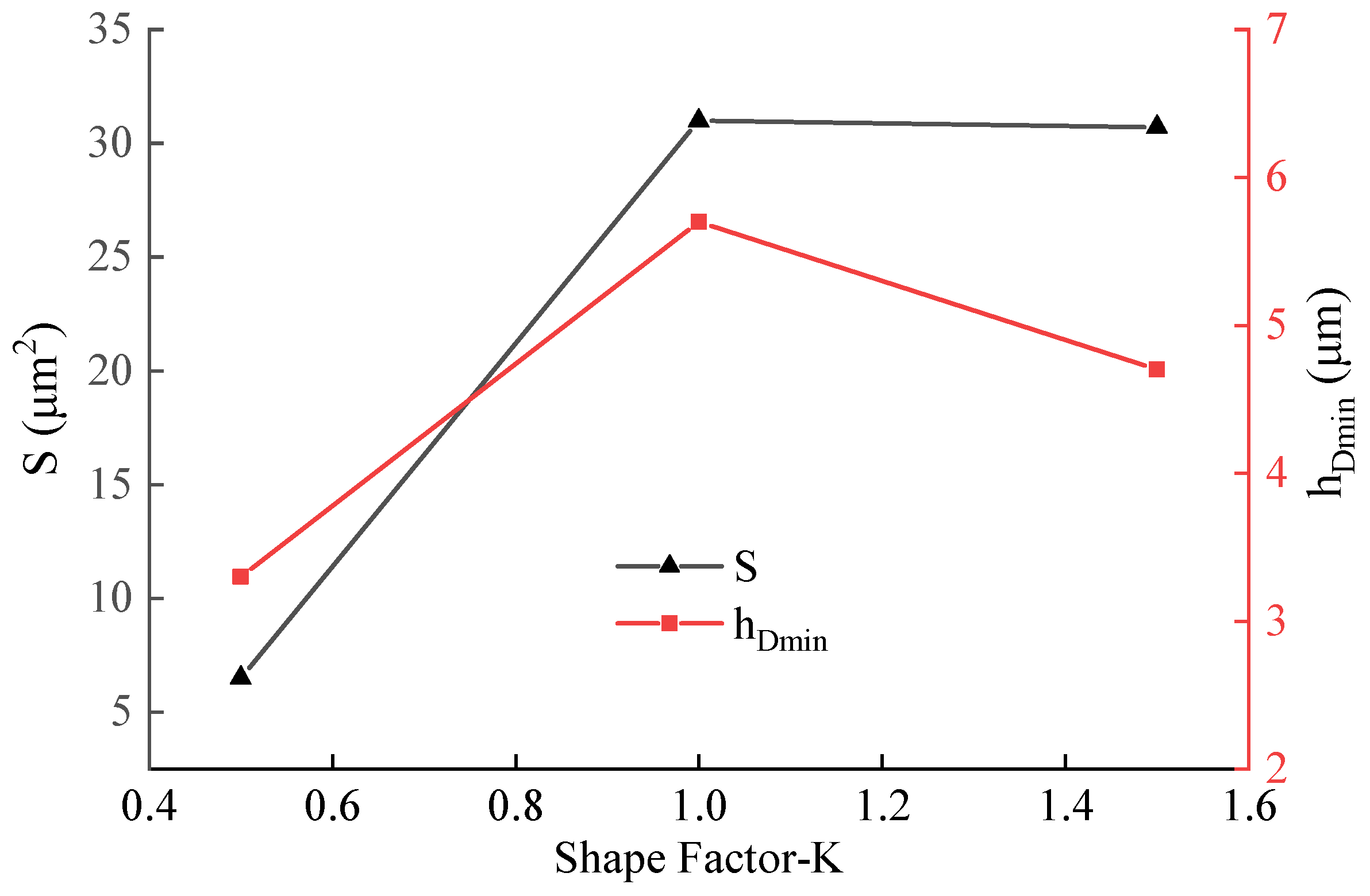
3.4.3. Effect of Asymmetric Edge Morphology on Material Separation
4. Simulation Analysis of Microstructure Evolution
4.1. Development of the Dislocation Density-Based Model
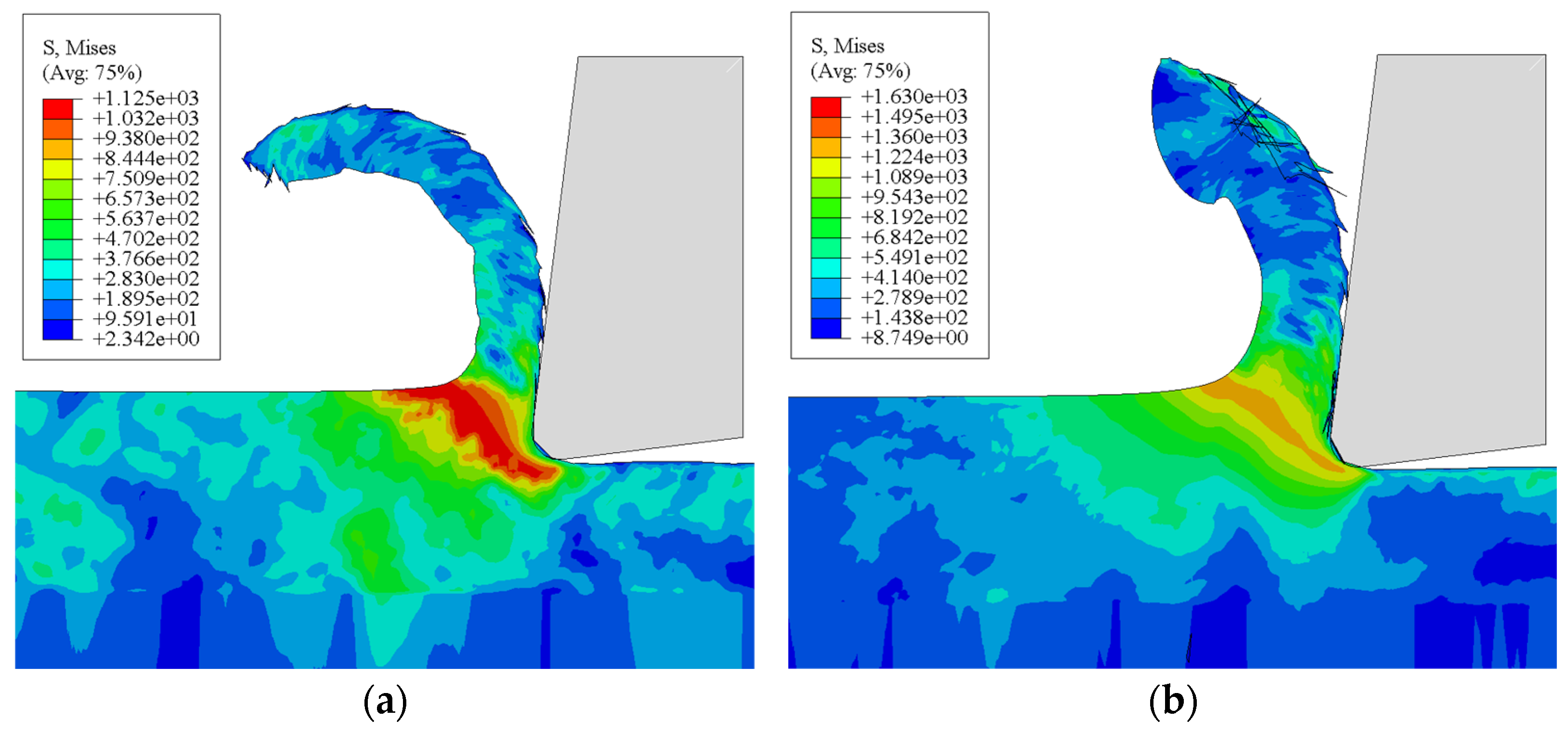
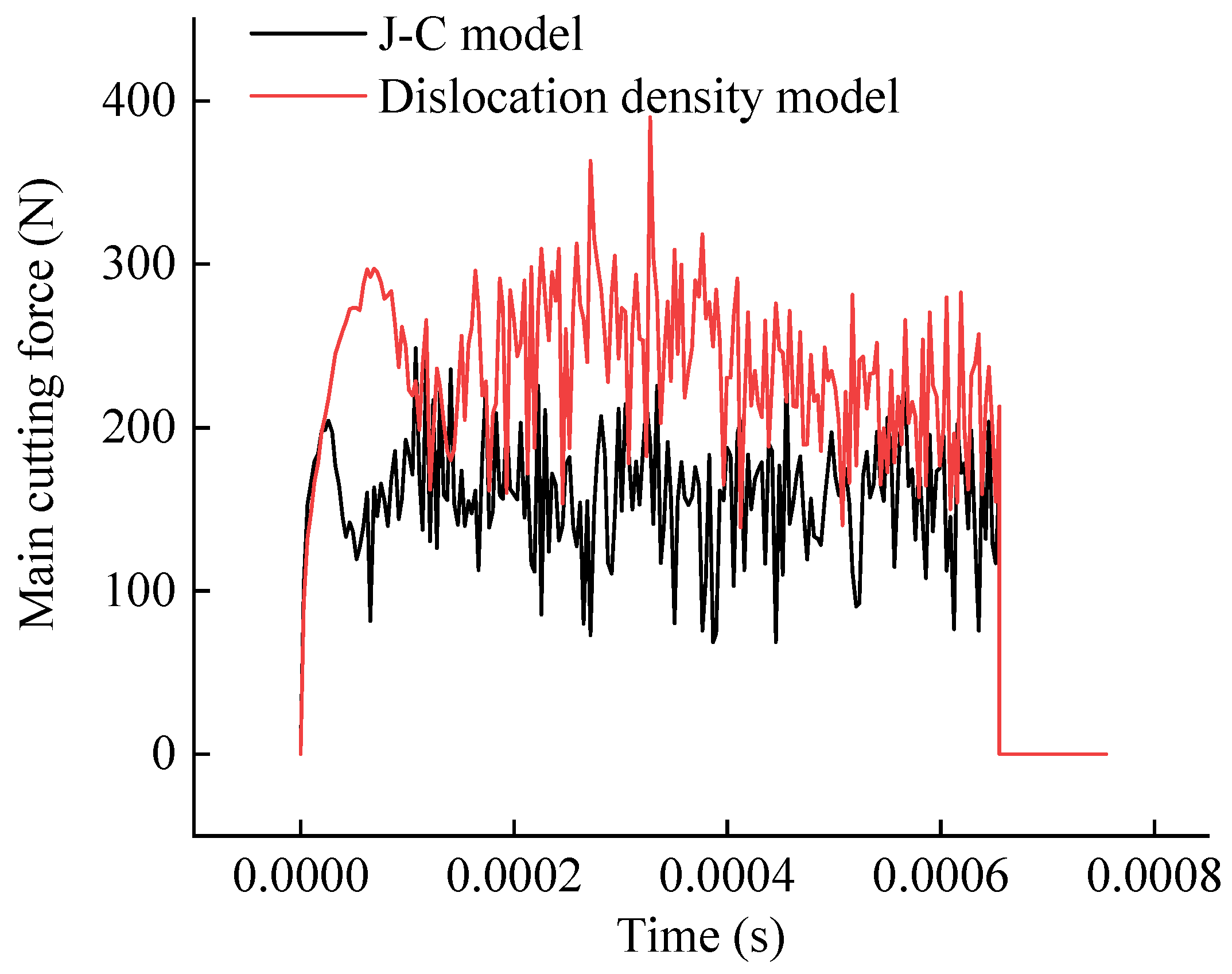
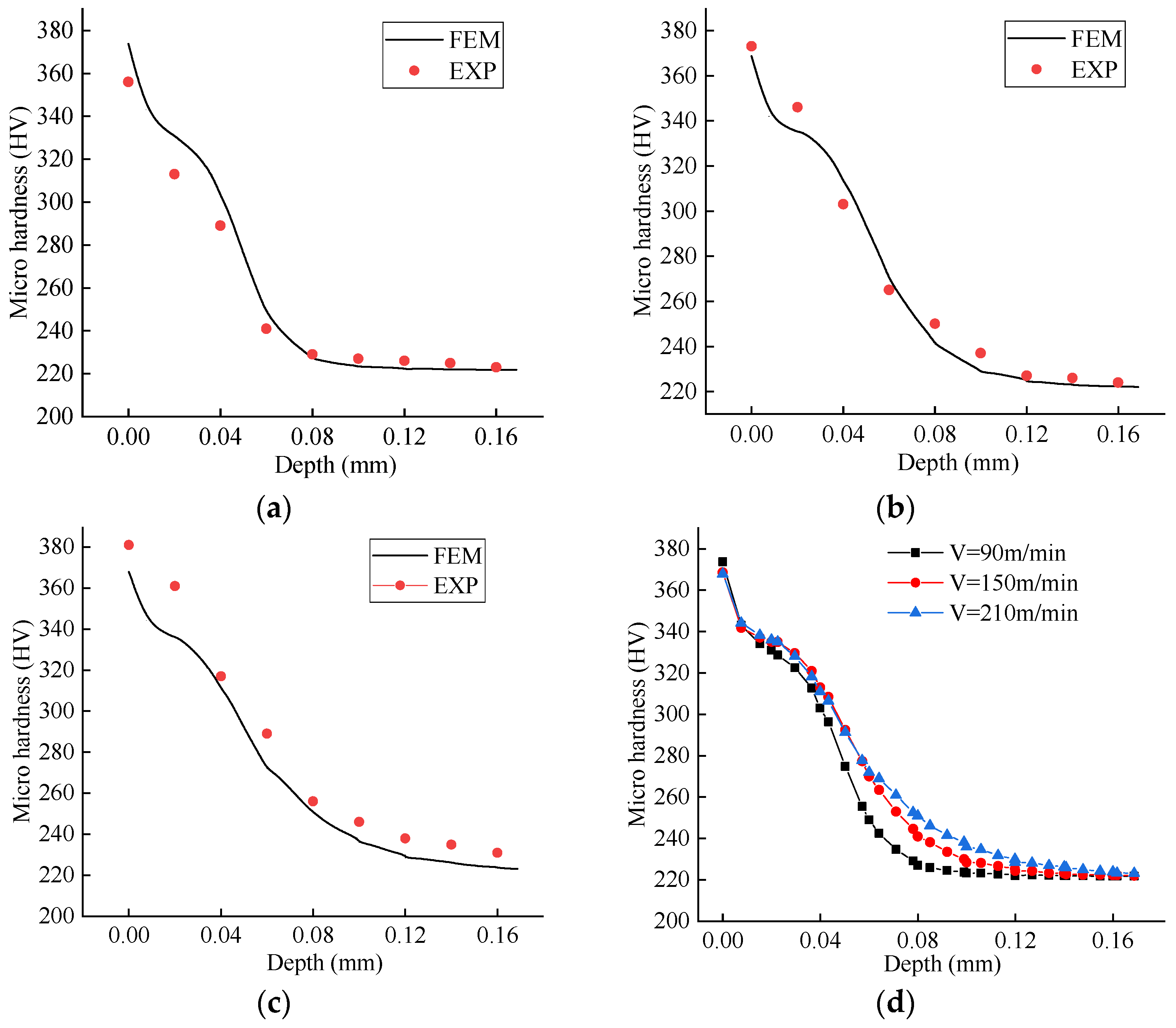
4.2. Validation of the Microstructure Evolution Model
4.3. Morphological Analysis of the Machined Subsurface Microstructure
4.4. Impact of Cutting-Edge Micro-Geometry on Microstructure Evolution
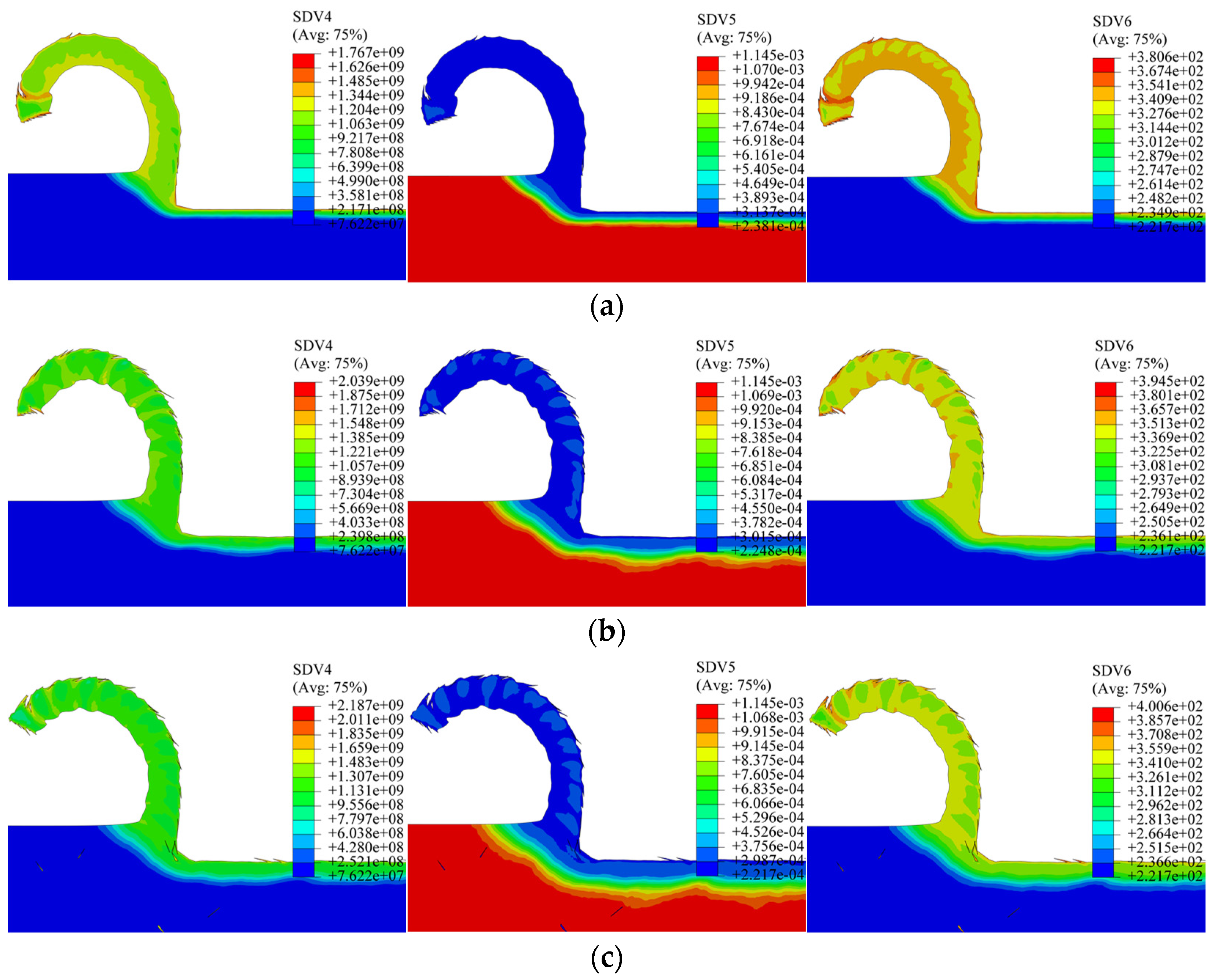
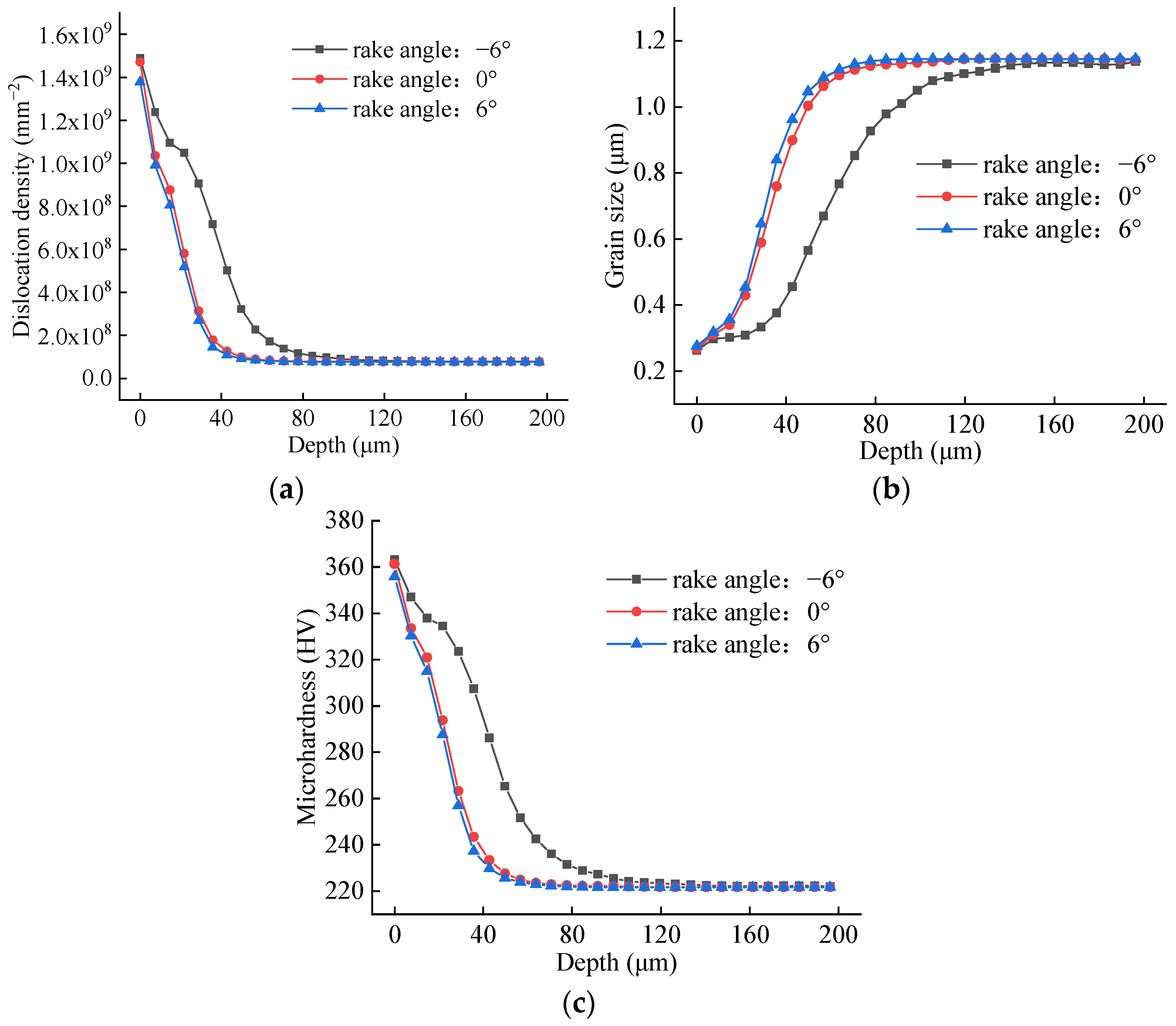
4.4.1. Effect of Tool Rake Angle on Machined Surface Microstructure
4.4.2. Effect of Tool Nose Radius on Machined Surface Microstructure Evolution
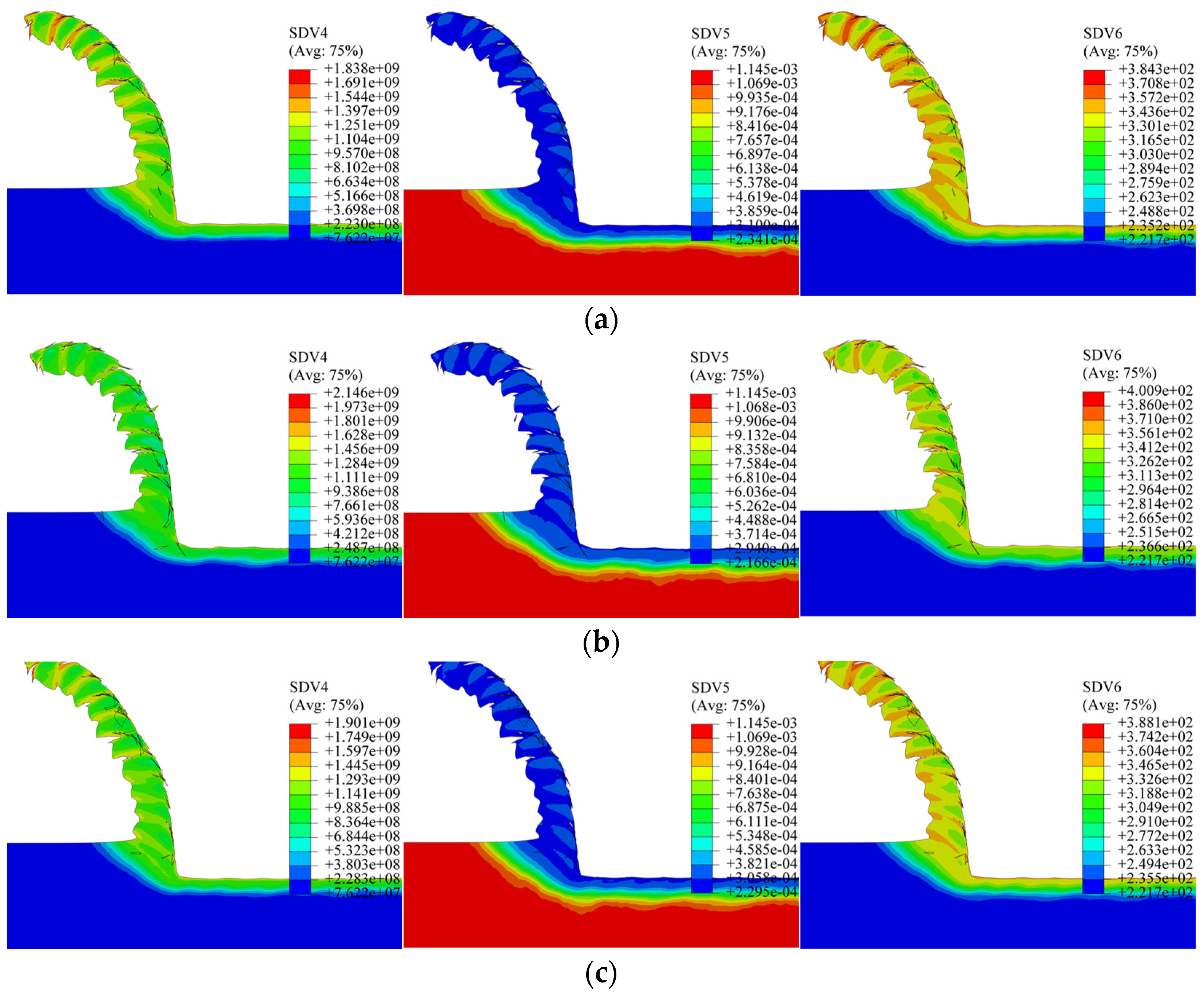
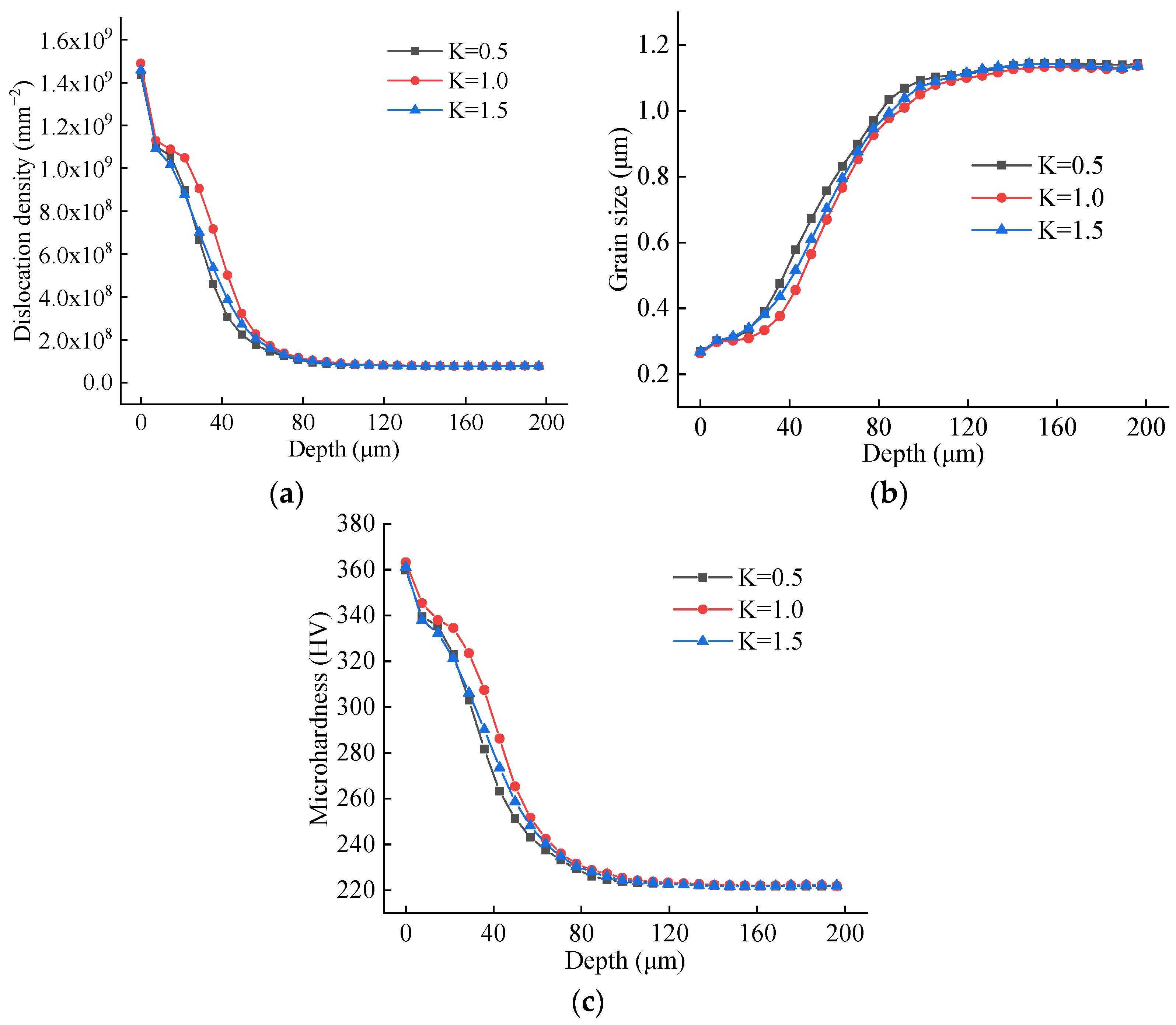
4.4.3. Effect of Asymmetric Edge Morphology on Machined Surface Microstructure Evolution
4.4.4. Recommendations for Cutting Process Optimization and Applicability Analysis
- (1)
- Recommendations for Cutting-Edge Micro-geometry Optimization Targeting Surface Integrity
- (2)
- Recommendations for Process Parameter Optimization Aiming at Stable Cutting
- (3)
- Scope of Applicability and Limitations
5. Conclusions
- (1)
- The minimum cutting thickness for 304 stainless steel was determined to be 0.275 times the tool nose radius. While both the minimum cutting thickness and the DMZ area grow with an increasing nose radius, the ratio between the minimum cutting thickness and the nose radius remains stable within 0.25 to 0.30, irrespective of the radius size.
- (2)
- The asymmetric morphology of the cutting edge, characterized by the K-factor, significantly affects the minimum uncut chip thickness by modifying the material separation mode. Investigation reveals a non-monotonic variation in the minimum uncut chip thickness with the K-factor (ranging from 0.5 to 1.5): it initially increases, reaches a maximum under the symmetric edge condition (K = 1.0), and then decreases. This demonstrates that a symmetric edge configuration fosters the development of a more stable and distinct DMZ, consequently delaying the material separation point. In contrast, asymmetric edges (e.g., waterfall or trumpet types) alter the local effective rake angle and stress distribution, thereby facilitating earlier material shear or inducing lateral flow, thereby lowering the critical thickness required for stable chip formation. Therefore, the minimum uncut chip thickness serves as a crucial quantitative indicator of how variations in cutting-edge micro-geometry influence material separation behavior.
- (3)
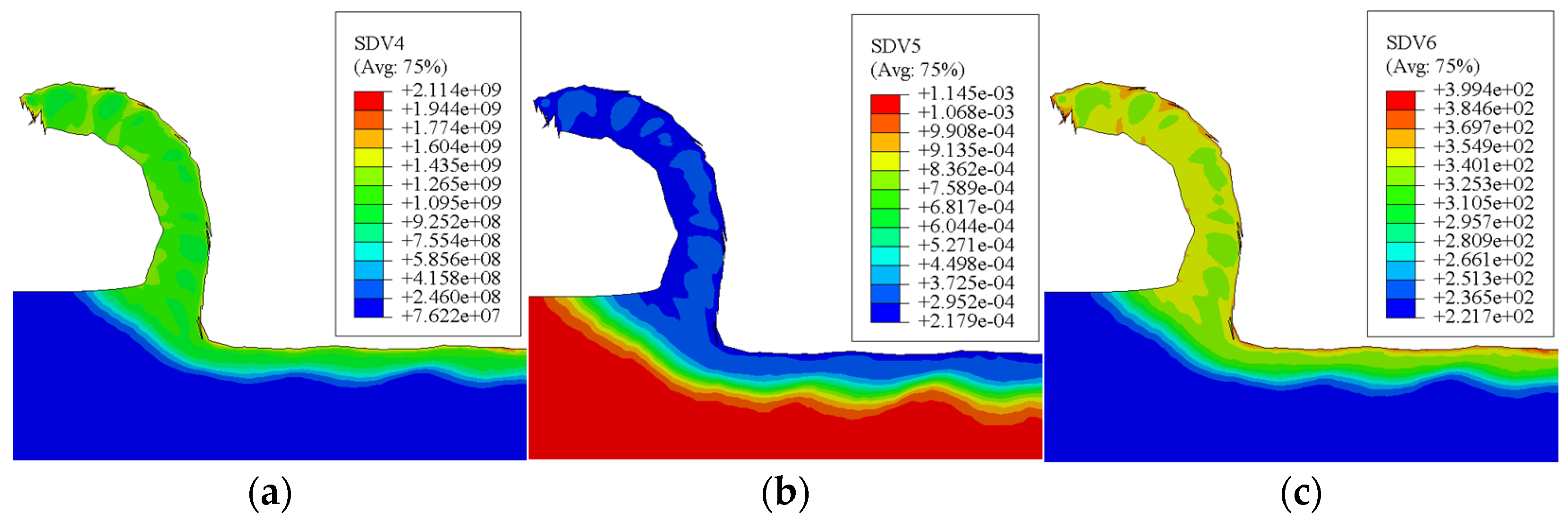
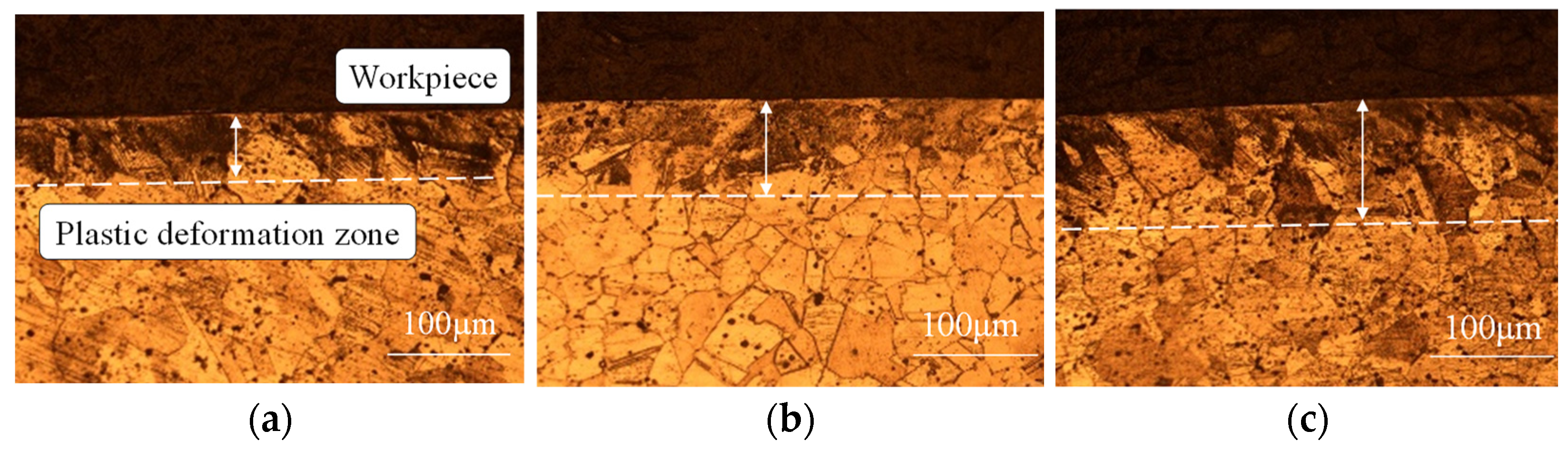
- The cross-scale predictive model grounded in dislocation density theory has demonstrated high reliability. By successfully integrating a developed user subroutine into the finite element framework, the model enables concurrent prediction of the distribution of dislocation density, the extent of grain refinement, and microhardness gradients within the machined subsurface. Across various cutting speeds, the simulated micro-hardness values show close agreement with experimental measurements in both their variation trends and absolute magnitudes. Beyond replicating the trend of increasing work-hardened layer depth and surface hardness with elevated cutting speed, the model also captures the associated attenuation in the rate of hardness increase—a phenomenon attributed to thermal softening. These results validate the model’s effectiveness in coupling thermo-mechanical effects and its potential for engineering applications in predicting surface integrity.
- (4)
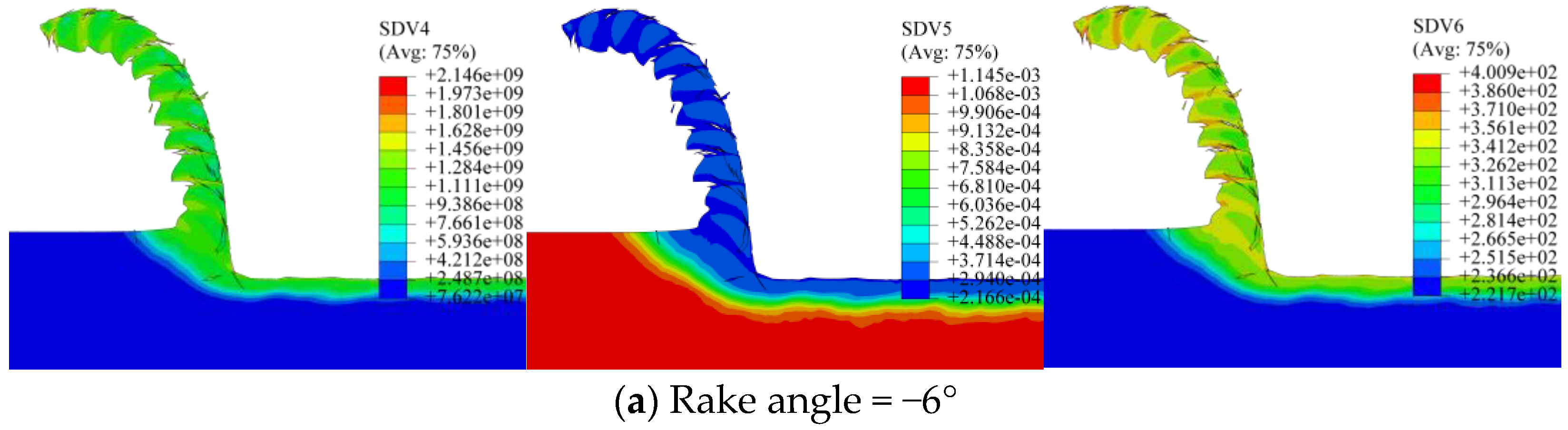
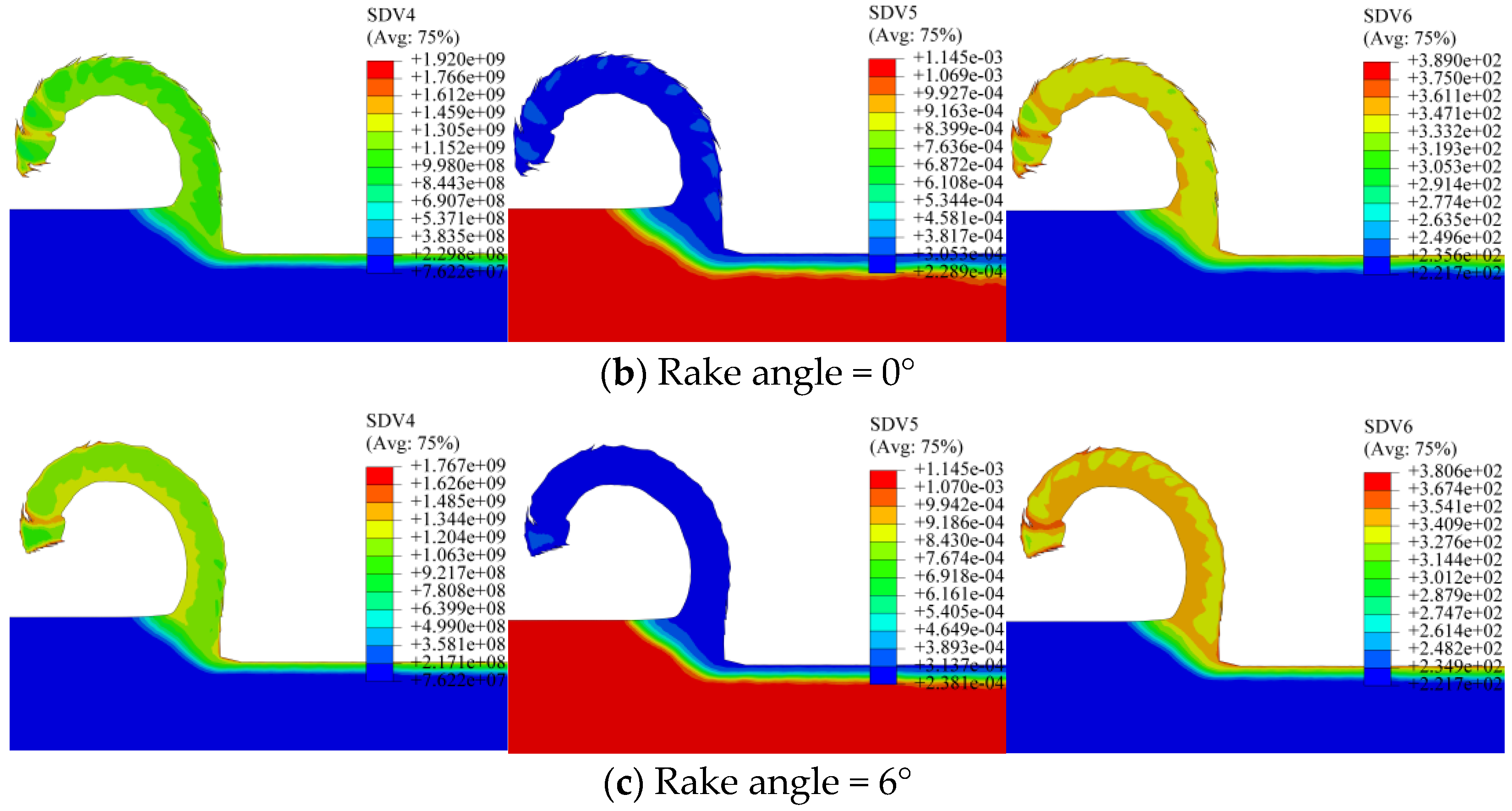
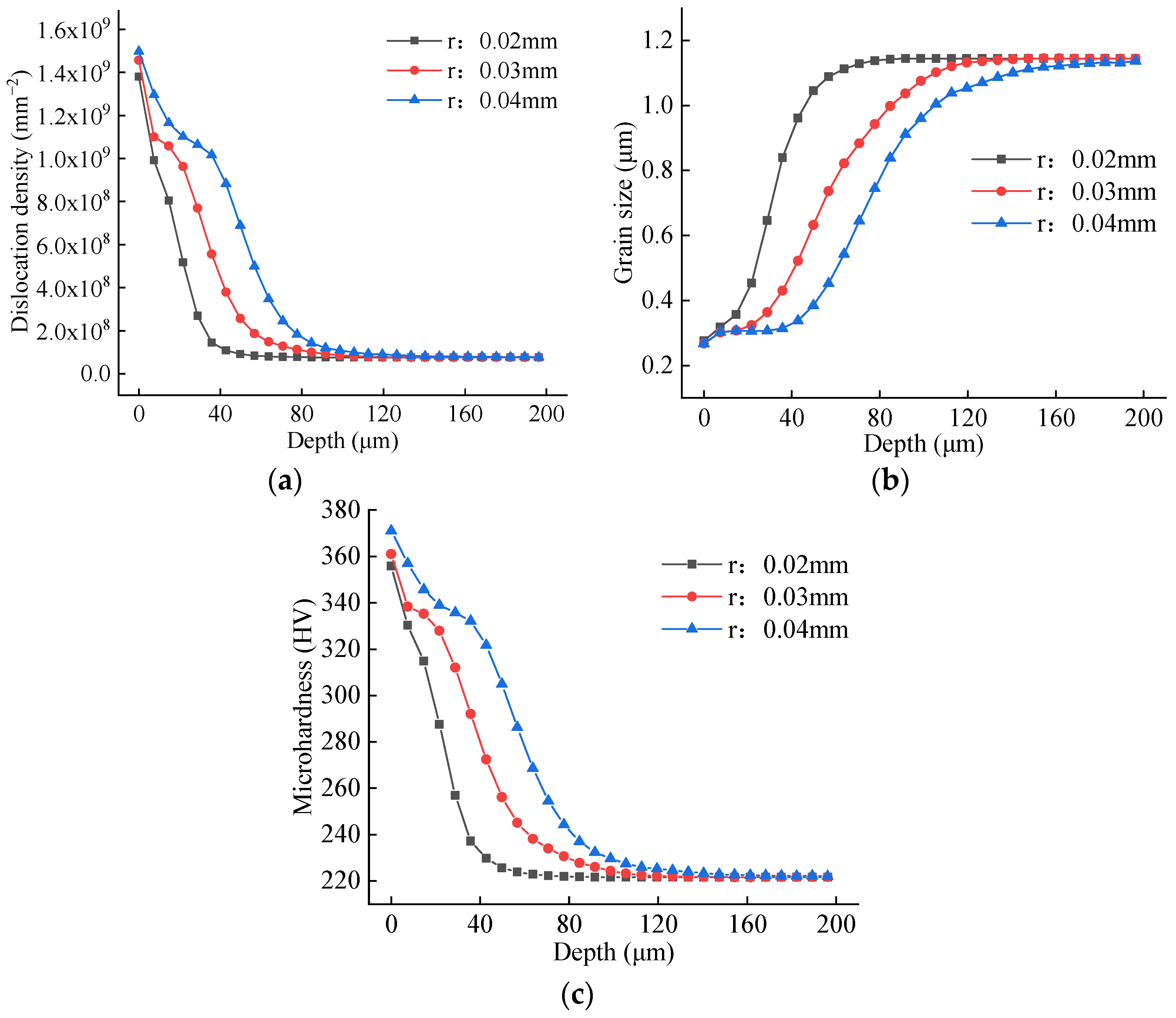
- The parameters defining cutting-edge micro-geometry exert a systematic, yet differentiated, influence on microstructural evolution. Quantitative analysis identifies the tool nose radius as the predominant factor governing the severity of plastic deformation in the surface layer. An increased radius markedly intensifies extrusion and ploughing, resulting in a higher peak dislocation density, more pronounced grain refinement, elevated microhardness, and a substantial increase in the altered layer’s depth (from 56 μm to 147 μm). A reduction in the tool rake angle similarly enhances plastic deformation, leading to increased dislocation density and hardness, alongside decreased grain size, with this effect particularly pronounced in the hostile rake angle regime. The influence of the K-factor on the microstructure mirrors its non-monotonic impact on the minimum uncut chip thickness. In summary, the hierarchical order of influence of these edge parameters on the evolution of the machined surface microstructure is tool nose radius > tool rake angle > cutting edge asymmetry. These established correlations provide direct theoretical guidance for the targeted design of tool edge geometry and the optimization of process parameters to meet specific surface integrity objectives.
Author Contributions
Funding
Institutional Review Board Statement
Informed Consent Statement
Data Availability Statement
Acknowledgments
Conflicts of Interest
Abbreviations
| DMZ | Dead metal zone |
| FEM | Finite element method |
| ALE | Arbitrary Lagrangian-Eulerian |
| J-C | Johnson–Cook |
| CNC | Computerized numerical control |
| EXP | Experimental |
| MQL | Minimum quantity lubrication |
| Minimum cutting thickness | |
| Normal force component | |
| Tangential force component | |
| Normal stress | |
| Tool edge radius | |
| Friction coefficient | |
| Central angle | |
| Principal cutting force | |
| Cutting resistance | |
| Material shear strength | |
| Tool width | |
| Friction angle | |
| Tool rake angle | |
| Shear angle | |
| Equivalent plastic strain | |
| Equivalent plastic strain rate | |
| Reference strain rate | |
| Room temperature | |
| Melting temperature | |
| Instantaneous deformation temperature | |
| , , , and | J-C constitutive model parameters |
| ~ | Johnson–Cook damage parameters |
| v | Cutting speed |
| f | Feed rate |
| ap | Back engagement of cutting edge |
| , , and | Material parameters of dislocation evolution |
| Reference shear strain rate | |
| Burgers vector magnitude | |
| Temperature sensitivity parameter | |
| and | Initial and saturated volume fractions |
| Shear strain | |
| Reference plastic strain |
References
- Merchant, M.E. Basic mechanics of the metal-cutting process. J. Appl. Mech. 1944, 11, A168–A175. [Google Scholar] [CrossRef]
- Woon, K.S.; Rahman, M.; Fang, F.Z.; Neo, K.S.; Liu, K. Investigations of tool edge radius effect in micromachining: A FEM simulation approach. J. Mater. Process. Technol. 2008, 195, 204–211. [Google Scholar] [CrossRef]
- Jiang, L.; Wang, D. Finite-element-analysis of the effect of different wiper tool edge geometries during the hard turning of AISI 4340 steel. Simul. Model. Pract. Theory 2019, 94, 250–263. [Google Scholar] [CrossRef]
- Liu, X.; DeVor, R.E.; Kapoor, S.G. An analytical model for the prediction of minimum chip thickness in micromachining. J. Manuf. Sci. Eng. 2006, 128, 474–481. [Google Scholar] [CrossRef]
- Wen, D.Y.; Wan, M.; Linghu, S.C.; Zhang, W.H. A slip-line field model for independently characterizing shearing and ploughing effects in metal cutting processes. Wear 2024, 556, 205504. [Google Scholar] [CrossRef]
- Malekian, M.; Mostofa, M.G.; Park, S.S.; Jun, M. Modeling of minimum uncut chip thickness in micro machining of aluminum. J. Mater. Process. Technol. 2012, 212, 553–559. [Google Scholar] [CrossRef]
- Lai, X.; Li, H.; Li, C.; Lin, Z.; Ni, J. Modelling and analysis of micro scale milling considering size effect, micro cutter edge radius and minimum chip thickness. Int. J. Mach. Tools Manuf. 2008, 48, 1–14. [Google Scholar] [CrossRef]
- Wan, M.; Wen, D.Y.; Ma, Y.C.; Zhang, W.H. On material separation and cutting force prediction in micro milling through involving the effect of dead metal zone. Int. J. Mach. Tools Manuf. 2019, 146, 103452. [Google Scholar] [CrossRef]
- Song, B.; Jing, X.; Yang, H.; Zheng, S.; Zhang, D.; Li, H. On unsteady-cutting state material separation and dead metal zone modeling considering chip fracture. J. Manuf. Process. 2023, 108, 62–78. [Google Scholar] [CrossRef]
- Guo, M.; Lu, M.; Lin, J.; Gao, Q.; Du, Y. Modeling and investigation of minimum chip thickness for silicon carbide during quasi-intermittent vibration–assisted swing cutting. Int. J. Adv. Manuf. Technol. 2023, 127, 1691–1701. [Google Scholar] [CrossRef]
- Wu, S.; Wang, D.; Zhang, J.; Nadykto, A.B. Study on the formation mechanism of cutting dead metal zone for turning AISI4340 with different chamfering tools. Micromachines 2022, 13, 1156. [Google Scholar] [CrossRef]
- Hosseini, S.V.; Vahdati, M. Modeling the effect of tool edge radius on contact zone in nanomachining. Comput. Mater. Sci. 2012, 65, 29–36. [Google Scholar] [CrossRef]
- Denkena, B.; Biermann, D. Cutting edge geometries. CIRP Ann. 2014, 63, 631–653. [Google Scholar] [CrossRef]
- Estrin, Y.; Tóth, L.; Molinari, A.; Bréchet, Y. A dislocation-based model for all hardening stages in large strain deformation. Acta Mater. 1998, 46, 5509–5522. [Google Scholar] [CrossRef]
- Jin, X.; Altintas, Y. Slip-line field model of micro-cutting process with round tool edge effect. J. Mater. Process. Technol. 2011, 211, 339–355. [Google Scholar] [CrossRef]
- Zhuang, K.; Fu, C.; Weng, J.; Hu, C. Cutting edge microgeometries in metal cutting: A review. Int. J. Adv. Manuf. Technol. 2021, 116, 2045–2092. [Google Scholar] [CrossRef]
- Li, B.; Zhang, S.; Du, J.; Sun, Y. State-of-the-art in cutting performance and surface integrity considering tool edge micro-geometry in metal cutting process. J. Manuf. Process. 2022, 77, 380–411. [Google Scholar] [CrossRef]
- Babu, B.H.; Rao, K.V.; Ben, B.S. Modeling and optimization of dead metal zone to reduce cutting forces in micro-milling of hardened AISI D2 steel. J. Braz. Soc. Mech. Sci. Eng. 2021, 43, 142. [Google Scholar] [CrossRef]
- Song, B.W.; Zhang, D.W.; Jing, X.B.; Ren, Y.Y.; Chen, Y.; Li, H.Z. Enhanced cutting force model in micro-milling incorporating material separation criterion. Adv. Manuf. 2025, 13, 813–830. [Google Scholar] [CrossRef]
- Wang, H.; Dong, Z.; Yuan, S.; Guo, X.; Kang, R.; Bao, Y. Effects of tool geometry on tungsten removal behavior during nano-cutting. Int. J. Mech. Sci. 2022, 225, 107384. [Google Scholar] [CrossRef]
- Dong, Z.; Wang, H.; Qi, Y.; Guo, X.; Kang, R.; Bao, Y. Effects of minimum uncut chip thickness on tungsten nano-cutting mechanism. Int. J. Mech. Sci. 2023, 237, 107790. [Google Scholar] [CrossRef]
- Zheng, Y.; Huang, W.; Liu, Y.; Duan, P.; Wang, Y. Determination of the Minimum Uncut Chip Thickness of Ti-6Al-4V Titanium Alloy Based on Dead Metal Zone. Micromachines 2024, 15, 1458. [Google Scholar] [CrossRef]
- Merchant, M.E. Mechanics of the metal cutting process. I. Orthogonal cutting and a type 2 chip. J. Appl. Phys. 1945, 16, 267–275. [Google Scholar] [CrossRef]
- Oxley, P.L.B. The Mechanics of Machining: An Analytical Approach to Assesing Machinability; Ellis Horwood: Chichester, UK, 1989. [Google Scholar]
- Childs, T. Metal Machining: Theory and Applications; Butterworth-Heinemann: Oxford, UK, 2000. [Google Scholar]
- Vogler, M.P.; DeVor, R.E.; Kapoor, S.G. On the modeling and analysis of machining performance in micro-endmilling, part I: Surface generation. J. Manuf. Sci. Eng. 2004, 126, 685–694. [Google Scholar] [CrossRef]
- Aramcharoen, A.; Mativenga, P.T. Size effect and tool geometry in micromilling of tool steel. Precis. Eng. 2009, 33, 402–407. [Google Scholar] [CrossRef]
- Paul, J.; Romeis, S.; Tomas, J.; Peukert, W. A review of models for single particle compression and their application to silica microspheres. Adv. Powder Technol. 2014, 25, 136–153. [Google Scholar] [CrossRef]
- Zou, Z.; He, L.; Zhou, T.; Zhang, W.; Tian, P.; Zhou, X. Research on inverse identification of Johnson-Cook constitutive parameters for turning 304 stainless steel based on coupling simulation. J. Mater. Res. Technol. 2023, 23, 2244–2262. [Google Scholar] [CrossRef]
- Zerilli, F.J.; Armstrong, R.W. Dislocation-mechanics-based constitutive relations for material dynamics calculations. J. Appl. Phys. 1987, 61, 1816–1825. [Google Scholar] [CrossRef]
- Bodner, S.R.; Partom, Y. Constitutive equations for elastic-viscoplastic strain-hardening materials. J. Appl. Mech. 1975, 42, 385–389. [Google Scholar] [CrossRef]
- Johnson, G.R. A constitutive model and data for metals subjected to large strains, high strain rates and high temperatures. In Proceedings of the 7th International Symposium on Ballistics, The Hague, The Netherlands, 19–21 April 1983. [Google Scholar]
- Zhou, F. Research on Machined Surface Characteristics of 304 Stainless Steel. Ph.D. Thesis, Huazhong University of Science and Technology, Wuhan, China, 2014. [Google Scholar]
- Johnson, G.R.; Cook, W.H. Fracture characteristics of three metals subjected to various strains, strain rates, temperatures and pressures. Eng. Fract. Mech. 1985, 21, 31–48. [Google Scholar] [CrossRef]
- Dey, S.; Børvik, T.; Hopperstad, O.S.; Langseth, M. On the influence of constitutive relation in projectile impact of steel plates. Int. J. Impact Eng. 2007, 34, 464–486. [Google Scholar] [CrossRef]
- Zhuang, K.; Zhou, S.; Zou, L.; Lin, L.; Liu, Y.; Weng, J.; Gao, J. Numerical investigation of sequential cuts residual stress considering tool edge radius in machining of AISI 304 stainless steel. Simul. Model. Pract. Theory 2022, 118, 102525. [Google Scholar] [CrossRef]
- Wyen, C.F. Rounded Cutting Edges and Their Influence in Machining Titanium. Ph.D. Thesis, ETH Zurich, Zürich, Switzerland, 2011. [Google Scholar]
- Arfaoui, S.; Zemzemi, F.; Tourki, Z. A numerical-analytical approach to predict white and dark layer thickness of hard machining. Int. J. Adv. Manuf. Technol. 2018, 96, 3355–3364. [Google Scholar] [CrossRef]
- Majta, J.; Madej, Ł.; Svyetlichnyy, D.S.; Perzyński, K.; Kwiecień, M.; Muszka, K. Modeling of the inhomogeneity of grain refinement during combined metal forming process by finite element and cellular automata methods. Mater. Sci. Eng. A 2016, 671, 204–213. [Google Scholar] [CrossRef]
- Zou, Z.; He, L.; Zhou, T.; Wang, M.; Tian, P.; Zhou, X. Research on microhardness prediction of 304 stainless steel turning based on dislocation densi-ty. J. Manuf. Process. 2022, 83, 522–535. [Google Scholar] [CrossRef]
- Dong, X.; Shin, Y.C. Predictive modeling of microstructure evolution within multi-phase steels during rolling processes. Int. J. Mech. Sci. 2019, 150, 576–583. [Google Scholar] [CrossRef]
- Kocks, U.F. Laws for work-hardening and low-temperature creep. J. Eng. Mater. Technol. Trans. ASME 1976, 98, 76–85. [Google Scholar] [CrossRef]
- Ding, H.; Shin, Y.C. Multi-physics modeling and simulations of surface microstructure alteration in hard turning. J. Mater. Process. Technol. 2013, 213, 877–886. [Google Scholar] [CrossRef]
- Baik, S.C.; Estrin, Y.; Kim, H.S.; Jeong, H.T.; Hellmig, R.J. Calculation of deformation behavior and texture evolution during equal channel angular pressing of IF steel using dislocation based modeling of strain hardening. In Materials Science Forum; Trans Tech Publications Ltd.: Baech, Switzerland, 2002; Volume 408, pp. 697–702. [Google Scholar]
- Ghosh, S.; Kain, V. Microstructural changes in AISI 304L stainless steel due to surface machining: Effect on its susceptibility to chloride stress corrosion cracking. J. Nucl. Mater. 2010, 403, 62–67. [Google Scholar] [CrossRef]
- Ulutan, D.; Ozel, T. Machining induced surface integrity in titanium and nickel alloys: A review. Int. J. Mach. Tools Manuf. 2011, 51, 250–280. [Google Scholar] [CrossRef]













| Parameter | Value |
|---|---|
| Density (kg/m3) | 7950 |
| Specific heat (J/kg/K) | 500 |
| Thermal conductivity (W/m/K) | 16.2 |
| Thermal expansion coefficient (1/K) | 16 × 10−6 |
| Young’s modulus (GPa) | 193 |
| Poisson’s ratio | 0.28 |
| Yield strength (MPa) | 235 |
| 452 | 694 | 0.311 | 0.0067 | 0.996 | 0.001 | 1673 K | 273 K |
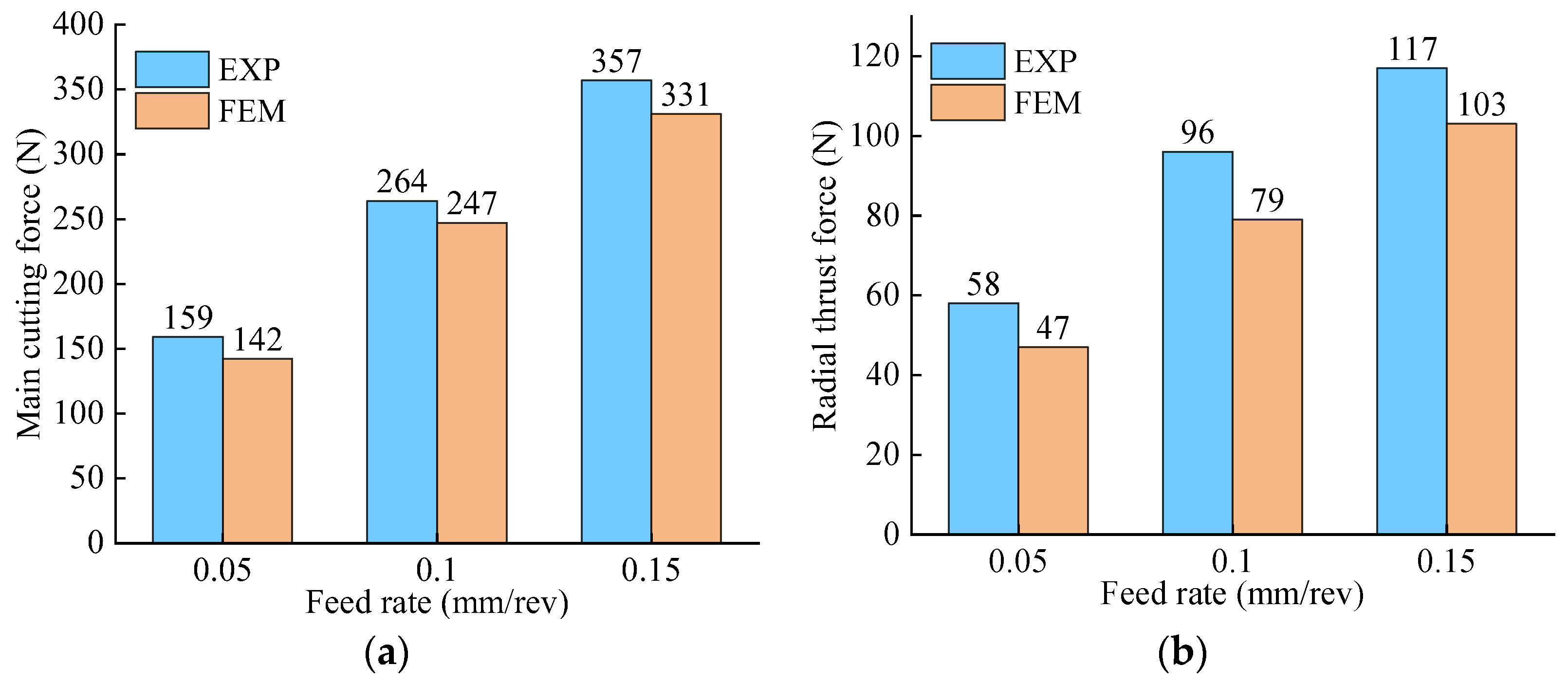
| Case | v (m/min) | f (mm/rev) | ap (mm) | Main Cutting Foce (N) | Radial Thrust Force (N) |
|---|---|---|---|---|---|
| 1 | 90 | 0.05 | 1 | 159 | 58 |
| 2 | 90 | 0.1 | 1 | 264 | 96 |
| 3 | 90 | 0.15 | 1 | 357 | 117 |
| 4 | 150 | 0.1 | 1 | 239 | 81 |
| 5 | 210 | 0.1 | 1 | 225 | 75 |
Disclaimer/Publisher’s Note: The statements, opinions and data contained in all publications are solely those of the individual author(s) and contributor(s) and not of MDPI and/or the editor(s). MDPI and/or the editor(s) disclaim responsibility for any injury to people or property resulting from any ideas, methods, instructions or products referred to in the content. |
© 2026 by the authors. Licensee MDPI, Basel, Switzerland. This article is an open access article distributed under the terms and conditions of the Creative Commons Attribution (CC BY) license.
Share and Cite
Zou, Z.; Xin, Y.; Ma, C. Influence of Cutting-Edge Micro-Geometry on Material Separation and Minimum Cutting Thickness in the Turning of 304 Stainless Steel. Materials 2026, 19, 591. https://doi.org/10.3390/ma19030591
Zou Z, Xin Y, Ma C. Influence of Cutting-Edge Micro-Geometry on Material Separation and Minimum Cutting Thickness in the Turning of 304 Stainless Steel. Materials. 2026; 19(3):591. https://doi.org/10.3390/ma19030591
Chicago/Turabian StyleZou, Zichuan, Yang Xin, and Chengsong Ma. 2026. "Influence of Cutting-Edge Micro-Geometry on Material Separation and Minimum Cutting Thickness in the Turning of 304 Stainless Steel" Materials 19, no. 3: 591. https://doi.org/10.3390/ma19030591
APA StyleZou, Z., Xin, Y., & Ma, C. (2026). Influence of Cutting-Edge Micro-Geometry on Material Separation and Minimum Cutting Thickness in the Turning of 304 Stainless Steel. Materials, 19(3), 591. https://doi.org/10.3390/ma19030591