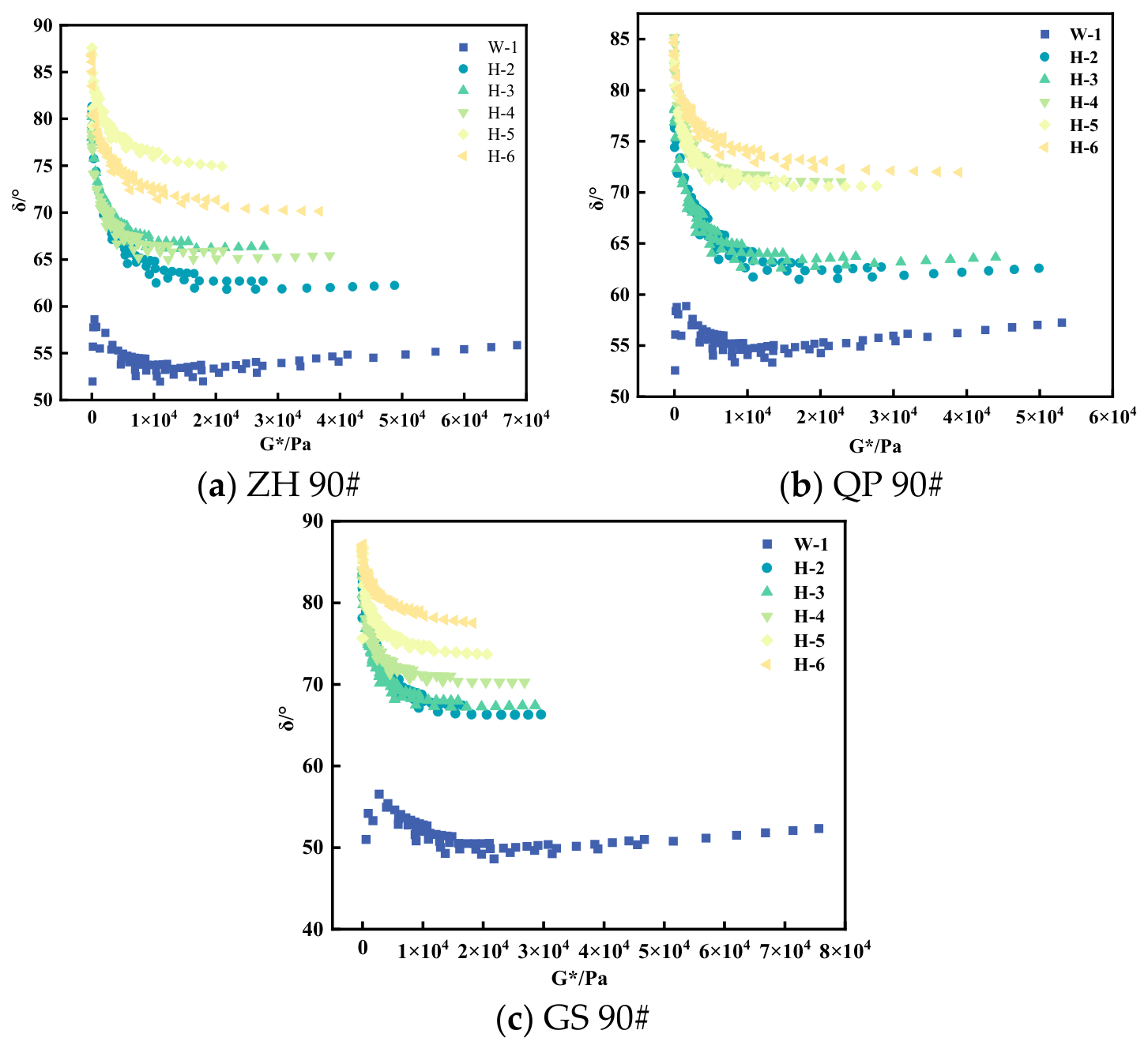
This study investigated three types of base bitumen, QP 90#, ZH 90#, and GS 90#, and used a dynamic shear rheometer system to test the high-temperature rheological behavior of desulfurized rubber powder-modified bitumen with varying solubility. Through temperature scanning, the temperature-dependent variations in the complex shear modulus, phase angle, and rutting factor were obtained. Based on MSCR tests, the creep recovery rate and irreversible creep modulus were calculated to evaluate the material’s resistance to permanent deformation in both linear and nonlinear viscoelastic regions. Furthermore, frequency scans, Black curves, and complex modulus master curves were utilized to analyze the viscoelastic frequency dependence and structural stability characteristics of the modified asphalt. By integrating these rheological parameters, the study systematically elucidated the mechanisms by which rubber powder solubility and base asphalt type influence high-temperature rheological behavior, thereby providing a basis for selecting desulfurized rubber powder-modified asphalt systems with superior high-temperature performance.
3.1. Temperature Sweep
Due to the viscoelastic nature of asphalt, a response lag occurs under sinusoidal loading. This degree of lag is defined as the phase angle
δ, whose value ranges between 0° for an ideal solid and 90° for an ideal fluid.
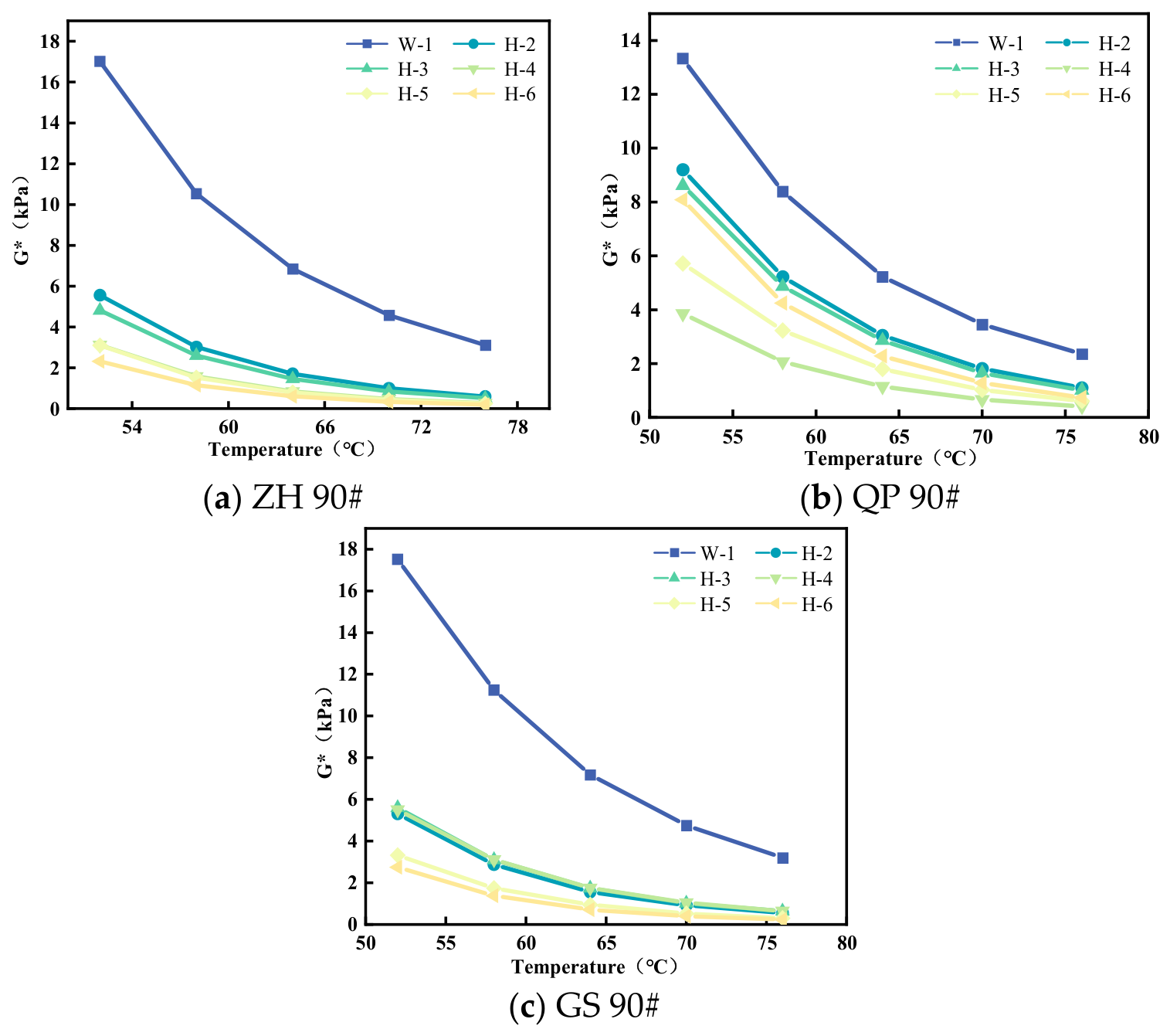
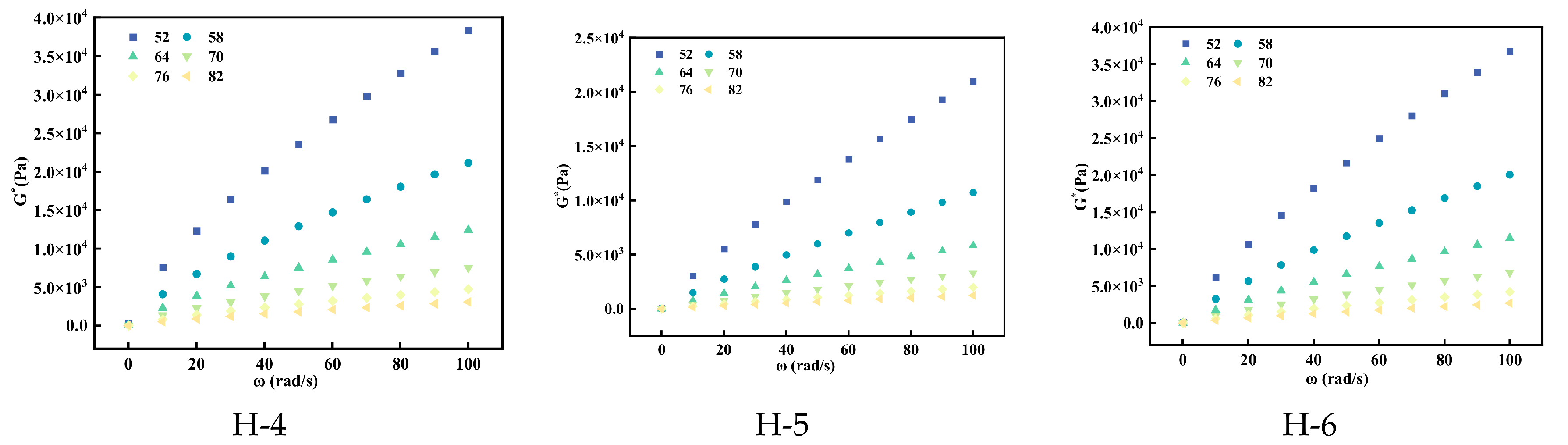
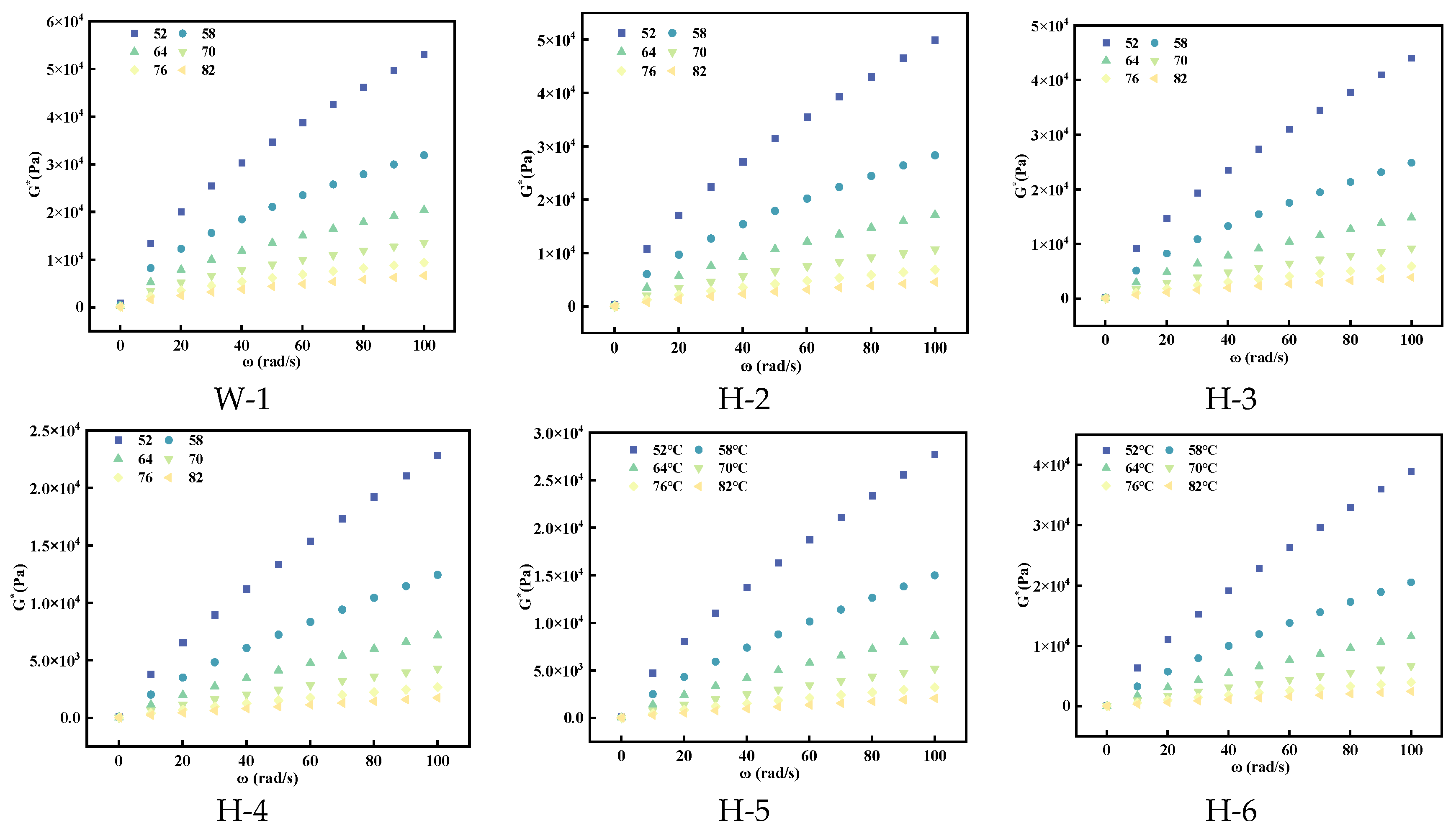
Figure 2 shows the variation in G* for various modified asphalts as a function of relevant factors at different dissolution levels.
(1) Complex shear modulus G*
During the frequency scan ranging from 0.1 to 100 rad/s, the G* values of the different activated rubber powder-modified asphalts varied significantly. As shown in
Figure 2, the G* values of all three asphalts decreased with increasing temperature, indicating that heating enhances the material’s fluidity. Specifically,
Figure 2a shows that the G* value of ZH 90# modified asphalt decreased significantly with rising temperature. W-1 decreased from 17.01 kPa to 3.12 kPa, a reduction of approximately 82%, which is attributed to insufficient high-temperature stability due to low polymer crosslinking density [
25]; whereas the solubility increased from H-3 to H-6, the dispersion of the rubber powder improved, a crosslinked network structure gradually formed, and deformation resistance increased, resulting in a flatter trend in the decrease in G* at high temperatures and a more pronounced inhibitory effect on flow.
Figure 2b shows that although the
G* value of QP 90# modified asphalt decreased overall from 13.318 kPa to 2.36 kPa, a reduction of approximately 82.3%, the decline was relatively gradual. Its moderate degree of molecular chain cross-linking and high thermal stability enable the material to maintain strong resistance to deformation at high temperatures, with minimal fluctuations in the
G* value, demonstrating excellent high-temperature stability. The cross-linking structure of the rubber powder provides a more balanced regulation of the asphalt’s flow properties.
Figure 2c shows that the
G* of GS 90# modified asphalt fluctuates dramatically with increasing temperature, and its high-temperature performance deteriorates rapidly; for example, at W-1, it drops from 17.51 kPa to 3.198 kPa, a decrease of approximately 81.8%. This is attributed to excessive cross-linking of the polymer chains in the rubber powder, which leads to poor high-temperature flowability; insufficient cross-linking at low solubility results in poor stability; while high solubility can increase the degree of cross-linking, excessive cross-linking conversely causes greater fluctuations in
G* at high temperatures, leading to an imbalance in flowability regulation [
26].
A comprehensive comparison shows that QP 90# desulfurized rubber powder-modified asphalt exhibits the most stable performance at high temperatures, with a gradual change in G* value and the ability to effectively maintain high deformation resistance. This is closely related to its appropriate degree of molecular chain cross-linking and good thermal stability. GS 90# modified bitumen exhibits relatively drastic changes in G* values in both low- and high-temperature ranges, with a rapid decline in high-temperature performance. This is attributed to poor high-temperature flow properties caused by excessive cross-linking of the polymer molecular chains. ZH 90# modified asphalt exhibits poor high-temperature performance and high-temperature sensitivity upon cooling, making it prone to deformation in high-temperature environments; the adverse effects of the cross-linked structure under high-temperature conditions reduce the asphalt’s flowability, further weakening its high-temperature stability. Overall, QP 90# demonstrates the best high-temperature rheological properties among the three modified asphalts due to the optimized balance between its cross-linked structure and viscoelasticity.
(2) Phase angle (δ)
δ is an important parameter that describes the balance between a material’s elastic and viscous responses. A smaller phase angle typically indicates that the material exhibits stronger elastic properties (solid-like behavior), while a larger phase angle suggests that the material exhibits more viscous characteristics (liquid-like behavior).
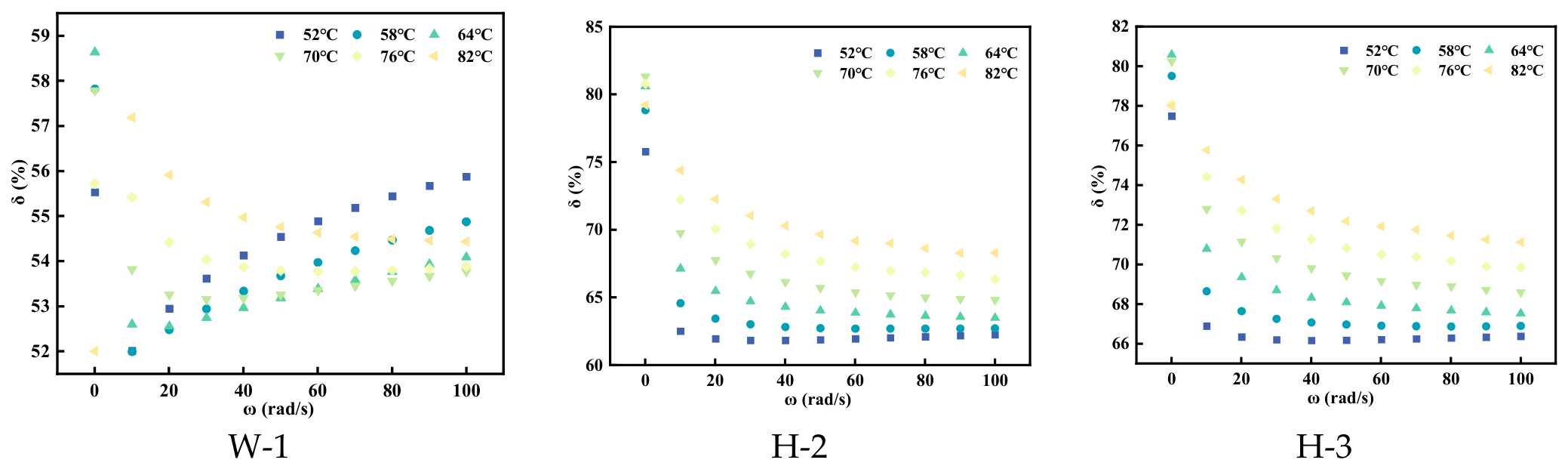
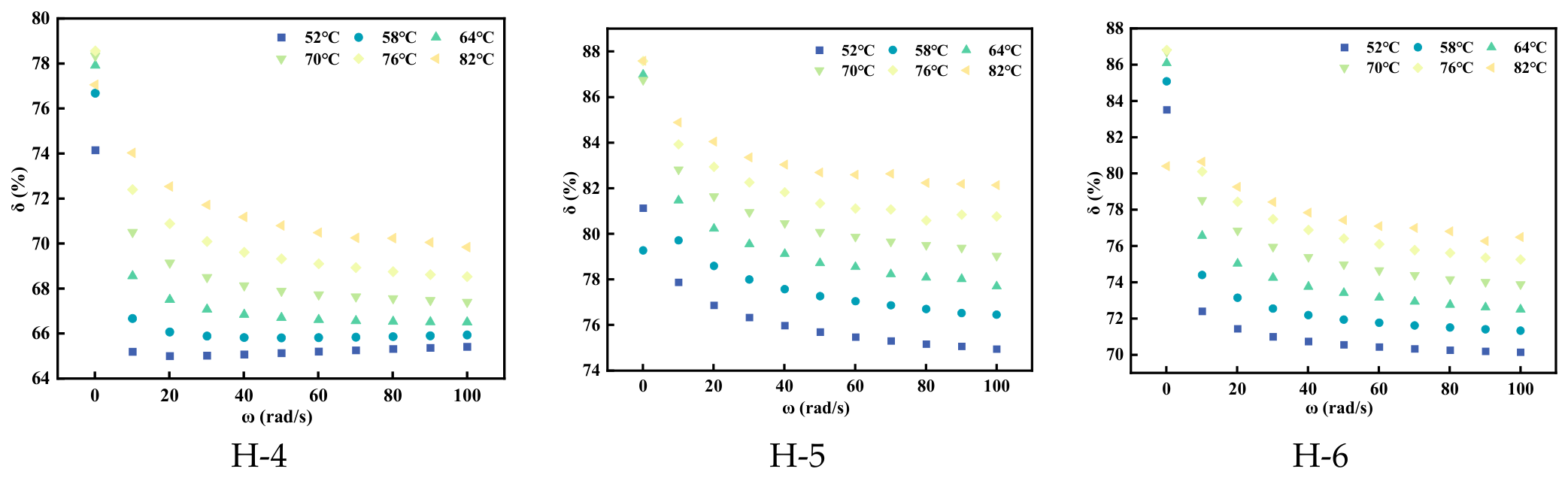
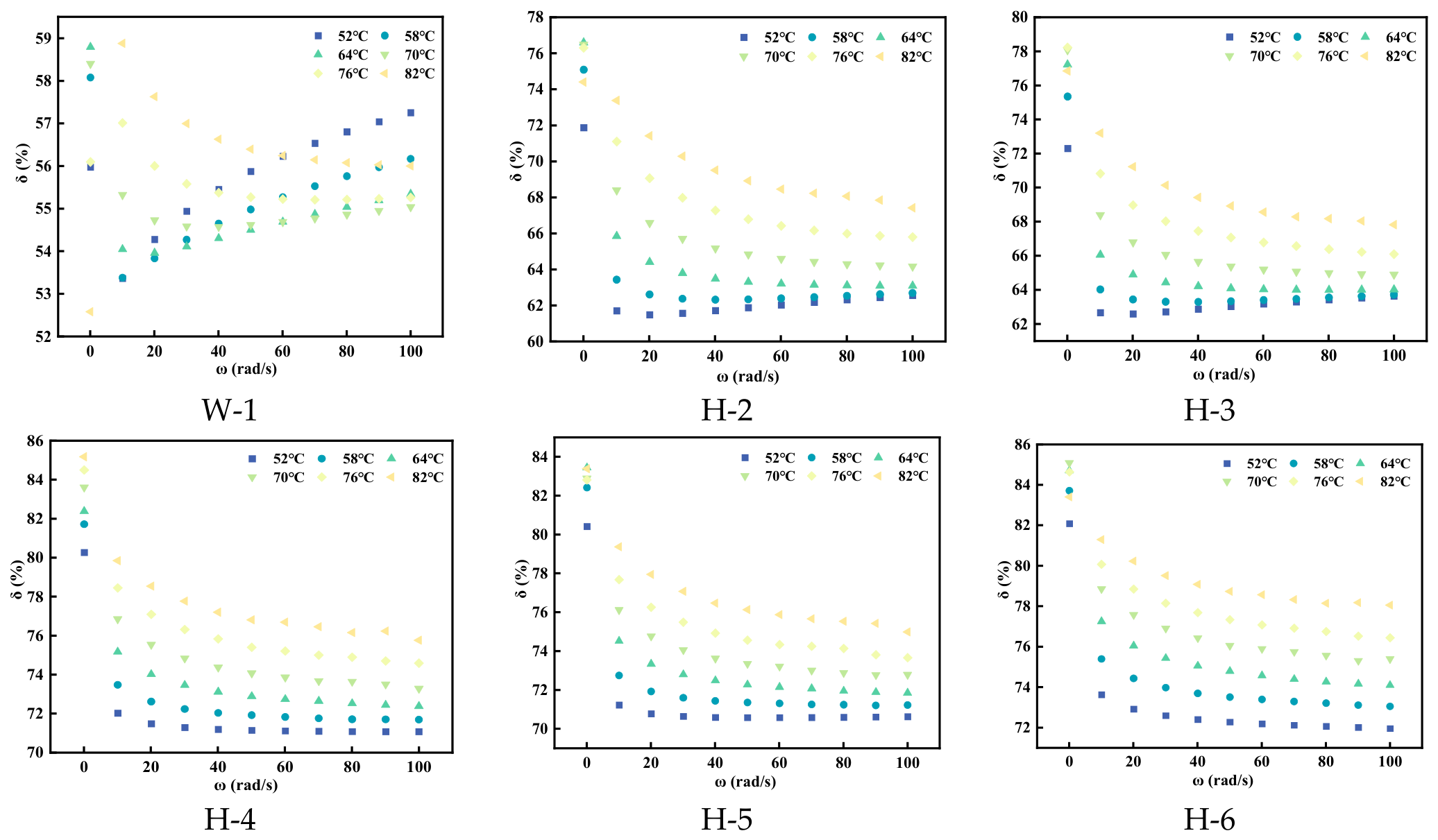
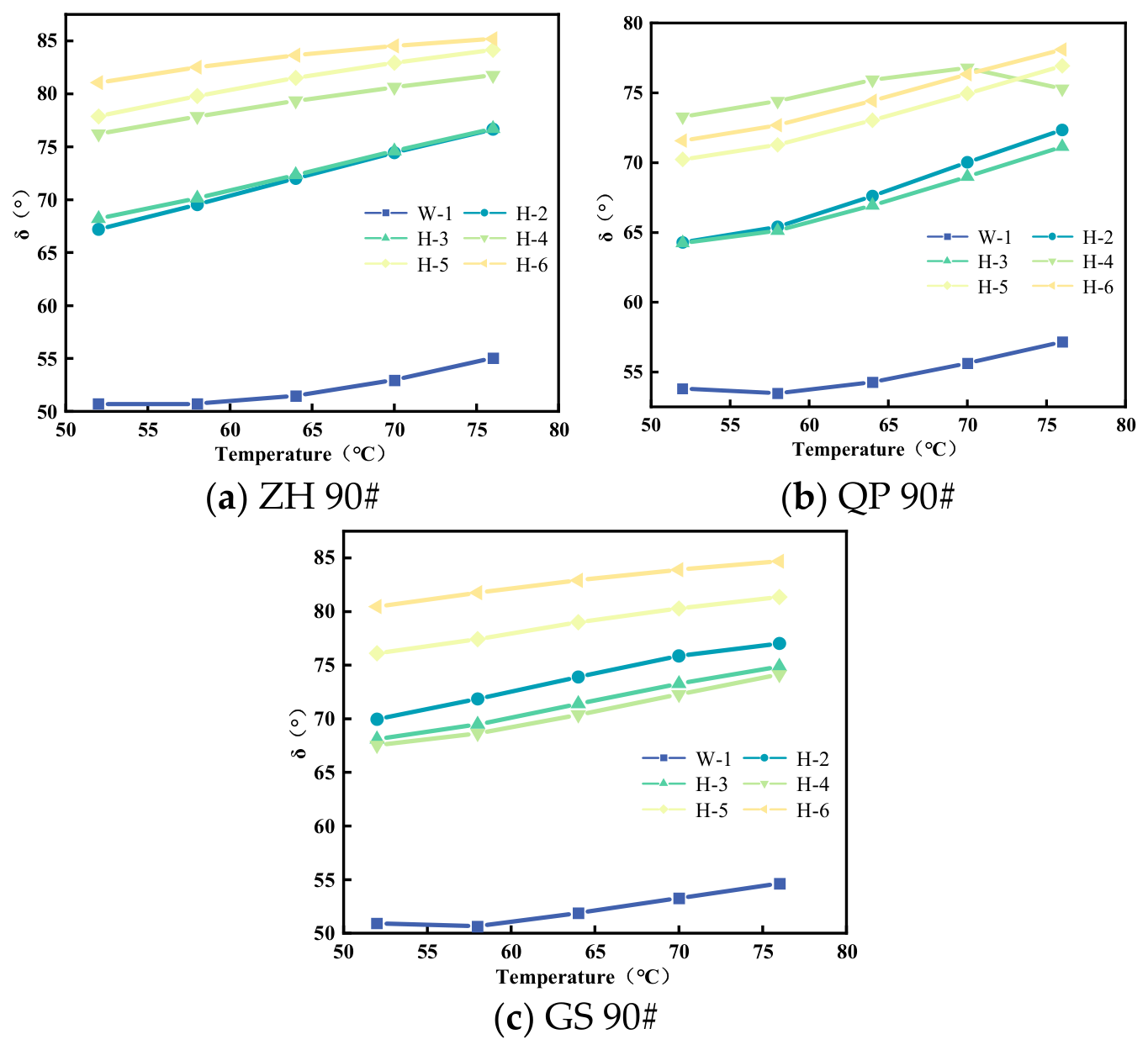
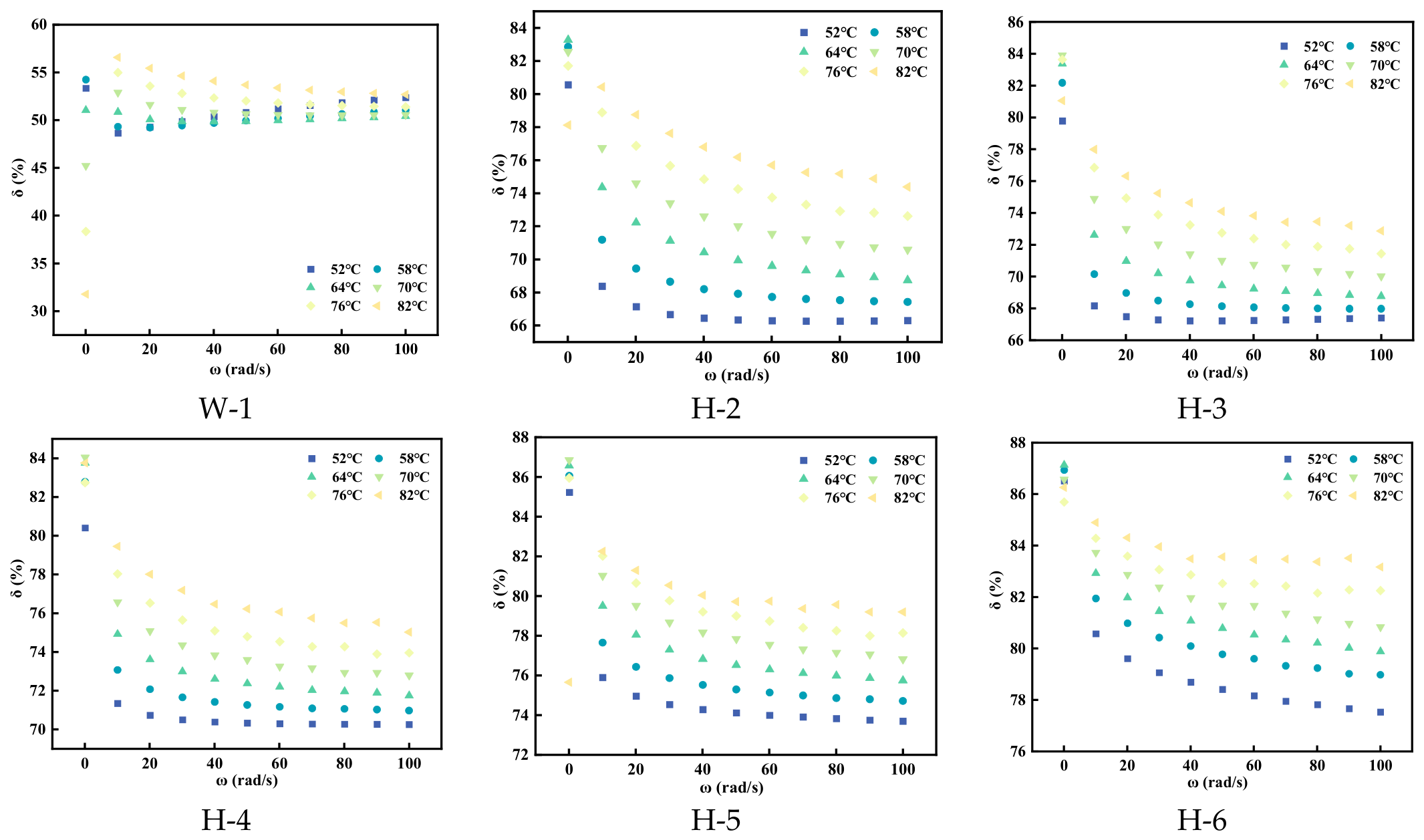
Figure 3 shows the variation in δ for various modified asphalts at different solubility levels.
δ is used to characterize the balance between a material’s elastic and viscous responses. The smaller the δ value, the more the material tends toward elasticity (similar to a solid); conversely, the larger the
δ value, the more pronounced the viscous characteristics (similar to a fluid).
Figure 3 shows the trend in
δ values for various modified asphalts at different dissolution levels.
As shown in
Figure 3a, the phase angle of ZH 90# modified asphalt (W-1, H-2 to H-6) reached 53.47% during the temperature rise from 50 °C to 80 °C, indicating that the material’s viscosity increased and its elasticity decreased as the temperature rose. However, the increase in phase angle was not consistent at the same solubility; H-6 had a phase angle approaching 85° in the high-temperature range of 75–80 °C, indicating that its viscous response predominated, while its elasticity was relatively weak.
Figure 3b shows that the phase angle of H-6 in QP 90# modified bitumen exceeds 75° in the same high-temperature range, exhibiting distinct viscous characteristics; the phase angle of the remaining samples increases more gradually, maintaining a good balance between elasticity and viscosity, and demonstrating good high-temperature stability. As shown in
Figure 3c, the phase angle of GS 90# modified bitumen increased by as much as 66.15% in the 50–80 °C range. This is due to high solubility, which results in more uniform dispersion of the rubber powder and a strengthened cross-linked network, leading to a significant increase in the viscous component but a pronounced loss of elasticity [
27]. Although this change is beneficial for resisting high-temperature deformation, it may lead to excessive fluidity and insufficient elasticity. Considering the overall trends in phase angle evolution and performance at different temperatures, QP 90# modified asphalt demonstrates superior viscoelastic properties.
A comparative analysis of the three asphalts reveals that GS 90# modified asphalt exhibits a phase angle increase of 66.15%. Due to its high solubility, the rubber powder disperses well, and the cross-linked structure is dense, resulting in a marked increase in viscosity and a corresponding decrease in elasticity. The increase for ZH 90# was 53.47%; while viscosity increased, elasticity was significantly reduced, and fluidity was relatively high. QP 90# showed the smallest increase at only 45.39%, demonstrating the optimal balance between elasticity and viscosity. It is particularly stable under high-temperature conditions and exhibits the most reasonable overall viscoelastic properties.
(3) Rutting factor (|G*|/sin δ)
In the SHRP program, |
G*|/sin δ is used to characterize the resistance of asphalt to high-temperature permanent deformation, i.e., the rutting factor.
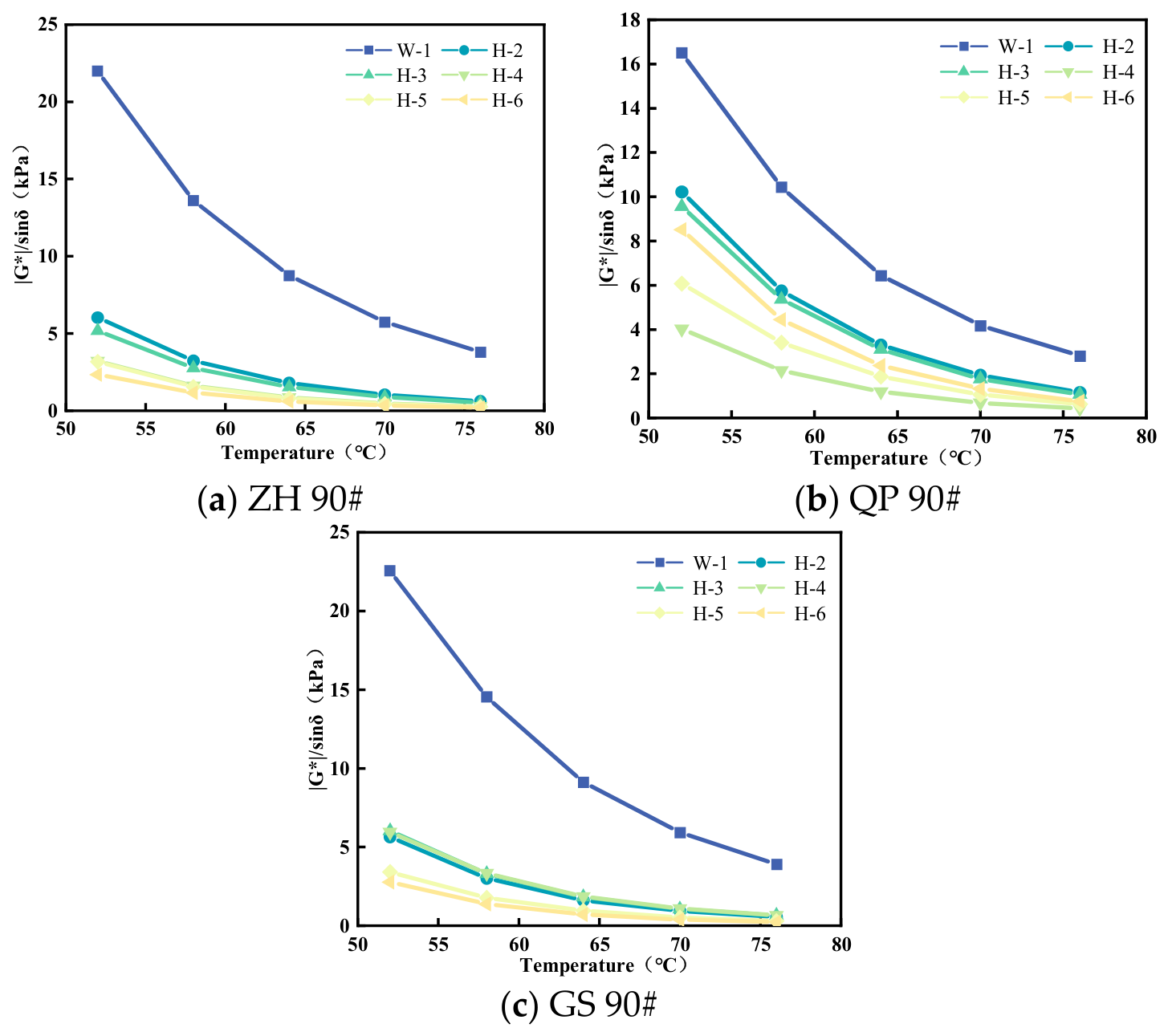
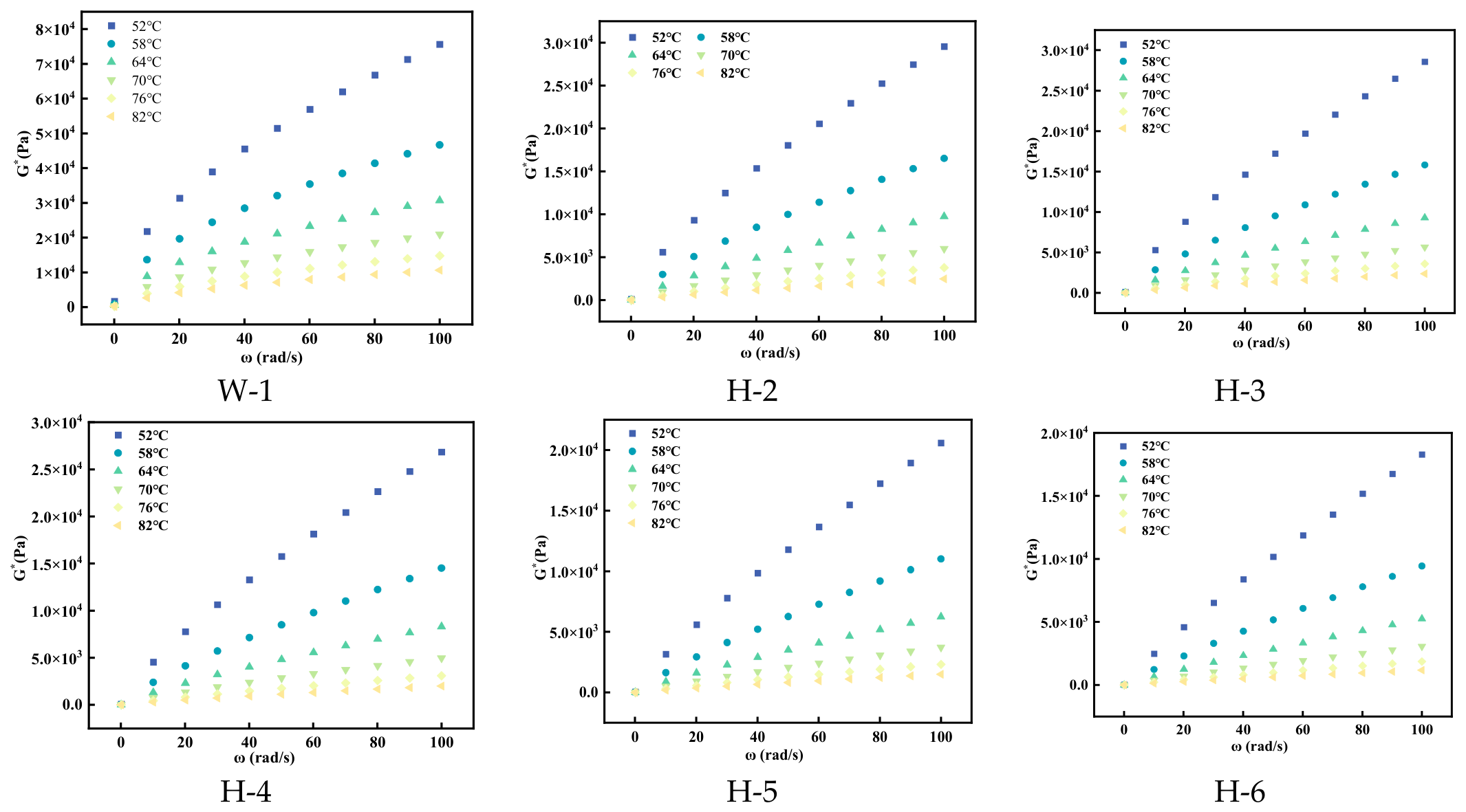
Figure 4 shows the trend of |
G*|/sin δ for modified asphalt at different solubility levels.
As shown in
Figure 4a, the rutting factors of asphalt modified with rubber powder of different solubilities exhibit varying patterns of change with temperature. For ZH 90# modified asphalt, the rutting factor decreases continuously as the temperature rises, with a reduction of approximately 82% in the range from 52 °C to 76 °C, indicating a significant weakening of rutting resistance at high temperatures. This is attributed to the high content of long-chain polymers in the rubber powder, which provides significant modification effects at low temperatures [
28]. However, thermal expansion at high temperatures causes the rubber powder structure to gradually loosen, leading to a rapid decline in the rutting factor. As shown in
Figure 4b, the rutting factor of QP 90# is lower than that of ZH 90# at all temperatures. This is attributed to the better dispersion of low-molecular-weight polymers in the QP 90# rubber powder, which results in good low-temperature performance and stronger structural retention at high temperatures, leading to a slower decline in the rutting factor [
29].
Figure 4c shows that the trend of the rutting factor of GS 90# rubber powder-modified asphalt with temperature is similar to that of QP 90#, but its low-temperature performance is superior, with a rutting factor of 22.56 at 52 °C and 3.92 at 76 °C. Although the high-temperature value is lower than the low-temperature value, it still outperforms the performance of ZH 90# at the same temperatures, demonstrating strong overall rutting resistance and good adaptability across different temperature ranges.
In summary, the rutting factors of asphalt modified with rubber powder of different solubilities exhibit significant temperature dependence. ZH 90# experiences a sharp decline in rutting factor at high temperatures, resulting in a rapid decrease in rutting resistance. QP 90# shows a gradual change in rutting factor, with outstanding high-temperature rutting resistance and balanced overall performance. GS 90# exhibits a high rutting factor at low temperatures; although it decreases somewhat at high temperatures, it still maintains a certain advantage in rutting resistance. Among these, QP 90# leverages the advantages of its polymer structure to effectively maintain rutting resistance under high-temperature conditions while meeting multi-temperature requirements, making it the optimal and most balanced choice for resistance to high-temperature permanent deformation. Meanwhile, GS 90# demonstrates excellent low-temperature performance and relatively stable high-temperature performance. ZH 90# suffers from significantly reduced rutting factors at high temperatures, limiting its rutting resistance. Overall, QP 90# is the most advantageous choice, offering both balanced performance and superior high-temperature properties.
3.2. MSCR Analysis
In the Superpave framework,
G*/sin
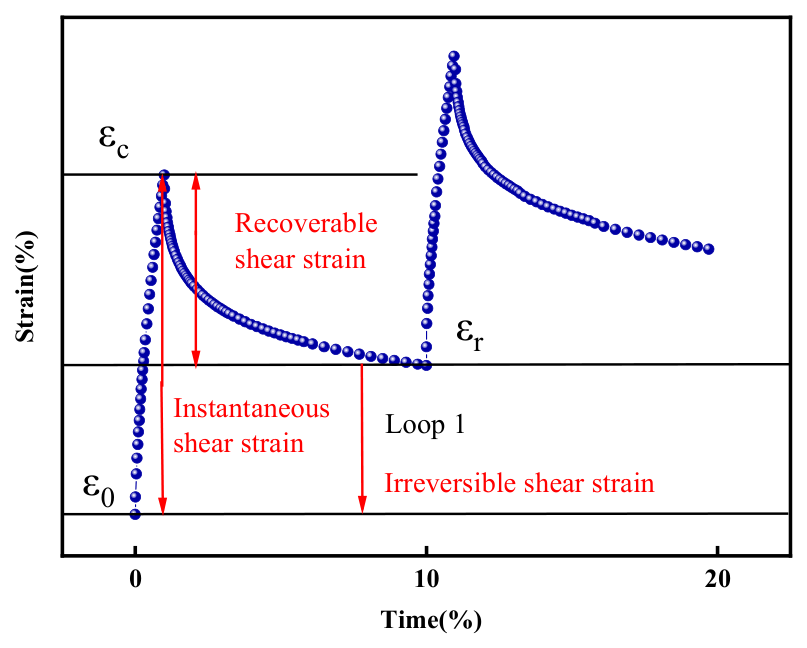
δ is commonly used to evaluate the high-temperature performance of asphalt; however, this parameter only reflects the material’s behavior within the linear viscoelastic range. In contrast, the MSCR test separates permanent deformation from total deformation, providing a more accurate representation of the evolution of asphalt’s viscoelastic properties during loading. Additionally, its creep-recovery loading regimen effectively simulates the formation of rutting in pavements. The test employs two stress levels: 0.1 kPa to characterize linear viscoelastic response, and 3.2 kPa to evaluate nonlinear viscoelastic behavior. The primary evaluation indices include the average recovery rate (R) and the average irreversible creep modulus (J
nr). The former reflects the asphalt’s elastic recovery capacity and stress dependence during loading, while the latter characterizes the degree of permanent deformation and is closely related to the pavement’s resistance to rutting [
30,
31]. The calculation methods for R and J
nr are shown in Equations (5) and (6), and the definitions of relevant parameters are illustrated in
Figure 5. In this study, the MSCR test temperature range was 52 °C to 64 °C, with stress levels of 0.1 kPa and 3.2 kPa, respectively. The specific test procedure followed AASHTO M332-18 [
32].
The average creep recovery rate
R and the average irreversible creep compliance J
nr are calculated using Equations (5) and (6).
In the equations, ; ; ε0: initial strain; εc: strain at the end of creep; εr: strain at the end of recovery.
At 0.1 kPa and 3.2 kPa, the creep recovery rate for a single creep cycle is calculated using Equations (7) and (8), the average creep recovery rate over 10 creep cycles was calculated using Equations (9) and (10), the irreversible creep compliance was calculated using Equations (11) and (12), and the mean irreversible creep compliance over 10 creep cycles was calculated using Equations (13) and (14).
(1) Average Elastic Recovery Rate (R)
The creep recovery rate measures the ability of asphalt to recover from its original deformation after the load is removed; a higher R value indicates better resistance to rutting.
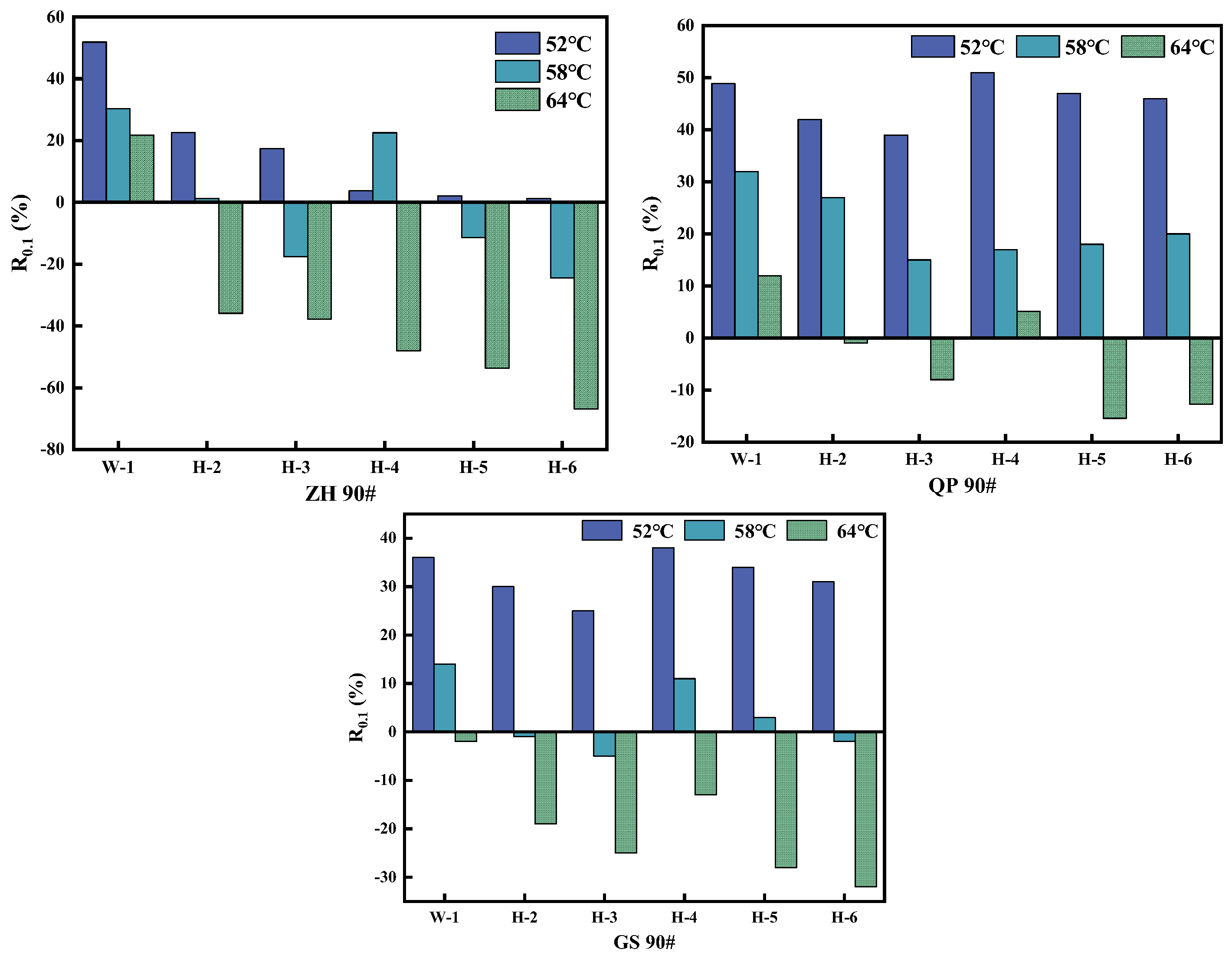
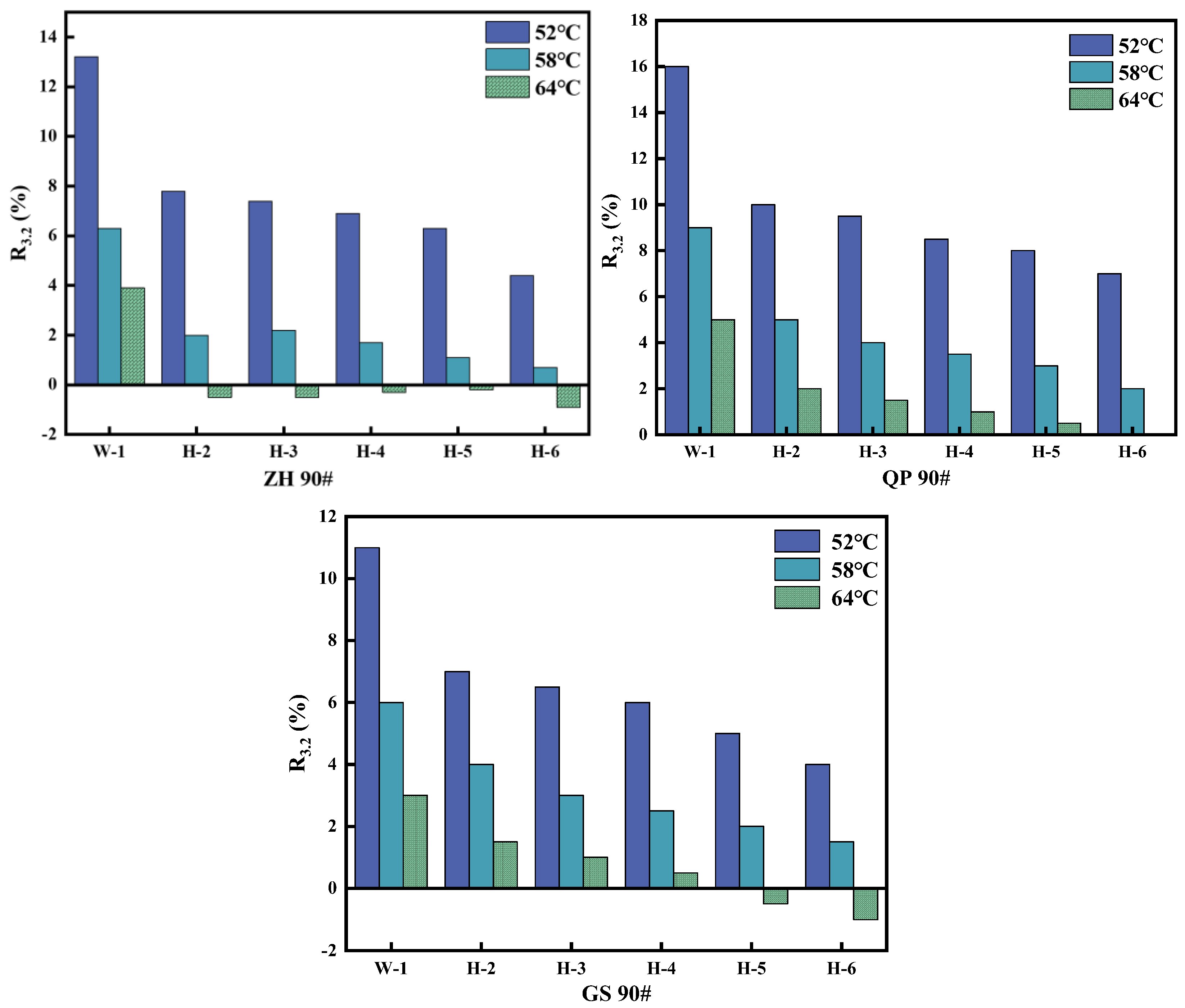
Figure 6 shows the variation in the average elastic recovery rate of activated rubber powder-modified asphalt within the temperature range of 52 °C to 64 °C.
As shown in
Figure 6 for the ZH 90# modified asphalt, at a stress level of 0.1 kPa, the R
0.1 value of the unactivated sample W-1 was approximately 50% at 52 °C; after activation, this value decreased nonlinearly as solubility increased. When the temperature rises to 58 °C, R
0.1 for W-1 drops to 30%, while that of the activated sample approaches zero or even becomes negative, reaching its highest negative value at 64 °C. This indicates that high temperatures cause viscous flow to dominate, with elastic recovery capacity nearly lost, thereby confirming the dissociative effect of activation on the rubber powder cross-linking network and the significant influence of temperature on the viscoelastic behavior of asphalt.
Negative recovery values (R < 0) observed in the MSCR test indicate that the sample undergoes further deformation rather than recovering after load removal. This phenomenon is not a measurement artifact but reflects the material’s rheological behavior when viscous flow dominates to such an extent that time-dependent creep continues even after unloading. In practical terms, negative R values indicate extremely poor elastic recovery and high susceptibility to permanent deformation, effectively meaning the material behaves as a viscous fluid rather than a viscoelastic solid. According to AASHTO M332-18, negative R values at the standard test temperature indicate that the material fails to meet the minimum elastic recovery requirements for all traffic grades, thus significantly limiting its practical application in pavement construction. The occurrence of negative recovery values in this study is attributed to the combination of high temperature (≥64 °C) and elevated rubber powder solubility, which promotes viscous flow while simultaneously diminishing the elastic contribution of the polymer network.
Analysis of the QP 90# modified asphalt in
Figure 6 reveals that at 52 °C, both W-1 and R
0.1 of the activated sample reached 55%, but its decay rate was lower than that of ZH 90#. At 58 °C, W-1 dropped to 30%, while the activated sample remained within the 10–20% range. At 64 °C, R
0.1 remained positive for some samples, indicating a slower decline in elastic recovery capacity at high temperatures, with both rutting resistance and stability superior to those of ZH 90#. In contrast, for the GS 90# modified asphalt shown in
Figure 6, both W-1 and the R
0.1 of the activated sample were generally lower than those of QP 90# at 52 °C; at 58 °C, W-1 dropped to 15%, with activated samples concentrated between 0% and 10%, and the proportion of negative values increased at 64 °C. This indicates pronounced viscous flow characteristics at high temperatures, with elastic recovery significantly affected by temperature, and rutting resistance inferior to that of QP 90#.
In summary, all three asphalts conform to the general rule that “R0.1 decreases as temperature increases,” and the R0.1 values of activated rubber powder are generally lower than those of unactivated rubber powder, verifying the mechanism whereby activation promotes the breakdown of the rubber powder cross-linking network and enhances elastic dissipation effects. Under low-stress conditions, increased solubility causes the R0.1 value to exhibit nonlinear decay, which is closely related to the uneven particle size distribution of the rubber powder and the disruption of the three-dimensional network structure. Among them, QP 90# has the highest overall R0.1 value and the smallest high-temperature decay; it still retains some positive values at 64 °C, demonstrating the best rutting resistance. ZH 90# exhibited the highest proportion of negative values at high temperatures, the most severe loss of elastic recovery, and the poorest high-temperature performance. GS 90# fell between the two, exhibiting significant viscous flow at high temperatures, with rutting resistance inferior to that of QP 90#.
As shown in
Figure 7, the R
3.2 value of ZH 90# rubber powder-modified asphalt continues to decrease as the temperature rises; in particular, it is significantly lower at 64 °C than at 52 °C, indicating that the material’s viscous characteristics increase at high temperatures, while its elastic recovery capacity weakens. In contrast, the R
3.2 value of QP 90# modified asphalt is generally higher, and its rate of decline with increasing temperature is lower than that of ZH 90#, suggesting that QP 90# retains a certain degree of elastic recovery capability under high-temperature conditions. The R
3.2 value of GS 90# is slightly lower than that of ZH 90# but higher than that of QP 90#. Furthermore, its R
3.2 value decreases gradually with rising temperature, turning negative at 64 °C, indicating that the material’s recovery capacity is extremely limited at very high temperatures, with viscous behavior becoming the dominant factor.
In summary, all three asphalts follow the common pattern of “decreasing R value with rising temperature.” This is due to increased molecular chain motion at higher temperatures, which enhances viscosity and degrades creep recovery capacity. Among them, ZH 90# exhibits the most rapid decline in recovery capacity at high temperatures; at 64 °C, viscous behavior dominates, and elastic recovery is severely weakened. QP 90# consistently exhibits the highest R3.2 value, with the smallest decrease at high temperatures; it remains positive at 64 °C, demonstrating the best elastic recovery performance among the three. GS 90# experiences a sharp decline in R3.2 at high temperatures, turning negative at 64 °C; at extremely high temperatures, viscous behavior completely dominates, and recovery capacity is virtually lost. Overall, QP 90# exhibits more balanced elastic recovery capabilities under various temperature conditions and demonstrates outstanding resistance to deformation. ZH 90# and GS 90# exhibit insufficient high-temperature performance, with GS 90# having the poorest high-temperature stability. It is evident that under a stress of 3.2 kPa, the creep recovery rate of modified asphalt decreases nonlinearly due to the synergistic effect of solubility and temperature. This is attributed to the enhanced elastic dissipation effect caused by the disintegration of the three-dimensional network structure of the rubber powder. The activation process increases the free volume fraction of polymer segments, driving the viscoelastic behavior to shift from entropy-elastic to viscous flow.
(2) Irreversible Creep Modulus Jnr
The irreversible creep modulus J
nr is a key parameter for quantitatively evaluating the degree of plastic flow in asphalt; an increase in its value shows a significant negative correlation with the material’s resistance to deformation at high temperatures.
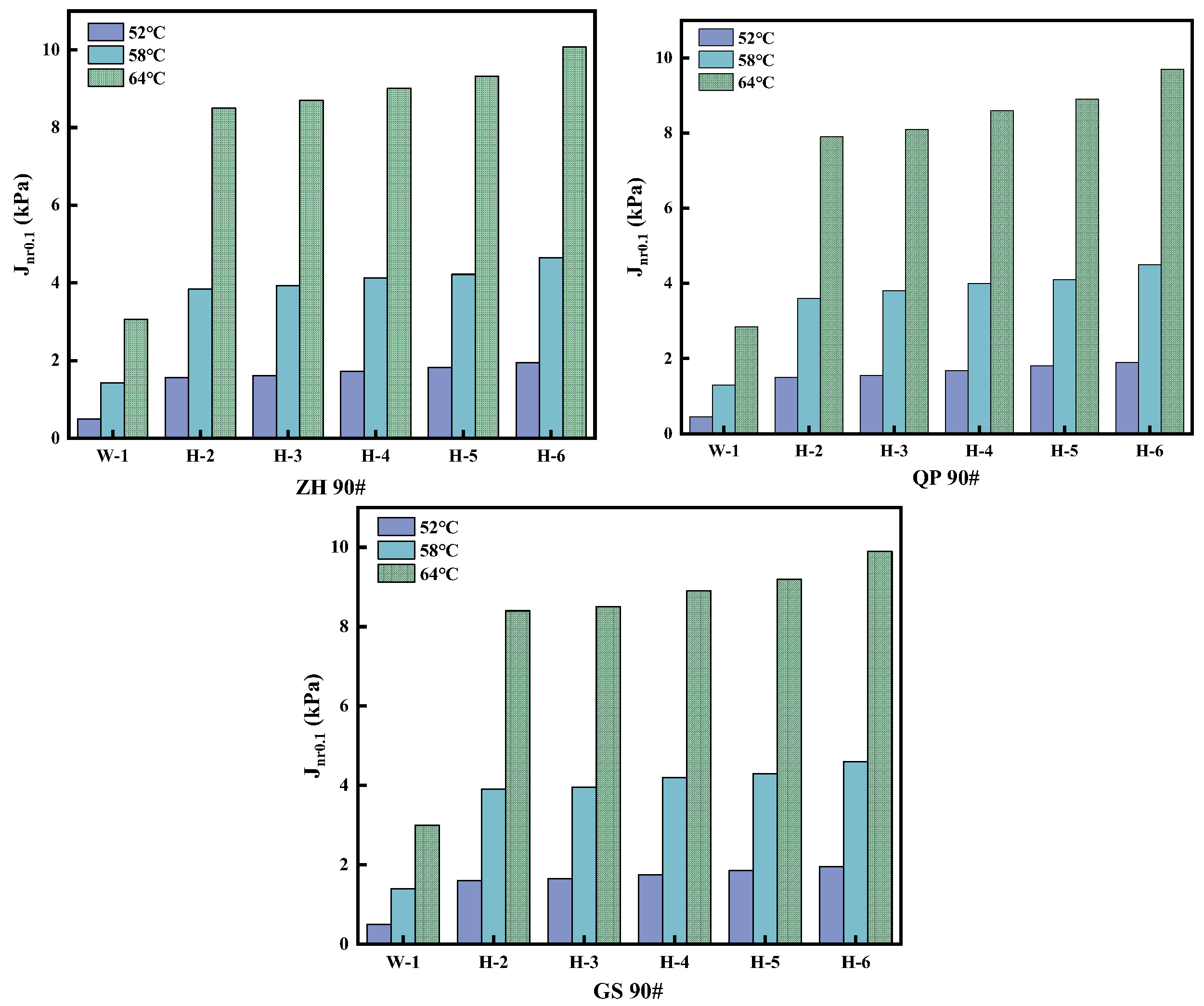
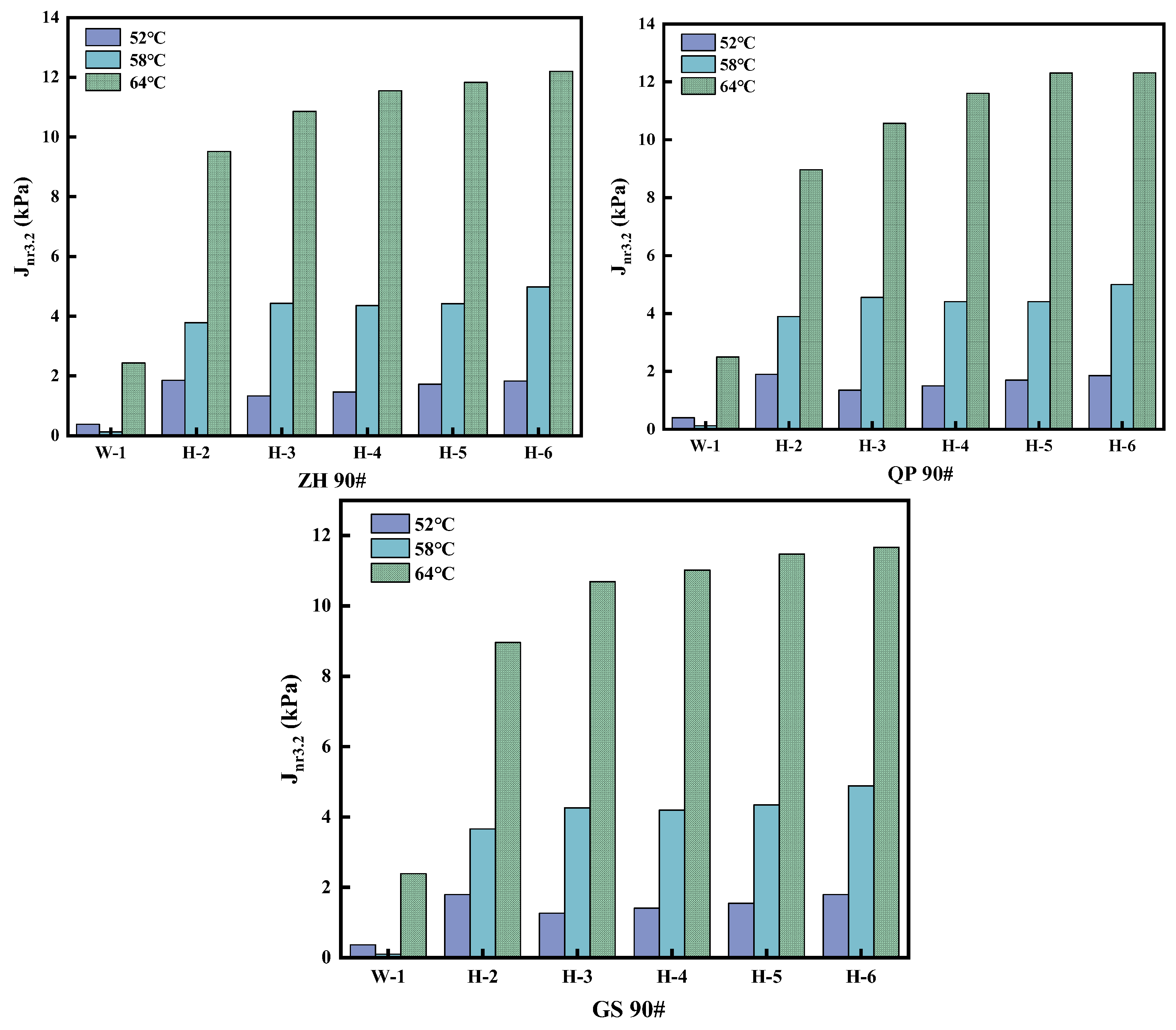
Figure 8 shows the Jnr test results for various rubber powder-modified asphalts under different stress conditions.
The measured Jnr and R values were compared with the specification limits defined in AASHTO M332-18. According to this specification, the maximum allowable Jnr at 3.2 kPa for standard traffic (S) grade is 4.0 kPa−1; for heavy (H) grade, it is 2.0 kPa−1; for very heavy (V) grade, it is 1.0 kPa−1; and for extreme (E) grade, it is 0.5 kPa−1. At 64 °C, only the unactivated sample W-1 of QP 90# modified asphalt exhibited Jnr values approaching the S-grade limit, while most activated samples showed Jnr values exceeding 4.0 kPa−1. This indicates that while twin-screw extrusion activation improves rubber-asphalt compatibility, it significantly reduces high-temperature deformation resistance, necessitating further optimization of the activation process to achieve a balance between compatibility and rutting resistance. The corresponding R values were generally below the minimum recommended thresholds for all traffic grades at temperatures above 58 °C.
As shown in
Figure 8, the Jnr
3.2 values of all three modified asphalts increase significantly with rising temperature, and the activated samples generally exhibit higher values than the unactivated W-1 samples. Specifically, for ZH 90# modified asphalt at 52 °C, the J
nr3.2 value of W-1 is 0.5 kPa
−1, which increases to 1.5–2 kPa
−1 after activation. When the temperature rose to 58 °C and 64 °C, the J
nr3.2 values of W-1 increased to 1.5 kPa
−1 and 3 kPa
−1, respectively, and further increased to 3–4 kPa
−1 and 8–10 kPa
−1 after activation, indicating that the dissociation of the cross-linked network intensified at high temperatures, resulting in a significant reduction in deformation resistance. The trend of the J
nr3.2 value for QP 90# at various temperatures is consistent with that of ZH 90#, but the values are slightly lower, indicating relatively better high-temperature rheological stability. The J
nr3.2 value range for GS 90# is similar to that of QP 90#, but the viscosity response in the high-temperature range is more pronounced, and the rate of decline in deformation resistance is comparable to that of ZH 90#. Therefore, the activation process intensifies the dissociation of the rubber powders’ cross-linked network by increasing solubility, leading to an increase in the Jnr
3.2 value and a weakening of high-temperature deformation resistance; QP 90#, due to its strong molecular chain restructuring ability, exhibits the slowest rate of high-temperature performance degradation and the best overall performance.
As shown in
Figure 9, the J
nr3.2 values of all three modified asphalts exhibit distinct thermally induced viscoelastic decay characteristics, and the J
nr3.2 values corresponding to the activated rubber powder are generally higher than those of the unactivated sample W-1. Specifically, the J
nr3.2 value of ZH 90# modified asphalt after activation at 64 °C reaches 10–12 kPa
−1, indicating the most severe deterioration in deformation resistance. The J
nr3.2 of QP 90# modified asphalt after activation at the same temperature was also 10–12 kPa
−1, similar to that of ZH 90#, but this value was slightly lower below 58 °C, and the decay rate was relatively gentle. For GS 90# modified asphalt, the J
nr3.2 value after activation at 64 °C is 8–10 kPa
−1, which, although lower than that of ZH 90#, still exhibits dominant viscous flow, resulting in weaker deformation resistance compared to QP 90#. In summary, the activation process generally weakens the material’s high-temperature deformation resistance. QP 90# exhibits the best high-temperature performance due to its excellent cross-linking stability and molecular chain synergy, while ZH 90# and GS 90# require optimization in terms of network stability and interfacial compatibility, respectively, to improve their rheological behavior.
As shown in
Figure 8 and
Figure 9, as temperature increases, the J
nr value of the asphalt continues to rise, high-temperature stiffness decreases, and the ability to resist external loads weakens. At different stress levels, increasing the solubility of the rubber powder causes the Jnr value of the modified asphalt to rise, indicating that the activated rubber powder increases the viscous components within the system, preventing complete recovery from deformation and consequently leading to deterioration in high-temperature performance. Based on a comprehensive evaluation of multiple factors, including creep recovery rate, irreversible creep modulus, and rubber powder activation degree, the QP 90# activated rubber powder-modified asphalt exhibits the best stability and resistance to deformation under high-temperature conditions. ZH 90# activated rubber powder modified asphalt has a lower high-temperature recovery rate and the weakest rutting resistance; although GS 90# has certain advantages, its high-temperature performance still falls short of QP 90#. Therefore, QP 90# activated rubber powder modified asphalt possesses superior high-temperature deformation resistance and rutting resistance, making it the optimal choice for road construction projects in high-temperature or rutting-prone areas.
3.5. Complex Modulus Master Curves
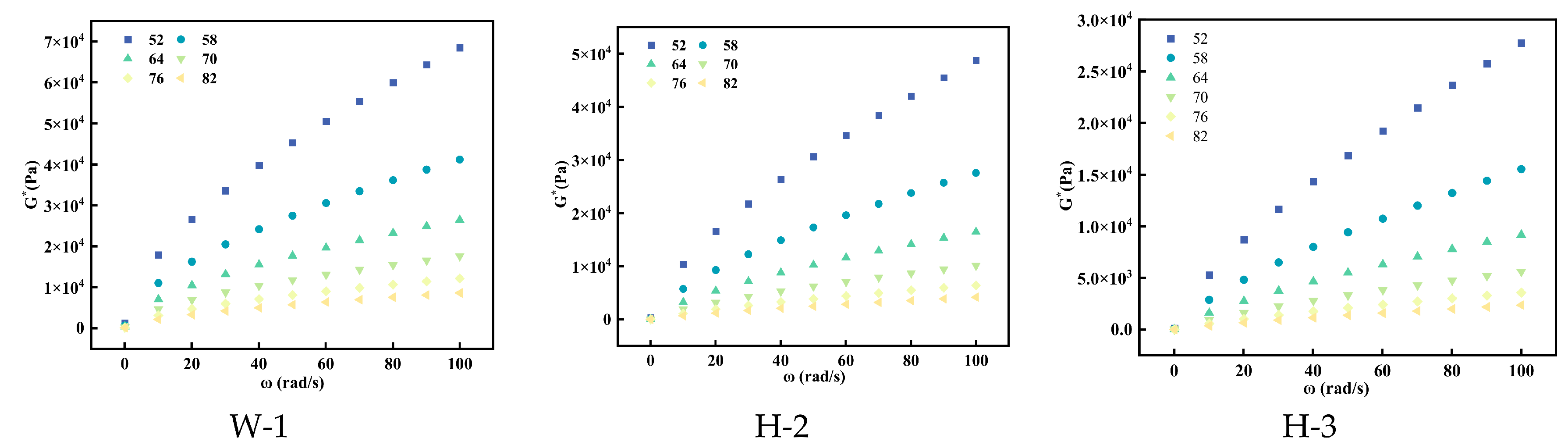
The complex modulus master curves were constructed using the time-temperature superposition principle (TTSP) at a reference temperature of 25 °C. Frequency sweep data obtained at multiple temperatures (ranging from 40 °C to 76 °C) were horizontally shifted along the logarithmic frequency axis to form a continuous master curve spanning 10
−2 to 10
8 Hz. The shifting procedure was performed using TA Universal Analysis software (version 5.2, TA Instruments, New Castle, DE, USA), and the quality of the master curve construction was verified by the smoothness of the resulting curves and the absence of discontinuities. The master curves are shown in
Figure 17.
The complex modulus master curves were constructed using the time-temperature superposition principle (TTSP) at a reference temperature of 25 °C. Frequency sweep data obtained at multiple temperatures (ranging from 40 °C to 76 °C) were horizontally shifted along the logarithmic frequency axis to form a continuous master curve spanning 10
−2 to 10
8 Hz. The shift factors
were determined using the Williams-Landel-Ferry (WLF) Equation (15):
where
T0 is the reference temperature (25 °C), and
C1 and
C2 are material-specific constants determined by nonlinear least-squares regression. The shifting procedure was performed using TA Instruments TRIOS software (version 5.1.1, TA Instruments, New Castle, DE, USA), and the quality of the master curve construction was verified by the smoothness of the resulting curves and the absence of discontinuities. The master curves are shown in
Figure 17.
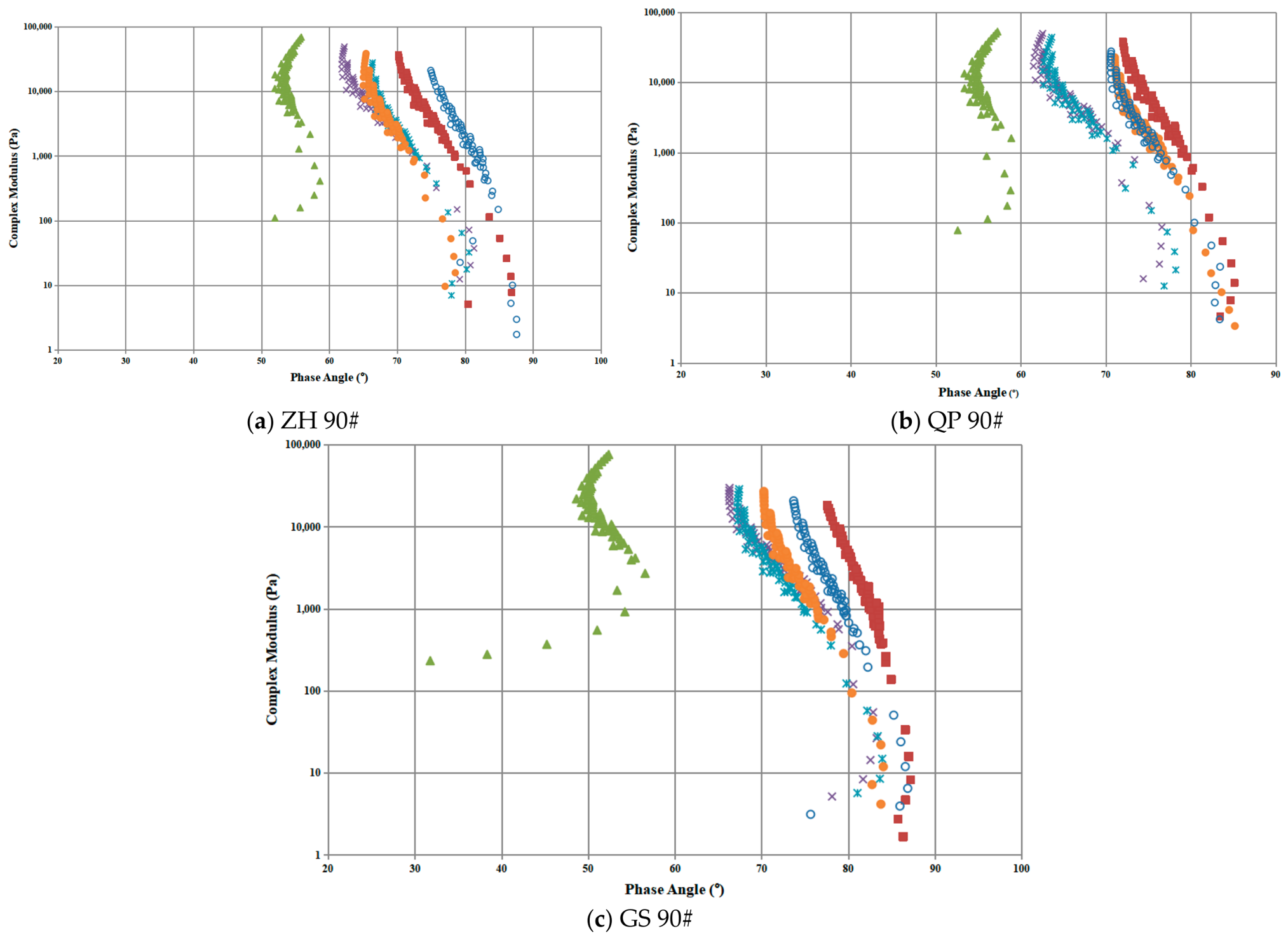
Figure 17 shows the main curves of modified bitumen using different activated rubber powders at 25 °C.
At a reference temperature of 25 °C, the complex modulus curves of asphalt modified with different activated rubber powders exhibit the following patterns: in the low-frequency range, the modulus decreases rapidly as frequency decreases, while in the high-frequency range, the modulus increases gradually as frequency increases. As shown in
Figure 17a, ZH 90# modified asphalt exhibits typical viscous fluid behavior in the low-frequency range, with a phase angle close to 90° and an exponential decay of the complex modulus as frequency decreases, indicating that the molecular segments have achieved sufficient relaxation. When the frequency exceeds the critical value of 10 rad/s for the viscoelastic transition, the system shifts to being dominated by the storage modulus, with G* rising to the order of 10
7 Pa, exhibiting glassy elastic characteristics.
Figure 17b shows that although QP 90# modified asphalt maintains a similar rheological trend, its modulus decay rate is slightly lower than that of ZH 90#, indicating that its binder network possesses a higher entanglement density. In contrast,
Figure 17c shows that the modulus of GS 90# modified bitumen decreases most rapidly in the low-frequency region, with the phase angle remaining above 85°, reflecting restricted molecular chain motion due to insufficient swelling of the rubber powder. At the same time, the increase in its storage modulus in the high-frequency range (>50 rad/s) tends to slow down, which is related to the gradient structure of the interfacial transition layer. The critical frequency shift observed in all three cases quantitatively characterizes the regulatory effect of differences in rubber powder solubility on the kinetics of the viscoelastic transition.
A comparative analysis of dynamic shear rheological properties revealed significant differences in the viscoelastic characteristic curves of various modified asphalts. Under identical frequency conditions, the complex modulus G* of ZH 90# modified bitumen was significantly higher than that of QP 90# and GS 90#, particularly in the high-frequency range, where the difference in modulus could reach 0.5 to 1 order of magnitude, indicating that ZH 90# possesses superior elastic recovery capability under high-shear loads. This result is closely related to the solubility parameters in the rubber powder modification system; the lower solubility of rubber powder in ZH 90# modified asphalt leads to a denser three-dimensional network structure, thereby enhancing the material’s resistance to shear deformation. Further analysis of the main curve morphology reveals that ZH 90# modified asphalt exhibits significant nonlinear growth in the 0.1–10 rad/s frequency range, with the critical frequency of its viscoelastic transition zone shifting to the left by approximately 0.8 logarithmic cycles relative to the reference sample, reflecting the phenomenon of an earlier glass transition caused by the hindrance of activated rubber powder molecular segment motion. In contrast, the modulus of QP 90# and GS 90# modified bitumen varies more gradually with frequency, indicating a more thorough compatibility reconstruction between the rubber powder phase and the bitumen matrix, resulting in the formation of a gradient-type interfacial transition layer. The fundamental cause of the aforementioned differences in rheological response lies in the regulatory effect of rubber powder activation process parameters (such as shear stress and activation time) on the multiscale structure of modified asphalt (degree of swelling, crosslinking density, and entanglement network). These characteristics can be quantitatively evaluated using the principal curve of the energy storage modulus constructed based on the superposition principle of time and temperature.
It should be noted that while ZH 90# modified asphalt exhibited higher complex modulus values under certain frequency and temperature conditions, the comprehensive evaluation of multiple rheological parameters, including the decay pattern of G*, phase angle evolution, creep recovery rate, and irreversible creep compliance, consistently identified QP 90# modified asphalt as possessing the most balanced and stable high-temperature performance. The superiority of QP 90# lies in its optimal viscoelastic balance and structural stability, rather than in any single parameter.




 and
and