Strength–Toughness–Wear Coupling Mechanisms of Low-Carbon Martensitic Wear-Resistant Steel Enabled by Ti/Nb Microalloying-Driven Carbide Precipitation and Synergistic Regulation of Tempered Microstructures

Abstract
1. Introduction
2. Materials and Experimental Methods
2.1. Materials Design and Preparation
2.2. Heat-Treatment Schedules and Sample Designation
2.3. Microstructural and Second-Phase Characterization
2.4. Mechanical Property Testing
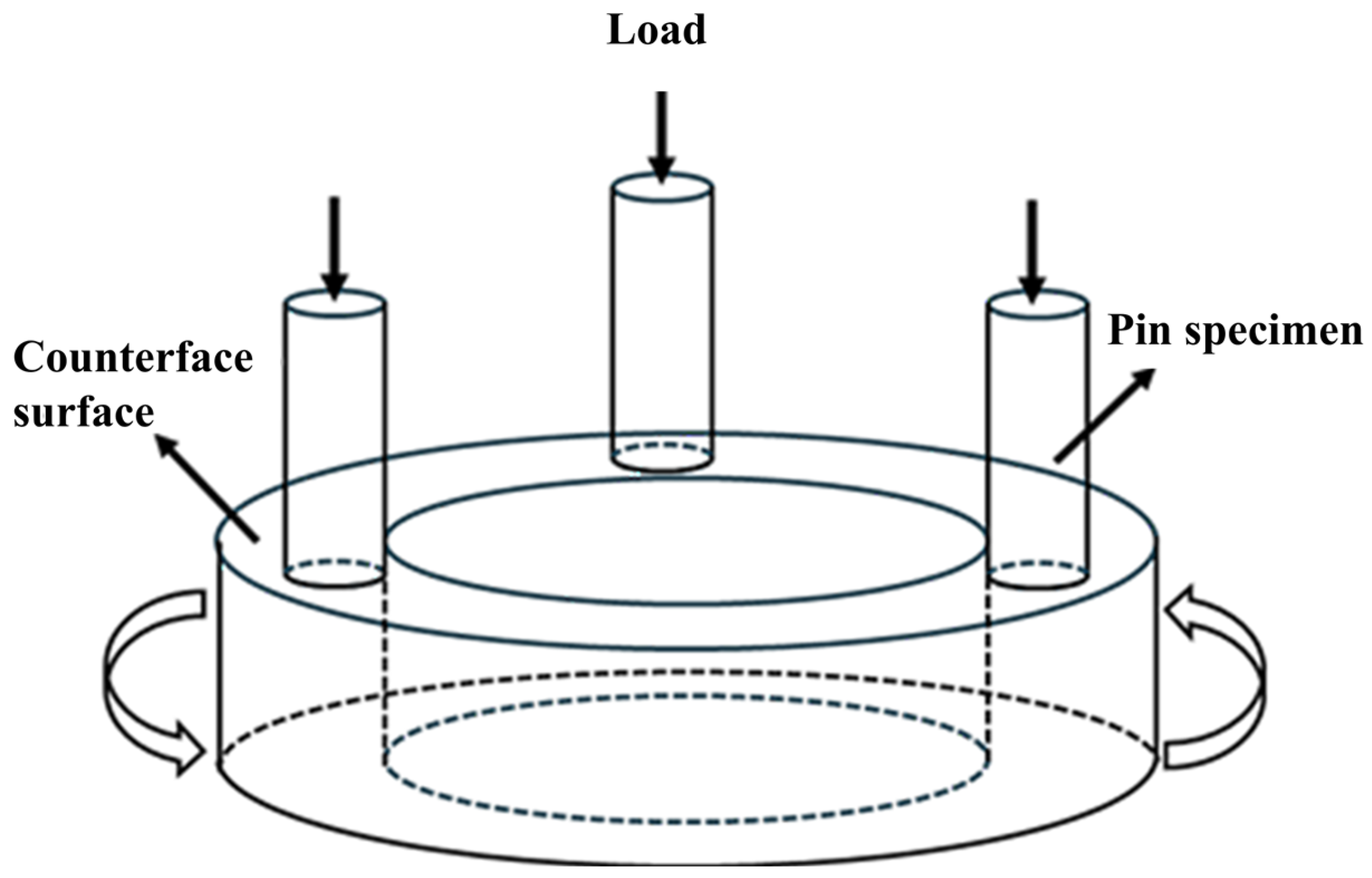
2.5. Pin-on-Disk Dry-Sliding Wear Test and Data Processing
2.6. Variable Design and Control
3. Results and Discussion
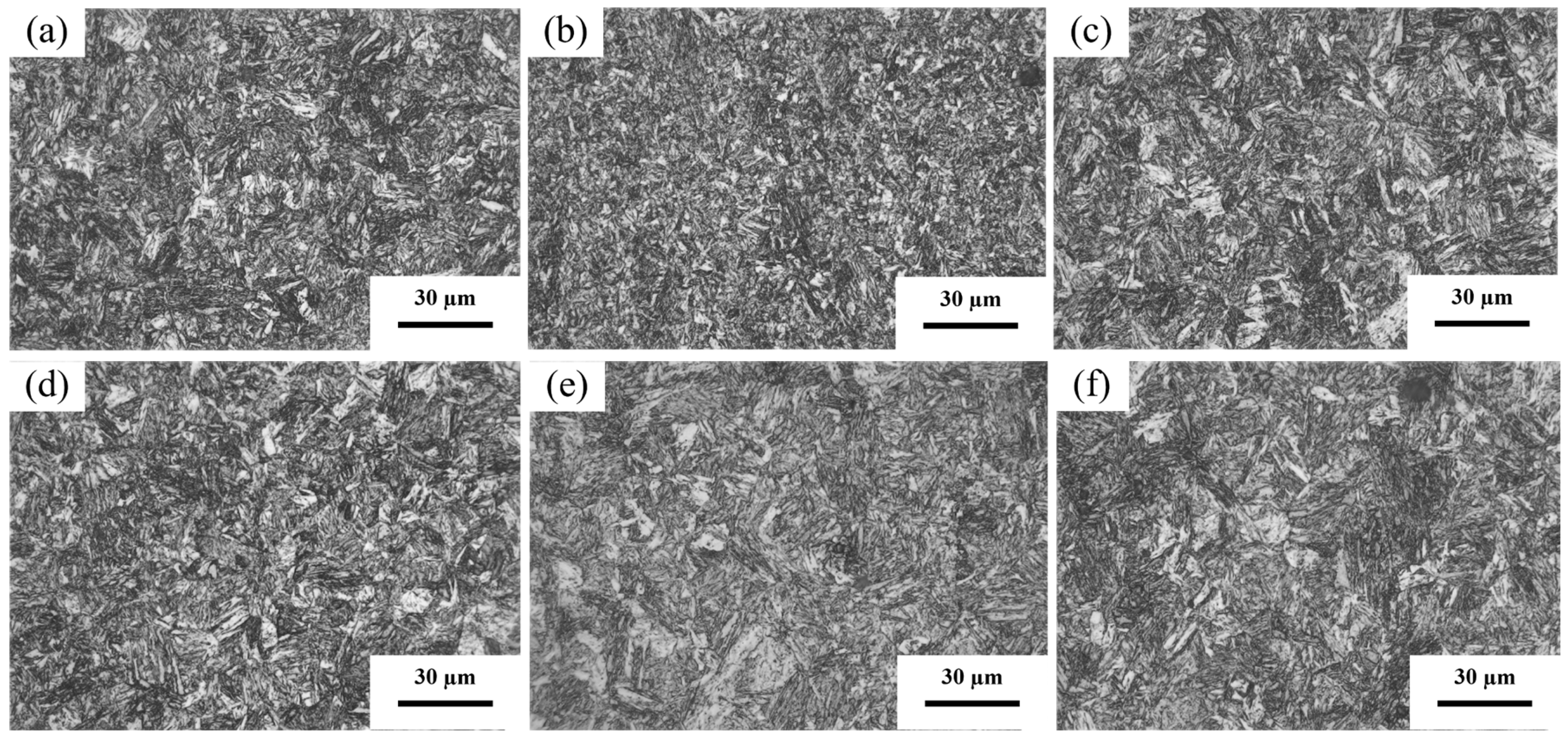
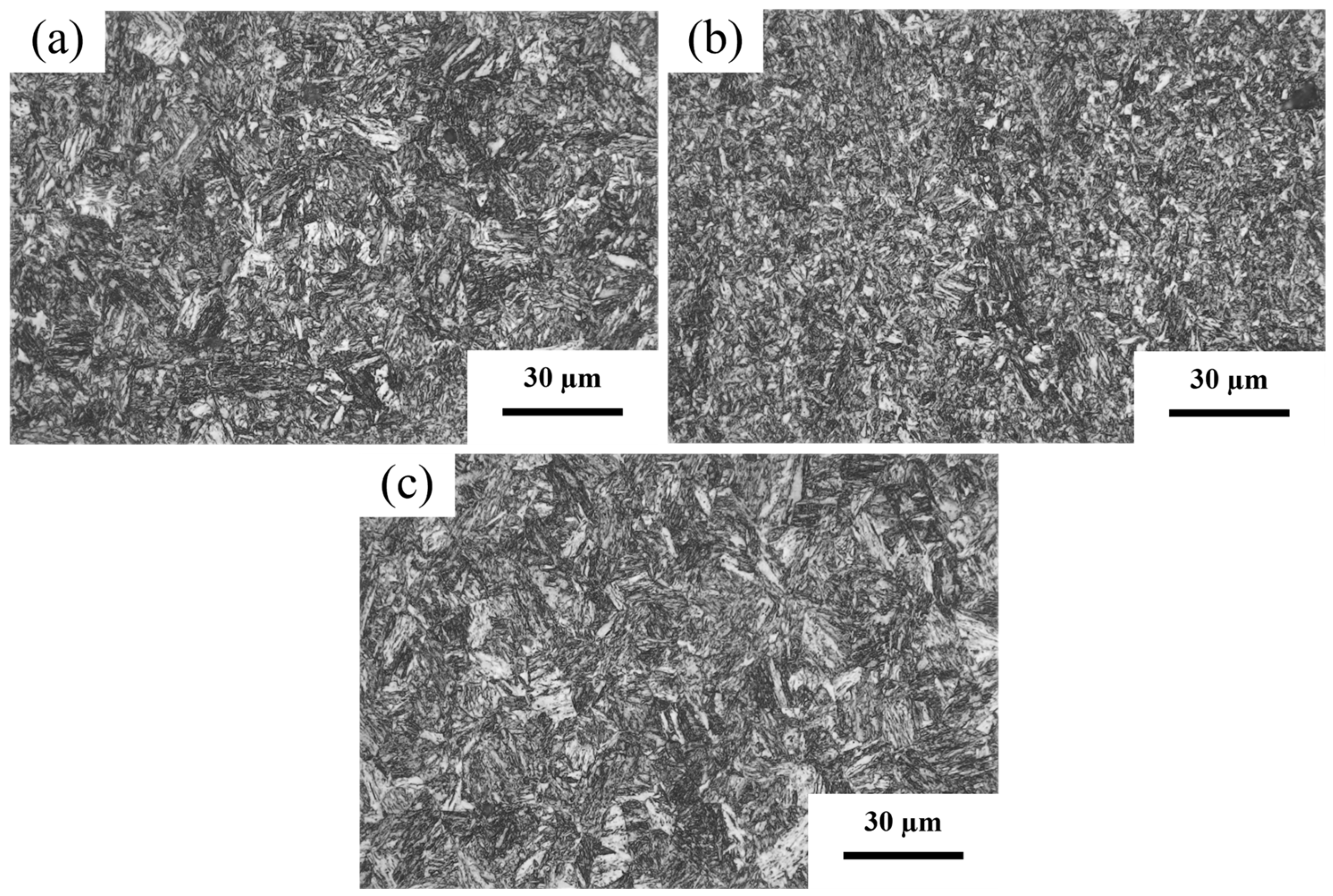
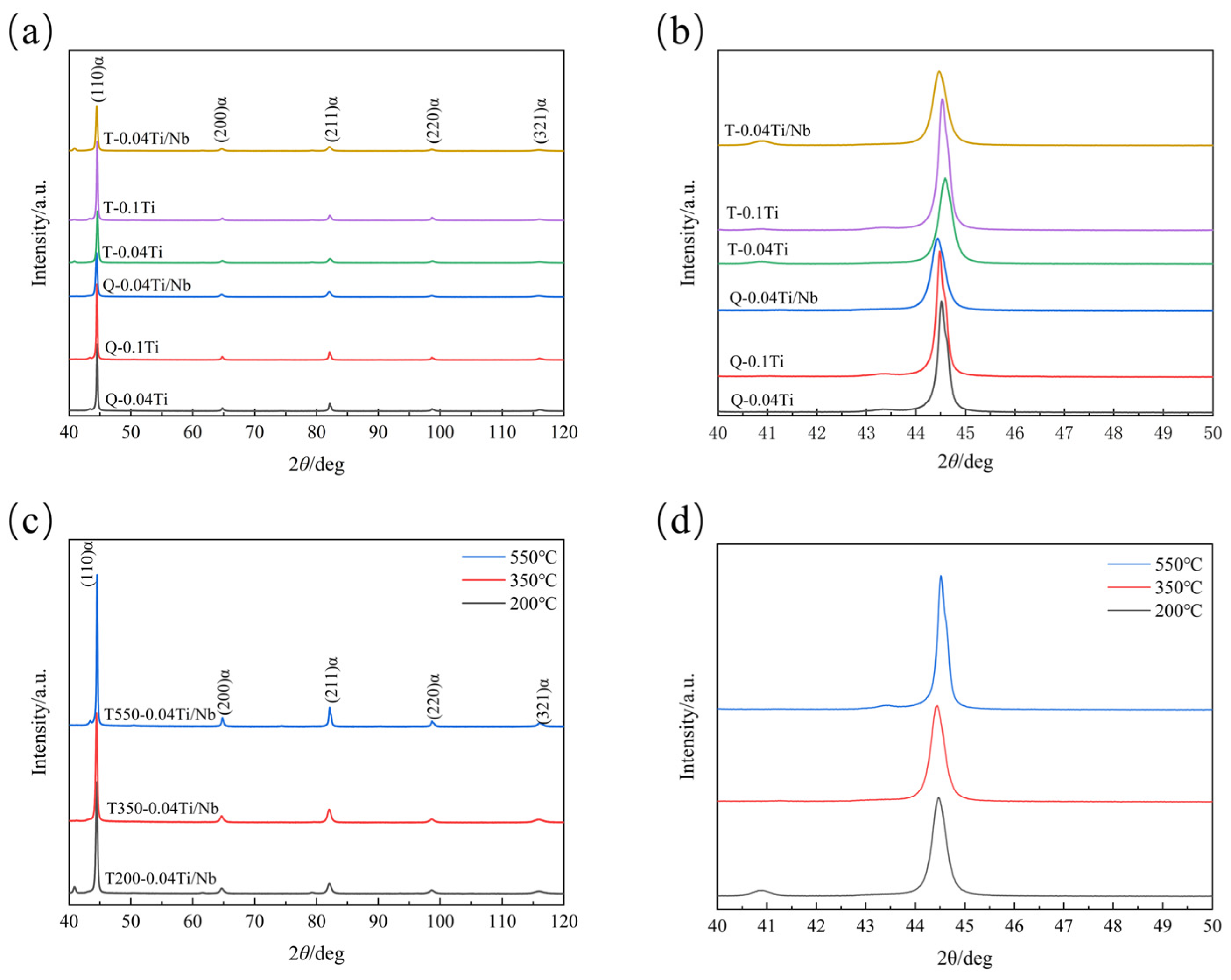
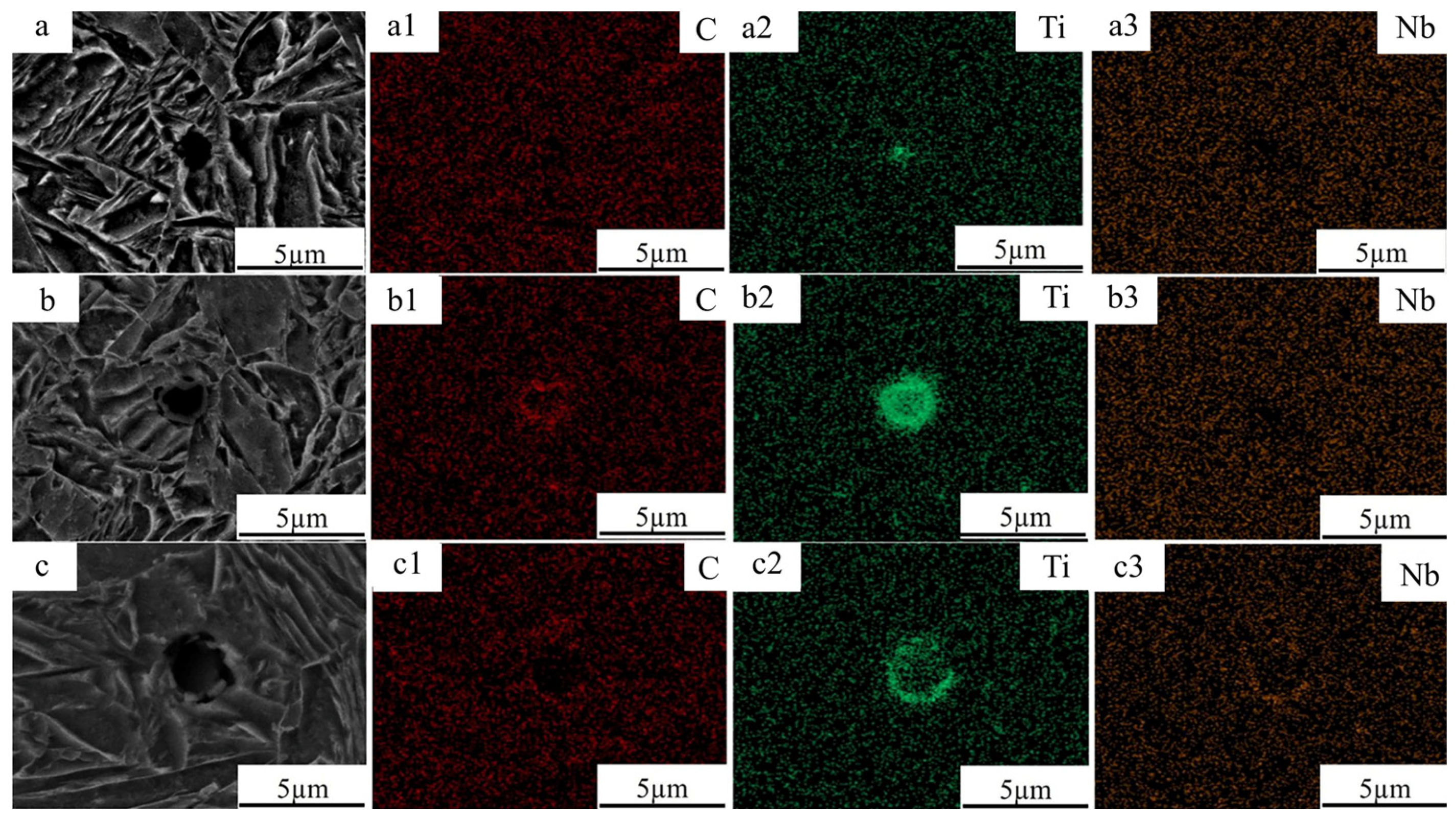
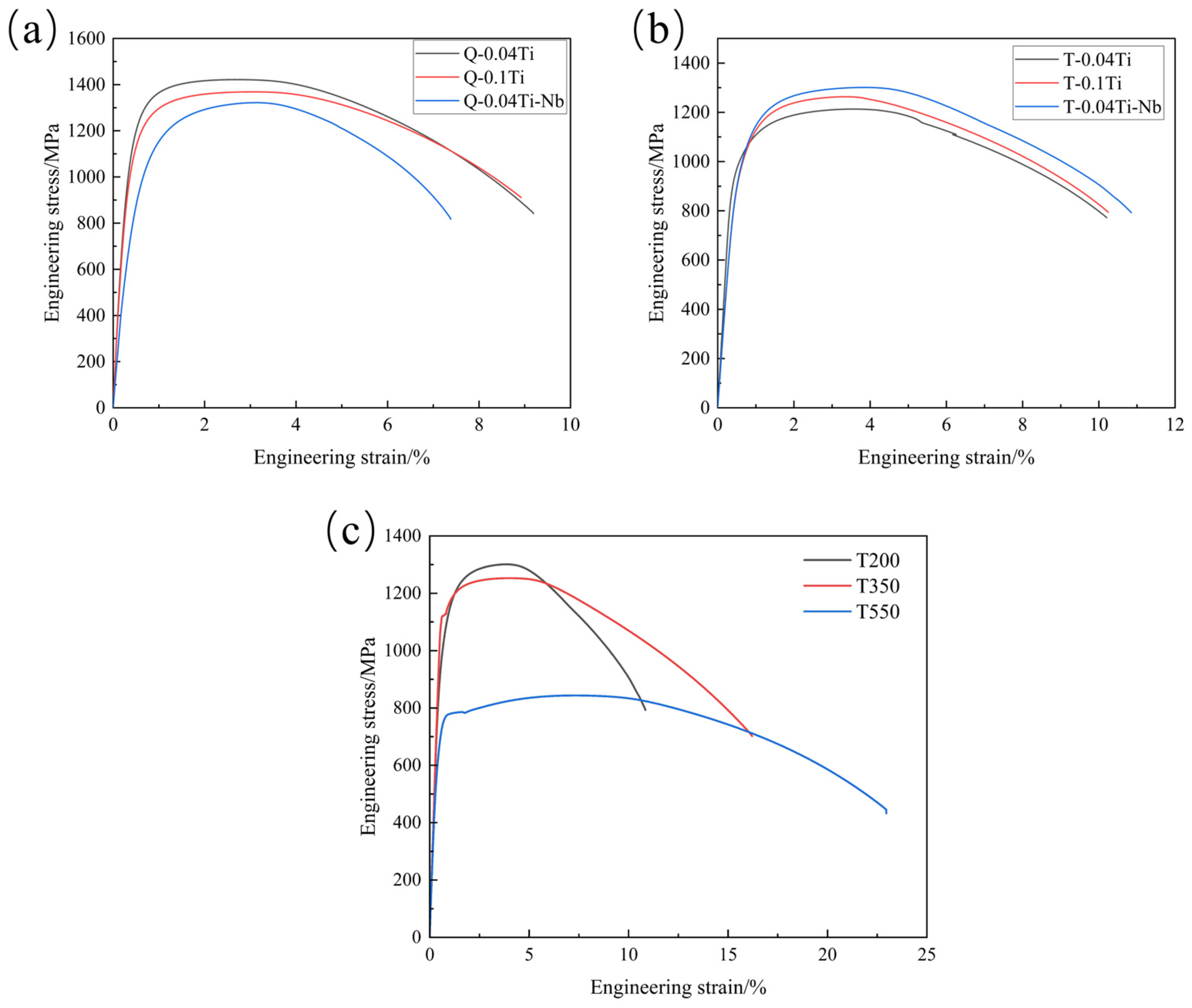
3.1. Microstructure and Mechanical Properties of the Experimental Steels
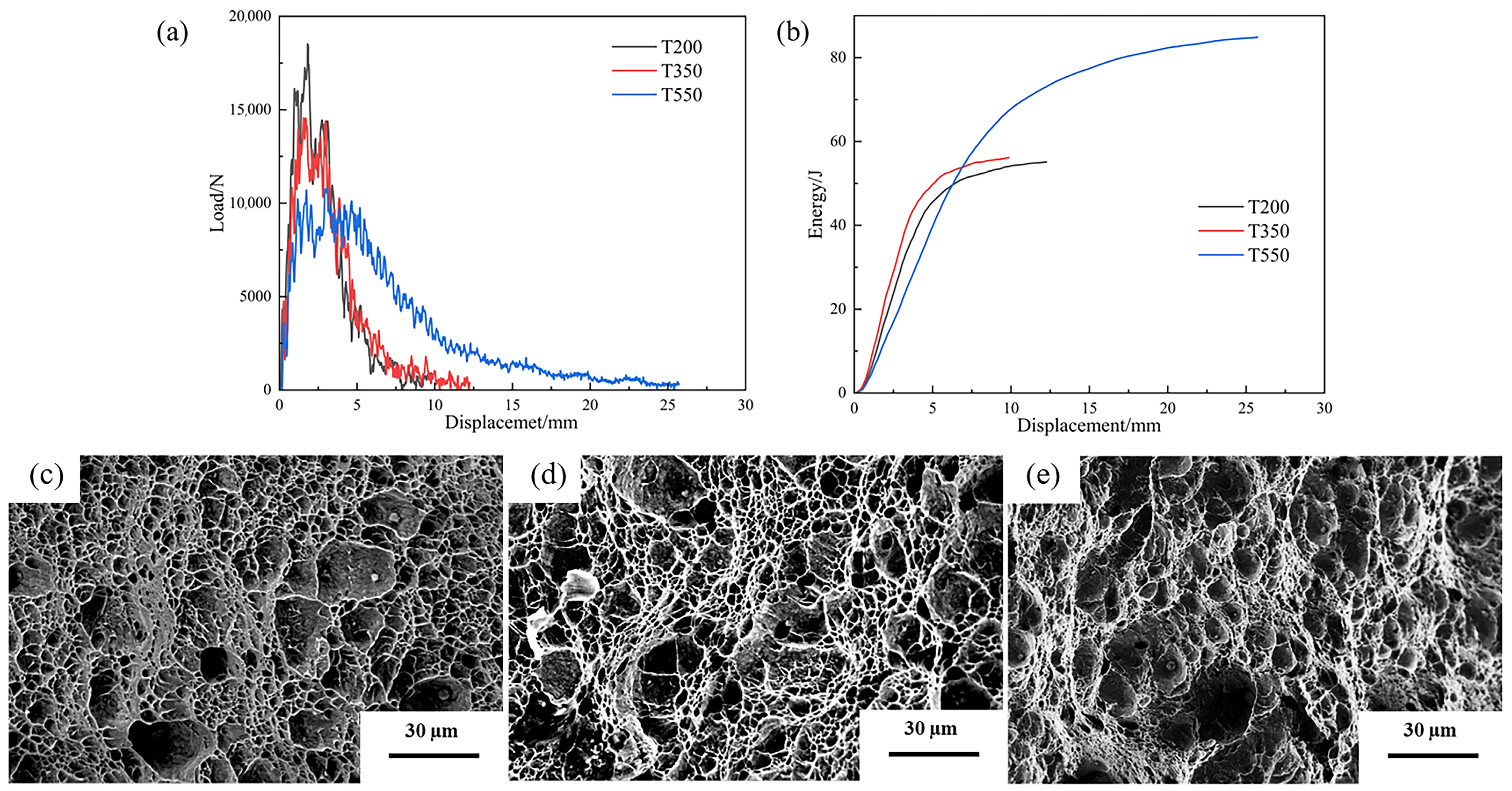
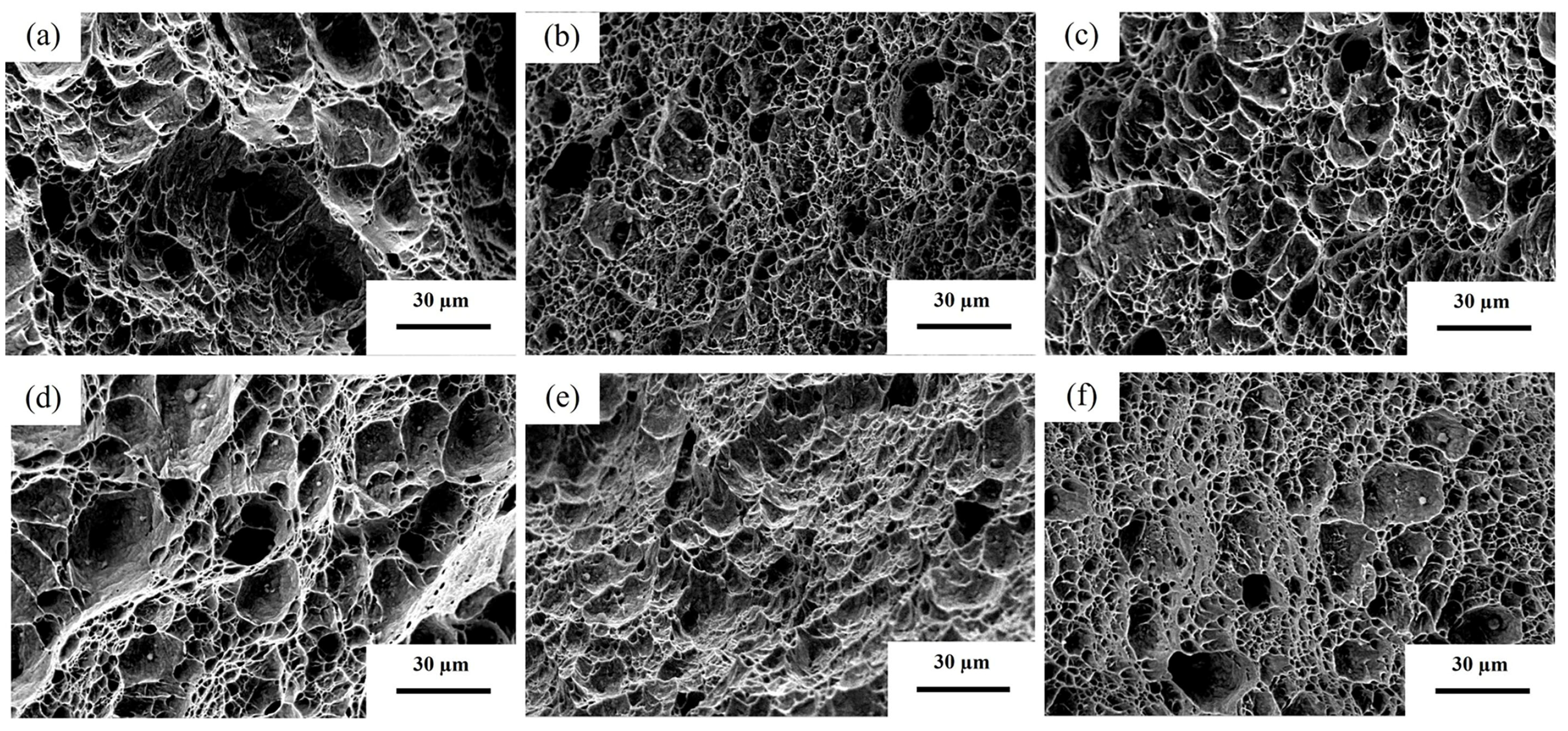
3.2. Analysis of Impact Fracture Morphology
3.2.1. Comparison of Impact Fracture Morphologies in the Quenched and Tempered Conditions
3.2.2. Fracture Evolution of the 0.04Ti/Nb Steel at Different Tempering Temperatures
3.3. Wear Resistance
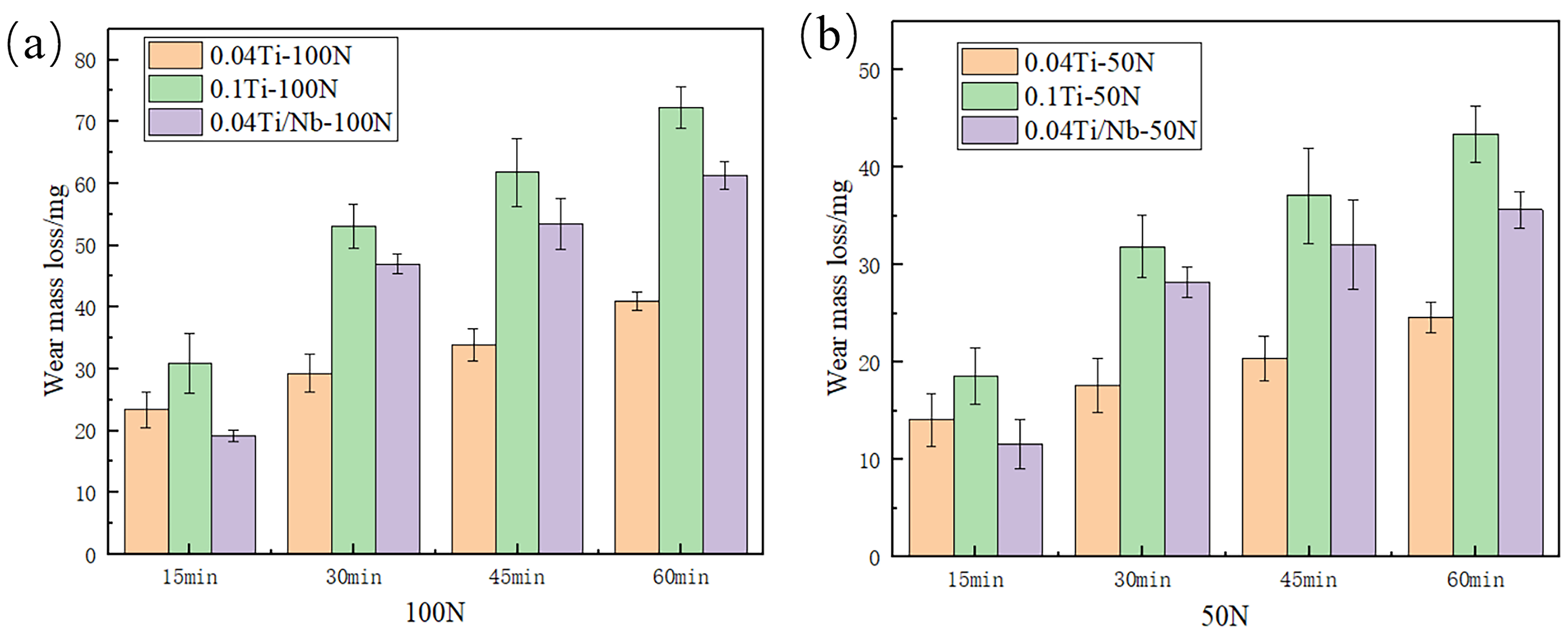
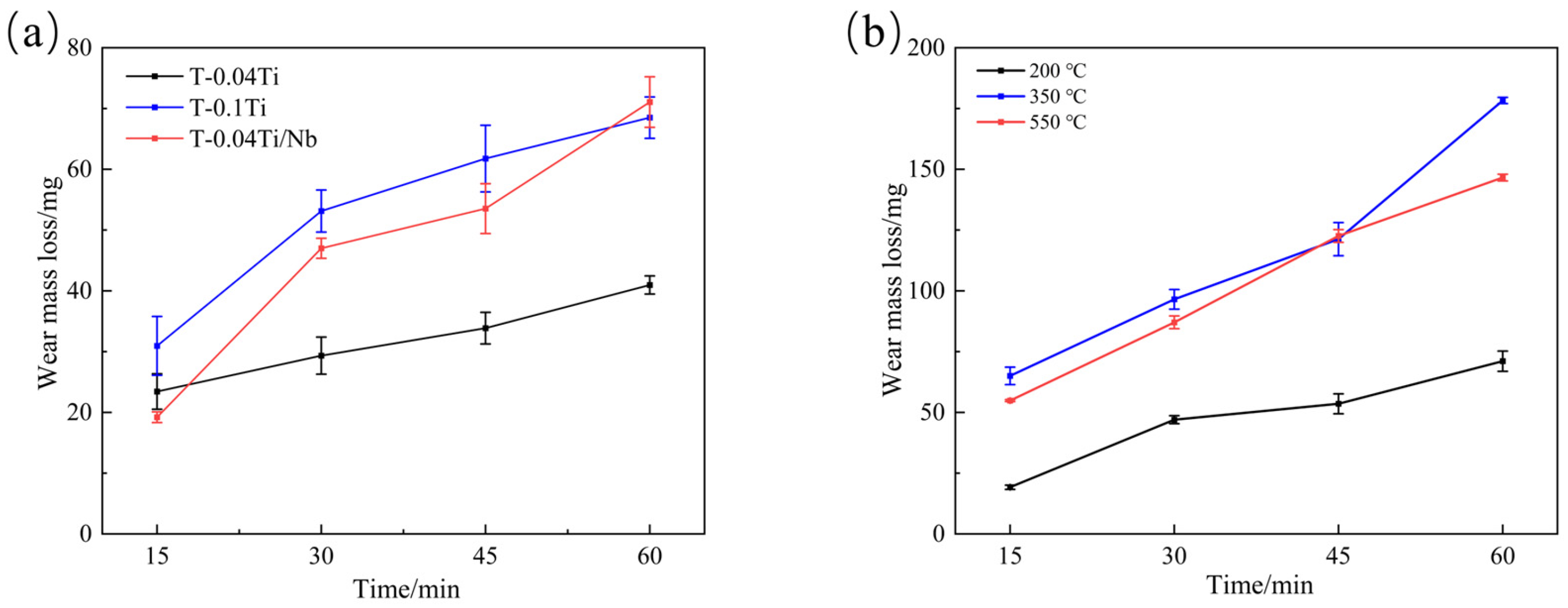
3.3.1. Wear Mass Loss
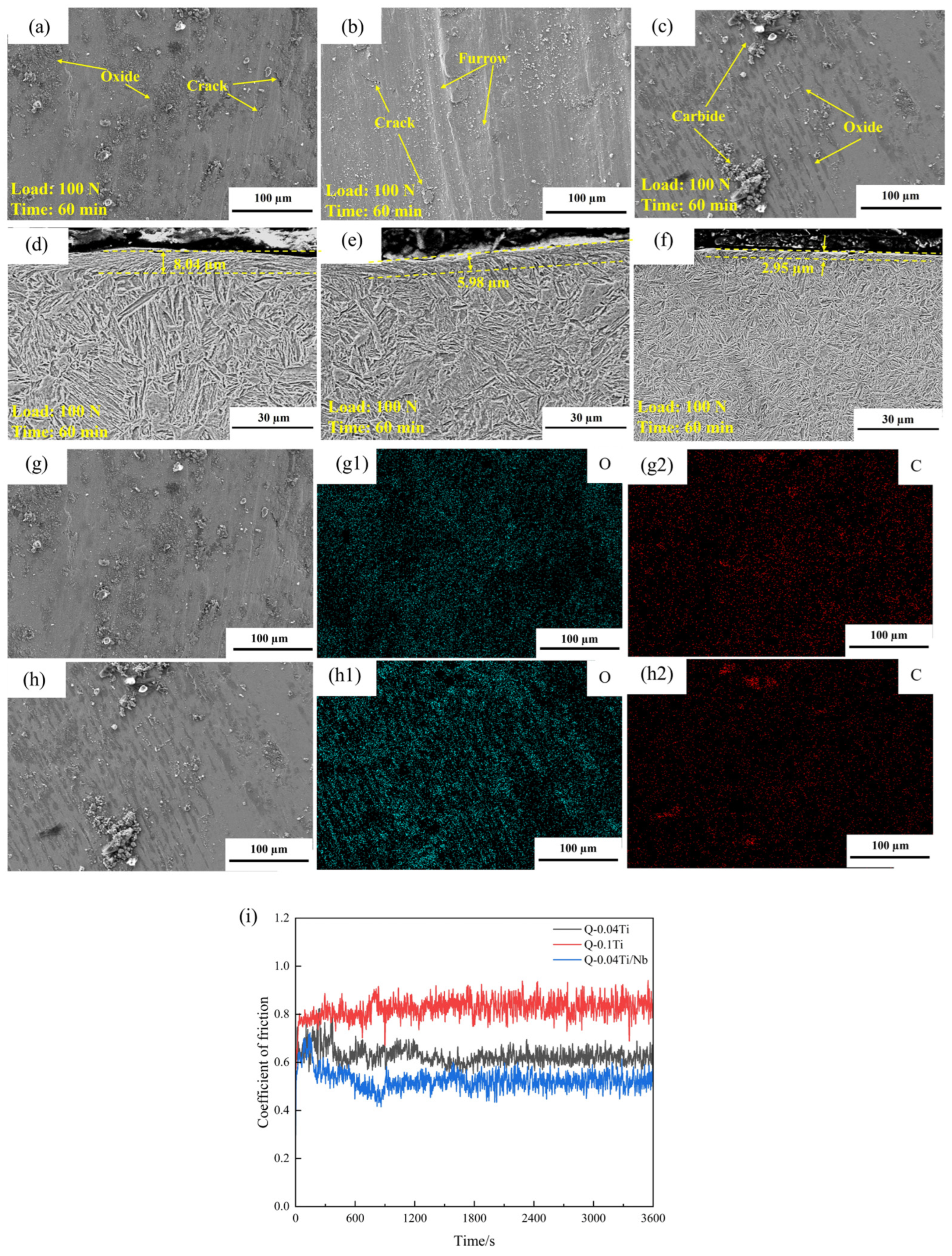
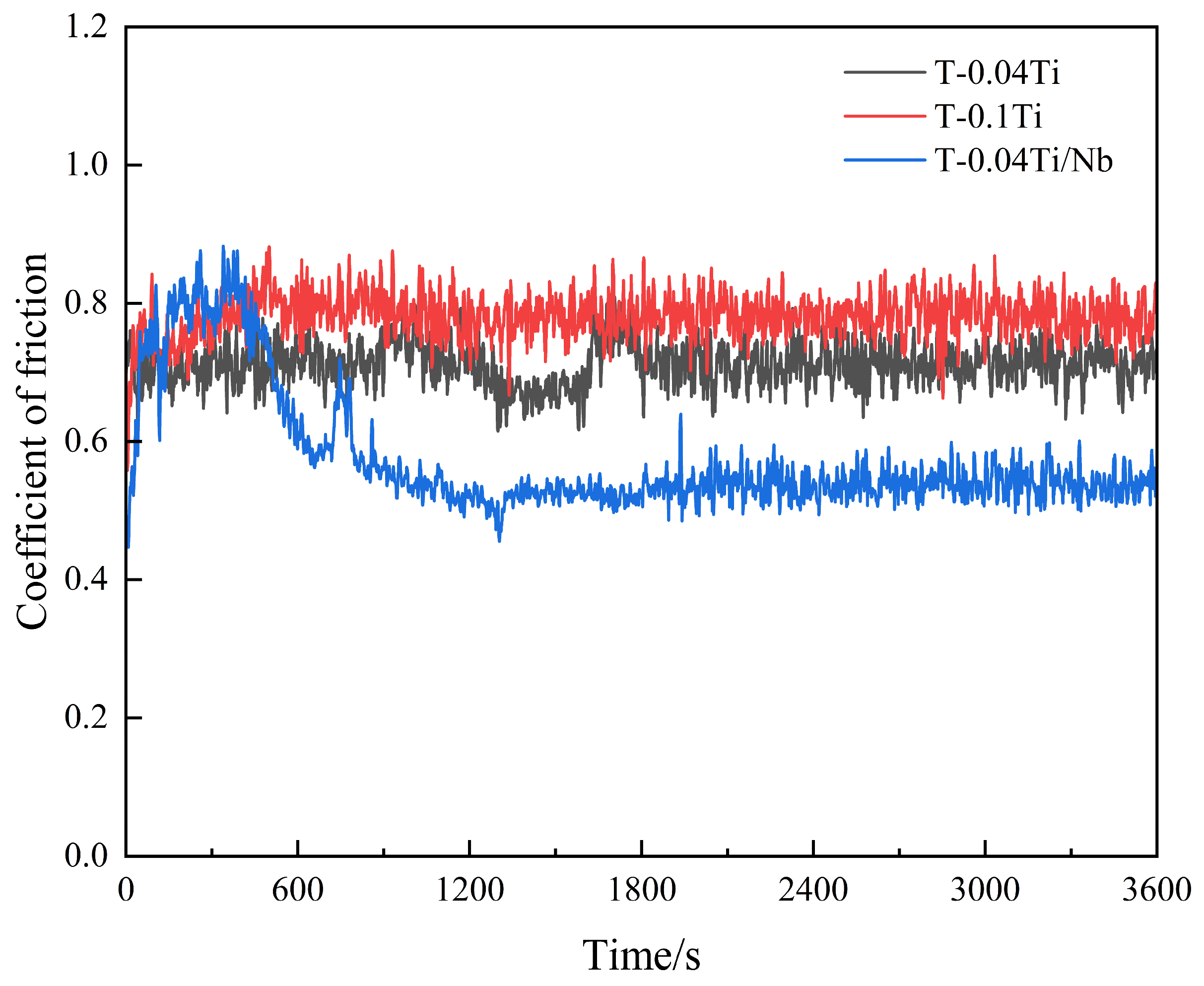
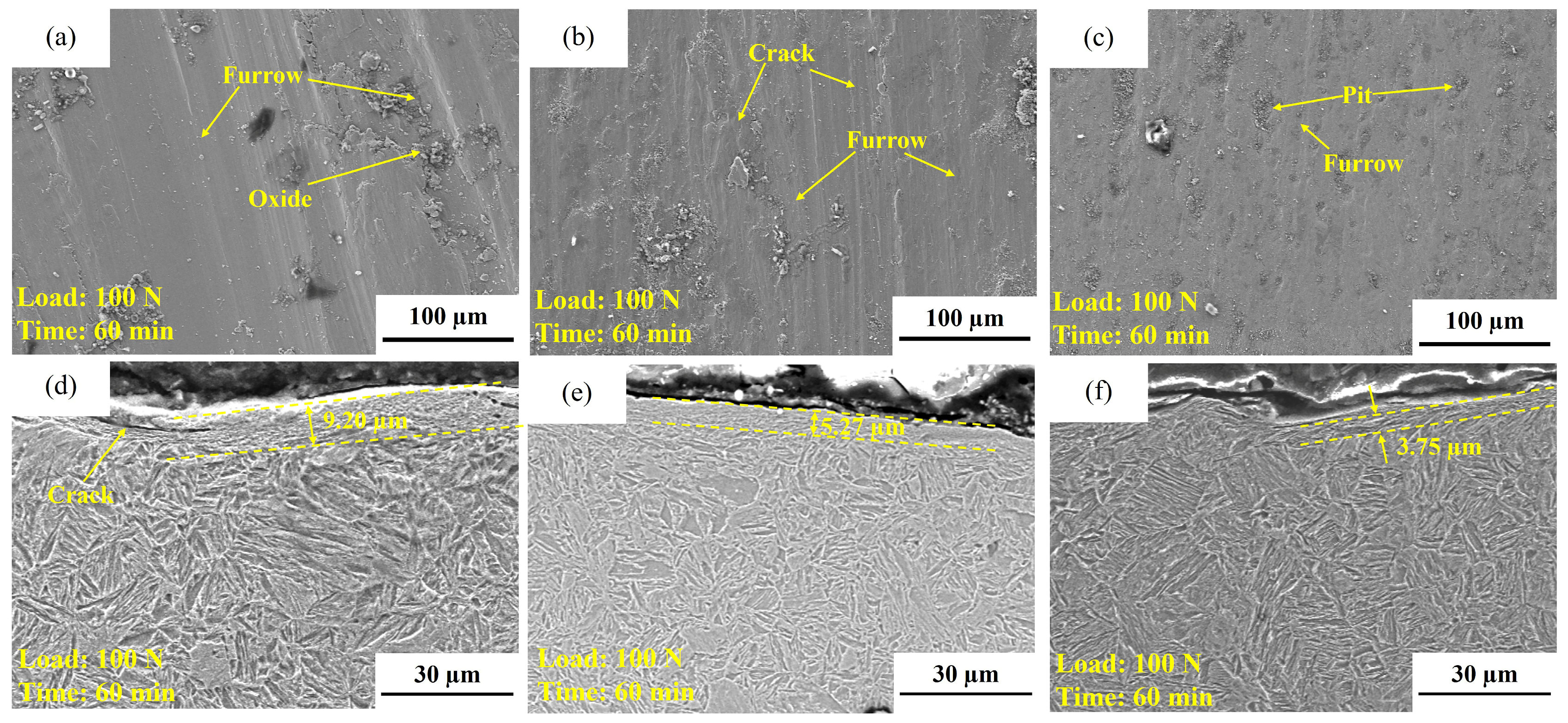
3.3.2. Wear Morphology
- (1)
- Quenched specimens (Figure 12)
- (2)
- (3)
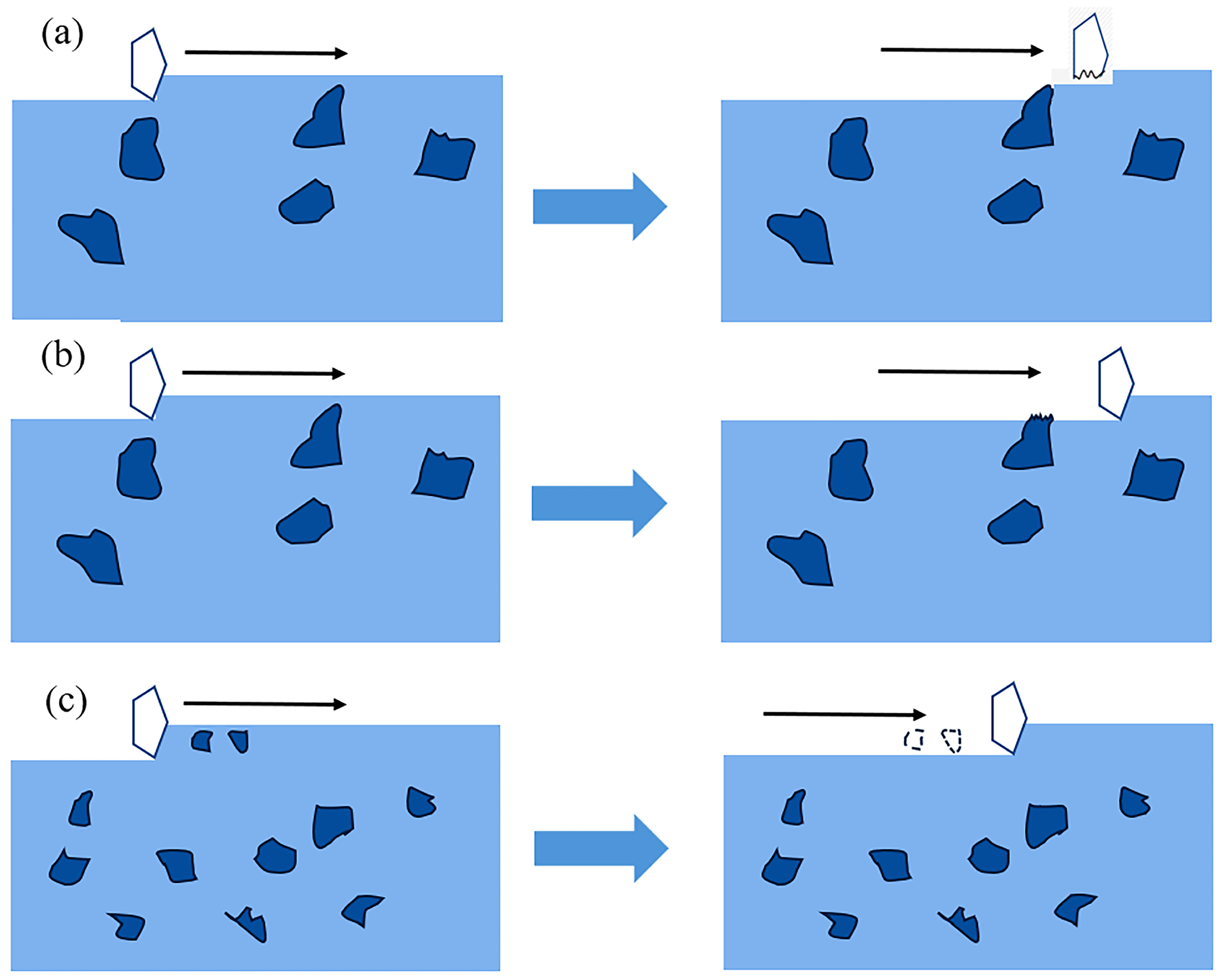
3.3.3. Summary of Wear Mechanisms
4. Conclusions
- (1)
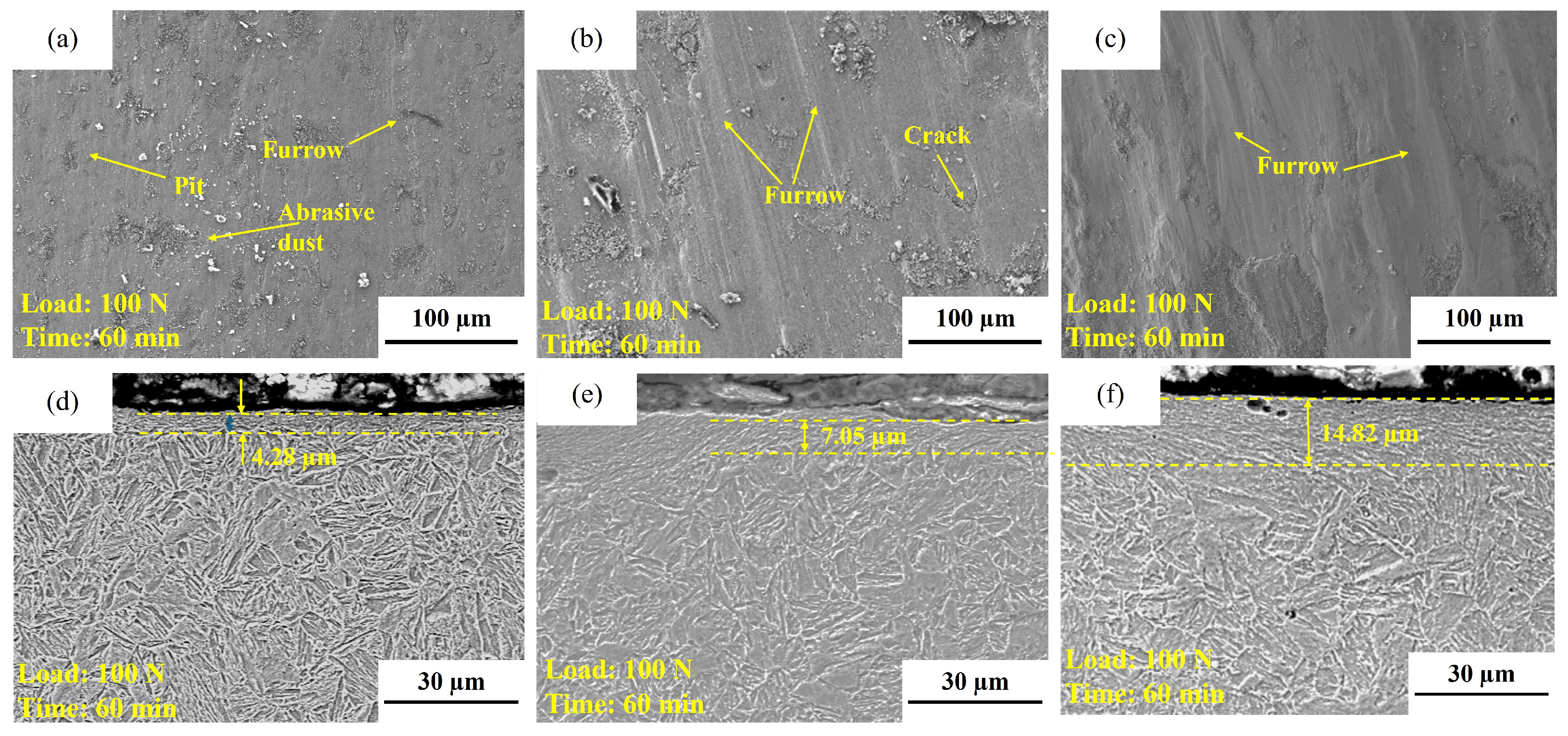
- Low-temperature tempering (200 °C) significantly improves the dry-sliding wear resistance of Ti-containing (0.04Ti and 0.1Ti) low-carbon martensitic steels. This improvement arises from the combination of a tempered martensitic matrix and fine TiC precipitates, which enhance resistance to abrasive shear deformation while maintaining sufficient toughness to suppress micro-cracking. The wear mass loss of T-0.04Ti and T-0.1Ti is reduced by approximately 36% and 44%, respectively, compared to their quenched counterparts under a load of 100 N for 60 min.
- (2)
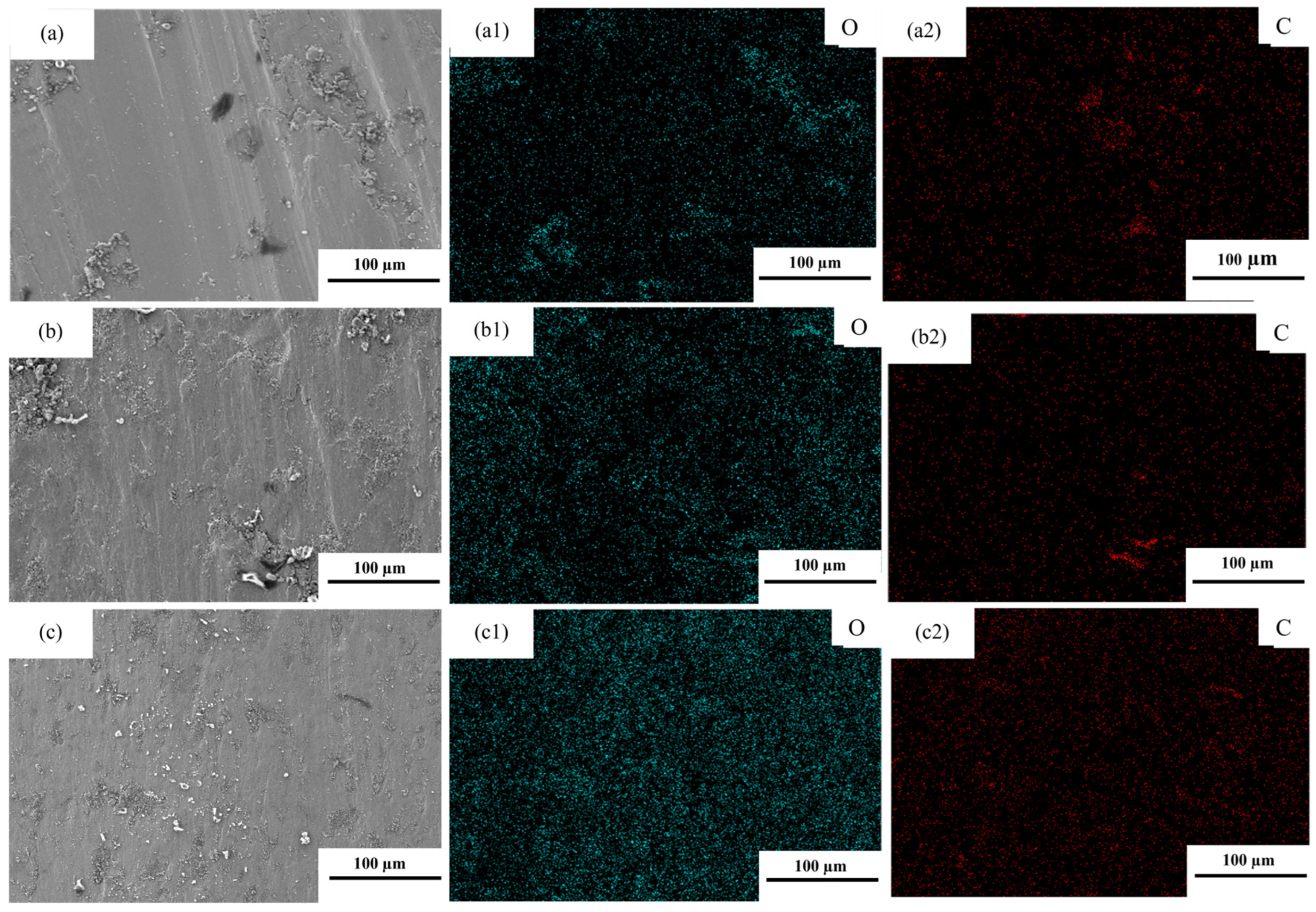
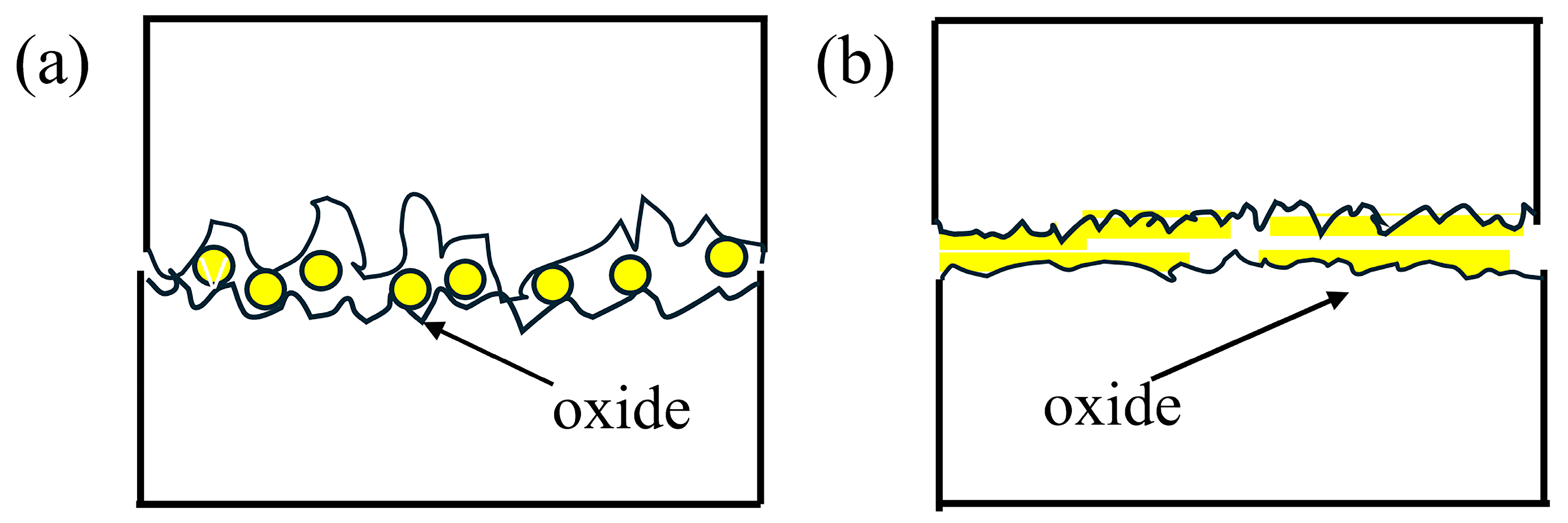
- The wear response of the Nb-containing steel (0.04Ti/Nb) cannot be described by hardness alone. It exhibits stage-dependent wear kinetics: a mid-stage deceleration (30–45 min) followed by late-stage re-acceleration (45–60 min), which correlates with oxygen enrichment on the worn surface. This behavior is attributed to the transient formation of oxide-derived third-body debris that temporarily isolates contacting surfaces, followed by their rupture and spalling under sustained shear. Thus, the wear mechanism is best described as abrasive micro-cutting with oxidation-assisted, stage-dependent third-body involvement. We note that direct identification of oxide phases and their exact role remains for future investigation using techniques such as XPS or Raman spectroscopy.
- (3)
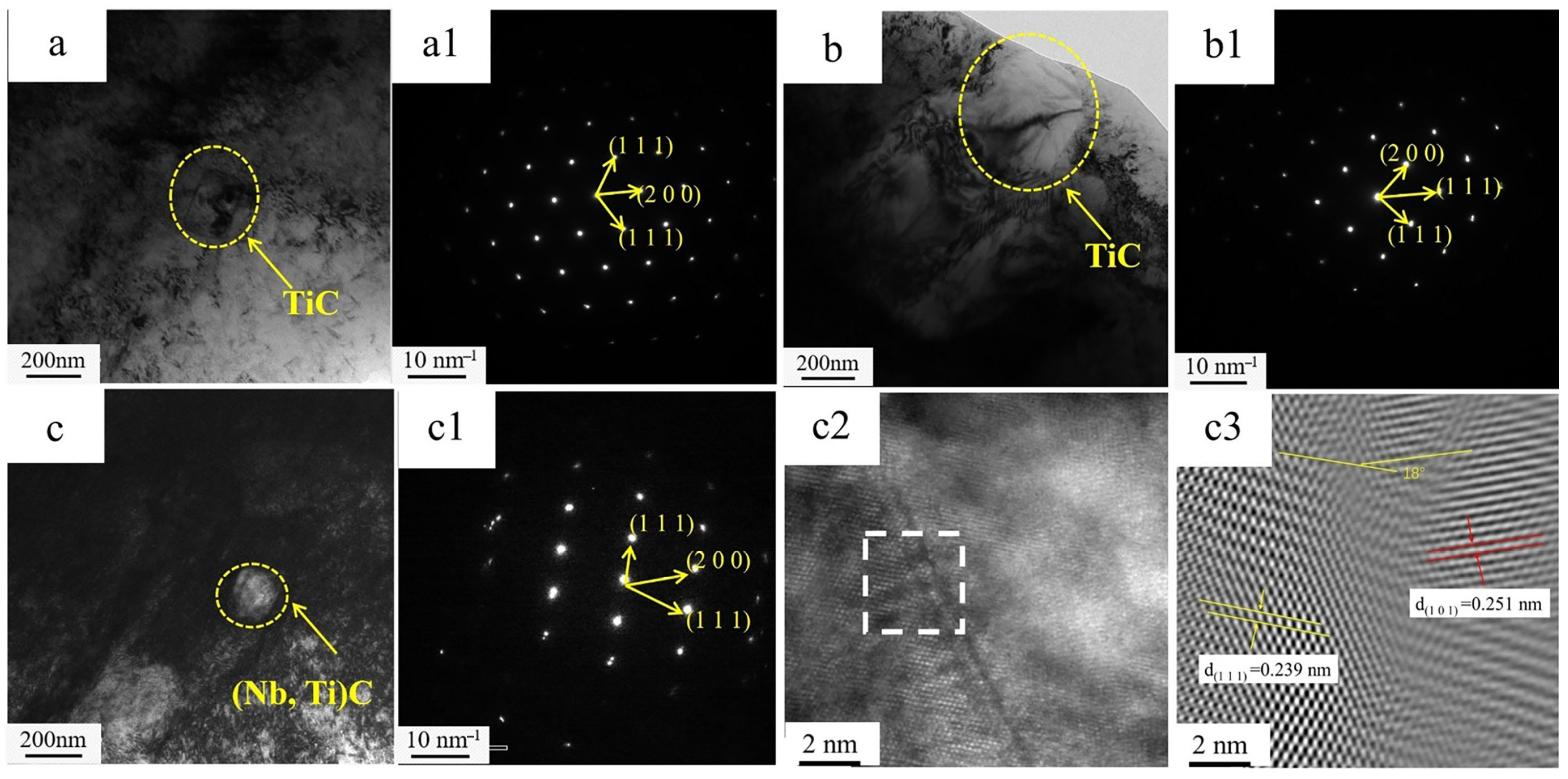
- The wear resistance of the 0.04Ti/Nb steel shows a non-monotonic dependence on tempering temperature: it increases from T200 to T350 and then decreases at T550. The T350 condition exhibits the highest wear loss due to pronounced subsurface plastic deformation and fatigue-driven delamination spalling. At T550, improved toughness (178 J·cm−2) partially suppresses catastrophic spalling, offsetting the loss in hardness. Overall, wear performance is governed by the synergistic matching of resistance to plastic deformation and resistance to crack propagation/delamination spalling, rather than by any single mechanical property. Refractory MC-type carbides (TiC/(Nb,Ti)C) act as microscale hard load-bearing units, and their interfacial stability with the matrix is a key microstructural lever for achieving the coupled strength–toughness–wear resistance design.
Author Contributions
Funding
Data Availability Statement
Acknowledgments
Conflicts of Interest
References
- He, X.; Pan, T.; Yang, S.; Li, H.; Chen, Y.; Xiong, J. Effect of hardness matching of aero spline sub-materials on wear performance. Sci. Rep. 2025, 15, 24240. [Google Scholar] [CrossRef] [PubMed]
- Sukpat, M.; Kasivitamnuay, J.; Tuchinda, K. Computational study of impact wear: Fatigue approach. Wear 2023, 528–529, 204972. [Google Scholar] [CrossRef]
- Abdullayev, H.; Huseynzade, E.; Sable, H. A Comprehensive Review of Wear Mechanisms and Mitigation Strategies for Tribological Systems. Tribol. Ind. 2025, 47, 294–312. [Google Scholar] [CrossRef]
- Zhang, G.; Tang, J.; Yang, K.; Wang, R.; Chen, Y.; Xiong, Y.; Wu, C.; Li, Z.; Wang, Y.; Lin, H. Important contributions of metal interfaces on their tribological performances: From influencing factors to wear mechanisms. Compos. Struct. 2024, 337, 24. [Google Scholar] [CrossRef]
- Chintha, A.R. Metallurgical aspects of steels designed to resist abrasion, and impact-abrasion wear. Mater. Sci. Technol. 2019, 35, 1133–1148. [Google Scholar] [CrossRef]
- Moore, M.A. The relationship between the abrasive wear resistance, hardness and microstructure of ferritic materials. Wear 1974, 28, 59–68. [Google Scholar] [CrossRef]
- Pawar, S.; Jha, A.K.; Mukhopadhyay, G. Effect of different carbides on the wear resistance of Fe-based hardfacing alloys. Int. J. Refract. Met. Hard Mater. 2019, 78, 288–295. [Google Scholar] [CrossRef]
- Wang, H.; Zhao, Q.; Xin, S.; Zhao, Y.; Zhou, W.; Zeng, W. Microstructural morphology effects on fracture toughness and crack growth behaviors in a high strength titanium alloy. Mater. Sci. Eng. A Struct. Mater. Prop. Misrostructure Process. 2021, 821, 141626. [Google Scholar] [CrossRef]
- Kang, Z.; Kong, D.; Jiang, C.; Liu, M.; Zhang, Z.; Zhao, J. Evalution of trade–off between superelasticity and hardness of NiTi alloy regarding wear resistance under heavy load and high–speed. Wear 2025, 564–565, 205732. [Google Scholar] [CrossRef]
- Zeng, T.Y.; Li, W.; Wang, N.M.; Wang, W.; Yang, K. Microstructural evolution during tempering and intrinsic strengthening mechanisms in a low carbon martensitic stainless bearing steel. Mater. Sci. Eng. A 2022, 836, 142736. [Google Scholar] [CrossRef]
- Kostryzhev, A.G.; Killmore, C.R.; Yu, D.; Pereloma, E.V. Martensitic wear resistant steels alloyed with titanium. Wear 2020, 446–447, 203203. [Google Scholar] [CrossRef]
- Li, D.; Wu, K.; Dong, H.; Isayev, O.; Hress, O. Coarse Grained Heat-Affected Zone Microstructure and Brittleness of Ti-Nb-B Microalloyed High Toughness and Wear Resistant Steel. Metals 2019, 9, 289. [Google Scholar] [CrossRef]
- Salas-Reyes, A.E.; González-Parra, J.R.; Hernández-Gallegos, M.A.; Barba-Pingarrón, A.; Rodrigues, S.F.; Santos-Silva, E. Effect of Boron Microaddition on the Wear Behavior of AHSS Complex-Phase (CP) Steel. Surf. Interface Anal. SIA 2025, 57, 843–849. [Google Scholar] [CrossRef]
- Yuan, M.Y.; Zhang, J.C.; Yang, Y.T. Friction and wear behavior and mechanism of low carbon microalloyed steel containing Nb. China Foundry 2023, 20, 263–270. [Google Scholar] [CrossRef]
- Yu, W.; Jin, R.; Han, L.; Xie, D.; Sun, T.; Wang, M.; Shi, J. Effect of Ti and TiNb Microalloying on Microstructures and Mechanical Properties of 2200 MPa Low-Alloy Ultra-High-Strength Steels. Metals 2025, 15, 235. [Google Scholar] [CrossRef]
- Wen, E.; Song, R.; Cai, C. Study of the three-body impact abrasive wear behaviour of a low alloy steel reinforced with niobium. J. Manuf. Process. 2019, 46, 185–193. [Google Scholar] [CrossRef]
- Ding, W.; Fan, Z.; Yang, Y. Effect of Ti Addition on the Wear Resistance of Low Alloy Steel. Trans. Indian Inst. Met. 2022, 75, 2857–2866. [Google Scholar] [CrossRef]
- Li, S.; Yu, H.; Lu, Y.; Lu, J.; Wang, W.; Yang, S. Effects of titanium content on the impact wear properties of high-strength low-alloy steels. Wear 2021, 474, 203647. [Google Scholar] [CrossRef]
- Deng, X.; Huang, L.; Wang, Q.; Fu, T.; Wang, Z. Three-body abrasion wear resistance of TiC-reinforced low-alloy abrasion-resistant martensitic steel under dry and wet sand conditions. Wear 2020, 452–453, 203310. [Google Scholar] [CrossRef]
- Ren, Q.; Kou, Z.; Wu, J.; Hou, T.; Xu, P. Effect of Tempering Temperature on Microstructure and Mechanical Properties of 35CrMo Steel. Metals 2023, 13, 771. [Google Scholar] [CrossRef]
- Chintha, A.R.; Valtonen, K.; Kuokkala, V.T.; Kundu, S.; Peet, M.J.; Bhadeshia, H.K.D.H. Role of fracture toughness in impact-abrasion wear. Wear 2019, 428–429, 430–437. [Google Scholar] [CrossRef]
- Sundström, A.; Rendón, J.; Olsson, M. Wear behaviour of some low alloyed steels under combined impact/abrasion contact conditions. Wear 2001, 250, 744–754. [Google Scholar] [CrossRef]
- Xie, Y.; Xiao, Y.; Liu, Y.; Chen, W. Influence of Ni content on the microstructure and wear behavior of low-alloy medium-carbon steel. J. Phys. Conf. Ser. 2025, 3043, 012012. [Google Scholar] [CrossRef]
- Wang, L.-X.; Song, C.-J.; Sun, F.-M.; Li, L.-J.; Zhai, Q.-J. Microstructure and mechanical properties of 12 wt.% Cr ferritic stainless steel with Ti and Nb dual stabilization. Mater. Des. 2009, 30, 49–56. [Google Scholar] [CrossRef]
- GB/T 229-2020; Metallic Materials—Charpy Pendulum Impact Test Method. Standardization Administration of China: Beijing, China, 2020.
- Yöyler, S.; Surzhenkov, A.; Viljus, M.; Traksmaa, R.; Juhani, K. The Effect of Niobium on In Situ Synthesis of Titanium Carbide in Composite Hardfacings. Mater. Sci. Forum 2023, 1104, 55–60. [Google Scholar] [CrossRef]
- Ge, H.; Liu, G.; Zheng, S.; Yang, Y.; Liu, K.; Ma, X. Dislocation climbing dominated decomposition and fracture of carbides in a Ni-based superalloy. Acta Mater. 2023, 246, 118669. [Google Scholar] [CrossRef]
- Yusuf, S.M.; Mazlan, N.; Musa, N.H.; Zhao, X.; Chen, Y.; Yang, S.; Nordin, N.A.; Mazlan, S.A.; Gao, N. Microstructures and hardening mechanisms of a 316L stainless steel/Inconel 718 interface additively manufactured by multi-material selective laser melting. Metals 2023, 13, 400. [Google Scholar]
- Geng, L.; Tian, Z.; Sun, D.; Feng, X.; Zhang, F. Effects of Tempering Temperature on the Microstructure and Mechanical Properties of Vanadium-Microalloyed Medium-Carbon Bainitic Steel. Coatings 2025, 15, 503. [Google Scholar] [CrossRef]
- Li, Q.; Wang, J.; Cheng, G.; Tao, Q. Low-Temperature Tempering to Tailor Microstructure, Mechanical and Contact Fatigue Performance in the Carburized Layer of an Alloy Steel for Heavy-Duty Gears. Metals 2025, 15, 934. [Google Scholar] [CrossRef]
- Shi, R.; Ma, Y.; Wang, Z.; Gao, L.; Yang, X.S.; Qiao, L.; Pang, X. Atomic-scale investigation of deep hydrogen trapping in NbC/α-Fe semi-coherent interfaces. Acta Mater. 2020, 200, 686–698. [Google Scholar] [CrossRef]
- Maissara, K.; Forouzan, F.; Åkerfeldt, P.; Timokhina, I.; Åkerström, P.; Vuorinen, E.; Antti, M.-L. Effect of Tempering on Microstructure and Tensile Properties of Ultra-High Strength Steels for Press Hardening Applications. Metall. Mater. Trans. A 2025, 56, 2570–2585. [Google Scholar] [CrossRef]
- Liu, X.; Han, Y.; Wei, J.; Zu, G.; Zhao, Y.; Zhu, W.; Ran, X. Effect of tempering temperature on microstructure and mechanical properties of a low carbon bainitic steel treated by quenching-partitioning-tempering (QPT) process. J. Mater. Res. Technol. 2023, 23, 911–918. [Google Scholar] [CrossRef]
- Gokhman, A.; Nový, Z.; Čížek, J.; Salvetr, P.; Svoboda, M.; Kotous, J.; Motyčka, P. Twinning and Precipitation Processes in Hardened and Tempered 54SiCr6 Spring Steel. J. Mater. Eng. Perform. 2025, 34, 18378–18388. [Google Scholar] [CrossRef]
- Bertolo, V.; Jiang, Q.; Sanchez, M.T.; Riemslag, T.; Walters, C.L.; Sietsma, J.; Popovich, V. Cleavage fracture micromechanisms in simulated heat affected zones of S690 high strength steels. Mater. Sci. Eng. A Struct. Mater. Prop. Misrostruct. Process. 2023, 868, 144762. [Google Scholar] [CrossRef]
- Schultz, R.A.; Jensen, M.C.; Bradt, R.C. Single crystal cleavage of brittle materials. Int. J. Fract. 1994, 65, 291–312. [Google Scholar] [CrossRef]
- Xi, K.; Wu, H.; Zhou, C.; Qi, Z.; Yang, K.; Fu, R.K.; Xiao, S.; Wu, G.; Ding, K.; Chen, G.; et al. Improved corrosion and wear resistance of micro-arc oxidation coatings on the 2024 aluminum alloy by incorporation of quasi-two-dimensional sericite microplates. Appl. Surf. Sci. A J. Devoted Prop. Interfaces Relat. Synth. Behav. Mater. 2022, 585, 152693. [Google Scholar] [CrossRef]
- Jia, Q.; He, W.; Hua, D.; Zhou, Q.; Du, Y.; Ren, Y.; Lu, Z.; Wang, H.; Zhou, F.; Wang, J. Effects of structure relaxation and surface oxidation on nanoscopic wear behaviors of metallic glass. Acta Mater. 2022, 232, 117934. [Google Scholar] [CrossRef]
- Cheng, B.; Lu, H.; Dai, X.; Sun, S.; Wang, Z. Effect of Treatment with Microarc Oxidation Technology on Tribological Properties of Nonvalve Metal Low-Carbon Steel. Langmuir 2024, 40, 11. [Google Scholar] [CrossRef] [PubMed]
- Hu, J.; Chai, Z.; Zhang, X.; Yan, X.; Wang, L.; Li, Y.; Xu, W. The Influence of Hardness and Toughness on Wear Temperature Dependence of Stainless Steels. Steel Res. Int. 2023, 94, 2300174. [Google Scholar] [CrossRef]
- Wang, Q.; Zhang, C.; Deng, X.; Liang, L.; Xu, L.; Wang, Z. Optimal wear resistance of particle-reinforced heterostructure high-entropy alloy FeMnCoCr by strength–ductility matching and TRIP effect. Wear 2025, 560–561, 205596. [Google Scholar] [CrossRef]
- Launey, M.E.; Ritchie, R.O. On the Fracture Toughness of Advanced Materials. Adv. Mater. 2010, 21, 2103–2110. [Google Scholar] [CrossRef]
- Telliskivi, T. Simulation of wear in a rolling–sliding contact by a semi-Winkler model and the Archard’s wear law. Wear 2004, 256, 817–831. [Google Scholar] [CrossRef]








| Steel | C | Mn | Si | Al | Ti | Nb | B | N |
|---|---|---|---|---|---|---|---|---|
| 0.04Ti | 0.15 | 1.5 | 0.5 | 0.5 | 0.04 | / | 0.002 | <0.0025 |
| 0.04Ti/Nb | 0.15 | 1.5 | 0.5 | 0.5 | 0.04 | 0.04 | 0.002 | <0.0025 |
| 0.1Ti | 0.15 | 1.5 | 0.5 | 0.5 | 0.1 | / | 0.002 | <0.0025 |
| Sample | Yield Strength (MPa) | Ultimate Tensile Strength (MPa) | Elongation (%) | Hardness (HB) | Impact Toughness (J·cm−2) |
|---|---|---|---|---|---|
| Q-0.04Ti | 1030 ± 5 | 1421 ± 8 | 9.1 ± 0.2 | 419 ± 5 | 124 ± 4 |
| Q-0.1Ti | 980 ± 6 | 1368 ± 5 | 9.2 ± 0.3 | 402 ± 5 | 108 ± 5 |
| Q-0.04Ti/Nb | 970 ± 4 | 1322 ± 6 | 7.4 ± 0.4 | 398 ± 6 | 112 ± 6 |
| T-0.04Ti | 1020 ± 8 | 1213 ± 7 | 10.2 ± 0.4 | 373 ± 6 | 133 ± 4 |
| T-0.1Ti | 990 ± 5 | 1263 ± 4 | 10.3 ± 0.2 | 355 ± 8 | 128 ± 6 |
| T-0.04Ti/Nb | 1190 ± 6 | 1301 ± 5 | 10.8 ± 0.3 | 357 ± 5 | 115 ± 5 |
| Tempering Temperature (°C) | Yield Strength (MPa) | Ultimate Tensile Strength (MPa) | Elongation (%) | Hardness (HB) | Impact Toughness (J·cm−2) |
|---|---|---|---|---|---|
| 200 | 1190 ± 6 | 1301 ± 5 | 10.8 ± 0.3 | 357 ± 5 | 115 ± 5 |
| 350 | 1035 ± 8 | 1252 ± 4 | 16.2 ± 0.6 | 333 ± 4 | 116 ± 7 |
| 550 | 785 ± 8 | 843 ± 6 | 23.3 ± 0.5 | 238 ± 3 | 178 ± 8 |
| Sample | 15 min | 30 min | 45 min | 60 min | Average Wear Rate (mg/min) |
|---|---|---|---|---|---|
| Q-0.04Ti | 24.8 ± 4.0 | 41.4 ± 0.9 | 54.8 ± 1.8 | 63.8 ± 2.2 | 1.1 |
| Q-0.1Ti | 35.7 ± 3.7 | 58.2 ± 3.7 | 92.3 ± 3.1 | 128.3 ± 4.5 | 2.1 |
| Q-0.04Ti/Nb | 28.8 ± 6.1 | 45.7 ± 5.5 | 50.0 ± 5.5 | 52.2 ± 5.1 | 0.9 |
| T-0.04Ti | 23.4 ± 2.9 | 29.3 ± 3.1 | 33.9 ± 2.6 | 41.0 ± 1.5 | 0.7 |
| T-0.1Ti | 30.9 ± 4.8 | 53.1 ± 3.5 | 61.8 ± 5.5 | 72.3 ± 3.4 | 1.2 |
| T-0.04Ti/Nb | 19.2 ± 0.9 | 47.0 ± 1.7 | 53.5 ± 4.1 | 71.1 ± 4.2 | 1.2 |
| Specimen | Hardness (HB) | Impact Toughness (J·cm−2) | Dominant Wear Mechanism | Key Microstructural Factor |
|---|---|---|---|---|
| Q-0.04Ti | 419 | 124 | Abrasive micro-cutting | High hardness, moderate TiC |
| Q-0.1Ti | 402 | 108 | Micro-cutting + spalling | Coarse TiC particles |
| Q-0.04Ti/Nb | 398 | 112 | Micro-cutting + oxide third-body | (Nb,Ti)C, thin deformation layer |
| T-0.04Ti | 373 | 133 | Mild abrasive micro-cutting | Tempered martensite + fine TiC |
| T-0.1Ti | 355 | 128 | Micro-cutting + fatigue spalling | Tempered martensite + thick deformation layer |
| T-0.04Ti/Nb | 357 | 115 | Composite (micro-cutting + oxide) | Tempered martensite + (Nb,Ti)C |
| T350-0.04Ti/Nb | 333 | 116 | Fatigue spalling-dominated | Tempered troostite |
| T550-0.04Ti/Nb | 238 | 178 | Plastic deformation + mild abrasion | Tempered sorbite, high toughness |
Disclaimer/Publisher’s Note: The statements, opinions and data contained in all publications are solely those of the individual author(s) and contributor(s) and not of MDPI and/or the editor(s). MDPI and/or the editor(s) disclaim responsibility for any injury to people or property resulting from any ideas, methods, instructions or products referred to in the content. |
© 2026 by the authors. Licensee MDPI, Basel, Switzerland. This article is an open access article distributed under the terms and conditions of the Creative Commons Attribution (CC BY) license.
Share and Cite
Wang, Q.; Zhou, J.; Wang, D.; Miao, J.; Liu, C. Strength–Toughness–Wear Coupling Mechanisms of Low-Carbon Martensitic Wear-Resistant Steel Enabled by Ti/Nb Microalloying-Driven Carbide Precipitation and Synergistic Regulation of Tempered Microstructures. Materials 2026, 19, 2043. https://doi.org/10.3390/ma19102043
Wang Q, Zhou J, Wang D, Miao J, Liu C. Strength–Toughness–Wear Coupling Mechanisms of Low-Carbon Martensitic Wear-Resistant Steel Enabled by Ti/Nb Microalloying-Driven Carbide Precipitation and Synergistic Regulation of Tempered Microstructures. Materials. 2026; 19(10):2043. https://doi.org/10.3390/ma19102043
Chicago/Turabian StyleWang, Qunjiao, Jiangong Zhou, Dapeng Wang, Jun Miao, and Chunming Liu. 2026. "Strength–Toughness–Wear Coupling Mechanisms of Low-Carbon Martensitic Wear-Resistant Steel Enabled by Ti/Nb Microalloying-Driven Carbide Precipitation and Synergistic Regulation of Tempered Microstructures" Materials 19, no. 10: 2043. https://doi.org/10.3390/ma19102043
APA StyleWang, Q., Zhou, J., Wang, D., Miao, J., & Liu, C. (2026). Strength–Toughness–Wear Coupling Mechanisms of Low-Carbon Martensitic Wear-Resistant Steel Enabled by Ti/Nb Microalloying-Driven Carbide Precipitation and Synergistic Regulation of Tempered Microstructures. Materials, 19(10), 2043. https://doi.org/10.3390/ma19102043