Article

Alkali-Activated Granulated Aggregates from Low-Quality Fly Ash and Basalt Dust: Effect of Sodium Silicate/NaOH Activator Chemistry and Accelerated Carbonation

by
Krzysztof Granatyr
1,
Małgorzata Franus
2,
Katarzyna Kalinowska-Wichrowska
1 and
Adam Masłoń
3,*
1
Faculty of Civil Engineering and Environmental Sciences, Bialystok University of Technology, Wiejska 45E, 15-351 Bialystok, Poland
2
Department of General Construction, Lublin University of Technology, Nadbystrzycka 40 Street, 20-618 Lublin, Poland
3
Department of Environmental Engineering and Chemistry, Rzeszow University of Technology, Powstańców Warszawy 12 Av., 35-029 Rzeszów, Poland
*
Author to whom correspondence should be addressed.
Materials 2026, 19(10), 2026; https://doi.org/10.3390/ma19102026
Submission received: 28 February 2026 / Revised: 30 April 2026 / Accepted: 7 May 2026 / Published: 13 May 2026
(This article belongs to the Special Issue Advances in Rock and Mineral Materials—Second Edition)

Abstract

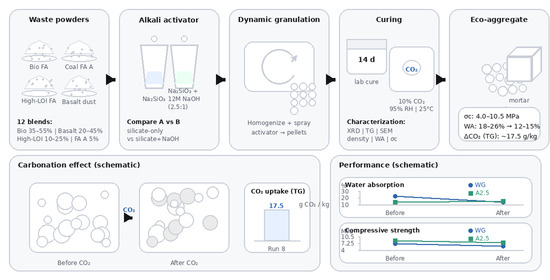
This study examined alkali-activated granular aggregates produced from biomass fly ash, coal fly ash, and basalt dust. The work focused on multicomponent industrial waste mixtures activated with two sodium silicate-based systems and on the effect of carbonation curing on aggregate properties. Twelve designed mixtures and reference series were evaluated in terms of particle density, water absorption, and mechanical performance. The response to carbonation was also analysed to assess the potential for CO2 uptake. Mechanical performance ranged from low to moderate and depended on mixture composition, activator type, and carbonation treatment. In most cases, the blended activator produced higher strength before carbonation than sodium silicate alone, whereas carbonation frequently reduced strength. Mixtures containing more basalt dust and less biomass fly ash generally showed the most favourable combination of properties. The results indicate that these industrial mineral wastes can be used to produce alkali-activated granular aggregates with adjustable properties, while carbonation curing may additionally contribute to phase changes and limited CO2 binding.

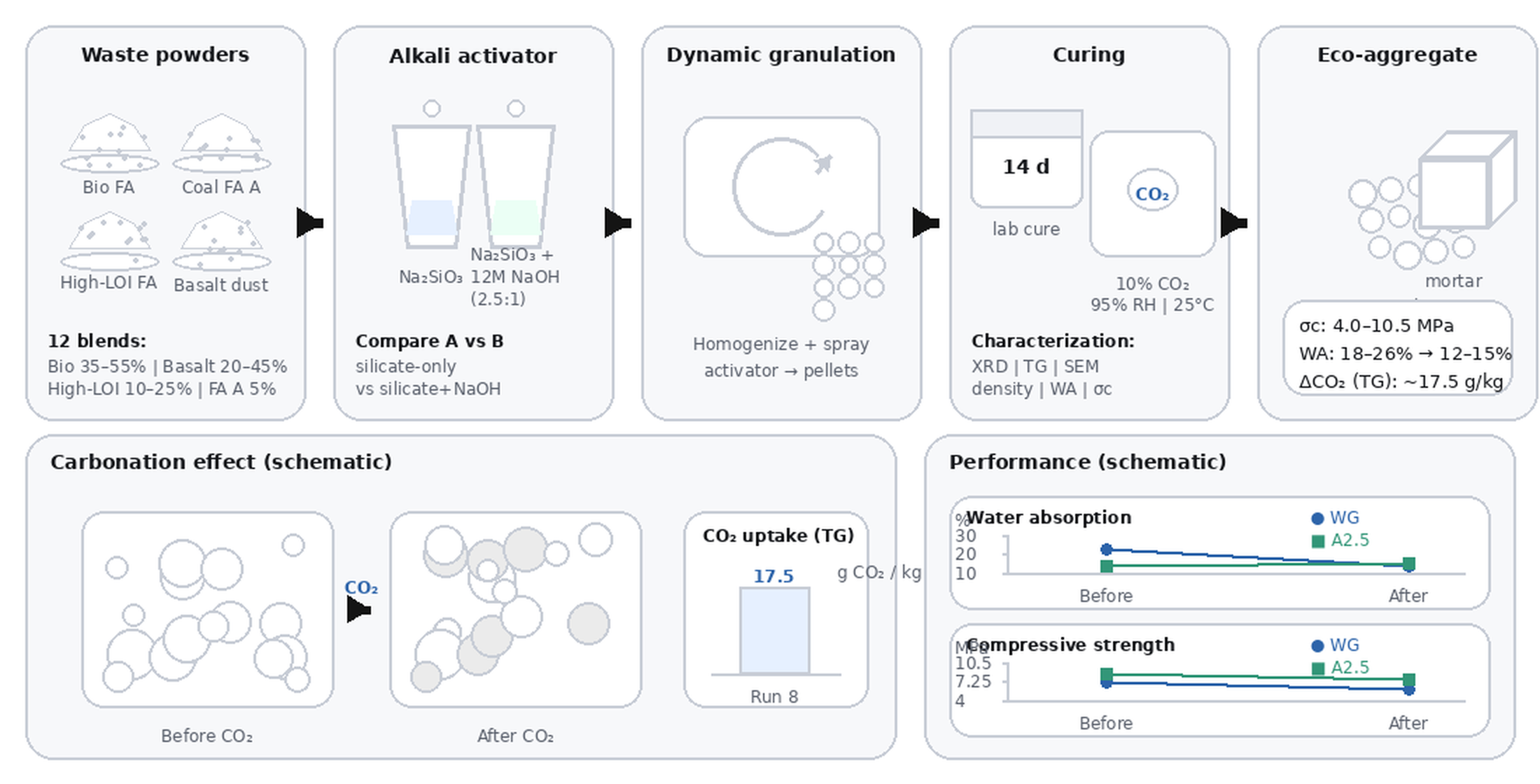
Graphical Abstract

1. Introduction

Decarbonization of the construction industry remains a major challenge because the sector depends both on high-emission cementitious binders and on very large quantities of mineral aggregates [1,2]. In this context, artificial aggregates produced from waste are increasingly considered a promising circular economy approach, as they enable the conversion of fine industrial residues into granular materials suitable for mortars and concrete [2,3]. Compared with sintered lightweight aggregates, cold-bonded and alkali-activated routes are attractive because they require less thermal energy and allow the use of industrial by-products [3,4]. However, these systems still show important limitations, especially in terms of mechanical strength, water absorption, and durability, which restrict their wider structural use [4,5].
Alkali-activated materials (AAMs) are relevant here because they enable the hardening of fine powders at ambient or moderately elevated temperatures [4,6]. Their carbonation behaviour, however, is complex and strongly dependent on the precursor composition, activator chemistry, and curing conditions. Depending on the system, carbonation may promote densification and lower water absorption, but it may also cause unfavourable microstructural changes and reduce mechanical performance [6,7,8]. Recent studies indicate that durability, activator efficiency, and practical scalability remain the main barriers to broader implementation of alkali-activated technology [9,10].
An additional issue is the variability of waste precursors. Biomass fly ash and coal fly ash can differ markedly in mineralogy, chemical composition, loss on ignition, and reactivity, and therefore cannot be treated as directly interchangeable in alkali-activated systems [11,12]. Basalt dust may also influence the performance of such systems through its effect on particle packing, reactivity, and interaction with the binder matrix [13]. This is particularly significant in the case of granular aggregates, where particle packing, particle dissolution, and interparticle bonds determine density, water absorption, and resistance to crushing. Previous studies have shown that alkali-activated or geopolymer granulated aggregates can be produced from fly ash, slag, basalt-containing mixtures, and other industrial residues [14,15]. Carbonation curing has also been reported to improve selected aggregate properties, although the effect depends strongly on the precursor composition and curing regime [16,17]. More recent work on geopolymer granules and carbonated alkali-activated aggregates suggests that composition optimisation is essential if waste-derived aggregates are to achieve acceptable technical performance [18,19]. However, most published studies still focus on systems based on a single precursor, a single activator formulation, or a single curing route. As a result, the behaviour of multicomponent waste mixtures containing biomass fly ash, coal fly ash with different LOIs, and basalt dust under different sodium silicate-based activation conditions remains insufficiently described.
The aim of this study was therefore to produce alkali-activated granular aggregates from biomass fly ash, coal fly ash with contrasting LOIs, and basalt dust, and to determine how mixture composition and activator type affect their key engineering properties and response to accelerated carbonation. Two activation methods based on the use of sodium silicate were compared. The aggregates were assessed before and after carbonation to determine the composition ranges that ensure beneficial performance characteristics.

2. Materials and Methods

2.1. Materials

Sodium silicate solution (water glass) and sodium hydroxide were used as alkaline activators to form a binding phase responsible for the consolidation of the granules. Two activation methods were investigated: (i) sodium silicate solution used as the sole activator, and (ii) a mixed activator consisting of sodium silicate solution and 12 M NaOH in a mass ratio of 2.5:1, introduced to increase alkalinity and improve the solubility of the precursor. The main parameters of the sodium silicate and NaOH solutions used in the study are given in Table 1.

2.2. Research Methodology

2.2.1. Research Plan

A mixture design comprising 12 formulations (series 1–12) was adopted, as presented in Table 2. In this design, the proportions of three constituents were varied: biomass fly ash (CHP plant in Białystok, Poland, fluidized bed boiler), basalt dust (Trzuskawica S.A. Targowica, Poland), and fly ash (high-LOI) (CHP plant in Białystok, Poland, pulverised coal boiler), while the contribution of Fly Ash A (CFPP in Ostrołęka, Poland, pulverised coal boiler) was kept constant at 5% in all mixes. In addition, reference series were prepared using each raw material individually (100% of a given precursor). The alkaline activator was dosed at a constant activator to solids ratio of 1:3 (by mass; 1 part activator to 3 parts dry solids) in two variants: (i) sodium silicate solution (water glass) and (ii) a blended activator composed of sodium silicate solution and 12 M NaOH, mixed at a mass ratio of 2.5:1 (sodium silicate solution to 12 M NaOH).

2.2.2. Method

Particle size distribution
The particle size distribution of the manufactured aggregates was assessed using three replicate samples in accordance with PN-EN 12620+A1:2010 [20]. Particle density and water absorption were determined in accordance PN-EN 1097-6:2022-07 [21].
Single aggregate crushing strength test
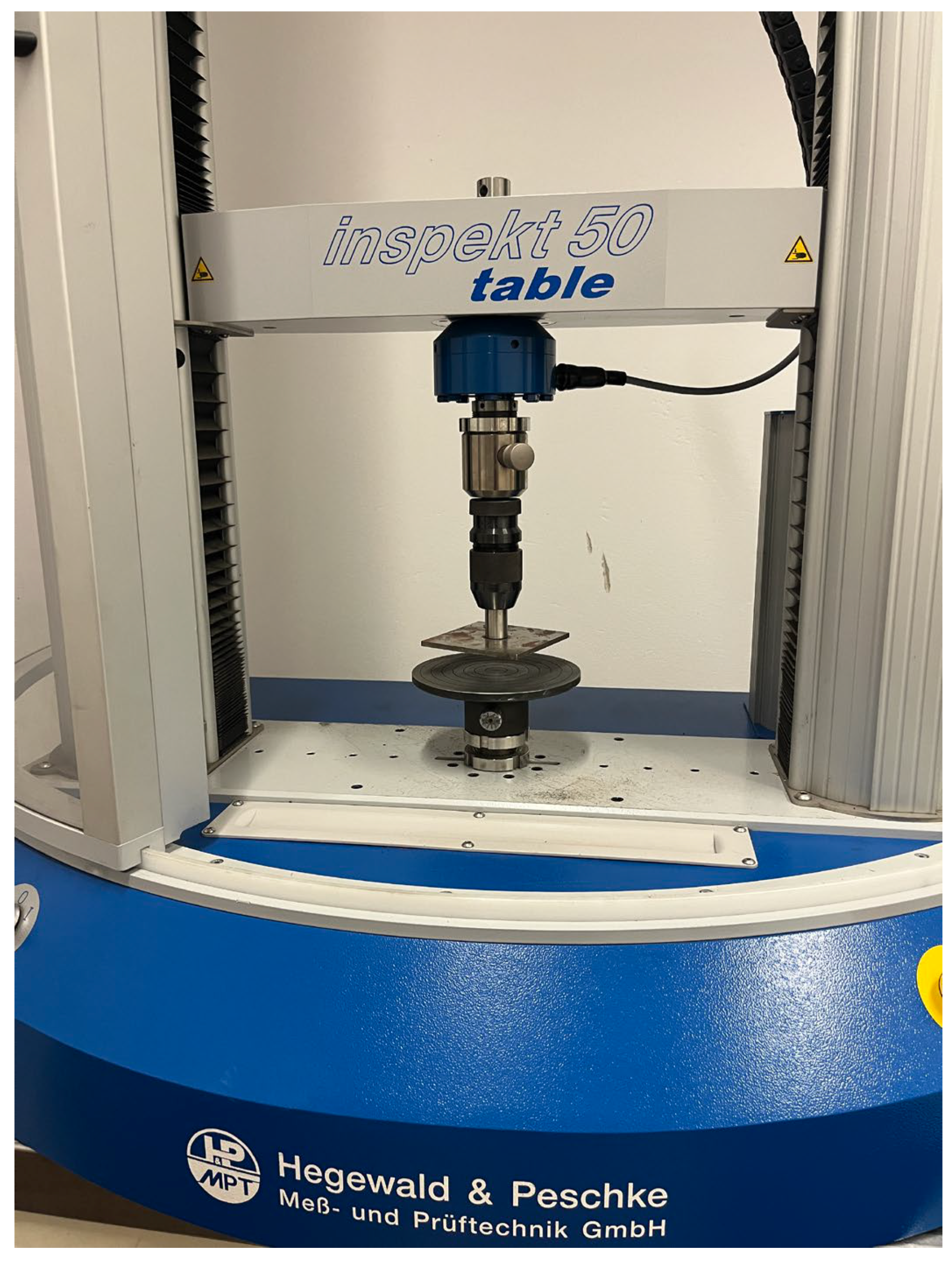
The mechanical resistance of the granules was evaluated using a single granule crushing test, in which each specimen was placed between two parallel plates and loaded to failure. The tests were carried out using an Inspect Table universal testing machine (50 kN; Hegewald und Peschke MPT GmbH, Nossen, Germany). The upper plate was displaced at 2 mm·min−1. Before testing, the external diameter of each granule was measured in two orthogonal directions, and the mean value d was used in the calculations; granule height was recorded only as an auxiliary geometrical parameter. Loading continued until the recorded force decreased by 30% from the peak value. Owing to the limited elastic deformation of the granules, all specimens fractured during the test. At least eight granules were tested for each processing condition, and the maximum failure load F was recorded. On this basis, the single aggregate crushing strength test S was calculated using Equation (1) as a comparative mechanical index [22,23,24,25,26,27,28,29]:
S = 2.8 F π d 2
where F is the maximum failure load, and d is the mean external granule diameter. Because the tested granules were approximately spherical rather than geometrically regular specimens, the obtained value should be treated as a comparative mechanical parameter rather than as conventional compressive strength.
Figure 1 presents the test setup used to determine the single aggregate crushing strength test.
Water absorption was measured in accordance with PN-EN 1097-6:2022-07 [21] using eight replicate samples. The WA value was calculated according to Equation (2).
W A , % = m 2 m 1 m 1 · 100 %
Chemical composition
Chemical composition of the raw materials was determined by X-ray fluorescence (XRF) using a ZSX PRIMUS IV spectrometer (Rigaku, Tokyo, Japan) equipped with a 4 kW power source. Phase composition was characterised by X-ray diffraction (XRD) using a Bruker D8 Discover A25 diffractometer (Bruker, Karlsruhe, Germany) with CuKα radiation (λ = 1.54050 Å), operated at 40 kV and 30 mA. Diffraction data were collected over a 2θ range of 10–70°, with a step size of 0.006° (2θ) and a scanning rate of 0.006° (2θ)·min−1.
DTA/TGA
Differential thermal analysis (DTA) and thermogravimetric analysis (TGA) were performed using a Netzsch STA 409 PG analyser (NETZSCH-Gerätebau GmbH, Selb, Germany), recorded in air. Samples were heated to 1100 °C at 10 °C·min−1.
Optical Microscopy and Scanning Microscopy Analysis.
Themorphology of the artificial aggregates was examined by scanning electron microscopy (SEM) using a high-resolution Tescan microscope and an FEI Quanta 250 FEG microscope FEI Company, Hillsboro, OR, USA with a thermally assisted field emission source (Schottky Emitter). Optical microscopy observations were carried out using an Opta-Tech microscope (Opta-Tech Sp. z o.o., Warsaw, Poland) equipped with a CCD camera.
Carbon footprint analysis
The carbon footprint assessment was carried out in accordance with PN-EN ISO 14067:2018-10 [30], while the detailed calculation assumptions were defined for the studied system.

2.3. Production Process of Artificial Aggregate

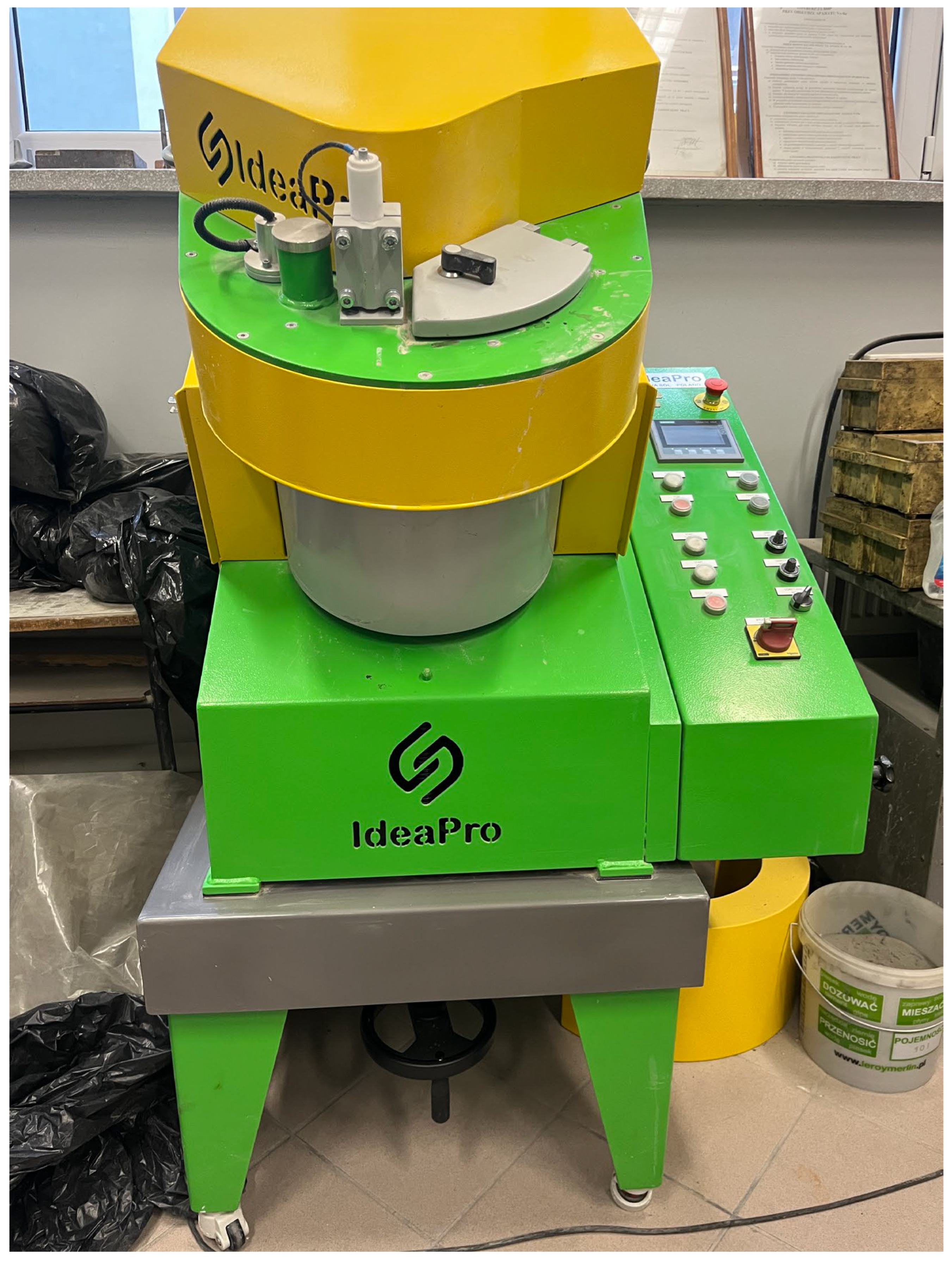
The production of the artificial aggregate began by weighing the required amounts of each constituent together with the activator and water, according to the experimental design. The dry materials were mixed for 3 min and then transferred to the granulator. The activator water solution was subsequently sprayed in gradually during granulation. In Figure 2, the granulation machine used for aggregate production is shown.
The produced granulated aggregates were first cured for 14 days under laboratory conditions and subsequently exposed to accelerated carbonation for 13 days in a chamber operated at 10% CO2, 95% relative humidity, and 25 °C. After removal from the chamber, the aggregates were air-dried for 24 h and tested after 28 days.

3. Results and Discussion

3.1. Raw Material Characterisation (PSD, XRF, XRD, TG/DTG/DTA)

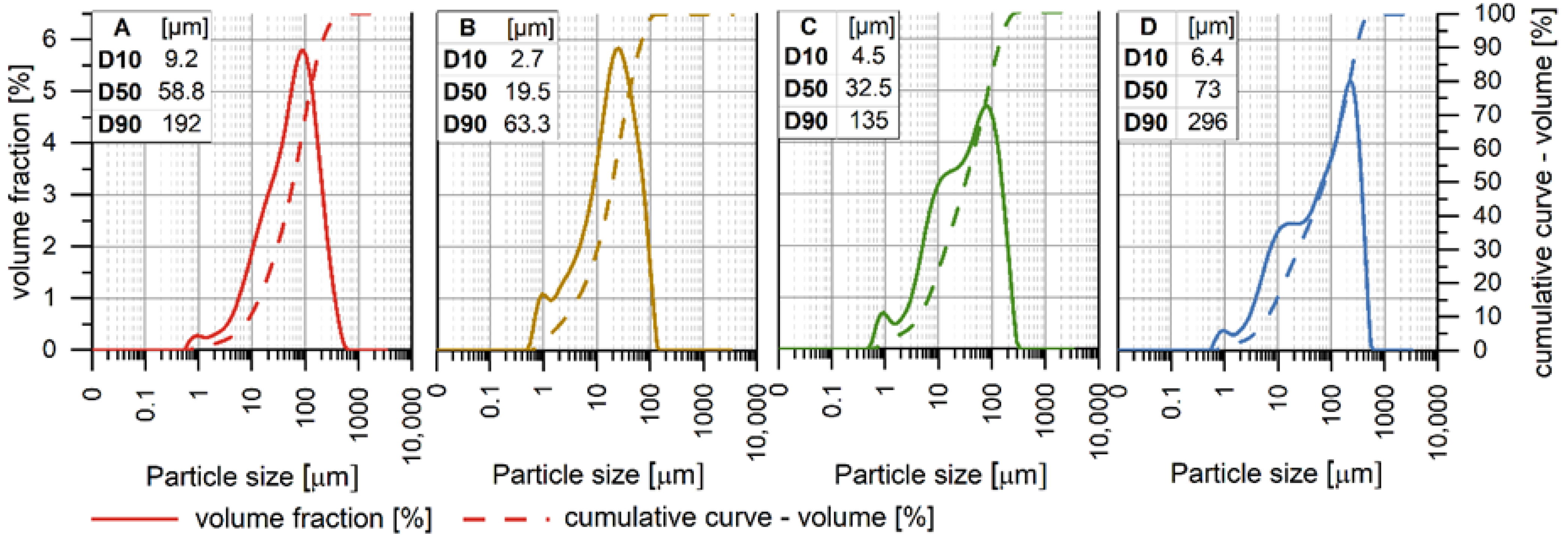
The particle size distribution and cumulative volume curves of the tested raw materials are presented in Figure 3. Fly ash with a high LOI (A) is characterised by a moderately fine and relatively broad particle size distribution, with D10 = 9.2 µm, D50 = 58.8 µm, and D90 = 192 µm. Basalt dust (B) is the finest precursor in the tested set, with D10 = 2.7 µm, D50 = 19.5 µm, and D90 = 63.3 µm. Fly Ash A (C) exhibits a fine-grained particle size distribution, intermediate between basalt dust and high-LOI fly ash, with D10 = 4.5 µm, D50 = 32.5 µm, and D90 = 135 µm. In contrast, biomass fly ash (D) is the coarsest material, with D10 = 6.4 µm, D50 = 73 µm, and D90 = 296 µm.
The particle size parameters of the two coal fly ashes investigated in this study fall within the range of variability reported in the literature for hard coal fly ashes from pulverised fuel boilers [31]. Fly Ash A exhibited a finer particle size distribution than the high-LOI fly ash. The particle size distribution of the basalt dust used in this study was comparable to that reported in the literature for basalt powder [32].
The chemical composition (Table 3) of the tested fly ashes and basalt dust reveals clear differences between the raw materials. Fly Ash A and the high-LOI fly ash are rich in SiO2 (35.5–38.6 wt.%) and Al2O3 (15.1–16.1 wt.%). In both materials, the combined SiO2 + Al2O3 + Fe2O3 content is similar (56.7–60.2 wt.%), whereas CaO remains low (about 1.9–2.1 wt.%). Biomass fly ash differs clearly from the coal fly ashes, mainly because of its higher CaO content (16.0 wt.%) and lower SiO2 and Al2O3 contents (29.7 and 7.55 wt.%, respectively), which results in a lower SiO2 + Al2O3 + Fe2O3 sum (41.1 wt.%). It also contains higher SO3 (2.32 wt.%) and detectable chloride (0.21 wt.%). Basalt dust contains more Fe2O3 (12.8 wt.%), CaO (8.74 wt.%), MgO (5.92 wt.%), and TiO2 (2.53 wt.%) and shows the lowest LOI (3.58 wt.%). The LOI values vary considerably among the tested materials and are highest for the high-LOI fly ash (10.8 wt.%), followed by biomass fly ash (9.1 wt.%) and Fly Ash A (4.5 wt.%). These differences may affect water demand and the behaviour of the binder–activator system. In Figure 4, Figure 5, Figure 6 and Figure 7, the XRD results for basalt dust, fly ash type high-LOI, biomass fly ash and Fly Ash A are shown.
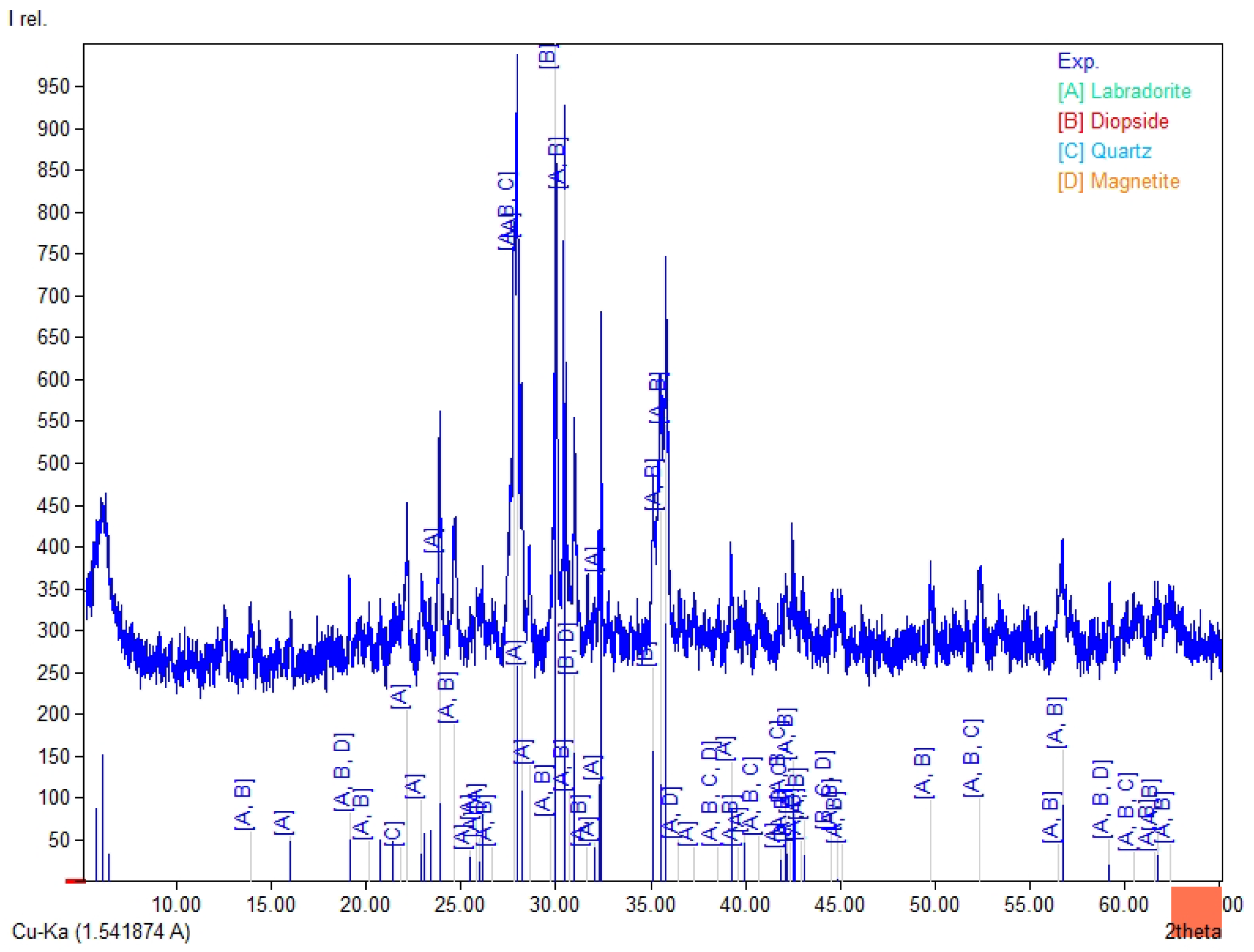
The XRD pattern of basalt dust (Figure 4) is dominated by reflections assigned to labradorite (A; (Ca,Na)(Al,Si)4O8) and diopside (B; CaMgSi2O6), with minor quartz (C; SiO2) and accessory magnetite (D; Fe3O4). This phase composition is consistent with basalt-derived mineral powder reported in the literature [31].
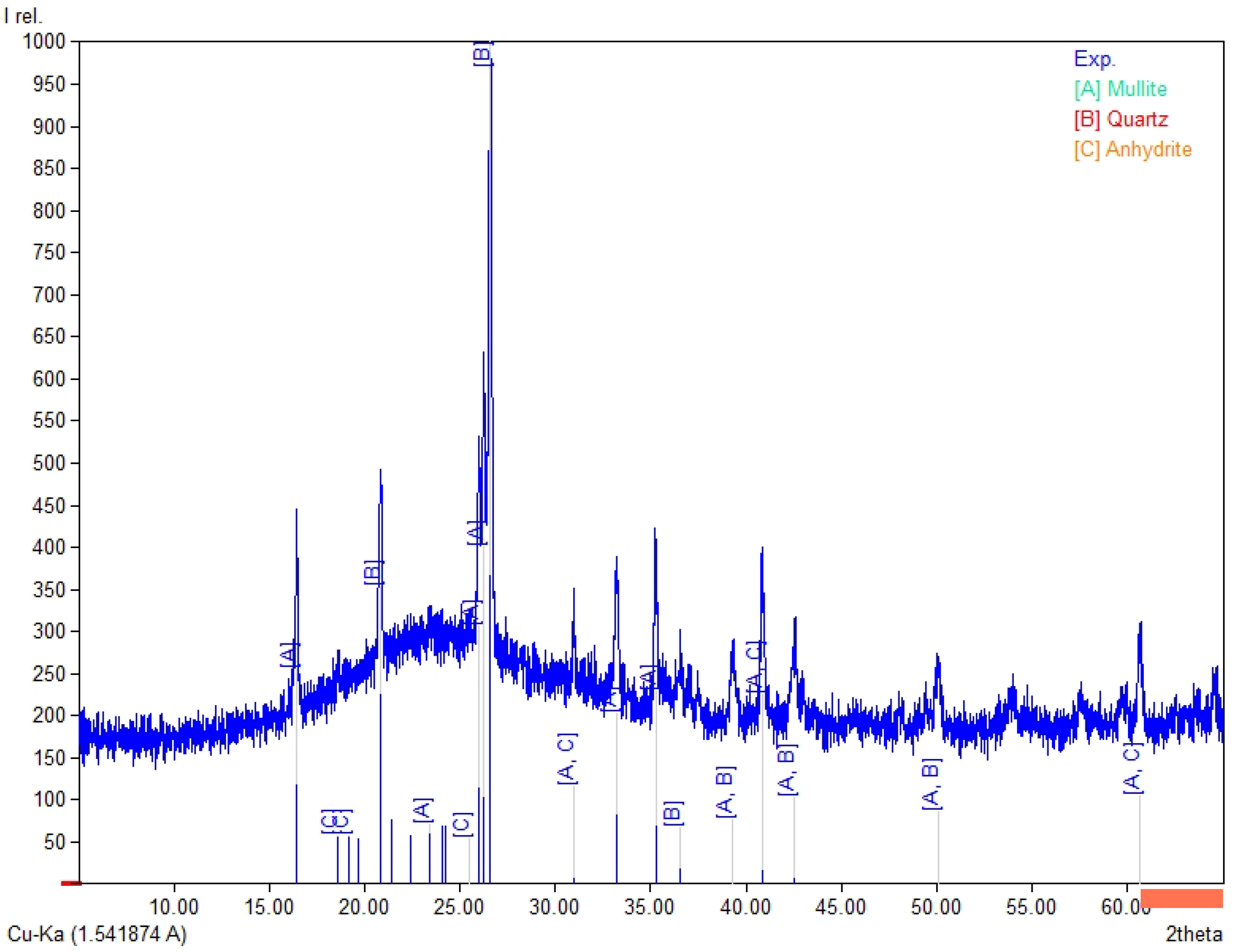
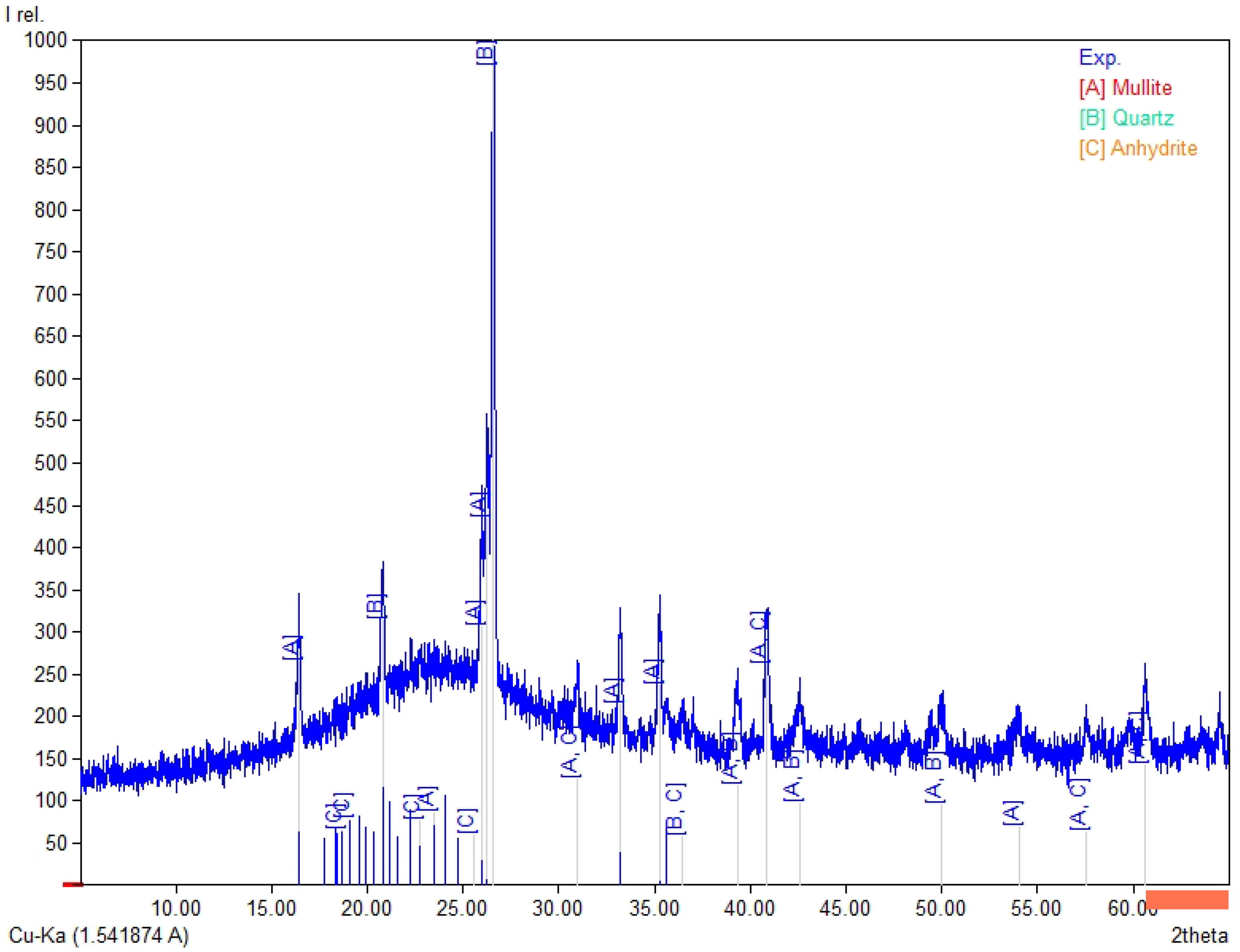
The XRD pattern of the high-LOI fly ash (Figure 5) is dominated by mullite (A; Al6Si2O13) and quartz (B; SiO2), with a minor amount of anhydrite (C; CaSO4). This phase composition is typical of coal-derived fly ashes, in which quartz and mullite usually represent the main crystalline phases, whereas sulfate phases may occur in smaller amounts depending on fuel composition and combustion conditions [31].
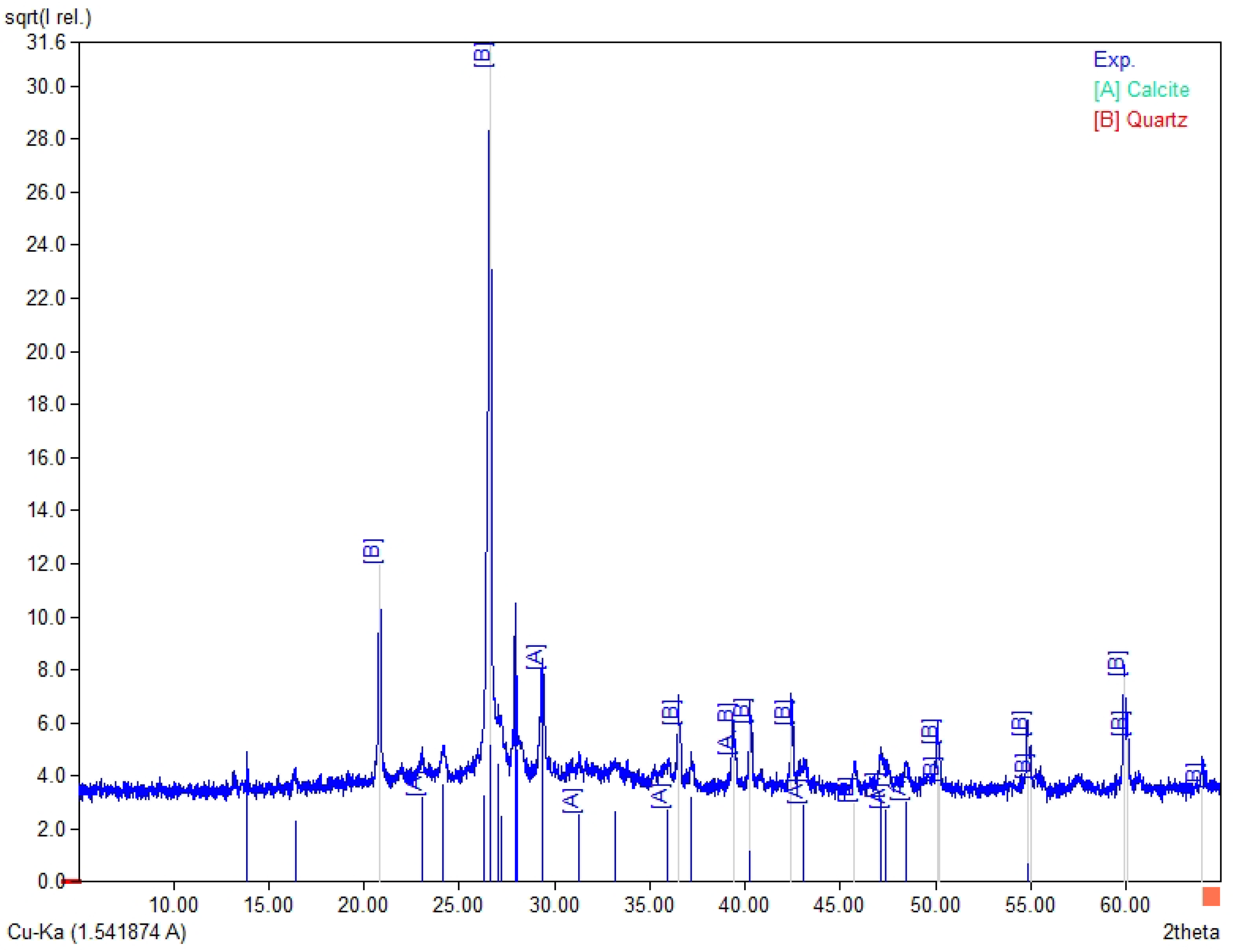
Biomass fly ash (Figure 6) is characterised by a phase composition dominated by calcite (A; CaCO3), while quartz (B; SiO2) occurs as a secondary crystalline phase. This phase composition is a characteristic feature of biomass fly ash, in which calcite and quartz constitute residues derived from the sludge of a fluidised-bed furnace [33].
Fly Ash A (Figure 7) contains mullite (A; Al6Si2O13) and quartz (B; SiO2) as the main crystalline phases, with a minor amount of anhydrite (C; CaSO4). This phase composition is typical of coal-derived fly ash, in which anhydrite is a residue from the flue gas desulfurization process [31].
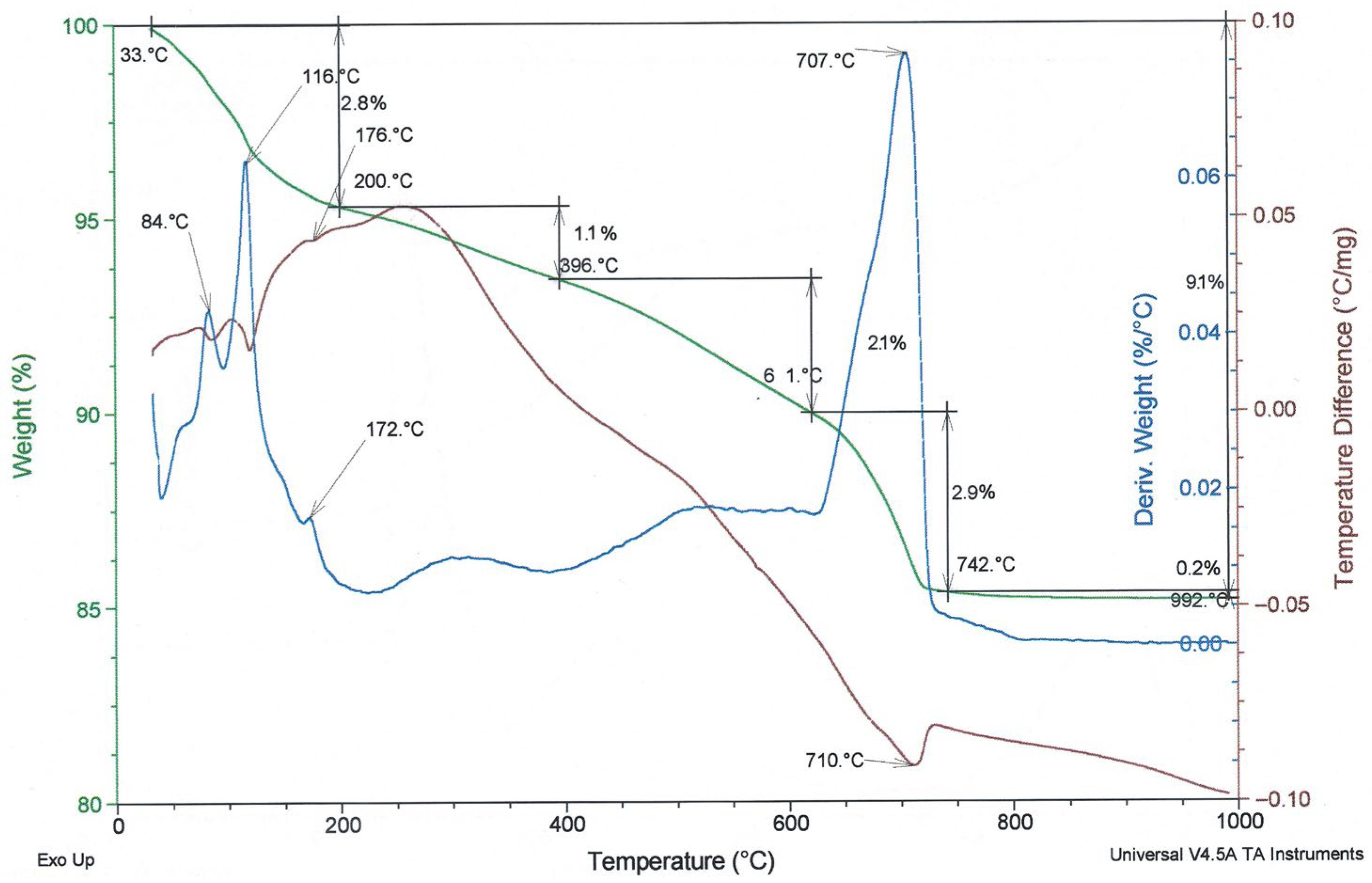
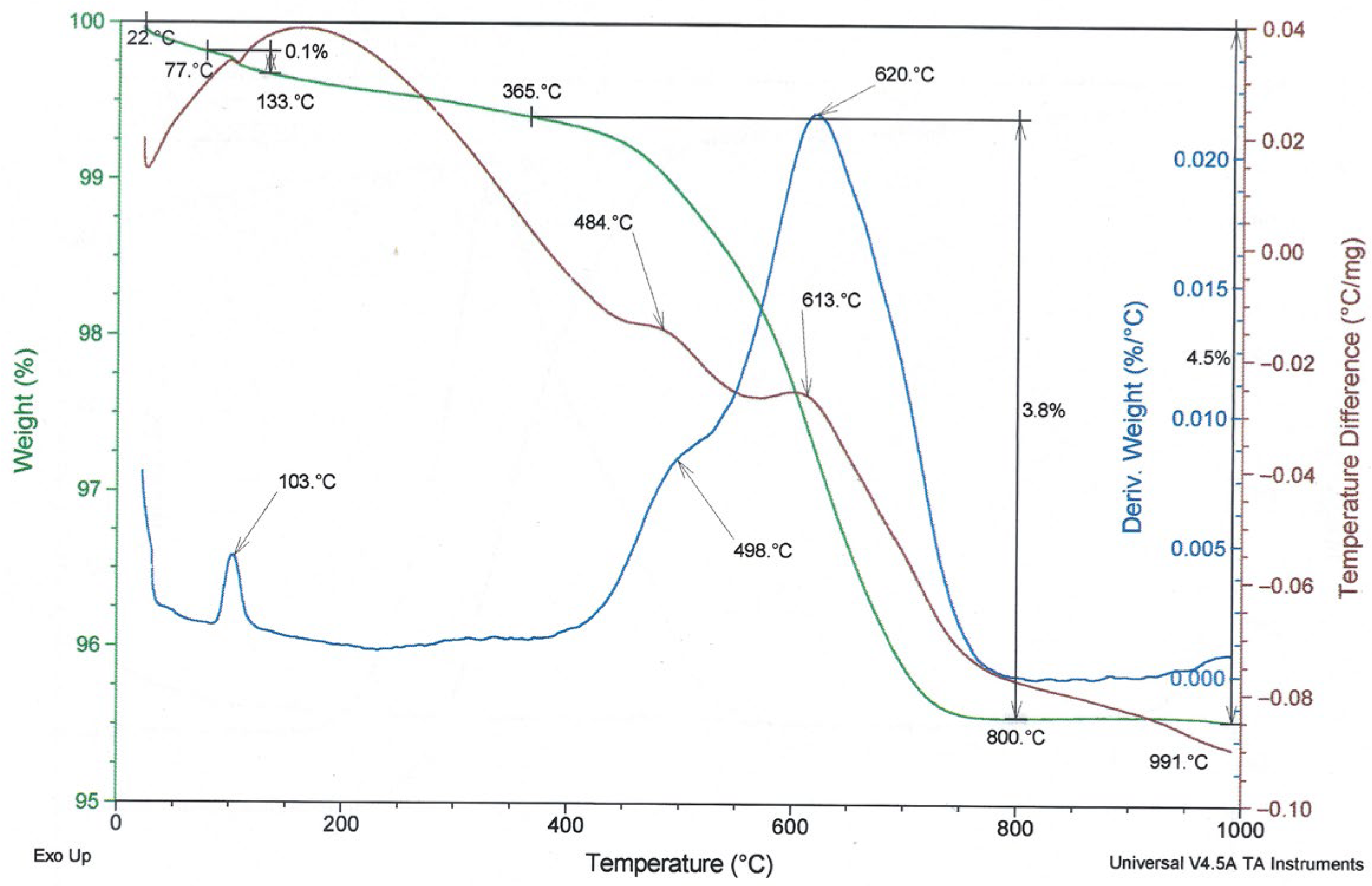
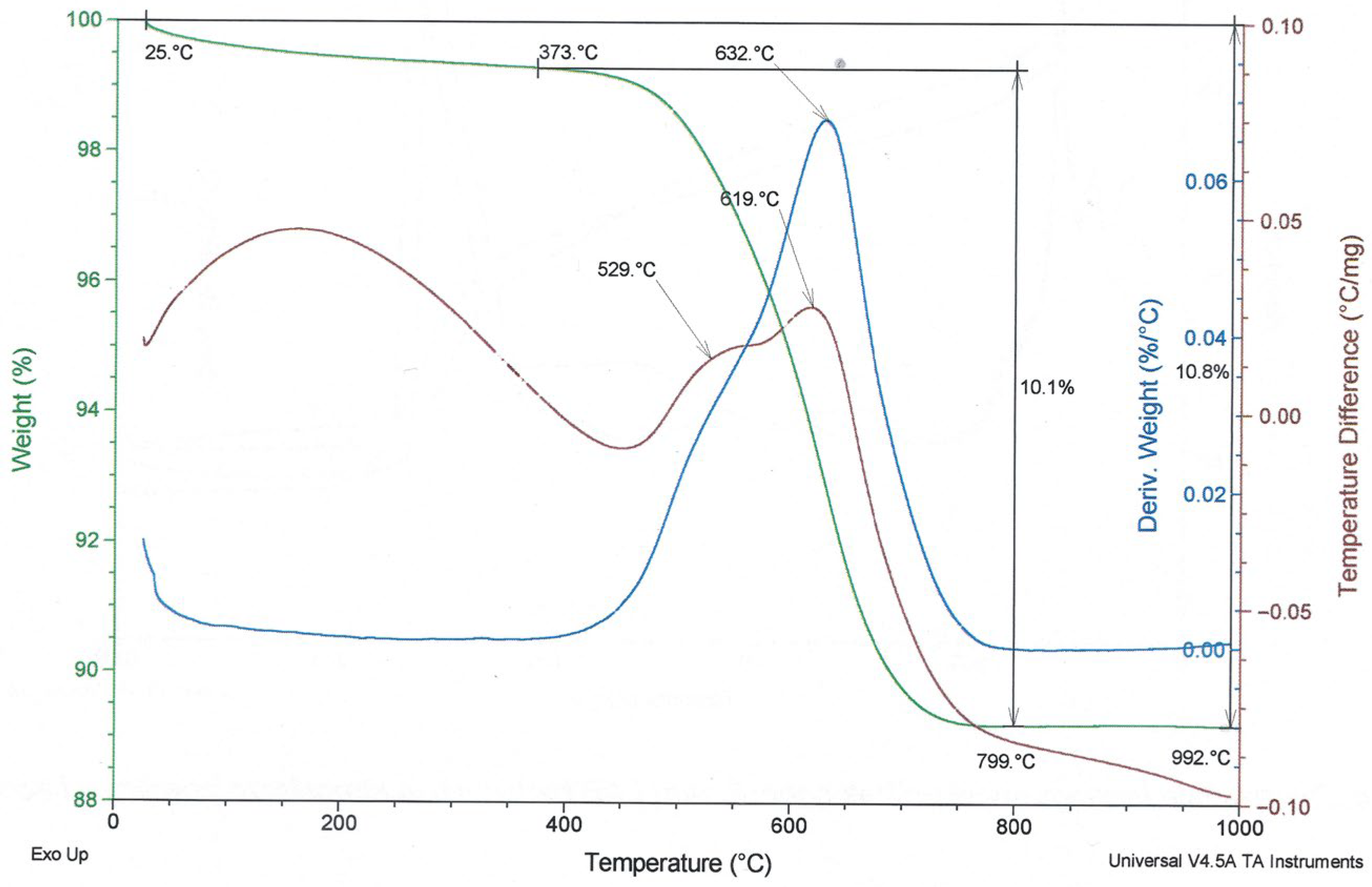
To compare the thermal behaviour of the examined fly ashes, TG/DTG and DTA curves are presented in Figure 8, Figure 9 and Figure 10. In these figures, the green line represents the TG/weight change curve, the blue line represents the DTG/derivative weight curve, and the brown line represents the DTA/temperature difference curve; the black guide lines indicate selected mass-loss ranges and corresponding percentage changes.
Both analysed fly ashes (high-LOI fly ash and type A fly ash) exhibit similar thermal curves, indicating a similar material nature and transformations occurring within a comparable temperature range. The difference consists of the higher loss on ignition of fly ash with high LOI (Figure 9) than Fly Ash A (Figure 8), due to the higher unburned carbon content. It should also be noted that the mullite, anhydrite, and quartz phases present in both ashes cannot be clearly identified in the DTA diagrams because their characteristic transformations occur outside the temperature range used in the study or produce too weak thermal effects.
The TG/DTG/DTA curves of the biomass fly ash (Figure 10) are consistent with the typical thermal behaviour reported for biomass fly ash [33], especially for materials with an increased content of calcium-bearing phases. This is indicated by the relatively high mass loss and the distinct thermal effect observed in the range of approximately 700–750 °C, which can be attributed to calcite decomposition.
The conducted studies revealed significant differences among the analysed raw materials in terms of particle size distribution, chemical and phase composition, and thermal properties. The XRD and thermal analysis results complement each other and indicate that these raw materials may be promising precursors for alkali-activated materials due to the presence of reactive aluminosilicate components and calcium-bearing phases. Furthermore, the calcium-rich components may provide a basis for CO2 sequestration through carbonation.

3.2. Single Aggregate Crushing Strength Test

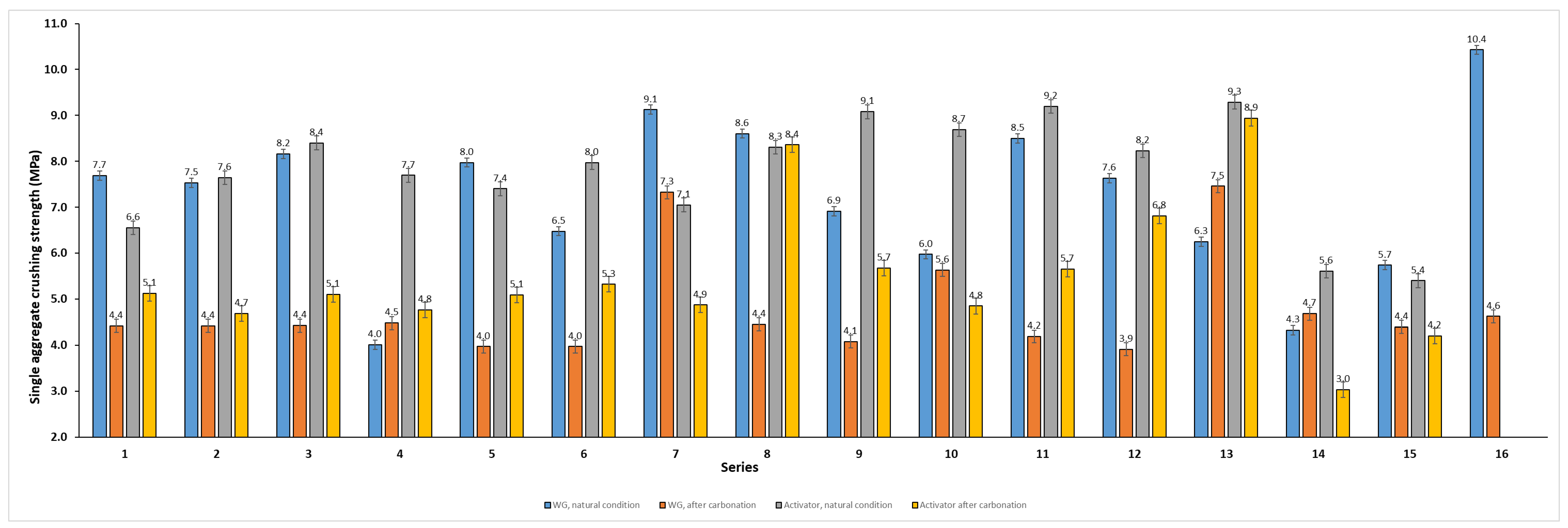
Before carbonation, both systems reached a similar strength level, although mixtures activated with Activator 2.5 more frequently yielded higher, less scattered results (Figure 11). In the water glass system, carbonation reduced single aggregate crushing strength in most series, and only a few mixtures showed an improvement. The highest pre-carbonation strength in the water glass series was observed for series 16 (10.4 MPa), while after carbonation, the highest value was recorded for series 13 (7.5 MPa). In series 8, where the ratio of Na2SiO3/NaOH = 2.5, carbonation also reduced strength in most cases, but the losses were usually smaller than for water glass. The highest strength before carbonation was obtained for series 13 (9.3 MPa), which also remained the strongest after carbonation (8.9 MPa). Series 8 was particularly notable, as its single aggregate crushing strength remained almost unchanged after carbonation (8.3–8.4 MPa). These results indicate that in series 8, where the ratio of Na2SiO3/NaOH = 2.5 provided better strength retention after carbonation than water glass. The results were greater than those obtained by researchers using other precursors [34]. Although the chemical composition of the precursor used in series 13 (Fly Ash A) was related to (FA (high-LOI)) (Series 14), this behaviour can be tentatively attributed to the high unburned carbon content in the fly ash with high LOI. Due to the developed surface area, the unburned carbon could influence the binding process and help form a sufficiently stable structure [35].
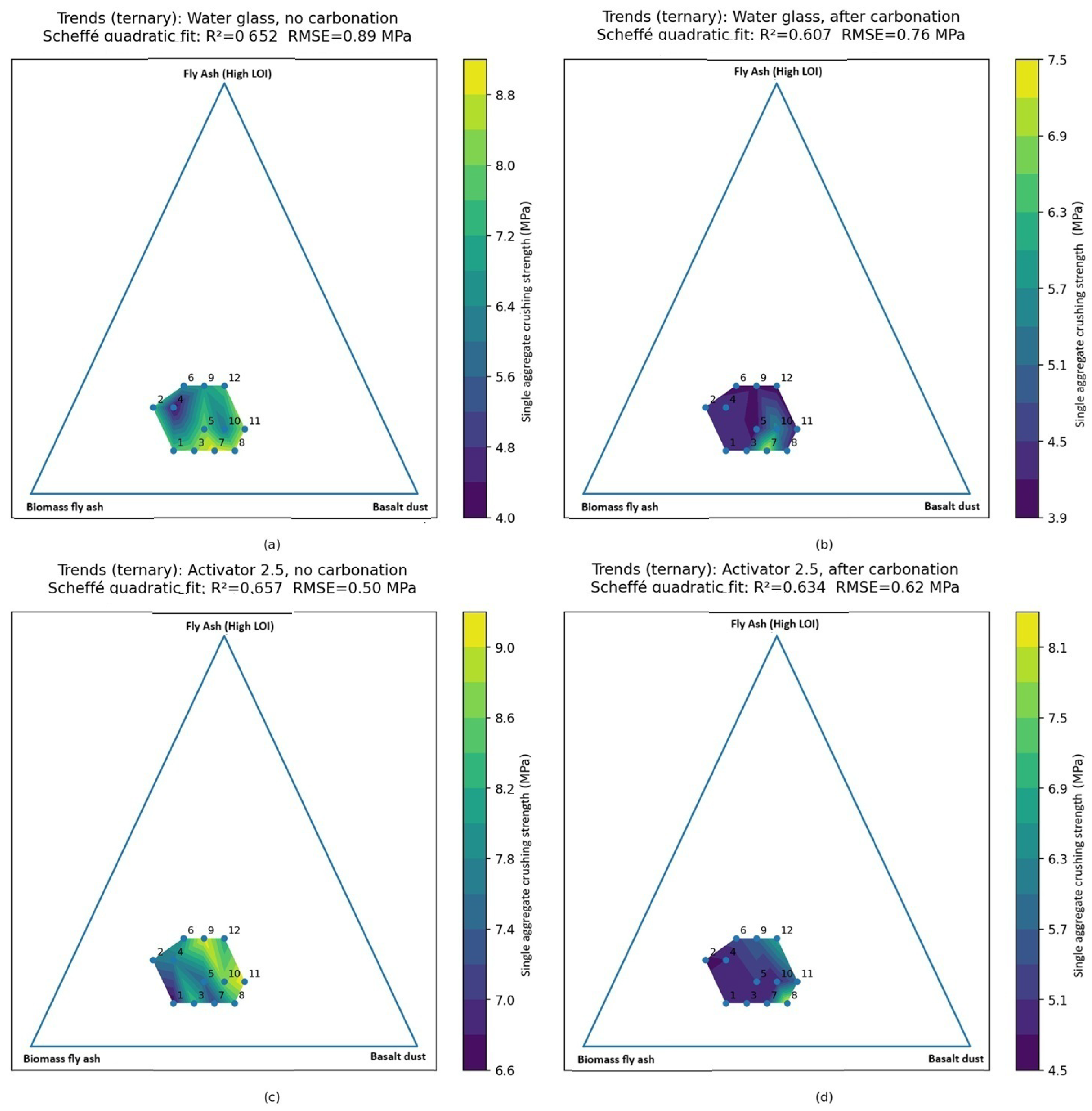
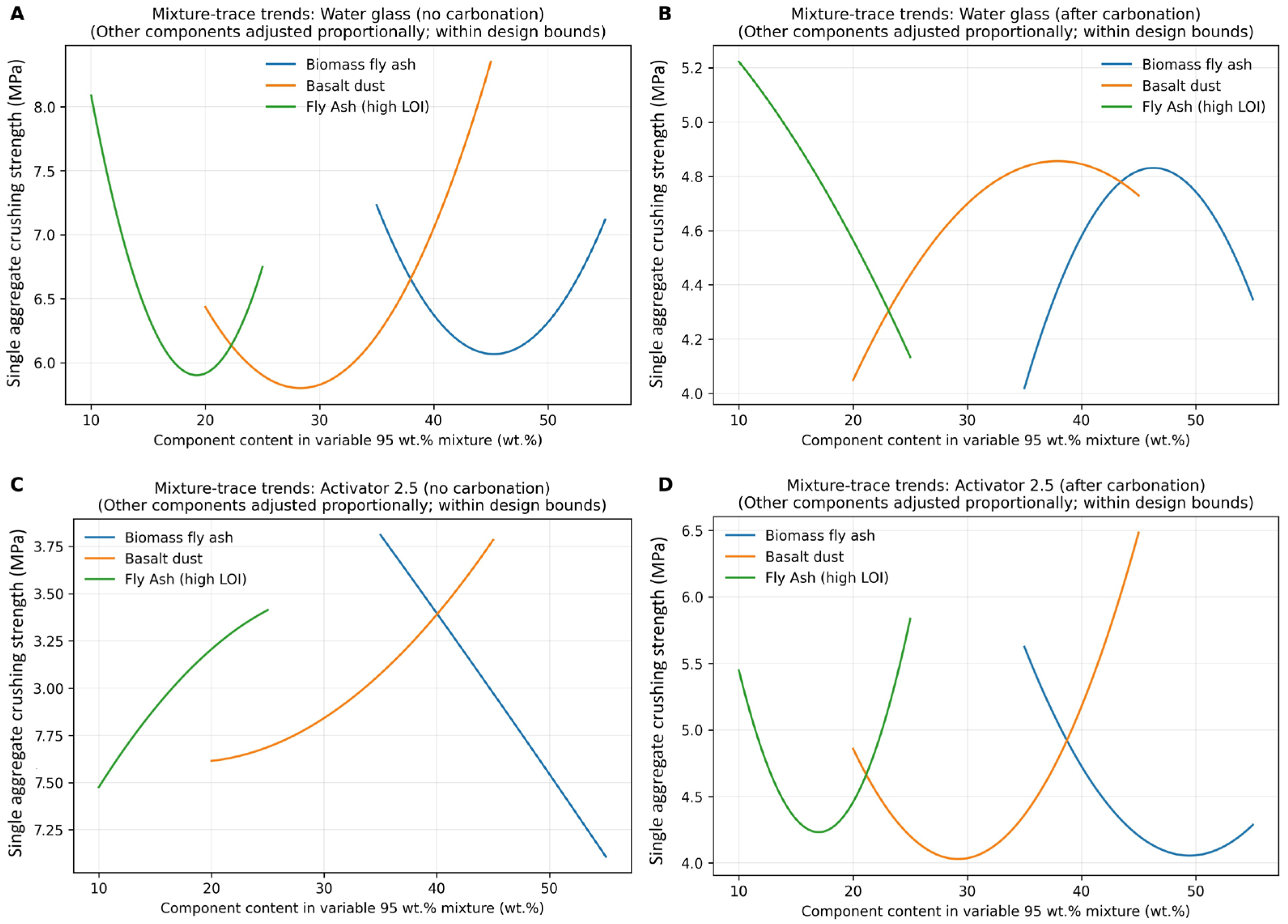
The relationships between composition and strength are further illustrated by the ternary response–surface and mixture–trace plots (Figure 12 and Figure 13). The fitted Scheffé quadratic models reproduced the main compositional trends, although their predictive accuracy remained moderate (R2 ≈ 0.61–0.66; RMSE ≈ 0.50–0.89 MPa). For this reason, the models are better suited to show general tendencies than to provide precise predictions. Both types of plots indicate that increasing the basalt powder content generally improves single aggregate crushing strength, whereas increasing the biomass fly ash content tends to reduce it, particularly in the Activator 2.5. The role of the high-LOI fly ash was less straightforward and depended on the activator system. After carbonation, the predicted response shifted toward lower strength values, which suggests that the effect of carbonation depended on mixture composition and was not uniform across all blends. The obtained strength levels are consistent with the broader range reported for cold-bonded and alkali-activated aggregates and approach the lower to intermediate mechanical range reported for selected commercial lightweight aggregates [36].
The strength variations could be partly explained by the different chemical compositions of the precursors. Fly Ash A and the high-LOI fly ash were the richest in SiO2 and Al2O3, which made them the main potential sources of aluminosilicate species for alkali activation. However, the high LOI of the latter may indicate a higher content of unburned carbon and other thermally removable components, which could increase liquid demand and reduce the effective availability of the alkaline activator. Biomass fly ash was rich in CaO, but its lower SiO2 and Al2O3 contents may have limited its contribution to the formation of a continuous aluminosilicate matrix. Basalt dust, despite being less alumina-rich than the coal fly ashes, had low LOI and relatively high SiO2, CaO, MgO, and Fe2O3 contents, which may have supported better packing and the formation of a more compact granular structure. This interpretation is consistent with the favourable performance of basalt-rich and low high-LOI mixtures, particularly series 8.

3.3. Particle Density

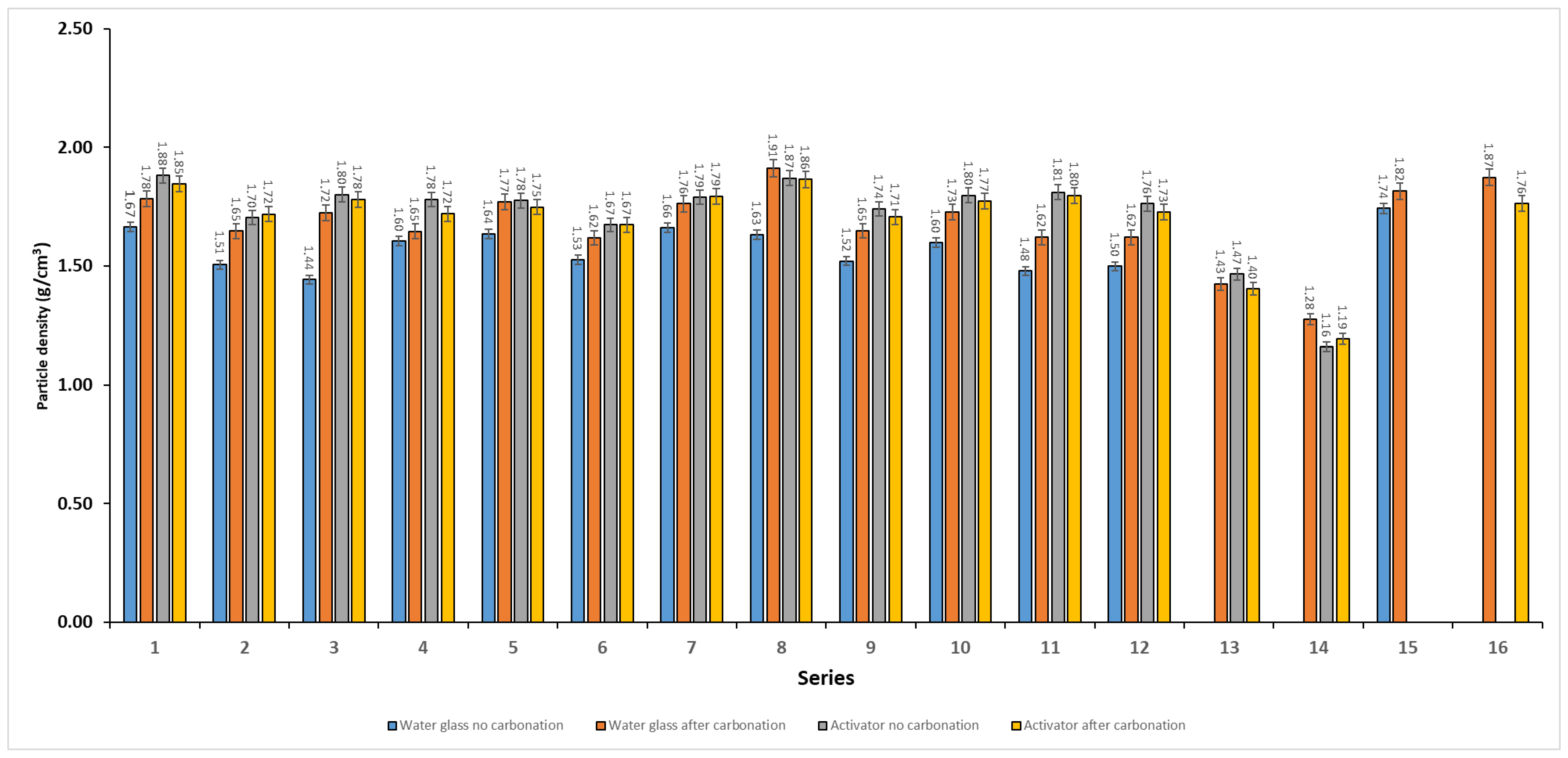
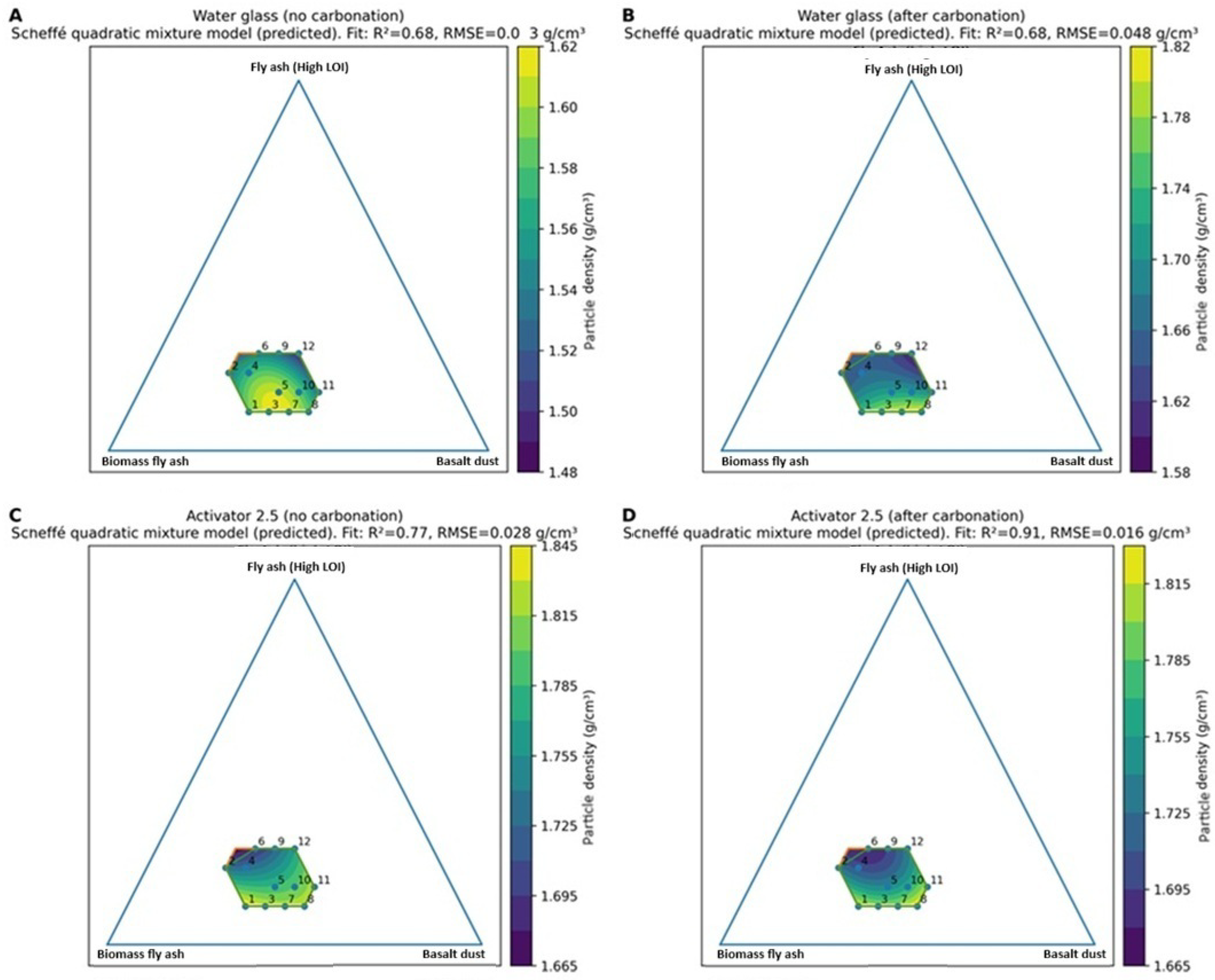
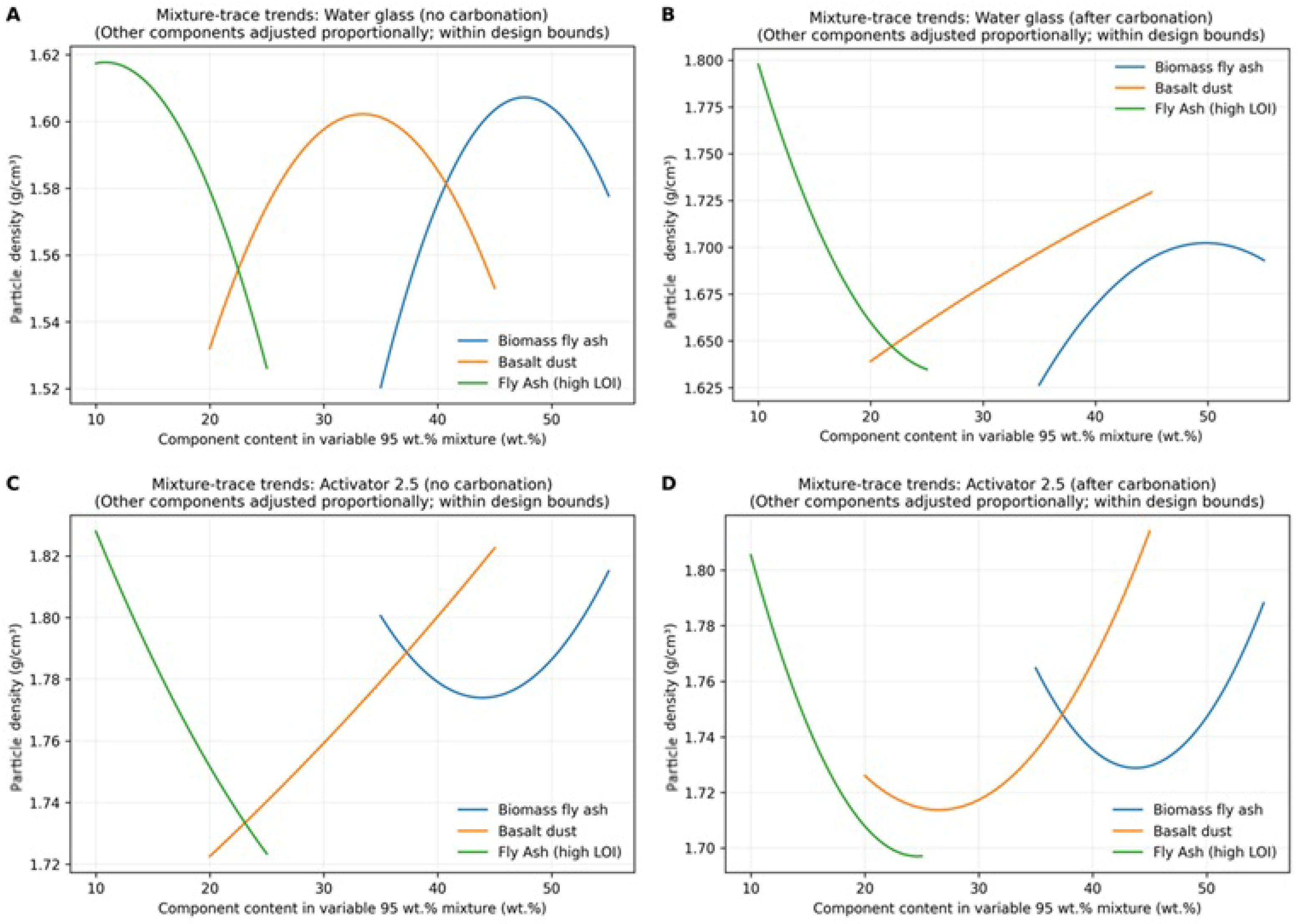
Particle density results for the designed blends (series 1–12) are presented in Figure 14 for both activator systems and curing conditions. Under natural conditions, the Activator 2.5 gave higher particle density than the water glass system (mean 1.782 vs. 1.565 kg/dm3), indicating a denser structure. After carbonation, particle density increased in all water glass mixtures, with the highest value of 1.91 kg/dm3 recorded for series 8. In contrast, the effect of carbonation in series 8, where the ratio of Na2SiO3/NaOH = 2.5, was small. Based on the measured particle density values, the produced aggregates can be classified as lightweight aggregates in accordance with EN 13055, since their particle density remained below 2000 kg/m3 [5]. For the series in which no results are presented, the specimens underwent degradation during conditioning in water, which prevented further testing. The composition–density relationships were described using Scheffé quadratic mixture models and are shown as ternary response–surface (Figure 15) and mixture–trace plots (Figure 16). The models showed moderate to very good agreement with the experimental data (R2 ≈ 0.68–0.91). Increasing the proportion of high-LOI fly ash reduced particle density, whereas increasing the basalt dust content increased it, especially after carbonation in the water glass system. The effect of biomass fly ash was weaker within the studied composition range. The highest particle densities were obtained for basalt-rich mixtures with a low proportion of high-LOI fly ash, while carbonation mainly increased density in the water glass system.
The particle density trends can be explained by the combined effect of precursor density, particle packing, and matrix formation. Basalt dust had the lowest LOI and contained relatively high amounts of SiO2, CaO, MgO, Fe2O3, and TiO2, which likely contributed to a more compact granular skeleton and higher particle density. In contrast, the high-LOI fly ash may have increased porosity because thermally removable components, including unburned carbon, can increase liquid demand and reduce the effective formation of a dense binding matrix. The higher density of the Activator 2.5 mixtures, before carbonation, suggests that the addition of NaOH promoted precursor dissolution and early matrix densification. The stronger density increase after carbonation in the water glass system indicates that these initially more open structures were more susceptible to pore filling by carbonate products.

3.4. Water Absorption

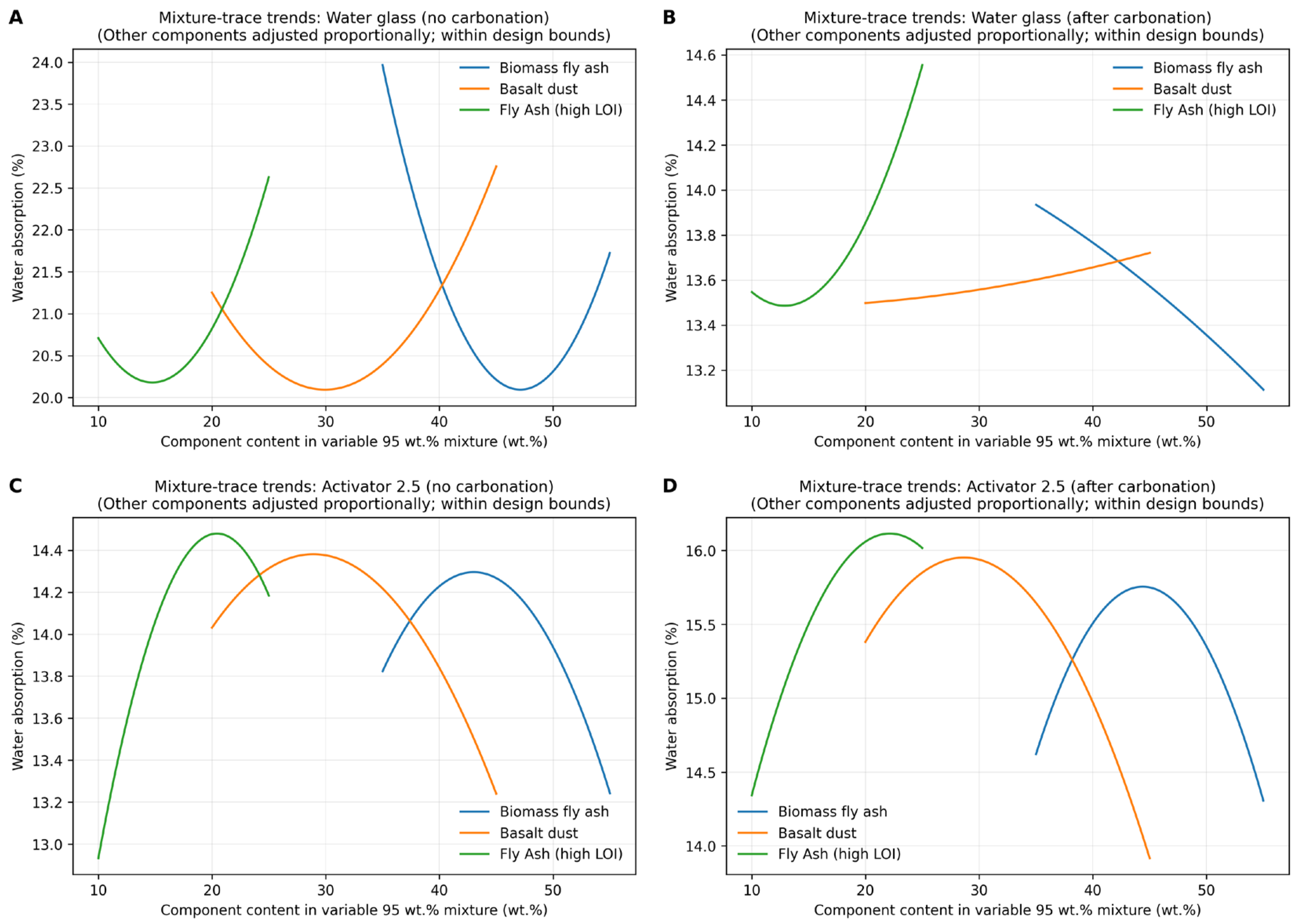
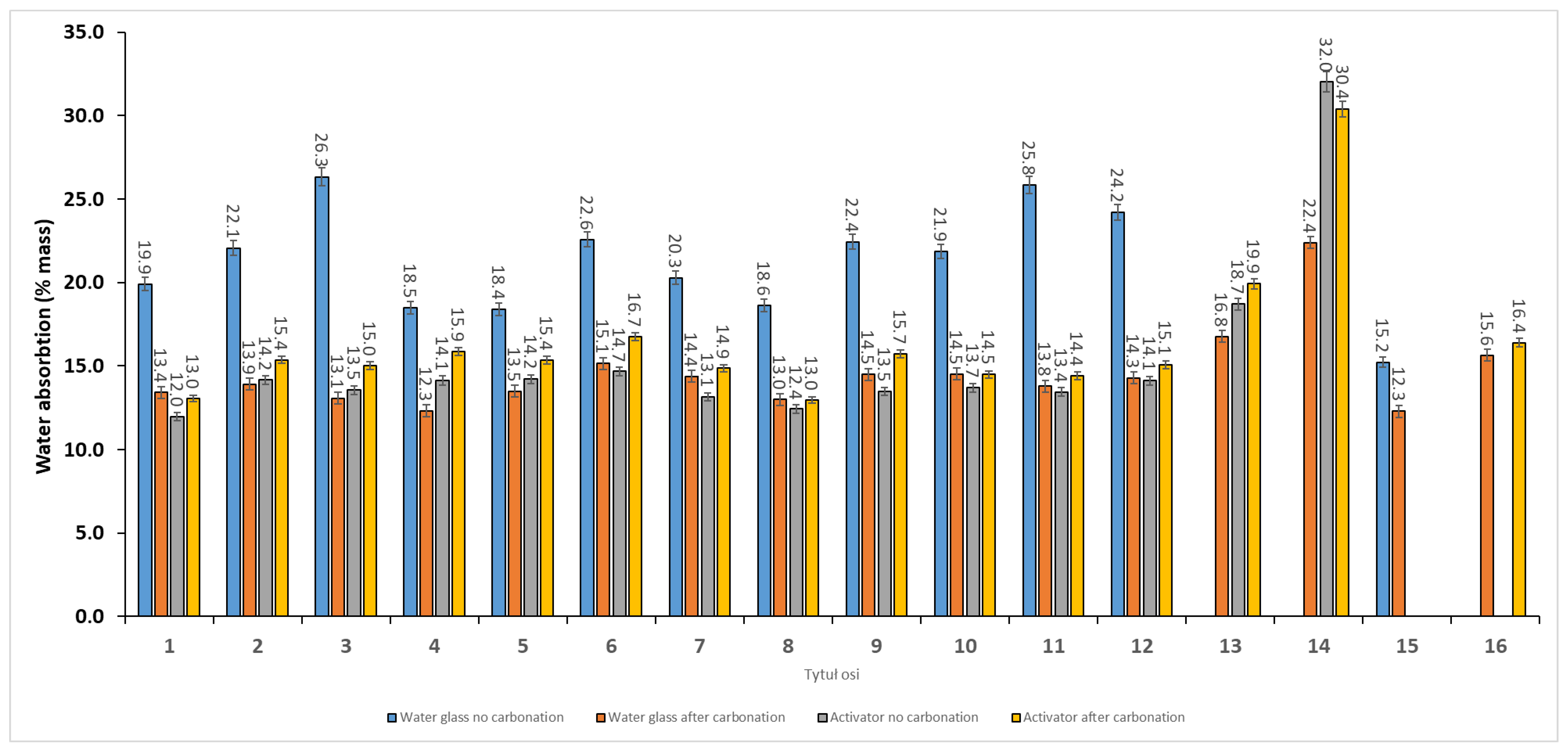
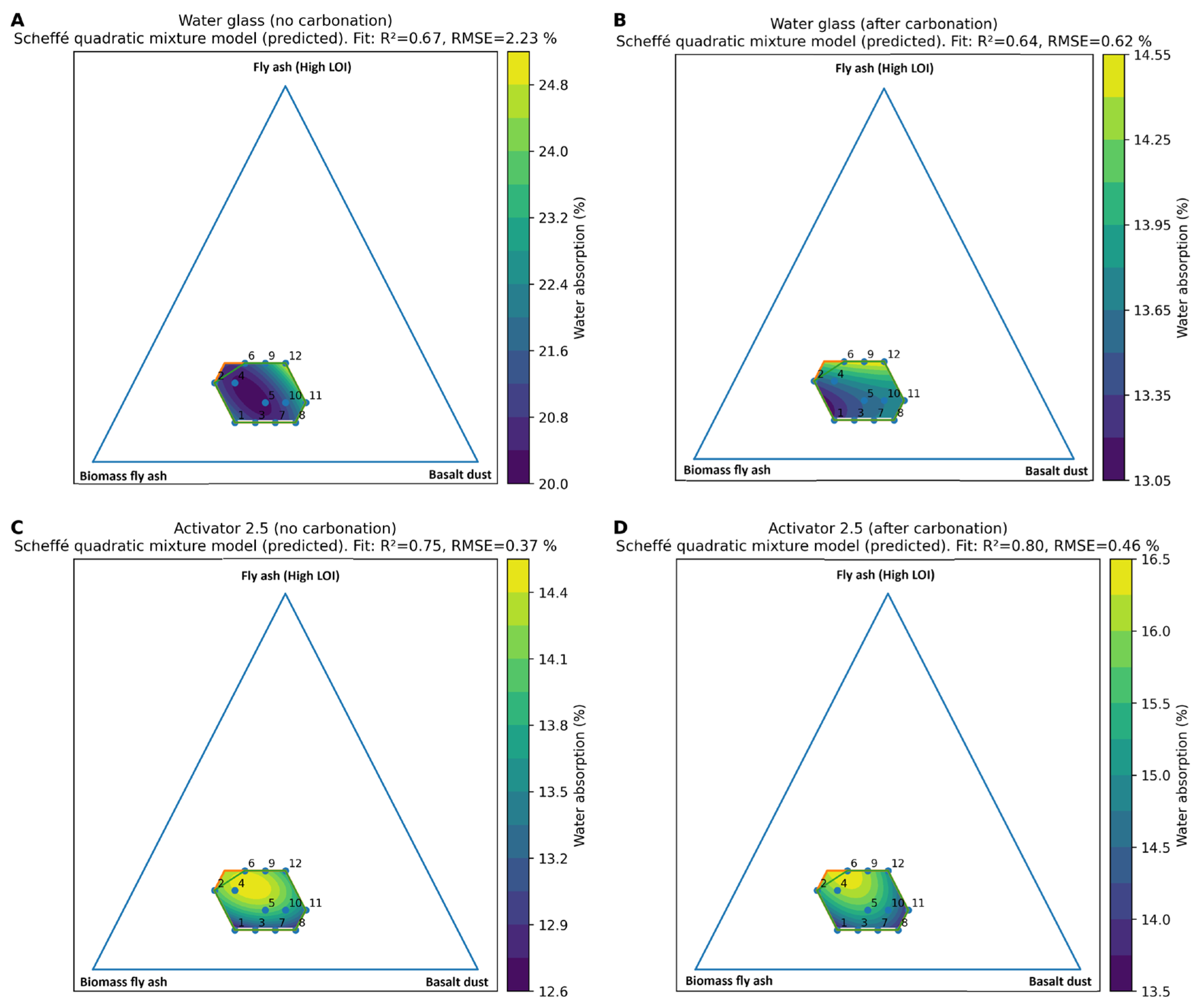
Water absorption results for series 1–12 and the 100% reference series are presented in Figure 17, while the composition response relationships are shown in Figure 18 and Figure 19 using Scheffé quadratic mixture models within the constrained design space, with Fly Ash A fixed at 5 wt.%. In the water glass system, the non-carbonated aggregates showed the highest water absorption, ranging from 18.4 to 26.3%. After carbonation, these values decreased markedly to 12.3–15.1%, indicating a reduction in accessible porosity. In contrast, series 8, where the Na2SiO3/NaOH ratio was 2.5, already exhibited low water absorption before carbonation, with a value of 12.4%, and showed only a limited response to carbonation, reaching 13.0% after CO2 exposure. This suggests that the Activator 2.5 system produced a denser initial matrix, whereas the water glass system was more strongly affected by carbonation-induced changes in pore structure. The reference series confirmed the unfavourable effect of high-LOI fly ash, which showed the highest water absorption of approximately 32.0%, compared with FA A and Bio-100, for which the corresponding values were approximately 18.7% and 15.2%, respectively. For the series in which no results are presented, the specimens degraded during conditioning in water, preventing further testing. The fitted models reproduced the main trends with moderate to good agreement (R2 ≈ 0.64–0.80; RMSE ≈ 0.37–2.23%). The mixture trace plots indicate that water absorption was governed mainly by the content of high-LOI fly ash, while the effects of biomass fly ash and basalt dust were more moderate and composition-dependent. Overall, basalt-rich mixtures with a low content of high-LOI fly ash, especially series 8, showed the most favourable combination of low water absorption, relatively high density, and good mechanical performance. This behaviour can be attributed to improved particle packing and reduced accessible porosity caused by the fine basalt dust, whereas high-LOI fly ash probably increased liquid demand and hindered the formation of a compact binding matrix.

3.5. Optical Microscopy and SEM Observations

The series 8, where the ratio of Na2SiO3/NaOH = 2.5, was selected for detailed evaluation because it showed the most favourable combination of properties: high single aggregate crushing strength, high density, and low water absorption. The results discussed below refer only to this formulation and should not be considered representative of the entire system.
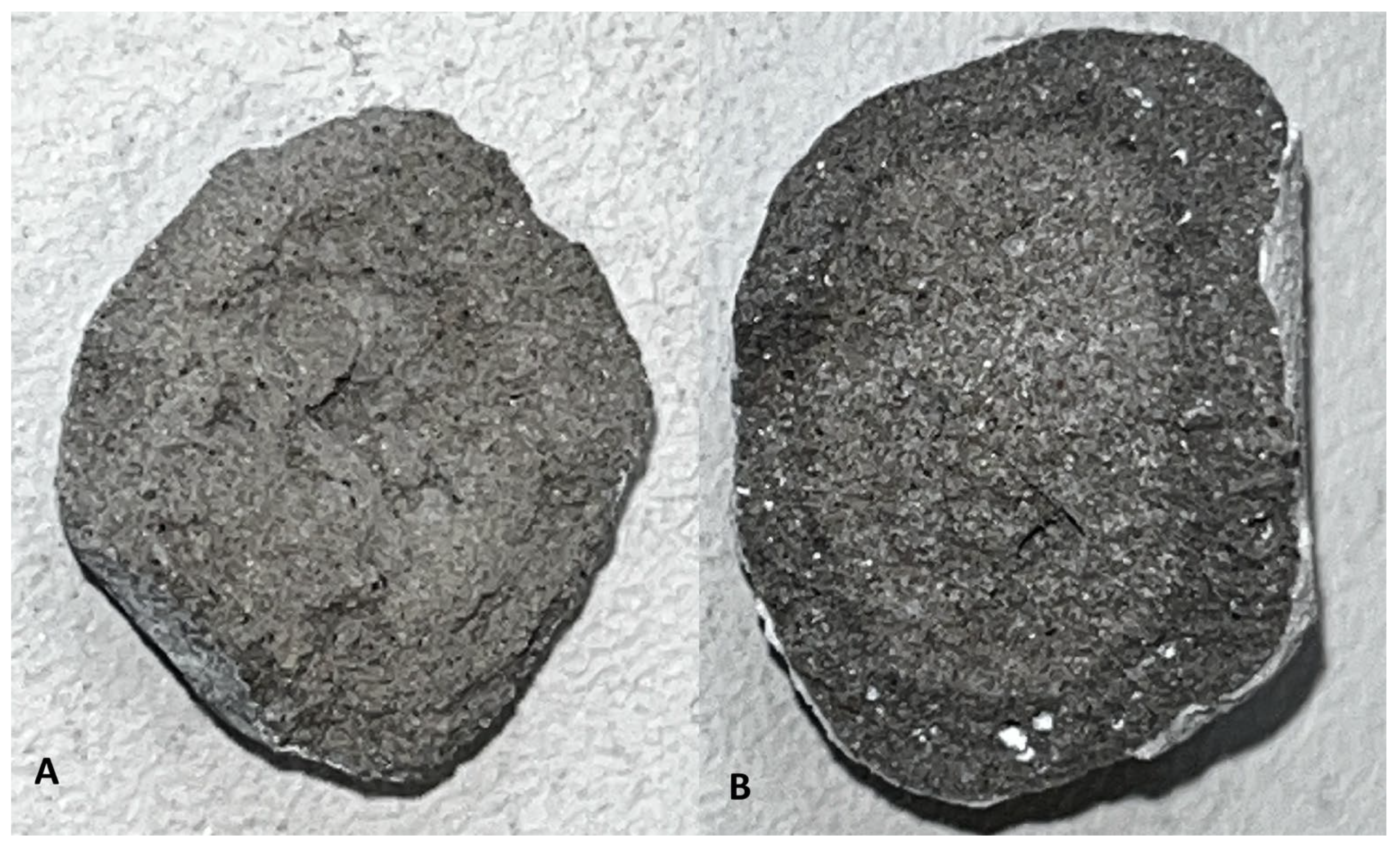
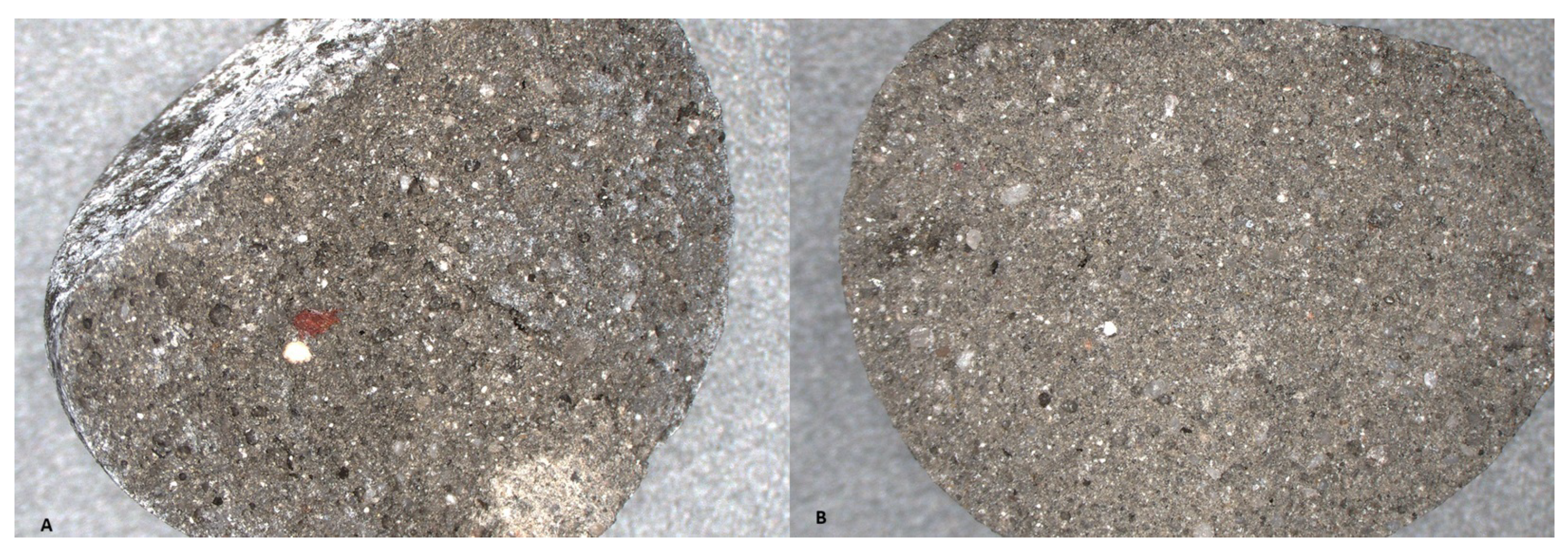
Figure 20 and Figure 21 show representative cross sections of series 8 samples produced with two activator systems before and after carbonation curing. In the water glass series (Figure 20), the carbonated sample appears more compact, with a more distinct outer zone and fewer visible dark pores than the non-carbonated sample. In series 8, where the ratio of Na2SiO3/NaOH = 2.5, a variant from series 8 was selected for detailed evaluation because, after carbonation, it showed the most favourable combination of properties, namely high single aggregate crushing strength, high density, and low water absorption (Figure 21). The carbonated sample also appears more homogeneous, although the visual differences are less pronounced. These observations are qualitative, but they agree with the measured density and water absorption results, which indicate a stronger densification effect after carbonation in the water glass series and a weaker response in series 8 where ratio of Na2SiO3/NaOH = 2.5 variant from series 8 was selected for detailed evaluation because, after carbonation, it showed the most favourable combination of properties, namely high single aggregate crushing strength, favourable density, and low water absorption.
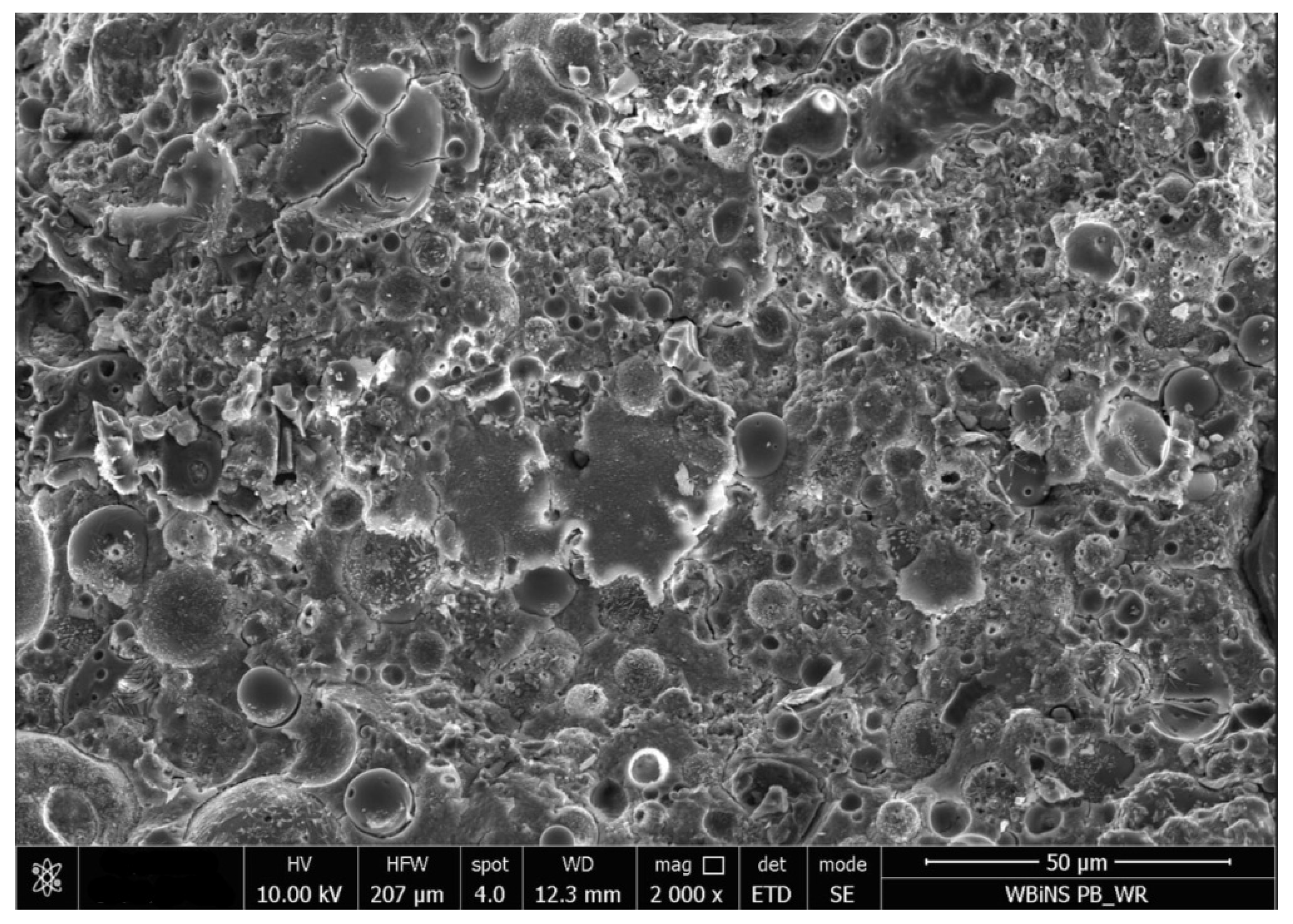
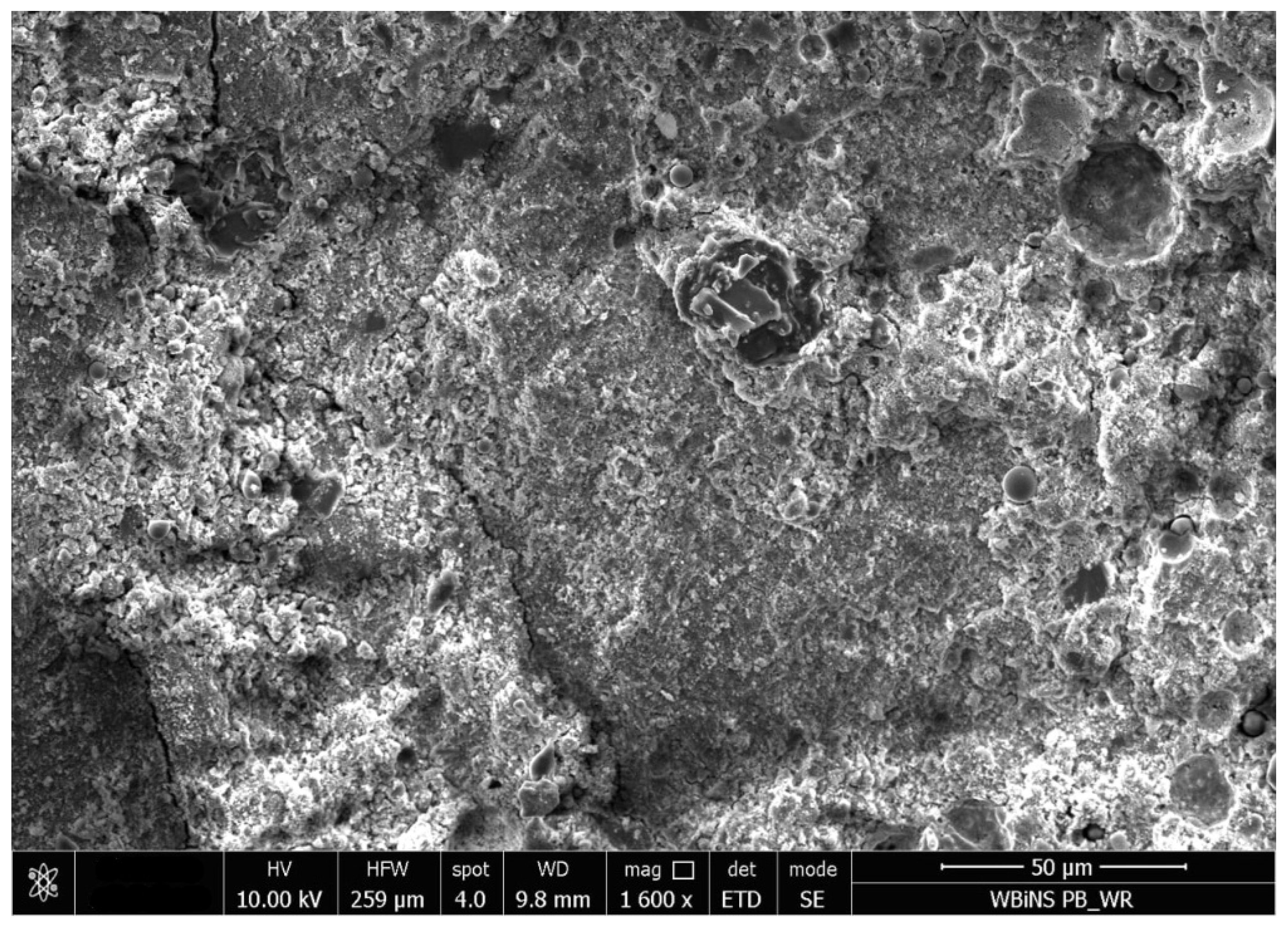
SEM micrographs of the series 8 sample before and after carbonation (Figure 22 and Figure 23) provide qualitative microstructural observations consistent with matrix densification. The uncarbonated sample exhibits a relatively loose and heterogeneous matrix with numerous visible voids and microcracks. After carbonation, the matrix appears more compact and locally more homogeneous, and some voids or interphase gaps appear less open than in the pre-carbonation state. Since no EDS analysis was performed, the fine-grained products visible after carbonation cannot be identified in terms of composition using SEM alone. SEM observations should therefore be considered strictly qualitative and supplementary; nevertheless, they are consistent with the increase in density and decrease in water absorption observed after carbonation in the selected formulation of series 8.

3.6. XRD and TG/DTG/DTA Before and After Carbonation

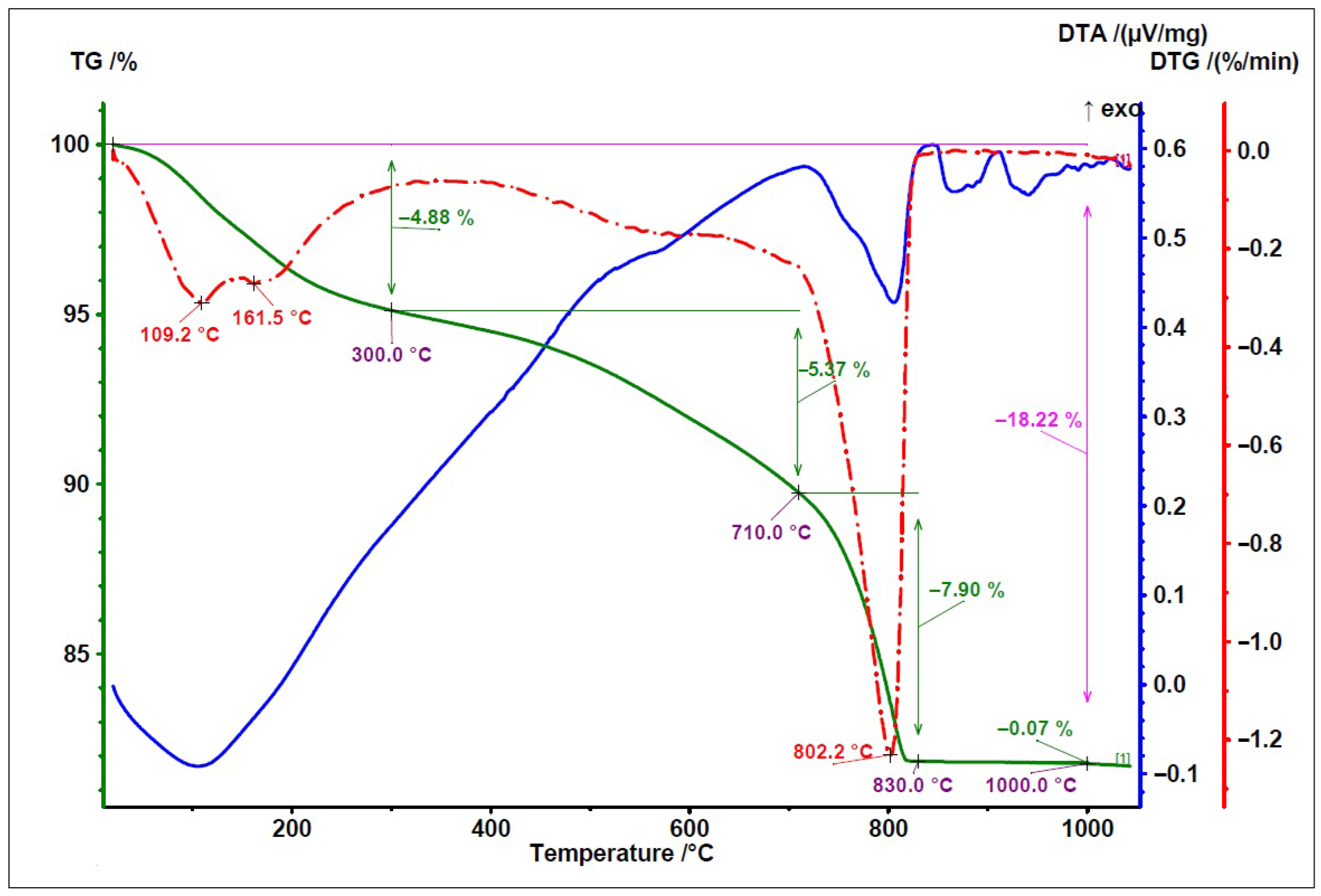
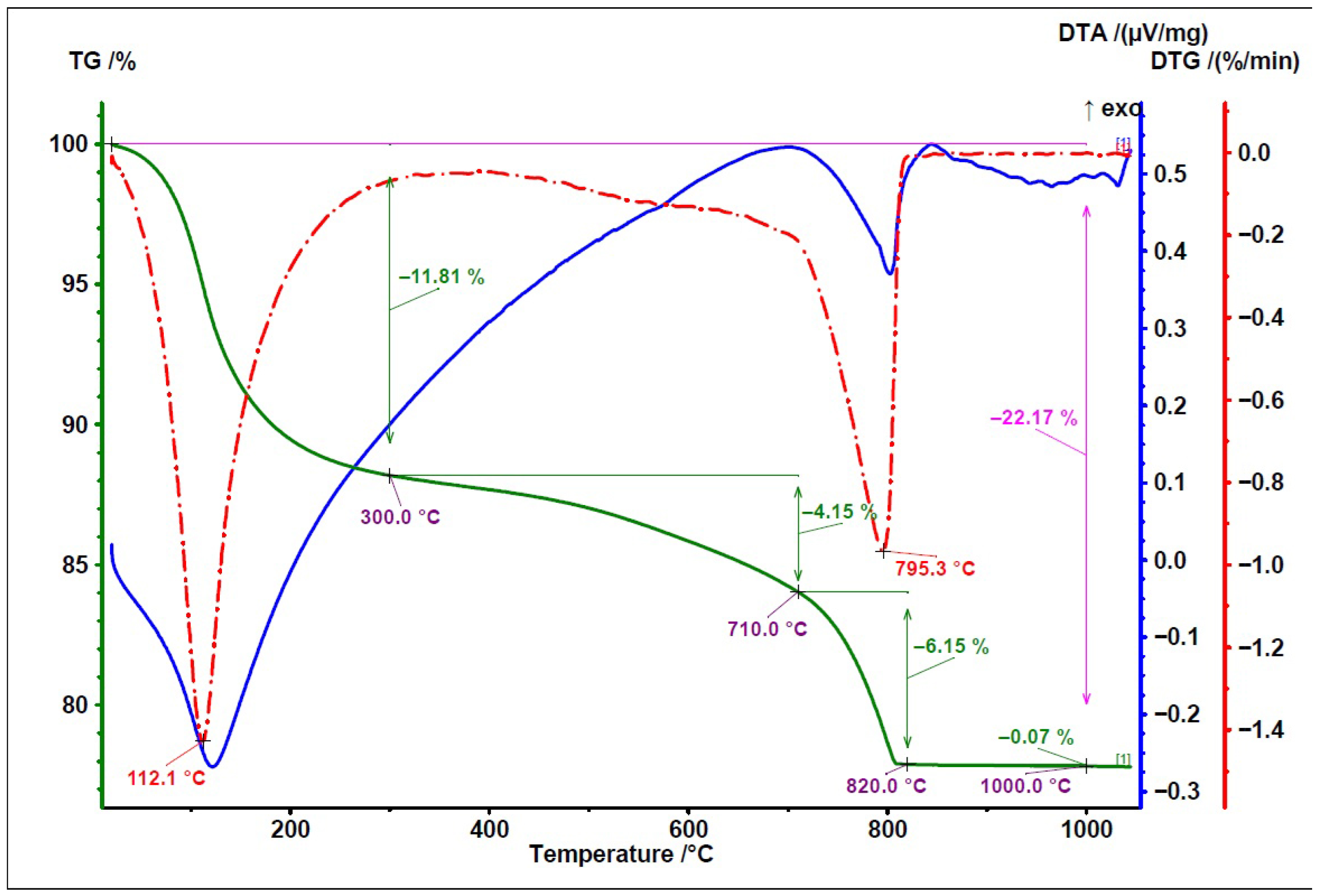
The TG/DTG/DTA thermograms recorded in air compare the Series 8 sample prepared with Activator 2.5 before carbonation (Figure 24) and after carbonation (Figure 25). In these figures, the green curve represents TG/mass change, the red dash-dotted curve represents DTG, and the blue curve represents DTA; the additional guide lines indicate selected temperature ranges and corresponding mass-loss values.In both cases, three main regions of mass change can be identified: (i) low temperature mass loss, mainly related to the evaporation of free and physically bound water and the dehydration of weakly bound phases; (ii) gradual mass loss in the range of about 300–710 °C, associated with the dehydration; (iii) a sharp mass loss step between about 710 and 820–830 °C, attributed mainly to the decomposition of carbonates. The greater magnitude of this high-temperature mass loss after carbonation (−7.90% vs. −6.15%) indicates a higher carbonate content in the carbonated composite.
A preliminary estimate of CO2 uptake was calculated from the difference in mass loss within the selected decarbonation range between the carbonated and non-carbonated series 8 samples, if this difference mainly reflects the additional decomposition of carbonates formed during carbonation curing. On this basis, the CO2 uptake was estimated at 17.5 g CO2/kg. This value should be treated as approximate and specific to this formulation, because the selected thermal range may include overlapping contributions from different carbonate phases, and no independent phase quantification was performed.
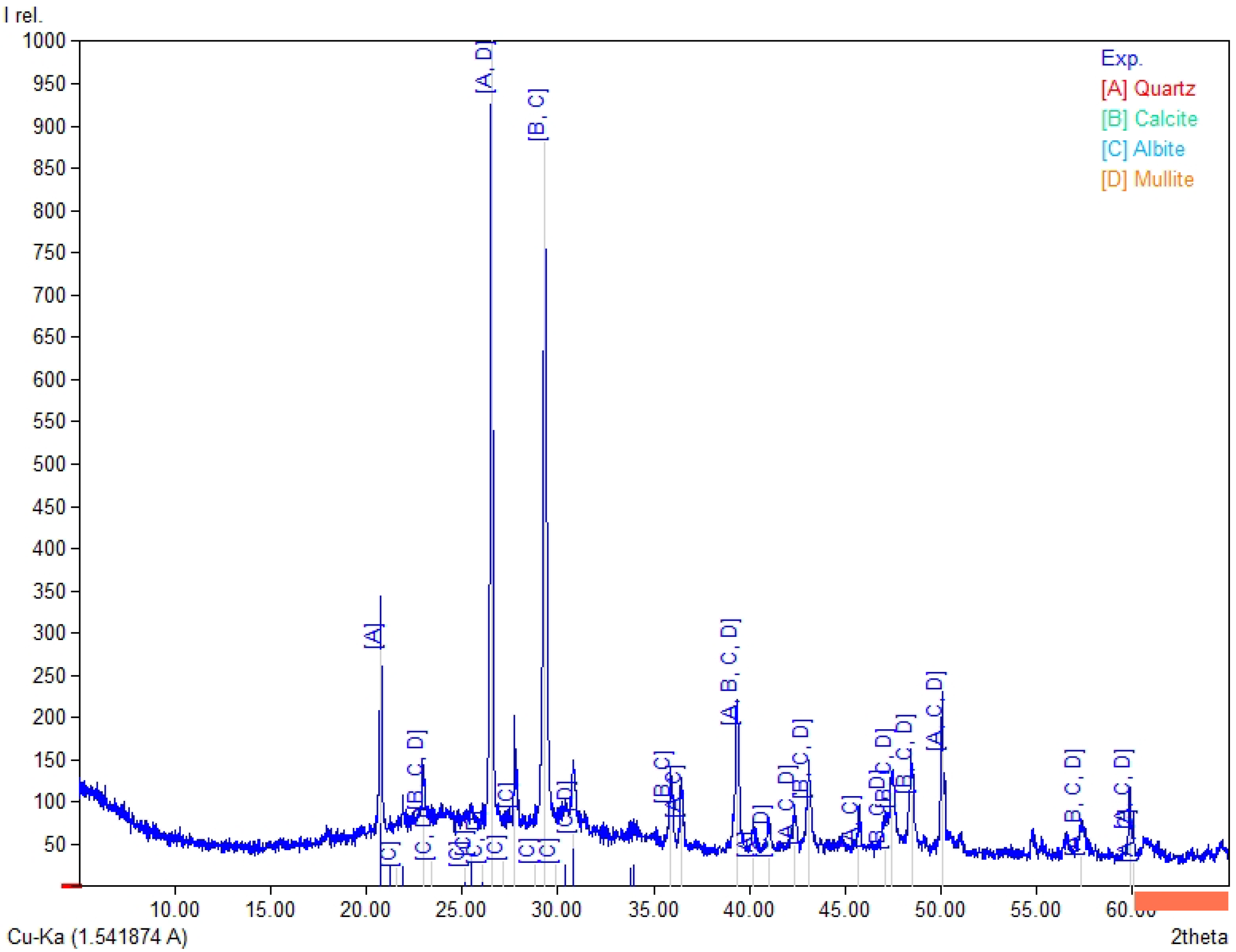
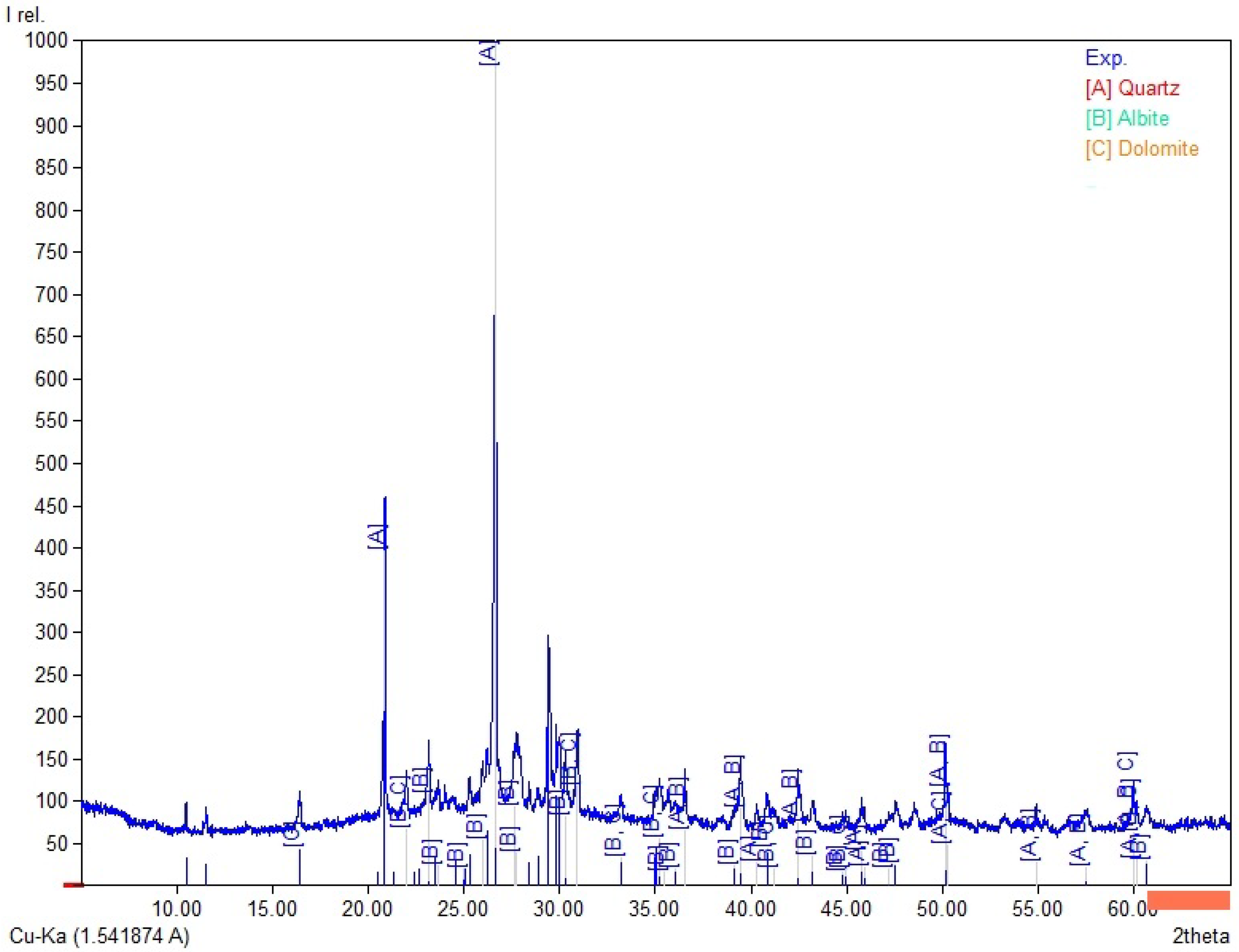
The XRD patterns of the selected series 8 composites (Activator 2.5 series) before and after carbonation (Figure 26 and Figure 27) show phase changes related to carbonation and contain crystalline phases inherited from the precursors.
In the non-carbonated sample (Figure 26), the main crystalline phases are quartz (A), albite (B), and dolomite (C). After carbonation (Figure 27), quartz and albite remain present, while the calcite peaks become more pronounced, suggesting additional carbonate formation during CO2 exposure. Minor mullite is also detected in the carbonated sample. No quantitative phase analysis was performed, and the amorphous fraction was not determined; therefore, the XRD results should be treated as qualitative only. Together with the larger carbonate-related mass loss observed in the TG/DTG curves, these results support the interpretation that Ca-bearing components in the selected formulation underwent carbonation and that CO2 absorption occurred during carbonation curing.
The thermal analysis (TG/DTG) and XRD analysis results are consistent with the physical-mechanical properties trends observed for series 8. The increase in carbonate-related weight loss following carbonation and the enhanced calcite reflection indicate that exposure to CO2 promoted additional carbonate formation in the selected formulation. As a result, carbonate phases may have contributed to partial pore filling and local matrix densification, which corresponds with the SEM observations and high single aggregate crushing strength of series 8 after carbonation.

3.7. Screening Carbon Footprint Assessment

A screening cradle-to-gate carbon footprint (A1–A3) was estimated for series 8 produced with Activator 2.5 (Table 4). Under the adopted assumptions, the calculated value was 0.256 kg CO2 eq/kg of dry precursor mixture, i.e., 256 kg CO2 eq/t. This value is markedly higher than those reported in Polish EPDs for natural aggregates, for which A1–A3 values of 3.28 kg CO2 eq/t for natural crushed aggregate [37] and 3.99 kg CO2 eq/t for basalt aggregate have been reported [38]. At the same time, the obtained result is close to that reported for a fired expanded clay lightweight aggregate. For ARGEX AR 8/16–340 GEO, the EPD according to EN 15804+A2 reports a GWP total of 10.15 kg CO2 eq for a functional unit of 38.76 kg, which corresponds to approximately 262 kg CO2 eq/t [39]. Thus, the present screening estimate for series 8 is substantially higher than for natural aggregates, but broadly comparable to this specific expanded clay product. In addition, TG/DTG analysis of carbonated series 8 indicated a preliminary CO2 uptake of about 17.5 g CO2/kg. When this approximate value is considered only as a sensitivity case, the net result decreases to about 238.5 kg CO2 eq/t. However, this uptake estimate should be treated as formulation-specific and approximate, since it was derived from differential mass loss in the selected decarbonation range without independent quantitative phase determination.

4. Conclusions

The results show that biomass fly ash, coal fly ash, and basalt dust can be used to produce alkali-activated granular aggregates with adjustable properties. The mixture of sodium silicate and NaOH (Activator 2.5) was generally more advantageous than sodium silicate alone, and mixtures with a high basalt content and low LOI value provided the best overall performance. Series 8 exhibited one of the most favourable combinations of properties, with a single aggregate crushing strength after carbonation of 8.3–8.4 MPa, as well as high density (1.63–1.91 g/cm3) and low water absorption (12.4–18.6%). Changes associated with carbonation were confirmed by TG/DTG, XRD, and SEM observations, and the initial CO2 absorption for series 8 was estimated at 17.5 g CO2/kg. The carbon footprint of A1–A3 for this formulation was 256 kg CO2 equivalent/t, decreasing to approximately 238.5 kg CO2 equivalent/t when the initial CO2 absorption was considered a sensitivity case. Overall, the proposed method represents a viable approach to the valorization of industrial mineral waste, although it is still necessary to reduce the load on the activator system.

Author Contributions

Conceptualization, K.K.-W.; methodology, K.G. and K.K.-W.; validation, M.F. and K.K.-W.; formal analysis, K.G.; investigation, K.G.; resources, M.F. and A.M.; data curation, K.G.; writing—original draft preparation, K.G., M.F., K.K.-W. and A.M.; visualisation, M.F.; writing—review and editing, K.G., M.F., K.K.-W. and A.M.; supervision, K.K.-W.; funding acquisition, K.G. All authors have read and agreed to the published version of the manuscript.

Funding

The research leading to these results has received funding from the commissioned task entitled “VIA CARPATIA Universities of Technology Network named after the President of the Republic of Poland Lech Kaczyński” under the special purpose grant from the Minister of Science, contract no. MEiN/2022/DPI/2577 action entitled “In the neighborhood” inter-university research internships and study visits.

Data Availability Statement

The original contributions presented in this study are included in the article. Further inquiries can be directed to the corresponding author.

Conflicts of Interest

The authors declare no conflicts of interest.

References

  1. Huang, L.; Krigsvoll, G.; Johansen, F.; Liu, Y.; Zhang, X. Carbon emission of global construction sector. Renew. Sustain. Energy Rev. 2018, 81, 1906–1916. [Google Scholar] [CrossRef]
  2. Ren, P.; Ling, T.-C.; Mo, K.H. Recent advances in artificial aggregate production. J. Clean. Prod. 2021, 291, 125215. [Google Scholar] [CrossRef]
  3. Hao, D.L.C.; Razak, R.A.; Kheimi, M.; Yahya, Z.; Abdullah, M.M.A.B.; Burduhos Nergis, D.D.; Fansuri, H.; Ediati, R.; Mohamed, R.; Abdullah, A. Artificial Lightweight Aggregates Made from Pozzolanic Material: A Review on the Method, Physical and Mechanical Properties, Thermal and Microstructure. Materials 2022, 15, 3929. [Google Scholar] [CrossRef]
  4. Almadani, M.; Razak, R.A.; Kheimi, M.; Yahya, Z.; Abdullah, M.M.A.B.; Nergis, D.D.B.; Fansuri, H.; Ediati, R.; Mohamed, R.; Abdullah, A. Geopolymer-Based Artificial Aggregates: A Review on Methods of Producing, Properties, and Improving Techniques. Materials 2022, 15, 5516. [Google Scholar] [CrossRef]
  5. EN 13055:2016; Lightweight Aggregates. European Committee for Standardization (CEN): Brussels, Belgium, 2016.
  6. Lamaa, G.; Duarte, A.P.C.; Silva, R.V.; de Brito, J. Carbonation of Alkali-Activated Materials: A Review. Materials 2023, 16, 3086. [Google Scholar] [CrossRef]
  7. Shi, Z.; Shi, C.; Wan, S.; Li, N.; Zhang, Z. Effect of alkali dosage and silicate modulus on carbonation of alkali-activated slag mortars. Cem. Concr. Res. 2018, 113, 55–64. [Google Scholar] [CrossRef]
  8. Yamazaki, Y.; Kim, J.; Kadoya, K.; Hama, Y. Physical and Chemical Relationships in Accelerated Carbonation Conditions of Alkali-Activated Cement Based on Type of Binder and Alkali Activator. Polymers 2021, 13, 671. [Google Scholar] [CrossRef]
  9. Dacic, A.; Kopecsko, K.; Fenyvesi, O.; Merta, I. The Obstacles to a Broader Application of Alkali-Activated Binders as a Sustainable Alternative—A Review. Materials 2023, 16, 3121. [Google Scholar] [CrossRef] [PubMed]
  10. Xu, L.-Y.; Lao, J.-C.; Shi, D.-D.; Cai, J.; Xie, T.-Y.; Huang, B.-T. Recent advances in High-Strength Engineered Geopolymer Composites (HS-EGC): Bridging sustainable construction and resilient infrastructure. Cem. Concr. Compos. 2026, 165, 106307. [Google Scholar] [CrossRef]
  11. Liang, X.; Li, Z.; Dong, H.; Ye, G. A review on the characteristics of wood biomass fly ash and their influences on the valorization in cementitious materials. J. Build. Eng. 2024, 97, 110927. [Google Scholar] [CrossRef]
  12. Yang, Y.; Takasu, H.; Suyama, S.; Ji, L.; Xu, Q.; Liu, Y. Comparative Analysis of Woody Biomass Fly Ash and Coal Fly Ash as Cement Substitutes. Materials 2024, 17, 3723. [Google Scholar] [CrossRef]
  13. Copetti Callai, S.; Tataranni, P.; De Rose, M.; Natali Murri, A.; Vaiana, R.; Sangiorgi, C. A Preliminary Laboratory Evaluation of Artificial Aggregates from Al-kali-Activated Basalt Powder and Metakaolin. Sustainability 2022, 14, 16653. [Google Scholar] [CrossRef]
  14. Qian, L.-P.; Xu, L.-Y.; Huang, B.-T.; Dai, J.-G. Pelletization and properties of artificial lightweight geopolymer aggregates (GPA): One-part vs. two-part geopolymer techniques. J. Clean. Prod. 2022, 374, 133933. [Google Scholar] [CrossRef]
  15. Bekkeri, G.B.; Shetty, K.K.; Nayak, G. Producing of alkali-activated artificial aggregates by pelletization of fly ash, slag, and seashell powder. Innov. Infrastruct. Solut. 2023, 8, 258. [Google Scholar] [CrossRef]
  16. Tang, P.; Xuan, D.; Cheng, H.W.; Poon, C.S.; Tsang, D.C.W. Use of CO2 curing to enhance the properties of cold bonded lightweight aggregates (CBLAs) produced with concrete slurry waste and fine incineration bottom ash. J. Hazard. Mater. 2020, 381, 120951. [Google Scholar] [CrossRef] [PubMed]
  17. Tesovnik, A.; Ottosen, L.M.; Ducman, V. Carbonation of lightweight alkali-activated aggregates based on biomass fly ash: Effect on microstructure and leaching behavior. Case Stud. Constr. Mater. 2025, 23, e05014. [Google Scholar] [CrossRef]
  18. Cempa, M.; Korol, J.; Klupa, A. Assessment of the Potential for Producing Geopolymer-Based Granulates as a Substitute for Natural Aggregates. Materials 2025, 18, 5275. [Google Scholar] [CrossRef]
  19. Hanifa, M.; Sharma, U.; Thapliyal, P.C.; Singh, L.P. Carbonated Fly Ash Alkali-Activated Aggregates: Properties, Performance, and Environmental Impact. ACI Mater. J. 2025, 122, 99–110. [Google Scholar] [CrossRef]
  20. PN-EN 12620+A1:2010; Aggregates for Concrete. Polish Committee for Standardization: Warsaw, Poland, 2010.
  21. PN-EN 1097-6:2022-07; Tests for Mechanical and Physical Properties of Aggregates—Part 6: Determination of Particle Density and Water Absorption. Polish Committee for Standardization: Warsaw, Poland, 2022.
  22. Wie, Y.M.; Lee, K.G. Optimum Bloating-Activation Zone of Artificial Lightweight Aggregate by Dynamic Parameters. Materials 2019, 12, 267. [Google Scholar] [CrossRef]
  23. Li, Y.; Wu, D.; Zhang, J.; Chang, L.; Wu, D.; Fang, Z.; Shi, Y. Measurement and Statistics of Single Pellet Mechanical Strength of Differently Shaped Catalysts. Powder Technol. 2000, 113, 176–184. [Google Scholar] [CrossRef]
  24. Wang, Y.; Chen, J.; Ren, H.; Zhang, Y.; Hong, S.; Dong, B.; Fang, G. Design and Characterization of Solid Waste Based Self Healing Artificial Aggregate. Case Stud. Constr. Mater. 2024, 21, e03470. [Google Scholar] [CrossRef]
  25. Adesanya, E.; Yliniemi, J.; Kinnunen, P.; Finnilä, M.; Illikainen, M. Utilization of Green Liquor Dreg in Lightweight Aggregates: Effect of Texture on Physical Properties. Dev. Built Environ. 2023, 15, 100219. [Google Scholar] [CrossRef]
  26. Hiramatsu, Y.; Oka, Y. Determination of the Tensile Strength of Rock by a Compression Test of an Irregular Test Piece. Int. J. Rock Mech. Min. Sci. Geomech. Abstr. 1966, 3, 89–99. [Google Scholar] [CrossRef]
  27. Abdelfattah, M.M.; Géber, R.; Kocserha, I. Enhancing the Properties of Lightweight Aggregates Using Volcanic Rock Additive Materials. J. Build. Eng. 2023, 63, 105426. [Google Scholar] [CrossRef]
  28. Martínez-García, C.; Andreola, F.; Lancellotti, I.; Farías, R.D.; Cotes-Palomino, M.T.; Barbieri, L. Cleaner Design and Production of Lightweight Aggregates (LWAs) to Use in Agronomic Application. Appl. Sci. 2021, 11, 800. [Google Scholar] [CrossRef]
  29. Özkan, H.; Kabay, N.; Miyan, N. Properties of Cold Bonded and Sintered Aggregate Using Washing Aggregate Sludge and Their Incorporation in Concrete: A Promising Material. Sustainability 2022, 14, 4205. [Google Scholar] [CrossRef]
  30. PN-EN ISO 14067:2018-10; Greenhouse Gases—Carbon Footprint of Products—Requirements and Guidelines for Quantification. Polish Committee for Standardization: Warsaw, Poland, 2018.
  31. Ściubidło, A.; Majchrzak-Kucęba, I.; Nowak, W. Characterization of Fly Ash from Polish Coal Fired CHP Plants for NO2 Capture. Pol. J. Environ. Stud. 2019, 28, 4403–4416. [Google Scholar] [CrossRef]
  32. Rashad, A.M.; Mohamed, R.A.-E.; Zeedan, S.R.; El-Gamal, A.A. Basalt powder as a promising candidate material for improving the properties of fly ash geopolymer cement. Constr. Build. Mater. 2024, 435, 136805. [Google Scholar] [CrossRef]
  33. Popławski, J.; Lelusz, M. Assessment of Sieving as a Mean to Increase Utilization Rate of Biomass Fly Ash in Cement Based Composites. Appl. Sci. 2023, 13, 1659. [Google Scholar] [CrossRef]
  34. De Rossi, A.; Simão, L.; Ribeiro, M.J.; Hotza, D.; Moreira, R.F.P.M. Study of cure conditions effect on the properties of wood biomass fly ash geopolymers. J. Mater. Res. Technol. 2020, 9, 7518–7528. [Google Scholar] [CrossRef]
  35. Saccani, A.; Baldazzi, L.; Manzi, S. Effects of Biochar Addition on the Properties of Alkali Activated Materials. Materials 2025, 18, 486. [Google Scholar] [CrossRef] [PubMed]
  36. Kalinowska-Wichrowska, K.; Pawluczuk, E.; Granatyr, K.; Franus, M.; Kosior-Kazberuk, M.; Bołtryk, M.; Masłoń, A. Properties of Eco-Friendly Cement Composites Made with Recycled Cement Mortar-Based Artificial Aggregates. Materials 2025, 18, 5115. [Google Scholar] [CrossRef] [PubMed]
  37. ITB. Environmental Product Declaration Type III No. 674/2024: Natural Crushed and Gravel Aggregates and Recycled Crushed Aggregates Offered by CEMEX Polska; ITB: Warsaw, Poland, 2024. [Google Scholar]
  38. ITB. Environmental Product Declaration Type III No. 706/2024 for Basalt Aggregates, Trzuskawica S.A., Targowica Quarry; ITB: Warsaw, Poland, 2024. [Google Scholar]
  39. Environmental Product Declaration for Lightweight Expanded Clay Aggregate AR 8/16–340 GEO; ARGEX/Agrodome, 2021. Available online: https://argex.eu/wp-content/uploads/EPD/NL_ARGEX_lightweight_expanded_clay_aggregate-Thermal.pdf (accessed on 2 February 2026).
Figure 1. Single aggregate crushing strength testing machine.
Materials 19 02026 g001
Figure 2. The machine used for artificial aggregate production.
Materials 19 02026 g002
Figure 3. Particle size distribution (PSD) raw materials ((A-red)—fly ash—high-LOI, (B-orange)—basalt dust, (C-green)—Fly Ash A, and (D-blue)—biomass fly ash).
Materials 19 02026 g003
Figure 4. XRD pattern for basalt dust, A—labradorite ((Ca,Na)(Al,SI)4O8) B—diopside (CaMgSi2O6), C—quartz (SiO2), and D—magnetite (Fe3O4).
Materials 19 02026 g004
Figure 5. XRD pattern for fly ash—high-LOI, A—mullite (Al6Si2O13), B—quartz (SiO2), and C—anhydrite (CaSO4).
Materials 19 02026 g005
Figure 6. XRD pattern for biomass fly ash, A—calcite (CaCO3) and B—quartz (SiO2).
Materials 19 02026 g006
Figure 7. XRD pattern for Fly Ash A, A–mullite (Al6Si2O13), B—quartz (SiO2), and C—anhydrite (CaSO4).
Materials 19 02026 g007
Figure 8. TG/DTG and DTA curves of Fly Ash A.
Materials 19 02026 g008
Figure 9. TG/DTG and DTA curves of fly ash—high-LOI.
Materials 19 02026 g009
Figure 10. TG/DTG and DTA curves of biomass fly ash.
Materials 19 02026 g010
Figure 11. Single aggregate crushing strength of the investigated mixtures (series 1–12) and single material reference series (FA A-100, FA (high-LOI)-100, Bio-100, and Basalt-100; series 13–16) produced using two activator systems (water glass and blended Activator 2.5) and tested under natural conditions and after carbonation curing. Error bars represent the standard error of the mean (SE).
Materials 19 02026 g011
Figure 12. Ternary response–surface plots of single aggregate crushing strength predicted by a Scheffé quadratic mixture model within the constrained design space (Fly Ash A determined at 5 wt.%). (a) Water glass, no carbonation; (b) water glass, after carbonation; (c) Activator 2.5, no carbonation; and (d) Activator 2.5, after carbonation.
Materials 19 02026 g012
Figure 13. Mixture–trace plots showing the predicted effect of varying each component within the constrained mixture design space (Fly Ash A determined at 5 wt.%). The response is single aggregate crushing strength (MPa) estimated from a second-order Scheffé mixture model; when one component is varied, the remaining components are adjusted proportionally to maintain the constant total of the variable 95 wt.% fraction. (A) Water glass, no carbonation; (B) water glass, after carbonation; (C) Activator 2.5, no carbonation; and (D) Activator 2.5, after carbonation.
Materials 19 02026 g013
Figure 14. Particle density of the investigated mixtures (series 1–12) and single-material reference series (FA A-100, FA (high-LOI)-100, Bio-100, and Basalt-100) produced using two activator systems (water glass and blended Activator 2.5) and tested before and after carbonation curing. Error bars represent the standard error of the mean (SE).
Materials 19 02026 g014
Figure 15. Ternary response–surface plots of particle density predicted by a Scheffé quadratic mixture model within the constrained design space (Fly Ash A determined at 5 wt.%). (A) Water glass, no carbonation; (B) water glass, after carbonation; (C) Activator 2.5, no carbonation; and (D) Activator 2.5, after carbonation.
Materials 19 02026 g015
Figure 16. Mixture–trace plots showing the predicted effect of varying each component within the constrained mixture design space (Fly Ash A determined at 5 wt.%). The response is particle density estimated from a second-order Scheffé mixture model; when one component is varied, the remaining components are adjusted proportionally to maintain the constant total of the variable 95 wt.% fraction. (A) Water glass, no carbonation; (B) Water glass, after carbonation; (C) Activator 2.5, no carbonation; (D) Activator 2.5, after carbonation.
Materials 19 02026 g016
Figure 17. Water absorption of the investigated mixtures (series 1–12) and single material reference series (FA A-100, FA (high-LOI)-100, Bio-100, and Basalt-100) produced using two activator systems (water glass and blended Activator 2.5) and tested before and after carbonation curing. Error bars represent the standard error of the mean (SE).
Materials 19 02026 g017
Figure 18. Ternary response–surface plots of water absorption predicted by a Scheffé quadratic mixture model within the constrained design space (Fly Ash A determined at 5 wt.%). (A) Water glass, no carbonation; (B) water glass, after carbonation; (C) Activator 2.5, no carbonation; and (D) Activator 2.5, after carbonation.
Materials 19 02026 g018
Figure 19. Mixture–trace plots showing the predicted effect of varying each component within the constrained mixture design space (Fly Ash A determined at 5 wt.%). The response is water absorption estimated from a second-order Scheffé mixture model; when one component is varied, the remaining components are adjusted proportionally to maintain the constant total of the variable 95 wt.% fraction. (A) Water glass, no carbonation; (B) water glass, after carbonation; (C) Activator 2.5, no carbonation; and (D) Activator 2.5, after carbonation.
Materials 19 02026 g019
Figure 20. Cross-sections of series 8 specimens prepared with water glass: (A) before carbonation and (B) after carbonation.
Materials 19 02026 g020
Figure 21. Cross sections of series 8 specimens prepared with Activator 2.5: (A) before carbonation and (B) after carbonation.
Materials 19 02026 g021
Figure 22. SEM image of the series 8 composite (Activator 2.5) before carbonation, showing an open and heterogeneous matrix with visible pores and microcracks (SE mode, 10 kV; scale bar: 50 µm).
Materials 19 02026 g022
Figure 23. SEM image of the series 8 composite (Activator 2.5) after carbonation, showing a denser and more compact matrix with reduced open porosity and partial pore filling by fine reaction products consistent with carbonation (SE mode, 10 kV; scale bar: 50 µm).
Materials 19 02026 g023
Figure 24. TG/DTG/DTA thermogram of series 8 (Activator 2.5) before carbonation, recorded in air.
Materials 19 02026 g024
Figure 25. TG/DTG/DTA thermogram of series 8 (Activator 2.5) after carbonation, recorded in air.
Materials 19 02026 g025
Figure 26. XRD pattern of the series 8 composite (Activator 2.5) before carbonation, showing the dominant crystalline phases: quartz (A), albite (B), and dolomite (C).
Materials 19 02026 g026
Figure 27. XRD pattern of the series 8 composite (Activator 2.5) after carbonation, showing quartz (A) and albite (C) with the appearance/intensification of calcite (B; CaCO3) and minor mullite (D), confirming mineral carbonation (CO2 sequestration).
Materials 19 02026 g027
Table 1. Sodium silicate solution and sodium hydroxide specifications.
MaterialSodium Silicate Solution (Water Glass)
Nominal compositionNa2O·nSiO2·nH2O
CAS number1344-09-8
SupplierCHEMPUR (Piekary Slaskie, Poland)
Na2O content (wt.%)11.1
SiO2 content (wt.%)27.9
Total solids (wt.%)~39.0
Density at 20 °C (g·cm−3)1.47
Silicate modulus (SiO2/Na2O, mass ratio)2.51
Impurities (wt.%)Fe2O3 0.01; CaO 0.1; insoluble matter 0.1
Table 2. Mix design of raw-material blends (wt.%), including single-material reference mixture.
SeriesBiomass Fly Ash [%]Basalt Dust [%]Fly Ash (High-LOI) [%]Fly Ash A [%]
15530105
25520205
35035105
45025205
54535155
64525255
74540105
84045105
94030255
104040155
113545155
123535255
13—FA A-100000100
14—FA (high-LOI)-100001000
15—Bio-100100000
16—Basalt-100010000
Table 3. The chemical composition of fly ashes and basalt dust is used to produce artificial aggregate.
Fly Ash ABiomass Fly AshFly Ash—High-LOIBasalt Dust
[%]
SiO238.58329.71135.53537.183
Al2O316.1467.54815.110.179
Fe2O35.5053.8346.02312.789
CaO2.14216.0331.8788.744
MgO0.8431.9990.2925.923
K2O2.9443.6361.9241.277
Na2O--1.421-
TiO21.1890.651.192.526
P2O50.4831.6551.1040.677
SO30.4852.3220.7450
Cl-0.21-0.051
MnO0.0470.5640.0360.188
Cr2O30.0280.0110.0250.026
V2O50.0530.0160.0650.044
NiO0.0190.003490.0270.022
CuO0.0180.009430.0210.00755
ZnO0.0240.0540.020.015
BaO0.0780.0550.0770.036
SrO0.080.0340.1630.1
LOI4.59.110.83.58
Table 4. Screening cradle to gate carbon footprint (A1–A3) of series 8 (Activator 2.5), calculated per 1 kg of dry precursor mixture.
ModuleInput/ProcessQuantity [kg]Emission Factor [kg CO2 eq/kg]GWP (kg CO2 eq)
A1Biomass fly ash0.4000 0.000 0.00000
A1Basalt dust0.45000.000 0.00000
A1Fly ash (high-LOI)0.10000.000 0.00000
A1Fly Ash A0.05000.0000.00000
A1Sodium silicate solution0.2381 0.5540.13190
A1Pure NaOH used to prepare 12 M solution0.03331.6760.05587
A1Water used for NaOH solution preparation0.0619excluded0.00000
Subtotal A1 0.18777
A2Transport of biomass fly ash (6 km)0.40000.146 kg CO2 eq/t·km0.00035
A2Transport of basalt dust (400 km)0.45000.146 kg CO2 eq/t·km0.02628
A2Transport of fly ash (high-LOI) (6 km)0.10000.146 kg CO2 eq/t·km0.00009
A2Transport of Fly Ash A (118 km)0.05000.146 kg CO2 eq/t·km0.00086
A2Transport of sodium silicate solution (500 km)0.23810.146 kg CO2 eq/t·km0.01738
A2Transport of pure NaOH (500 km)0.03330.146 kg CO2 eq/t·km0.00243
A2Transport of water for NaOH solution preparationlocalexcluded0.00000
Subtotal A2 0.04739
A3Granulation0.03333 kWh0.617 kg CO2 eq/kWh0.02057
Subtotal A3 0.02057
Total A1–A3 0.25573
Disclaimer/Publisher’s Note: The statements, opinions and data contained in all publications are solely those of the individual author(s) and contributor(s) and not of MDPI and/or the editor(s). MDPI and/or the editor(s) disclaim responsibility for any injury to people or property resulting from any ideas, methods, instructions or products referred to in the content.