Article

Concrete Durability Performance in Aggressive Salt and Deicing Environments—Case Study of Select Pavement and Bridge Concrete Mixtures

1
Department of Civil and Environmental Engineering, University of Idaho, Moscow, ID 83844, USA
2
Watershed Technologies, San Francisco, CA 94103, USA
3
Department of Civil and Environmental Engineering, University of California, Davis, CA 95616, USA
*
Author to whom correspondence should be addressed.
Current address: Texas Department of Transportation, University of Idaho, Moscow, ID 83844, USA.
Materials 2025, 18(6), 1266; https://doi.org/10.3390/ma18061266
Submission received: 31 December 2024 / Revised: 19 February 2025 / Accepted: 25 February 2025 / Published: 13 March 2025

Abstract

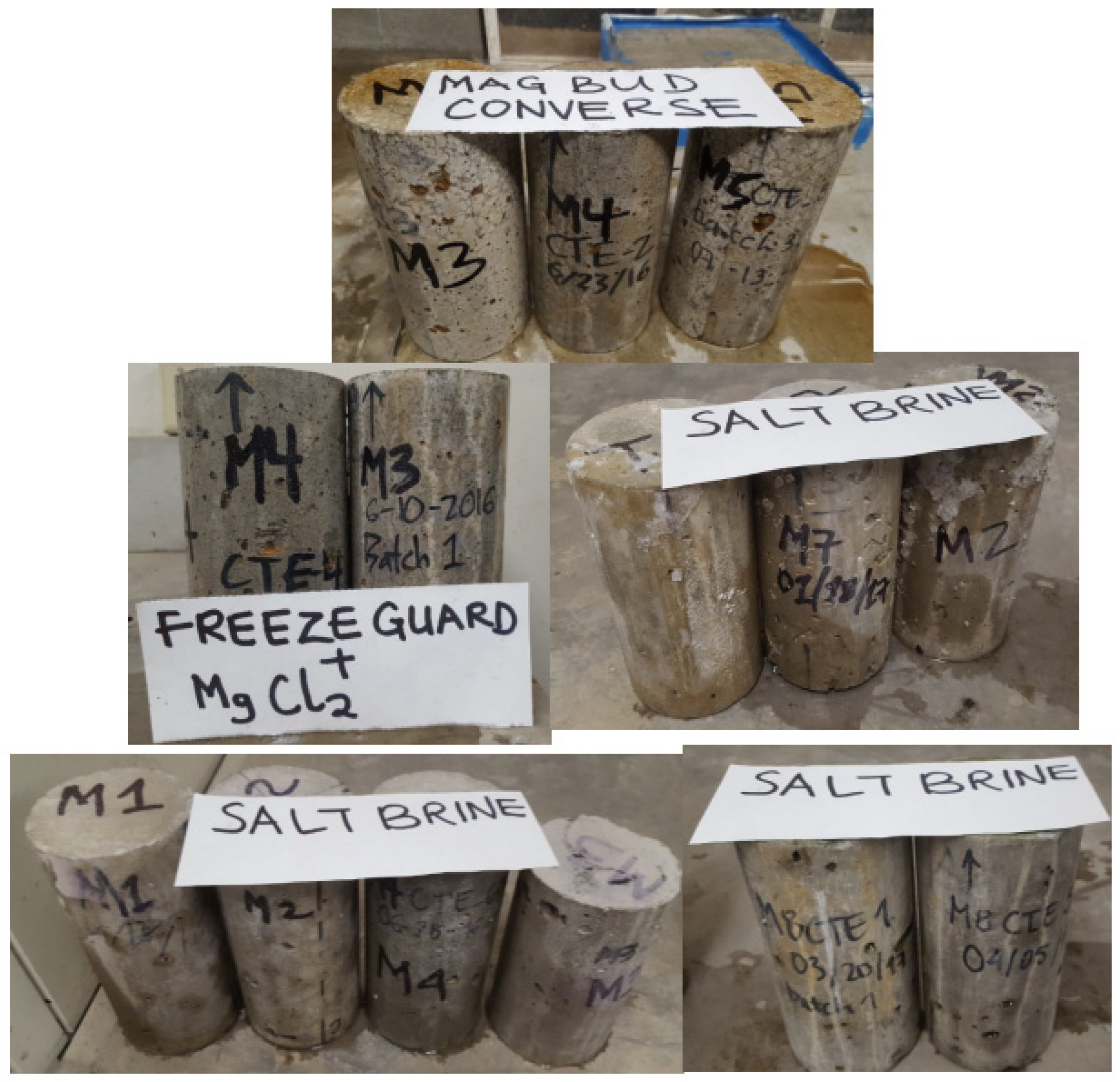
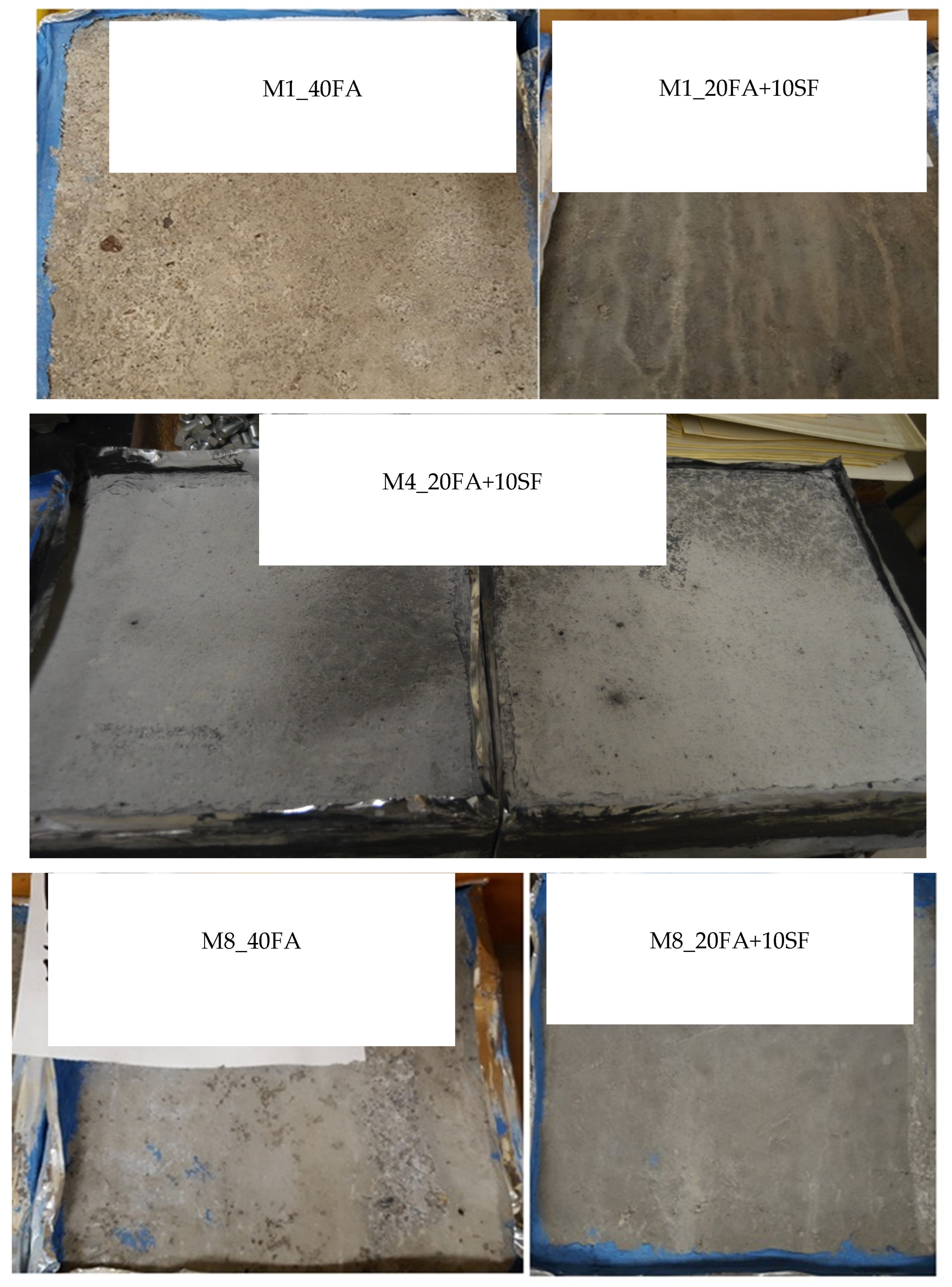
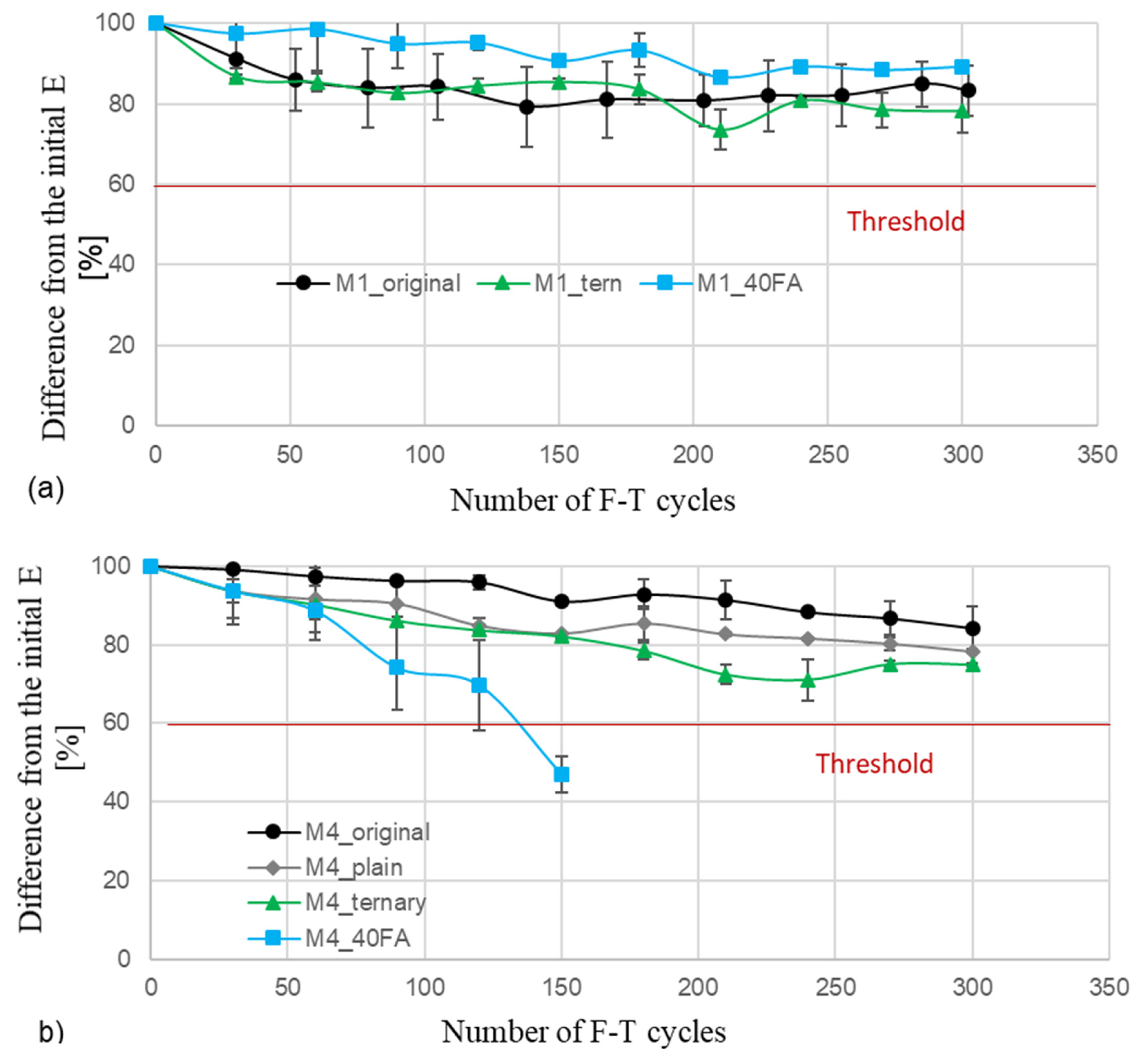
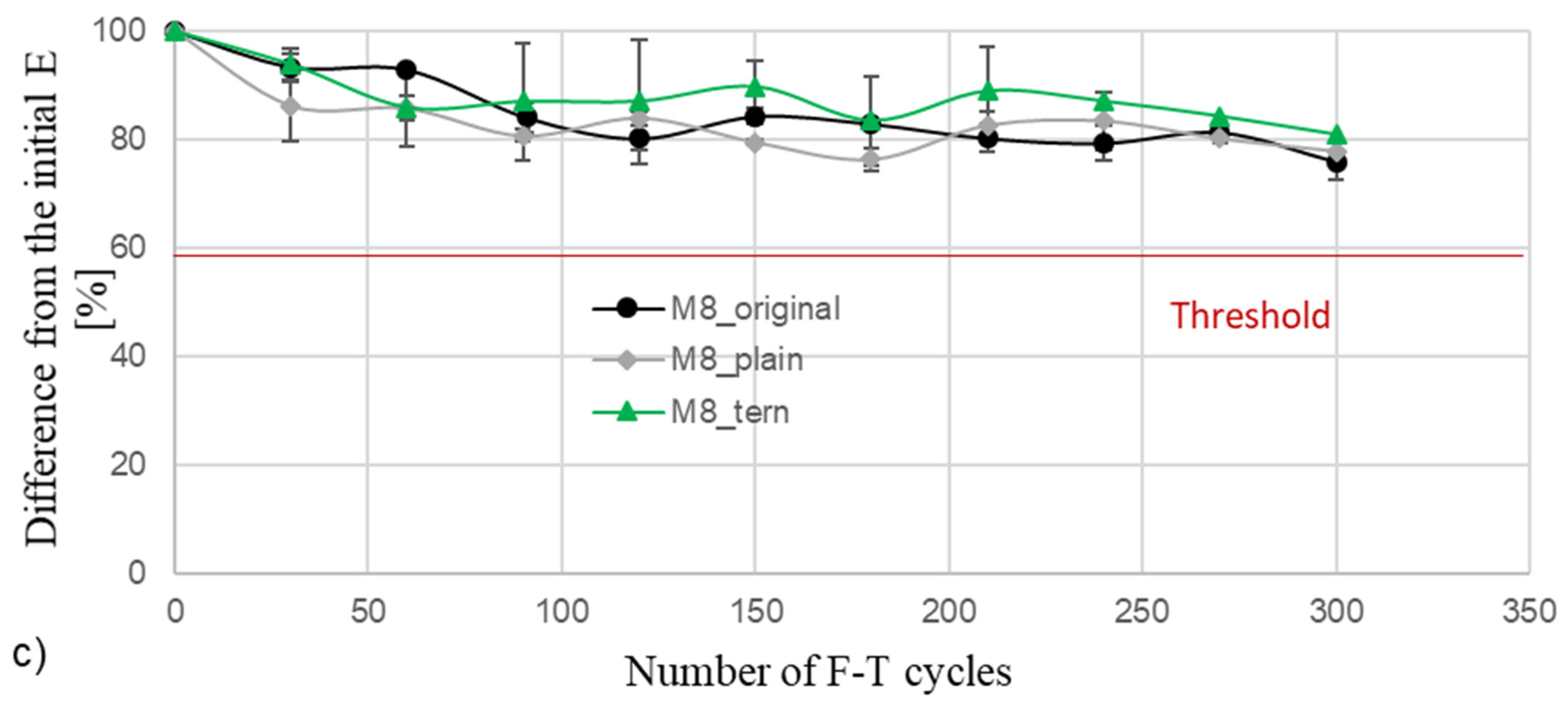
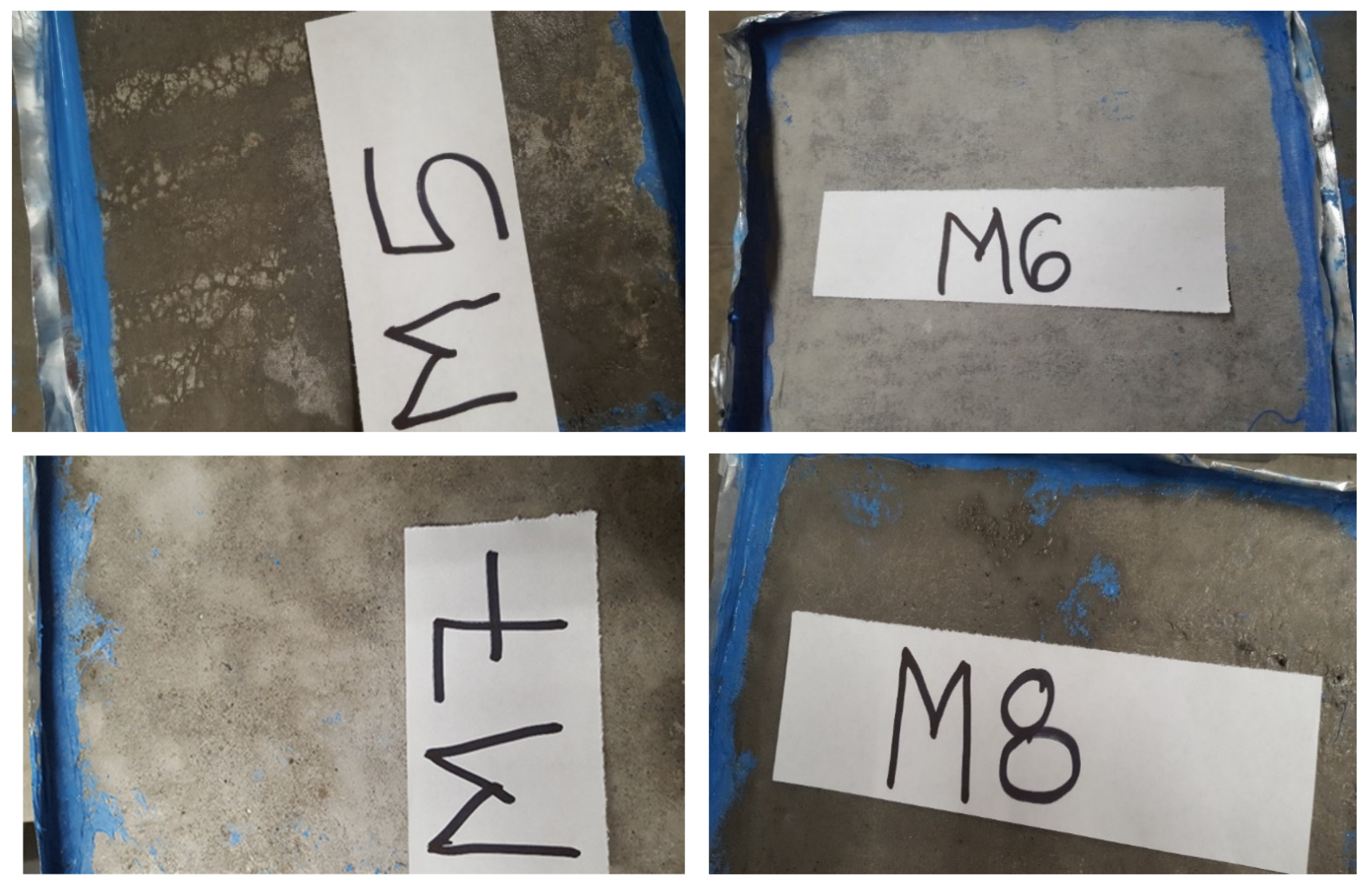
Transportation infrastructure such as concrete pavements, parapets, barriers, and bridge decks in cold regions are usually exposed to a heavy amount of deicing chemicals during the winter for ice and snow control. Various deicer salts can physically and chemically react with concrete and result in damage and deterioration. Currently, Idaho uses four different types of deicers during the winter: salt brine, mag bud converse, freeze guard plus, and mag chloride. The most often utilized substance is salt brine, which is created by dissolving rock salt at a concentration of 23.3%. Eight concrete mixtures for paving and structural purposes were made and put through a battery of durability tests. Following batching, measurements were made of the unit weight, entrained air, slump, and super air meter (SAM) fresh characteristics. Rapid freeze–thaw (F-T) cycle experiments, deicing scaling tests, and surface electrical resistivity testing were used to test and assess all mixes. Tests with mag bud converse, freeze guard plus mag chloride, and acid-soluble chloride were conducted following an extended period of soaking in salt brine. Two different structural mixtures were suggested as a result of the severe scaling observed in the structural mixtures lacking supplemental cementitious materials (SCMs) and the moderate scaling observed in the other combinations. The correlated values of the SAM number with the spacing factor have been shown that mixture with no SCMs has a spacing factor of 0.24, which is higher than the recommended value of 0.2 and concentrations of acid soluble chloride over the threshold limit were discernible. In addition, the highest weight of calcium hydroxide using the TGA test was observed. For all examined mixes, the residual elastic moduli after 300 cycles varied between 76.0 and 83.3 percent of the initial moduli. Mixture M5 displayed the lowest percentage of initial E (76.0 percent), while mixtures M1 and M2 showed the highest percentage of residual E (83.3 and 80.0 percent, respectively) among the evaluated combinations. There were no significant variations in the percentage of maintained stiffness between the combinations. As a result, it was difficult to identify distinct patterns about how the air content or SAM number affected the mixture’s durability. Class C coal fly ash and silica fume were present in the suggested mixtures, which were assessed using the same testing matrix as the original mixtures. Because of their exceptional durability against large concentrations of chemical deicers, the main findings suggest altering the concrete compositions to incorporate SCMs in a ternary form.
Keywords: concrete; deicers; salts; pavement; bridge decks; deicing scaling concrete; deicers; salts; pavement; bridge decks; deicing scaling