Temperature-Dependent Compensation Points in GdxFe1−x Ferrimagnets

Highlights
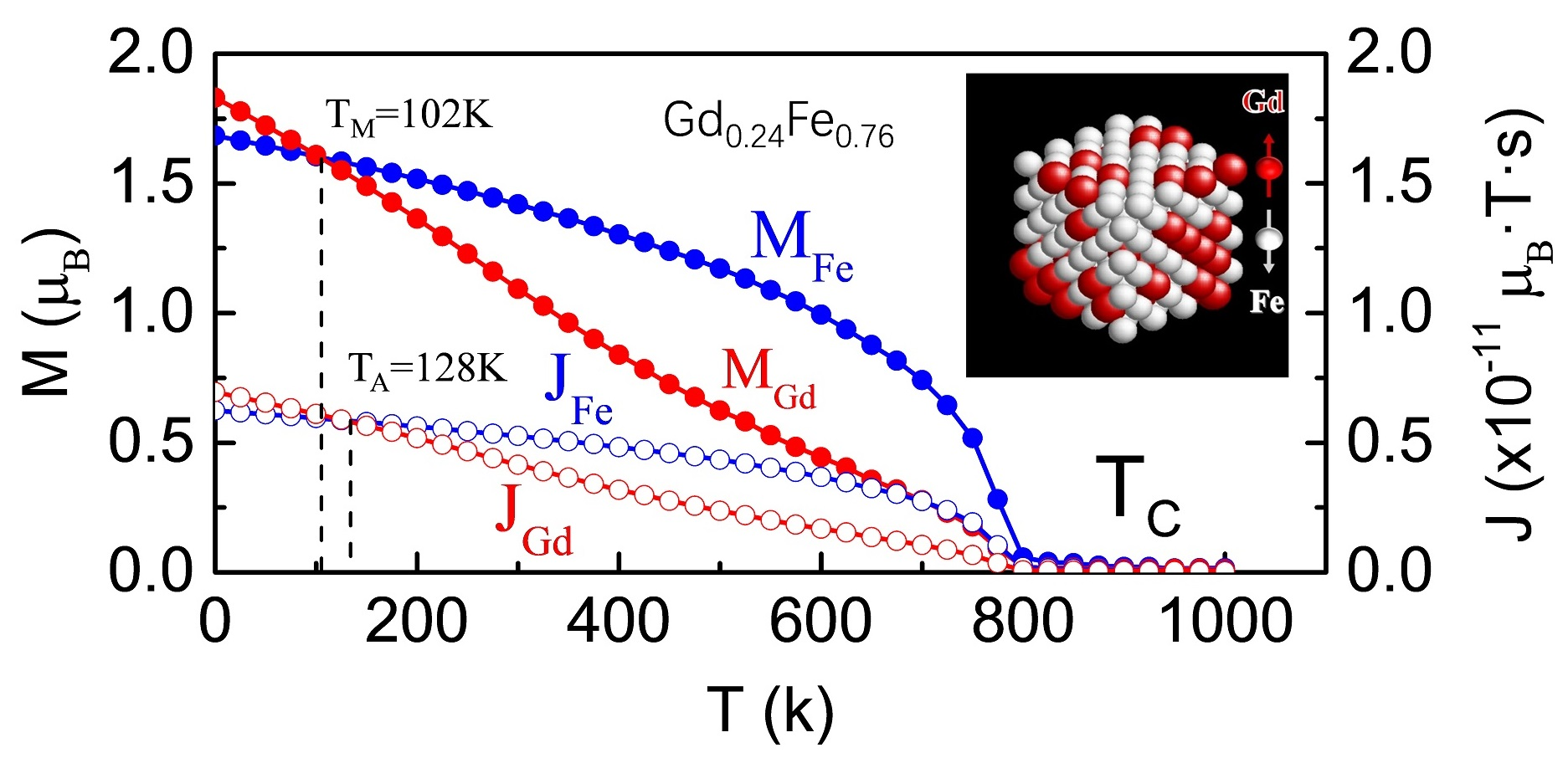
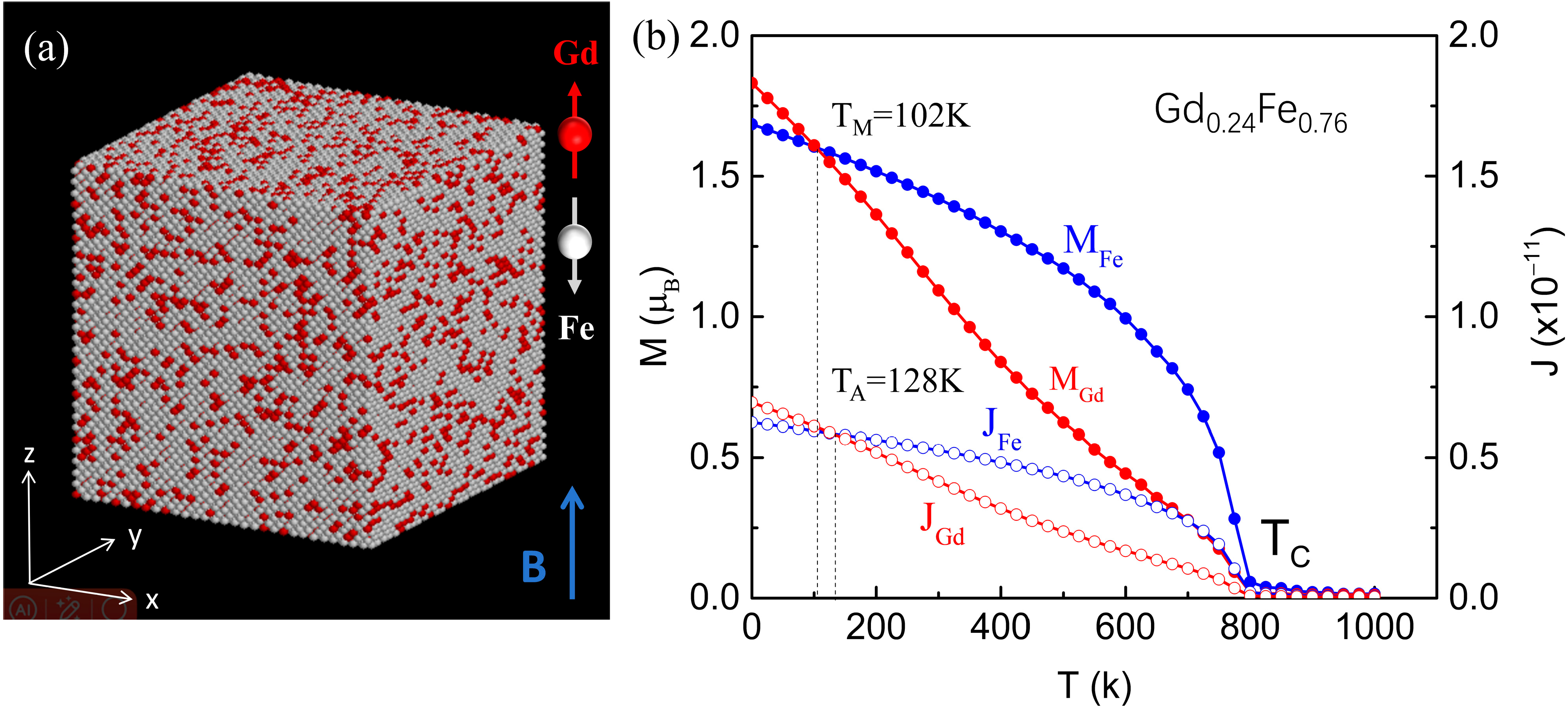
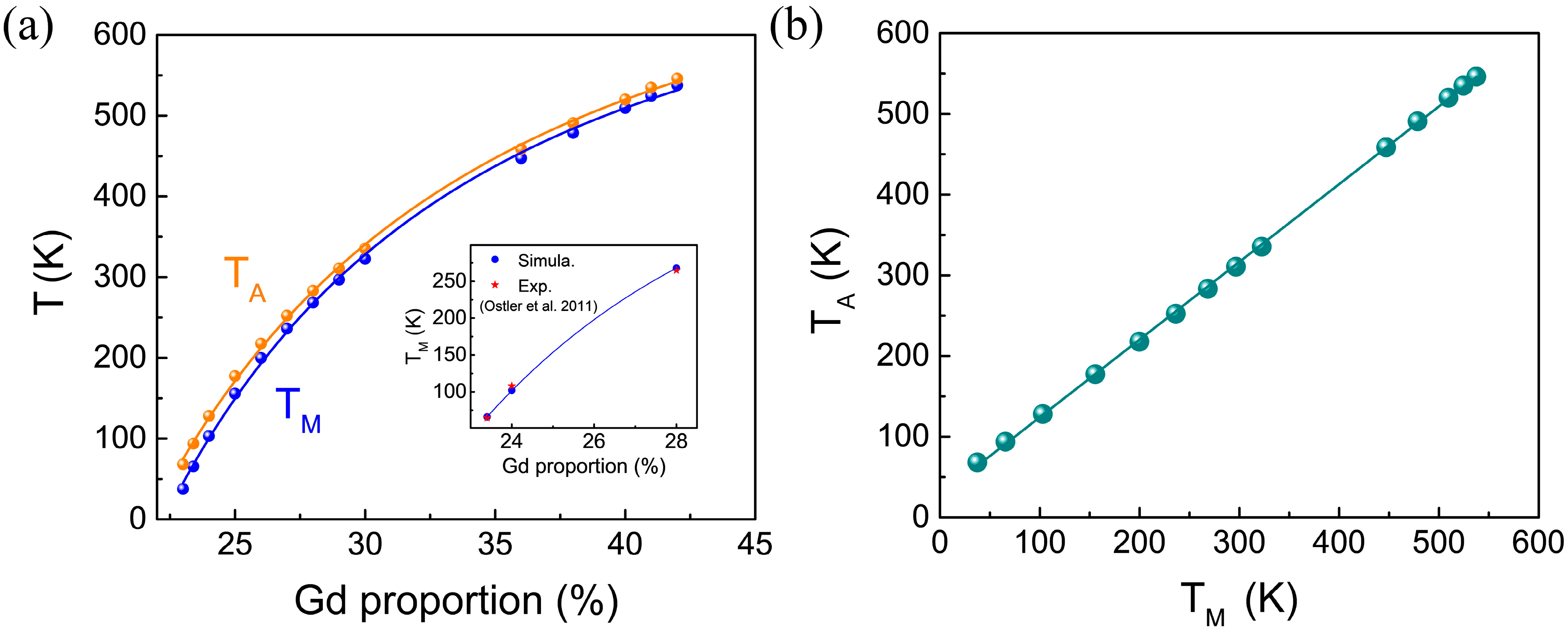
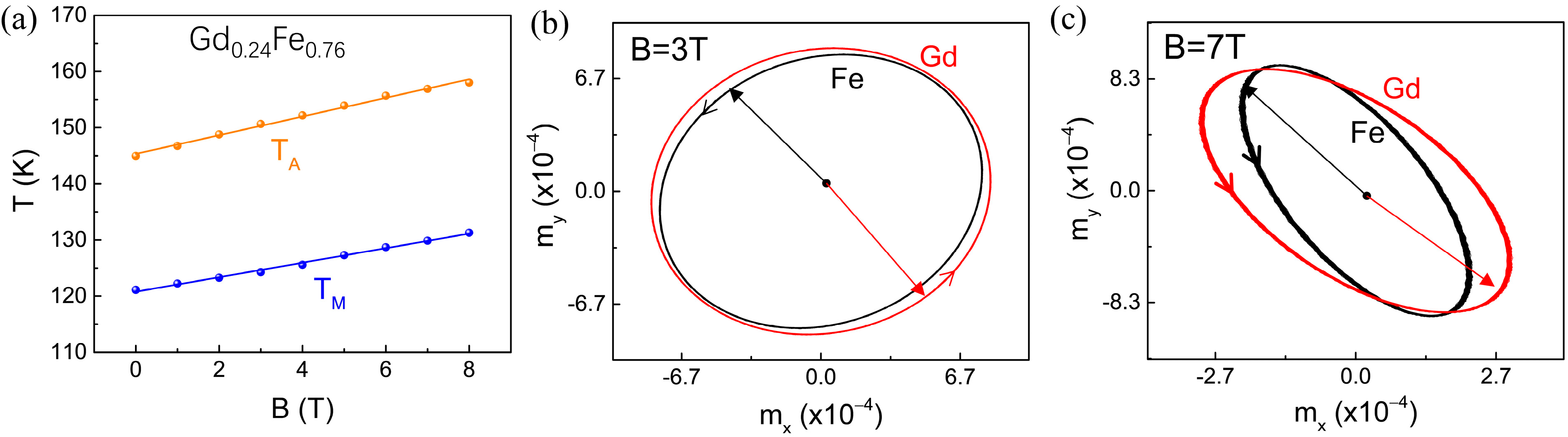
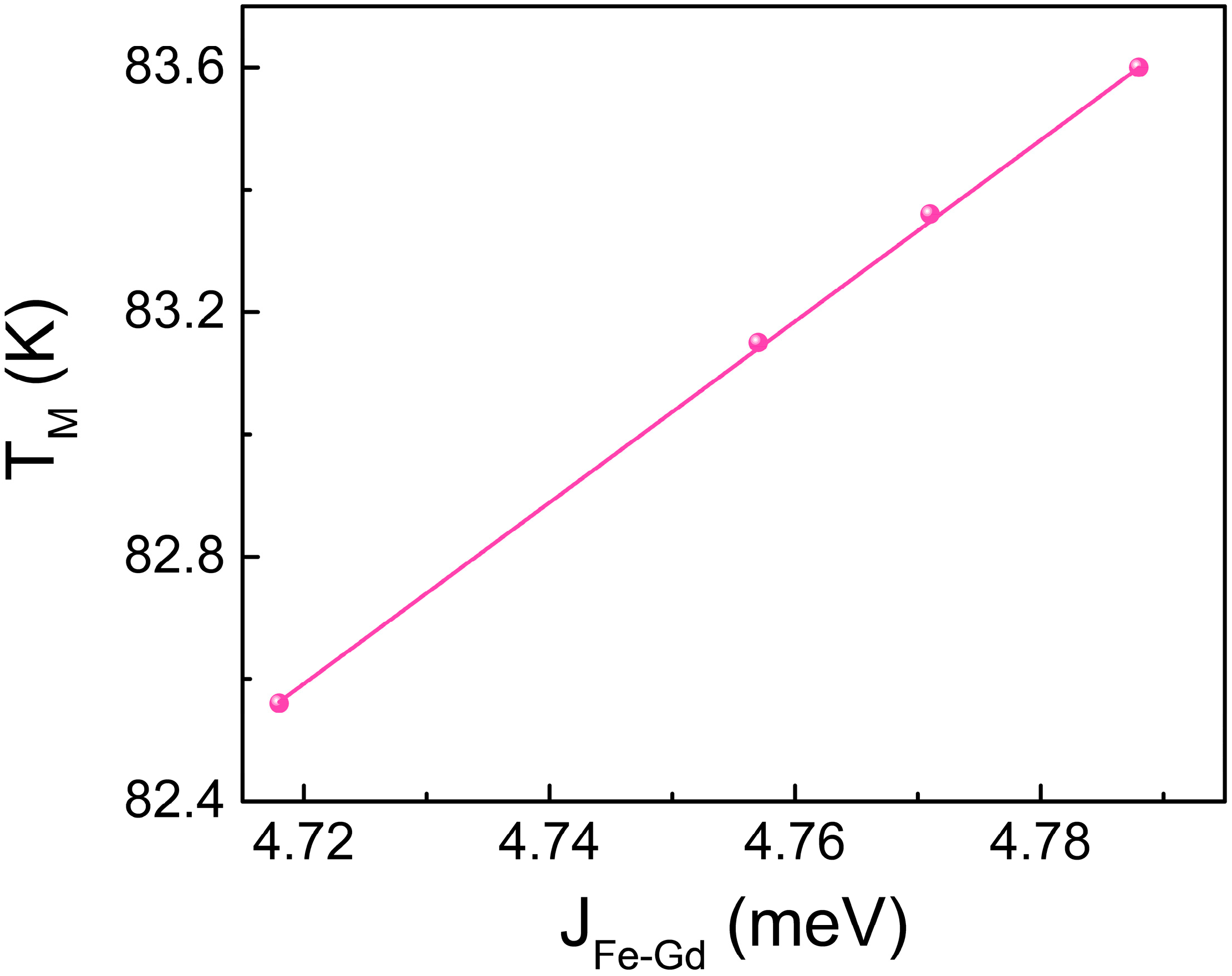
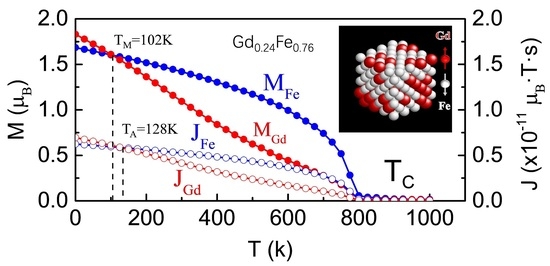
- We ivestigated the key factors influencing the magnetic compensation temperature (TM) and angular momentum compensation temperature (TA) in GdFe ferrimagnetic alloys and demonstrated their tunability through Gd composition, external magnetic fields, and inter-sublattice exchange strength.
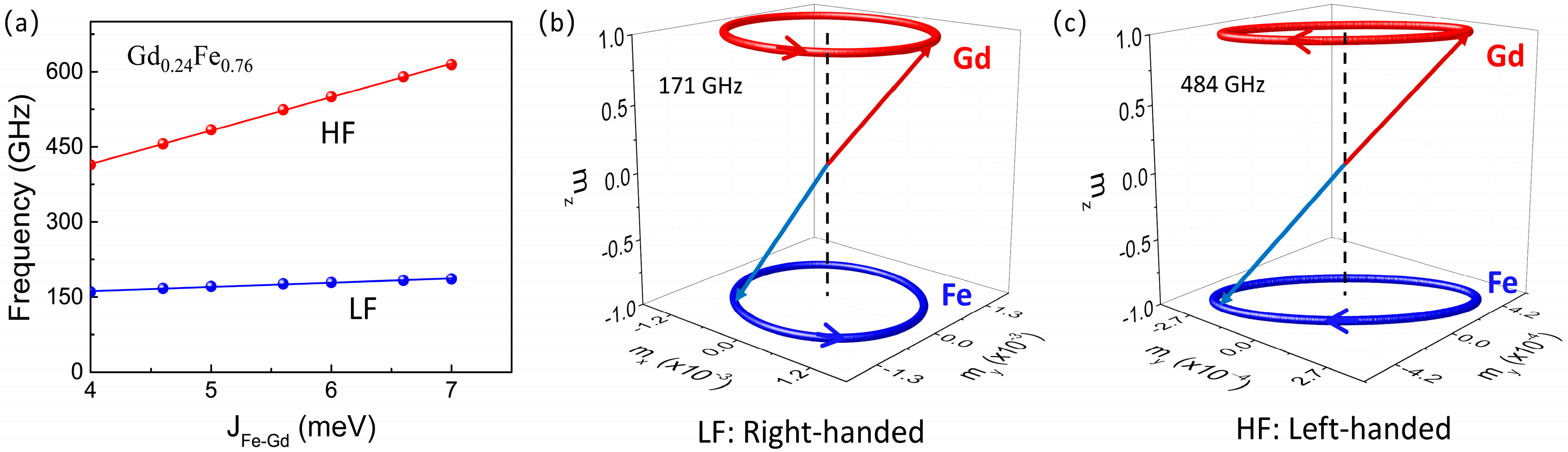
- Analyzed the impact of interlayer coupling between Fe and Gd atoms on resonance frequency and chirality, revealing distinct high- and low-frequency modes with opposite handedness.
Abstract
Share and Cite
Chen, C.; Zheng, C.; Hu, S.; Zhang, J.; Liu, Y. Temperature-Dependent Compensation Points in GdxFe1−x Ferrimagnets. Materials 2025, 18, 1193. https://doi.org/10.3390/ma18061193
Chen C, Zheng C, Hu S, Zhang J, Liu Y. Temperature-Dependent Compensation Points in GdxFe1−x Ferrimagnets. Materials. 2025; 18(6):1193. https://doi.org/10.3390/ma18061193
Chicago/Turabian StyleChen, Chao, Cuixiu Zheng, Shanshan Hu, Jianwei Zhang, and Yaowen Liu. 2025. "Temperature-Dependent Compensation Points in GdxFe1−x Ferrimagnets" Materials 18, no. 6: 1193. https://doi.org/10.3390/ma18061193
APA StyleChen, C., Zheng, C., Hu, S., Zhang, J., & Liu, Y. (2025). Temperature-Dependent Compensation Points in GdxFe1−x Ferrimagnets. Materials, 18(6), 1193. https://doi.org/10.3390/ma18061193