3.1. Shearing
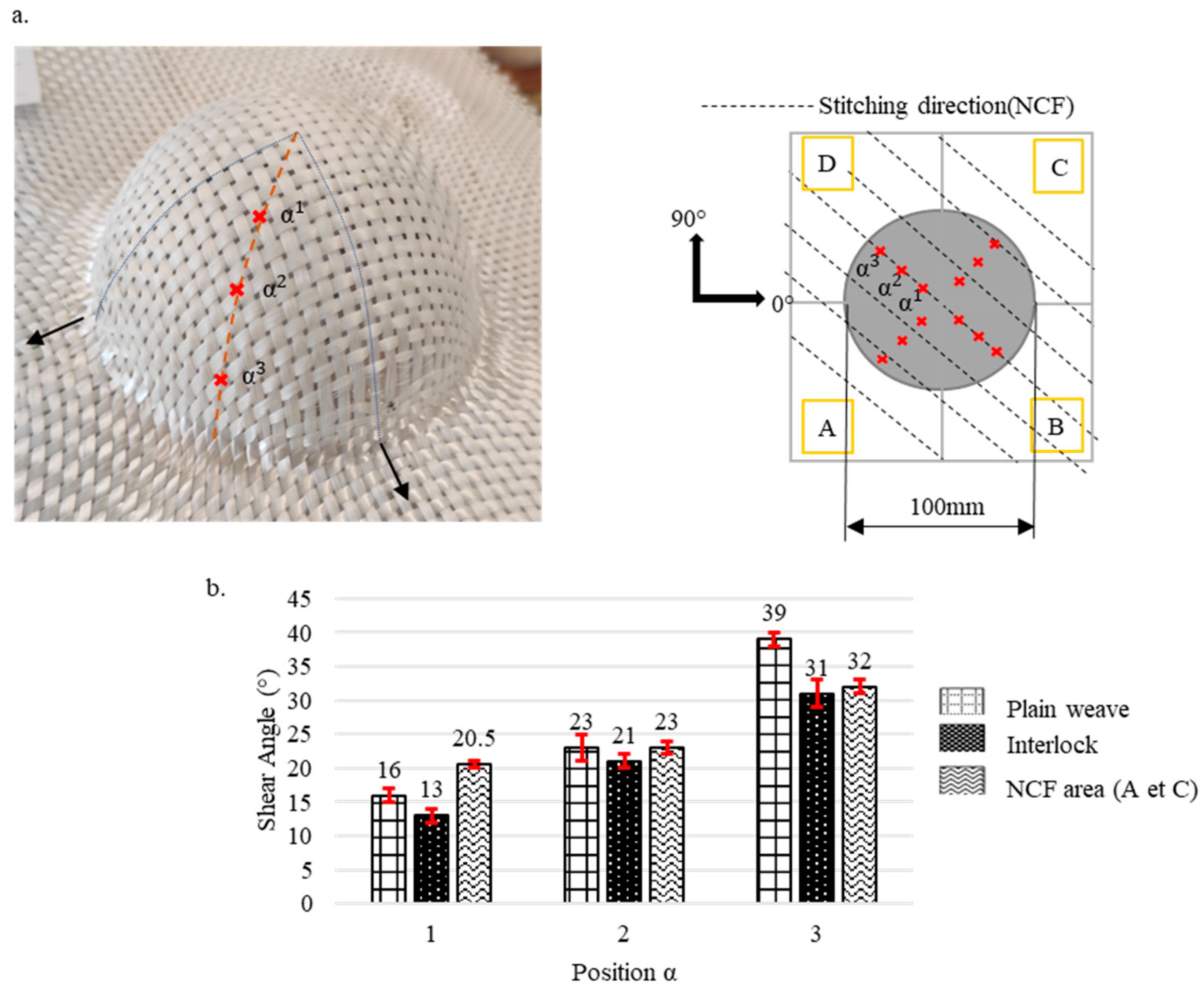
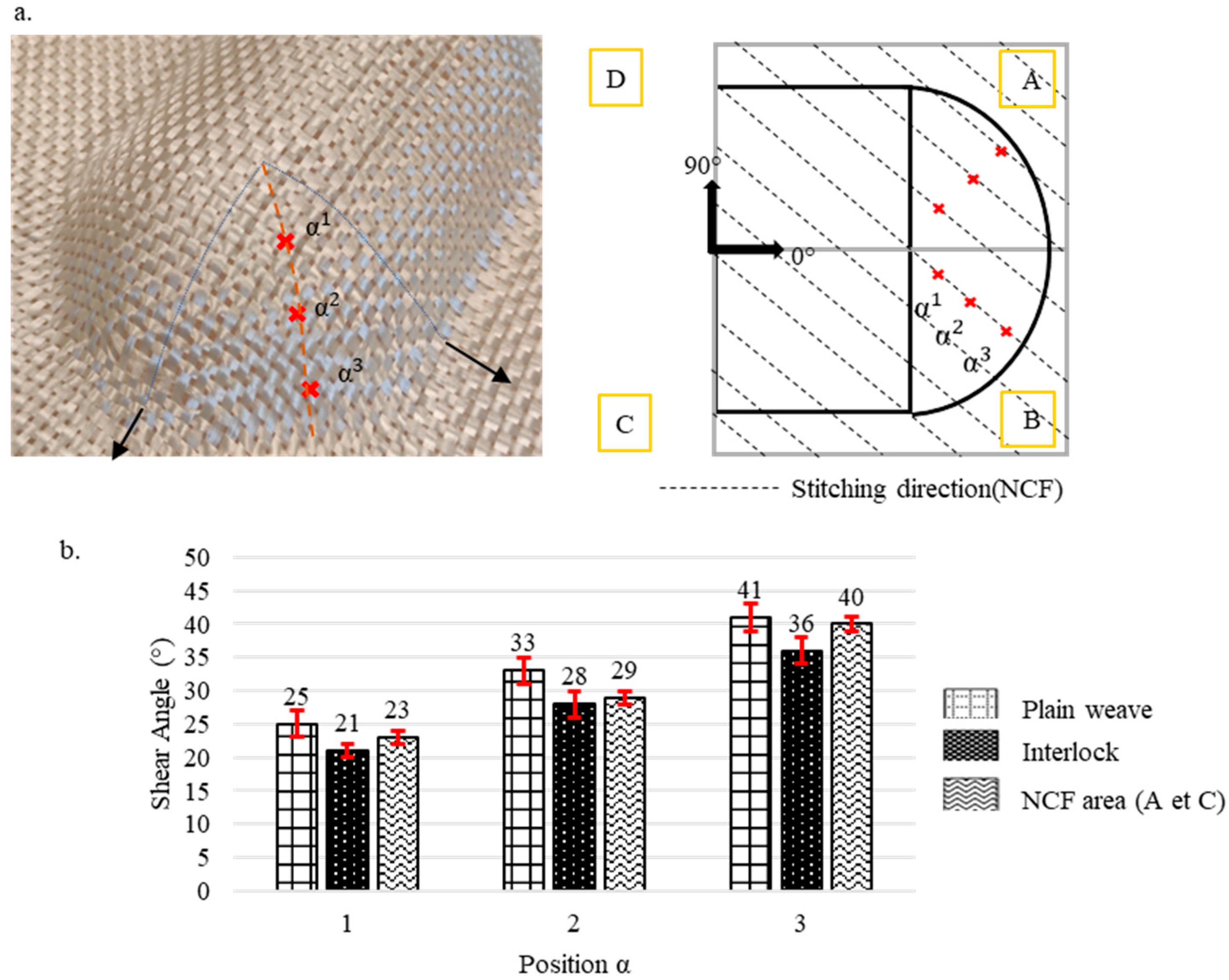
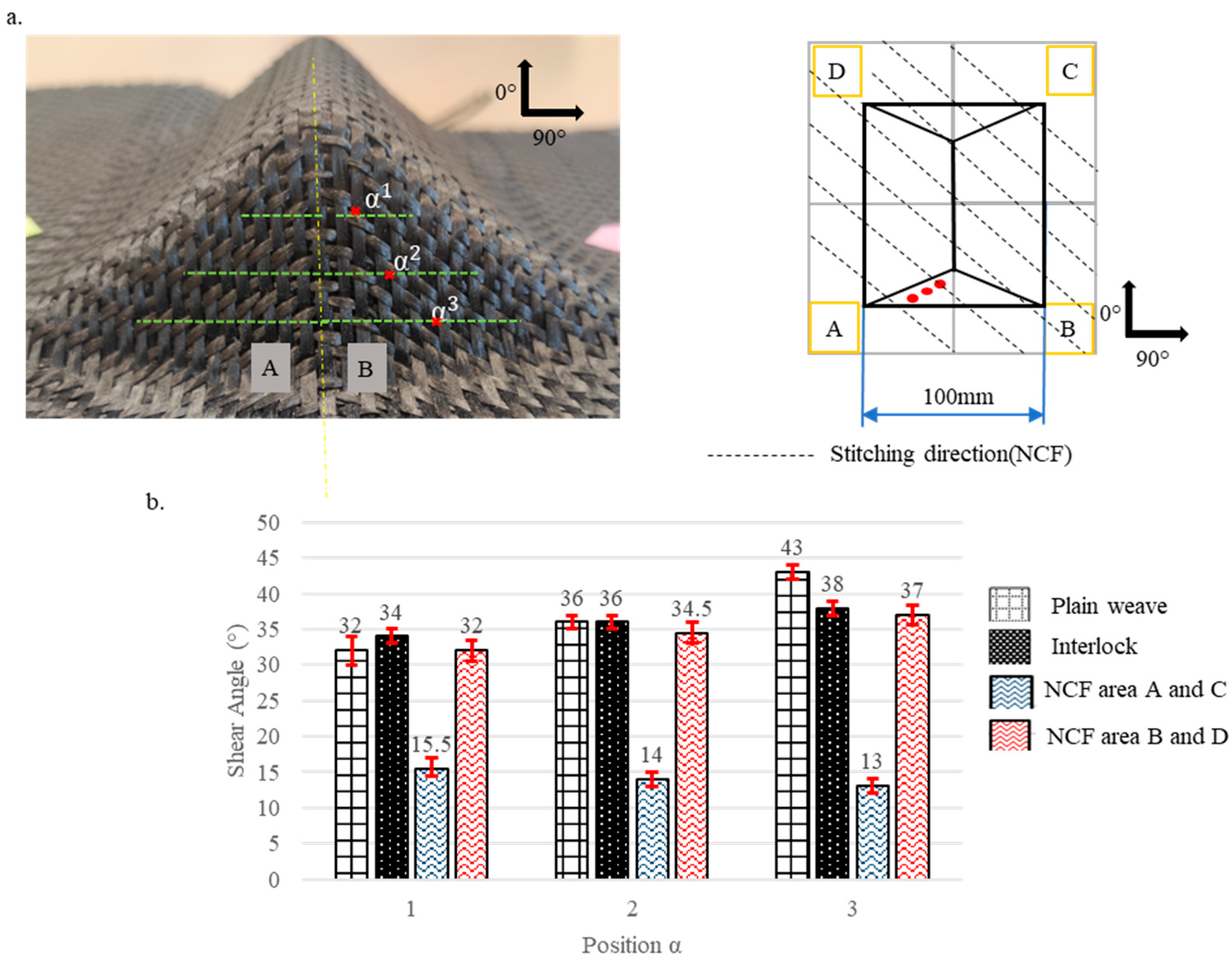
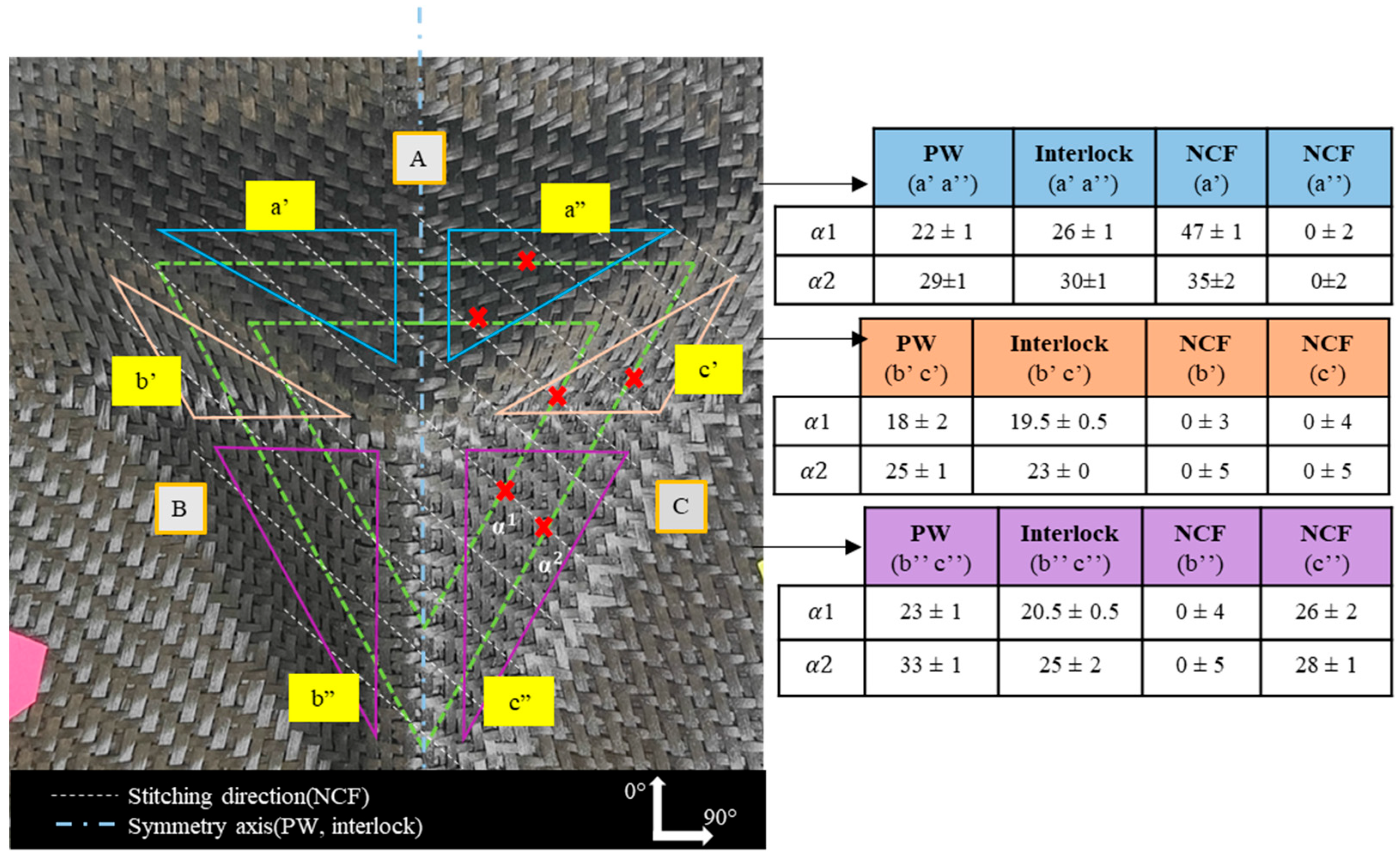
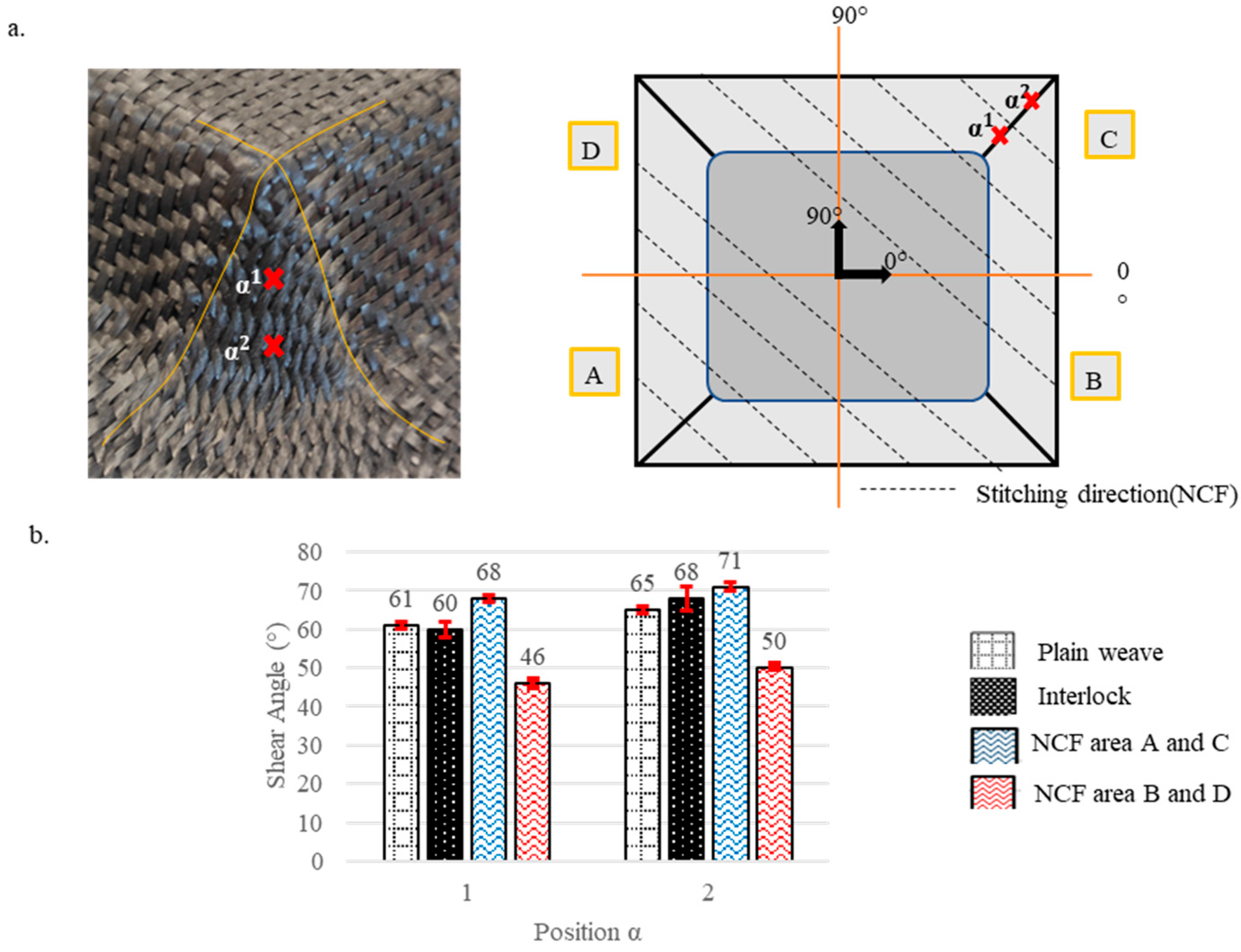
Pre-recognising that shear angles vary according to the preform’s location, each preform was divided into several zones, starting from the highest contact plane between the punch and the fabric down to the lowest depth. The levels of these zones are illustrated by dotted lines in
Figure 3,
Figure 4,
Figure 5,
Figure 6 and
Figure 7. Measurements were taken at points marked as α1, α2, and α3, respectively, beginning from the top, and are shown by a red mark in the figures. The aim is to compare the shear evolution caused by each punch on each reinforcement. Therefore, these measurements were only conducted on specific faces and did not include areas with minimal shear (angles close to zero).
Additionally, zones with defects were avoided during the measurements to ensure more consistent results. The highest shear angles for each level are shown in both table and graph form (
Figure 3,
Figure 4,
Figure 5,
Figure 6 and
Figure 7), where the top view of each preform highlights the measurement positions. The relative orientation of the reinforcements is indicated on the Figures by the axes 0° and 90°, corresponding to the warp and weft networks of the woven fabrics. The 0° angle represents the direction of the top-layer fibre for the NCF. The preforms were divided into four sections, labelled A, B, C, and D (
Figure 3,
Figure 4,
Figure 5,
Figure 6 and
Figure 7), and A, B, and C for the tetrahedron (
Figure 6), to improve readability. All values represent the average shear angles, with a maximum dispersion of 1° to 2°.
The variation in the shearing angle for the hemisphere and the double dome (
Figure 3a and
Figure 4a) increases from top to bottom, reaching maximum values at the bottom of the preforms (
Figure 3b and
Figure 4b). The high shear at the bottom of the preform is caused by the layer’s excess length, which forces the reinforcement to shear more to conform to the shape. The maximum shear for the hemisphere is the highest of the three levels at the bottom, with 39°, 31°, and 32°, respectively, for the plain weave, Interlock, and NCF (
Figure 3b). These maximum values align with the literature for this type of fabric meso-architecture [
23,
36]. They were measured in the different zones (A to D) of the preforms for the woven reinforcements, with symmetry in the values and their evolution.
In contrast, the NCF showed an asymmetrical behaviour as observed in the literature [
23,
26,
37]. The maximum values (between 20° and 32°) were recorded in zones A and C, while zones B and D exhibited lower shear angles (under 5°). The same trend was observed for the double dome across all three reinforcements (
Figure 4). When the shear angles were greater in the hemispherical part of the double dome, this reduced shear can be attributed to the double dome having a radius of 40 mm, compared to the hemisphere’s radius of 50 mm. Almost no shearing was detected in the horizontal half-cylinder section of the double dome.
The triple-point geometries are based on inclined planes meeting at the triple points. Most deformations of the prism occurred on the vertical plane faces, with symmetrical measures between them. There was no noticeable shearing on the lateral inclined planes. On each vertical plane face, the shearing occurs in two opposite directions (shear angles with opposite signs) on the two sides (A with B and C with D), separated by a symmetry axis passing through the triple point. This causes in-plane curvature due to the shift in yarn directions. The maximum shear angles shown in
Figure 5a are in absolute values. Shearing ranged from 32° to 43° for the plain weave and from 34° to 38° for the Interlock. The results for the Interlock are consistent with those obtained by Allaoui et al. with this geometry [
21,
26], the NCF shearing was not symmetrical; it reached as high as 37° on one side (Areas A and C) and as low as 15° (Areas B and D) on the other (
Figure 5b). For all tested configurations, the measured shear angles were more significant than those obtained in the hemisphere and double dome preforms, implying that the prism is more severe.
The shearing observed on the tetrahedron appeared on three plane faces. Two depth levels were measured and shown in the tables (
Figure 6). For every face, the shearing occurred in two opposite directions on the two triangular subareas delimited by the lines on the top view of the interlock preform. A symmetry was observed in the measured behaviour of plain weave and Interlock along the axis, reaching values close to 30° for woven fabrics. On faces B and C, shear was higher in the subareas c”, b” than c’ b’. The highest shearing for the plain weave and Interlock was found on planes B and C in the subareas b” and c”. Once again, the measured shear on the Interlock is consistent with the literature [
26]. The NCF was sheared only on two subareas, a” and c”, with maximum angles measured of 47° and 28°. There was almost no shear for the rest of the preform. Studies have shown that, in some cases, NCF may exhibit different behaviours for positive or negative shear [
38,
39]. In one direction, shear is dictated by the tensile behaviour of the stitch, resulting in higher shear stiffness. When subjected to compression in the opposite direction, friction determines the resistance, leading to lower shear stiffness. While woven fabric relies on the cohesion between yarns, the behaviour of NCF depends on stitching structure.
Given the maximum shear values measured, which remain globally lower than those obtained on the prismatic preform, it can be concluded that the tetrahedron experiences less severe shearing than the prism.
The highest shearing angles were recorded at the four corners of the cube preform for each depth level (
Figure 7). These angles reached 65° for the plain weave and 68° for the Interlock. Shearing was concentrated at the corners along the edges, increasing as it moved towards the bottom. Shear was absent from the other surfaces of the shape. The NCF for this preform, which had two high shearing angles, reached 71° at two opposite corners where the stitching was perpendicular to the edge (portions A and C) and two lower angles of 50° at the corners where the stitching was parallel to the edge (portions B and D). The additional length created by adding depth generates compression strain, which the shear accommodates to adapt to the shape at the corners, reaching its maximum. This area is most likely to produce wrinkles and surpass the locking angles of the fabrics [
8,
22,
40], e.g., for the Interlock with an angle of 55–60°. However, the preforms do not exhibit any wrinkling areas (where there is contact with the punch) as they have been cancelled by choosing to use BHs [
16,
26].
The plain weave exhibited higher shear angles across the hemisphere, the double dome, and regions A and B of the tetrahedron and the prism, while NCF was highest for area C of the tetrahedron, the cube corner, and the interlock fabric. It has been observed that the plain weave loses its dominance in the highest shearing when sliding occurs near the sheared area. The other fabrics continue to shear at higher angles, while the plain weave is interrupted by sliding of the yarns.
The superior properties of the other two fabrics are aided by the interlacing of the warp yarns with three weft yarn layers in the case of the Interlock, and by the stitching that helps to limit movement between the two layers in the NCF. These results are consistent with the classification of reinforcement behaviour according to the architecture [
8], based on shear [
17] and bending stiffnesses [
41]. The high shears for NCF occur when both yarn networks have rotations toward an axis that is perpendicular to the seams (areas a’ and c” of the tetrahedron and areas A and C of the other geometries), which can be attributed to the effect of the stitching.
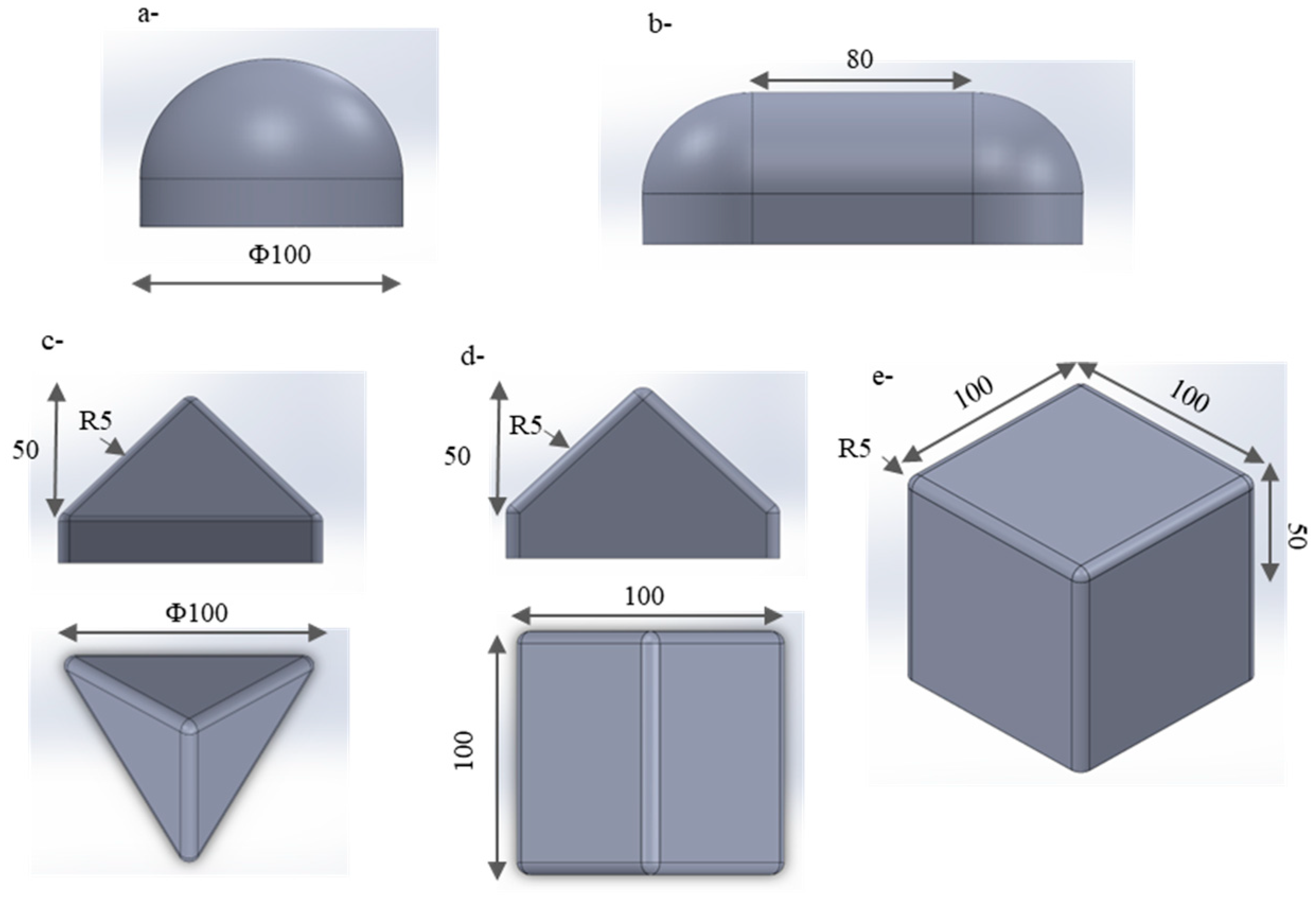
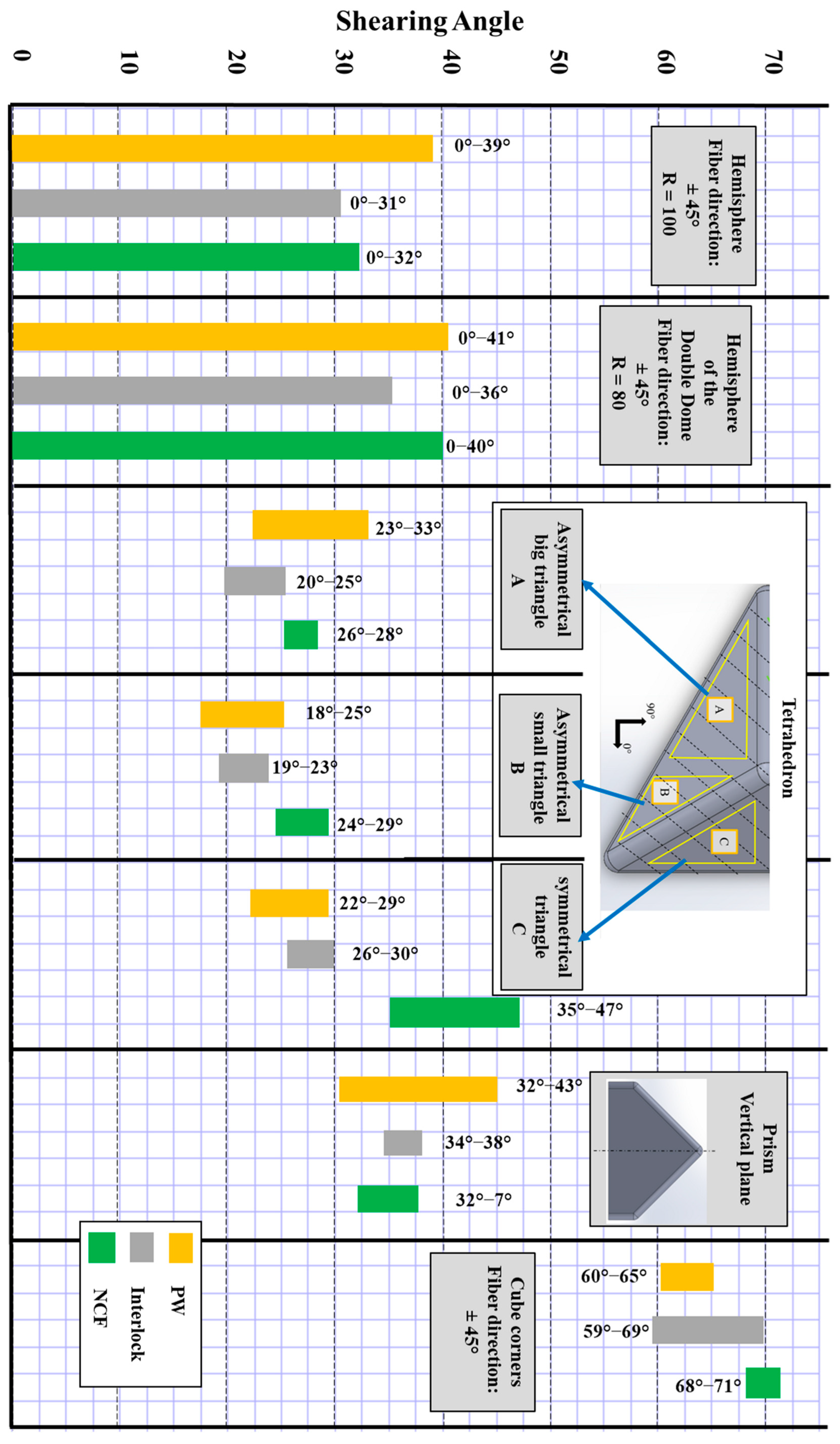
To analyse the effect of punch geometry on shear behaviour, we summarised the measured shear angles and created a classification based on the angle ranges of these facets or parts, as shown in
Figure 8. The initial facets are the hemispheric parts in the hemisphere geometry and the double dome geometry, which have different diameters for the latter. The shearing in these facets was generated following the direction of the fabric at ±45°, increasing its amplitude from the top centre to the base of the hemispherical part. Three distinctive zones were identified for the tetrahedron geometry, each with a different range of shearing. The perpendicular plane of the prism is the only area where shearing occurs, as the two inclined planes did not show any significant shearing. Lastly, an interesting detail is the corner of the cube. This cube part triggered the highest shearing found among the five geometries. Therefore, two different features were considered when analysing the various facets or parts: the amplitude and the range of shearing angle values for each part. The hemisphere offers a wider range of angles, from 0° to 40°, depending on the fabric and diameter. This is made possible by the evolution of the radius of curvature from the centre of the hemisphere to the base, as seen in the double dome. This clarifies why many studies focus on the geometries of the hemisphere and double dome. The continuous spectrum of shear angles resulting from this geometry allows for comparison of the shearing behaviour of reinforcements over a broad range. However, the maximum angle of 40° is not sufficient to reach the locking angles.
The tetrahedron, the prism, and the cube have four different shearing ranges, which are more limited than those produced by the hemisphere. The tetrahedron’s shearing amplitude mainly falls between 20° and 33° in the three areas with the three fabrics (except for the NCF in one area), falling within the shear range generated by the hemisphere. The shearing variation observed in the perpendicular plane of the prism is also limited but slightly higher than that of the hemisphere, ranging from 32° to 43°. The highest angles were recorded at the corners of the cube, with shear angles ranging from 59° to 71°, where the amplitude is highly dependent on depth. However, the tetrahedral preform was the most effective in distinguishing the reinforcements, as the differences in shear-induced deformation between various reinforcements at the same location were most significant (a maximum difference of 10° for the hemisphere and 18° for the tetrahedron).
Therefore, these triple-point geometries do not permit wide and continuous shear angle ranges. However, they offer the advantage of producing high induced shear angles, which can stress the reinforcements beyond their locking angles. The most extreme in this regard is the cube, followed by the prism. Therefore, their application in studying formability based on shearing behaviour must be complemented with other geometries (such as the hemisphere) to encompass the entire possible range of angles for reinforcements. Similarly, the geometric singularities of these geometries, like the edges with small radii and the triple point, highlight other phenomena, including mesoscopic defects.
3.2. Defects
During the forming process, defects emerge. Different fabric behaviours and deformation mechanisms significantly influence the appearance of defects. A phenomenon is referred to as a defect when deformation alters the fabric’s structure, which may lead to a decline in its mechanical properties. Defects can occur at the yarn level or the fabric level (from multilayers to monolayers) and may involve out-of-plane or in-plane deformation. In this study, defects were identified, located, and quantified by proposing measurement factors related to the physical aspects affected by the defects.
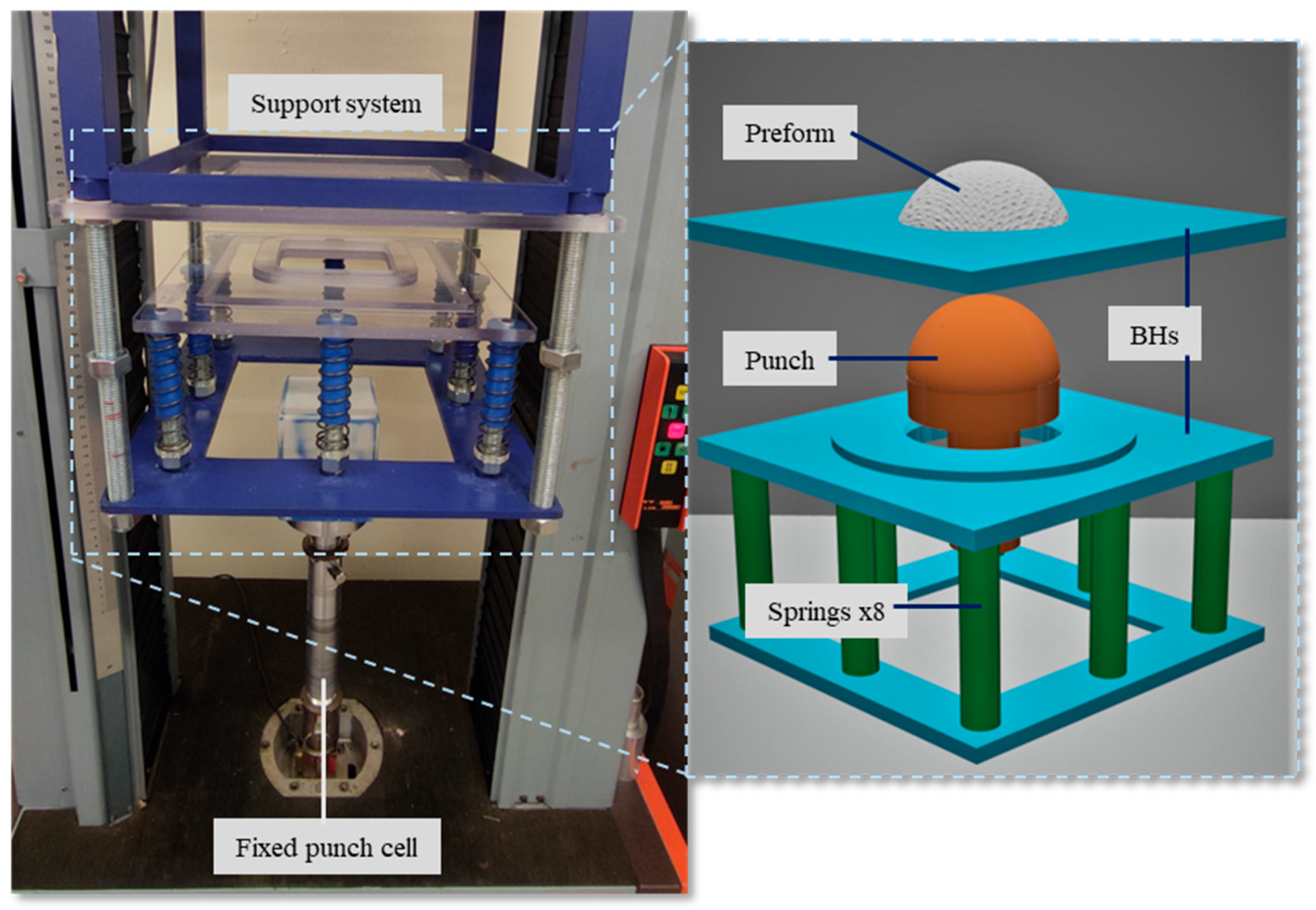
Two types of defects were identified. The first is slippage, a flaw specific to plain weave, attributable to the fabric’s weak cohesion. The second defect is buckling, observed in all three fabrics. Other common defects, such as wrinkling, did not occur in any of the shapes or fabrics, which was expected since the setting was designed to prevent wrinkles from forming.
3.2.1. Slippage
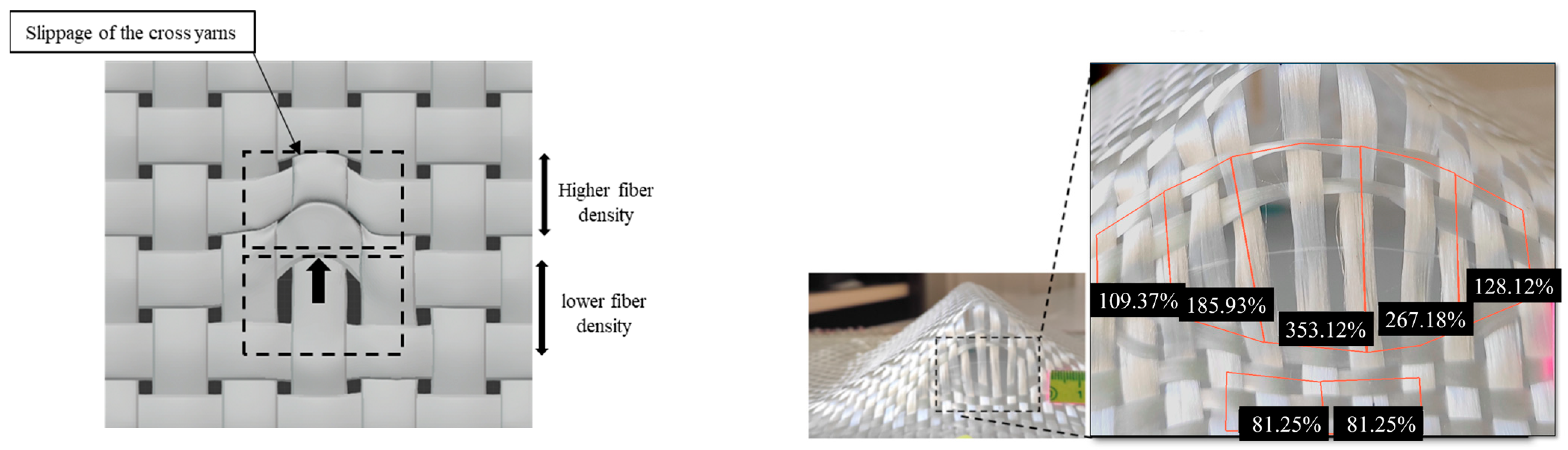
Slippage is when the yarn shifts its position in a transversal direction from its axis, creating an in-plane curve. This curvature disrupts the fabric’s meso-structure and creates two distinct areas. The first is an area with high fibre density located where it has slipped, and the second has a low density (
Figure 9).
It is crucial to consider this defect because it creates a local weakness in the composite structure, impacting its mechanical properties. Several factors, such as the geometry’s features, process parameters, and fabric behaviours, contribute to the development of slippage [
42].
Conventionally, defects are assessed by their surface extent and amplitude. Since slippage causes regions with low fibre density, it is appropriate to include measurements that capture this aspect. Therefore, slippage was characterised using parameters that reflect its amplitude and severity. First, the unit cells (UC) subjected to the maximum change were identified, and their dimensional increase was measured. The variation in each unit cell’s area was calculated and expressed relative to the initial area of the elementary cell. The maximum value (UC max%) attained by this parameter for each geometry is shown in
Table 2. This is the parameter that can be associated with the loss of mechanical performance at the local scale, using analytical and numerical models, for example, and thereby indicates the local severity of defects.
The number of locations where the slippage appeared was counted for each preform. This parameter can be linked to the effect of the defect on the composite’s mechanical performance at the macroscopic level. Two other parameters were measured to quantify the expansion and change in the unit cell dimensions. The first parameter, “The average number of UCs defected per location,” represents the average number of affected unit cells counted for each defective zone. The cell was considered defective when there was more than a 10% change. The second parameter, defined as the “average density per location,” is the average decrease in unit cells compared to the initial number occupying the same surface area. These two parameters can explain the severity of the defect in the composite’s behaviour at the macroscopic level.
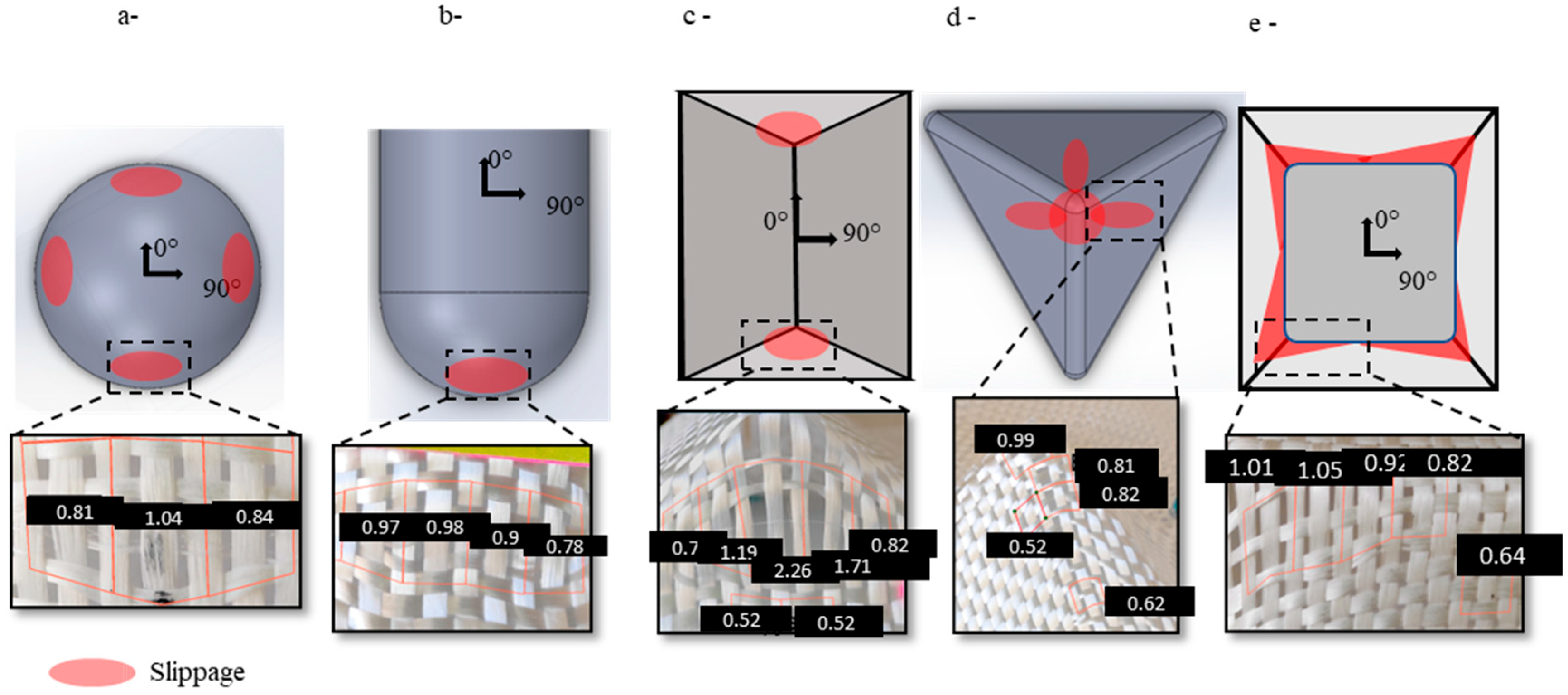
In the hemisphere, slippage occurred at the bottom of the preform in four locations following the yarn network directions (0° and 90°) (
Figure 10a). It resulted in a maximum 162% increase in the surface area of the most deformed cell, indicating a 62% increase in area (
Table 2). This defect affected an average of 6.5 unit cells per location and reduced fibre density by 23.07%. In the double dome at 0° (
Figure 10b), slippage occurred at two locations and was slightly less severe, with lower surface damage compared to the hemisphere. The curvature of the hemisphere, combined with the two half-hemispheres in the double dome design, caused variation in the fabric length that needed to be accommodated. This generated in-plane tensile stress, and when this stress exceeded the capacity of inter-yarn cohesion, it led to loss of contact and yarn slippage. In the prism geometry, slippage occurred at the top middle of the vertical plane, near the triple point (
Figure 10c). It reached a maximum increase of 353% in the unit cell surface, damaging an average of 19 unit cells in two locations of the preforms. It reduced the fibre density by 47%. The presence of the triple point caused a variation in tension. The yarns passing through the triple point experienced the most significant tension, which decreased further from the centre of the vertical face. This caused the lateral warp yarns to shift until the forces at the interlacing of the two yarn networks locally exceeded the cohesion of the reinforcement, leading to slippage. The in-plane tensile stress was initially resisted by yarn-to-yarn friction, allowing the yarns to stay in contact. However, when preforming reached a certain depth, the tensile stress surpassed the friction due to fabric cohesion; subsequently, slippage defects appeared.
Similar phenomena were observed with the tetrahedron planes, where the slippage occurred at the top of the triple point and along the upper centre of the three inclined planes (
Figure 10d). The maximum surface change in the unit cell reached 154%, affecting an average of 4.6 unit cells per location. The slippage created a gap at the triple point and lowered the local density by 35%.
The slippage on the cube occurred at the four triple points on each of the two vertical planes (
Figure 10e), and it decreased as the distance from the edge increased. The UC surface change reached 164%, leading to a 37% reduction in density. No sliding was observed on the upper plane of the cube, where the fabric initially contacts the reinforcement and becomes almost integral to it. A similar phenomenon was also seen with the prism and the tetrahedron. Therefore, slippage only took place on inclined or vertical faces.
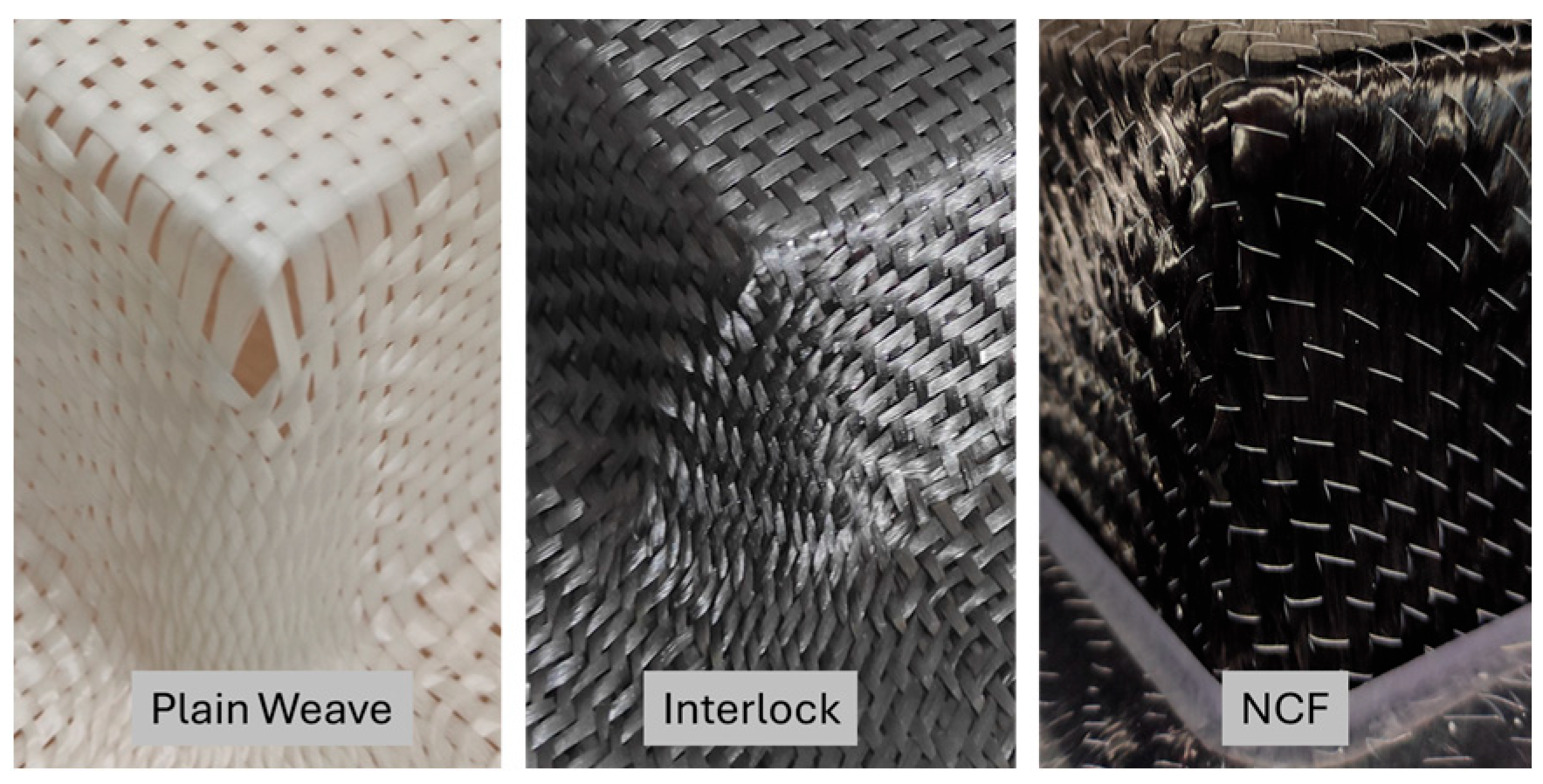
Thus, slippage occurred in all the preforms made with the plain weave fabric, unlike the other reinforcements, where no slippage was observed (
Figure 11). The geometry’s severity and the test conditions also influence the appearance of this defect. The triple-point geometries produced more severe defects. The prismatic geometry results in the greatest extent and severity of slippage. However, the highest number of defect locations was observed in the cubic preform, which is due to the effect of the cube’s four triple points.
3.2.2. Buckling
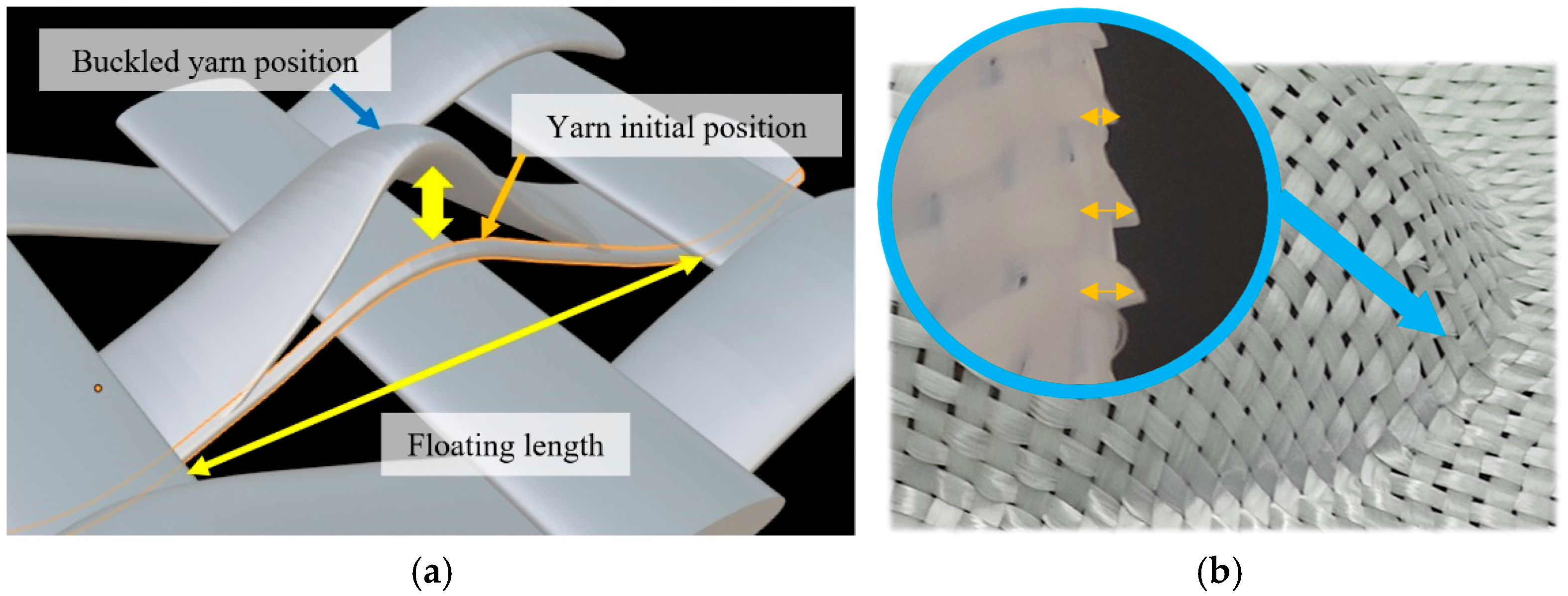
A buckle defect occurs when the yarn is subjected to a compressive load in the same direction as the fibre axis. This defect involves an out-of-plane deformation on the yarn scale, bending it into a curved shape (
Figure 12), which impacts its thickness and changes its mechanical properties locally. The profile of the buckling, including its shape and magnitude, depends on the compressive stress and is greatly influenced by the yarn’s structure, such as its width and yarn-to-yarn distance [
43], nature of the fibre, and density.
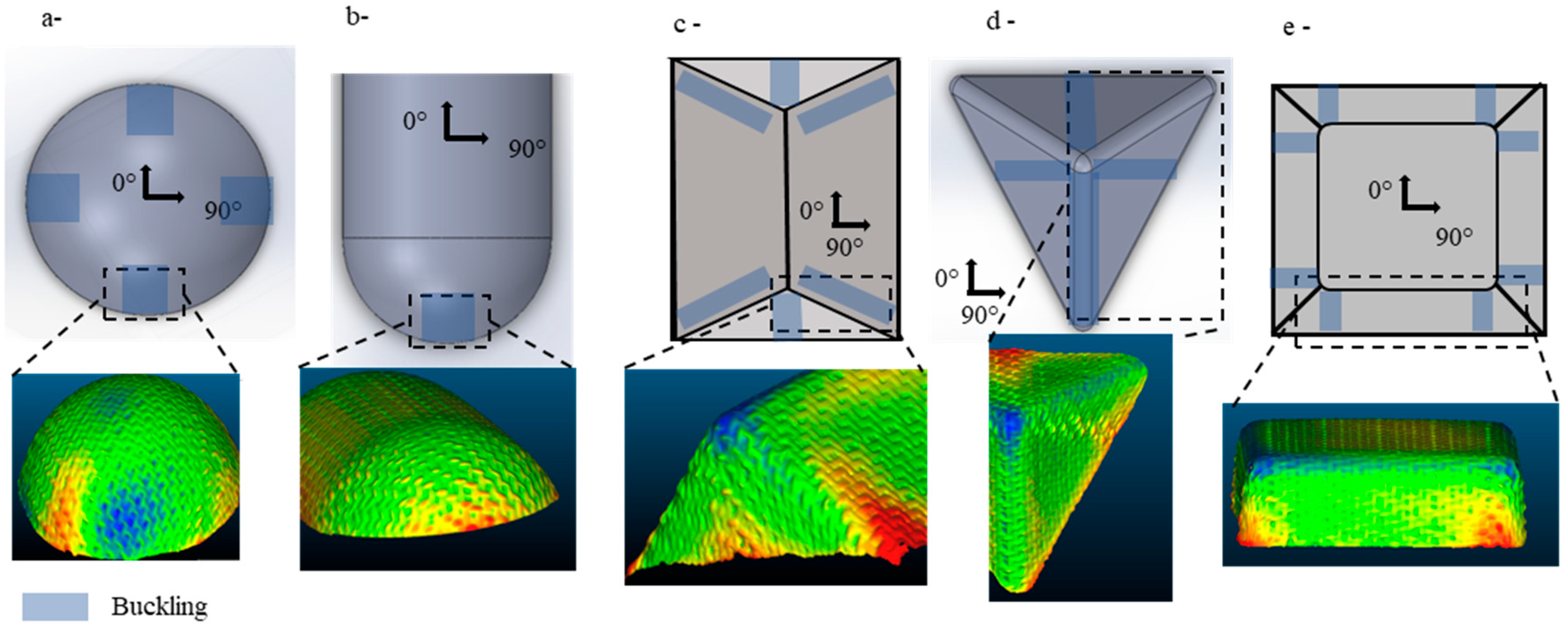
This defect was observed across the three fabrics with five preforms at various locations (
Figure 13). To characterise this defect and determine its impact, we introduced two categories of parameters. The first relates to the effect of the defect and its severity on a macroscopic level. The first parameter measures the total surface affected in mm
2. However, when comparing geometries, the defective surface is divided by the total surface area of the preform. The second category concerns the defect’s local dimensions: the buckling amplitude, which is the over-thickness caused by yarn buckling. This reflects the local disturbance of the fabric’s meso-structure and its severity in that specific area.
In the hemisphere preforms, buckles appeared at the directions of 0° and 90° at four locations (
Figure 13a). Regarding the double dome, buckles were observed at the base of the two hemispherical parts in the yarn direction (
Figure 13b). In these areas, the yarns change curvature as they approach the bottom. Along the width of the yarn, part of it is subjected to compression, while the other part experiences tensile stress. The normal pressure of the cross yarns on the two contact points from both sides creates conditions for the yarns to buckle. Buckling appeared on the two vertical faces of the prism preform, forming a band from the triple point to the bottom (
Figure 13c). The yarn passing through the triple point is under high tensile stress, while an in-plane curvature develops because different shearing directions lead to the bending of the transverse yarns, which buckle.
Similarly, buckling occurred on the three inclined planes of the tetrahedron: the yarns passing through the triple point pull the cross yarns, causing the curvature (
Figure 13d). Defective areas were observed on all three faces of the preform. The fourth area is located on the edge of the tetrahedron, where the yarns’ directions are parallel to the buckling. The corners of the cube formed buckles at eight locations in total (
Figure 13e). These defects arise during the transition from a non-sheared region on the vertical faces to a high-shear region on the vertical planes.
Since the preforming process was conducted under identical settings, it is assumed that the different defect profiles result from the effect of the geometry. Particularly for the plain weave preforms, buckling co-existed with slippage on top of the buckling band. These two defects coincide due to the kinematics and mechanisms involved. As explained above, buckles form when a yarn network is subjected to compression or bending. This stress can be caused by changes in geometrical curvatures, as seen in the case of the hemisphere and the double dome, or by geometric features such as the triple point in other preforms. For example, the latter geometries induce significant tension on the yarns passing through the triple point. This tension causes displacement and acts as a pull-out test by dragging the yarns of the transverse network. The effect depends on the forces and displacements experienced by the pulled yarns, as well as the cohesion of the reinforcement. Therefore, if the reinforcement cohesion is high, the transverse yarns are pulled and bent, creating buckles where the deflection is most significant. If cohesion is low, the pulled yarns slide freely without dragging the transverse yarns.
There is an intermediate situation where these two defects can coexist. This occurs when fabric cohesion is low or diminishes during the shaping process. When the yarns passing through the triple point are pulled in this configuration, they draw the transverse yarns along with them. This leads to the initial formation of loops, which are characterised by out-of-plane buckling and rotation (
Figure 12). The rotation of the roving reduces the contact surfaces locally at the point of interlocking with transverse yarns, resulting in a decrease in cohesive forces. These forces depend on these contact surfaces, the friction between yarns, and the tension exerted by the BHs in the transverse direction. When the forces applied to the yarns passing through the triple point exceed the local resisting forces of cohesion, slippage occurs in a stick-slip manner. In fact, as the yarns slide, they reach positions, and again, as the cohesive force increases, causing them to slip again.
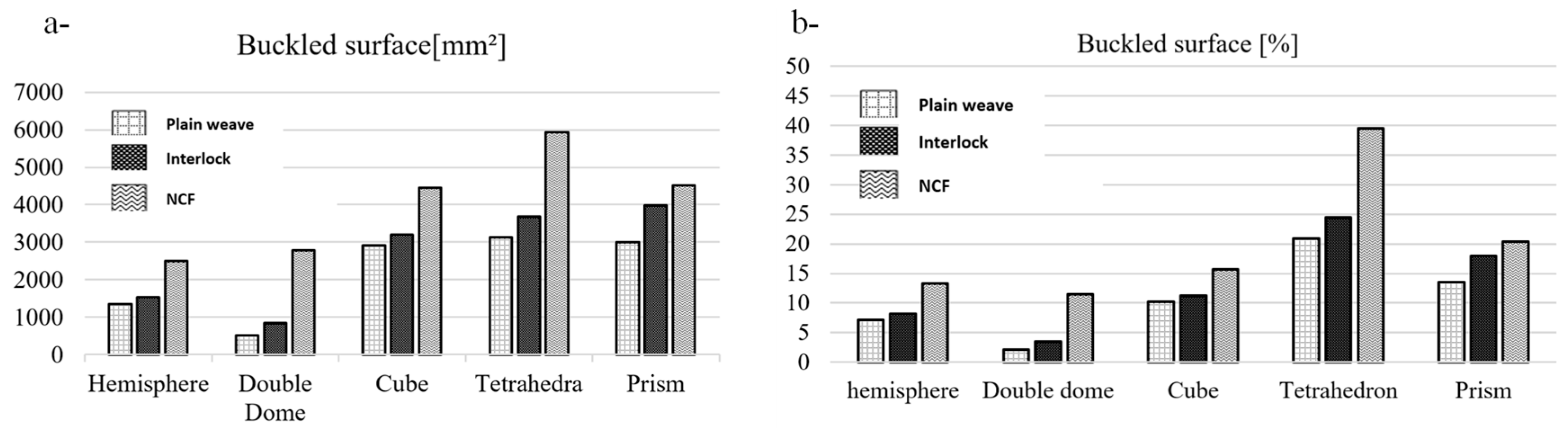
Among the five fabrics, buckling affected the NCF the most, reaching over 6000 mm
2 in the tetrahedron preform and approximately 2500 mm
2 for the hemisphere (
Figure 14a). Unlike the other two woven fabrics, the NCF’s structure consists of two fibre layers, not separate yarns. Each layer contains fibres aligned in the same direction, with two different orientations. It is stitched to maintain the structure. Hence, cohesion between the fibres within the same layer is low, and the effect of the cross-layer stitching makes it more sensitive to bending. For the Interlock and the plain weave, the buckling surface affected was similar in value for each configuration but consistently slightly higher with the Interlock (
Figure 14a). The low buckling on the plain weave can be attributed to the slippage’s coexistence.
When comparing different geometries, the tetrahedron produces the largest surface with buckles, as shown by the NCF. Geometries with a triple point cause the most extensive defects, as they consist of several faces connected by transition zones (radii of curvature), unlike the hemisphere and the double dome. However, classifying these geometries based on the surface remains challenging.
To compare the shapes, the size of the final preforms must be considered. When we divided the surface with buckle defects by the total surface of each preform, we obtained the results shown in
Figure 13b. These results reveal that the tetrahedron had the highest buckled surface, with over 20% across all three fabrics, reaching as much as 39% with the NCF. This occurs because the geometry of the tetrahedron consists of three inclined faces, not four like the cube and prism, but shear affects all of them. Additionally, the total surface area of the preform is smaller than that of the others and increases with loop zone length, resulting in a larger defective surface. In terms of severity, it is followed by the prism, then the cube. The cube’s geometry at the triple point produces the fewest buckles relative to the total surface area of the preform. This is due to the defects being confined to the edges of the punch. If we alter the relative position of the reinforcement with the cubic punch, the buckles will appear on the faces rather than the edges, leading to an increase in the defective surface area.
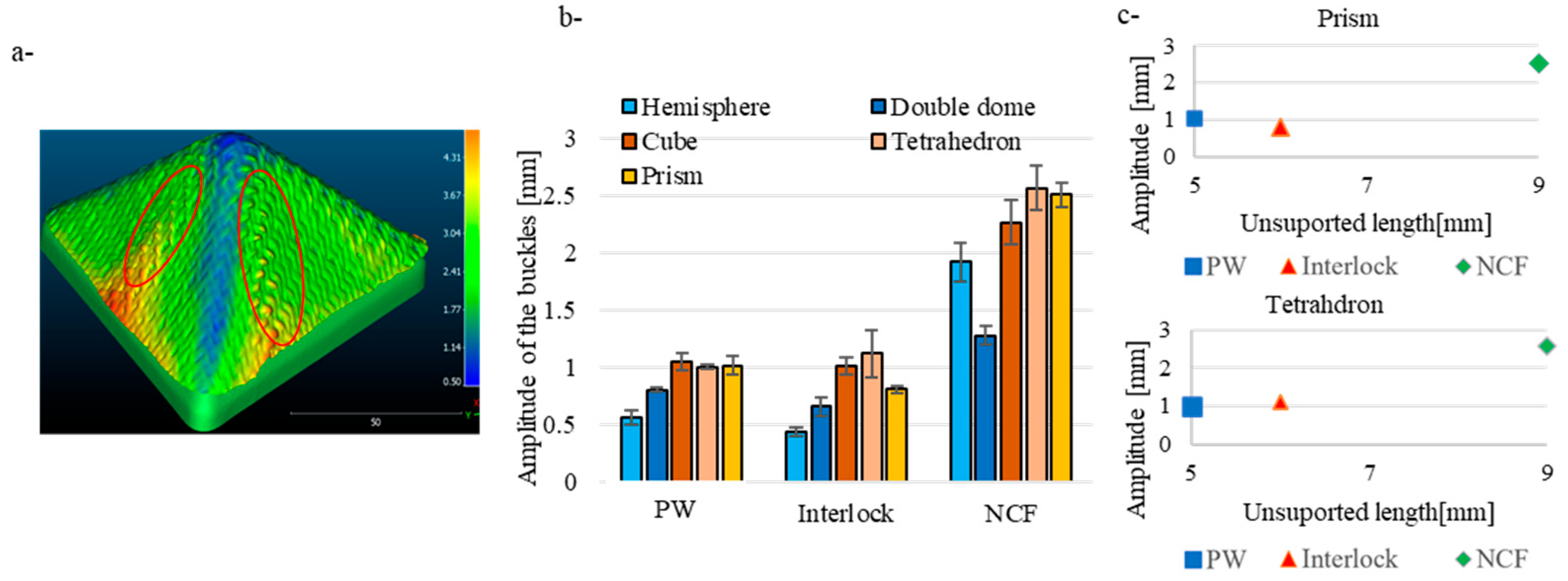
The second category of parameters, which measures the amplitude variation in the yarn’s curvature, indicates the nature of this defect. A scan was performed using a laser 3D scanner to reconstruct the outer surface of the preform (
Figure 15a). Subsequently, on the same reference, the preform was removed to scan the outer surface of the punch, and the distance was calculated by projecting the fabric surface onto the punch surface. A map illustrating the variation in the preform’s thickness is obtained (
Figure 15a). The results highlight the buckling zone, where the highest distances are observed.
The results shown in
Figure 15b illustrate the buckling amplitude for three types of fabrics classified into five geometries. The NCF fabric exhibited a higher buckling amplitude than the woven fabrics, ranging from 2 to 2.5 mm, while the plain weave and the Interlock had a range of 0.5 to 1.2 mm. Buckling behaviour largely depends on the material and structure of the yarns, and in this case, in-plane bending generated the compressive load that caused the buckling. The high buckling amplitude of the NCF can be attributed to the fabric meso-architecture. This is reflected in
Figure 15c, where the buckle amplitude is plotted as a function of the unsupported length of the yarn, which is the length of the free-floating section of the yarns where buckling is expected. [
44]. The results show a similar pattern to those of the other preforms for the prism and the tetrahedron. The figure clearly indicates that the buckle defect amplitude heavily depends on the yarn’s unsupported lengths. Concerning the effect of geometry, the only trend observed is that triple-point geometries produce higher amplitude buckles than the hemisphere or double dome.