Article

Research on Performance Improvement of Emulsified Asphalt Mixture Based on Innovative Forming Process

1
School of Highway, Chang’an University, Xi’an 710064, China
2
Ankang Transportation Investment Construction Co., Ltd., Ankang 725000, China
*
Author to whom correspondence should be addressed.
Materials 2024, 17(6), 1430; https://doi.org/10.3390/ma17061430
Submission received: 18 October 2023 / Revised: 7 February 2024 / Accepted: 28 February 2024 / Published: 21 March 2024
(This article belongs to the Special Issue Sustainable Materials and Structures Used in Pavement Engineering)

Abstract

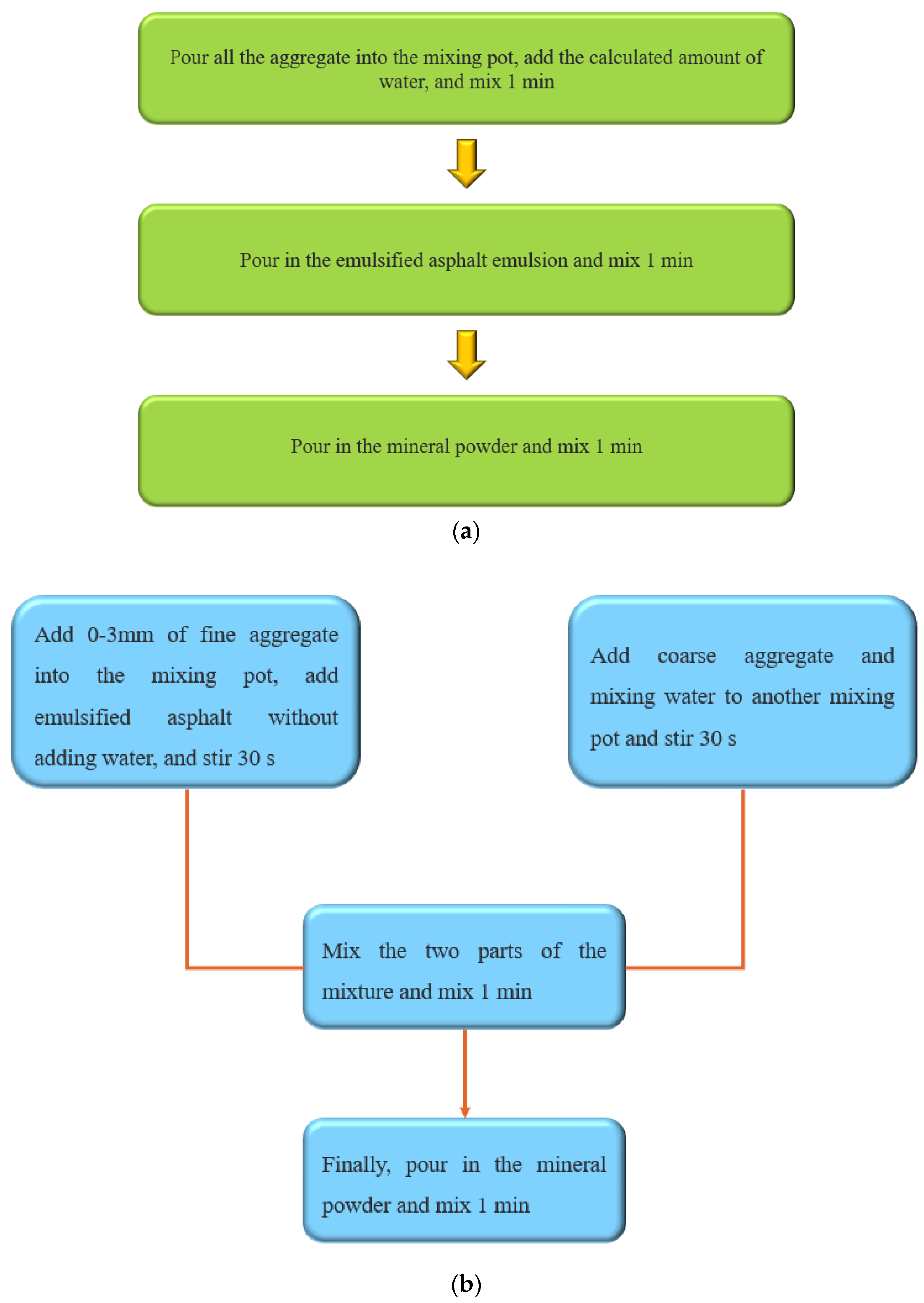
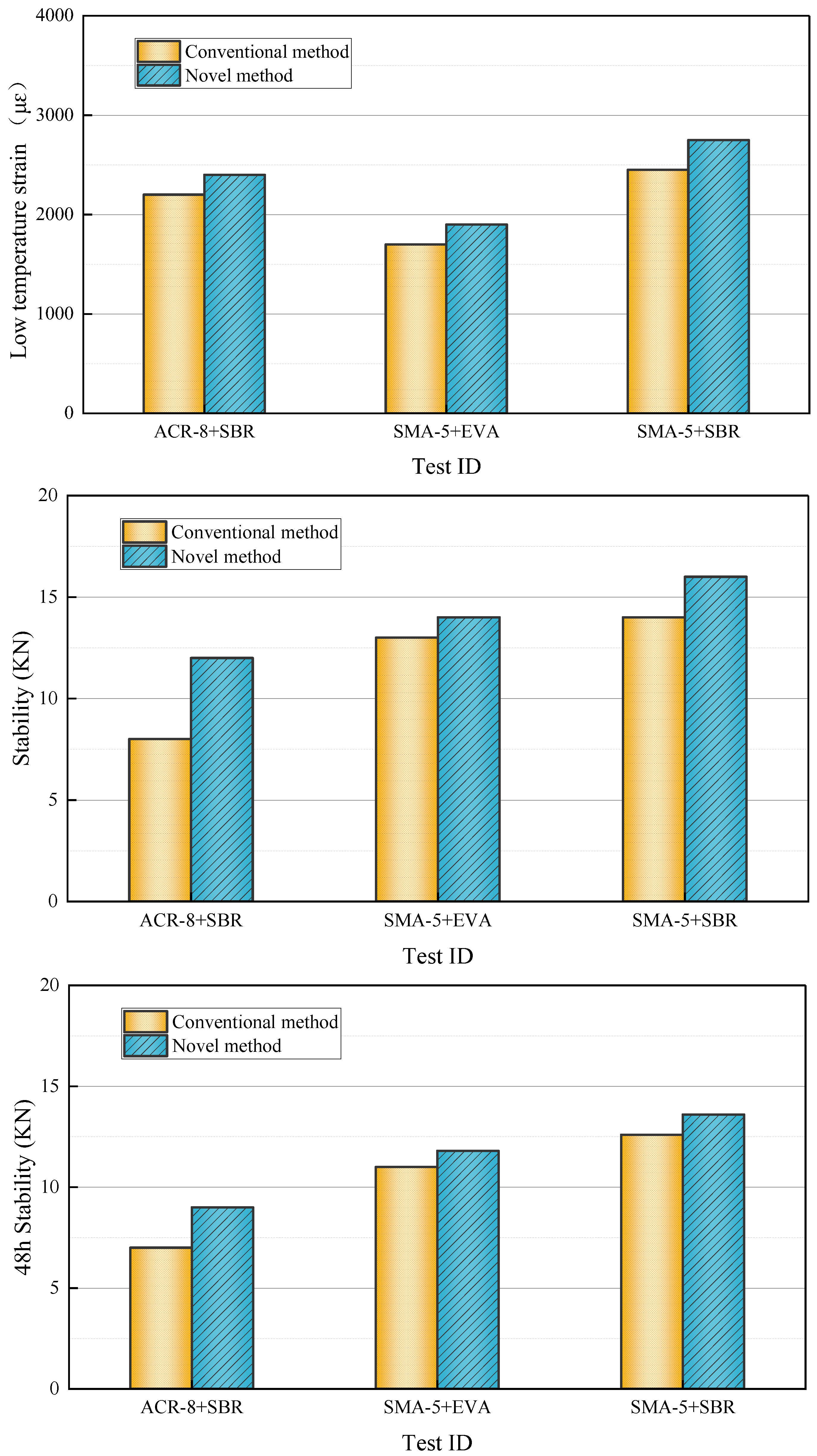
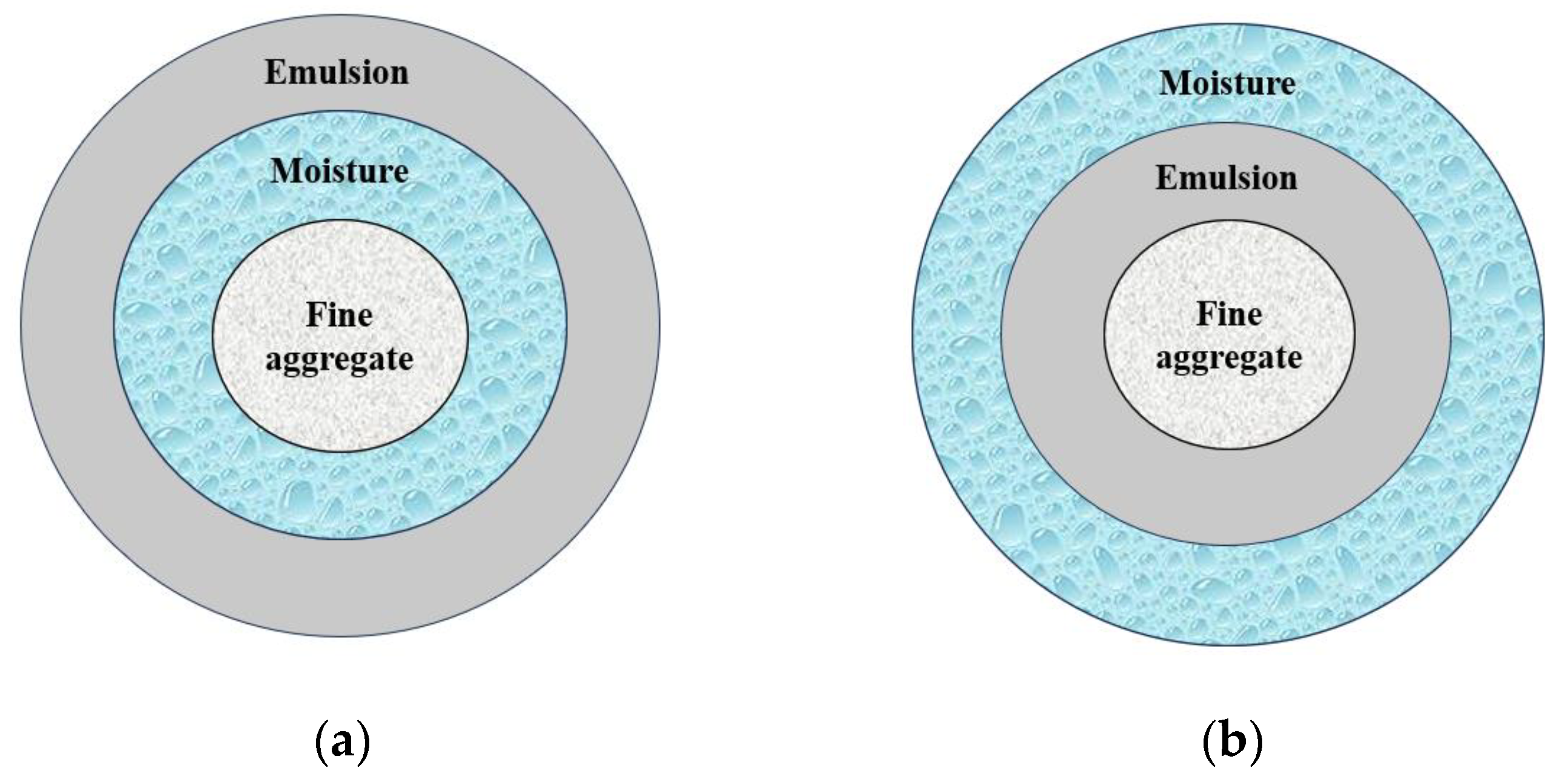
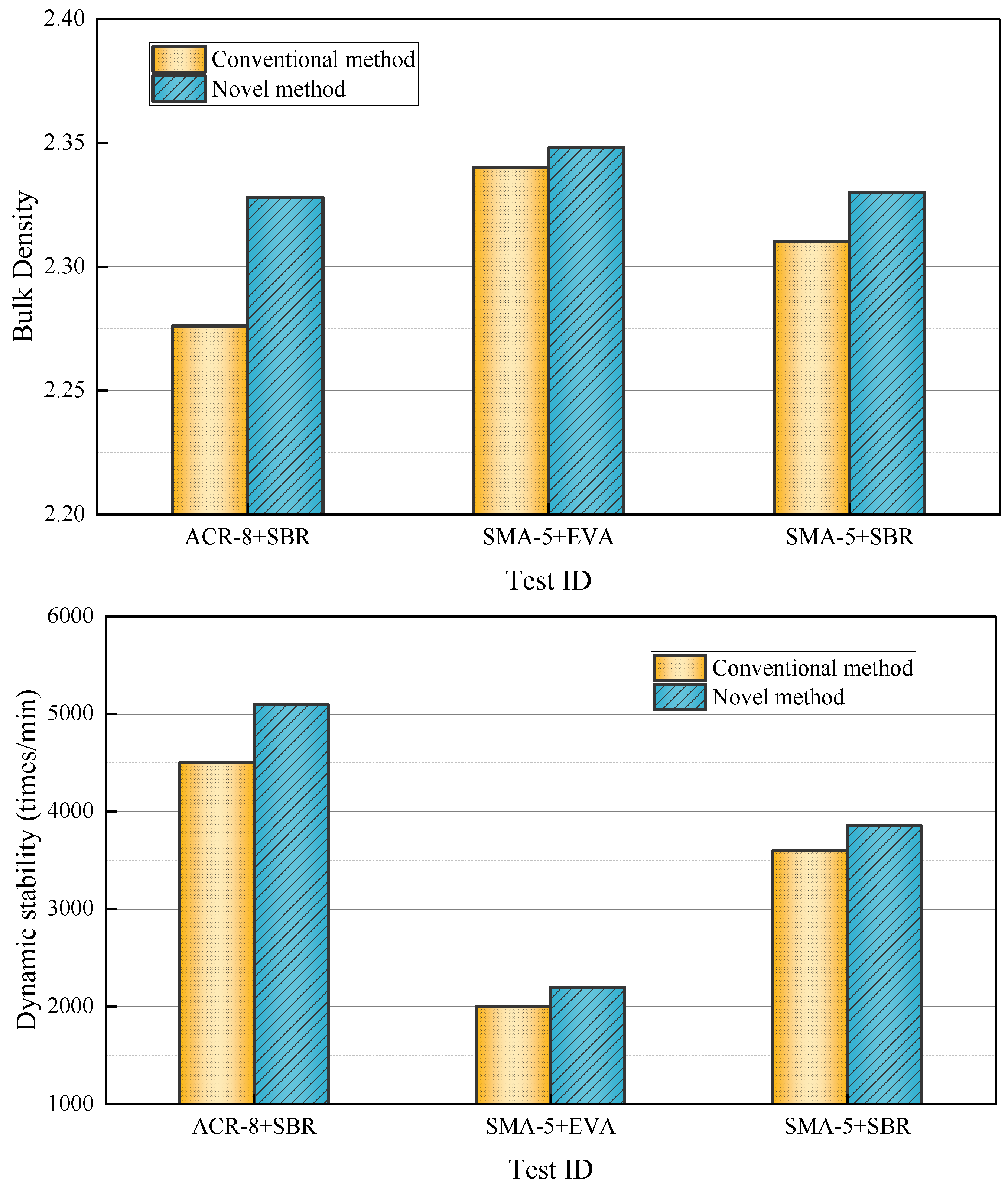
Bulk density and porosity have great influence on the technical performance of an emulsified asphalt mixture, so in order to enhance the strength of the asphalt mixture, bulk density should be improved and porosity should be reduced. Considering the forming process of the emulsified asphalt mixture, the decrease in porosity can ensure the state of the mixture. In order to reduce the porosity of the emulsified asphalt mixture, an innovative forming process is proposed to improve the performance of the emulsified asphalt mixture, and its strength formation mechanism is explored in this paper. Three groups of emulsified asphalt mixtures (ARC-8 + SBR, SMA-5 + EVA, SMA-5 + SBR) were prepared by a conventional mixing process and novel mixing process. Marshall test of the emulsified asphalt mixture, CT scanning test of the emulsified asphalt mixture, workability test and analysis were manufactured and tested. The results show that, compared with conventional methods, the innovative forming method can increase the bulk density of the mixture and reduce the porosity, and thus improve its technical performance. The reason is that most of the water in the mixture of the innovative forming method sticks to the outer surface of the fine aggregate, and the water is more easily discharged. Secondly, the fine aggregate of the innovative forming method is directly mixed with the emulsion, and the volume is smaller. The emulsion wraps the fine aggregate in it due to the surface tension, which enhances the adhesion effect, thus improving the strength of the mixture.
Keywords: pavement engineering; new mixing technology; adhesion; CT scanning; porosity; surface tension pavement engineering; new mixing technology; adhesion; CT scanning; porosity; surface tension