Article

Flexural Behavior of Damaged Hollow RC Box Girders Repaired with Prestressed CFRP
1
School of Civil Engineering and Transportation, South China University of Technology, Guangzhou 510640, China
2
Guangxi Transportation Science and Technology Group Co., Ltd., Nanning 530001, China
3
College of Civil Engineering and Architecture, Guangxi University, Nanning 530004, China
*
Author to whom correspondence should be addressed.
Materials 2023, 16(9), 3338; https://doi.org/10.3390/ma16093338

Submission received: 16 March 2023 / Revised: 14 April 2023 / Accepted: 18 April 2023 / Published: 24 April 2023
(This article belongs to the Topic Advanced Carbon Fiber Reinforced Composite Materials)

Abstract

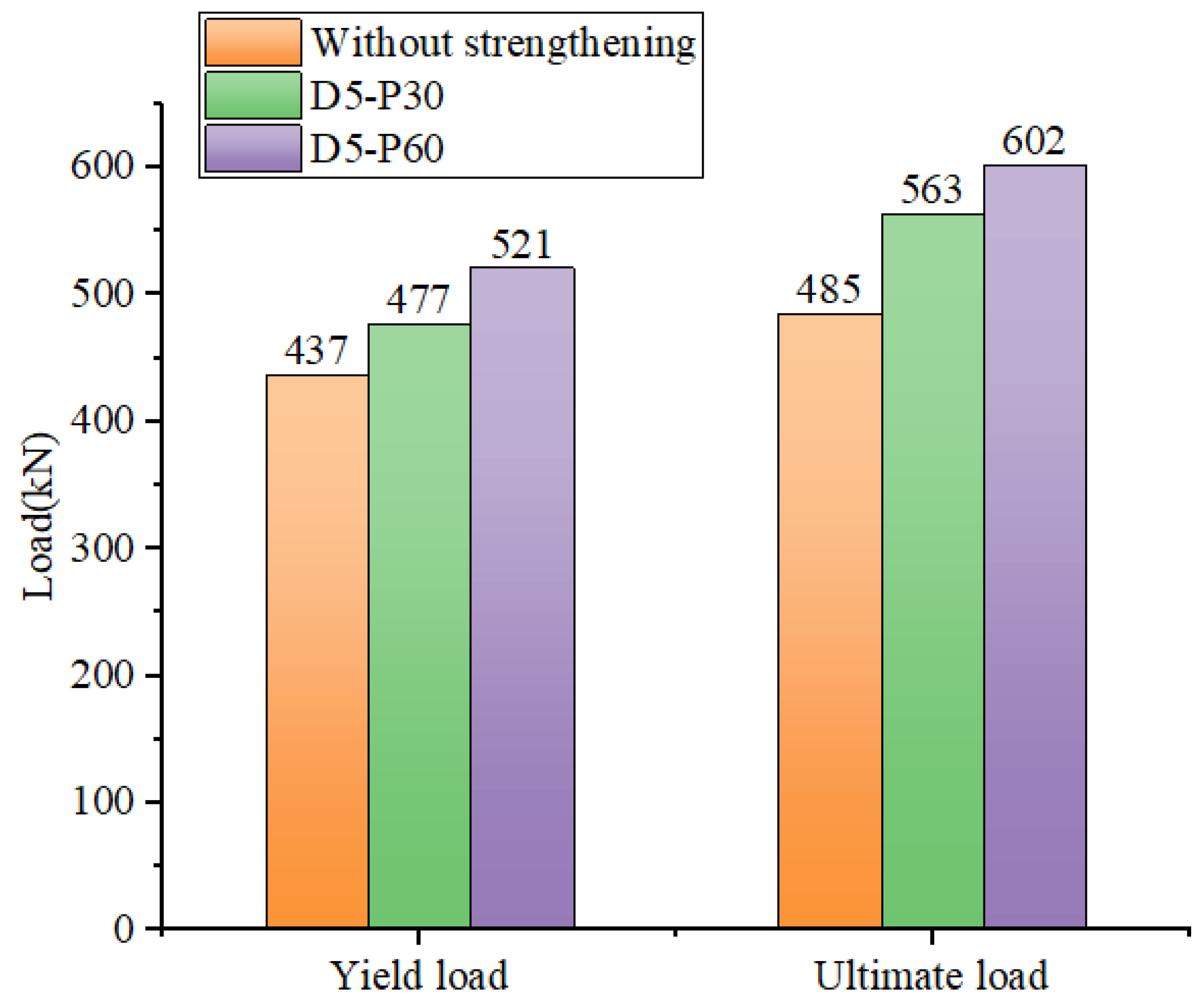
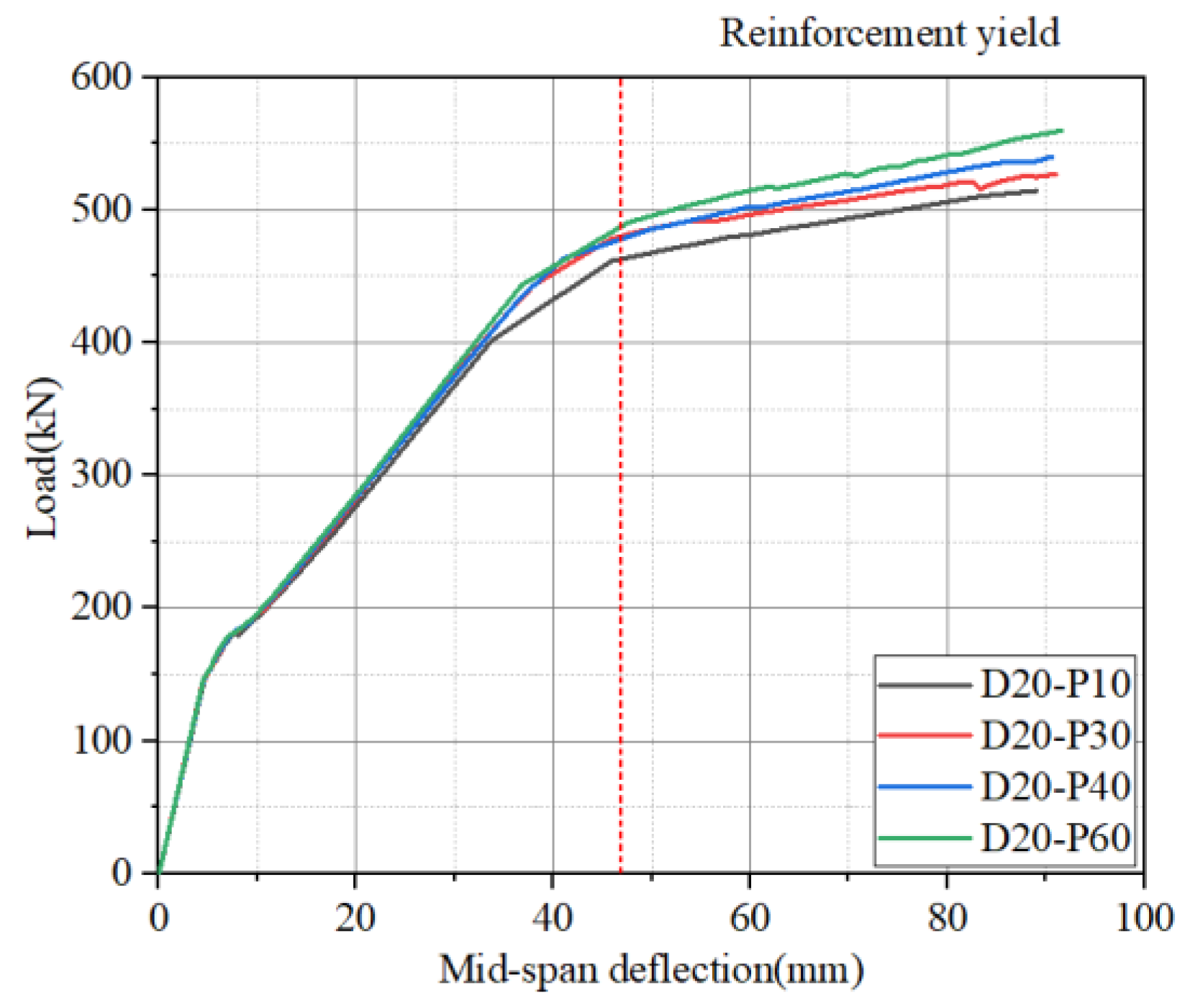
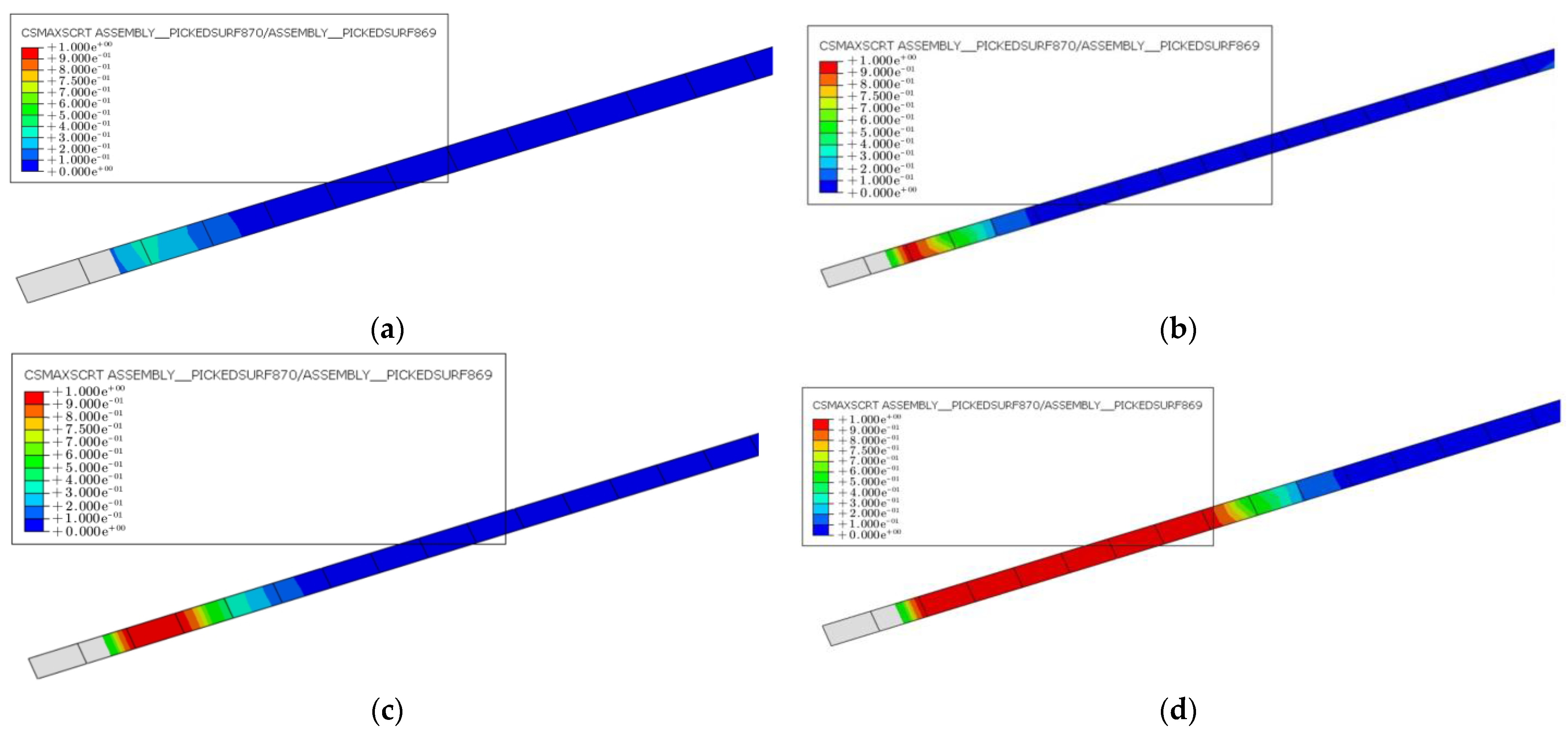
In recent years, numerous studies have explored the benefits of utilizing prestressed carbon fiber-reinforced polymer (CFRP) for strengthening concrete structures. However, research on the reinforcement of prestressed CFRP on full-scale hollow RC box girders, particularly damaged bridges, remains limited. In this study, both experiments and finite element analysis (FEA) were performed to investigate the flexural behavior of full-scale hollow RC box girders with varying degrees of damage, which were strengthened using CFRP with different levels of prestress. The adhesive behavior of the CFRP–concrete interface was considered in the FEA. Numerical simulations were conducted to assess the flexural behaviors of the girders, including failure modes, yield and ultimate loads, and deflections. The results revealed that the application of prestressed CFRP efficiently increased the yield and ultimate loads of the box girders. Specifically, when the degree of damage of the hollow box girder was less than 23%, the flexural bearing capacity of the repaired girder could be recovered after being strengthened with two prestressed CFRP strips measuring 50 mm in width and 3 mm in thickness. However, the risk of premature debonding at the CFRP–concrete interface increased when the prestressing level of CFRP and degree of damage of hollow RC box girders exceeded 35% and 40%, respectively. These findings suggest that the use of prestressed CFRP may be a promising method for repairing damaged hollow RC box girders, but careful consideration of the degree of damage and prestressing level would be necessary to ensure the effectiveness and safety of the repair.
Keywords: prestress; carbon fiber-reinforced polymer (CFRP); hollow RC box girders; damage; FEA prestress; carbon fiber-reinforced polymer (CFRP); hollow RC box girders; damage; FEA