Next Article in Journal
Effect of Through-the-Thickness Delamination Position on the R-Curve Behavior of Plain-Woven ENF Specimens
Previous Article in Journal
A Unit Compound Structure Design: Poisson’s Ratio Is Autonomously Adjustable from Negative to Positive
 
 
Correction published on 28 December 2023, see Materials 2024, 17(1), 169.
Article

The Stressing State Features of a Bottom Frame Structure Revealed from the Shaking Table Strain Data

1
Key Laboratory of Earthquake Engineering and Engineering Vibration, Institute of Engineering Mechanics, China Earthquake Administration, Harbin 150086, China
2
Key Laboratory of Earthquake Disaster Mitigation, Ministry of Emergency Management, Harbin 150086, China
3
School of Civil Engineering, Harbin Institute of Technology, Harbin 150090, China
4
Key Lab of Structures Dynamic Behavior and Control of China Ministry of Education, Harbin 150090, China
5
Key Lab of Smart Prevention and Mitigation of Civil Engineering Disasters of the Ministry of Industry and Information Technology, School of Civil Engineering, Harbin Institute of Technology, Harbin 150090, China
*
Authors to whom correspondence should be addressed.
These authors contributed equally to this work.
Materials 2023, 16(5), 1809; https://doi.org/10.3390/ma16051809
Submission received: 1 December 2022 / Revised: 30 January 2023 / Accepted: 6 February 2023 / Published: 22 February 2023 / Corrected: 28 December 2023

Abstract

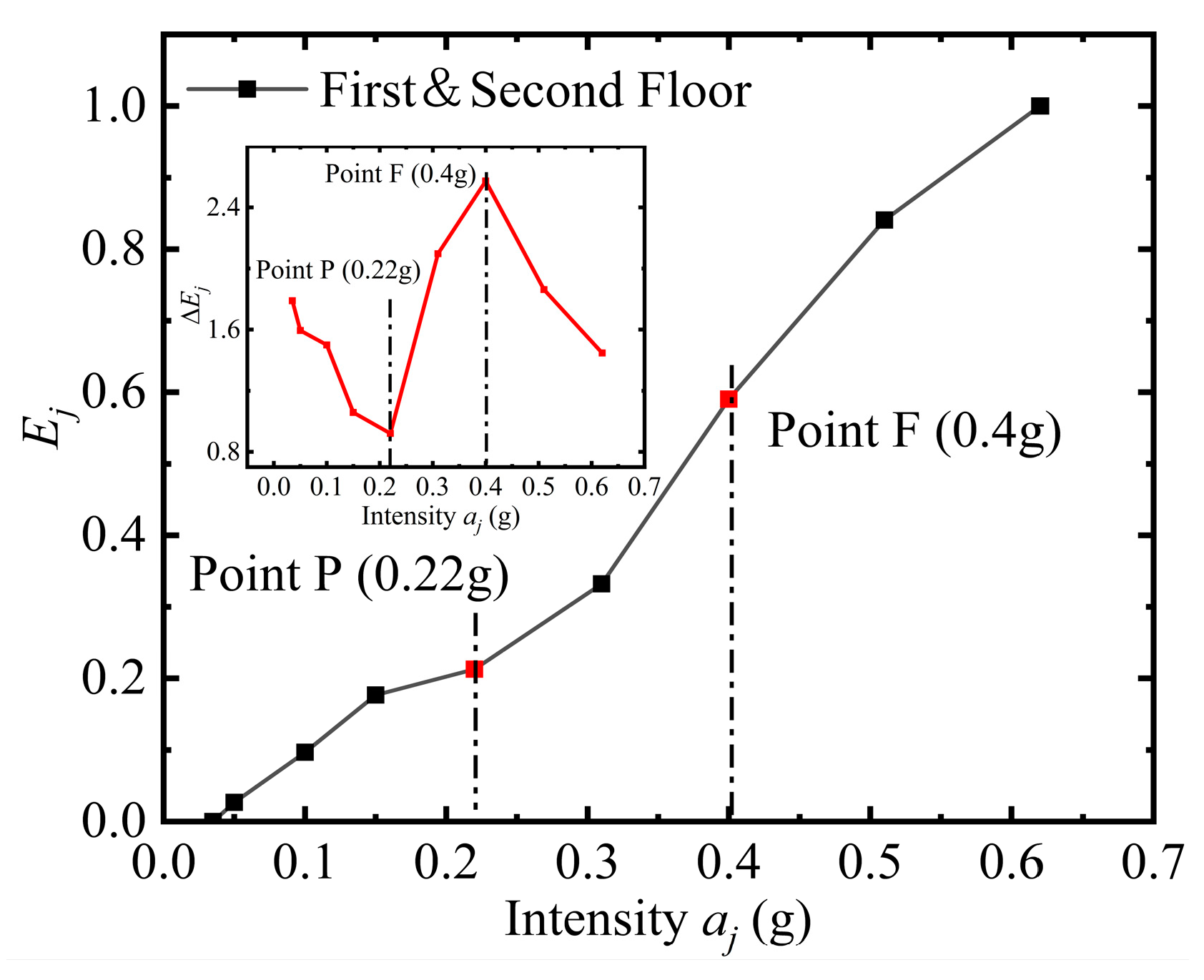
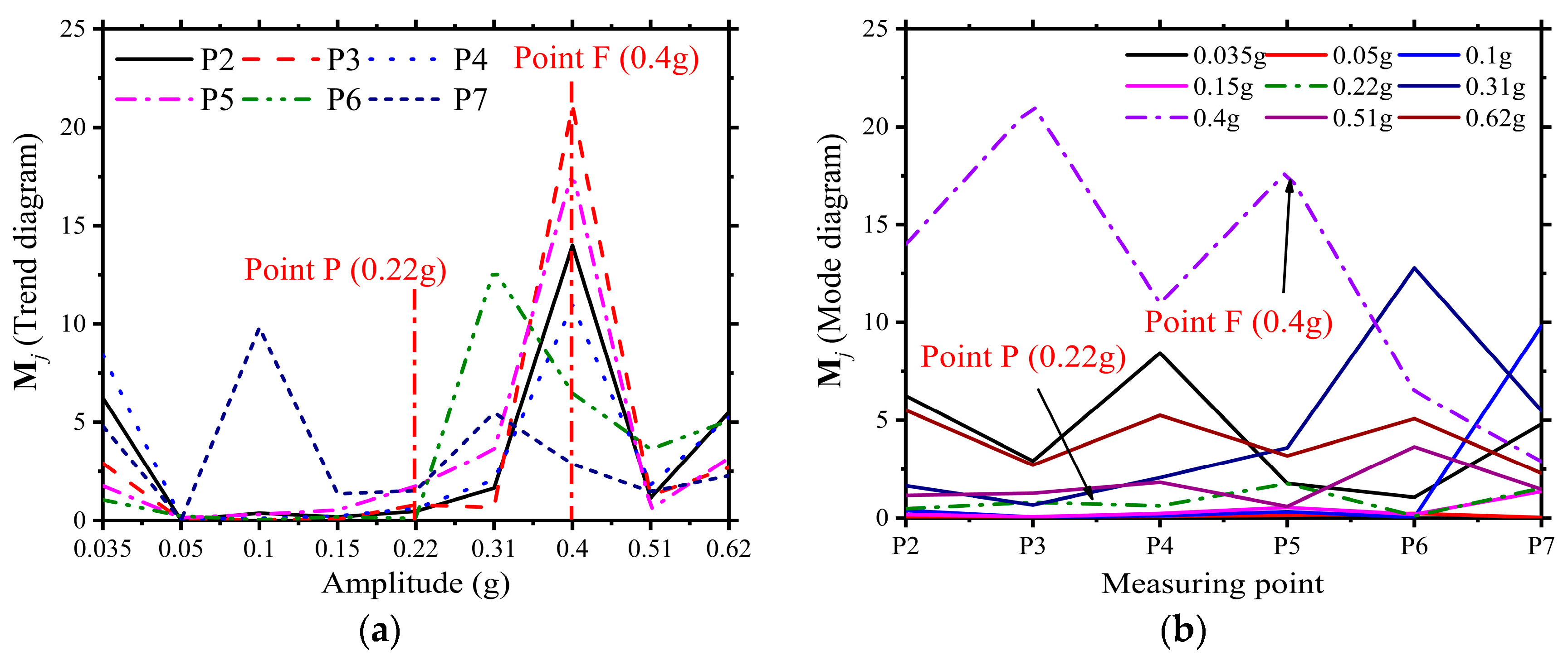
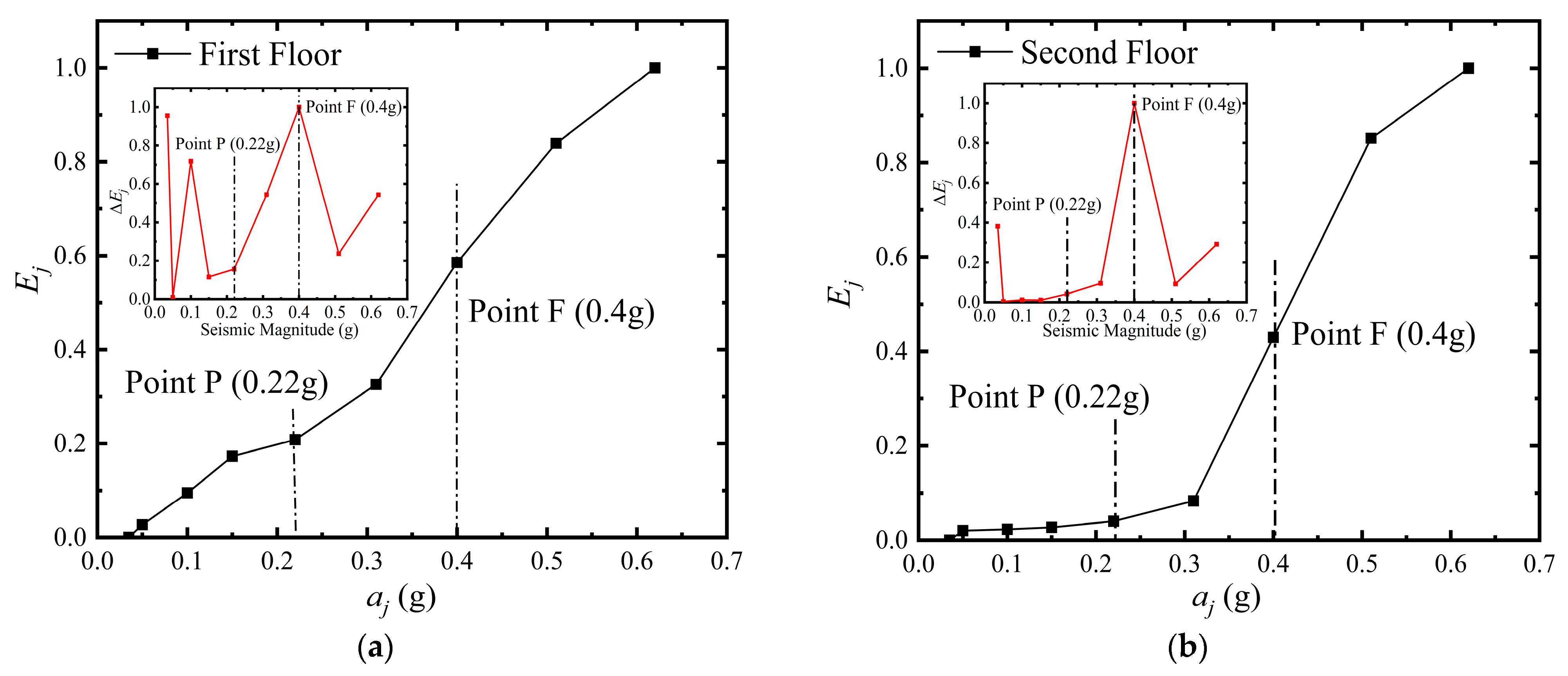
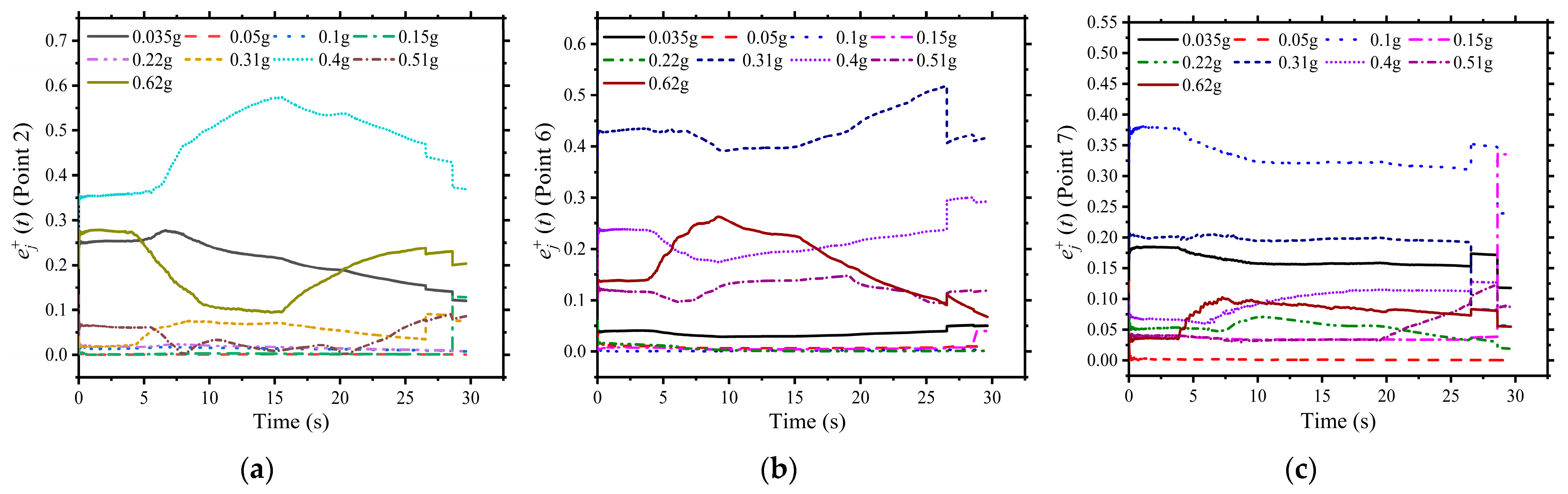
As a classic issue, structural seismic bearing capacity could not be accurately predicted since it was based on a structural ultimate state with inherent uncertainty. This result led to rare research efforts to discover structures’ general and definite working laws from their experimental data. This study is to reveal the seismic working law of a bottom frame structure from its shaking table strain data by applying structural stressing state theory: (1) The tested strains are transformed into generalized strain energy density (GSED) values. (2) The method is proposed to express the stressing state mode and the corresponding characteristic parameter. (3) According to the natural law of quantitative and qualitative change, the Mann–Kendall criterion detects the mutation feature in the evolution of characteristic parameters versus seismic intensity. Moreover, it is verified that the stressing state mode also presents the corresponding mutation feature, which reveals the starting point in the seismic failure process of the bottom frame structure. (4) The Mann–Kendall criterion distinguishes the elastic–plastic branch (EPB) feature in the bottom frame structure’s normal working process, which could be taken as the design reference. This study presents a new theoretical basis to determine the bottom frame structure’s seismic working law and update the design code. Meanwhile, this study opens up the application of seismic strain data in structural analysis.
Keywords: bottom frame structure; strain; seismic; stressing state; mutation; failure load bottom frame structure; strain; seismic; stressing state; mutation; failure load