Article

Evolution of Statistical Strength during the Contact of Amorphous Polymer Specimens below the Glass Transition Temperature: Influence of Chain Length


Laboratory of Physics of Strength, Ioffe Institute, 26 Politekhnicheskaya Str., 194021 St. Petersburg, Russia
Materials 2023, 16(2), 491; https://doi.org/10.3390/ma16020491
Submission received: 2 December 2022 / Revised: 26 December 2022 / Accepted: 30 December 2022 / Published: 4 January 2023
(This article belongs to the Special Issue Advanced Polymeric Materials: Synthesis, Properties, and Applications)

Abstract

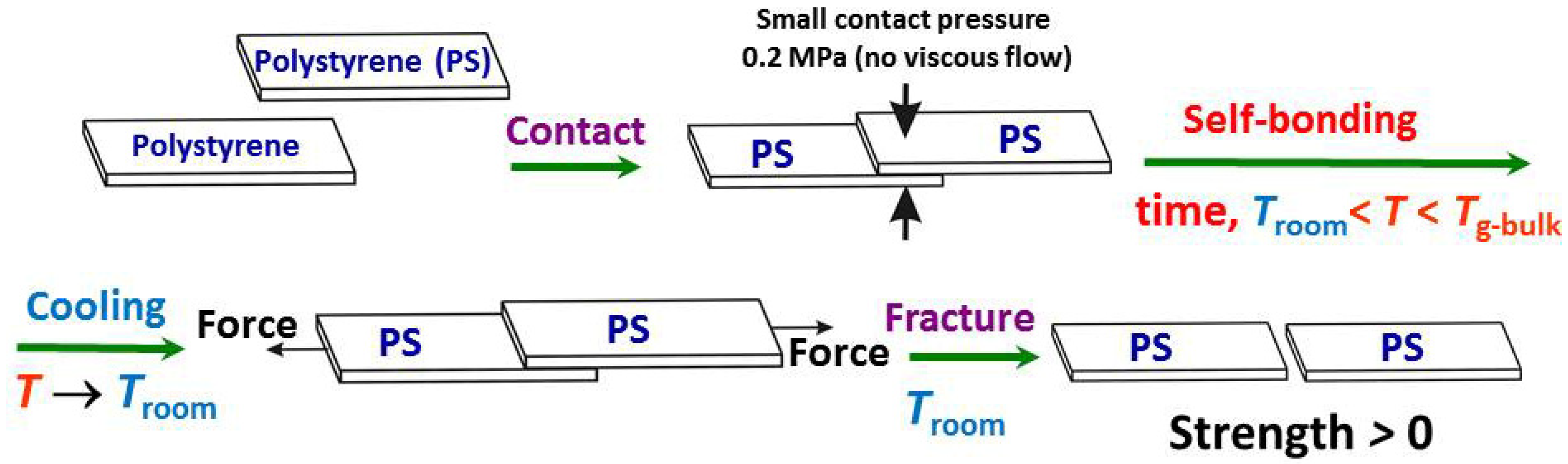
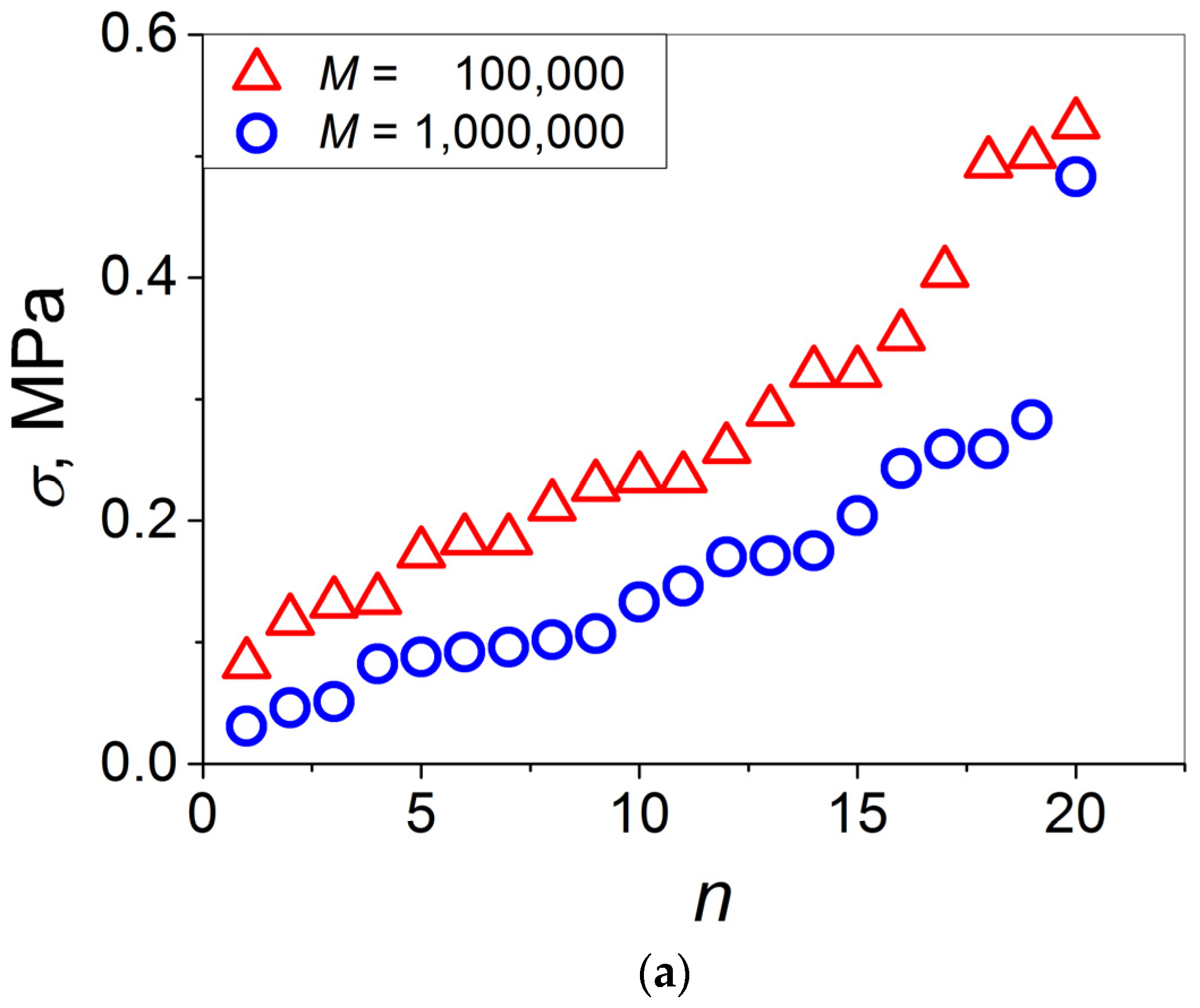
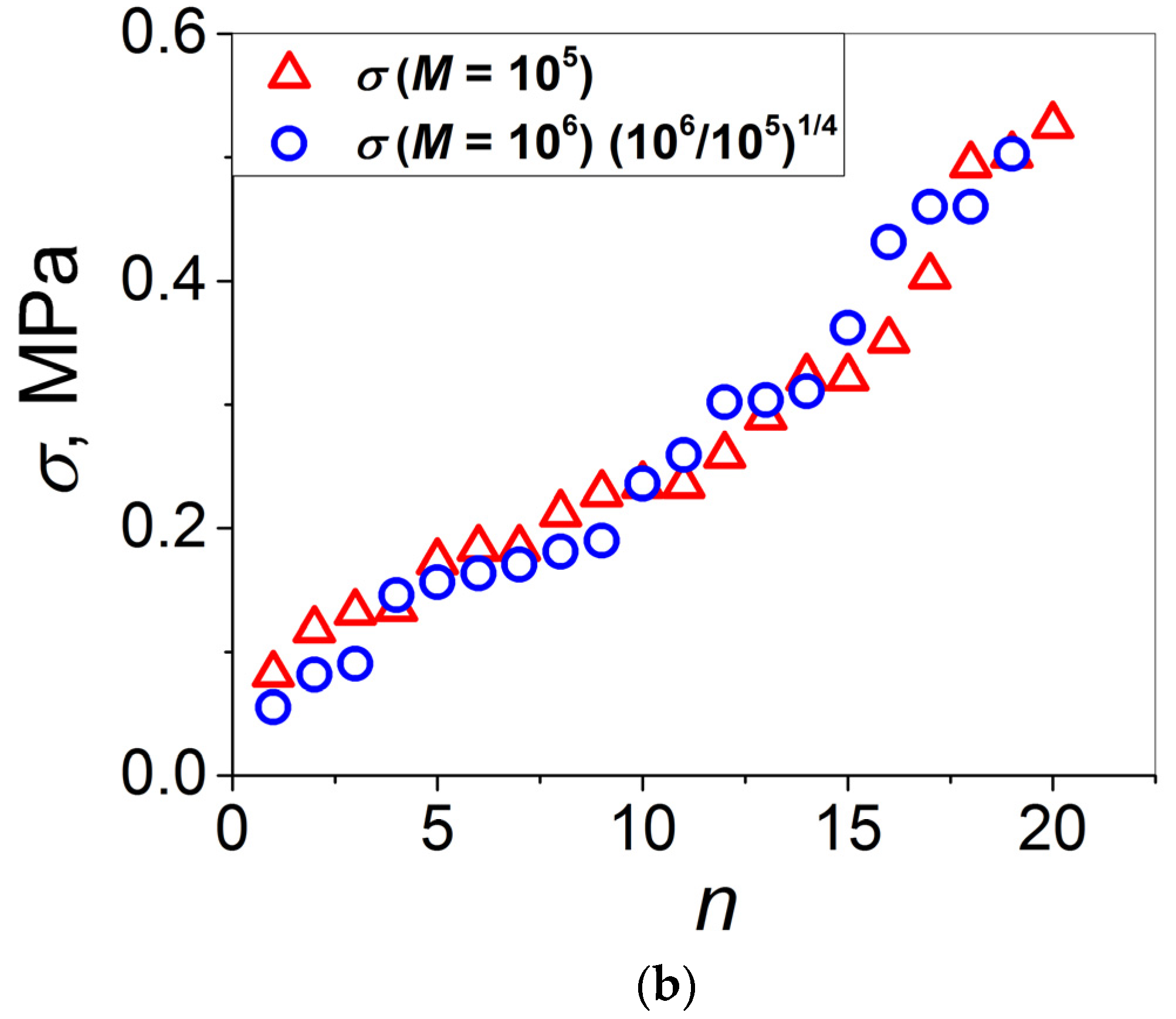
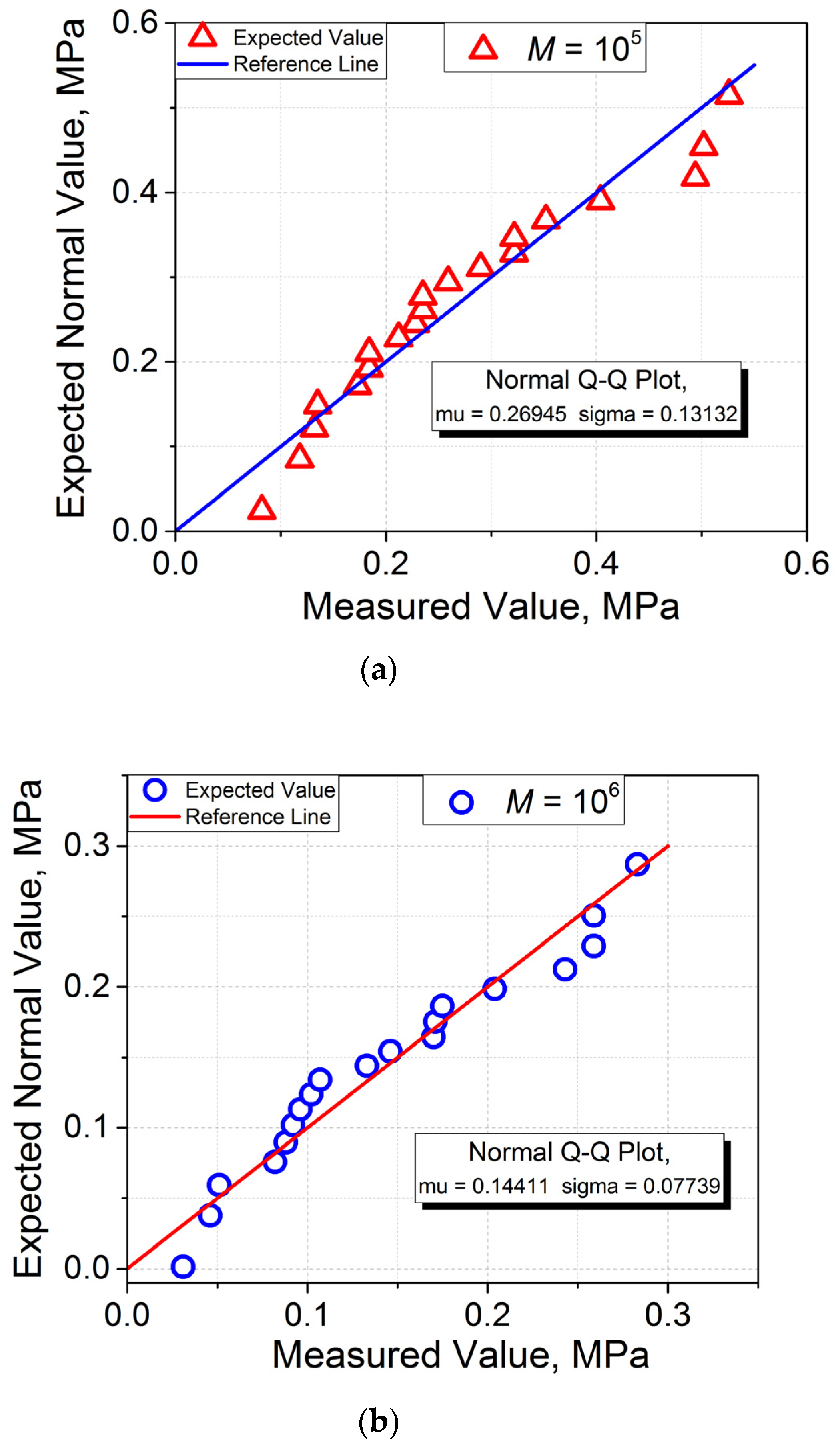
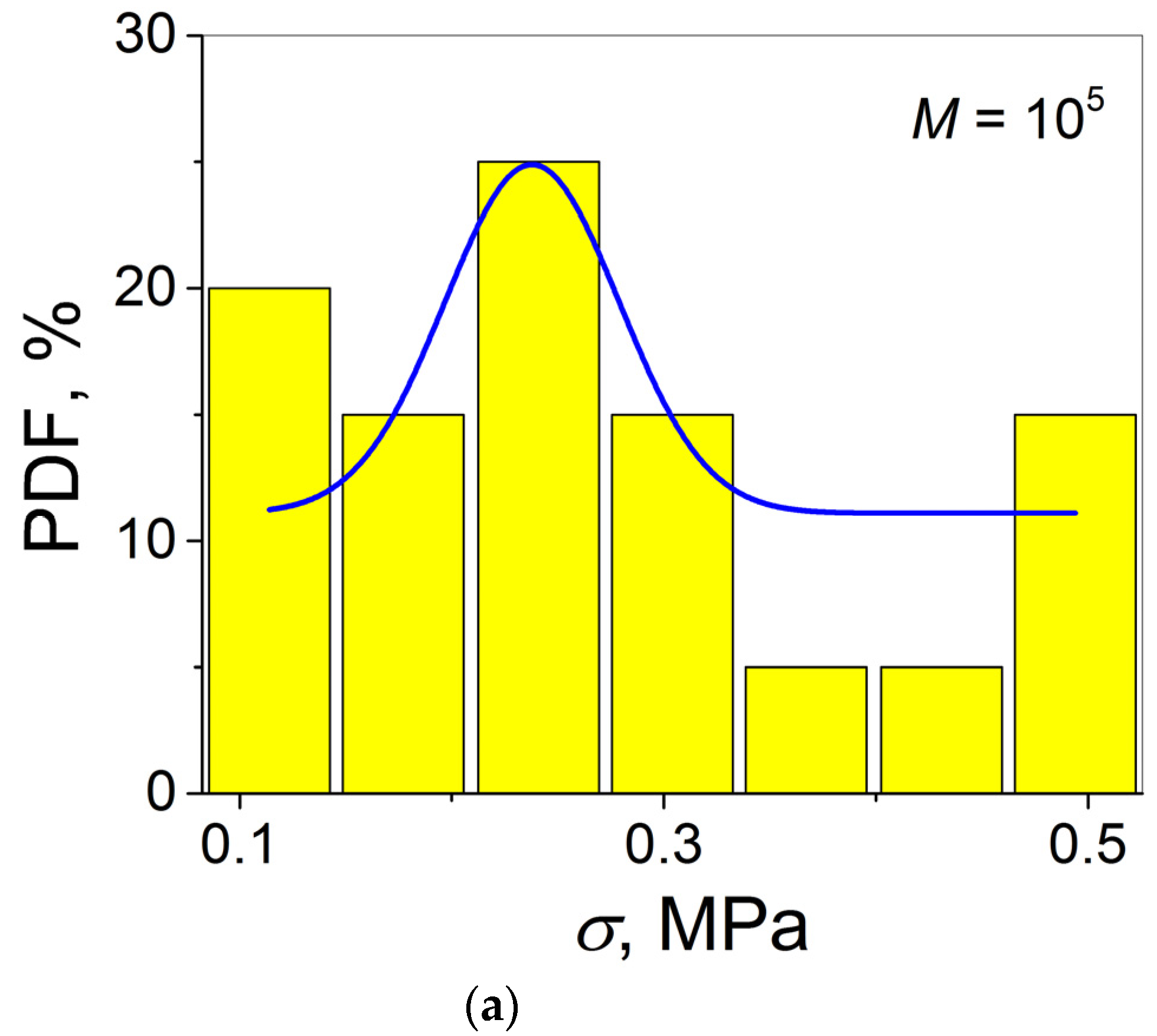
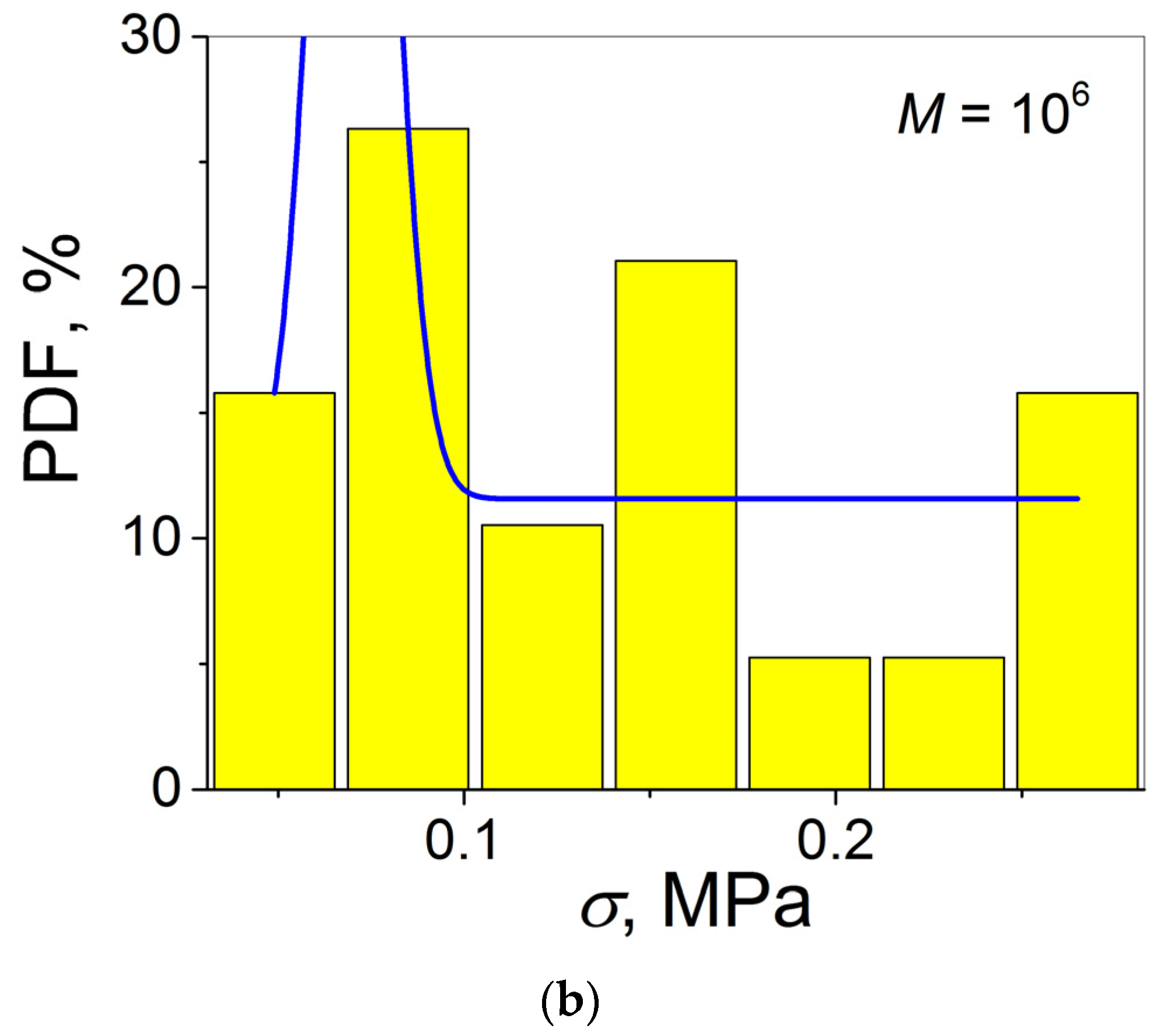
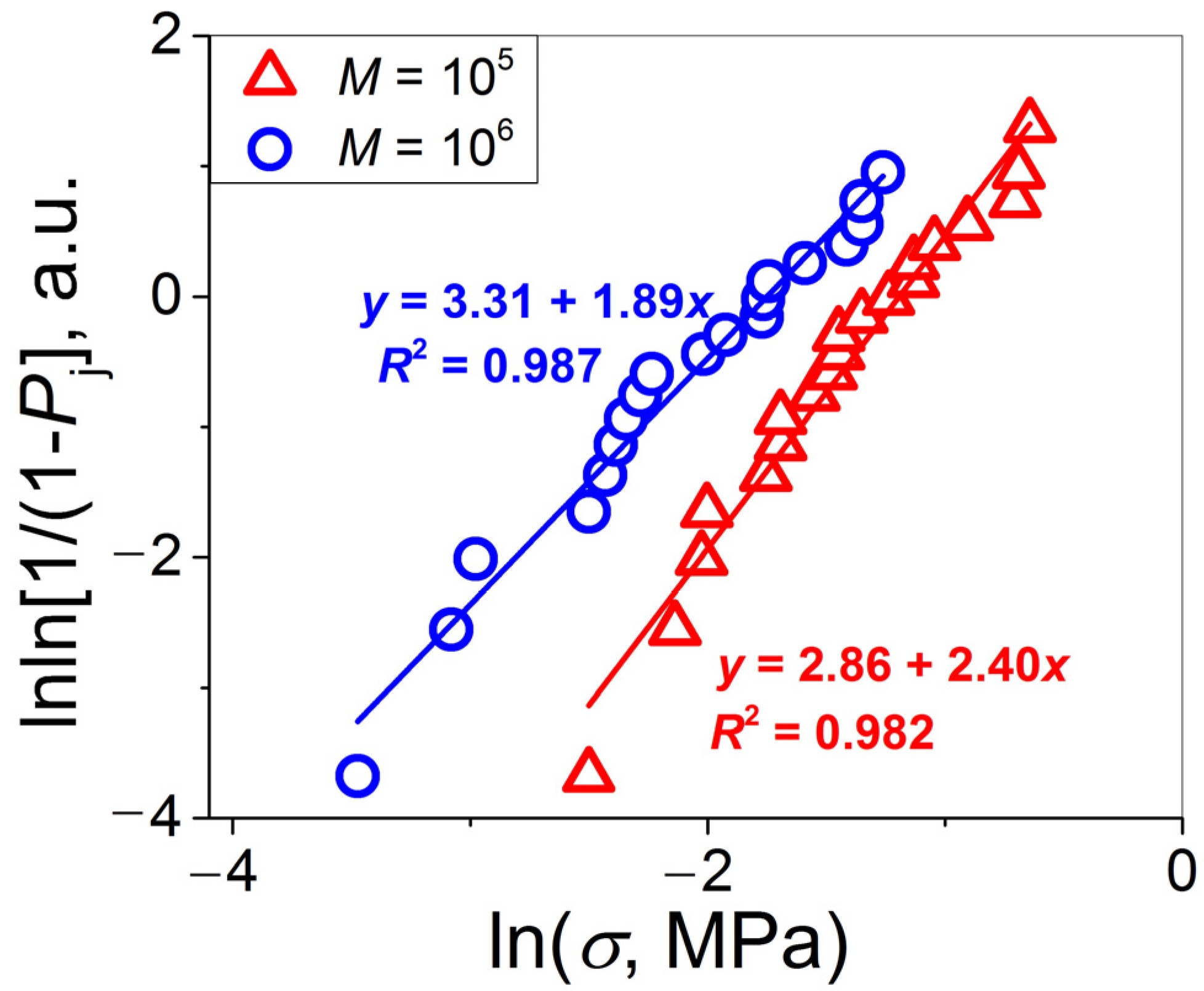
A comprehensive study of the statistical distribution of the auto-adhesion lap-shear strength (σ) of amorphous polymer–polymer interfaces using various types of statistical tests and models is a useful approach aimed at a better understanding of the mechanisms of the self-healing interface. In the present work, this approach has been applied, for the first time, to a temperature (T) range below the bulk glass transition temperature (Tgbulk). The interest of this T range consists in a very limited or even frozen translational segmental motion giving little or no chance for adhesion to occur. To clarify this issue, the two identical samples of entangled amorphous polystyrene (PS) with a molecular weight (M) of 105 g/mol or 106 g/mol were kept in contact at T = Tgbulk − 33 °C for one day. The as-self-bonded PS–PS auto-adhesive joints (AJ) of PSs differing in M by an order of magnitude were fractured at ambient temperature, and their σ distributions were analyzed using the Weibull model, the quantile-quantile plots, the normality tests, and the Gaussian distribution. It has been shown that the Weibull model most correctly describes the σ statistical distributions of the two self-bonded PS–PS AJs with different M due to the joints’ brittleness. The values of the Weibull modulus (a statistical parameter) m = 2.40 and 1.89 calculated for PSs with M = 105 and 106 g/mol, respectively, were rather close, indicating that the chain length has a minor effect on the σ data scatter. The Gaussian distribution has been found to be less appropriate for this purpose, though all the normality tests performed have predicted the correctness of the normal distribution for these PS–PS interfaces.
Keywords: amorphous polystyrene; contact; auto-adhesion strength; statistics; molecular weight amorphous polystyrene; contact; auto-adhesion strength; statistics; molecular weight