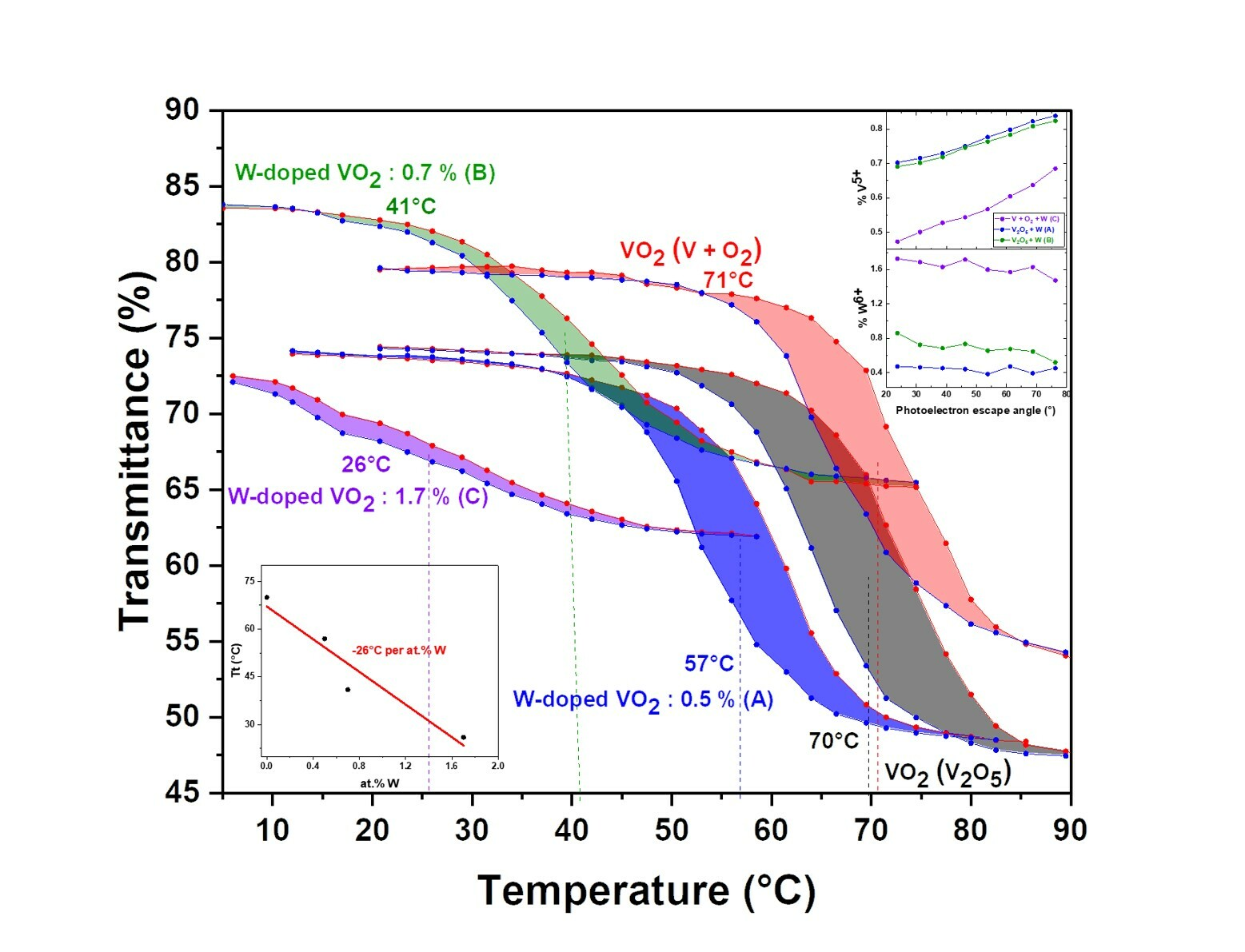
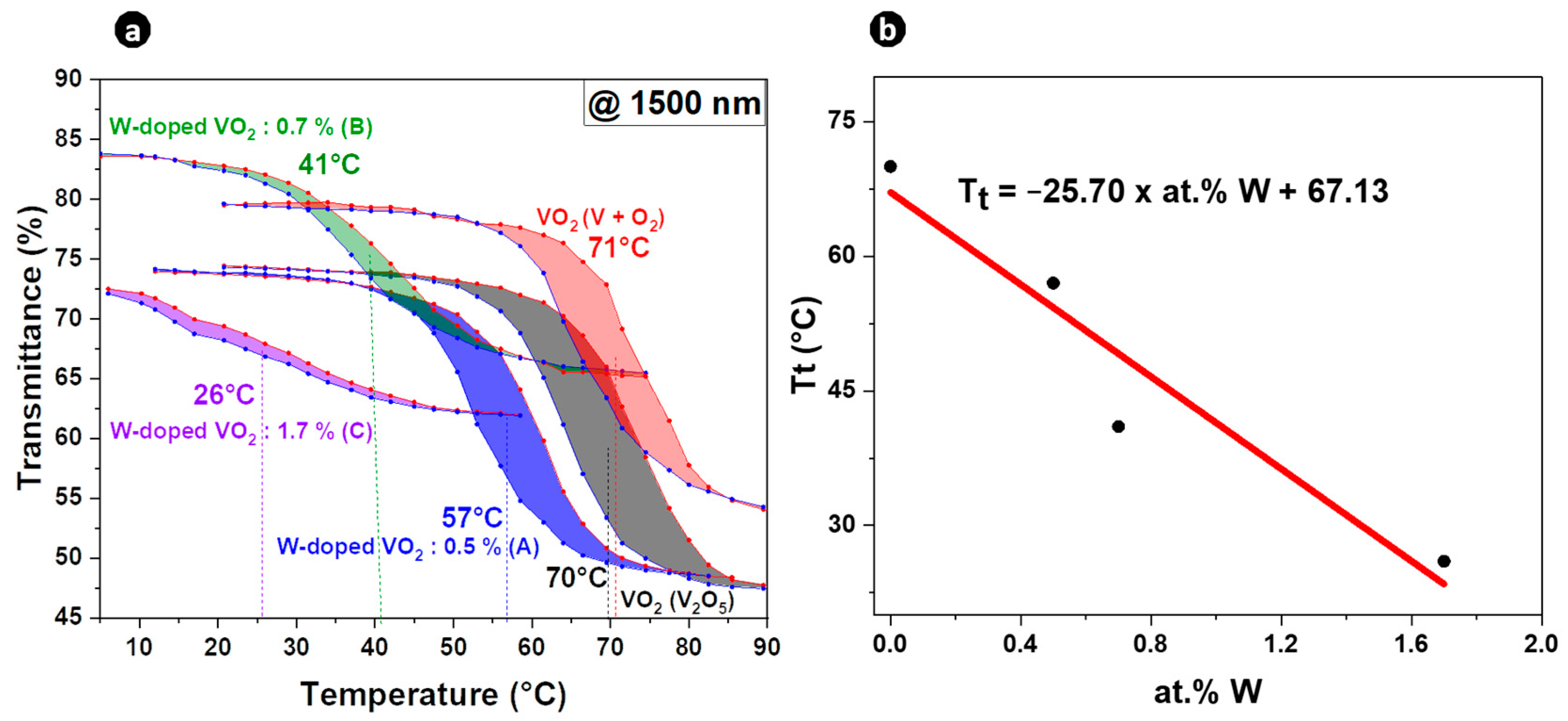
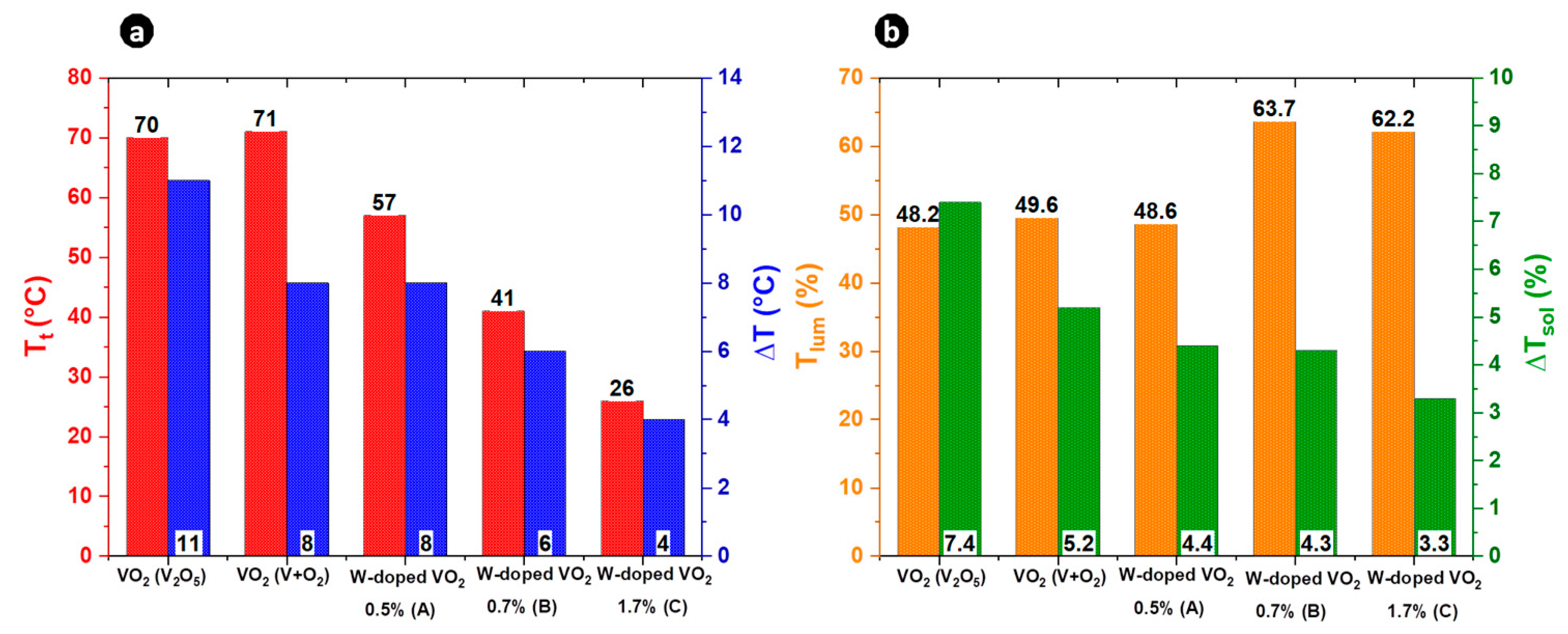
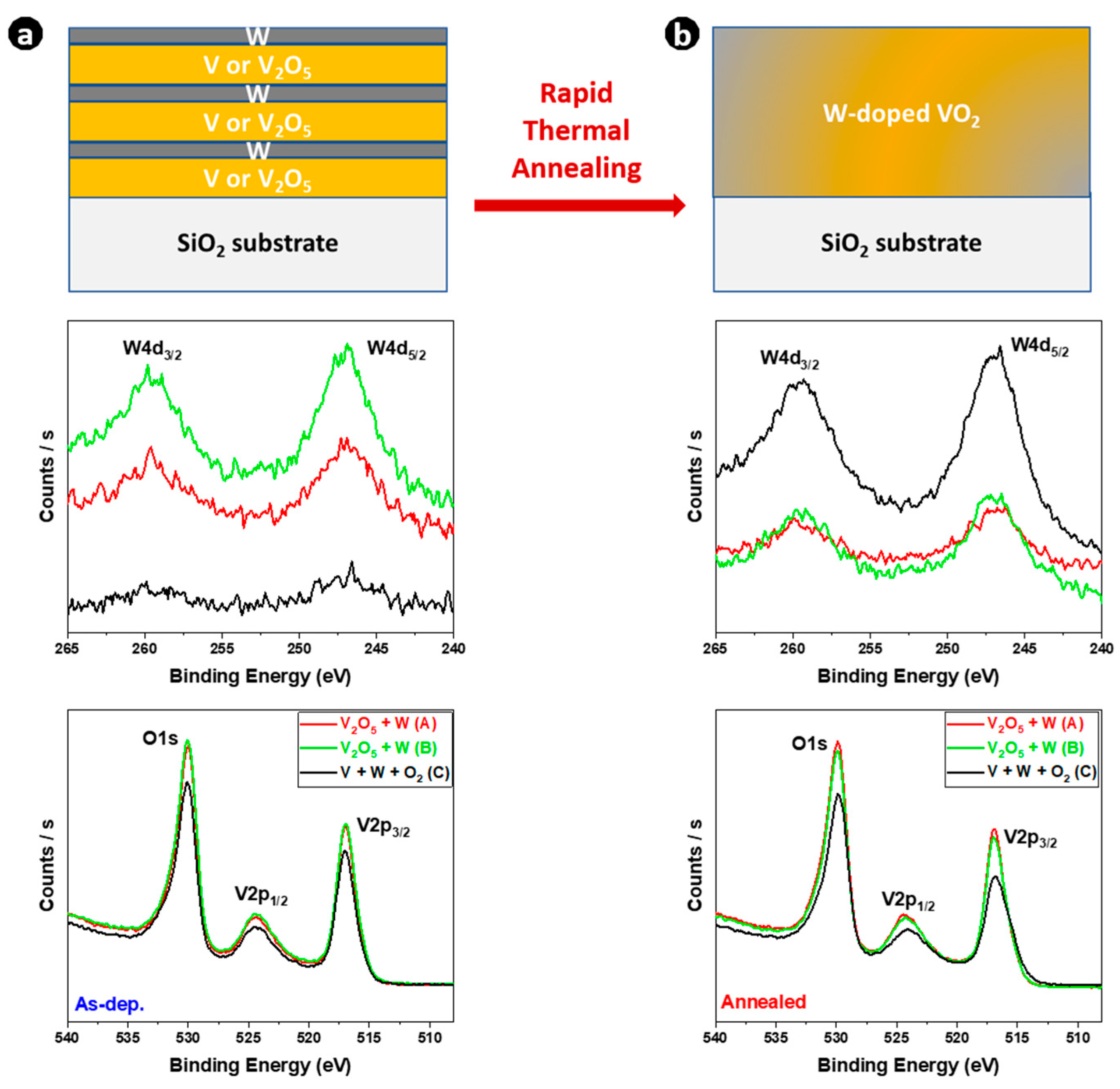
Towards Room Temperature Phase Transition of W-Doped VO2 Thin Films Deposited by Pulsed Laser Deposition: Thermochromic, Surface, and Structural Analysis

 , , , and
Abstract
Share and Cite
Bleu, Y.; Bourquard, F.; Barnier, V.; Loir, A.-S.; Garrelie, F.; Donnet, C. Towards Room Temperature Phase Transition of W-Doped VO2 Thin Films Deposited by Pulsed Laser Deposition: Thermochromic, Surface, and Structural Analysis. Materials 2023, 16, 461. https://doi.org/10.3390/ma16010461
Bleu Y, Bourquard F, Barnier V, Loir A-S, Garrelie F, Donnet C. Towards Room Temperature Phase Transition of W-Doped VO2 Thin Films Deposited by Pulsed Laser Deposition: Thermochromic, Surface, and Structural Analysis. Materials. 2023; 16(1):461. https://doi.org/10.3390/ma16010461
Chicago/Turabian StyleBleu, Yannick, Florent Bourquard, Vincent Barnier, Anne-Sophie Loir, Florence Garrelie, and Christophe Donnet. 2023. "Towards Room Temperature Phase Transition of W-Doped VO2 Thin Films Deposited by Pulsed Laser Deposition: Thermochromic, Surface, and Structural Analysis" Materials 16, no. 1: 461. https://doi.org/10.3390/ma16010461
APA StyleBleu, Y., Bourquard, F., Barnier, V., Loir, A.-S., Garrelie, F., & Donnet, C. (2023). Towards Room Temperature Phase Transition of W-Doped VO2 Thin Films Deposited by Pulsed Laser Deposition: Thermochromic, Surface, and Structural Analysis. Materials, 16(1), 461. https://doi.org/10.3390/ma16010461