Article

Effect of Vacuum Heat Treatment on the Element Diffusion Behavior and Corrosion Resistance of Al2O3-3wt.%TiO2 Coating of Q235 Steel

1
Key Laborotary of Research and Application of Multiple Hard Films, Shenyang University, Shenyang 110044, China
2
Northwest Institute for Nonferrous Metal Research, Shaanxi Key Laboratory of Biomedical Metal Materials, Xi’an 710016, China
3
State Key Laboratory of Powder Metallurgy, Central South University, Changsha 410083, China
*
Authors to whom correspondence should be addressed.
Materials 2022, 15(3), 848; https://doi.org/10.3390/ma15030848
Submission received: 16 December 2021 / Revised: 13 January 2022 / Accepted: 21 January 2022 / Published: 23 January 2022
(This article belongs to the Topic Metallurgical and Materials Engineering)

Abstract

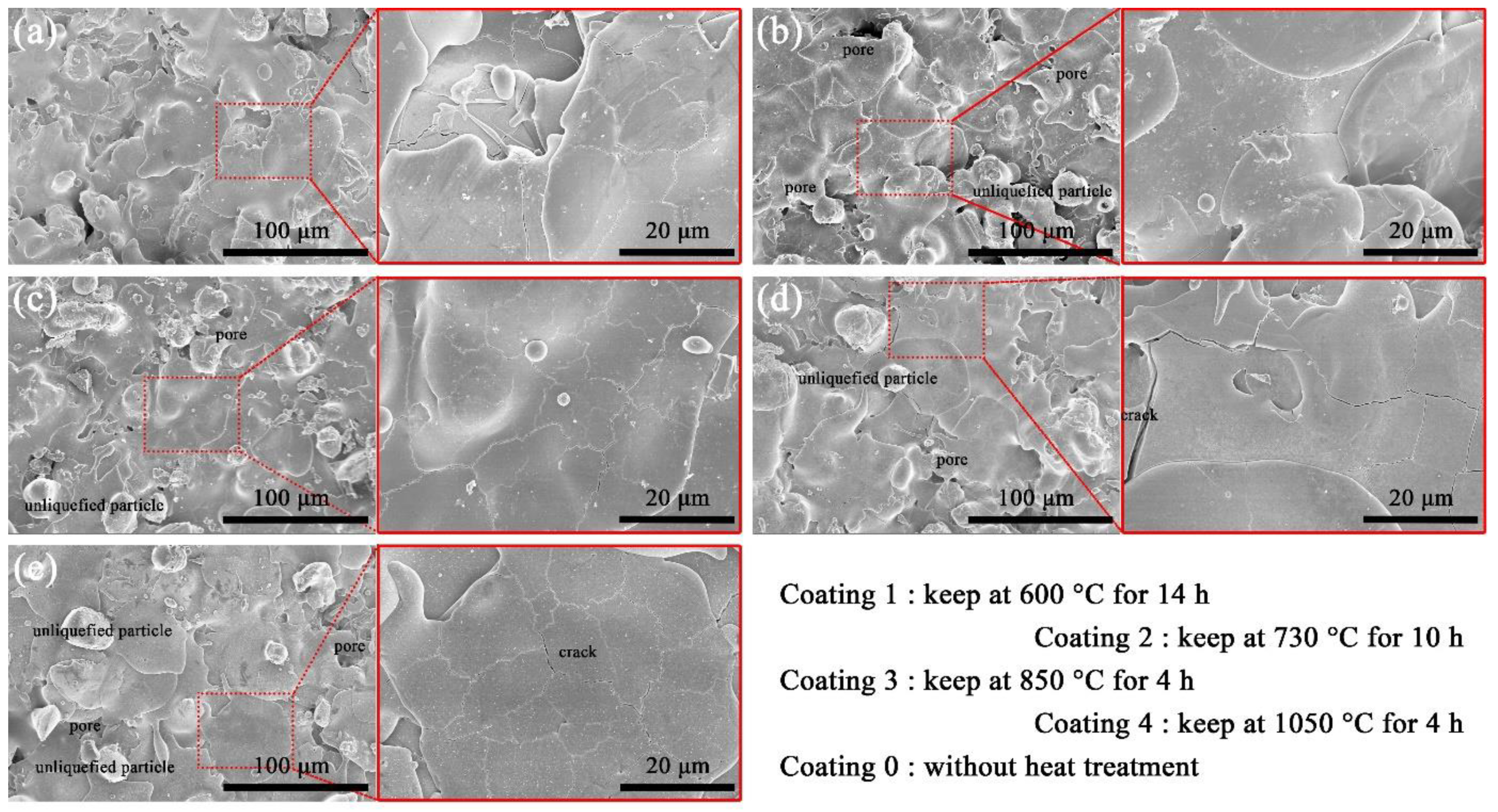
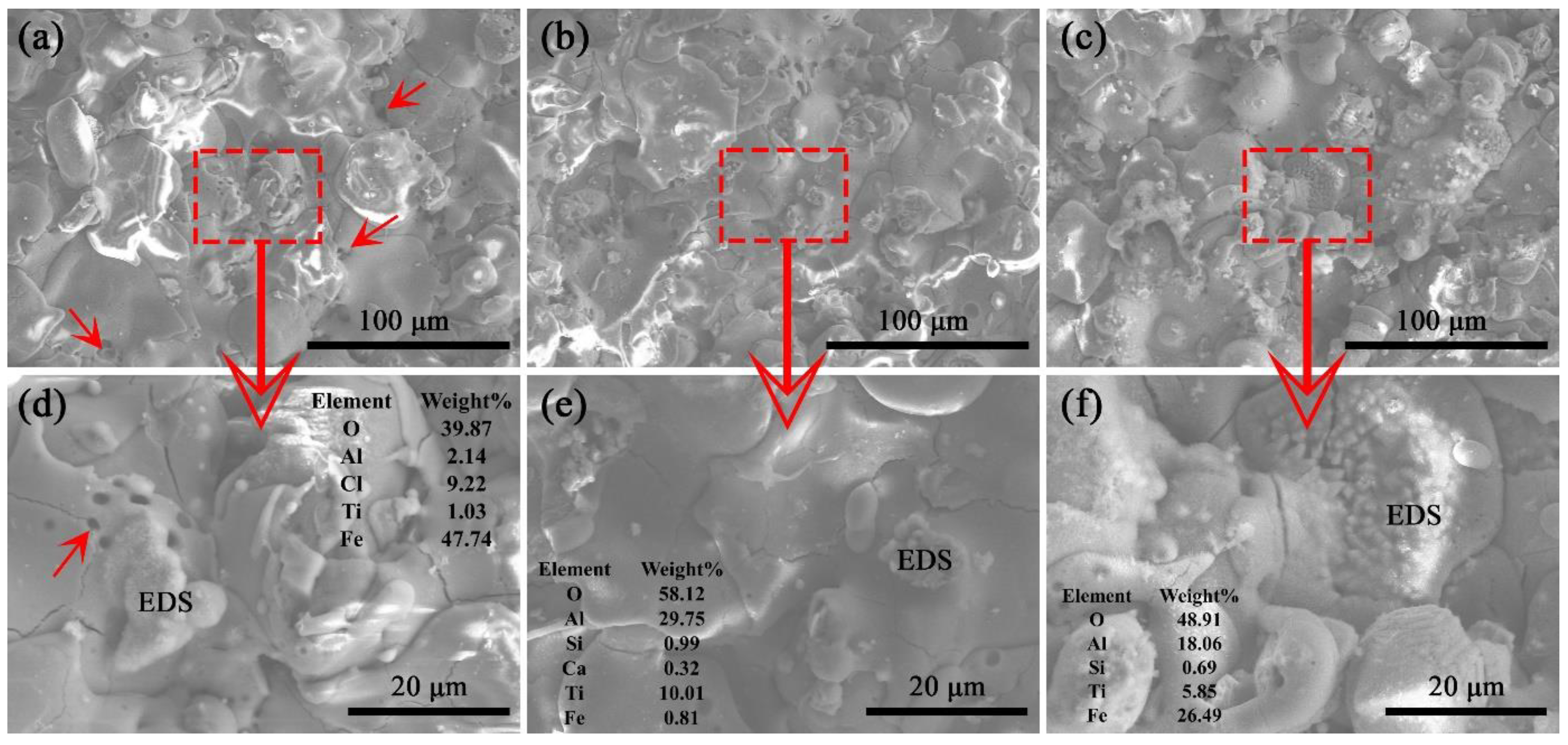
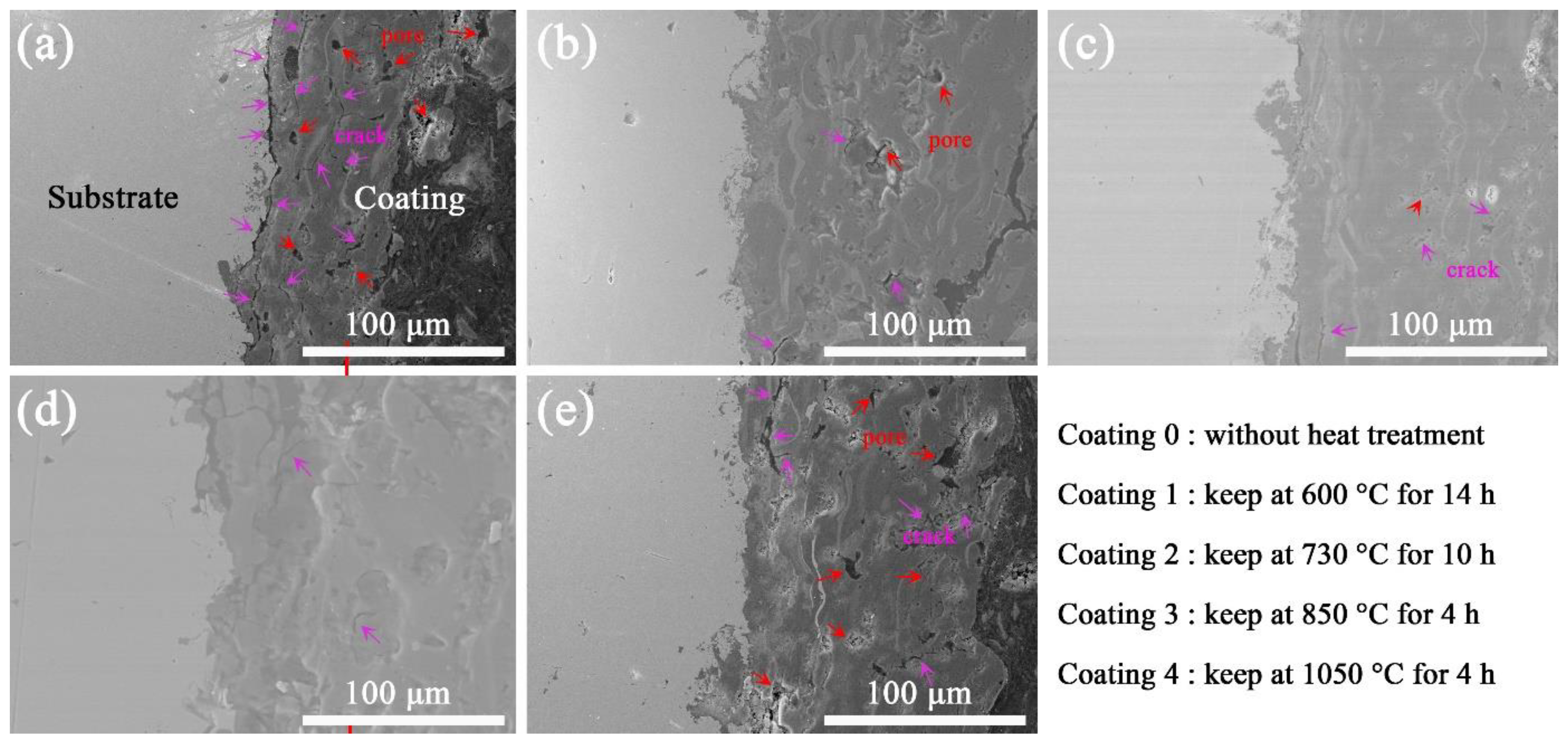
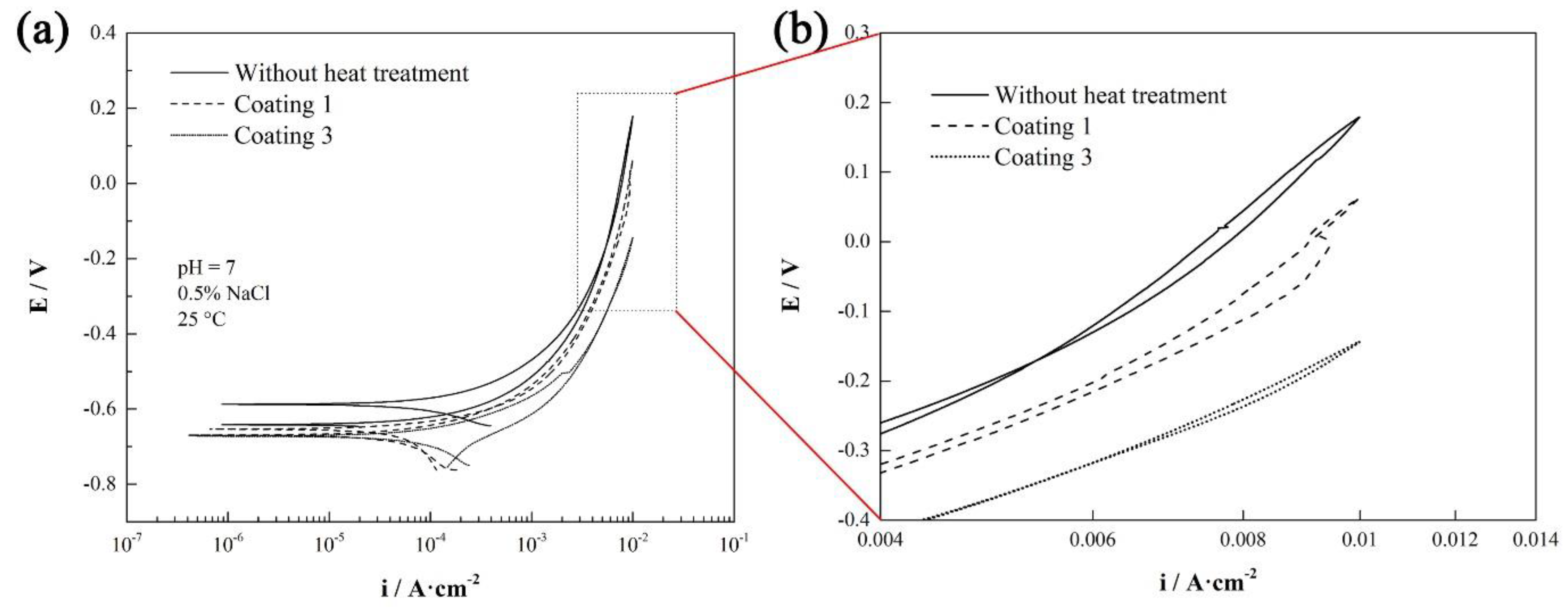
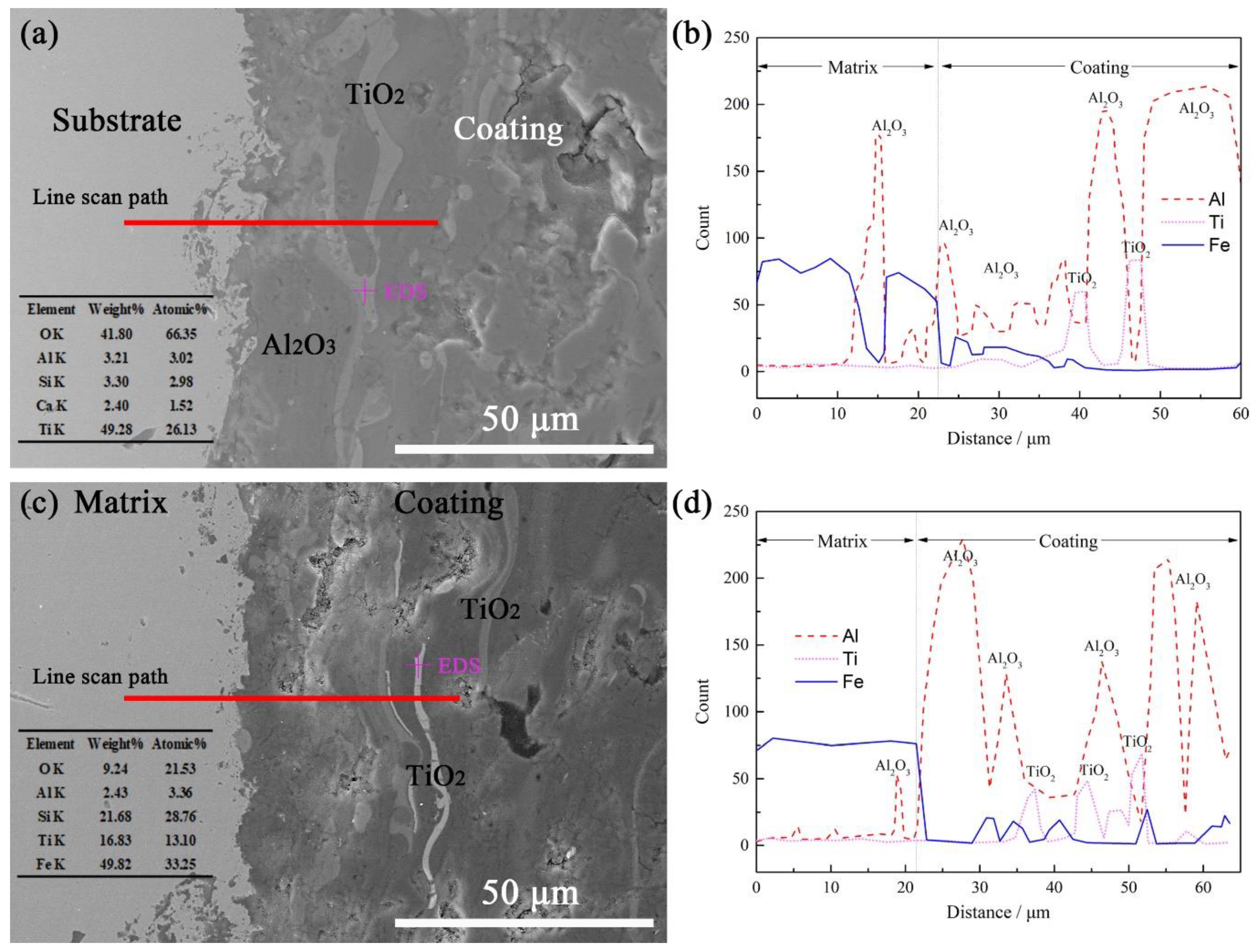
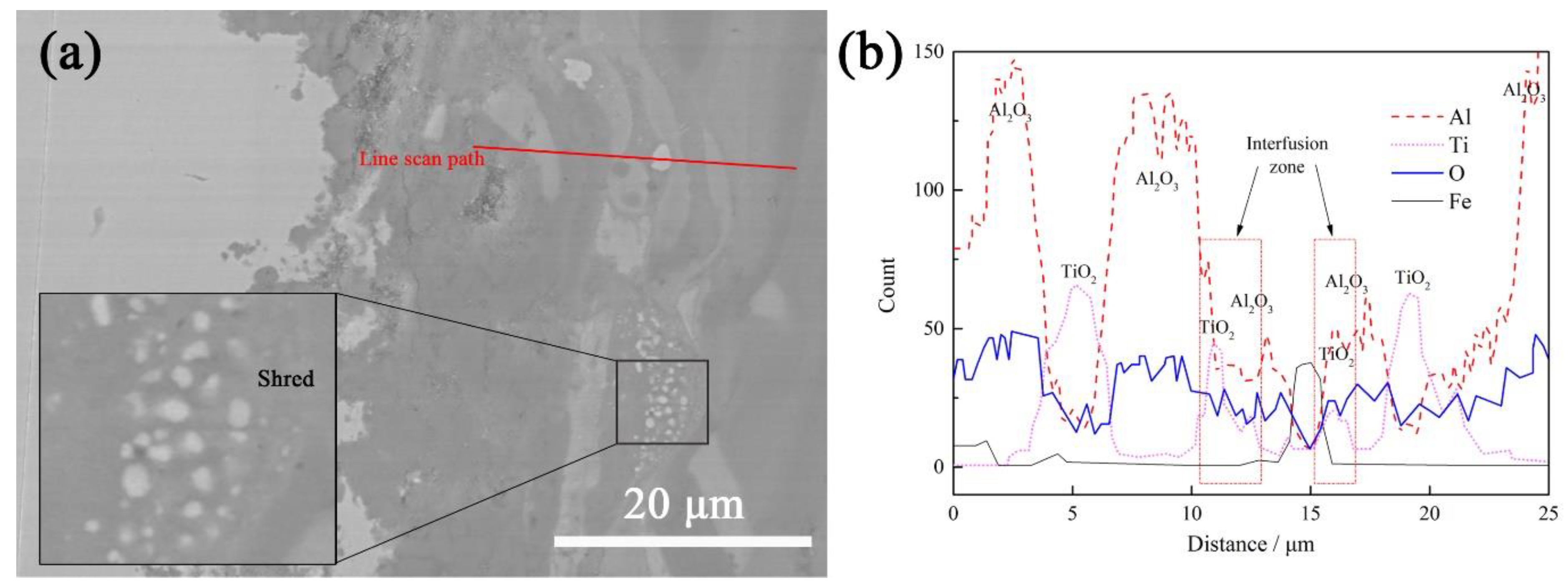
In this study, we address the effect of vacuum heat treatment on the morphology of Al2O3-3wt.%TiO2 coating, element diffusion behavior, coating hardness, and corrosion resistance. The pores, cracks, and non-liquefied particles on the as-heat treated coating surface of the vacuum-heat-treated coating were observed and compared with the as-sprayed coating using a scanning electron microscope. The diffusion behavior of the elements in the coating was demonstrated by using a line scanning of a cross-section of the coating. Hardness and corrosion-resistance test results were used to judge the effect of a vacuum heat treatment on the coating. The research results show that compared with atmospheric heat treatment, the vacuum heat treatment had less effect on the pores, cracks, and non-liquefied particles on the surface of the coating. However, in the absence of new oxide formation, the pores and cracks in the cross-section of the coating were significantly improved by the vacuum heat treatment. The surface hardness and corrosion resistance of the coating were significantly improved. The crack defects were eliminated, and the uniformity of TiO2 distribution was improved, which are the main factors that improved the coating performance after vacuum heat treatment. The combination of the coating and the substrate is strengthened, and an Al2O3 and TiO2 interdiffusion zone is formed when the coating undergoes vacuum heat treatment, which is the main mechanism improving the performance of the AT3 coating.
Keywords: vacuum heat treatment; Al2O3-3wt.%TiO2; plasma spraying; Rockwell hardness; corrosion resistance vacuum heat treatment; Al2O3-3wt.%TiO2; plasma spraying; Rockwell hardness; corrosion resistance