


Influence of Sandblasting and Chemical Etching on Titanium 99.2–Dental Porcelain Bond Strength

Abstract
1. Introduction
2. Materials and Methods
2.1. Samples Preparation
2.2. Microstructural Analysis and Mechanical Testing
2.3. Bond Strenght Estimation and Statistical Analysis
- k—coefficient depending on the thickness of the base metal and Young’s modulus,
- k = 4.6 (E = 113 GPa, [41]);
- Ffail—metal–ceramic bond breaking force
- K—the factor that differentiates the value of the statistic for the test,
- L—number associated with the number of compared groups pairs
- SK—intra-group variance calculated in the analysis of variance.
3. Results and Discussion
- -
- surface roughness (by using blasting, unevenness is created on the metal surface, into which the porcelain penetrates, causing mechanical micro fixations) [32];
- -
- compressive stresses caused by shrinkage of metal and porcelain (thermal expansion of porcelain should be slightly smaller than metal, in which case favorable compressive stresses will occur) [29];
- -
4. Conclusions
Author Contributions
Funding
Institutional Review Board Statement
Informed Consent Statement
Data Availability Statement
Conflicts of Interest
References
- Ananth, H.; Kundapur, V.; Mohammed, H.S.; Anand, M.; Amarnath, G.S.; Mankar, S. A Review on Biomaterials in Dental Implantology. Int. J. Biomed. Sci. IJBS 2015, 11, 113–120. [Google Scholar]
- Hey, J.; Beuer, F.; Bensel, T.; Boeckler, A.F. Metal–ceramic-fixed dental prosthesis with CAD/CAM-fabricated substructures: 6-year clinical results. Clin. Oral Investig. 2012, 17, 1447–1451. [Google Scholar] [CrossRef] [Scilit]
- Hey, J.; Beuer, F.; Bensel, T.; Boeckler, A.F. Single crowns with CAD/CAM-fabricated copings from titanium: 6-year clinical results. J. Prosthet. Dent. 2014, 112, 150–154. [Google Scholar] [CrossRef] [Scilit]
- Zhou, Y.; Li, N.; Wang, H.; Yan, J.; Liu, W.; Xu, S. Effects of the rare earth element lanthanum on the metal-ceramic bond strength of dental casting Co-Cr alloys. J. Prosthet. Dent. 2019, 121, 848–857. [Google Scholar] [CrossRef] [Scilit] [PubMed]
- Knosp, H.; Holliday, R.J.; Corti, C.W. Gold in dentistry: Alloys, uses and performance. Gold Bull. 2003, 36, 93–102. [Google Scholar] [CrossRef] [Scilit]
- Wu, J.; Zhou, J.; Zhao, W.; Gao, B. Evaluation of the bond strength of a low-fusing porcelain to cast Ti–24Nb–4Zr–7.9Sn alloy. Mater. Sci. Eng. C 2013, 33, 140–144. [Google Scholar] [CrossRef] [Scilit] [PubMed]
- Takemoto, S.; Hattori, M.; Yoshinari, M.; Kawada, E.; Asami, K.; Oda, Y. Corrosion mechanism of Ti–Cr alloys in solution containing fluoride. Dent. Mater. 2009, 25, 467–472. [Google Scholar] [CrossRef] [Scilit]
- Tamac, E.; Kumbuloglu, T.O.; Toksavul, S.; Toman, M.; Sarikanat, M. Effects of sandblasting and silicoating on bond strength between titanium and porcelain. Niger. J. Clin. Pract. 2018, 21, 1177–1181. [Google Scholar] [PubMed]
- Dolgov, N.A.; Dikova, T.; Dzhendov, D.; Pavlova, D.; Simov, M. Mechanical properties of dental Co-Cr alloys fabricated via Casting and Selective Laser Melting. Mater. Sci. Nonequilib. Phase Transform 2016, 3, 3–7. [Google Scholar]
- Tschernitschek, H.; Borchers, L.; Geurtsen, W. Nonalloyed titanium as a bioinert metal—A review. J. Prosthet. Dent. 2006, 96, 12. [Google Scholar] [CrossRef] [Scilit]
- Novaes, A.B., Jr.; De Souza, S.L.S.; De Barros, R.R.M.; Pereira, K.K.Y.; Iezzi, G.; Piattelli, A. Influence of implant surfaces on osseointegration. Braz. Dent. J. 2010, 21, 471–481. [Google Scholar] [CrossRef] [Scilit] [PubMed]
- Jivraj, S.; Chee, W. Rationale for dental implants. Br. Dent. J. 2006, 200, 661–665. [Google Scholar] [CrossRef] [Scilit] [PubMed]
- Javed, F.; Romanos, G.E. The role of primary stability for successful immediate loading of dental implants. A literature review. J. Dent. 2010, 38, 612–620. [Google Scholar] [CrossRef] [Scilit]
- Kimura, H.; Horng, C.-J.; Okazaki, M.; Takahashi, J. Oxidation Effects on Porcelain-Titanium Interface Reactions and Bond Strength. Dent. Mater. J. 1990, 9, 91–99. [Google Scholar] [CrossRef] [Scilit]
- Papadopoulos, T.D.; Spyropoulos, K.D. The effect of a ceramic coating on the cpTi–porcelain bond strength. Dent. Mater. 2009, 25, 247–253. [Google Scholar] [CrossRef] [Scilit]
- Kurup, A.; Dhatrak, P.; Khasnis, N. Surface modification techniques of titanium and titanium alloys for biomedical dental applications: A review. Mater. Today Proc. 2020, 39, 84–90. [Google Scholar] [CrossRef] [Scilit]
- Wang, R.R.; Fung, K.K. Oxidation behavior of surface-modified titanium for titanium-ceramic restorations. J. Prosthet. Dent. 1997, 77, 423–434. [Google Scholar] [CrossRef] [Scilit]
- Al Hussaini, I.; Al Wazzan, K.A. Effect of surface treatment on bond strength of low-fusing porcelain to commercially pure titanium. J. Prosthet. Dent. 2005, 94, 350–356. [Google Scholar] [CrossRef] [Scilit]
- Ramakrishnaiah, R.; Alkheraif, A.A.; Divakar, D.D.; Matinlinna, J.P.; Vallittu, P.K. The Effect of Hydrofluoric Acid Etching Duration on the Surface Micromorphology, Roughness, and Wettability of Dental Ceramics. Int. J. Mol. Sci. 2016, 17, 822. [Google Scholar] [CrossRef] [Scilit]
- Kim, J.-T.; Cho, S.-A. The effects of laser etching on shear bond strength at the titanium ceramic interface. J. Prosthet. Dent. 2009, 101, 101–106. [Google Scholar] [CrossRef] [Scilit]
- Egoshi, T.; Taira, Y.; Soeno, K.; Sawase, T. Effects of sandblasting, H2SO4/HCl etching, and phosphate primer application on bond strength of veneering resin composite to commercially pure titanium grade 4. Dent. Mater. J. 2013, 32, 219–227. [Google Scholar] [CrossRef] [Scilit]
- Gökçe, B.; Ozpinar, B.; Dündar, M.; Cömlekoglu, E.; Sen, B.H.; Güngör, M.A. Bond Strengths of All-Ceramics: Acid vs. Laser Etching. Oper. Dent. 2007, 32, 173–178. [Google Scholar] [CrossRef] [Scilit]
- Vignesh, S.N.; Bhuminathan, M.; Santhosh, S. Comparative evaluation of the three different surface treatments—Conventional, laser and Nano technology methods in enhancing the surface characteristics of commercially pure titanium discs and their effects on cell adhesion: An in vitro study. J. Pharm. Bioallied Sci. 2015, 7, 89–91. [Google Scholar] [CrossRef] [Scilit]
- Akin, H.; Tugut, F.; Topcuoglu, S.; Kirmali, O. Effects of Sandblasting and Laser Irradiation on Shear Bond Strength of Low-fusing Porcelain to Titanium. J. Adhes. Dent. 2013, 15, 55–63. [Google Scholar] [CrossRef] [Scilit] [PubMed]
- Saygin, A.G.; Özdemir, A.K.; Görler, O. Influence of Various Laser Surface Modifications on SBS of Titanium and Zirconium Oxide Substructures. Cumhur. Sci. J. 2017, 38, 245. [Google Scholar] [CrossRef] [Scilit]
- Dundar, B.; Guzel, K.G. An analysis of the shear strength of the bond between enamel and porcelain laminate veneers with different etching systems: Acid and Er, Cr: YSGG laser separately and combined. Lasers Med. Sci. 2010, 26, 777–782. [Google Scholar] [CrossRef] [Scilit]
- Chaiyabutr, Y.; McGowan, S.; Phillips, K.M.; Kois, J.C.; Giordano, R.A. The effect of hydrofluoric acid surface treatment and bond strength of a zirconia veneering ceramic. J. Prosthet. Dent. 2008, 100, 194–202. [Google Scholar] [CrossRef] [Scilit]
- Bhandari, K.S.; Moldi, A.I.; Nagral, S.; Deshpandey, S.; Kulkarni, P. Effect of sandblasting on fracture load of titanium ceramic crowns. J. Indian Prosthodont. Soc. 2015, 15, 224–228. [Google Scholar] [CrossRef] [Scilit] [PubMed]
- Golebiowski, M.; Wolowiec, E.; Klimek, L. Airborne-particle abrasion parameters on the quality of titanium-ceramic bonds. J. Prosthet. Dent. 2015, 113, 453–459. [Google Scholar] [CrossRef] [Scilit]
- Walczak, M. Influence of Selected Technological Procedures on the Service Life of Metal-Ceramic Systems Used in Dental Prosthetics; Habilitation Monograph; Lublin University of Technology: Lublin, Poland, 2014; p. 187. [Google Scholar]
- Papadopoulos, T.; Tsetsekou, A.; Eliades, G. Effect of aluminum oxide sandblasting on cast commercially pure titanium surfaces. Eur. J. Prosthodont. Restor. Dent. 1999, 7, 15–21. [Google Scholar] [PubMed]
- Kou, Z.; Yi, Q.; Zhi, X.Z. The effect of different size of aluminum oxide for sandblasting on bonding strength of porcelain to metal. Zhonghua Kou Qiang Yi Xue Za Zhi. 1994, 29, 229–231. [Google Scholar]
- Cai, Z.; Bunce, N.; E Nunn, M.; Okabe, T. Porcelain adherence to dental cast CP titanium: Effects of surface modifications. Biomaterials 2001, 22, 979–986. [Google Scholar] [CrossRef] [Scilit]
- Akyil, M.S.; Yilmaz, A.; Karaalioğlu, O.F.; Duymuş, Z.Y.; Akyıl, M. Shear Bond Strength of Repair Composite Resin to an Acid-Etched and a Laser-Irradiated Feldspathic Ceramic Surface. Photomed. Laser Surg. 2010, 28, 539–545. [Google Scholar] [CrossRef] [Scilit]
- Guilherme, N.; Wadhwani, C.; Zheng, C.; Chung, K.-H. Effect of surface treatments on titanium alloy bonding to lithium disilicate glass-ceramics. J. Prosthet. Dent. 2016, 116, 797–802. [Google Scholar] [CrossRef] [Scilit]
- Antanasova, M.; Kocjan, A.; Kovač, J.; Žužek, B.; Jevnikar, P. Influence of thermo-mechanical cycling on porcelain bonding to cobalt–chromium and titanium dental alloys fabricated by casting, milling, and selective laser melting. J. Prosthodont. Res. 2018, 62, 184–194. [Google Scholar] [CrossRef] [Scilit] [PubMed]
- Yılmaz, K.; Gonuldas, F.; Ozturk, C. The effect of repeated firings on the color change of dental ceramics using different glazing methods. J. Adv. Prosthodont. 2014, 6, 427–433. [Google Scholar] [CrossRef] [Scilit]
- Yang, J.; Kelly, J.R.; Bailey, O.; Fischman, G. Porcelain-titanium bonding with a newly introduced, commercially available system. J. Prosthet. Dent. 2016, 116, 98–101. [Google Scholar] [CrossRef] [Scilit] [PubMed]
- García-Sanz, V.; Paredes-Gallardo, V.; Mendoza-Yero, O.; Leal, M.C.; Albaladejo, A.; Montiel-Company, J.M.; Bellot-Arcís, C. The effects of lasers on bond strength to ceramic materials: A systematic review and meta-analysis. PLoS ONE 2018, 13, e0190736. [Google Scholar] [CrossRef] [Scilit] [PubMed]
- Papia, E.; Arnoldsson, P.; Baudinova, A.; Jimbo, R.; Von Steyern, P.V. Cast, milled and EBM-manufactured titanium, differences in porcelain shear bond strength. Dent. Mater. J. 2018, 37, 214–221. [Google Scholar] [CrossRef] [Scilit] [PubMed]
- Sawada, T.; Schille, C.; Schweizer, E.; Geis-Gerstorfer, J.; Takemoto, S. Bond strength of commercial veneering porcelain to experimental cast Ti-Cr alloy. Dent. Mater. J. 2020, 39, 825–833. [Google Scholar] [CrossRef] [Scilit]
- ISO. Metal Ceramic Dental Systems; ISO 9693:1999; International Organization for Standardization: Geneva, Switzerland, 2019. [Google Scholar]
- Duceratin Kiss Directions for Use GB—DeguDent/Distributed by: Dentsply International Inc. Prosthetics Division. 2017. Available online: https://www.dentsplysirona.com/content/dam/dentsply/pim/manufacturer/Prosthetics/Fixed/Ceramics/Veneering_Porcelain/Duceram_Kiss/Ansichts-PDF_DFU_Duceram%20Kiss_multi_2017_09.pdf (accessed on 14 October 2021).
- Lubas, M. The impact of an innovative sandblasting medium on the titanium–dental porcelain joint. Ceram. Mater. 2019, 3, 276–285. [Google Scholar]
- Lubas, M.; Jasinski, J.J.; Jeleń, P.; Sitarz, M. Effect of ZrO2 sol-gel coating on the Ti 99.2—Porcelain bond strength investigated with mechanical testing and Raman spectroscopy. J. Mol. Struct. 2018, 1168, 316–321. [Google Scholar] [CrossRef] [Scilit]
- Chakmakchi, M.; Eliades, G.; Zinelis, S. Bonding agents of low fusing cpTi porcelains: Elemental and morphological characterization. J. Prosthodont. Res. 2009, 53, 166–171. [Google Scholar] [CrossRef] [Scilit]
- Guo, L.; Shi, Y.; Guo, L.; Zhang, Q.; Tian, J.; Zhu, Y.; Guo, T. Preparation and characterization of a titanium bonding porcelain. Mater. Sci. Eng. C 2012, 32, 1531–1535. [Google Scholar] [CrossRef] [Scilit]
- Troia, M.G.; Henriques, G.E.; Mesquita, M.F.; Fragoso, W.S. The effect of surface modifications on titanium to enable titanium–porcelain bonding. Dent. Mater. 2008, 24, 28–33. [Google Scholar] [CrossRef] [Scilit]
- Elsaka, S.E.; Swain, M. Effect of surface treatments on adhesion of low-fusing porcelain to titanium as determined by strain energy release rate. Dent. Mater. 2011, 27, 1213–1220. [Google Scholar] [CrossRef] [Scilit]
- Banaszek, K.; Pietnicki, K.; Klimek, L. The influence of parameters of abrasive jet machining processing on the number of stubble elements stuck in nickel-chrome alloy surface. Mater. Eng. 2011, 32, 312–315. [Google Scholar]
- Craig, R.; Powers, M.; Wataha, J. Dental Materials; Elsevier Urban & Partner Editors: Wroclaw, Poland, 2000; p. 324. [Google Scholar]
- Kula, Z.; Kołodziejczyk, Ł.; Szymanowski, H. Influence of the intermediate layer on the metal-ceramics bond strength. Eng. Biomater. 2019, 152, 21–28. [Google Scholar]
- Pacheco de Castro Henriques, B. Bond Strength Enhancement of Metal-Ceramic Dental Restorations by FGM Design. Ph.D. Thesis, Universidade do Minho, Braga, Portugal, 2012. [Google Scholar]
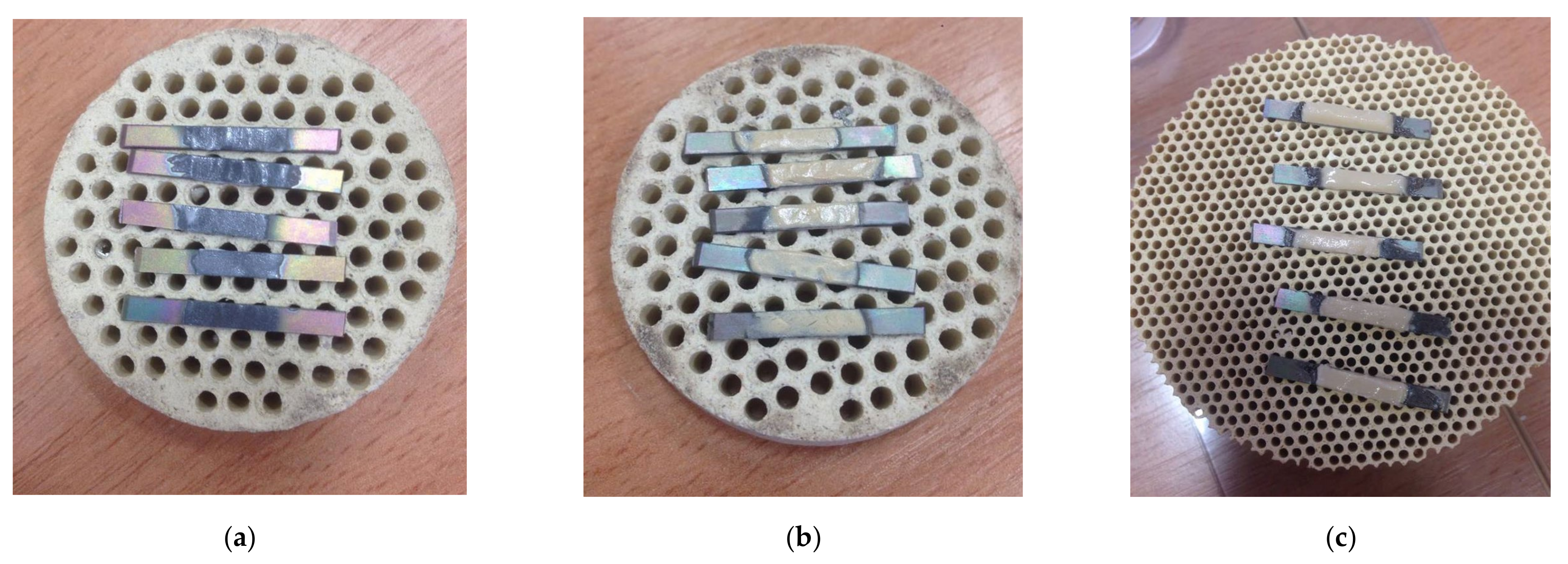
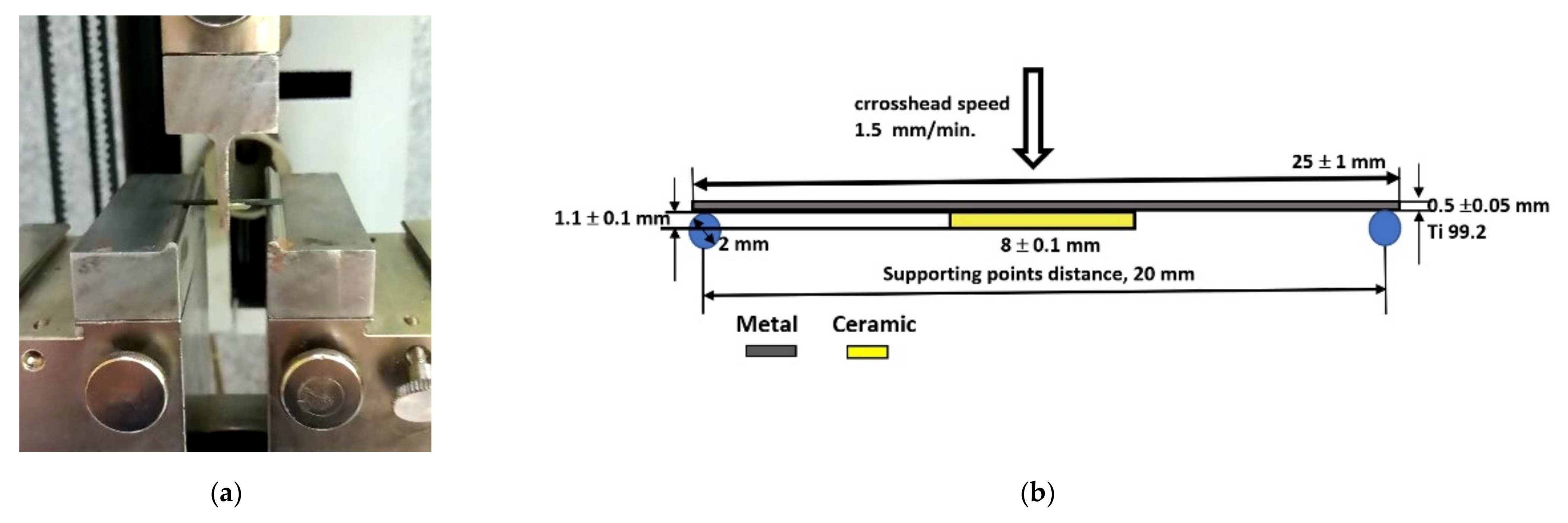
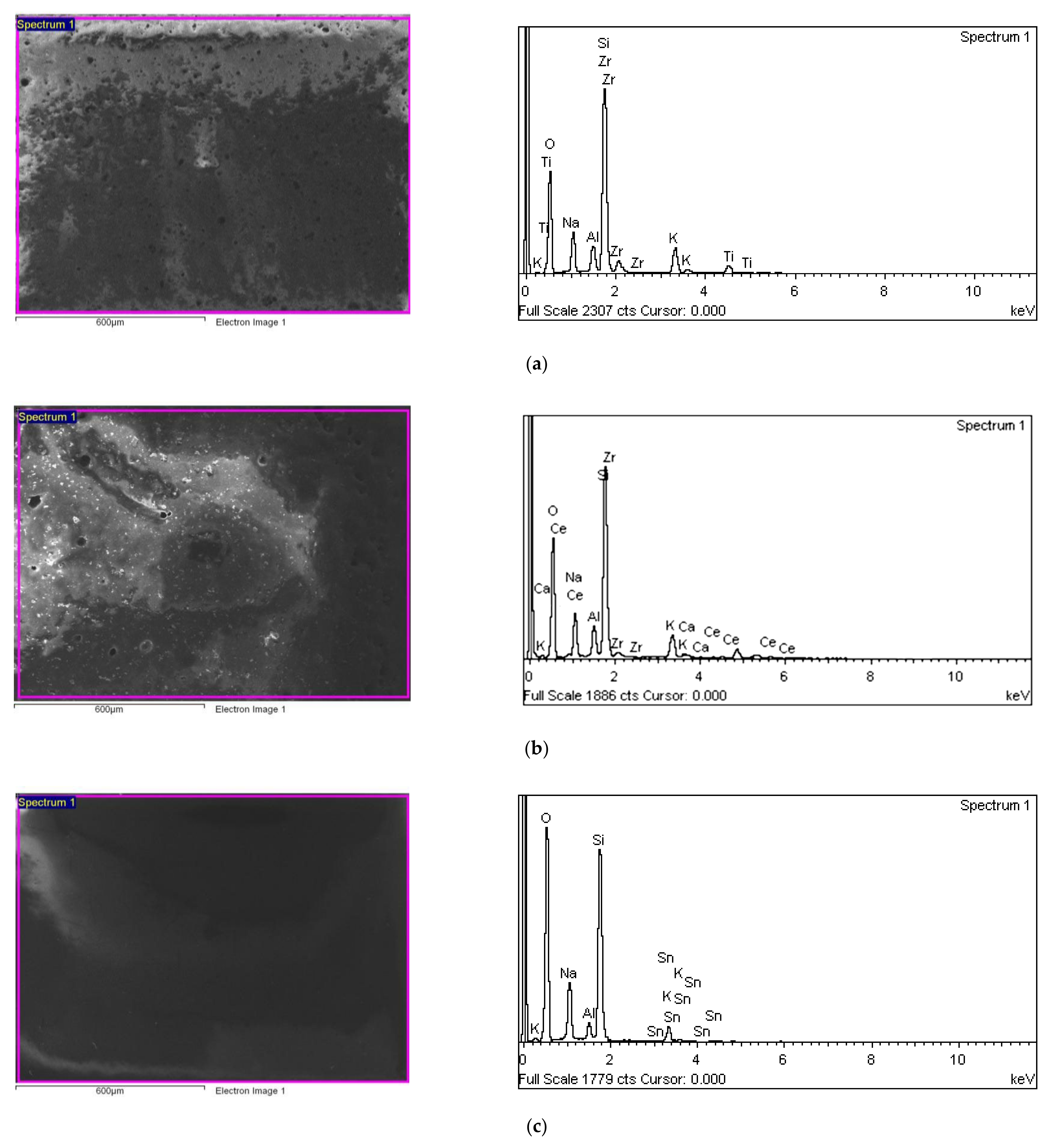
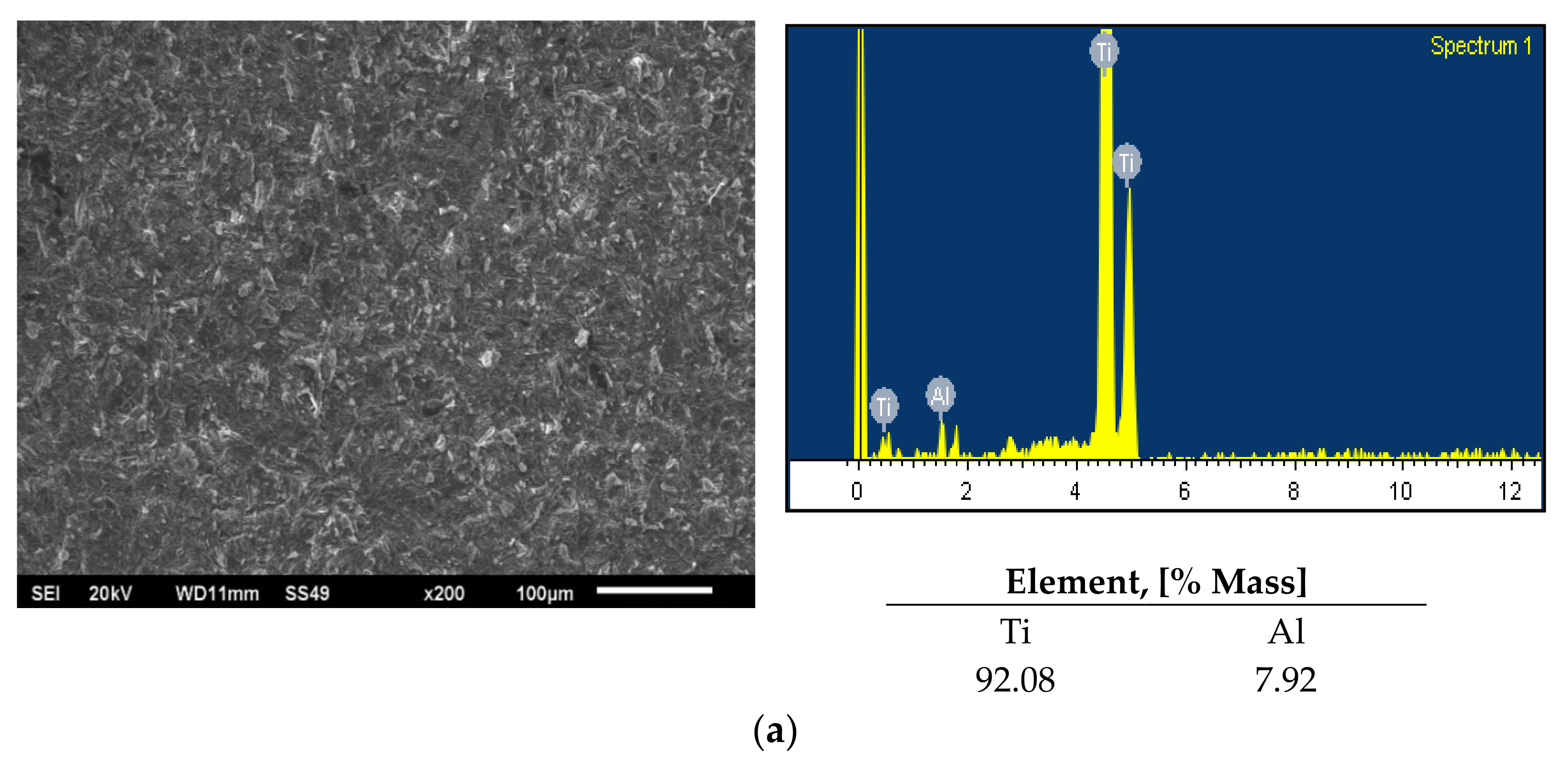
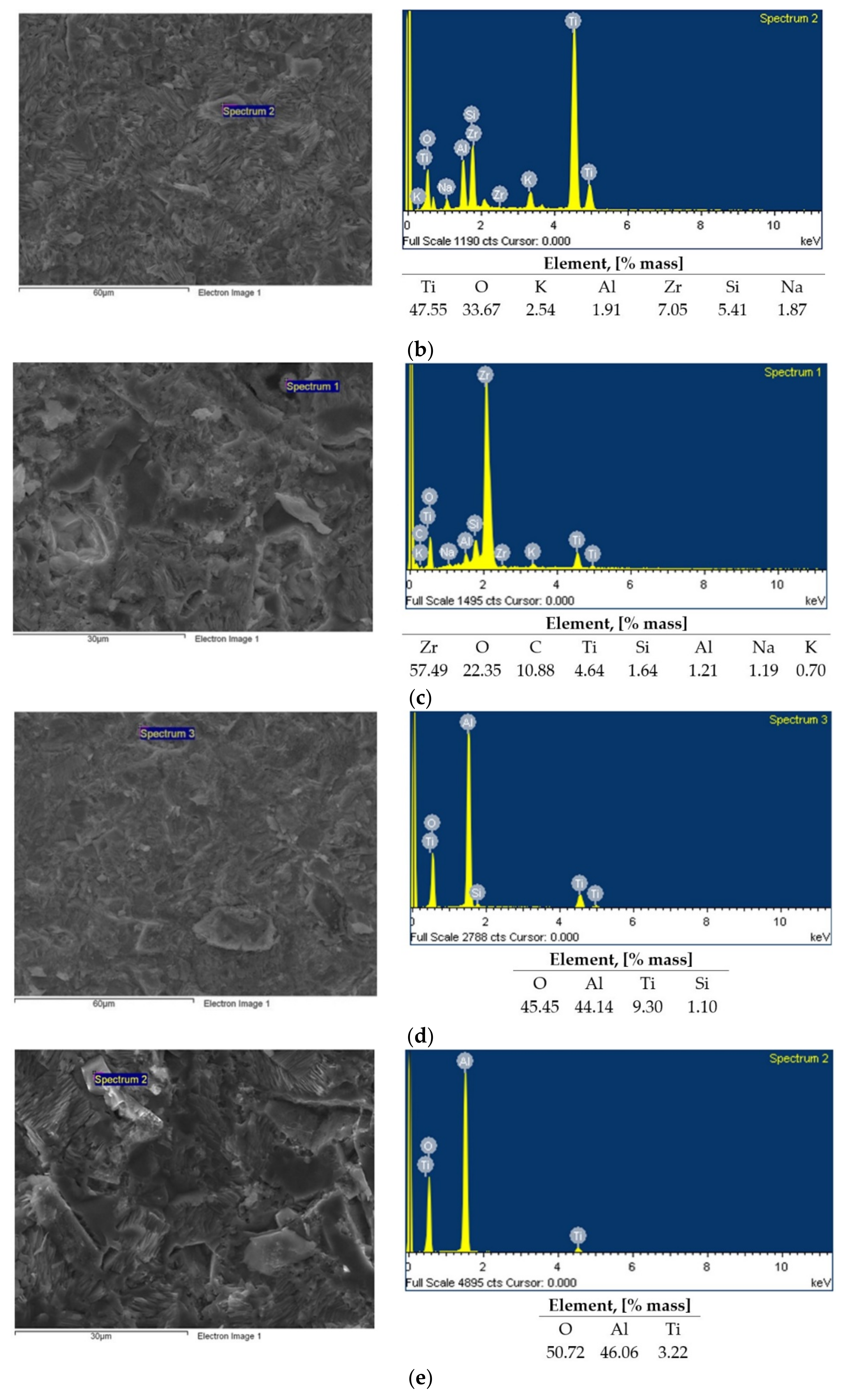
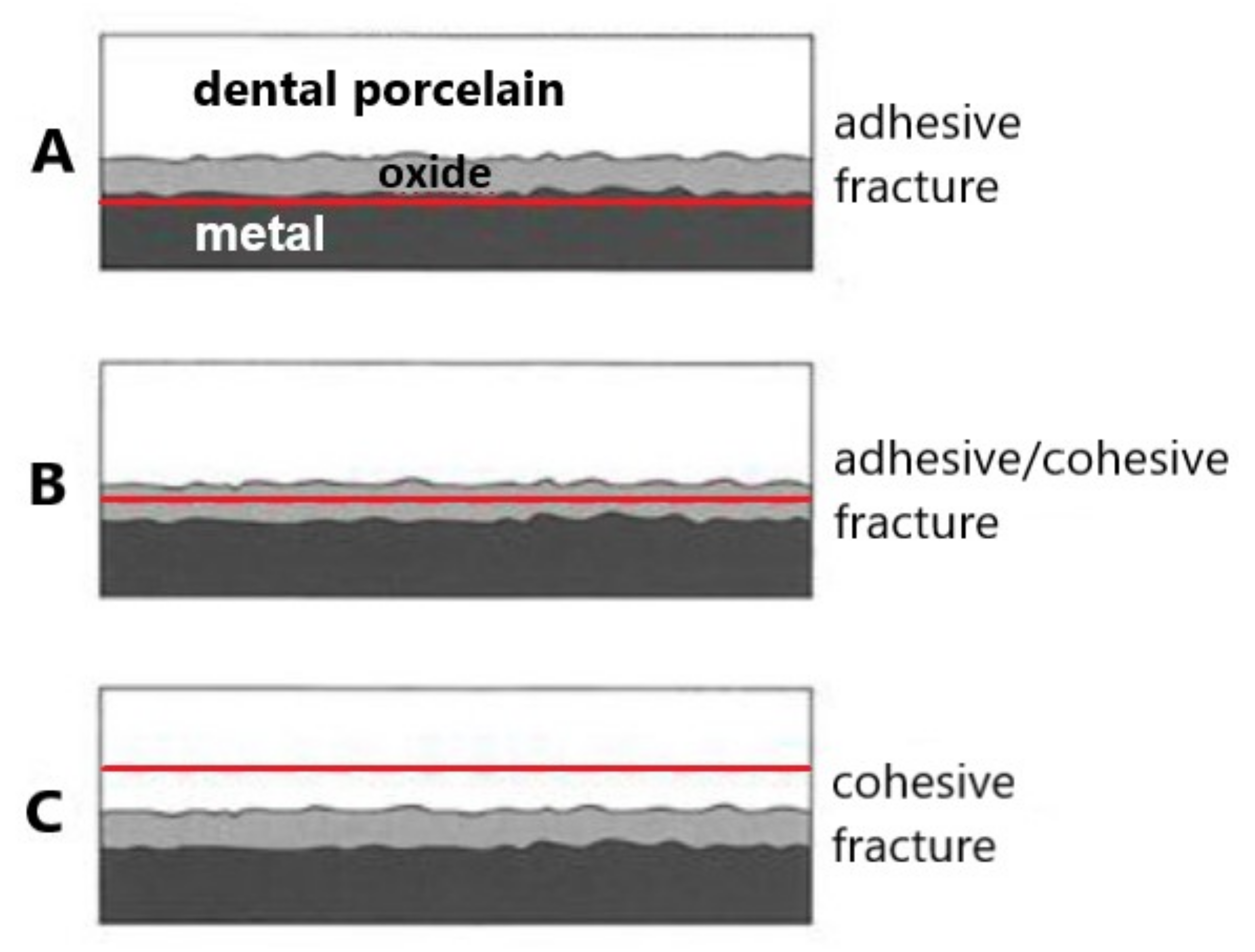
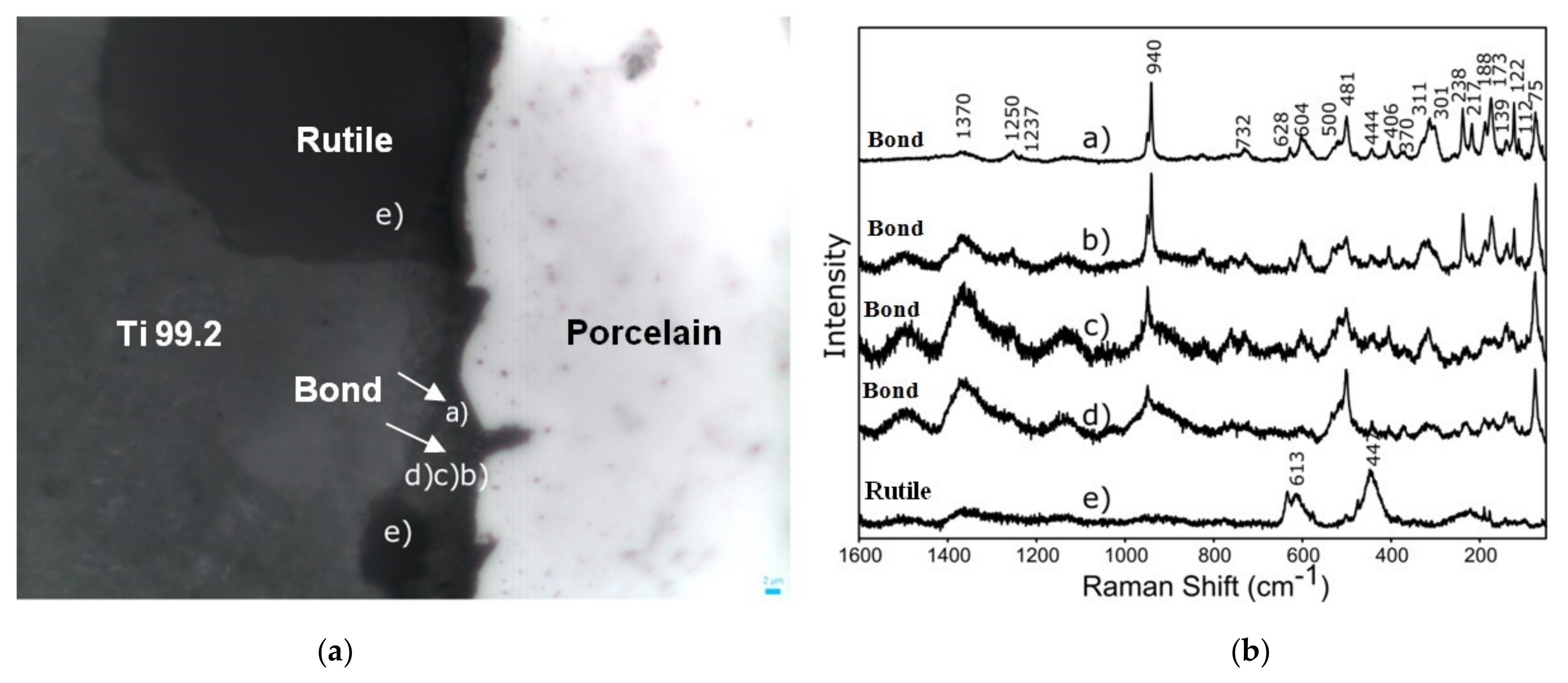

| Element, [% Mass] | |||||
|---|---|---|---|---|---|
| O | N | C | H | Fe | Ti |
| 0.25 | 0.03 | 0.08 | 0.015 | 0.30 | Balance |
| Lp. | Surface Treatment Type | Surface Treatment Parameters |
|---|---|---|
| Sample Set 1 | ||
| 1. | Al2O3 reference sample | 1. Ultrasonic cleaning (room temp.)—5 min |
| 2. Sandblasting Al2O3—1 min (±5 s) | ||
| 3.Ultrasonic cleaning (room temp.)—5 min | ||
| Sample Set 2 | ||
| 2. | Al2O3/H3PO4 | 1. Ultrasonic cleaning (room temp.)—5 min |
| 2. Sandblasting Al2O3—1 min (±5 s) | ||
| 3. Ultrasonic cleaning (room temp.)—5 min | ||
| 4. Etching 40% H3PO4—1 min | ||
| 5. Ultrasonic cleaning (room temp.)—5 min | ||
| 3. | Al2O3/HCl | 1. Ultrasonic cleaning (room temp.)—5 min |
| 2. Sandblasting Al2O3—1 min (±5 s) | ||
| 3. Ultrasonic cleaning (room temp.)—5 min | ||
| 4. Etching 35% HCl—1 min | ||
| 5.Ultrasonic cleaning (room temp.)—5 min | ||
| Sample Set 3 | ||
| 4. | Al2O3/NaOH + 10% CuSO4 + 5H2O/H3PO4 | 1. Ultrasonic cleaning (room temp.)—5 min |
| 2. Sandblasting Al2O3—1 min (±5 s) | ||
| 3. Ultrasonic cleaning (room temp.)—5 min | ||
| 4. Etching in 50% NaOH + 10% CuSO4 + 5H2O—10 min | ||
| 5. Ultrasonic cleaning (room temp.)—5 min | ||
| 6. Etching in 40% H3PO4 acid—1 min | ||
| 7. Ultrasonic cleaning (room temp.)—5 min | ||
| 5. | Al2O3/NaOH + 10% CuSO4 + 5H2O/HCl | 1. Ultrasonic cleaning (room temp.)—5 min |
| 2. Sandblasting Al2O3—1 min (±5 s) | ||
| 3. Ultrasonic cleaning (room temp.)—5 min | ||
| 4. Etching in 50% NaOH + 10% CuSO4 + 5H2O—10 min | ||
| 5. Ultrasonic cleaning (room temp.)—5 min | ||
| 6. Etching in 35% HCl—1 min | ||
| 7. Ultrasonic cleaning (room temp.)—5 min | ||
| Surface Treatment Method | Fracture Type | Fmax Fracture Force [N] | Standard Deviation SD | Standard Error of the Mean Value Sx | τ—Bending Strength Mean Value [MPa] | Standard Deviation SD | Standard Error of the Mean Value Sx |
|---|---|---|---|---|---|---|---|
| Sample Set 1 | |||||||
| Al2O3 reference sample | Adhesive | 6.54 | 1.22 | 0.55 | 30.08 | 5.79 | 2.50 |
| Sample Set 2 | |||||||
| Al2O3/H3PO4 | Cohesive | 8.15 | 1.26 | 0.56 | 39.16 | 2.06 | 0.92 |
| Al2O3/HCl | Cohesive | 9.17 | 1.11 | 0.50 | 42.17 | 5.10 | 0.28 |
| Sample Set 3 | |||||||
| Al2O3/NaOH + CuSO4 + 5H2O/H3PO4 | Adhesive/Cohesive | 8.92 | 1.17 | 0.52 | 40.31 | 3.76 | 1.68 |
| Al2O3/NaOH + CuSO4 + 5H2O/HCl | Adhesive/Cohesive | 10.59 | 1.39 | 0.62 | 48.77 | 2.88 | 1.29 |
| Source of Variation | Sum of Squares of Deviations | Degrees of Freedom | Variance | Test F |
|---|---|---|---|---|
| Between groups | ||||
| Inside groups | 20 |
| Paired Samples Combination * | Differences between Means | L | ||
|---|---|---|---|---|
| 1—2 | 9.08 | 0.632 | 5.49 | + |
| 1—3 | 12.09 | 0.632 | 5.49 | + |
| 1—4 | 10.23 | 0.632 | 5.49 | + |
| 1—5 | 18.69 | 0.632 | 5.49 | + |
Publisher’s Note: MDPI stays neutral with regard to jurisdictional claims in published maps and institutional affiliations. |
© 2021 by the authors. Licensee MDPI, Basel, Switzerland. This article is an open access article distributed under the terms and conditions of the Creative Commons Attribution (CC BY) license (https://creativecommons.org/licenses/by/4.0/).
Share and Cite
Lubas, M.; Jasinski, J.J.; Zawada, A.; Przerada, I. Influence of Sandblasting and Chemical Etching on Titanium 99.2–Dental Porcelain Bond Strength. Materials 2022, 15, 116. https://doi.org/10.3390/ma15010116
Lubas M, Jasinski JJ, Zawada A, Przerada I. Influence of Sandblasting and Chemical Etching on Titanium 99.2–Dental Porcelain Bond Strength. Materials. 2022; 15(1):116. https://doi.org/10.3390/ma15010116
Chicago/Turabian StyleLubas, Malgorzata, Jaroslaw Jan Jasinski, Anna Zawada, and Iwona Przerada. 2022. "Influence of Sandblasting and Chemical Etching on Titanium 99.2–Dental Porcelain Bond Strength" Materials 15, no. 1: 116. https://doi.org/10.3390/ma15010116
APA StyleLubas, M., Jasinski, J. J., Zawada, A., & Przerada, I. (2022). Influence of Sandblasting and Chemical Etching on Titanium 99.2–Dental Porcelain Bond Strength. Materials, 15(1), 116. https://doi.org/10.3390/ma15010116

