Article

Influence of Alloy Atoms on Substitution Properties of Hydrogen by Helium in ZrCoH3
1
Key Laboratory of Computational Physics of Sichuan Province, Yibin University, Yibin 644000, China
2
School of Mathematics and Physics, Anhui Jianzhu University, Hefei 230601, China
3
Key Laboratory for Liquid-Solid Structural Evolution and Processing of Materials (Ministry of Education), Shandong University, Jinan 250061, China
4
Key Laboratory of Materials Physics, Institute of Solid State Physics, Chinese Academy of Sciences, P.O. Box 1129, Hefei 230031, China
*
Author to whom correspondence should be addressed.
Materials 2021, 14(21), 6704; https://doi.org/10.3390/ma14216704
Submission received: 6 September 2021 / Revised: 6 October 2021 / Accepted: 12 October 2021 / Published: 7 November 2021

Abstract

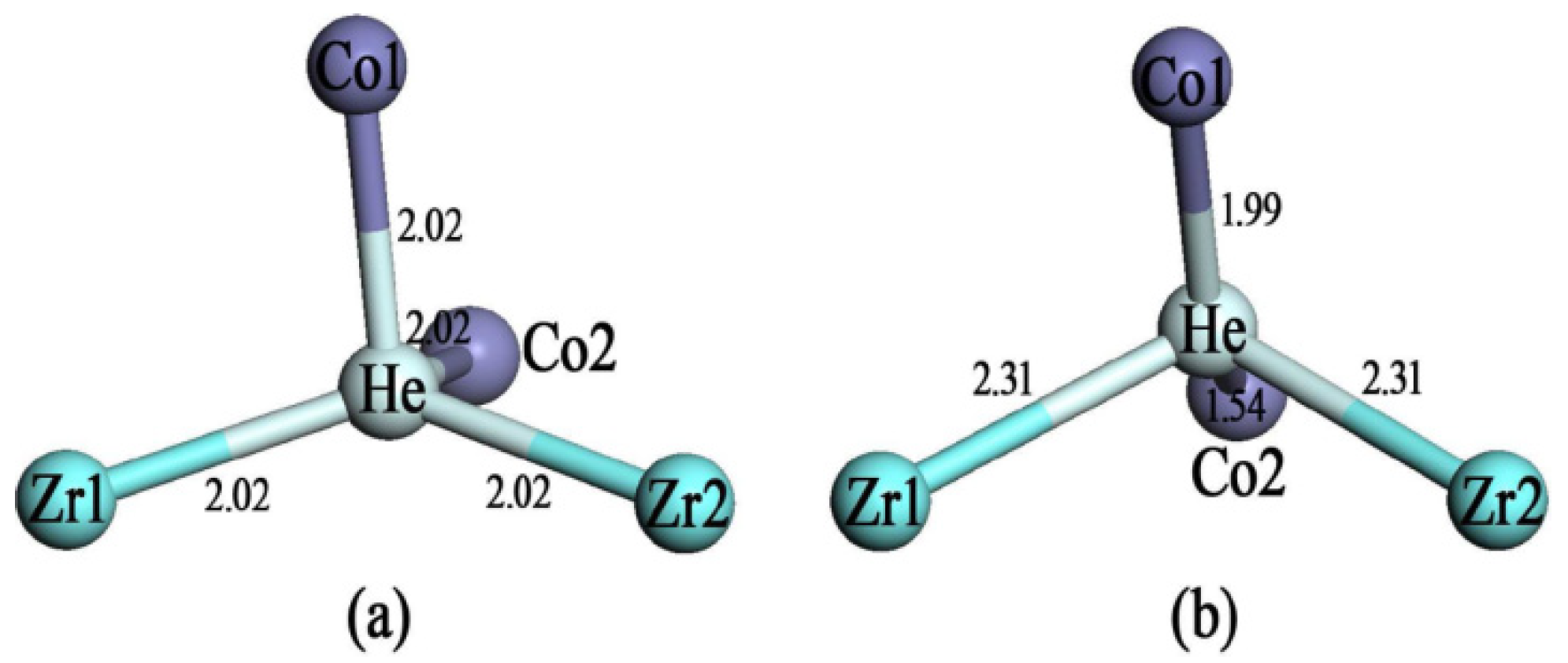
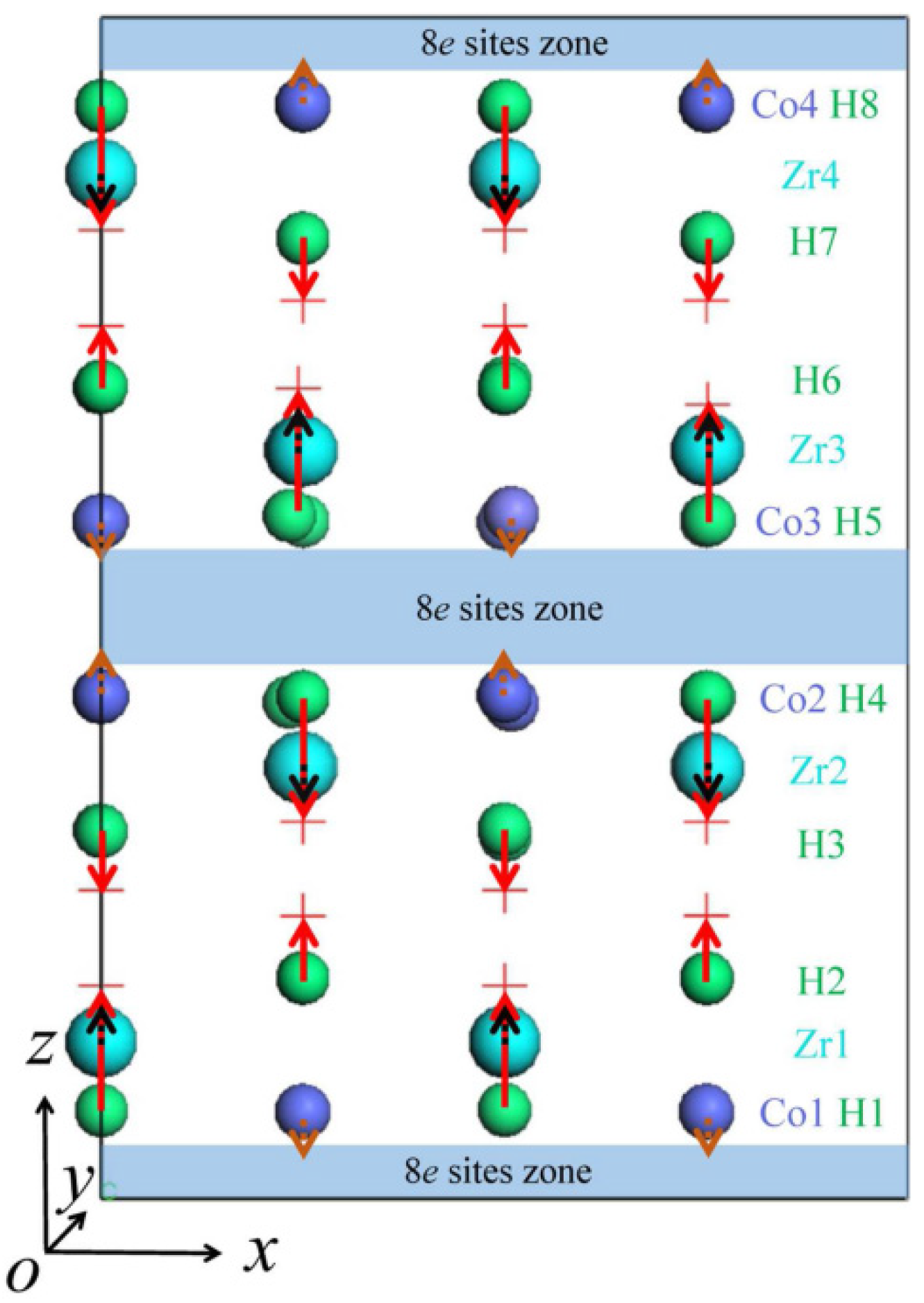
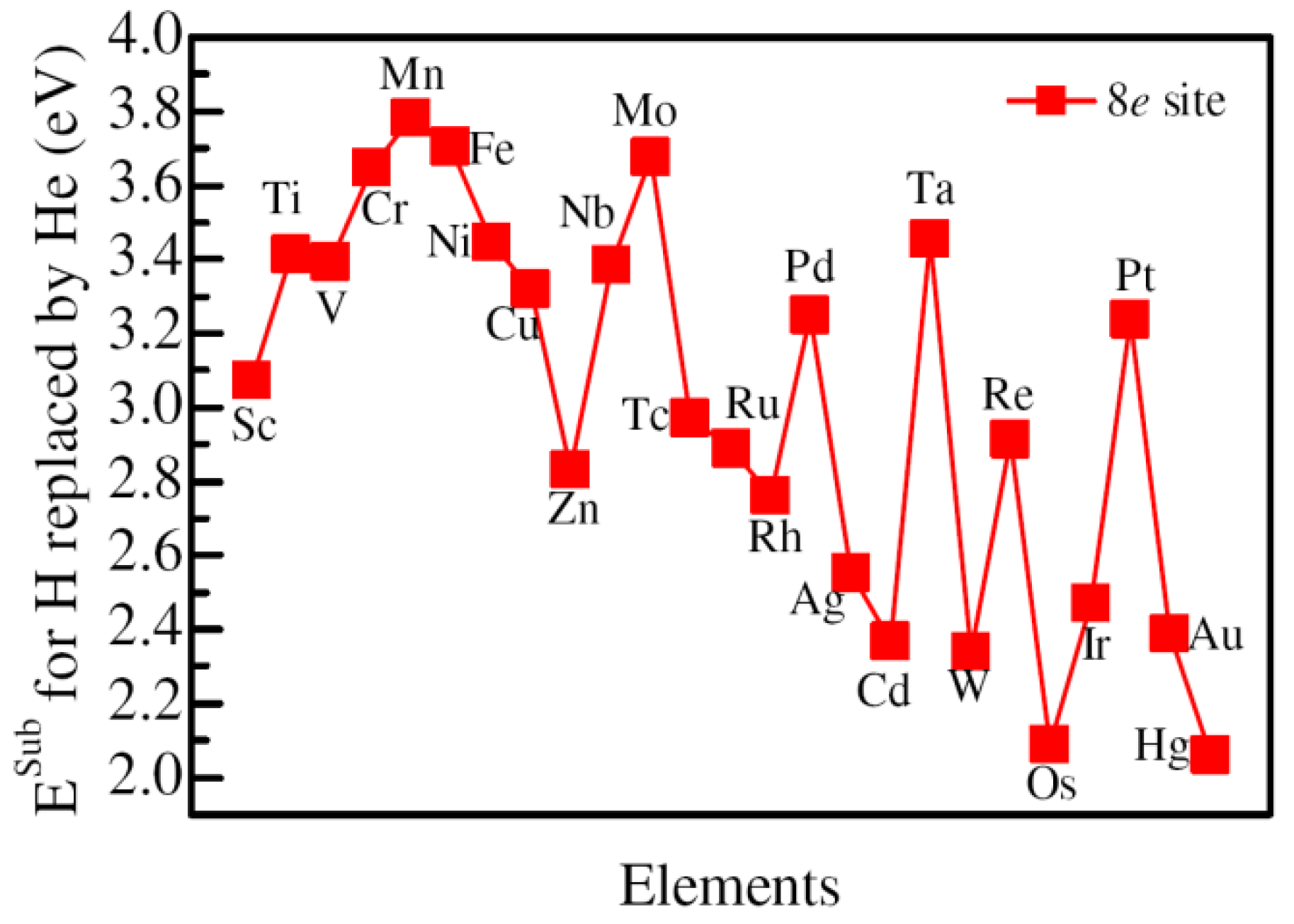
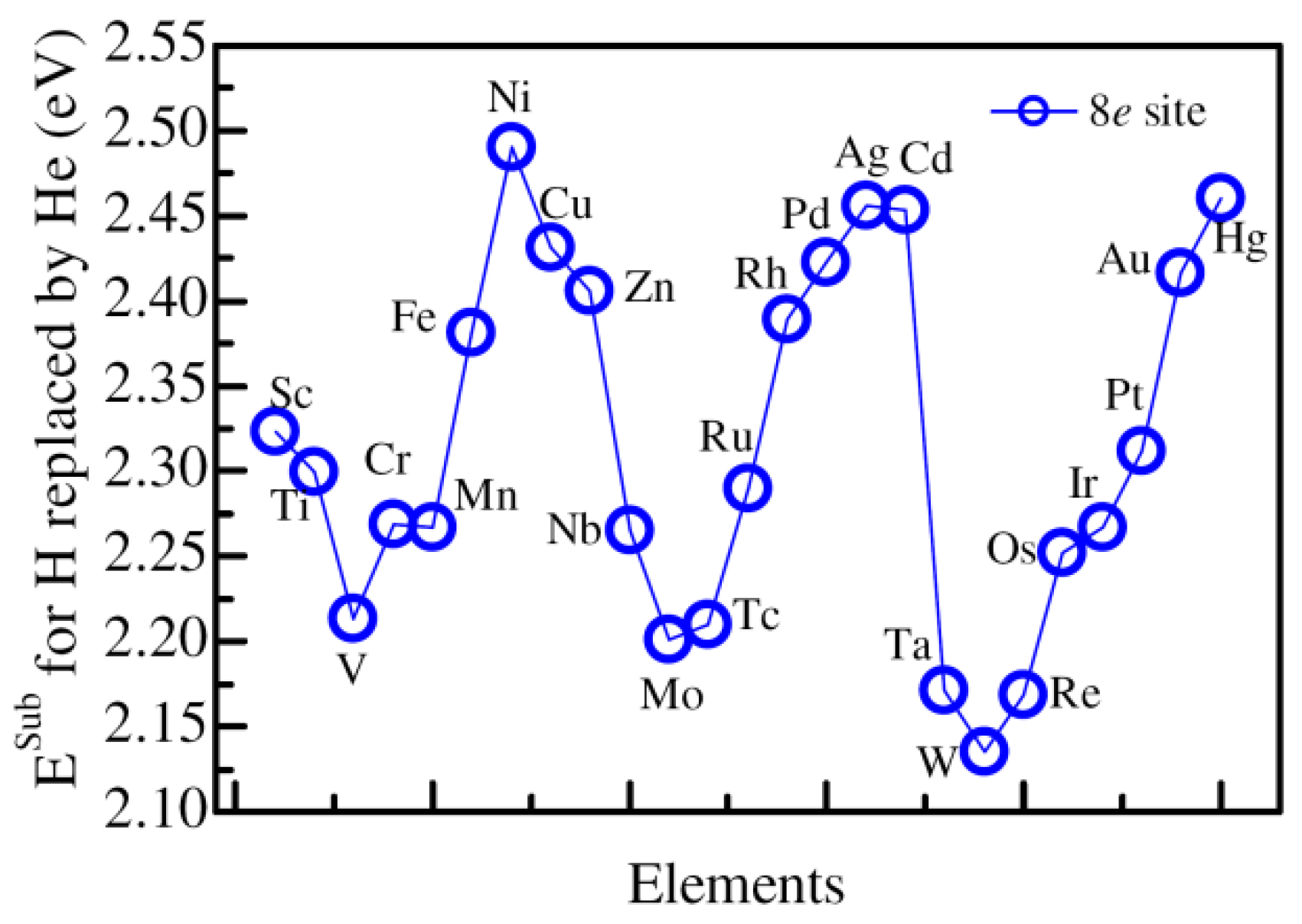
Intermetallic alloy ZrCo is a good material for storing tritium (T). However, ZrCo is prone to disproportionation reactions during the process of charging and discharging T. Alloying atoms are often added in ZrCo, occupying the Zr or Co site, in order to restrain disproportionation reactions. Meanwhile, T often decays into helium (He), and the purity of T seriously decreases once He escapes from ZrCo. Therefore, it is necessary to understand the influence of alloying atoms on the basic stability property of He. In this work, we perform systematical ab initio calculations to study the stability property of He in ZrCoH3 (ZrCo adsorbs the H isotope, forming ZrCoH3). The results suggest that the He atom will undergo displacements of 0.31 and 0.12 Å when it substitutes for Co and Zr, respectively. In contrast, the displacements are very large, at 0.67–1.09 Å, for He replacing H. Then, we introduce more than 20 alloying atoms in ZrCo to replace Co and Zr in order to examine the influence of alloying atoms on the stability of He at H sites. It is found that Ti, V, Cr, Mn, Fe, Zn, Nb, Mo, Tc, Ru, Ta, W, Re, and Os replacing Co can increase the substitution energy of H by the He closest to the alloying atom, whereas only Cr, Mn, Fe, Mo, Tc, Ru, Ta, W, Re, and Os replacing Co can increase the substitution energy of H by the He next closest to the alloying atom. The influence of the alloying atom substituting Zr site on the substitution energies is inconspicuous, and only Nb, Mo, Ru, Ta, and W increase the substitution energies of H by the He closest to the alloying atom. The increase in the substitution energy may suggest that these alloy atoms are conducive to fix the He atom in ZrCo and avoid the reduction in tritium purity.
Keywords: ZrCo alloys; disproportionation reaction; fixing helium; ab initio calculations ZrCo alloys; disproportionation reaction; fixing helium; ab initio calculations