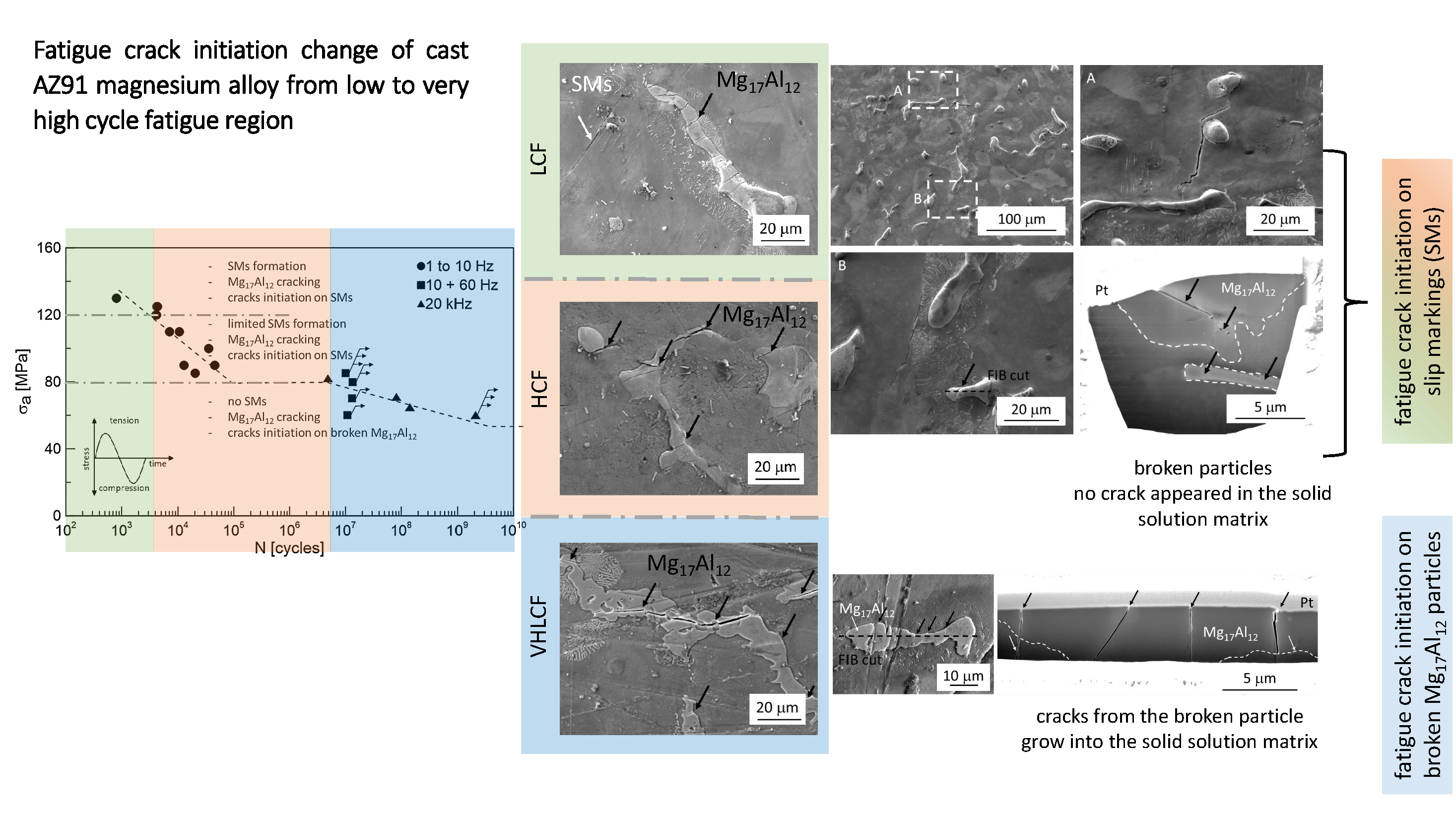
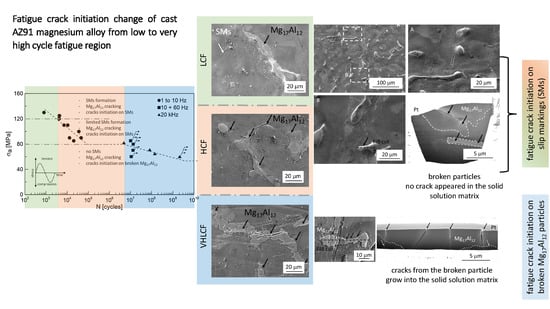
Fatigue Crack Initiation Change of Cast AZ91 Magnesium Alloy from Low to Very High Cycle Fatigue Region
 , , ,
, , , Abstract
Share and Cite
Fintová, S.; Trško, L.; Chlup, Z.; Pastorek, F.; Kajánek, D.; Kunz, L. Fatigue Crack Initiation Change of Cast AZ91 Magnesium Alloy from Low to Very High Cycle Fatigue Region. Materials 2021, 14, 6245. https://doi.org/10.3390/ma14216245
Fintová S, Trško L, Chlup Z, Pastorek F, Kajánek D, Kunz L. Fatigue Crack Initiation Change of Cast AZ91 Magnesium Alloy from Low to Very High Cycle Fatigue Region. Materials. 2021; 14(21):6245. https://doi.org/10.3390/ma14216245
Chicago/Turabian StyleFintová, Stanislava, Libor Trško, Zdeněk Chlup, Filip Pastorek, Daniel Kajánek, and Ludvík Kunz. 2021. "Fatigue Crack Initiation Change of Cast AZ91 Magnesium Alloy from Low to Very High Cycle Fatigue Region" Materials 14, no. 21: 6245. https://doi.org/10.3390/ma14216245
APA StyleFintová, S., Trško, L., Chlup, Z., Pastorek, F., Kajánek, D., & Kunz, L. (2021). Fatigue Crack Initiation Change of Cast AZ91 Magnesium Alloy from Low to Very High Cycle Fatigue Region. Materials, 14(21), 6245. https://doi.org/10.3390/ma14216245