Article

Strength and Water-Repelling Properties of Cement Mortar Mixed with Water Repellents
1
Department of Construction Engineering, Woosuk University, Jincheon 27841, Korea
2
Department of Architecture, Woosuk University, Jincheon 27841, Korea
3
COCHEMS Co., Ltd., Industrial Tools Circulating Center, 160, Daehwa-ro, Daedeok-gu, Daejeon 34368, Korea
*
Author to whom correspondence should be addressed.
Materials 2021, 14(18), 5407; https://doi.org/10.3390/ma14185407
Submission received: 21 July 2021 / Revised: 1 September 2021 / Accepted: 14 September 2021 / Published: 18 September 2021
(This article belongs to the Section Construction and Building Materials)

Abstract

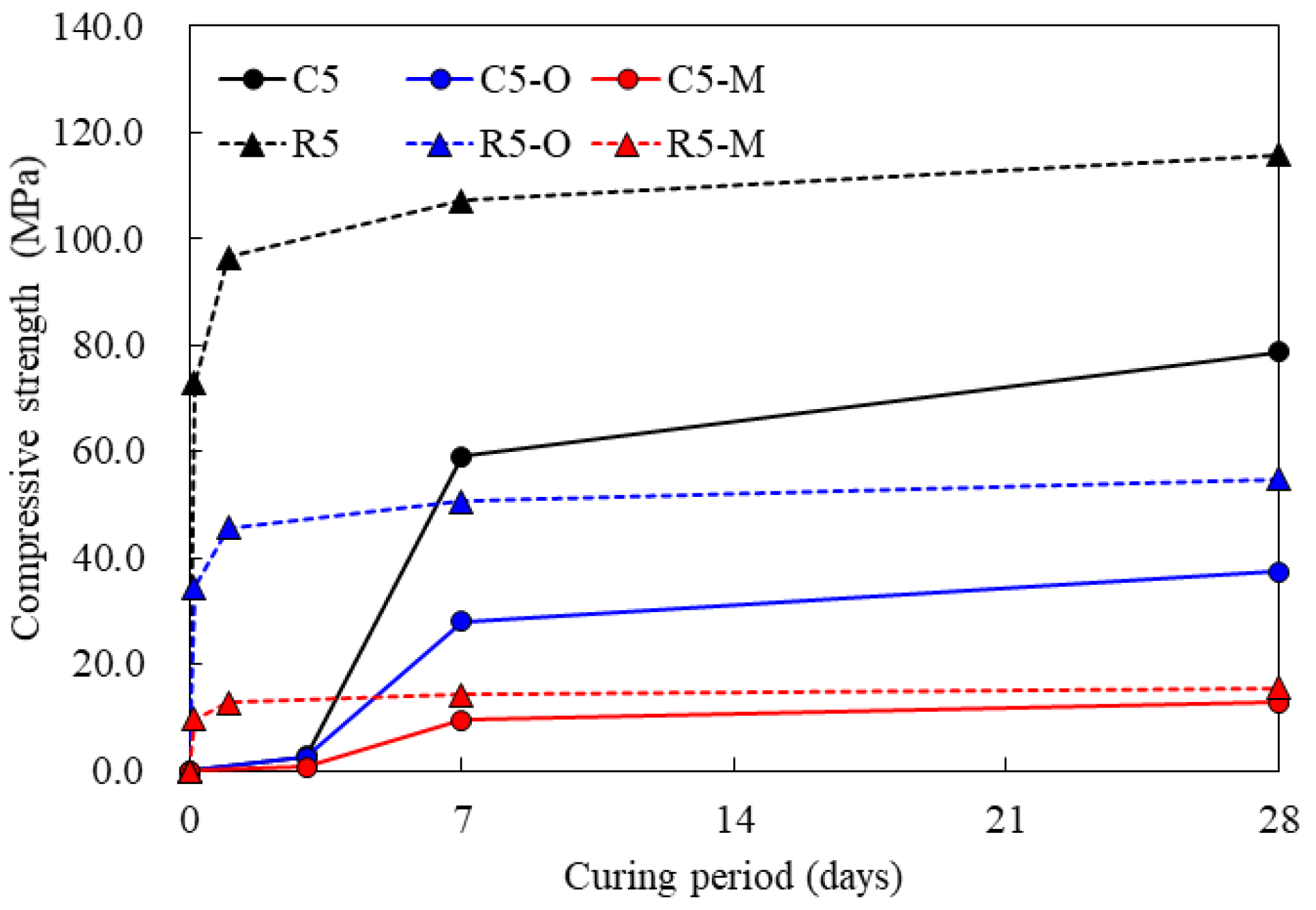
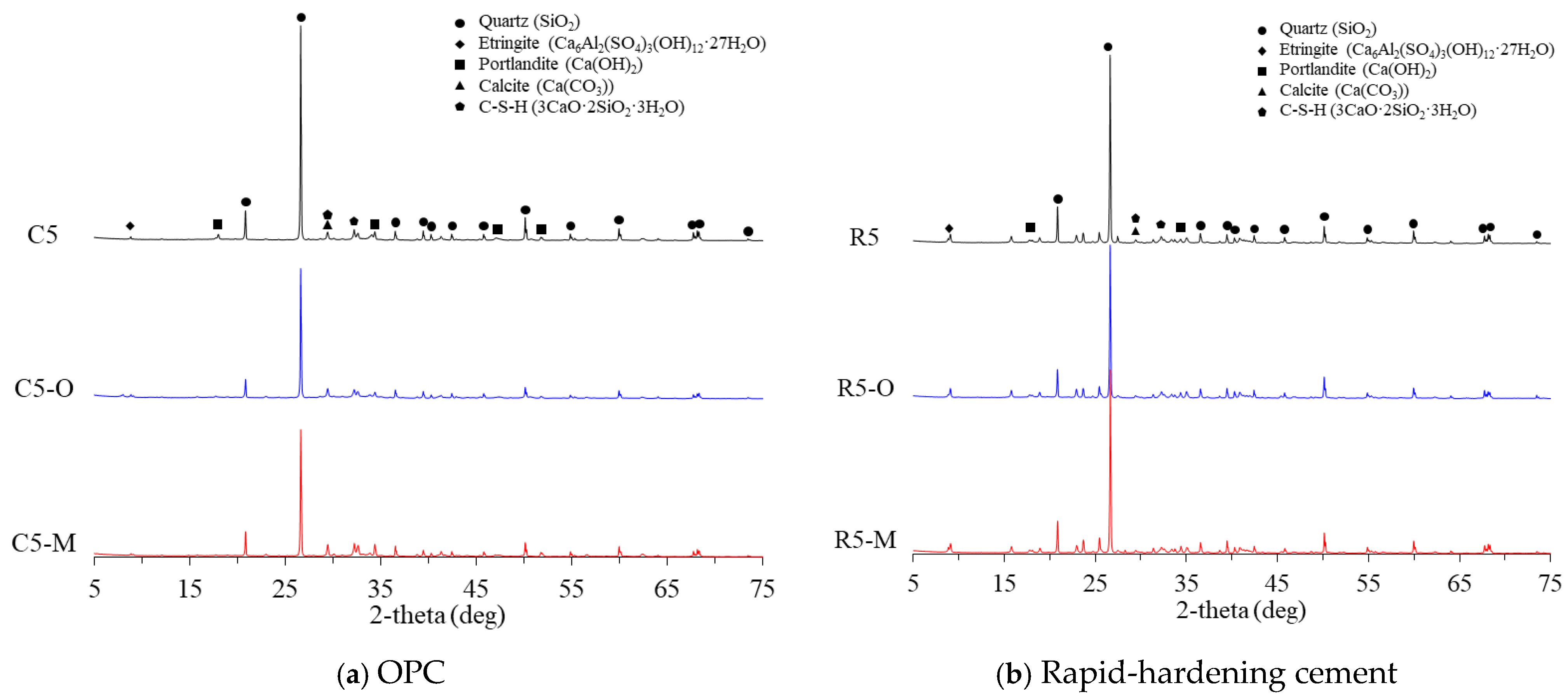
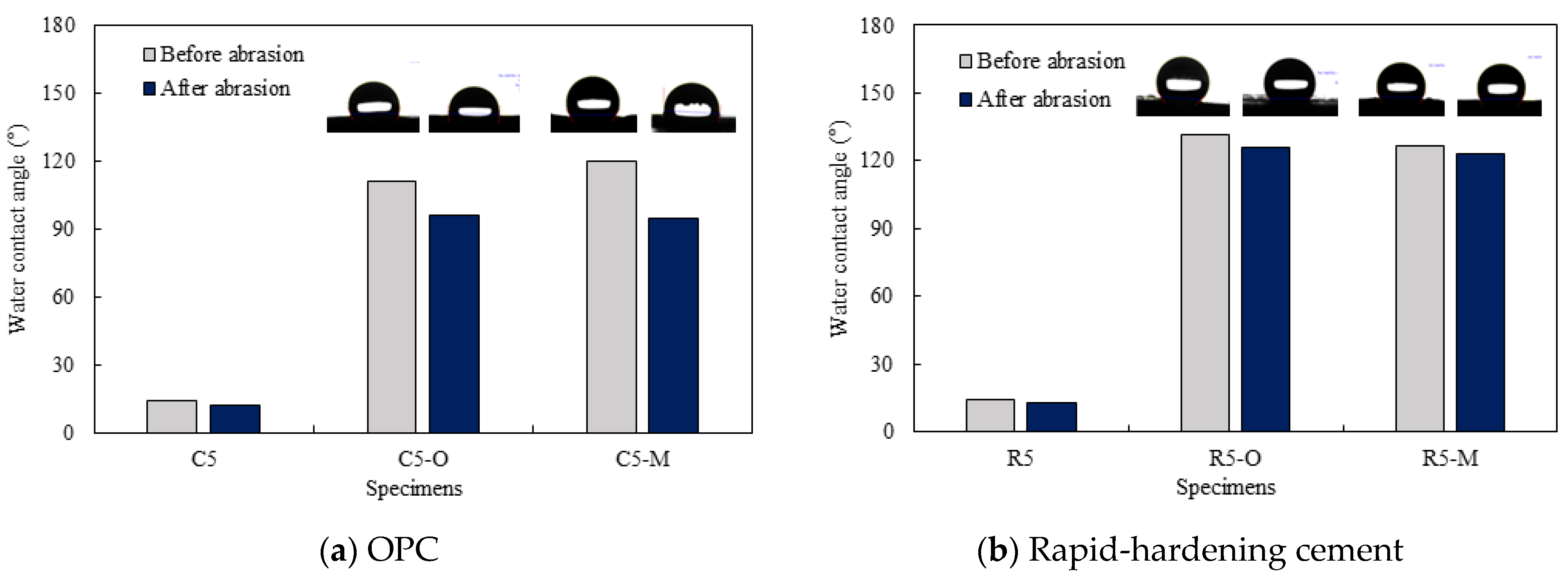
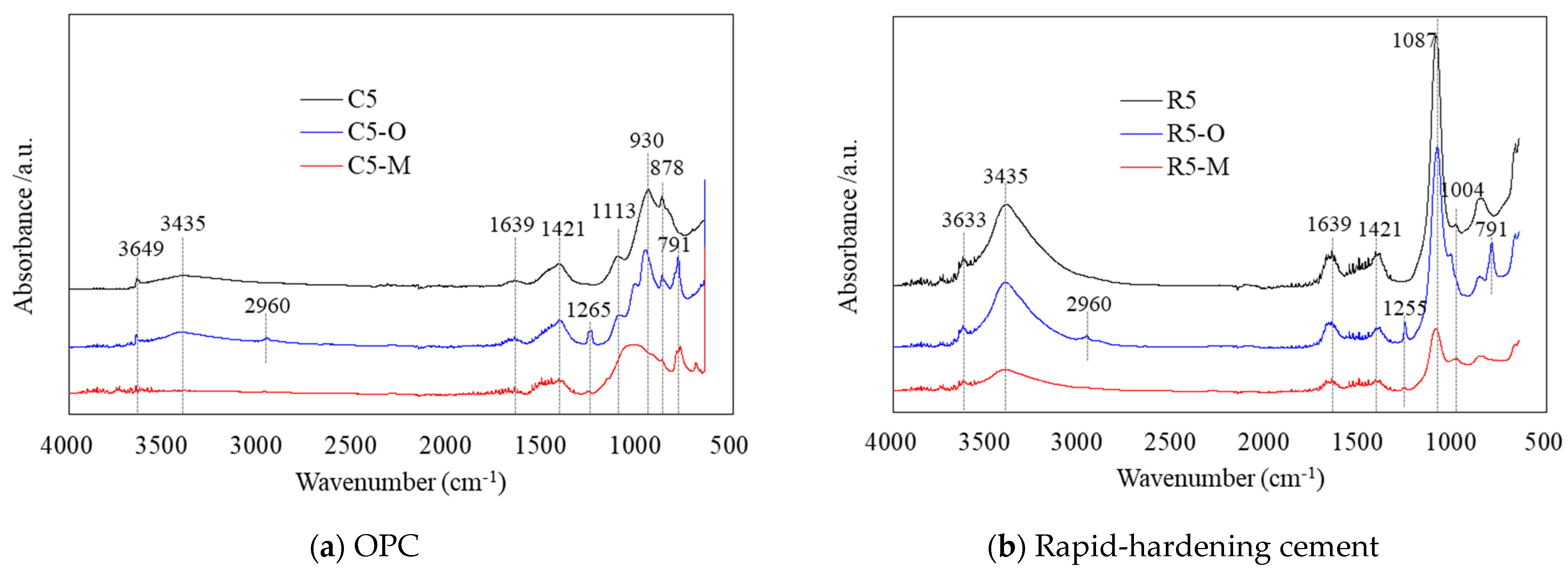
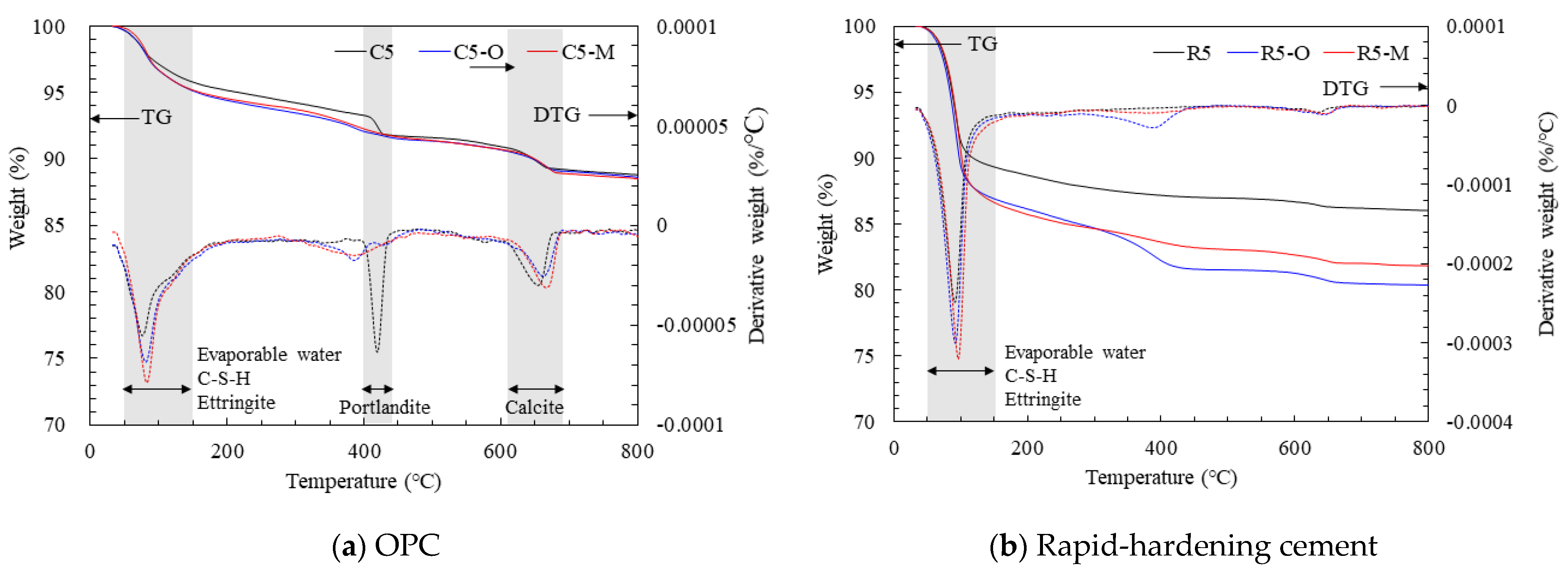
In this study, the compressive strength and water contact angle of mortar specimens prepared by mixing two types of water repellent with ordinary Portland cement (OPC) and rapid-hardening cement mortar were measured before and after surface abrasion. In addition, the hydration products and chemical bonding of cement mortar with the repellents were examined using X-ray diffraction (XRD), thermogravimetry-differential thermal analysis (TG-DTA), and Fourier-transform infrared spectroscopy (FT-IR) to evaluate the performance of these cement mortar mixtures as repair materials. We found that the fast-hardening cement mortar mixture containing the oligomer water repellent showed the best performance with a high compressive strength and large water contact angle. With the oligomer water repellent, the rapid-hardening cement mortar mixture showed contact angles of 131° and 126° even after a 2 mm abrasion, thereby confirming that the water repellent secured hydrophobicity through strong bonding with the entire cement mortar as well as its surface. The compressive strengths were found to be 34.5 MPa at 3 h and 54.8 MPa at 28 days, confirming that hydration occurred well despite the addition of water repellent.
Keywords: silane; siloxane; water repellents; hydrophobic; contact angle; cement mortar; rapid-hardening cement; repair mortar silane; siloxane; water repellents; hydrophobic; contact angle; cement mortar; rapid-hardening cement; repair mortar