Application of a Thermo-Hydrodynamic Model of a Viscous Torsional Vibration Damper to Determining Its Operating Temperature in a Steady State

Abstract
:1. Introduction
- Engine designs;
- Types of ignition;
- Power supply and cooling system designs;
- Piston and crank systems;
- Materials used in the production of engine parts;
- General methodology of designing selected engine parts, etc.
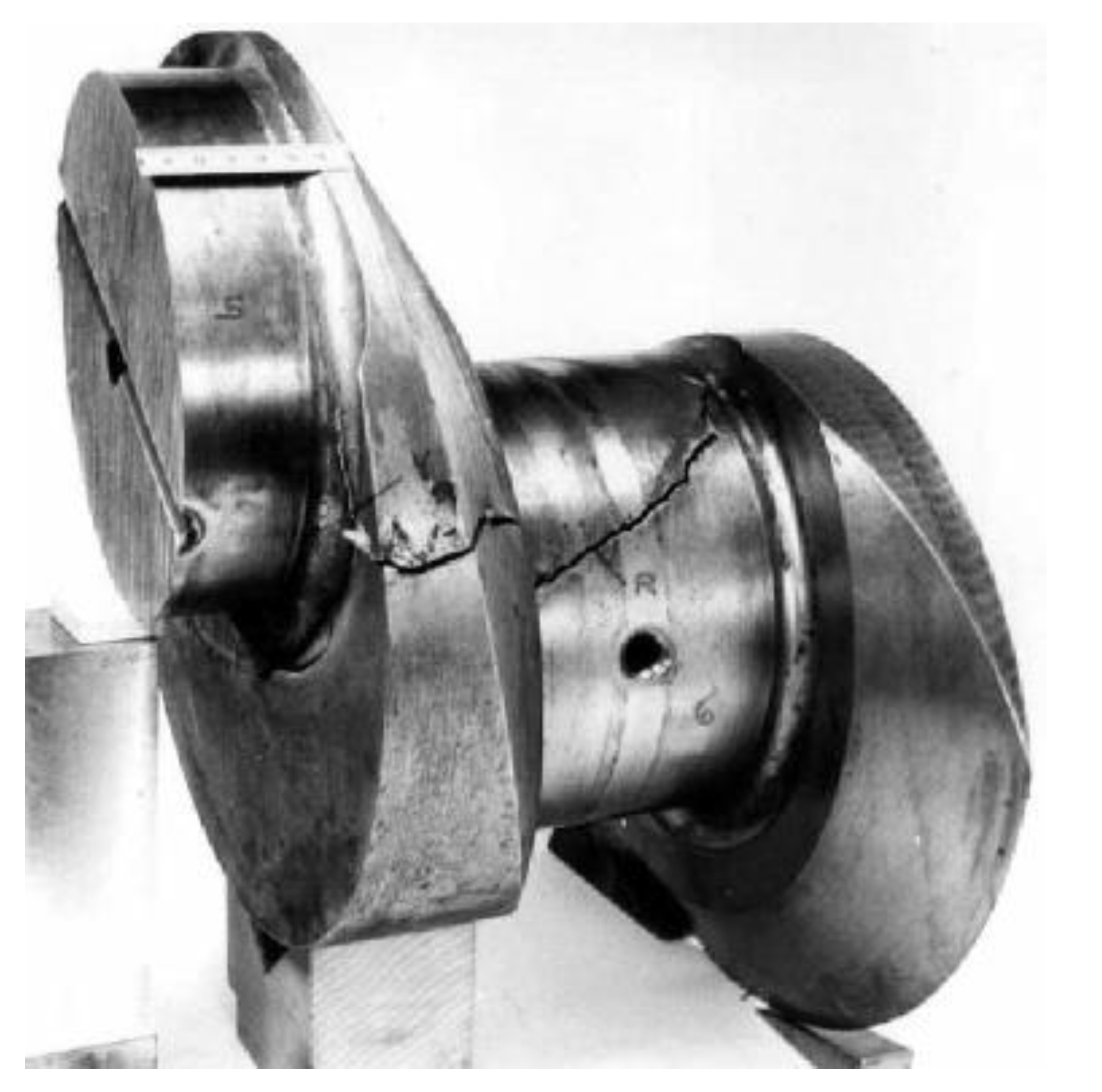
2. Torsional Vibrations of the Crankshaft and Methods of Their Elimination
- Change of rotational speeds of the engine (change of the operating speed range of the engine);
- Change of the natural frequency of vibrations of the entire system;
- Change in the course of exciting forces;
- Use of vibration dampers.
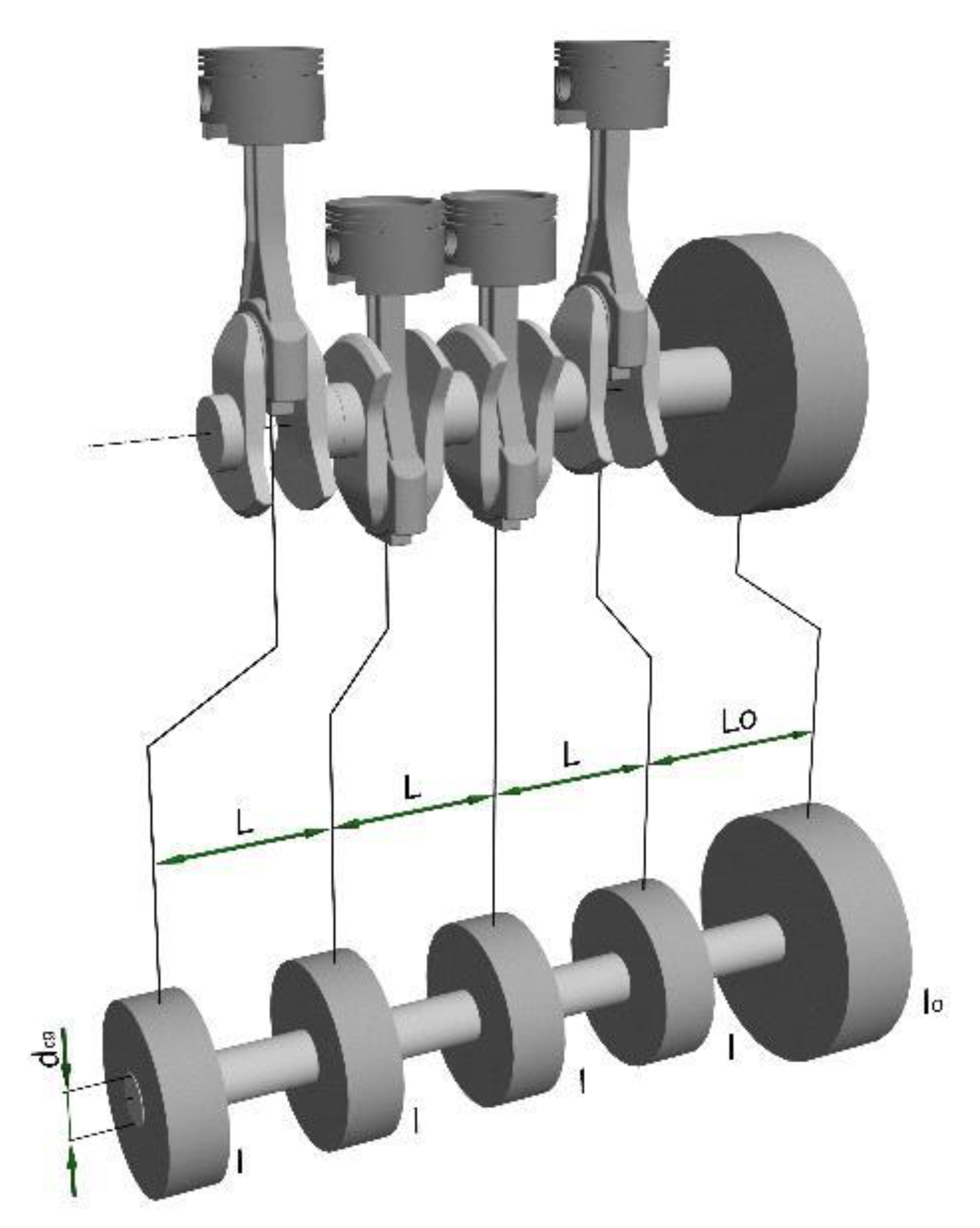
- Create a substitute vibrating model of an actual drive system (Figure 6);
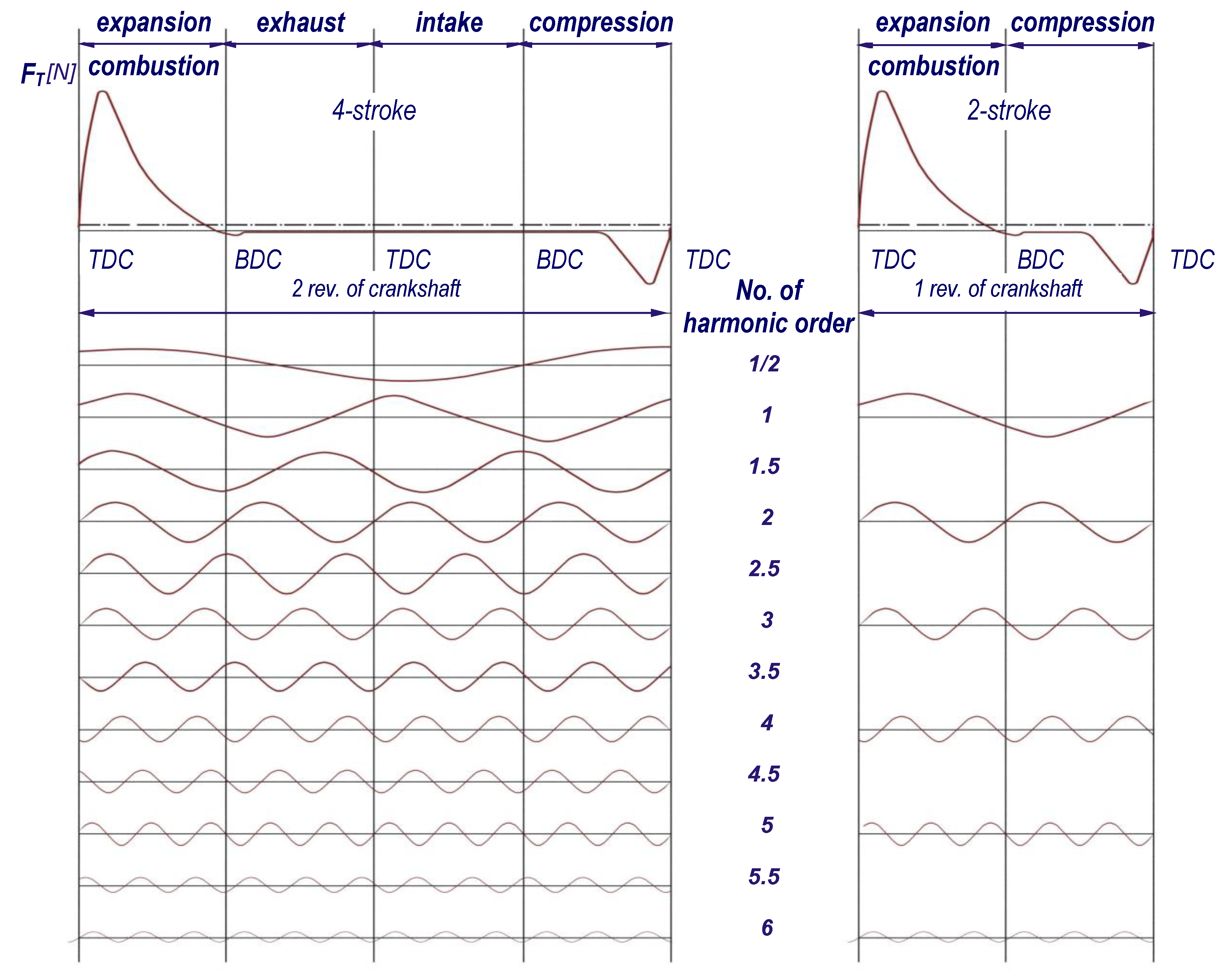
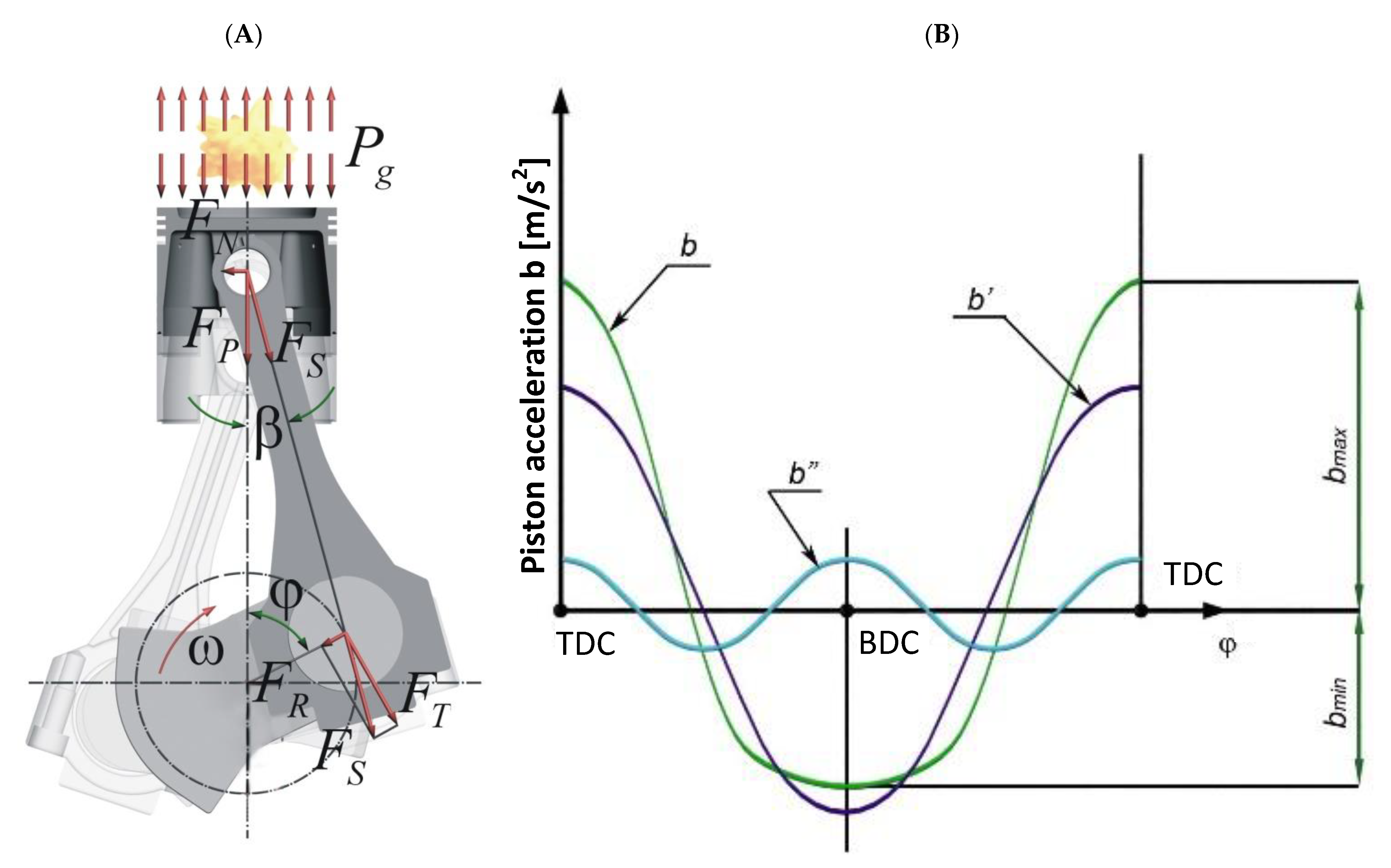
- Determine the course of the tangential forces FT as a function of the shaft rotation angle φ and carry out their harmonic analysis, if the data were not supplied by the engine manufacturer;
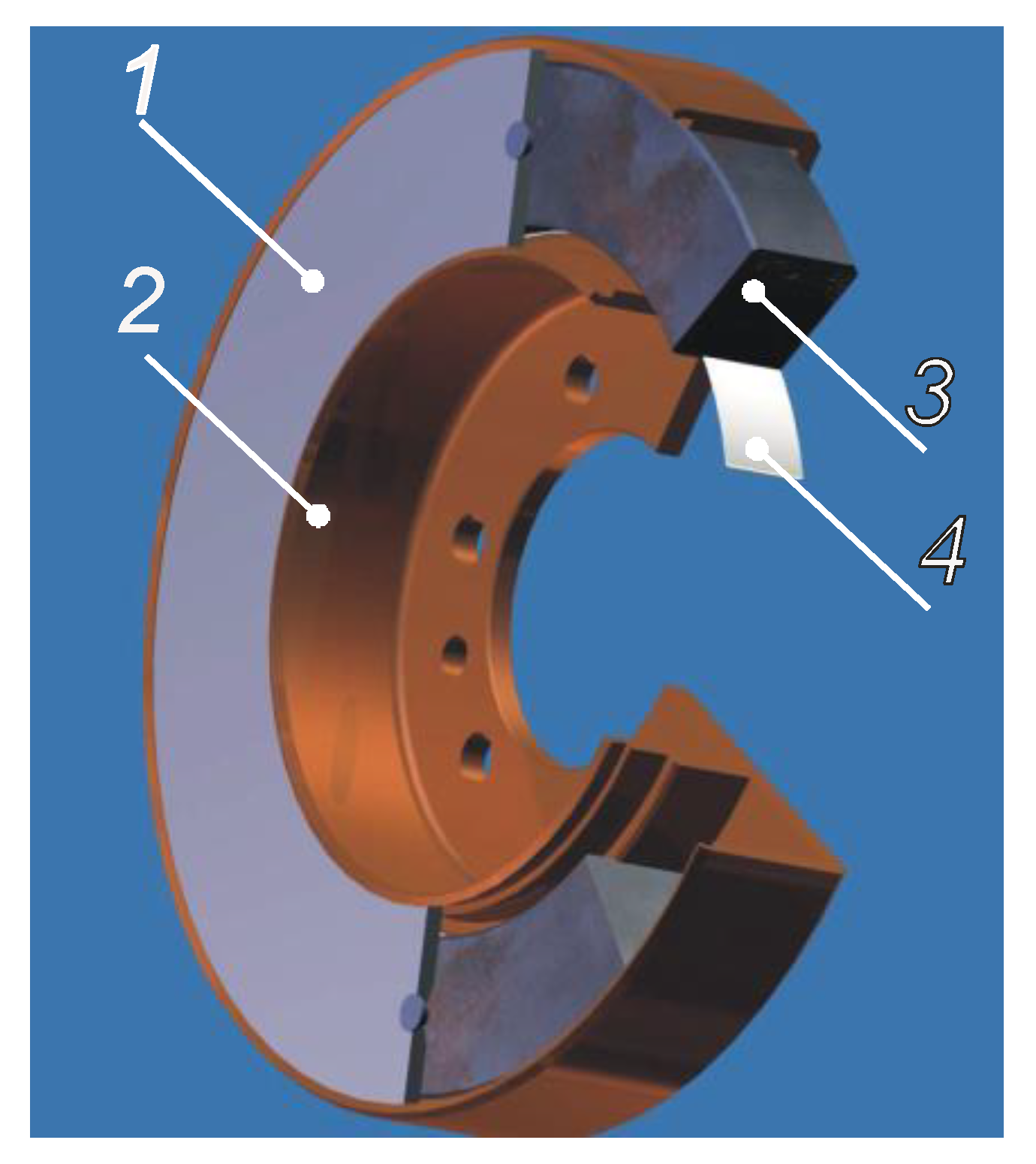
- Determine the basic geometrical parameters of the damper;
- Calculate the mass moment of inertia of the inertia ring and the damper housing;
- Determines the size of clearances in the damper;
- Determine the viscosity of the damping fluid;
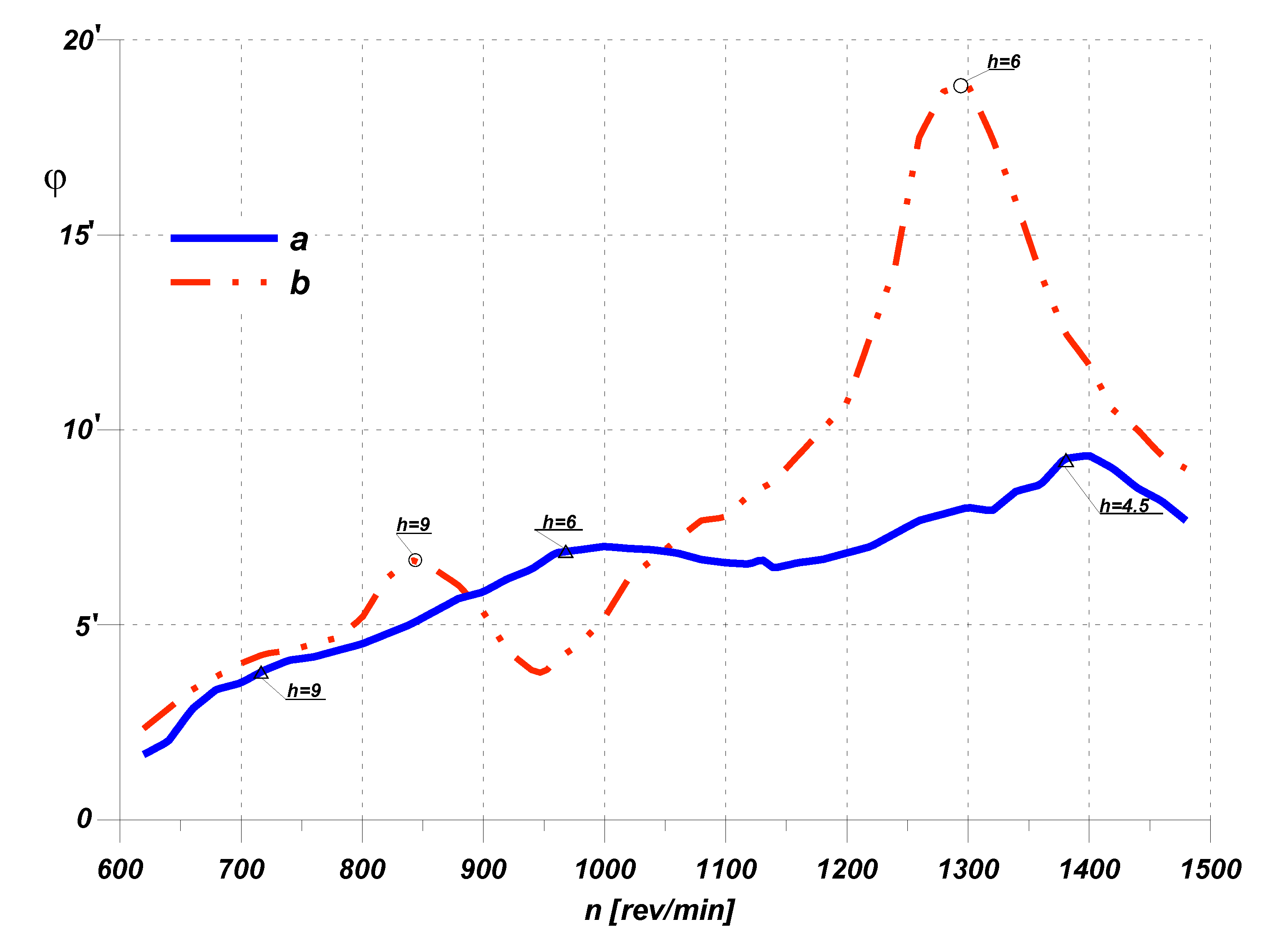
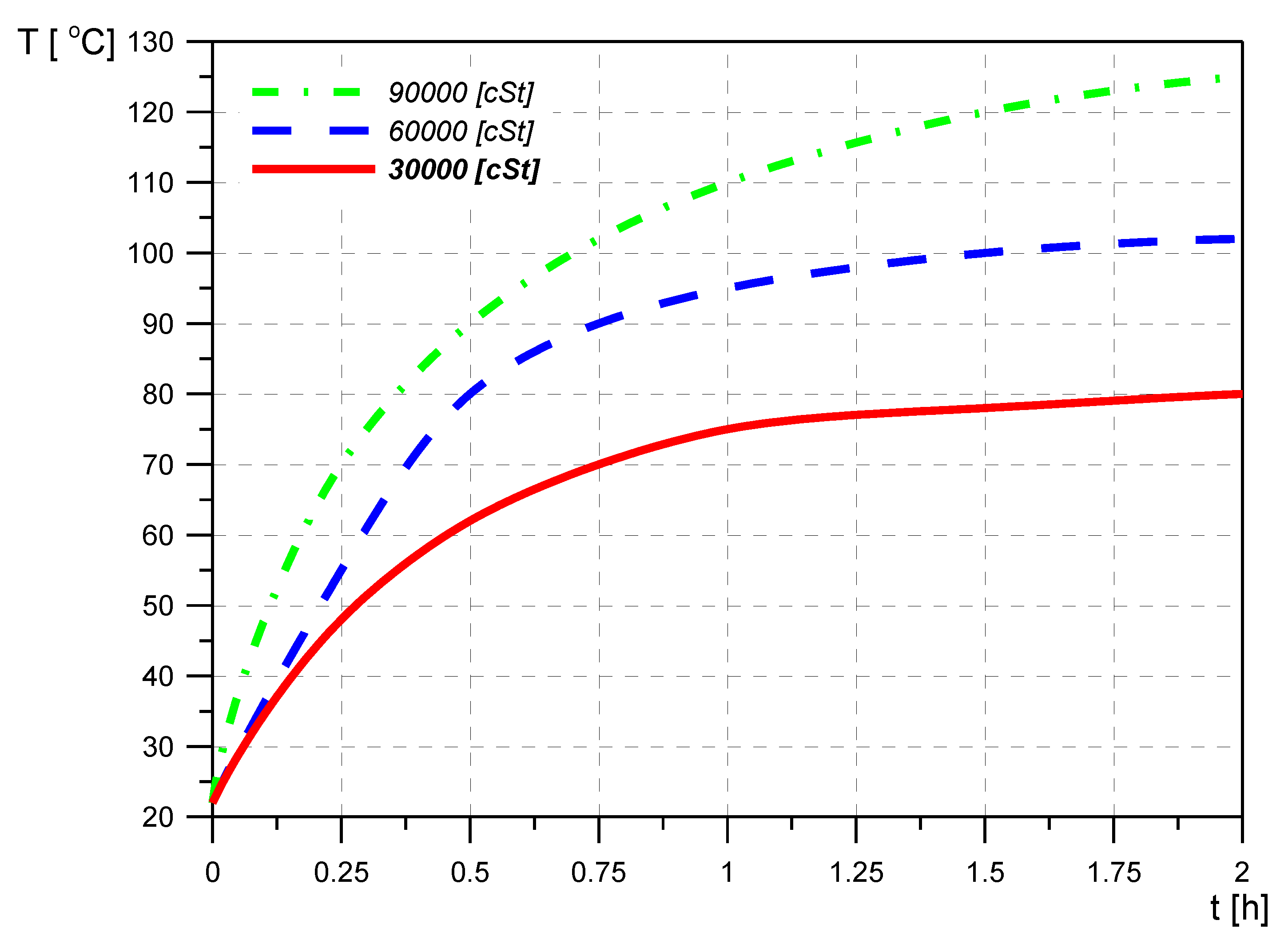
- Calculate the amplitude of resonant vibrations of the free end of the shaft with and without a damper and check the damper thermally in the end phase.
3. The Concept of a Thermo-Hydrodynamic Model of a Torsional Vibration Damper
- The value describing the intensity of heat flow through the damper housing to the environment is the heat transfer coefficient α (W/m2 °C) (in the first stage of calculations it was assumed that α = const [18]);
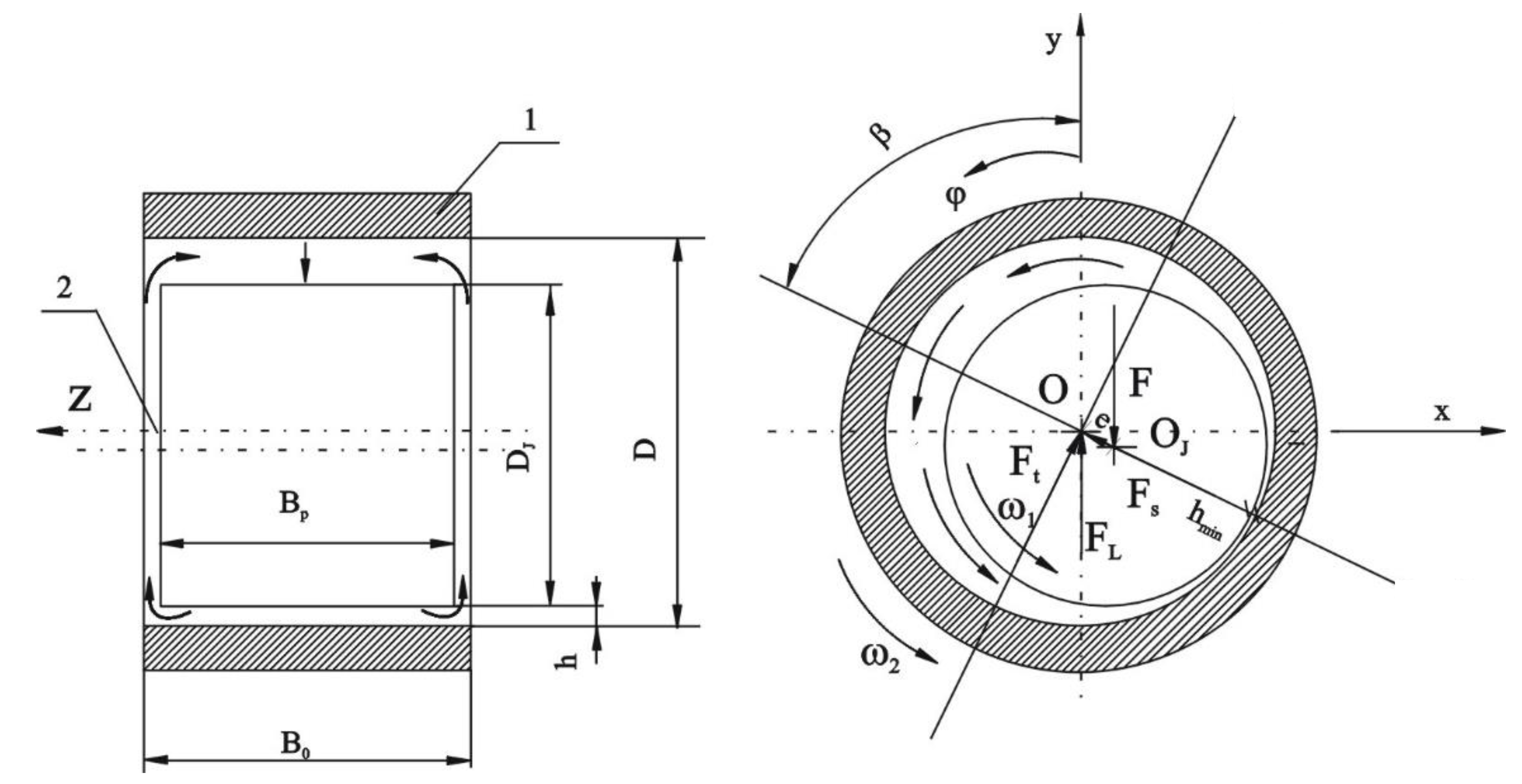
- The model presented in Figure 12 is described by equations taking into account:
- Geometric parameters (height) of the oil film h as a function of relative eccentricity ε:
- CR = 0.5 (D − DJ)—radial clearance between housing and ring;
- D—internal diameter of the housing;
- DJ—outer diameter of the ring;
- φ—angular coordinate;
- β—inclination angle of the center line of the inertia ring and the housing;
- e—ring and housing position eccentricity;
- ε—relative eccentricity.
- Pressure distribution in the damper oil film (the equation was derived from the Navier–Stokes equations):
- p—oil film pressure;
- η(T)—dynamic viscosity of the oil;
- T—oil temperature;
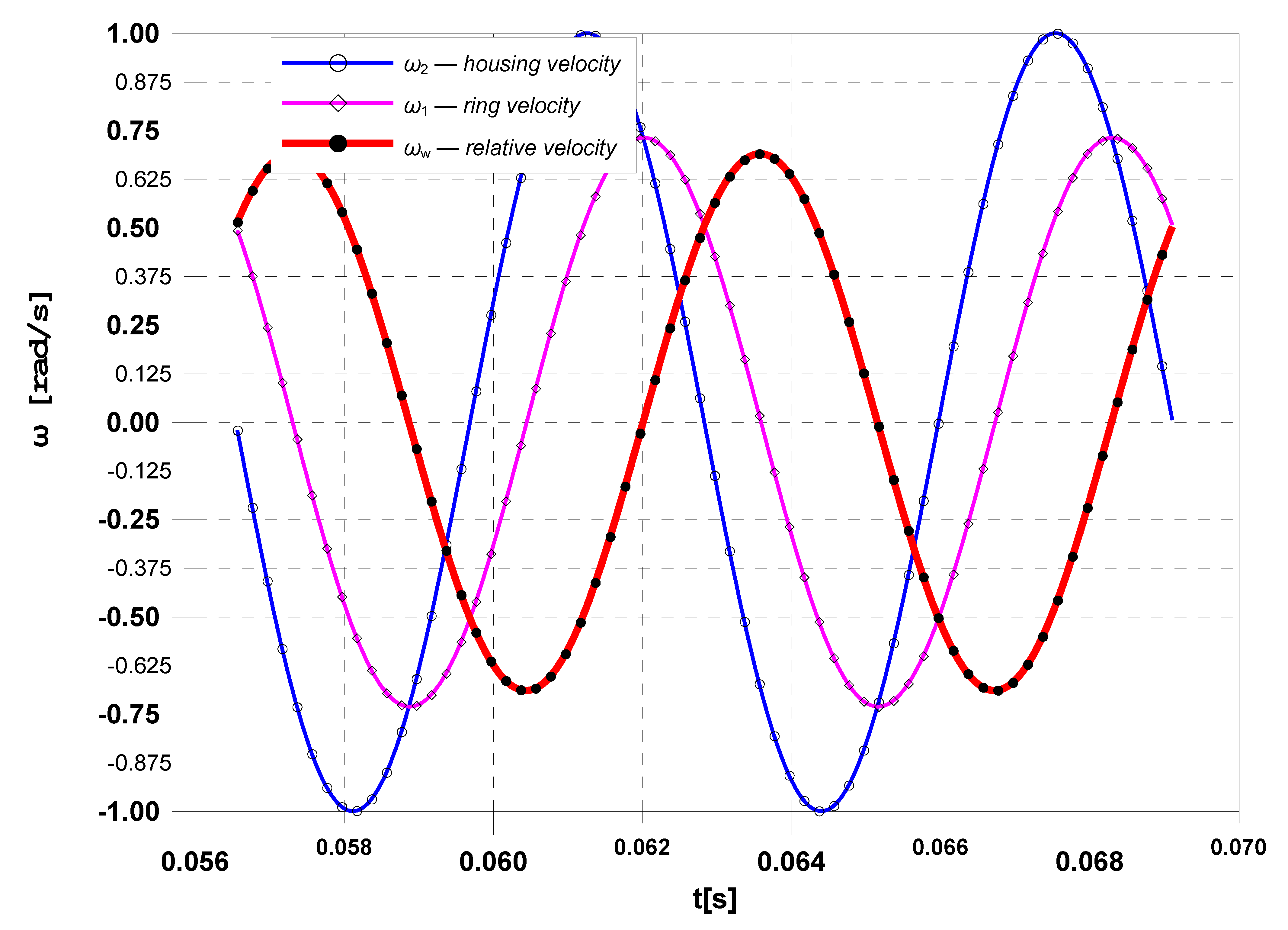
- ωw = ω2 − ω1—relative angular velocity.
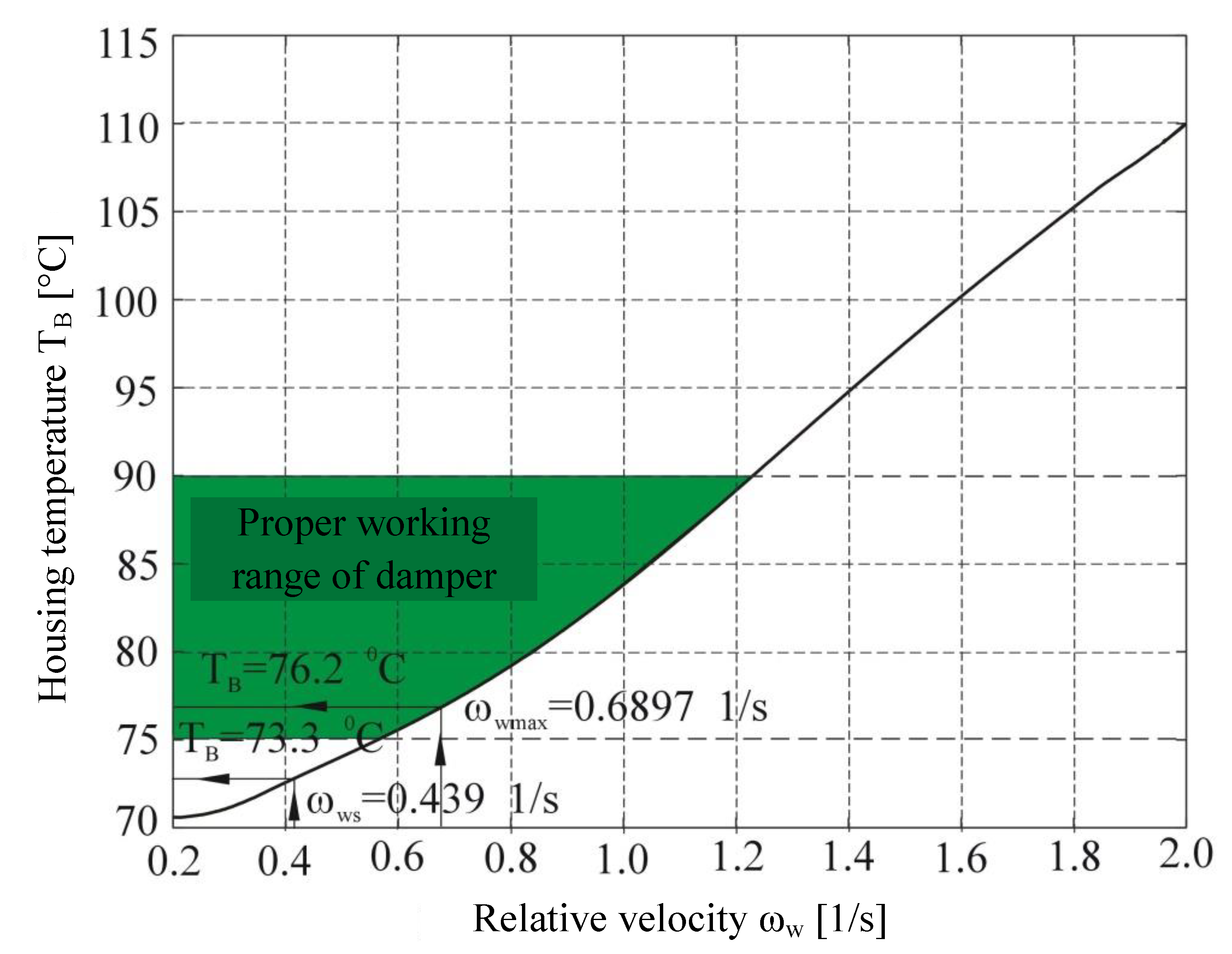
- Damper housing temperature TB:
- T0—T0—ambient temperature;
- ff—fluid friction coefficient;
- F—ring weight;
- α—heat transfer coefficient;
- B0—width of the housing;
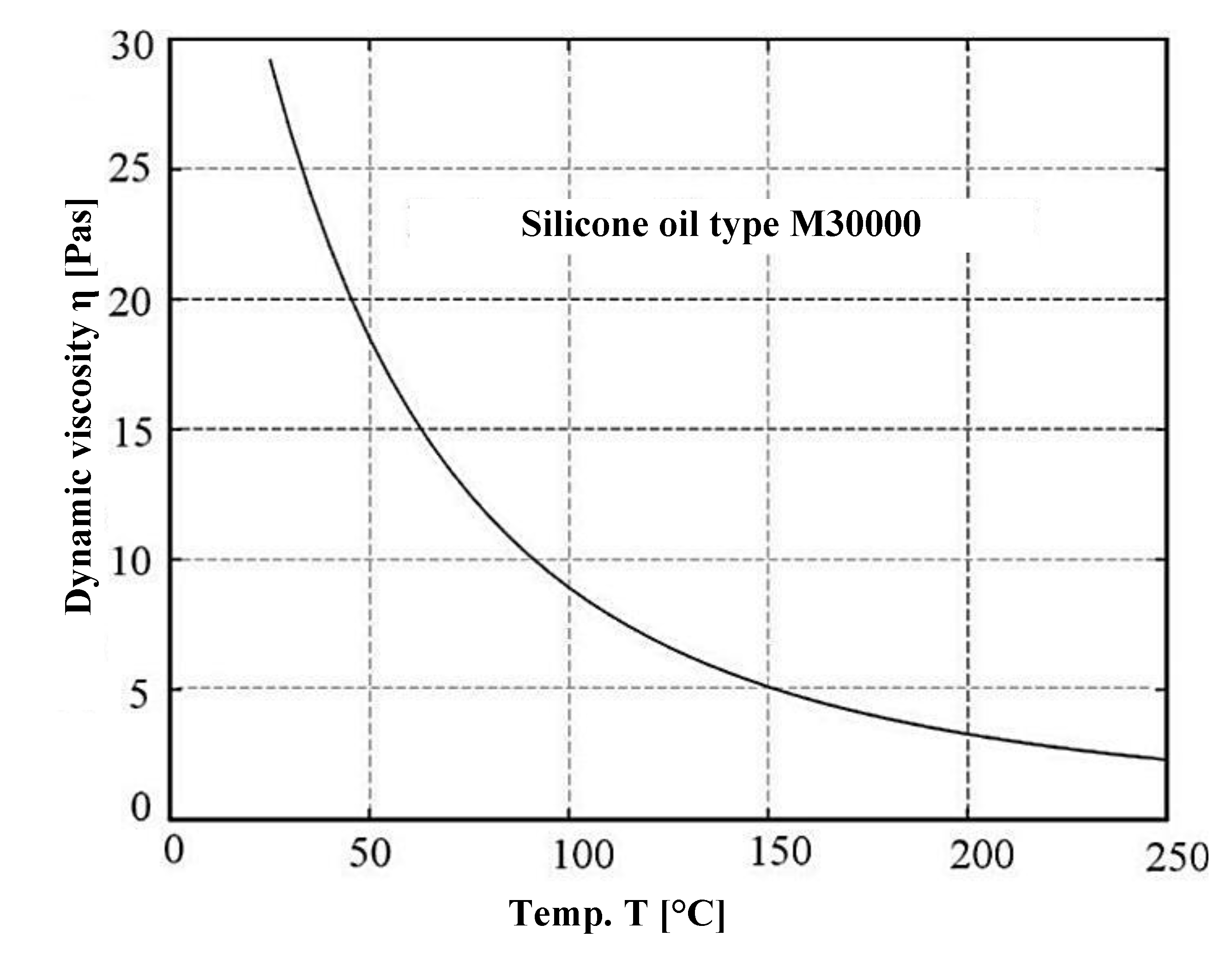
- Thermophysical properties of silicone oil M30000 taking into account viscosity changes as a function of temperature according to Clearco Products Co., Inc. (Willow Grove, PA, USA).
- —kinematic viscosity;
- ρ(T)—oil density.
4. Calculation of the Working Temperature of a Viscous Torsional Vibration Damper
5. Analysis of Research Results and Conclusions
Author Contributions
Funding
Institutional Review Board Statement
Informed Consent Statement
Data Availability Statement
Conflicts of Interest
Abbreviations
| D = 2R | internal diameter of the housing (m) |
| DJ = 2RJ | outer inertia ring diameter (m) |
| CR = R − RJ | radial clearance (m) |
| B0 | width of the housing (m) |
| Bp | width of the inertia ring (m) |
| h | oil film height (m) |
| hmin | minimum oil film height (m)) |
| x = j × R, y, z | Cartesian coordinate system |
| φ | angular coordinate (rad) |
| ω1 | angular velocity of the inertia ring (rad/s) |
| ω2 | angular velocity of the housing (rad/s) |
| ωw = ω2 − ω1 | relative angular velocity of the housing and inertia ring (rad/s) |
| O | center position of the housing |
| OJ | center position of the ring |
| F | inertia ring weight (N) |
| FL | hydrodynamic buoyancy force (N) |
| e = | ring and housing position eccentricity (m) |
| ε = e/CR | relative eccentricity (–) |
| β | angle of the center line of the inertia ring (OJ) and the housing (O) (rad) |
| p | oil film pressure (N/m2) |
| T | oil temperature (°C) |
| T0 | ambient temperature (°C) |
| TB | damper housing temperature (°C) |
| η(T) | dynamic viscosity of the oil (Pas) |
| ρ(T) | oil density (kg/m3) |
| α(T) | heat transfer coefficient (W/m2 °C) |
References
- Wróblewski, P. Technology for Obtaining Asymmetries of Stereometric Shapes of the Sealing Rings Sliding Surfaces for Selected Anti-Wear Coatings; SAE Technical Paper 2020-01-2229; Event: SAE Powertrains, Fuels & Lubricants Meeting; SAE International: Warrendale, PA, USA, 2020. [Google Scholar] [CrossRef]
- Dziubak, T.; Dziubak, S.D. Experimental Study of Filtration Materials Used in the Car Air Intake. Materials 2020, 13, 3498. [Google Scholar] [CrossRef] [PubMed]
- Dziubak, T. Material Properties Analysis with Addition of Nanofibres for Air Intake Filtration in Internal Combustion Engines. Int. J. Automot. Mech. Eng. IJAME 2021, 18, 8621–8636. [Google Scholar] [CrossRef]
- Bernhardt, M.; Dobrzyński, S.; Loth, E. Silniki Samochodowe, 4th ed.; WkiŁ: Warszawa, Poland, 1988. [Google Scholar]
- Brun, R. Szybkobieżne Silniki Wysokoprężne; WkiŁ: Warszawa, Poland, 1973. [Google Scholar]
- Ciesielski, S.; Lus, T. Okrętowe Tłokowe Silniki Spalinowe—Budowa i Zasada Działani; Wydawnictwo Akademickie AMW: Gdynia, Poland, 2009. [Google Scholar]
- Homik, W. Wiskotyczne Tłumiki Drgań Skrętnych, Studia i rozprawy; Wydawnictwo Naukowe Instytutu Technologii Eksploatacji-PIB: Radom, Poland, 2015; ISBN 978-83-7789-377-7. [Google Scholar]
- Homik, W. Szerokopasmowe Tłumiki Drgań Skrętnych, Biblioteka Problemów Eksploatacji; Wydawnictwo Naukowe Instytutu Technologii Eksploatacji—PIB: Radom, Poland, 2012; ISBN 978-83-7789-140-7. [Google Scholar]
- Song, M.-H.; Pham, X.D.; Vuong, Q.D. Torsional Vibration Stress and Fatigue Strength Analysis of Marine Propulsion Shafting System Based on Engine Operation Patterns. J. Mar. Sci. Eng. 2020, 8, 613. [Google Scholar] [CrossRef]
- Chen, M.; Ouyang, H.; Li, W.; Wang, D.; Liu, S. Partial Frequency Assignment for Torsional Vibration Control of Complex Marine Propulsion Shafting Systems. Appl. Sci. 2020, 10, 147. [Google Scholar] [CrossRef] [Green Version]
- Huang, Q.; Liu, H.; Cao, J. Investigation of Lumped-Mass Method on Coupled Torsional-longitudinal Vibrations for a Marine Propulsion Shaft with Impact Factors. J. Mar. Sci. Eng. 2019, 7, 95. [Google Scholar] [CrossRef] [Green Version]
- Jee, J.; Kim, C.; Kim, Y. Design Improvement of a Viscous-Spring Damper for Controlling Torsional Vibration in a Propulsion Shafting System with an Engine Acceleration Problem. J. Mar. Sci. Eng. 2020, 8, 428. [Google Scholar] [CrossRef]
- Drewing, S.; Witkowski, K. Spectral Analysis of Torsional Vibrations Measured by Optical Sensors, as a Method for Diagnosing Injector Nozzle Coking in Marine Diesel Engines. Sensors 2021, 21, 775. [Google Scholar] [CrossRef] [PubMed]
- Mahdisoozani, H.; Mohsenizadeh, M.; Bahiraei, M.; Kasaeian, A.; Daneshvar, A.; Goodarzi, M.; Safaei, M.R. Performance Enhancement of Internal Combustion Engines through Vibration Control: State of the Art and Challenges. Appl. Sci. 2019, 9, 406. [Google Scholar] [CrossRef] [Green Version]
- Zhong, B.; Deng, B.; Zhao, H. Simulation Model and Method for Active Torsional Vibration Control of an HEV. Appl. Sci. 2019, 9, 34. [Google Scholar] [CrossRef] [Green Version]
- Homik, W. Zmiany lepkości cieczy w czasie eksploatacji wiskotycznego tłumika drgań. Przegląd Mech. 2009, 3, 20–23. [Google Scholar]
- Homik, W.; Markowski, T. Temperature as a source of information about the technical condition viscous torsion damper. In Solid State Phenomena; Trans Tech Publications: Freienbach, Switzerland, 2015; Volume 236, pp. 78–84. [Google Scholar] [CrossRef]
- DIN 31652, Teil 1, 2, 3: Hydrodynamische Radial—Gleitlager im stationärem Betrieb; DIN: Berlin, Germany, 2017.
- Barwell, F.T. Bearing System. Principles and Practice; Oxford University Press: Oxford, UK, 1979. [Google Scholar]
- Kaniewski, W. Warunki brzegowe diatermicznego filmu smarnego. Zesz. Nauk. Politech. Łódzkiej. Zesz. Spec. 1997, z.14, 7–22. [Google Scholar]
- Mazurkow, A. Teoria Smarowania Łożysk Ślizgowych; Oficyna Wydawnicza Politechniki Rzeszowskiej: Rzeszów, Poland, 2019. [Google Scholar]






| Geometric, Physical and Kinematic Parameters. | |
|---|---|
| 1. Outer diameter of the ring | DJ = 2RJ = 207.925 mm |
| 2. Internal diameter of the housing | D = 2R = 208.109 mm |
| 3. Radial clearance | CR = R − Rj = 0.092 mm |
| 4. Inertia ring width | Bp = 33.00 mm |
| 5. Inertia ring weight | F = 89.6 N |
| 6. Relative angular velocity | ωw = ω2 − ω1 = 0.4–2.0 1/s |
| 7. Kinematic viscosity of silicone oil | ν = 30,000 cSt |
| 8. Oil density | ρ = 970 kg/m3 |
Publisher’s Note: MDPI stays neutral with regard to jurisdictional claims in published maps and institutional affiliations. |
© 2021 by the authors. Licensee MDPI, Basel, Switzerland. This article is an open access article distributed under the terms and conditions of the Creative Commons Attribution (CC BY) license (https://creativecommons.org/licenses/by/4.0/).
Share and Cite
Homik, W.; Mazurkow, A.; Woś, P. Application of a Thermo-Hydrodynamic Model of a Viscous Torsional Vibration Damper to Determining Its Operating Temperature in a Steady State. Materials 2021, 14, 5234. https://doi.org/10.3390/ma14185234
Homik W, Mazurkow A, Woś P. Application of a Thermo-Hydrodynamic Model of a Viscous Torsional Vibration Damper to Determining Its Operating Temperature in a Steady State. Materials. 2021; 14(18):5234. https://doi.org/10.3390/ma14185234
Chicago/Turabian StyleHomik, Wojciech, Aleksander Mazurkow, and Paweł Woś. 2021. "Application of a Thermo-Hydrodynamic Model of a Viscous Torsional Vibration Damper to Determining Its Operating Temperature in a Steady State" Materials 14, no. 18: 5234. https://doi.org/10.3390/ma14185234
APA StyleHomik, W., Mazurkow, A., & Woś, P. (2021). Application of a Thermo-Hydrodynamic Model of a Viscous Torsional Vibration Damper to Determining Its Operating Temperature in a Steady State. Materials, 14(18), 5234. https://doi.org/10.3390/ma14185234