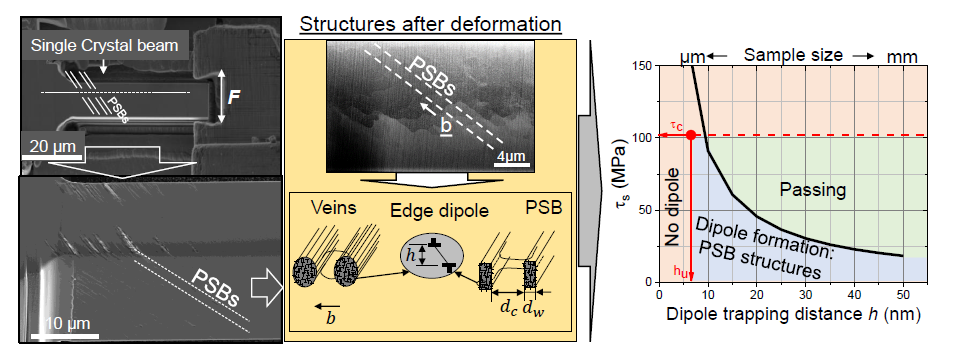
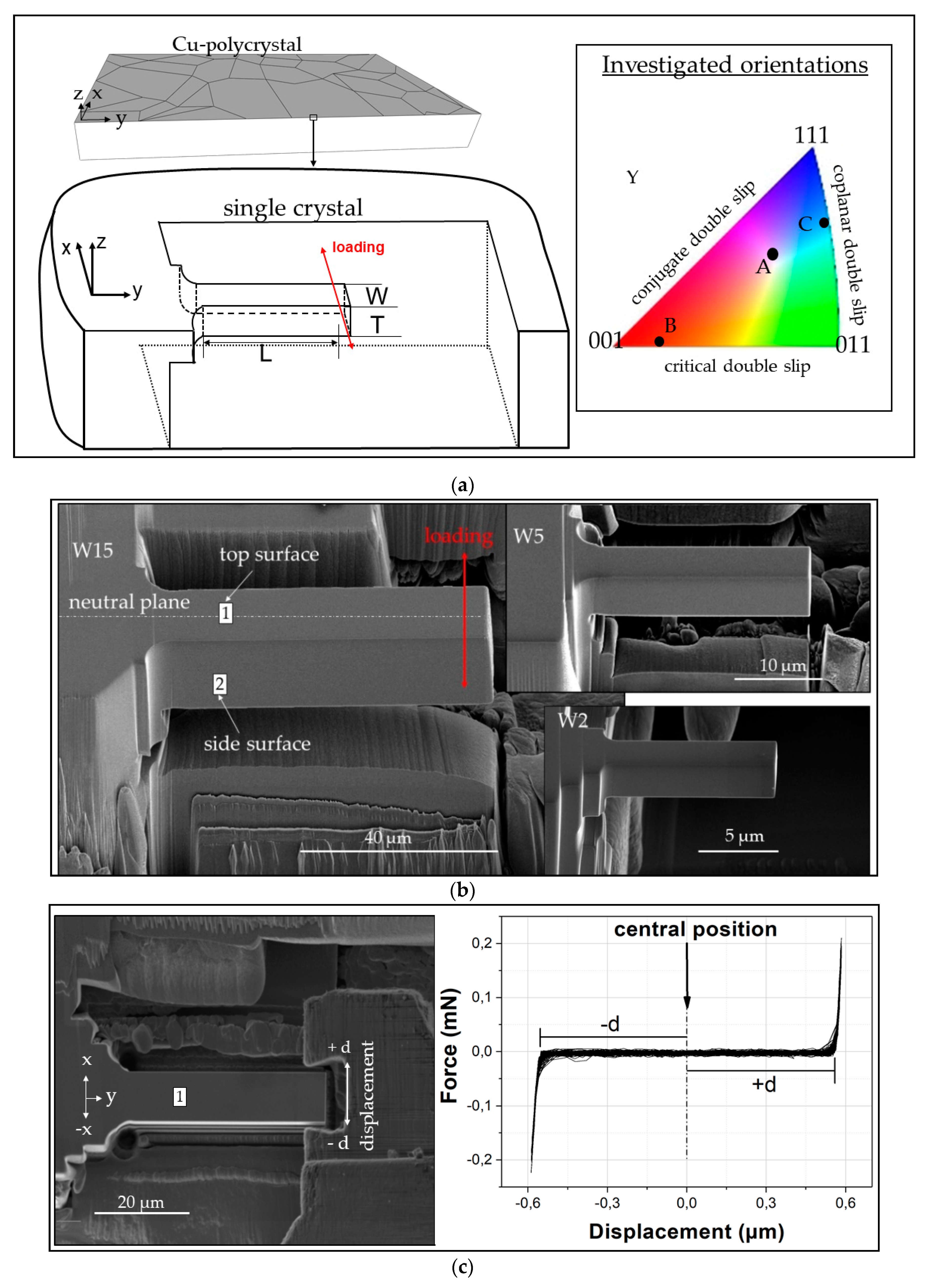
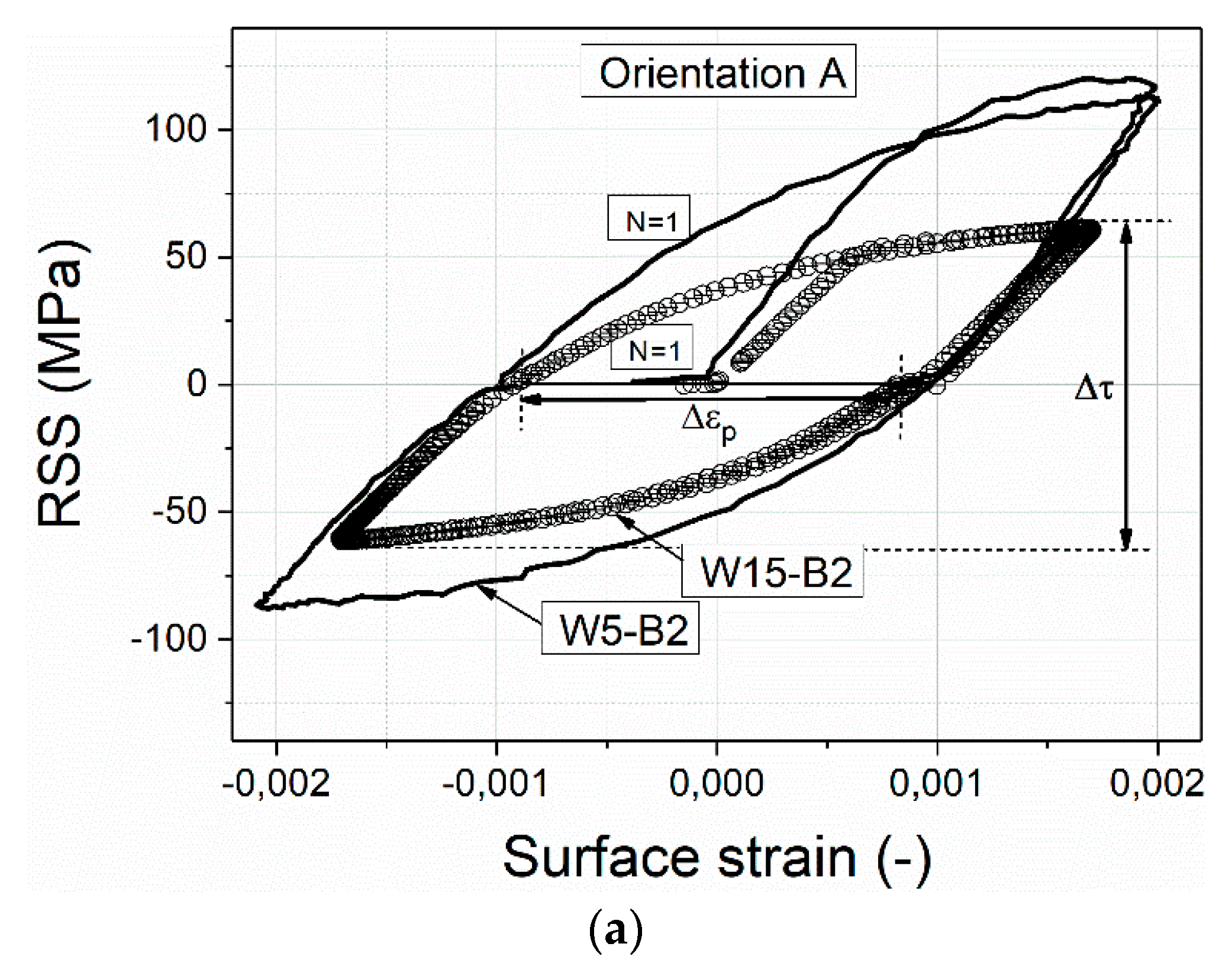
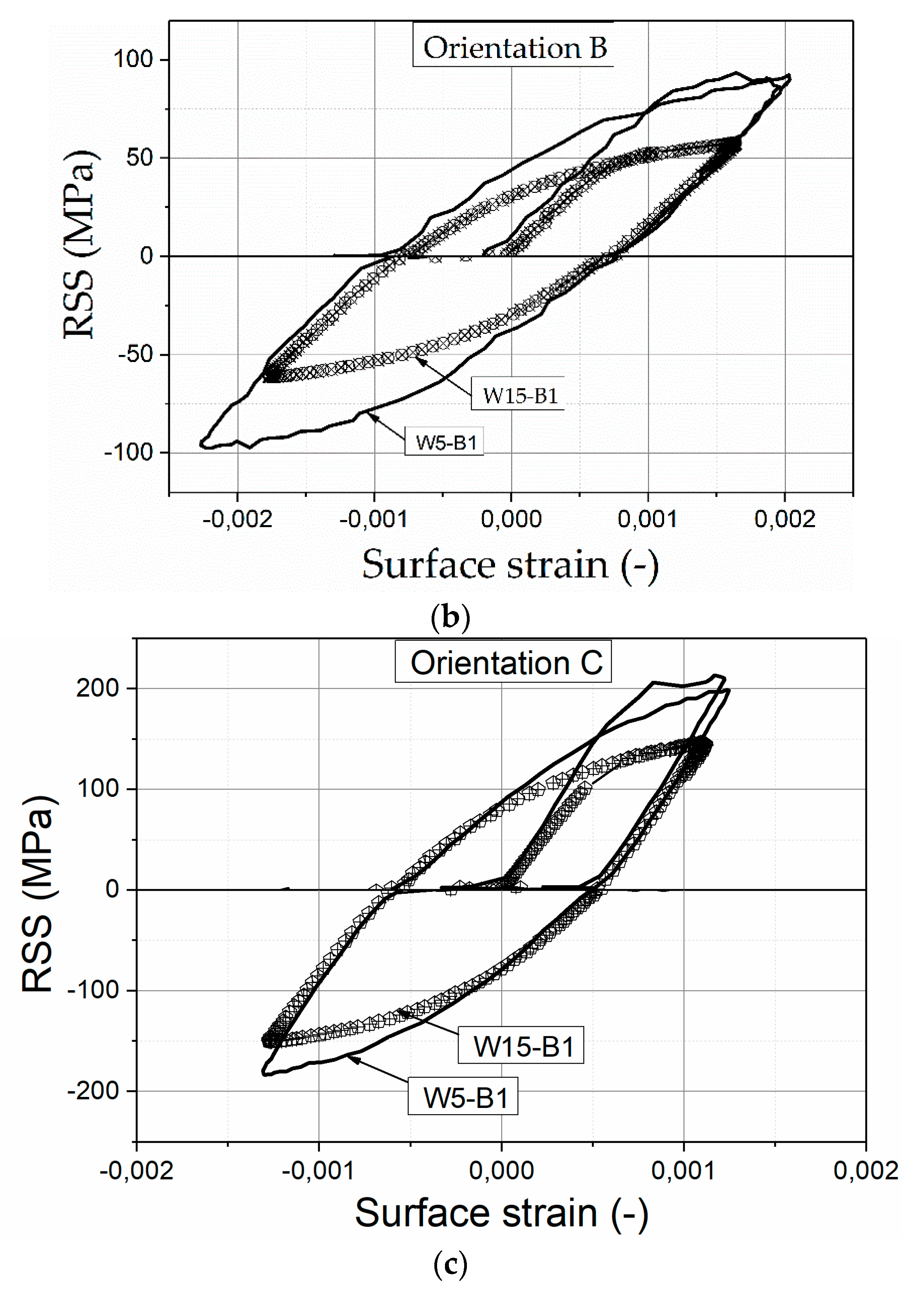
Effect of Sample Size and Crystal Orientation on the Fatigue Behaviour of Single Crystalline Microbeams

Abstract
Share and Cite
Rafael Velayarce, J.; Motz, C. Effect of Sample Size and Crystal Orientation on the Fatigue Behaviour of Single Crystalline Microbeams. Materials 2020, 13, 741. https://doi.org/10.3390/ma13030741
Rafael Velayarce J, Motz C. Effect of Sample Size and Crystal Orientation on the Fatigue Behaviour of Single Crystalline Microbeams. Materials. 2020; 13(3):741. https://doi.org/10.3390/ma13030741
Chicago/Turabian StyleRafael Velayarce, Jorge, and Christian Motz. 2020. "Effect of Sample Size and Crystal Orientation on the Fatigue Behaviour of Single Crystalline Microbeams" Materials 13, no. 3: 741. https://doi.org/10.3390/ma13030741
APA StyleRafael Velayarce, J., & Motz, C. (2020). Effect of Sample Size and Crystal Orientation on the Fatigue Behaviour of Single Crystalline Microbeams. Materials, 13(3), 741. https://doi.org/10.3390/ma13030741