Article

Chloride-Induced Corrosion of Steel in Alkali-Activated Mortars Based on Different Precursors

Department of Materials, Faculty of Civil Engineering, University of Zagreb, 10000 Zagreb, Croatia
*
Author to whom correspondence should be addressed.
Materials 2020, 13(22), 5244; https://doi.org/10.3390/ma13225244
Submission received: 29 October 2020 / Revised: 11 November 2020 / Accepted: 16 November 2020 / Published: 20 November 2020

Abstract

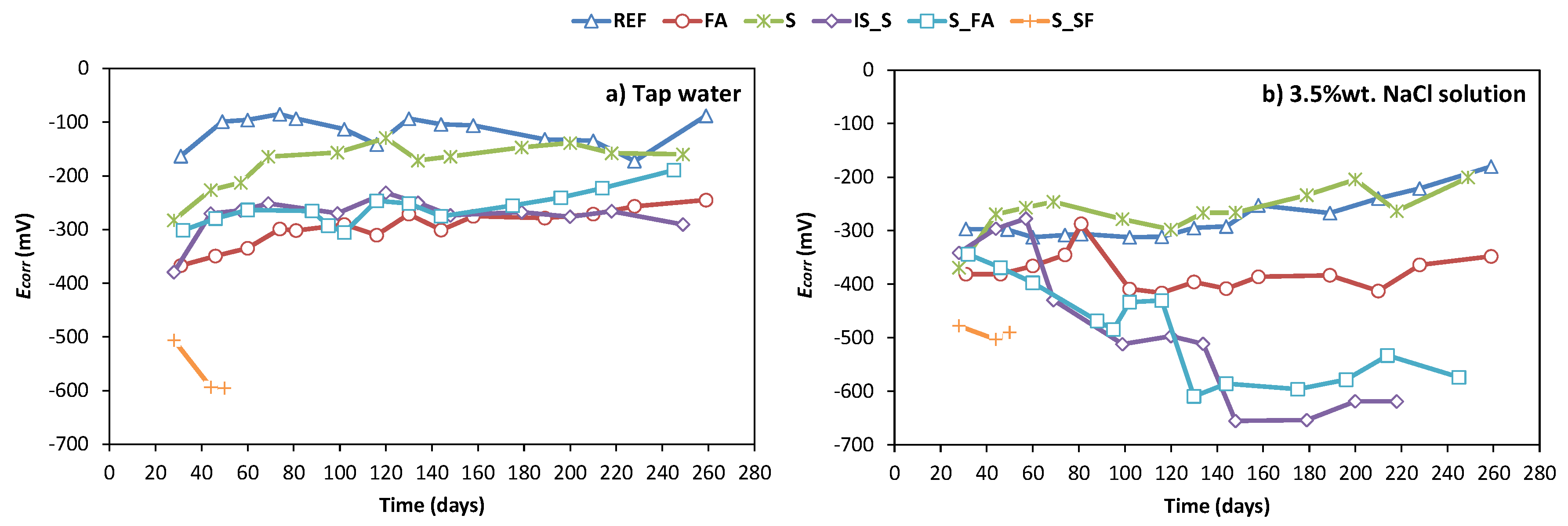
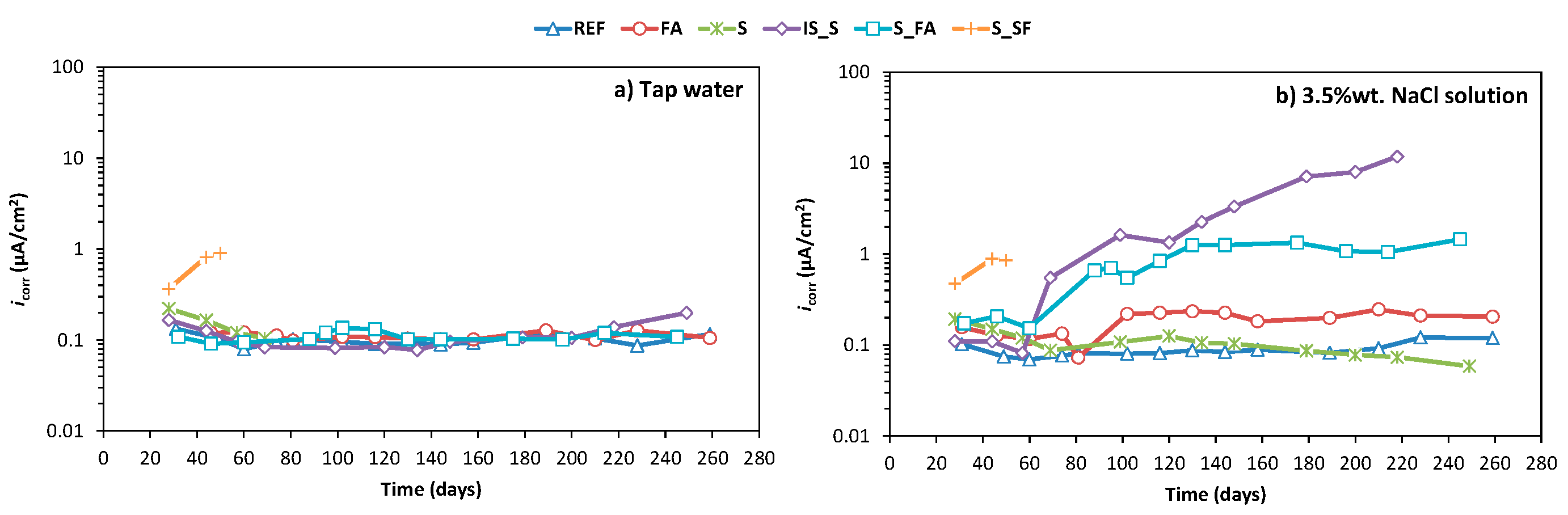
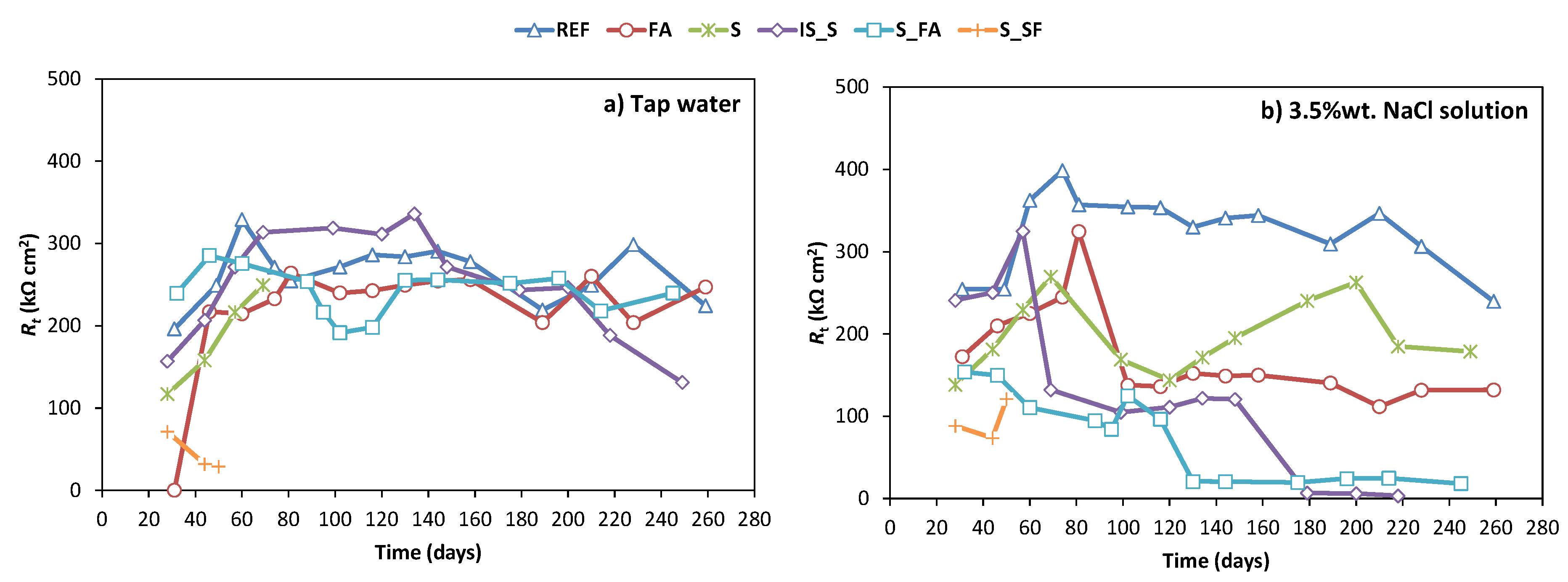
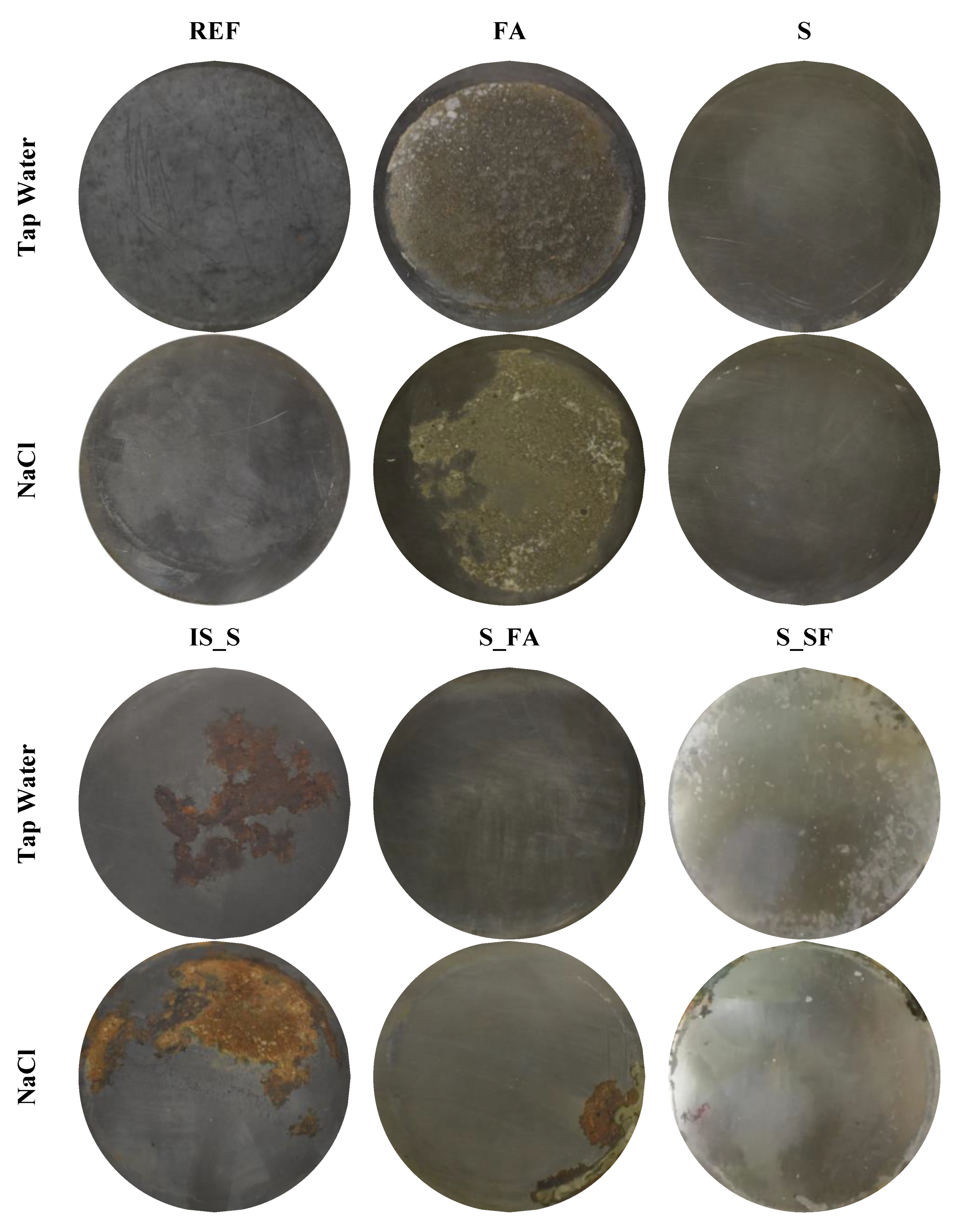
The low environmental impact and high long-term performance of products are becoming imperative for the sustainable development of the construction industry. Alkali-activated materials (AAMs) are one of the available low-embodied-carbon alternatives to Portland cement (OPC). For their application in the marine environment or where de-icing salts are used, it is of utmost importance to demonstrate their equal or better performance compared to OPC. The aim of this study was to compare the corrosion behaviour of the steel in AAMs based on different regionally available by-products with the behaviour of the steel in OPC. The by-products used were fly ash, slag, silica fume, and iron-silica fines. The corrosion process of each system was monitored by the corrosion potential and polarisation resistance during exposure to tap water and chloride solution over a period of almost one year. Certain AAMs showed a higher resistance to chloride penetration compared to OPC, which was attributed to the smaller number of capillary pores and higher gel phase precipitation. The same corrosion resistance compared to OPC was achieved with alkali-activated fly ash and alkali-activated slag mortars. The stability of the systems in tap water and chloride solution was confirmed by the visual assessment of the steel surface at the end of the test period.
Keywords: alkali-activated mortar; corrosion; chloride; pore structure; chloride migration alkali-activated mortar; corrosion; chloride; pore structure; chloride migration