Experimental Investigation of Material Properties and Self-Healing Ability in a Blended Cement Mortar with Blast Furnace Slag


Abstract
1. Introduction
2. Experiment
2.1. Materials
2.2. Mixture Proportions and Specimen Preparation
2.3. Testing Methods
2.3.1. Compressive Strength and Bending Strength Tests
2.3.2. Accelerated Carbonation Depth
2.3.3. Freeze–Thaw Test
2.3.4. Mercury Intrusion Porosimetry
2.4. Investigation of Self-Healing Ability
3. Results and Discussion
3.1. Materials Properties
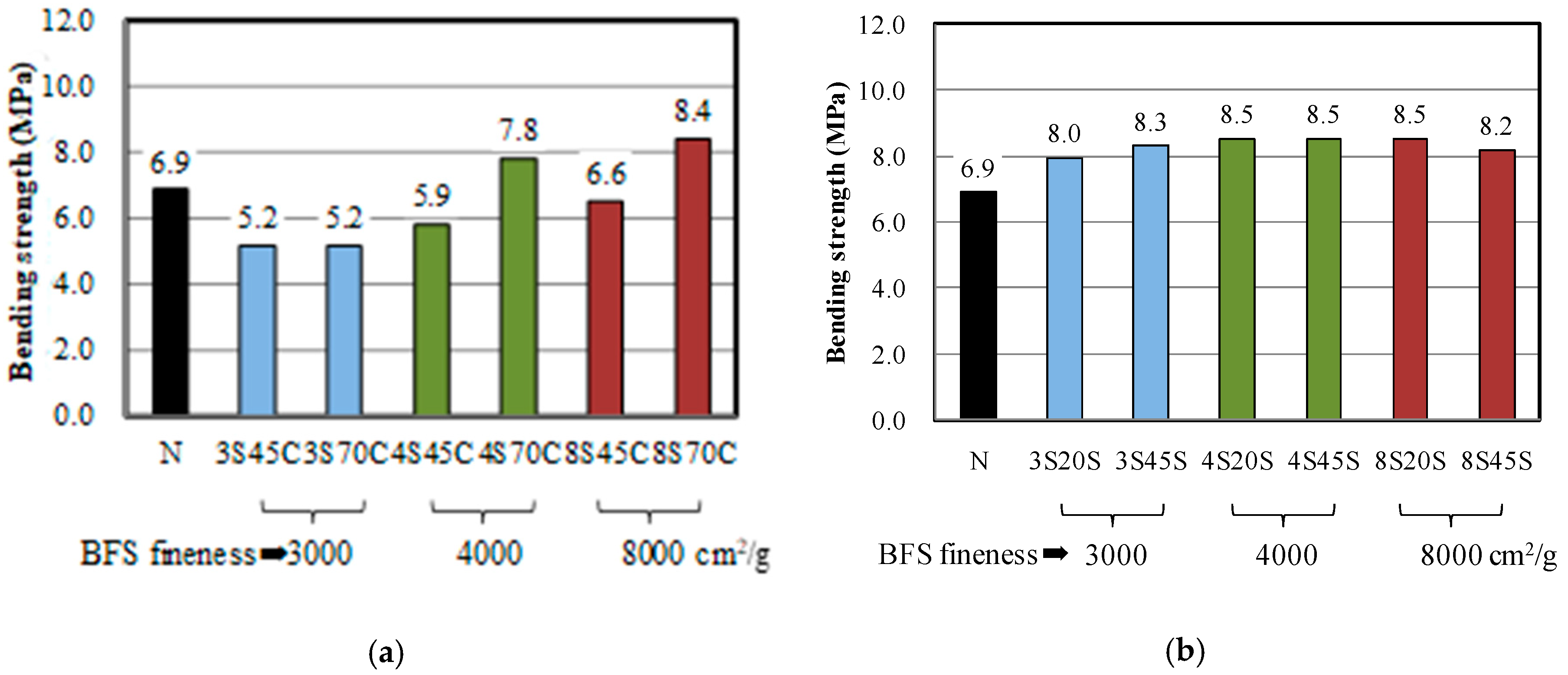
3.1.1. Bending Strength
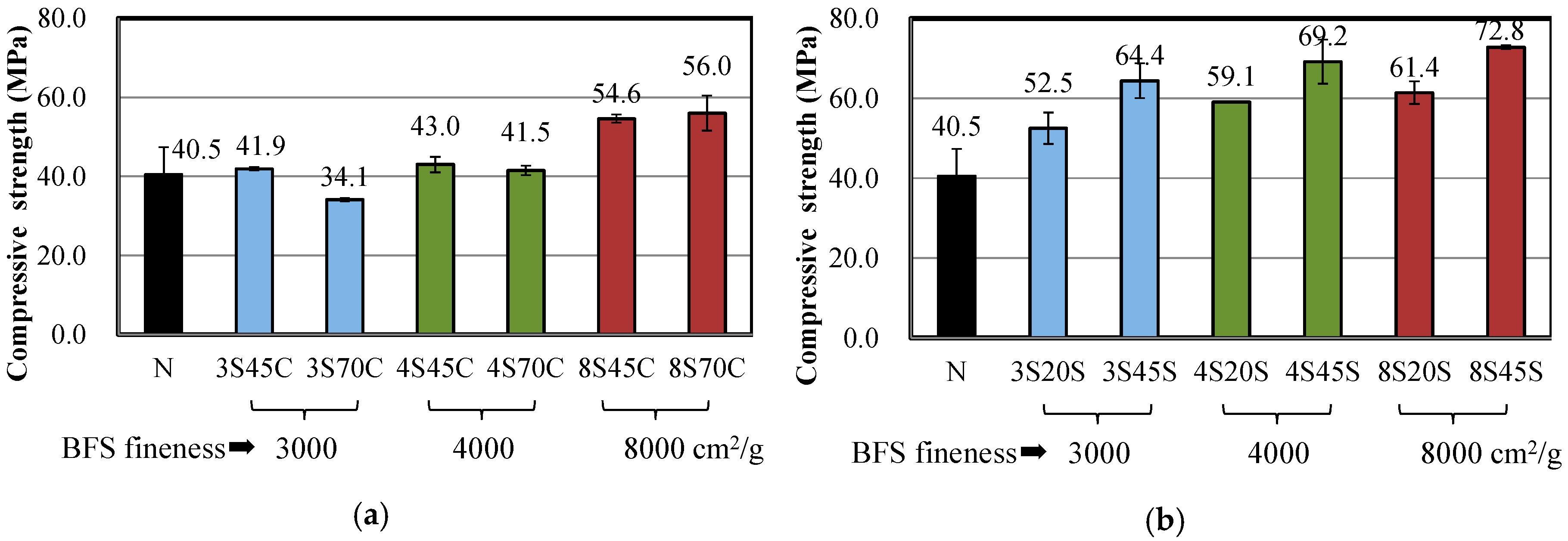
3.1.2. Compressive Strength
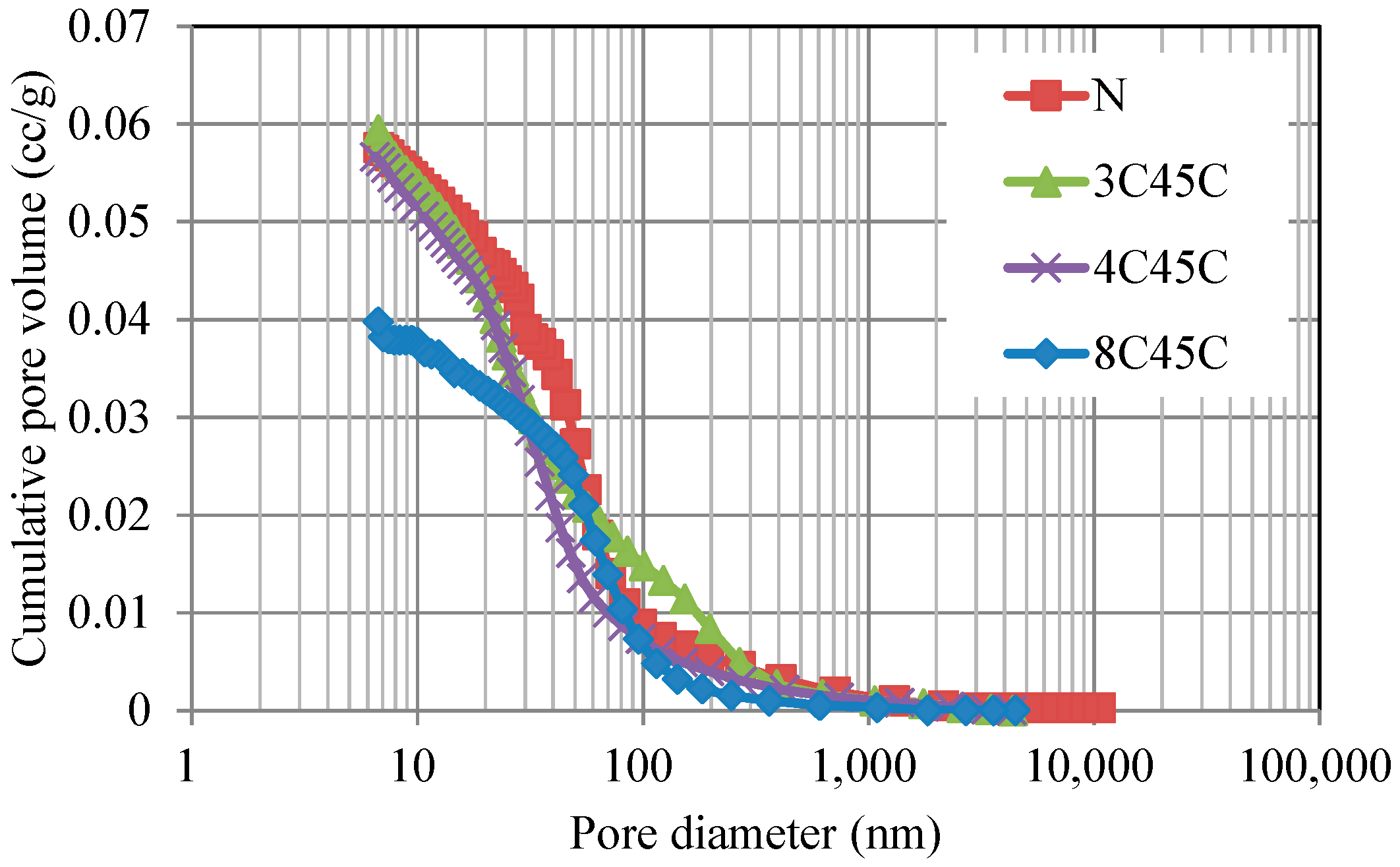
3.1.3. Mercury Intrusion Porosimetry
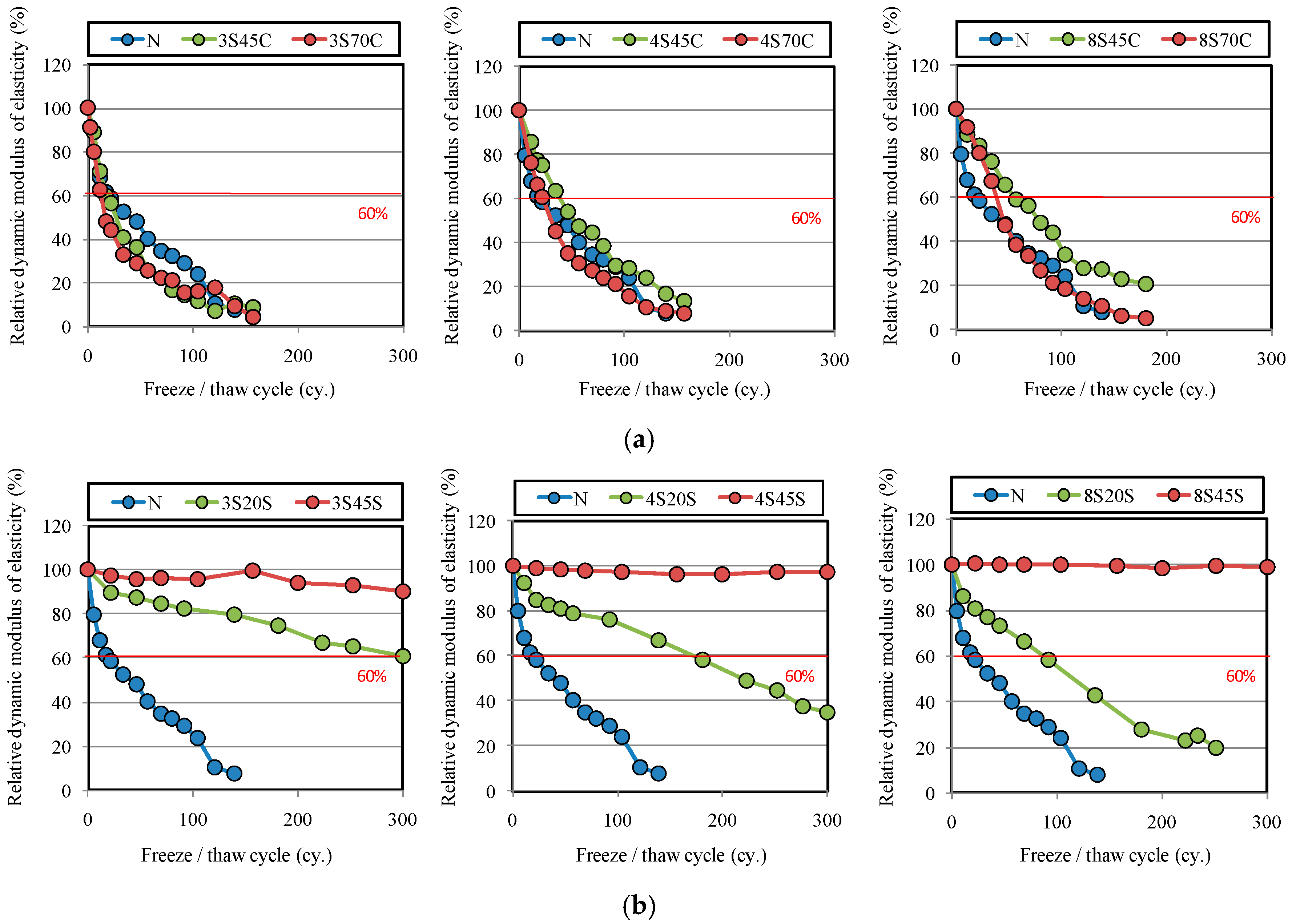
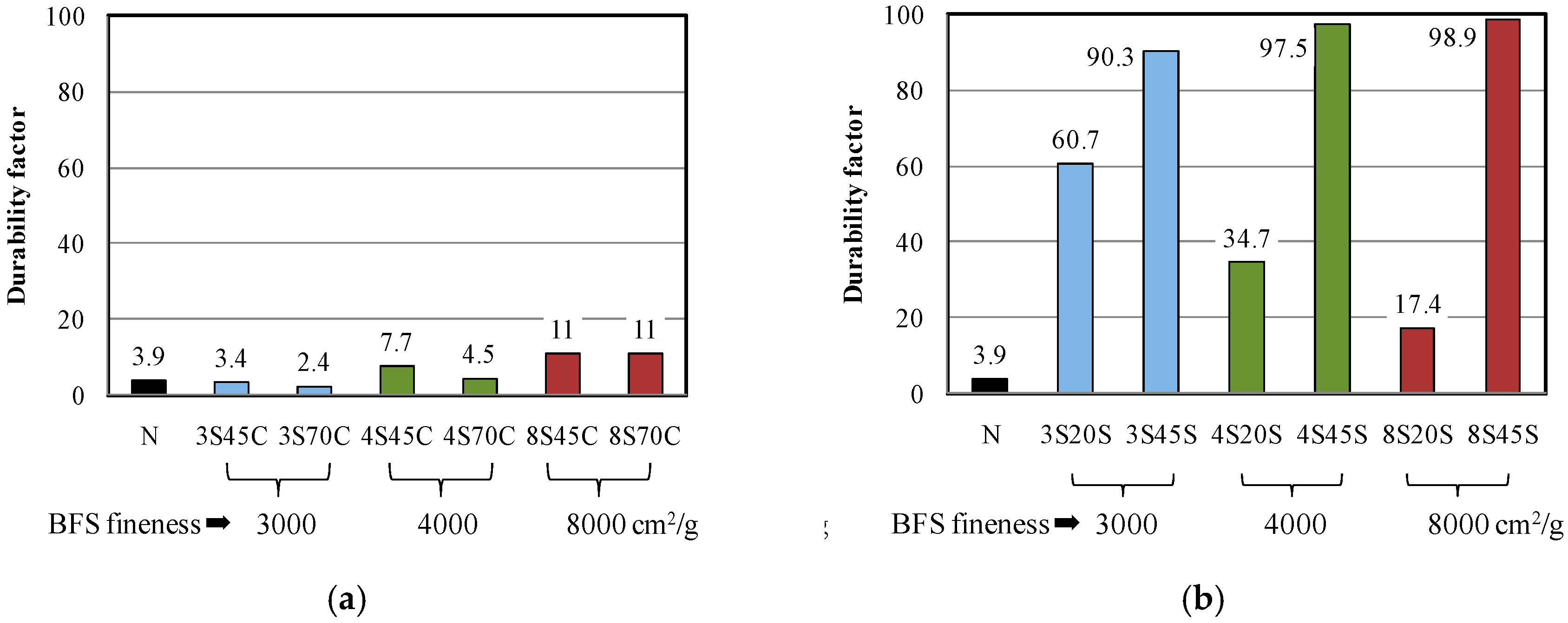
3.1.4. Freeze-Thaw Test
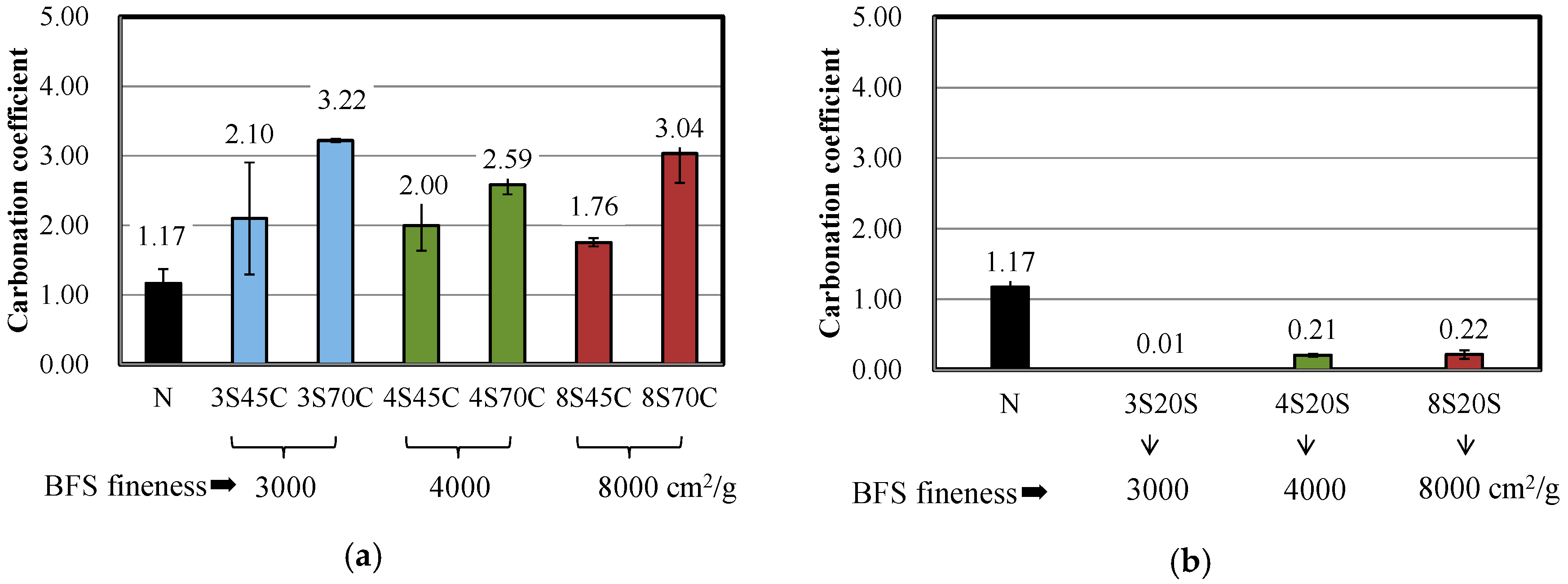
3.1.5. Accelerated Carbonation Coefficient
3.2. Self-Healing Effect
3.2.1. Investigation of Degree of Damage
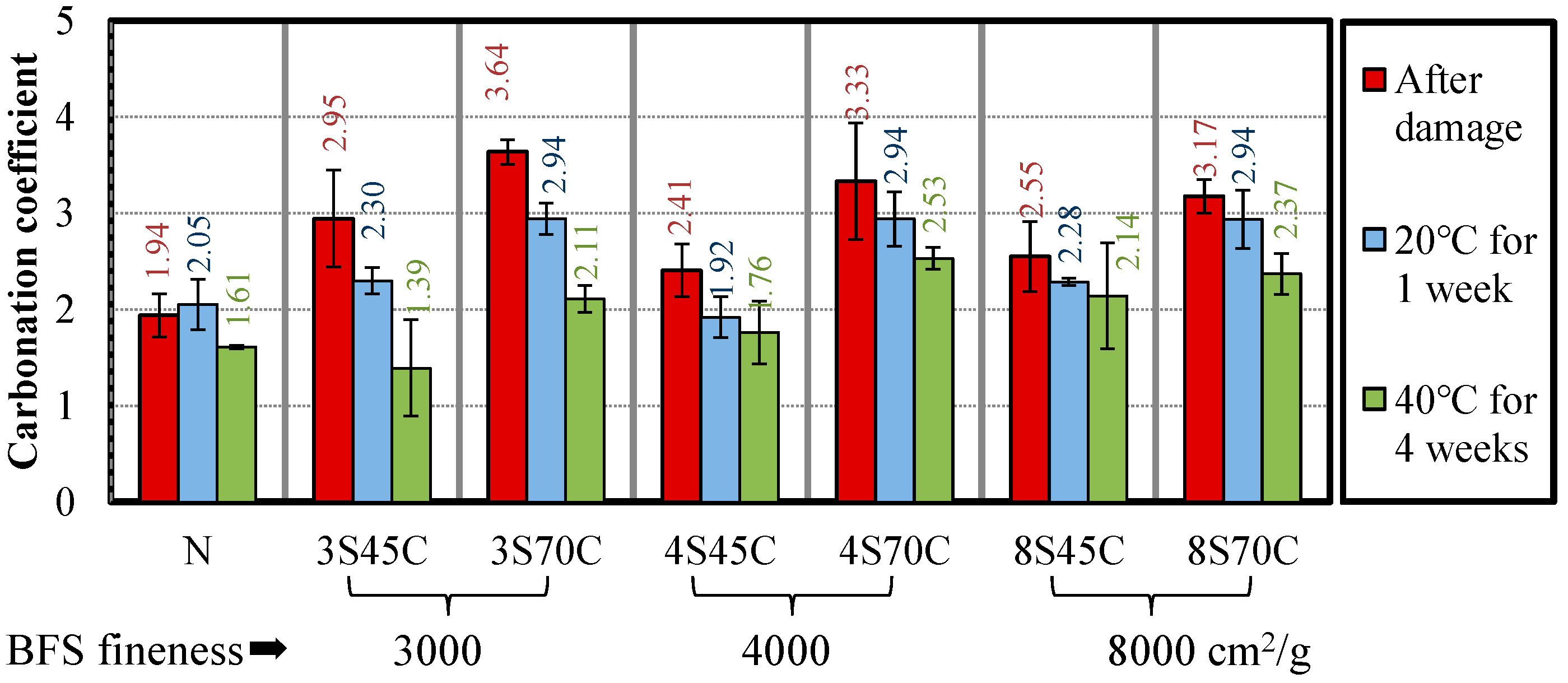
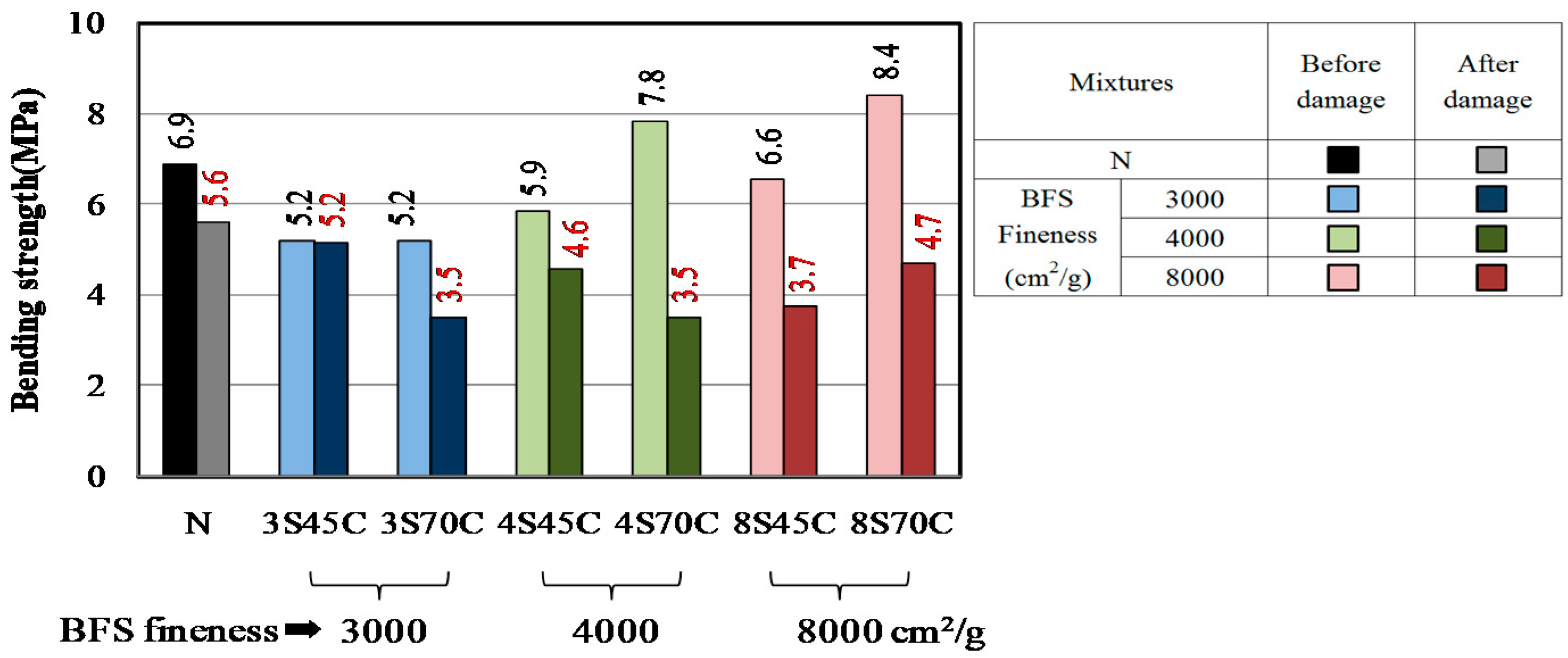
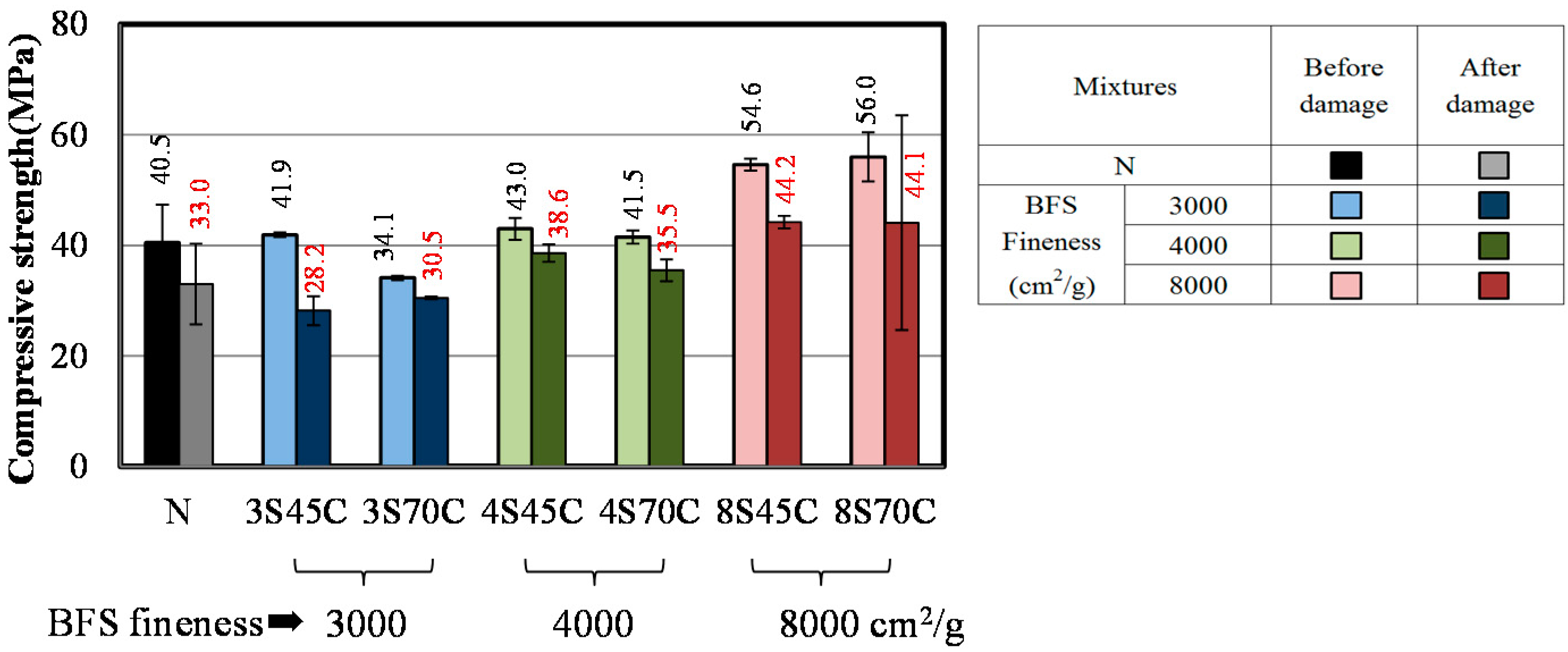
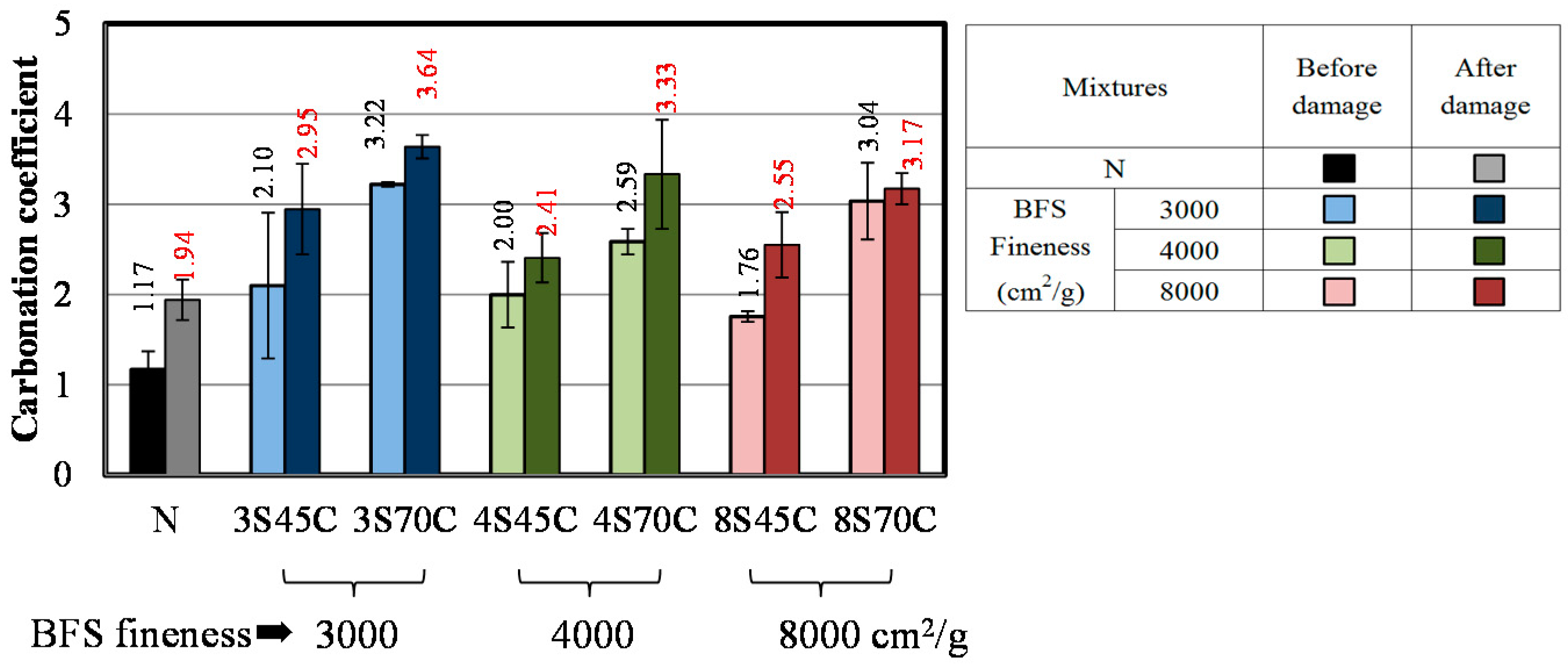
3.2.2. Bending Strength, Compressive Strength, and Carbonation Coefficient of Mortar Samples after Damage
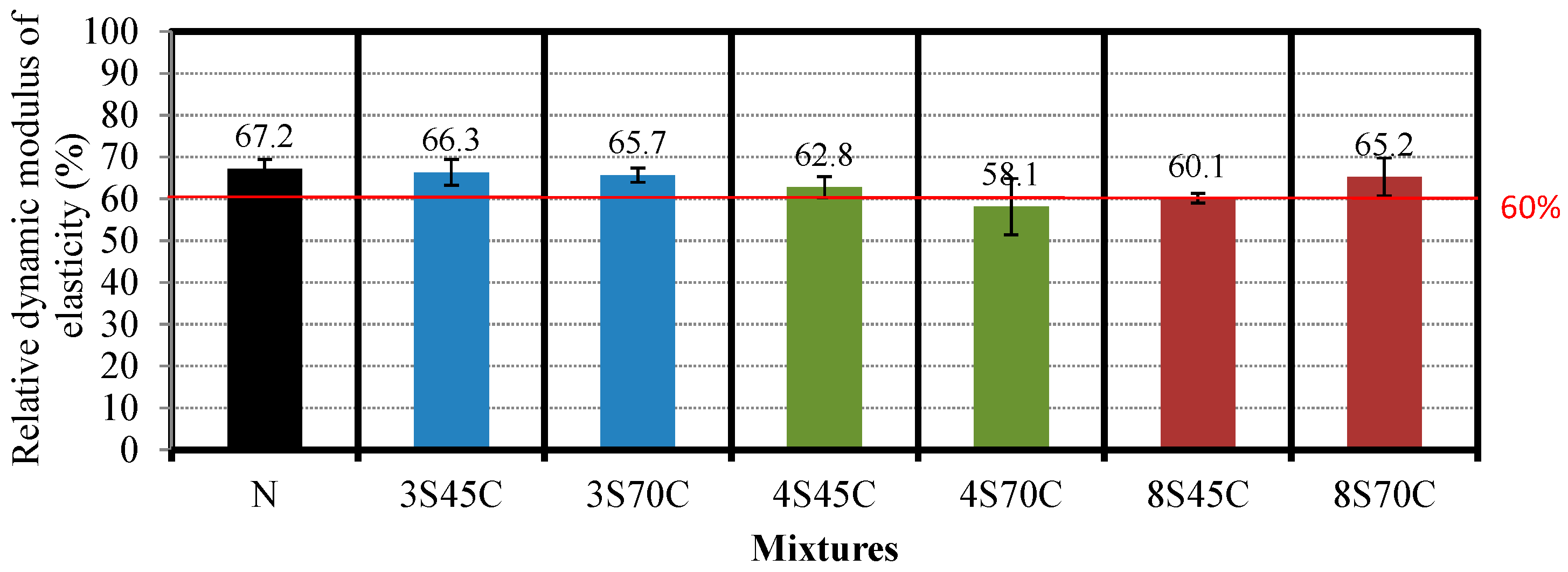
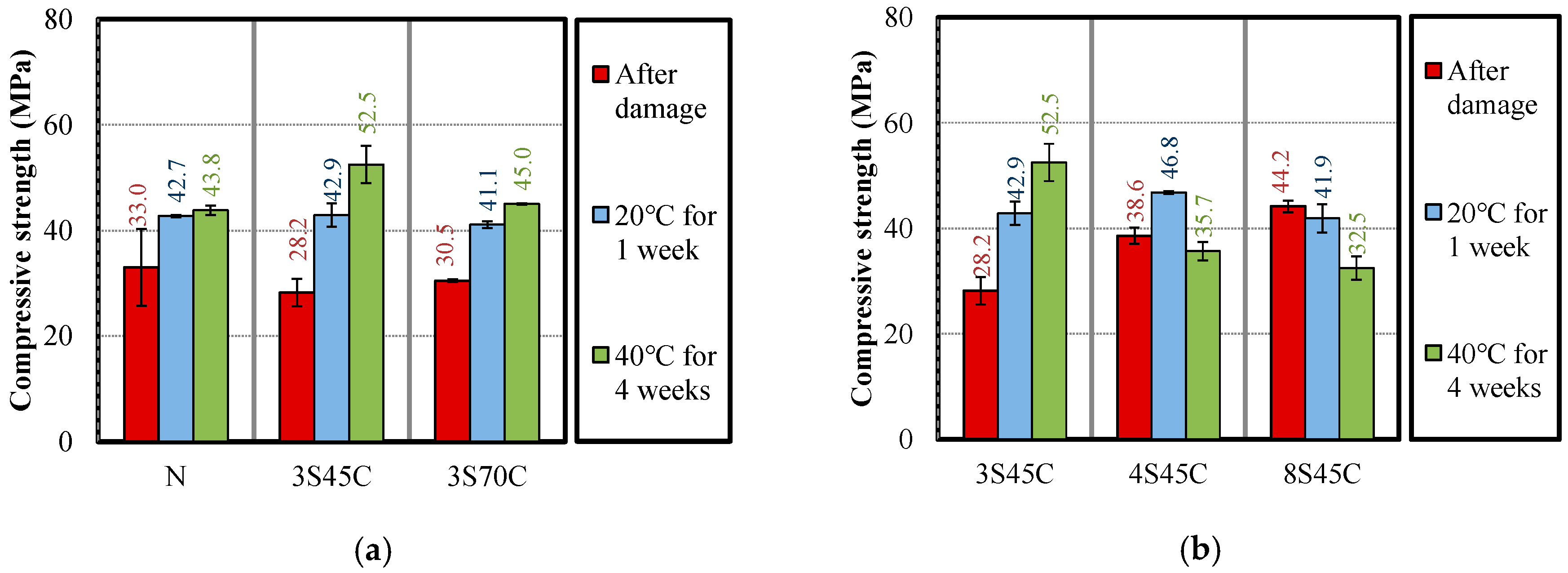
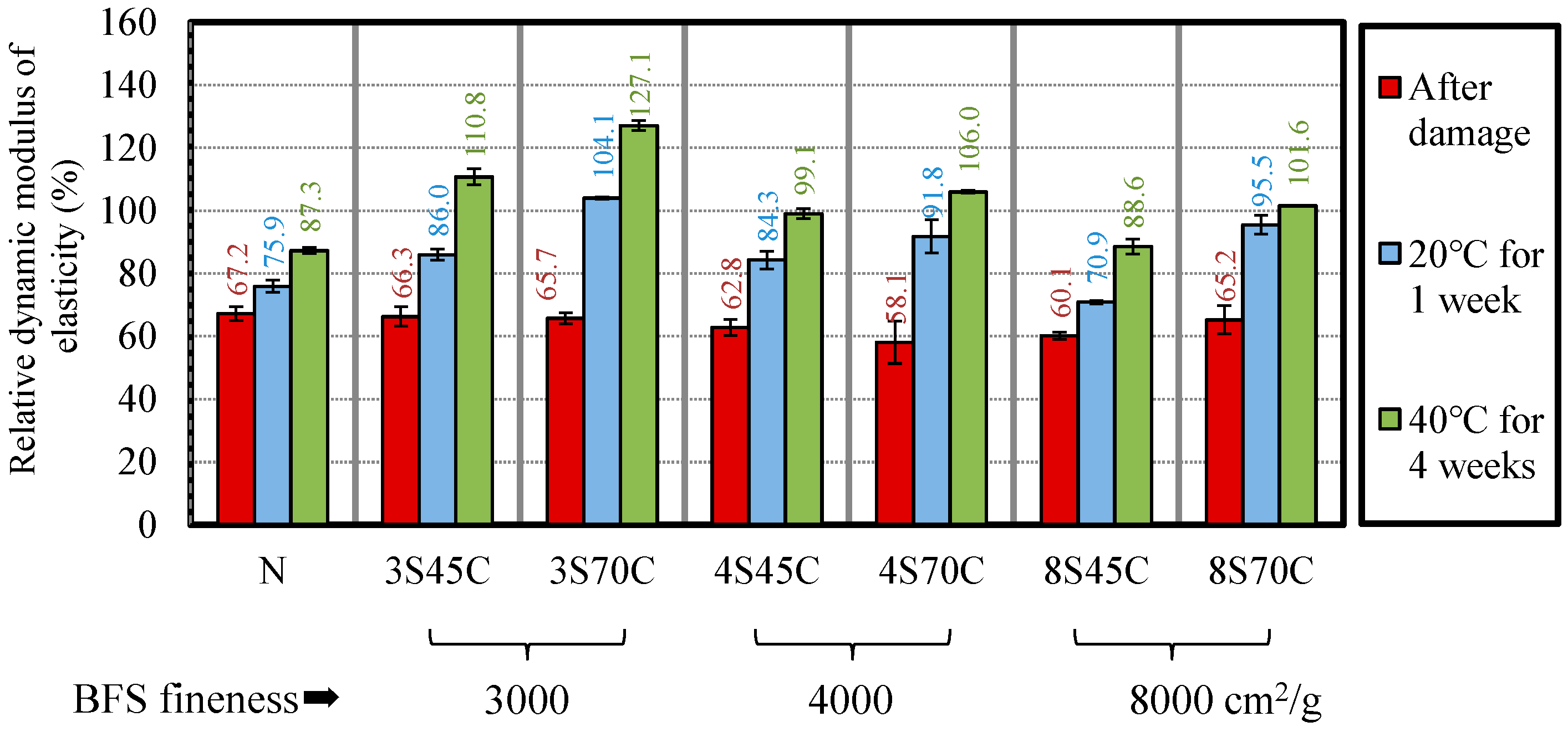
3.2.3. Relative Dynamic Modulus of Elasticity, Bending Strength, Compressive Strength, and Carbonation Coefficient of Mortar Samples after Water Curing
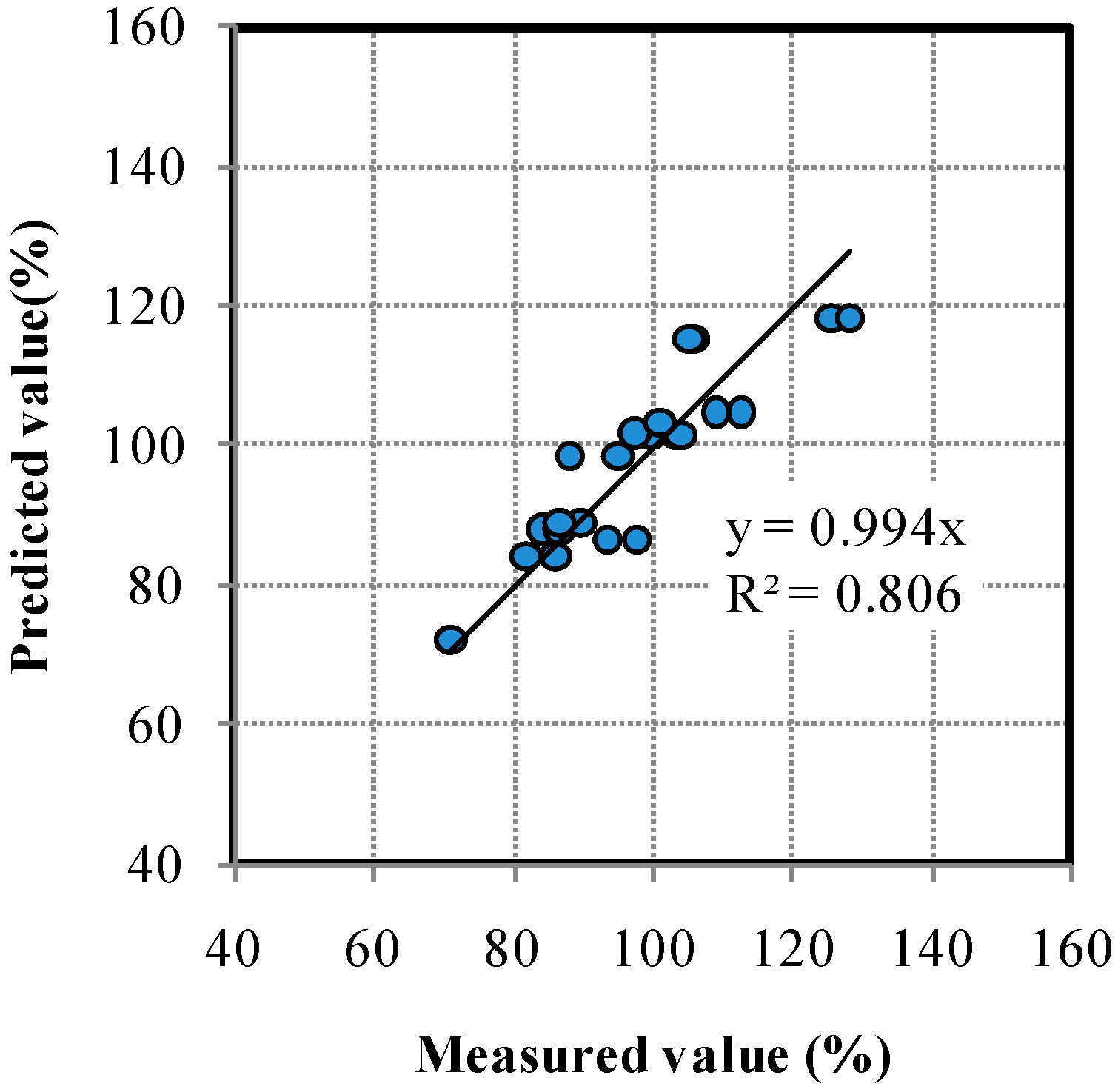
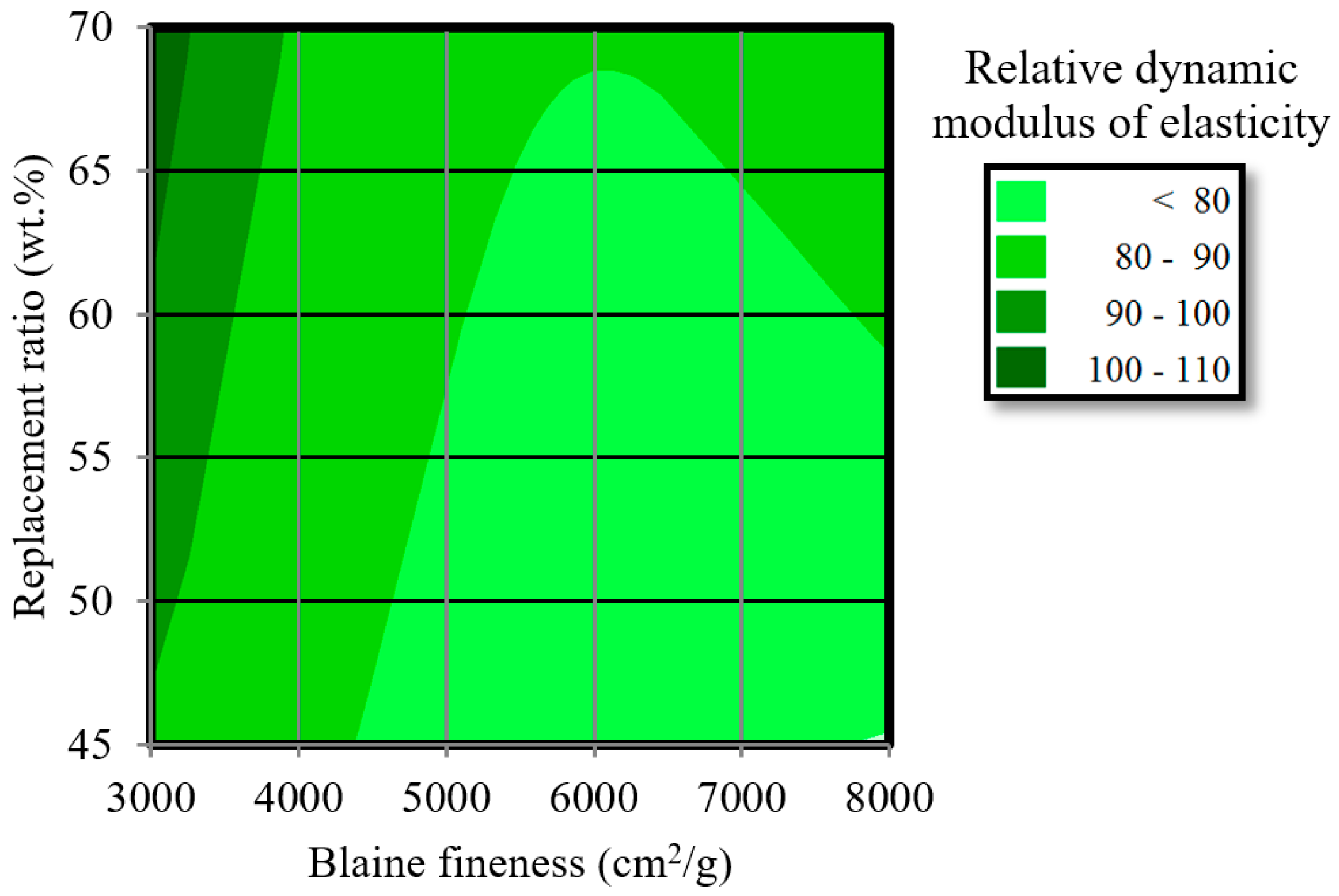
3.2.4. Prediction of Self-Healing Performance and Optimum BFS Fineness and Replacement Ratio
4. Conclusions
- (1)
- It was found that replacing cement or sand with BFS in the mortar would increase the bending strength, compressive strength, carbonation coefficient, and durability factor, indicating that the materials properties are dependent on the BFS. The reason for this is the low water-to-binder ratio (W/B) of the BFS-blended cement mixture.
- (2)
- The mortar samples were damaged through freeze–thaw testing until a relative dynamic modulus of elasticity of 60% was achieved. The BFS-blended cement samples may exhibit decreased bending strength, compressive strength, and carbonation coefficient after frost damage. This is because of the micro cracks formed in the mortar during freeze–thaw cycling.
- (3)
- In the investigation of self-healing, it was confirmed that incorporating BFS with a low Blaine fineness and moderate or high replacement ratios (45 or 70 wt %) can improve the compressive strength and relative dynamic modulus of elasticity of the BFS mortar samples. Moreover, these mortar samples displayed higher resistance to carbonation, which was due to the hydration products of BFS.
- (4)
- The relative dynamic modulus of elasticity of the BFS mortar samples after water curing was predicted by a general regression equation (R2 = 0.806). Further experimental investigation is needed to improve this equation for a BFS-blended cement mortar mixture. An optimum replacement ratio and Blaine fineness for the BFS was suggested by a contour graph. However, this requires additional investigation regarding the W/B.
Author Contributions
Funding
Conflicts of Interest
References
- Powers, T.C. Working hypothesis for further studies of frost resistance of concrete. Am. Concr. Inst. J. 1945, 16, 245–271. [Google Scholar]
- Powers, T.C.; Helmuth, R.A. Theory of volume changes in hardened Portland-cement pasted during freezing. Highw. Res. Board 1953, 32, 285–297. [Google Scholar]
- Kamada, E. Frost damage and pore structure of concrete. Proc. Jpn. Concr. Inst. 1988, 10, 51–60. [Google Scholar]
- Hama, Y.; Hirano, A.; Tabata, M.; Atarashi, D. Affecting factors on air void system and frost resistance of concrete. J. JSCE 2008, 73, 2061–2067. [Google Scholar] [CrossRef][Green Version]
- Ayano, T.; Fujii, T. Resisance to freezing and thawing attack of concrete with blast furnace slag fine aggregate. J. JSCE 2014, 70, 417–427. [Google Scholar]
- Japan Industrial Standards Committee. Technical Committee Reports on Autogeneous Healing in Cementitious Materials; Japan Industrial Standards Committee: Tokyo, Japan, 2009.
- Kishi, T.; Ahn, T.H.; Hosoda, A.; Suzuki, S.; Takaoka, H. Self-healing behaviour by cementitious recrystallization of cracked concrete incorporating expansive agent. In Proceedings of the 1st International Conference on Self Healing Materials, Noordwijk aan Zee, The Netherlands, 18–20 April 2007. [Google Scholar]
- Ahn, T.H.; Kishi, T. Crack self-healing behaviour of cementitious composites incorporating various mineral admixtures. J. Adv. Concr. Technol. 2010, 8, 171–186. [Google Scholar] [CrossRef]
- Na, S.H.; Hama, Y.; Taniguchi, M.; Katsura, O.; Sagawa, T.; Zakaria, M. Experimental investigation on reaction rate and self-healing ability in fly ash-blended cement mixtures. J. Adv. Concr. Technol. 2012, 10, 240–253. [Google Scholar] [CrossRef]
- Taniguchi, M.; Hama, Y.; Katsura, O.; Sagawa, T.; Na, S.H. Self healing of frost-damaged concrete incorporation fly ash. In Proceedings of the 3rd International Conference on Self-Healing Materials, Bath, UK, 27–29 June 2011. [Google Scholar]
- Termkhajornkit, P.; Nawa, T.; Yamashiro, Y.; Saito, T. Self-healing ability of fly ash–cement systems. Cem. Concr. Comp. 2009, 31, 195–203. [Google Scholar] [CrossRef]
- Pei, R.; Liu, J.; Wang, S.; Yang, M. Use of bacterial cell walls to improve the mechanical performance of concrete. Cem. Concr. Comp. 2013, 39, 122–130. [Google Scholar] [CrossRef]
- Wiktor, V.; Jonkers, H.M. Quantification of crack-healing in novel bacteria-based self-healing concrete. Cem. Concr. Comp. 2010, 33, 763–770. [Google Scholar] [CrossRef]
- Huang, H.; Ye, G.; Damidot, D. Effect of blast furnace slag on self-healing of microcracks in cementitious materials. Cem. Concr. Res. 2014, 60, 68–82. [Google Scholar] [CrossRef]
- Hilloulin, B.; Hilloulin, D.; Grondin, F.; Loukili, A.; De Belie, N. Mechanical regains due to self-healing in cementitious materials.: Experimental measurements and micro-mechanical model. Cem. Concr. Res. 2016, 80, 21–32. [Google Scholar] [CrossRef]
- Qian, S.; Zhou, J.; de Rooij, M.R.; Schlangen, E.; Ye, G.; van Breugel, K. Self-healing behavior of strain hardening cementitious composites incorporating local waste materials. Cem. Concr. Comp. 2009, 31, 613–621. [Google Scholar] [CrossRef]
- Takagi, E.M.; Lima, M.G.; Helene, P. Self-healing of self-compacting concretes made with blast furnace slag cements activated by crystalline admixture. Int. J. Mater. Prod. Technol. 2018, 56, 169–186. [Google Scholar] [CrossRef]
- Sisomphon, K.; Copuroglu, O. Some characteristics of a self healing mortar incorporating calcium sulfo-aluminate based agent. In Proceedings of the 2nd International Conference on Durability of Concrete Structure, Sapporo, Japan, 24–26 November 2010; pp. 157–164. [Google Scholar]
- Japan Industrial Standards Committee. Physical Testing Methods for Cement; Japan Industrial Standards Committee: Tokyo, Japan, 2015.
- Japan Industrial Standards Committee. Test Methods for Polymer-Modified Mortar; Japan Industrial Standards Committee: Tokyo, Japan, 2010.
- Japan Industrial Standards Committee. Method of Accelerated Carbonation Test for Concrete; Japan Industrial Standards Committee: Tokyo, Japan, 2012.
- Japan Industrial Standards Committee. Method of Test for Resistance of Concrete to Freezing and Thawing; Japan Industrial Standards Committee: Tokyo, Japan, 2010.
- Japan Industrial Standards Committee. Methods of Test for Dynamic Modulus of Elasticity, Rigidity and Poisson’s Ratio of Concrete by Resonance Vibration; Japan Industrial Standards Committee: Tokyo, Japan, 2010.
- Zhang, W.; Zakaria, M.; Hama, Y. Influence of aggregate materials characteristics on the drying shrinkage properties of mortar and concrete. Constr. Build. Mater. 2013, 49, 500–510. [Google Scholar] [CrossRef]
- Zhang, W.; Hama, Y.; Na, S.H. Drying shrinkage and microstructure characteristics of mortar incorporating ground granulated blast furnace slag and shrinkage reducing admixture. Constr. Build. Mater. 2015, 93, 267–277. [Google Scholar] [CrossRef]
- Suyama, H.; Koyama, T.; Ito, K. Study on compressive strength of concrete mixed with various types of powder at constant cement contents by taking account of pore structure. Concr. Res. Technol. 2013, 24, 89–100. [Google Scholar] [CrossRef]
- Sakai, K.; Watanabe, H.; Shimobayashi, S. Low-heat high-strength on concrete with highly pulverized blast-furnace slag. J. JSCE 1996, 544, 187–203. [Google Scholar]
- Yoshiro, K.; Toshio, H. On the test method for resistance of concrete to freezing and thawing. Concr. J. 1981, 19, 16–22. [Google Scholar]
- Yoshida, R.; Saito, K.; Yoshizawa, C. Verification of mechanism on improvement of drying shrinkage or air permeability on concrete using blast furnace slag sand based on pore structure. Cem. Sci. Concr. Technol. 2018, 71, 587–594. [Google Scholar] [CrossRef][Green Version]
- Matsumura, T.; Katsura, O.; Yoshino, T. Properties of frost damaged concrete and the estimation of the degree of frost damage. J. Struct. Constr. Eng. AIJ 2003, 563, 9–13. [Google Scholar] [CrossRef]
- Mizobuchi, T.; Ishizeki, K.; Sagawa, T.; Kanda, T. Study on the influence of minor constituents in blast furnace slag rich cement on the thermal and mechanical properties of concrete. J. Adv. Concr. Technol. 2019, 17, 46–61. [Google Scholar] [CrossRef]
- Matsushita, H.; Chikada, T.; Maeda, Y.; Kawasaki, E. Study on blockade of micro crack in concrete including fine powder of granulated blast-furnace slag. Cem. Sci. Concr. Technol. 1998, 52, 638–643. [Google Scholar]
- Darquennes, A.; Olivier, K.; Benboudjema, F.; Gagné, R. Early-age self-healing of cementitious materials containing ground granulated blast-furnace slag under water curing. J. Adv. Concr. Technol. 2016, 14, 717–727. [Google Scholar]



| Sample | Specific Gravity (g/cm3) | Blaine (cm2/g) | Chemical Composition (%) | |||||||
|---|---|---|---|---|---|---|---|---|---|---|
| SiO2 | Al2O3 | Fe2O3 | CaO | MgO | K2O | Na2O | SO3 | |||
| N | 3.16 | 3250 | 21.5 | 5.4 | 2.9 | 64.3 | 1.9 | 0.4 | 0.2 | 1.8 |
| BFS3000 | 2.91 | 3180 | 33.8 | 15.1 | 0.9 | 40.8 | 6.5 | – | – | – |
| BFS4000 | 2.90 | 4030 | 34.1 | 16.0 | 0.4 | 42.1 | 6.2 | – | – | – |
| BFS8000 | 2.90 | 7300 | 33.6 | 16.2 | 0.6 | 42.1 | 5.3 | – | – | – |
| Number | Symbol | W/C | W/B | BFS Blaine Fineness (cm2/g) | BFS Replacement | Unit Mass (kg/m3) | Flow Value (mm) | Air Content (%) | ||||
|---|---|---|---|---|---|---|---|---|---|---|---|---|
| Portions | wt % | W | OPC | BFS | S | |||||||
| 1 | N | 0.55 | 0.55 | - | - | - | 342 | 621 | 0 | 1242 | 258.5 | 1.6 |
| 2 | 3S45C | 0.55 | 0.55 | 3000 | Cement | 45 | 342 | 342 | 280 | 1242 | 259.0 | 1.8 |
| 3 | 3S70C | 0.55 | 0.55 | 3000 | Cement | 70 | 342 | 186 | 435 | 1242 | 275.0 | 2.1 |
| 4 | 4S45C | 0.55 | 0.55 | 4000 | Cement | 45 | 342 | 342 | 280 | 1242 | 237.5 | 1.4 |
| 5 | 4S70C | 0.55 | 0.55 | 4000 | Cement | 70 | 342 | 186 | 435 | 1242 | 259.5 | 1.2 |
| 6 | 8S45C | 0.55 | 0.55 | 8000 | Cement | 45 | 342 | 342 | 280 | 1242 | 219.5 | 0.6 |
| 7 | 8S70C | 0.55 | 0.55 | 8000 | Cement | 70 | 342 | 186 | 435 | 1242 | 224.5 | 0.3 |
| 8 | 3S20S | 0.55 | 0.45 | 3000 | Sand | 20 | 342 | 621 | 124 | 1118 | 220.5 | 0.9 |
| 9 | 3S45S | 0.55 | 0.38 | 3000 | Sand | 45 | 342 | 621 | 280 | 963 | 219.5 | 5.0 |
| 10 | 4S20S | 0.55 | 0.45 | 4000 | Sand | 20 | 342 | 621 | 124 | 1118 | 187.5 | 0.9 |
| 11 | 4S45S | 0.55 | 0.38 | 4000 | Sand | 45 | 342 | 621 | 280 | 963 | 187.5 | 1.1 |
| 12 | 8S20S | 0.55 | 0.45 | 8000 | Sand | 20 | 342 | 621 | 124 | 1118 | 211.0 | 1.7 |
| 13 | 8S45S | 0.55 | 0.38 | 8000 | Sand | 45 | 342 | 621 | 280 | 963 | 154.5 | 0.9 |
| Mixtures | Bending Strength | Compressive Strength | Accelerated Carbonation | Freezing/Thawing | Mercury Intrusion Porosimetry (MIP) |
|---|---|---|---|---|---|
| N | √ | √ | √ | √ | √ |
| 3S45C | √ | √ | √ | √ | √ |
| 3S70C | √ | √ | √ | √ | |
| 4S45C | √ | √ | √ | √ | √ |
| 4S70C | √ | √ | √ | √ | |
| 8S45C | √ | √ | √ | √ | |
| 8S70C | √ | √ | √ | √ | √ |
| 3S20S | √ | √ | √ | √ | |
| 3S45S | √ | √ | √ | ||
| 4S20S | √ | √ | √ | √ | |
| 4S45S | √ | √ | √ | ||
| 8S20S | √ | √ | √ | √ | |
| 8S45S | √ | √ | √ |
| Mixtures | Bending Strength | Compressive Strength | Accelerated Carbonation | Relative Dynamic Modulus of Elasticity |
|---|---|---|---|---|
| N | √ | √ | √ | √ |
| 3S45C | √ | √ | √ | √ |
| 3S70C | √ | √ | √ | √ |
| 4S45C | √ | √ | √ | √ |
| 4S70C | √ | √ | √ | √ |
| 8S45C | √ | √ | √ | √ |
| 8S70C | √ | √ | √ | √ |
| Parameter Estimate | Coefficient | Standard Error | t-Value | p-Value |
|---|---|---|---|---|
| Constant | 53.7834 | 7.64141 | 7.03841 | 0.000 |
| Blain fineness | −0.003 | 0.00059 | −5.10849 | 0.000 |
| Replacement ratio (%) | 0.573 | 0.10116 | 5.69353 | 0.000 |
| Curing conditions | 0.8387 | 0.12645 | 6.63228 | 0.000 |
© 2020 by the authors. Licensee MDPI, Basel, Switzerland. This article is an open access article distributed under the terms and conditions of the Creative Commons Attribution (CC BY) license (http://creativecommons.org/licenses/by/4.0/).
Share and Cite
Na, S.; Zhang, W.; Taniguchi, M.; Quy, N.X.; Hama, Y. Experimental Investigation of Material Properties and Self-Healing Ability in a Blended Cement Mortar with Blast Furnace Slag. Materials 2020, 13, 2564. https://doi.org/10.3390/ma13112564
Na S, Zhang W, Taniguchi M, Quy NX, Hama Y. Experimental Investigation of Material Properties and Self-Healing Ability in a Blended Cement Mortar with Blast Furnace Slag. Materials. 2020; 13(11):2564. https://doi.org/10.3390/ma13112564
Chicago/Turabian StyleNa, Seunghyun, Wenyan Zhang, Madoka Taniguchi, Nguyen Xuan Quy, and Yukio Hama. 2020. "Experimental Investigation of Material Properties and Self-Healing Ability in a Blended Cement Mortar with Blast Furnace Slag" Materials 13, no. 11: 2564. https://doi.org/10.3390/ma13112564
APA StyleNa, S., Zhang, W., Taniguchi, M., Quy, N. X., & Hama, Y. (2020). Experimental Investigation of Material Properties and Self-Healing Ability in a Blended Cement Mortar with Blast Furnace Slag. Materials, 13(11), 2564. https://doi.org/10.3390/ma13112564