Article

Backstepping Super-Twisting Sliding Mode Control for MMC-HVDC in Passive Networks
1
State Grid Zhejiang Integrated Energy Service Co., Ltd., Hangzhou 310016, China
2
School of Electrical Engineering, Shanghai University of Electric Power, Shanghai 200090, China
*
Author to whom correspondence should be addressed.
Energies 2026, 19(9), 2246; https://doi.org/10.3390/en19092246
Submission received: 2 April 2026 / Revised: 30 April 2026 / Accepted: 3 May 2026 / Published: 6 May 2026
(This article belongs to the Special Issue Modular Multilevel Converters: Technologies, Control and Applications)

Abstract

Due to their superior harmonic profiles and minimal switching energy losses, modular multilevel converters (MMCs) have emerged as the primary topology for high voltage direct current (HVDC) applications. However, traditional Proportional–Integral (PI) control exhibits inferior dynamic performance using MMC-HVDC supplying power in the passive networks. This study proposes a backstepping super-twisting sliding mode control strategy, which significantly improves the dynamic performance of the MMC-HVDC system and mitigates fluctuations in the DC side voltage. First, a mathematical model is established based on the topology of the modular multilevel HVDC transmission system. Then, utilizing the backstepping method, a virtual control law for the current inner loop is designed according to the mathematical model. Subsequently, the super-twisting sliding mode algorithm is introduced based on the backstepping method to form the backstepping super-twisting sliding mode control law. Finally, a comprehensive model is established within the Matlab/Simulink environment, and extensive simulation studies are carried out to evaluate the effectiveness the effectiveness and advantages of the proposed backstepping super-twisting sliding mode control under stable operation, grid voltage sag, and single-phase grounding fault conditions. Comparative evaluations verify that the introduced strategy effectively lowers the total harmonic distortion (THD) of the current and suppresses DC voltage ripples. Moreover, compared to the conventional PI method, the new approach provides enhanced transient robustness with noticeably reduced overshoot with considerably lower overshoot compared to traditional PI control, thereby providing a highly reliable and stable solution for MMC-HVDC systems supplying passive networks.

1. Introduction

Driven by the global rise in electricity consumption and the pursuit of energy independence, the integration of renewables—particularly wind and solar photovoltaics (PV)—is expanding rapidly within modern power grids [1]. At present, wind and PV powers have been widely applied in the construction of isolated grid systems and in passive networks in urban centers. However, the unstable wind and PV powers direct access to traditional power sources, which can affect the stability of power network. This promotes the rise and vigorous development of passive networks [2,3,4]. Furthermore, most new energy bases are situated in remote regions, distanced from load centers. Therefore, making the cross-regional integration and utilization of renewable energy becomes a significant strategic necessity for the country [5,6].
As a new generation of direct current transmission technology, high voltage direct current (HVDC) technology provides notable benefits, including enhanced flexibility and reduced energy losses [7]. Compared to alternating current (AC) transmission, HVDC transmission can accommodate large-scale renewable energy and connect to passive networks while minimizing harmonic interference. Consequently, HVDC technology holds substantial potential for advancing the development of modern power systems [8].
As highlighted in recent literature [9], MMCs dominate contemporary HVDC setups because of their scalable modular architecture and excellent output waveform quality. Utilizing MMC-HVDC to supply power of passive networks can effectively address issues of the poor reliability and low economic efficiency from conventional power supply methods [10]. The MMC-HVDC system primarily includes the converter, transmission, and control system [11,12,13,14,15]. Therefore, studying MMC-HVDC system is highly important for enhancing the operational stability of direct current transmission systems.
Despite its inherent benefits regarding system scalability and superior power quality [16], the practical implementation of MMC-HVDC is frequently challenged by severe nonlinear dynamics, complex parameter coupling, and operational uncertainties [17]. These factors can adversely affect the output voltage, current quality, and stability of the DC side voltage, thereby affecting the overall safety and stability of the system. Additionally, the large number of MMC submodules (SM) [18] complicates the design of control strategies. Therefore, it is necessary to develop suitable control methods to enhance the system’s resistance to disturbances, enhance the output voltage and current waveforms’ quality, and reduce fluctuations in the DC side voltage.
Some models of MMC topologies have been proposed, which can maintain the quality of traditional modular multilevel AC voltage while reducing the DC bus voltage requirement in high voltage applications [19,20]. The related strategies such as decoupled control, current control with synchronous compensation and specific modulation techniques are employed to achieve effective system operation and reasonable parameter design, contributing to the development of more precise models [21,22,23]. Prieto et al. studied the control techniques of proportional–integral control and nonlinear control methods, and analyzed their advantages and limitations [24]. Mohammadali et al. presented an effective and robust backstepping control method in the a-b-c coordinate system suitable for three-phase MMCs [25]. The model of a three-level matrix converter under grid imbalance is established, which introduces backstepping sliding mode control (BSMC) using a saturation function to replace the sign function in order to mitigate chattering caused by SMC [26]. The SMC scheme and the nonlinear control strategy are also designed and developed for MMC-HVDC under grid-forming conditions, which help to reduce voltage fluctuations and improve the stability of DC side voltage [27,28,29].
In summary, research on the control strategies of the context of supplying power to passive networks are relatively limited for MMC-HVDC systems. Additionally, there is a lack of analysis regarding the stability of the AC side and voltage fluctuations on the DC side of MMC-HVDC under different operating conditions. To address these challenges, this paper proposes a backstepping super-twisting sliding mode controller (BSTSMC) tailored for MMC-HVDC setups supplying passive networks. Simulation validations demonstrate that the proposed strategy effectively minimizes DC side voltage fluctuations while preserving robust stability on the AC side.

2. Structure of the MMC-HVDC Control System

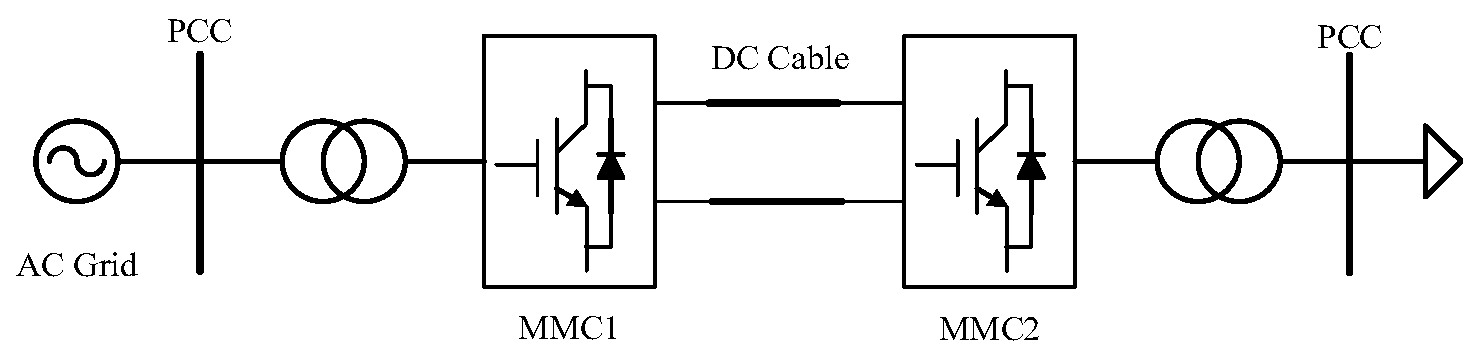
Figure 1 illustrates the structure of the MMC-HVDC system connected to the passive network, which includes an AC grid, MMC-HVDC system, and the passive components. MMC1 is connected to the AC grid and operates as a rectifier. On the right side, MMC2 is connected to the passive network and operates as an inverter. The two MMCs are interconnected via a DC line.
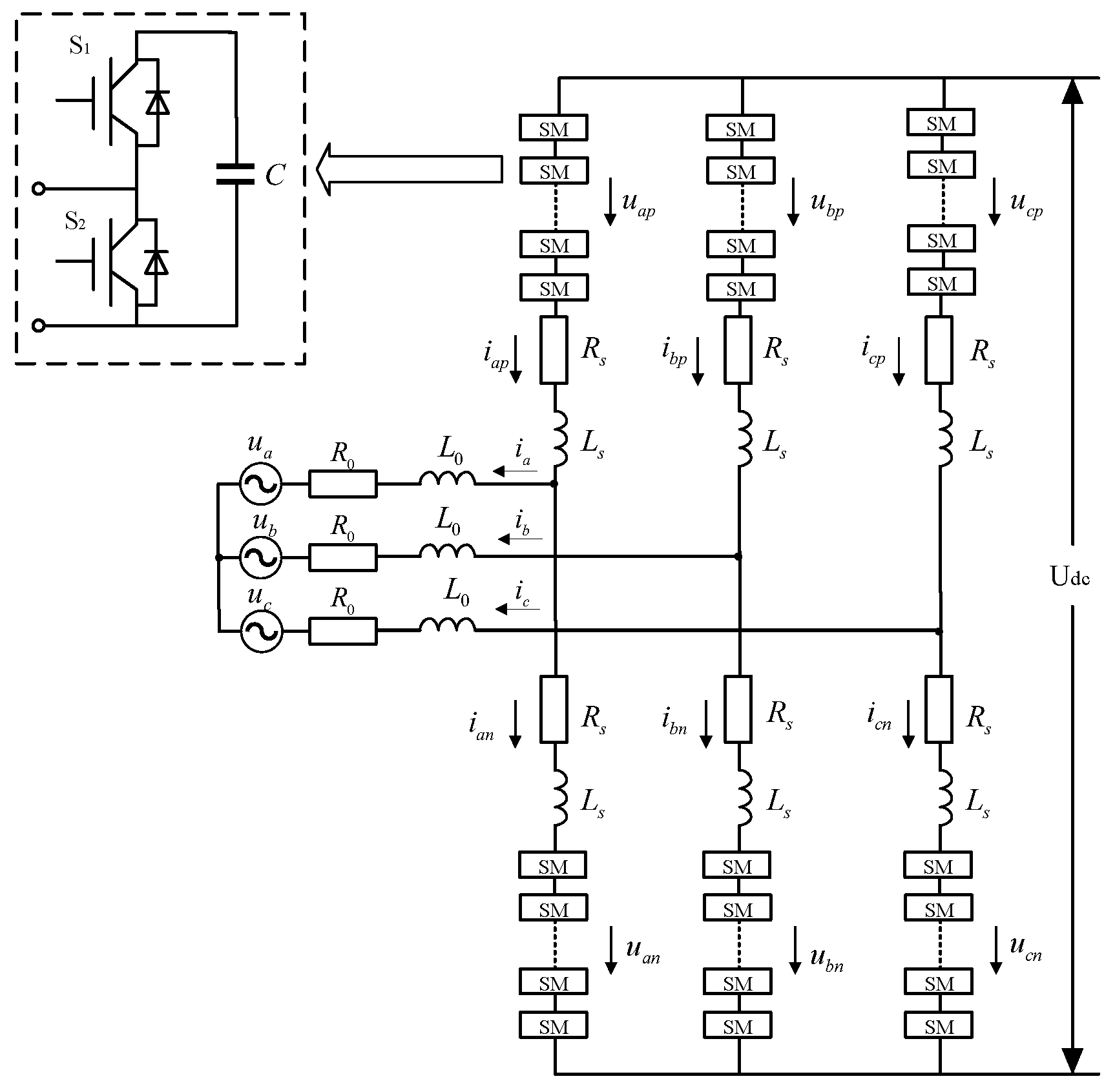
Since the structures of the modular multilevel converters on both sides are identical, in order to reduce system complexity, we use the rectifier MMC connected to the AC grid on the left side as an example. Its three-phase topology diagram is shown in Figure 2.
Figure 2 shows that the MMC rectifier comprises three identical phase units. Each phase consists of an upper and lower bridge arm, amounting to six bridge arms in total. Each bridge arm is formed by connecting multiple identical half-bridge submodules (SM) in series. Here, U dc represents the voltage on the DC side; R 0 and L 0 denote the resistance and inductance on the AC side, respectively; R s and L s represent the resistance and inductance of the bridge arms, respectively. u a p , u a n , u b p represent voltages of the upper bridge arms for each phase, while u b n , u c p , u c n represent voltages of the lower bridge arms for each phase. Finally, i a p , i a n , i b p denote the currents flowing through the upper bridge arms for each phase, and i b n , i c p , i c n denote the currents flowing through the lower bridge arms for each phase.
Applying Kirchhoff’s voltage and current principles, the dynamic relationships for the upper and lower arms in a given phase are derived as:
u i   =   U dc 2   -   L 0 di j dt   -   R 0 i j   -   R s i jp   -   L s di jp dt   -   u jp u j   =   - U dc 2   -   L 0 di j dt   -   R 0 i j   +   R s i in   +   L s di jn dt   +   u jn
where j = a, b, c.
By adding the Kirchhoff’s equations of the upper and lower bridge arms and then dividing by 2, we obtain the following equation:
u j   =   1 2 u jn     u jp   -   1 2 R s u jn     u jp   -   1 2 L s di jp dt   -   di jn dt   -   ( R 0 i j   +   L 0 di j dt )
To express the terms in Equation (2) equivalently, we can denote each term as follows:
u j   =   v j   -   R i j   -   L di j dt
where   v j   =   1 2 ( u jn   -   u jp ) , R   =   1 2 R s   +   R 0 , L   =   1 2 L s   +   L 0 .
As indicated in Equation (3), designing a controller directly in the three-phase stationary reference frame is inherently difficult because the mathematical model consists entirely of time-varying alternating current (AC) parameters. Therefore, we can achieve a transformation to convert the MMC’s model from the three-phase stationary coordinate system to the rotating reference frame using the Park transformation. The transformation matrix for the Park transform is typically expressed as follows:
T abc-dq θ   =   2 3 cos θ cos ( θ   -   2 π 3 ) cos ( θ   +   2 π 3 ) sin θ sin ( θ -   2 π 3 ) sin ( θ   +   2 π 3 )
Applying the Park transformation to Equation (3) yields the mathematical model of the MMC in the rotating coordinate system.
u d = v d + L di d dt + R i d ω L i q u q   =   v q + L di q dt + R i q + ω L i d
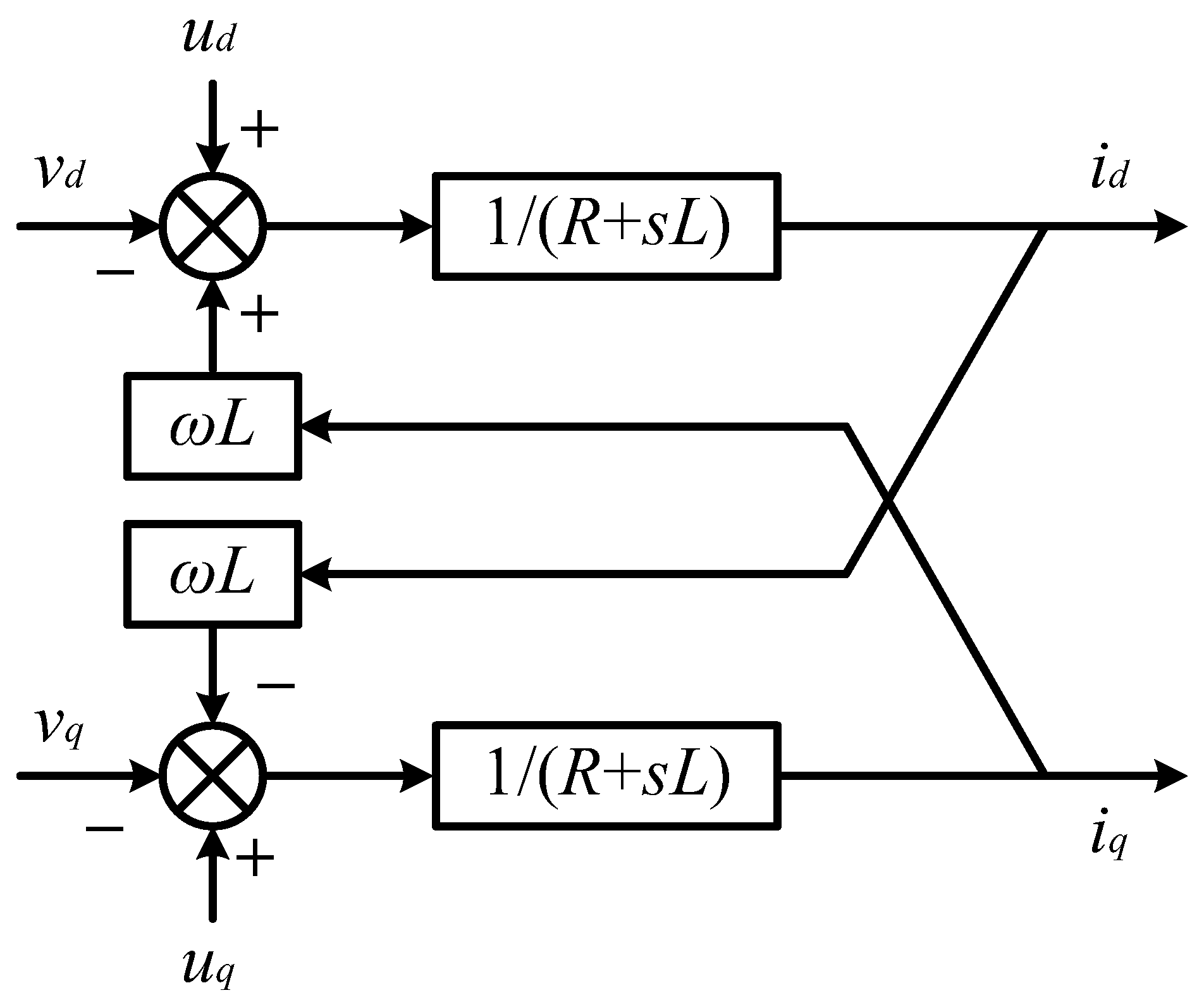
In the equations, i d and i q refer to the AC components on the d-axis and q-axis, respectively; u d and u q denote the components of the alternating voltage on these axes; v d and v q indicate the internal electromotive force components. From Equation (5), the model framework of the rectifier MMC can be derived, as shown in Figure 3.

3. Design of Backstepping Super-Twisting Sliding Mode Controller

3.1. Design of Current Inner Loop Controller

When using backstepping control, the control performance can be adversely affected by parameter uncertainties and external disturbances, leading to difficulties in maintaining system stability and tracking performance. In contrast, sliding mode control exhibits strong robustness, ensuring that the system reaches and maintains a stable state within a finite time, even in the presence of uncertainties and disturbances. Therefore, by introducing SMC based on backstepping control, BSMC strategy is formed. By designing appropriate sliding surfaces and control laws, it is possible to effectively overcome the robustness issues associated with backstepping control.
From Equation (5) can derive:
di d dt   =   1 L ( u d   -   R i d   +   ω L i q   -   v d ) di q dt   =   1 L ( u q   R i q   ω L i d   -   v q )
Assign the reference values for the axis currents as i d and i q . The axis current tracking errors are expressed as:
e d   =   i d   i d e q   =   i q   -   i q
To achieve the control objectives e d 0 and e q 0 , the Lyapunov function can be expressed as follows:
V 1   =   1 2 e d 2 V 2   =   1 2 e q 2
The defined Lyapunov function is differentiated as follows:
V ˙ 1   =   e d e ˙ d V ˙ 2   =   e q e ˙ q
To ensure system stability, the requirement is V ˙ 1   <   0 and V ˙ 2 < 0 . Consequently, the virtual control quantity is designed as:
α d   =   v d   +   R i d   -   ω L i q   +   L i ˙ d   -   k 1 e d α q   =   v q   +   R i q   +   ω L i d   +   L i ˙ q     k 2 e q
where k 1   >   0 and k 2   >   0 .
Selection of sliding mode surface:
S d   =   e d S q   =   e q
Conventional sliding mode techniques often suffer from severe chattering. To alleviate this issue, the proposed controller incorporates the super-twisting algorithm, which serves as a stable second-order sliding mode mechanism [30]. The algorithm typically comprises two components: the first part is a continuous function related to the sliding mode surface, and the second part is the time integral of the sliding mode surface. The second-order sliding mode control law derived from the super-twisting algorithm is generally articulated as follows:
S ˙   =   - ε S 1 2 sign S   -   λ 1 sign ( S )
where ε   >   0 and λ   >   0 .
Based on Equation (12), the control law is designed as:
v d   =   α d     ε 1 S d 1 2 s i g n S d     λ 1 sign ( S d ) v q = α q ε 2 S q 1 2 s i g n S q λ 2 sign ( S q )
By substituting Equation (9) into Equation (13) and rearranging, the control law can be expressed as:
v d   =   u d     R e d   +   ω L i q   +   L i ˙ d     k 1 e d     ε 1 S d 1 2 s i g n S d     λ 1 sign ( S d ) v q   =   u q     R e q     ω L i d   +   L i ˙ q     k 2 e q     ε 2 S q 1 2 s i g n S q   λ 2 sign ( S q )
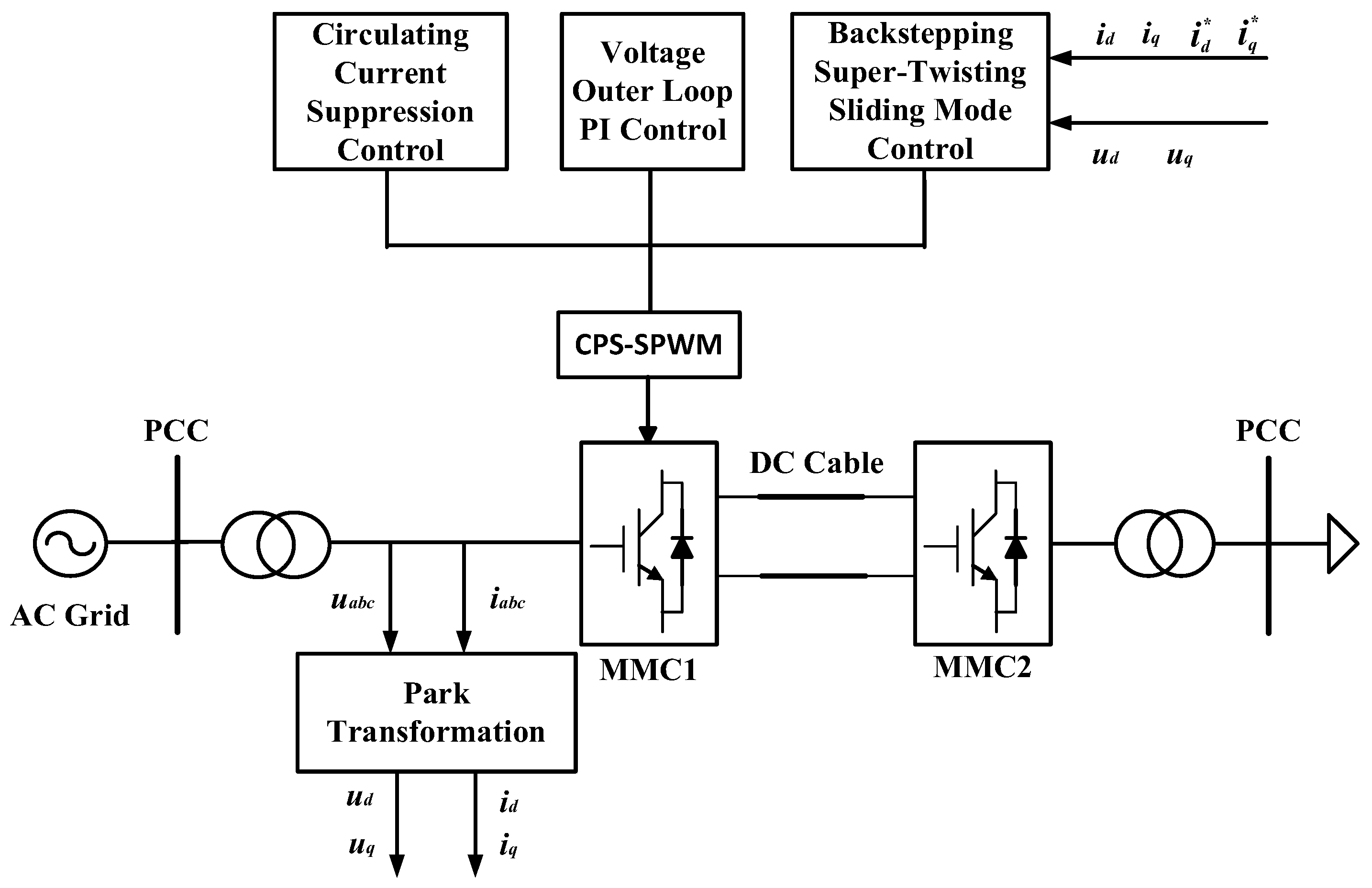
Based on the designed control laws, the control process of the improved MMC-HVDC control system on the rectifier side is as follows: The input voltage and current signals of the system are transformed from the Cartesian coordinate system to the Park coordinate system through coordinate transformation. The transformed signals are then sent to the voltage outer loop, where they are processed by a Proportional–Integral (PI) controller. At the same time, the current reference signal and other related variables are fed into the inner loop’s Backstepping Super-Twisting Sliding Mode Controller. After combining with circulating current suppression control, the signals are transmitted to the carrier phase-shift modulation module. The inverter side adopts the same MMC topology as the rectifier side, and when the system operates under ideal conditions, the control objective on the inverter side is to maintain the stability of power and voltage. Therefore, the conventional PI control method is employed on the inverter side. The comprehensive architecture of the control system is depicted in Figure 4.

3.2. Controller Stability Analysis

Differentiating the sliding mode surface, denote S ˙ d   =   σ d and S ˙ q   =   σ q . Designing the estimation error as:
σ ~ d   = σ d   -   σ ~ q σ ~ q   =   σ q   σ ~ q
where σ ^ d and σ ^ q are the estimated values of σ ~ d and σ ~ q , respectively.
Choosing the Lyapunov function:
V   =   V 1   +   V 2   +   1 2 λ 1 σ ~ d 2   +   1 2 λ 2 σ ~ q 2
Differentiating Equation (16)
V ˙ =   e d e ˙ d +   e q e ˙ q + 1 λ 1 σ ~ d σ ~ ˙ d + 1 λ 2 σ ~ q σ ~ ˙ q
From Equation (8), it can be inferred that V 1   >   0 and V 2   >   0 ; combining Equations (7), (9), (10) and (11), we can choose suitable parameters k 1 , k 2 , ε 1 , ε 2 , λ 1 , λ 2 such that V ˙   <   0 , thereby ensuring the stability of the system.

4. Simulation Analysis

A comprehensive back-to-back MMC-HVDC model was built in MATLAB/Simulink R2022b platform, with an operating environment comprising an Intel Core i7-12700H processor and 16 GB of RAM to validate the practical performance of the designed backstepping super-twisting control framework under passive network conditions. The proposed methodology is benchmarked against conventional PI control across three distinct scenarios: normal steady-state operation, grid voltage sags, and asymmetric single-phase grounding faults, and single-phase grounding scenarios to demonstrate the superiority of the control method. The system simulation parameters are as follows: This model is a back-to-back 21-level MMC-HVDC passive power supply system with a base capacity of 220 MVA and a rated system frequency of 50 Hz. The rated voltage of the AC grid is 400 kV, the MMC converter bus voltage is 66 kV, and the rated DC side voltage is 135 kV. The internal resistance and inductance parameters of the power grid are configured based on the actual short-circuit capacity and the X/R ratio. Both the rectifier and inverter sides are configured with 50 submodules per arm. The submodule capacitance is 10.48 mF with the initial voltage set to zero. The arms are equipped with equivalent resistance and filter inductance. The impedances of the transformers and transmission lines on both sides are converted to per-unit values based on the rated capacity.
Controller Gains and Tuning Criteria:
  • Rectifier-side current loop: Kp = 2, Ki = 100; DC voltage loop: Kp = 8, Ki = 150.
  • Inverter-side current loop: Kp = 2, Ki = 200; AC voltage loop: Kp = 2, Ki = 260.
  • The parameter tuning is based on the principles of achieving excellent steady-state performance, minimal dynamic fluctuation, zero overshoot, and balanced circulating currents and capacitor voltages.
Sampling Time: The total simulation time is set to 2.5 s. The sampling time for the main circuit is 20 μs, and for the control loop is 40 μs.
Switching Frequency: 50 Hz.
Load Characteristics: The system adopts a mixed load configuration, comprising both constant and dynamic loads.
Fault Parameters:
Grid voltage sag: Starts at 1.5 s, ends at 2.0 s, with a 20% voltage drop.
Single-phase grounding: Phase A single-phase-to-ground fault, starts at 1.6 s, ends at 1.65 s.

4.1. Performance Verification in Ideal Operating Environments

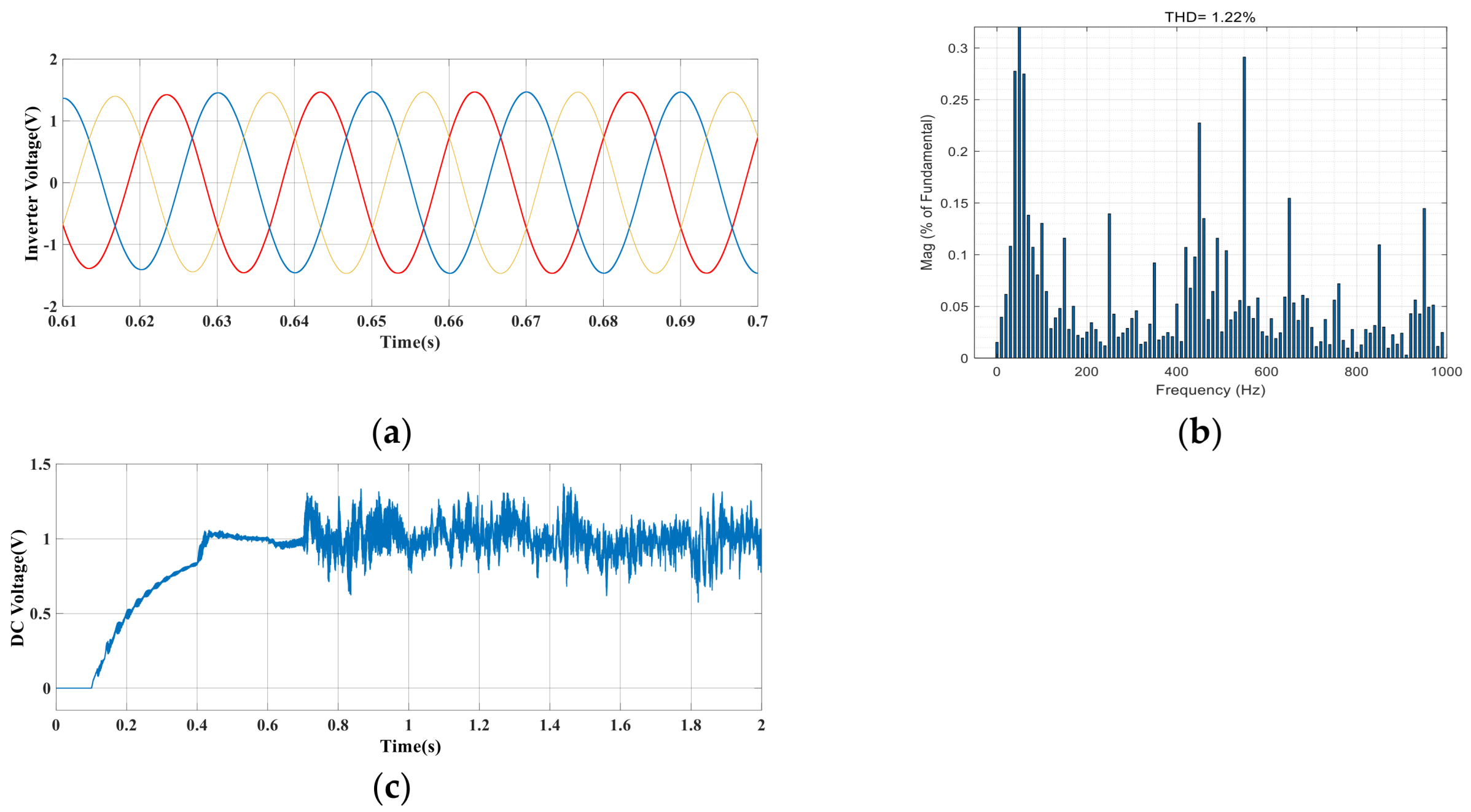
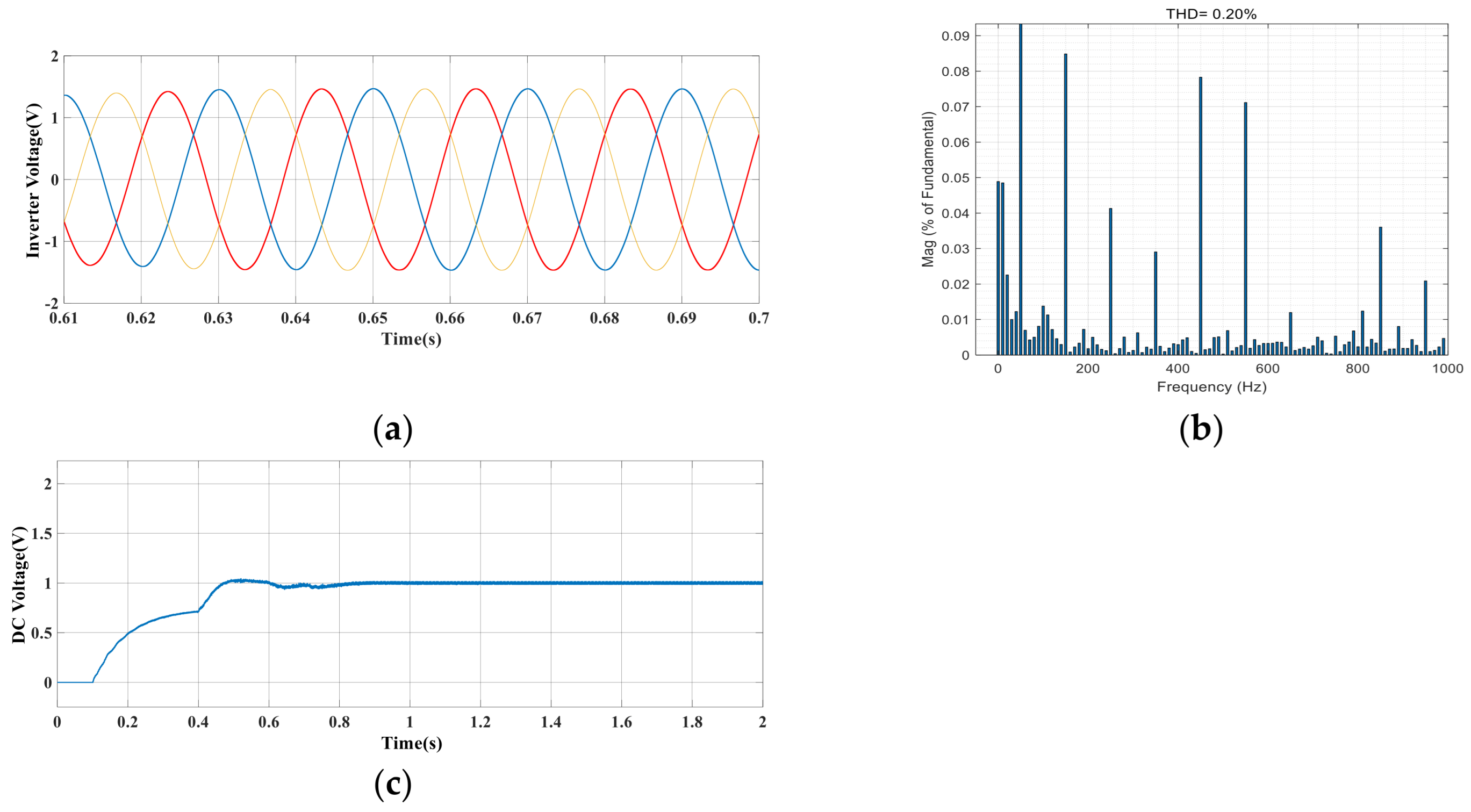
When the system operates under ideal conditions, a load is connected at 0.6 seconds. Figure 5 and Figure 6 illustrate the simulation waveforms for the backstepping super-twisting sliding mode control and traditional PI control, respectively. From Figure 5a and Figure 6a, it can be observed that both the backstepping super-twisting sliding mode control and traditional PI control can achieve normal system operation. The inverter side voltage waveforms for both control strategies are sine waves, indicating stable operation of the system. A Fast Fourier Transform (FFT) analysis was performed on the inverter side currents for both control schemes, as shown in Figure 5b and Figure 6b. Under the proposed BSTSMC framework, the grid-side three-phase current exhibits a Total Harmonic Distortion (THD) of merely 0.2%. Conversely, the traditional PI scheme yields a significantly higher THD of 1.22%. This indicates that the former exhibits lower harmonic content and reduced distortion.
Stability of the DC side voltage is crucial for ensuring reliable system operation. In examining the DC voltage waveforms shown in Figure 5c and Figure 6c, it is evident that the improved control strategy results in smaller DC voltage fluctuations, whereas traditional PI control presents larger DC voltage fluctuations. This suggests that the improved control strategy provides a more stable operation of the system. To explicitly quantify the system performance under ideal operating conditions, a detailed numerical comparison between the traditional PI control and the proposed BSTSMC is summarized in Table 1. As indicated in the table, the proposed BSTSMC exhibits a significantly lower overshoot and successfully suppresses the DC voltage ripple amplitude to 0.1. Furthermore, the THD is reduced from 1.22% to 0.20%, demonstrating a substantially improved steady-state precision and dynamic tracking capability.

4.2. Simulation Analysis Under Grid Voltage Sag Conditions

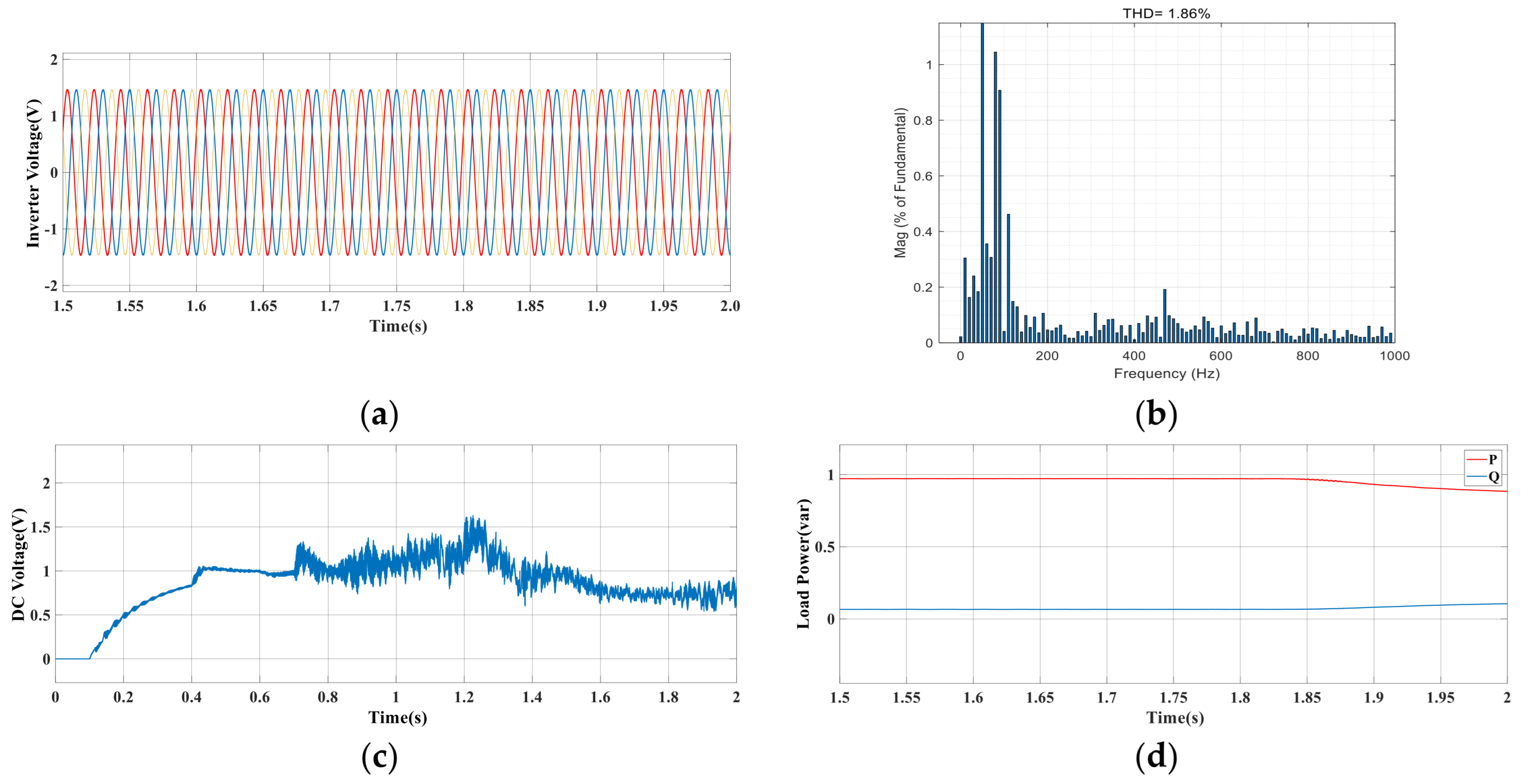
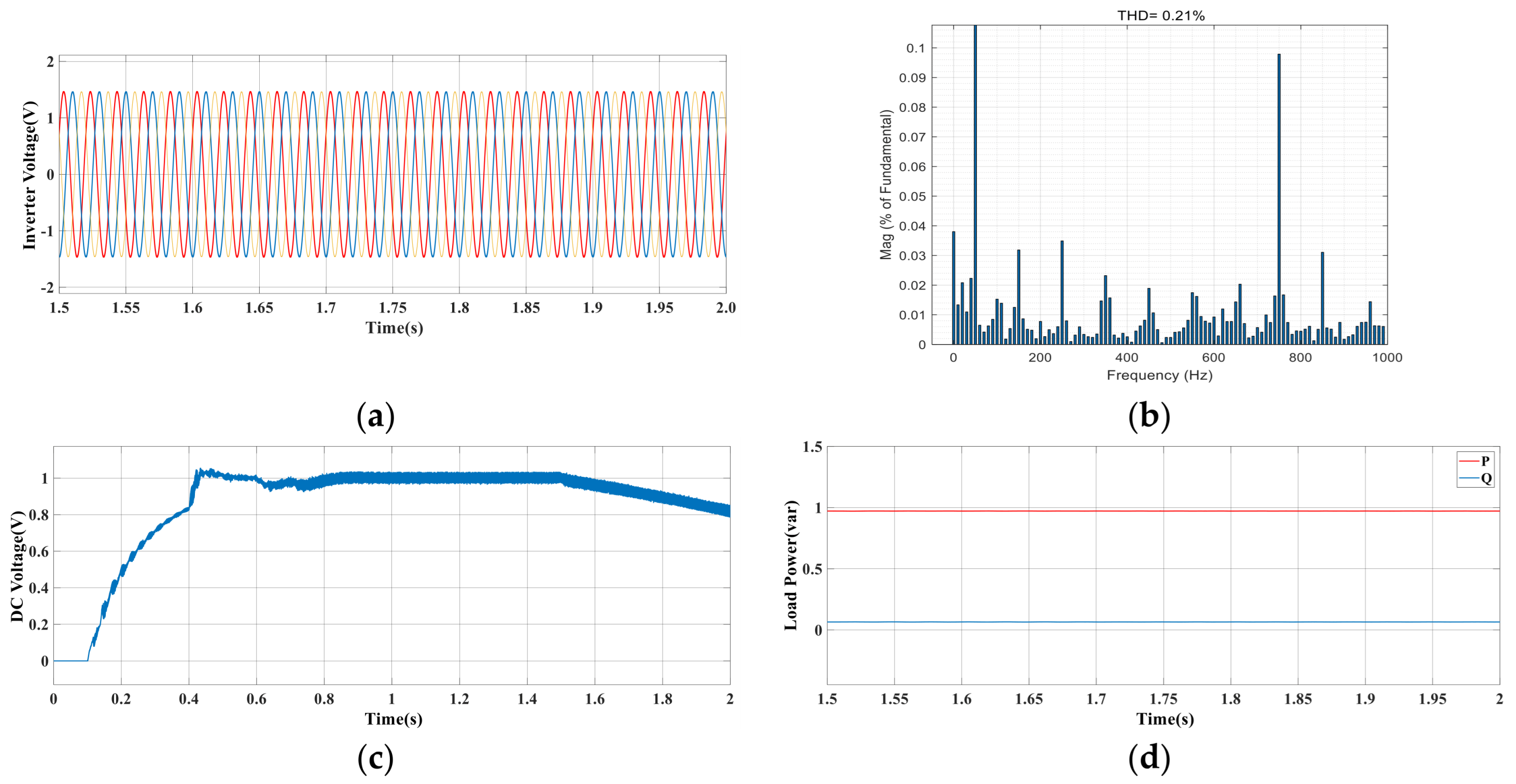
Prior to any AC-side disturbances, the MMC-HVDC system operates in a steady state, supplying a nominal load active power of 1.0 p.u. To evaluate transient robustness, a 20% amplitude drop in the three-phase grid voltage is manually injected between t = 1.5 s and t = 2.0 s. Figure 7 shows the simulation waveform of PI control under grid voltage sag conditions. Figure 8 presents the simulation waveforms of BSTSMC under grid voltage sag conditions. From Figure 7a and Figure 8a, it is evident that the system’s transmitted power decreases and the DC side voltage also drops when the grid voltage drops. The DC side voltage fluctuates significantly during the grid voltage sag condition under PI control, as illustrated in Figure 7c. While the backstepping super-twisting sliding mode control shows smaller fluctuations and smoother waveform in Figure 8c. The load side power, as shown in Figure 7d and Figure 8d, demonstrates that under PI control, the active power decreases more significantly between 1.5 s and 2.0 s compared to the backstepping control strategy. A Fast Fourier Transform (FFT) analysis was conducted on the inverter side currents for both control schemes, with results displayed in Figure 7b and Figure 8b. The THD of the grid-side three-phase current under backstepping super-twisting sliding mode control is 0.21%, while the THD is 1.86% under traditional PI control. This shows that the former has a lower harmonic content and less distortion. Table 2 presents the quantitative evaluation metrics extracted during the grid voltage sag scenario. The objective data clearly shows that the proposed BSTSMC significantly minimizes the transient overshoot from 50% to 20% and achieves faster settling responses. Moreover, the active power deviation and DC voltage ripple amplitude are restrained to merely 0.1 and 0.2, respectively, compared to the severe fluctuations observed under PI control.

4.3. Simulation Analysis Under Single-Phase Ground Fault Condition Simulation Analysis Under Grid Voltage Sag Conditions

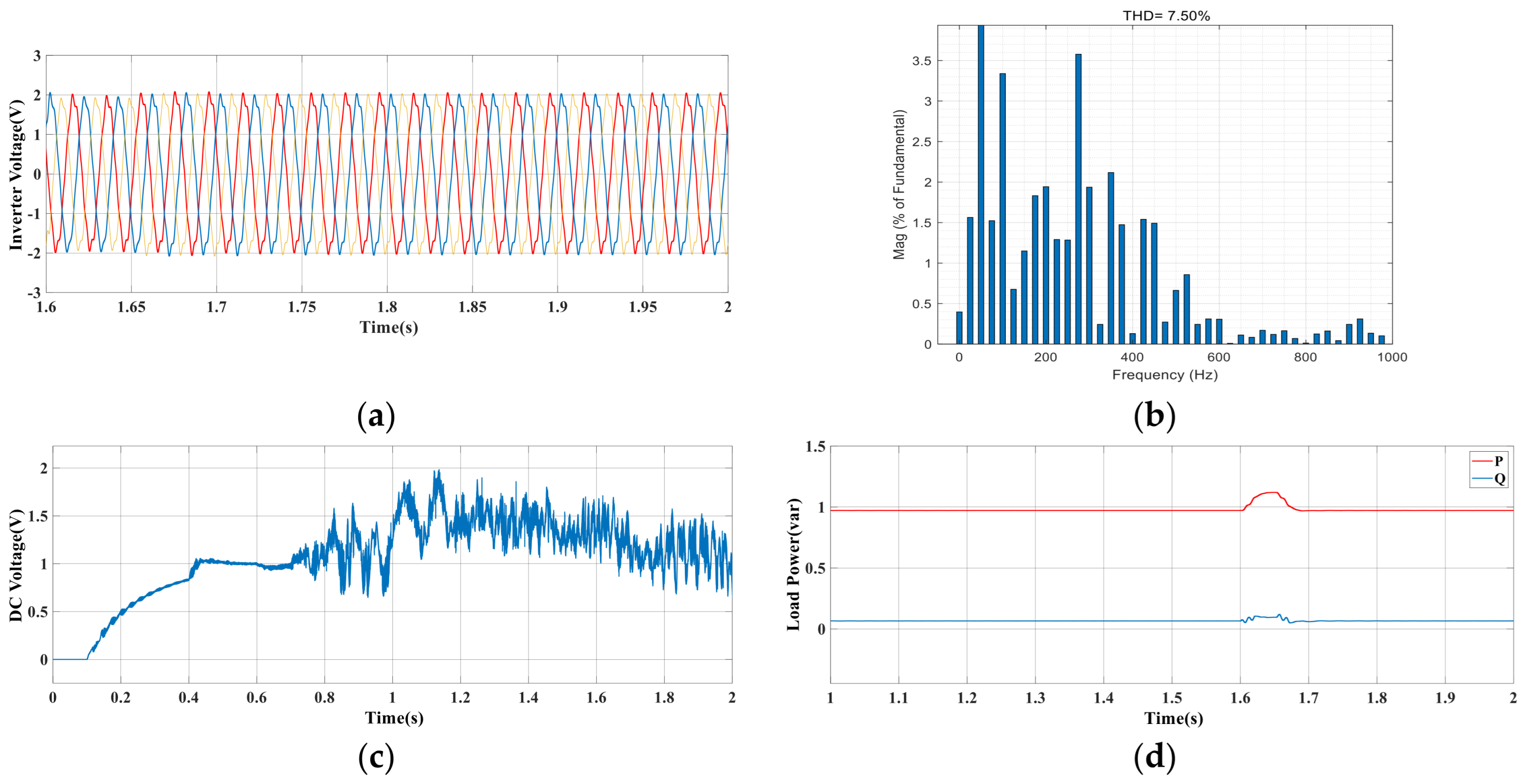
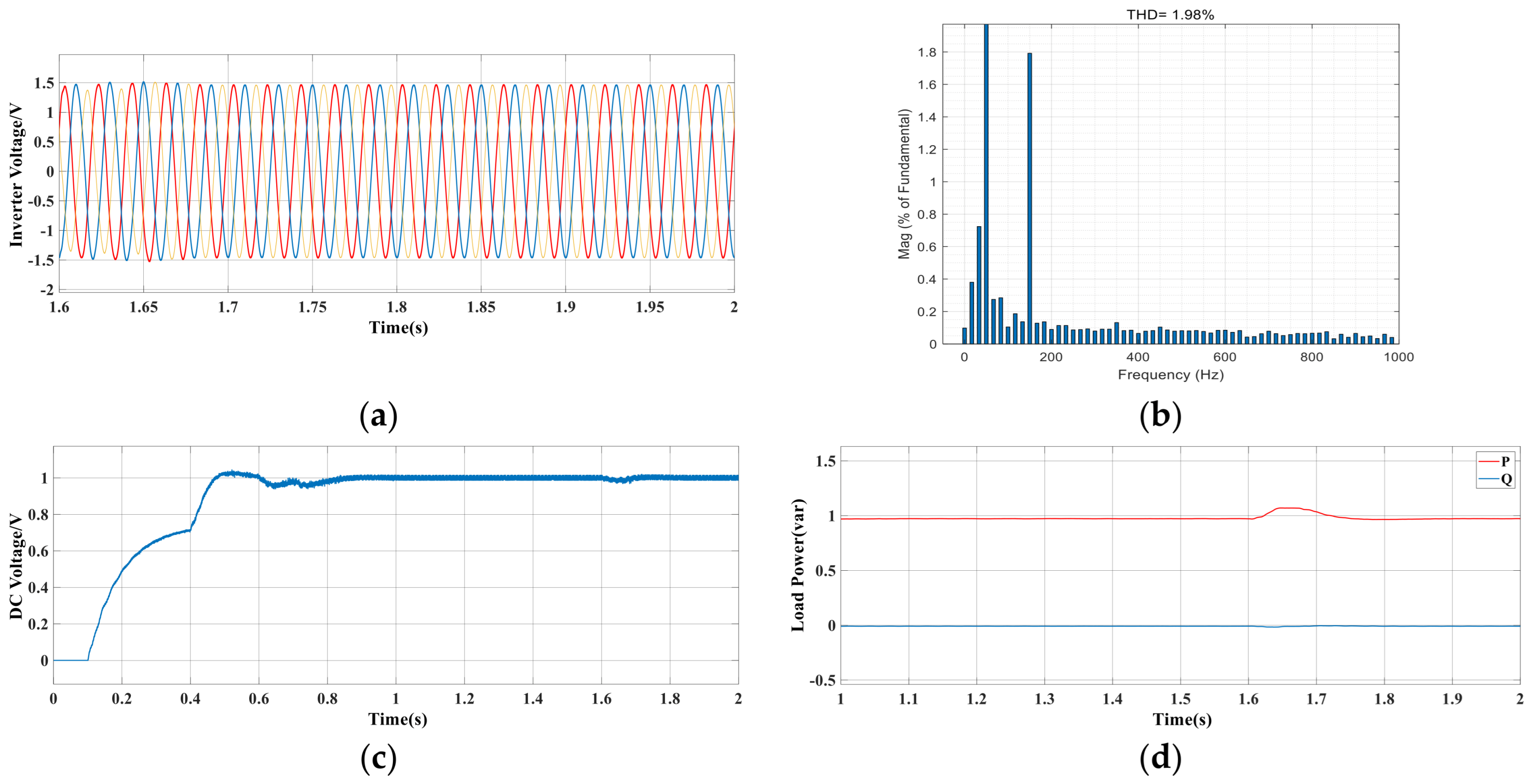
Before a single-phase ground fault takes place in the MMC-HVDC system, the system operates under stable conditions, with the rated active power of the load set to 1.0 (per unit value). A single-phase-to-ground short-circuit fault on phase A is initiated at t = 1.6 s and subsequently cleared at t = 1.65 s. The responses of the MMC-HVDC system’s inverter stage employing both backstepping super-twisting control and conventional PI control are illustrated in Figure 9a and Figure 10a. It can be observed that both control schemes are capable of operating when a single-phase ground fault takes place. However, the inverter-side current under the improved control strategy exhibits smaller fluctuations and smoother waveforms. Furthermore, the variations in active and reactive power are less pronounced with the improved control strategy, resulting in enhanced system stability. The fluctuations in the DC side voltage are also reduced, leading to lower overshoot and further contributing to increased system stability. The FFT analysis was conducted on the inverter-side current for both control schemes, as shown in Figure 9b and Figure 10b. Spectral analysis reveals that the grid-side current THD is limited to 1.98% using the proposed strategy, which is substantially superior to the 7.50% THD observed with the conventional PI controller. This indicates that the former has a lower harmonic content and reduced distortion. A comprehensive quantitative comparison under the severe single-phase-to-ground fault condition is provided in Table 3. The statistical metrics underscore the robustness of the BSTSMC strategy, which restricts the overshoot to 10% and effectively eliminates steady-state errors. Compared to the traditional PI control, the proposed method reduces the power deviation by half (from 0.2 to 0.1) and achieves a drastic reduction in DC voltage ripple amplitude (from 1.3 to 0.1), thereby guaranteeing superior operational stability during asymmetric grid faults.

5. Conclusions

The model of BSTSMC is designed for the MMC-HVDC transmission system. Simulation studies yield the following conclusions:
(1)
This research investigates MMC-HVDC supplying power to a passive network and designs a control strategy within a specific coordinate system. The control strategy’s effectiveness is confirmed across various operating conditions. This approach enhances the advantages of systems using passive networks and the potential for large-scale integration of renewable energy sources.
(2)
The deployment of the BSTSMC scheme offers substantial improvements in disturbance rejection and overall stability when benchmarked against standard PI regulators. Additionally, it avoids the parameter sensitivity issues associated with backstepping control and the chattering phenomenon typical of SMC.
(3)
In relation to the MMC-HVDC rectifier, the inner loop employs the Backstepping Super-Twisting Sliding Mode Control, which guarantees robust operation across a diverse range of scenarios. These include steady-state ideal conditions, transient power grid sags, and asymmetrical anomalies like single-phase-to-ground short circuits. The proposed control strategy effectively suppresses voltage fluctuations on the DC side and reduces variations in power compared to PI control, resulting in lower peak values and overshoot during single-phase ground fault conditions, thereby enhancing system stability.
While extensive simulations have demonstrated the theoretical effectiveness and robustness of the proposed BSTSMC strategy under various transient and fault conditions, it is acknowledged that physical hardware validation is an essential step for practical engineering applications. Due to the significant high voltage and high-power safety constraints associated with constructing an MMC-HVDC physical platform, Hardware-in-the-Loop (HIL) testing will be the primary focus of our future research to further verify the real-world feasibility and discrete-time implementation of the proposed controller.

Author Contributions

Conceptualization, Z.W. and X.W.; methodology, Z.W. and H.D.; software, H.H. and Y.Z.; validation, X.W. and Y.Z.; formal analysis, Z.W. and H.H.; investigation, Z.W. and X.W.; resources, X.W. and Y.Z.; data curation, H.D. and H.H.; writing—original draft preparation, Z.W. and X.W.; writing—review and editing, H.D. and H.H.; visualization, H.H. and Y.Z.; supervision, Z.W. and H.D.; project administration, X.W. and Y.Z. All authors have read and agreed to the published version of the manuscript.

Funding

This research received no external funding.

Data Availability Statement

The original contributions presented in this study are included in the article. Further inquiries can be directed to the corresponding author.

Conflicts of Interest

Authors Zerong Wang, Xinhong Wu, Hao Dong, and Hao Huang were employed by the company State Grid Zhejiang Integrated Energy Service Co., Ltd. The remaining authors declare that the research was conducted in the absence of any commercial or financial relationships that could be construed as a potential conflict of interest.

References

  1. Mahmoud, Q.H.; Al-Salem, S.A.; Al-Zu’bi, Z.A.S. A review of hybrid renewable energy systems: Solar and wind-powered solutions: Challenges, opportunities, and policy implications. Results Eng. 2023, 20, 101621. [Google Scholar] [CrossRef]
  2. Li, T.; Li, Y.; Chen, X.; Li, S.; Liu, N. Research on coordinated control strategy based on hybrid multi-terminal HVDC transmission network. Int. J. Electr. Power Energy Syst. 2022, 135, 107400. [Google Scholar] [CrossRef]
  3. Su, T.; Zhao, J.; Gomez-Exposito, A. Grid-enhancing technologies for clean energy systems. Nat. Rev. Clean Technol. 2025, 1, 16–31. [Google Scholar] [CrossRef]
  4. Kumar, S.I.; Kumar, N.R. Renewables integration into power systems through intelligent techniques: Implementation procedures, key features, and performance evaluation. Energy Rep. 2023, 9, 6063–6087. [Google Scholar] [CrossRef]
  5. Herding, L.; Cossent, R.; Rivier, M. Assessing the impact of renewable energy penetration and geographical allocation on transmission expansion cost: A comparative analysis of two large-scale systems. Sustain. Energy Grids Netw. 2024, 38, 101349. [Google Scholar] [CrossRef]
  6. Fan, J.L.; Li, Z.; Huang, X. A net-zero emissions strategy for China’s power sector using carbon-capture utilization and storage. Nat. Commun. 2023, 14, 5972. [Google Scholar] [CrossRef]
  7. Alassi, A.; Bañales, S.; Ellabban, O. HVDC Transmission: Technology Review, Market Trends and Future Outlook. Renew. Sustain. Energy Rev. 2019, 112, 530–554. [Google Scholar] [CrossRef]
  8. Mwale, L.; Nhlapo, B. High Voltage Direct Current (HVDC) Transmission Technology and DC Grids a Comprehensive Review. Energy Power Eng. 2026, 18, 1–38. [Google Scholar] [CrossRef]
  9. Shufian, A.; Hannan, N.; Kabir, S. Investigation and performance optimization of modular multilevel converter-based HVDC systems for smart grids: Control, harmonic analysis and power quality enhancement. Smart Grids Sustain. Energy 2024, 9, 41. [Google Scholar] [CrossRef]
  10. Wang, T.; Hussain, K.S.; Song, G.; Han, W.; Liu, C. Adaptive single-phase/three-phase reclosing scheme for transmission lines in passive network supplied by MMC-HVDC. Int. J. Electr. Power Energy Syst. 2019, 113, 597–606. [Google Scholar] [CrossRef]
  11. Nami, A.; Liang, J.; Dijkhuizen, F.; Demetriades, G.D. Modular multilevel converters for HVDC applications: Review on converter cells and functionalities. IEEE Trans. Power Electron. 2014, 30, 18–36. [Google Scholar] [CrossRef]
  12. Flourentzou, N.; Agelidis, V.G.; Demetriades, G.D. VSC-based HVDC power transmission systems: An overview. IEEE Trans. Power Electron. 2009, 24, 592–602. [Google Scholar] [CrossRef]
  13. Debnath, S.; Qin, J.; Bahrani, B.; Saeedifard, M.; Barbosa, P. Operation, control, and applications of the modular multilevel converter: A review. IEEE Trans. Power Electron. 2014, 30, 37–53. [Google Scholar] [CrossRef]
  14. Perez, M.A.; Bernet, S.; Rodriguez, J.; Kouro, S.; Lizana, R. Circuit topologies, modeling, control schemes, and applications of modular multilevel converters. IEEE Trans. Power Electron. 2014, 30, 4–17. [Google Scholar] [CrossRef]
  15. Priya, M.; Ponnambalam, P.; Muralikumar, K. Modular-multilevel converter topologies and applications-a review. IET Power Electron. 2019, 12, 170–183. [Google Scholar] [CrossRef]
  16. Dai, F.; Zeng, D.; Liu, S.; Wang, G. A practical impedance modeling method of MMC-HVDC transmission system for medium- and high-frequency resonance analysis. Electr. Power Syst. Res. 2022, 212, 108636. [Google Scholar] [CrossRef]
  17. Shi, X.; Yang, R.; Cai, X.; Fang, Z.; Dong, P.; Rao, F. Improved comprehensive energy-based control for MMC-HVDC system. Int. J. Electr. Power Energy Syst. 2023, 145, 108593. [Google Scholar] [CrossRef]
  18. Gharaghani, F.; Asadi, M. Control of MMC-HVDC transmission system: A review on internal and external converter control under grid strength. Electr. Eng. 2023, 105, 3861–3879. [Google Scholar] [CrossRef]
  19. Lesnicar, A.; Marquardt, R. An innovative modular multilevel converter topology suitable for a wide power range. In Proceedings of the Power Tech Conference, Bologna, Italy, 23–26 June 2003; IEEE: Piscataway, NJ, USA, 2004; Volume 3. [Google Scholar]
  20. Parida, N.; Das, A. A New Modular Multilevel Converter Circuit Topology with Reduced Number of Power Cells for DC to AC Applications. Int. J. Electr. Power Energy Syst. 2020, 123, 106256. [Google Scholar] [CrossRef]
  21. Zhao, R.; Song, G. Research on Key Technology Points for MMC-HVDC System. In Proceedings of the PCIM Asia 2020, International Exhibition and Conference for Power Electronics, Intelligent Motion, Renewable Energy and Energy Management, Shanghai, China, 16–18 November 2020; pp. 329–334. [Google Scholar]
  22. Jaesik, J.K.; Wook, D.K.; Pil, J.L. Design Procedure of MMC-HVDC System: Comprehensive Consideration of Internal and External Dynamics. IEEE Access 2020, 8, 157437–157450. [Google Scholar] [CrossRef]
  23. Yang, J.; Fletcher, J. Multiterminal DC Wind Farm Collection Grid Internal Fault Analysis and Protection Design. IEEE Trans. Power Deliv. 2010, 25, 2308–2318. [Google Scholar] [CrossRef]
  24. Prieto-Araujo, E.; Junyent-Ferré, A.; Collados-Rodríguez, C. Control design of Modular Multilevel Converters in normal and AC fault conditions for HVDC grids. Electr. Power Syst. Res. 2017, 152, 424–437. [Google Scholar] [CrossRef]
  25. Mohammadali, M.A.; Majid, M.; Mohammad, S. A Back-Stepping Control Method for Modular Multilevel Converters. IEEE Trans. Ind. Electron. 2020, 1, 443–453. [Google Scholar] [CrossRef]
  26. Cheng, Q.; Zhang, X.; Lai, Y. Backstepping Sliding Mode Control of Three-Level Direct Matrix Converter Under Unbalanced Grid Voltage. Prot. Control 2023, 51, 73–85. [Google Scholar]
  27. Lourenço, L.F.N.; Iovine, A.; Damm, G.; Filho, A.J.S. Nonlinear Controller for MMC-HVdc Operating in Grid-Forming Mode. IEEE Trans. Control Syst. Technol. 2025, 33, 229–244. [Google Scholar] [CrossRef]
  28. Gharaghani, F.; Asadi, M. Robust sliding mode control for the MMC-HVDC transmission system with SCR uncertainty. IET Power Electron. 2024, 17, 2549–2560. [Google Scholar] [CrossRef]
  29. Hussain, R.C.; Akhtar, F.C.; Badar, J.S. Control and protection of MMC-based HVDC systems: A review. Energy Rep. 2023, 9, 1571–1588. [Google Scholar] [CrossRef]
  30. Arie, A.L. Higher-Order Sliding Modes, Differentiation and Output-Feedback Control. Int. J. Control 2003, 76, 924–941. [Google Scholar]
Figure 1. MMC-HVDC structure diagram.
Energies 19 02246 g001
Figure 2. MMC topology structure diagram.
Energies 19 02246 g002
Figure 3. Block diagram of mathematical model structure.
Energies 19 02246 g003
Figure 4. Overall control block diagram of MMC-HVDC.
Energies 19 02246 g004
Figure 5. Simulation waveform of PI control under ideal conditions: (a) inverter side voltage; (b) phase analysis of current THD; (c) dc side voltage.
Energies 19 02246 g005
Figure 6. Simulation waveform of backstepping super-twisting sliding mode control under ideal conditions: (a) inverter side voltage; (b) phase analysis of current THD; (c) dc side voltage.
Energies 19 02246 g006
Figure 7. Simulation waveform of PI control under grid voltage sag conditions: (a) inverter side voltage; (b) phase analysis of current THD; (c) dc side voltage; (d) load power.
Energies 19 02246 g007
Figure 8. Simulation waveforms of backstepping super-twisting sliding mode control under grid voltage sag conditions: (a) inverter side voltage; (b) phase analysis of current THD; (c) dc side voltage; (d) load power.
Energies 19 02246 g008
Figure 9. Simulation waveform of PI control under single-phase ground fault conditions: (a) inverter side voltage; (b) phase analysis of current THD; (c) dc side voltage; (d) load power.
Energies 19 02246 g009
Figure 10. Simulation waveform of backstepping super-twisting sliding mode control under single-phase ground fault conditions: (a) inverter side voltage; (b) phase analysis of current THD; (c) dc side voltage; (d) load power.
Energies 19 02246 g010
Table 1. Quantitative performance comparison under ideal conditions.
Control Method PI ControlBackstepping Super-Twisting Sliding Mode Control
Analysis
Overshoot25%10%
DC voltage ripple amplitude0.550.1%
THD1.22%0.20%
Table 2. Quantitative performance comparison under grid voltage sag conditions.
Control Method PI ControlBackstepping Super-Twisting Sliding Mode Control
Analysis
Overshoot50%20%
DC voltage ripple amplitude10.2
Power deviation0.30.1
THD1.86%0.21%
Table 3. Quantitative performance comparison under single-phase ground fault conditions.
Control Method PI ControlBackstepping Super-Twisting Sliding Mode Control
Analysis
Overshoot80%10%
DC voltage ripple amplitude1.30.1
Power deviation0.20.1
THD7.50%1.98%
Disclaimer/Publisher’s Note: The statements, opinions and data contained in all publications are solely those of the individual author(s) and contributor(s) and not of MDPI and/or the editor(s). MDPI and/or the editor(s) disclaim responsibility for any injury to people or property resulting from any ideas, methods, instructions or products referred to in the content.