1. Introduction
In recent years, renewable energy sources, particularly wind and photovoltaics, have undergone rapid development in order to construct a clean and low-carbon new power system. Renewable generators are progressively replacing conventional synchronous generators as the primary power supply in the power grid. At present, most new energy power plants employ grid-following (GFL) control technology. GFL units are passively integrated into the grid as current sources, utilizing a phase-locked loop (PLL) to track the voltage phase at the point of common coupling (PCC) and adjusting the output current to achieve active and reactive power decoupled control. Under strong grid conditions, GFL units can effectively track power commands. However, in weak grids, they are prone to stability issues, such as loss of synchronization and wide-band oscillation [
1,
2,
3]. Additionally, the time delay of a PLL hinders the units from responding to frequency changes instantaneously and providing necessary inertia support. The limited short-circuit current of GFL inverters also leads to inadequate voltage support. Thus, high penetration of GFL units poses great challenges to power system stability [
4].
Grid-forming (GFM) control technology has emerged to mitigate the stability challenges imposed by GFL resources [
5]. In contrast with GFL units, which operate as current sources synchronized to the grid via PLLs, GFM units function as voltage sources and do not need PLLs. They autonomously establish and regulate AC voltage and frequency, ensuring stable operation even under weak grid conditions. Moreover, GFM units can provide rapid frequency and voltage support, making them essential for critical applications such as islanded system operation and black-start restoration [
6,
7,
8].
GFM control strategies mainly include droop control, matching control, and virtual synchronous generator (VSG) control [
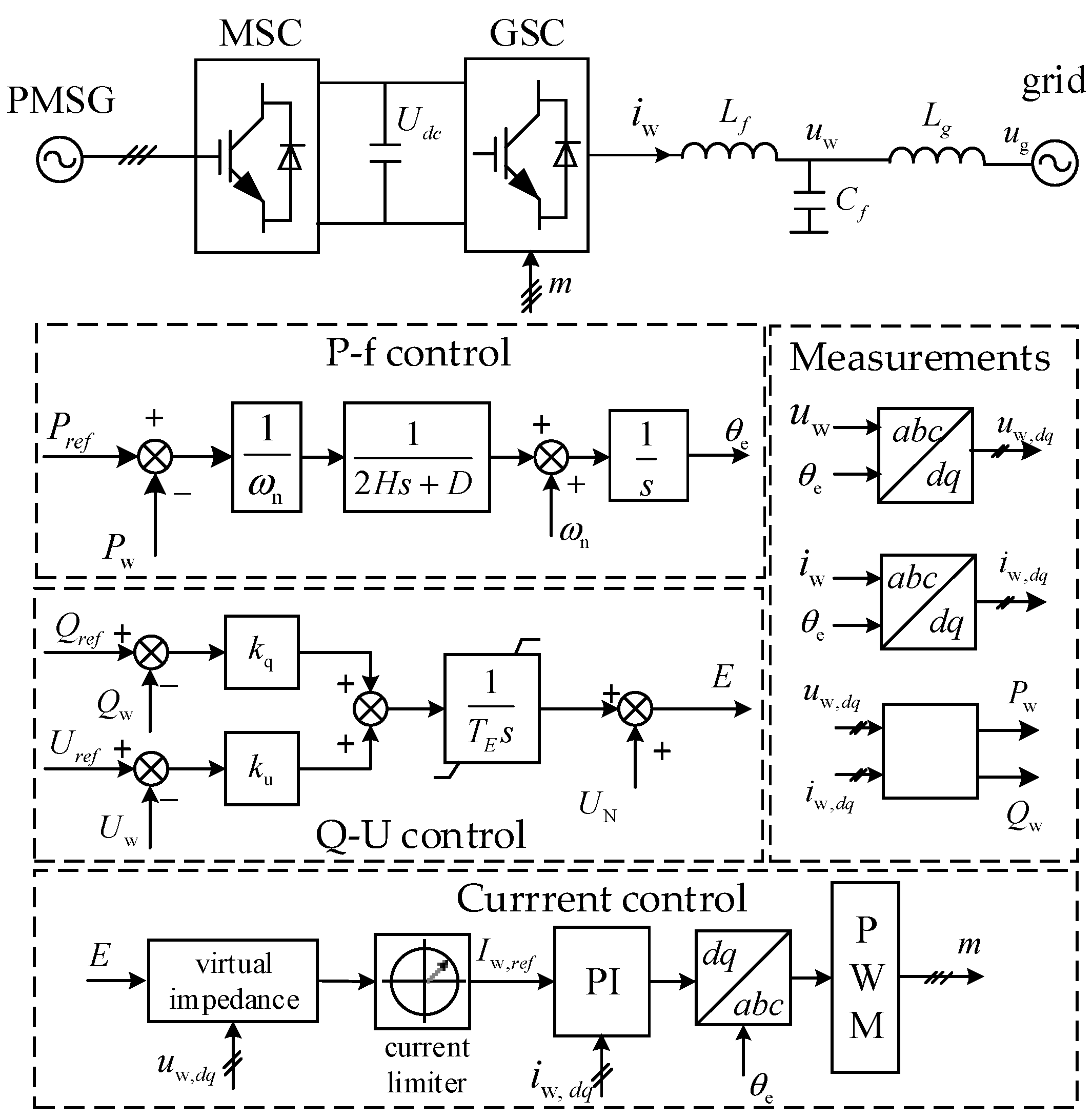
9]. Droop control mimics the active power–frequency (P-f) and reactive power–voltage (Q-U) droop characteristics of synchronous generators to establish voltage and frequency. While it features a simple structure, it lacks inertia support. Matching control is also known as power synchronization control. It establishes a synchronization mechanism by exploiting the dynamic relationship between the DC-link voltage and the virtual rotor angular speed. Although it provides inertia, it does not possess P-f droop functionality. The VSG control strategy emulates both the rotor swing equation and automatic voltage control (AVC) of synchronous generators. It adjusts the virtual rotor angle in response to active power variations and regulates the virtual electromotive force (EMF) based on reactive power and voltage measurements. The VSG can support voltage and frequency rapidly and effectively. It demonstrates favorable performance. Since VSG control-based permanent magnetic synchronous generators (VSG-PMSGs) are widely used in practice, they were chosen as the example to be investigated in this paper.
The control structure of a VSG-PMSG is relatively complex. To comply with grid code requirements [
10], its control strategy needs to switch between normal operation and fault ride-through modes. Additionally, protective elements such as saturation blocks and current limiters are incorporated to protect the converter from overcurrent or overvoltage. These factors endow the VSG-PMSG with strongly nonlinear and discrete characteristics, leading to a high-dimensional model that exhibits complex and time-varying dynamic behaviors. It poses great challenges to the stability analysis of power systems with high penetration of renewable energy.
During voltage sags, the dynamic behavior of a VSG-PMSG depends on the low-voltage ride-through (LVRT) control strategy it has adopted. The LVRT control needs to simultaneously meet the requirements of maintaining transient angle stability, avoiding overcurrent, and providing reactive power support. This topic has been intensively studied. Existing control strategies primarily include control mode switching, adaptive adjustment of inertia and damping, virtual impedance control, and active power reference reduction. The study in [
11,
12] proposed an LVRT control strategy based on GFL/GFM control mode switching. The VSG transitions to GFL control upon the occurrence of a voltage sag. A key drawback of this approach is its dependence on the PLL for grid synchronization, which compromises its stability under weak grid conditions. The study in [
13] proposed an adaptive LVRT method for VSGs based on voltage compensation and power angle abrupt variation compensation, which automatically restricts the current during various asymmetric faults at the onset of the fault and ensures a seamless recovery after the fault. In [
14], an LVRT strategy for VSGs that utilizes a locked active power loop and a quantitatively designed virtual impedance during symmetrical grid voltage sags is proposed. The study in [
15] investigates an LVRT control strategy that combines active power command optimization with adaptive virtual impedance regulation under various voltage dip depths. Furthermore, ref. [
16] analyzes the transient voltage support mechanism of VSGs under current-limiting conditions and presents an improved LVRT strategy. This strategy effectively enhances voltage support capability through active power reference reduction and supplementary droop control. In [
17], a virtual power compensation strategy combined with an improved current-limiting strategy is provided to enhance the transient stability and fault recovery capability. In [
18], the critical clearing time for VSG transient angle stability during voltage faults is derived. Accordingly, an adaptive gain is introduced into the droop control to improve transient angle stability. In [
19], a continuous high/low-voltage ride-through strategy for power conversion systems based on VSG technology is designed. The impact of voltage amplitude and phase jumps during voltage faults on conventional LVRT control strategies is investigated in [
20]. An improved LVRT control strategy that incorporates amplitude switching and phase compensation is proposed to address these issues. For asymmetrical faults, ref. [
21] introduces an adaptive LVRT control strategy, which significantly mitigates transient overcurrent caused by the delay inherent in the process of positive/negative sequence decomposition. In [
22], an asymmetrical LVRT control strategy based on negative-sequence virtual voltage compensation is proposed.
The existing research mainly focuses on LVRT control strategies themselves, while studies on the mechanisms by which VSG dynamic responses under LVRT control are influenced remain insufficient. Most studies are based on single-machine systems and rely on numerical integration to obtain dynamic responses, yet multi-VSGs are used in wind farms. VSGs may exhibit distinct dynamic characteristics under different conditions. However, considering wind speed uncertainties and dispersed terminal voltages, there are numerous possible scenarios. Simulations under all possible scenarios would impose an unbearable computational burden, making it infeasible. Therefore, it is essential to investigate the underlying dynamic mechanisms of VSGs following voltage sags and summarize their behavioral patterns under different conditions. This provides a theoretical foundation for LVRT control strategy optimization [
23], the dynamical equivalent of VSG-based wind farms [
24], and transient stability analysis of power systems integrated with VSGs [
25].
Therefore, this paper proposes a dynamic analysis method for VSG-PMSGs considering the improved LVRT control strategy. It should be noted that this paper primarily focuses on electromechanical transients, while wide-band oscillations are outside of the scope of this paper. This paper is organized as follows.
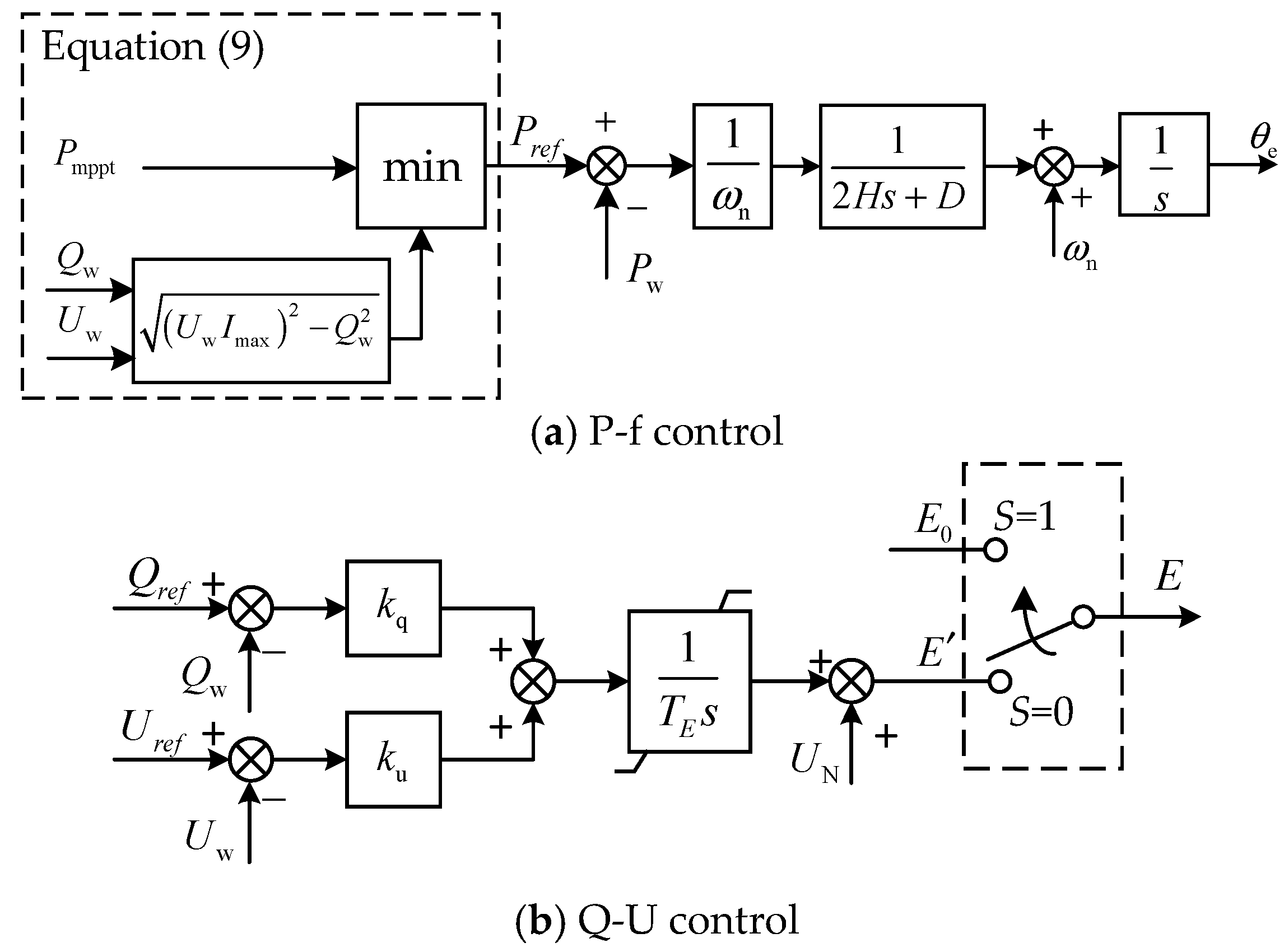
Section 2 presents an improved LVRT control strategy based on active power reference reduction and virtual EMF reset. In
Section 3, the mechanism by which the initial power and fault voltage influence dynamic characteristics is elucidated, and the dynamic responses of the VSG-PMSG under different fault scenarios are classified into four types. Subsequently,
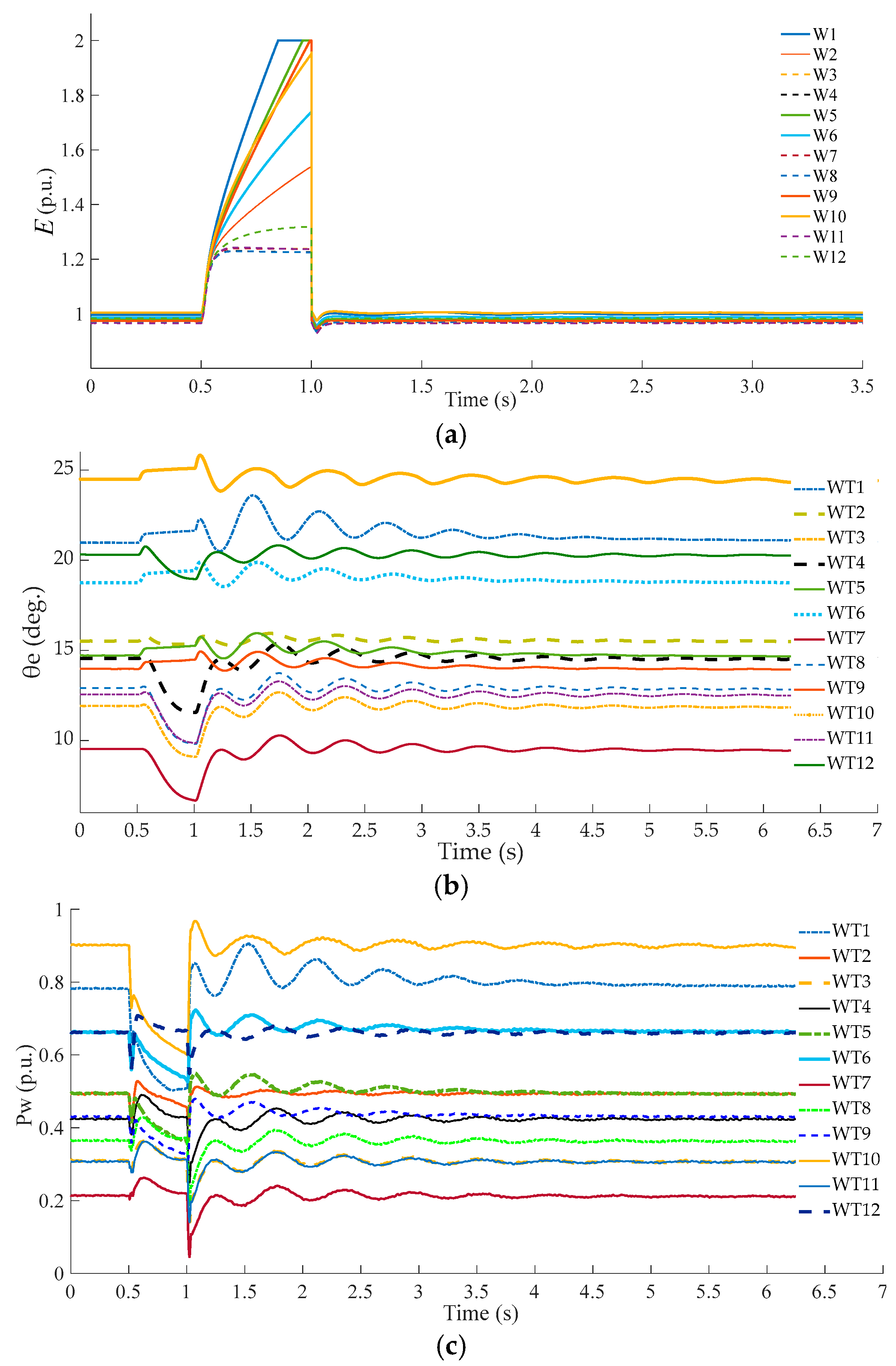
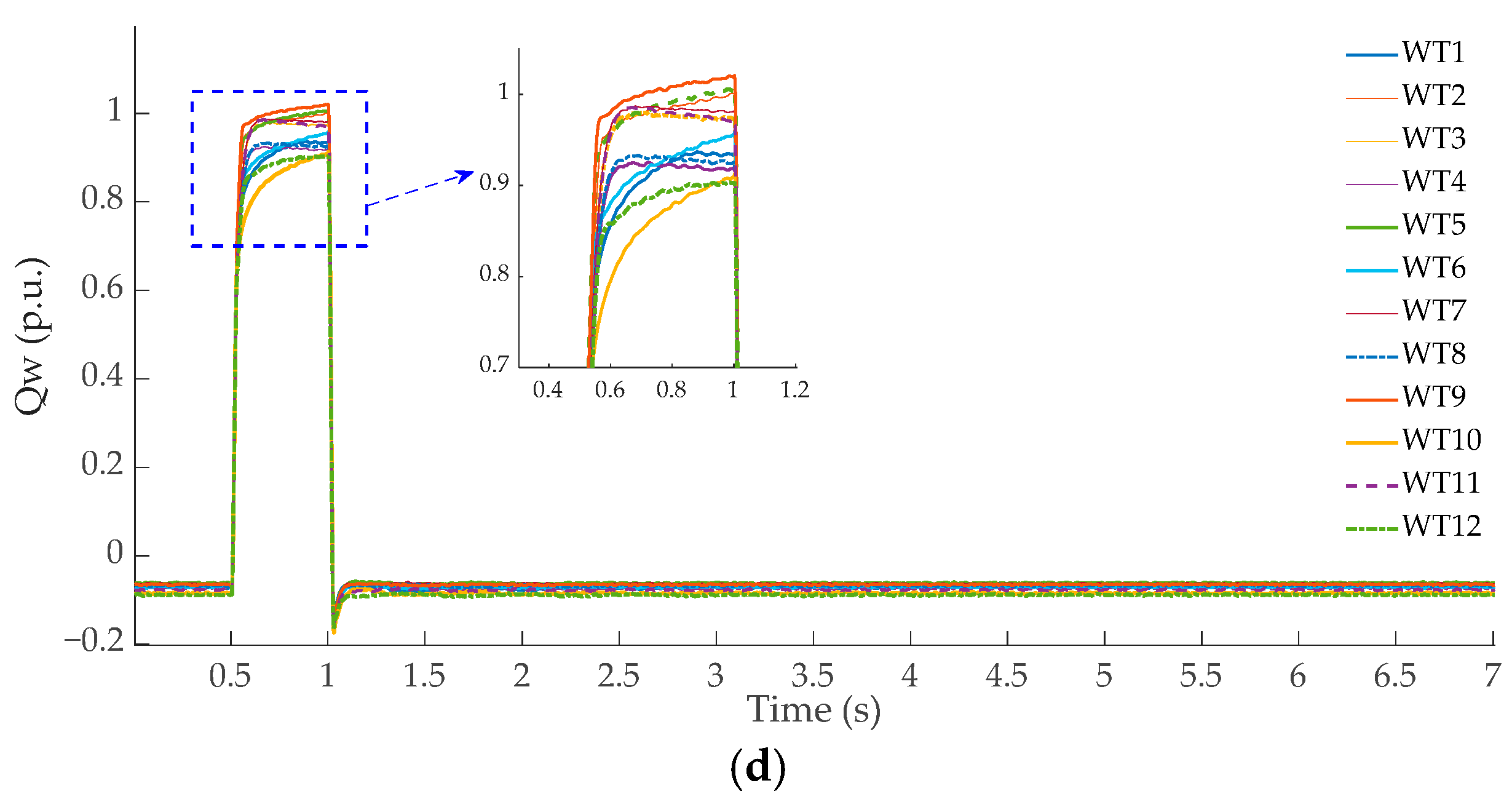
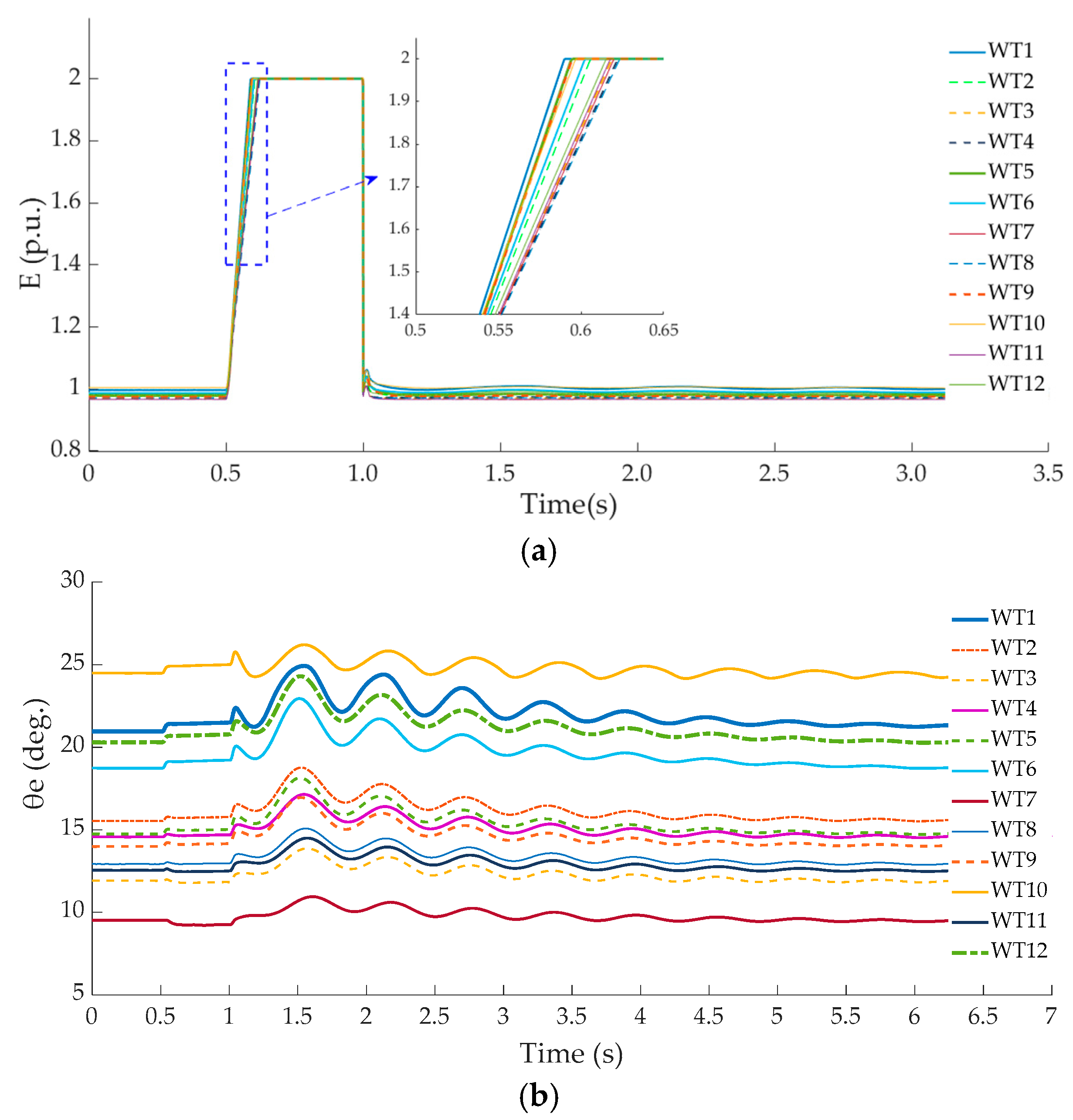
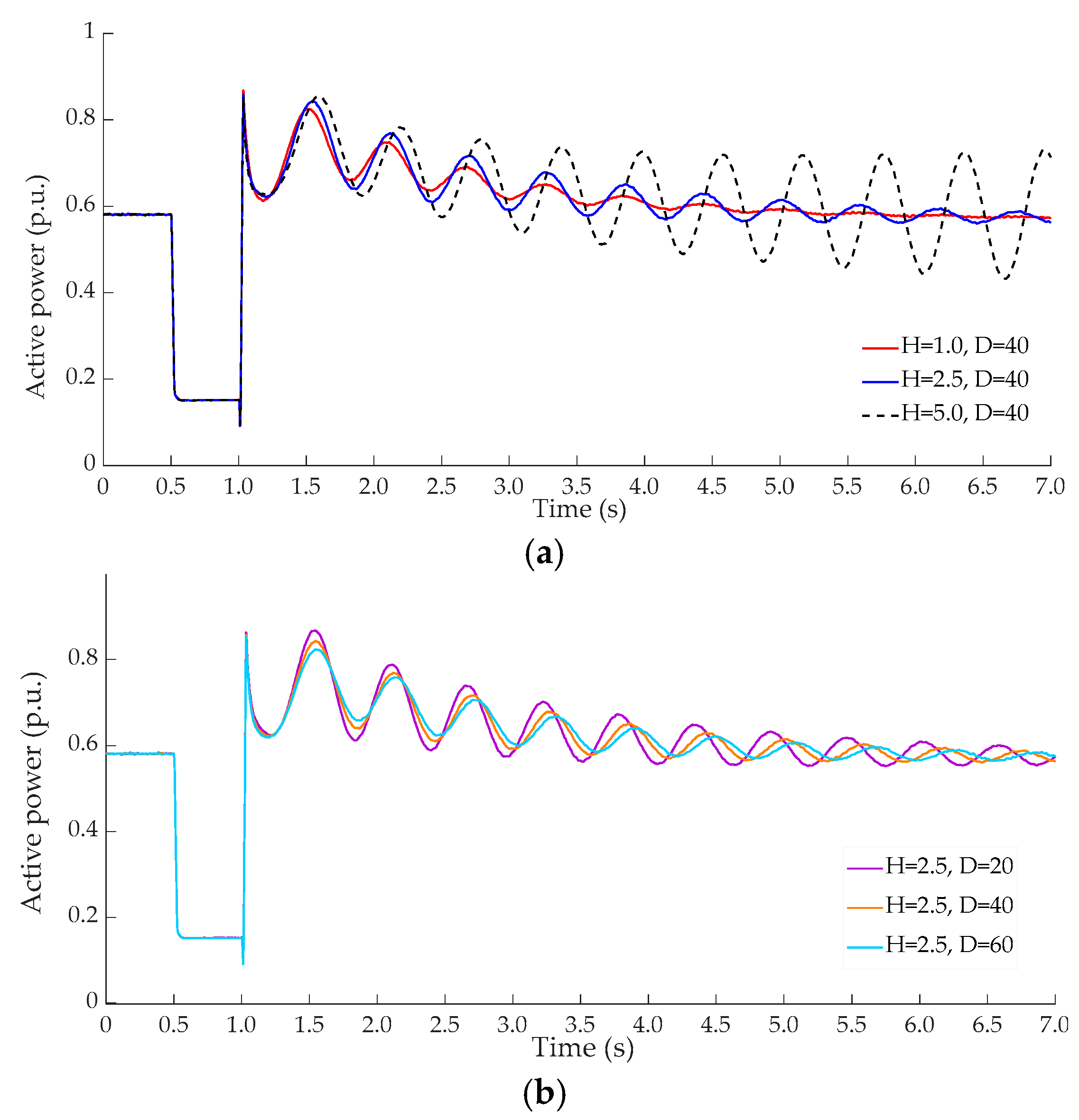
Section 4 proposes a fault steady-state power flow calculation method to obtain the fault voltage, and the VSG-PMSG dynamics are predicted according to the state of current and EMF limiters. The effectiveness of the proposed method is validated through simulations in
Section 5. Finally, the conclusions are given in
Section 6.
This paper aims to address the challenge of predicting the LVRT dynamics of VSG-PMSGs accurately and efficiently, which is a critical issue for wind farm stability control. The key contributions of this study are as follows. First, the underlying mechanism by which initial power and fault voltage jointly influence the complex VSG-PMSG dynamics is revealed, a gap not fully explored in prior studies. Second, a dynamic prediction method grounded in fault steady-state power flow analysis is proposed. This method achieves a fault voltage dip error of less than 0.002 p.u., predicts unit dynamics within 10 s, and significantly outperforms numerical simulation-based approaches. Third, simulations under various voltage dips and wind speeds are conducted to validate the effectiveness of the proposed LVRT strategy and the dynamic analysis method. The novelty of this paper lies in two aspects. First, unlike existing studies that rely on transient simulations, the proposed method integrates dynamic analysis with steady-state power flow theory to balance accuracy and computational efficiency, which is an innovative framework not previously applied to VSG-PMSG dynamics prediction. Second, the dominant factors influencing the LVRT dynamics are identified, and the mechanisms by which they influence fault dynamics are also revealed.
3. Analysis of VSG-PMSG Dynamics Under LVRT Control
Section 2 introduces an improved LVRT control strategy for the VSG-PMSG. In this section, the dynamic responses of the VSG-PMSG under voltage sags are investigated, and especially, the mechanisms by which the fault voltage and initial operating power impact the dynamics are analyzed.
3.1. Dynamic Mechanisms of the VSG-PMSG Under Voltage Sags
For a given fault voltage, the VSG-PMSG dynamic behaviors are primarily determined by and . The operation of current limiters or virtual EMF limiters, along with the reduction in active power reference, plays a critical role in shaping the system’s transient behavior. A minor variation in initial conditions may result in completely different dynamic responses. Therefore, it is essential to identify the dominant factors that affect the VSG-PMSG dynamics and study the mechanisms by which they impact the virtual EMF and the power angle .
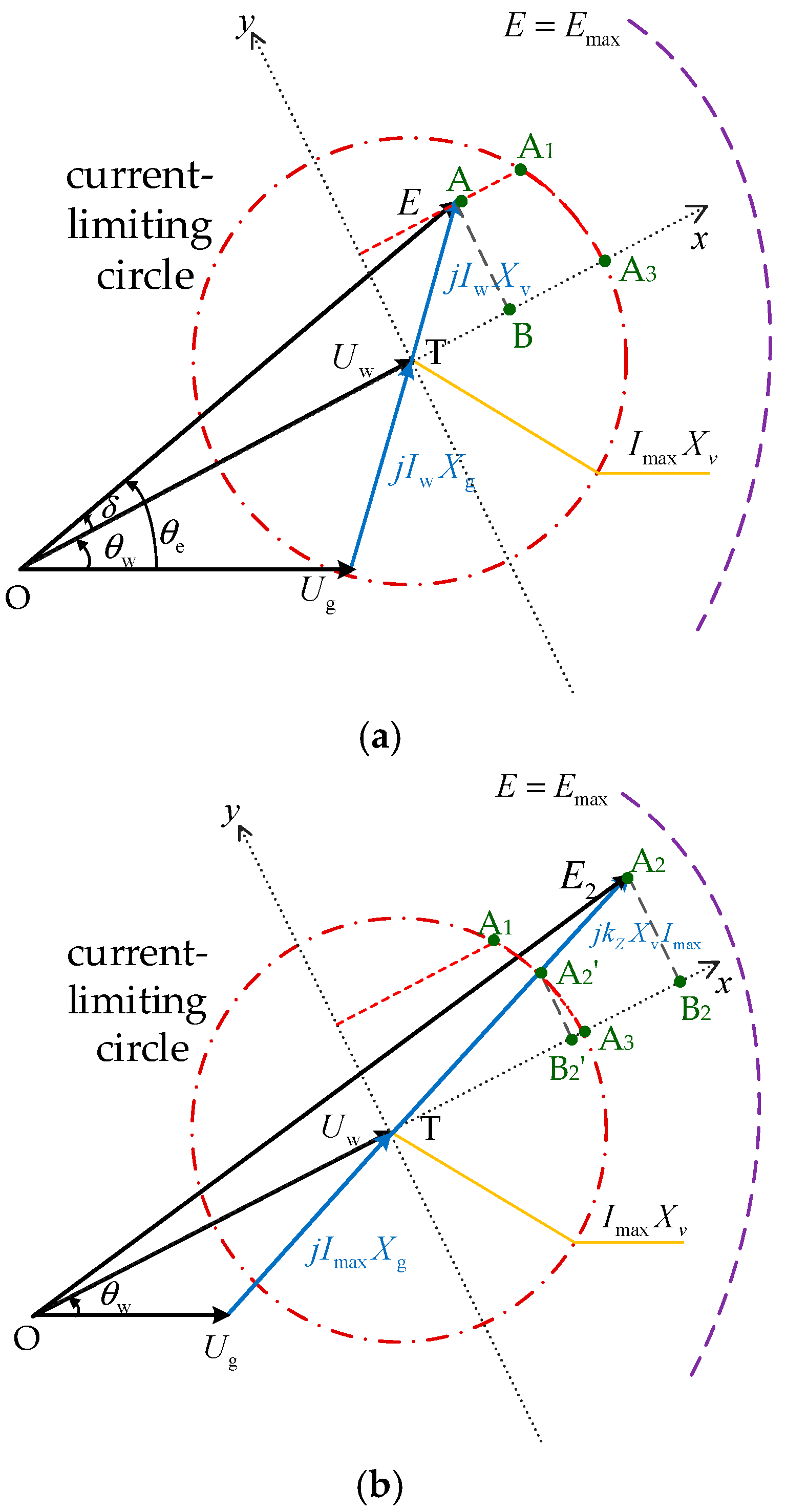
Figure 4 depicts the phasor diagram of the VSG-PMSG under voltage fault conditions. Here, the phasor OT denotes the terminal fault voltage
; the phasor TA
i represents the voltage drop across the virtual impedance in the
ith scenario; and phasor OA
i represents the virtual EMF
, with B
i being the projection of A
i onto the x-axis (aligned with
). When A
i resides outside the current-limiting circle, A
i′ marks the intersection of TA
i with that circle, and B
i′ is the corresponding projection of A
i′ onto the x-axis. Geometrically,
equals
, while
equals
. According to Equations (4) and (5), the active and reactive power outputs are determined by
and
, respectively, when the current limiters remain inactive.
However, when the current limiters are activated, as indicated by phasor OA
2 in
Figure 4b, the virtual impedance is increased to
(with
). Consequently, the active and reactive power outputs are given by
and
, respectively. Owing to the geometric similarity between triangles ΔA
2B
2T and ΔA
2′B
2′T, it can be deduced that
and
. Therefore, the active and reactive power outputs are ultimately determined by
and
.
Since the time constant
of the Q-U control loop is much smaller than the virtual inertia time constant
H, the virtual EMF increases rapidly upon the occurrence of a voltage sag, whereas the virtual rotor angle
changes relatively slowly. Typically,
,
, and
are set to 2.0 p.u., 1.2 p.u., and 0.33 p.u., respectively. As shown in
Figure 4, when the current reaches
, the terminal point of phasor OA
i lies on the current-limiting circle, which is located inside the EMF-limiting circle. This indicates that the current limiter operates prior to the EMF limiter.
If the VSG-PMSG enters a fault steady state following a transient process with neither the current limiter nor the EMF limiter activated, both its P-f and Q-U control loops will reach equilibrium. Under this fault steady-state condition, the output active power of the VPMSG remains constant and equals the initial power
, while the reactive power equals
, as given by Equation (8). Consequently, in
Figure 4a, the terminal point of the virtual EMF phasor will lie on the line of AA
1 in the fault steady state, where
(
) remains unchanged. A lower fault voltage
results in a larger required reactive power
. Thus, the terminal point A
i of the virtual EMF phasor will move closer to A
1 to yield a larger
, which is determined by
(
). When point A
i coincides with A
1,
reaches its maximum value when the current limiter is inactive.
However, if
remains less than
when phasor OA
i reaches the current-limiting circle, it can be seen from Equation (3) that
remains positive, and
E will continue to increase. Consequently, the terminal point A
i moves outside the current-limiting circle, and the current limiter is activated. Under this condition, point A
2′ moves along the current-limiting circle as
E increases, while
is determined by
. Since
, the reactive power output
that the VSG-PMSG can provide is also limited. If
remains below the required level (
) during the fault, the virtual EMF will keep increasing until it reaches
. It is shown in
Figure 4b that as
E increases, point A
2′ will move downward along the current-limiting circle
, causing |A
2′B
2′| (corresponding to
) to decrease. Meanwhile, the active power reference value
will also be reduced according to Equation (9) under this condition. Since
approximately equals
, the rotor angle
will remain unchanged after the current limiter is activated.
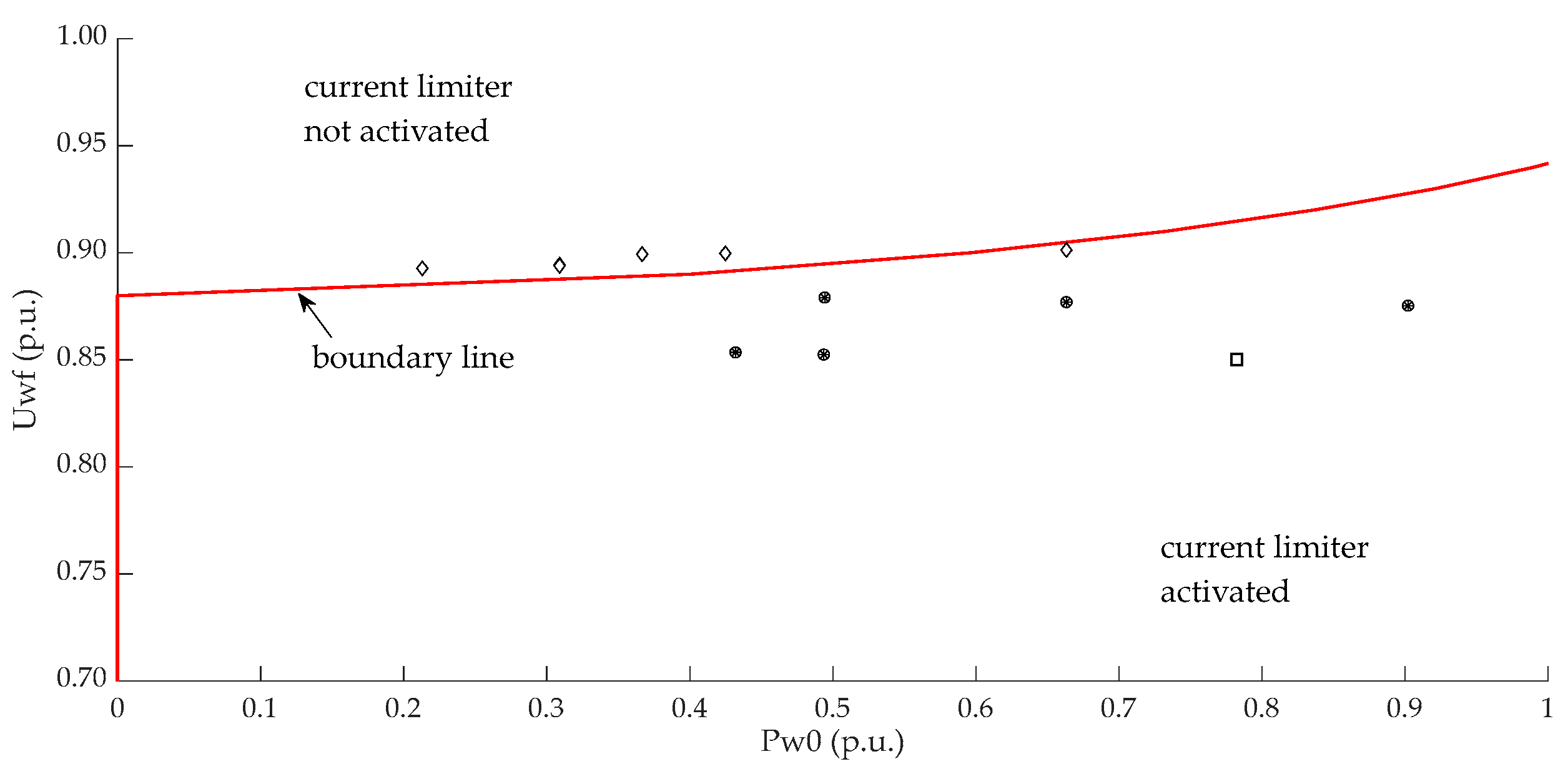
The above analysis shows that the current limiting significantly affects the dynamic responses of the VSG-PMSG during a fault. The activation of current limiters primarily depends on the fault voltage and the initial active power. If the constraint described in Equation (11) is satisfied, the current limiter remains inactive; otherwise, it is activated.
Under a given fault voltage, an increase in the initial active power means a larger
, and point A
1 on the current-limiting circle in
Figure 4 moves upward. This reduces the maximum reactive power (
) that the VSG-PMSG can deliver before current limiting engages, making the system more prone to enter the current-limiting state. For a specified initial active power, a lower fault voltage leads to a larger required reactive power
, thereby also increasing the likelihood of entering the current-limiting state.
3.2. Classification of Fault Dynamic Responses for VSG-PMSGs Under LVRT Control
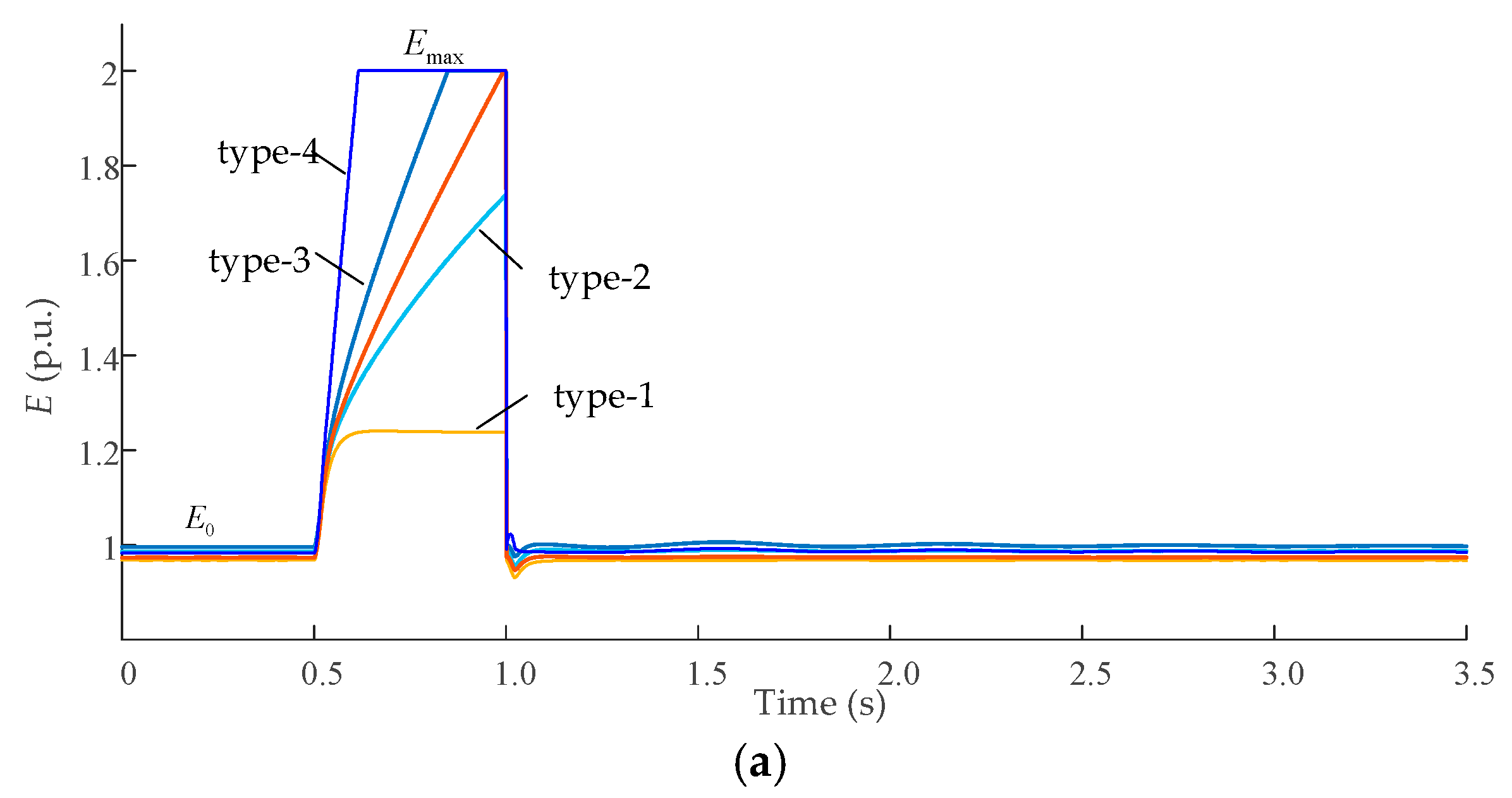
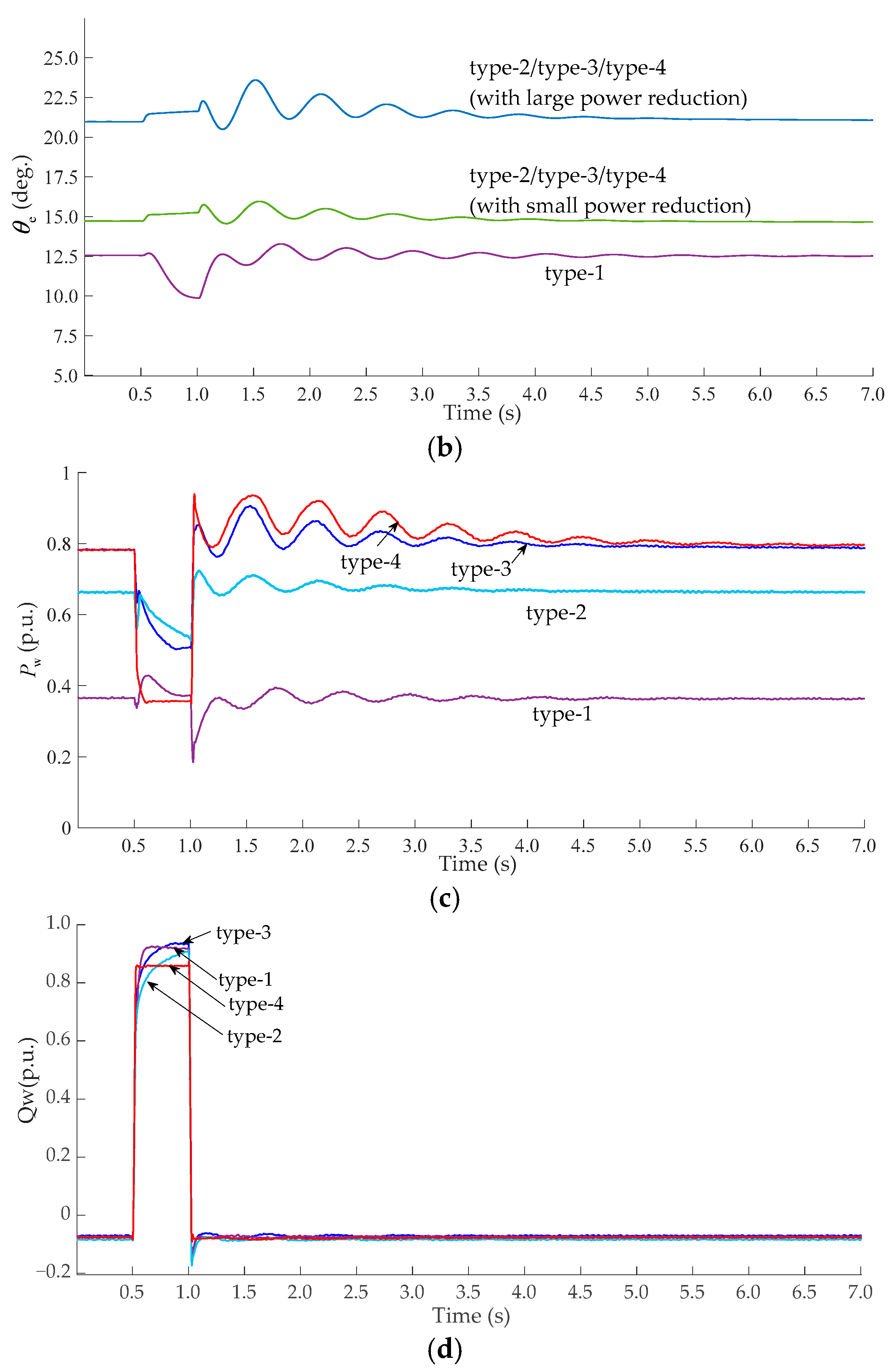
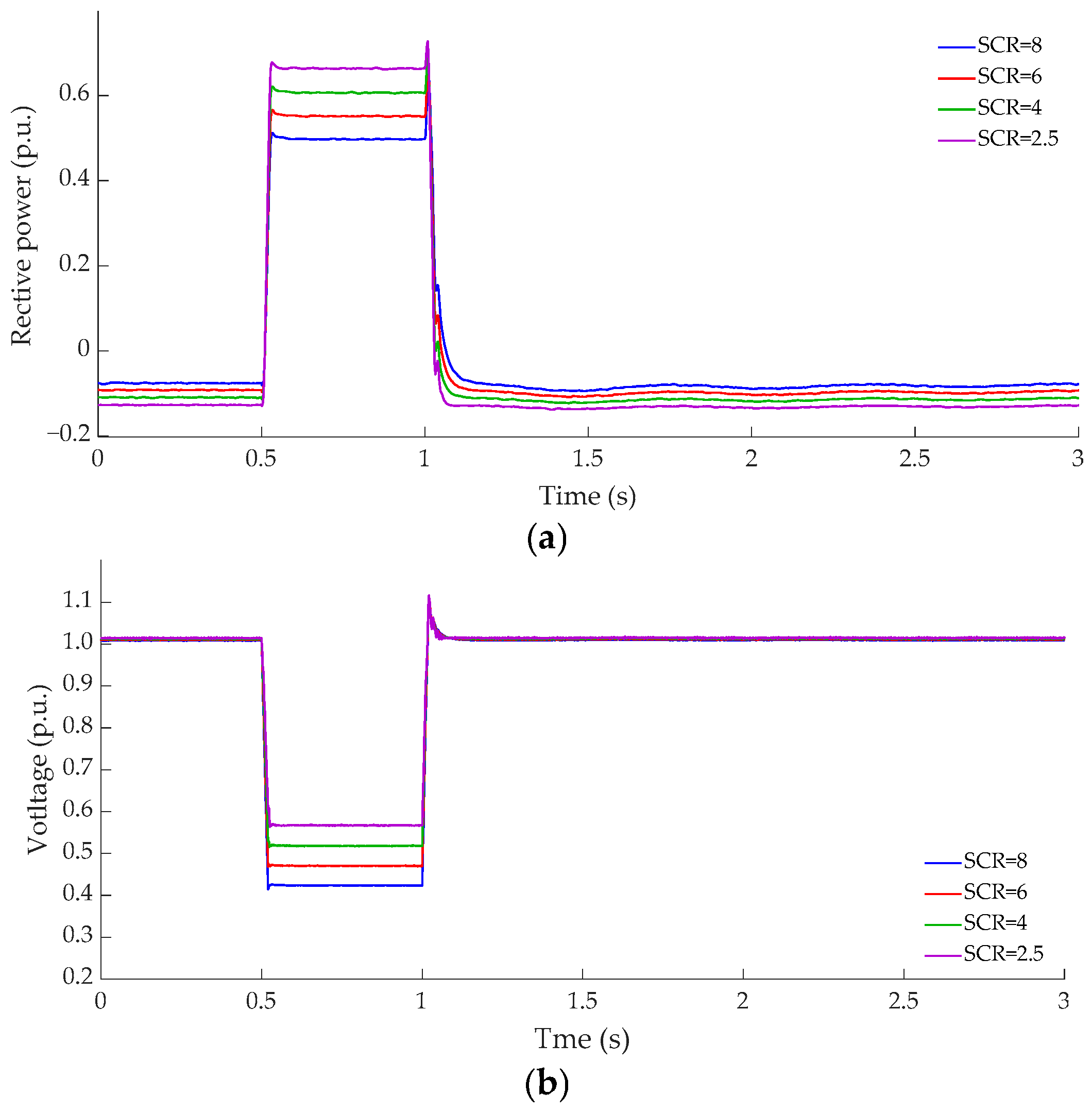
Section 3.1 analyzes the mechanisms by which fault voltage and initial power influence the VSG-PMSG dynamic responses under improved LVRT control. To validate the analysis, simulations are conducted under various voltage dips and initial power levels. Four typical dynamic responses, as illustrated in
Figure 5, are identified from the simulation results.
The dynamic responses of type 1 correspond to VSG-PSMGs whose current and EMF limiters are not activated. The fault voltage and initial power are sufficiently small, such that the constraint of Equation (11) is satisfied. It can be observed that and approach a fault steady state. During the fault, returns to after an oscillation, while rises to the required value of .
The VSG-PSMG exhibits type-2 dynamic responses when the current limiter is active, while the EMF limiter remains inactive during the fault. As shown in
Figure 5a, the virtual EMF continues to rise. However, due to the relatively slight voltage dip,
rises slowly and remains below
by the time of fault clearing. It is worth noting that
would reach
if the fault duration were sufficiently long. Throughout the fault, the virtual rotor angle
stays nearly unchanged as a result of the reduction in the active power reference
. It can also be observed that during the fault,
increases exponentially, while
decreases gradually, and the apparent power
remains unchanged.
As the fault voltage sag deepens, the VSG-PMSG exhibits type-3 dynamic responses. Under this condition, both the current and EMF limiters are activated. Owing to the moderate fault voltage, the rate of increase in is also moderate. Consequently, undergoes a noticeable period of rise before eventually reaching , while remains unchanged shortly after the fault. During the fault, initially grows exponentially but ceases to increase and remains constant once reaches . Simultaneously, decreases gradually and then stabilizes after the activation of the EMF limiter.
When the fault voltage sags sufficiently deeply, the VSG-PMSG shows type-4 dynamic responses, which are very similar to the type-3 pattern. The main distinction is that for type 4, E increases so rapidly that the transition from the pre-fault steady state to the fault steady state is accomplished almost instantaneously.
It should be mentioned that the fault duration primarily affects VSG-PMSG systems with type-2 dynamics. As the fault persists, the active power decreases, while the reactive power gradually increases. For systems with type-1, type-3, or type-4 dynamics, the impact of fault duration is relatively negligible. All the above analysis mainly focuses on the dynamic responses of the VSG-PMSG during the fault. After fault clearance, the terminal voltage
recovers to nearly 1.0 p.u., and the virtual EMF
E is reset to
E0 according to the improved LVRT control strategy. Thus, the post-fault dynamics are mainly governed by
. As shown in
Figure 5b,
returns to the post-fault steady state gradually after a duration of damped oscillations. It can be observed that the post-fault dynamic responses of type 2, type 3, and type 4 are largely similar. However, the oscillation magnitude depends on the extent of active power reduction during the fault. A larger reduction in
leads to a larger post-fault oscillation magnitude, and vice versa.
6. Conclusions
This paper proposes an LVRT dynamic analysis method for a VSG-PMSG. To suppress transient angle instability and overcurrent of the VSG-PMSG during a voltage fault, an improved LVRT control strategy combining active power reference reduction and virtual EMF reset is presented. The VSG-PMSG exhibits four typical dynamics under various conditions. It has been found that the initial active power and fault voltage play crucial roles in shaping the post-fault dynamics responses, and the activations of the current and EMF limiters lead to more complex dynamics. The corresponding relationship between the dynamic patterns and the limiters’ state is revealed.
To predict the dynamics of VSG-PMSGs in a wind farm, a fault steady-state power flow-based method is proposed. The power sensitivities of VSG-PMSGs are deduced according to their virtual EMF and rotor angle variation patterns, and the fault steady-state power flow is calculated. The current limiter state is identified by the boundary line in the plane, while the EMF limiter state is judged by the estimated virtual EMF at the fault-clearing time. Thus, the dynamic pattern of VSG-PMSGs in the wind farm during a fault can be predicted according to the limiters’ states, avoiding time-consuming numerical integration. The simulation results under various voltage dip depth scenarios demonstrate the accuracy of the power flow calculation and fault dynamics prediction.
The proposed method enables accurate and rapid prediction of LVRT dynamics for VSG-PMSGs in wind farms. However, it should be noted that this analysis method and the derived results are strictly limited to VSG-PMSGs employing the active power reference reduction and the virtual EMF reset-based LVRT strategy. For VSG-PMSGs employing other LVRT methods, such as mode-switching control, virtual impedance control, adaptive inertia and damping tuning control, the dynamics and analysis methods still require further investigation. Another limitation of this study is that the validation is based on simulations. While simulations provide theoretical insights, the conclusions still lack validation against hardware-in-the-loop (HIL) tests or field data, which may reveal practical challenges (e.g., converter switching delays and sensor noise). The simplified VSG-PMSG model, which neglects the machine-side converter dynamics and DC-link voltage fluctuations, also diminishes the fidelity to the real system, thereby restricting the credibility of the results. Promising future research directions may include hardware-in-the-loop (HIL) tests to further validate the effectiveness and feasibility of LVRT control strategies in real-time environments, particularly under extremely weak grids and unbalanced faults, coordinated optimization of LVRT control accounting for multi-machine interactions in renewable power plants [
27], and the dynamic analysis method for VSGs employing other control strategies.