Data-Driven Probabilistic Power Flow for Energy-Storage Planning Considering Interconnected Grids

Abstract
1. Introduction
- (1)
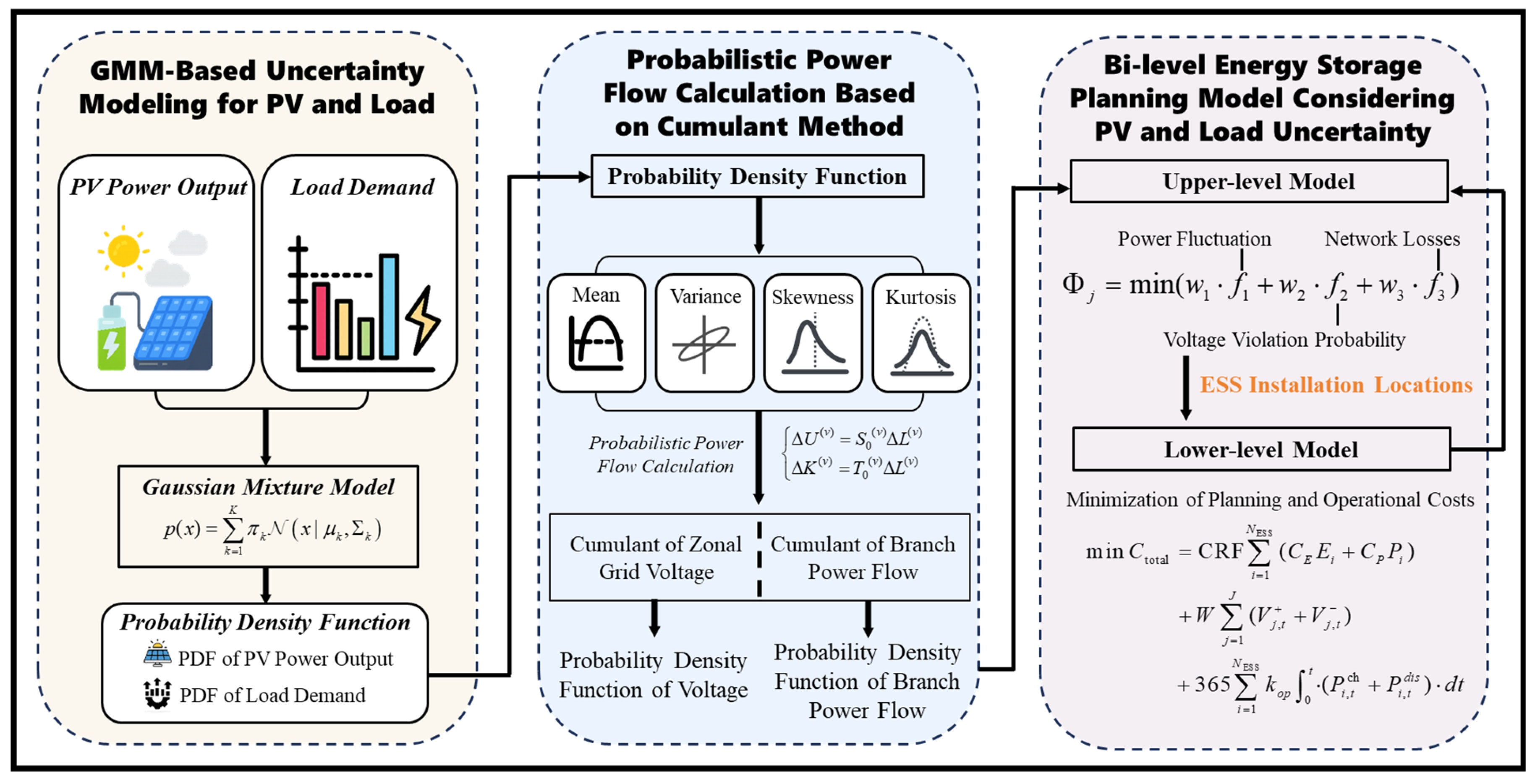
- This paper proposes a probabilistic load flow calculation method designed for interconnected power systems. Its principal novelty lies in: the development of a joint Gaussian Mixture Model (GMM) to concurrently model the correlated uncertainties of photovoltaic output and load demand—a step beyond typical single-source or radial-network GMM applications; and the integration of this joint model with the cumulant method for probabilistic propagation, which effectively circumvents the non-physical negative value problem inherent in traditional series expansion techniques. This integrated approach enhances both the modeling fidelity for complex uncertainties and the numerical robustness of the calculation.
- (2)
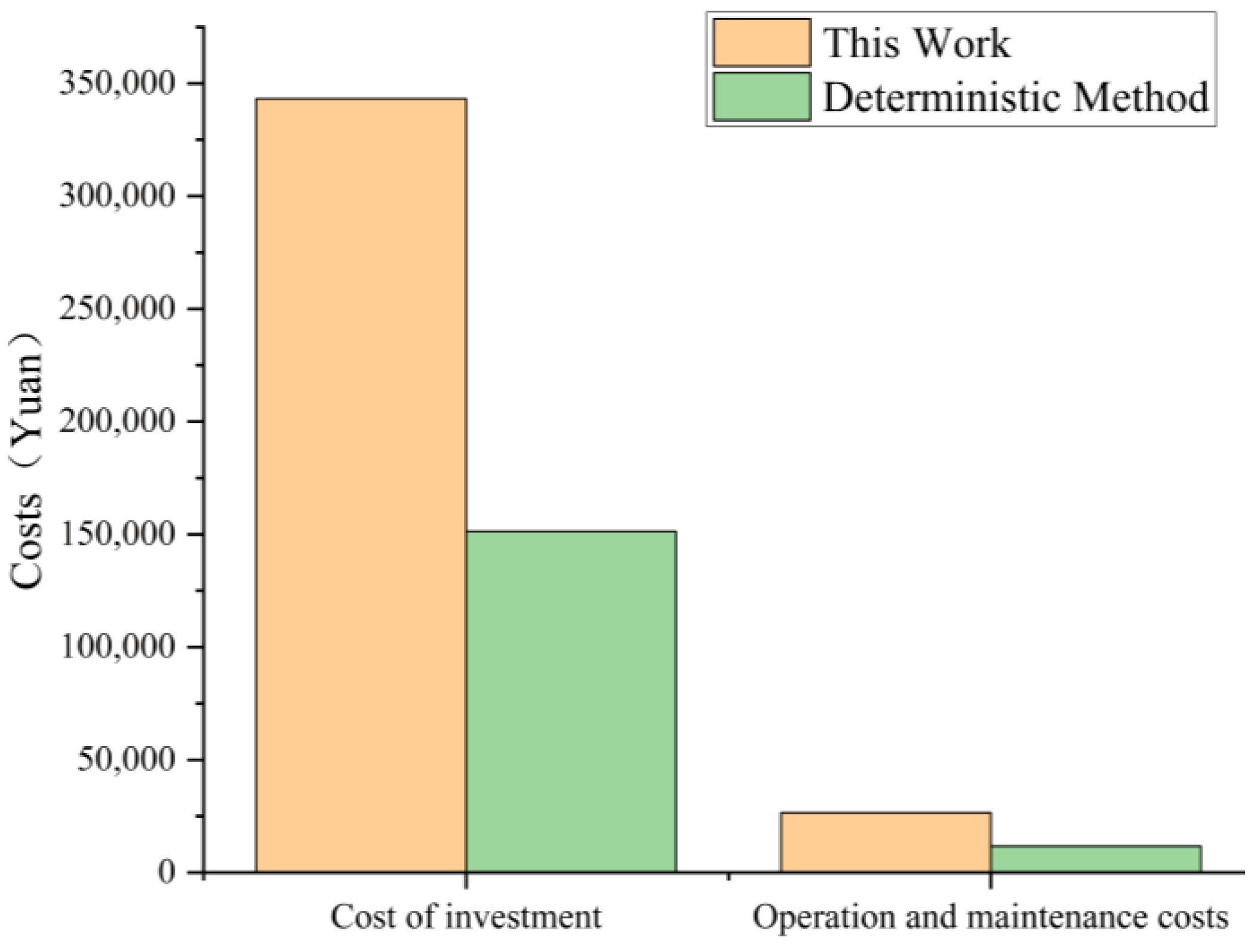
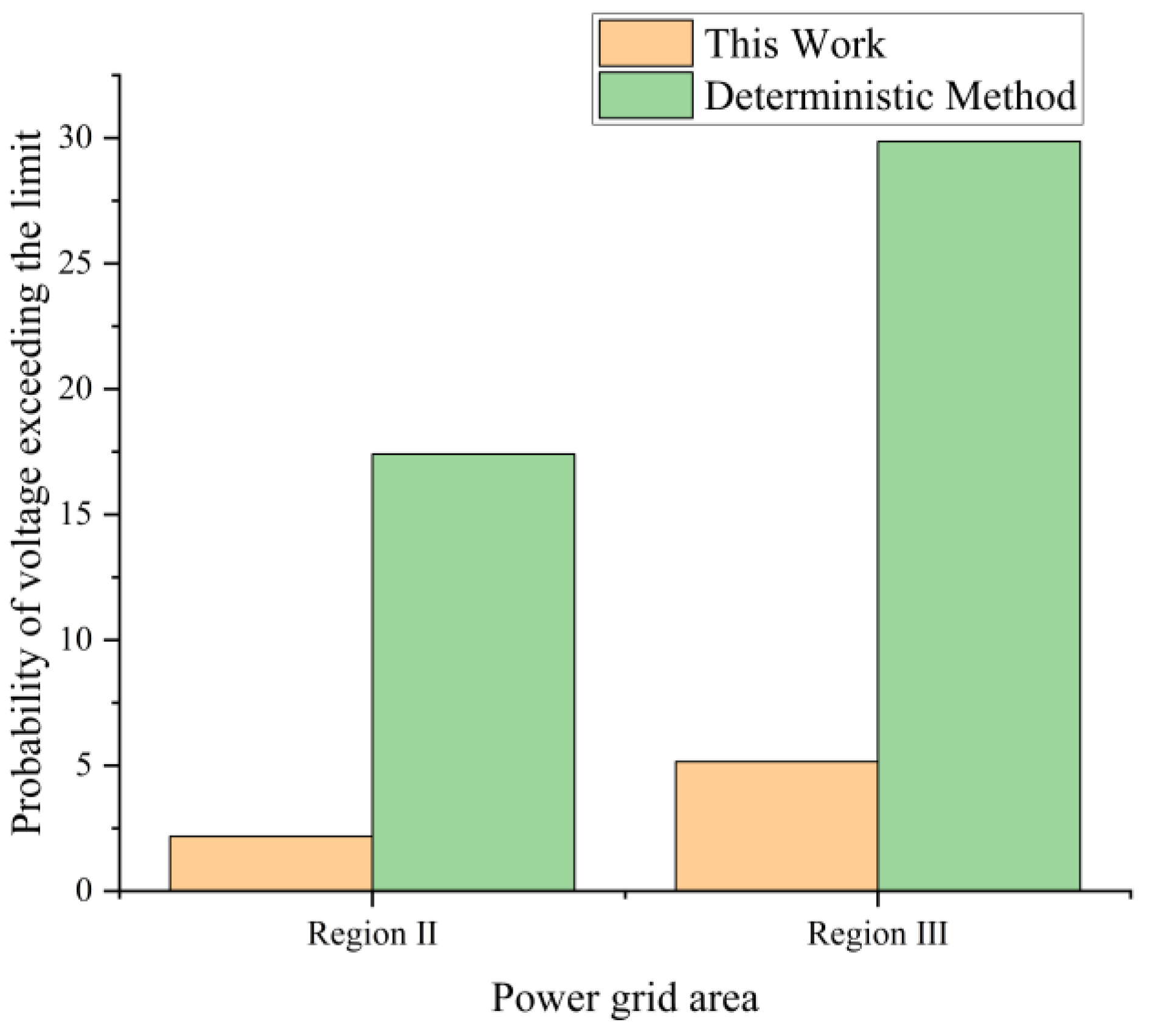
- We established a two-layer energy-storage planning framework that explicitly incorporates PV and load uncertainties. The model optimizes both the location and capacity of energy storage systems to mitigate voltage violation risks induced by intermittent renewable generation and variable demand.
- (3)
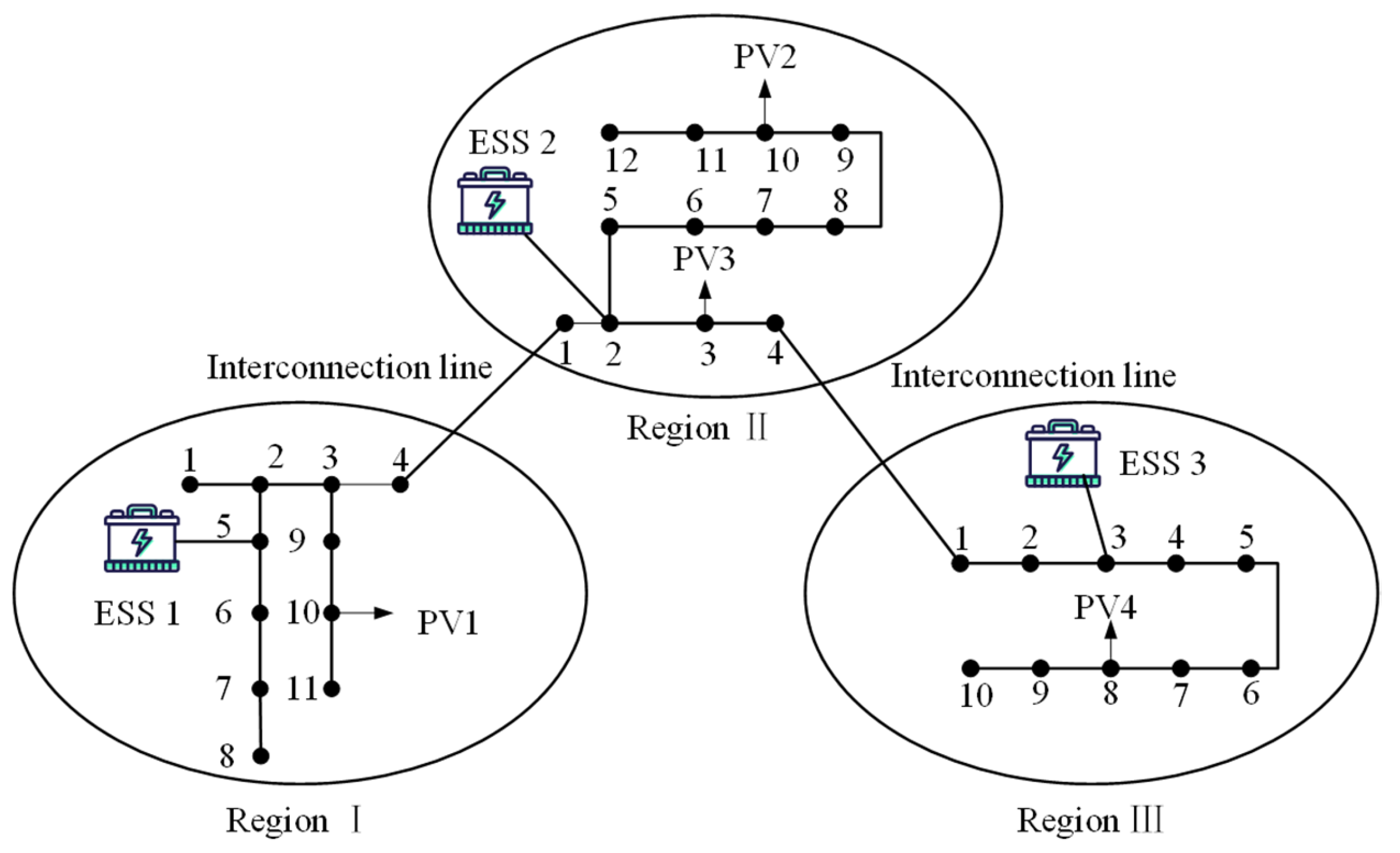
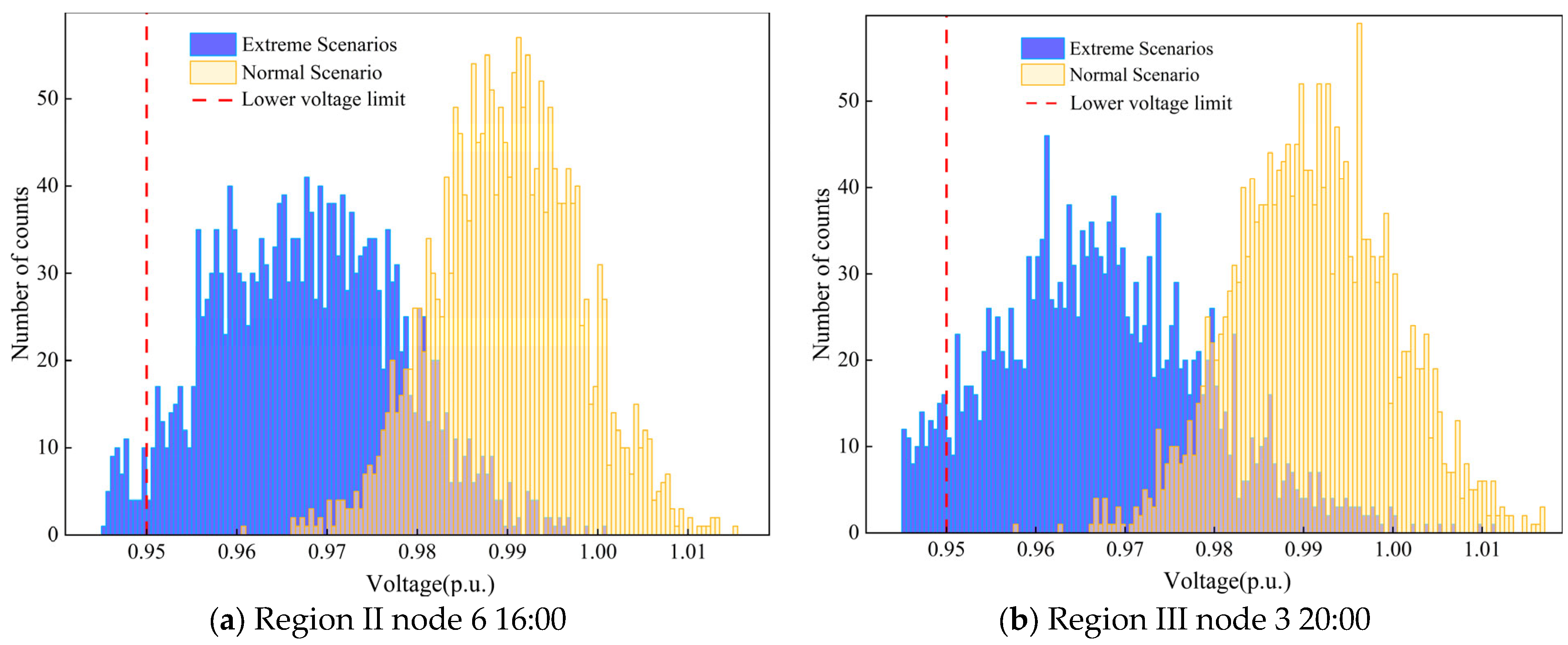
- The effectiveness of the proposed planning scheme is rigorously validated through extreme scenario analysis and robustness testing, with comprehensive simulations conducted on the IEEE 33-node partitioned grid standard system.
2. Uncertainty Modeling for Load and Photovoltaic Generation Based on Gaussian Mixture Model
| Algorithm 1: PV And Load Uncertainty Modeling Based On GMM |
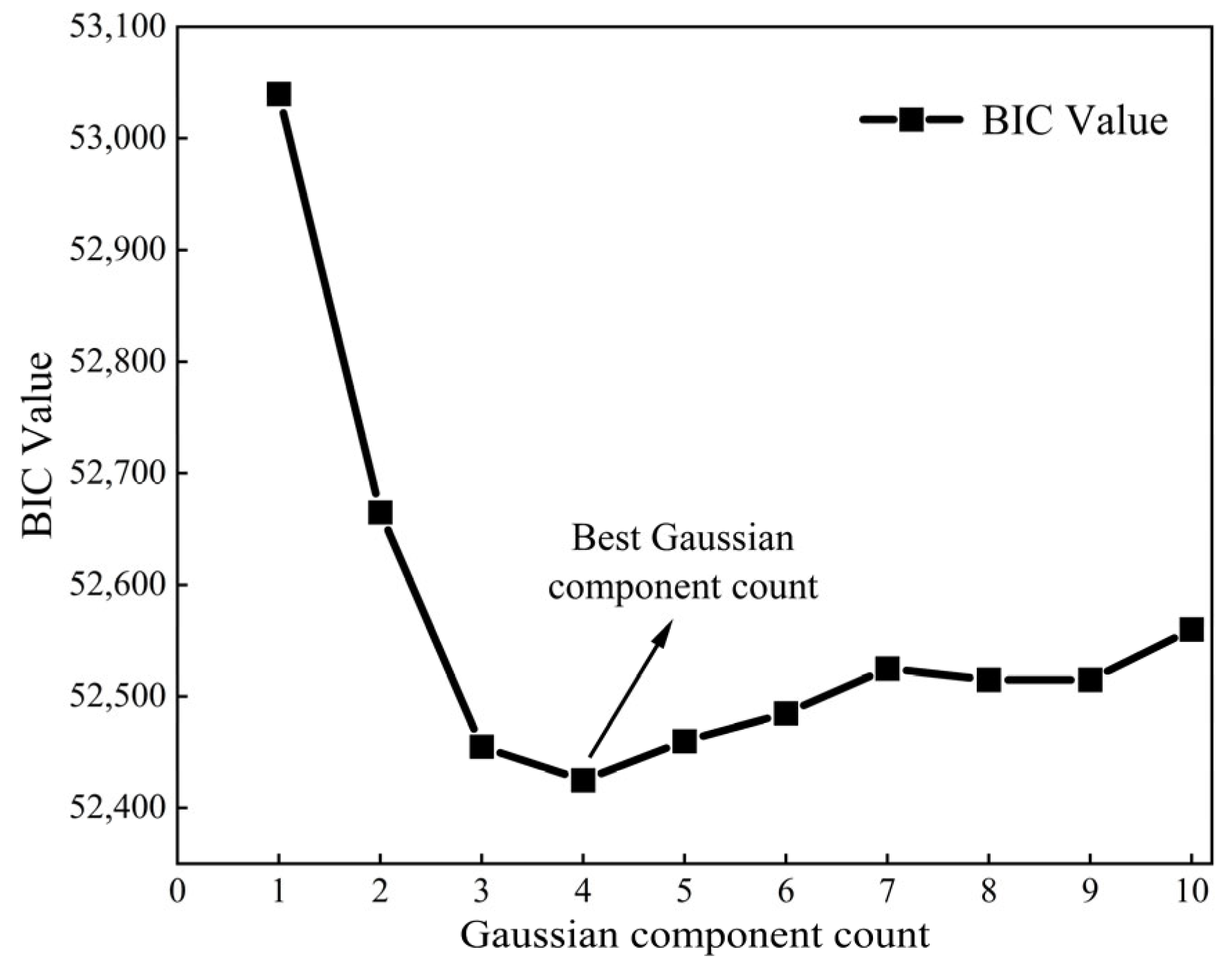
| Input: Historical data of PV output or load demand(dimension d): Maximum number of Gaussian components: Kmax Output: Optimal number of Gaussian components: Kopt GMM parameters: Weight vector , mean vector , covariance matrix Probability density function of PV output or load demand: 1: Procedure Use BIC to select the best number of Gaussian components Kopt 2: Initialize BIC_best = ∞, Kopt = 1 3: for k = 1 to Kmax do 4: 5: Calculate 6: if BIC < BIC_best then 7: BIC_best = BIC, Kopt = k 8: end if 9: end for 10: end Procedure 11: Procedure Using the BIC_best to retrain GMM 12: 13: return Kopt, , , 14: end Procedure 15: function EMAlgorithm (X, K) 16: if iteration < max_iteration then 17: for n = 1 to N do 18: for k = 1 to K do 19: Calculating Gaussian PDF 20: end for 21: Calculate 22: end for 23: Recalculation 24: if then 25: break 26: end if 27: Update 28: end if 29: return 30: end function |
2.1. Mathematical Formulation of GMM
2.2. Parameter Estimation of GMM Using Expectation–Maximization (EM) Algorithm
- (1)
- Initialization: The K-means clustering algorithm is first applied to the data for preliminary clustering, in order to obtain the initial mean, covariance matrix, and weight for each component k.
- (2)
- E-step (Expectation): Based on the current mean and covariance, the posterior probability of component k for data point is computed as:where denotes the posterior probability that sample xn belongs to component k, is the mean of component k from the previous iteration, and is the covariance of component k from the previous iteration, and is the weight of component k from the previous iteration.
- (3)
- M-step (Maximization): Using the posterior probabilities obtained in the E-step, the parameters, , and for component k are recalculated, thereby updating the maximum likelihood function.
- (4)
- Iteration: The E-step and M-step are repeated until the maximum likelihood function converges, that is, until the parameter values show no significant change. Once convergence is achieved, the current , and for each component k are the optimal output.
3. Probabilistic Load Flow Calculation Based on the Cumulant Method
3.1. Principle of the Cumulant Method
3.2. Cumulant Calculation
3.3. Cumulant Propagation and Probabilistic Load Flow Calculation
4. Bi-Level Optimization Model for Energy-Storage Planning
4.1. Upper-Level Optimization Model
4.2. Lower-Level Optimization Model
5. Results and Discussion
6. Conclusions
Author Contributions
Funding
Data Availability Statement
Conflicts of Interest
References
- Cavus, M. Advancing Power Systems with Renewable Energy and Intelligent Technologies: A Comprehensive Review on Grid Transformation and Integration. Electronics 2025, 14, 1159. [Google Scholar] [CrossRef] [Scilit]
- Jiang, B.; Raza, M.Y. Research on China’s renewable energy policies under the dual carbon goals: A political discourse analysis. Energy Strat. Rev. 2023, 48, 101118. [Google Scholar] [CrossRef] [Scilit]
- Voropai, N. Electric power system transformations: A review of main prospects and challenges. Energies 2020, 13, 5639. [Google Scholar] [CrossRef] [Scilit]
- Zheng, K.; Sun, Z.; Song, Y.; Zhang, C.; Zhang, C.; Chang, F.; Yang, D.; Fu, X. Stochastic scenario generation methods for uncertainty in wind and photovoltaic power outputs: A comprehensive review. Energies 2025, 18, 503. [Google Scholar] [CrossRef] [Scilit]
- Nakamoto, Y.; Eguchi, S. How do seasonal and technical factors affect generation efficiency of photovoltaic power plants? Renew. Sustain. Energy Rev. 2024, 199, 114441. [Google Scholar] [CrossRef] [Scilit]
- Shen, C.; Zhu, W.; Tang, X.; Du, W.; Wang, Z.; Xu, S.; Yao, K. Risk assessment and resilience enhancement strategies for urban power supply-demand imbalance affected by extreme weather: A case study of Beijing. Int. J. Disaster Risk Reduct. 2024, 106, 104471. [Google Scholar] [CrossRef] [Scilit]
- Yang, C.; Zhao, Y.; Li, X.; Zhou, X. Electric vehicles, load response, and renewable energy synergy: A new stochastic model for innovation strategies in green energy systems. Renew. Energy 2025, 238, 121890. [Google Scholar] [CrossRef] [Scilit]
- Cao, W.; Zhou, L. Resilient microgrid modeling in Digital Twin considering demand response and landscape design of renewable energy. Sustain. Energy Technol. Assess. 2024, 64, 103628. [Google Scholar] [CrossRef] [Scilit]
- Zhao, X.; Zhang, Y. Integrated management of urban resources toward Net-Zero smart cities considering renewable energies uncertainty and modeling in Digital Twin. Sustain. Energy Technol. Assess. 2024, 64, 103656. [Google Scholar] [CrossRef] [Scilit]
- Zang, T.; Wang, S.; Wang, Z.; Li, C.; Liu, Y.; Xiao, Y.; Zhou, B. Integrated planning and operation dispatching of source–grid–load–storage in a new power system: A coupled socio–cyber–physical perspective. Energies 2024, 17, 3013. [Google Scholar] [CrossRef] [Scilit]
- Hu, H.; Yu, S.S.; Trinh, H. A review of uncertainties in power systems—Modeling, impact, and mitigation. Designs 2024, 8, 10. [Google Scholar] [CrossRef] [Scilit]
- Fu, X.; Zhang, C.; Xu, Y.; Zhang, Y.; Sun, H. Statistical machine learning for power flow analysis considering the influence of weather factors on photovoltaic power generation. IEEE Trans. Neural Netw. Learn. Syst. 2024, 36, 5348–5362. [Google Scholar] [CrossRef] [Scilit]
- Li, Q.; Xiong, Y.; Sidorov, D.; Murad, M.A.A.; Liu, M. Probabilistic power flow method based on monotonic consistency interpolation and enhanced sample permutation. Electr. Power Syst. Res. 2025, 247, 111821. [Google Scholar] [CrossRef] [Scilit]
- Xiao, Q.; Wu, L.; Chen, C. Probabilistic power flow computation using nested point estimate method. IET Gener. Transm. Distrib. 2022, 16, 1064–1082. [Google Scholar] [CrossRef] [Scilit]
- Zishan, F.; Akbari, E.; Montoya, O.D. Analysis of probabilistic optimal power flow in the power system with the presence of microgrid correlation coefficients. Cogent Eng. 2024, 11, 2292325. [Google Scholar] [CrossRef] [Scilit]
- Luo, Y.; Wang, X.; Yan, S. Risk assessment of photovoltaic distribution network based on adaptive kernel density estimation and cumulant method. Energy Rep. 2022, 8, 1152–1159. [Google Scholar] [CrossRef] [Scilit]
- Wang, S.; Wu, S.; Tang, B.; Liu, L.; Cheng, L. Generation method of wind power and photovoltaic output scenarios based on LHS-GRU. Sustain. Energy Grids Netw. 2025, 41, 101602. [Google Scholar] [CrossRef] [Scilit]
- Goodfellow, J.; Pouget-Abadie, J.; Mirza, M.; Xu, B.; Warde-Farley, D.; Ozair, S.; Courville, A.; Bengio, Y. Generative adversarial nets. Adv. Neural Inf. Process. Syst. 2014, 27, 2672–2680. [Google Scholar]
- Ma, X.; Liu, Y.; Yan, J.; Wang, H. A WGAN-GP-based scenarios generation method for wind and solar power complementary study. Energies 2023, 16, 3114. [Google Scholar] [CrossRef] [Scilit]
- Salimans, T.; Goodfellow, I.; Zaremba, W.; Cheung, V.; Radford, A.; Chen, X. Improved techniques for training gans. Adv. Neural Inf. Process. Syst. 2016, 29, 2226–2234. [Google Scholar]
- Zhang, Z.; Zhang, D.; Qiu, R.C. Deep reinforcement learning for power system applications: An overview. CSEE J. Power Energy Syst. 2019, 6, 213–225. [Google Scholar]
- Huang, J.; Zhang, H.; Tian, D.; Zhang, Z.; Yu, C.; Hancke, G.P. Multi-agent deep reinforcement learning with enhanced collaboration for distribution network voltage control. Eng. Appl. Artif. Intell. 2024, 134, 108677. [Google Scholar] [CrossRef] [Scilit]
- Li, J.; Zhang, R.; Wang, H.; Liu, Z.; Lai, H.; Zhang, Y. Deep reinforcement learning for voltage control and renewable accommodation using spatial-temporal graph information. IEEE Trans. Sustain. Energy 2023, 15, 249–262. [Google Scholar] [CrossRef] [Scilit]
- Yang, J.; Zhou, K.; Li, Y.; Liu, Z. Generalized out-of-distribution detection: A survey. Int. J. Comput. Vis. 2024, 132, 5635–5662. [Google Scholar] [CrossRef] [Scilit]
- Tong, B.; Zhang, L.; Li, G.; Zhang, B.; Xie, F.; Tang, W. An Overvoltage-Averse Model for Renewable-Rich AC/DC Distribution Networks Considering the Sensitivity of Voltage Violation Probability. IEEE Trans. Sustain. Energy 2024, 16, 613–626. [Google Scholar] [CrossRef] [Scilit]
- Ejuh Che, E.; Roland Abeng, K.; Iweh, C.D.; Tsekouras, G.J.; Fopah-Lele, A. The impact of integrating variable renewable energy sources into grid-connected power systems: Challenges, mitigation strategies, and prospects. Energies 2025, 18, 689. [Google Scholar] [CrossRef] [Scilit]
- Lu, M.; Sun, Y.; Ma, Z. Multi-objective design optimization of multiple energy systems in net/nearly zero energy buildings under uncertainty correlations. Appl. Energy 2024, 370, 123620. [Google Scholar] [CrossRef] [Scilit]
- Chen, J.; Liu, F.; Wang, Y.; Li, Y. Emergency scheduling of virtual energy storage based on continuous-time model for resilience enhancement under extreme events. Energy 2025, 342, 139634. [Google Scholar] [CrossRef] [Scilit]
- Islam, M.M.; Yu, T.; Giannoccaro, G.; Mi, Y.; la Scala, M.; Nasab, M.R.; Wang, J. Improving reliability and stability of the power systems: A comprehensive review on the role of energy storage systems to enhance flexibility. IEEE Access 2024, 12, 152738–152765. [Google Scholar] [CrossRef] [Scilit]
- Arun, M.; Samal, S.; Barik, D.; Chandran, S.S.; Tudu, K.; Praveenkumar, S. Integration of energy storage systems and grid modernization for reliable urban power management toward future energy sustainability. J. Energy Storage 2025, 114, 115830. [Google Scholar] [CrossRef] [Scilit]
- Shafiei, K.; Seifi, A.; Hagh, M.T. A novel multi-objective optimization approach for resilience enhancement considering integrated energy systems with renewable energy, energy storage, energy sharing, and demand-side management. J. Energy Storage 2025, 115, 115966. [Google Scholar] [CrossRef] [Scilit]
- Yi, Y.; Chang, L.; Wu, B.; Zhao, J.; Peng, H.; Li, L.; Wang, A. Life cycle assessment of energy storage technologies for new power systems under dual-carbon target: A review. Energy Technol. 2024, 12, 2301129. [Google Scholar] [CrossRef] [Scilit]
- Yang, H.; Chen, J.J.; Li, Y. Two-layer iterative optimization for enhanced electricity-carbon pricing to promote renewable integration and load smoothing with multi-type prosumer. Energy 2025, 336, 138226. [Google Scholar] [CrossRef] [Scilit]
- Yao, M.; Da, D.; Lu, X.; Wang, Y. A review of capacity allocation and control strategies for electric vehicle charging stations with integrated photovoltaic and energy storage systems. World Electr. Veh. J. 2024, 15, 101. [Google Scholar] [CrossRef] [Scilit]
- Guo, J.; Jing, Y.; Hou, W.; Wang, T.; Ma, S.; He, G. Demands and challenges of energy storage technology for future power system. Energy Internet 2024, 1, 116–122. [Google Scholar] [CrossRef] [Scilit]
- Kiasari, M.; Ghaffari, M.; Aly, H.H. A comprehensive review of the current status of smart grid technologies for renewable energies integration and future trends: The role of machine learning and energy storage systems. Energies 2024, 17, 4128. [Google Scholar] [CrossRef] [Scilit]
- Khalaf, M.; Ayad, A.; Tushar, M.H.K.; Kassouf, M.; Kundur, D. A survey on cyber-physical security of active distribution networks in smart grids. IEEE Access 2024, 12, 29414–29444. [Google Scholar] [CrossRef] [Scilit]
- Liu, M.; Teng, F.; Zhang, Z.; Ge, P.; Sun, M.; Deng, R.; Cheng, P.; Chen, J. Enhancing cyber-resiliency of der-based smart grid: A survey. IEEE Trans. Smart Grid 2024, 15, 4998–5030. [Google Scholar] [CrossRef] [Scilit]
- Collath, N.; Tepe, B.; Englberger, S.; Jossen, A.; Hesse, H. Aging aware operation of lithium-ion battery energy storage systems: A review. J. Energy Storage 2022, 55, 105634. [Google Scholar] [CrossRef] [Scilit]
- Li, P.; Chen, J.; Yang, H.; Lin, Z. Peer-to-peer power trading and pricing for rental energy storage shared community microgrid: A coordinated Stackelberg and cooperative game. Renew. Energy 2025, 256, 123963. [Google Scholar] [CrossRef] [Scilit]
- Seger, P.V.; Rigo-Mariani, R.; Thivel, P.-X.; Riu, D. A storage degradation model of Li-ion batteries to integrate ageing effects in the optimal management and design of an isolated microgrid. Appl. Energy 2023, 333, 120584. [Google Scholar] [CrossRef] [Scilit]
- Zhang, W.; Wang, S. Optimal allocation of Bess in distribution network based on improved equilibrium optimizer. Front. Energy Res. 2022, 10, 936592. [Google Scholar] [CrossRef] [Scilit]
- Zhao, P.; Liu, X.; Qu, H.; Liu, N.; Zhang, Y.; Xiao, C. Multi-Objective Cooperative Optimization Model for Source–Grid–Storage in Distribution Networks for Enhanced PV Absorption. Processes 2025, 13, 2841. [Google Scholar] [CrossRef] [Scilit]
- Maghami, M.R.; Yaghoubi, E.; Mohamed, M.; Jahromi, M.Z.; Fei, T.K. Multi-objective optimization of unbalanced power distribution systems: A comprehensive approach to address uncertainties and enhance performance. Energy Convers. Manag. X 2025, 27, 101087. [Google Scholar] [CrossRef] [Scilit]
- Lai, C.S.; Chen, D.; Zhang, J.; Zhang, X.; Xu, X.; Taylor, G.A.; Lai, L.L. Profit maximization for large-scale energy storage systems to enable fast EV charging infrastructure in distribution networks. Energy 2022, 259, 124852. [Google Scholar] [CrossRef] [Scilit]
- Li, H.; Li, L. Bilevel Planning of Distribution Networks with Distributed Generation and Energy Storage: A Case Study on the Modified IEEE 33-Bus System. Energy Eng. 2025, 122, 1337–1358. [Google Scholar] [CrossRef] [Scilit]



| Method | High Accuracy | Fast Calculation | Physical Interpretability | Stability/Convergence |
|---|---|---|---|---|
| [13] | ✓ | ✓ | ✓ | |
| [14] | × | ✓ | ✓ | ✓ |
| [15] | × | ✓ | ✓ | ✓ |
| [16] | × | ✓ | ✓ | × |
| [17] | ✓ | × | × | × |
| [18] | ✓ | × | × | × |
| [19] | ✓ | × | × | × |
| [21] | ✓ | ✓ | × | × |
| [23] | ✓ | ✓ | × | × |
| This Work | ✓ | ✓ | ✓ | ✓ |
| Case | Mean | Covariance | ||||
|---|---|---|---|---|---|---|
| This Work | Monte Carlo | Relative Error (%) | This Work | Monte Carlo | Relative Error | |
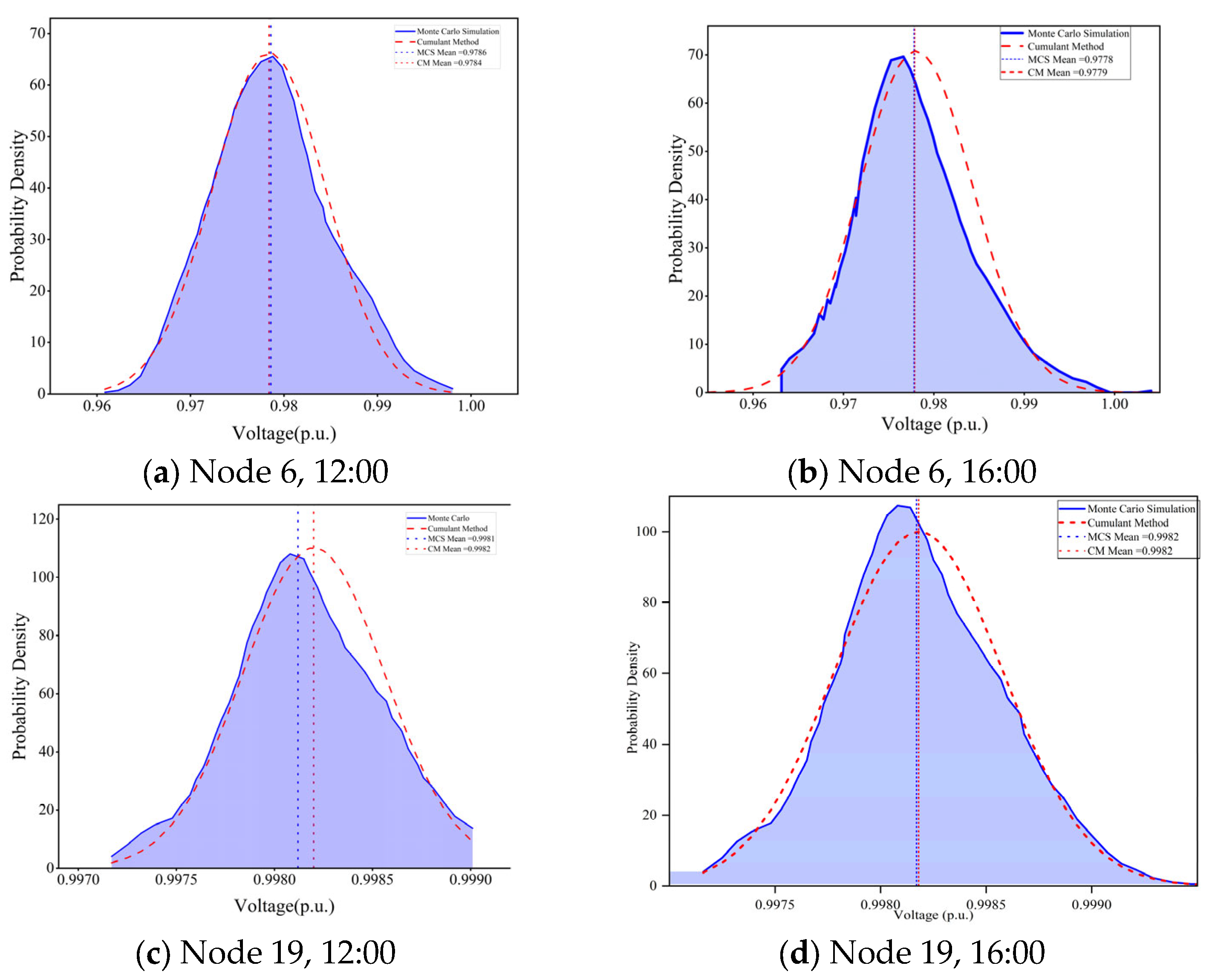
| Node 6, 12:00 | 0.978372 | 0.978645 | 0.03% | 0.006018 | 0.006169 | 2.44% |
| Node 6, 16:00 | 0.977908 | 0.977769 | 0.01% | 0.006216 | 0.006363 | 2.31% |
| Node 19, 12:00 | 0.998174 | 0.998196 | 0.01% | 0.000362 | 0.000375 | 3.64% |
| Node 19, 16:00 | 0.998169 | 0.998167 | 0.01% | 0.000377 | 0.000367 | 2.62% |
| Method | Number of Calculations (Times) | Computation Times (s) |
|---|---|---|
| Monte Carlo | 5000 | 2331.81 |
| This Work | 37 | 13.43 |
| Storage Location | Rated Energy Capacity (kWh) | Rated Power Capacity (kW) |
|---|---|---|
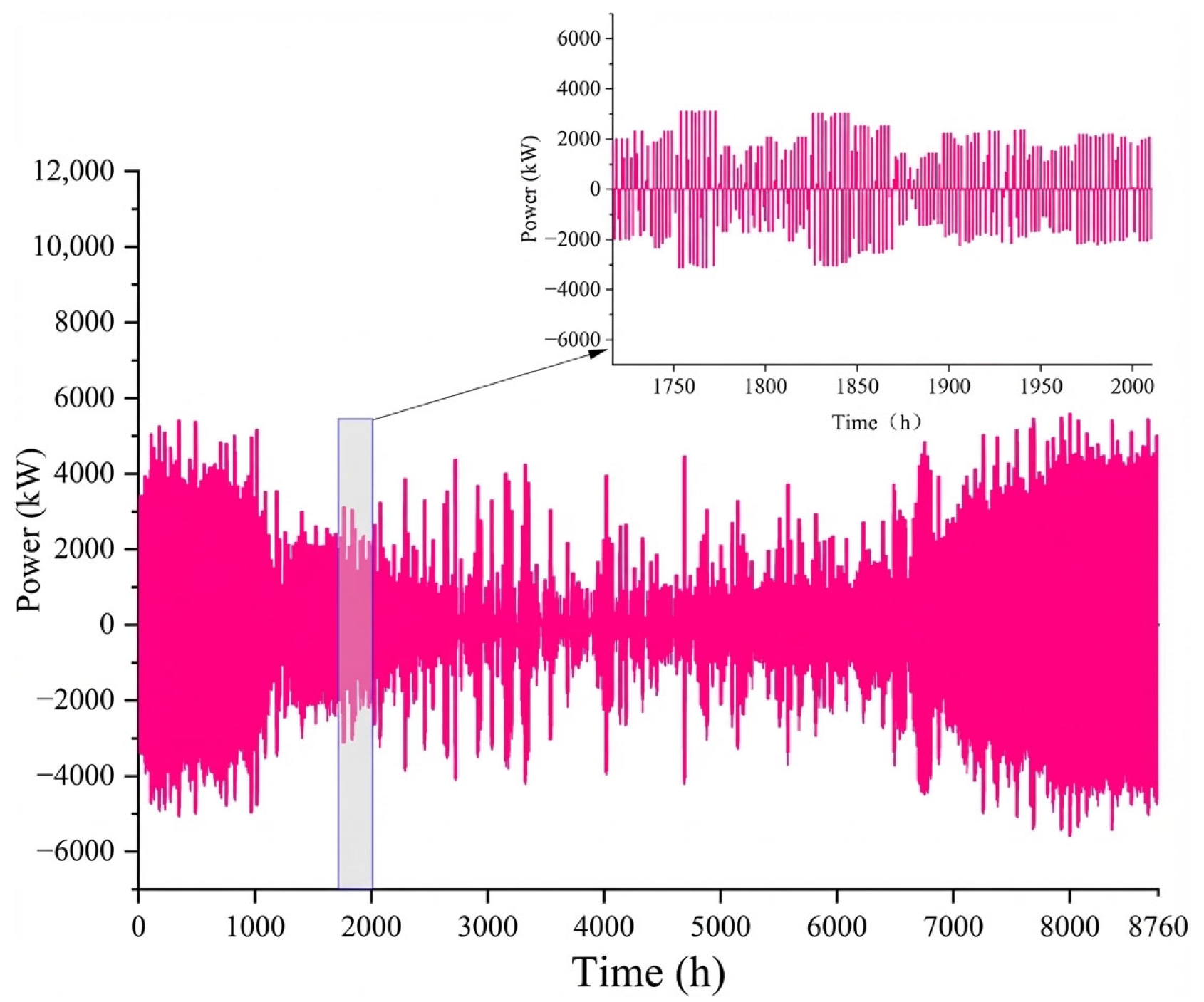
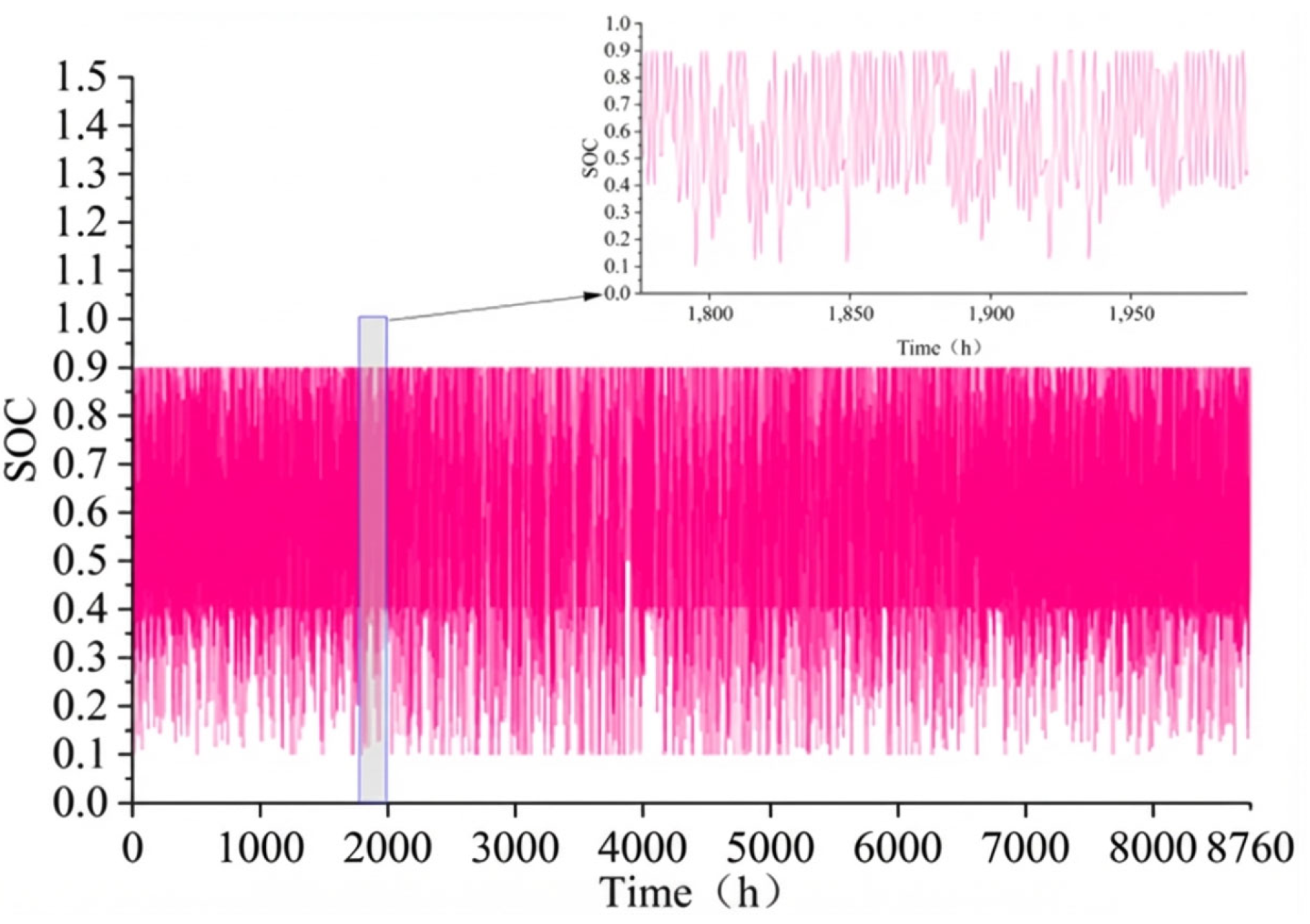
| Node 5 in Region I | 11,188 | 5594 |
| Node 2 in Region II | 6760 | 3380 |
| Node 3 in Region III | 11,739 | 5869 |
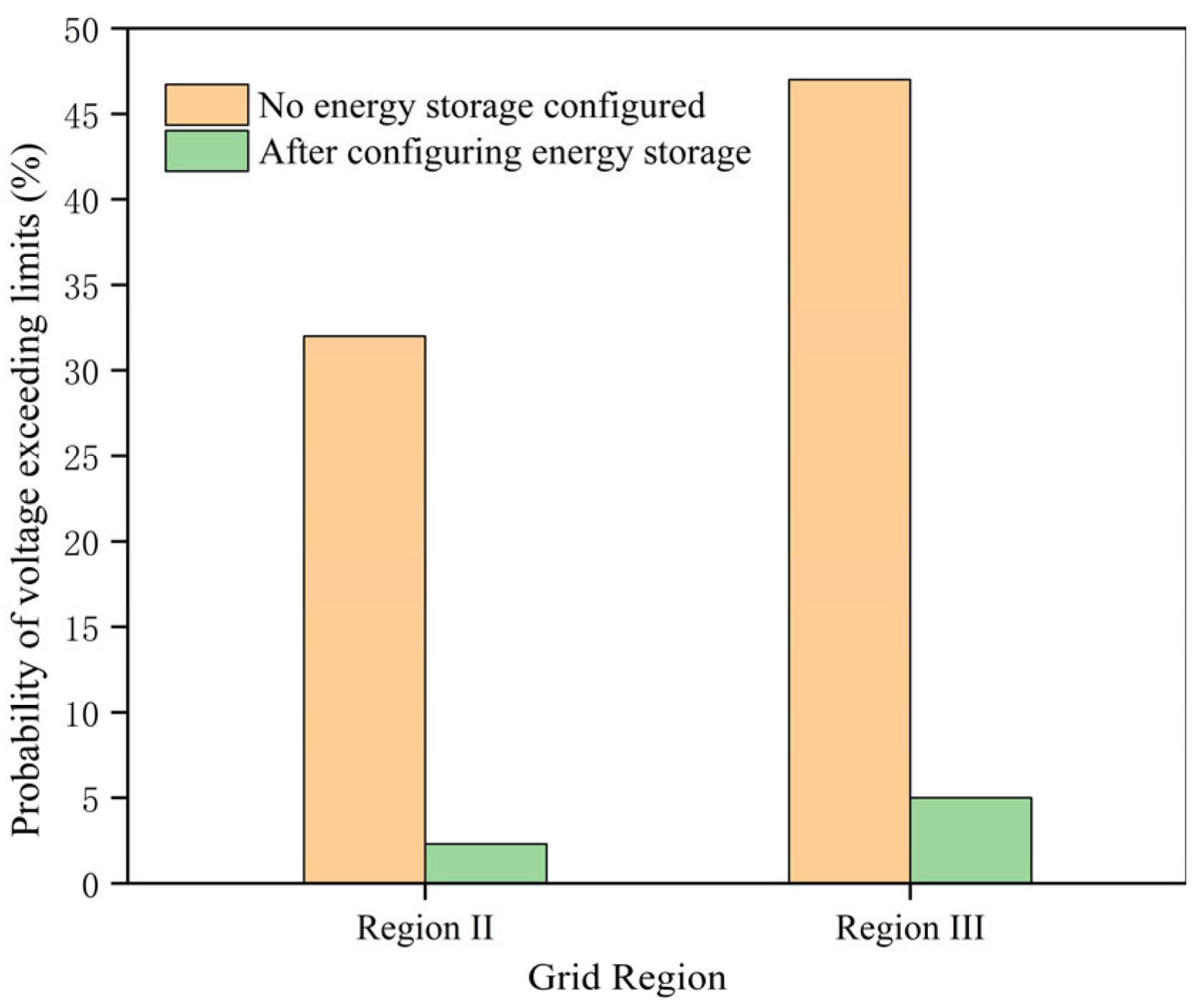
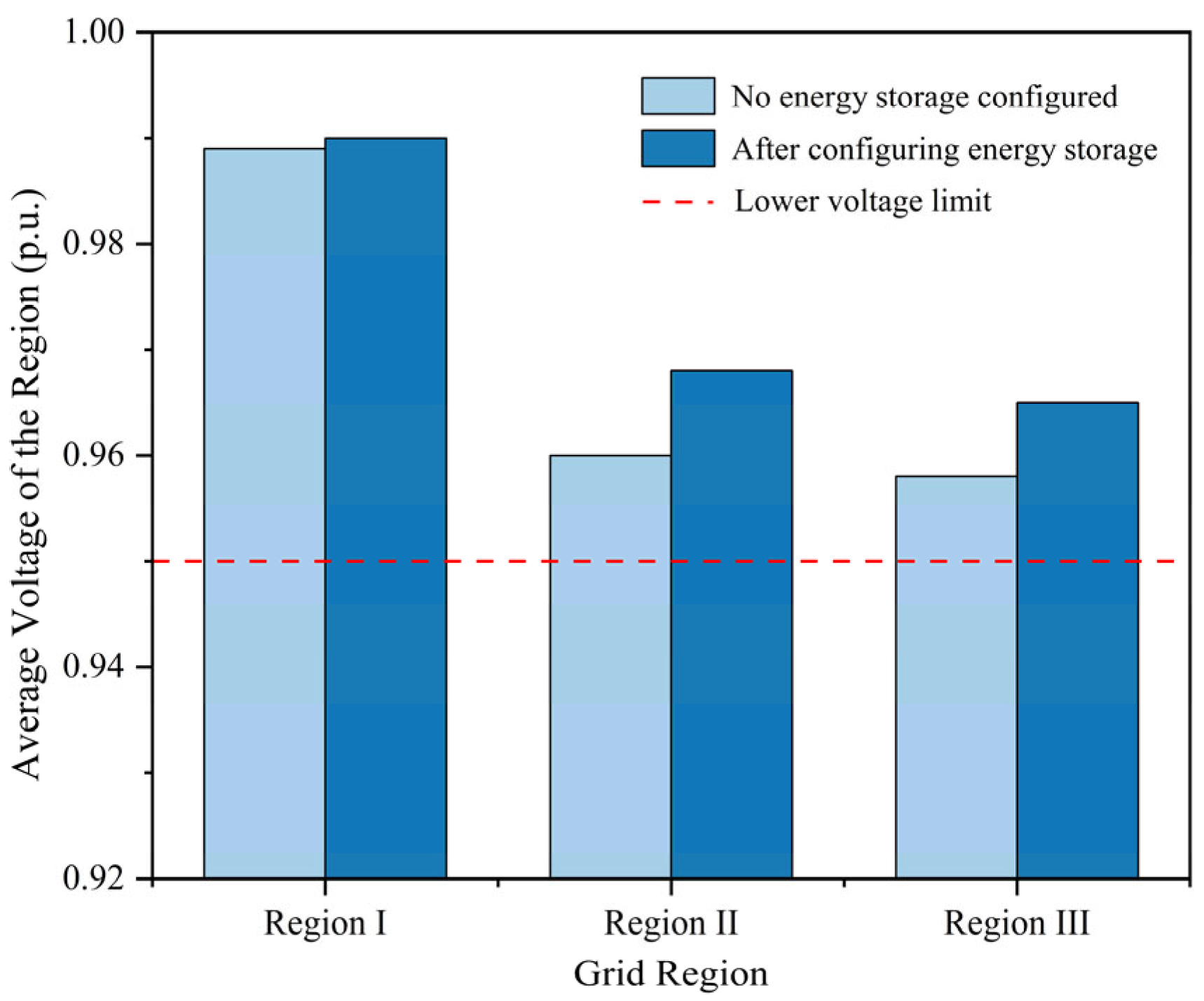
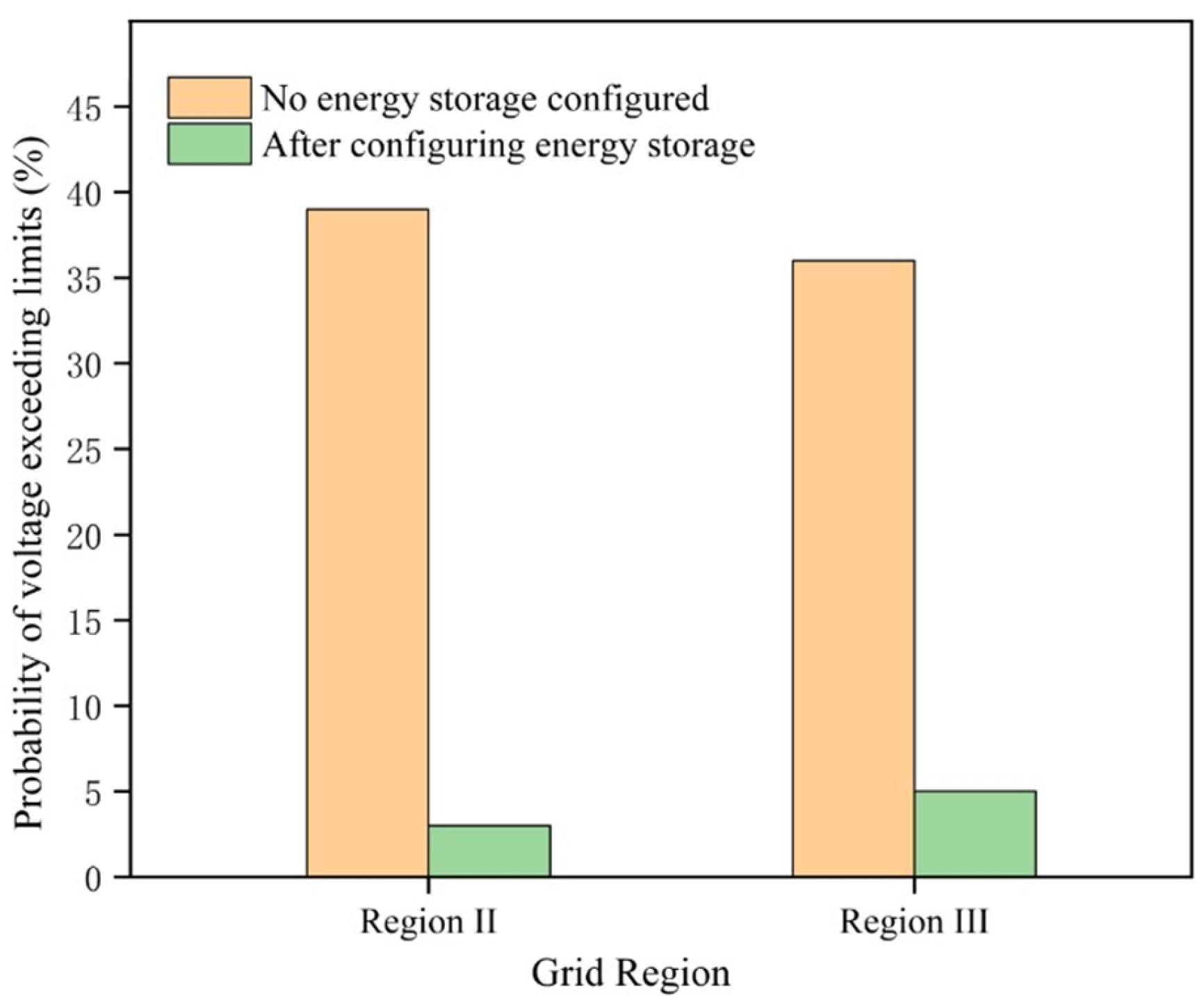
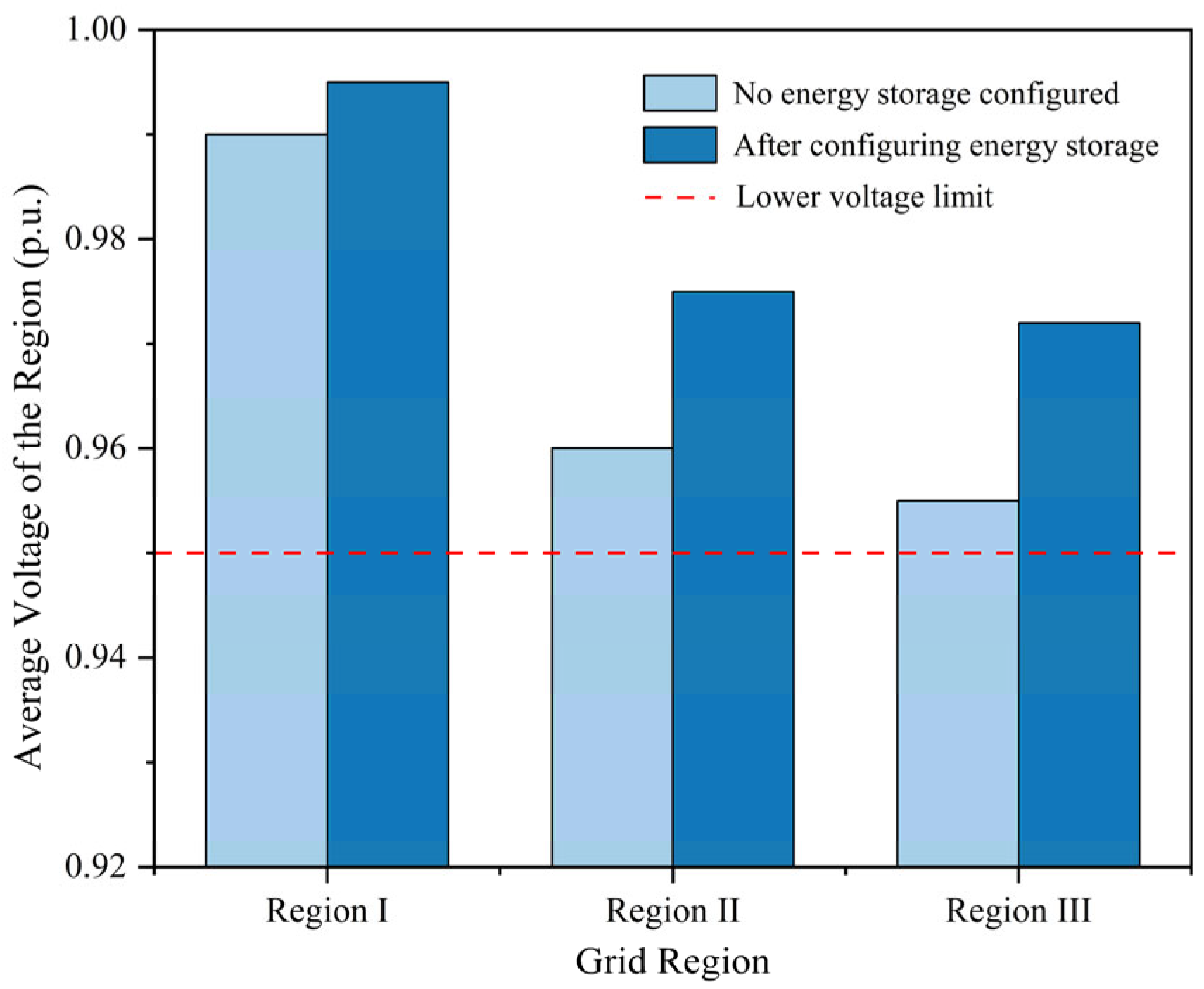
| Storage Location | Probability of Voltage Exceeding Limits (%) | Node Average Voltage (kV) | |
|---|---|---|---|
| Node 2 in Region II | Extreme | 4.7 | 0.9616 |
| Normal | 0 | 0.9899 | |
| Node 3 in Region III | Extreme | 11.65 | 0.9658 |
| Normal | 0 | 0.9910 | |
Disclaimer/Publisher’s Note: The statements, opinions and data contained in all publications are solely those of the individual author(s) and contributor(s) and not of MDPI and/or the editor(s). MDPI and/or the editor(s) disclaim responsibility for any injury to people or property resulting from any ideas, methods, instructions or products referred to in the content. |
© 2025 by the authors. Licensee MDPI, Basel, Switzerland. This article is an open access article distributed under the terms and conditions of the Creative Commons Attribution (CC BY) license (https://creativecommons.org/licenses/by/4.0/).
Share and Cite
Cheng, T.; Jiang, X.; Fan, Z.; Wu, Y.; Mu, Y.; Guan, D.; Zhang, D.; Bai, Y. Data-Driven Probabilistic Power Flow for Energy-Storage Planning Considering Interconnected Grids. Energies 2025, 18, 6633. https://doi.org/10.3390/en18246633
Cheng T, Jiang X, Fan Z, Wu Y, Mu Y, Guan D, Zhang D, Bai Y. Data-Driven Probabilistic Power Flow for Energy-Storage Planning Considering Interconnected Grids. Energies. 2025; 18(24):6633. https://doi.org/10.3390/en18246633
Chicago/Turabian StyleCheng, Tingting, Xirui Jiang, Zheng Fan, Yanan Wu, Ying Mu, Dashun Guan, Dongliang Zhang, and Ying Bai. 2025. "Data-Driven Probabilistic Power Flow for Energy-Storage Planning Considering Interconnected Grids" Energies 18, no. 24: 6633. https://doi.org/10.3390/en18246633
APA StyleCheng, T., Jiang, X., Fan, Z., Wu, Y., Mu, Y., Guan, D., Zhang, D., & Bai, Y. (2025). Data-Driven Probabilistic Power Flow for Energy-Storage Planning Considering Interconnected Grids. Energies, 18(24), 6633. https://doi.org/10.3390/en18246633