1. Introduction
Biogas production has long been an important component of the German bioenergy sector [
1]. Biomass and biogenic waste continue to contribute substantially to renewable energy provision in Germany, and electricity generation from biogas remains relevant within the overall biomass portfolio [
2]. The German biogas sector represents one of the largest decentralized bioenergy systems worldwide and plays a key role in renewable electricity generation and nutrient recycling within agricultural production systems [
3]. In recent years, biogas has contributed approximately 5–6% of Germany’s total electricity consumption, underlining its relevance within the national energy system [
2]. However, its contribution to the natural gas supply remains comparatively small. At the same time, the strategic role of biogas is changing from simple electricity production toward a broader contribution to flexible energy generation, nutrient recycling, and regional bioeconomy concepts [
4,
5,
6].
A central agronomic challenge of the German biogas sector has been the strong dependence on silage maize (
Zea mays L.) as the dominant energy crop. This development was driven by the high biomass productivity, favorable ensiling properties, and high methane productivity of maize. Silage maize is widely considered one of the most efficient energy crops for anaerobic digestion due to its high dry matter yield (DMY) and favorable carbohydrate composition [
7]. However, the expansion of maize cultivation for biogas has also been criticized for contributing to landscape homogenization, simplified crop rotations, and site-specific environmental risks such as erosion and reduced agrobiodiversity [
8,
9,
10]. In particular, large-scale maize cultivation for bioenergy has been associated with increased erosion risks and soil degradation in certain regions of Central Europe [
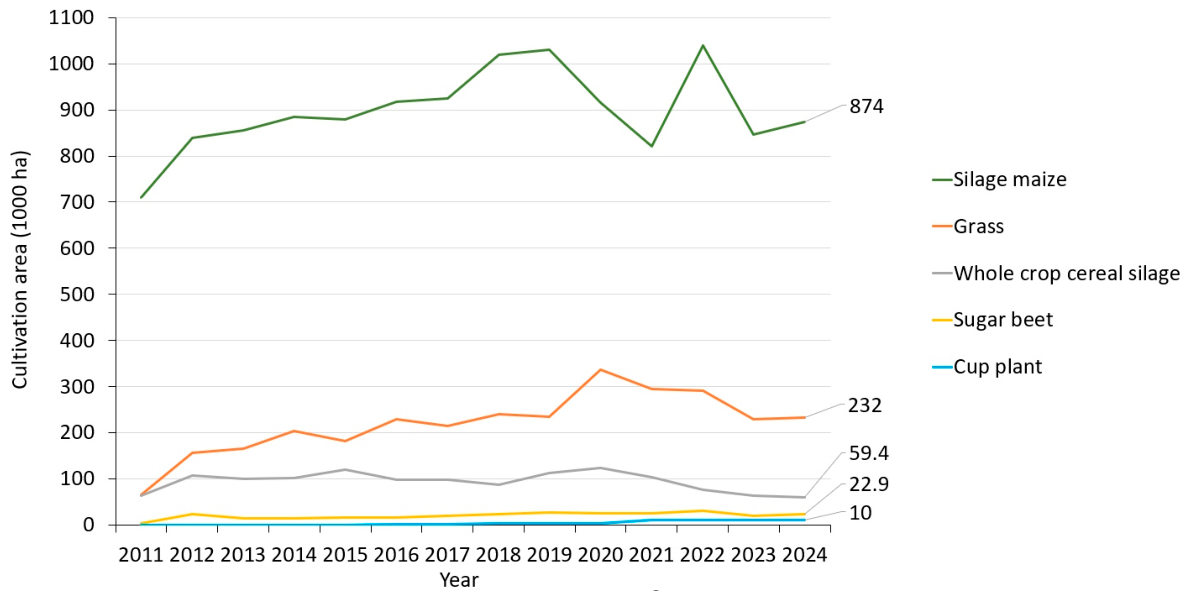
11]. Importantly, although alternative perennial or biodiversity-promoting biogas crops have been developed and investigated, maize still accounts for the largest share of the crop area used for biogas feedstock production in Germany [
12] (
Figure 1). Short-term fluctuations (e.g., around 2020 and 2023) reflect annual variability but do not affect the overall dominance of maize in biogas systems. Thus, the underlying problem that motivated the search for alternative substrates has not disappeared.
Among possible alternatives, amaranth (
Amaranthus spp.) has attracted attention for many years and has been evaluated in field trials under temperate Central European conditions [
13]. Amaranth is generally recognized as a C4 crop [
14,
15,
16] and has been discussed as a potentially useful biomass crop because of its heat tolerance, comparatively low input requirements, and possible suitability for diversified cropping systems [
17,
18]. In addition, alternative energy crops such as amaranth may contribute trace elements that are relevant for anaerobic digestion and thus may offer functional benefits beyond biomass supply alone [
19]. However, amaranth has not been established in practice as a major biogas crop, largely because earlier studies reported limitations in DMY, dry matter content (DMC), and substrate quality [
20].
More generally, the suitability of crops for anaerobic digestion depends strongly on biomass composition, particularly the proportion of structural carbohydrates and lignin, which influence microbial degradation and methane formation [
21].
A major limitation of much of the earlier literature is that suitability for biogas production was often judged from a very narrow genetic basis, especially from assessments of the cultivar Baernkraft, which was originally bred for grain rather than biomass use [
20]. More recent breeding research has shown substantial phenotypic variation among biomass-oriented amaranth genotypes (GTs), particularly for dry matter accumulation and maturity traits [
18]. This suggests that earlier negative conclusions about amaranth may have been too strongly influenced by GT choice.
The present study therefore re-examines the suitability of amaranth as a biogas crop based on a broader screening of twelve GTs grown under field conditions in southwest Germany. The objective was to assess agronomic performance, biomass composition, and methane-related substrate characteristics in order to identify whether some GTs perform more favorably than the historically most discussed reference type, Baernkraft. The study does not aim to claim superiority over maize, but rather to evaluate whether amaranth may still be relevant as a diversification option within more sustainable biogas cropping systems.
2. Materials and Methods
2.1. Field Trial Site and Experimental Design
The field trial was conducted at the organically managed experimental farm Kleinhohenheim of the University of Hohenheim, Stuttgart, Germany. The site is located at approximately 435 m above sea level. The long-term mean annual temperature is 8.8 °C and the long-term annual precipitation is about 700 mm. The predominant soils are loess-derived brown earths with high water storage capacity and good suitability for agricultural use.
The previous crop was oats, harvested in early August 2010. Mustard was subsequently sown in October 2010 as a cover crop and incorporated in mid-March 2011.
Twelve amaranth GTs (
Table 1) were selected based on earlier agronomic and physiological investigations on pseudocereals and grain amaranth conducted at the University of Hohenheim [
22,
23].
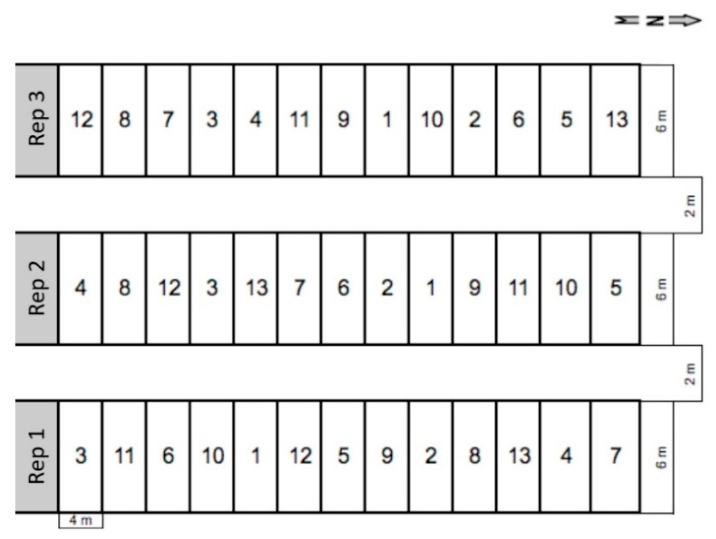
The experiment was established as a randomized block design with three replicates (
Figure 2). Each replicate contained 13 plots, resulting in 39 plots in total. Each plot had an area of 24 m
2, and the total experimental area was 1144 m
2. Seeds originated from the University of Hohenheim experimental station Ihinger Hof and from ZENO projects in Austria.
2.2. Crop Establishment and Management
Sowing was carried out on 17 May 2011 using a plot drill. The sowing depth was 1.5 cm and row spacing was 12.5 cm, resulting in 32 rows per plot. Because the trial was conducted under organic management, no mineral fertilizer was applied and weed control was performed manually using a hand hoe.
2.3. Harvest and Sample Preparation
To determine suitable harvest windows, DMC was assessed on a random basis prior to harvest. Based on these preliminary observations, three harvest dates (HDs) were selected:
18 August 2011
24 August 2011
31 August 2011
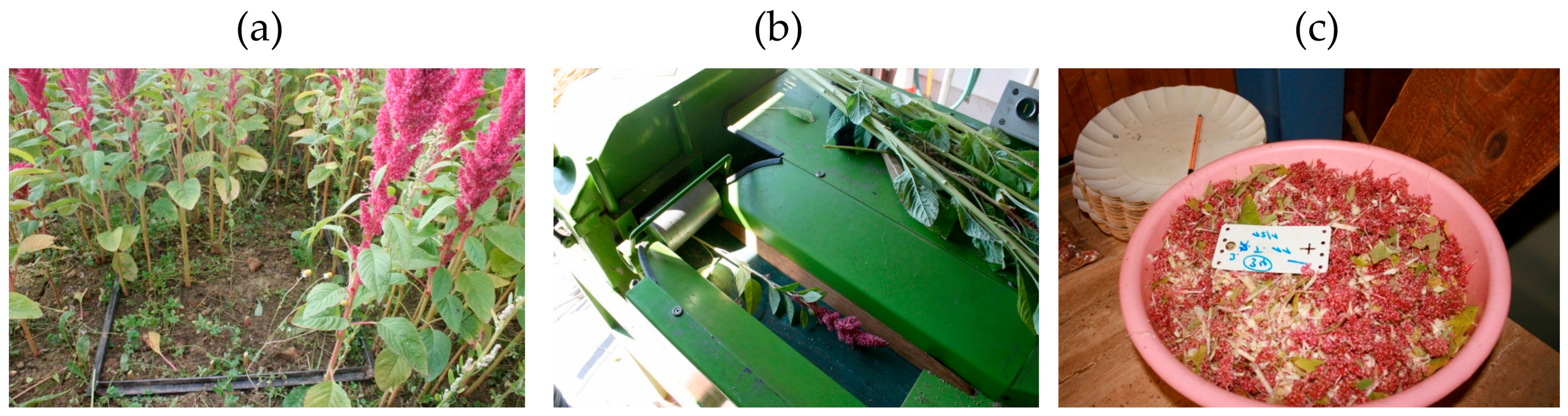
At each HD, a 1 m
2 quadrat was sampled within each plot (
Figure 3a). To reduce edge effects, the quadrat was placed at least 1 m from the plot border. Plants were cut manually, counted, weighed as fresh biomass, and chopped (the whole above-ground parts of the plants, see
Figure 3b). A subsample of approximately 500–1000 g was dried at 30 °C for at least 24 h to determine DMC (
Figure 3c).
A limitation occurred after the first HD: due to a communication failure following personnel changes, all samples except GT11 (energy type) were discarded after DMC had been determined. Consequently, biochemical analyses for HD 1 are available only for GT11. This must be considered when interpreting temporal patterns in biomass composition.
2.4. Biomass Composition and Biogas-Related Analyses
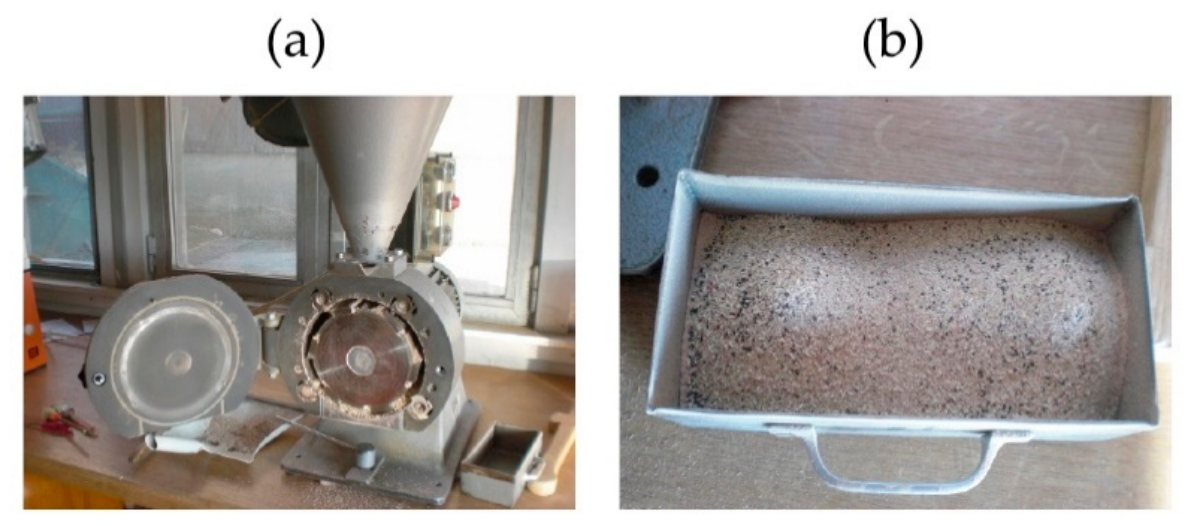
Dried and chopped biomass samples were ground using a Brabender grain mill (
Figure 4) to obtain a homogeneous material suitable for chemical analysis. The milled samples were stored in sealed plastic containers at room temperature until further analysis.
Ash content was determined by combustion of the samples in a muffle furnace according to VDLUFA standard procedures. The fiber fractions neutral detergent fiber (NDF), acid detergent fiber (ADF), and acid detergent lignin (ADL) were analyzed following the VDLUFA Method Book III protocols. Cellulose (CEL) and hemicellulose (HC) contents were subsequently calculated from the detergent fiber fractions according to standard procedures.
Total carbon (C) and nitrogen (N) concentrations were determined using an elemental analyzer (Vario Max CNS, Elementar Analysensysteme GmbH, Langenselbold, Germany). All analyses were performed on dry matter basis. The resulting chemical composition data were used to characterize the structural biomass components relevant for anaerobic digestion performance.
2.5. Biogas Batch Assay and Methane Yield Determination
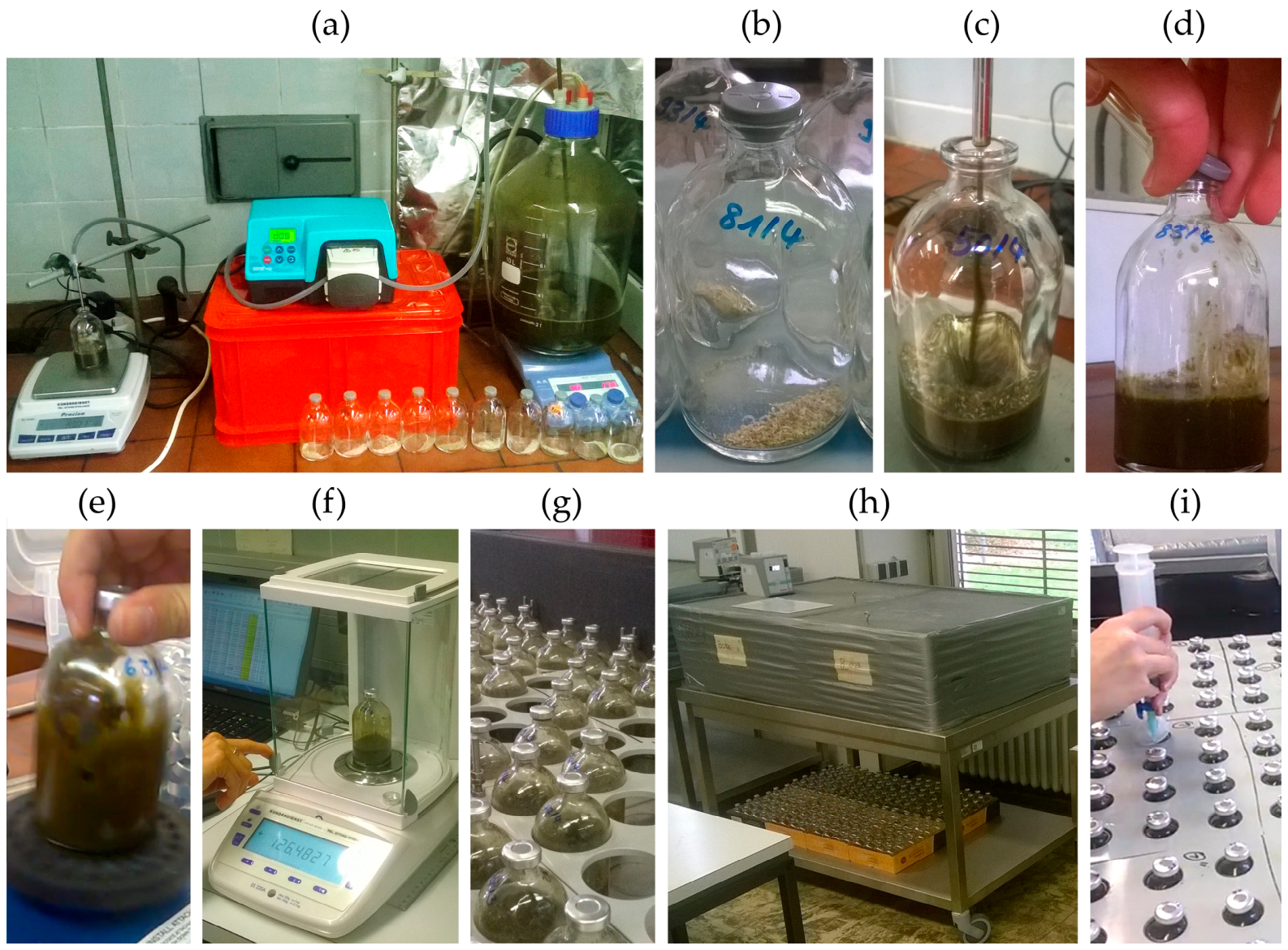
To determine the substrate-specific biogas yield (SBY) and methane content (MC) of the biomass samples, a laboratory-scale discontinuous biogas batch assay (
Figure 5a–i) was conducted under mesophilic conditions following the general principles of the VDI guideline 4630 for anaerobic digestion tests.
Prior to incubation, the organic DMC of each biomass sample was calculated from the measured dry matter and ash contents. For the batch assay, approximately 200 mg of organic dry matter of the milled plant material (
Figure 5b) was mixed with 30 g of fresh inoculum (
Figure 5c) in 100 mL gas-tight incubation bottles, after which the headspace was flushed with nitrogen prior to sealing (
Figure 5d). The inoculum originated from an agricultural biogas plant and had a DMC of approximately 4% and an estimated organic dry matter content of approximately 60%.
Before the start of the experiment, the inoculum was incubated without substrate for several days under the same temperature conditions in order to reduce residual biogas production and stabilize microbial activity.
The resulting inoculum-to-substrate ratio (ISR), based on approximately 200 mg substrate oDM and 30 g inoculum, was sufficiently high to ensure complete degradation of the substrate during the incubation period. Control bottles containing inoculum without plant material were included to quantify background gas production. All batch assays were conducted with four technical replicates per biomass sample. The duration of the incubation period was chosen to ensure that biogas production had largely ceased and that the degradable organic fractions of the substrates were almost completely converted.
All bottles were sealed with gas-tight rubber stoppers (
Figure 5d) and incubated at 39 °C in a temperature-controlled chamber (
Figure 5h) for 35 days, representing typical mesophilic digestion conditions. During this period, microorganisms converted degradable organic compounds of the plant biomass into biogas consisting mainly of methane (CH
4) and carbon dioxide.
Gas production was monitored repeatedly throughout the incubation period by measuring the pressure increase in the headspace of the bottles using a handheld digital pressure meter connected to an external pressure sensor (HND-P pressure meter, Kobold Messring GmbH, Hofheim, Germany). Measurements were conducted more frequently during the initial phase of the digestion process and at increasing intervals towards the end of the incubation period as gas production rates declined. The temporal development of biogas production was thus captured, and the final accumulated SBY and corresponding SMY values are reported in
Section 3.
For each measurement, the ambient air pressure was recorded to allow conversion of the measured gas volumes to standard conditions (0 °C and 1013 hPa). The accumulated SBY was calculated by correcting the measured gas production (
Figure 5i) for the gas production of the control treatment and relating the resulting values to the amount of organic dry matter added to each incubation bottle.
The methane concentration of the produced biogas was determined using gas chromatography equipped with a thermal conductivity detector (GC-2014 gas chromatograph, Shimadzu, Kyoto, Japan) operated at a detector temperature of 120 °C, at the end of the incubation period, when biogas production had largely ceased. The substrate-specific methane yield (SMY) was calculated by multiplying the SBY by the corresponding MC of the gas.
2.6. Statistical Analysis
Statistical analyses were performed using SAS (Statistical Analysis System, version 9.3; SAS Institute Inc., Cary, NC, USA). Treatment effects were evaluated using linear mixed models implemented with the procedure PROC MIXED.
To assess the effects of GT and HD on agronomic and biochemical traits, the following model was applied:
where
represents the observed value of the respective trait,
is the overall mean (intercept),
is the fixed effect of the
i-th amaranth GT,
is the fixed effect of the
k-th HD,
represents the interaction between GT and HD,
is the random effect of the
j-th replicate (block), and
is the residual error term.
GT means were estimated using least-squares means (LSMeans) within the mixed-model framework. Differences among GTs were evaluated based on pairwise comparisons of LSMeans.
Prior to final model interpretation, model assumptions were examined by inspecting the residuals for normal distribution and homogeneity of variance, and no substantial deviations from these assumptions were detected.
Because the 1 m2 harvest areas within each plot were not randomized across HDs, comparisons among HDs must be interpreted cautiously. In this experimental setup, each HD corresponded to a fixed sampling position within the plot rather than an independently randomized sampling unit. Consequently, observed differences among HDs may partly reflect within-plot spatial variation in addition to temporal development of the crop.
Therefore, the statistical evaluation primarily emphasizes GT contrasts, whereas harvest-date effects and GT × HD interactions are reported mainly to provide an exploratory description of temporal patterns in biomass characteristics.
3. Results
Mixed-model analysis revealed significant GT effects for all investigated traits, including DMY, DMC, lignin content, CEL, HC, ash content, nitrogen content, carbon-to-nitrogen ratio (CNR), SMY, and MC (
Table 2). HD significantly affected several biomass composition traits and DMC, whereas its effect on DMY was not statistically significant. No significant GT × HD interactions were observed (
Table 2).
These results indicate that genotypic differences were the dominant source of variation in the dataset, whereas harvest timing mainly influenced biomass maturity and composition. Because the harvest areas within plots were not randomized across dates, harvest-date effects should be interpreted cautiously. Consequently, the following sections focus primarily on GT differences.
3.1. Field Establishment, Plant Density, and Biomass Development
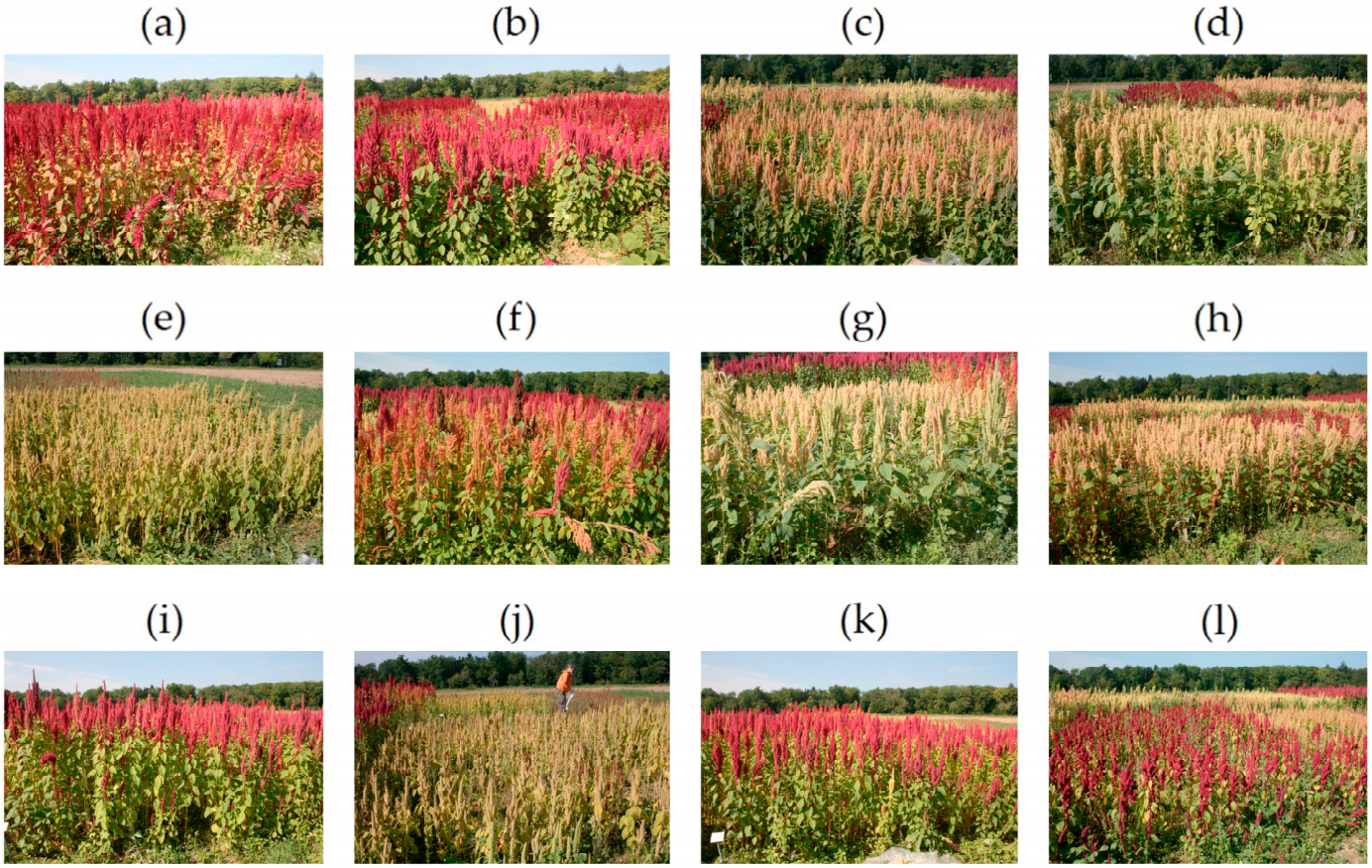
All twelve amaranth GTs established successfully and formed largely uniform stands under the site conditions (
Figure 2 and
Figure 6). Clear phenotypic differences were visible, particularly in inflorescence color and plant height (
Figure 5), indicating substantial morphological diversity among the tested material.
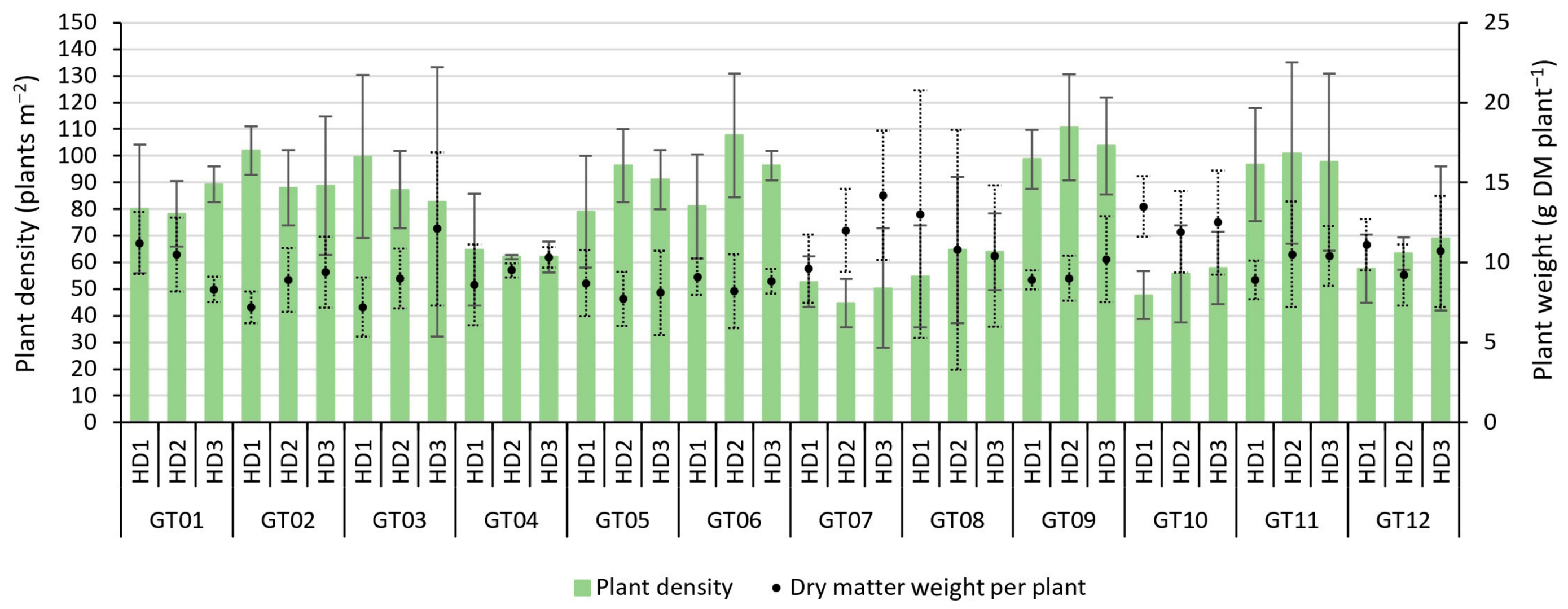
Plant density varied among GTs but remained comparatively stable across HDs within each GT (
Figure 7). The highest plant densities were observed for GT09 and GT11, whereas GT04 (Baernkraft) tended to show lower plant densities. This pattern is relevant for interpreting later yield differences, because low stand density likely contributed to reduced biomass accumulation in some GTs.
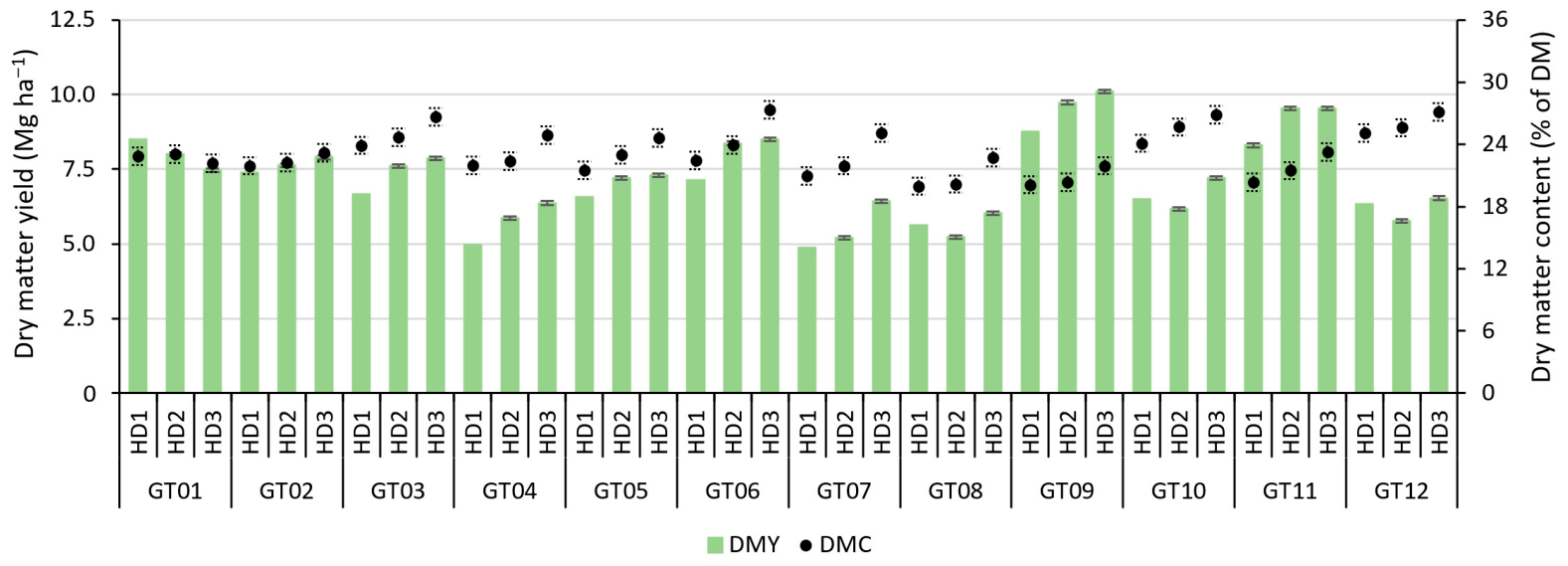
Both DMY and DMC also differed considerably among GTs (
Figure 8). The highest DMY values were obtained for GT09 and GT11, both of which exceeded 10 Mg ha
−1 at the most favorable harvest stage. In contrast, Baernkraft produced comparatively low yields. Thus, the figures indicate that GT choice strongly affected agronomic suitability for biomass production.
The interpretation of
Figure 8 is particularly important for the overall assessment of biogas suitability. While GT09 and GT11 were the most productive in terms of biomass, their DMC remained below the range generally considered optimal for loss-free ensiling.
Conversely, GTs with somewhat higher DMC tended to produce less biomass. Therefore, the data point to a clear trade-off between productivity and ensilability in the tested material.
3.2. SBY and Methane-Related Traits
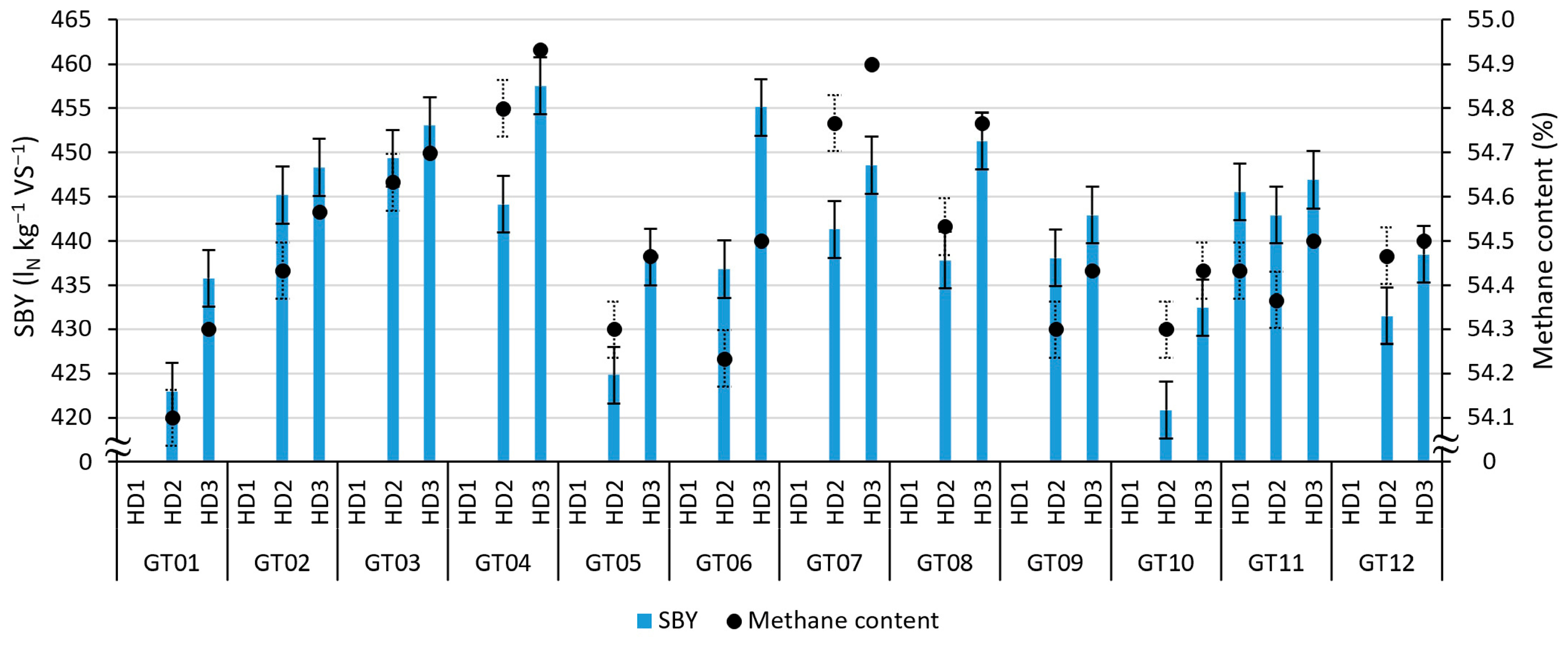
The SBY and methane concentration of the produced biogas varied moderately among the tested GTs (
Figure 9). Methane concentration was relatively stable across the material and typically ranged between approximately 54 and 55%, indicating that differences among GTs were primarily related to biomass characteristics rather than to changes in methane concentration itself.
When combining SMY with DMY, the resulting methane yield per hectare (MYH) averaged 1788 ± 441 m3 CH4 ha−1 across all GTs and HDs. Variation in MYH was driven primarily by differences in biomass productivity (DMY) rather than by differences in SMY, which varied only within a relatively narrow range among GTs.
Although some variation in SMY was observed, the magnitude of these differences was smaller than the variation previously observed for agronomic traits such as DMY and plant density (
Section 3.1). This suggests that the overall methane production potential per hectare was influenced more strongly by biomass productivity than by differences in methane concentration of the produced biogas.
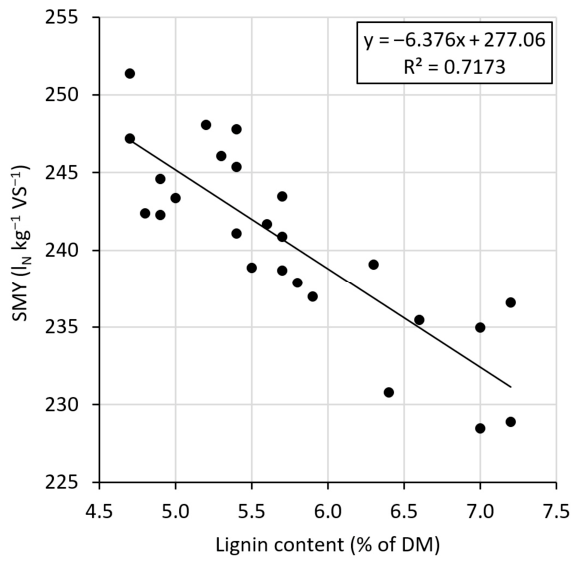
Figure 10 illustrates the relationship between SMY and lignin content, showing a clear negative association. This indicates that increasing lignification reduces substrate degradability during anaerobic digestion. This relationship is consistent with the general expectation that higher proportions of structural cell-wall components limit microbial accessibility to organic substrates.
Because complete biochemical data were not available for the first HD for most GTs, temporal comparisons should focus mainly on HDs 2 and 3. Within this limitation, later harvest generally resulted in slightly higher DMC, whereas methane concentration remained largely unaffected.
3.3. Biomass Composition and Trait Relationships
Biomass composition differed among GTs but remained within a relatively moderate range across the tested material (
Table 3). Across HDs, lignin concentrations generally ranged from approximately 4.7% to 7.2% of dry matter, CEL from about 25% to 33%, HC from 10% to 16%, and ash from 12% to 16%.
Among the GTs, Baernkraft showed relatively low lignin concentrations, but this apparent advantage did not translate into superior overall suitability because of its comparatively low agronomic performance. By contrast, GT09 combined comparatively high biomass yield with intermediate lignin levels and a relatively favorable carbon-to-nitrogen ratio. GT11 also showed a favorable agronomic profile, characterized by moderate lignification and comparatively low ash content.
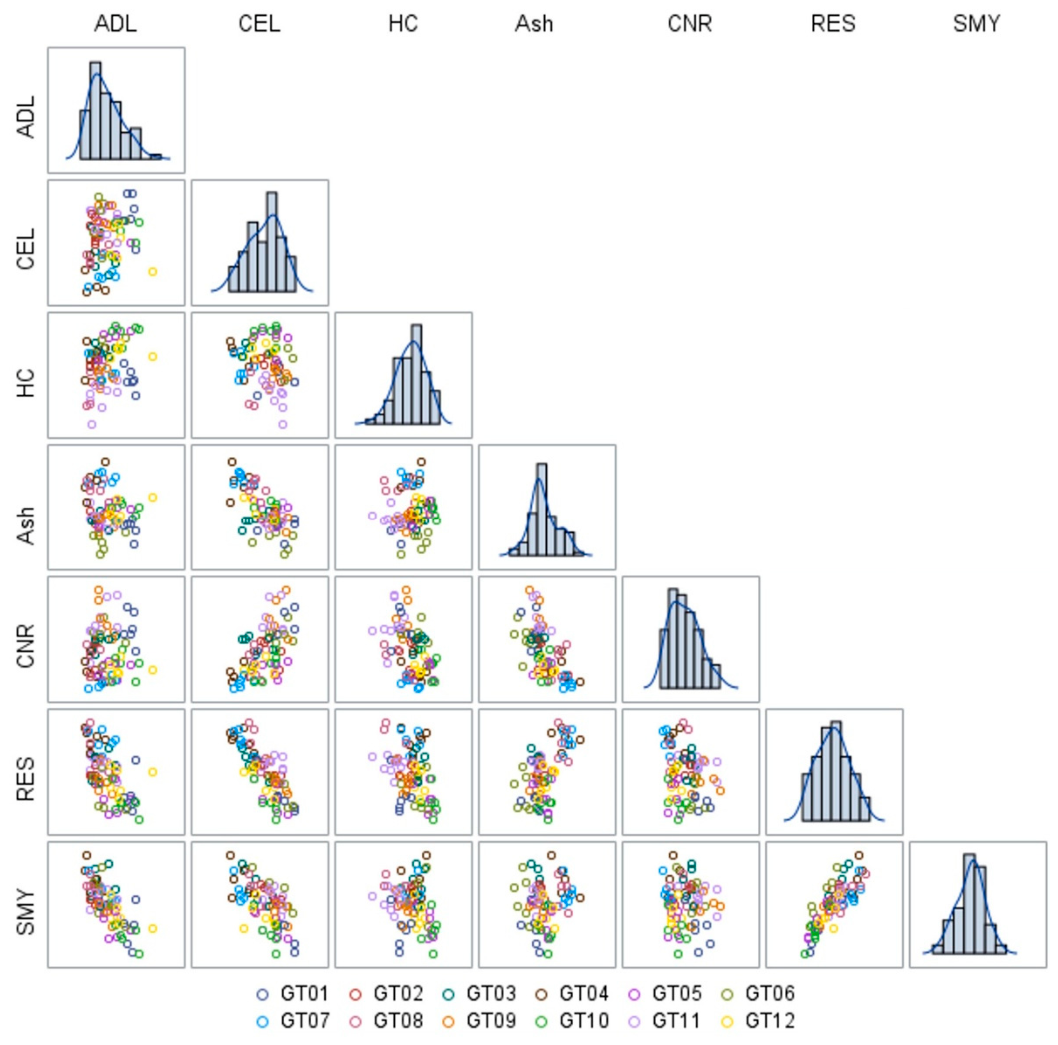
The multivariate relationships among biomass composition traits and SMY are illustrated in
Figure 11. The scatterplot matrix confirms earlier findings [
24], indicating that lignin content tends to be negatively associated with SMY, whereas cellulose and hemicellulose show weaker relationships. Ash content also tended to increase in samples with less favorable methane performance.
Overall, these patterns indicate that no single biomass component alone determined suitability for biogas use. Instead, the combined interaction between agronomic productivity, structural biomass composition, and DMC determined the overall substrate quality of the tested GTs.
4. Discussion
4.1. Agronomic Performance and GT Effects
This study revisits the suitability of amaranth as a biogas crop using a broader GT set than has often been considered in earlier work. The central finding is that the unfavorable assessment previously associated with Baernkraft should not be generalized to all amaranth material. Several GTs, especially 9 and 11, outperformed Baernkraft in agronomic terms, particularly with respect to plant density and DMY. This supports the view that GT choice is critical when evaluating amaranth for biomass purposes and aligns with more recent breeding studies showing substantial variation among biomass-oriented amaranth types [
18].
At the same time, the present results do not support the conclusion that amaranth can currently compete with maize as a mainstream biogas crop under Central European conditions. The most productive GTs still showed insufficient DMC (even at latest HD) for robust ensiling, which remains a key requirement for practical biogas feedstock management. Waiting even longer to harvest (to potentially achieve an even higher DMC) would not be advisable for amaranth, as the plant is highly susceptible to frost and could snap, which would also complicate the harvesting process, and because the amount of volunteer seed could exacerbate the weed problem in the subsequent crop. However, breeding an earlier or faster maturing variety could be promising [
20].
4.2. Substrate Quality and Methane Yield Limitations
Beyond agronomic productivity, biomass composition strongly influences the suitability of crops for anaerobic digestion [
24,
25]. In the present study, lignin concentrations were relatively high (>5% of DM) compared with typical maize values of about 2.5% of DM [
24]. Both factors are agronomically important: low DMC increases the risk of ensiling losses, while higher lignification reduces degradability and thus limits biogas production (see
Supplementary Material file ‘Table S1’) and methane productivity [
25,
26].
The negative relationship between lignin content and SMY observed in
Figure 10 is therefore a key result of this study. It also agrees with comparative work showing that amaranth generally achieves lower methane yield per hectare than maize and that ash content and lignification are among the main constraints [
20,
24]. This observation corresponds with general findings that lignocellulosic biomass fractions are among the primary limiting factors for microbial degradation during anaerobic digestion [
21]. At the same time, the relationships observed in the present dataset indicate that methane yield cannot be explained by lignin content alone. Earlier modeling work has shown that simple linear relationships between individual lignocellulosic components and SMY often fail to capture the complexity of anaerobic degradation processes [
24]. Instead, methane productivity reflects the combined effects of multiple structural biomass traits and their interactions.
When expressed on an area basis, the MYHs observed in the present study are broadly consistent with results from previous field experiments. The average MYH of 1788 ± 441 m
3 CH
4 ha
−1 obtained here is slightly lower than the values reported by von Cossel et al. [
20], where amaranth achieved 1856–2672 m
3 CH
4 ha
−1 depending on the year (2014 and 2015), GT and environmental conditions. In that study, soil mineral nitrogen (N
min) availability was comparatively high (46.7–75.1 kg N ha
−1) and only GT11 was investigated. When considering GT11 alone in the present study, the average MYH reached 2210.5 ± 311.3 m
3 CH
4 ha
−1, which is clearly lower than values reported for silage maize. For example, von Cossel et al. [
20] reported methane yields of 4334 to 8144 m
3 CH
4 ha
−1 depending on site conditions. Comparable data on N
min were unfortunately not available for the present study, which limits a direct comparison of nutrient availability between the experiments. The soils at the experimental site in the present study were classified as Cambisol derived from loess, with textures ranging from loess to clay loam and characterized by high water-holding capacity and generally favorable conditions for agricultural production, whereas the soils in the study by von Cossel et al. [
20] were described as loam (2014) and loam over sand (2015).
Overall, the observed differences in MYH between studies are most likely explained by variation in biomass productivity. This confirms previous findings that DMY is typically the dominant determinant of MYH, while variation in SMY tends to be comparatively smaller.
4.3. Implications for Biogas Cropping Systems
The practical relevance of the present dataset lies less in replacing maize than in refining the search for diversification options. The broader policy and sustainability debate that originally motivated this work is still valid, because maize continues to dominate German biogas cropping systems despite long-standing interest in alternatives [
2,
12]. Diversification of feedstock crops is increasingly discussed as a strategy to mitigate environmental risks associated with maize-dominated biogas systems, including soil erosion, biodiversity loss, and simplified crop rotations [
11,
27]. In this context, annual species such as amaranth may serve as complementary crops that broaden crop rotations and increase landscape heterogeneity. Several studies have therefore highlighted the need to diversify energy cropping systems to reduce environmental risks and increase system resilience [
7,
27].
Perennial options such as cup plant and wild plant mixtures provide important biodiversity and erosion-related advantages [
8,
10], but they do not eliminate the need to assess additional annual species that might diversify rotations or serve specific site conditions. In that context, amaranth remains interesting because of its C4 physiology, heat tolerance, and breeding potential [
17,
18].
Furthermore, previous screening studies have shown that a wide range of plant species can produce methane under anaerobic digestion, although their agronomic performance and substrate quality vary substantially [
28]. The present results indicate that GT selection and breeding will be critical if amaranth is to play a meaningful role in biogas cropping systems. In particular, breeding targets should include improved dry matter accumulation, increased DMC at harvest, and reduced lignification in order to enhance both agronomic performance and substrate degradability.
Thus, while amaranth cannot currently compete with maize as a primary biogas crop under Central European conditions, it may represent a useful component within diversified cropping systems that aim to balance biomass productivity with ecological sustainability.
4.4. Limitations of the Study
The study has several limitations that should be considered when interpreting the results. First, the trial was conducted under organic management without fertilization, so the results should not be interpreted as the maximum production potential of the tested GTs. Results from a fertilized field experiment with similar genotypes [
20] suggest that significantly higher DMY can already be achieved under moderate mineral nitrogen fertilization (90 kg N ha
−1). Second, complete biochemical analyses were unavailable for the first HD because most samples were lost after drying. Third, harvest-date comparisons are restricted by the non-randomized placement of the 1 m
2 harvest areas within plots.
These limitations do not invalidate the GT screening itself, but they do mean that the study should be understood as a comparative exploratory assessment rather than a definitive agronomic optimization trial. Furthermore, this single-year evaluation from 2011 may not fully reflect current performance, as accelerated climate change over the past 15 years necessitates updated longitudinal studies to validate these findings under present environmental conditions.
4.5. Future Research Needs
Although the present study provides useful insights into the agronomic performance and substrate characteristics of different amaranth GTs, several research gaps remain. Future work should focus particularly on breeding approaches aimed at improving dry matter accumulation and DMC at harvest, as these traits appear to represent key limitations for the use of amaranth as a biogas substrate. In addition, multi-site field trials would be necessary to assess GT × environment interactions and to evaluate the stability of biomass yield (DMY) and substrate quality (SMY, MC) across different climatic and soil conditions.
Another aspect that deserves attention is the potential risk of volunteer amaranth plants in subsequent crops of the rotation. Amaranth species are known to produce large numbers of seeds, and seed losses at harvest may result in volunteer plants emerging in following crops. Although grain amaranth seeds generally show relatively limited persistence in the soil seed bank and are susceptible to common broadleaf herbicides, volunteer plants may still require management under practical farming conditions.
Future breeding efforts could therefore also explore the development of partially or fully sterile hybrid types, similar to approaches used in some perennial bioenergy crops. While such breeding strategies have not yet been widely pursued in amaranth, reduced pollen fertility has been observed in interspecific hybrids, indicating that sterility-based approaches might be technically feasible.
In parallel, agronomic strategies for preventing volunteer amaranth should be investigated, including optimized harvest timing to minimize seed losses, crop rotations with competitive winter crops, the use of cover crops to suppress seedling emergence, and integrated mechanical or chemical weed management strategies. These approaches could help ensure that the introduction of amaranth into biogas cropping systems does not create additional weed management challenges.
An additional issue that warrants consideration is the potential accumulation of cadmium (Cd) in amaranth biomass. Grain amaranth has been identified as a capable Cd accumulator and has been investigated as a phytoextraction crop for Cd-contaminated soils [
29]. Consequently, cultivation of amaranth on soils with elevated Cd levels could lead to increased Cd concentrations in harvested biomass. In biogas production systems, this may require careful monitoring to avoid the accumulation of Cd in nutrient cycles through the return of digestate to agricultural soils.
5. Conclusions
This study showed substantial variation among twelve amaranth GTs with regard to agronomic performance and substrate quality for biogas production. In particular, GT09 and GT11 clearly outperformed Baernkraft (GT04) in DMY and stand establishment, indicating that earlier negative assessments based primarily on Baernkraft were too narrow. However, the most productive GTs still exhibited DMCs below the optimum for reliable ensiling, and biomass lignification remained a further constraint on substrate quality.
Thus, amaranth cannot presently be regarded as a direct substitute for maize in biogas systems under the conditions studied. Nevertheless, the crop remains scientifically and agronomically relevant as a diversification option, especially because the strong structural dependence of German biogas systems on maize has changed only slowly.
Future research should therefore focus on biomass-oriented breeding strategies aimed at improving dry matter accumulation, DMC at harvest, and reduced lignification in order to enhance substrate degradability. In addition, improved crop management strategies, optimized harvest timing, and multi-environment testing under both organic and conventional management will be necessary to better assess the agronomic stability of amaranth as a biogas crop. Finally, potential weed management issues related to volunteer amaranth plants, as well as the possibility of elevated cadmium concentrations in biomass grown on Cd-rich soils, should be considered when integrating the crop into existing crop rotations.