Article

Valorization of Poultry Litter Through Anaerobic Digestion in Small-Scale Farm Energy Systems: A Techno-Economic Case Study in Cameroon


1
Italian National Agency for New Technologies, Energy and Sustainable Economic Development, Department of Energy Efficiency, 40121 Bologna, Italy
2
Department of Civil, Chemical, Environmental, and Materials Engineering, University of Bologna, 40131 Bologna, Italy
*
Author to whom correspondence should be addressed.
Energies 2026, 19(9), 2024; https://doi.org/10.3390/en19092024
Submission received: 11 March 2026 / Revised: 8 April 2026 / Accepted: 17 April 2026 / Published: 22 April 2026
(This article belongs to the Special Issue Biomass and Bio-Energy—3rd Edition)

Abstract

Poultry litter represents a promising feedstock for biogas production through anaerobic digestion (AD), offering potential benefits for both on-farm energy supply and organic waste management. This opportunity is particularly relevant in resource-constrained countries, where limited access to reliable energy and inadequate waste management remain critical challenges. This study investigates the integration of poultry litter-based biogas production into a decentralized energy system supplying a poultry farm and a nearby household in Yaoundé, Cameroon. A techno-economic optimization framework based on mixed-integer linear programming is used to determine the cost-optimal configuration of the energy system. The results show that anaerobic digesters are only selected when constraints on poultry litter disposal are introduced. Total annual system costs increase from approximately 2680 EUR·y−1 in the unconstrained scenario to 3720 EUR·y−1 when up to 50% of the poultry litter is valorized locally through AD. Increasing biogas production primarily substitutes liquefied petroleum gas (LPG) used for heating and progressively reduces electricity purchases from the grid. Overall, the analysis indicates that anaerobic digestion is currently not economically competitive when evaluated solely on energy supply benefits, mainly due to the high capital cost of digesters. However, when waste management objectives or external investment support are considered, poultry litter-based biogas systems can contribute to integrated energy–waste management strategies and support circular resource use in small-scale agricultural systems.

1. Introduction

Access to reliable energy systems is one of the main drivers fostering sustainable economic and social development [1]. This is explicitly acknowledged in the United Nations 2030 Agenda, where Sustainable Development Goal 7 (SDG 7) calls for universal access to affordable, reliable, and modern energy services [2]. Despite ongoing global efforts to advance sustainable energy transitions, current progress remains insufficient to meet rising demand worldwide. Electrification is a strategic intervention to mitigate energy poverty [3]; however, around 750 million people worldwide had no access to electricity in 2024 [4]. More than 80% of them live in Sub-Saharan Africa and Asia [5], regions that host the majority of what are commonly referred to as resource-constrained countries. These settings are not characterized by a lack of natural resources but by structural constraints in financial capacity, infrastructure, human capital, and institutional strength, which limit the provision of basic services and the deployment of modern technologies [6]. This structural mismatch is particularly evident in Sub-Saharan Africa, which holds approximately 30% of global mineral reserves and possesses extensive biomass, yet continues to exhibit some of the lowest levels of energy access worldwide [7]. In fact, over 55% of the population does not have reliable access to electricity, and an even greater proportion depends on traditional energy sources, such as firewood and charcoal, for cooking and domestic heating [4].
The regional pattern is reflected in country-level data. In Cameroon, only 42% of the population had electricity access in 2023, with 70% relying on traditional biomass (firewood/charcoal) for cooking. Similar patterns prevail elsewhere: Nigeria (55% access, 80% traditional reliance), Ethiopia (50% access, 85% traditional), and India (99% access but 20% unreliable, 40% traditional in rural areas) [8].
Rapid population growth further exacerbates these challenges by driving the expansion of agricultural and livestock activities, consequently increasing organic waste streams, such as animal manure and agricultural residues, which are often inadequately managed [9]. Total direct and indirect emissions from the global livestock sector amount to approximately 6.3 GtCO2 equivalent, with methane (CH4) and nitrous oxide (N2O) accounting for 54% and 15%, respectively, and manure management constituting a primary source of these releases [10]. Variable emission intensities are observed based on species and geographic regions. Although cattle (beef and dairy) production is responsible for the largest proportion of global livestock supply-chain emissions, other sectors (pigs, poultry, buffalo and other small ruminants) contribute substantially to the total outputs [11].
Despite not being the highest emitter, poultry is among the fastest-growing subsectors globally and is projected to drive over 60% of the increase in worldwide meat production over the next decade [12]. This rapid expansion is especially evident in resource-constrained countries due to the lower price and the nutritional profile compared to other types of meat. The intensification of poultry production inevitably increases its organic residues proportionally, raising important environmental and management challenges. When unmanaged, poultry waste contributes to surface and groundwater contamination, uncontrolled methane emissions, and deterioration of sanitary conditions [13]. Despite these risks, farm-derived organic residues should not be regarded solely as waste but rather as a valuable secondary resource rich in biologically available nutrients that are essential for maintaining soil fertility. Appropriate treatment processes, such as composting and anaerobic digestion (AD), contribute to the stabilization of organic matter and facilitate its safe application in agricultural practices [14]. In this regard, Tambone et al. [15] demonstrated that properly processed digestate can enhance soil fertility and increase crop yields by 20–50%.

1.1. Overview of Relevant Literature

1.1.1. Anaerobic Digestion for Circularity

Within this context, biogas represents a key vehicle for circularity, enabling the integration of renewable energy production with sustainable organic waste management in line with the principles of the circular economy. AD converts organic biomass into energy-rich biogas through microbial decomposition in the absence of oxygen [16], representing the controlled replication of natural microbial degradation processes occurring in oxygen-limited ecosystems such as wetlands, rice fields and landfills [17]. Anaerobic digesters are therefore designed by mimicking high-rate natural systems, including the forestomach of ruminants and the hindgut of insects (e.g., termites and cockroaches) [18]. For this reason, AD can be interpreted as a nature-based solution that optimizes natural cycles for waste stabilization and the valorization of greenhouse gases emitted naturally by organic residue degradation [19].
Biogas typically consists of 50–75% methane and 25–50% carbon dioxide, with trace components such as hydrogen sulfide, ammonia, and water vapor, and can be used for heat and electricity generation or upgraded to biomethane [20]. Beyond energy recovery, AD produces nutrient-rich digestate that can be returned to agricultural soils, reducing nutrient losses and mitigating surface water contamination by phosphorus and other elements [21].
Moreover, biogas can play a strategic role in integrated renewable energy systems because it is a storable and dispatchable energy carrier capable of compensating for the variability of intermittent sources such as solar and wind. Biogas is also particularly suitable for direct thermal uses, such as cooking and heating, because it can be burned efficiently in simple gas burners without requiring complex energy conversion technologies [22]. This aspect is particularly relevant in many Sub-Saharan African countries, where cooking and heating account for the dominant share of household energy demand [23]. Compared with traditional biomass fuels such as firewood or charcoal, the use of biogas significantly reduces indoor air pollution, greenhouse gas emissions, and the time burden associated with fuelwood collection [24].
In resource-constrained regions where energy poverty, organic waste availability, and agricultural dependency converge, manure-based biogas systems represent a context-appropriate and scalable solution to address multiple sustainability challenges simultaneously. By converting livestock manure from an environmental liability into a source of renewable energy and organic fertilizer, anaerobic digestion contributes to closing local energy and material cycles while reducing environmental pollution and improving soil fertility. In this way, AD supports circular economy strategies and promotes more sustainable and resilient energy–food systems.

1.1.2. Poultry Litter-Based Biogas

In intensive systems, poultry waste is commonly present in the form of poultry litter, which consists of a heterogeneous mixture of poultry manure (excreta), bedding material (such as wood shavings, straw, or rice husks), spilled feed, feathers, and moisture. Poultry litter is an attractive feedstock for anaerobic digestion due to its high organic content and continuous availability. Typically, its organic matter content is around 85% of dry weight [25], with a carbon to nitrogen ratio of poultry litter in the range of 6–12 [26] and typical methane content in the biogas of around 60% [27]. Different studies have attempted to evaluate the potential of poultry litter as input to anaerobic digestion processes, especially at a small scale. Silva et al. [28] tested poultry litter AD at the lab scale, finding that poultry litter digestion can achieve a yield of 0.101 m C H 3 4 k g V S , with average methane concentration in the biogas of 54% and reaching a maximum of 67%; Gagnani Rao et al. [29] studied two alternative configurations of AD of 2 m3 volume using poultry litter as feed, obtaining a methane yield of 0.083 m C H 3 4 k g V S and 0.15 m C H 3 4 k g V S depending on the specific approach.
While there is ample evidence that poultry litter can be used in monodigestion, it has also been observed that, if not properly managed, high nitrogen levels can lead to ammonia inhibition [27]. Therefore, co-digestion with carbon-rich substrates, such as crop residues [30] or biochar [31]; bioaugmentation [32]; the reduction of the organic load [33]; and the application of pre-treatment strategies are often implemented to ensure process stability. In addition, co-digestion can improve the overall performance of the anaerobic digestion process by balancing the carbon-to-nitrogen ratio, supplying missing nutrients, enhancing microbial activity, and increasing methane yields through synergistic effects, while also improving process stability and enabling the valorization of multiple locally available waste streams [34].
In poultry farms, its continuous on-site availability makes poultry litter particularly suitable for integrated energy systems, enabling efficient resource valorization and contributing to the closure of material and energy loops at the farm level. These traits render poultry litter biogas a good candidate for decentralized energy in rural and peri-urban areas lacking reliable grid access.

1.1.3. Optimization of Energy Systems Based on Biodigestion

In a context where conventional renewable energy sources, primarily photovoltaic (PV) panels and wind turbines, have become increasingly economically convenient, the need to resort to AD for decentralized biogas production can be questioned. In addition, for small-scale applications, such as is the case for most farms in resource-constrained countries, several questions need to be answered with respect to what type of digesters should be used (micro-scale, small-scale), and what type of end-use for the biogas should be preferred (space heating, domestic hot water generation, electricity generation). One solution for investigating the potential role of decentralized AD from poultry litter can be to solve the problem of identifying the optimal design for an energy system, given its energy demand and the availability of local energy sources.
Optimization-based methods have been applied to contexts where the use of locally available biomass can be integrated with other energy sources to supply the needs of the farm. Skhrieh et al. [35] proposed the optimization of the stand-alone energy system of a cow farm in Jordan, finding that in the optimal solution, locally generated biogas could provide approximately 40% of the yearly energy requirement of the farm; the study, however, does not include the estimate of the cost of the biogas plant, which can represent a significant portion of the overall investment. Also, the case of a farm completely disconnected from the national grid is becoming increasingly less representative of conditions in resource-constrained countries, as the share of the population having access to the electricity grid increases. Chen et al. [36] assessed the potential of using chicken manure for biogas to fulfill the energy demand of the farm and its process plant, finding a significant potential, especially when adding straw for co-digestion, leading to potential for electricity exports to nearby users. Kang et al. [37] proposed the stochastic optimization of a pig farm in China, including the possibility of installing PV panels, biogas engines and batteries, and comparing different optimal solutions based on the presence of constraints on carbon emissions, but without considering the cost of the anaerobic digester. Villaroel-Schneider [38] studied the techno-economic optimization of a hybrid PV–biogas system based on the waste from dairy farms in Bolivia, also finding that biogas generation dominates the energy mix in cost-driven solutions, but not considering the investment cost of the digester.
Some studies in the field only focus on optimal dispatch (such as the work from Zhang et al. [39] optimizing the energy management of a Chinese farm taking into account demand, PV generation and day-ahead electricity prices) or on a scenario analysis, where design parameters are predefined based on engineering experience (such as the work from Maturo et al. [40], who evaluate the potential of extending an existing system that combines anaerobic digestion and cogeneration to serve a local community in Northern Italy).
Although the specific case of grid-connected farms in resource-constrained countries remains relatively underexplored, the literature discussed above highlights several key gaps concerning the potential for decentralized, hybrid energy systems, including locally generated biomass, as the source:
  • Most studies do not include the cost of the anaerobic digester in the assessment, thus missing a substantial part of the investment and not being representative of most actual cases where the biogas production plant has not been built yet.
  • Most studies focus on fully isolated or fully connected contexts, while ignoring the frequent cases where grid connection is available but unreliable.
  • Most studies focus on very large farms, or on consortia of smaller farms, leaving a gap for the case of small farms, which has an impact, especially on the available possibilities for biogas generation.

1.2. Aim of the Research

Despite extensive literature demonstrating the technical feasibility and environmental benefits of anaerobic digestion, a significant gap persists between research findings and field implementation, particularly in resource-constrained settings [21]. This study adopts a data-driven modeling approach to design and assess biogas system integration within a broader framework of sustainable farming management in Cameroon. Biogas is evaluated as a component of a circular configuration, wherein material and energy flows are closed at the local scale, aiming to valorize poultry litter as a resource rather than a waste product.
The study proposes the assessment of the use of AD as the local energy source for a system composed of a poultry farm and a household, where the biomass feed for the AD process consists of the poultry litter produced by the farm. The following questions are addressed:
  • What is the cost-optimal system design, given the current framework?
  • How does the cost-optimal system design change when an increasing share of the poultry litter is used locally for biogas production?

2. Materials and Methods

2.1. System Description

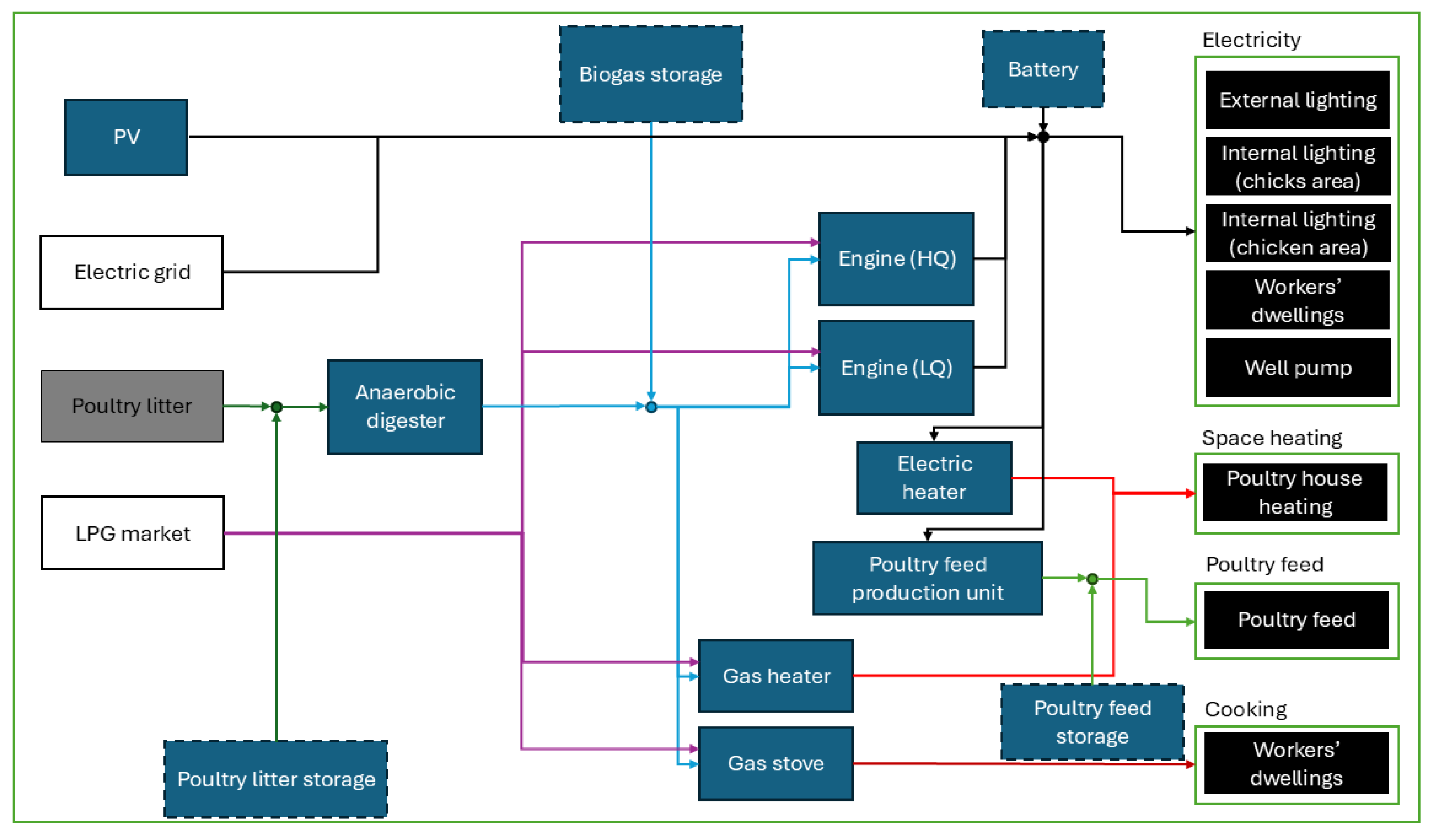
To assess the potential role of valorizing poultry litter through AD integrated with the energy system of the farm, a reference farm energy system was proposed that includes all potential local energy sources and energy conversion units. Energy can be generated locally either by PV systems or by anaerobic digesters fed by poultry litter. In addition, electricity can be sourced from the national electric grid, while liquefied petroleum gas (LPG) can also be purchased on local markets. Final energy uses include electricity, heating (in the case of the poultry farm), domestic hot water (in the case of the owners’ household), and cooking. Both the LPG and the biogas can be used in gas engines to generate electricity, in gas heaters and boilers to generate heating and hot water, and in gas stoves for cooking. Electric heaters and boilers can also be selected as part of the system. Finally, both energy and material flows can be stored in the form of batteries (electricity), biogas, poultry litter and poultry feed storage. The proposed system’s superstructure is represented in Figure 1 for the poultry farm.

2.2. System Optimization Approach

In the previous section, a potential multi-vector energy system was proposed for satisfying the energy demand of a poultry farm—including a dwelling for workers—and its owners’ house located in Yaoundé, Cameroon. The specifics of the system, and more specifically the sizes of its different units, are not fixed and should be defined based on the characteristics of the specific case to which the system is applied. For this reason, in this paper, the problem of the sizing of the system is approached as a mixed-integer linear programming (MILP) problem, with the total annualized cost (Equation (1)) as the objective to minimize. The sizes of each component of the power plant are decision variables of interest for the problem. The energy and mass streams for each component at each time step also appear in the optimization as decision variables. The MILP approach was selected based on the high reliability and speed of available solvers.
The objective of the MILP problem is to minimize the total costs of the system (TOTEX). Hence, the objective function ( f o b j ) of the optimization problem is defined in Equation (1).
f o b j = T O T E X = C A P E X a n n + O P E X
where the operational cost (OPEX) and the annualized investment cost (CAPEXann) are defined as shown in Equations (2) and (3):
C A P E X a n n = u U C u i n v E ˙ s i z e , u m a x   f u f a n n
O P E X = u U t T f u , t C f u e l E ˙ f u e l , u m a x Δ t
where the problem parameters in the equations above are: the fuel cost ( C f u e l ), the maximum fuel consumption of each utility u ( E ˙ f u e l , u m a x ), the duration of each time step ( Δ t ), the size-dependent investment cost of each utility ( C u i n v ), the maximum energy/material flow used for sizing purposes of each utility ( E ˙ s i z e , u m a x ), and the annualization factor ( f a n n ), defined as a function of the lifetime of each utility ( N u y ) and of the interest rate (i) (see Equations (3) and (4)). U and T represent the set of utilities and of time steps included in the problem, respectively.
f a n n = i + 1 N u y 1 i i + 1 N u y
The problem variables to be optimized are: the load of each utility u at each time step t with respect to its maximum installed power ( f u , t , ranges between 0 and 1); the sizing of each utility with respect to its maximum installed power ( f u , ranges between 0 and 1); the on–off status of each utility u at each time step t ( y u , t , binary); and the installation decision for each utility ( y u , binary). These variables are related by the following constraints:
f u , t f u t   i n   T ,     u   i n   U
f u , t y u , t t   i n   T ,     u   i n   U
y u , t y u t   i n   T ,     u   i n   U
where Equation (5) represents the fact that a utility cannot operate at a higher load than the maximum installed size, Equation (6) that a utility can only have a non-zero load if it is switched on, and Equation (7) that a utility can only be used if it is installed.
The optimization problem is further constrained by the fact that energy and material balances must be respected at all times (Equation (8)):
u U f u , t E ˙ l , u m a x k u , t a v + p P E ˙ l , p , t = 0 t   i n   T ,     l   i n   L
where E ˙ l , u m a x represents the maximum value of the net energy/material flow l for unit u, and E ˙ l , p , t represents the energy/material flow l at time step (t) of the process (p), typically representing the energy or material demand of the system; k u , t a v represents the relative availability of the utility u at time step t, representing the fact that some units cannot be used at all times: in the case studied in this paper, this variable is defined as a binary and used to include blackouts (the availability of the electricity grid is set to 0 at specific time intervals) and to represent the fact that certain units that require human intervention cannot be operated outside of working hours (such as the poultry feed production unit).
In addition to the problem-level equations, each unit is defined by additional constraints. The general form of the different energy streams of a generic unit is given by Equation (9). As energy conversion units are generally defined by the efficiency of the conversion process, in this formulation this is given by
η u , l = E ˙ l , u m a x E ˙ f u e l , u m a x
The problem definition also includes two different types of energy storage: a battery and a biogas storage tank. These are modeled with a state variable indicating the current state of charge of the storage unit, which is calculated for each time step in accordance with the following definition (Equation (10)):
Δ E u , t = ( E ˙ u   ( c h a ) m a x f u c h a , t E ˙ u   ( d i s ) m a x f u d i s , t )
where the subscripts (dis) and (cha) refer to the discharge and charge processes. It should be noted that, to preserve the overall energy balance, it is here assumed that the state of charge of any energy storage device in the system must be, at the end of the time horizon, at least as high as at the start. All types of storage systems may involve losses in the charging–discharging cycles. These are accounted for in the definition of the charging and discharging units of each energy storage device, according to Equation (9).
Some specific units required additional constraints to better represent their actual features and behavior. Certain units require a minimum installed size if the installation decision is taken. This required the introduction of the constraint represented in Equation (11):
E ˙ s i z e , u m a x   f u E ˙ s i z e , u m i n y u
In addition, some units can only be operated on/off, with no possibility to regulate them at different power input/output levels. This is particularly relevant for units such as the poultry feed production unit, because this type of machine only exists for relevant sizes, it cannot be modulated, and this can have a significant effect on instantaneous power demand for the system. Hence, for these utilities, the constraint shown in Equation (12) is enforced.
  f u , t = y u , t

2.3. Case Study Description

Cameroon was selected as an emblematic and suitable location for such an optimization process due to the structural energy deficits combined with very high biomass availability and significant untapped bioenergy potential, which is common to several resource-constrained countries. Despite abundant and diverse renewables availability, the national grid remains fragile. Hydropower accounts for approximately 75% of total electricity generation in Cameroon [41]. This leads to energy supply challenges during the dry season due to water shortages. Consequently, it becomes difficult to meet high demand, considering the large use of cooling systems [42].
National electrification reaches 68%, contrasting 90% in urban areas with 20% in rural environments. Peri-urban grids suffer weak infrastructure, voltage drops, and outages, prompting reliance on diesel generators costing up to six times grid rates. Electricity demand grows 5.5% annually due to urbanization and industrial growth [43].
Traditional biomass satisfies 65% of energy needs, mainly for cooking and heating, although organic waste holds vast potential: up to 39% of demand could be met economically via agricultural residues and livestock manure, such as poultry waste [44]. This nexus of insecurity, rising demand, and biomass abundance suits decentralized systems.
This study draws on real data from a chicken farm in Yaoundé, Cameroon (Lat: 3.840, Lon: 11.564), located in a rapidly developing peri-urban area. The site exemplifies energy insecurity and biomass surplus typical of Cameroonian peri-urban zones, exacerbated by national hydropower dependence.
The farm includes three poultry houses of 300 m2 each, managed at a density of 10 chickens per m2, equating to approximately 3000 per production cycle in each structure. The annual output totals around 72,000 birds across eight 45-day cycles, accounting for 15-day sanitation intervals between cycles. The three sheds are insulated and oriented perpendicular to prevailing winds to optimize natural ventilation, each including a chick-rearing unit for the first 15 days of life and automatic feeders and drinkers. An enclosed area exists for poultry manure storage, while a zone for feed milling and compounding is under construction. Water supply derives from a 22 m deep borehole.
The site includes an on-site dwelling for workers, supplied along with the farm, with electricity from the national grid, which powers lighting, water pumping, and the feed milling unit currently under integration, while LPG cylinders are used for chick heating and cooking.
The house of the farm owner’s family (typically occupied by six people), located about 4 km away in an urban area, is also part of the case study system. It is connected to the national grid for its electricity needs, though LPG cylinders are used for cooking.
In the current configuration, no backup systems are installed at either location; consequently, both the farm and the residential users experience a complete loss of electricity supply during grid outages.
Overall, this setup offers ideal conditions for decentralized anaerobic digestion systems to enhance energy self-sufficiency, improve organic waste valorization, and enable surplus energy sales to neighbors during blackouts.

2.3.1. Demand

To estimate the overall energy demand required across the site, consumption values were assumed based on existing installations and operational data. For all demand items, both the design power in kW and the corresponding yearly demand in MWh are reported.
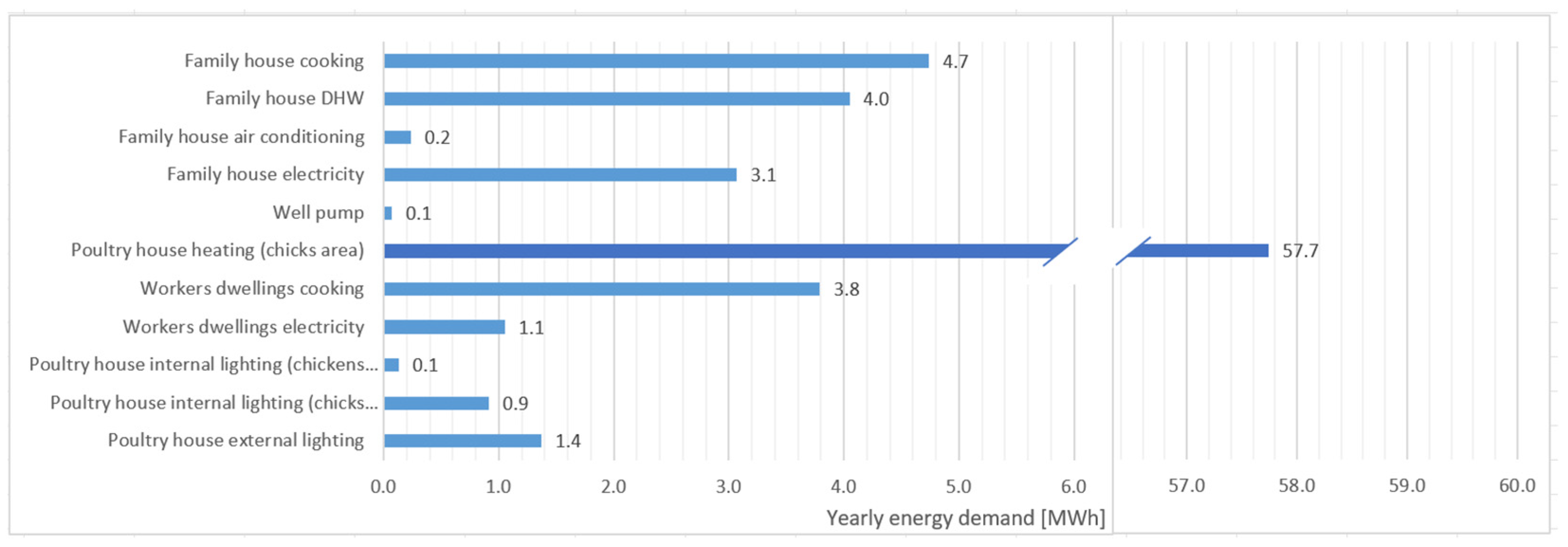
The farm requires heat to maintain the poultry houses at the required temperatures to ensure appropriate conditions for the growth of the chicks. More specifically, it was assumed that heating systems are activated whenever the ambient temperature (recovered through the PVGIS web interface [45] from the ERA-5 database [46] for the year 2023) falls below 27 °C, at a heating rate requirement of 9 kW (corresponding to a yearly demand of 57.7 MWh/y). In addition, electricity is required for various operational purposes. Internal lighting of the chick-rearing units is maintained during nighttime to ensure chicks remain active and achieve optimal growth rates, while natural daylight provides sufficient illumination during the day. This requirement is assumed to be 90 W. To identify night hours, the hourly capacity factor of the potential PV installation was used as a proxy for the light intensity, and it was assumed that lights are switched on when the capacity factor falls below 5% (0.91 MWh/y). In the case of the section of the poultry houses dedicated to chickens, the consumption is also assumed to be 90 W, but lights are only turned on between midnight and 2 AM for feeding (0.13 MWh/y). External lighting of the poultry houses consists of a total of 90 W installed. These lights are always on during the night, and similarly to the internal setup, a 5% bound on the PV capacity factor was used to determine lighting hours (1.4 MWh/y). Water for the chickens is supplied via a pump drawing from the 22 m deep borehole to a dedicated tank. The automatic delivery system ensures regular distribution of water to the birds. Based on consumption data, the pump is assumed to operate twice daily, at 7 AM and 6 PM, for one hour per activation, with a power requirement of 100 W (0.07 MWh/y). The poultry feed demand is assumed to be constant over time and is first calculated at the level of a single poultry house, considering approximately 1000 chicks and 2000 chickens. This corresponds to a feed requirement of about 2.08 kg/h for 1000 chicks and 11.55 kg/h for 2000 chickens, which sums to 13.63 kg/h per poultry house. Considering the presence of three poultry houses, the total feed demand amounts to approximately 40.9 kg/h. It is important to highlight that in the current configuration, the farm owners buy the feed; this constitutes a significant expense, and there is the intention to internalize the process by building a poultry feed production unit. To include the on–off times of the required equipment (a mill and a pelletizer) in the optimization problem, the poultry feed demand was included as part of the farm’s overall energy and material demand.
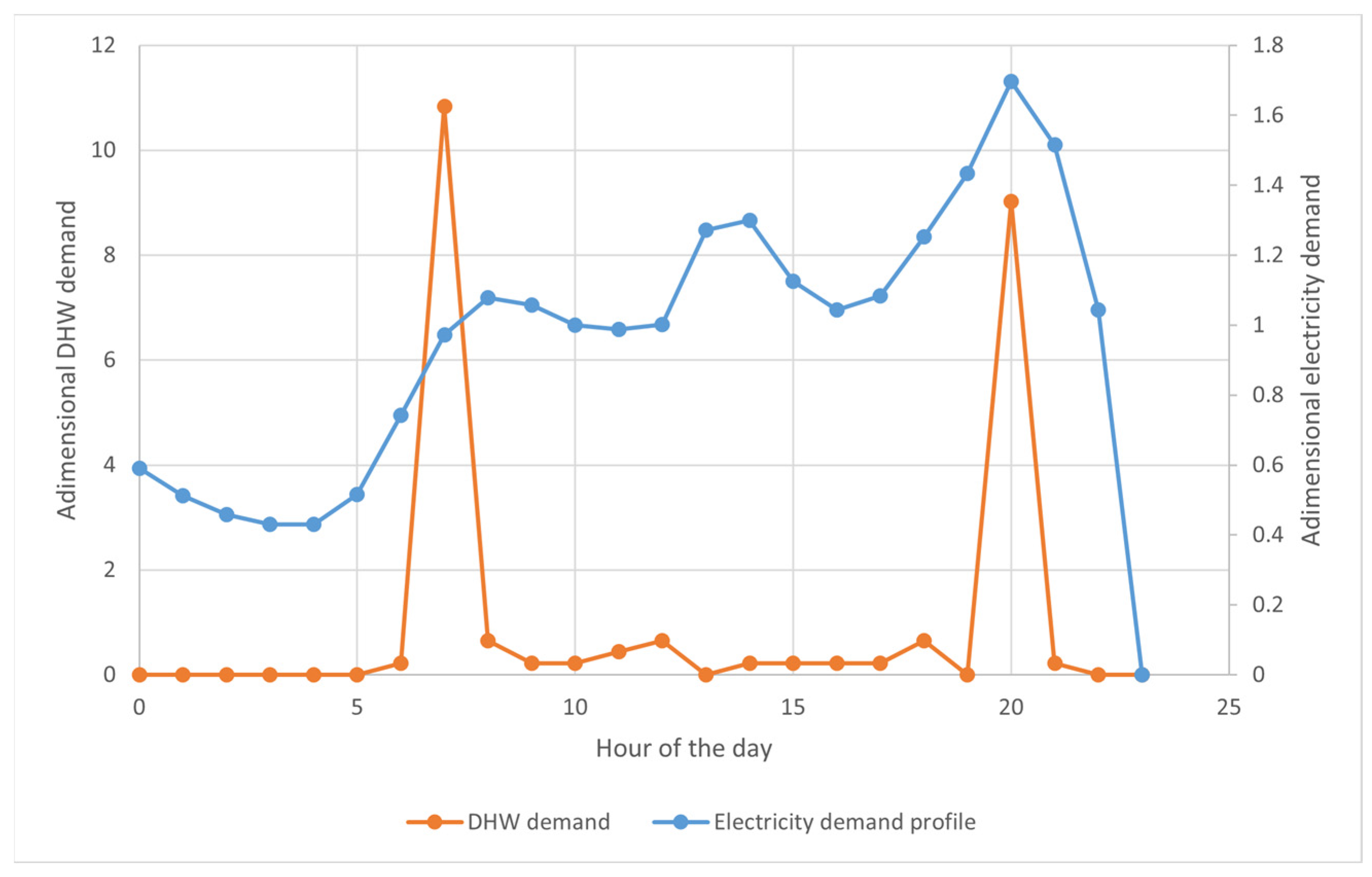
The workers’ dwelling also contributes to the site energy requirements. The daily electricity demand is set to 2.9 kWh (1.1 MWh/y), while to model the variation of the demand during the day, a fixed 24 h adimensional profile is used, as shown in Figure 2. Gas is required for cooking, and based on available data, a consumption of approximately 2 cylinders containing 12.5 kg of LPG each is assumed. This is translated to a demand of 4 kW during a 1 h cooking time at lunch (12 AM–1 PM) and 3 kW during a 2 h cooking time at dinner (6 PM–8 PM) (3.8 MWh/y).
The house of the farm owners is also included in the energy assessment. More specifically, the electricity required is defined using the same profile assumed for the workers’ dwelling, assuming a daily electricity demand of 8.4 kWh (3.1 MWh/y). In addition, the house is also equipped with an air conditioning system for space cooling. This is modeled with a 600 W power demand, which is activated whenever the ambient temperature increases above 30 °C (0.2 MWh/y). The demand for domestic hot water (DHW) is defined based on the “Large” profile from standard profiles identified by the European Commission’s delegated regulations [47] (see Figure 2), which corresponds to an average daily demand of 11.09 kWh (4.0 MWh/y). Finally, the family also requires gas for cooking. Based on available data, a consumption of approximately 2.5 cylinders containing 12.5 kg of LPG each is assumed. This is translated to a demand of 5 kW during a 1 h cooking time at lunch (12 AM–1 PM) and 4 kW during a 2 h cooking time at dinner (6 PM–8 PM) (4.7 MWh/y).
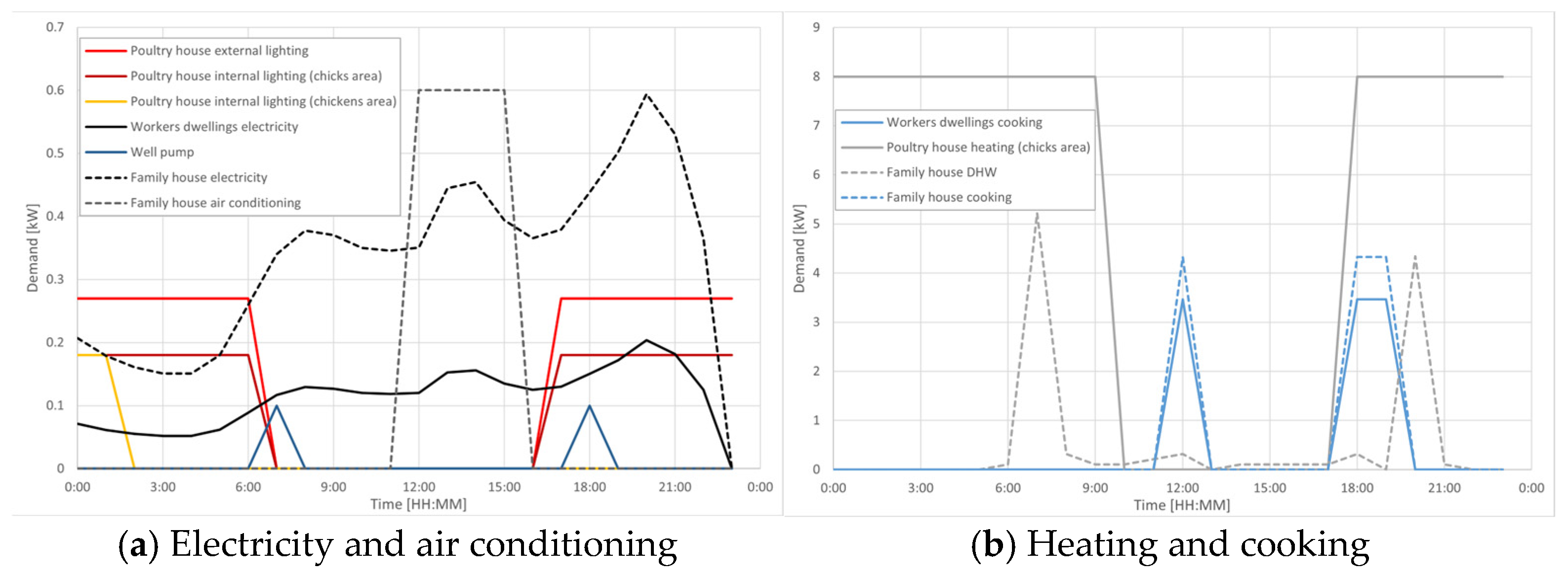
The demand is summarized in Table 1, Figure 3 (yearly cumulated values) and Figure 4 (for a reference day).

2.3.2. Generation and Grid

The main resource generated by the farm is poultry litter. Similar to poultry feed demand, poultry litter production is assumed to be constant over time. Based on historical cumulated values for the case study, it is assumed that 1000 chickens generate 150 kg/day of litter, while chicks generate approximately half the amount. Based on the assumptions of 2000 chickens and 1000 chicks present at any time, this sums to a constant production of 15.6 kg/h of poultry litter, corresponding to approximately 375 kg/day. Considering the poultry house area of 300 m2, this corresponds to approximately 1.25 kg/m2·day. This is equivalent to approximately 0.63–0.75 m3/day per poultry house, or 0.0021–0.0025 m3/m2·day, assuming a typical poultry litter bulk density of 500–600 kg/m3 [48]. The selected range accounts for variations in litter composition and moisture content, which significantly influence bulk density [49,50].
Considering the three poultry houses included in the farm, total poultry litter production is, therefore, approximately 1125 kg/day (46.9 kg/h), corresponding to 1.88–2.25 m3/day.
Both the family house and the farm are connected to the national electricity grid. The cost of electricity was set to 0.15 EUR/kWh based on the analysis of the latest energy bills. Based on discussions with local contacts, blackouts are relatively frequent in the Cameroonian electricity grid, and this was included in the system model. The hourly availability of the electricity grid ( k e l   g r i d , t a v ) was set to 0 during blackouts. Blackouts were assumed to happen 3 times a week with a 10 h duration during the dry season (December to February) and once a week with a 5 h duration during the wet season (March to November). This difference is caused by the importance of hydropower as part of the Cameroonian electricity mix, which in 2023 accounted for close to 75% of the total [41]. While the system design can provide useful solutions to supply electricity locally, thus also addressing energy supply during blackouts, the possibility of simply not meeting the hourly demand was also considered. This condition was included in the model as a fictional backup grid, with a much higher electricity cost representing the cost of the inconvenience of not having access to electricity. This value does not represent a market electricity price, but rather a proxy for the Value of Lost Load (VoLL), i.e., the cost associated with unserved energy [51]. The VoLL is widely used in energy system modeling to capture the economic and social impacts of power outages and is typically significantly higher than retail electricity tariffs. Reported VoLL values vary substantially depending on the context, with typical ranges in developing countries between 1 and 10 USD/kWh, and more commonly between 2 and 5 USD/kWh [52,53]. In this study, we selected a value of 3.0 EUR/kWh.

2.3.3. Technology-Specific Data

Data related to the different utilities that can be chosen as part of the optimization problem was collected partly from local contacts and partly from available literature. This data reflects both the performance of the systems and their investment costs.
Two main alternatives were considered for the anaerobic digester unit: A small, simple digester was modeled based on the data obtained for the Homebiogas unit during previous work from the authors [54]. This includes an investment cost of 12,000 EUR/kW of biogas generation power, a biogas generation rate of 1 kW for 5 kg/h of average biomass input, and no lower bounds on the installed size. The larger unit was modeled based on the data for the “simple”, non-stirred digester experimented in the study of Gangagni Rao et al. [29] and has an investment cost of 6000 EUR/kW and a biogas generation rate of 1 kW for 2 kg/h of average biomass input, but can only be installed at a minimum size of 10 kW. The distinction between these two choices is included to represent the fundamental choice between small, simple units and large, more advanced ones that is typical when dealing with relatively small businesses, such as the one under scrutiny in this work.
Solar PV system performance data was taken based on the PVGIS database [45] for the location of the case study, in the outskirts of Yaoundé, Cameroon (Lat: 3.840, Lon: 11.564). PV panel capital costs were set at 460 EUR/kW based on contacts with suppliers from the case-study area, where this value includes all expenses related to the installation of the full system (components and installation costs). The value is in line with typical estimates for Sub-Saharan contexts (e.g., [55]).
Data related to the poultry feed production unit was gathered from local suppliers and is related to the combination of two different sub-units: a mill and a pelletizer. The optimization problem allows for the installation of a unit able to produce 2 tons/hour of feed, with a power input of 30 kW (12.5 kW for the mill, 17.5 kW for the pelletizer). The unit is not assigned any investment cost, as feed production is assumed to be implemented independently of the energy system optimization. For the specifics of the case study, no alternative is considered for poultry feed production, and the unit is only included to optimize the times at which it is activated.
For the electric heater, gas heater, electric boiler and gas boiler, conservative efficiency values were adopted based on reference system studies [56,57]. The efficiency of electric heaters and boilers is set at 95%, while that of gas heaters/boilers is set at 90%. No efficiency was used for gas stoves, as the demand was derived directly from gas consumption data, thus already reflecting final energy use.
Batteries can be particularly useful to mitigate periods with low energy availability, especially from PV systems. Given the context of the case study, only lead-acid batteries were considered, modeled with a 94% charge efficiency and 96% discharge efficiency [58], and an investment cost of 120 EUR/kWh, based on actual estimates from local suppliers. This choice reflects current practices in many off-grid and mini-grid energy systems deployed in Sub-Saharan Africa, where lead-acid batteries remain the most widely used storage technology due to their relatively low upfront cost, technological maturity, and widespread availability in local markets [59].
Similarly to what was assumed for anaerobic digesters, two different models of gas engines were included as potential choices for the optimization problem. A “low quality” (LQ) engine with a specific investment cost of 150 EUR/kW, 10% conversion efficiency and 0.3 kW minimum installed size, and a “high quality” (HQ) engine with a specific investment cost of 1000 EUR/kW, 20% conversion efficiency and 2.0 kW minimum installed size.
Finally, as a potential alternative to local power generation to accommodate increased power demand, the option of extending the maximum capacity of the connection was included, at a reference cost of 500 EUR/kW. This can be needed for the operation of the poultry feed production unit, whose data were derived from local suppliers.
The lifetime of all system components was assumed to be equal to 20 years, except for lead-acid batteries, which were assumed to require substitution after 10 years. In the case of the PV system, the 20-year lifetime is considered as a weighted average of the duration of the panels and the duration of the inverter.
All unit investment cost data is summarized in Table 2.

2.4. Definition of the Optimization Scenarios

Different scenarios were defined by changing specific optimization parameters to understand the influence of specific choices on the optimal results.
Circularity and waste management can be among the rationales for resorting to anaerobic digestion to treat poultry litter, compared to its direct use as a fertilizer or disposal. In this sense, a constraint bounding the total amount of poultry litter that is not used on site was included in the optimization problem, with the bound set to 100%, 75%, 50%, 25% and 0% of the total amount produced in a year. Scenarios corresponding to 100% represent cases with no active constraint (all poultry litter can be sold or disposed of), while 0% scenarios correspond to forcing the problem to use all the litter locally as feed to the anaerobic digesters.
In addition, scenarios were defined based on the presence of batteries as part of the optimization problem. While batteries can enhance system flexibility, they also introduce additional complexity and maintenance requirements. This aspect is particularly relevant in many Sub-Saharan African contexts, where limited technical expertise, constrained access to spare parts and maintenance services, and weak waste-management and recycling infrastructure have been identified as barriers to the long-term sustainability of off-grid energy systems [60,61,62]. Moreover, battery systems operating in these environments may be exposed to harsh climatic conditions, including high ambient temperatures, which can lead to overheating and accelerated degradation, further affecting system reliability [63]. For this reason, operational configurations were also evaluated in which maximum battery capacity was set to 0 for both the farm and the household, allowing the assessment of battery-free system configurations under such conditions.
Finally, options were explored with the investment cost for the anaerobic digesters set to 1% of the default value to represent scenarios where public funding is available for this type of technology.
The combination of these three parameters generates a total of 20 optimization scenarios, as shown in Table 3.

3. Results

The results of the optimization scenarios are presented at Figure 5, Figure 6, Figure 7, Figure 8 and Figure 9. The analysis is mostly focused on scenarios 0–4 because these are the ones that include the highest variability; Figure 9 highlights the differences between scenarios 0–4 and 5–9; and finally, the results of scenarios 10–19 are only reported in the Supplementary Material (Table S2), since they all coincide with the results of scenario 4.
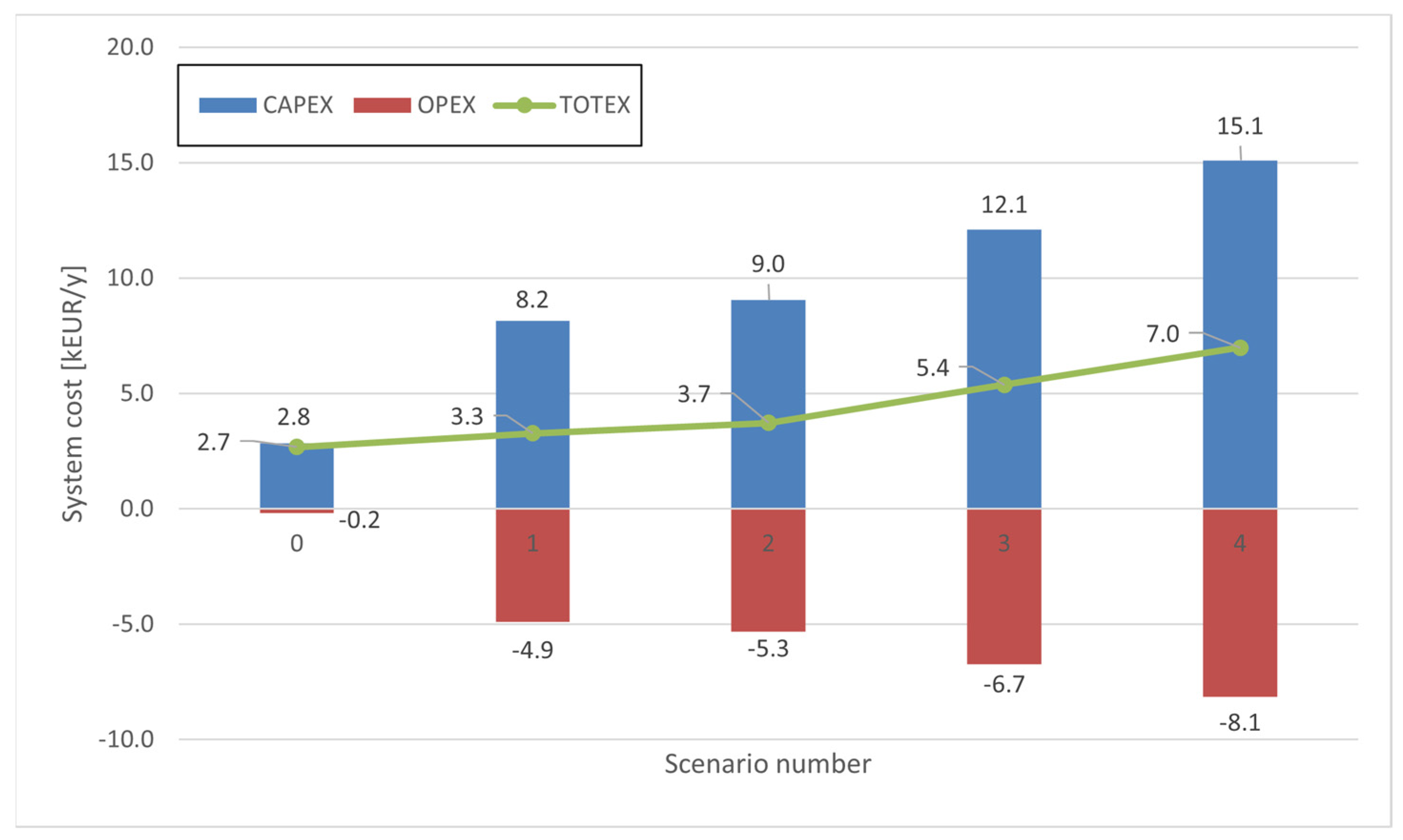
The results related to the economic key performance indicators (KPIs) for scenarios 0–4 are presented in Figure 5. As expected, constraining the possibility of freely disposing of the poultry litter increases total costs. However, it should be noted that the TOTEX rises only marginally (from 2680 EUR/y to 3720 EUR/y) when up to 50% of the poultry litter is used locally, while there is a more substantial increase when the majority (75% reduction, 5380 EUR/y) or all (100% reduction, 6980 EUR/y) of the litter produced is used on-site. All scenarios with a constraint on litter result in a significant increase in CAPEX, while generating substantial negative OPEX thanks to the possibility of selling electricity to the grid and the reduction in energy purchase costs.
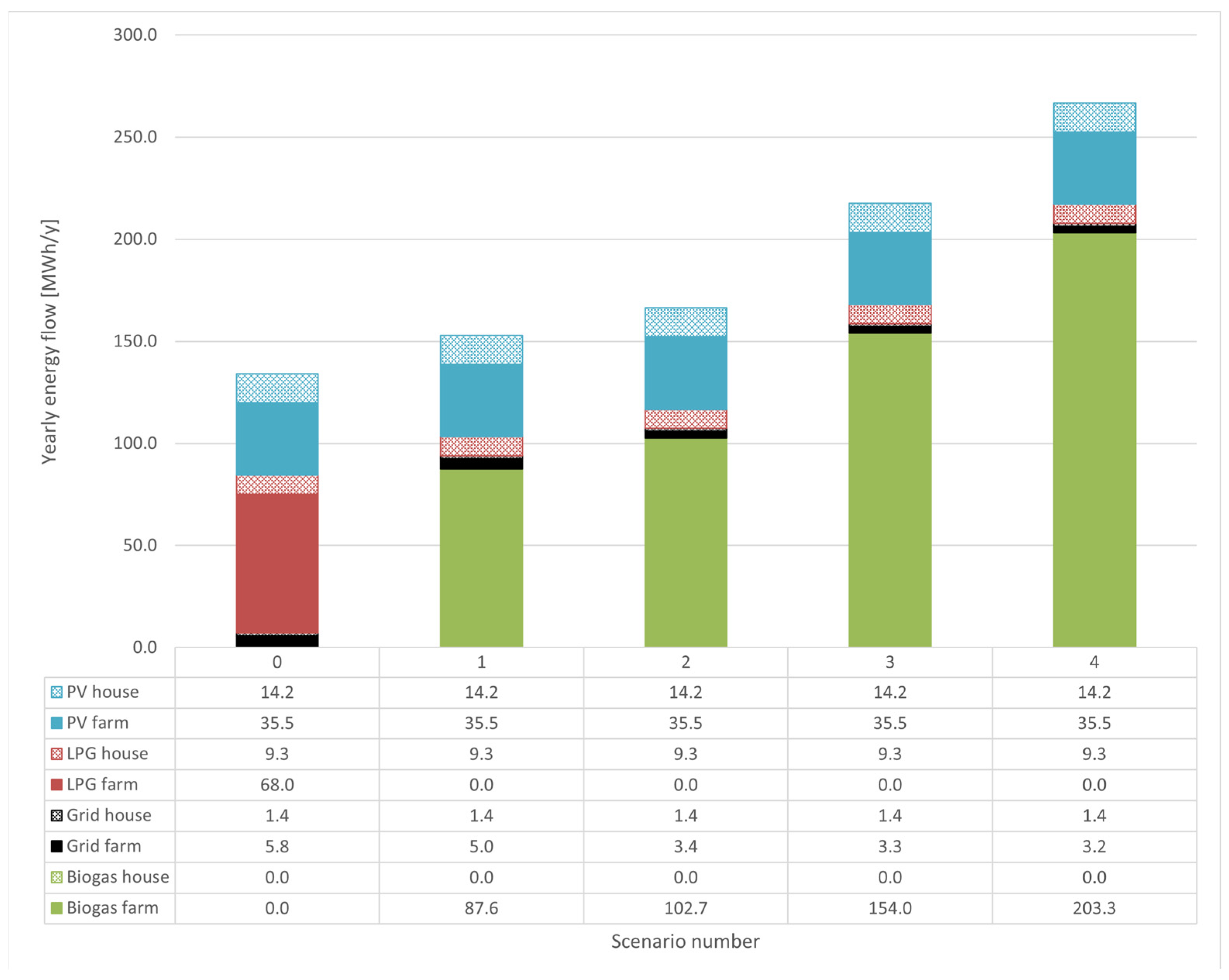
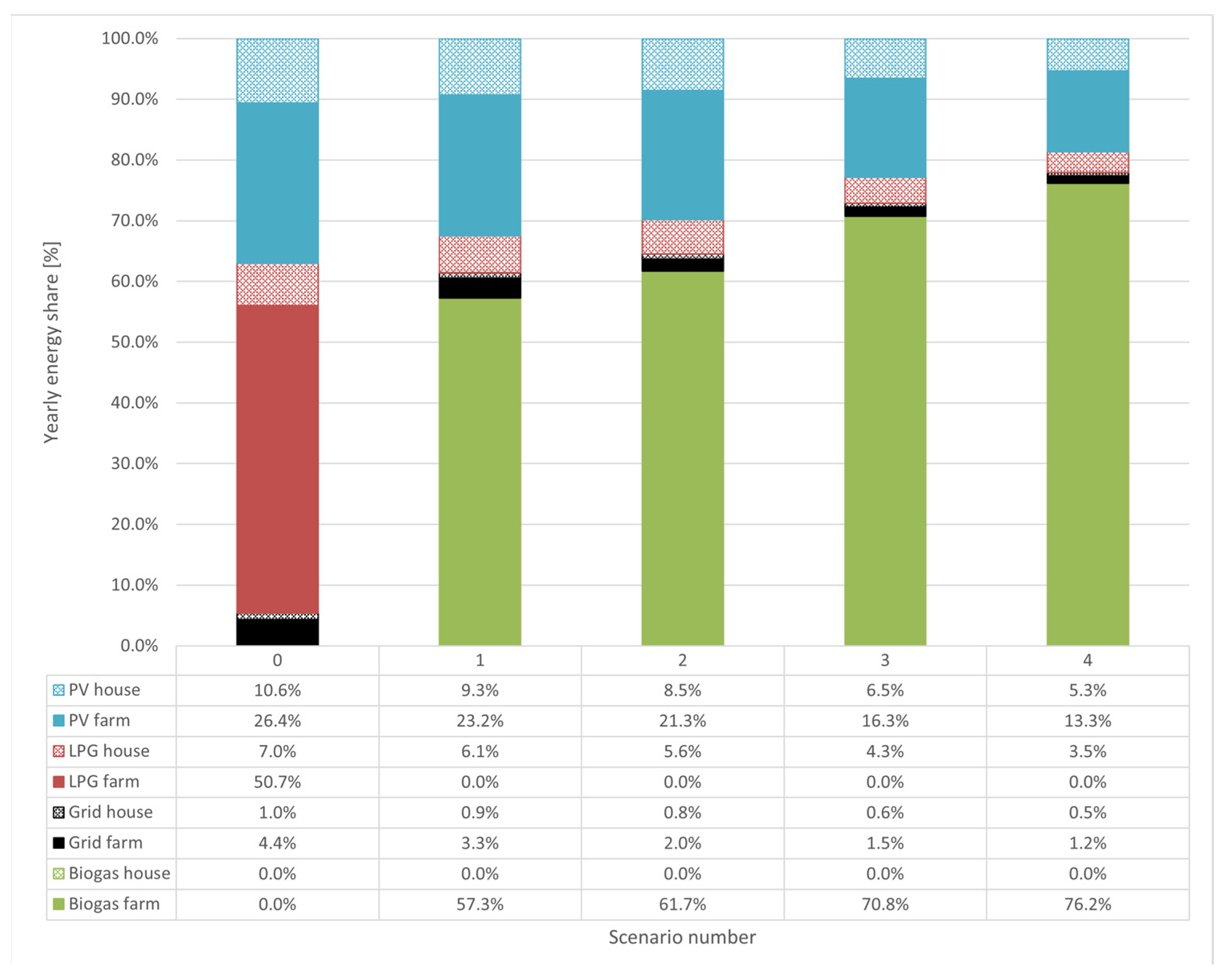
As shown in Figure 6 and Figure 7, the use of biogas first substitutes LPG to cover thermal demands, particularly for heating the chick-rearing unit inside the poultry houses. As biogas production increases, it can also substitute part of the electricity consumed on-site, thereby reducing purchases from the grid. This also reflects the apparent increase in energy consumption, which is explained by the relatively low efficiency of conversion from biogas to electricity by the engines.
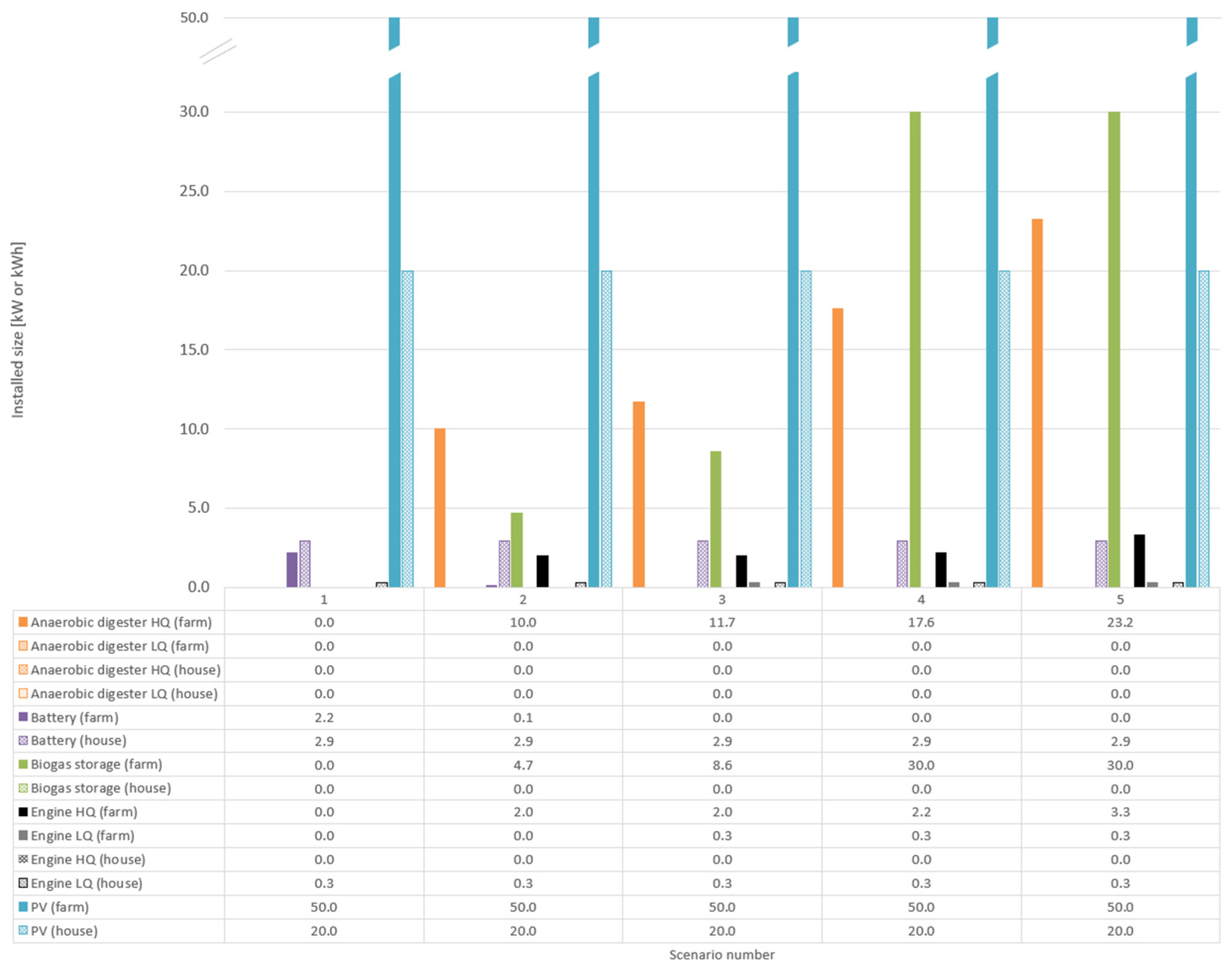
From the point of view of the system design, the optimization results for scenarios 0–4 (Figure 8) show the following:
  • The PV system, given its low installation cost and high yield, is always installed up to the maximum installable power (50 kW for the farm; 20 kW for the house)
  • The anaerobic digester is only installed at the farm, in its HQ version, with the installed size increasing from the minimum (10 kW) in scenario 1 to 23.2 kW in scenario 4, reflecting the increasing need for conversion capacity. The installed size of the biogas storage follows a similar trend, growing from 4.7 kWh in scenario 1 to 30 kWh, the maximum allowed value, in scenarios 3 and 4.
  • The LQ engine is installed at the house in all scenarios, reflecting its role in dealing with blackouts. In the farm, as soon as biogas is available, the HQ engine is installed at its minimum allowed size (2.0 kW). With growing availability of biogas, the optimizer selects both to increase the installed size of the HQ engine (up to 3.3 kW in scenario 4) and to also install an LQ engine (from scenario 2), likely to be used only for peak demands due to its lower CAPEX.
  • The battery is always installed with the same size at the house, regardless of the constraint on local poultry litter use. At the farm, the battery is only installed in scenario 0, while in scenarios 1 to 4, it is replaced by the engine.
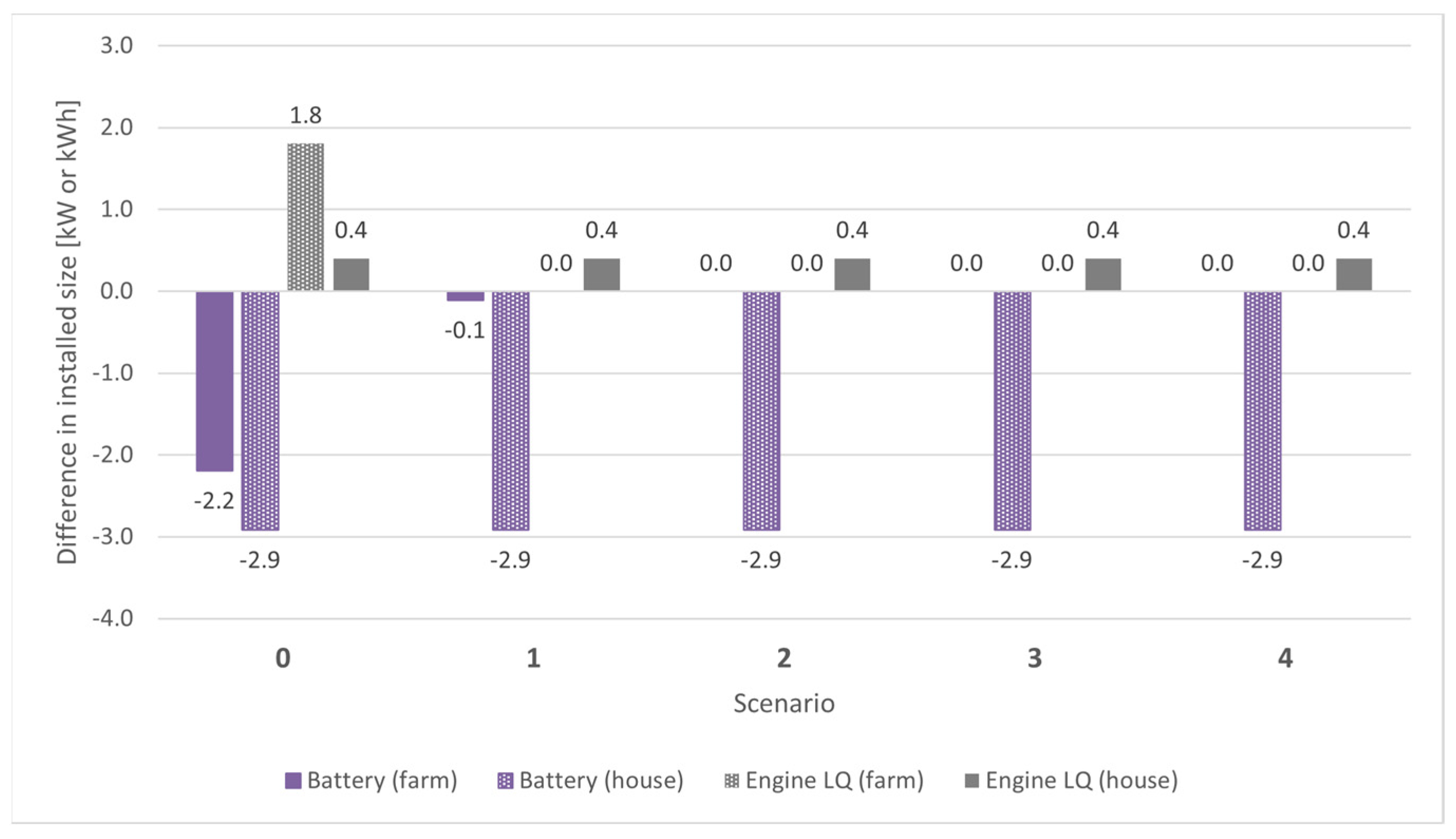
Scenarios 5–9 represent cases where batteries are not allowed in the system design. While the difference in system cost increases only marginally, there are some remarkable differences in the installed sizes (see Figure 9), as batteries are replaced by increasing engine sizes. In the farm, the LQ engine is installed at 1.8 kW design power to deal with blackouts, and in the house, the LQ engine is installed at a higher design power (0.7 kW instead of 0.3 kW in all scenarios).
Finally, scenarios 10–19 investigated how the results would change for the final user in the case where digester costs were set to zero, representing a hypothetical situation where these units are subsidized. The optimization of all these scenarios leads to results in line with scenarios 4 and 9, both in terms of costs and installed component sizes.

4. Discussion

While the results hint at the relevant potential for the use of poultry litter in decentralized anaerobic digesters, they should be interpreted within the broader framework of circular resource management, discussed in Section 1.1.1. In this perspective, anaerobic digestion represents a pathway to valorize locally available organic waste while contributing to the closure of energy and material loops at the farm level. However, additional elements must be considered when assessing the potential of this technology in resource-constrained countries.
The findings of this work are consistent with previous studies. Notably, our results align with existing literature regarding the predominant role of biogas as a local source of energy (e.g., Villaroel-Scheneider et al. [38], Kang et al. [37]) when the capital costs of the anaerobic digester are set to zero, while all biogas-related units are absent from the pure cost-optimal solution. This observation suggests that excluding the capital cost of the digester from the optimization problem has a significant impact on the solution. Considering this scenario is particularly relevant in international development cooperation contexts, where capital investments in infrastructure such as anaerobic digesters can often be supported through external funding mechanisms (e.g., development grants or donor-funded projects), ensuring the long-term coverage of operational and maintenance costs is typically more challenging.
In general, operating an anaerobic digestion plant, even one that is meant to be simple to use, can be a task that significantly adds to the workload of the farm, and that can present difficult challenges for untrained personnel to overcome. For instance, the problem of fatty acid accumulation caused by high ammonia concentration in the digester is a known potential limitation to the process. Several solutions have been proposed to address this issue, such as the reduction of the organic loading rate [33], the introduction of propionate-degrading methanogenic cultures [32], and the addition of biochar [31]. All these strategies, despite their effectiveness, can further increase the complexity and operational cost of the plant. This highlights a key trade-off, consistent with the discussion in Section 1.1.2: while poultry litter provides a continuously available and energy-dense substrate, its low C/N ratio and high nitrogen content require careful process control (e.g., dilution, co-digestion, or buffering strategies) to avoid ammonia inhibition and ensure stable methane production, which may limit its practical deployment at a small scale.
The techno-economic assessment proposed in this paper could be integrated with a more in-depth analysis, also considering other operational aspects of anaerobic digesters. This involves, for instance, improving the understanding of the influence of temperature variations over the day and over the year on the biogas production rate, especially given that, in this study, no temperature control system was included. Mixing biogas waste with fresh water is also a requirement that was not considered in this study, neither in terms of freshwater availability nor for the related energy demand for well pumps.
In this study, we only included decentralized anaerobic digestion as an option for the energy valorization of poultry litter. This choice was made because of the logistical difficulties of distributing biogas generated centrally. Further work could investigate the potential for community-level anaerobic digesters, as well as assess the implications of enlarging the boundaries of the analysis from farm-level to community-level.
A more detailed analysis is also necessary to clearly understand the potential environmental benefits of such projects. This study focused on the reduction of the consumption of fossil fuels and the requirements for waste disposal. More aspects could also be considered, such as the impact on freshwater consumption, potential biogas fugitive emissions (particularly relevant because of the high concentration of methane in biogas), and the local and wider impact of the use of digestate as a fertilizer. In general, the study could be expanded to include additional cost components, both direct and indirect, that could have an impact on the economic results. As an example, the possibility of including the valorization of carbon credits was not included in this study, but it could be a relevant extension of this work.
The possibility of selling the locally generated electricity to neighbors represents one additional element that influences the results and can be put into question. In this work, the amount of energy that can be sold is assumed to be only bound by the maximum grid capacity; no limits were assumed on the total yearly volume, nor on specific periods of time during which generation might be higher than demand. This assumption is reasonable in today’s low PV uptake in Cameroon but might be challenged in the near future when more PV power enters the grid, especially at the local level. Further studies should consider how increasing the uptake of distributed PV generation can influence the results: a reduced potential of selling electricity to the grid, especially during peak solar production, might result in additional convenience for biogas-based solutions when compared to PV. In this context, the dispatchable nature of biogas, as highlighted in Section 1.1.1, may provide additional system value by enabling temporal decoupling between energy production and demand, thus complementing intermittent renewable sources.
From a methodological perspective, there is very little experience and operational data regarding the functioning of simple, small-scale anaerobic digesters fed with poultry litter and their cost. As these parameters have been shown to have a relevant influence on the resulting design of the system, further work should provide better estimates to ensure the validity of the results. In this regard, the optimization-based approach discussed in Section 1.1.3 proves particularly relevant, as it allows the integration of multiple technological options, operational constraints, and context-specific parameters within a unified decision-support framework, enabling a more realistic assessment of decentralized energy systems in resource-constrained settings. Also, a wider array of technological options could be included in the optimization problem to better understand what specific models of anaerobic digesters are more appropriate, depending on the case under study.

5. Conclusions

This study assessed the techno-economic performance of biogas production from poultry litter for farm-scale energy supply in a case study located in the outskirts of Yaoundé. The results show that, under current cost assumptions and when considering energy-related benefits alone, anaerobic digestion is not economically competitive compared to alternative energy supply options. The high investment of the anaerobic digester emerges as the dominant cost component and represents the main barrier to economic viability, more relevant than other system elements or operating expenditures.
However, the analysis also indicates that strictly cost-optimal solutions do not necessarily reflect the full range of potential benefits associated with biogas production. When modest deviations from the purely economic optimum are accepted, approximately up to 50% of the poultry litter produced by the farm can be valorized through anaerobic digestion while remaining reasonably close to the cost-minimizing configuration. In contrast, imposing higher levels of biogas utilization leads to a marked increase in total system expenses, highlighting the non-linear cost implications of forcing renewable penetration beyond economically justified levels.
Compared to existing literature, the findings emphasize the central role of digester capital costs in determining feasibility at a small scale. AD can become economically attractive in development cooperation contexts, where capital investments may be externally financed, and the resulting negative operating costs from energy savings and waste valorization can offset operational expenditures that are typically difficult to sustain locally. Overall, the findings underline the importance of evaluating anaerobic digestion systems within integrated energy–waste management frameworks. Beyond direct economic competitiveness, biogas production offers additional benefits related to waste valorization and nutrient recycling, contributing to the closure of local energy and material cycles. For this reason, environmental and resource-management benefits should be explicitly considered when assessing the role of manure-based biogas systems in peri-urban contexts.

Supplementary Materials

The following supporting information can be downloaded at: https://www.mdpi.com/article/10.3390/en19092024/s1. Table S1: Summary of relevant input for the optimization problem; Table S2: Summary of the results.

Author Contributions

Conceptualization, F.B., M.S. and M.E.B.; methodology, F.B., M.S., S.B. and M.E.B.; software, F.B.; validation, investigation, Y.K. and S.B.; data curation, Y.K., M.S. and F.B.; writing—original draft preparation, F.B., M.S. and M.E.B.; writing—review and editing, F.B., M.S., M.E.B. and A.B.; supervision, A.B.; project administration, A.B.; funding acquisition, A.B. All authors have read and agreed to the published version of the manuscript.

Funding

This research did not receive any external funding.

Data Availability Statement

All the numerical data used for the study are summarized in the Supplementary Materials.

Conflicts of Interest

The authors declare no conflicts of interest.

Abbreviations

The following abbreviations are used in this manuscript:
ADAnaerobic digestion
CAPEXCapital expenses
DHWDomestic hot water
FAOFood and Agriculture Organization of the United Nations
HQHigh quality
IEAInternational Energy Agency
KPIKey performance indicator
LPGLiquefied petroleum gas
LQLow quality
PVPhotovoltaic
MILPMixed-integer linear programming
OPEXOperational expenses
SDGSustainable development goal
TOTEXTotal expenses

References

  1. Xu, X.Y.; Peng, J.H.; Wang, K.L.; Zhang, Z.H. Is Energy Aid a Panacea for Energy Poverty? Evidence from Developing Countries. Energy Policy 2025, 206, 114809. [Google Scholar] [CrossRef]
  2. United Nations. Transforming Our World: The 2030 Agenda for Sustainable Development. Available online: https://sdgs.un.org/2030agenda (accessed on 16 January 2026).
  3. Winkler, H.; Simões, A.F.; la Rovere, E.L.; Alam, M.; Rahman, A.; Mwakasonda, S. Access and Affordability of Electricity in Developing Countries. World Dev. 2011, 39, 1037–1050. [Google Scholar] [CrossRef]
  4. IEA. World Energy Outlook 2024; IEA: Paris, France, 2024. [Google Scholar]
  5. Zhang, K.; Bu, C. The Power of Digitalization: A Study of the Effect of the Digital Economy on Household Energy Poverty. Energy 2024, 313, 133652. [Google Scholar] [CrossRef]
  6. World Bank. World Bank Annual Report 2023: A New Era in Development; World Bank: Washington, DC, USA, 2023. [Google Scholar]
  7. Ali, A.O.; Morshedy, A.S.; El-Zahhar, A.A.; Alghamdi, M.M.; El Naggar, A.M.A. African Continent: Rich Land of Minerals and Energy Sources. Inorg. Chem. Commun. 2024, 169, 113123. [Google Scholar] [CrossRef]
  8. IEA; IRENA; UNSD; World Bank; WHO. Tracking SDG 7: The Energy Progress Report 2023; World Bank: Washington, DC, USA, 2023; Available online: https://www.irena.org/Publications/2023/Jun/Tracking-SDG7-2023 (accessed on 10 March 2026).
  9. Cai, Y.; Tang, R.; Tian, L.; Chang, S.X. Environmental Impacts of Livestock Excreta under Increasing Livestock Production and Management Considerations: Implications for Developing Countries. Curr. Opin. Environ. Sci. Health 2021, 24, 100300. [Google Scholar] [CrossRef]
  10. FAO. Pathways Towards Lower Emissions—A Global Assessment of the Greenhouse Gas Emissions and Mitigation Options from Livestock Agrifood Systems; FAO: Rome, Italy, 2023. [Google Scholar]
  11. Gerber, P.J.; Hristov, A.N.; Henderson, B.; Makkar, H.; Oh, J.; Lee, C.; Meinen, R.; Montes, F.; Ott, T.; Firkins, J.; et al. Technical Options for the Mitigation of Direct Methane and Nitrous Oxide Emissions from Livestock: A Review. Animal 2013, 7, 220–234. [Google Scholar] [CrossRef]
  12. OECD-FAO. OECD-FAO Agricultural Outlook 2023–2032; OECD-FAO Agricultural Outlook; OECD Publishing: Paris, France, 2023. [Google Scholar]
  13. Hubbard, L.E.; Givens, C.E.; Griffin, D.W.; Iwanowicz, L.R.; Meyer, M.T.; Kolpin, D.W. Poultry Litter as Potential Source of Pathogens and Other Contaminants in Groundwater and Surface Water Proximal to Large-Scale Confined Poultry Feeding Operations. Sci. Total Environ. 2020, 735, 139459. [Google Scholar] [CrossRef]
  14. Shi, L.; Simplicio, W.S.; Wu, G.; Hu, Z.; Hu, H.; Zhan, X. Nutrient Recovery from Digestate of Anaerobic Digestion of Livestock Manure: A Review. Curr. Pollut. Rep. 2018, 4, 74–83. [Google Scholar] [CrossRef]
  15. Tambone, F.; Scaglia, B.; D’Imporzano, G.; Schievano, A.; Orzi, V.; Salati, S.; Adani, F. Assessing Amendment and Fertilizing Properties of Digestates from Anaerobic Digestion through a Comparative Study with Digested Sludge and Compost. Chemosphere 2010, 81, 577–583. [Google Scholar] [CrossRef]
  16. Li, Y.; Zhang, R.; He, Y.; Zhang, C.; Liu, X.; Chen, C.; Liu, G. Anaerobic Co-Digestion of Chicken Manure and Corn Stover in Batch and Continuously Stirred Tank Reactor (CSTR). Bioresour. Technol. 2014, 156, 342–347. [Google Scholar] [CrossRef]
  17. EPA. Basic Information about Anaerobic Digestion. Available online: https://www.epa.gov/anaerobic-digestion/basic-information-about-anaerobic-digestion (accessed on 31 March 2026).
  18. Gijzen, H.J. Anaerobic Digestion for Sustainable Development: A Natural Approach. Water Sci. Technol. 2002, 45, 321–328. [Google Scholar] [CrossRef]
  19. Rama, H.; Akindolire, M.; Obi, L.; Bello-Akinosho, M.; Ndaba, B.; Dhlamini, M.; Maaza, M.; Roopnarain, A. Anaerobic Digestion: Climate Change Mitigation Through Sustainable Organic Waste Valorization. In Handbook of Nature-Based Solutions to Mitigation and Adaptation to Climate Change; Springer: Cham, Switzerland, 2025. [Google Scholar]
  20. Bennett, P.; Liebetrau, J.; Fritsche, U. Biomass & Bioenergy IEA Bioenergy: Update 72. Biomass Bioenergy 2023, 168, 106584. [Google Scholar] [CrossRef]
  21. Sibanda, T.; Uzabakiriho, J.D. Animal Manure as an Alternative Bioenergy Resource in Rural Sub-Saharan Africa: Present Insights, Challenges, and Prospects for Future Advancements. Energies 2024, 17, 1839. [Google Scholar] [CrossRef]
  22. Liu, L.; Sultan Aljibori, H.S.; Abdulrahman, A.; Samad, S.; Zhang, L.; Osman, H.; Abdujabbarov, A.; Mahariq, I. A Novel Hybrid Biogas–Solar-Driven Energy System Integrated with Carbon Capture for Multi-Generation: Machine Learning-Based Technical, Economic, and Environmental Optimization. Appl. Therm. Eng. 2025, 280, 128232. [Google Scholar] [CrossRef]
  23. Akakpo, K.; Fontodji, J.K.; Lare, Y.; Adam, R.; Kokutse, A.D.; Kokou, K. Overview of Bioenergy Use and Production in Sub-Saharan Africa. Renew. Sustain. Energy Rev. 2024, 204, 114800. [Google Scholar] [CrossRef]
  24. Gbadeyan, O.J.; Muthivhi, J.; Linganiso, L.Z.; Deenadayalu, N.; Alabi, O.O. Biogas Production and Techno-Economic Feasibility Studies of Setting up Household Biogas Technology in Africa: A Critical Review. Energy Sci. Eng. 2024, 12, 4788–4806. [Google Scholar] [CrossRef]
  25. Guerra-Rodríguez, E.; Diaz-Raviña, M.; Vázquez, M. Co-Composting of Chestnut Burr and Leaf Litter with Solid Poultry Manure. Bioresour. Technol. 2001, 78, 107–109. [Google Scholar] [CrossRef]
  26. Gangagni Rao, A.; Gandu, B.; Swamy, Y.V. Mass Transfer Dynamics of Ammonia in High Rate Biomethanation of Poultry Litter Leachate. Bioresour. Technol. 2012, 109, 234–238. [Google Scholar] [CrossRef]
  27. Kelleher, B.P.; Leahy, J.J.; Henihan, A.M.; O’Dwyer, T.F.; Sutton, D.; Leahy, M.J. Advances in Poultry Litter Disposal Technology—A Review. Bioresour. Technol. 2002, 83, 27–36. [Google Scholar] [CrossRef]
  28. Silva, T.H.L.; dos Santos, L.A.; Oliveira, C.R.d.M.; Porto, T.S.; Jucá, J.F.T.; Santos, A.F.d.M.S. Determination of Methane Generation Potential and Evaluation of Kinetic Models in Poultry Wastes. Biocatal. Agric. Biotechnol. 2021, 32, 101936. [Google Scholar] [CrossRef]
  29. Gangagni Rao, A.; Gandu, B.; Sandhya, K.; Kranti, K.; Ahuja, S.; Swamy, Y.V. Decentralized Application of Anaerobic Digesters in Small Poultry Farms: Performance Analysis of High Rate Self Mixed Anaerobic Digester and Conventional Fixed Dome Anaerobic Digester. Bioresour. Technol. 2013, 144, 121–127. [Google Scholar] [CrossRef] [PubMed]
  30. Gad, S.; El-Shazly, M.A.; Eissa, A.H.A.; Wasfy, K.I.; Khan, M.M.H.; Al-Shehri, M.; Moustafa, M.; Abd El-Hack, M.E.; Awny, A. Evaluation of Biogas as Sustainable Heating Alternative for Poultry Houses: Effects on Production Performance and Energy Efficiency. Energy Nexus 2025, 20, 100587. [Google Scholar] [CrossRef]
  31. Kizito, S.; Jjagwe, J.; Mdondo, S.W.; Nagawa, C.B.; Bah, H.; Tumutegyereize, P. Synergetic Effects of Biochar Addition on Mesophilic and High Total Solids Anaerobic Digestion of Chicken Manure. J. Environ. Manag. 2022, 315, 115192. [Google Scholar] [CrossRef] [PubMed]
  32. Li, Y.; Wang, C.; Xu, X.; Sun, Y.; Xing, T. Bioaugmentation with a Propionate-Degrading Methanogenic Culture to Improve Methane Production from Chicken Manure. Bioresour. Technol. 2022, 346, 126607. [Google Scholar] [CrossRef]
  33. Mahdy, A.; Bi, S.; Song, Y.; Qiao, W.; Dong, R. Overcome Inhibition of Anaerobic Digestion of Chicken Manure under Ammonia-Stressed Condition by Lowering the Organic Loading Rate. Bioresour. Technol. Rep. 2020, 9, 100359. [Google Scholar] [CrossRef]
  34. Shrestha, S.; Pandey, R.; Aryal, N.; Lohani, S.P. Recent Advances in Co-Digestion Conjugates for Anaerobic Digestion of Food Waste. J. Environ. Manag. 2023, 345, 118785. [Google Scholar] [CrossRef]
  35. Sakhrieh, A.; Al Asfar, J.A.; Shuaib, N.A. An Optimized Off-Grid Hybrid System for Power Generation in Rural Areas. Int. J. Power Electron. Drive Syst. 2022, 13, 865–872. [Google Scholar] [CrossRef]
  36. Chen, J.; Li, J.; Ye, B.; Zhang, X.; Tyagi, R.D.; Gao, X. Energy Balance Assessment on Chicken Manure for Biogas Production in Rabat-Salé-Zemmour-Zaïr of Morocco. J. Environ. Manag. 2021, 299, 113656. [Google Scholar] [CrossRef]
  37. Kang, S.; Gan, W.; Zhou, Y.; Ai, P. Net-Zero Stochastic Planning for Pig Farm-Dominated Rural Energy Systems Considering Agricultural Demand Response. Energy Convers. Manag. 2026, 349, 120759. [Google Scholar] [CrossRef]
  38. Villarroel-Schneider, J.; Balderrama, S.; Sánchez, C.; Cardozo, E.; Malmquist, A.; Martin, A. Open-Source Model Applied for Techno-Economic Optimization of a Hybrid Solar PV Biogas-Based Polygeneration Plant: The Case of a Dairy Farmers’ Association in Central Bolivia. Energy Convers. Manag. 2023, 291, 117223. [Google Scholar] [CrossRef]
  39. Zhang, Z.; Yang, S.; Ma, Y.; Sun, S.; Yu, P.; Yang, F. Constrained Distributionally Robust Optimization for Day-Ahead Dispatch of Rural Integrated Energy Systems with Source and Load Uncertainties. Front. Energy Res. 2024, 12, 1411152. [Google Scholar] [CrossRef]
  40. Maturo, A.; Petrucci, A.; Forzano, C.; Giuzio, G.F.; Buonomano, A.; Athienitis, A. Design and Environmental Sustainability Assessment of Energy-Independent Communities: The Case Study of a Livestock Farm in the North of Italy. Energy Rep. 2021, 7, 8091–8107. [Google Scholar] [CrossRef]
  41. IEA. Energy System of Cameroon. Available online: https://www.iea.org/countries/cameroon (accessed on 31 March 2026).
  42. Kenfack, J.; Nzotcha, U.; Voufo, J.; Ngohe-Ekam, P.S.; Nsangou, J.C.; Bignom, B. Cameroon’s Hydropower Potential and Development under the Vision of Central Africa Power Pool (CAPP): A Review. Renew. Sustain. Energy Rev. 2021, 151, 111596. [Google Scholar] [CrossRef]
  43. Kenfack, J.; Voufo, J.; Ngohe Ekam, P.S.; Lewetchou, J.K.; Nzotcha, U. Overcoming Local Constraints When Developing Renewable Energy Systems for the Electrification of Remote Areas in Africa. Renew. Energy Environ. Sustain. 2020, 5, 1. [Google Scholar] [CrossRef]
  44. Longfor, N.R.; Dong, L.; Wang, J.; Qian, X. A Techno-Economic Assessment on Biomass Waste-to-Energy Potential in Cameroon. Environ. Res. Lett. 2023, 18, 104031. [Google Scholar] [CrossRef]
  45. Šúri, M.; Huld, T.A.; Dunlop, E.D. PV-GIS: A Web-Based Solar Radiation Database for the Calculation of PV Potential in Europe. Int. J. Sustain. Energy 2005, 24, 55–67. [Google Scholar] [CrossRef]
  46. Copernicus Climate Change Service. ERA5: Fifth Generation of ECMWF Atmospheric Reanalyses of the Global Climate; Copernicus Climate Change Service: Reading, UK, 2025; Available online: https://cds.climate.copernicus.eu (accessed on 31 March 2026).
  47. EN 50440:2015; Efficiency of Domestic Electrical Storage Water Heaters and Testing Methods. CLC/CENELEC: Brussels, Belgium, 2015.
  48. Griffiths, N. Best Practice Guidelines for Using Poultry Litter on Pastures; NSW Department of Primary Industries: Orange, Australia, 2011. [Google Scholar]
  49. Liang, Y.; Payne, J.B.; Penn, C.; Tabler, G.T.; Watkins, S.E.; VanDevender, K.W.; Purswell, J.L. Systematic Evaluation of In-House Broiler Litter Windrowing Effects on Production Benefits and Environmental Impact. J. Appl. Poult. Res. 2014, 23, 625–638. [Google Scholar] [CrossRef]
  50. Bernhart, M.; Fasina, O.O.; Fulton, J.; Wood, C.W. Compaction of Poultry Litter. Bioresour. Technol. 2010, 101, 234–238. [Google Scholar] [CrossRef]
  51. Gorman, W. The Quest to Quantify the Value of Lost Load: A Critical Review of the Economics of Power Outages. Electr. J. 2022, 35, 107187. [Google Scholar] [CrossRef]
  52. van der Welle, A.; van der Zwaan, B. An Overview of Selected Studies on the Value of Lost Load (VOLL); Energy research Centre of the Netherlands (ECN), Policy Studies Department: Amsterdam, The Netherlands, 2007. [Google Scholar]
  53. Aweke, A.T.; Navrud, S. Valuing Energy Poverty Costs: Household Welfare Loss from Electricity Blackouts in Developing Countries. Energy Econ. 2022, 109, 105943. [Google Scholar] [CrossRef]
  54. Baldi, F.; Sdringola, P.; Beozzo, S.; Di Pietra, B. Experimental Evaluation and Data-Driven Modeling of a Household Anaerobic Digester for Waste-to-Biogas Conversion. Renew. Energy 2025, 251, 123333. [Google Scholar] [CrossRef]
  55. Drave, M.; Mannerhagen, F.; Kersten, A.; Eckerle, R.; Abdul-Jabbar, T.A.; Abbas, F.A.; Ban, B.; Xu, Y.; Kuder, M.; Weyh, T.; et al. Solar Power Potential in Africa: A Case Study on Cost Reduction in a Malian Household Through Photovoltaic Solar Power and Lithium-Ion Battery Storage. Electricity 2025, 6, 5. [Google Scholar] [CrossRef]
  56. Mitterrutzner, B.; Callegher, C.Z.; Fraboni, R.; Wilczynski, E.; Pezzutto, S. Review of Heating and Cooling Technologies for Buildings: A Techno-Economic Case Study of Eleven European Countries. Energy 2023, 284, 129252. [Google Scholar] [CrossRef]
  57. Vatopoulos, K.; Andrews, D.; Carlsson, J.; Papaioannou, I.; Zubi, G. Study on the State of Play of Energy Efficiency of Heat and Electricity Production Technologies; Publications Office of the European Union: Petten, The Netherlands, 2012. [Google Scholar]
  58. Roy, A.; Patil, R.B.; Sen, R. The Effect of Fast Charging and Equalization on the Reliability and Cycle Life of the Lead Acid Batteries. J. Energy Storage 2022, 55, 105841. [Google Scholar] [CrossRef]
  59. Warburg, C.; Kivevele, T.; Pogrebnaya, T. Solar Technology Penetration in Sub-Saharan Africa: Status, Drivers, Barriers, and Future Prospects. J. Sustain. Dev. Energy Water Environ. Syst. 2026, 14, 1130648. [Google Scholar] [CrossRef]
  60. IRENA. Off-Grid Renewable Energy Solutions to Expand Electricity Access: An Opportunity Not to Be Missed; International Renewable Energy Agency (IRENA): Abu Dhabi, United Arab Emirates, 2019. [Google Scholar]
  61. Antonanzas-Torres, F.; Antonanzas, J.; Blanco-Fernandez, J. Environmental Impact of Solar Home Systems in Sub-Saharan Africa. Sustainability 2021, 13, 9708. [Google Scholar] [CrossRef]
  62. Nyarko, K.; Whale, J.; Urmee, T. Drivers and Challenges of Off-Grid Renewable Energy-Based Projects in West Africa: A Review. Heliyon 2023, 9, e16710. [Google Scholar] [CrossRef]
  63. Mehta, K.; Lwakatare, B.; Zörner, W.; Ehrenwirth, M. Mini-Grid Performance in Sub-Saharan Africa: Case Studies from Tsumkwe and Gam, Namibia. Sustain. Energy Res. 2025, 12, 30. [Google Scholar] [CrossRef]
Figure 1. Superstructure of the optimization problem (farm). Dark blue elements represent units whose installation decision and installed size are optimization variables (units with a dashed contour line represent storage units), while black elements represent the final demand, white elements represent the markets and gray elements represent the farm’s byproducts (in this case, poultry litter). Each arrow represents an energy or material flow, and the arrow color indicates its type: black for electricity, dark green for poultry litter, purple for LPG, light blue for biogas, bright red for heat, green for poultry feed and dark red for cooking.
Energies 19 02024 g001
Figure 2. Adimensional profile of the electricity and DHW demand of dwellings. DHW demand values are to be read on the left Y-axis, while electricity demand values are to be read on the right Y-axis.
Energies 19 02024 g002
Figure 3. Yearly energy demand summary. Please note that there is a split in the X-axis to improve the readability of the lower values.
Energies 19 02024 g003
Figure 4. Reference day (1 January) hourly energy demand.
Energies 19 02024 g004
Figure 5. Economic KPIs for scenarios 0–4.
Energies 19 02024 g005
Figure 6. Sources of yearly energy flows for scenarios 0 to 4. Different energy sources are identified by different colors, while the location is identified by the texture type (filled for the farm and dotted for the house).
Energies 19 02024 g006
Figure 7. Yearly energy flows, relative to the total, for scenarios 0–4. Different energy sources are identified by different colors, while the location is identified by the texture type (filled for the farm and dotted for the house).
Energies 19 02024 g007
Figure 8. Installed sizes of the different components for scenarios 0–4. Different colors are for different component types (orange for the anaerobic digester, light blue for the PV, purple for the battery, green for the biogas storage, and black (HQ) and gray (LQ) for the engines). Different fill patterns are for different locations and units: solid fill is for farm location; dotted fill is for house location.
Energies 19 02024 g008
Figure 9. Difference in installed component sizes between scenarios 5–9 and corresponding scenarios 0–4.
Energies 19 02024 g009
Table 1. Summary of demand data for the case study.
DemandVectorReference ValueYearly Cum. Value
FarmPoultry house external lightingElectricity0.27 kW1372 kWh
Poultry house internal lighting (chick area)Electricity0.18 kW915 kWh
Poultry house internal lighting (chicken area)Electricity0.18 kW131 kWh
Workers dwelling electricityElectricity0.12 kW1053 kWh
Workers dwelling cookingCooking3.5 kW3792 kWh
Poultry house heating (chick area)Heating8 kW57,744 kWh
Well pumpElectricity0.1 kW73 kWh
Poultry feedFeed41.7 kg/h365,000 kg
HouseFamily house electricityElectricity0.35 kW3071 kWh
Family house air conditioningElectricity0.6 kW236 kWh
Family house DHWDHW1 kW4048 kWh
Family house cookingCooking4.3 kW4740 kWh
Table 2. Summary of unit investment cost.
Utility NameUnitValue
PV systemEUR/kW460
Electric grid capacity expansionEUR/kW500
Electric heaterEUR/kW20
Gas heaterEUR/kW20
Gas stoveEUR/kW5
Lead-acid batteryEUR/kWh120
Anaerobic digester (small size)EUR/kW12,000
Anaerobic digester (large size)EUR/kW6000
Gas engine (LQ)EUR/kW150
Gas engine (HQ)EUR/kW1000
Table 3. Summary of optimization scenarios.
Maximum Disposal of Poultry LitterBattery AllowedDigester CAPEX
0–4[100%–75%–50%–25%–0%]YesDefault
5–9[100%–75%–50%–25%–0%]NoDefault
10–14[100%–75%–50%–25%–0%]Yes1%
15–19[100%–75%–50%–25%–0%]No1%
Disclaimer/Publisher’s Note: The statements, opinions and data contained in all publications are solely those of the individual author(s) and contributor(s) and not of MDPI and/or the editor(s). MDPI and/or the editor(s) disclaim responsibility for any injury to people or property resulting from any ideas, methods, instructions or products referred to in the content.