Article

Effect of Alcohol-Enhanced Diesel and Biodiesel Blends on Polycyclic Aromatic Hydrocarbons and Toxicity


1
Department of Mechanical Engineering, National Defense University, Ankara 06654, Turkey
2
Department of Mechanical Engineering, Howard University, Washington, DC 20059, USA
3
Los Alamos National Laboratory, Los Alamos, NM 87545, USA
4
Department of Mechanical Engineering, New Mexico State University, Las Cruces, NM 88003, USA
*
Author to whom correspondence should be addressed.
Energies 2026, 19(11), 2644; https://doi.org/10.3390/en19112644 (registering DOI)
Submission received: 11 April 2026 / Revised: 12 May 2026 / Accepted: 26 May 2026 / Published: 30 May 2026
(This article belongs to the Special Issue Biomass and Bio-Energy—3rd Edition)

Abstract

The primary factor in the formation of polycyclic aromatic hydrocarbons (PAHs) in diesel engines, which pose environmental and health risks, is the chemical composition of the diesel fuel. Higher-carbon alcohols have emerged as promising oxygenated blending components for compression ignition engines due to their potential to improve combustion and reduce harmful emissions. However, limited data exist regarding their impact on PAH formation and toxicity characteristics. This study investigates the effects of 15% (v/v) n-propanol, n-butanol, and n-pentanol blends with petroleum diesel (D) and waste cooking oil biodiesel (B) on total PAH emissions, PAH dispersion, and toxicity in a diesel engine under steady-state conditions. Total PAH concentrations and individual species distributions were quantified, and toxicity was evaluated using toxicity equivalency factor (TEF) methodology. Results indicate that the addition of higher alcohols significantly reduces total PAH emissions compared to the respective base fuels. A marked decrease in high-molecular-weight (4–6 ring) PAH compounds was observed, suggesting suppression of heavy PAH formation pathways. Toxicity-weighted PAH emissions also decreased with alcohol blending. Furthermore, total PAH concentrations for all tested blends remained below the Occupational Safety and Health Administration (OSHA) permissible exposure limit (PEL = 0.2 mg/m3) under the examined operating conditions. These findings demonstrate that 15% higher alcohol blends are effective in mitigating PAH emissions without adverse environmental health implications.

1. Introduction

The quality of diesel fuel is governed by stringent regulations, primarily due to constraints associated with its production pathways and the pollutant emissions generated during combustion [1,2]. Meanwhile, the depletion of petroleum reserves and volatility in crude oil prices have intensified the search for sustainable alternatives to conventional diesel fuel [3,4,5]. Extensive research efforts have been directed toward identifying substitute fuels suitable for use in compression ignition engines [6]. Recent investigations have particularly emphasized renewable, biomass-derived fuels such as biodiesel and alcohols, aiming to reduce dependence on fossil resources [7]. Biodiesel produced from non-edible feedstocks has gained considerable attention due to its enhanced sustainability profile, reduced competition with food resources, and potential for renewable fuel diversification [8,9,10,11]. Particularly when produced from waste oils, non-edible feedstocks, or lignocellulosic biomass-derived intermediates, biodiesel can contribute to decarbonization of the transportation sector by reducing dependence on fossil carbon while supporting sustainable carbon cycling and resource valorization [12]. However, both the type of feedstock and the blending ratio with diesel fuel play critical roles in determining engine performance, emission characteristics, and overall fuel sustainability [13,14]. Existing literature generally supports biodiesel utilization in blends up to 20% without major engine modifications [15,16,17]. Beyond this threshold, improvements in fuel properties become necessary. One practical approach to enhancing biodiesel characteristics, without synthetic additives, is blending with bio-alcohols at appropriate ratios [18,19]. Comprehensive assessment of combustion-derived pollutants is essential to facilitate the broader adoption of renewable fuels in diesel engines [20,21,22,23]. Bio-alcohols have attracted considerable interest among renewable fuel options due to their compatibility with diesel engines and their potential to reduce exhaust emissions [20,24,25]. The blending of alcohols with diesel fuel has been extensively investigated over the past decades [26,27]. In particular, higher carbon alcohols have been reported to offer advantages over lower carbon alcohols in compression ignition engines, primarily because of their more favorable physicochemical properties, such as higher energy density and improved miscibility with diesel [28,29]. Among these, n-propanol, n-butanol, and n-pentanol have emerged as promising candidates for diesel engine applications in recent years [30,31,32,33]. Evaluating the emission characteristics of biodiesel–diesel blends containing these higher alcohols is essential to enhance industrial confidence and facilitate broader implementation in compression ignition engines. Nevertheless, the majority of previous investigations have primarily focused on regulated emissions when alcohols were blended with diesel and biodiesel [34], while comprehensive analyses of unregulated pollutant classes remain comparatively limited. Conventional regulated emissions from diesel engines mainly include nitrogen oxides (NOx), carbon monoxide (CO), unburned hydrocarbons (HCs), and particulate matter (PM), which are subject to emission legislation in most jurisdictions. In contrast, unregulated pollutant classes including polycyclic aromatic hydrocarbons (PAHs), aldehydes, ketones, volatile organic compounds (VOCs), nitrated PAHs, and ultrafine particles have received increasing attention because of their potential carcinogenicity, mutagenicity, and adverse health impacts despite not being routinely regulated.
Beyond regulated emissions, PAHs represent a critical class of unregulated pollutants that warrant stringent control due to their adverse effects on human health and the environment [35]. In this context, the 17 priority PAH compounds identified by the United States Environmental Protection Agency (EPA) require detailed examination. Furthermore, the carcinogenic and mutagenic potential of several PAH species has been documented by the International Agency for Research on Cancer (IARC), underscoring their toxicological significance. Despite these concerns, experimental studies focusing specifically on PAH emissions from alternative fuel blends remain limited. For instance, Karavalakis et al. [36] investigated the influence of low-percentage palm and rapeseed biodiesel–diesel blends on both regulated emissions and particle-bound PAHs, including nitro-PAHs and oxy-PAHs, in a passenger vehicle. Their findings indicated that the tested biodiesel blends did not significantly increase nitro-PAH and oxy-PAH emissions. Gowtham et al. [37] investigated the influence of n-butanol fumigation at 10%, 20%, and 30% on PAH emissions in a diesel engine. Their findings indicated that increasing the n-butanol fumigation ratio led to a rise in high-ring aromatic compounds, suggesting enhanced formation of heavy PAHs under these conditions. Similarly, Arias et al. [38] evaluated carbonyl and PAH emissions from renewable diesel blended with 13% and 20% n-butanol. The 13% n-butanol blend produced the highest carbonyl emissions. While low-ring PAHs dominated the emission profiles of both blends, certain high-ring PAH species exhibited an increasing trend. Correa et al. [39] examined the effects of incorporating 2%, 5%, and 20% biodiesel into diesel fuel on mono-aromatic hydrocarbons (MAHs) and polycyclic aromatic hydrocarbons (PAHs). Their results demonstrated that increasing the biodiesel fraction contributed to reductions in aromatic emissions, with maximum decreases of 21.1% for MAHs and 17.2% for PAHs observed at the 20% blending ratio. Vojtisek et al. [40] evaluated carcinogenic PAH emissions from neat diesel and biodiesel under varying engine load conditions. Their results demonstrated that diesel produced 4 to 20 times higher carcinogenic PAH emissions compared to biodiesel across all tested loads, highlighting the potential of oxygenated fuels to suppress toxic aromatic species. In contrast, Guerreiro et al. [41] investigated carbonyl emissions from ternary blends consisting of diesel, biodiesel, vegetable oil, and ethanol, and reported increases in carbonyl compounds for several three-component mixtures. These findings suggest that while oxygenated fuels can mitigate certain toxic pollutants, their effects strongly depend on blend composition and fuel chemistry.
Overall, the literature indicates that the incorporation of higher carbon alcohols as secondary components in diesel or biodiesel blends may offer a promising pathway for reducing PAH emissions. However, comprehensive assessments of PAH formation mechanisms and toxicity characteristics under different oxygenated fuel blending strategies are still insufficiently addressed in the literature. To address this gap, the present study focuses on 15% (v/v) higher carbon alcohol blends, aiming to enhance biodiesel fuel properties while reducing reliance on petroleum diesel. Accordingly, the effects of diesel and biodiesel fuels containing 15% n-propanol (-Pro), n-butanol (-Bu), and n-pentanol (-Pen) on PAH emissions were experimentally examined in an indirect injection diesel engine.

2. Experimental Setup and Specifications

The experimental setup, engine operating conditions, and PAH sampling procedures employed in the present study were implemented in strict compliance with relevant technical standards and are fully consistent with the methodologies reported in the authors’ previous investigations on alternative fuel blends and PAH emissions [18,42,43,44,45].

2.1. Test Fuels and Operating Conditions

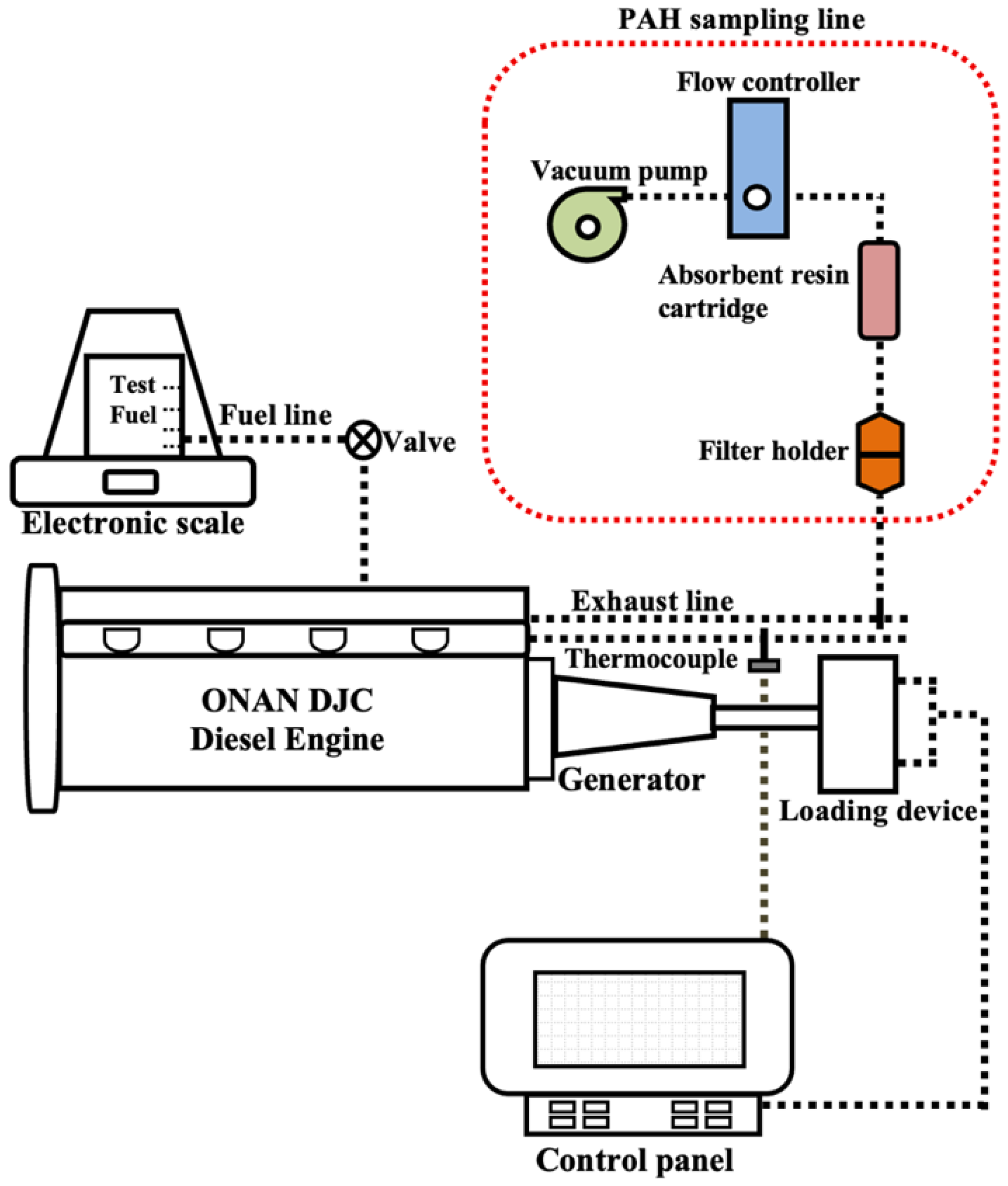
Table 1 [44] presents the fundamental specifications of the test engine, while the overall experimental arrangement including the PAH sampling system is illustrated in Figure 1 [43]. All combustion and emission measurements were carried out on an indirect-injection, four-cylinder Onan DJC diesel engine, which is representative of small-scale stationary diesel applications frequently used in alternative fuel research. The fuel portfolio evaluated in this study comprised conventional No. 2 diesel, biodiesel derived from waste cooking oil, and three higher-chain alcohols n-propanol, n-butanol, and n-pentanol each selected due to their growing relevance as renewable blend components. The waste-oil-based biodiesel was produced from used cooking oil collected from several restaurants. Its conversion to methyl ester form was achieved through a standard transesterification process in accordance with ASTM D6751 [46]. The detailed fatty acid composition of the resulting biodiesel was determined using an Agilent 6890 Network GC–MS system following EN15779 standard [47]. The biodiesel sample contained 13.28% saturated fatty acids and 81.40% unsaturated fatty acids, with the remaining 5.32% consisting of other minor components. Alcohol fuels used in the experiments n-propanol (CAS 71-23-8), n-butanol (CAS 71-36-3), and n-pentanol (CAS 71-41-0) were supplied by Merck at analytical-grade purity. The RED III Directive aims for a 14.5% reduction in greenhouse gas intensity or a 29% increase in the share of renewable energy by 2030, with waste-derived biofuels and sustainable biomass expected to play a key role in achieving these targets. In line with the European Union’s renewable energy roadmap, which initially required a minimum 10% renewable share in transportation by 2020 and later increased this target to 14% for 2030. The alcohol blending ratio in the present study was selected as 15% (v/v) to represent a realistic near-term renewable fuel incorporation level. This ratio was considered sufficiently high to produce measurable effects on combustion and emission behavior, while remaining within a practical blending range that avoids the fuel property and operability limitations that may become more pronounced at higher alcohol fractions. Accordingly, 15% (v/v) was adopted as a policy-relevant and technically balanced blending level for evaluating higher-carbon alcohols as diesel fuel components.
Six binary fuel blends were prepared for the analysis and labelled as BPro15, BBu15, BPen15, DPro15, DBu15, and DPen15, each containing 15% by volume of n-propanol, n-butanol, or n-pentanol. To assess their miscibility and long-term stability, all blends were stored for ten days and monitored through daily visual inspections. Throughout this period, no evidence of phase separation or stratification was observed; the blends remained transparent and homogeneous, indicating good compatibility between the alcohols and the base fuels. The physicochemical properties of the waste-oil biodiesel and the blended fuels were characterized in accordance with the relevant ASTM procedures, and the primary results are listed in Table 2.
ASTM D975 specifies a minimum cetane number of 40 for No. 2 diesel fuel, with typical commercial grades ranging between 40 and 55. All tested blends complied with this requirement, demonstrating that the addition of higher-chain alcohols did not adversely affect ignition quality. In terms of cold-weather performance, notable improvements were observed in the cold filter plugging point (CFPP) values of the blends. The enhancement became progressively more pronounced as the alcohol carbon number increased from n-propanol to n-pentanol. These findings suggest that incorporating higher-chain alcohols can effectively improve the low-temperature operability of biodiesel and diesel–biodiesel mixtures, potentially extending their usability under colder climatic conditions.

2.2. PAH Sampling

All experiments were conducted under steady-state idle no-load operating conditions at an average engine speed of 900 rpm. Under these conditions, the exhaust gas temperature remained approximately constant at 200 °C during the sampling period, ensuring stable thermal conditions and repeatable fuel comparisons. PAH samples were collected from the tailpipe (downstream exhaust pipe) under stabilized operating conditions. This operating mode was intentionally selected to isolate fuel-dependent chemical effects on PAH formation under low-load combustion conditions while minimizing load-related variability. PAH sampling was performed on a thermally stabilized engine maintained at idle for approximately three hours, during which exhaust was withdrawn at a constant flow rate of 10 L min−1 without dilution [42,45]. To ensure statistical robustness, each fuel blend underwent three independent sampling cycles. Particle-associated PAHs were collected using a 2 µm PTFE membrane filter (37 mm, Pall Co., Port Washington, NY, USA), while the semi-volatile fraction was retained within a 50 mg/100 mg Amberlite XAD-2 adsorption cartridge. Prior to extraction, an internal standard (2 µg of 98% anthracene-d10) was added for isotope-dilution mass spectrometric analysis. Extraction was conducted with 5 mL of HPLC-grade hexane, and the resulting solutions were purified through a dual Na2SO4–alumina cleanup column (500 mg each), followed by an additional n-hexane rinse to remove any remaining impurities. Purified extracts were eluted with a 1:1 (v/v) benzene–acetonitrile mixture, concentrated under nitrogen, and subsequently stored at −80 °C until GC–MS analysis. PAHs were quantified using GC–MS operating in Selected Ion Monitoring (SIM) mode with helium as the carrier gas. Further instrumental parameters are summarized in Table 3 [43].
The total analytical uncertainty associated with PAH measurements was estimated at 1.22%. Given the inherent procedural variability in PAH analysis, triplicate measurements (n = 3) were performed for each fuel sample to ensure analytical consistency, and all results remained within the established uncertainty threshold. Analytical accuracy was evaluated using SRM 2975, with three independent samples analysed. Measured concentrations agreed with the certified reference values, confirming that the analytical procedure performed reliably under the tested conditions.

3. Results and Discussion

Direct comparison with previous literature is inherently limited because studies reporting speciated PAH emissions from diesel engines fueled with n-propanol, n-butanol, and n-pentanol blends under comparable operating conditions remain scarce. Existing studies have primarily focused on single alcohol types, different blending ratios, or varying engine load conditions, which complicates one-to-one comparison. Nevertheless, prior work generally reports that oxygenated alcohol blending reduces total PAH concentration and suppresses higher-ring PAH formation, trends that are consistent with the present findings [48,49,50,51]. The controlled side-by-side comparison performed in this study extends the current literature by directly evaluating C3–C5 alcohol structure effects under identical engine conditions using integrated total PAH, distribution, and toxicity-weighted analyses.

3.1. Presence of PAHs in Exhaust Gases

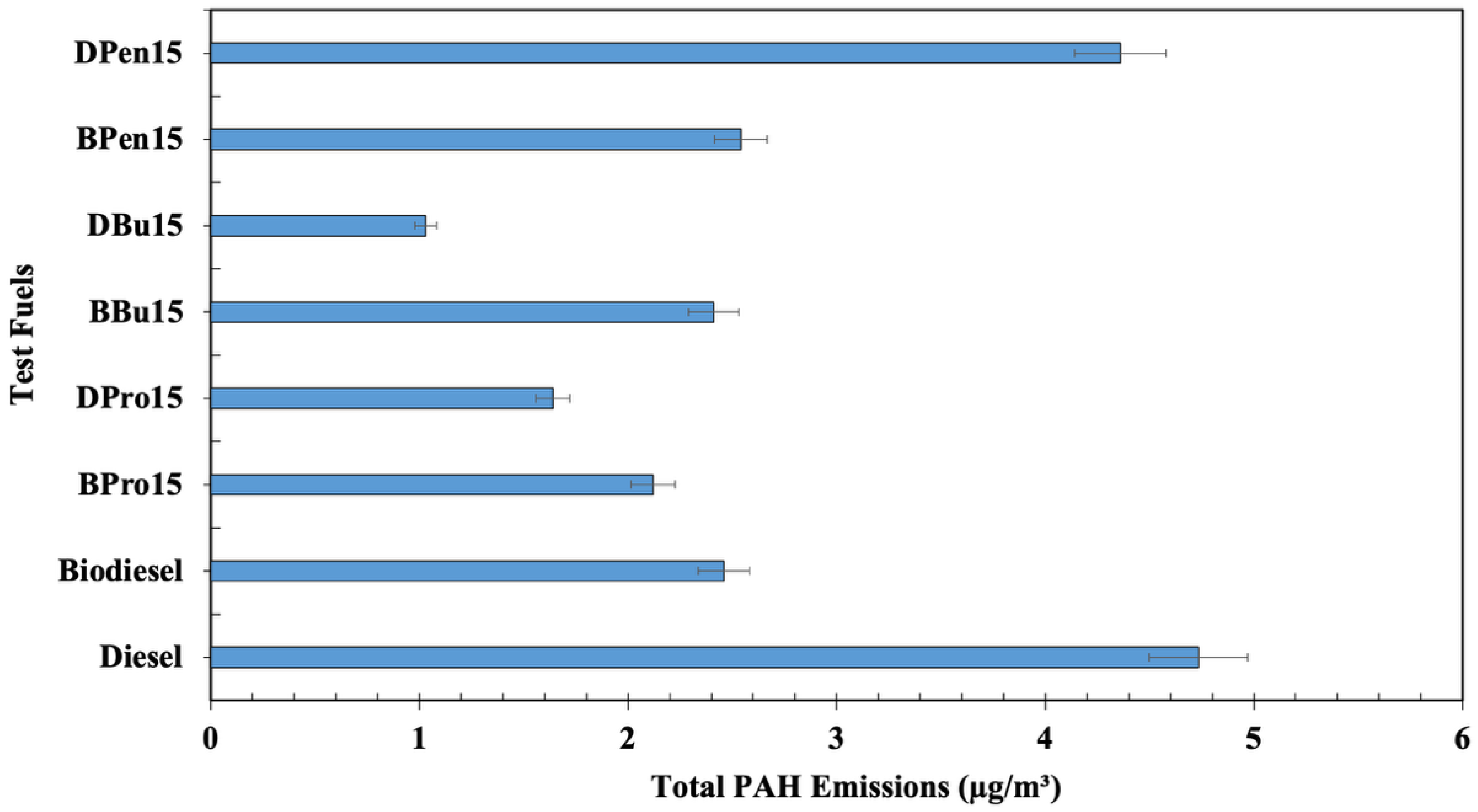
Figure 2 presents the total PAH emissions of the tested fuels in terms of concentration (µg/m3), and the corresponding numerical values are provided in Table 4. The aromatic content of a fuel is widely recognized as a dominant parameter governing PAH formation, since fuels with higher aromatic fractions tend to promote the generation of polycyclic structures during combustion [42,52,53]. In this context, biodiesel, which is virtually free of aromatic compounds, inherently limits the direct formation pathways of PAHs. Nevertheless, PAH emissions from biodiesel-fueled diesel engines are not solely dictated by fuel aromaticity. Combustion-related parameters such as latent heat of evaporation (LHE), oxygen content, cetane number, in-cylinder temperature and pressure history, engine operating conditions, and potential exhaust after-treatment effects can significantly influence PAH formation mechanisms [45,53,54,55]. Therefore, a comprehensive evaluation of total PAH emissions requires consideration of both intrinsic fuel properties and combustion dynamics. In this context, combustion dynamics play a decisive role in PAH formation through their influence on ignition delay, local equivalence ratio distribution, temperature evolution, and oxidation intensity. Variations in fuel volatility and latent heat of vaporization alter spray evaporation and mixture preparation, thereby modifying the balance between premixed and diffusion combustion phases. These changes directly affect the formation of fuel-rich microzones and the residence time of aromatic radical intermediates, which are key precursors for PAH growth through cyclization and ring-condensation reactions. In oxygenated alcohol blends, enhanced local oxygen availability can further promote oxidation of these intermediates, suppressing the formation of higher molecular weight PAHs. The total PAH concentration measured for biodiesel (2.46 µg/m3) was 48.02% lower than that of neat diesel fuel (4.73 µg/m3), confirming the influence of fuel aromaticity on PAH formation. Although n-propanol, n-butanol, and n-pentanol are also free of aromatic structures, detectable PAH emissions persisted due to the combined effects of combustion-related parameters discussed previously. Blending 15% (v/v) higher alcohols with diesel and biodiesel resulted in substantial reductions in total PAH emissions relative to diesel fuel, amounting to 55.20%, 49.08%, and 46.33% for BPro15, BBu15, and BPen15, and 65.35%, 78.23%, and for DPro15, and DBu15, respectively. These reductions can be attributed to the oxygenated nature of the alcohols, which promotes more complete oxidation of aromatic precursors and suppresses PAH growth pathways. However, compared to shorter-chain alcohols mixed with diesel fuel, n-pentanol showed a moderate decrease of 7.88%. This behavior is likely associated with the higher latent heat of vaporization of n-pentanol, which reduces local combustion temperatures and alters in-cylinder mixture preparation, thereby affecting evaporation dynamics and charge homogeneity. In addition, although its oxygenated structure can promote locally lean combustion zones, the combined effects of delayed vaporization and modified temperature evolution may limit oxidation of aromatic precursor species. As a result, suppression of PAH formation becomes less pronounced compared with shorter-chain alcohol blends [44,56].
Moreover, excessive fuel-borne oxygen beyond an optimal threshold may adversely influence combustion chemistry by lowering overall fuel reactivity, altering ignition delay characteristics, and promoting radical rearrangement processes in the vicinity of the ignition zone. Such conditions can modify intermediate species evolution and, under certain circumstances, facilitate PAH formation pathways [57,58,59]. In this context, the blending ratio becomes a critical parameter. At appropriate proportions, n-propanol and n-butanol exhibit considerable potential for suppressing total PAH emissions by enhancing oxidation of aromatic precursors while maintaining favorable combustion reactivity [60]. The present results indicate that incorporation of 15% (v/v) higher alcohols into biodiesel improves key fuel properties, such as oxygen availability and mixture homogeneity, in a manner that supports reduced PAH formation. Consequently, such blending strategies enhance the viability of higher alcohols as complementary components in clean combustion applications [53].

3.2. Ring Distribution of PAHs

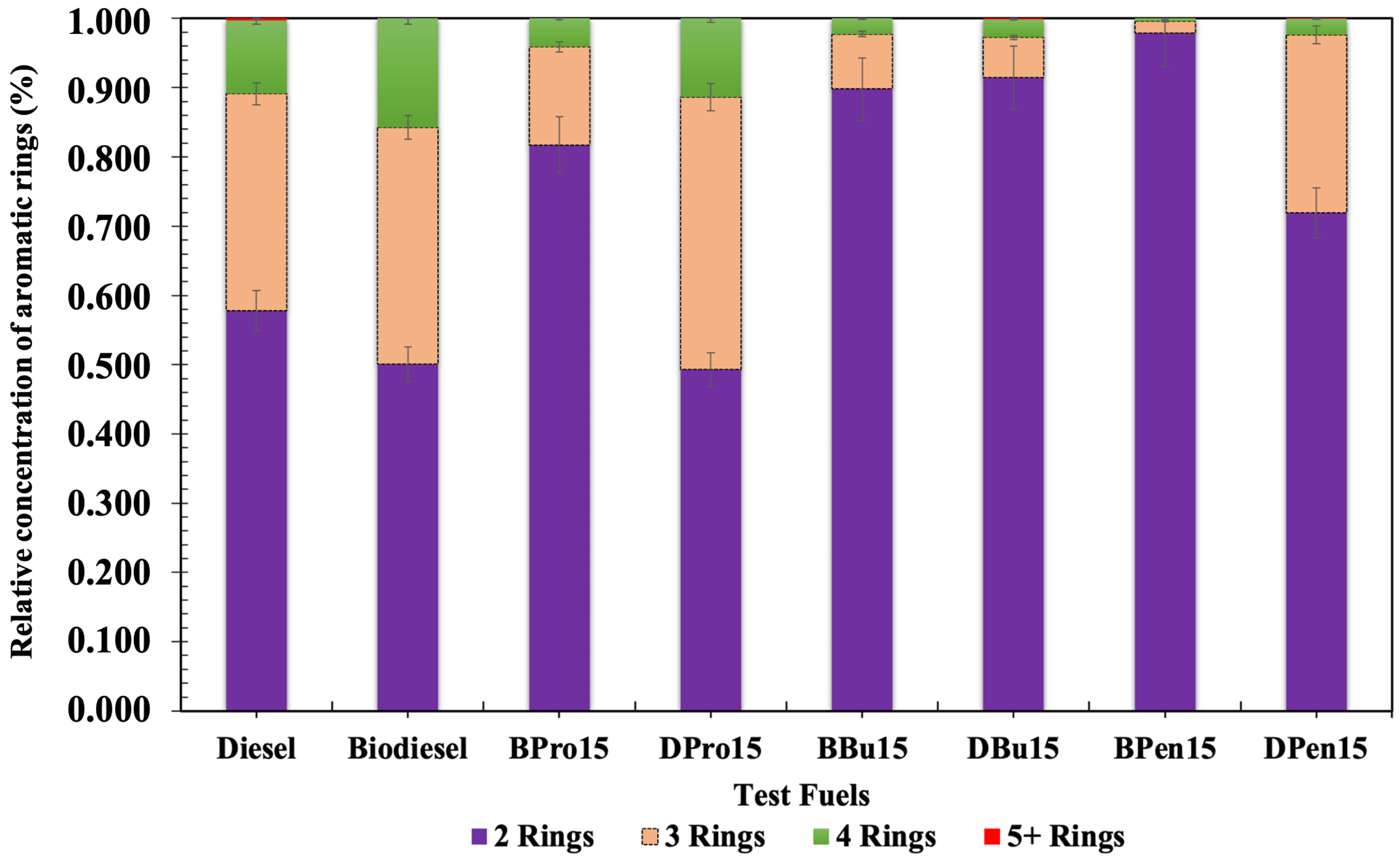
Substantial quantities of PAHs are formed during diesel combustion, and their concentration and speciation strongly depend on the number of aromatic rings. The relative distribution of PAH species for the tested fuel blends is presented in Figure 3. As shown in Figure 3 and supported by the quantitative data in Table 4, PAH emissions for all fuels were dominated by two- and three-ring compounds [45,55]. Accordingly, low- and medium-molecular-weight PAHs constituted the primary fraction of total emissions across all blends. The predominance of low-ring PAHs may be attributed to incomplete oxidation processes and localized pyrolytic reactions occurring during combustion of alcohol-containing fuels [59,60,61]. The oxygenated structure of the alcohols promotes partial oxidation; however, localized temperature gradients and transient fuel-rich zones can still favor the formation of intermediate aromatic species. In contrast, five-ring PAHs were detected in the DBu15 and DPen15 blends. This behavior is likely associated with extended ignition delay and relatively lower cetane numbers of these blends, which modify in-cylinder reaction kinetics and combustion phasing. A longer ignition delay increases premixing time prior to combustion, improving local air–fuel homogeneity and reducing fuel-rich diffusion flame regions where pyrolytic aromatic growth and ring-condensation reactions are favored. At the same time, delayed combustion phasing may alter the residence time and evolution of reactive radical species, thereby modifying radical–radical interactions and weakening the inhibitory effect of n-butanol- and n-pentanol-derived radicals on higher-ring PAH growth during the later stages of combustion.
The generation of high-ring PAHs poses significantly greater challenges for both environmental emissions and engine longevity than low-ring PAHs [61,62]. These heavier molecular PAHs have a higher tendency to condense within the exhaust valve assembly along with unburned fuel, leading to a phenomenon known as “wetstacking,” where accumulated fuel residues and partially combusted hydrocarbons hinder engine performance [45,63,64]. Wetstacking can result in reduced engine efficiency, exhaust flow obstruction, and increased carbon deposits in the combustion chamber, ultimately impacting both performance and long-term durability. Among the tested fuel blends, BPro15, BBu15, BPen15, and DPro15 were distinguished by the absence of five-ring aromatic compounds, suggesting that alcohol-blended fuels can effectively suppress the formation of high-ring PAHs and thereby mitigate the risk of wetstacking. This effect is likely due to the higher oxygen content and enhanced evaporation characteristics of alcohol-blended fuels, which promote more uniform and complete combustion while also influencing radical reactions that limit high-ring PAH formation [44,55,60]. Consequently, using alcohol-blended fuels not only reduces overall PAH emissions but also supports diesel engine reliability and helps maintain a cleaner exhaust system.

3.3. Toxicity-Weighted PAH Emissions

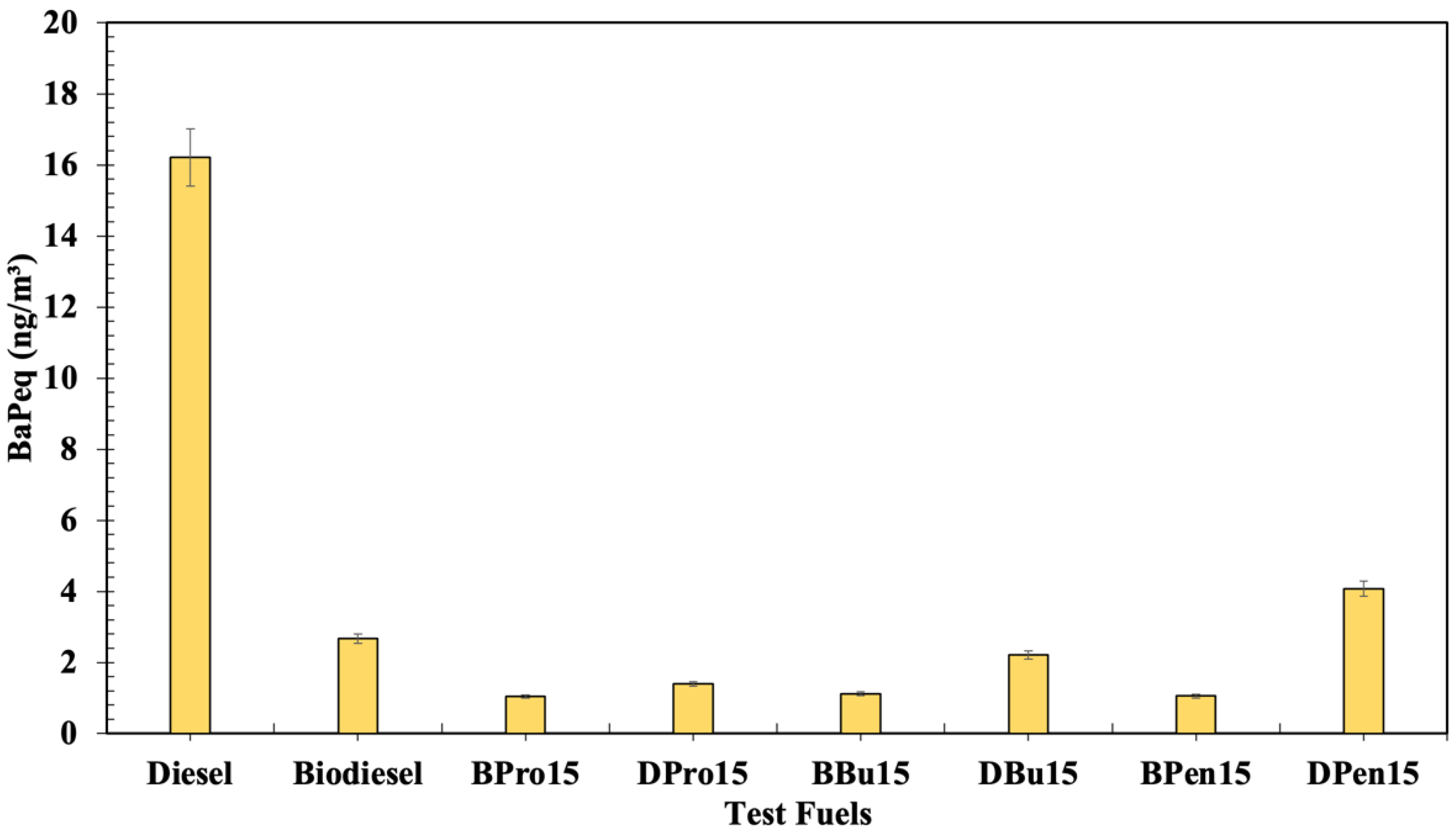
The carcinogenic impact of PAH emissions on human health is commonly quantified using toxic equivalency factor (TEF) methodology, which expresses the toxicity of individual PAH species relative to benzo[a]pyrene (BaP) [45,56,65,66]. Based on these TEF values, the toxicity-weighted benzo[a]pyrene equivalent concentration (BaPeq, ng/m3) was calculated for each detected PAH compound [67,68]. The distribution of toxicity contributions is illustrated in Figure 4, and the corresponding BaPeq concentrations are summarized in Table 5. Neat diesel fuel exhibited the highest overall carcinogenic potential, with a total BaPeq value of 16.20 ng/m3, consistent with its elevated PAH emissions. In contrast, biodiesel yielded a substantially lower BaPeq value of 2.67 ng/m3, corresponding to an 83.49% reduction relative to diesel. The addition of 15% (v/v) n-propanol, n-butanol, and n-pentanol to both diesel and biodiesel further decreased PAH toxicity. Relative to diesel fuel, BaPeq reductions were determined as 93.56%, 93.09%, and 93.45% for BPro15, BBu15, and BPen15, and 91.38%, 86.36%, and 74.83% for DPro15, DBu15, and DPen15, respectively. These findings indicate that higher alcohol blending effectively suppresses toxicity-weighted PAH emissions, particularly in biodiesel-based mixtures.
This pronounced reduction is primarily attributed to the shift in PAH speciation toward lower-ring compounds and the suppression of high-molecular-weight PAHs, which possess significantly higher TEF values. The oxygenated nature of the alcohols enhances oxidation processes, limits aromatic ring growth, and reduces the formation of highly toxic PAH intermediates [55,68,69]. Overall, blending 15% higher alcohol into diesel and biodiesel markedly lowers the toxicity-weighted PAH emissions, supporting the environmentally favorable application of these blends in compression ignition engines.

4. Conclusions

Beyond regulated emissions, understanding the formation of toxic polycyclic aromatic hydrocarbons from alternative diesel fuels remains a critical challenge in sustainable combustion research. In this context, the present study systematically evaluated the effects of blending diesel and biodiesel with 15% (v/v) n-propanol, n-butanol, and n-pentanol on total PAH emissions, distribution, and toxicity characteristics.
The results clearly demonstrate that higher alcohol incorporation generally reduced total PAH emissions and associated toxicity relative to conventional diesel, with n-propanol blends showing the most pronounced mitigation performance. This reduction can be attributed to the oxygenated structure of alcohols, which enhances local oxygen availability, promotes more complete combustion, and suppresses fuel-rich zones that favor PAH precursor formation and aromatic ring growth. In addition, several blends exhibited more favorable aromatic profiles through suppression of higher-ring PAHs, including the elimination of five-ring PAH compounds in selected cases, indicating a reduced carcinogenic potential. These improvements highlight the beneficial role of alcohol oxygenation and the structure-dependent combustion chemistry in altering key reaction pathways involved in PAH formation, particularly the inhibition of hydrogen-abstraction–carbon-addition (HACA)-driven aromatic growth mechanisms.
As a result, blending diesel and biodiesel with 15% higher alcohols offers a promising strategy for mitigating toxicity-relevant PAH emissions while supporting cleaner and more sustainable diesel combustion. Further long-term studies under a wider range of operating conditions are recommended to better elucidate detailed PAH formation mechanisms and to optimize alcohol-based fuel formulations for future diesel applications.

Author Contributions

Conceptualization, A.A., N.Y. and B.D.; methodology, A.A., N.Y. and F.M.V.; software, A.A. and F.M.V.; validation, A.A., B.D. and F.M.V.; formal analysis, N.Y. and B.D.; investigation, N.Y. and F.M.V.; resources, N.Y.; data curation, N.Y. and B.D.; writing—original draft preparation, N.Y., A.A., B.D. and F.M.V.; writing—review and editing, A.A., N.Y. and B.D.; visualization, A.A. and F.M.V.; supervision, N.Y.; project administration, A.A. and N.Y.; funding acquisition, N.Y. All authors have read and agreed to the published version of the manuscript.

Funding

This research received no external funding.

Data Availability Statement

The original contributions presented in this study are included in the article. Further inquiries can be directed to the corresponding author.

Acknowledgments

The authors would like to acknowledge the reviewers for their academic and specialist assistance and beneficial remarks.

Conflicts of Interest

The authors declare no conflicts of interest.

References

  1. Atmanli, A.; Yilmaz, N. An experimental assessment on semi-low temperature combustion using waste oil biodiesel/C3-C5 alcohol blends in a diesel engine. Fuel 2020, 260, 116357. [Google Scholar] [CrossRef]
  2. Chen, Z.; He, J.; Chen, H.; Geng, L.; Zhang, P. Comparative study on the combustion and emissions of dual-fuel common rail engines fueled with diesel/methanol, diesel/ethanol, and diesel/ n-butanol. Fuel 2021, 304, 121360. [Google Scholar] [CrossRef]
  3. Erdiwansyah; Mamat, R.; Sani, M.S.M.; Sudhakar, K.; Kadarohman, A.; Sardjono, R.E. An overview of Higher alcohol and biodiesel as alternative fuels in engines. Energy Rep. 2019, 5, 467–479. [Google Scholar] [CrossRef]
  4. Maleki, B.; Talesh, S.S.A. Cold flow properties and CI engine parameters synchronic improvement of biodiesel/diesel/ C3 and C4 alcohol blends: Mixture design approach. Process Saf. Environ. Prot. 2022, 160, 310–326. [Google Scholar] [CrossRef]
  5. Vinod, B.M.; Madhu, M.K.; Amba Prasad, R.G. Butanol and pentanol: The promising biofuels for CI engines-A review. Renew. Sustain. Energy Rev. 2017, 78, 1068–1088. [Google Scholar]
  6. Zhu, M.; Setyawan, H.Y.; Zhang, Z.; Zhang, D. Effect of n-butanol addition on the burning rate and soot characteristics during combustion of single droplets of diesel–biodiesel blends. Fuel 2020, 265, 117020. [Google Scholar] [CrossRef]
  7. Yang, K.; Wei, L.; Cheung, C.S.; Tang, C.; Huang, Z. The effect of pentanol addition on the particulate emission characteristics of a biodiesel operated diesel engine. Fuel 2017, 209, 132–140. [Google Scholar] [CrossRef]
  8. Sekhar, S.C.; Karuppasamy, K.; Vedaraman, N.; Kabeel, A.; Sathyamurthy, R.; Elkelawy, M.; Bastawissi, H.A.E. Biodiesel production process optimization from Pithecellobium dulce seed oil: Performance, combustion, and emission analysis on compression ignition engine fuelled with diesel/biodiesel blends. Energy Convers. Manag. 2018, 161, 141–154. [Google Scholar] [CrossRef]
  9. Pan, S.; Zabed, H.M.; Wei, Y.; Qi, X. Technoeconomic and environmental perspectives of biofuel production from sugarcane bagasse: Current status, challenges and future outlook. Ind. Crops Prod. 2022, 188, 115684. [Google Scholar] [CrossRef]
  10. Ahmad, A.; Naqvi, S.A.; Jaskani, M.J.; Waseem, M.; Ali, E.; Khan, I.A.; Manzoor, M.F.; Siddeeg, A.; Aadil, R.M. Efficient utilization of date palm waste for the bioethanol production through Saccharomyces cerevisiae strain. Food Sci. Nutr. 2021, 9, 2066–2074. [Google Scholar] [CrossRef]
  11. Zabed, H.M.; Akter, S.; Tian, Y.; Dar, M.A.; Yun, J.; Zhao, M.; Ragauskas, A.J.; Li, J.; Qi, X. Assessing microbial systems and process configurations for improved ethanol production from sugary stovers by integrating soluble sugars and holocellulose. Ind. Crops Prod. 2024, 212, 118269. [Google Scholar] [CrossRef]
  12. Wang, C.; Zhang, W.; Qiu, X.; Xu, C. Hydrothermal treatment of lignocellulosic biomass towards low-carbon development: Production of high-value-added bioproducts. EnergyChem 2024, 6, 100133. [Google Scholar] [CrossRef]
  13. Salvi, B.L.; Subramanian, K.A.; Panwar, N.L. Alternative fuels for transportation vehicles: A technical review. Renew. Sustain. Energy Rev. 2013, 25, 404–419. [Google Scholar] [CrossRef]
  14. Yatish, K.V.; Lalithamba, H.S.; Suresh, R.; Hebbar, H.H. Optimization of bauhinia variegata biodiesel production and its performance, combustion and emission study on diesel engine. Renew. Energy 2018, 122, 561–575. [Google Scholar] [CrossRef]
  15. Kumar, B.R.; Saravanan, S.; Ranad, D.; Nagendran, A. Use of some advanced biofuels for overcoming smoke/NOx trade-off in a light- duty DI diesel engine. Renew. Energy 2016, 96, 687–699. [Google Scholar] [CrossRef]
  16. Nour, M.; Attia, A.M.A.; Nada, S.A. Combustion, performance and emission analysis of diesel engine fuelled by higher alcohols (butanol, octanol and heptanol)/diesel blends. Energy Convers. Manag. 2019, 185, 313–329. [Google Scholar] [CrossRef]
  17. Yilmaz, N. Performance and emission characteristics of a diesel engine fuelled with biodiesel-ethanol and biodiesel-methanol blends at elevated air temperatures. Fuel 2012, 94, 440–443. [Google Scholar] [CrossRef]
  18. Atmanli, A.; Yilmaz, N. Comparative assessment of different diesel engines fueled with 1-pentanol and diesel blends. Environ. Prog. Sustain. Energy 2021, 40, ep13663. [Google Scholar] [CrossRef]
  19. Jin, C.; Pang, X.; Zhang, X.; Wu, S.; Ma, M.; Xiang, Y.; Ma, J.; Ji, J.; Wang, G.; Liu, H. Effects of C3–C5 alcohols on solubility of alcohols/diesel blends. Fuel 2019, 236, 65–74. [Google Scholar] [CrossRef]
  20. Atmanli, A.; Yilmaz, N. A comparative analysis of n-butanol/diesel and 1-pentanol/diesel blends in a compression ignition engine. Fuel 2018, 234, 161–169. [Google Scholar] [CrossRef]
  21. Bergthorson, J.M.; Thomson, M.J. A review of the combustion and emissions properties of advanced transportation biofuels and their impact on existing and future engines. Renew. Sustain. Energy Rev. 2015, 42, 1393–1417. [Google Scholar] [CrossRef]
  22. Elkelawy, M.; Hagar Bastawissi, A.E.; Esmaeil, K.K.; Radwan, A.M.; Panchal, H.; Sadasivuni, K.K.; Suresh, M.; Israr, M. Maximization of biodiesel production from sunflower and soybean oils and prediction of diesel engine performance and emission characteristics through response surface methodology. Fuel 2020, 266, 117072. [Google Scholar] [CrossRef]
  23. Surisetty, V.R.; Dalai, A.K.; Kozinski, J. Alcohols as alternative fuels: An overview. Appl. Catal. A General 2011, 404, 1–11. [Google Scholar] [CrossRef]
  24. Nanthagopal, K.; Kishna, R.S.; Atabani, A.E.; Al-Muhtaseb, A.H.; Kumar, G.; Ashok, B. A compressive review on the effects of alcohols and nanoparticles as an oxygenated enhancer in compression ignition engine. Energy Convers. Manag. 2020, 203, 112244. [Google Scholar] [CrossRef]
  25. Redel-Macías, M.D.; Leiva-Candia, D.E.; Soriano, J.A.; Herreros, J.M.; Cubero-Atienza, A.J.; Pinzi, S. Influence of short carbon-chain alcohol (Ethanol and 1-Propanol)/diesel fuel blends over diesel engine emissions. Energies 2021, 14, 1309. [Google Scholar] [CrossRef]
  26. Liu, X.; Wang, H.; Zheng, Z.; Liu, J.; Reitz, R.D.; Yao, M. Development of a combined reduced primary reference fuel-alcohols (methanol/ethanol/propanols/butanols/n-pentanol) mechanism for engine applications. Energy 2016, 114, 542–558. [Google Scholar] [CrossRef]
  27. Yusri, I.M.; Mamat, R.; Akasyah, M.K.; Jamlos, M.F.; Yusop, A.F. Evaluation of engine combustion and exhaust emissions characteristics using diesel/butanol blended fuel. Appl. Therm. Eng. 2019, 156, 209–219. [Google Scholar] [CrossRef]
  28. Alli, A.K.; Kotha, M.M.; Alur, V.B.; Kamarapu, S.K.; Tiwari, S. Impact of higher alcohol injection rates and exhaust gas recirculation on efficiency, combustion, and NOx emissions in reactivity controlled compression ignition engines. Therm. Sci. Eng. Prog. 2026, 74, 104713. [Google Scholar] [CrossRef]
  29. Kumar, B.R.; Saravanan, S. Use of higher alcohol biofuels in diesel engines: A review. Renew. Sustain. Energy Rev. 2016, 60, 84–115. [Google Scholar] [CrossRef]
  30. Agarwal, A.K. Biofuels (alcohols and biodiesel) applications as fuels in internal combustion engines. Prog. Energy Combust. Sci. 2007, 32, 233–271. [Google Scholar] [CrossRef]
  31. Li, L.; Wang, J.; Wang, Z.; Xiao, J. Combustion and emission characteristics of diesel engine fueled with diesel/biodiesel/pentanol fuel blends. Fuel 2015, 156, 211–218. [Google Scholar] [CrossRef]
  32. Yilmaz, N.; Vigil, F.M. Potential Use of a blend of diesel, biodiesel, alcohols and vegetable oil in compression ignition engines. Fuel 2014, 124, 168–172. [Google Scholar] [CrossRef]
  33. Wu, F.; Xu, B.; Liu, Y.; Wu, J. Performance and emission characteristics of a diesel engine fueled with alcohol-diesel fuel blends containing low ratio of alcohols. Environ. Prog. Sustain. Energy 2019, 38, 13035. [Google Scholar] [CrossRef]
  34. Kothiyal, N.C.; Kumar, V.; Kumar, N.; Saruchi; Pandey, S.; Ansar, S. Reduction of carcinogenic PAHs from petrodiesel engine exhaust by blending of green diesel (A new development in renewable fuels) with different biodiesel fuels. Environ. Technol. Innov. 2022, 25, 102089. [Google Scholar] [CrossRef]
  35. Tsapakis, M.; Stephanou, E.G. Diurnal cycle of PAHs, nitro-PAHs, and oxy-PAHs in a high oxidation capacity marine background atmosphere. Environ. Sci. Technol. 2007, 41, 8011–8017. [Google Scholar] [CrossRef] [PubMed]
  36. Karavalakis, G.; Fontaras, G.; Ampatzoglou, D.; Kousoulidou, M.; Stournas, S.; Samaras, Z.; Bakeas, E. Effects of low concentration biodiesel blends application on modern passenger cars. Part 3: Impact on PAH, nitro-PAH, and oxy-PAH emissions. Environ. Pollut. 2010, 158, 1584–1594. [Google Scholar] [CrossRef]
  37. Gowtham, M.; Mohan, C.G.; Prakash, R. Effect of n-butanol fumigation on the regulated and unregulated emission characteristics of a diesel engine. Fuel 2019, 242, 84–95. [Google Scholar] [CrossRef]
  38. Arias, S.; Molina, F.; Palacio, R. Assessment of carbonyl and PAH emissions in an automotive diesel engine fueled with butanol and renewable diesel fuel blends. Fuel 2022, 316, 123290. [Google Scholar] [CrossRef]
  39. Correa, S.M.; Arbilla, G. Aromatic hydrocarbons emissions in diesel and biodiesel exhaust. Atmos. Environ. 2006, 40, 6821–6826. [Google Scholar] [CrossRef]
  40. Vojtisek-Lom, M.; Pechout, M.; Dittrich, L.; Beránek, V.; Kotek, M.; Schwarz, J.; Vodička, P.; Milcová, A.; Rossnerová, A.; Ambrož, A.; et al. Polycyclic aromatic hydrocarbons (PAH) and their genotoxicity in exhaust emissions from a diesel engine during extended low-load operation on diesel and biodiesel fuels. Atmos. Environ. 2015, 109, 9–18. [Google Scholar] [CrossRef]
  41. Guarieiro, L.F.N.; Souza, A.F.; Torres, E.A.; de Andrade, J.B. Emission profile of 18 carbonyl compounds, CO, CO2, and NOx emitted by a diesel engine fuelled with diesel and ternary blends containing diesel, ethanol and biodiesel or vegetable oils. Atmos. Environ. 2009, 43, 2754–2761. [Google Scholar] [CrossRef]
  42. Yilmaz, N.; Donaldson, B. Combined effects of engine characteristics and fuel aromatic content on polycyclic aromatic hydrocarbons and toxicity. Energy Sources Part A Recovery Util. Environ. Eff. 2022, 44, 9156–9171. [Google Scholar]
  43. Yilmaz, N.; Atmanli, A.; Vigil, F.M.; Donaldson, B. Comparative assessment of polycyclic aromatic hydrocarbons and toxicity in a diesel engine powered by diesel and biodiesel blends with high concentrations of alcohols. Energies 2022, 15, 8523. [Google Scholar] [CrossRef]
  44. Yilmaz, N.; Vigil, F.M.; Atmanli, A.; Donaldson, B. Influence of fuel oxygenation on regulated pollutants and unregulated aromatic compounds with biodiesel and n-pentanol blends. Int. J. Energy Res. 2023, 2023, 3040073. [Google Scholar] [CrossRef]
  45. Yilmaz, N.; Vigil, F.; Donaldson, B. Effect of diesel and propanol blends on regulated pollutants and polycyclic aromatic hydrocarbons under lean combustion conditions. Environ. Prog. Sustain. Energy 2023, 42, e14020. [Google Scholar] [CrossRef]
  46. ASTM Standard No. D6751-24; Standard Specification for Biodiesel Fuel Blend Stock (B100) for Middle Distillate Fuels. ASTM International: West Conshohocken, PA, USA, 2024. [CrossRef]
  47. EN 15779 Standard 2013-12; Petroleum Products and Fat and Oil Derivates-Fatty Acid Methyl Esters (FAME) for Diesel Engines—Determination of Polyunsaturated (≥4 Double Bonds) Fatty Acid Methyl Esters (PUFA) by Gas Chromatography. European Standards: Plzen, Czech Republic, 2013.
  48. Ghadikolaei, M.A. Effect of alcohol blend and fumigation on regulated and unregulated emissions of IC engines—A review. Renew. Sustain. Energy Rev. 2016, 57, 1440–1495. [Google Scholar] [CrossRef]
  49. Paim, J.N.; Santos, A.G.; Araujo, R.G.O.; Nascimento, M.M.; De Andrade, J.B.; Guarieiro, L.L.N. Nitro-PAHs and Quinones (Oxy-PAHs) Associated to PM1.0 and PM2.5 Emitted by a Diesel Engine Fueled with Diesel-Biodiesel-Ethanol Blends. Atmosphere 2023, 14, 656. [Google Scholar] [CrossRef]
  50. Sahu, T.K.; Shukla, P.C.; Mondal, A.; Gupta, S.; Belgiorno, G.; Di Blasio, G. Assessment of particulate PAHs toxicity from alcohol-diesel blends fuelled high compression ratio CI engine. Clean. Eng. Technol. 2024, 18, 100725. [Google Scholar] [CrossRef]
  51. Tsai, J.-H.; Chen, S.-J.; Huang, K.-L.; Lin, W.-Y.; Lee, W.-J.; Lin, C.-C.; Hsieh, L.-T.; Chiu, J.-Y.; Kuo, W.-C. Emissions from a Generator Fueled by Blends of Diesel, Biodiesel, Acetone, and Isopropyl Alcohol: Analyses of Emitted PM, Particulate Carbon, and PAHs. Sci. Total Environ. 2014, 466–467, 195–202. [Google Scholar] [CrossRef]
  52. Li, X.; Zheng, Y.; Guan, C.; Cheung, C.S.; Huang, Z. Effect of biodiesel on PAH, OPAH, and NPAH emissions from a direct injection diesel engine. Environ. Sci. Pollut. Res. 2018, 25, 34131–34138. [Google Scholar] [CrossRef] [PubMed]
  53. Kumar, V.; Singh, A.P.; Agarwal, A.K. Gaseous emissions (regulated and unregulated) and particulate characteristics of a medium-duty CRDI transportation diesel engine fueled with diesel-alcohol blends. Fuel 2020, 278, 118269. [Google Scholar] [CrossRef]
  54. Dandajeh, H.A.; Talibi, M.; Ladommatos, N.; Hellier, P. Influence of combustion characteristics and fuel composition on exhaust PAHs in a compression ignition engine. Energies 2019, 12, 2575. [Google Scholar] [CrossRef]
  55. Yilmaz, N.; Ukaoma, M. Impact of biodiesel and propanol blends on engine performance, regulated emissions and PAH formation. Int. J. Energy Res. 2022, 46, 23433–23448. [Google Scholar] [CrossRef]
  56. Yilmaz, N.; Donaldson, A.B. Evidence of PAH production under lean combustion conditions. Fuel 2007, 86, 2377–2382. [Google Scholar] [CrossRef]
  57. Borrás, E.; Tortajada-Genaro, L.A.; Vázquez, M.; Zielinska, B. Polycyclic aromatic hydrocarbon exhaust emissions from different reformulated diesel fuels and engine operating conditions. Atmos. Environ. 2009, 43, 5944–5952. [Google Scholar] [CrossRef]
  58. Borillo, G.C.; Tadano, Y.S.; Godoi, A.F.L.; Pauliquevis, T.; Sarmiento, H.; Rempel, D.; Yamamoto, C.I.; Marchi, M.R.R.; Potgieter-Vermaak, S.; Godoi, R.H.M. Polycyclic Aromatic Hydrocarbons (PAHs) and nitrated analogs associated to particulate matter emission from a Euro V-SCR engine fuelled with diesel/biodiesel blends. Sci. Total Environ. 2018, 644, 675–682. [Google Scholar] [CrossRef]
  59. Zhang, Y.; Lou, D.; Hu, Z.; Tan, P. Particle number, size distribution, carbons, polycyclic aromatic hydrocarbons and inorganic ions of exhaust particles from a diesel bus fueled with biodiesel blends. J. Clean. Prod. 2019, 225, 627–636. [Google Scholar] [CrossRef]
  60. Yilmaz, N.; Davis, S.M. Polycyclic aromatic hydrocarbon (PAH) formation in a diesel engine fueled with diesel, biodiesel and biodiesel/n-butanol blends. Fuel 2016, 181, 729–740. [Google Scholar] [CrossRef]
  61. Ravindra, K.; Sokhi, R.; Van Grieken, R. Atmospheric polycyclic aromatic hydrocarbons: Source attribution, emission factors and regulation. Atmos. Environ. 2008, 42, 2898–2921. [Google Scholar] [CrossRef]
  62. Souza, C.V.; Corrêa, S.M. Polycyclic aromatic hydrocarbons in diesel emission, diesel fuel and lubricant oil. Fuel 2016, 185, 925–931. [Google Scholar] [CrossRef]
  63. Liu, Y.; Gao, Y.; Yu, N.; Zhang, C.; Wang, S.; Ma, L.; Lohmann, R. Particulate matter, gaseous and particulate polycyclic aromatic hydrocarbons (PAHs) in an urban traffic tunnel of China: Emission from on-road vehicles and gas-particle partitioning. Chemosphere 2015, 134, 52–59. [Google Scholar] [CrossRef]
  64. Georgios, K.; Stavros, P.; Efthimios, Z. Impact of Diesel Fuels on the Emissions of Non-Regulated Pollutants. Fuel 2012, 102, 85–91. [Google Scholar] [CrossRef]
  65. Lin, S.L.; Lee, W.J.; Lee, C.F.; Wu, Y. Reduction in Emissions of Nitrogen Oxides, Particulate Matter, And Polycyclic Aromatic Hydrocarbon by Adding Water-Containing N-butanol Into A Diesel-Fueled Engine Generator. Fuel 2012, 93, 364–372. [Google Scholar] [CrossRef]
  66. Bakeas, E.B.; Karavalakis, G. Regulated, Carbonyl and Polycyclic Aromatic Hydrocarbon Emissions from a Light-Duty Vehicle Fueled with Diesel and Biodiesel Blends. Environ. Sci. Process. Impacts 2013, 15, 412–422. [Google Scholar] [CrossRef] [PubMed]
  67. Wu, S.; Bao, J.; Wang, Z.; Zhang, H.; Xiao, R. The regulated emissions and PAH emissions of bio-based long-chain ethers in a diesel engine. Fuel Process. Technol. 2021, 214, 106724. [Google Scholar] [CrossRef]
  68. Dandajeh, H.A.; Ladommatos, N.; Hellier, P.; Eveleigh, A. Effects of unsaturation of C2 and C3 hydrocarbons on the formation of PAHs and on the toxicity of soot particles. Fuel 2017, 194, 306–320. [Google Scholar] [CrossRef]
  69. Xu, L.; Yu, J.; Wan, G.; Sun, L. Emission characteristics and source identification of polycyclic aromatic hydrocarbons (PAHs) from used mineral oil combustion. Fuel 2021, 304, 121357. [Google Scholar] [CrossRef]
Figure 1. Experimental setup and PAH sampling.
Energies 19 02644 g001
Figure 2. Total PAH presence for test fuels.
Energies 19 02644 g002
Figure 3. Relative ring distribution of PAHs.
Energies 19 02644 g003
Figure 4. Toxicity evaluation of PAH emissions in test fuels.
Energies 19 02644 g004
Table 1. Test engine technical details.
Engine TypeOnan DJC
Diesel Generator
Number of cylinders4
Firing order1-2-4-3
Number of cycles4 cycles
Fuel injection systemIndirect
Injection pressure (MPa)13.1
Injection timing (BTDC)18 °CA
Bore (mm)82.55
Stroke (mm)92.08
Displacement (cm3)1970
Compression ratio19:1
Max output (kW)12
Max speed (rpm)1800
Table 2. Basic properties of test fuels.
ItemsCetane NumberDensity (g/mL)Kinematic Viscosity at 40 °C (mm2/s)Lower Heating Value (MJ/kg)Flash Point
(°C)
Cloud Point
(°C)
CFPP
(°C)
Diesel540.8182.9544.874−12−21
Biodiesel520.8554.5740.5126−8.1−13.2
n-propanol120.8031.7430.6322-<−51
n-butanol170.8102.2333.1035-<−51
n-pentanol200.8152.8934.9449-−40
BPro1544.510.8454.1232.6794.15−11.5−17.1
BBu1545.600.8464.0339.3495.45−12.2−18.6
BPen1545.890.8484.2139.8798.63−11.2−17.8
DPro1544.420.8112.4842.0644.78−18−22
DBu1546.510.8152.9342.9659.50−18−24
DPen1545.670.8142.9842.5050.53−18−23
Table 3. GC–MS thermal conditions.
Instrument DetailsGC-MS: HP 5890/5971A
Column: DB5-MS
Injection Volume1 µL
Injection Temperature300 °C
Thermal ProgramHold 70 °C for 1 min
Heat from 70–200 °C @ 70 °C/min
Hold 200 °C for 2 min
Heat 200–300 °C @ 7 °C/min
Hold 200 °C for 10 min
Table 4. Total PAH emissions of test fuels.
PAHNumber of RingsTotal PAHs (µg/m3)
DieselBiodieselBPro15BBu15BPen15DPro15DBu15DPen15
Naphthalene21.930.761.281.541.580.330.611.07
Acenaphthylene20.210.250.230.710.810.110.230.71
Fluorene20.590.220.240.120.110.340.121.18
Phenanthrene31.190.660.250.010.010.550.021.19
Fluoranthene30.290.180.040.020.020.120.030.09
Pyrene40.40.310.070.010.010.180.020.11
Benzo[a]anthracene40.00 *0.010.00 *0.00 *0.00 *0.00 *0.00 *0.00 *
Chrysene40.090.070.010.00 *0.00 *0.010.00 *0.01
Benzo[k]fluoranthene40.00 *0.010.00 *0.00 *0.00 *0.00 *0.00 *0.00 *
Benzo[a]pyrene50.010.00 *0.00 *0.00 *0.00 *0.00 *0.00 *0.00 *
* undetected (below the detection limit)
Values are presented as mean ± standard deviation (n = 3).
Table 5. Concentration of BaPeq in exhaust.
PAHNumber of RingsToxicity BaPeq (ng/m3)
DieselBiodieselBPro15BBu15BPen15DPro15DBu15DPen15
Acenaphthylene20.2110.2460.2870.9410.910.1310.3510.752
Fluorene20.5930.2230.2840.1330.110.3720.1661.198
Phenanthrene31.1940.660.2660.0110.010.5740.6371.378
Fluoranthene30.2880.180.0540.0280.020.1210.9220.141
Pyrene40.4030.3050.0820.0040.010.1920.1230.119
Benzo[a]anthracene400.9190000.00100.462
Chrysene40.0940.0650.070.00200.0060.0020.007
Benzo[k]fluoranthene40.0460.077000000
Benzo[a]pyrene513.378000000.0090.021
Values are presented as mean ± standard deviation (n = 3).
Disclaimer/Publisher’s Note: The statements, opinions and data contained in all publications are solely those of the individual author(s) and contributor(s) and not of MDPI and/or the editor(s). MDPI and/or the editor(s) disclaim responsibility for any injury to people or property resulting from any ideas, methods, instructions or products referred to in the content.