1. Introduction
Internal combustion engines remain core power units in transportation, construction machinery, and distributed power generation and will continue to play an irreplaceable role in the global energy transition [
1,
2]. Under increasingly stringent carbon emission regulations and energy efficiency requirements, achieving high-efficiency and clean combustion has become a central research focus in power engineering [
3]. In-cylinder pressure, as the most direct indicator of the combustion process, contains essential information on combustion phasing, including ignition timing, combustion centroid, peak pressure location, and combustion duration through its crank-angle-resolved evolution [
4]. Accurate acquisition and analysis of in-cylinder pressure are therefore crucial for combustion diagnosis, thermal efficiency optimization, knock detection, and emission control [
5,
6].
In spark-ignition engines, spark advance (SA) is a key control parameter governing combustion phasing and significantly influencing thermal efficiency and pollutant formation. It has been reported that a deviation of 2°CA from the optimal ignition timing can result in approximately a 1% reduction in indicated thermal efficiency [
7]. However, determining the optimal SA requires extensive calibration experiments over a wide range of operating conditions, including engine speed, load, intake temperature, and air–fuel ratio [
8]. With the increasing adoption of advanced combustion technologies, such as variable valve timing, lean combustion, exhaust gas recirculation, and pre-chamber ignition, the dimensionality of control parameters has increased substantially, posing significant challenges to conventional calibration approaches due to the curse of dimensionality [
9,
10]. Traditional acquisition of in-cylinder pressure relies on high-precision piezoelectric sensors. However, this approach suffers from several limitations, including high cost, complex installation requirements, thermal drift, and signal degradation under harsh operating conditions. In addition, full-map calibration experiments are time-consuming and resource-intensive, making them unsuitable for rapid development cycles [
11,
12]. Physics-based modeling approaches also face limitations. Zero- and quasi-dimensional thermodynamic models require extensive parameter calibration and struggle to capture complex turbulent combustion phenomena [
13], while three-dimensional computational fluid dynamics (CFD) simulations, although highly detailed, are computationally prohibitive for real-time applications and large-scale parametric studies [
14,
15].
In recent years, the rapid development of machine learning technologies has opened new avenues for internal combustion engine modeling. Aliramezani et al. [
16] systematically reviewed the applications of machine learning in engine modeling, diagnosis, optimization, and control, highlighting its strong capability in addressing high-dimensional nonlinear problems. Ihme et al. [
17] further summarized the fundamental principles and future prospects of machine learning in combustion research. Among various methods, artificial neural networks (ANNs), owing to their powerful nonlinear mapping capabilities and self-learning characteristics, have become one of the most widely used approaches for engine performance prediction [
18]. Building on this, Solmaz et al. [
19] demonstrated that ANN models outperform fuzzy logic methods in predicting in-cylinder pressure and determining optimal spark advance under various operating conditions. Yao et al. [
20] developed a high-precision cylinder pressure prediction model based on SSA-BiLSTM, significantly improving prediction stability under transient conditions. Zhang et al. [
21] proposed a deep learning-based reconstruction method using multi-source vibration data fusion, enabling accurate estimation of in-cylinder pressure under sensorless conditions. Furthermore, physics-informed neural networks improve model generalization and physical consistency by embedding governing equations into the training process [
22,
23]. Omoyele et al. [
24] combined automated machine learning with genetic algorithms to accelerate engine design optimization, significantly reducing development cycles. In addition, Gaussian process regression, support vector machines, and extreme gradient boosting methods have been successfully applied in engine calibration and emission prediction [
25,
26]. Focusing on full-cycle in-cylinder pressure reconstruction under unmeasured conditions, Liu et al. [
27] proposed a machine learning-assisted framework that compares direct pressure prediction, HRR-based indirect reconstruction, and hybrid strategies. Their results indicate that direct prediction methods tend to better fit pressure trajectories but may underestimate combustion characteristics, while hybrid approaches can improve reconstruction fidelity and maintain physical consistency. Despite these advances, several challenges remain. First, most existing studies focus on single-point prediction or limited operating conditions, lacking full-cycle pressure reconstruction capability essential for combustion diagnostics. Second, insufficient integration of physical constraints often leads to reduced physical consistency under varying operating conditions. Third, the influence of spark advance on combustion dynamics has not been systematically incorporated into data-driven models, limiting their applicability in control-oriented optimization.
To address these challenges, this study proposes a machine learning-assisted framework for in-cylinder pressure reconstruction under varying spark advance conditions. In practical engine calibration, acquiring complete pressure data across all operating conditions is often constrained by high costs, sensor limitations, and data gaps. A calibrated one-dimensional thermodynamic model (GT-Power) is employed to provide reliable baseline data for subsequent data-driven modeling. Based on this, the framework reconstructs in-cylinder pressure and combustion characteristics at unmeasured spark advance conditions, thereby reducing reliance on extensive experimental campaigns. Within this framework, two complementary reconstruction strategies are developed and compared. The first approach (ANN-P) directly predicts the in-cylinder pressure profile by establishing a nonlinear mapping between crank angle, spark advance, and pressure. The second approach (ANN-HRR) adopts an indirect strategy by first predicting the heat release rate (HRR) and subsequently reconstructing the pressure trace through thermodynamic integration, thereby incorporating physical constraints into the learning process. By integrating physics-based modeling with data-driven methods, the proposed framework achieves a balance between predictive accuracy and physical consistency. This study not only provides a cost-effective solution for reducing engine calibration efforts but also offers new insights into data-driven combustion modeling, supporting the optimization and control of high-efficiency spark-ignition engines.
2. Data Collection and Machine Learning Modeling
To verify the feasibility of reconstructing in-cylinder pressure using machine learning (ML), this study focuses on the training and prediction of in-cylinder pressure variations under diverse spark advance (SA) conditions. Experimental data were obtained from a naturally aspirated, water-cooled, four-stroke, three-cylinder motorcycle gasoline engine operating under steady-state conditions; fundamental engine specifications are detailed in
Table 1. As illustrated in
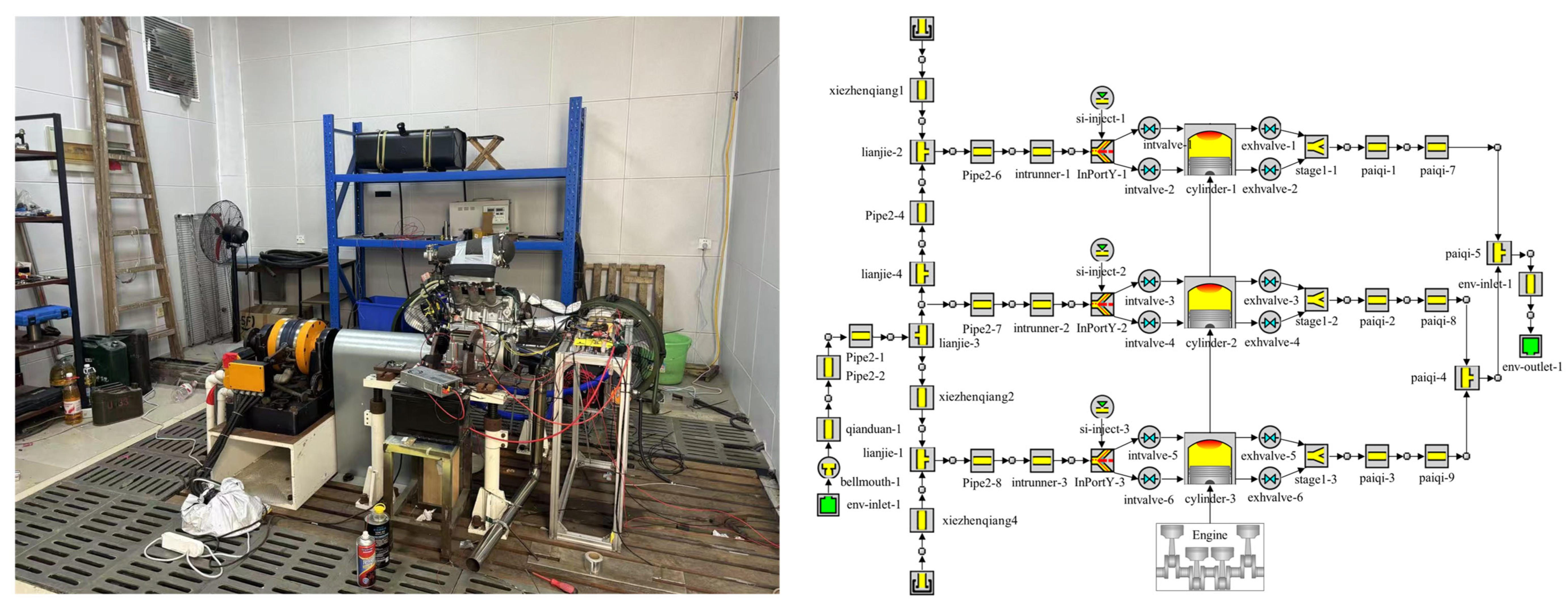
Figure 1 (left), performance metrics—including torque, power, and fuel consumption rate—were measured on a test bench across an engine speed range of 2000–11500 rpm and a throttle opening range of 0–100%. A one-dimensional (1D) thermodynamic computational model of the engine was developed using GT-Power software (v2016), as shown in
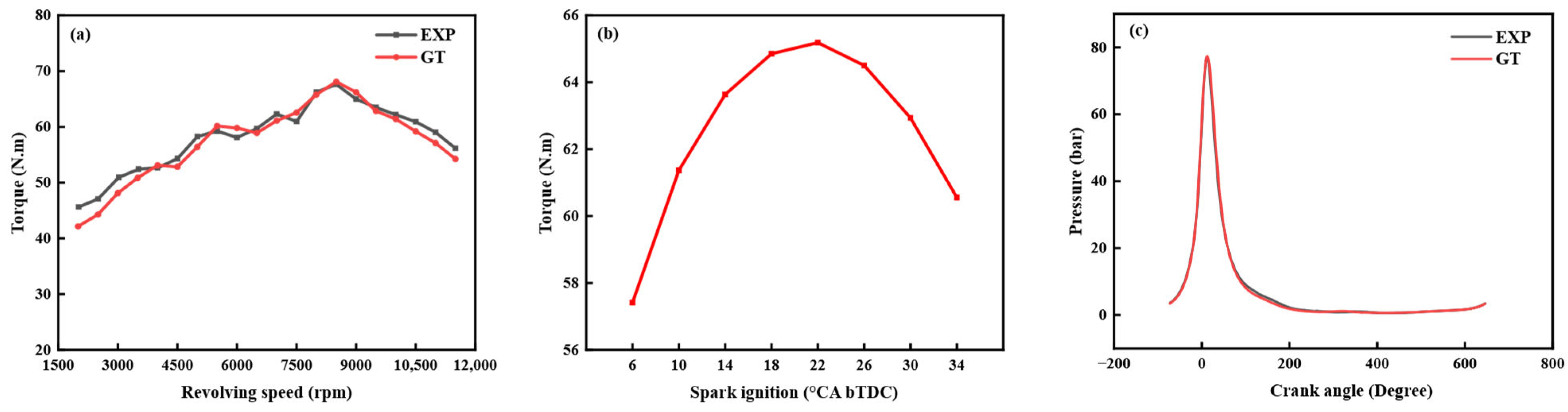
Figure 1 (right). To accurately capture combustion characteristics, the “SI Turb” predictive turbulent combustion model, which is highly suitable for spark-ignition engines, was employed. A rigorous calibration process was conducted: measured macroscopic boundary conditions—such as engine speed and air–fuel ratio, etc.—were input into the model, and combustion coefficients were systematically adjusted until the results were benchmarked against the experimental datasets shown in
Figure 2a,c. By varying the SA within a range of −34°CA to −6°CA at increments of 4°CA, eight discrete ignition timing cases were selected. While holding all other parameters constant, the required in-cylinder pressure and heat release rate (HRR) data were extracted from the GT-Power simulations. For each operating case, the data spans a crank angle range of −73°CA to 646°CA, with a high resolution of 0.1°CA. By integrating the in-cylinder pressure data, the indicated mean effective pressure (IMEP) and torque were derived. A comparison between these calculated values and the experimental data reveals that the torque error remains below 5% across all conditions, as shown in
Figure 2b. This demonstrates that the GT-Power model exhibits high predictive fidelity across the entire range of tested operating points, providing a highly reliable data source for subsequent machine learning modeling.
To address the challenge of in-cylinder pressure reconstruction, this study introduces artificial neural networks (ANNs) as the core modeling framework. As noted in comprehensive reviews regarding the development and application of ANN models [
28], this technology has demonstrated exceptional versatility and reliability in mapping the nonlinearities of complex engineering systems. The primary motivation for adopting this approach lies in the superior nonlinear approximation capabilities of ANNs, which perfectly align with the complex, multi-parameter coupled dynamics inherent in internal combustion engines. Unlike traditional reduced-order models that rely on explicit thermodynamic equations or detailed combustion chemical kinetics, the ANN serves as a purely data-driven approach. It is capable of implicitly extracting intricate input–output mapping relationships directly from observational data. Regarding the network topology, the model comprises an input layer for feature reception, hidden layers for deep nonlinear feature extraction, and an output layer to generate the final predicted values. At the microscopic level, each neuron performs a weighted summation of preceding signals plus a bias, followed by a nonlinear transformation via an activation function. During the training phase, the backpropagation algorithm is employed to iteratively optimize network parameters and minimize prediction error. Once fully trained, the ANN model exhibits robust generalization performance, enabling the precise inference of in-cylinder pressure under unknown operating conditions, such as untested spark advance settings.
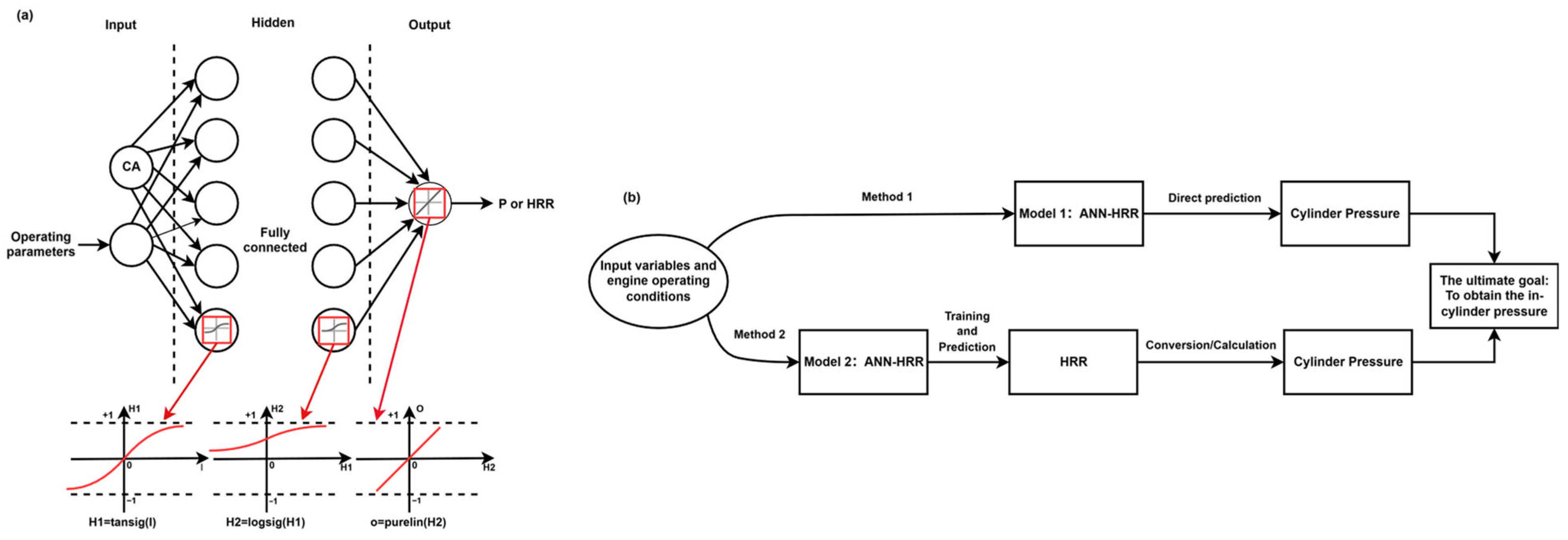
The neural network architecture used in this study is shown in
Figure 3a, consisting of an input layer representing crank angle (CA) and operating parameters, and an output layer predicting cylinder pressure or HRR. This neural network structure can approximately capture the complex nonlinear mapping relationship between gasoline engine operating conditions and combustion-related parameters. This study employs two methods for cylinder pressure reconstruction, as shown in
Figure 3b. Method 1’s operating parameters include SA and in-cylinder pressure, while fuel injection quantity and engine speed are treated as constant conditions, with the output being training and prediction results of cylinder pressure data. On this basis, a single-zone thermodynamic model is used to differentiate the cylinder pressure data to obtain heat release rate data for all stages from intake to exhaust, including both combustion and non-combustion periods. Method 2’s operating parameters include spark advance angle and heat release rate, with the output being training and prediction results of heat release rate data. After obtaining all heat release rate data, using the in-cylinder pressure at intake valve closure as the initial condition, a single-zone thermodynamic model is employed to integrate the heat release rate, thereby reconstructing the cylinder pressure variation with crank angle covering the entire compression, combustion, expansion, and gas exchange processes. This method is based on simplified assumptions including spatial homogeneity of the in-cylinder mixture, ideal gas properties, constant specific heat ratio, and neglect of heat transfer and leakage losses. Although these conditions have certain limitations, they establish a clear mathematical relationship between HRR and cylinder pressure, making it possible to inversely determine in-cylinder pressure through the energy release process.
Regarding the dataset construction and the allocation strategy for model training and testing, this study adopted a targeted “7 training +1 independent testing” split. Specifically, data from seven spark advance (SA) conditions (−34°, −30°, −26°, −18°, −14°, −10°, and −6° CA bTDC), totaling 50,400 samples, were extracted to form the foundational training set. Simultaneously, the maximum brake torque (MBT, i.e., −22° CA bTDC) timing condition was deliberately isolated as an unseen, independent external test set (7200 samples). The reason why the conventional proportional cross-division method (such as retaining three–four intermediate operating conditions as the validation set) was not adopted was mainly because the artificial neural network (ANN) requires a sufficiently dense set of training data to accurately learn the mapping manifold between the ignition advance angle and the highly nonlinear combustion process. Excessive reduction of the number of training conditions is likely to cause the model to underfit in complex boundary conditions. During the training phase, the foundational dataset was partitioned based on a standard random resampling strategy: 70% of the data was used for iterative updates of weights and biases, 15% served as an internal validation set to monitor overfitting and trigger the early stopping mechanism, and the remaining 15% was used for preliminary internal performance assessment. The construction benchmarks and partitioning logic for Method 1 (ANN-P) and Method 2 (ANN-HRR) were identical, with the only difference being the configuration of the output target; Method 2 utilizes the calculated heat release rate (HRR) as the target output feature for deep learning training and validation.
The ANN models were trained using a supervised learning method based on the backpropagation (BP) algorithm. During training, the internal weights and biases were adjusted to minimize the mean squared error (MSE) between the predicted and experimental values. To avoid training bias caused by inconsistent dimensions of variables, all input and output data were mapped to the [0, 1] range using min–max normalization prior to training and were restored to their physical values via inverse mapping after training. Regarding hyperparameter settings, the maximum number of iterations was set to 1000, the target error to 1 × 10
−6, and the learning rate to 0.01. This configuration achieved a reasonable balance between predictive accuracy and computational cost. The establishment of the network topology was guided by classical theoretical principles [
29] and systematic hyperparameter tuning. It was determined that a shallow feedforward network with two hidden layers is sufficient to approximate any continuous nonlinear function with high precision; blindly increasing the network depth offers no benefit and instead introduces a significant risk of overfitting. Simultaneously, to prevent the network from either lacking feature extraction capacity or over-memorizing local noise, the optimal number of neurons in the hidden layers was determined through trial and error within a specific search range. Based on these criteria, the final network architecture was established, consisting of two input nodes, two hidden layers with five neurons each, and one output node. For both reconstruction methods proposed in this study, this compact topology demonstrated excellent generalization performance, and the predictive results remained unaffected by the choice of the output target (cylinder pressure or HRR). Regarding activation functions, the hyperbolic tangent function (tansig) was used for the first hidden layer, the log-sigmoid function (logsig) for the second hidden layer, and the linear function (purelin) for the output layer. This combination of sigmoidal functions in the hidden layers to introduce nonlinearity and a linear function in the output layer to provide unbounded continuous physical values is ideally suited for the high-fidelity reconstruction of cylinder pressure and HRR. It should be emphasized that the primary objective of this study was not exhaustive hyperparameter optimization but rather to validate the feasibility of directly reconstructing crank-angle-resolved in-cylinder pressure profiles as a tool for engine combustion research.
This study employed RMSE and coefficient of determination (R
2) to quantitatively assess artificial neural network model performance, with specific definitions provided in Equations (1) and (2). RMSE measures the deviation between model output and measured signals; values closer to 0 indicate better agreement between predictions and actual data. R
2 reflects the degree to which the model fits the experimental data variation pattern, with a range of 0 to 1; when R
2 approaches 1, it indicates ideal model fitting. Beyond numerical indicators, this study further compared neural-network-predicted cylinder pressure curves and HRR curves with experimental results. This approach not only intuitively displays reconstruction accuracy but also helps verify the physical credibility of prediction results in describing combustion mechanisms. The significance of cylinder pressure reconstruction lies not only in error reduction but more importantly in obtaining combustion-characteristic curves with engineering interpretive value; therefore, comparative analysis of curve morphology is indispensable. Through this comprehensive evaluation system, the performance merits and limitations of the two pressure reconstruction strategies proposed in this paper can be systematically compared:
where n is the number of samples,
is the
i-th measured value,
is the
i-th predicted value, and
is the mean of the true values.
3. Results and Discussion
This chapter focuses on exploring the effectiveness of reconstructing in-cylinder pressure using machine learning techniques under predictive operating conditions, specifically when the spark advance angle is −22°CA. It verifies whether the ML framework has the capability to accurately reproduce the in-cylinder pressure curve under such predictive conditions, thereby confirming its feasibility for combustion analysis. This study established two methods for in-cylinder pressure reconstruction: the first is a direct prediction method based on ANN-P; the second is an indirect prediction method based on a full-cycle HRR model (ANN-HRR). To ensure fairness and validity of comparison, both schemes employed optimized artificial neural network models. The result evaluation process adopted a multi-level validation strategy consisting of three progressive stages: first, by calculating quantitative evaluation indices such as RMSE and coefficient of determination (R2), the overall predictive performance of the models is quantitatively assessed; second, the in-cylinder pressure curves and HRR curves reconstructed by the models are compared and analyzed with GT measured data to intuitively demonstrate the degree of agreement between prediction results and actual operating conditions; finally, accuracy verification of key performance parameters—IMEP and combustion characteristic points (CA10, CA50, CA90)—between measured and predicted values is conducted, thereby comprehensively evaluating the reliability and applicability of both methods and clarifying their respective advantages and limitations.
3.1. Performance of Method 1 (ANN-P) for Pressure Curve Reconstruction
Figure 4,
Figure 5 and
Figure 6 demonstrate the effectiveness of Method 1 (ANN-P) in reconstructing in-cylinder pressure under both measured and unmeasured operating conditions.
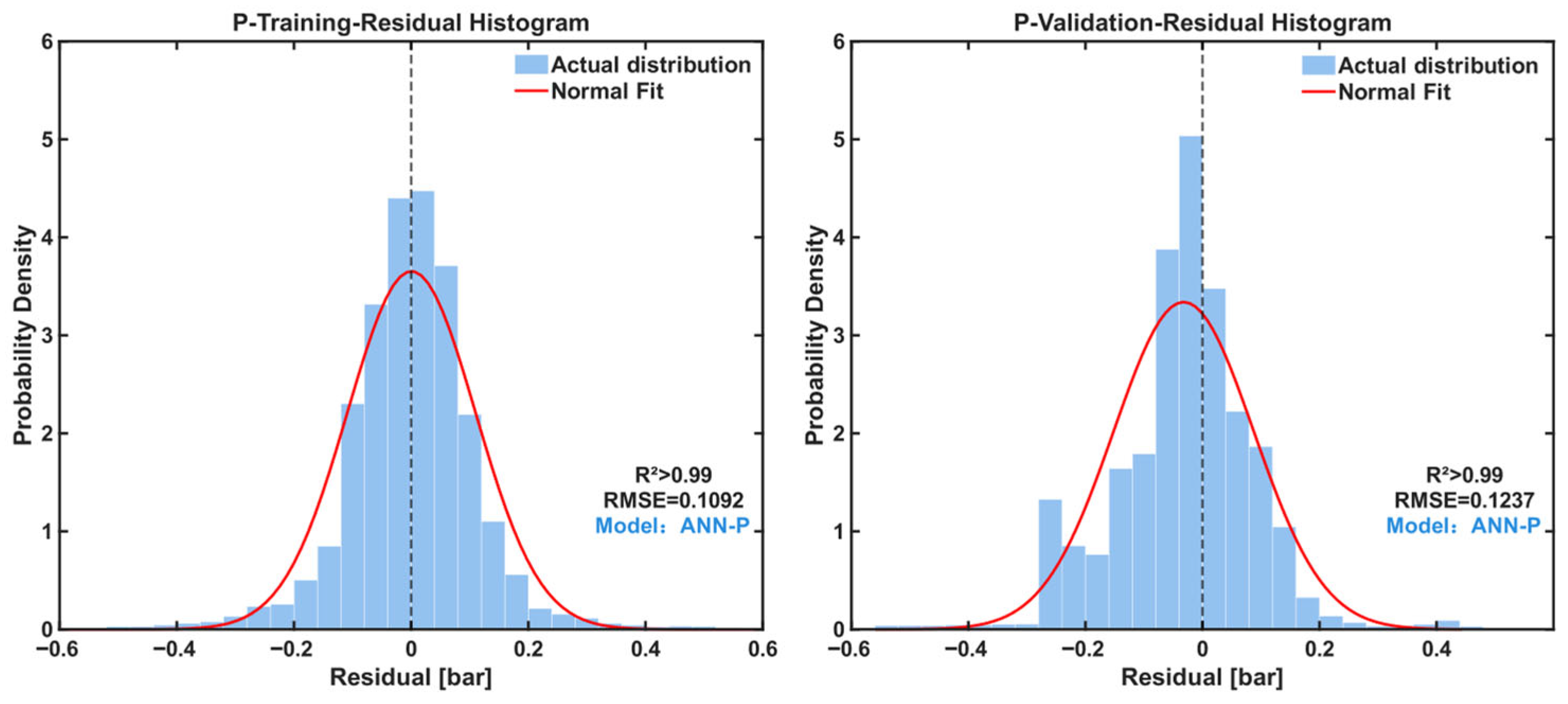
Figure 4 presents the performance of the in-cylinder pressure prediction model based on ANN-P. The residual histogram uses a black dashed line above zero as a boundary; symmetric distribution on both sides indicates good model performance, while asymmetry indicates poor performance. Residual analysis shows that residuals of both the training set and validation set exhibit approximately normal distribution characteristics centered at zero, with residuals mainly distributed within the range of ±0.4 bar, indicating that model prediction has no systematic bias. The R
2 values on both training and validation sets exceed 0.99, with RMSE values of approximately 0.11 bar and 0.123 bar, respectively. The normal distribution characteristics of residuals indicate that prediction errors primarily originate from random factors and the model has sufficiently captured the main patterns in the data. Therefore, the established ANN-P model can accurately predict in-cylinder pressure and meets the requirements of practical engineering applications.
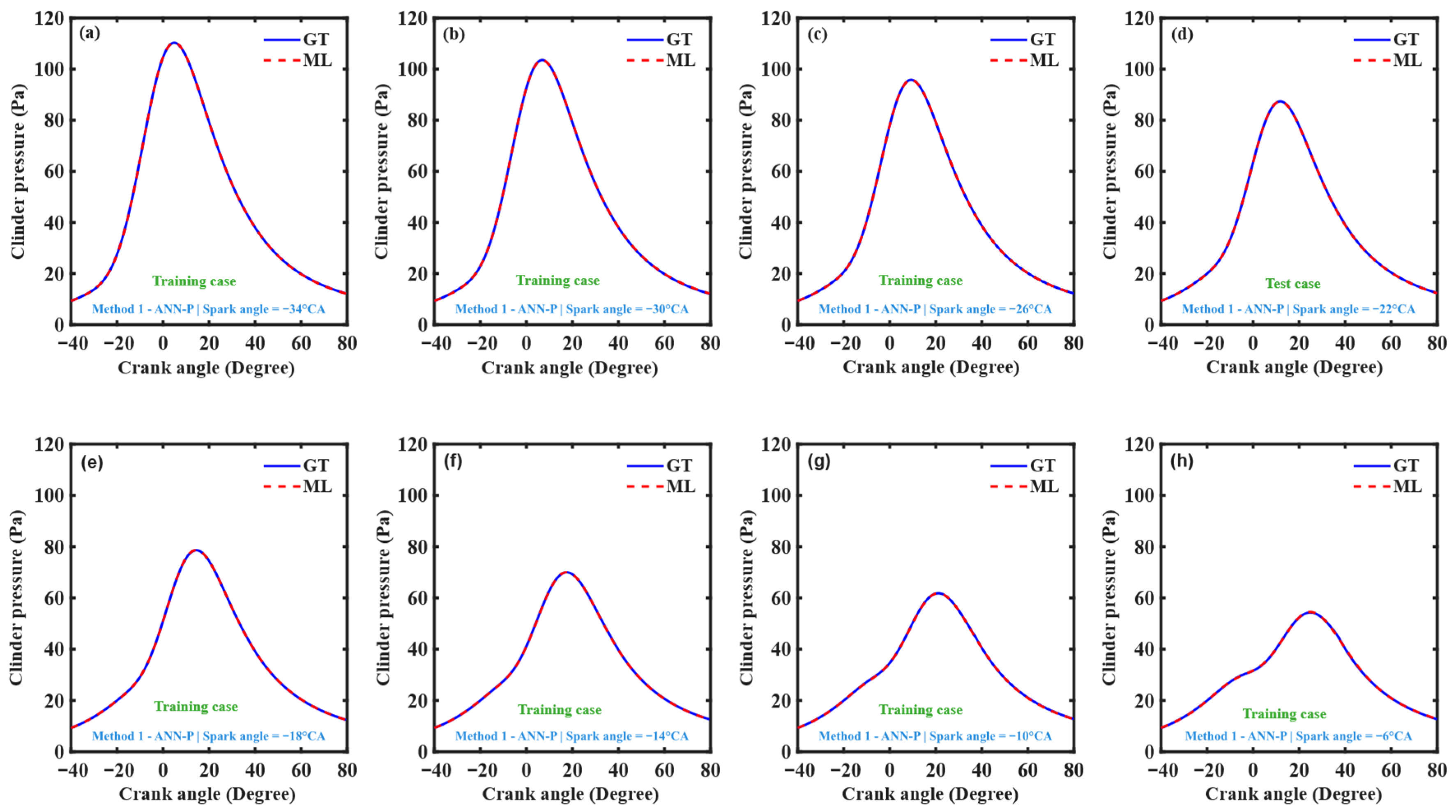
Figure 5 shows the comparison between Method 1’s in-cylinder pressure prediction results under 8 different spark advance angle conditions and GT values. In
Figure 5, a–h correspond to operating conditions where the spark advance angle gradually retards from −34°CA to −6°CA, with
Figure 5d representing the test set condition and the remainder being training set conditions. From the overall prediction accuracy perspective, the ML prediction curves and GT curves show extremely high agreement under all conditions. The rapid pressure rise at the end of the compression stroke, the sharp pressure increase caused by combustion, and the smooth pressure decline during the expansion stroke are all accurately reproduced. The model correctly reflects the influence of ignition timing on in-cylinder pressure: when the spark advance angle retards from −34°CA to −6°CA, peak pressure decreases from approximately 110 bar to about 60 bar, and peak position correspondingly shifts backward—a trend consistent with the thermodynamic characteristics of spark-ignition internal combustion engines. Under early ignition conditions, despite severe pressure gradient changes, the prediction curve can still accurately track GT values; under late ignition conditions, the characteristic of peak pressure reduction caused by the backward shift of the combustion phase is equally accurately captured. Notably, the prediction accuracy of the test set condition (
Figure 5d) is comparable to that of the training set, fully validating the model’s excellent generalization capability. This method can accurately reproduce pressure curves at different ignition timings, providing an effective technical means for in-cylinder pressure reconstruction of gasoline engines.
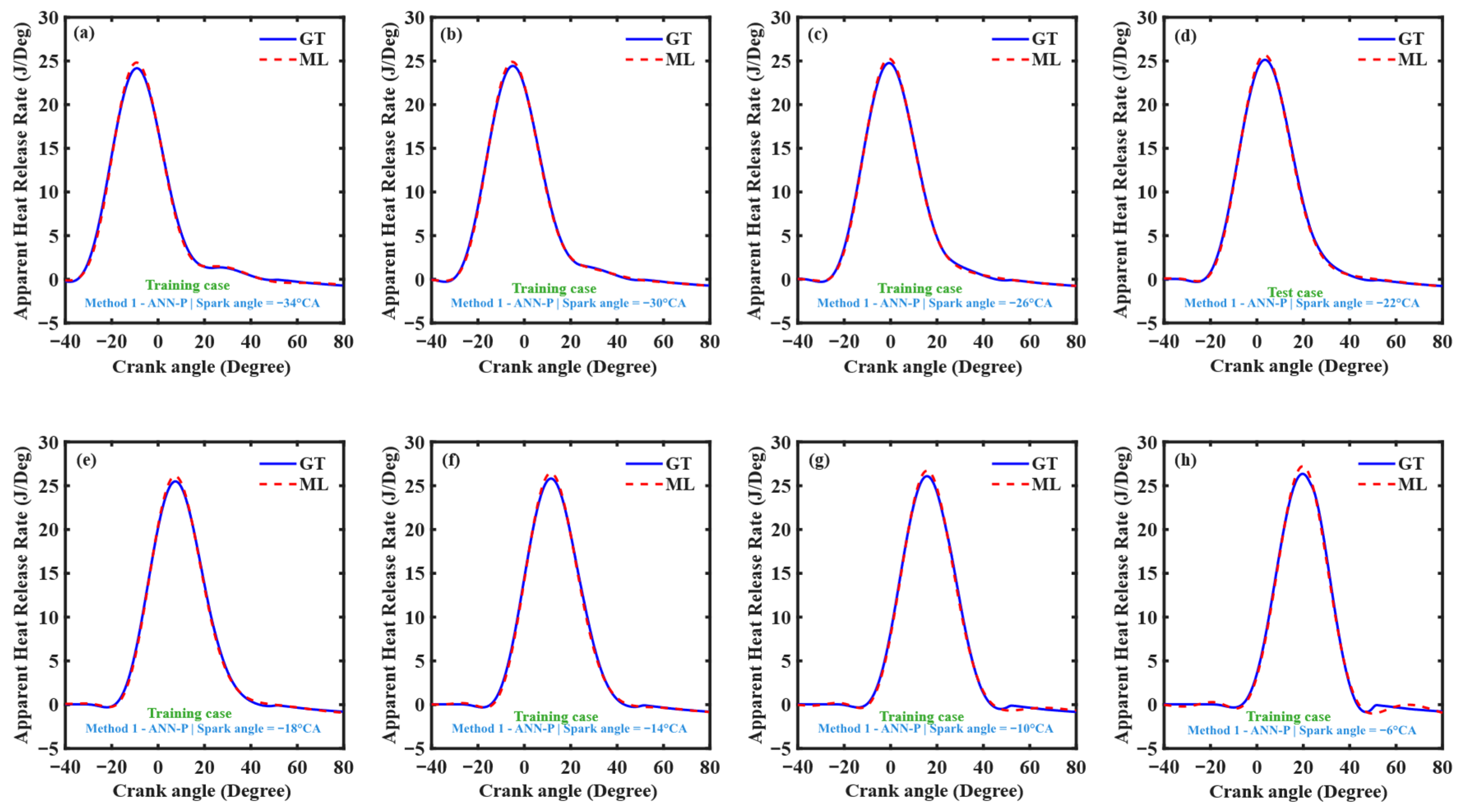
Figure 6 shows the comparison between predicted and GT HRR curves of Method 1 under corresponding operating conditions to further evaluate the combustion characteristics reconstructed by this method. Overall, the model adequately presents the evolution process of the three traditional HRR stages (flame development period, rapid combustion period, and late combustion period), and the predicted curve shows good agreement with the experimental curve. However, during the rapid combustion period, the ML predicted value is slightly higher than the GT value, with a deviation of approximately 1–2 J/deg in peak HRR, consistent with the minor differences mentioned in pressure prediction. This phenomenon occurs because HRR is derived from the derivative of in-cylinder pressure with respect to crankshaft angle [
30]. The HRR value is extremely sensitive to small pressure changes; even small pressure errors are amplified during the derivative process. During the flame development period and late combustion period, both the magnitude and phase of HRR reach acceptable accuracy, indicating that the pressure phase is well captured. Furthermore, as the spark advance angle retards from −34°CA to −6°CA, the HRR peak position shifts correspondingly from approximately 10°CA to approximately 30°CA, while peak magnitude remains in the range of 25–28 J/deg. Notably, negative HRR values exist before combustion onset and after combustion completion, attributed to inherent noise characteristics of the original data and the inability of the linear output layer function to provide physical boundary constraints. The prediction accuracy of the test set operating condition (
Figure 6d) is comparable to the training set, validating the model’s generalization capability. In summary, Method 1 can effectively reconstruct in-cylinder pressure and accurately predict the overall HRR trend.
The result analysis of Method 1 indicates that although it performs well in reproducing the in-cylinder pressure curve, there is a certain deficiency in the accuracy of HRR prediction. The main reason for this is that HRR is derived from the derivative of the in-cylinder pressure, so even a small prediction error in the in-cylinder pressure will be magnified.
3.2. Performance of Method 2 (ANN-HRR) Based on Heat Release Rate
To explore the feasibility of inverting the cylinder pressure from HRR, a second method is introduced. This method uses the HRR experimental data from eight operating conditions as the training and validation sets for ML. Since HRR reflects the detailed combustion process, directly predicting HRR can more reliably capture the combustion stage and intensity. Subsequently, the predicted HRR curve can be integrated based on the first law of thermodynamics to obtain the reconstructed pressure curve. The prediction performance of Method 2 (ANN-HRR) is shown in
Figure 7,
Figure 8 and
Figure 9.
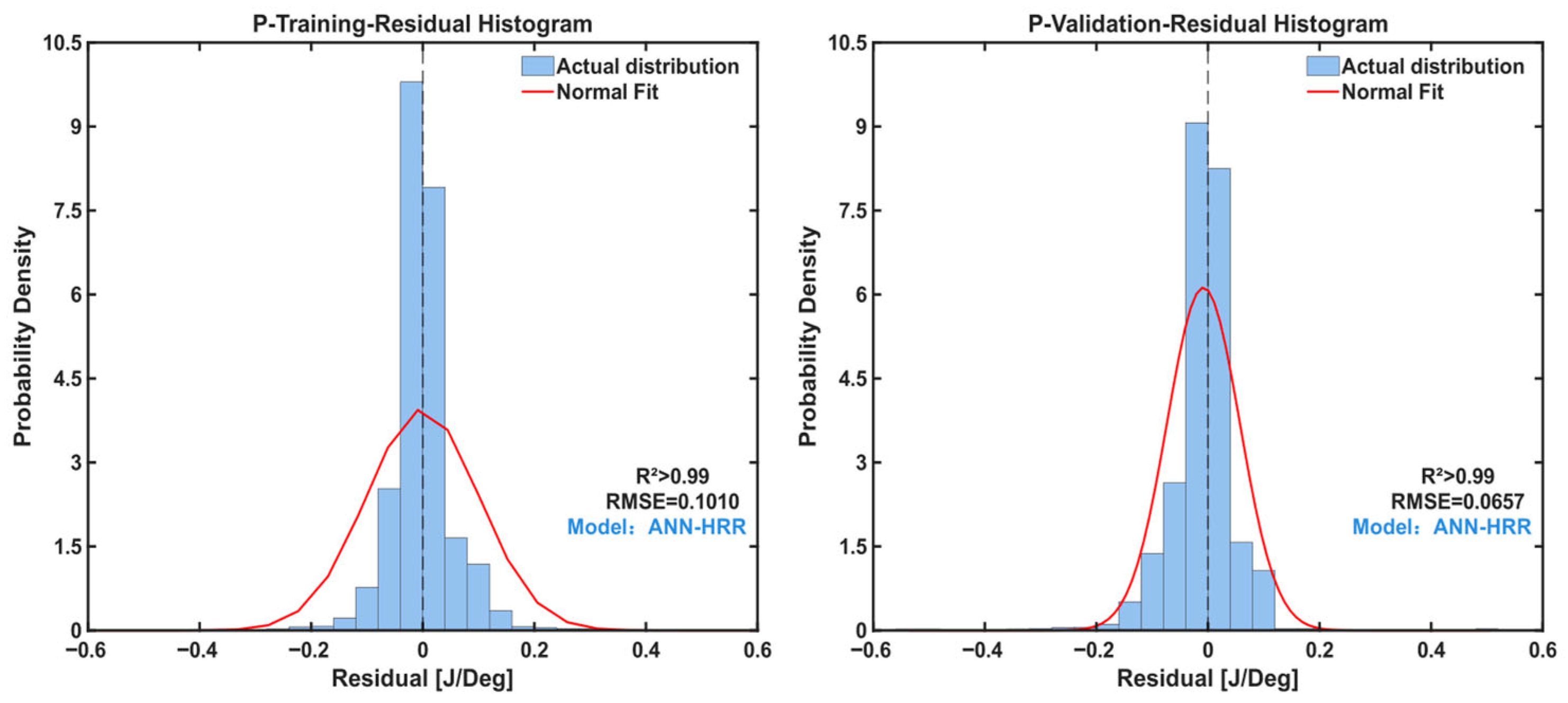
Figure 7 shows the residual distribution histogram of the established ANN-HRR model on training and validation sets. The figure shows that residuals of both datasets exhibit an approximate normal distribution centered at zero, indicating no systematic bias in model predictions. The coefficient of determination R
2 of the training set exceeds 0.99 with RMSE = 0.1010 J/deg; the validation set R
2 exceeds 0.99 with RMSE = 0.0657 J/deg. The lower RMSE of the validation set compared to the training set indicates good generalization ability without overfitting. Based on the above analysis, the established ANN model has high prediction accuracy and reliability and can accurately predict target parameters.
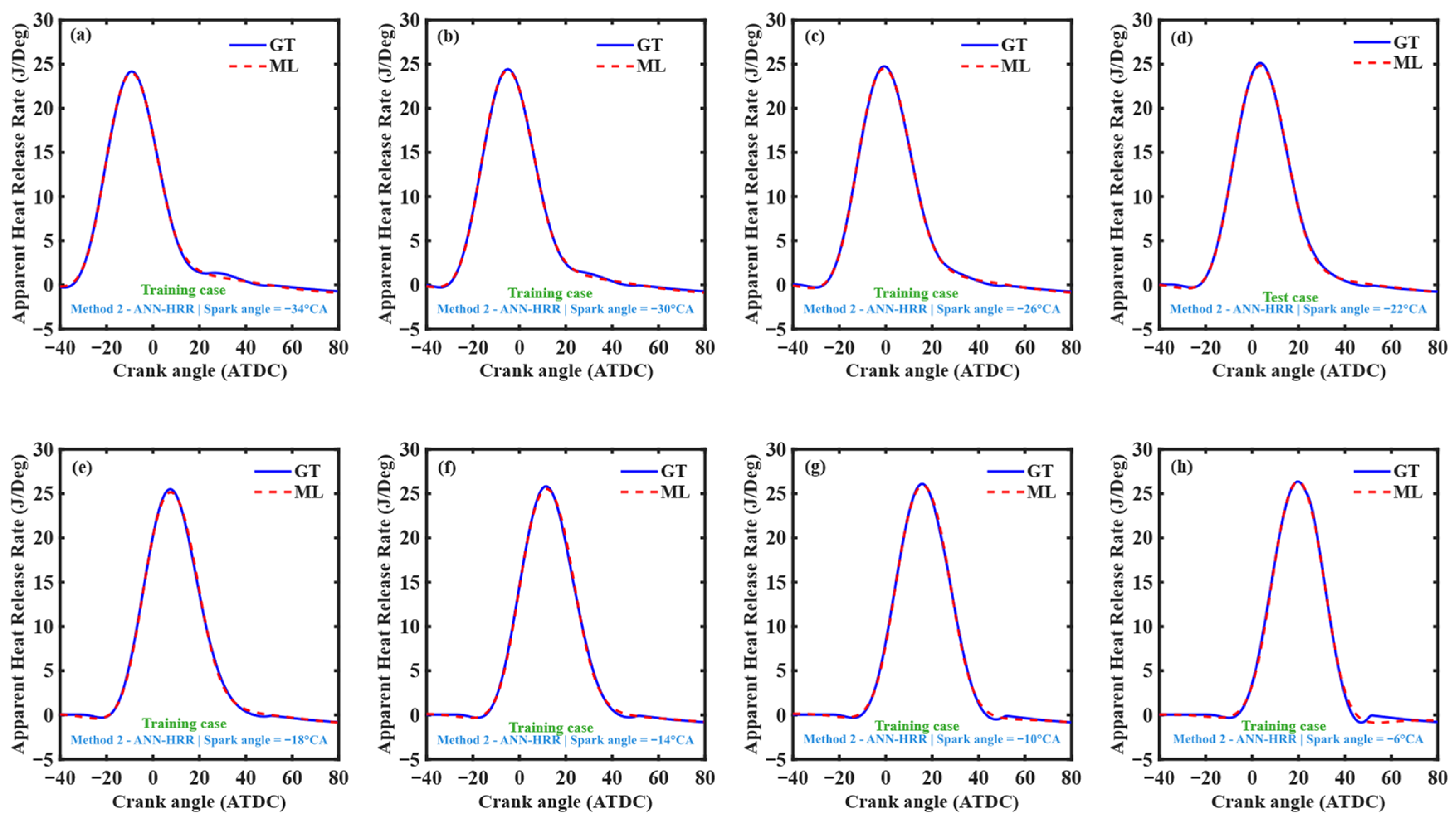
The ANN-HRR-based heat release rate prediction model demonstrates excellent prediction performance under eight different spark advance angle conditions, as shown in
Figure 8. The typical single-peak heat release characteristics of gasoline engine premixed combustion are accurately reproduced: the rapid heat release rise phase starting from the ignition moment, the smooth decline phase after reaching the peak, and the combustion tail all show high agreement with GT curves. The model correctly captures the influence of ignition timing on the combustion phase: when spark advance angle retards from −34°CA to −6°CA, HRR peak position shifts from approximately 5°CA to approximately 25°CA, and peak magnitude decreases from approximately 23 J/deg to approximately 20 J/deg—completely consistent with the combustion physical mechanism of spark-ignition internal combustion engines. Both training and test set conditions show high consistency between predicted curves and experimental values, indicating good model generalization capability. Under retarded ignition conditions, the fit between predicted curve and GT values in the decline phase shows a slight decrease, but overall deviation remains within an acceptable range. Additionally, slightly negative HRR values before combustion onset and after combustion completion are related to in-cylinder heat transfer losses and raw signal characteristics, with limited impact on overall characterization. In summary, Method 2 can accurately predict transient heat release rate curves under different ignition timings, providing a reliable data foundation for subsequent in-cylinder pressure reconstruction based on HRR.
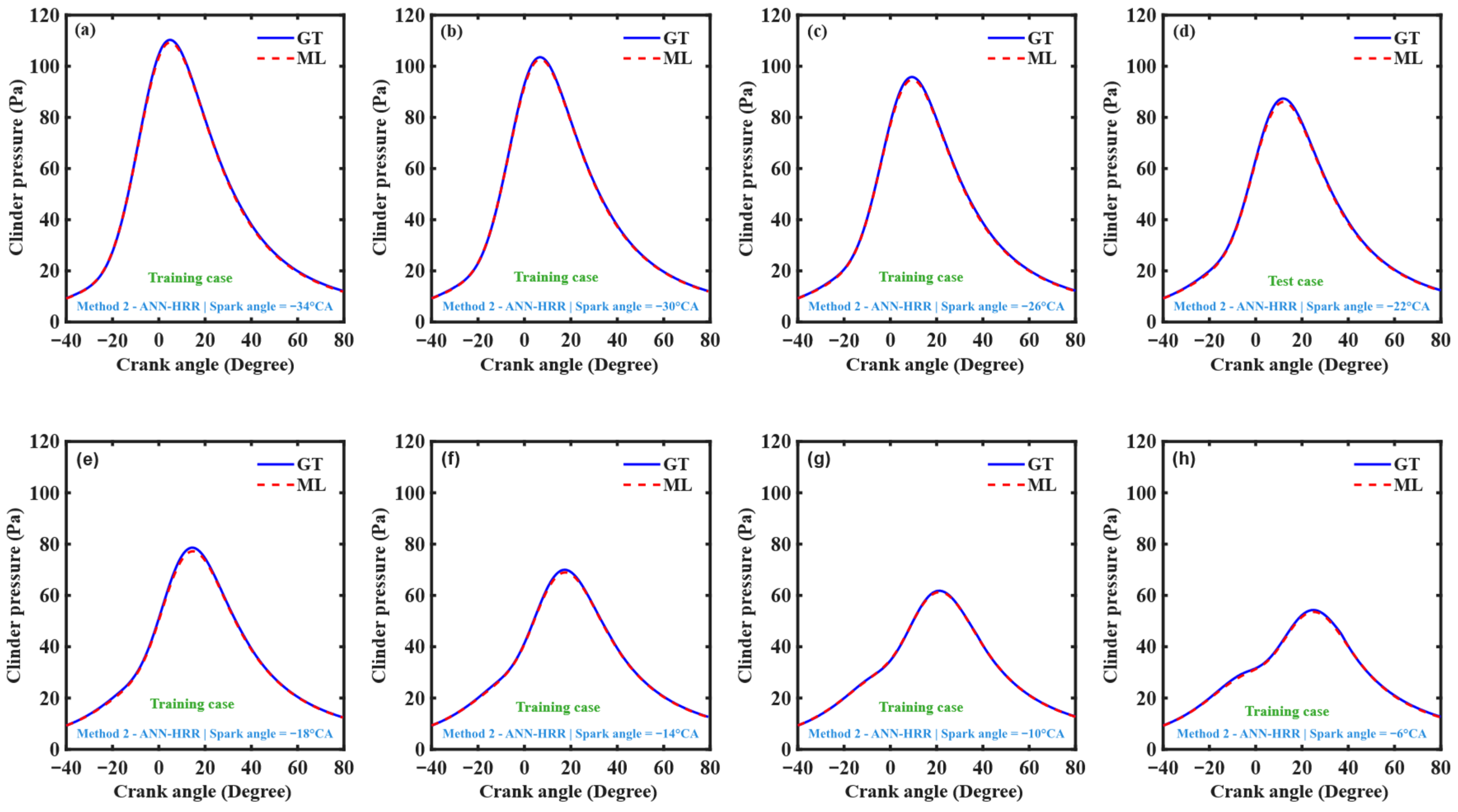
Based on the above HRR prediction results, in-cylinder pressure reconstructed through thermodynamic first law integration shows high consistency with experimental measurements, as shown in
Figure 9. The typical pressure evolution characteristics of the combustion process are accurately reproduced: rapid pressure rise at the end of the compression stroke, sharp pressure increase caused by combustion, and smooth pressure decline during the expansion stroke all match GT curves precisely. When the spark advance angle retards from −34°CA to −6°CA, peak pressure decreases from approximately 110 bar to about 60 bar, and peak position shifts from approximately 5°CA to about 25°CA—completely consistent with thermodynamic characteristics of spark-ignition internal combustion engines. Under early ignition conditions, although in-cylinder pressure gradient changes dramatically, the prediction curve still accurately tracks GT values; for retarded ignition conditions, slight underestimation in HRR prediction is effectively smoothed through thermodynamic integration, and prediction errors for both peak pressure and phase are controlled within the engineering acceptable range. In summary, Method 2, which predicts the heat release rate through ANN-HRR and reconstructs the cylinder pressure combined with a single-zone thermodynamic model, demonstrates excellent prediction accuracy and robustness. Compared to Method 1, it achieves more accurate combustion characteristic prediction and provides a reliable technical pathway for gasoline engine combustion diagnosis and control optimization.
3.3. Comprehensive Performance Comparison of the Two Methods
To more comprehensively evaluate the merits of both methods, beyond comparing in-cylinder pressure and combustion heat release rate variations with crankshaft angle as discussed above, further detailed analysis of IMEP and combustion characteristic points (CA10, CA50, CA90) is warranted. By analyzing differences in combustion phase evolution patterns and power output, the inherent mechanisms of performance differences between the two methods are revealed from a thermodynamic perspective.
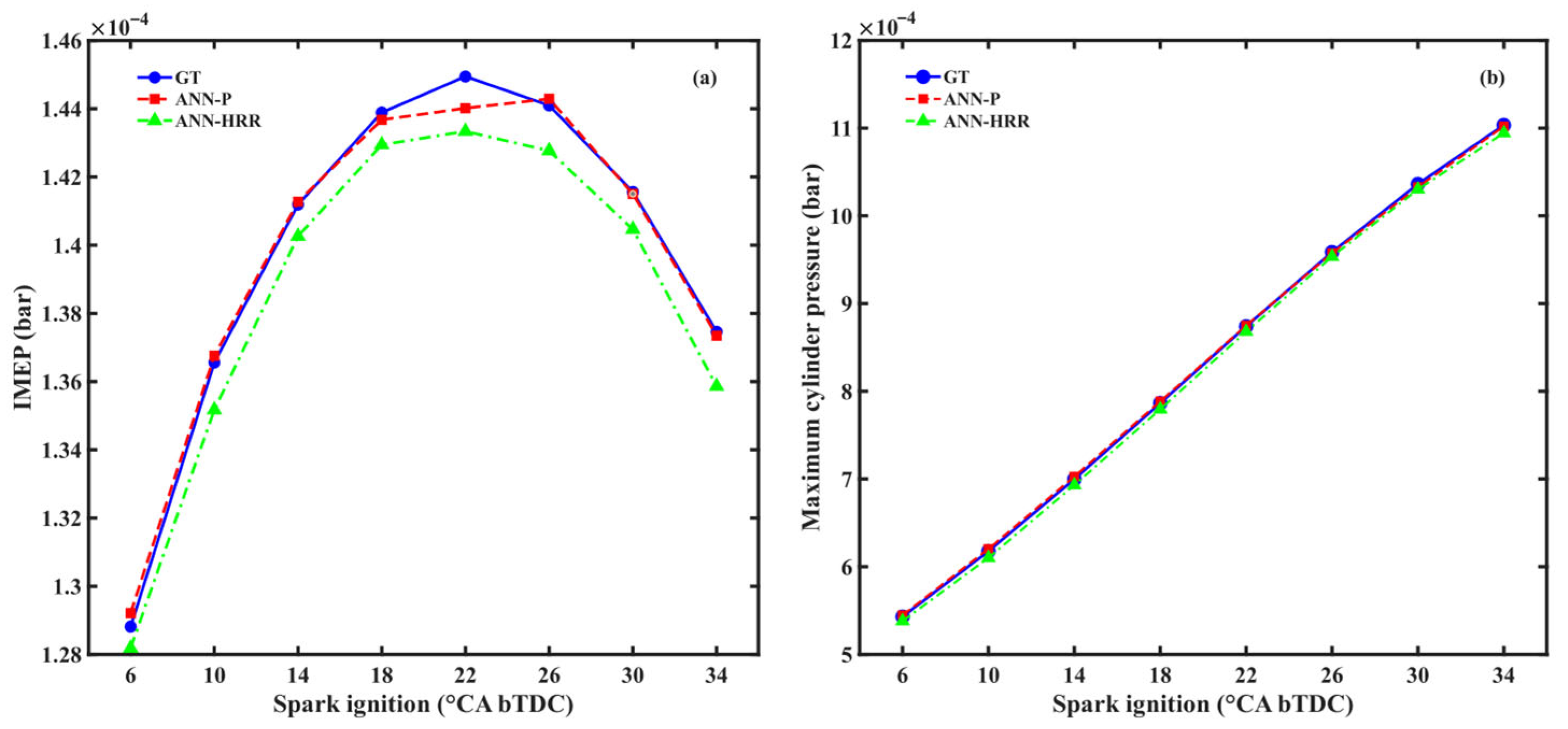
A comprehensive evaluation and comparison of IMEP and maximum in-cylinder pressure (Pmax) for both prediction methods under different spark advance angle conditions is presented in
Figure 10. From
Figure 10a, IMEP exhibits a typical “inverted U-shaped” curve characteristic with respect to spark advance angle, reaching its peak at approximately 22°CA bTDC, corresponding to the maximum brake torque (MBT) region for gasoline engines; when the spark advance angle deviates from this optimal interval, IMEP shows a declining trend—consistent with thermodynamic characteristics of spark-ignition internal combustion engines. From a prediction accuracy perspective, the ANN-P method shows high agreement with experimental values, accurately tracking the IMEP variation trend throughout the entire spark advance angle range; the ANN-HRR method exhibits slight underestimation in the intermediate spark advance angle region (14–22°CA bTDC), but still correctly reflects the IMEP variation trend with the spark advance angle. From
Figure 10b, Pmax exhibits an approximately linear positive correlation with spark advance angle: as the spark advance angle increases from 6°CA bTDC to 34°CA bTDC, maximum in-cylinder pressure increases accordingly. This trend is consistent with the physical mechanism of spark-ignition internal combustion engines: earlier ignition results in a combustion center of mass closer to top dead center, thereby producing higher peak pressure. Notably, both prediction methods demonstrate excellent accuracy in Pmax prediction, with prediction curves almost completely overlapping experimental values. Comprehensive analysis shows that both methods have comparable prediction accuracy for Pmax; for IMEP prediction, the ANN-P method is superior to the ANN-HRR method—potentially related to IMEP being an integral parameter over the entire working cycle and thus more sensitive to cumulative errors in HRR prediction; despite these differences, the ANN-HRR method can still accurately reflect variation patterns of gasoline engine performance parameters with ignition timing, validating the reliability and applicability of this method in predicting gasoline engine combustion characteristics.
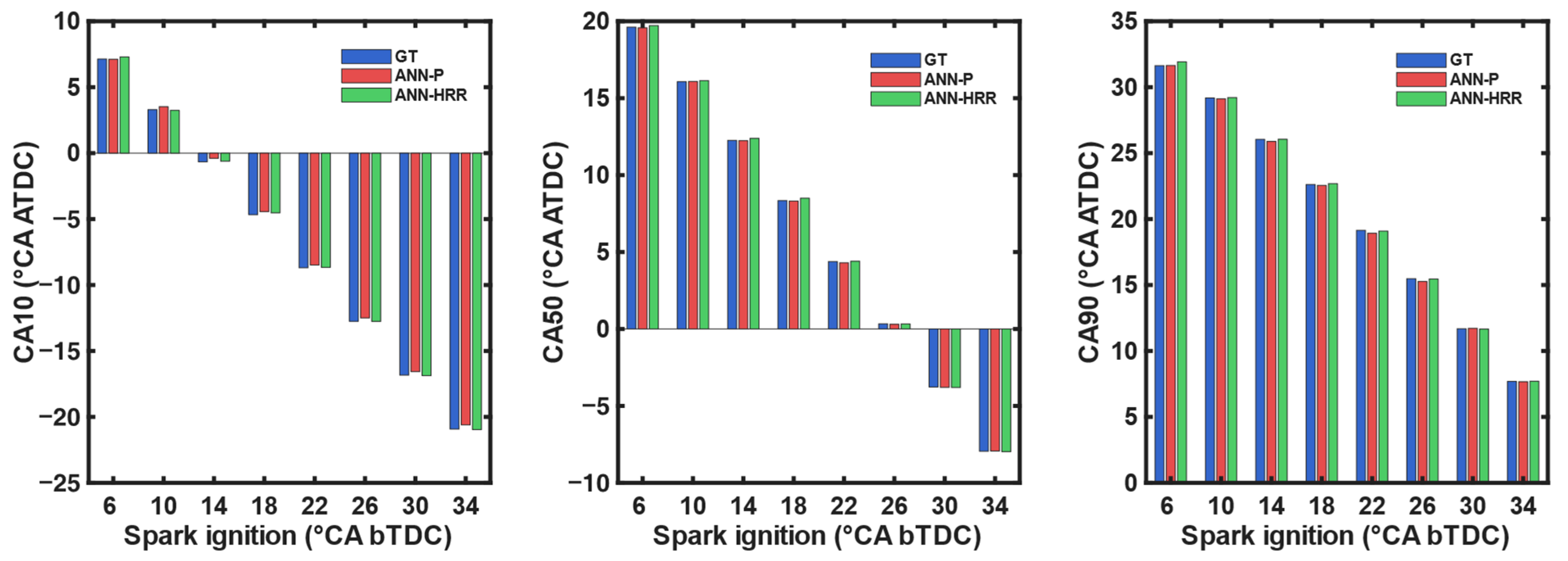
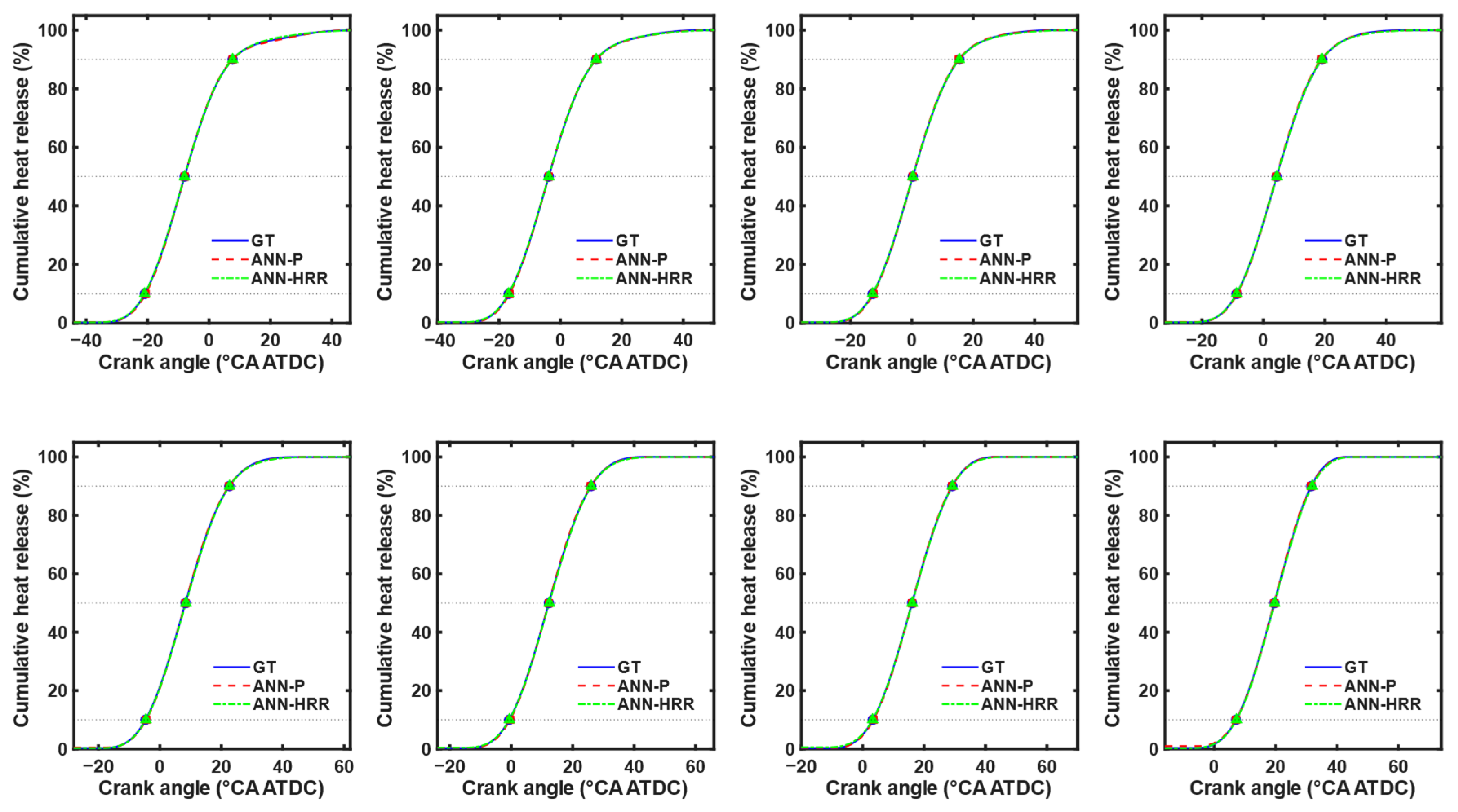
Figure 11 and
Figure 12 present a comparison of the combustion characteristic points (CA10, CA50, and CA90) obtained by the two predictive models and their corresponding cumulative heat release (i.e., mass fraction burned, MFB) curves, respectively. As visually evident from the MFB curves in
Figure 12, the predictions of both methods highly overlap with the GT curves across all spark advance conditions, perfectly reproducing the typical “S-shaped” evolution of premixed combustion in gasoline engines. This indicates that the models have profoundly learned and captured the global physical evolution of the combustion process. The combustion characteristic points extracted from the MFB curves (
Figure 11) further quantify this high-precision fitting: as the spark timing is retarded from −34°CA to −6°CA, all characteristic points exhibit a reasonable phase delay, which is accurately tracked by both models. An in-depth comparison reveals that the two models exhibit complementary advantages in predicting different combustion phases: Method 1 (ANN-P) achieves higher accuracy in predicting the center of combustion (CA50), whereas Method 2 (ANN-HRR) yields smaller errors in predicting the start (CA10) and the end (CA90) of combustion. The morphological features of the curves in
Figure 12 clearly explain the underlying mechanism behind this performance discrepancy. The ANN-P method directly establishes a nonlinear mapping between input features and in-cylinder pressure, making it highly sensitive to the rapidly changing main combustion phase, thereby achieving a high-fidelity fit. In contrast, the ANN-HRR method employs an indirect strategy of first predicting the heat release rate and then deriving the cylinder pressure through integration. This thermodynamic integration process effectively smooths out local numerical noise, demonstrating superior robustness and physical consistency when characterizing the relatively gradual physicochemical transitions during the initial and final stages of combustion. In conclusion, Method 2 (ANN-HRR) offers higher reliability in characterizing the early and late combustion phases, while Method 1 excels in capturing the main combustion peak phase. Together, they provide a comprehensive and high-precision toolset for the refined analysis of gasoline engine combustion characteristics.
3.4. Summary of Comparative Results and Limitations
To more accurately quantify and evaluate the performance of the two machine learning reconstruction strategies,
Table 2 and
Table 3 summarize the statistical metrics for the full-cycle profiles (in-cylinder pressure and HRR) and the key combustion phasing indicator across different spark advance conditions. The data demonstrate that the two methods exhibit highly complementary advantages across different physical dimensions. Regarding the evaluation of in-cylinder pressure and engine work output, Method 1 (ANN-P) demonstrates outstanding predictive accuracy. The coefficient of determination (R
2) for pressure prediction approaches 1.0000 under all conditions, with the root mean square error (RMSE) strictly constrained to exceptionally low values between 0.09 and 0.15 bar. Consequently, its prediction RMSE for the IMEP is merely 3.82 × 10
−7 bar. This high fidelity is also reflected in capturing the main combustion phasing (CA50), achieving an RMSE of 0.0376°CA, which outperforms Method 2. This superiority primarily stems from the fact that ANN-P directly establishes a nonlinear mapping between operating parameters and cylinder pressure characteristics, enabling a highly sensitive response to rapidly changing pressure peaks and the work-dominant stages. However, when characterizing the energy release mechanisms, Method 2 (ANN-HRR) exhibits irreplaceable superiority. Because the heat release rate (HRR) is typically derived through the differentiation of cylinder pressure data, direct pressure prediction is highly susceptible to the cascading amplification of numerical noise during the differentiation process. Method 2 effectively circumvents this error amplification trap by directly predicting the HRR. As a result, its HRR prediction RMSE is significantly reduced to 0.05–0.19 J/Deg, vastly outperforming Method 1. Benefiting from the high-precision HRR prediction and the smoothing effect of thermodynamic integration on local noise, Method 2 demonstrates exceptional robustness in characterizing the complex and relatively gradual physicochemical transitions during the initial (CA10) and final (CA90) stages of combustion. Its prediction RMSEs for CA10 and CA90 are reduced to 0.0822°CA and 0.1088°CA, respectively, comprehensively surpassing Method 1.
In conclusion, both data-driven models achieve high-precision predictions throughout the entire combustion cycle (with R2 > 0.99 for all phasing metrics). The ANN-P method serves as an ideal choice for high-precision in-cylinder pressure reconstruction and performance (IMEP) calibration. Conversely, the ANN-HRR method provides a more reliable analytical tool for exploring fundamental combustion mechanisms and finely characterizing the early and late combustion phases. The combination of both approaches establishes a solid technical foundation for the comprehensive diagnosis and multi-objective optimization of gasoline engine combustion processes.
4. Summary and Conclusions
In spark-ignition internal combustion engine research, experimental measurement of in-cylinder pressure faces numerous challenges. On the one hand, measurement systems require expensive equipment including piezoelectric sensors, crankshaft encoders, signal conditioners, and data acquisition and analysis systems; on the other hand, measurement equipment demands rigorous installation precision and working environment requirements, with complex experimental operations and high maintenance costs. These factors severely restrict widespread application of in-cylinder pressure measurement technology in mass-produced gasoline engines and practical engineering. To overcome these limitations, this study proposes an in-cylinder pressure reconstruction method based on artificial neural networks, achieving accurate in-cylinder pressure prediction through machine learning models and providing an economical and efficient alternative solution for gasoline engine combustion diagnosis. The key conclusions are as follows:
- (1)
Method 1 (ANN-P) learns in-cylinder pressure variation patterns, with both training and validation sets achieving R2 exceeding 0.99 and residuals following normal distribution without systematic bias. It can accurately capture pressure evolution throughout compression, combustion, and expansion processes, achieving high-precision IMEP prediction. However, since HRR is obtained through pressure differentiation, small pressure errors during the rapid combustion phase are amplified, resulting in deviations in the HRR peak region. This method is more suitable for obtaining accurate in-cylinder pressure trajectories and engineering applications for gasoline engine power calibration.
- (2)
Method 2 (ANN-HRR) directly predicts the heat release rate and reconstructs in-cylinder pressure by combining the first law of thermodynamics, avoiding amplification of differentiation errors. The model accurately reproduces premixed combustion characteristics and precisely captures ignition timing regulation of the combustion phase, outperforming ANN-P in predicting combustion onset and center of mass location. However, HRR prediction fluctuations in non-combustion regions (especially during the compression stroke) produce cumulative effects through integration, causing pressure baseline shift and systematic underestimation of IMEP. This method is more suitable for combustion mechanism analysis, phase optimization, and thermodynamic diagnostic research.
- (3)
Both machine learning methods demonstrate exceptional predictive accuracy throughout the entire combustion process. In particular, the ANN-HRR approach, by directly predicting the heat release rate, effectively circumvents the error amplification issues associated with numerical differentiation, exhibiting remarkable robustness in characterizing the tail-end features of late-stage combustion. The combination of these two methods establishes a solid technical foundation for the comprehensive diagnosis and multi-objective optimization of gasoline engine combustion processes. Building upon the high-precision benchmarks achieved in this study, future work could incorporate physics-constrained layers or extend the models to more complex boundary conditions (such as knocking or transient operations). This would further enhance the models’ generalization capabilities and engineering applicability under extreme operating conditions.
- (4)
The computational complexity of the proposed ANN model was evaluated to assess its feasibility for real-time applications. Unlike 3D CFD methods, which typically require hours of computation for a single operating condition, the ANN developed in this study utilizes a compact architecture consisting of two hidden layers with five neurons each. Following the training phase, its online inference requires a small number of matrix operations, yielding execution times on the microsecond scale on standard microprocessors. This level of computational efficiency is compatible with the millisecond-level response requirements of modern engine electronic control units (ECUs), supporting its potential application in real-time on-board diagnostics and closed-loop control.
In conclusion, the data-driven framework developed in this study, comprising the ANN-P and ANN-HRR models, demonstrates robust and complementary capabilities for in-cylinder pressure reconstruction. The direct prediction approach (ANN-P) yields exceptional accuracy in pressure trajectory reproduction and indicated mean effective pressure (IMEP) calibration, whereas the indirect thermodynamic integration method (ANN-HRR) exhibits superior fidelity in characterizing heat release dynamics and combustion phasing. Furthermore, the compact neural network architecture guarantees microsecond-level computational efficiency, rendering both models highly viable for integration into real-time on-board diagnostics and closed-loop engine control systems. While the current framework’s validation relies on high-fidelity data generated by an experimentally calibrated thermodynamic model, future research will prioritize the incorporation of comprehensive experimental datasets across broader operating envelopes to further augment the method’s robustness and generalization capacity.