1. Introduction
The global demand for minerals and metals has increased substantially over the past few decades, driven by rapid industrialization, technological development, and, more recently, the energy transition. Sectors such as automotive manufacturing, aerospace, renewable energy technologies, and energy storage rely heavily on a wide range of metallic and non-metallic resources. This growing demand, combined with declining ore grades and increasing extraction complexity, has led to a significant rise in energy consumption within the mining industry. Several studies project that global energy demand associated with mineral extraction could increase by approximately 36% by 2035 and up to 50% by 2050 [
1,
2,
3]. In energy-intensive mining economies, energy expenditures can already account for a substantial fraction of operating costs, reaching up to 30% in some cases, such as in South Africa [
4]. This upper-end estimate does not represent a universal benchmark for all mining operations. Rather, it reflects specific energy-intensive contexts, particularly deep underground mines and regions with high electricity or fuel prices. Underground mines generally incur higher energy costs than open-pit mines due to additional requirements for ventilation, pumping, cooling, and hoisting.
As a result, the mining sector is widely recognized as one of the most energy-intensive and carbon-emitting industrial activities. Its dependence on fossil fuels, particularly diesel for mobile equipment and electricity generated from carbon-intensive sources, makes it highly sensitive to fuel price volatility and exposes it to increasing regulatory pressure related to greenhouse gas (GHG) emissions [
5,
6,
7]. In parallel, the introduction of carbon pricing mechanisms, stricter environmental regulations, and corporate sustainability commitments has accelerated the need for mining companies to improve energy efficiency and reduce their carbon footprint. These pressures have fostered growing interest in decarbonization strategies based on operational optimization, electrification, and the integration of renewable energy sources, which are increasingly considered economically viable alternatives to conventional fossil-based systems [
8,
9,
10,
11]. Consequently, optimizing energy systems has become a central challenge for the long-term competitiveness and sustainability of mining operations [
12,
13].
The broader context of this transformation is the global energy transition, driven by concerns over climate change, environmental degradation, and the depletion of conventional energy resources. The Paris Climate Agreement established a collective commitment to limit global warming by substantially reducing GHG emissions, thereby compelling industrial sectors to progressively reduce their reliance on fossil fuels. Canada, as a signatory to the agreement, reported national emissions of approximately 0.726 Gt CO
2-equivalent in 2013 (representing about 1.95% of global emissions) [
14] and has since committed to reducing economy-wide emissions by 40–45% by 2030 and achieving net-zero emissions by 2050 [
15,
16,
17,
18]. Given the economic importance of the mining sector in Canada and other resource-rich countries, aligning mining activities with national and international decarbonization objectives represents both a challenge and an opportunity.
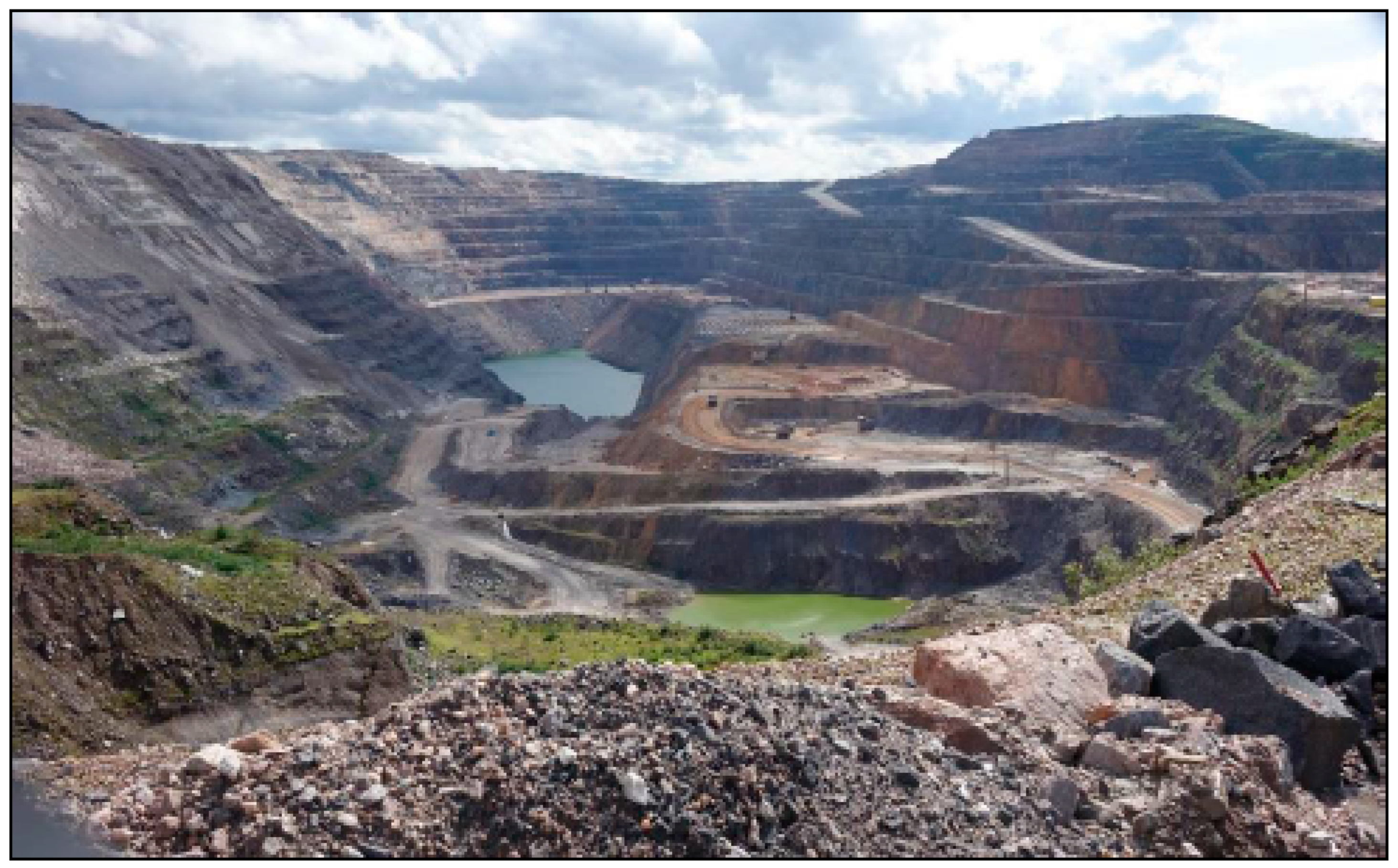
Energy consumption patterns in mining operations are strongly influenced by the type of mine, the depth and geometry of the ore body, and the site’s location. Two broad categories dominate the sector: open-pit mines and underground mines. Open-pit mines (
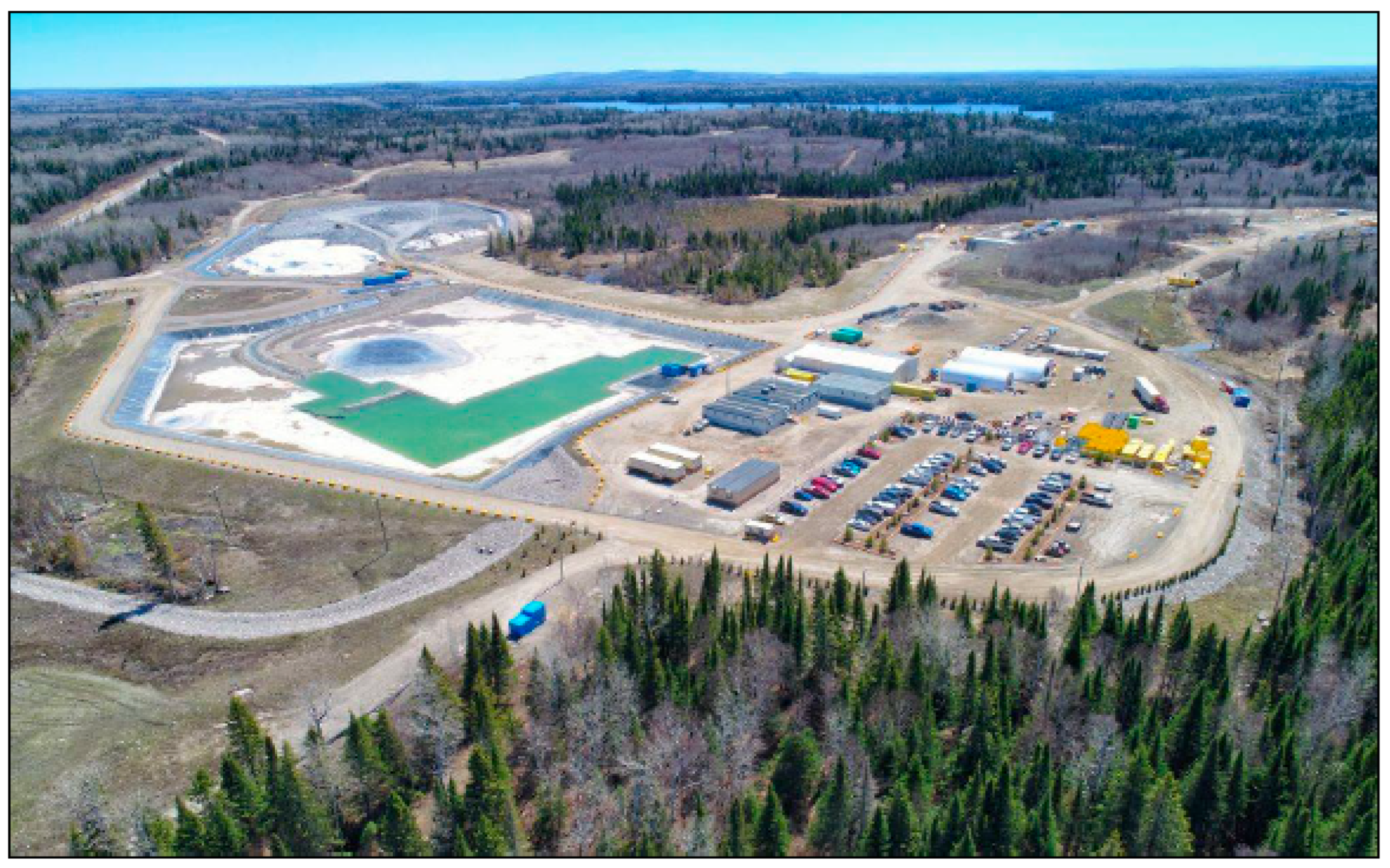
Figure 1) are typically developed for shallow deposits and rely heavily on large-scale material handling systems, particularly truck–shovel operations, which are characterized by high diesel consumption. In such operations, mobile equipment can account for a significant share of total energy use, with diesel alone representing nearly 40% of energy consumption in some open-pit mines [
19]. While open-pit mining generally benefits from lower capital costs and easier access to deposits, it is associated with substantial land disturbance, high fuel consumption, and significant direct emissions, raising concerns about environmental degradation and ecosystem impacts [
20].
Underground mines, by contrast, are designed to access deep ore bodies through vertical shafts and extensive networks of galleries and chambers. Although surface disturbance is typically more limited, underground mining is associated with higher capital and operating costs due to the complexity of infrastructure and safety requirements. From an energy perspective, underground operations are particularly demanding, as ventilation systems alone can account for up to 30% of total energy consumption, in addition to significant electricity demand for hoisting, pumping, and cooling systems [
22]. In cold and northern regions, such as parts of Canada, these challenges are further exacerbated by permafrost, water infiltration, and extreme climatic conditions. Overall, the operating costs of underground mines can be up to 40% higher than those of comparable open-pit mines, primarily due to increased energy requirements and maintenance needs [
23].
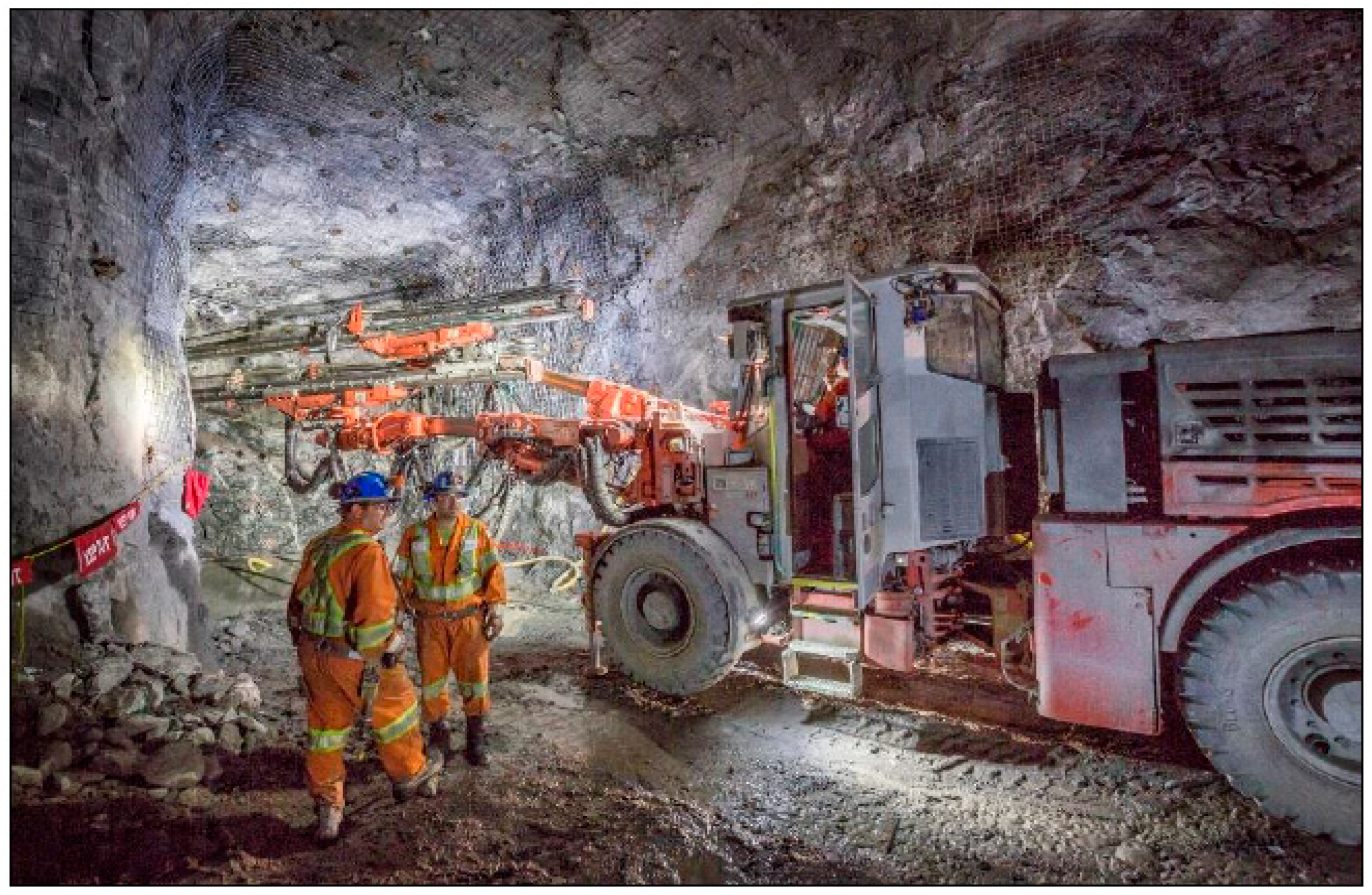
Figure 2 shows the configuration of a gallery in the Borden underground mine.
These structural differences between mining operation types have profound implications for energy management strategies and decarbonization pathways. Solutions that may be technically or economically viable for open-pit mines, such as trolley-assist systems or large-scale solar deployment, may be less suitable for deep underground operations, where electrification of ventilation and haulage systems becomes a priority. Conversely, underground mines may benefit disproportionately from electrification and energy efficiency measures that reduce ventilation demand and improve working conditions.
Beyond its energy intensity, the mining industry plays a critical role in the sustainability of global industrial value chains by supplying raw materials for renewable energy technologies, electrification, and low-carbon infrastructure. Consequently, improving energy efficiency and reducing greenhouse gas emissions in mining operations are not only operational challenges but also key enablers of cleaner production and responsible resource supply. Addressing energy consumption and decarbonization in mining is therefore essential to ensure that the transition toward sustainable energy systems is supported by production practices that are environmentally and economically sustainable.
Against this backdrop, this review aims to provide a structured synthesis of current knowledge on energy consumption, decarbonization strategies, and renewable energy integration in the mining industry. The analysis first examines the main drivers of energy demand across different mining contexts, before assessing operational, technological, and systemic decarbonization levers. Particular attention is given to renewable energy integration and energy storage solutions, with a focus on remote and cold-climate mining operations, especially in Canada. Finally, the review discusses the main challenges, limitations, and future directions for achieving realistic and economically viable decarbonization pathways in the mining sector.
Despite the growing body of research on energy transitions in the mining sector, existing studies often focus on individual technologies or specific case studies rather than offering a comprehensive system-level perspective. This review aims to bridge this gap by synthesizing current knowledge on energy consumption patterns, decarbonization pathways, and renewable energy integration in mining systems. The paper further examines technological maturity, operational constraints, and site-specific factors influencing implementation. The remainder of the article is organized to progressively analyze energy demand, decarbonization strategies, and emerging hybrid energy solutions for mining operations.
2. Review Methodology
This article adopts a structured narrative review approach to synthesize existing knowledge on energy consumption, decarbonization strategies, and renewable energy integration in the mining industry. The objective of the review is not to provide an exhaustive bibliometric or systematic assessment of all published studies, but rather to offer a thematically organized and decision-oriented synthesis of the most relevant scientific and technical contributions, with particular attention to operational mining constraints and real-world applicability.
2.1. Scope and Literature Selection
The present study follows a structured narrative review approach to synthesize the current state of knowledge on energy consumption and decarbonization strategies in the mining sector. The literature review was conducted using major scientific databases, including Scopus, Web of Science, and Google Scholar.
Searches were performed using combinations of keywords such as mining energy consumption, mine electrification, renewable energy in mining, mining decarbonization, hybrid energy systems for mines, and energy storage in mining operations.
The review prioritised peer-reviewed journal articles, reports from international organizations, and recent case studies describing energy systems in operational mining sites. Publications were selected based on their relevance to energy demand structures, decarbonization technologies, renewable energy integration, and operational constraints in mining environments.
Particular attention was given to studies addressing remote or cold-climate mining operations, as these contexts present specific technical challenges for energy system decarbonization.
The review focuses predominantly on publications from the early 2000s onward, with a strong emphasis on studies published after 2015, reflecting the acceleration of decarbonization policies following the Paris Climate Agreement [
14,
15,
16,
17,
18]. Earlier references are included selectively when they provide foundational insights into mining energy management or long-term trends [
12,
13,
24,
25].
2.2. Thematic Organization and Analytical Framework
Rather than following a chronological structure, the review is organized around thematic pillars that reflect the main dimensions of energy use and decarbonization in mining operations. These themes were identified iteratively during the literature review and align with recurring issues highlighted across multiple studies [
1,
22,
26,
27,
28,
29].
The analysis is structured around the following interconnected themes:
Energy consumption patterns in mining operations, with differentiation by mine type (open-pit versus underground), operational activities (haulage, ventilation, comminution), and site characteristics (grid-connected versus off-grid) [
19,
22,
30].
Decarbonization levers, including operational efficiency measures, equipment electrification, fuel switching, and energy management strategies [
5,
8,
31,
32].
Integration of renewable energy sources, such as wind, solar, and hydropower, considering technical feasibility, economic constraints, and site-specific conditions [
26,
27,
28,
33].
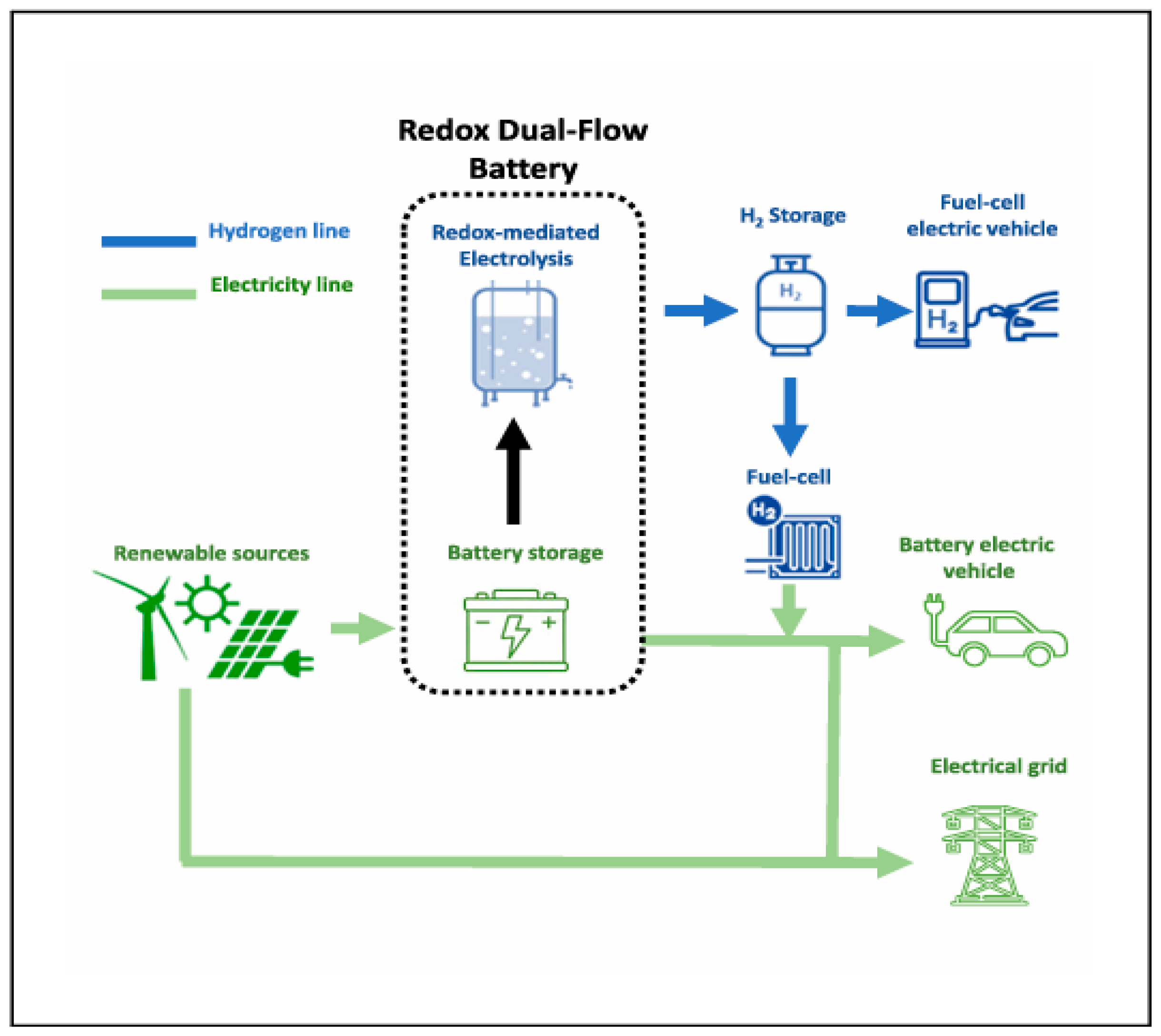
Energy storage solutions supporting renewable energy integration, including battery energy storage systems, pumped hydro storage, redox flow batteries, and hydrogen-based systems, with emphasis on their suitability for mining applications [
34,
35,
36,
37,
38,
39,
40].
Context-specific constraints, particularly those affecting remote and cold-climate mining operations, including climatic exposure, logistics, mine lifetime, and regulatory frameworks [
34,
35,
41].
This thematic organization enables cross-comparison between technologies and strategies while avoiding a purely descriptive enumeration of case studies.
2.3. Synthesis and Comparative Analysis
To enhance analytical depth, the reviewed studies were examined not only individually but also comparatively, with attention given to convergence and divergence in reported results, assumptions, and conclusions. Where possible, findings were synthesized in terms of:
Relative contribution of different processes to total energy consumption,
Technical maturity and readiness of decarbonization options,
Economic feasibility in relation to mine lifetime and scale,
Applicability to specific mining contexts (open-pit, underground, remote, cold-climate).
This approach allows the identification of realistic short- and medium-term decarbonization pathways, rather than purely theoretical or aspirational solutions, a limitation frequently noted in the existing literature [
27,
28,
32,
42].
2.4. Limitations of the Review
This review is subject to several limitations. First, it does not follow a formal systematic review protocol (e.g., PRISMA) and therefore does not claim exhaustive coverage of all published work. Second, the availability and quality of publicly reported energy data for mining operations vary significantly across regions and commodities, which constrains direct quantitative comparison [
22,
31]. Finally, rapidly evolving technologies, particularly in energy storage and electrification, mean that cost and performance assumptions may change over relatively short timescales.
Despite these limitations, the methodology adopted here is well-suited to capturing the multidimensional and applied nature of energy transition challenges in the mining sector and to supporting informed discussion on future research and industrial practice.
The literature used in this review was selected for its relevance to three main themes: energy consumption in mining operations, technological pathways for decarbonization, and the integration of renewable energy systems into industrial sites. The review primarily considers peer-reviewed journal articles, complemented by selected industry reports and institutional studies that provide practical insights into mining energy systems. Overall, this study examined an average of 250 articles, some of which are not cited due to a lack of relevant information directly related to this work.
3. Energy Consumption in the Mining Industry
Energy is a central enabler in mining operations, and its consumption varies significantly by mine type (open pit or underground), operational practices, equipment selection, and site-specific conditions. To support effective energy management and identify optimization opportunities, it is essential to systematically characterize energy use across mining processes and operational sectors. Accordingly, this chapter provides an overview of energy consumption in mining operations, serving as a foundation for the analysis of constraints, challenges, and decarbonization strategies discussed in the subsequent sections.
3.1. General Data, Equipment, and Mining Operations
Despite the economic and environmental importance of the mining sector, several authors highlight the limited availability of detailed and publicly accessible data on the actual energy consumption of mining operations [
22]. Nevertheless, energy is consistently identified as a primary operational constraint in the mining industry, requiring continuous monitoring and optimization [
26,
43]. According to Li et al. [
27] and Igogo et al. [
1], the mining sector accounts for nearly 38% of industrial energy consumption and approximately 15% of global electricity use. At the operational level, energy-related expenses typically represent 15–40% of total operating costs, depending on mine type, location, and energy supply configuration.
To meet these energy demands, many mining operations, particularly those located in remote or off-grid regions, rely on diesel generators to supply internal microgrids. While this solution ensures operational reliability, it is associated with high operating costs due to fuel consumption, price volatility, and the logistical complexity of transporting diesel to isolated sites. Energy use patterns vary significantly according to mining method: in underground mines, electricity is primarily consumed by ventilation, hoisting, and crushing systems, whereas in open-pit operations, diesel dominates energy use, particularly for ore hauling and mobile equipment [
1,
28,
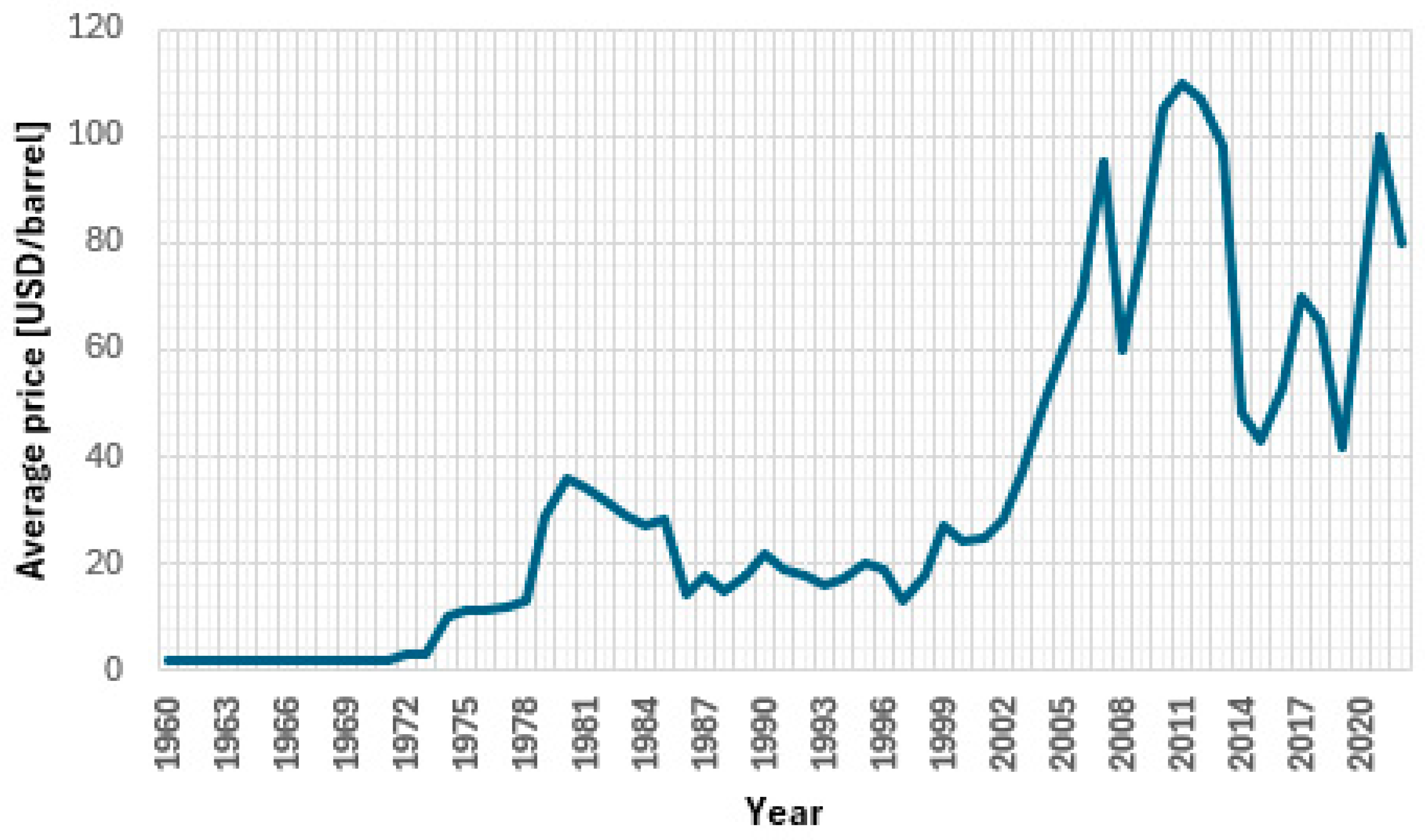
29]. As a result, the mining sector remains highly dependent on fossil fuels and is therefore strongly exposed to fluctuations in global energy markets [
28]. This close coupling between mining activity and energy price dynamics is illustrated in
Figure 3.
Cronje et al. [
4] examined electricity costs in the mining industry to promote more proactive and sustainable energy management practices. Their work emphasizes the importance of budget forecasting and real-time energy management for cost control and operational resilience.
Table 1 presents the average electricity costs in several major mineral-producing countries, highlighting substantial regional disparities that directly influence mine competitiveness and energy strategy selection.
Beyond energy supply, the choice and operation of mining equipment, particularly transport systems, play a decisive role in overall energy consumption. Numerous studies have investigated the impact of haulage and transport equipment on mine energy demand [
47,
48,
49,
50,
51,
52,
53,
54,
55,
56,
57]. Bodziony et al. [
47] analyzed the factors influencing fuel consumption and haul truck reliability in open-pit mines and quarries, demonstrating that frequent equipment breakdowns significantly increase fuel use and associated greenhouse gas emissions. In the Canadian context, Smith [
30] reports that approximately 10.5% of total diesel energy consumption in underground mines is attributable solely to loading and transport equipment.
Several studies have explored opportunities to reduce energy consumption in belt conveyor systems, which are increasingly considered as alternatives to truck-based haulage in suitable conditions. Konieczna-Fuławka [
51] investigated the potential for energy savings through the use of low-friction conveyor belts, frequency converters, automation systems, and regenerative conveyors. Bajda and Hardygóra [
53] developed a dedicated test bench to evaluate rolling resistance in conveyor systems, demonstrating that optimal belt selection can yield substantial energy savings. Similarly, Bajda et al. [
55] analyzed conveyor energy consumption in a lignite mine and demonstrated that optimized load distribution alone can reduce energy use by up to 30%, depending on operating conditions and material flow characteristics.
With the growing electrification and automation of mining transport systems, energy storage has also attracted increasing attention. Ren et al. [
58] proposed a Hybrid Energy Storage System (HESS) combining lithium-ion batteries and supercapacitors to address the limitations of conventional storage solutions in autonomous mining vehicles. Soofastaei et al. [
19] further emphasize that mining transport systems, particularly diesel trucks, remain responsible for a large share of total energy consumption in open-pit mines. Their analysis compares the energy efficiency of major transport and handling equipment, including haul trucks, electric cable shovels, hydraulic excavators, crushers, and conveyor systems. Complementing these studies, Marnika et al. [
59] developed a tool to assess the environmental and energy impacts of mining transport activities, assigning a 70% weighting to energy consumption, with higher impact values reported for surface operations than for underground mines.
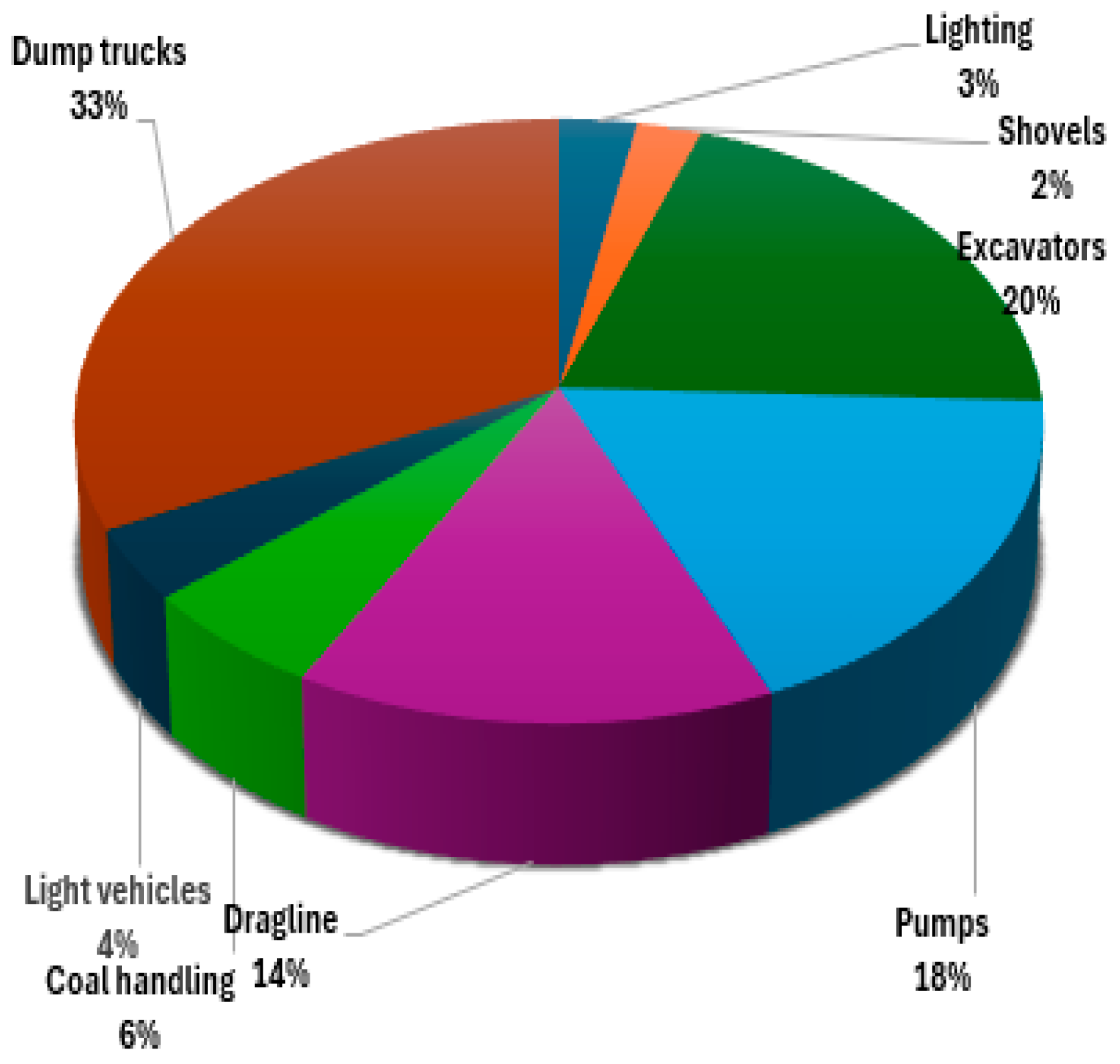
Figure 4 illustrates the share of the energy used by the different equipment in a coal mine in India [
60].
In addition to transport systems, blasting and excavation operations represent significant contributors to mine energy consumption. The energy implications of these activities have been widely examined in the literature [
61,
62,
63]. Biessikirski et al. [
62] compared energy use and gas emissions associated with blasting and mechanical excavation, concluding that, for equivalent production volumes, blasting operations generally consume less energy than purely mechanical extraction. However, mechanical excavation was found to generate higher emissions, primarily due to sustained equipment operation. Cheluszka et al. [
63] focused on underground excavation processes, developing mathematical models to describe the dynamics of rock-cutting machines and their associated energy consumption, highlighting the strong dependence of energy demand on rock properties, machine design, and operating parameters.
These energy consumption patterns, shaped by mining methods, equipment choices, and site-specific conditions, underpin the technical, economic, and operational constraints that complicate energy management and decarbonization in mining operations, which are examined in the following section.
3.2. Constraints, Problems, and Challenges of Energy Use
Mining operations face a wide range of technical, economic, and operational challenges related to energy supply, consumption, and optimization across the entire production chain, whether open-pit or underground. These challenges are exacerbated by increasing electrification, automation, and the growing penetration of variable renewable energy sources.
One major constraint relates to the reliability and continuity of electrical power supply, particularly in mines undergoing automation and digital transformation. Rzazade et al. [
64] investigated the challenges of electrical energy management in mine automation, highlighting the vulnerability of automated systems to power cuts and outages. Such disruptions not only interrupt production but also increase operating costs and may compromise equipment integrity and safety. Ensuring a stable and reliable power supply is therefore a critical prerequisite for advanced mining operations.
Energy supply challenges are even more pronounced in isolated or weakly grid-connected mines, where reliance on diesel generation remains widespread. Ansong et al. [
65] conducted a techno-economic analysis of a hybrid power supply system for an isolated mine connected to the public grid, aiming to reduce dependence on diesel fuel. Using HOMER software, the authors evaluated a system comprising 50 MW of photovoltaic capacity, 15 MW of fuel cells, 600 batteries, 20.5 MW of converters, and 20 MW of diesel generators. Their results indicate that, out of a total annual electricity production of 152.99 GWh, photovoltaic generation accounted for 44%, fuel cells for 40%, and diesel generators for 14%. Under assumptions of a diesel price of USD 0.80 per litre and a 30% reduction in the costs of photovoltaic modules and fuel cell systems, the levelized cost of energy was estimated at USD 0.25/kWh. While such hybrid configurations demonstrate the technical feasibility of reducing fossil fuel dependence, they also highlight the capital intensity and system complexity associated with high shares of low-carbon energy in mining applications.
Beyond supply issues, energy demand management and flexibility constitute additional challenges, particularly during energy-intensive stages such as ore processing. Machalek et al. [
66] examined the energy flexibility of mining facilities, emphasizing the difficulty of managing high, often inflexible, electricity demand profiles. The authors propose reorienting mining energy systems through strategies that limit peak demand, improve predictability, and enhance grid stability via advanced energy management and control schemes. Such approaches are increasingly relevant in contexts where mines interact dynamically with electricity markets or operate within constrained power systems.
At a broader system level, integrating renewable energy sources introduces new challenges related to variability, transmission, and distribution, but also offers opportunities to enhance resilience. A reliable energy supply from renewable sources can enhance the robustness of industrial operations while supporting environmentally sustainable growth. Energy resilience depends not only on generation capacity but also on the effective management of energy transmission, distribution, and control within the network [
67,
68,
69,
70]. Dranka et al. [
71] show that systems with a high share of renewable energy can be optimized by accounting for short-term variability in both demand and renewable generation, particularly when demand-side flexibility is available.
In this context, smart grid technologies and advanced control strategies are increasingly seen as enablers of efficient, resilient energy systems for industrial applications. Panda and Das [
72] developed a methodology based on mathematical modeling and computational approaches to optimize smart grid components, enabling improved system performance and robust control under varying load and generation constraints. Such approaches are directly applicable to mining microgrids, where fluctuating loads and the integration of renewables require coordinated, adaptive control.
Finally, the potential for large-scale decarbonization of mining operations through renewable energy integration has been explicitly addressed by Huang et al. [
33], who assessed the suitability of solar photovoltaic and wind energy for mining applications. Their results indicate that many mining sites exhibit favorable conditions for renewable energy deployment, characterized by high capacity factors and limited downtime. However, realizing this potential requires overcoming the aforementioned challenges related to system reliability, flexibility, and economic feasibility, particularly in remote and energy-intensive mining contexts.
3.3. Energy Consumption in Isolated Mines
A significant number of mining operations are located in remote or isolated regions, far from regional or national electricity grids. In such contexts, access to reliable electrical power is a critical operational constraint, which explains the widespread reliance on diesel generators to meet on-site energy demand. As a result, isolated mines are typically characterized by high fuel consumption, elevated operating costs, and substantial greenhouse gas emissions. Several studies have specifically addressed the energy challenges associated with isolated mining operations and autonomous power systems [
34,
35,
73].
Corrand et al. [
73] proposed an approach that integrates the structural characteristics of the electricity distribution network into the optimization of the energy portfolio of isolated systems. Their study focuses on small, independent electrical networks, where infrastructure constraints, such as limited transmission capacity, aging equipment, and restricted redundancy, must be explicitly considered. Using the HOMER software, the authors demonstrated that energy system optimization can support strategic decisions to extend or reinforce distribution lines and transformers, thereby improving reliability and economic performance.
The remoteness of mining sites from urban centers is also identified as a major driver of the mining sector’s continued dependence on fossil fuels. Pouresmaieli et al. [
28] emphasize that distance from centralized infrastructure significantly limits access to low-carbon electricity, making diesel-based generation the default solution for many isolated mines. While the integration of renewable energy sources offers a promising pathway to reduce emissions and fuel dependency, it introduces additional challenges related to variability, system sizing, and the ability to consistently meet high, often inflexible, energy demand profiles.
Operating an autonomous electrical network, whether based on conventional diesel generation or hybrid configurations, requires continuous monitoring and active control to ensure system stability, efficiency, and economic viability. Hung et al. [
8] developed a collaborative optimization methodology that simultaneously addresses the partitioning of electrical and thermal network clusters and the coordinated optimization of multiple energy hubs. Their approach is particularly relevant for isolated microgrids with decentralized renewable generation and increasing shares of flexible loads. The results show reduced transformer overloading and lower overall operating costs, highlighting the importance of integrated energy management strategies in isolated systems.
A concrete example of these challenges is provided by Tardy et al. [
34], who investigated decarbonization pathways for an isolated mining operation in northern Québec, where diesel fuel accounts for more than 80% of total energy consumption. The study highlights the structural dependence of such mines on fossil fuels and underscores the technical and economic complexity of transitioning toward low-carbon energy systems in harsh climatic conditions.
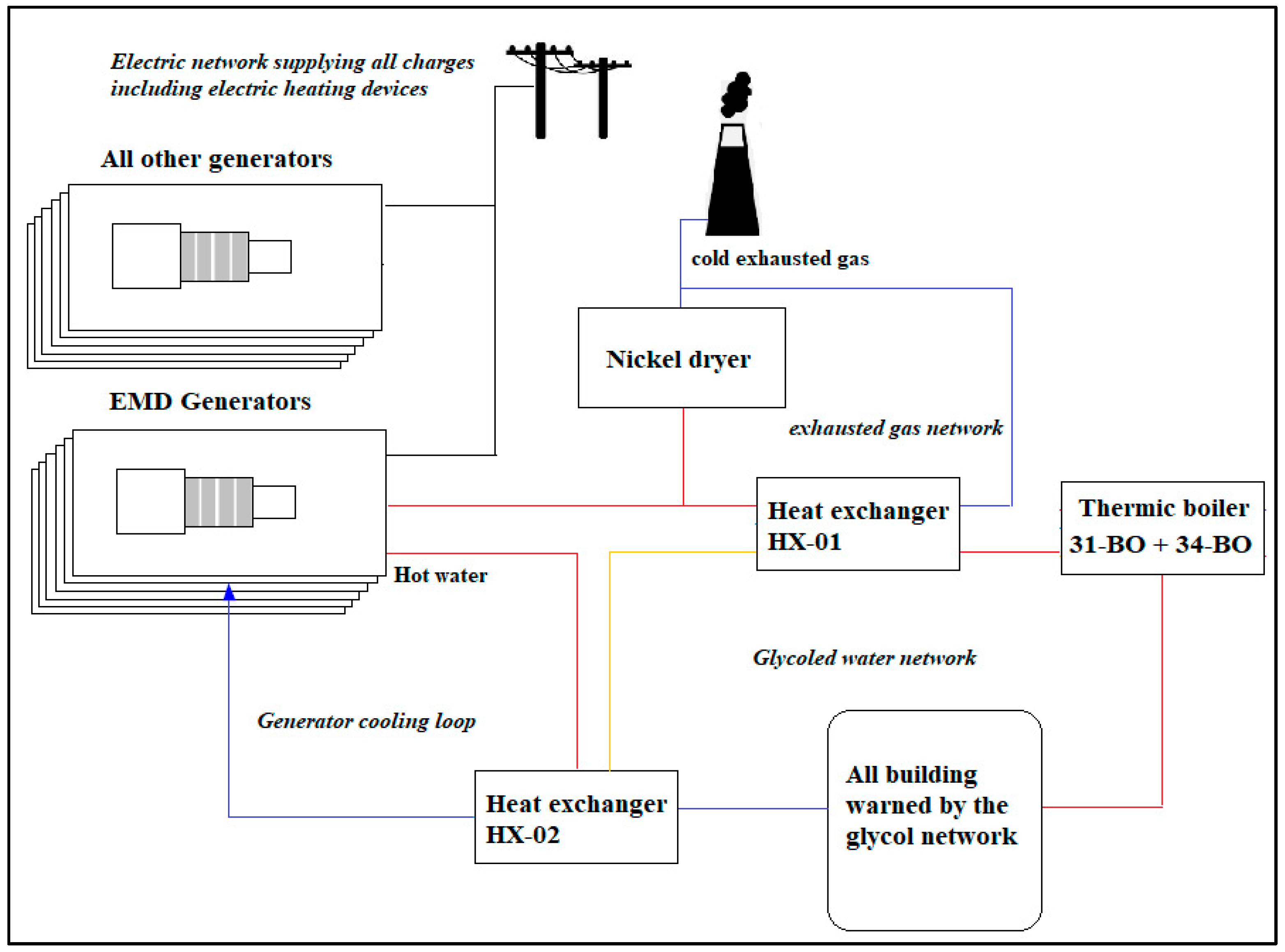
Figure 5 illustrates the integrated electrical and heating networks of the Raglan mine, which serve as a representative case of an isolated mining energy system combining electricity and thermal energy demands.
3.4. Energy Profile and Constraints of the Canadian Mining Industry
3.4.1. Economic Structure and Role of Energy Costs
The mining sector plays a significant role in the Canadian economy and is highly exposed to international commodity markets. As revenues fluctuate with global mineral prices, mining companies must continuously control and optimize their production costs to remain competitive. These costs can generally be grouped into three main categories: equipment and supplies, labor, and energy.
Table 2 presents a breakdown of production costs for a representative sample of Canadian mining operations in 2018. In metal ore extraction, equipment, materials, and supplies account for the most significant cost component, approximately 50% of total production costs. This reflects the capital-intensive nature of mining operations, including the acquisition, maintenance, and replacement of heavy machinery such as haul trucks, drills, and loaders, as well as the use of explosives. These costs tend to increase as mines expand or operate in remote locations, where equipment transport and logistics become more complex.
Labor costs are the second-largest expense category, accounting for approximately 27% of total production costs in metal mining. The Canadian mining industry offers some of the highest wages among industrial sectors to attract and retain skilled workers, particularly for operations in remote regions that require long work rotations. In 2020, average annual salaries in the mining sector exceeded USD 123,000, significantly higher than those in manufacturing, finance, or construction.
Energy costs rank third, accounting for approximately 17% of operating costs in metal mining. However, this share varies widely depending on mine type and access to the electricity grid. Grid-connected mines benefit from relatively low electricity prices, ranging from 5 to 24 ¢/kWh depending on the province, while isolated and northern operations often rely on on-site diesel generation. In Arctic and remote communities, electricity prices can reach USD 0.80 to 2.50 per kWh, dramatically increasing operating costs and reinforcing dependence on fossil fuels [
75].
3.4.2. Energy Demand/Consumption of the Canadian Mining Industry
Canada is one of the world’s leading mining countries, with extensive extraction activities across multiple provinces and mineral types. Consequently, the mining sector represents a significant share of national industrial energy consumption. Energy demand varies substantially depending on mining method, depth, and proximity to the public electricity grid.
Several studies have examined energy consumption in Canadian mining operations [
31,
49]. Bharathan et al. [
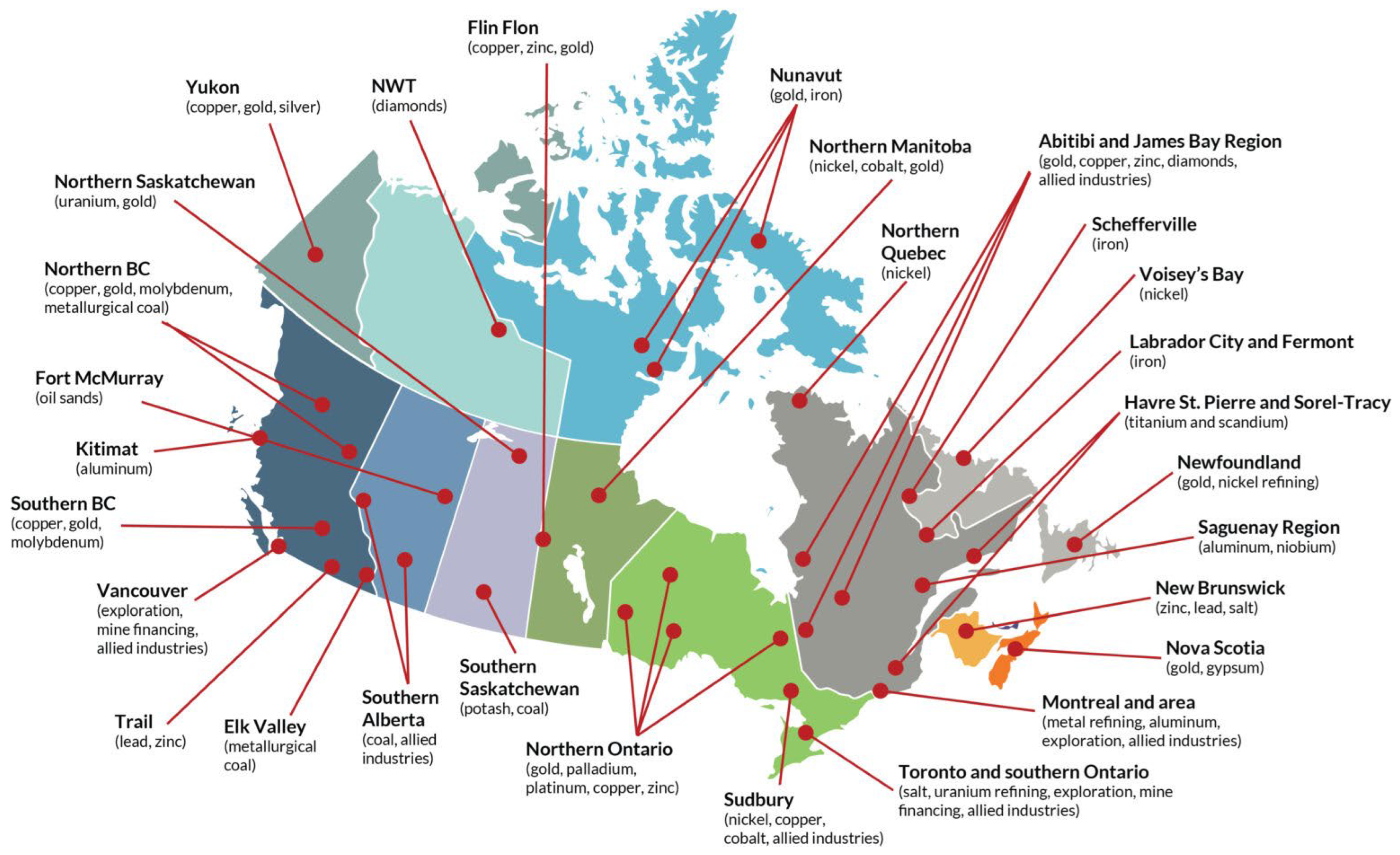
49] assessed the energy use and costs of underground mining facilities and transportation systems across four provinces, British Columbia, Saskatchewan, Ontario, and Québec, and identified substantial potential for fuel savings, particularly in Québec. These four provinces host the majority of Canadian mining activity, as illustrated in
Figure 6.
Smith [
30] compiled and analyzed energy consumption data from eleven Canadian underground mines, based on surveys conducted by Natural Resources Canada. The results indicate that:
Electricity accounts for 65–73% of total site energy consumption;
Diesel and gasoline used for equipment and material transport account for 16–20%;
Heating and cooling systems account for 11–15% of total energy use.
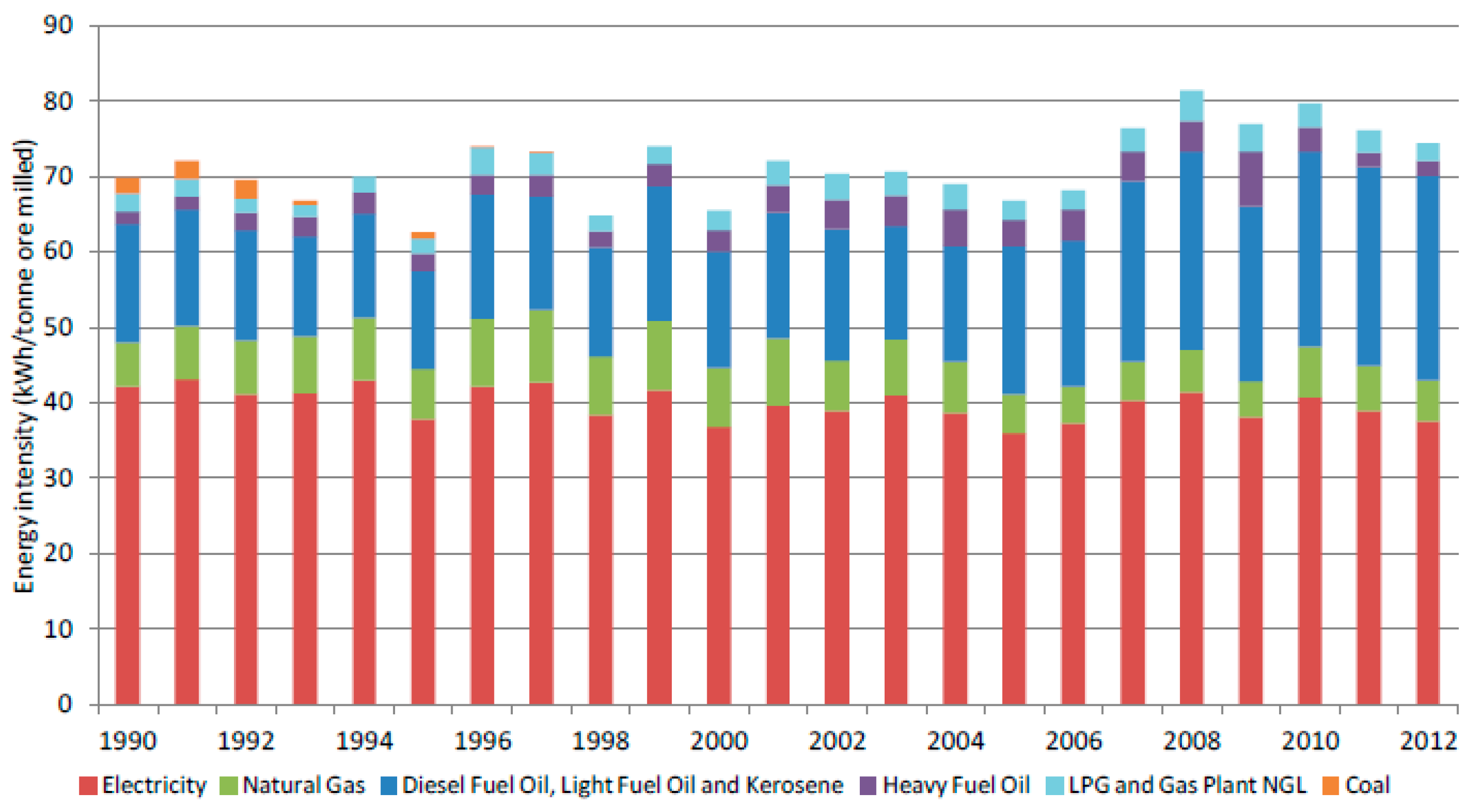
Historical trends further reveal that improvements in electrical efficiency have often been accompanied by increased diesel consumption, particularly in mobile equipment (
Figure 7).
The regional distribution of mining-related energy consumption reflects both geological endowment and mining practices. According to Katta et al. [
31], iron ore extraction is dominated by Newfoundland and Labrador and Québec, which together account for nearly all national energy demand for this commodity. Gold mining is concentrated in Ontario and Québec, which together account for approximately 82% of total energy consumption for gold extraction and over 80% of underground ore production.
Fuel and electricity prices also vary significantly across provinces, as shown in
Table 3. Québec benefits from remarkably low electricity prices due to its extensive hydropower resources, whereas diesel and compressed natural gas prices are more variable and sensitive to transportation and regional taxation.
Analysis conducted in the context of this review indicates that open-pit mining operations typically rely on diesel and electricity in nearly equal proportions, with diesel primarily used for hauling and loading, and electricity mainly consumed during material processing stages such as crushing and grinding. Energy consumption associated with water pumping and base camp operations is generally negligible in comparison.
In northern Canadian mines, waste heat recovery from diesel generators is increasingly used to improve overall energy efficiency. At De Beers’ Snap Lake mine, expanding heat exchanger capacity reduced annual diesel consumption by approximately 800,000 to 1 mL, corresponding to nearly 3% of total fuel use [
78].
3.4.3. Illustrative Canadian Case Studies
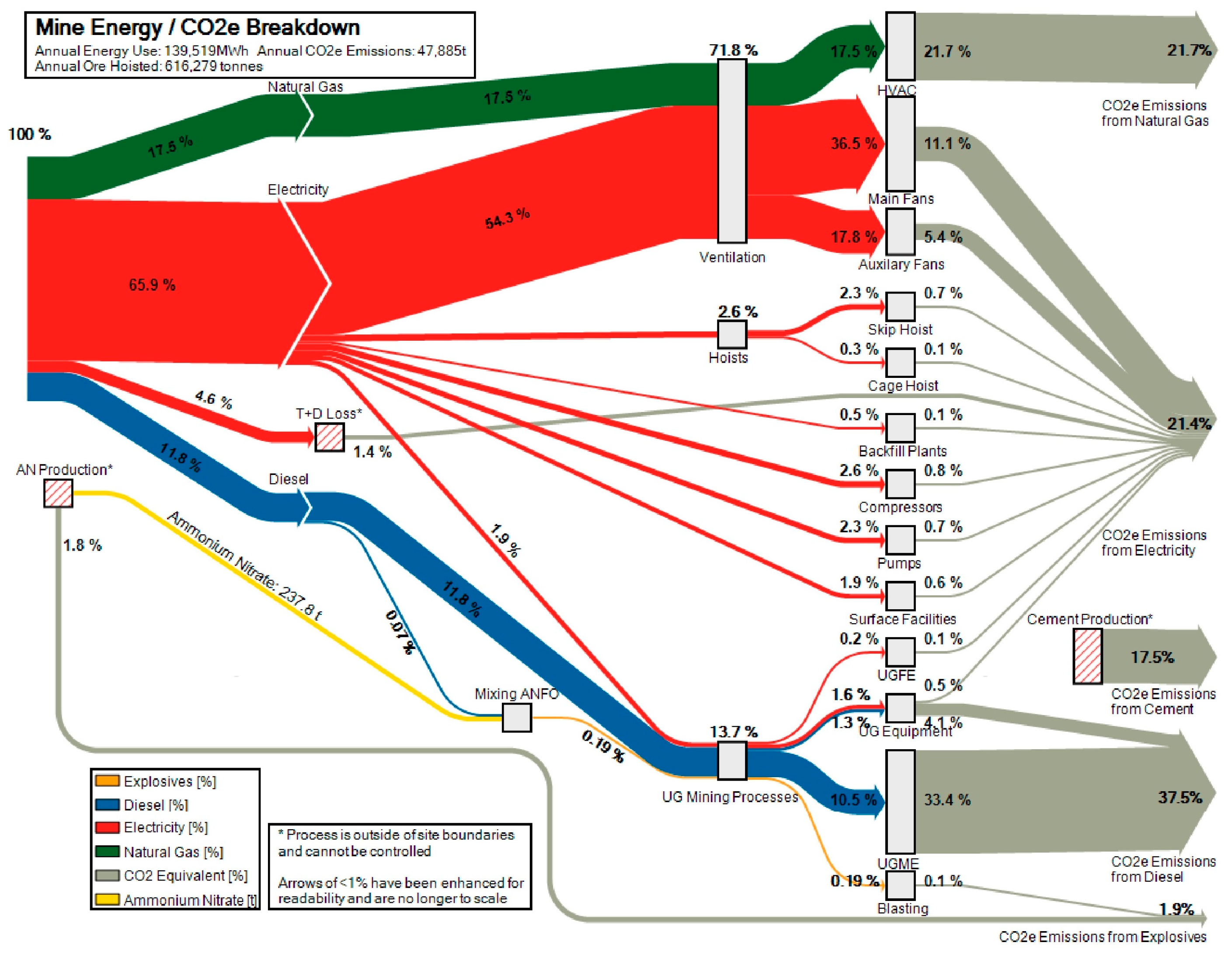
The Garson mine, operated by Vale in Sudbury, Ontario, provides a representative example of a conventional Canadian underground mining operation. Its energy consumption, excluding crushing, is estimated at 226.5 MWh per kilotonne of ore, with average emissions of 0.078 tCO
2e per tonne of ore [
77,
79]. Ventilation alone accounts for approximately 71.8% of total energy consumption, highlighting its dominant role in underground mines. Diesel-powered transport and loading equipment represent about 10.5% of energy use but contribute to nearly 33% of total GHG emissions [
30,
79].
Figure 8 shows the Sankey diagram, including estimated GHG emissions.
The Borden gold mine (
Figure 9), located in Chapleau, Ontario, represents a major technological shift toward mine electrification. Operated by Goldcorp, Borden is Canada’s first fully electric underground mine, relying on Battery Electric Vehicles (BEVs) for drilling, blasting, bolting, and ore transport. This strategy aims to eliminate diesel use underground, significantly reducing emissions and ventilation requirements.
By transitioning to BEVs, the mine is expected to reduce diesel consumption by approximately 2 mL per year and propane use by 1 mL per year, resulting in a 70% reduction in GHG emissions (about 7000 tCO2 annually). Reduced ventilation demand is projected to save 33,000 MWh per year, resulting in approximately USD 9 million in operating cost savings. Although electric equipment entails higher upfront costs (25–30% more than diesel equivalents), lifecycle cost analyses indicate comparable or favorable total ownership costs due to lower fuel and maintenance expenses.
Despite these achievements, full electrification remains constrained by the limited availability of large-capacity electric haul trucks. Moreover, the Borden mine benefits from reliable grid access, underscoring that such solutions may be more challenging to replicate in isolated or off-grid contexts.
3.4.4. Key Energy Challenges for Canadian Mining Operations
Canadian mining operations face persistent energy challenges related to geographical isolation, extreme climatic conditions, and logistical constraints, particularly in northern regions. Limited access during winter months complicates fuel supply and equipment transport, increasing operating costs and vulnerability to disruptions.
Tardy et al. [
34] highlight that the remoteness and harsh climate of the Raglan mine significantly complicate diesel supply, maintenance operations, and logistics, making the site more costly than comparable southern mines. Robert et al. [
35] investigated the feasibility of a hybrid diesel–wind system coupled with redox flow battery storage at Raglan and showed that accurately sizing storage systems under cold-climate conditions remains a significant technical challenge. More broadly, Durand et al. [
41] conclude that geographical isolation and extreme weather remain the primary barriers to large-scale renewable energy integration in Canada’s northern mining operations.
3.5. Energy Profile and Constraints of the Mining Industry in Other Countries
Australia is among the countries with significant mining activity and is the leading producer of several minerals. However, it faces enormous challenges, particularly its notoriously energy-intensive mining processes [
81]. Energy consumption in the Australian mining sector is substantial. According to data from Meade [
82], the Australian mining industry consumes nearly 500 petajoules (PJ) of energy annually. This figure represents approximately 10% of Australia’s total energy consumption [
82]. Its energy mix is primarily composed of fossil fuels, with diesel accounting for a significant share, estimated at 41% of the total energy consumed in Australian mines. Diesel is widely used to power mining trucks, heavy machinery, and in ore transport and electricity generation in remote mines. The use of renewable energies represents almost 4% of current energy consumption [
83].
Renewable energy resources are abundant in Australia, facilitating their integration into the mining sector. Some mines are launching projects to install hybrid microgrids, enabling them to use diesel, solar photovoltaic, hydroelectric, and other sources to supplement their energy needs. According to Matanzima et al. [
84], many Australian mines are using pumped-storage hydroelectric power plants as a mine conversion option for energy storage. Huang et al. [
81] showed that hybrid microgrids (integrating photovoltaic systems, wind turbines, diesel generators, equipped with a battery storage system) used by Australian mines can achieve 80% renewable energy penetration, at a minimum levelized cost of electricity (LCOE) of
$0.32/kWh, and an estimated emission reduction of 0.11 kg CO
2/kWh, representing an 84% reduction compared to reference diesel generators.
In Germany, energy consumption is estimated at 10,478 PJ [
85]. It is considered the EU’s (European Union) largest energy consumer. Like Canada and Australia, Germany also faces energy challenges, particularly rising energy prices. This situation is having a significant impact on the mining sector, which has seen production decline since the beginning of 2022. The largest energy-intensive activity in the German mining industry remains lignite mining, with an output of nearly 102.3 million tonnes. The German mining industry is transitioning to clean energy sources following the decommissioning of coal-fired power plants.
According to Trade [
85], Germany has a target of 80 percent of its electricity supply from renewables by 2030, and it achieved 59 percent in 2024. Germany plans to reduce its greenhouse gas emissions by 65 percent from 1990 levels by 2030 as part of its goal to achieve carbon neutrality by 2045. Driven by increased domestic renewable energy production, imported electricity, and a decline in energy-intensive industries, Germany’s carbon dioxide emissions fell to their lowest level in 2024 since the 1950s. Germany has the sixth-most carbon-intensive electricity in Europe at 381 gCO
2/kWh compared to just 56 gCO
2/kWh in France in 2023.
3.6. Energy Transition and the Mining Sector
The global energy transition is profoundly reshaping the mining sector by simultaneously driving unprecedented demand for minerals and imposing stronger constraints on energy use and emissions. The deployment of low-carbon technologies, such as renewable energy sources, electric vehicles, and energy storage, requires large quantities of minerals and metals. According to Hund et al. [
86], demand for critical minerals such as lithium, graphite, and cobalt could increase by up to 500% by 2050, driven primarily by the expansion of clean energy technologies and electrified transport systems. This rapid growth in demand positions the mining industry as a strategic enabler of the energy transition, while also intensifying pressure on production capacity and resource efficiency.
At the same time, green technologies are generally more mineral-intensive than conventional fossil fuel-based systems. The Intergovernmental Forum on Mining, Minerals, Metals and Sustainable Development (IGF) reports that clean energy technologies require significantly more raw materials per unit of energy produced than traditional technologies [
87].
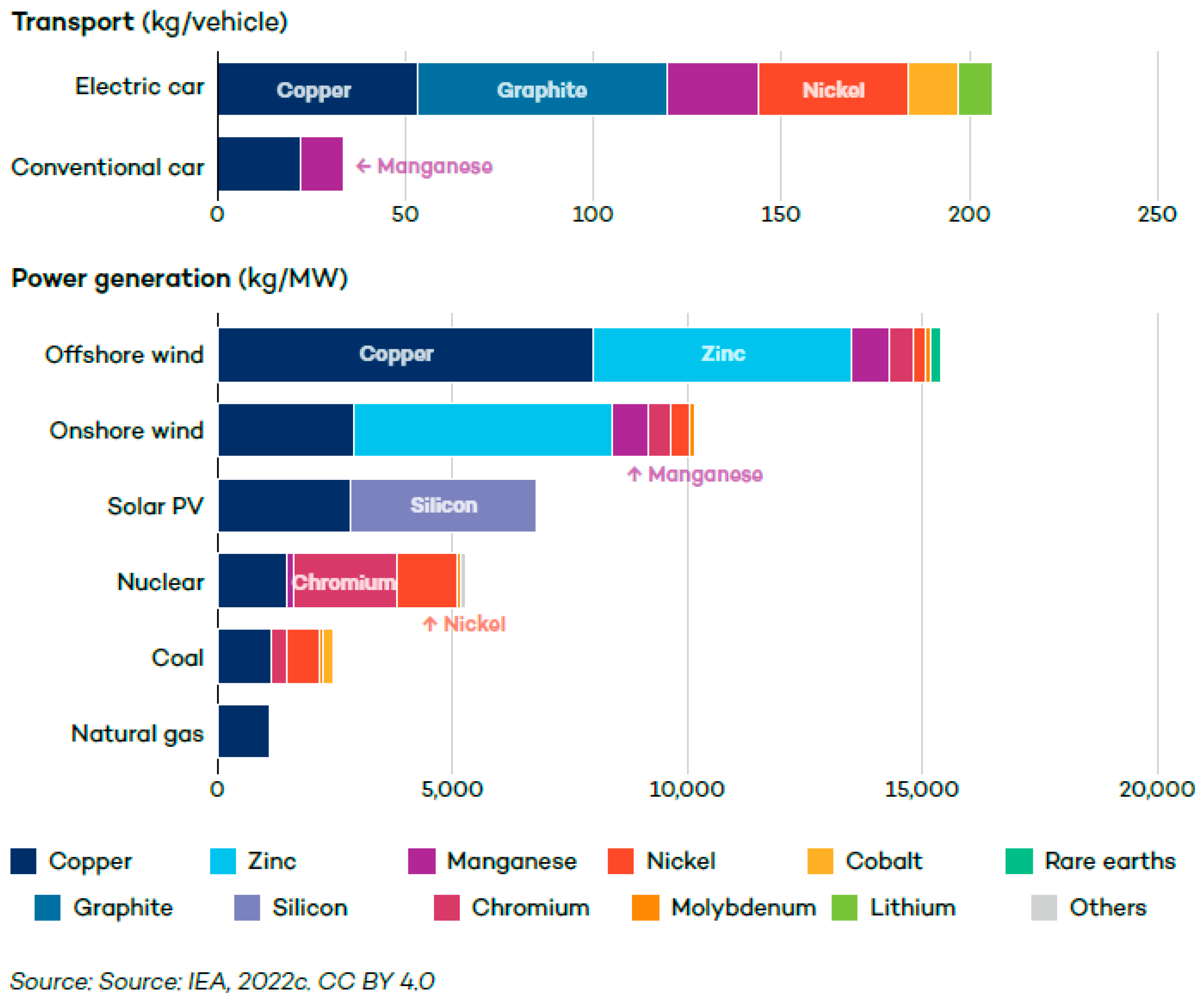
Figure 10 illustrates the range of minerals used in selected clean energy technologies, highlighting the central role of mining in the decarbonization of the global energy system.
Beyond responding to rising mineral demand, the energy transition within the mining sector itself also requires reducing energy consumption and emissions across mining operations. This involves adopting improved operational practices, energy-efficient technologies, and optimized process design. Purhamadani and Bagherpour [
5] investigated the energy implications of explosive selection during blasting operations, a critical stage in many mining processes. Their study compared three commonly used explosives, ANFO, emulite, and pentolite, and demonstrated that the choice of explosive can significantly influence energy consumption. In particular, the use of emulite and pentolite was found to increase energy consumption per tonne of rock mass during blasting by 1.1 to 1.8 times that of conventional ANFO. These results highlight that, even at early stages of the mining value chain, technical choices can have measurable impacts on overall energy efficiency.
Taken together, these trends illustrate the dual challenge facing the mining sector: meeting rapidly growing demand for minerals essential to the energy transition, while simultaneously reducing its own energy intensity and environmental footprint. Addressing this challenge requires not only technological innovation but also integrated energy management strategies that consider both production requirements and decarbonization objectives.
In summary, energy demand in mining operations is dominated by three main categories: ore extraction and handling, ventilation and auxiliary services in underground mines, and transportation systems. Despite differences in mining methods and geographic contexts, these activities consistently account for the primary drivers of energy consumption and therefore represent the main targets for decarbonization strategies.
4. Decarbonization Pathways in the Mining Industry
Mining activities are inherently energy-intensive and remain strongly dependent on fossil fuels, particularly for mobile equipment, material handling, and on-site power generation. As a result, the mining sector is associated with significant greenhouse gas (GHG) emissions, especially in remote operations that rely on autonomous, fossil-fuel-based electricity systems. Decarbonising mining operations has therefore become a central challenge in the context of global climate objectives and the energy transition.
4.1. Global Decarbonization Drivers and Levers in Mining
A growing body of literature addresses decarbonization strategies in the global mining industry [
88]. Zhang et al. [
89] analysed carbon emissions and energy consumption transfers within the Chinese steel sector, showing a decreasing trend in consumption-based carbon and energy footprints between 2012 and 2017. Hirlekar et al. [
90] evaluated the economic and energy impacts of green technologies in mining operations in South Africa and the Democratic Republic of Congo, highlighting the potential of electrification in daily mining activities. Zhu et al. [
42] demonstrated that technological innovation plays a decisive role in improving both energy efficiency and environmental performance in mining operations. Similar conclusions were reached by Davies [
32], who emphasised the importance of integrating sustainability objectives into long-term mine planning to enhance profitability and resilience.
Several studies emphasise the structural and socio-environmental dimensions of mining decarbonization. Vidal [
91] identified key weaknesses limiting sustainable mining development and argued that, if addressed, Nordic mining operations could play a leading role in Europe’s ecological transition. Negrete et al. [
92] assessed the socio-environmental impacts of decarbonization strategies in copper and lithium mines, showing that operational choices and governance structures strongly influence sustainability outcomes. Artisanal and small-scale mining, particularly in developing countries, remains a significant challenge due to inefficient technologies and high energy intensity, resulting in a disproportionate carbon footprint [
93].
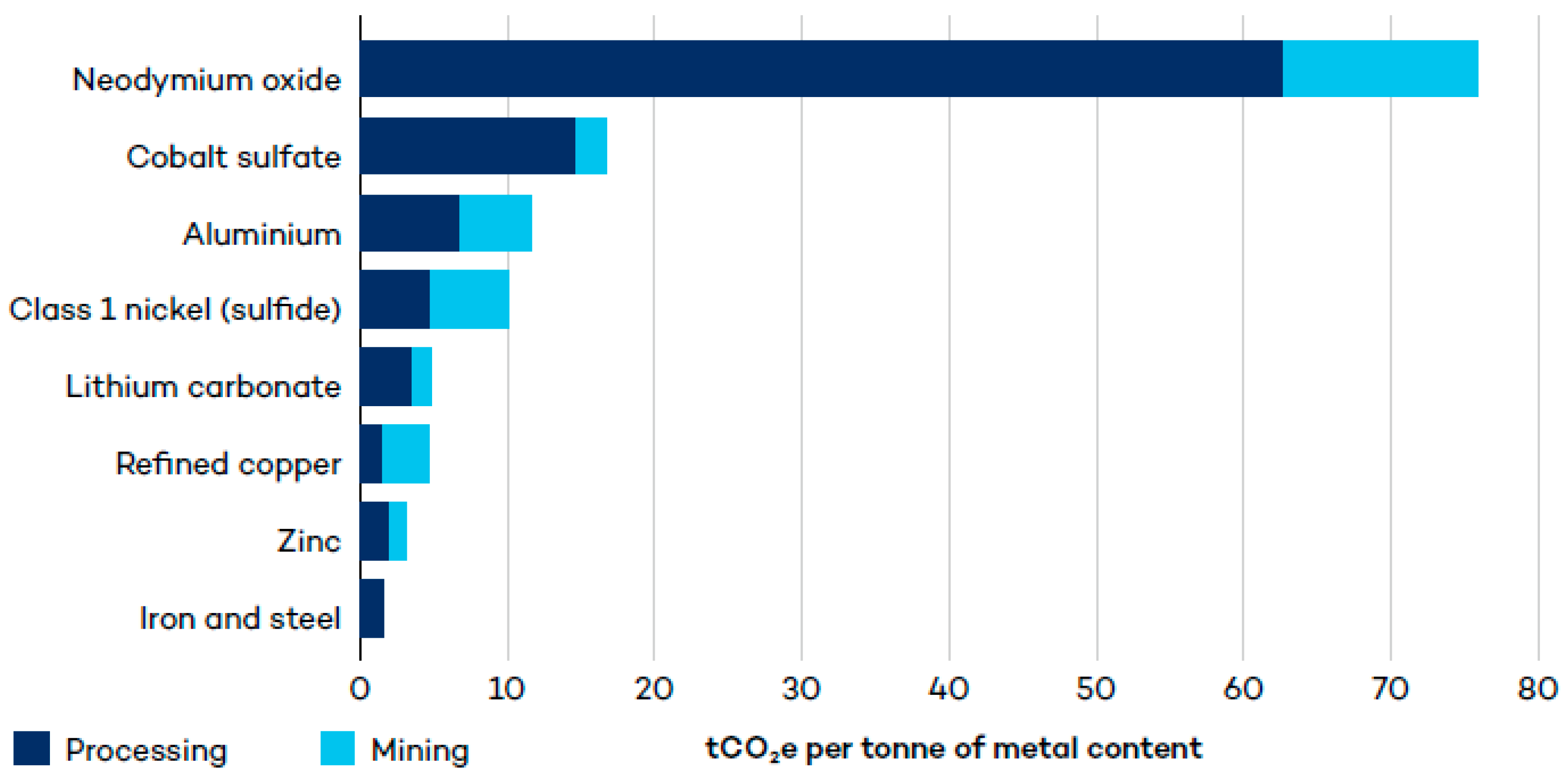
Figure 11 illustrates the average GHG emissions intensity for the production of selected commodities, highlighting the strong variability across mineral types and the dominant role of energy-intensive processes.
Transport, loading, and comminution operations are consistently identified as major contributors to mining-related emissions [
94,
95,
96,
97,
98,
99]. Norgate and Haque [
95] reported that crushing and grinding can account for up to 46% of total emissions in copper mining. Kecojevic and Komljenovic [
96] developed detailed models to estimate fuel consumption and CO
2 emissions from mining trucks, demonstrating the sensitivity of emissions to operating conditions, load factors, and equipment utilisation.
Beyond direct operational emissions, specific sources remain underrepresented in decarbonization analyses. Mervine et al. [
3] highlighted the contribution of biomass-related emissions resulting from vegetation clearing for nickel extraction, which are often excluded from conventional carbon inventories. These findings underline the need for more comprehensive emission accounting frameworks in mining decarbonization strategies.
At a broader energy-system level, decarbonization is commonly framed around three key challenges: replacing fossil fuels with renewable energy sources, developing alternatives for sectors that are difficult to electrify, and mitigating residual emissions through advanced strategies [
100]. Several authors emphasise that achieving deep decarbonization requires profound transformation of electricity production, transmission, and consumption systems [
101,
102,
103,
104,
105,
106]. Given that mining alone accounts for approximately 7% of global GHG emissions [
107], the sector represents both a challenge and an opportunity within global decarbonization pathways.
Strategic mine planning is increasingly recognised as a key lever for emission reduction. Minimising waste rock transport, reducing equipment idling, and optimising material flows can significantly lower fuel consumption and emissions [
32]. Large-scale integration of renewable energy remains one of the most effective long-term strategies, particularly as many low-carbon technologies rely on minerals such as aluminium, copper, nickel, cobalt, lithium, and graphite, materials that are themselves produced by the mining sector [
86,
108,
109].
4.2. Decarbonization Efforts in the Canadian Mining Industry
4.2.1. Background
In Canada, decarbonization efforts in the mining sector are supported by institutional frameworks and industry-led initiatives. Through the Mining Association of Canada (MAC), mining companies are encouraged to adopt environmentally responsible practices while maintaining economic performance. Practical examples include Rio Tinto’s Diavik diamond mine, which integrates wind energy into its power supply [
110]. Durand et al. [
41] examined fossil fuel dependence in northern Canadian mines and highlighted both the challenges and opportunities of decarbonization in remote, climatically extreme environments.
Katta et al. [
31] developed a disaggregated footprint of energy consumption and GHG emissions for iron, gold, and potash mining in Canada, reporting significant variability across commodities and mining methods. These results confirm that decarbonization strategies must be tailored to specific mineral sectors and regional contexts.
4.2.2. Initiative and Leverage to Advance the Decarbonization of Mines
Energy management initiatives in Canadian mines date back to the 1970s oil crisis. Early measures focused on reducing energy losses through insulation, heat recovery, and process optimisation. While these historical developments are acknowledged, the associated timeline provides limited analytical value for contemporary decarbonization strategies [
24].
Current initiatives increasingly prioritise electrification, renewable energy integration, and advanced energy management systems. Heat recovery from diesel generators is widely implemented in northern mines, particularly where on-site electricity is generated. In parallel, renewable energy projects—most notably wind farms—have been deployed at sites such as Raglan and Diavik [
111].
The economic viability of these technologies has improved substantially in recent years.
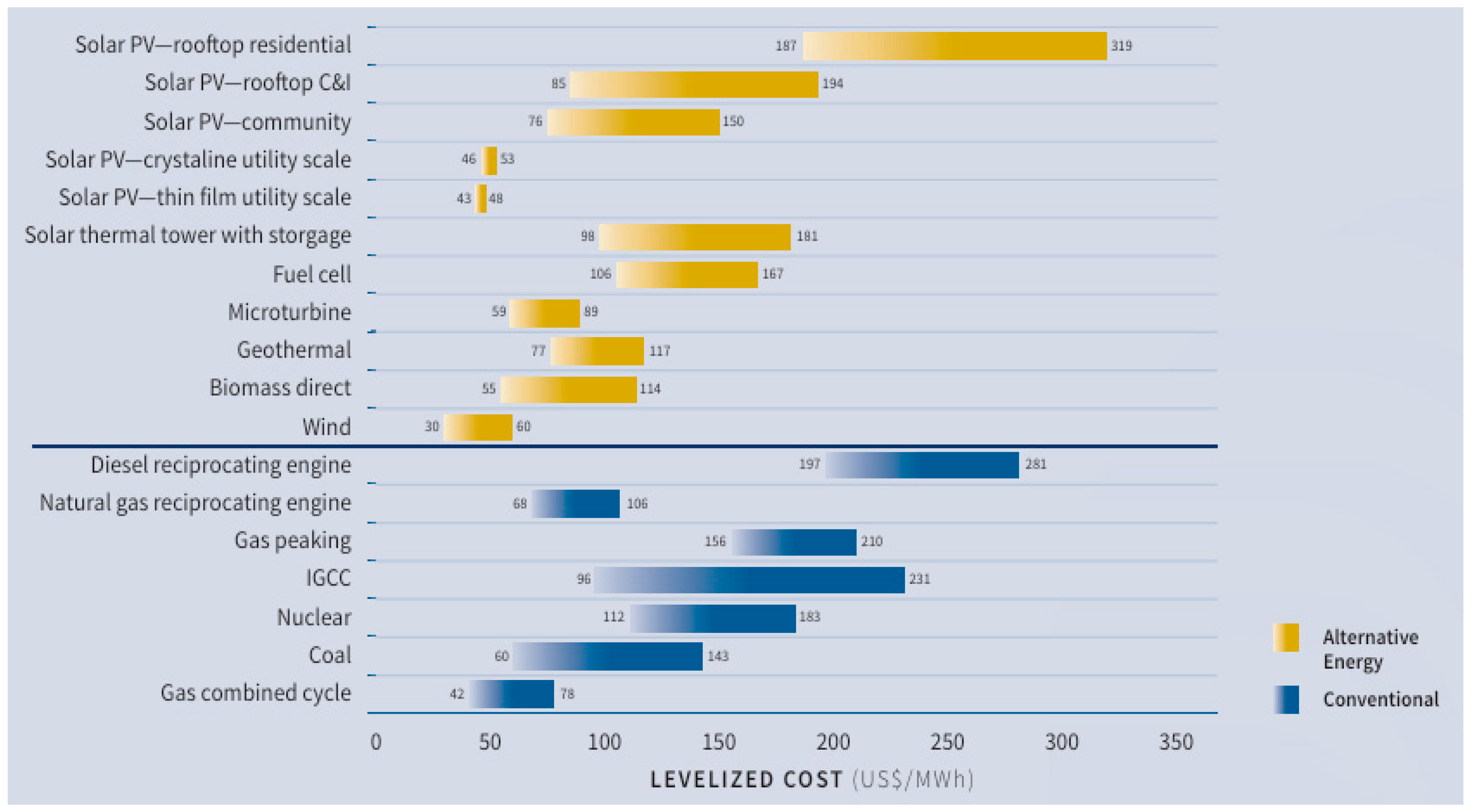
Figure 12 compares the levelised cost of energy (LCOE) for different generation technologies and shows that utility-scale wind and solar power now offer the lowest costs, strengthening the business case for renewable energy integration in mining operations.
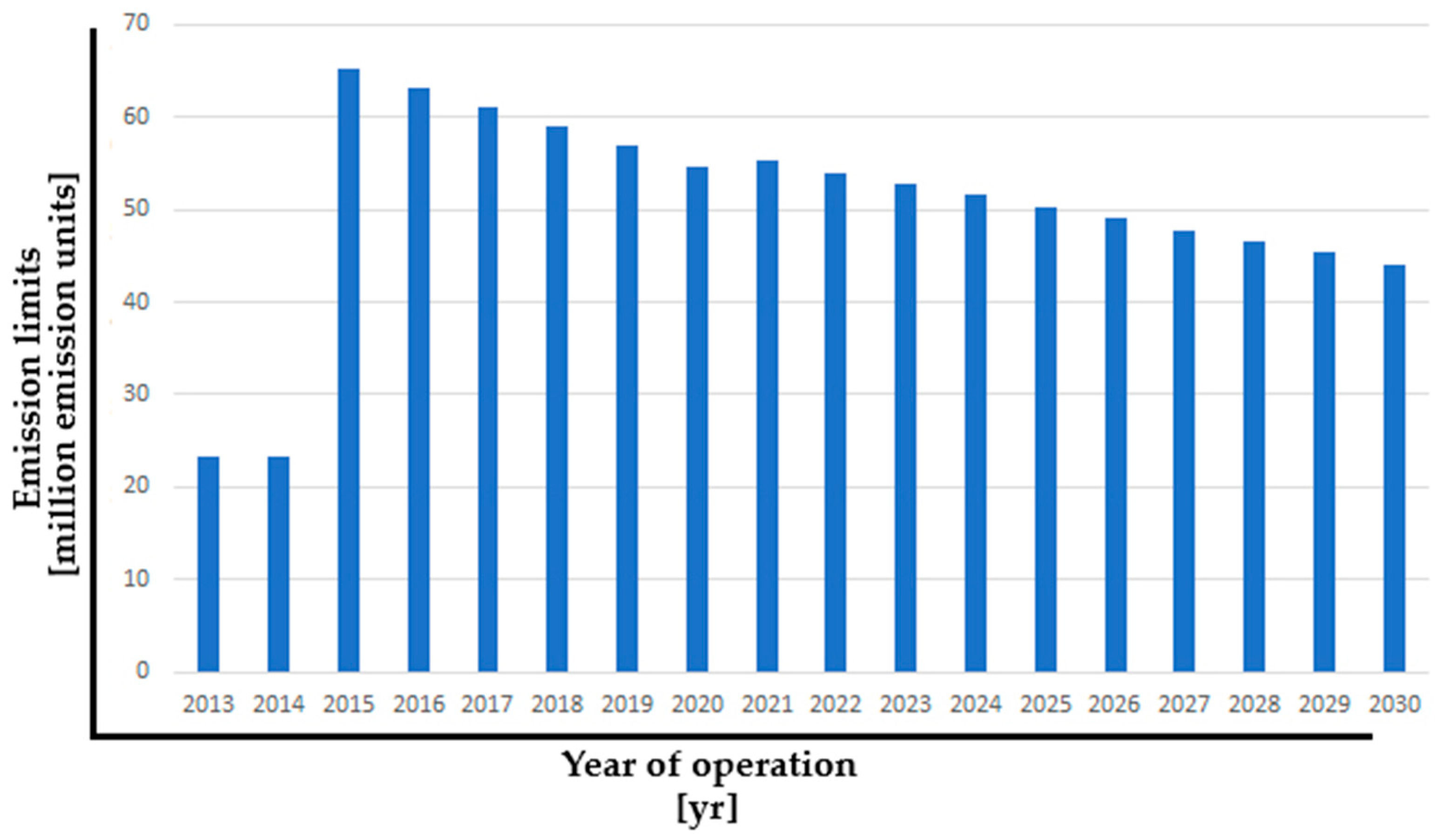
Policy instruments further support decarbonization. Québec’s cap-and-trade system (SPEDE) establishes a declining emissions cap while enabling carbon credit trading, thereby encouraging emission reductions and low-carbon investments (
Figure 13).
4.2.3. Institutional Frameworks and Performance Monitoring
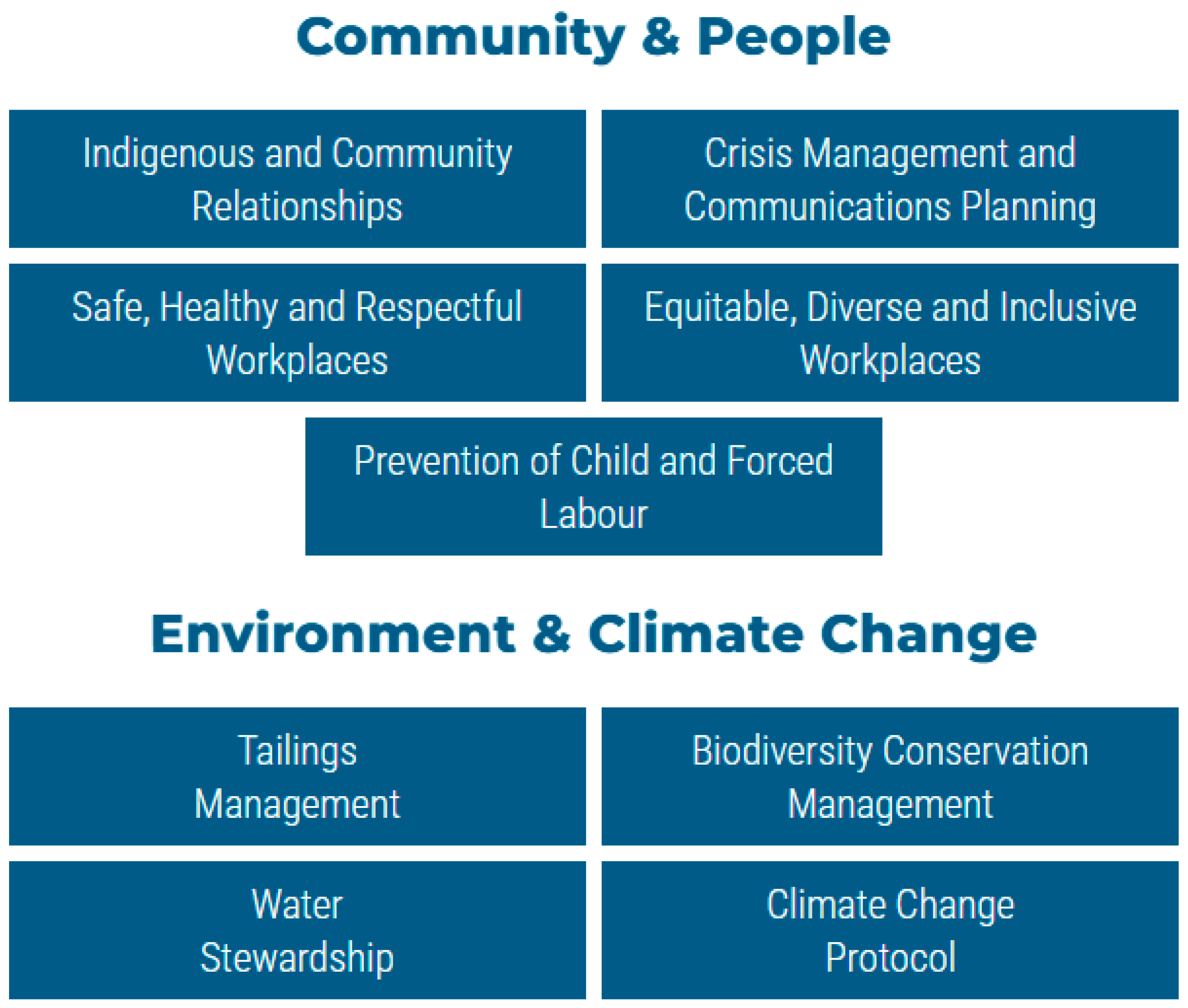
The MAC’s Towards Sustainable Mining (TSM) programme plays a central role in structuring decarbonization efforts in Canadian mines. The programme’s focus areas are presented in
Figure 14 and include climate change management, biodiversity conservation, and community engagement.
Energy and climate performance within TSM is assessed through indicators related to corporate governance, facility-level management, and performance targets. Registration for this initiative, as well as the publication of results reports, is mandatory for all registered mines in Canada. These reports meet a list of criteria available online that evaluate mines across different themes [
115]. Ratings range from C to AAA, with C representing the minimum expected and AAA symbolising excellence. The energy aspect is addressed in the ‘Climate Change’ category, which focuses on three indicators:
Climate change management at the corporate level,
Climate change management at the facility level,
Facility performance targets and reporting.
For the first indicator, the focus is on the board of directors’ development of comprehensive plans in the context of sustainable development. The other two indicators are more interesting, as they emphasise data collection and the setting of performance targets.
Recent TSM assessments indicate that while progress has been made in management and reporting systems, many mining sites still struggle to define and achieve concrete energy and GHG reduction targets [
116]. This gap underscores the need for more robust data collection and performance-monitoring mechanisms.
4.2.4. Barriers to Large-Scale Decarbonization
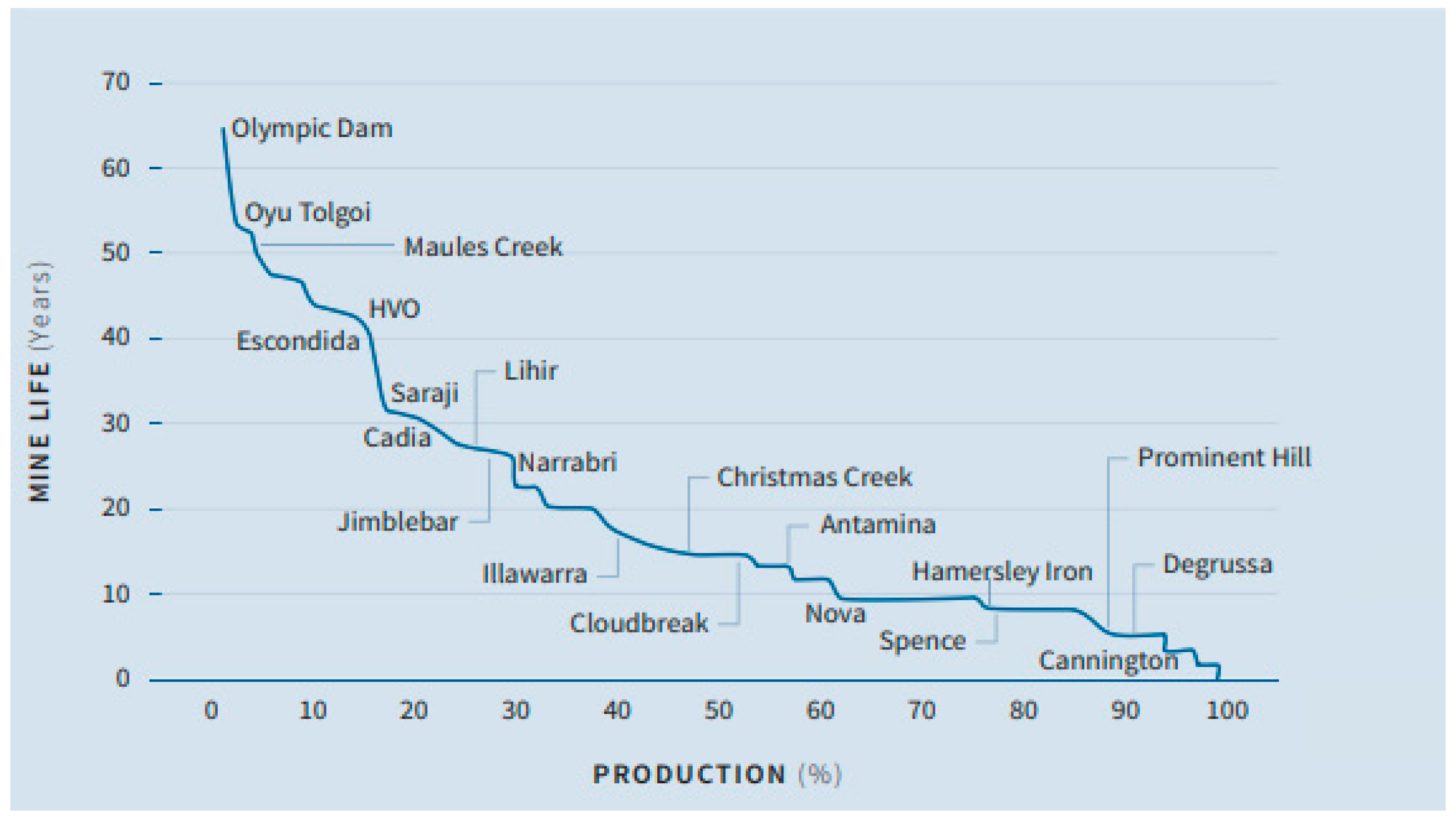
Despite technological and policy progress, several barriers continue to limit large-scale decarbonization in mining. A significant constraint is the limited remaining lifespan of many mining operations, which discourages investment in projects with long payback periods.
Figure 15 illustrates that approximately 40% of mines have an expected remaining life of less than 10 years, significantly constraining capital-intensive decarbonization projects.
In such cases, modular and relocatable energy solutions may provide a viable alternative. Examples include containerized photovoltaic systems, mobile battery storage units, and modular hybrid microgrids that can be redeployed to other sites after mine closure. These approaches reduce investment risk while enabling progressive decarbonization of mining operations with limited remaining lifetimes.
Additional barriers include renewable intermittency, climatic exposure, particularly in northern regions, land availability, and infrastructure requirements. These constraints underscore the need for site-specific, staged decarbonization strategies.
4.2.5. Synthesis of Decarbonization and Renewable Energy Integration Studies
Table 4 summarises representative studies addressing decarbonization pathways and renewable energy integration in the mining sector. Collectively, these works demonstrate both the scale of mining-related emissions and the growing potential of renewable and low-carbon solutions. This synthesis underscores the importance of combining energy efficiency, electrification, renewable deployment, and storage solutions to achieve meaningful emission reductions.
4.3. Decarbonization Efforts in the Mining Industry in Other Countries
Some mining-producing countries are also making efforts to achieve deep decarbonization in the mining industry, notably Australia and Chile.
The Australian mining industry faces several environmental challenges, including decarbonizing its energy-intensive processing methods and reducing carbon emissions from copper ore extraction and processing [
81,
121]. According to Huang et al. [
81], achieving decarbonization in the Australian mining industry, especially copper mining, is crucial because these mines are currently still heavily reliant on fossil fuels. Noor [
122] focused on analyzing and understanding how two Australian states (Western Australia (WA) and Queensland (Qld)) are aligning their mining industry decarbonization plans with national green transition policies and objectives.
Table 5 lists some Australian and Chilean mines that are at the forefront of integrating renewable energy.
In the Chilean mining industry, some sources [
123] cite poorly planned decarbonization due to the premature closure of most of its coal-fired power plants, which plunged the country into an unprecedented energy crisis. Some Chilean mines are experiencing serious difficulties in complying with the national decarbonization program [
124]. Despite these challenges, decarbonization projects for the Chilean mining industry are increasingly relevant; notably, the project aimed at developing hydrogen energy by evaluating the potential for green hydrogen production and the integration of technologies [
125]. Government strategies for decarbonizing the mining industry rely in particular on large-scale integration of renewable energy, electrification of mining operations, production and use of green hydrogen, and energy efficiency [
126]. Chile aims to reach 90% of its copper mining energy mix from renewable sources by 2030. Chile extensively uses solar and wind power, particularly in the Atacama Desert, to power its mines. Given the phase-out of coal-fired power plants, several mining companies adopted renewable energy early in their energy mix. Today, some mines operate on 100% renewable electricity. As with Canada, Chile aims to electrify all mining equipment to achieve a significant reduction in direct emissions from fossil fuels.
4.4. Stage of Development and Maturity of Decarbonization Technologies in the Mining Sector
Decarbonizing the mining industry necessarily involves reducing fossil fuel consumption and developing renewable energy sources. Currently, it is difficult to predict the maturity of any technology, as everything depends on the specific mine (company or type of mine), the region, the availability and ease of exploiting local resources, and management’s energy policies. In cold climates, wind power will be far more widely used than other technologies. In equatorial and tropical regions, hydroelectric and solar PV will be extensively used due to abundant sunshine and rainfall. In terms of energy yields and installed capacity, hydroelectric and wind power are the most prevalent. Wang et al. [
117] argue that hydroelectric technology enables deep decarbonization, especially in large-scale projects. The IHA [
127] and Simao and Ramos [
128] discuss the advantages of hydro-pump technology, given its ability to respond most quickly and stably to peak energy demands.
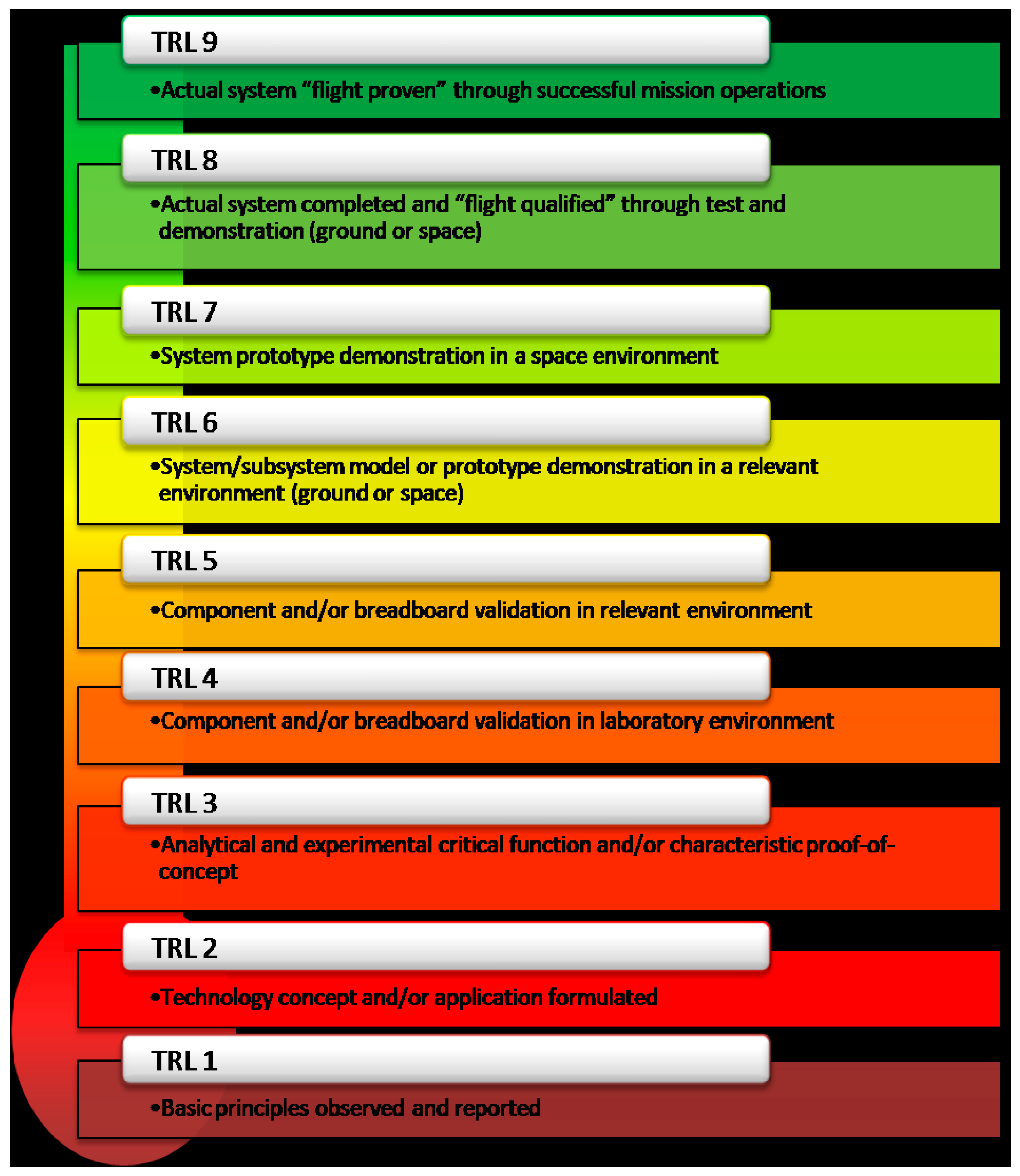
The maturity of technology depends on several factors. A classification system called “Technology Readiness Levels (TRLs)” was developed by NASA [
129]. It consists of 9 levels (1–9) and allows assessing a technology’s maturity during its development phase (see
Figure 16). Thus, TRL 1 corresponds to the beginning of the technology (design phase, formulation of basic concepts), and TRL 9 to commercialization, representing the technology’s maturity. According to NASA’s criteria [
130], technologies such as Underground Equipment Electrification, Energy Optimization of Grinding Processes, and Integration of Renewable Energy Systems at Mining Sites have reached maturity, commercialization, and widespread adoption [
131]. They are therefore part of class TRL 9. On the other hand, low-energy ore processing and the use of green hydrogen in mining operations are part of class TRL1-2 [
132].
In practical terms, currently mature or near-mature decarbonization options in mining include energy-efficiency measures, electrification of selected equipment, and the integration of renewable electricity into mine power systems, especially where suitable resources are available. Intermediate-stage options include advanced storage integration and some mine-wide hybrid microgrid architectures. By contrast, hydrogen-based mobile equipment and certain low-energy ore-processing technologies remain at earlier development or demonstration stages and are more likely to contribute in the medium to long term.
Overall, the literature shows a clear convergence toward three principal decarbonization pathways in mining systems: energy-efficiency improvements, electrification of mining equipment and processes, and integration of renewable energy within hybrid energy systems. However, their relative effectiveness varies significantly depending on mine configuration, energy demand profiles, and geographic conditions. Electrification tends to be particularly relevant for underground mines where diesel use drives ventilation demand, while renewable-based hybrid microgrids are especially attractive for isolated operations currently relying on diesel generation.
5. Large-Scale Integration of Renewable Energy Sources in Mining
5.1. Background and System-Level Considerations
Mining operations are frequently located in remote regions, far from public electricity grids and urban centres. As a result, they have historically relied on fossil fuel-based energy systems, particularly diesel generators. In recent years, however, renewable energy sources (RES) have emerged as a technically viable and increasingly competitive alternative for supplying mining operations, while simultaneously reducing greenhouse gas (GHG) emissions [
28,
34,
35].
The integration of renewable energy sources is widely recognised as a key pillar of the energy transition, aiming to preserve natural resources and mitigate emissions associated with fossil fuel consumption. Consequently, a growing body of research has focused on the deployment of RES in energy-intensive industries such as mining. Magdalena et al. [
26] assessed the long-term impact of renewable energy integration in the mining sector up to 2050, using an exergy-based approach to evaluate system performance. Their results showed that higher shares of renewable energy are associated with a significant reduction in exergy losses, highlighting improved system efficiency.
Several authors have examined both the opportunities and constraints associated with large-scale renewable energy integration in mining. Enemuo and Ogunmodimu [
29] reviewed current energy practices and identified strategies enabling renewable penetration levels exceeding 50% by 2050. Mahir et al. [
120] analysed the integration of RES into decentralised and grid-connected systems, accounting for intermittency and cost volatility. Their decision-support framework, based on demand profiles, photovoltaic potential, electricity tariffs, and grid availability, yielded levelised cost of energy (LCOE) values ranging from 0.071 to 0.118 USD/kWh under high-renewable-penetration scenarios. Li et al. [
27] further reviewed challenges and opportunities associated with renewable deployment in mining projects, emphasising the need for integrated planning approaches.
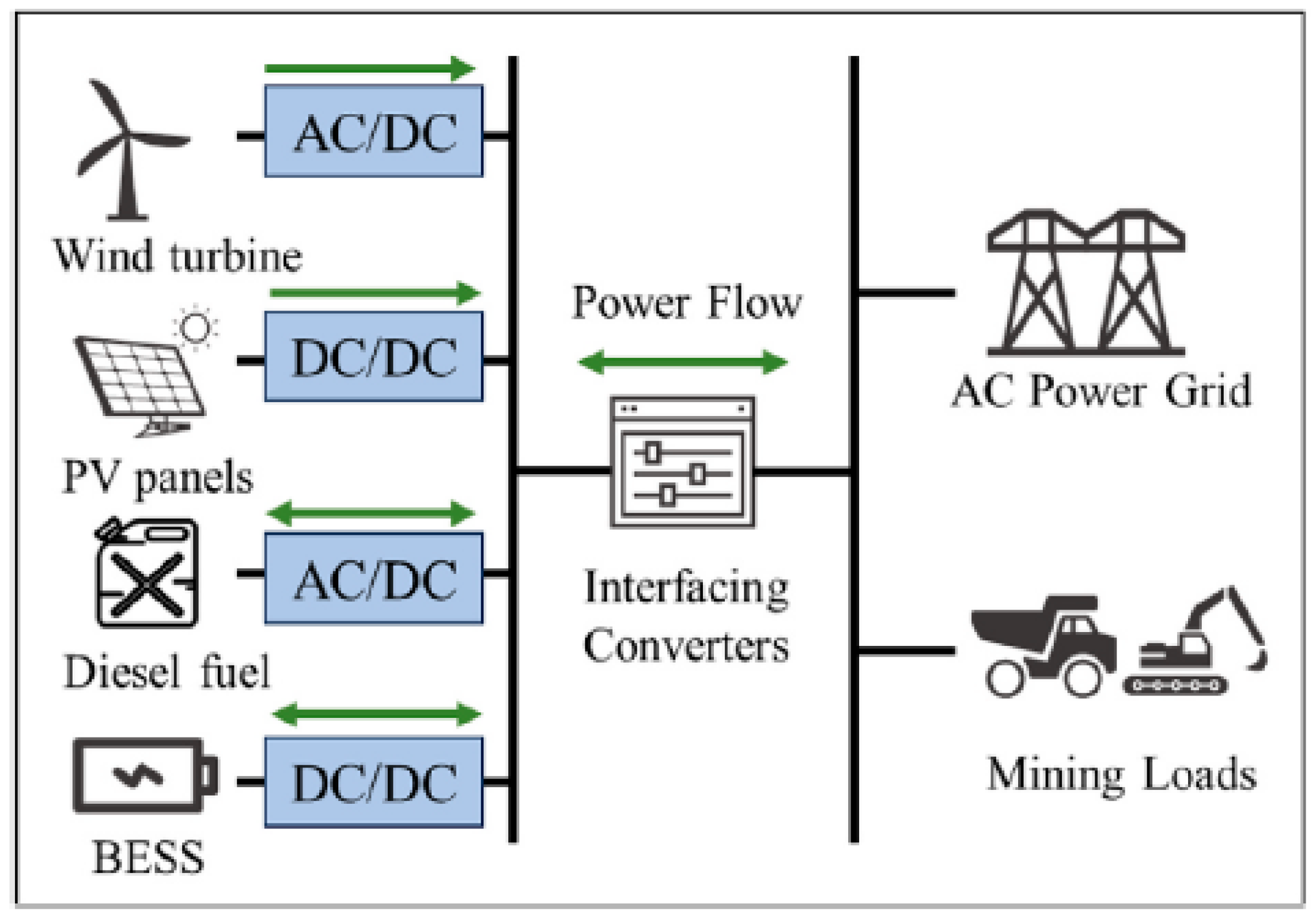
At the system level, hybrid microgrids have emerged as a preferred configuration for mining sites, combining renewable generation, conventional backup, and energy storage to ensure reliability and flexibility.
Figure 17 illustrates the operating principle of a hybrid microgrid for mining operations.
Pouresmaieli et al. [
28] examined renewable energy integration in mining using a SWOT-based framework, highlighting the need for detailed site-specific assessments before large-scale deployment. Ranjbar et al. [
36] developed optimisation models to determine the optimal sizing of renewable generation units, battery energy storage systems (BESS), and fossil fuel backup generators, demonstrating that appropriate system design can significantly reduce GHG emissions while maintaining reliability.
Given the intermittent nature of renewable energy sources, large-scale integration in mining environments generally requires coupling generation systems with energy storage technologies to smooth fluctuations and meet peak demand [
37,
38,
39,
40]. Several storage solutions are particularly relevant for mining applications, including pumped-hydro energy storage, electrochemical batteries, hydrogen storage, and redox flow batteries.
5.2. Pumped-Hydro Energy Storage (PHES)
Pumped-hydro energy storage (PHES) represents one of the most mature and widely deployed large-scale energy storage technologies. PHES systems store excess electricity by pumping water to an upper reservoir and recover this energy during periods of high demand through hydropower generation. Owing to their technological maturity, operational flexibility, and long service life, PHES systems are particularly well suited for integrating variable renewable energy sources such as wind and solar power [
133,
134,
135,
136,
137].
Comprehensive studies by the International Hydropower Association (IHA) demonstrate that PHES systems exhibit fast and stable dynamic responses, enabling effective frequency regulation and load balancing [
127,
128]. With round-trip efficiencies typically ranging from 70% to 85%, PHES also provides mechanical inertia, enhancing grid stability. Moreover, their large storage capacity allows energy shifting across a wide range of timescales, from minutes to seasonal storage.
Zhou et al. [
138] proposed coordinated operation of conventional hydropower and off-river pumped-storage facilities to mitigate residual load fluctuations caused by renewable intermittency. Silva et al. [
139] showed that integrating PHES can enable renewable penetration levels up to 85%, while reducing electricity-sector emissions by approximately 1 Mt CO
2-equivalent. Additional optimisation frameworks for peak shaving and valley filling have been proposed by Zhou et al. [
140], demonstrating improvements in power system stability and reductions in emissions.
Large-scale integrated systems further illustrate the role of PHES. Wu et al. [
141] analysed a hydro–photovoltaic–storage base with an installed capacity exceeding 49 GW, showing that nearly 90% of absorbed power could be effectively controlled through pumped storage.
From an economic perspective, PHES remains the most cost-effective large-scale storage technology over its lifecycle. With operational lifetimes approaching 80 years, PHES investments are typically recovered multiple times, with costs estimated to be four to eight times lower than alternative storage technologies [
127,
142]. Case studies in Germany and Belgium report competitive investment costs and payback periods of less than 10 years [
143,
144].
PHES has also been extensively studied in islanded systems, where high renewable potential, mountainous terrain, and limited interconnections favour its deployment [
145,
146,
147,
148,
149]. For example, installations in Curaçao and the Canary Islands have demonstrated substantial increases in renewable energy penetration and significant reductions in GHG emissions [
149,
150].
5.3. Redox Flow Battery Storage System
Electrochemical storage technologies play a critical role in enabling the integration of renewable energy in mining microgrids. Among these, redox flow batteries (RFBs) have attracted increasing attention due to their high efficiency, long cycle life, and independent scalability of power and energy capacity [
151,
152,
153,
154,
155,
156]. RFBs are considered particularly suitable for long-duration storage applications and high renewable penetration scenarios [
157,
158,
159,
160,
161].
Ouyang et al. [
160] investigated the performance of vanadium redox flow batteries (VRFBs) in a microgrid that combined biomass gasification and solid oxide fuel cells, achieving peak shaving efficiencies of up to 84%. Zheng et al. [
162] compared VRFB-based systems with Power-to-Hydrogen-to-Power configurations and reported significantly higher exergy efficiency for VRFBs (78.5% versus 41.7%). Cost projections from IRENA [
163] and Schmidt et al. [
164] suggest that RFB costs could decline by more than 60% in the coming decades, although techno-economic optimisation remains a key challenge [
165,
166,
167,
168].
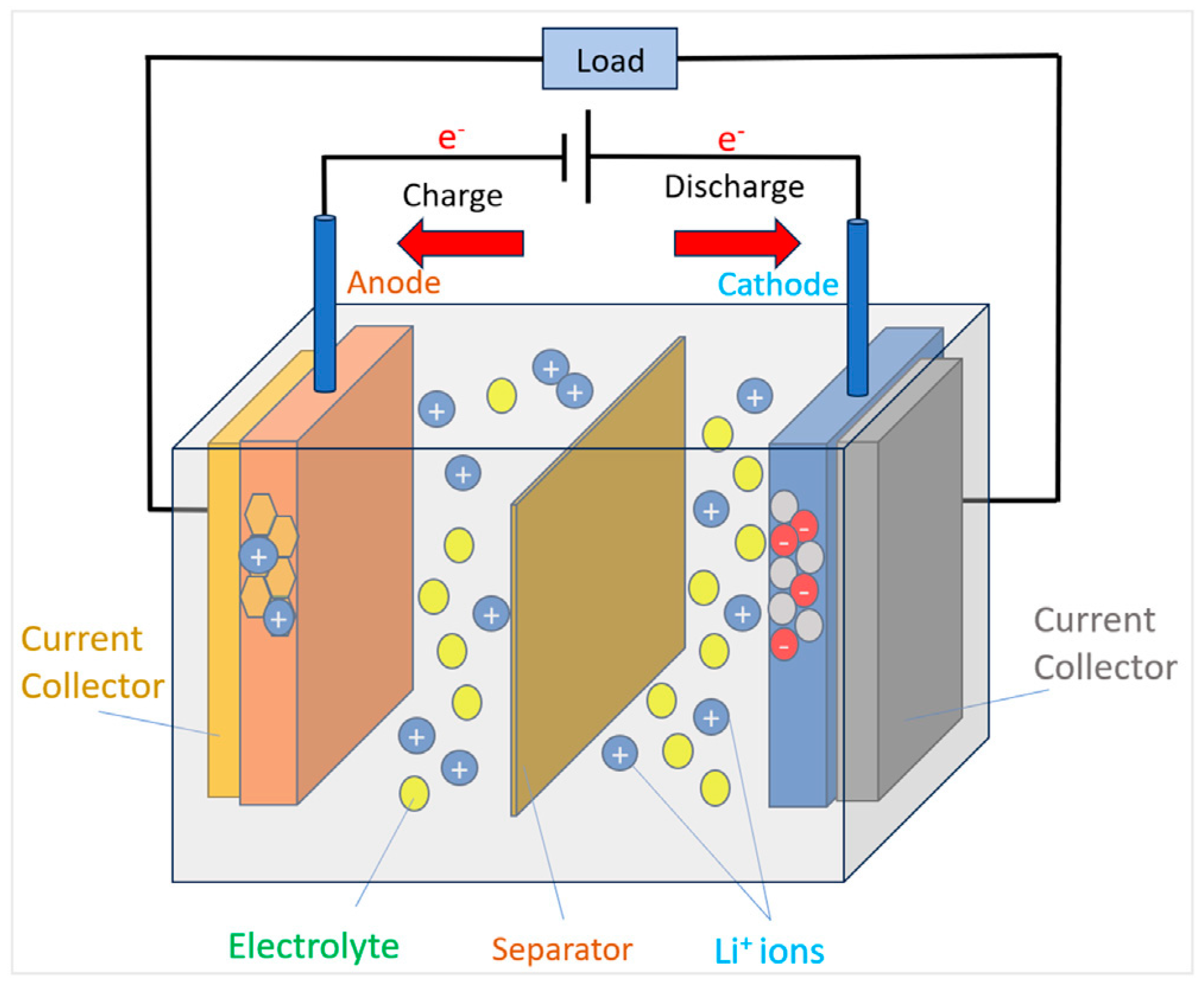
In parallel, lithium-ion batteries currently dominate grid-scale storage deployments due to their high energy density, modularity, and rapidly declining costs [
169]. Numerous studies have explored their integration in hybrid renewable systems [
169,
170,
171].
Figure 18 illustrates the basic structure of a lithium-ion cell.
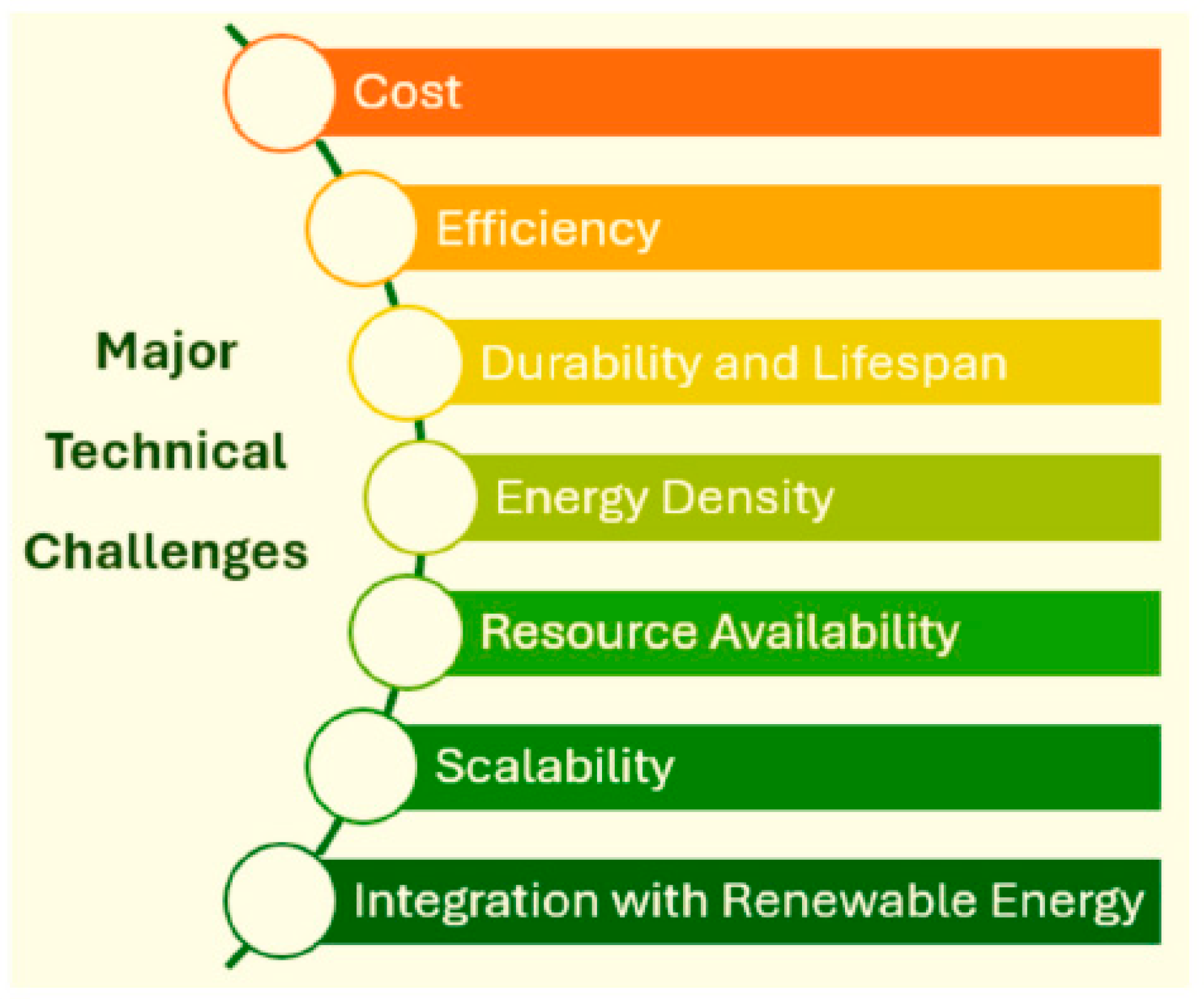
Despite their advantages, electrochemical storage technologies face several challenges, including resource availability, safety, scalability, integration complexity, and regulatory constraints. These issues are summarised in
Figure 19, which highlights the significant barriers to the deployment of sustainable energy storage in net-zero energy systems.
5.4. Analysis, Comparison, and Characteristics of Storage Technologies and Mitigation Pathways
It is often difficult to compare different types of energy storage, as each may be most efficient in different environments, regions, etc. For Asri et al. [
173], it is, therefore, crucial to critically analyze the fundamental characteristics of energy storage systems (ESSs) to establish benchmarks for selecting the most suitable technology. Mahadevan et al. [
174] claim that each ESS technology has unique strengths and limitations, influencing its applicability and suitability for specific applications. The choice of an ESS is influenced by factors such as energy density, cost, scalability, and the intended use case, whether for short-term grid balancing or long-term energy storage. It is crucial to consider a region’s climatic conditions before implementing any energy storage system [
175].
Table 6 focuses on ESSs currently proficient in providing critical storage capacities of at least 20 MW.
Among currently available storage technologies, lithium-ion batteries and pumped-hydro storage are the most mature solutions for large-scale deployment in mining hybrid energy systems. By contrast, hydrogen-based storage systems and some electrochemical technologies remain at earlier stages of development and may become more relevant for long-duration storage applications in the future.
From a comparative perspective, the principal mitigation pathways in mining differ in both their implementation horizons and expected impacts. Energy-efficiency measures generally offer the most cost-effective short-term option, with moderate but widely accessible emission-reduction potential. Equipment electrification offers greater mitigation potential, particularly in underground mines, where reduced diesel use also lowers ventilation demand; however, its deployment depends on equipment availability and charging infrastructure. Renewable electricity integration offers high mitigation potential in both off-grid and grid-connected contexts when sufficient local resources are available, but its performance depends strongly on storage and system flexibility. By contrast, hydrogen-based solutions appear more relevant as longer-term options for difficult-to-electrify mobile equipment and remote operations, but they currently remain less cost-competitive and less mature than the other pathways.
For the four measures selected, the estimated mitigation potential, as well as the cost-effectiveness ratio and the marginal contribution to emissions reduction, are analyzed and given below [
176]:
Renewable energy (green electricity) has a high mitigation potential of 20–40%. This is the case for Chile and Canada.
Equipment electrification has a high potential of 10–25%. This concerns almost all mining countries.
Energy efficiency has a medium mitigation potential (5–15%) and concerns most countries.
Energy storage (Green hydrogen), with Canada and Chile being the most affected. Here, the potential is high, but only in the long term.
Regarding the cost-effectiveness of the measures, energy efficiency is the most cost-effective, followed by renewable energies, then equipment electrification, and finally green hydrogen. The marginal contribution to emissions reduction is estimated at 30–50%, 15–25%, 10–20%, and 5–15% (long term), respectively, for the four measures mentioned above.
6. Specific Characteristics and Heterogeneity of Mining Sites
Decarbonization strategies in mining cannot be generalized across all sites because mining operations differ markedly in mine geometry, climatic exposure, and access to electricity infrastructure. Open-pit and underground mines do not have the same dominant energy sources, while grid-connected and off-grid sites face different trade-offs in reliability, energy costs, and investment structures. These differences strongly influence the feasibility, profitability, and timing of renewable energy integration, electrification, and storage deployment.
As discussed, open-pit mines can have significantly lower energy requirements than underground mines, as underground mines require substantial ventilation in their galleries. Regarding climatic factors, several authors [
28,
29,
177] have emphasized the significant influence of climate on energy choices, particularly in terms of integrating renewable energy sources. Another interesting aspect to analyze is grid connectivity. While grid-connected mining operations benefit from their location and use of energy produced by a supplier (public or private), they still face the problem of electricity costs, especially if this energy is generated using fossil fuels. This is the case for South African mines, where most electricity is generated by diesel generators [
27]. Faced with high energy bills, several mines are developing projects to integrate renewable energies into their energy mix [
178,
179].
Being close to the electrical grid can be both an advantage and a disadvantage. The advantage lies in the fact that the mine does not have to manage additional power generation facilities, and in the low production cost due to the proximity to the grid. The disadvantage of grid-connected mines is that they are somewhat behind in developing and integrating renewable energy sources (RES), as they did not consider their future energy supply for decades. This is quite the opposite for off-grid mines (located far from the grid), which began developing RES decades ago and have always been energy independent (see
Table 7).
Table 8 below shows the CAPEX vs. OPEX for different types of mining facilities. This article initially focused on a broad analysis of the input components of CAPEX and OPEX for both grid-connected and non-grid-connected mines. Next, the analysis was extended to off-grid underground and open-pit mines. These latter aspects have significant consequences for the mine’s overall energy consumption and greenhouse gas emissions.
For an underground mine, for example, underground development, ventilation systems, and pumping and drainage systems are the main components included in CAPEX. In an open-pit mine, components such as pit development (overburden removal, stripping, slope stabilization, etc.) and mining equipment (production drills, bulldozers, etc.) are necessary for CAPEX calculations.
Considering the above, the main measures to achieve deep decarbonization will influence CAPEX. Decarbonization measures for underground mines will notably include the electrification of mining trucks and ventilation systems.
Extreme climatic conditions can significantly influence the technical performance and reliability of decarbonization pathways in mining. In cold regions, wind turbines may experience blade icing and cold-weather shutdowns; solar panels may suffer from snow and ice accumulation; batteries may exhibit reduced efficiency and power capacity; and severe weather and logistics constraints may limit maintenance access. These factors do not preclude decarbonization, but they increase the importance of robust system design, redundancy, and careful technology selection for remote and northern operations.
7. Political-Economic Analysis of Carbon and Energy Prices
Many studies in the literature support the claim that carbon pricing is the best mechanism for reducing greenhouse gas emissions [
180,
181,
182]. According to Ulrich et al. [
181], the implications of carbon pricing for the mining industry have been studied and analyzed by the International Council on Mining and Metals (ICMM). The ICMM has set carbon prices ranging from US
$14/t CO
2 to US
$24/t CO
2 in major mining regions for various commodities, except for gold. Böhringer et al. [
183] focused on issues related to emissions leakage and the debate on climate policy and emissions trading in developed countries. Carbon pricing was extensively discussed during the negotiations for the Paris Agreement on climate change. According to Tost et al. [
184], a compilation of carbon prices from 18 studies for extreme scenarios of 1.5 °C and 2 °C revealed a wide range, with minimum, median, and maximum carbon prices of US
$4, 49, and 633/t CO
2 for 2 °C and US
$9, 410, and 3648/t CO
2 for 1.5 °C in 2016. For Yang and Yan [
182], much work, notably that of Böhringer et al. [
183,
185], using the EGC (computable general equilibrium (CGE) model, has noted that the active measure adopted by China, consisting of applying the same carbon tax policy as the United States, is ineffective in addressing carbon taxes.
A sufficiently stringent carbon-pricing policy can act both as an economic incentive for low-carbon investment and as a disincentive for continued reliance on fossil-fuel-intensive mining practices.
Global geopolitical crises and tensions have significantly contributed to energy price instability, prompting mining industries to adopt measures such as energy efficiency, renewable energy integration, and partial electrification of facilities. Information from the work of Lin and Shi [
186] indicates an alarming situation of coal price volatility, leading to negative impacts in the energy sector (electricity generation). Koczar et al. [
187] assessed the dynamic relationships between crude oil futures contracts, renewable energy indices, carbon credit futures indices, and several US sector indices.
Although fluctuations in fossil fuel prices affect energy tariffs in the mining sector, the latter is increasingly limiting the use of energy from polluting sources by promoting the integration of renewable energies to decarbonize its facilities, especially to comply with government policies.
8. Current Status, Challenges, and Future Energy Directions in Mining
8.1. Current Status and Energy Challenges
Renewable energy technologies are increasingly deployed in the mining sector, driven by multiple factors including the depletion of fossil fuel resources, regulatory constraints on greenhouse gas (GHG) emissions, economic considerations, and the growing availability of renewable resources. Nevertheless, the integration of renewable energy in mining operations remains strongly constrained by site-specific conditions, particularly in mines located in remote or northern regions characterised by extreme climates.
In Canada, several mining operations have begun integrating renewable energy sources despite harsh environmental conditions. For example, the Diavik diamond mine operates a wind farm equipped with cold-weather technologies designed to mitigate lubricant freezing and mechanical failures in subarctic environments. This wind installation currently supplies approximately 10% of the mine’s energy demand, demonstrating the technical feasibility of renewable deployment in cold climates [
110].
Despite such progress, meeting 100% of a mine’s energy demand through renewable sources remains a significant challenge. Key obstacles include the intermittency of renewable energy production, severe climatic conditions affecting system performance, the sizing and cost of energy storage systems, and the difficulty of designing fully renewable energy mixes that ensure reliability at all times. Zhu et al. [
42] highlight the challenges of eliminating fossil fuels from mining energy infrastructure, particularly in mobile equipment and high-power applications.
The mining sector continues to face the need to adopt energy solutions that simultaneously reduce consumption, control operating costs, and minimise environmental impacts. Issa et al. [
119] analysed the challenges associated with integrating renewable energy and electrifying mining sites in Canada, identifying major technical, operational, and organisational barriers. Their findings are synthesised in
Table 9, which highlights constraints associated with renewable technologies, electrification strategies, and battery electric vehicles (BEVs), particularly in cold-climate environments.
Millar [
77] further proposed a structured approach for optimising mine energy systems, based on three complementary strategies: reducing wasted energy through improved control and recovery systems; using energy more efficiently through higher-efficiency technologies and storage solutions; and deploying technological solutions such as renewable energy sources and upgraded equipment. Together, these strategies illustrate that decarbonization and energy optimisation in mining must be addressed holistically rather than through isolated technological interventions.
Given these challenges, it is essential to examine future energy pathways that improve both the environmental and economic performance of mining operations.
8.2. Future Energy Orientation
Future energy strategies for the mining sector increasingly focus on hybrid energy systems that combine renewable energy generation, energy storage technologies, and low-carbon fuels to enhance reliability and reduce dependence on fossil fuels. Hybridisation applies not only to stationary energy production but also to mining transport systems, which are among the most energy-intensive components of mining operations [
98].
One promising pathway involves adopting hybrid and fuel-cell-based mining transport equipment. Low-carbon hydrogen technologies, particularly hydrogen produced using renewable electricity, offer a potential alternative to diesel for heavy-duty mining equipment.
Figure 20 illustrates a hydrogen production pathway based on wind energy, proposed by Toyota, intended to supply fuel-cell forklifts. According to Toyota [
188], such a system could reduce CO
2 emissions by at least 80% compared to conventional fossil fuel-based supply chains.
Beyond conventional hydrogen production via electrolysis, advanced hybrid storage concepts are also emerging. Reynard and Girault [
189] proposed a dual-flow redox battery system that combines electricity storage with renewable hydrogen production. This system integrates a secondary energy platform in which pre-charged electrolytes are discharged into external catalytic reactors through hydrogen evolution (HER) and oxygen evolution reactions (OER), decoupled by redox processes (
Figure 21).
According to Reynard and Girault [
189], this approach offers several advantages over conventional electrolysis, including enhanced safety, improved durability, modularity, and higher hydrogen purity. Such systems could be particularly relevant for mining applications seeking to optimise the utilisation of renewable energy while producing low-carbon fuels for mobile equipment.
More broadly, Suraparaju et al. [
172] emphasise the need for international collaboration to accelerate the development of efficient and scalable energy storage technologies tailored to specific industrial needs. In the mining sector, future energy directions will likely depend on the successful integration of renewable generation, long-duration storage, and low-carbon fuels within robust hybrid systems capable of operating under demanding environmental conditions.
While numerous technological pathways exist to improve energy efficiency and reduce emissions in mining, their deployment requires careful techno-economic and site-specific assessment. Nevertheless, the large-scale integration of renewable energy and hybrid systems demonstrates that a transition toward greener and more resilient mining operations is technically feasible.
9. Conclusions
The decarbonization of the mining industry has attracted increasing attention over the past two decades, driven by the urgency of climate change mitigation and the need to reduce greenhouse gas (GHG) emissions from energy-intensive industrial activities. This review examined the decarbonization of mining systems through three interconnected dimensions: energy consumption patterns, emission-reduction strategies, and the integration of renewable energy within mining energy systems.
A central finding emerging from the literature is that energy demand remains the primary structural barrier to deep decarbonization in mining operations. Mining activities are among the most energy-intensive industrial processes and continue to rely heavily on diesel-based systems for power generation, transportation, and material handling. These constraints are particularly pronounced in remote and northern regions, where limited access to electricity grids, extreme climatic conditions, and logistical challenges complicate energy system transitions.
The analysis of energy consumption patterns reveals several structural characteristics that shape decarbonization strategies. Across both global and Canadian mining operations, energy demand is dominated by transport activities, ventilation, and auxiliary services in underground mines, as well as energy-intensive ore processing. These patterns make universal decarbonization solutions unrealistic and instead highlight the need for site-specific energy strategies tailored to mine type, geographic conditions, and infrastructure availability.
The review also shows that meaningful progress toward decarbonization can be achieved through integrated approaches combining energy efficiency, electrification, renewable energy deployment, and supportive policy frameworks. Energy-efficiency improvements and partial electrification of mining equipment represent the most immediately deployable mitigation pathways, offering relatively rapid emission reductions with moderate capital investment. Renewable energy integration, particularly in isolated mining operations currently dependent on diesel generation, offers significant long-term mitigation potential but requires careful system design to ensure operational reliability.
A key enabling factor identified in the literature is the role of energy storage technologies in supporting hybrid energy systems. Storage solutions, including pumped-hydro storage, electrochemical batteries, and hybrid configurations, play a critical role in balancing intermittent renewable generation and maintaining a stable energy supply in isolated mining systems. Hybrid architectures combining renewable generation, storage, and low-carbon backup technologies, therefore, represent one of the most promising engineering pathways for reducing fossil-fuel dependence in mining operations.
Although several case studies analyzed in this review focus on Canadian mining operations, many of the structural challenges identified, such as energy supply reliability in remote locations, renewable intermittency, and the economic constraints imposed by mine lifetimes, are common to mining regions worldwide. Consequently, the insights from these cases provide useful guidance for the design and optimization of energy systems in other remote, energy-intensive industrial contexts.
From a strategic perspective, the literature suggests that mining decarbonization pathways can be broadly categorized by implementation horizon. Short-term strategies include energy-efficiency improvements, operational optimization, and partial electrification of equipment. Medium-term strategies involve deploying renewable-based hybrid energy systems supported by advanced energy storage technologies. Long-term strategies may include large-scale electrification of mobile mining fleets and the adoption of hydrogen-based energy systems for difficult-to-electrify applications.
Overall, this review demonstrates that while complete decarbonization of the mining sector remains technically and economically challenging, multiple feasible pathways already exist when energy solutions are adapted to site-specific conditions. Achieving substantial emission reductions will require integrated energy management strategies, improved data collection and performance monitoring, and long-term investment planning aligned with mine development cycles.
Future research and industrial efforts should therefore focus on improving hybrid energy system architectures, advancing long-duration storage technologies, and accelerating the development of low-carbon mining equipment. By addressing both technological and structural constraints, the mining industry can progressively transition toward more resilient, low-carbon energy systems while continuing to supply the critical minerals required for the global energy transition.





 ,
,