Article

Electrotechnologies for Defossilisation of Industrial Thermal and Manufacturing Processes

1
Department of Industrial Engineering, University of Padua, 35131 Padova, Italy
2
Institute of Electrotechnology, Leibniz University Hannover, 30167 Hannover, Germany
3
Department of Electrical Engineering (ESAT), KU Leuven, 3001 Leuven, Belgium
*
Author to whom correspondence should be addressed.
Energies 2026, 19(8), 1888; https://doi.org/10.3390/en19081888
Submission received: 19 February 2026 / Revised: 29 March 2026 / Accepted: 2 April 2026 / Published: 13 April 2026
(This article belongs to the Special Issue Progress in Electromagnetic Analysis and Modeling of Heating Systems)

Abstract

Industrial production still relies heavily on thermal processes that predominantly use fossil fuels for energy. This has significant consequences for primary energy use and greenhouse gas emissions. Meanwhile, rapid advances in electrotechnologies—defined as processes that use electrical energy to transform materials through internal heat dissipation (inductive, conductive, or dielectric/microwave) or heat transfer via resistance and infrared systems—are paving the way for a transition to a non-fossil fuel-based energy supply across a wide range of temperatures and power densities. However, replacing fuel with electricity is not simply a case of making a straightforward substitution; the feasibility of this change is determined by process requirements, constraints on installation space and grid connection, the reliability and volatility of the electricity supply, and economics. This paper therefore proposes a simple, decision-oriented methodology to assess the feasibility of defossilisation from energetic and economic perspectives. The methodology centres on a “substitution coefficient” that compares the amount of fossil energy substituted by a given amount of electrical energy and benchmarks this against the primary energy intensity of electricity generation. The methodology is demonstrated using case studies from energy-intensive sectors such as cement production (using resistance and microwave methods), steel strip processing (with inductive boosting combined with resistive holding) and metal melting for cast iron and aluminium. The case studies show under which conditions electrification can be implemented as a drop-in substitute, a hybrid booster or an enabler of new production models. The results indicate where electrotechnologies can deliver primary energy savings and CO2 reductions today and outline the conditions under which their advantages will increase as power systems become more decarbonised.

1. Introduction

In recent years, the substitution of fuel with electricity has increased sharply in a number of applications [1,2,3,4,5,6]. In many industrial processes, technologies that use electricity to replace fossil fuels such as natural gas or oil have also increased their impact [7,8,9,10,11,12]. There are many reasons for substitution, such as safety, reduced size of systems, reduced pollution, better product quality, and economic competitiveness [13,14].
Industrial production still relies heavily on thermal processes that predominantly use fossil fuels such as natural gas, oil and coal. This dependence has major implications for primary energy consumption and greenhouse gas emissions, since more than 80% of the final energy used for industrial heating processes in Europe is still fossil-based and process heat represents the largest share of industrial energy demand [15].
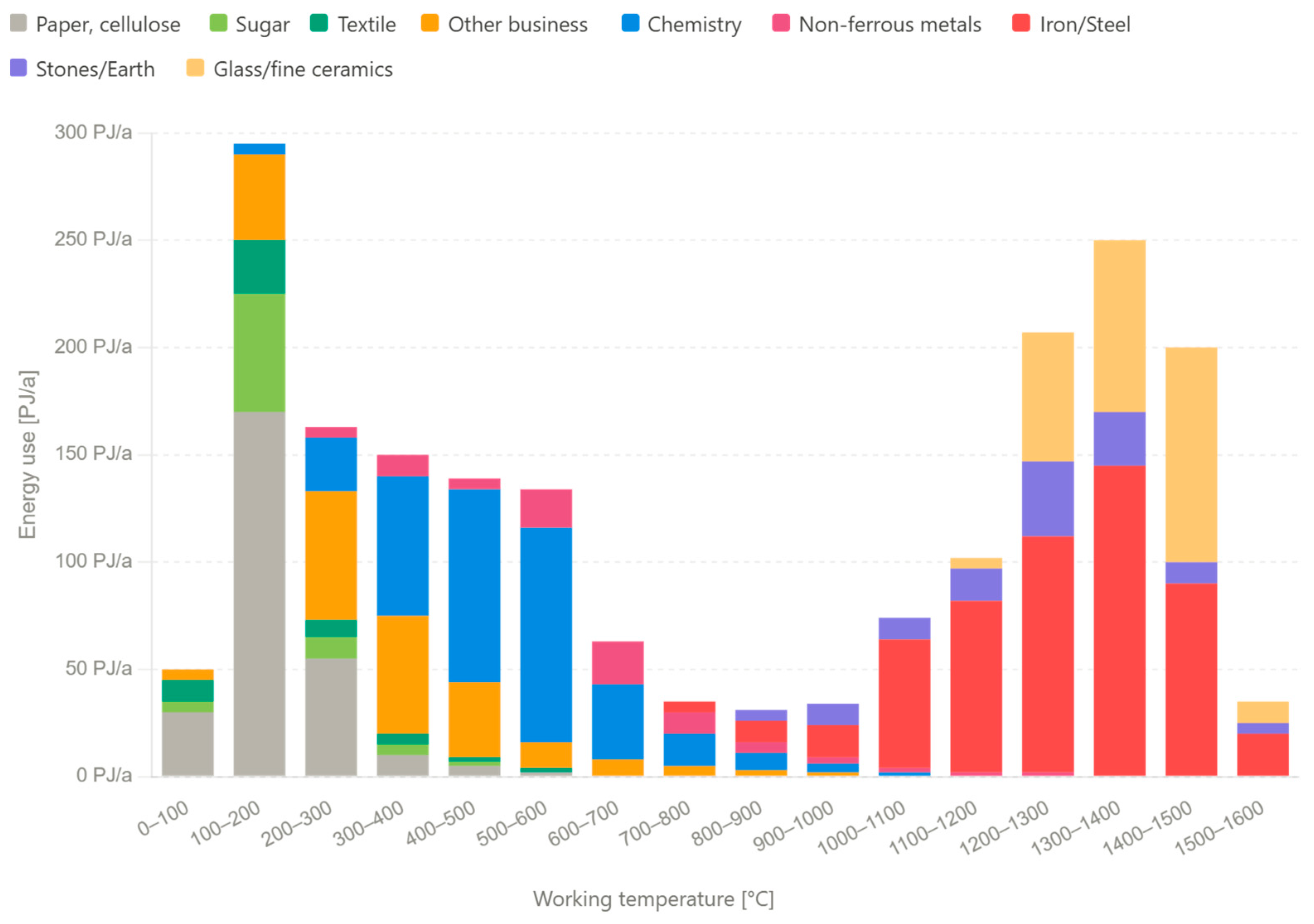
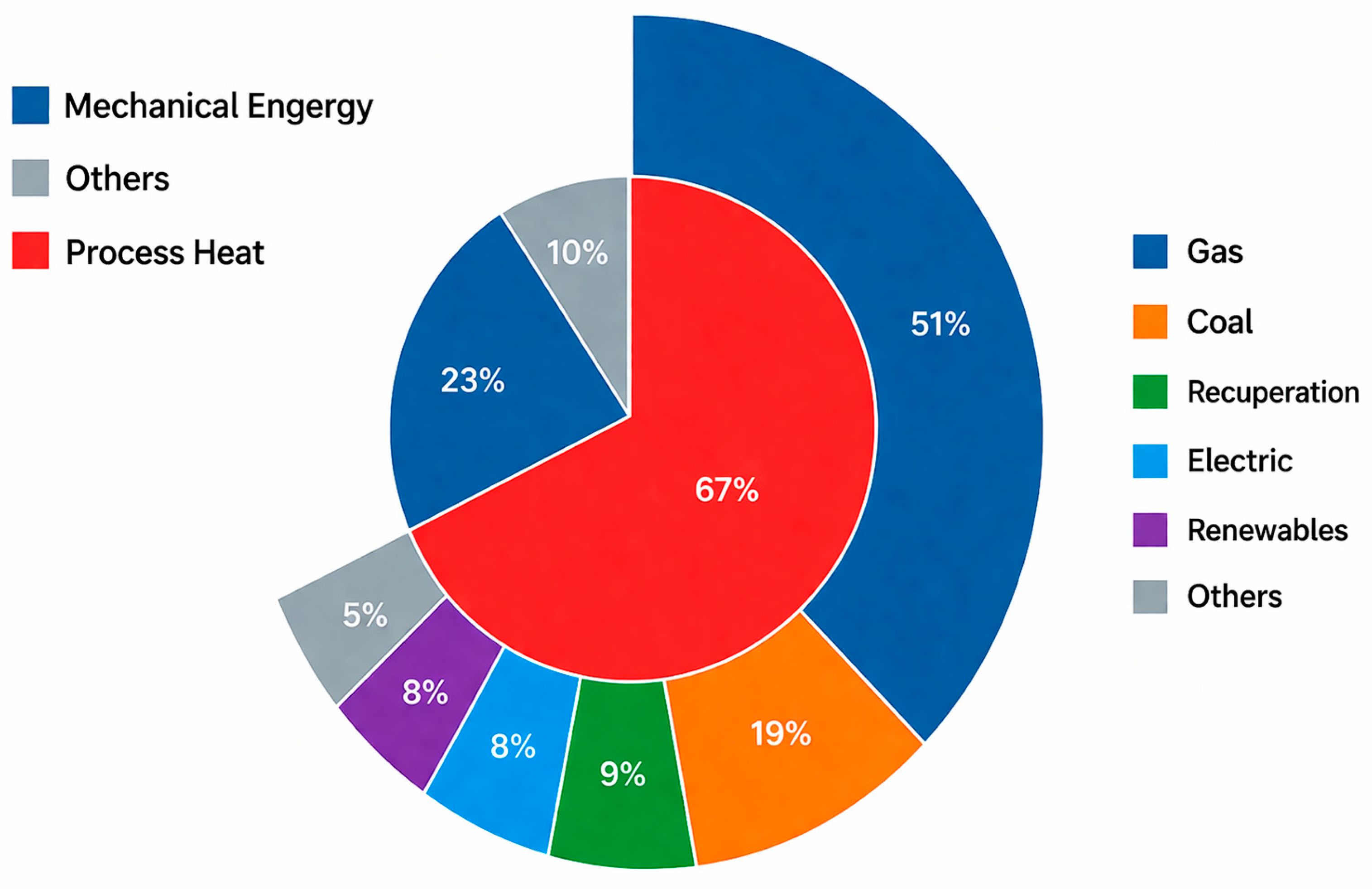
Thermal processes cover a wide range of working temperatures, from several hundred °C in the paper, food, textile or chemical industry to over 1600 °C in iron/steel, glass or ceramic production (Figure 1). In Germany, for example, approximately 2/3 of total industrial final energy is used for process heat (Figure 2) [16].
Climate-neutral energy carriers such as green hydrogen, bio/synthetic methane and, in particular, electricity from renewable sources are becoming increasingly available, creating both opportunities and challenges for the defossilisation of industrial thermal and manufacturing processes.
Electrification is often presented as a straightforward “fuel switch”, but in industrial practice this is rarely the case. Industrial heating processes are extremely diverse in terms of temperature levels, required power density, furnace dimensions, atmospheres, throughput, and product quality constraints. In addition, there are strict requirements regarding reliability and flexibility of energy supply, integration into existing plants, economic competitiveness and long-term regulatory stability. As a result, the technical feasibility and desirability of replacing fossil fuels with electricity must be evaluated on a case-by-case basis rather than assumed a priori.
Over the last decades, a broad family of electrotechnologies has been developed and refined for industrial applications. These include direct and indirect resistance heating, induction heating, radio-frequency and microwave heating, infrared systems and electric arc furnaces [7,8,9,10,11,12]. Some of these technologies can, in principle, be used as relatively simple substitutes for fuel-fired systems (e.g., resistance elements instead of gas burners), while others enable fundamentally different ways of coupling energy into the material, with very high volumetric power densities and strongly reduced processing times. This diversity raises a central question for both industry and policymakers: under which conditions does the electrification of a given thermal process lead to a reduction in primary energy use and CO2 emissions, and when is it economically attractive?
The aim of this paper is to provide a simple, transparent and decision-oriented methodology to address this question. We introduce a substitution coefficient γ that quantifies how many megajoules of fuel are effectively replaced by one kilowatt-hour of electricity when moving from a fuel-dominated process configuration to an electrified or hybrid configuration. This coefficient is then benchmarked against the primary energy intensity of electricity generation and against relative energy prices, allowing an initial assessment of whether electrification is beneficial from a primary energy and economic perspective. In addition, we discuss how this energy-based screening needs to be complemented by process quality and CO2 intensity considerations.
To illustrate the methodology and its practical relevance, the paper applies a substitution coefficient framework to three representative industrial cases with different boundary conditions and process requirements: (i) calcination in the cement and lime industry, comparing resistance-heated and microwave-enabled concepts; (ii) electrification of a steel strip heating line by inductive boosting combined with resistive holding; and (iii) metal melting for cast iron and aluminium, where electrification faces stringent technological and economic constraints. These case studies show how electrification can act as a drop-in substitute, a hybrid booster or an enabler of new production models, and they highlight the conditions under which electrotechnologies can already deliver primary energy savings and CO2 reductions today, as well as how their advantages evolve with the decarbonisation of power systems.
In this paper, the term “electrotechnologies” refers to all technologies that use electrical energy to process materials. Different classifications can be used, for instance, according to the type of material to be processed or the physical mechanism of energy transfer. A first useful classification concerns the type of material: electromagnetic induction heating is applicable only to electrically conductive materials with suitable geometry; radio-frequency and microwave heating require dielectric materials with sufficiently high losses, whereas resistance and infrared heaters can, with varying efficiency, be applied to almost any material. Table 1 summarises the main electrotechnologies and the classes of materials for which they are particularly suitable [18,19].

UIE—International Union for Electricity Applications: A Scientific–Industrial Community Promoting Electrotechnologies

The growing interest in electrotechnologies for industrial processes involves not only energy and environmental aspects, but also the need for the effective dissemination of technical and scientific knowledge in this field. In this context, the UIE—International Union for Electricity Applications—acts as a scientific–industrial community dedicated to the promotion and development of electricity applications in industry.
Founded in the mid-20th century, UIE has organised a long series of international congresses and working groups, progressively broadening its focus from traditional “electroheat” towards all kinds of electricity applications in industrial processes. Its mission is to study, develop, promote and defend efficient electricity applications with regard to both sustainability and economic impact, and to provide a neutral forum where industry, academia and utilities can exchange knowledge on electrification strategies.
Within the current debate on defossilisation, UIE emphasises that electricity should not be regarded as a simple, generic energy carrier interchangeable with any fuel. Thanks to electromagnetic interaction with materials, electrotechnologies can offer much more than heat supply alone, enabling high volumetric power densities, short heating times, improved product quality, better ergonomics and reduced local emissions. Through its activities and its links with other associations and standardisation bodies, UIE helps support the industrial uptake of these technologies and contributes to the development of safe and efficient electricity use worldwide.

2. Materials and Methods

2.1. Overview and Data Source

To assess whether the substitution of fuels with electricity-based systems in a given industrial process is feasible and beneficial, we propose a unified framework based on the substitution coefficient γ and complementary criteria. This framework supports transparent, reproducible decision-making across diverse industrial thermal and manufacturing processes.
General framework data were harmonised to 2021, while selected case study inputs were taken from source-specific industrial datasets when more recent process-level estimates were available:
  • IEA (International Energy Agency, Paris, France),
  • EEA (European Environment Agency, Copenhagen, Denmark),
  • Eurostat (Brussels, Belgium),
  • EIA (U.S. Energy Information Administration).
This study covers electricity generation mixes in the European Union (including the United Kingdom and Switzerland) and selected US states.

2.2. Energy Basis, Units, and Symbol Definitions

The following definitions were used to ensure transparent and consistent energy accounting throughout this work:
  • Fuel energy (C, measured in MJ): All values are reported on a Lower Heating Value (LHV) basis, which excludes the latent heat of water vapour. This standard reflects industrial practice; values reported on a Higher Heating Value (HHV) basis are converted using fuel-specific factors (e.g., HHV ≈ 1.08 × LHV for natural gas).
  • Electricity (E, measured in kWh): Reported consistently in kilowatt-hours; never mixed with other units (MWh, MJ). Gross energy equivalent: 1 kWh = 3.6 MJ.
  • Primary energy intensity (ξ, measured in MJ/kWh): Non-renewable primary energy (accounting for extraction, processing, and generation losses) required to produce 1 kWh of electricity.
The symbols shown in Table 2 are used consistently throughout this manuscript.

2.3. The Substitution Coefficient γ: Definition and Methodology

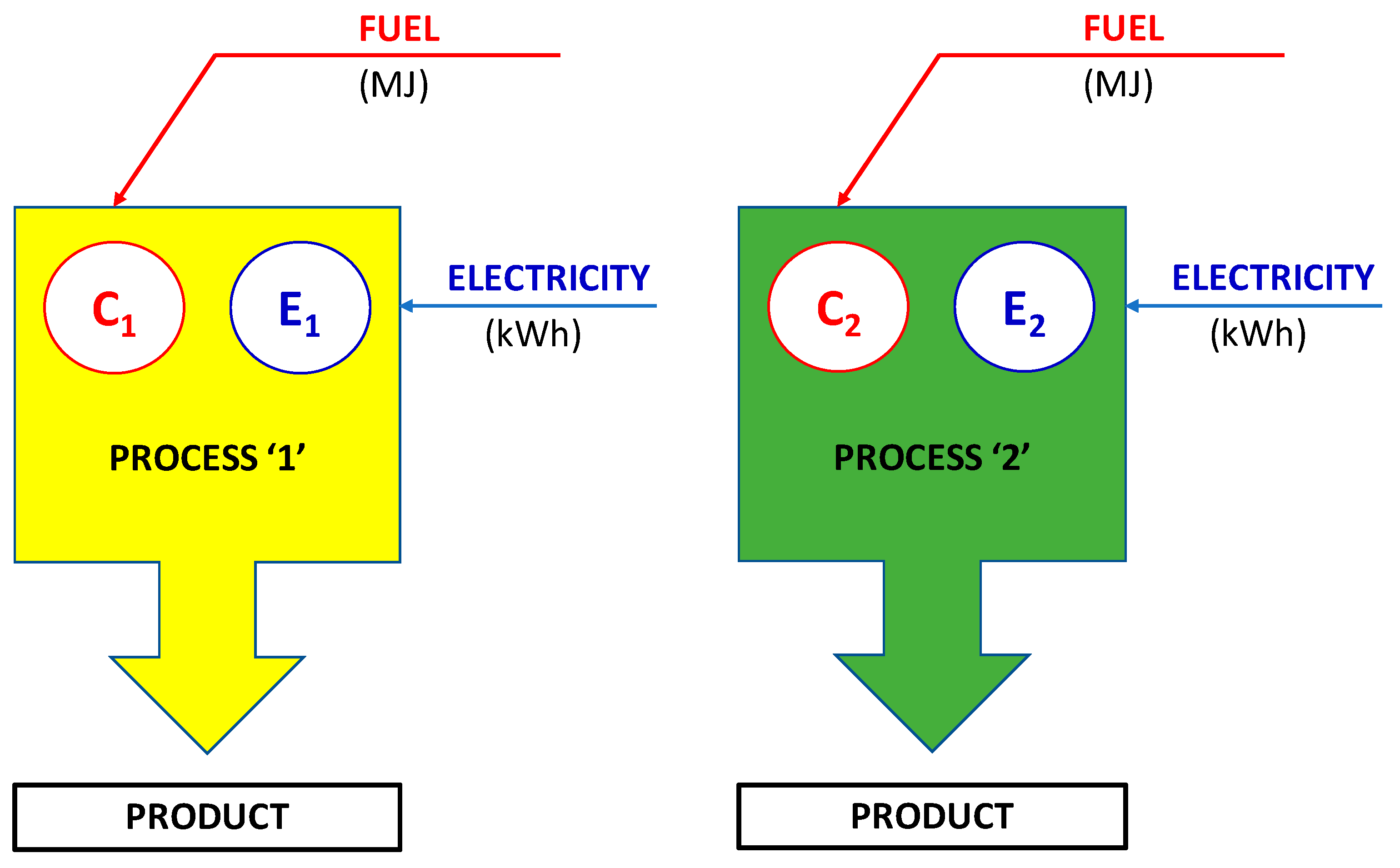
Consider an industrial thermal or manufacturing process that requires thermal energy. We compare two procedural configurations, as presented in Figure 3:
Procedure 1 (Baseline): Energy supplied predominantly from fuel combustion.
Fuel consumption: C1 [MJ].
Auxiliary electricity: E1 [kWh].
Procedure 2 (Electrified/Hybrid): Same process output, with increased electrical energy substituting fuel.
Fuel consumption: C2 [MJ].
Total electricity: E2 [kWh].
Definition of the Substitution Coefficient
γ = C 1 C 2   E 2 E 1   MJ kWh ,
The coefficient γ quantifies the “energy substitution density”—namely, how many megajoules of fuel energy are effectively replaced by each additional kilowatt-hour of electricity when transitioning from procedure 1 to procedure 2.
Constraints and Valid Domain
  • The coefficient is defined when C1 > C2 (fuel reduction) and E2 > E1 (electricity increase);
  • γ is positive by construction and has units of MJ/kWh;
  • In cases of partial electrification (hybrid systems), C2 may remain substantial, but (C1 − C2) represents the actual fuel displacement.

Illustrative Example: Domestic Cooktop Application

To clarify the methodology with a concrete example, consider replacing a natural gas cooktop with an induction cooktop for heating one litre of water from 0 °C to 100 °C, which requires approximately 418.4 kJ ≈ 0.116 kWh of useful thermal energy.
A conventional gas stove operates at roughly 30% thermal efficiency, accounting for combustion losses and incomplete heat transfer to the vessel, so that the fuel input required is C1 = 418.4/0.30 ≈ 1.395 MJ, with negligible auxiliary electricity (E1 ≈ 0). An induction cooktop couples electromagnetic energy directly into the pot base at approximately 80% efficiency, so that the electrical input is E2 = 0.116/0.80 ≈ 0.145 kWh, with no fuel combustion (C2 = 0).
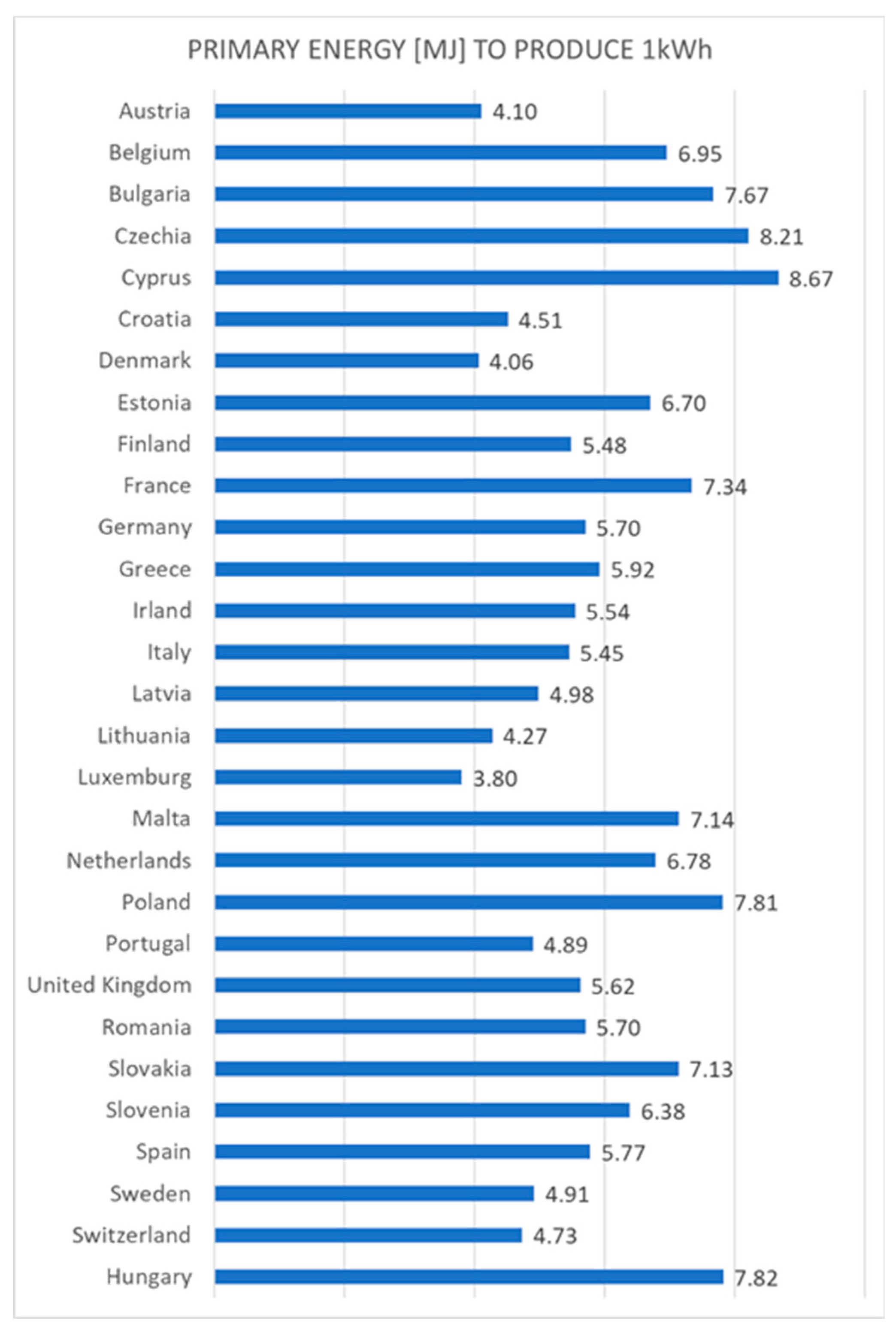
Applying Equation (1) gives γ = 1.395/0.145 ≈ 9.62 MJ/kWh, meaning that each additional kilowatt-hour of induction electricity displaces nearly 10 MJ of gas consumption. In Luxembourg (ξ ≈ 3.8 MJ/kWh), this substitution saves approximately 60% of primary energy; in Cyprus (ξ ≈ 8.67 MJ/kWh), the two options are roughly equivalent at the primary energy level. The industrial case studies discussed in Section 3 involve considerably more complex constraints, including narrow temperature tolerances, phase transformations, and metallurgical requirements, so that the assessment of γ requires process-specific modelling rather than simple efficiency ratios.

2.4. Primary Energy Criterion: Benchmarking γ Against Grid Intensity ξ

The primary energy intensity of electricity ξ is defined as the non-renewable primary energy required to generate 1 kWh of electricity, accounting for extraction, processing, transmission, and generation losses:
ξ = Non - renewable   primary   energy   [ MJ ] Electricity   generated   [ kWh ] MJ kWh
ξ varies significantly with:
  • Geographic location (grid composition varies by country/region);
  • Temporal variation (year-to-year as renewable capacity increases; seasonal swings due to variable renewable generation);
  • Energy source mix (fossil fuels—coal, natural gas, uranium—vs. renewable and hydroelectric sources).
Electrification saves primary energy if and only if
γ > ξ
If the fuel energy avoided (γ) exceeds the non-renewable primary energy required to generate the additional electricity (ξ), then the transition reduces total primary energy consumption.

Geographic and Temporal Dependence

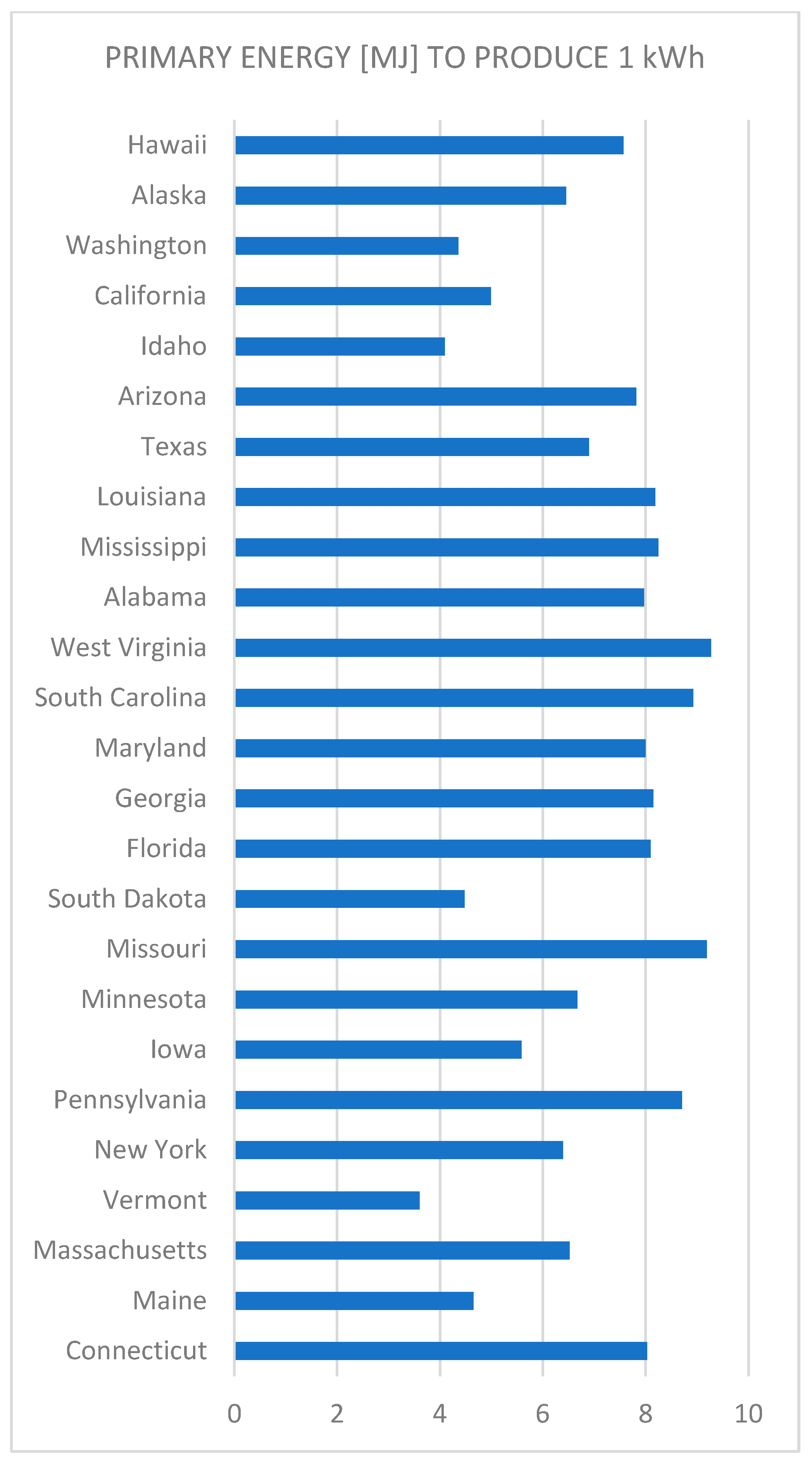
For 2021, the computed values of ξ range from approximately 3.8 MJ/kWh in Luxembourg, where the generation mix is dominated by renewable and hydroelectric sources, to 8.67 MJ/kWh in Cyprus, where electricity is produced almost entirely from natural gas and oil combustion (Figure 4 and Figure 5). The EU average lies in the range 6.5–7.0 MJ/kWh, while values for US states span from roughly 4 MJ/kWh in hydroelectric-rich regions to approximately 9 MJ/kWh in states heavily dependent on coal.
The temporal evolution of ξ is equally important. As renewable capacity expands, ξ is expected to decrease by 25–40% by 2030 relative to 2021 levels, and to fall towards 2–3 MJ/kWh in largely decarbonised grids by 2050. This progression has a direct implication for the framework: technologies that are only marginally viable today will become increasingly attractive as the grid decarbonises, even without any change in the process itself.
Applied to the domestic cooktop example (γ = 9.62 MJ/kWh), electrification already delivers a clear primary energy benefit in most European countries at 2021 grid conditions, and this advantage will widen substantially over the coming decades.

2.5. Economic Feasibility Criterion: The Cost Ratio β

2.5.1. Definition and Interpretation

The energy cost ratio β compares the economic cost of electricity to the economic cost of fuel on an energy basis:
β = K E K C / kWh / MJ
where
  • K_E = market price of 1 kWh of electricity [€/kWh];
  • K_C = market price of 1 MJ of fuel [€/MJ].
Economic Feasibility Criterion
Electrification   is   economically   attractive   if γ > β
This inequality ensures that the fuel energy cost savings outweigh the increased electricity costs. If γ > β, then the energy basis cost advantage favours electrification.

2.5.2. Price Sensitivity and Market Dynamics

Economic viability is highly sensitive to volatile energy markets. Natural gas prices are subject to sharp fluctuations driven by geopolitical supply disruptions, as the 2021–2023 European crisis demonstrated, while electricity prices reflect wholesale market dynamics, grid transmission constraints, and carbon pricing policy. Regional differences are also substantial: countries in Northern Europe with abundant hydroelectric and wind resources tend to have lower electricity costs, whereas Central European markets experienced particularly high gas prices in the post-2021 period. These dynamics imply that the cost ratio β should be evaluated using current and projected regional price data rather than European averages, and that sensitivity to plausible price trajectories should be considered alongside the central estimate.

2.6. CO2-Based Feasibility Criterion: The Carbon Substitution Parameter δ

2.6.1. Motivation and Definition

While primary energy savings and economic viability are important, climate impact (greenhouse gas emissions) is often the primary policy driver for industrial electrification in the EU and, increasingly, globally. We introduce a complementary CO2 substitution criterion δ:
δ = ( C 1 C 2 ) × LCI fuel ( E 2 E 1 ) × LCI elec
where
  • LCI_fuel = lifecycle CO2 intensity of fuel [kg CO2/MJ]—this accounts for direct combustion emissions plus upstream (extraction, processing, transport) emissions;
  • LCI_elec = lifecycle CO2 intensity of electricity [kg CO2/kWh]—this accounts for direct generation emissions (if fossil) plus upstream emissions.
CO2 Criterion
Electrification   reduces   CO 2   if δ > 1
When δ > 1, the CO2 emissions avoided from fuel substitution exceed the CO2 associated with additional electricity generation, resulting in net climate benefit.

2.6.2. Carbon Intensity Data and Regional Variation

The lifecycle carbon intensity values adopted in this study are based on 2021 data. For fuels, the combined direct and upstream intensity is approximately 0.055 kg CO2/MJ for natural gas, 0.077 kg CO2/MJ for heavy fuel oil, and 0.098 kg CO2/MJ for coal. For electricity, the generation-weighted lifecycle intensity varies considerably across regions, from approximately 80 g CO2/kWh in Luxembourg to around 750 g CO2/kWh in Cyprus, with the EU average in the range 380–420 g CO2/kWh and Germany at approximately 380 g CO2/kWh in 2021. The resulting values of δ for natural gas substitution under current and projected grid conditions are summarised in Table 3. As the table shows, electrification already achieves a meaningful CO2 reduction under average European conditions, and the benefit strengthens substantially as grids decarbonise toward 2030 and 2050 scenarios.

2.7. Limitations of the Framework: Process Quality and Complementary Assessments

2.7.1. Scope of the Framework

The substitution coefficient γ and its companion criteria (ξ, β, δ) provide a necessary but not sufficient assessment for industrial electrification. These criteria evaluate energy quantity and economic/environmental metrics but do not directly address process quality considerations, e.g., the following:
  • Heating uniformity and spatial temperature control: Can induction, microwave, or resistance heating achieve required temperature gradients and uniformity?
  • Reaction kinetics and chemical effects: Does the heating method affect reaction rates, phase transformations, or chemical composition?
  • Furnace atmosphere requirements: Are specific atmospheres (inert, oxidising, reducing, vacuum) necessary, and are they compatible with electrical heating?
  • Metallurgical constraints: For metal melting/casting, does the heating method preserve alloy composition, mechanical properties, surface quality, or inclusion cleanliness?
  • Transient response and grid compatibility: Can the process tolerate variable power input? Are grid stability and ramping rates acceptable?
  • Integration and retrofit constraints: Do physical space limitations, electrical infrastructure, or equipment compatibility restrict feasibility?

2.7.2. Complementary Technical Assessments

Beyond the energy and economic screening provided by the γ–ξ–β–δ framework, a successful electrification decision requires parallel technical validation. Detailed thermal modelling and CFD analysis are typically needed to verify that the proposed heating technology can achieve the required temperature uniformity and spatial gradients, particularly for processes with strict product quality tolerances. For applications involving phase transformations or chemical reactions—such as calcination or annealing—the influence of the heating method on reaction kinetics and material microstructure must be confirmed through laboratory or pilot-scale trials. Where specific furnace atmospheres are required (inert, reducing, or vacuum), compatibility with electrical heating systems must be verified explicitly.
For inductive and microwave technologies, electromagnetic modelling is necessary to optimise coupling efficiency, frequency selection, and power distribution within the workpiece. At the system level, the available grid connection capacity, power quality requirements, and the feasibility of backup arrangements must be assessed. Finally, the design of stable process control under variable power conditions—particularly relevant if the installation is intended to provide grid flexibility—requires dedicated automation engineering. These assessments are complementary to, and should be conducted in parallel with, the first-level screening described in this paper.

3. Case Studies

3.1. Defossilisation of Cement Production by Resistance and Microwave Heating

As an example of how electrification can lead to different production models, two case studies will be discussed concerning the electrification of the calcination process in cement production.
Cement is an indispensable material in today’s global society. It has been calculated that the annual global consumption of cement is equivalent to half a ton for each person on the planet [22]. It is anticipated that global cement demand will increase as a consequence of population growth and the trend of further urbanisation. Cement production is a significant contributor to CO2 emissions, accounting for approximately 8% of the global total [23]. This is due to the fact that the majority of a plant’s emissions are associated with the production process. Process CO2 emissions cannot be eliminated simply by replacing fossil fuels, because the process emission of carbon dioxide (CO2) cannot be avoided by replacing the use of hydrocarbon-derived fuels. This follows directly from the calcination reaction:
CaCO3 + heat → CaO + CO2
It is important to note that the process emission, which is unavoidable and results in the release of more than 400 g of process CO2 per kg of cement [24], is in addition to the CO2 released from the combustion of fuels used to power the process (250 g of combustion CO2 per kg of cement [24]). It can be concluded that there are two principal methods by which to reduce the CO2 emissions linked to the production of cement. Firstly, there is the capture of the CO2 released in the chemical calcination process. Secondly, there is the supply of thermal energy by an energy source with a low CO2 impact. Two European projects, LEILAC and DESTINY, are investigating these possibilities.
LEILAC demonstrates the feasibility of employing resistance heating as a substitute for an existing gas-supplied process.
As demonstrated by the utilisation of microwave heating in the DESTINY project, there is potential to further decarbonise cement production by reducing the scale of the production model towards small on-site cement production.

3.1.1. LEILAC: Electrification as Substitution

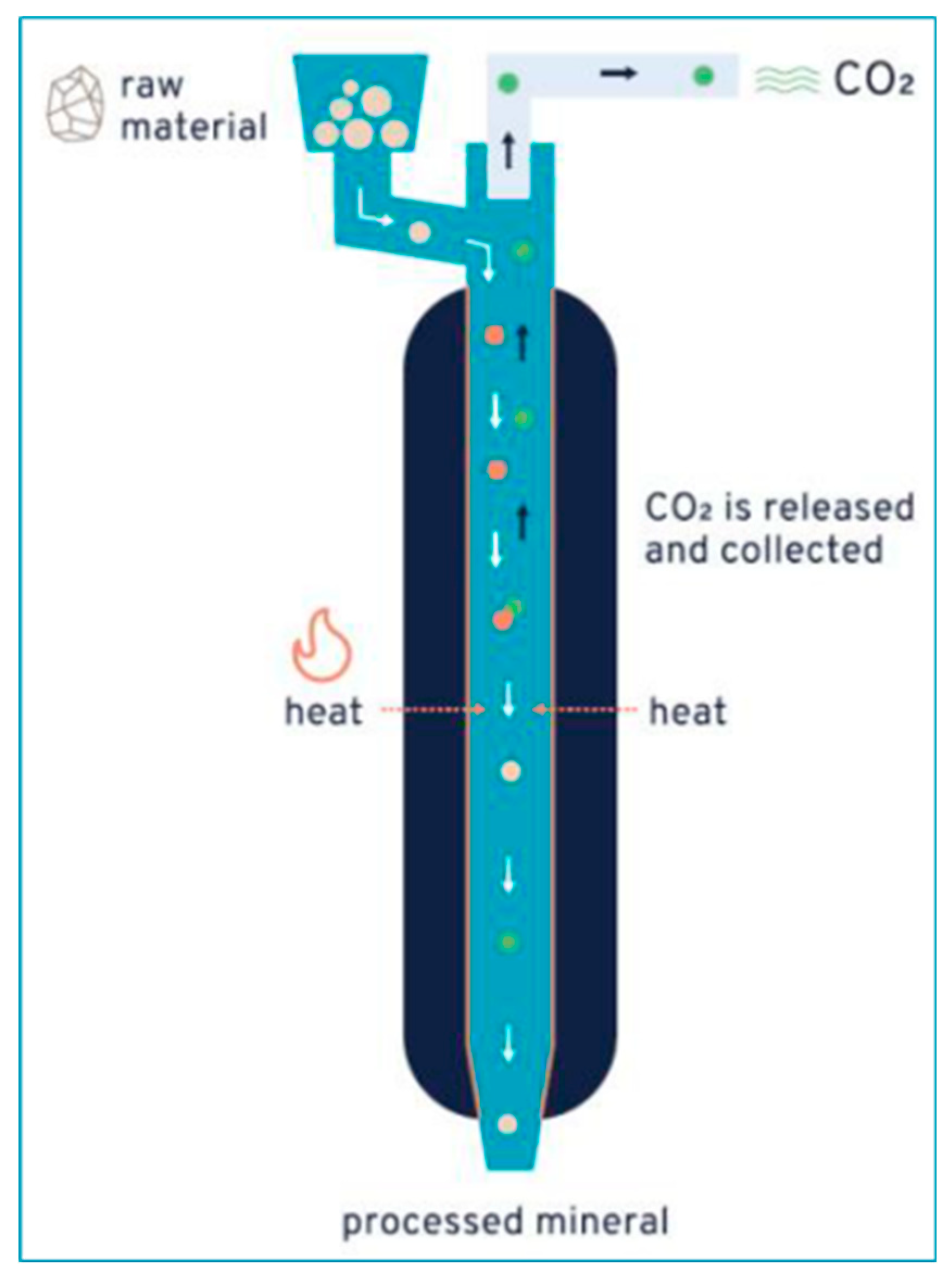
The LEILAC (Low Emissions Intensity Lime And Cement) initiative is structured across two sequential development phases. The first of these, LEILAC1, achieved the direct isolation of process-related CO2 emissions. The LEILAC separation unit (Figure 6) is designed to enable the efficient capture of the unavoidable greenhouse gas emissions inherent to lime and cement manufacturing.
The technology fundamentally redesigns the conventional calciner process by transferring heat to limestone indirectly through a purpose-engineered steel vessel. This distinctive configuration maintains complete segregation between furnace flue gases and the decomposition products, allowing highly pure CO2 to be extracted as it evolves from the calcium carbonate matrix. Integration into existing cement facilities requires only minimal process modifications, as the unit essentially substitutes the conventional calciner without introducing additional reagents or auxiliary operations. As a result, the liberated CO2 stream can be recovered under conditions of elevated chemical purity.
The construction of a pilot installation at the Heidelberg Cement facility in Lixhe, Belgium, was completed within the LEILAC1 framework.
The results from LEILAC1 showed that both raw limestone and cement meal can be successfully processed; that effective CO2 separation is achievable; and that—when assessed independently of the broader system—the energy overhead associated with indirect calcination is comparable to that of conventional direct calcination. Additional noteworthy outcomes include the absence of material accumulation on the inner vessel walls; no measurable structural or operational degradation of the tube following repeated calcination cycles; negligible interference with host plant operations or clinker output; and a strong safety record throughout operation.
A subsequent initiative—LEILAC2—co-funded by the EU Horizon 2020 programme with supplementary industrial investment, was launched in April 2020. Incorporating insights gained during LEILAC1, LEILAC2 was planned to commission a demonstration facility at Heidelberg Cement’s Ennigerloh site in Germany, targeting the separation of approximately 100,000 tonnes of CO2 annually within a scalable modular architecture.
The LEILAC2 project is designed to validate technology scale-up under operational conditions, while pursuing tighter thermal and process integration to maximise overall system efficiency in a retrofit scenario with minimal disruption to clinker yield and quality.
The demonstration facility will additionally explore the feasibility of low-carbon heat sources for supplying the calcination energy requirement, including electrical heating and alternative fuels with elevated biomass content. In this context, a multi-energy management framework has been investigated, yielding encouraging preliminary results.
Within the LEILAC2 scope, the existing LEILAC1 pilot plant will undergo electrification through the replacement of gas-fired burners with resistive heating elements. This selection is technically motivated by the requirement to preserve the existing production configuration to the greatest extent possible, as resistive heating represents a comparatively straightforward drop-in replacement for conventional gas combustion systems.
At a commercial scale, process performance and economics are expected to improve beyond current LEILAC2 projections through a series of subsequent optimisation measures, including the utilisation of kiln off-gases, recovery of thermal energy from the CO2 stream, enhanced preheating strategies, reduced separation distances between process units and the preheater tower, and increased thermal insulation levels.

3.1.2. DESTINY: Microwave Heating Enabling New Production Paradigms

The DESTINY project develops 915 MHz microwave technology for the continuous processing of granular materials in energy-intensive industries, including cement production. Proprietary microwave system details are protected under non-disclosure agreements.
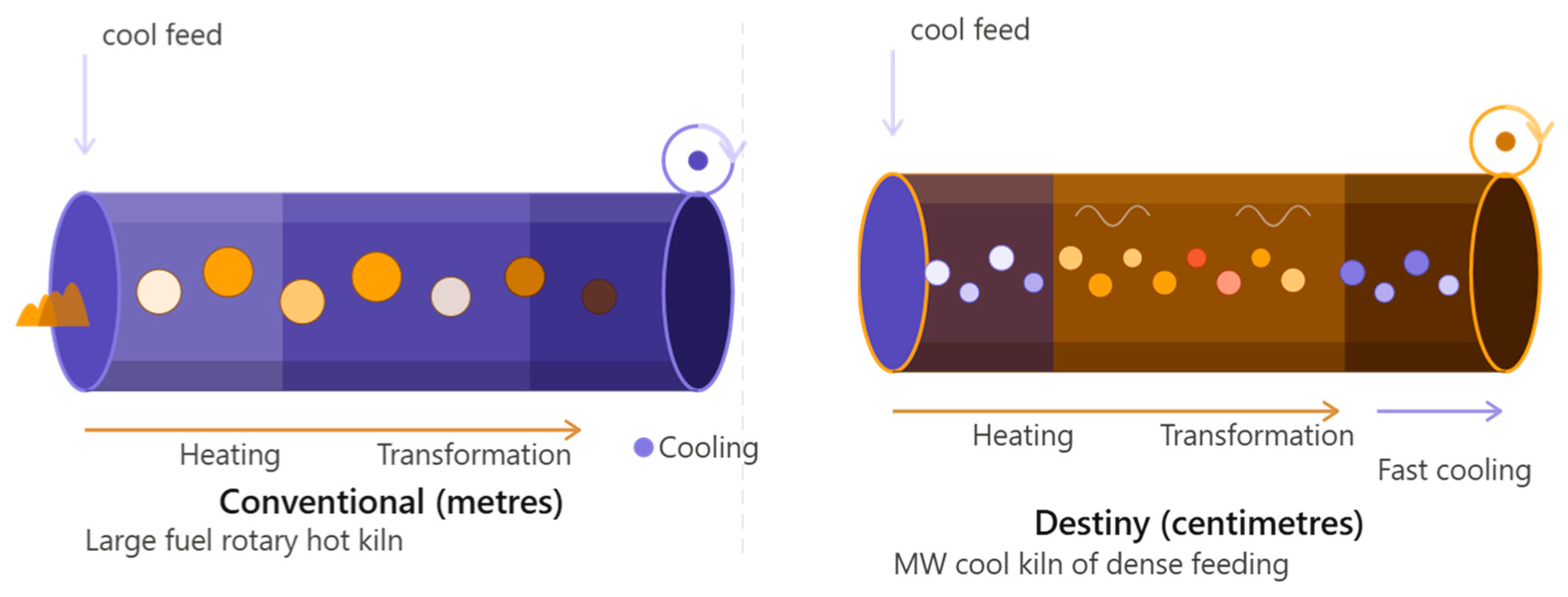
The project introduces a novel firing concept that substitutes conventional combustion with direct microwave–material interaction, complementing traditional production systems. Figure 7 contrasts a conventional rotary kiln with the DESTINY microwave (µw) kiln configuration.
Unlike conventional large-scale kilns, which exhibit diminished performance under reduced production conditions, the DESTINY kiln sustains high operational efficiency even in downscaled process configurations.
The project indicates progress toward the following performance targets:
  • Capacity to accommodate ± 30% fluctuations in energy input within the timeframes typical of renewable-energy variability, with a negligible degradation in specific energy efficiency;
  • A 40% gain in energy efficiency, depending on the industrial sector and product type;
  • Resource (fuel) efficiency improvements exceeding 40%;
  • A 45% reduction in CO2 emissions under steady-state conditions, excluding electricity generation contributions;
  • A 15% decrease in both OPEX and CAPEX.
In large conventional rotary kilns, material residence times typically exceed two hours. The miniaturised rotary fluidised bed employed in the DESTINY concept enables superior microwave coupling, reducing the residence time to under two minutes.
A key advantage of the container-scale DESTINY microwave unit lies in its capacity for on-demand, point-of-use production.
Experimental investigations have confirmed the feasibility of activating natural kaolinitic clays through microwave irradiation at activation temperatures in the range of 520–540 °C. Adequate reactivity was obtained at a low throughput of 12 kg/h. At an elevated production rate of 25 kg/h, the pozzolanic activity index at 28 days reached only 88%. Achieving higher mass flow rates with sufficient activation levels remains an open technical challenge.

3.1.3. Comparison LEILAC and DESTINY: Two Different Production Models

The European research initiatives LEILAC and DESTINY represent two complementary pathways toward the electrification of the energy-intensive cement sector. LEILAC exemplifies electrification as a substitution strategy, whereas DESTINY embodies electrification as a fundamental transformation of the production model.
The LEILAC electrification approach involves replacing conventional gas-fired combustion systems with electric resistance heating elements, while preserving the large-scale production architecture of standard cement manufacturing processes.
The container-scale process equipment underpinning DESTINY, based on microwave heating technology, enables downscaled production with competitive efficiency and supports a lean, on-site, demand-driven manufacturing model. The DESTINY paradigm further benefits from inherent scalability, allowing the production capacity to be adjusted upward or downward while maintaining satisfactory efficiency across varying output rates.
Both the electrification of conventional process configurations (LEILAC) and the adoption of new production models enabled by advanced electrotechnologies (DESTINY) represent complementary strategies for reducing the climate footprint associated with growing cement demand.
When determining the economically optimal solution for any given context in the pursuit of the complete defossilisation of cement production, both large-scale centralised manufacturing and container-scale, on-site, demand-driven production should be evaluated. The effectiveness of microwave interaction at elevated temperatures is particularly promising, as it allows process temperatures to remain closer to the thermochemical threshold of the calcination reaction by virtue of the direct and instantaneous coupling of electromagnetic energy with the material. Resistive heating, by contrast, relies on convective and radiative heat transfer mechanisms, necessitating element temperatures of up to 2000 °C to ensure adequate thermal flux to the material.
The LEILAC case demonstrates that electricity can serve as a straightforward substitution for fossil-based energy in contexts where continuity with existing production infrastructure is a priority. The microwave-based DESTINY concept, however, illustrates that electricity is not simply an energy carrier interchangeable with conventional fossil fuels. The volumetric and instantaneous nature of microwave–material interaction highlights a specific physical interaction mechanism that creates opportunities for new process configurations and for production models—such as container-scale manufacturing—that may be more appropriate than centralised large-scale production in some operational and economic contexts.

3.2. Electrification of a Strip Heating Line

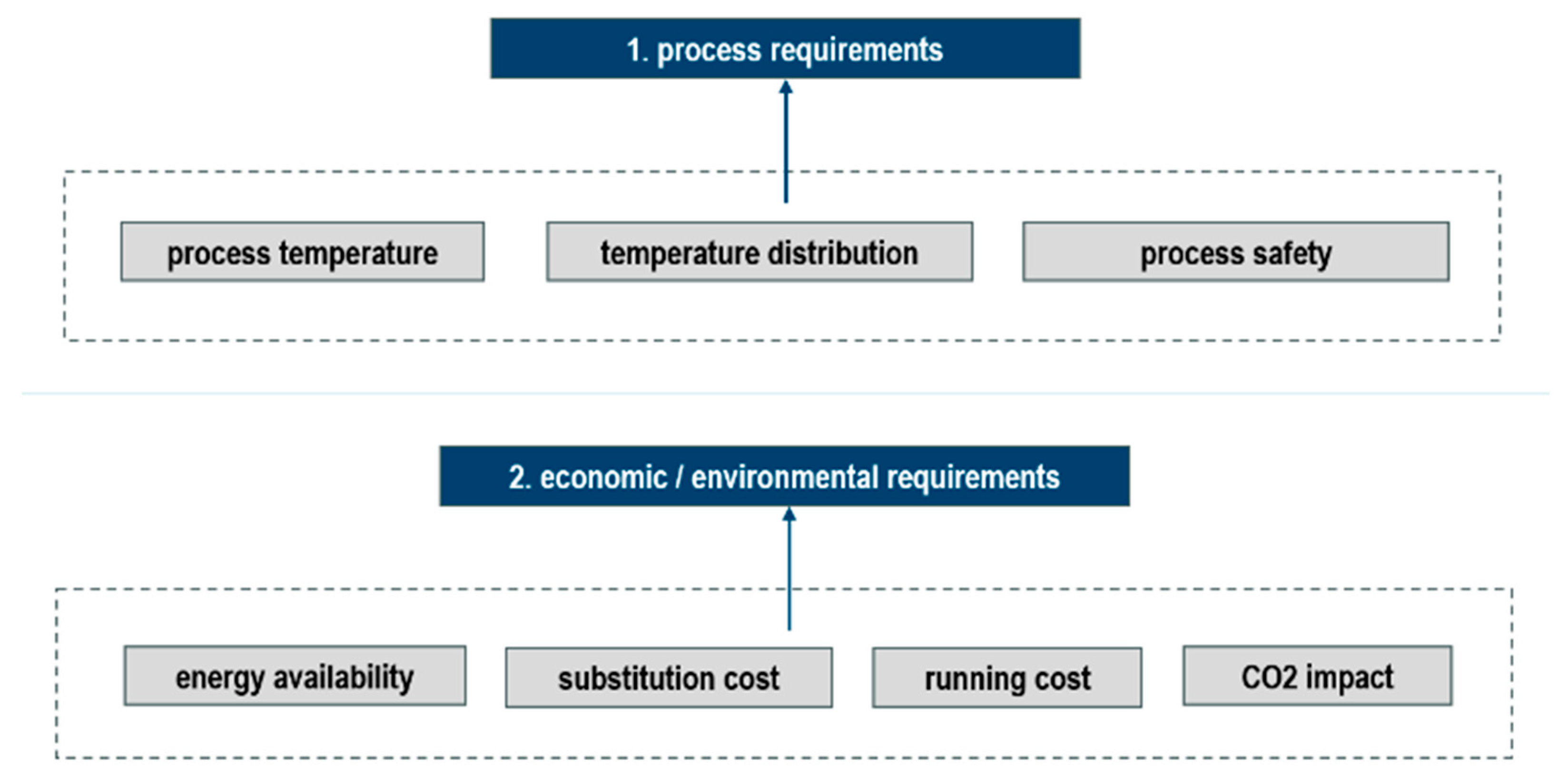
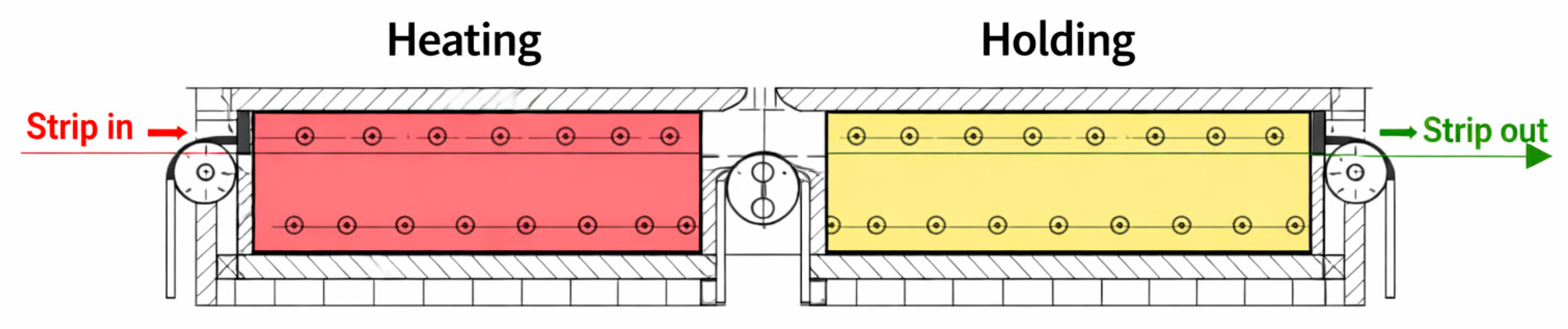
To estimate the substitution potential of a given thermoprocessing installation, a simple and robust strategy is needed. This is achieved through a hierarchical evaluation (Figure 8) of process and economic requirements, which was formulated as part of the IGF Project EnabEL [25]. The practical example discussed in this section applies this method to a typical industrial scenario involving a gas-fired heating and holding process for steel strips within an annealing and pickling line (Figure 9). The installation consists of two independent heating zones/furnaces, each with a chamber length of 15 m and a chamber width/height of 3 m. The steel strip is initially heated from room temperature to 1200 °C and is then held at this temperature for 30 s.
The installation handles a throughput of 37 tonnes per hour. The strip dimensions are a width of 1500 mm and a thickness of 1 mm. In the heating zone, burners with a combined total power output of 12 MW have been installed.

3.2.1. Available Technologies

Industrial gas burners can achieve substantial power densities of >300 kW/m2, and, naturally, the furnaces were built around the power source. Therefore, the most challenging part in the design of electric substitution concepts is to fulfil the process requirements. For achieving furnace temperatures of >1000 °C using electrically conductive workpieces, only three technologies are already established on the market: indirect resistive heating, direct resistance heating and inductive heating.
In the case of indirect resistive heating, the technical principle is simple: heating elements (HEs) made of metallic alloys or high temperature ceramics are mounted on the furnace walls [26]. These elements are then heated to a high temperature, transferring thermal energy to the workpiece via radiation. This way, nearly all electric energy is transferred into thermal energy. Electric efficiencies of 95–98% are common. In the considered temperature range, three types of heating elements with their respective, maximum element temperature are available on the market: metallic FeCrAl alloys up to 1450 °C and ceramic HEs made from SiC up to 1600 °C or from MoSi2 up to 1800 °C [26]. Unfortunately, SiC-HE possess a non-optimal operational behaviour, especially in the case of high-power applications. SiC-HEs experience a change in resistance over their lifetime (ageing) [27]. Additionally, SiC HE resistance deviates strongly during the manufacturing process [28]. Due to this operational behaviour, it is suggested that SiC-HEs should only be used if no other option is available, and they are therefore excluded from further evaluation. FeCrAl-HEs can achieve wall loadings up to 100 kW/m2 at furnace temperatures of 800 °C and up to 30 kW/m2 at furnace temperatures of 1250 °C [29]. On the other hand, MoSi2-HEs can achieve wall loadings up to 160 kW/m2 depending on the mode of installation [30], achieving a much higher power density but still significantly lower compared to gas burners.
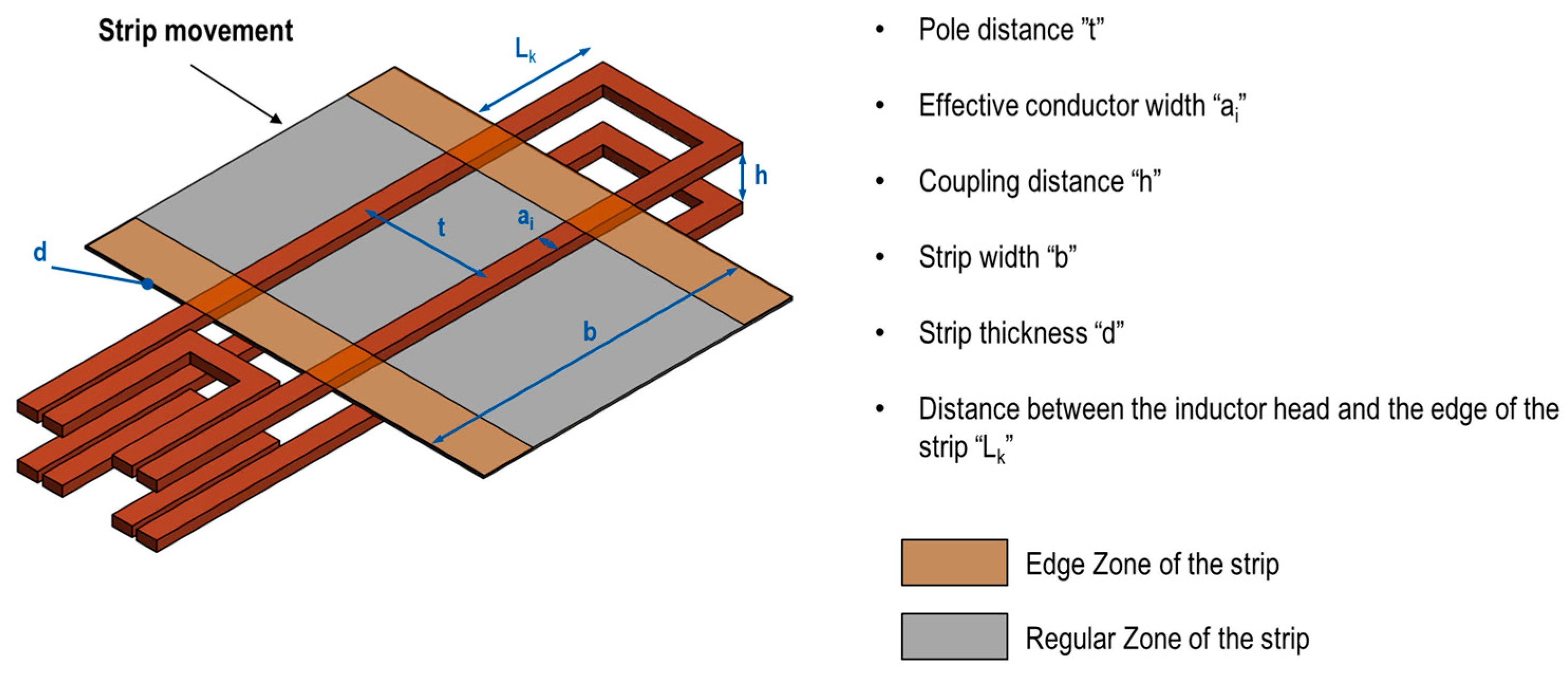
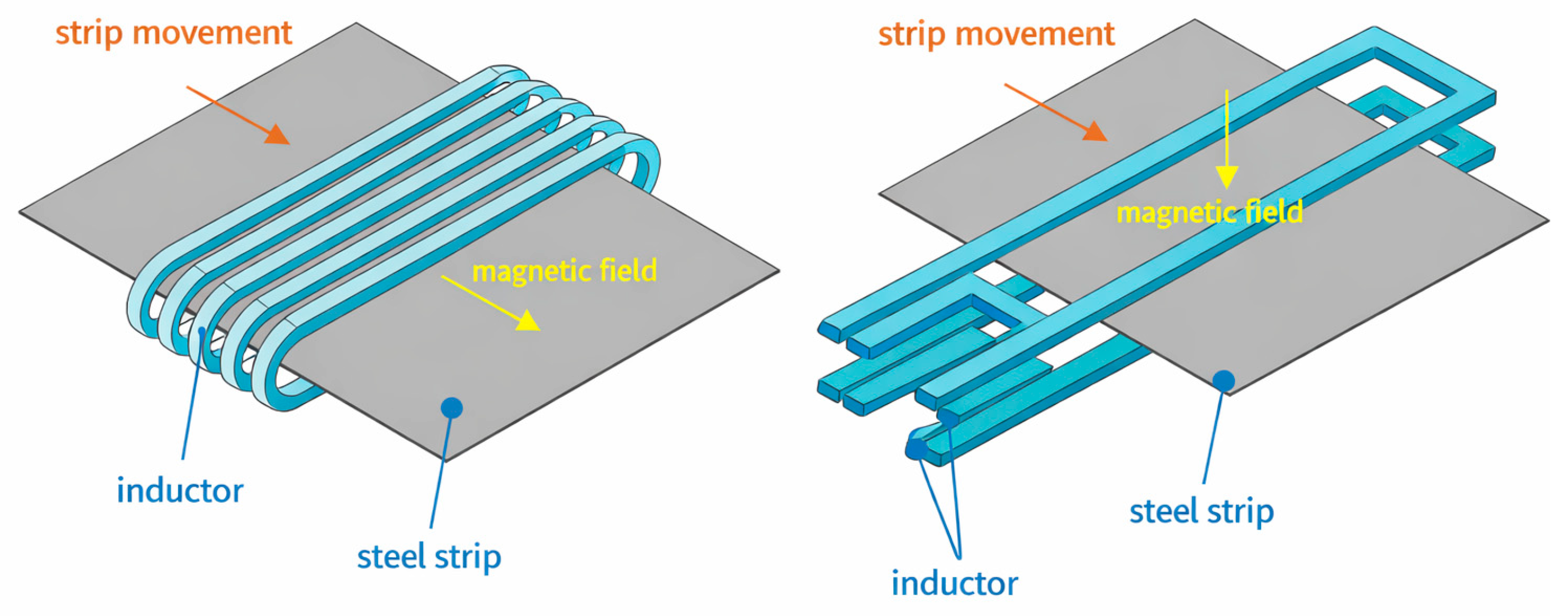
Inductive heating is a direct heating method that generates internal heat sources within the workpiece by inducing eddy currents through a strong, time-varying magnetic flux. This approach effectively eliminates technical limitations on the transport of thermal energy. Compared to gas burners, inductive heating can achieve power densities that are an order of magnitude higher [31]. For strip workpieces, induction heating can be applied in form of longitudinal-field (LFH) or transversal-field (TFH) induction heating (Figure 10).
LFH is a more robust and easier to design system compared to TFH. Therefore, it should be used whenever possible. The only significant limitation of LFH implementation is that it is constrained by the maximum frequency of the generator. As the strip becomes thinner, a higher frequency is required to achieve sufficient electrical efficiency.
To estimate the necessary frequency, the following equation can be used, where κ is the electrical conductivity [S/m], μ is the magnetic permeability [H/m], and d is the strip thickness [m]:
f = π κ µ d 3.5 2 1
In contrast to LFH, the frequency of TFH is independent of strip thickness, allowing for similar heating efficiencies to be achieved at low frequencies. However, the heating profile of TFH is highly sensitive to the geometry of the inductor relative to the strip geometry. As a result, designing TFH systems requires extensive numerical simulations [32].

3.2.2. Substitution Strategies

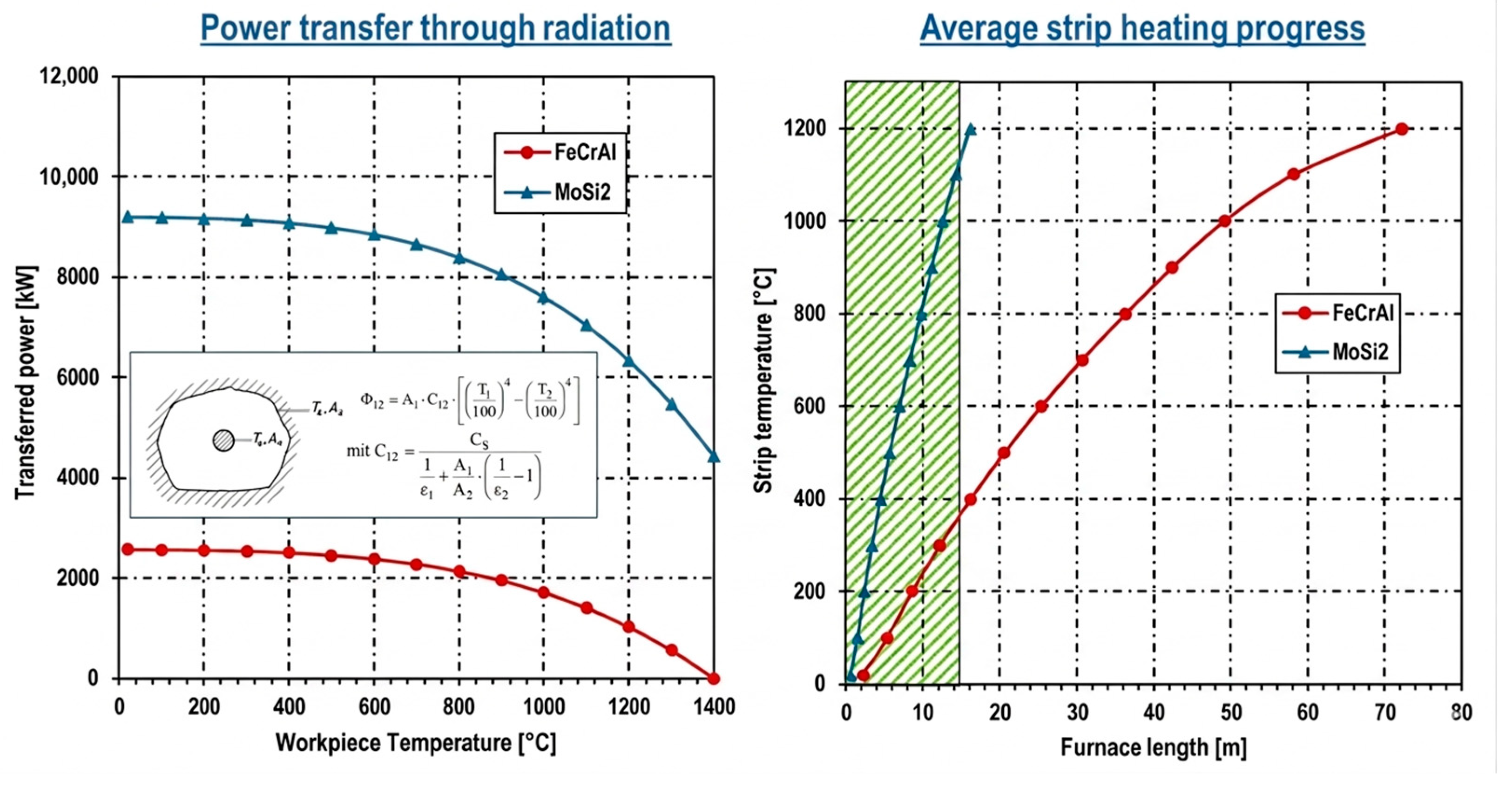
Considering the available technologies, two general substitution strategies can be formulated: 1. Substitute the heating and holding process with indirect resistive heating. 2. Use an inductive booster for the heating process in combination with an indirect resistive holding process. The first strategy is the most convenient to implement, it does not require numerical simulations, and the heat transfer mechanisms do not change. In the used practical scenario, the holding process can be easily electrified with indirect electric heating since only thermal losses need to be compensated there. The heating process, on the other hand, cannot be substituted by indirect electric heating. The radiative energy transfer is proportional to the difference in the fourth power of the temperatures of the heating element and workpiece (Figure 11, left); even the use of MoSi2-HEs will not provide sufficient energy transfer to heat up the steel strip over a 15 m furnace length to the required temperature of 1200 °C (Figure 11, right).
Since neither the HE temperature nor the maximum wall load of a given HE type can be increased, the only way to enhance the heating performance is by extending the furnace length or reducing the throughput. If neither option is feasible, the second strategy must be employed. The strip thickness of 1 mm inhibits the use of LFH, as the optimal frequency would exceed 5 MHz in this scenario. Therefore, implementing a booster based on the TFH is necessary.
An analytic estimation of TFH heating performance is generally insufficient. The temperature profile, heating rate and process efficiency are dependent on the optimisation of codependent parameters which describe the geometry of the TFH inductor in relation to the respective strip (Figure 12). In this case, numerical simulation is required.
Induction heating can be simplified as a combination of two coupled processes: first, the induction of eddy currents into the workpiece by the high-frequency electromagnetic field generated by the inductor; second, the propagation of the temperature field caused by the internal heating of the workpiece through joule heat losses. As the time constant of the thermal propagation is orders of magnitude higher than the time constant of the high-frequency electromagnetic field, the simulation can be implemented using two weakly coupled environments which solve the electromagnetic and the thermal part of the simulation independently.
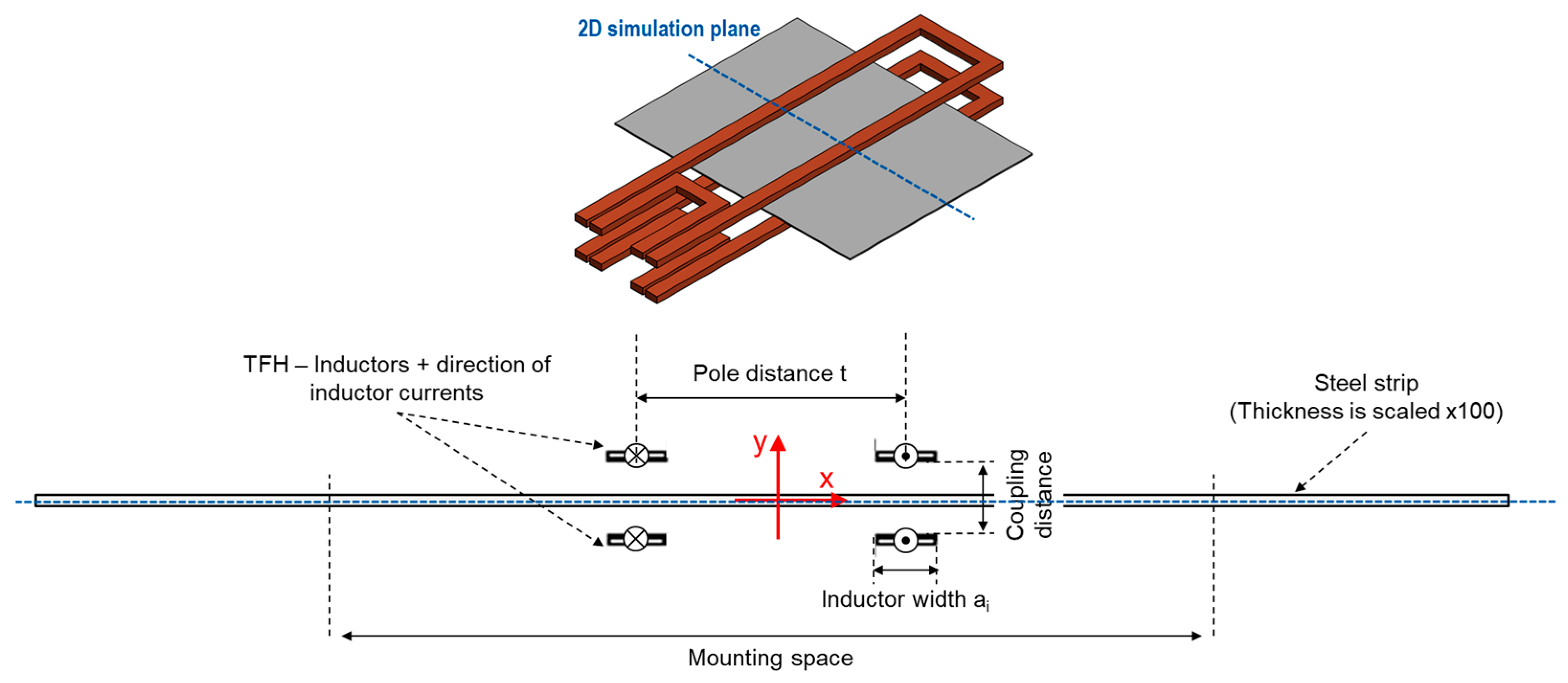
To estimate the general performance of the TFH as a booster, a simulation of the regular zone is sufficient. In this case, the dimension of the simulation can be reduced from 3D to 2D to save computation resources. Figure 13 shows the resulting simulation geometry.
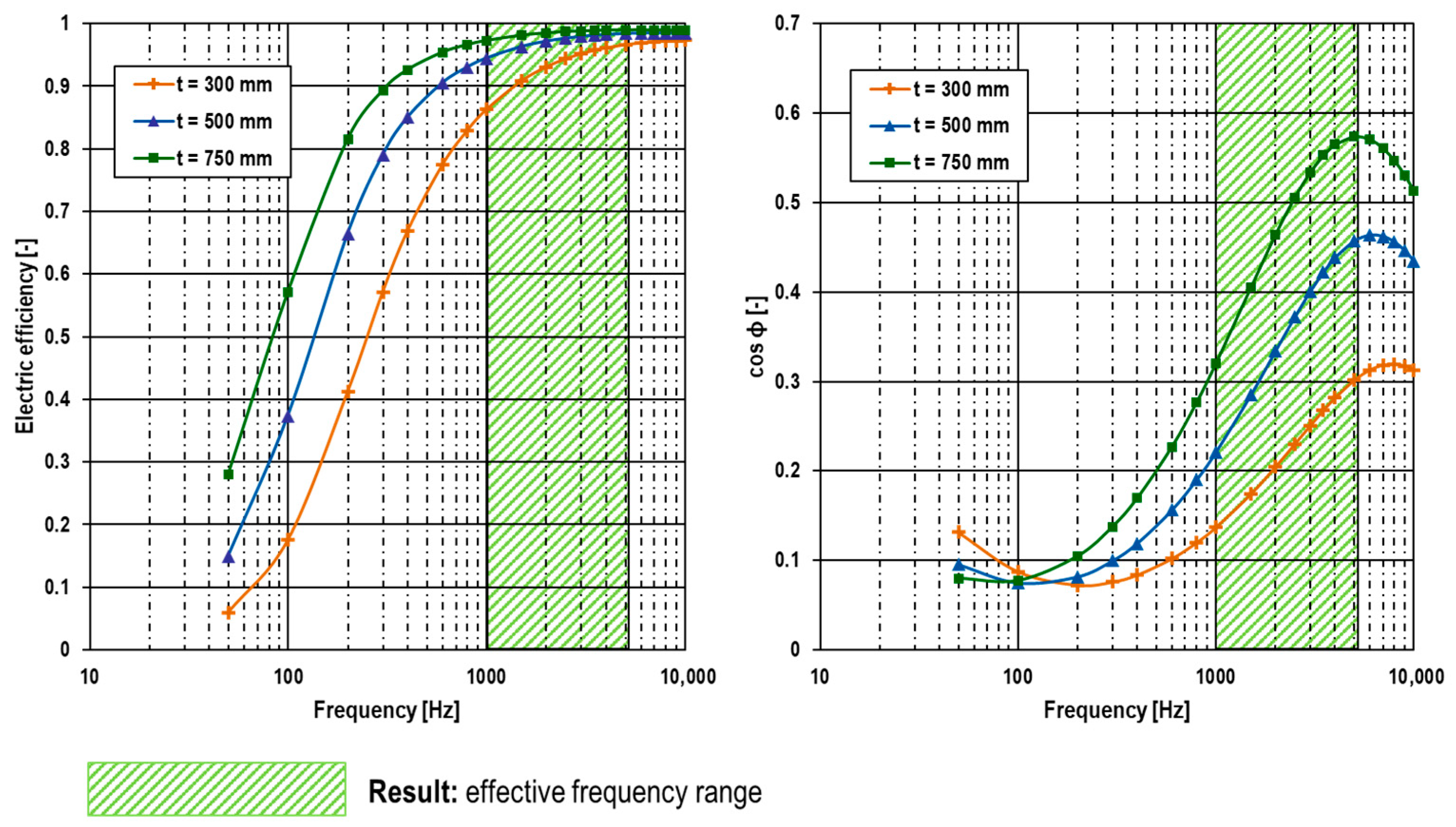
A two-dimensional simulation model allows general parameter sweeps to estimate optimal process parameters. Figure 14 shows the electric efficiency η and cos ϕ as a function of frequency f and pole distance t for a stainless-steel strip with a 1 mm thickness. In the shown case, a constant coupling distance h = 100   m m and a constant conductor width a i = 300   m m were used. The electric efficiency is calculated using the following formula, where P S t r i p is the electric losses inside the stainless-steel strip and P I N D is the electric losses inside the inductor:
η e l = P S t r i p P I N D + P S t r i p
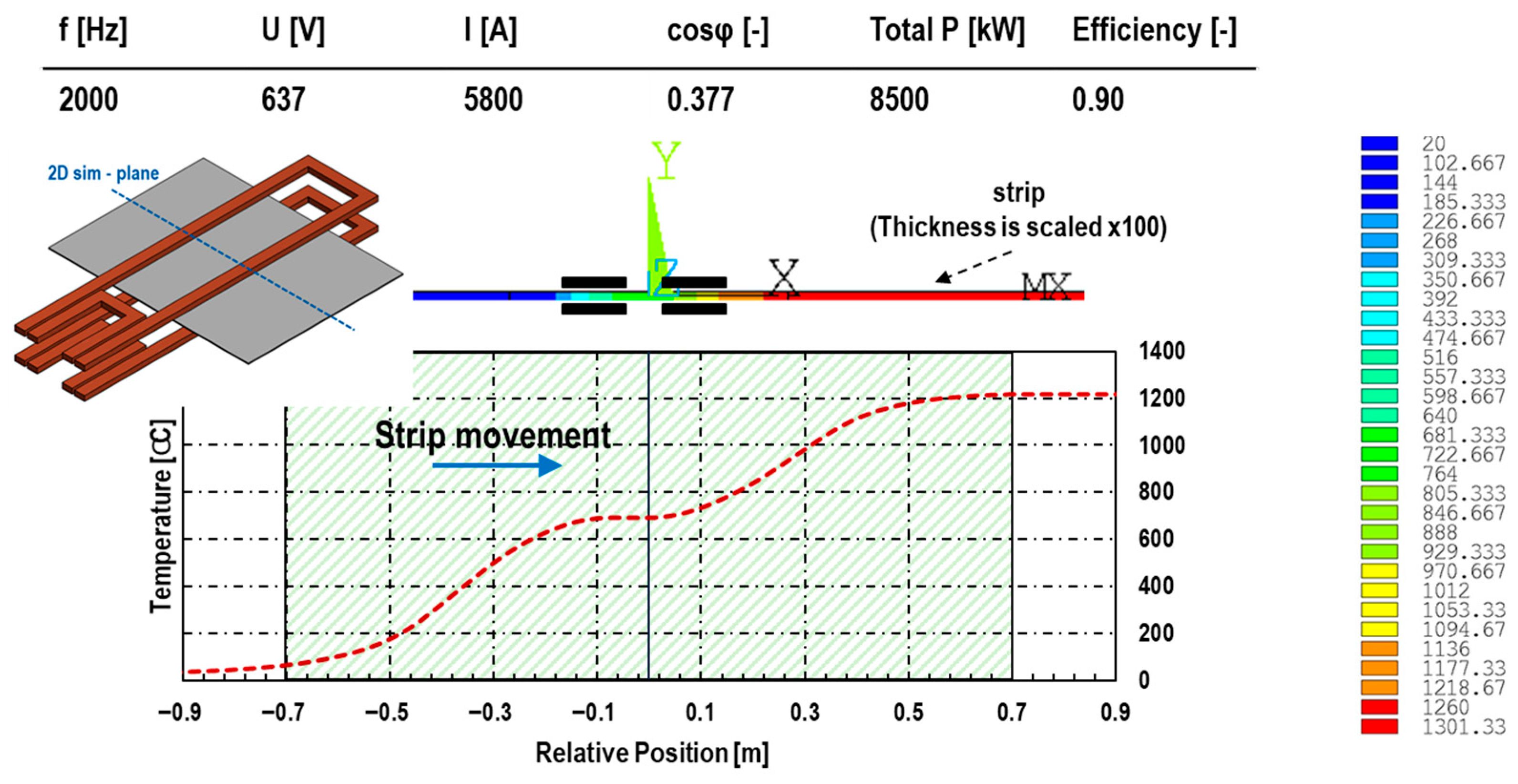
Based on the results of the parameter sweep, a frequency of f = 2   k H z and a pole distance t = 500   m m were used to approximate the heating performance of the TFH booster. Figure 15 presents the simulation results for the estimated heating performance of the TFH booster. Within a mounting space of 1.4 m, the strip can be heated from room temperature to 1200 °C with an electric efficiency of 90% at a frequency of just 2 kHz.

3.2.3. Evaluation of the Economic Impact

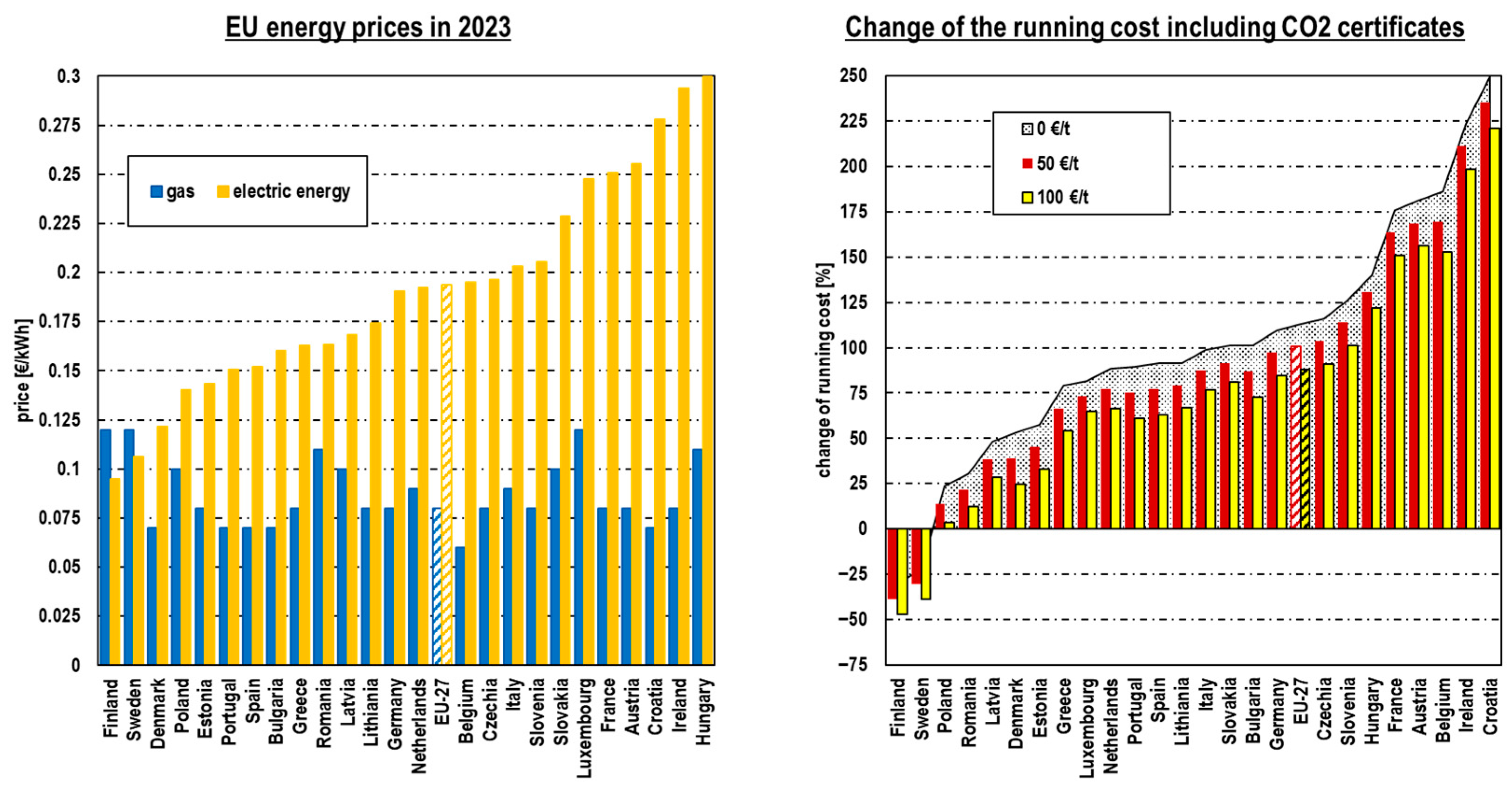
The average lifespan of a thermoprocessing installation is typically planned to be between 20 and 40 years, with a focus on maintaining nearly continuous operation. Over the lifetime of such an installation, the running costs significantly outweigh the initial substitution costs. In high-temperature and high-power applications, the running costs are predominantly driven by energy prices. When considering substitution, these costs are especially determined by the price comparison between gas and electric energy, which is influenced by availability and local politics. Today, in most EU countries, the price of electricity still on average outweighs the gas price by at least a factor of two (Figure 16, left), which on average leads to an increase in energy costs by over 100%. Poland presents an exception and a promising outlook for the future, where switching to electric heating does not affect energy costs, especially when the price of CO2 certificates is factored in. Finland and Sweden, on the other hand, are a step further, where transitioning to electric heating can even reduce operational cost.
In summary, the implementation of inductive heating in the substitution of high-power processes, either as a complete replacement or as a booster in combination with indirect resistive heating, offers the safest way to fulfil the process requirements. This remains true even when considering the more complex process design involved. Although current energy prices suggest that replacing gas-powered installations with electric alternatives may not be advisable in most European countries in the short term, future changes in renewable energy production or CO2 pricing could quickly alter this condition. Therefore, a robust strategy for evaluating and designing a substitution concept will become increasingly important in the future.

3.3. Electrification of Melting Processes for Cast Iron and Aluminium

3.3.1. Introduction Preamble

The melting processes of metals are high-energy-consuming industrial processes, and the continuous improvement of the energy efficiency of competitive melting technologies is of increasing interest [34]. Against this background, the CO2 emissions of melting processes must now be considered alongside the evaluation of energy alone. The CO2 balance of the entire process chain must be assessed and reduced in order to address future challenges in melting technologies [35].
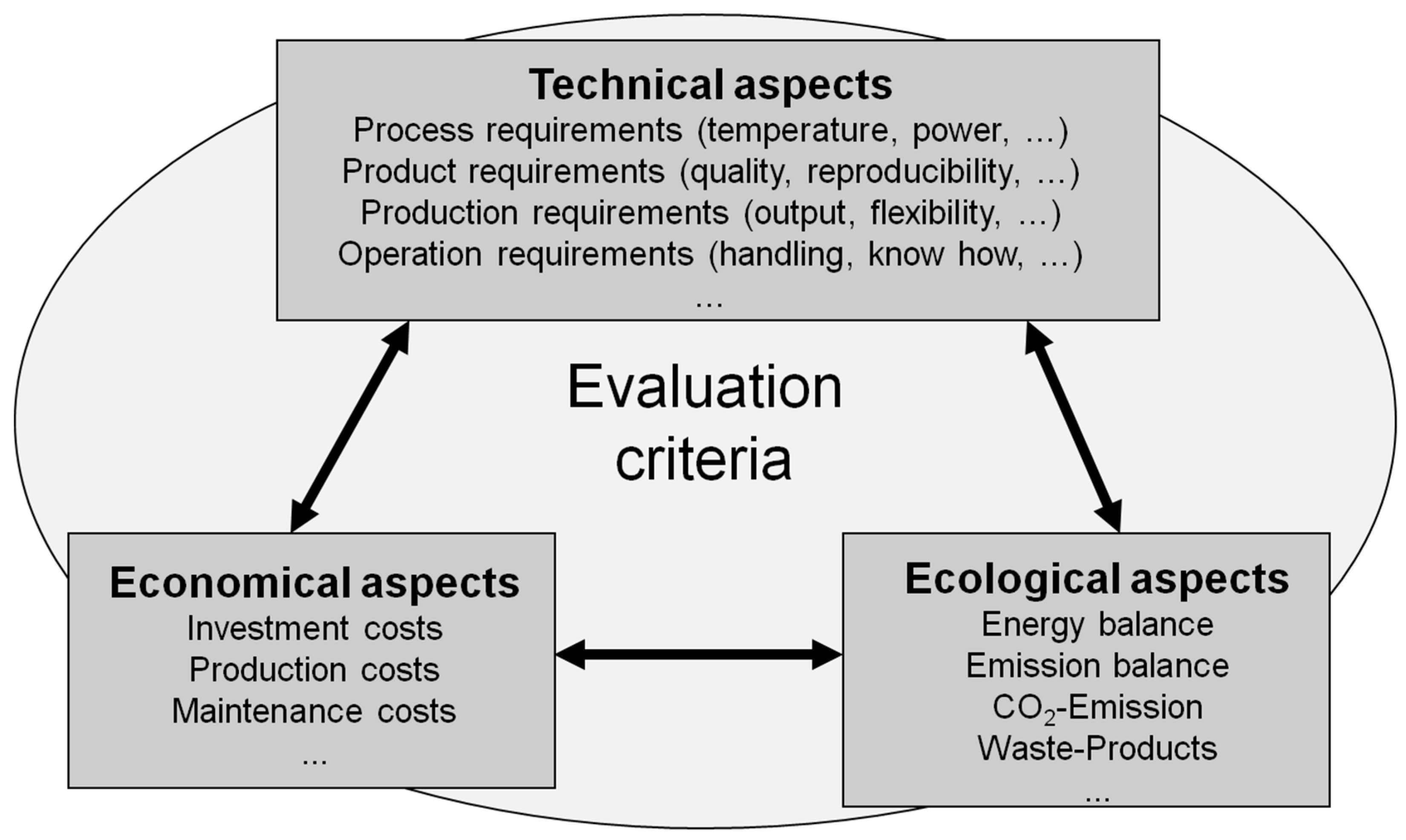
When comparing different melting processes, three groups of evaluation criteria are particularly important: application requirements, economic requirements, and ecological requirements (see Figure 17).
Process requirements are the primary boundary conditions. Different melting technologies can only be considered as competing options if they meet the same process requirements, such as temperature level, furnace atmosphere, and production rate. If only one technology can satisfy these requirements, there is effectively no competition and the remaining criteria become secondary. If, however, two or more technologies can provide the same or similar process performance, the selection should ultimately be based on economic and ecological criteria. The most important economic aspects are investment costs, maintenance costs, and, in particular, the cost of the final energy used. In recent years, the total CO2 balance associated with the chosen final energy source has also become increasingly important, not only from an ecological perspective but also from an economic one because of CO2 emission trading schemes.
For a complete energy comparison, and for a consistent comparison of CO2 emissions from different melting furnaces, the primary energy demand of each furnace must be considered in addition to its final energy demand. The evaluation of both primary energy use and CO2 emissions therefore has to include the complete process chain [36].
To describe the total energy demand of a melting process, the first step is to consider the direct energy demand, i.e., the specific energy required for the melting operation itself. The second step is to account for the embodied energy associated with material losses during the process, for example, due to oxidation. These losses must be compensated by additional material input and, from an energetic point of view, by the accumulated energy required to produce that material. This can be assessed through a complete process chain analysis in accordance with VDI 4600.
Depending on the final energy source used—electricity, gas, or coal—the corresponding process chains result in different CO2 emissions. Even when electric melting processes have primary energy demands similar to those of fuel-heated processes, their CO2 emissions are often already lower as of today. As the share of renewable electricity continues to increase, electric melting processes are expected to deliver even greater CO2 reductions in the future.

3.3.2. Melting of Cast Iron

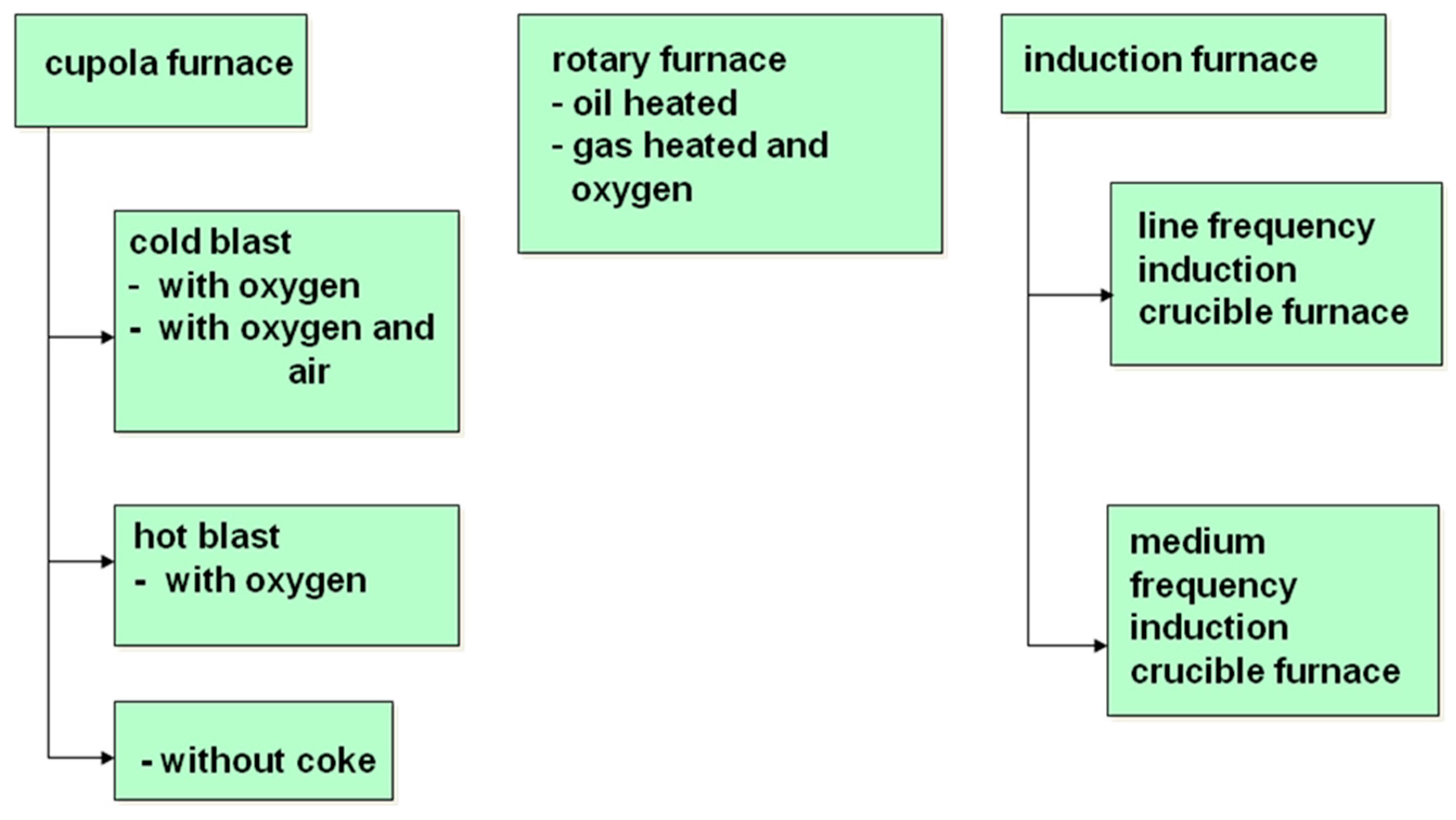
Melting furnaces are widely used for melting of iron, steel and non-ferrous metals. For use in cast iron foundries, cupola, induction, and partly also gas- or oil-fired rotary furnaces are in competition; see Figure 18.
From the criteria of the production requirements, the cupola furnace has substantial advantages for continuous melting and large throughputs. Induction furnaces are small, and their very flexible aggregates allow for making the optimal choice when often changing the alloy composition of the melt charge and for small batches of high-quality melting products [37]. Nevertheless, energy consumption plays an important role in both cases.
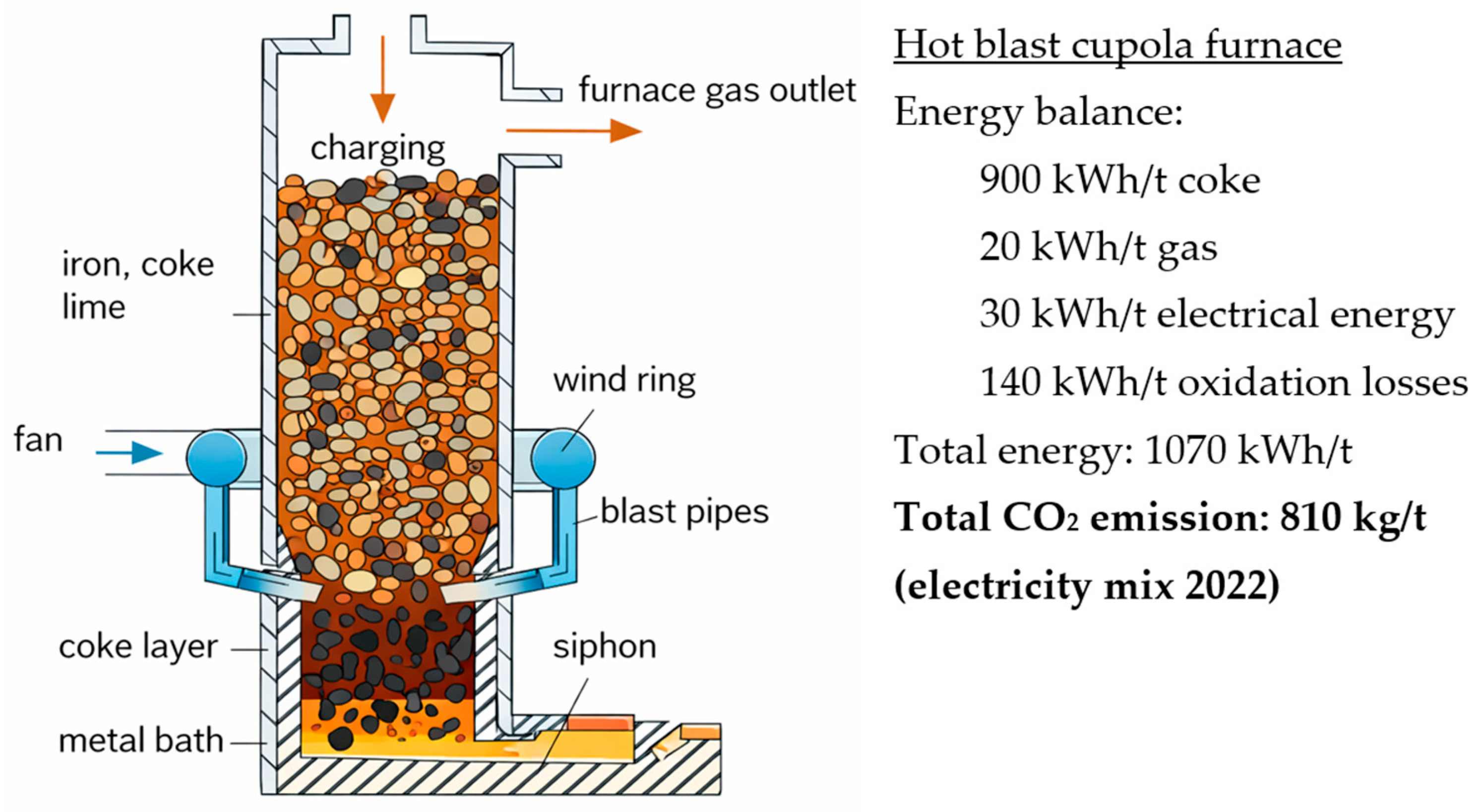
Figure 19 shows the principal layout of a hot blast cupola furnace and typical energy consumption values for a modern large furnace. The melting rates of such large furnaces are 60 t/h. Cupola furnaces are used in large foundries with a small variety of different cast iron grades. The total energy consumption is in the range of 1000 to 1100 kWh per ton of molten cast iron, considering the impact of the oxidation losses in the energy balance. The main energy source of the hot blast cupola furnace is coke; small parts are gas and electricity. These energy sources cause total CO2 emissions of about 810 kg/t cast iron, taking into account the electricity mix in Germany in 2022.
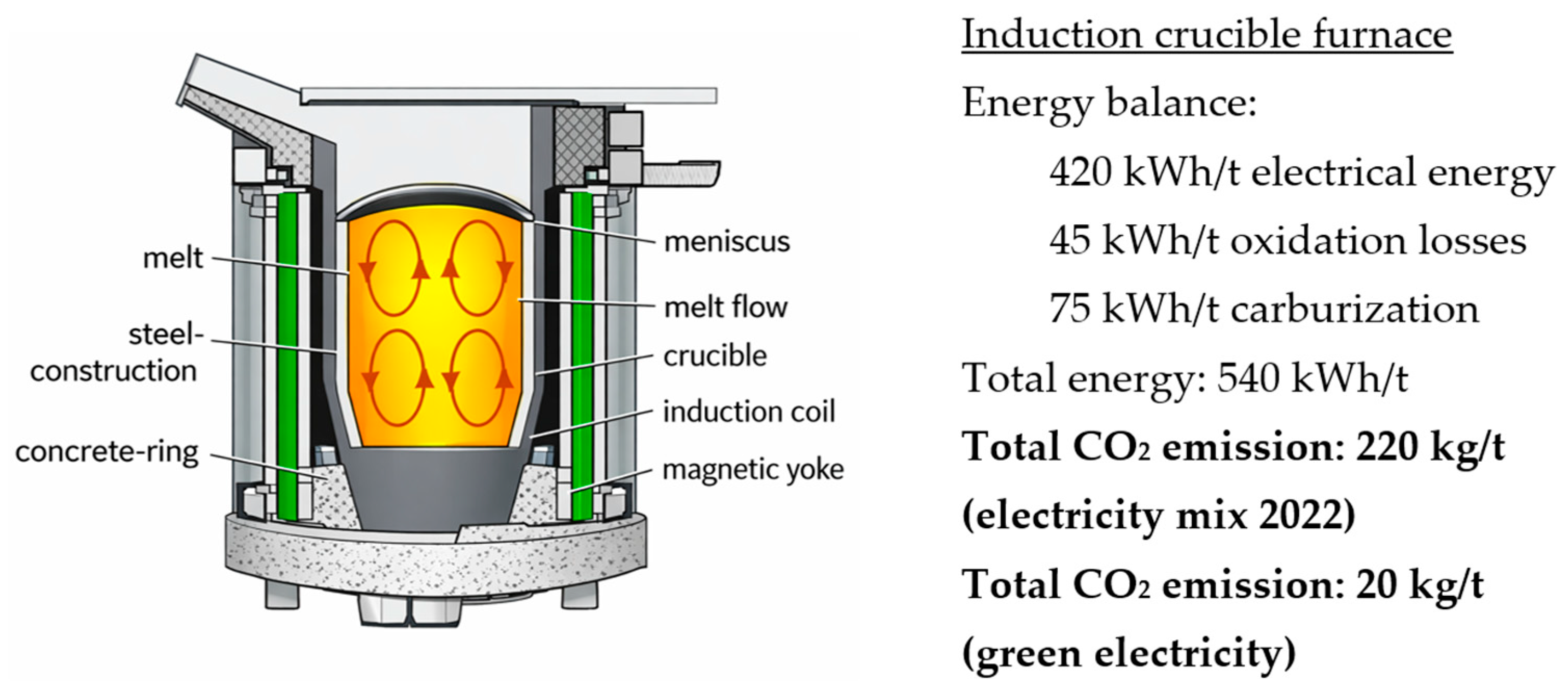
Figure 20 shows an induction crucible furnace, which is mostly used for flexible melting with a wide variety of different cast iron grades. The sizes of modern medium-frequency induction furnaces are smaller, and they have typically melting rates of 10 t/h to 20 t/h for cast iron [38]. The energy consumption of modern furnaces is around 540 kWh/t in the case of the melting of cast iron (without holding operation losses) and is much lower than for the cupola furnace, but, due to electricity as the energy source, the energy costs are comparable or even higher. The total efficiency for the melting of cast iron is about 75%. In total, the melting and carburization process using the induction crucible furnace causes CO2 emissions of about 220 kg/t cast iron, considering the electricity mix in Germany in 2022. But the total CO2 emissions are only 20 kg/t if one hundred percent green electricity is used.
The electrification of the melting processes of cast iron offers significant potential to reduce CO2 emissions, especially when electric energy generated by renewable energy sources is used. In particular, experimental data relating to grey cast iron melting processes can be used to derive the substitution coefficient g in the transition from a process that uses fossil fuels to a fully electrified process.
In the process of melting one ton of grey cast iron in a cupola furnace, the energy consumption from fossil fuels, coke, and gas amounts to 930 kWh, or 3312 MJ, while the electricity consumption amounts to 30 kWh. The same melting process in an induction crucible furnace uses 420 kWh. With these values, we obtain
γ = 3312   420 30     8.5   M J k W h

3.3.3. Melting of Aluminium

For the melting of aluminium, as of today, gas-fired furnaces are mostly used. These gas-fired furnaces (Figure 21) are usually preferred because of their comparatively low operating energy costs.
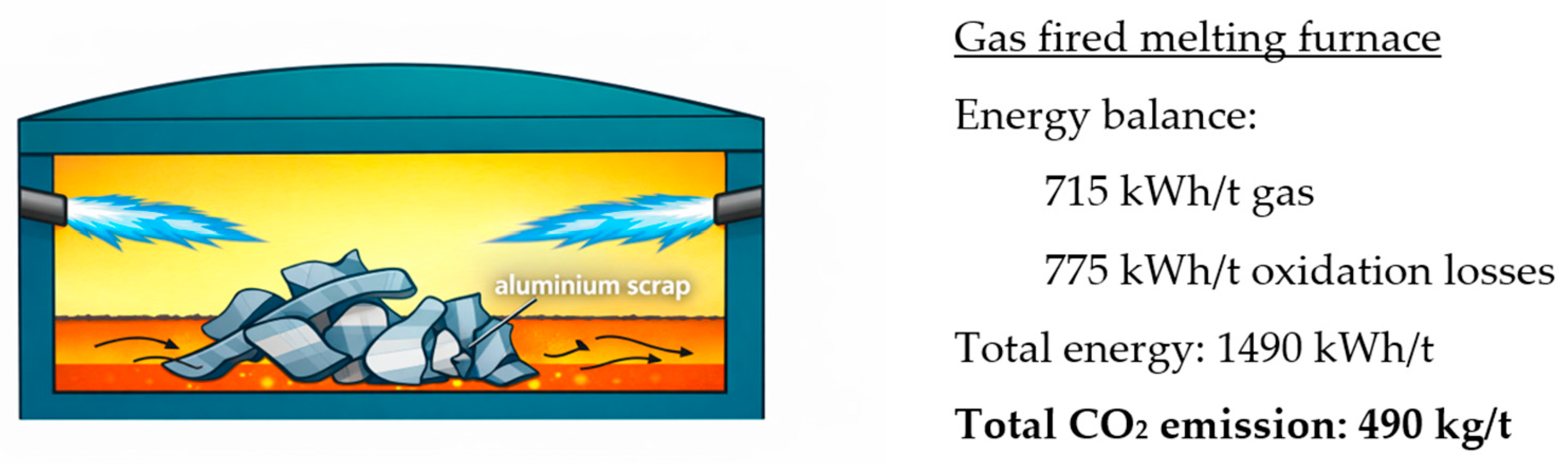
In the gas-fired furnace, the open flame of the burner is directly oriented to the melt surface, which leads to considerable oxidation losses and inhomogeneous temperature distribution in the melt. The oxidation losses must be compensated by the very energy intensive production of primary aluminium. Therefore, the energy balance in Figure 21 shows a very high amount of energy caused by the compensation of the oxidation losses.
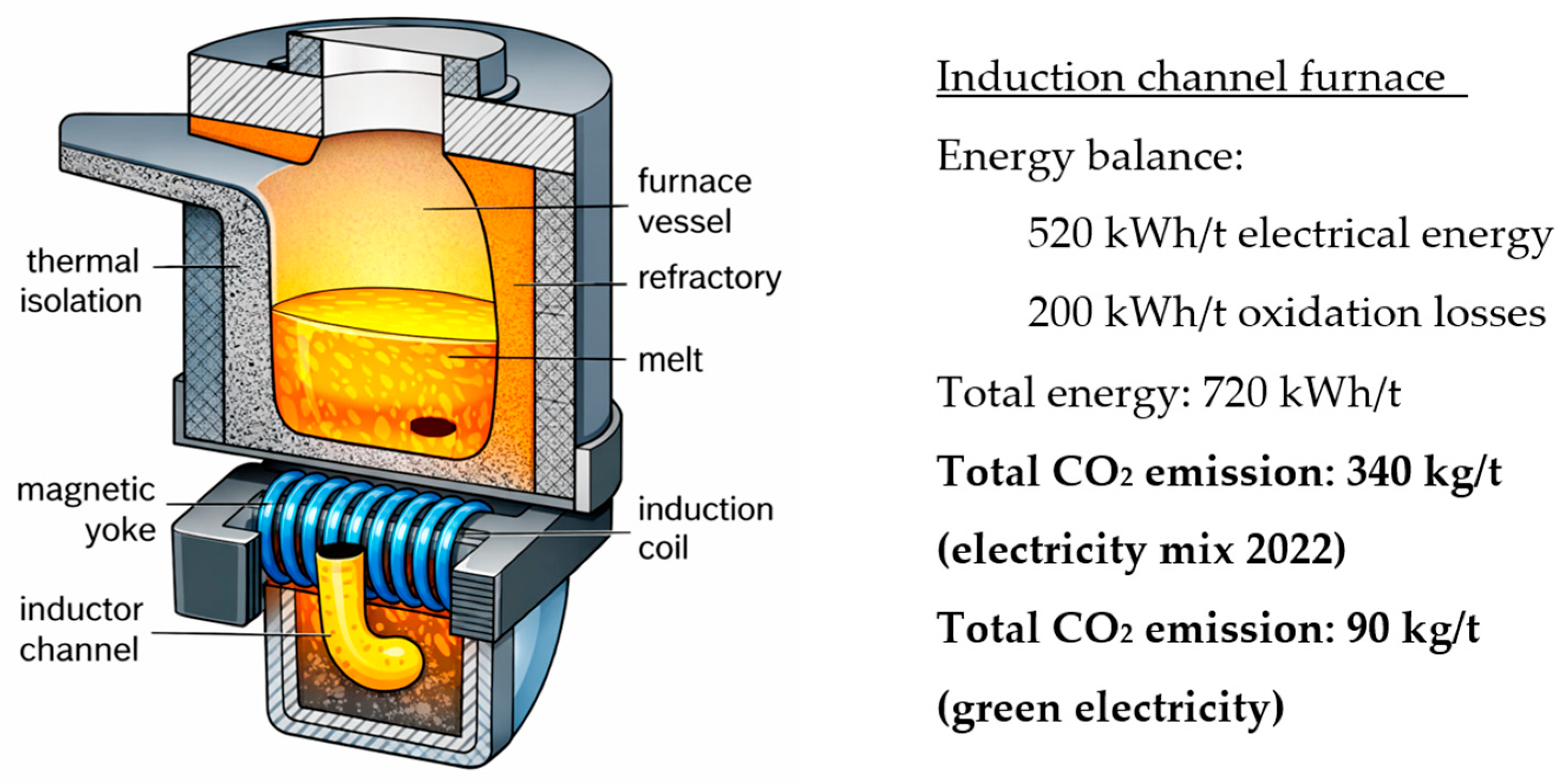
For the electrification of the melting process for aluminium, the induction channel furnace (see Figure 22) is a technology that fulfils all typical technical requirements of the foundry industry, such as high throughput and short melting cycles, melt homogenization by bath movement, and precise power and temperature control, as well as simple automatic process control, easy handling, and high flexibility [38]. In addition, high electrical and thermal efficiency in connection with low oxidation losses and consequently the saving of raw materials lead to low specific energy consumption and environmental competitiveness.
Material losses from oxidation during the melting process play a significant role, especially from an energy and ecological point of view in the case of aluminium melting processes. These oxidation losses depend on the melting technology, the type and purity of the charged aluminium scrap, the temperature level and spatial distribution of the temperature in the melt, the melting time, the furnace atmosphere, and other factors. Practical investigations comparing fuel-fired and electrically heated aluminium melting have shown that induction furnaces can offer energy savings, lower oxidation losses, and environmental advantages. The comparison between the energy balance in Figure 21 and Figure 22 shows the great potential of lowering energy input and reducing CO2 emissions for melting one ton of aluminium when using an induction channel furnace instead of a gas-fired furnace. The results highlight the influence of oxidation losses, which must be compensated by a highly energy intensive primary aluminium material.
Melting one ton of aluminium in a traditional furnace requires approximately 715 kWh or 2574 MJ of methane gas, while the same process in a channel induction furnace uses 520 kWh. In this case, the substitution coefficient is significantly lower and is equal to

γ = 2574 520 5   M J k W h

4. Discussion

The analysis suggests that defossilising industrial thermal processes using electrical technologies can be technically feasible, and can already offer energy and environmental advantages in several cases. Introducing the substitution coefficient γ provides a simple, operational criterion for determining when and if electrification allows for primary energy savings and CO2 reductions. The case studies—cement calcination (resistance heating/LEILAC and microwave heating/DESTINY), strip heating lines with inductive boosters and resistive holding, and cast iron and aluminium melting with high-efficiency electrical solutions—show three complementary approaches: drop-in replacement, hybridisation, and new production models.
The substitution coefficient was evaluated using experimental data relating to the melting of cast iron and aluminium, showing very different values for the substitution coefficient g: approximately 8.5 for iron and approximately 5 for aluminium. Based on these values, it appears that the electrification of the grey cast iron melting process is advantageous in terms of primary energy savings, with a few exceptions in the EU and US states. In contrast, the electrification of the aluminium melting process is only advantageous in countries that generate a large proportion of their electricity from non-fossil fuel sources.
However, constraints remain in terms of design (e.g., thermal profiles, power density, space requirements and atmospheres), systems (e.g., available grid power, flexibility and storage) and economics (e.g., energy and CO2 prices, CAPEX/OPEX). At the same time, as the electricity mix becomes increasingly decarbonised, grid integration is optimised and flexible demand management strategies are adopted, the advantage of electrical technologies will increase. Future work will need to include dynamic assessments (seasonal/hourly energy mix), comprehensive lifecycle assessment (LCA) analyses and multi-criteria decision support tools to facilitate industrial-scale deployment.
5. Conclusions

This study proposes a unified framework for assessing the electrification of industrial thermal processes based on the substitution coefficient γ [MJ/kWh] and the complementary criteria ξ (primary energy), β (economic), and δ (CO2). Applied to cement calcination (LEILAC/DESTINY), steel strip heating, and metal melting, the framework suggests that, under 2021 EU grid conditions, electrification may satisfy the primary energy (γ > ξ), economic (γ > β), and CO2 (δ > 1) criteria in several of the configurations examined, although the outcome remains strongly process- and grid-dependent.
As ξ is projected to decline from 6.8 MJ/kWh in 2021 to about 2.5 MJ/kWh by 2050, the conditions for electrification are likely to improve across a broader range of applications, with corresponding improvements in CO2 performance. In this sense, early investments may benefit from progressive grid decarbonisation, although the extent of this benefit will remain context-specific.
The γ–ξ–β–δ framework should be regarded as a transparent screening tool for identifying promising pathways for further engineering assessment. Its main limitations are the exclusion of process quality aspects, such as heating uniformity and metallurgical effects, and the focus on operating rather than capital costs.
From a practical perspective, electrification appears particularly relevant in renewable-rich regions, in hybrid or boosting configurations, and in planning strategies aligned with expected grid decarbonisation. On the policy side, continued grid renewal, support for hybrid demonstrators, and sector-specific electrification roadmaps could improve the conditions for wider adoption [39,40,41].
Overall, electrification should be understood not as a universal solution, but as a process-specific set of opportunities whose relevance depends on technical, economic, and grid conditions.

Author Contributions

Conceptualization, E.B., K.V.R. and M.F.; writing—original draft preparation, review and editing, E.B., K.V.R. and M.F. All authors have read and agreed to the published version of the manuscript.

Funding

This research received no external funding, apart for the case studies presented in Section 3.1.1 and Section 3.1.2. Section 3.1.1: LEILAC: Electrification as Substitution. The LEILAC project has received funding from the European Union’s Horizon 2020 research and innovation program under grant agreement no. 884170. Section 3.1.2: DESTINITY: Microwave Heating Enabling New Production Paradigms. The DESTINITY project has received funding from the European Union’s Horizon 2020 research and innovation program under grant agreement no. 820783.

Data Availability Statement

The original contributions presented in the study are included in the article, further inquiries can be directed to the corresponding author.

Acknowledgments

The authors would like to thank the UIE—International Union for Electricity Applications—for its valuable support in coordinating and facilitating the activities that led to the preparation of this article.

Conflicts of Interest

The authors declare no conflicts of interest.

References

  1. Guillén, P.; Sarnago, H.; Acero, J.; Burdío, J.M.; Llorente, S.; Lucía, Ó. Induction Heating Appliances: Fifty Years of Technological Success: Paving the Path for Sustainable Homes. IEEE Ind. Electron. Mag. 2025, 19, 51–66. [Google Scholar] [CrossRef]
  2. Acero, J.; Carretero, C.; Alonso, R.; Burdio, J.M. Quantitative evaluation of induction efficiency in domestic induction heating applications. IEEE Trans. Magn. 2012, 49, 1382–1389. [Google Scholar] [CrossRef]
  3. Romero-Arismendi, N.O.; Olivares-Galvan, J.C.; Escarela-Perez, R.; Hernandez-Avila, J.L.; Jimenez-Mondragon, V.M.; Gonzalez-Montañez, F. Multidisciplinary Review of Induction Stove Technology: Technological Advances, Societal Impacts, and Challenges for Its Widespread Use. Technologies 2024, 12, 206. [Google Scholar] [CrossRef]
  4. Martins, L.S.; Guimarães, L.F.; Junior, A.B.B.; Tenório, J.A.S.; Espinosa, D.C.R. Electric car battery: An overview on global demand, recycling and future approaches towards sustainability. J. Environ. Manag. 2021, 295, 113091. [Google Scholar] [CrossRef] [PubMed]
  5. Ortar, N.; Ryghaug, M. Should all cars be electric by 2025? The electric car debate in Europe. Sustainability 2019, 11, 1868. [Google Scholar] [CrossRef]
  6. Aijaz, I.; Ahmad, A. Electric vehicles for environmental sustainability. In Smart Technologies for Energy and Environmental Sustainability; Springer International Publishing: Cham, Switzerland, 2021; pp. 131–145. [Google Scholar]
  7. Muñoz-Maldonado, Y.; Correa-Quintana, E.; Ospino-Castro, A. Electrification of industrial processes as an alternative to replace conventional thermal power sources. Energies 2023, 16, 6894. [Google Scholar] [CrossRef]
  8. Wei, M.; McMillan, C.A.; de la Rue Du Can, S. Electrification of industry: Potential, challenges and outlook. Curr. Sustain./Renew. Energy Rep. 2019, 6, 140–148. [Google Scholar] [CrossRef]
  9. Schüwer, D.; Schneider, C. Electrification of Industrial Process Heat: Long-Term Applications, Potentials and Impacts. 2018. Available online: https://epub.wupperinst.org/home (accessed on 7 January 2026).
  10. Barton, J.L. Electrification of the chemical industry. Science 2020, 368, 1181–1182. [Google Scholar] [CrossRef] [PubMed]
  11. Sorknæs, P.; Johannsen, R.M.; Korberg, A.D.; Nielsen, T.B.; Petersen, U.R.; Mathiesen, B.V. Electrification of the industrial sector in 100% renewable energy scenarios. Energy 2022, 254, 124339. [Google Scholar] [CrossRef]
  12. Jovet, Y.; Laurent, A.; Lefevre, F.; Clausse, M. Assessing the potential for electrification of the food industry and its implications for environmental sustainability. Energies 2024, 17, 2602. [Google Scholar] [CrossRef]
  13. Strielkowski, W.; Civín, L.; Tarkhanova, E.; Tvaronavičienė, M.; Petrenko, Y. Renewable energy in the sustainable development of electrical power sector: A review. Energies 2021, 14, 8240. [Google Scholar] [CrossRef]
  14. Carmona-Martinez, A.A.; Fresneda-Cruz, A.; Rueda, A.; Birgi, O.; Khawaja, C.; Janssen, R.; Jarauta-Córdoba, C. Renewable power and heat for the decarbonisation of energy-intensive industries. Processes 2022, 11, 18. [Google Scholar] [CrossRef]
  15. IN4climate.NRW (Hrsg.). Industriewärme Klimaneutral: Strategien und Voraussetzungen für die Transformation; IN4climate.NRW: Gelsenkirchen, Germany, 2021. [Google Scholar]
  16. Rohde, C.; Arnold-Keifer, S. Erstellung von Anwendungsbilanzen für die Jahre 2021 bis 2023 für die Sektoren Industrie und GHD; Fraunhofer ISI: Karlsruhe, Germany, 2022. [Google Scholar]
  17. Beneke, F.; Nacke, B.; Pfeifer, H. Handbook of Thermoprocessing Technologies; Vulkan-Verlag: Essen, Germany, 2012; Volume 1. [Google Scholar]
  18. Rudnev, V.; Loveless, D.; Cook, R.L. Handbook of Induction Heating; CRC Press: Boca Raton, FL, USA, 2017. [Google Scholar]
  19. Lupi, S. Fundamentals of Electroheat; Springer: Cham, Switzerland, 2017. [Google Scholar]
  20. IEA. Electricity Information 2021; International Energy Agency: Paris, France, 2021. [Google Scholar]
  21. EIA. Electric Power Monthly; U.S. Energy Information Administration: Washington, DC, USA, 2021.
  22. LEILAC. Low Emissions Intensity Limestone and Cement; LEILAC Project Report. 2022. Available online: https://cordis.europa.eu/project/id/654465 (accessed on 1 April 2026).
  23. IEA. Cement Technology Roadmap; International Energy Agency: Paris, France, 2018. [Google Scholar]
  24. EU BREF. Best Available Techniques Reference Document for Cement Production; European IPPC Bureau: Seville, Spain, 2013. [Google Scholar]
  25. EnabEL. Hierarchical Substitution of Gas Burners in Strip-Steel Heating Lines by Electrical Heating Systems; EnabEL Project Report. Available online: https://www.enabel.be/ (accessed on 7 August 2025).
  26. Mühlbauer, A. Industrielle Elektrowärmetechnik; Vulkan Verlag: Essen, Germany, 1992. [Google Scholar]
  27. Kanthal. Silicon Carbide Heating Elements; Kanthal: Hallstahammar, Sweden, 2023. [Google Scholar]
  28. Pelissier, K.; Chartier, T.; Laurendt, J.M. Silicon Carbide Heating Elements. Ceramics International Bd. 24; Elsevier: Amsterdam, The Netherlands, 1998. [Google Scholar]
  29. Kanthal. Kanthal Alloys Resistance Materials Handbook; Kanthal: Hallstahammar, Sweden, 2025. [Google Scholar]
  30. Kanthal. Handbook Kanthal® Super Electric Heating Elements; Kanthal: Hallstahammar, Sweden, 2023. [Google Scholar]
  31. Nacke, B.; Baake, E. Induktives Erwärmen; Vulkan Verlag: Essen, Germany, 2013. [Google Scholar]
  32. Ennen, M. Hierarchische Auslegung Induktiver Querfelderwärmer für Quasistationäre und Dynamische Prozesse; TEWISS Verlag: Garbsen, Germany, 2022. [Google Scholar]
  33. Energy Prices in the EU | Statista. Available online: https://www.statista.com/study/67001/energy-prices-in-the-european-union/ (accessed on 11 August 2025).
  34. Lupi, S.; Aliferov, A.; Forzan, M. Induction and Resistance Heating, Theory and Numerical Modeling; Springer: Berlin/Heidelberg, Germany, 2015. [Google Scholar]
  35. Baake, E. Future potentials and challenges for decarbonization of industrial heating processes using electrotechnologies. In Proceedings of the HES-23 International Conference on Heating by Electromagnetic Sources, Padua, Italy, 10–12 May 2023. [Google Scholar]
  36. Beneke, F.; Baake, E. Energy Efficiency in Thermo-Processing Plants; Heat Processing, Anniversary Issue; Vulkan Verlag: Essen, Germany, 2014; pp. 119–125. [Google Scholar]
  37. Pfeifer, H. Handbook of Heat Processing; Vulkan Verlag: Essen, Germany, 2015. [Google Scholar]
  38. Dötsch, E. Inductive Melting and Holding; Vulkan-Verlag: Essen, Germany, 2009. [Google Scholar]
  39. European Commission. Fit for 55: Delivering the EU’s 2030 Climate Target on the Way to Climate Neutrality; COM/2020/562 Final; European Commission: Brussels, Belgium, 2020. [Google Scholar]
  40. IEA. Net Zero by 2050: A Roadmap for the Global Energy Sector; International Energy Agency: Paris, France, 2021. [Google Scholar]
  41. Xu, L.; Wei, D.; Liu, H.; Li, G.; Jiang, T. Super-high bed homogeneous sintering for iron ores with low-melting gangue minerals. J. Clean. Prod. 2025, 259, 146848. [Google Scholar] [CrossRef]
Figure 1. Energy and working temperature for industrial heating processes [17].
Energies 19 01888 g001
Figure 2. Industrial energy consumption breakdown by end-use category and energy source related to industrial process heat [15].
Energies 19 01888 g002
Figure 3. The same product is obtained through two types of transformation procedures: procedure 1 requires more fuel, which in procedure 2 is completely or partially replaced by electricity.
Energies 19 01888 g003
Figure 4. Coefficient ξ calculated for some European countries for the year 2021 [20].
Energies 19 01888 g004
Figure 5. Coefficient ξ calculated for some US states for the year 2021 [21].
Energies 19 01888 g005
Figure 6. LEILAC separator ©Leilac.
Energies 19 01888 g006
Figure 7. Conventional rotary kiln and the DESTINY microwave (µw) kiln.
Energies 19 01888 g007
Figure 8. Hierarchic evaluation method.
Energies 19 01888 g008
Figure 9. Heating and holding of steel strip inside an annealing and pickling line.
Energies 19 01888 g009
Figure 10. Different types of inductive heating.
Energies 19 01888 g010
Figure 11. Results from the analytic estimation of radiative transfer of power as a function of the average workpiece temperature (left) and the heating process along the furnace length (right) (data obtained from the authors’ own calculations). The area highlighted in green represents the design objective, which in this case is to comply with a spatial constraint.
Energies 19 01888 g011
Figure 12. Functional parameters for the optimisation of TFH.
Energies 19 01888 g012
Figure 13. Simulation geometry of the regular zone.
Energies 19 01888 g013
Figure 14. Results of the parameter sweep to estimate optimal process parameters. Electric efficiency as a function of frequency and pole distance (left); phase angle (cos) as a function of frequency and pole distance (right) (data obtained from the authors’ own calculations). The area highlighted in green represents the design objective, which in this case is to comply with a frequency constraint related to the power generator cost.
Energies 19 01888 g014
Figure 15. TFH booster; 2D simulation results (data obtained from the authors’ own calculations).
Energies 19 01888 g015
Figure 16. Industrial energy prices in the EU (left) [33]; estimated change in running costs after full electric substitution, CO2 tax included (right). The coloured striped bars indicate the average values for the EU-27, i.e., the 27 Member States of the European Union.
Energies 19 01888 g016
Figure 17. Evaluation criteria for comparison of different melting processes.
Energies 19 01888 g017
Figure 18. Furnaces for melting of cast iron.
Energies 19 01888 g018
Figure 19. Principal sketch and final energy demand of a hot blast cupola furnace.
Energies 19 01888 g019
Figure 20. Principal sketch and final energy demand of an induction crucible furnace.
Energies 19 01888 g020
Figure 21. Principal sketch and final energy demand of a gas-fired furnace for melting aluminium.
Energies 19 01888 g021
Figure 22. Principal sketch and final energy demand of an induction channel furnace for melting of aluminium.
Energies 19 01888 g022
Table 1. Main electrotechnologies for industrial applications.
Electrically Conductive
Materials
Dielectric Materials
(High tg δ) 1
All Materials
Induction HeatingRadio-Frequency (Capacitive) HeatingIndirect Resistance Heating
Direct Resistance Heating
Arc Furnaces
Microwave Heating
1 tg δ characterises the dielectric losses of a material and is typically high for materials that exhibit polar properties in their constituent molecules, such as water or some polymers.
Table 2. Symbol definitions and nomenclature.
SymbolNameUnitsDefinition
γSubstitution coefficientMJ/kWhFuel energy avoided per unit of additional electricity deployed
ξGrid primary energy intensityMJ/kWhNon-renewable primary energy required to generate 1 kWh
βEnergy cost ratioMJ/kWhPrice of electricity per kWh divided by price of fuel per MJ, expressed in MJ/kWh for consistency with γ
δCO2 substitution criteriondimensionlessCO2 emissions avoided from fuel divided by CO2 from electricity generation
C1, C2Fuel consumption (baseline and electrified)MJThermal energy supplied from combustion in procedures 1 and 2
E1, E2Electricity consumption (baseline and electrified)kWhElectrical energy supplied in procedures 1 and 2
LCI_fuelLifecycle carbon intensity (fuel)kg CO2/MJDirect + upstream (extraction, transport, processing) CO2 per unit fuel
LCI_elecLifecycle carbon intensity (electricity)kg CO2/kWhDirect (generation) + upstream emissions per kWh generated
Table 3. Grid decarbonisation sensitivity.
Grid ScenarioCO2 Intensity (g CO2/kWh)δ for Natural Gas Sub.Conclusion
Current (2021)3801.8–2.1✓ CO2 reduction
2030 projection200–2503.2–4.8✓ Strong reduction
2050 (decarbonized)<50>8✓ Very strong reduction
Disclaimer/Publisher’s Note: The statements, opinions and data contained in all publications are solely those of the individual author(s) and contributor(s) and not of MDPI and/or the editor(s). MDPI and/or the editor(s) disclaim responsibility for any injury to people or property resulting from any ideas, methods, instructions or products referred to in the content.